Plant Styling: Decorating with Houseplants
Transform your space with these interior design tips for displaying houseplants.
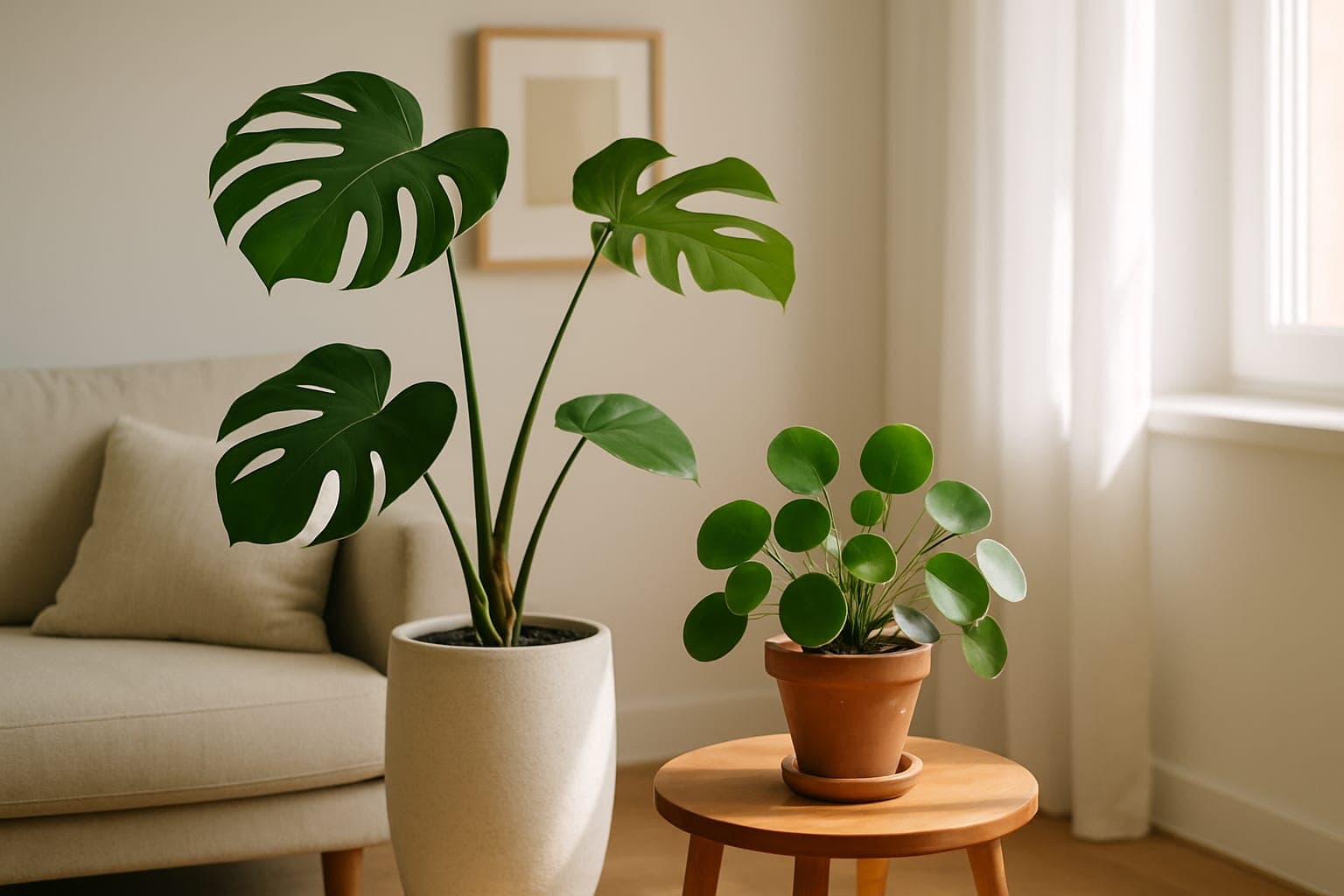
Design Principles
Incorporate plants to enhance texture and colour. Pay attention to scale, placement, and container style to ensure a balanced look.
Styling Ideas
- Create plant shelves for vertical interest.
- Use trailing plants in hanging baskets.
- Group plants of varying heights for dynamic displays.
- Match pots to your décor style for a cohesive appearance.
Room-by-Room Guide
Living Room
Opt for large statement plants like Ficus lyrata (fiddle leaf fig) or Monstera deliciosa to create impact.
Bedroom
Choose air-purifying plants such as Sansevieria trifasciata (snake plant) to promote better sleep.
Bathroom
Introduce humidity-loving ferns and tropical plants to thrive in the moist environment.
Kitchen
Utilise herbs for cooking and place small potted plants on windowsills for a fresh touch.
Tip: Regularly rotate your plants to ensure even growth and exposure to light. This simple practice can help maintain their health and appearance.
Tools and supplies for this
Products we'd actually buy for this job. Linking to Amazon — if you buy through these links we earn a small commission at no extra cost to you.
- Weston Mill Pottery Terracotta plant pots, 175mm (pack of 10)
Mid-size workhorse terracotta — perfect step-up for plants outgrowing their nursery pots.
- Weston Mill Pottery Terracotta plant pots, 20cm (pack of 5)
Heavyweight 20cm clay for established plants — the porous walls help prevent the soggy roots aroids hate.
- Whitefurze G04012 7.5cm Garden Pot - Terracotta (Set of 10)
Cheap, cheerful plastic propagation pots — what we actually use for cuttings and small offsets.
- Whitefurze G04013 10cm Garden Pot - Terracotta (Set of 7)
Reliable mid-size nursery pots with proper drainage holes — the boring essential every plant parent runs out of.
Sophie Chen
Interior Designer
Passionate about helping plant parents succeed with expert tips and proven techniques.


Comments(529)
I love this topic! I've found that grouping plants by their water needs actually makes them look better together too—like when I clustered my Zamioculcas zamiifolia with other xeric types on a high shelf, it created this naturally cohesive display without feeling cluttered. Do you find styling works differently depending on whether you're going for a Mediterranean vibe versus something lusher, or does the design principle stay the same regardless of plant type?
I've learned the hard way that where you *place* a plant matters as much as what you plant! I killed my first tomato by tucking it into a dark corner for "aesthetic reasons"—now I make sure my veggie plants get their sun first, and *then* I style around that. My Mediterranean balcony setup has gotten so much better since I stopped fighting my plants' needs. Do you have any tips for styling plants in lower-light spaces without sacrificing their health?
I love this topic! I've found that grouping my herbs by height—taller rosemary in back, creeping thyme spilling forward—creates way more visual interest than scattering them around, plus it's easier to water them consistently since they're all in one spot. It's totally changed how I think about my little plant collection.
That grouping strategy definitely works, and I'd add that it matters even more with finicky plants like orchids—I keep my cold-tolerant ones clustered together so they actually get the consistent temps and humidity they need instead of being scattered where conditions vary room to room. I've got maybe five plants total, so arrangement isn't just about aesthetics for me, it's practical. I'd share a photo of my setup if I could, but the visual payoff from treating it like a microclimate rather than decoration has been real.
I've been trying to figure out how to arrange my little collection without it looking cluttered, so this is exactly what I needed! Right now I have my pothos and philodendron just... sitting on a shelf together, which feels kind of boring. Do you have suggestions for using plants at different heights, or is that something covered in the full post? I'm wondering if a plant stand would actually help or if I'm just overthinking it.
I'd add that plant styling works best when you actually *like* caring for what you choose—I spent two years forcing fussy tropical plants into corners before realizing my arid climate and honest watering habits meant I should lean into succulents and xerophytes instead. Now my *Euphorbia* and *Aloe* collection feels intentional rather than like I'm fighting against my own conditions, and paradoxically, they look more curated that way.
I've learned the hard way that the best styling happens when you stop fighting your plant's actual needs—my *Hedera helix* finally thrived once I stopped moving it for aesthetics and just let it live near the north-facing window where it wanted to be. Now I design around what each plant actually needs rather than the other way around, and somehow the spaces look better for it.
I've found that grouping plants by height works better than I expected—I arrange my basil, oregano, and thyme so the taller ones don't shade the shorter herbs. The trick is thinking about sight lines too; I keep my trailing varieties at eye level or higher so they actually draw attention rather than disappearing into a corner. It's made both the display and the plants themselves healthier since airflow improves when you're intentional about spacing.
You're spot on about airflow—that's the real win here, not just the aesthetics. I've got an orchid that sits at eye level on a shelf with breathing room around it, and the difference in blooming compared to when it was clustered with other plants is night and day. Height grouping makes sense for herbs too since they're pretty forgiving, but I'd add that with finicky plants like orchids, I prioritize the air movement over a perfect visual arrangement every time.
I've found that grouping plants by height really transforms a corner—I keep my rosemary, oregano, and basil at different levels on a tiered stand, and it somehow makes the whole area feel intentional rather than cluttered. The mediterranean herbs especially benefit from that visual breathing room. Are you finding certain plant types work better for specific room styles, or is it more about the container choices?
I'd push back a bit here—I've found that focusing too hard on styling can actually work against keeping plants healthy. My best results come from putting plants where they get the light they need first, then arranging around that constraint. In my mediterranean climate, that usually means a south-facing windowsill, which isn't always the most photogenic spot. What's your take on balancing aesthetics with the practical side of plant care?
I really appreciate this point, Ivan. I've learned that lesson myself—my monstera looked stunning on a shelf away from the window until it started getting leggy and sad. Now I've made peace with my plants living where they're happiest, even if it means a less curated look. The good news is that a thriving plant is honestly more beautiful than a perfectly styled struggling one, and people can usually sense that vitality in a space.
I'd push back gently on the assumption that styling and plant health always go hand-in-hand. I keep my Monstera deliciosa and Anthurium clarinervium where they actually thrive—north-facing and humidity-rich—rather than where they'd photograph best, and that trade-off pays off in vigour. The plants that genuinely look best are the ones that aren't struggling, so I'd say prioritise the growing conditions first, then style around what survives happily.
I've definitely learned the hard way that styling plants in my arid climate means thinking beyond just the pretty pot—my orchids in particular need to be nowhere near my heating vents, even if that's where they'd look amazing next to the bookshelf! I'd love to see how others balance the aesthetic placement with what their plants actually need to survive; I've got 14 plants now and still occasionally end up shuffling things around mid-season when something starts looking unhappy.
I've found that with succulents, the container matters as much as the plant itself—a shallow terracotta for Sempervivum versus a tall ceramic for trailing Sedum makes a real difference in how the whole corner reads. My collection of 15 is scattered across mostly Mediterranean-style displays now, and honestly, the key is letting the plant's growth habit guide placement rather than forcing it into a designed look. Are you finding certain plant types work better with specific interior styles, or does it depend more on the actual space you're working with?
I've learned that container choice makes a bigger difference than people realize—I used to just plunk my herbs in whatever was available, but switching to terracotta for my Ocimum basilicum and keeping my Mentha in a smaller pot on a bright shelf completely changed how they perform and look. Grouping plants by their watering needs also makes styling easier since you're not fussing with different schedules in one display. Do you have recommendations for styling trailing herbs without overwhelming a small space?
I'd push back gently on treating plant styling purely as décor—at least in my experience, the healthiest displays come from working *with* each plant's actual needs rather than forcing it into a design scheme. My Lithops and other succulents need bright, direct light that might clash with moody corners, and I've found that leaning into their requirements (high shelves near south-facing windows, minimal fussing) actually makes them look better than any styling trick could. The aesthetic wins when you stop fighting the biology.
I've learned the hard way that my three orchids look infinitely better when I stop treating them like botanical specimens to be hidden in a corner—a south-facing shelf with some trailing pothos nearby completely changed how I see the whole room. The key, I think, is letting the plant's natural form guide placement rather than forcing it into a space, since something like *Phalaenopsis* really wants to be seen.
That's such a good point about letting the plant's form guide the display! I've found the same thing with my vegetable plants indoors—I grow *Solanum lycopersicum* (cherry tomatoes) on a bright kitchen shelf where you can actually see them developing, and it completely transformed how I interact with that space. Do you find your pothos trailing complements the orchids visually, or is it more about the light conditions they both enjoy? I've got 11 plants in my collection now and I'm still learning how to group them without it feeling chaotic.
I've learned the hard way that styling plants works best when you actually match them to your light—I spent months arranging a pothos awkwardly in a dark corner before accepting it belonged by the window. Now I group my Mediterranean natives together near the brightest spot, which looks intentional and keeps them happy. Does anyone else find that the aesthetic usually works itself out once the plant's thriving in the right place?
I love how houseplants can completely change the feel of a room. I've learned that grouping plants of different heights together creates so much more visual interest than scattering them around, and it actually makes watering easier too since I can check them all at once in my small space.
I've been trying to figure out how to arrange my nine plants without making my apartment look like a jungle, so this is perfect timing. I mostly have succulents, and I've realized they look so much better grouped together on a sunny shelf than scattered around individually. Do you have any tips for styling plants with different heights and textures together? I'm still learning, but I'm loving how much a thoughtful arrangement changes the whole feel of a room.
I'd push back a bit on the "decorating with plants" framing—in my experience, the plant's needs have to come first or the whole thing falls apart. I've seen plenty of beautifully styled setups where plants died because they were stuck in low light or couldn't breathe properly. The aesthetic matters, sure, but I'd rather see posts lead with "here's where your plant will actually thrive, *then* style around that" instead of the other way around. What's your take on balancing looks with keeping things alive?
I've been experimenting with this myself—I used to just shove all my veggie plants on one shelf, but I realized grouping them by height and color actually makes my kitchen feel so much more intentional. Now I'm mixing my tomato plants with some trailing pothos around the windows, and it's totally changed how the space feels! Are you finding that people tend to go for more minimalist styling, or do you see folks embracing that wild jungle look?
I love how a well-placed plant can completely shift the energy of a room. My Monstera deliciosa has become such a focal point in my living room—I positioned it where the afternoon light hits those beautiful fenestrated leaves, and it's honestly become better decor than any art piece I own. Have you found that certain plant shapes work better for specific room layouts, or does it really just come down to what speaks to you?
I've learned that plant styling really comes down to matching the plant's needs to your space rather than forcing something photogenic into the wrong spot. My basil and oregano do best on a bright kitchen shelf where I can grab them for cooking, and that practical placement actually looks better than any staged arrangement would. Do you find that your most visually appealing plant displays end up being the ones where the plants are actually thriving?
I've been trying to figure out the best way to arrange my nine plants so they actually look intentional instead of just... scattered around my apartment. I have a couple of Monstera deliciosa and some trailing pothos that I keep wanting to group together, but I'm still learning what actually works visually versus what's just convenient for watering. Would love to see how you'd approach mixing different heights and textures—I feel like I'm always defaulting to putting them in a line on the windowsill because I'm not confident enough yet to take more risks with the arrangement!
I'm all for styling with plants, though I've noticed people sometimes prioritize the *look* over what the plant actually needs—especially with those trendy low-light corners. I've had to learn the hard way that my *Monstera deliciosa* looks way better thriving on a bright shelf than languishing for aesthetic reasons in a dim corner. Do you find yourself having to compromise on placement for design, or have you managed to sync style with care requirements pretty seamlessly?
I've definitely made that mistake—my orchids in particular were casualties of "that corner would look *so good*" thinking before I realized they'd rather have actual light than be Instagram-perfect! Now I try to let the plant's needs lead and style around that, which honestly works better anyway. A thriving orchid with the right bright placement beats a wilting one in a moody corner every single time, even if I have to get creative with the aesthetics.
I appreciate the focus on styling, but I'm curious whether the post addresses how climate actually shapes what you can display? I've been trying to style my small collection around Mediterranean conditions—lots of light, low humidity—and I keep running into plants that look beautiful in photos but struggle in my actual space. Are there tips for working *with* your growing conditions rather than just arranging plants that might not survive long-term?
I really relate to this—I've got six herbs thriving in my Mediterranean setup, but it took me years to stop chasing pretty plants that'd wilt in a week. My breakthrough was leaning into what *actually* works: rosemary, oregano, and lavender look stunning *and* survive, so now I style around those instead of fighting my climate. The trick is finding plants that are genuinely happy in low humidity and bright light, which honestly gives you more personality than forcing tropicals to suffer just for aesthetics.
I love this—I've been learning the hard way that grouping my tropicals by height really transforms a room! Since I'm stuck in a cold climate, I've been clustering my smaller plants (like my peperomia and syngonium) on a lower shelf with taller ones behind them, and it makes such a difference visually. Do you have a preference between spreading plants across different surfaces versus creating those dense plant clusters? I'm still experimenting with which looks less chaotic in my space.
I appreciate the focus on styling, though I'd gently push back on treating houseplants purely as decor objects—their placement really matters for their survival. I've found that my three plants thrive best where light conditions actually suit them, not just where they look good on a shelf. A *Solanum lycopersicum* needs that south-facing window far more than it needs to match your coffee table, so maybe the design conversation should start with each plant's needs first, then work the aesthetics around that?
I've learned the hard way that herb plants like Ocimum basilicum and Petroselinum crispum actually look better grouped by height rather than scattered around—it creates visual rhythm and makes watering easier too. My basil tends to get leggy anyway, so now I intentionally place taller herbs in the back where they don't shade out the smaller stuff. Do you have a preference for clustering plants by type versus mixing different species together for that eclectic look?
I love this topic! I've been experimenting with different heights and textures in my little herb setup—right now I've got *Ocimum basilicum* paired with some trailing *Mentha* to create visual interest on a shelf, and honestly the contrast makes such a difference in how the space feels. Do you have suggestions for styling herbs specifically, or tips on grouping plants with really different growth habits together?
I'm doing something similar with my basil and mint—the height difference definitely works. One thing I've found is that grouping by watering needs matters as much as aesthetics; my mint gets thirsty way faster than basil, so keeping them visually connected but in separate pots actually makes maintenance easier and they both look healthier. Have you run into any issues with one outgrowing the other and throwing off the arrangement?
I've learned that the styling magic really comes down to grouping plants by their growth habit rather than just by aesthetics—my Rhaphidophora tetrasperma looks infinitely better paired with other vining types that naturally trail at similar rates, rather than plunked next to upright growers. It creates this cohesive, almost architectural effect without feeling fussy.
I've learned the hard way that styling houseplants in an arid climate means thinking about what's actually *thriving* vs. what just looks good in the photo! My tomato and pepper plants do best tucked near a bright window where I can rotate them easily, even if it's less "Instagram-perfect" than clustering them on a shelf. The happy accident? When plants are genuinely healthy and happy, they naturally look better anyway—no amount of cute pots can fake that glow.
I've found that the key to styling houseplants is working with their natural growth habits rather than fighting them. My *Monstera deliciosa* sprawls beautifully on a high shelf where I let it trail, while my *Alocasia* varieties stand upright in a corner grouping—they frame the space differently than if I'd forced them into uniform arrangements. The geometry of the plant itself becomes the decor, so choosing pieces that complement your room's lines makes a real difference.
I've learned the hard way that styling plants is as much about keeping them alive as it is about aesthetics—my monstera looked gorgeous on that high shelf until I realized I couldn't reach it to water! Now I'm obsessed with finding spots that work for *both* the plant's needs and my (admittedly chaotic) decor vision, though I still manage to tuck my tropical bunch into corners where the light is questionable at best. Do you have tips for styling plants that need consistent moisture without making watering access a nightmare?
I've been thinking about this a lot since my Phalaenopsis started thriving on my north-facing windowsill—I have about nine plants total now, mostly trying to figure out what works in my cold apartment. Styling feels tricky when you're also managing specific light and humidity needs, especially with orchids that seem to have opinions about everything! Do you have tips for making plants look intentional in a space when the best spot for them isn't always where you'd want them visually?
I've loved watching my orchid collection become the bones of my living room's design—there's something about arranging them at different heights on shelves that just makes the whole space feel intentional. That said, I've definitely killed the aesthetic moment by overcrowding, so I've learned the hard way that sometimes fewer plants displayed thoughtfully beats a jungle of them crammed together!
I love this topic! I'm still building my little collection (just four plants so far), and I've been wondering how to arrange them so they actually look intentional instead of scattered around. Are you covering things like pot colors and heights, or more about where to place them in a room? I'm particularly curious whether there are any tricks for styling plants in a cold climate where I have limited window space.
I've learned the hard way that my three orchids look infinitely better when I stop trying to hide them behind other decor—Phalaenopsis especially deserves a spot where its blooms can actually be admired. My biggest styling win was realizing that the plant *is* the statement piece, so I cleared the clutter around them instead of adding more. Great reminder that we don't need fancy stands when good light and breathing room do most of the heavy lifting!
I love this topic! I've been experimenting with styling my single herb collection—right now I've got a really vigorous *Ocimum basilicum* specimen that I'm trying to figure out how to display without it getting lost in the room. Do you have tips for styling herbs specifically, or does your post focus more on foliage plants? I feel like herbs are trickier because you want them accessible for cooking but also want them to look intentional, you know?
I totally get that—herbs feel like they need their own rulebook! I've killed more basil than I'd like to admit by tucking it somewhere "out of the way," only to forget it exists. What's worked better for me is putting my herbs right on the kitchen windowsill where I actually *see* them, which somehow makes me remember to harvest and water them. A tall, narrow stand or even just grouping a few pots together makes them feel intentional rather than scattered, at least in my experience!
I've learned the hard way that my arid-loving collection needs some thoughtful placement—my Dasylirion acrotrichum looked positively sad in a corner far from natural light, but once I moved it to a bright west-facing shelf, it transformed the whole nook. I'm curious whether you touch on spacing plants at different heights, since I find that variation really makes a small collection feel intentional rather than scattered around?
I've been experimenting with grouping my herbs by height on a kitchen shelf, and it honestly changed how my space feels—plus it's way easier to water them all at once! Are you thinking more about the aesthetic side of styling, or do you have tips on making sure plants actually thrive in whatever spots look good? I've learned the hard way that a gorgeous corner can be a plant killer if the light's wrong.
I love that you brought up the light issue—I'm still figuring that balance out myself! I have nine plants now and I keep moving them around trying to find spots that look good AND have decent light, which is tricky in my desert apartment. Have you found any tricks for styling plants in low-light areas without them getting sad, or do you usually just accept that some corners won't work?
I've been experimenting with plant styling in my kitchen lately, and I've found that grouping herbs of different heights actually makes the space feel more intentional than scattering them around. I've got my basil and oregano on a lower shelf and taller rosemary in the back, and it just *works* visually. Are you a fan of clustering plants together, or do you prefer spreading them out more sparsely?
I love this approach! I've noticed the same thing with my small collection—I grouped my Monstera deliciosa with a couple of smaller pothos on a shelf unit, and it definitely creates more visual impact than when they were scattered around. I'm still learning about composition though—do you find that mixing plant types (like herbs with foliage plants) works just as well, or does grouping similar plants look better? I've been hesitant to combine my culinary herbs with ornamentals, but your setup makes me think it might be worth trying.
I'd push back gently on the idea that styling houseplants is purely decorative—I find the best displays happen when you let the plant's actual needs drive the arrangement. My three vegetables do their best work grouped by their watering schedules and light requirements rather than by aesthetic alone, which ironically tends to look more cohesive anyway. When *Solanum lycopersicum* sits where it gets genuine afternoon sun and *Capsicum annuum* gets proper humidity, they fill out beautifully and become the real focal points without any fussing.
I love this perspective—you're absolutely right that a thriving plant is inherently more stylish than a struggling one tucked into a pretty corner. I've learned this the hard way with my rosemary and basil, which look infinitely better when they're actually getting the light and air circulation they crave rather than squeezed onto a shelf for Instagram purposes. The happy accident is that plants grouped by their needs often *do* end up looking intentional, even botanical.
I've found that with just two plants, placement matters way more than quantity—I keep my Echeveria in bright indirect light near a window where it actually becomes a focal point rather than getting lost on a shelf. The pot itself does half the work; I switched to terracotta for my Sedum and it completely changed how the whole corner reads. Less is honestly more when you're styling with succulents, since they tend to look better when they can breathe and aren't competing for visual attention.
I've learned that styling houseplants is really about letting their actual form drive the design—not forcing them into a look. My Mediterranean climate means I lean on structural plants like aglaonemas and snake plants that anchor a corner without needing fussy arrangements, and honestly, a good pot matters less than I thought it would. The trick I've found is spacing them so they actually get the light they need rather than clustering them tight for Instagram appeal. What's your approach—do you prioritize how plants look first, or does their care needs come before the styling?
I love this topic. After years of collecting plants, I've learned that placement really does change how you experience them—my Monstera by the west window becomes such a focal point that I've actually rearranged furniture around it. The tricky part for me in my dry climate is balancing what looks good with what actually thrives in those high-traffic display spots. Are you focusing more on aesthetic arrangement, or do you touch on the plant health side of styling decisions?
That's such a good point about the dry climate challenge—I'm in a Mediterranean zone too and I've definitely struggled with that balance. I've got a photo of my Pothos arrangement that looked gorgeous on a high shelf but honestly started suffering until I moved it lower where it gets more humidity. I'm still figuring out which of my 6 plants can actually handle being "styled" in less-than-ideal spots versus which ones need to come first. Did you end up finding spots that work both ways, or do you keep your showstoppers in their best growing spots regardless of how it looks?
I've found that grouping plants by height creates such a cleaner look than scattering them randomly—especially with herbs like my rosemary and basil, which can get leggy. My Mediterranean climate actually helps here since I can keep them more compact, but even indoors I try to arrange them so the taller ones anchor the back. Do you have tips for styling trailing plants? I struggle with finding the right balance between letting them cascade naturally and keeping them from looking chaotic.
I really like your point about height—I've been doing something similar with my small collection and it definitely makes things feel more intentional! For trailing plants, I've had decent luck with hanging planters at eye level or slightly above, which lets them cascade without taking over the whole shelf. My Epipremnum aureum gets pretty wild, so I trim it back occasionally to encourage bushier growth rather than just long vines everywhere. Are you finding your herbs stay more manageable when grouped together, or is that mostly a visual thing?
I've learned this the hard way—I used to just plop my plants wherever there was space, but once I started thinking about height, color, and negative space, my whole living room felt intentional. I love how native tropical plants especially can add that layered, lived-in feel without looking fussy. Thanks for putting together styling tips like this. It's making me rethink how I arrange my collection.
I appreciate that perspective on layering—though I'd gently push back on "native tropical" as a styling category, since that's really geography rather than aesthetics. What probably works in your arrangement is the *diversity* of leaf shapes and textures you're creating with those plants, which reads as naturally composed whether they're *Monstera* or *Senecio* or something entirely different. The intentionality comes from the design thinking you mentioned, not the origin story of the plants themselves.
I totally get that! I've been gradually rearranging my collection too—I have about eleven plants scattered across my place, and grouping them by height really does change how the whole room reads. Do you find that certain plants work better as focal points than others? I've been experimenting with putting my taller *Solanum lycopersicum* varieties near the window as anchors, and it's making me notice negative space way more than I used to.
I've been having so much fun styling my small collection around my apartment—I moved my Monstera deliciosa to a corner with indirect light and it completely changed how the whole room feels! I'm curious whether you lean more toward grouping plants by size and color or by their care needs? I've been mixing both approaches and sometimes worry I'm overthinking it, but I'd love to hear how others approach it.
I've been experimenting with grouping plants by height lately—I have about nine now scattered around my tropical apartment—and I'm still figuring out the best way to arrange them without it looking cluttered. I'd love to see more on how to balance different leaf textures and colors, because I have a Monstera deliciosa and a couple of Philodendrons that feel a bit samey when they're near each other. Do you have tips on using variegated plants (like a Syngonium podophyllum) to break things up, or is that overthinking it?
I've learned the hard way that my orchids look infinitely better perched on a simple wooden shelf than crammed on my cluttered windowsill—there's something about giving them breathing room that elevates the whole corner. With about 15 plants scattered across my Mediterranean apartment, I've found that the styling matters almost as much as the care itself; a thoughtful pot or the right height can make even my perpetually skeptical pothos look intentional!
I loved this topic! I've found that grouping plants by their water needs really helps with both styling *and* care—my Asplenium nidus and a few other humidity-lovers cluster near the kitchen window, which feels intentional design-wise while also making my routine way simpler. Do you have thoughts on mixing different pot heights and textures, or is that something you'll cover? I'm curious whether you lean toward matchy-matchy or eclectic when it comes to planters.
I've only got the one succulent in my cold apartment, but I've learned that placement makes all the difference—mine almost didn't survive until I stopped hiding it in a corner and gave it a spot by the brightest window I could find. I'd love to see a photo of it thriving now, though I wish I had multiple plants to actually "style" with! This post makes me want to think bigger about how I arrange what I do have.
I've learned the hard way that the styling part only matters if the plant actually survives in your space—I killed a gorgeous fiddle leaf fig once because it looked perfect in the corner but got no light. Now I work backwards: figure out where you have good light, humidity, or conditions for plants that actually thrive there, *then* style around what works. Native plants especially tend to be more forgiving with placement since they're adapted to local conditions. What's your approach—do you prioritize the look first or the growing conditions?
I'm still figuring out plant styling myself—I have eight plants scattered around my apartment and they're honestly just wherever they fit! But I've noticed that grouping plants at different heights makes such a difference visually, so I started using plant stands and shelves to create more depth. Would love to know if there are specific design principles you'd recommend for smaller spaces, since my tropical plants need decent light and I'm not sure how to balance that with aesthetics.
I love how houseplants can completely change a room's energy. I've found that grouping plants of different heights together makes such a difference—I learned this the hard way after scattering mine randomly around my apartment and feeling like something was off. Now my little tropical corner with varying plant sizes actually feels intentional and inviting, and honestly it's become my favorite spot in the house.
Styling plants is where most people go wrong—they treat it like decoration instead of starting with what actually survives in their space. I've learned that the best-looking setups are ones where the plant is healthy first, aesthetics second. A thriving pothos on a plain shelf beats a struggling fiddle leaf fig in a designer pot every time. What's your take on balancing the visual appeal with plant health requirements?
I love this topic! I've been experimenting with displaying my single basil plant (*Ocimum basilicum*) in different corners of my kitchen, and the styling really does change how you interact with it—plus better light placement means better growth. Have you found that certain plant groupings work better for smaller spaces, or do you mostly focus on statement pieces? I'd love to hear if there are any styling tricks that actually work for people with limited plant collections like mine!
I totally get that—I've noticed my *Ruscus aculeatus* completely changes the feel of a corner depending on whether it's solo or grouped with something textural. For smaller spaces, I'd actually lean into odd-numbered groupings of 3 rather than pairs; something about the asymmetry just reads better visually without needing tons of plants. Have you tried pairing your basil with something purely foliage-based that doesn't need the same light intensity, just to create layers?
I totally get that—I've only got two orchids myself, so I'm all about making each one count. With *Phalaenopsis*, I've found that positioning near a north-facing window actually becomes a design feature rather than just practical, especially when the light catches the flowers at certain times of day. For smaller collections, I think the container choice matters even more than grouping; a striking pot can make a single plant feel intentional and curated. Have you noticed the basil performing differently depending on which corner gets the most consistent light?
I totally get this—I learned the hard way that a single statement plant can actually anchor a room better than scattered small ones. My native bird of paradise took forever to thrive until I stopped moving it around for "styling" and just gave it a dedicated bright corner. Now it's the focal point that ties the whole space together. For smaller collections, I'd say let the plants breathe and find their best light first, then build your styling around that rather than the other way around.
I've learned the hard way that arid climates demand some creative styling tricks—my orchids especially need to be positioned where they won't dry out too fast, which ruled out that sunny shelf I'd originally planned. Now I group several of my 14 plants together to create a little humidity pocket, and it honestly looks way better than scattering them around anyway. I wish I had a photo of my current orchid setup to share, but this post is making me rethink some of my other placements!
That humidity pocket idea is brilliant—I hadn't thought about grouping plants strategically like that. I'm in a cold climate so I'm always worried about drying things out indoors, and it sounds like clustering might actually help with that too. Do you find that grouping them together changes how often you need to water, or is it mainly about the air moisture around the leaves?
I've found that grouping plants by their trailing or upright habits creates more visual interest than random placement—I keep my basil and oregano on a shelf where their compact growth doesn't compete for attention, while the pothos on the wall adds that vertical dimension. The styling really does matter as much as the plant care itself, especially in smaller rooms where you're working with limited space.
I love this tip—I've been randomly scattering my herbs around and wondering why my kitchen looked so chaotic! Grouping my basil and thyme together on one shelf versus spreading them across countertops has already made the space feel more intentional, even though I'm still figuring out the watering rhythm for each spot.
I've been trying to figure out the best way to arrange my collection—I have about nine plants spread across my apartment—and this is exactly what I needed! I'm still learning how to style them properly instead of just clustering everything on one shelf. I'd love to see more about plant placement for tropical species, since most of mine are tropical and I'm not always sure if I'm giving them the right visual balance in the room. Do you have any tips for showcasing trailing plants without them taking over the whole display?
I'd gently push back on the idea that styling is separate from plant health—in my experience, the best displays happen when you match the plant's needs to the location first. I keep my *Lithops* and *Aloe* near south-facing windows where they actually thrive, and that constraint often creates more interesting arrangements than starting with a design concept and forcing plants into it. The most striking displays seem to work *with* growing conditions rather than against them.
I appreciate the focus on styling, but I'd push back gently on one thing: I've found that the best-looking plant displays happen when you prioritize what the plant actually needs over aesthetics. A Monstera crammed into a dark corner for visual symmetry will look worse in two months when it starts stretching. I keep my four plants where they get proper light first, then style around that constraint—and honestly, healthy plants are the best decor anyway. What's your take on balancing plant health with the design goals?
I love this topic because I've learned so much about styling plants through trial and error with my own collection. What finally clicked for me was grouping plants by height and texture rather than just scattering them around—suddenly my living room felt intentional instead of cluttered. My native ferns and tropical vines really shine when they're arranged to complement each other rather than compete for attention.
I've been trying to figure out how to make my one plant actually look intentional in my living room instead of just sitting awkwardly on a shelf, so this is perfect timing! Do you have any tips for styling plants in smaller spaces? I'm worried mine looks lonely but I don't have room for a whole plant collection yet.
I totally get that feeling—I have four plants and still struggle with arranging them so they look intentional rather than scattered! What's helped me is grouping plants at different heights, even if it's just two or three together; it creates more visual interest than one plant alone. I've seen people use plant stands or stack books under pots to vary the heights, which makes a small cluster feel fuller without taking up much floor space. Have you considered pairing your plant with trailing pothos or something similar, or would that feel like too much for your setup right now?
I totally get that feeling—I have eight plants now, but my first one looked so isolated! What helped me was grouping it with other objects like books or a small vase to create a little vignette, even if you only have one plant. Since you're in a tropical climate like me, you could also try placing it near a window where it catches light dramatically; that alone makes it feel more intentional and less like an afterthought. Does your living room get good natural light?
I've learned the hard way that styling plants is just as important as keeping them alive! I group my herbs by height near the kitchen window—the taller basil in back, creeping oregano trailing in front—and it actually makes the space feel so much more intentional. Do you have tips for styling plants in colder climates where we're stuck with fewer bright spots indoors?
I've found that pairing plants with complementary pot textures really transforms a room—I recently placed my *Monstera deliciosa* in a matte ceramic vessel next to a glossy one holding *Philodendron hederaceum*, and the contrast actually draws more attention to the foliage itself rather than fighting for focus. Styling houseplants is less about following rules and more about understanding how your specific light conditions influence which specimens will truly thrive in each spot.
You nailed it with the pot textures—I've learned that the hard way by cluttering my shelf with too many similar finishes. In my arid setup, I've noticed matte pots actually help with moisture retention too, which is a bonus when you're dealing with plants that hate sitting wet. The real game-changer for me was stopping the "beautiful plant in the wrong light" cycle and just putting things where they'll actually survive, *then* styling around that.
I've been trying to figure out how to make my little collection actually look intentional instead of just... scattered around, so this is exactly what I needed right now. I'm still learning which plants work best in my cold climate, but I'm curious—do you have tips for styling plants when you're working with a smaller space, or does that change the approach entirely?
Small spaces are honestly where styling gets fun—I've learned that vertical arrangements and grouping plants by height make even my 14 scattered specimens look deliberate instead of chaotic! For cold climates especially, clustering plants together actually helps with humidity, so you get the bonus of both better visuals and happier plants. I'd love to share a photo of how I arranged my orchids on a tall shelf to maximize that corner real estate, since those do surprisingly well in arid conditions if you're strategic about placement.
I learned the hard way that plant styling is really about balance—I used to cluster everything on one shelf and it looked chaotic, but spreading my six plants across different heights and corners actually makes each one stand out better. The practical stuff matters most: a trailing pothos near a window with some breathing room looks way better than crammed together, and honestly, the pot choice does half the work. I've got a photo of my setup that finally clicked once I stopped overthinking the aesthetics and just let the plants' growth habits do the heavy lifting.
I love this topic. I've learned that the best styling comes from grouping plants at different heights—I use a small plant stand behind my larger Monstera to create real visual depth, and it makes the whole corner feel intentional rather than scattered. It's changed how I think about placement in my space.
I've learned the hard way that styling plants is really about letting them breathe—literally. I used to cluster mine on a shelf for the "aesthetic," but they got leggy and pale. Now I spread my seven across different spots with actual light, and honestly they look better *and* healthier. The Mediterranean natives especially need room to show their shape. Are you finding that your styled plants are thriving where you've placed them, or is it more about the visual appeal?
I love how styling with plants goes beyond just keeping them alive—it's about creating visual balance in the space. With my collection, I've found that grouping succulents of varying heights and colors (think *Echeveria* paired with a tall *Euphorbia* inermis) creates way more impact than scattering them individually. The arid growers I work with are especially forgiving when you're experimenting with placement, so there's real room to play around and see what clicks with your aesthetic.
I totally agree—I learned this the hard way by spreading my three plants all over the place at first. Once I grouped my fiddle leaf fig with a smaller pothos on the same side table, the whole corner suddenly felt intentional instead of random. The succulents are definitely the easiest to shuffle around without stressing, which makes them perfect for actually testing out what works before committing to a bigger arrangement.
I've learned the hard way that my tropical plants look infinitely better when I stop shoving them all on one shelf like I'm running a plant hospital! Giving them actual breathing room—and, you know, the light they need—makes such a difference in how they elevate a room. Do you have any tips for styling plants in lower-light corners, or is that just accepting defeat and moving on to the hardy pothos?
I've learned the hard way that the best styling happens when you stop fighting your light conditions—I spent two seasons trying to make a Monstera deliciosa work in a dim corner before realizing my cold-climate home's north-facing windows were actually perfect for shade lovers like Aspidistra elatior. Now my 15 plants feel intentional rather than scattered, and honestly, the spaces where they *thrive* end up looking better anyway than the ones where I'm just hoping for the best.
I'd add that the *placement* matters as much as the aesthetics—light quality varies drastically across a room, so what looks good in a corner might kill a *Solanum lycopersicum* or finicky herb. I've learned the hard way that styling around a plant's actual needs (bright indirect for most vegetables, for instance) beats arranging it to match your colour scheme. The two can overlap beautifully, but only if you start with what the plant will actually tolerate in that spot.
Completely agree—I've made that mistake with styling. I kept a Ficus in a beautiful shadowy corner for weeks before accepting it just wasn't going to thrive there, no matter how good it looked. The trick I've found is picking plants *for* the light you actually have rather than forcing placement. Mediterranean light is forgiving enough that I can get away with some flexibility, but even then, a plant struggling visibly undermines any design scheme. Do you find you can work around it by using multiple small plants in different spots, or do you mostly stick to one showpiece per room?
I've found that with succulents especially, the container matters as much as the plant itself—a shallow terracotta dish for *Echeveria* reads completely different than the same plant in a modern ceramic cube. The key is matching the visual weight of the pot to the plant's form rather than just picking what looks pretty in isolation. What's your approach when you have a plant that doesn't quite fit the aesthetic you're going for—do you restyle or swap it out?
I've been trying to figure out how to arrange my collection of native desert plants without making my apartment look like a plant store, so this is perfect timing! I have about 9 plants scattered around right now and they feel kind of random. Are there any specific tips in the post about grouping plants by height or color, or is it more about the actual containers and stands you use?
I've been arranging my tropical collection around my apartment for years now, and honestly, the styling part is just as important as keeping them alive! Right now I'm grouping my plants by height and leaf texture—my Monsteras and Philodendrons against the corner wall, smaller Peperomias on shelves—and it makes such a difference in how the whole room feels. I'd love to see what specific styling tricks you cover in the full post. Are you focusing more on grouped displays or scattered placements?
Height and texture grouping is genuinely the move—I've found it stops a collection from feeling chaotic. That said, I've had better luck with my *Rhaphidophora tetrasperma* and smaller aroids on upper shelves where they catch indirect light, then reserve floor real estate for the true statement pieces. The scattered approach works too if each plant has breathing room around it, but grouped definitely creates stronger visual weight. Curious whether you're thinking about pot finishes as part of that display strategy?
I'd add that plant styling works best when you're honest about your growing conditions first—I've learned this with my small collection. A beautifully styled fiddle leaf fig in a dim corner will eventually tell you it's unhappy, no matter how perfect the pot looks. I find the most visually cohesive spaces come from grouping plants with similar light and water needs together, which usually means your styling naturally echoes your home's microclimates rather than fighting them.
You've nailed it—I've definitely done the "gorgeous pot, doomed plant" dance more times than I'd like to admit! My succulents taught me this the hard way; I'd arrange them in this beautiful shaded corner display, and within weeks they'd be stretching toward the nearest window like they were desperately seeking asylum. Now I just accept that my best-looking arrangements happen to be wherever the light already is, and honestly, it's made styling feel less stressful.
I've learned the hard way that the best styling happens when you stop fighting your environment! My three orchids taught me that—I spent ages trying to make them work in my dim living room before accepting that my bright west-facing shelf was the real star of the show, and now they're exactly where they look good *and* thrive. Phalaenopsis especially doesn't forgive those moody corner displays, no matter how aesthetically perfect they seem.
I've found that grouping plants by their growth habits rather than just aesthetics makes a real difference—my Monstera deliciosa and Philodendron hederaceum both thrive on similar watering schedules, so keeping them together on my plant stand means I'm not constantly second-guessing their needs. It's that sweet spot where function and design overlap, and honestly, the plants look better when they're actually thriving instead of struggling because they're in the wrong microclimate.
You've hit on something I wish I'd figured out sooner—I kept my Phalaenopsis next to a thirsty Peperomia just because they looked good together, and predictably, one of them was always either drowning or dessicated. Now I cluster my orchids by their humidity needs, which in my dry climate means my three specimens actually get to live in a little microclimate I've carved out for them rather than suffering through my home's desert air. The styling magic really does happen when the plants stop sending you distress signals!
I love this topic. I've found that styling succulents especially rewards thinking beyond the typical shelf—I've had real success grouping my Echeveria and Sempervivum species at varying heights on a dark console table, where the light really catches their rosette forms. The arid plants in my collection tend to look best when you let negative space do the work rather than cramming them together, which honestly makes them healthier too since air circulation improves.
I've learned the hard way that plant styling works best when you match the plant's actual needs to the spot—I killed a pothos trying to make it work in a dark corner because it looked good there. Now I group my plants by light requirements first, then arrange them so the struggling ones aren't hidden behind the thriving ones. What's your take on balancing aesthetics with the practical stuff like watering access and air circulation?
I've learned the hard way that grouping plants by height really does make a difference—I used to just scatter mine around, but once I clustered my taller herbs in the back and shorter ones up front, the whole room felt more intentional. Plus it's way easier to water them when they're organized like that! Are you finding that certain plant arrangements work better in specific room styles, or does it depend more on the light you have available?
I've been grouping my tropicals by height lately and it's completely changed how my living room feels—suddenly everything has better flow instead of just plants scattered everywhere! What I'm curious about though is how you'd approach styling when you've got a mix of plants that need really different light conditions. I have this gorgeous Monstera that'd look amazing as a focal point in my darker corner, but it'd probably sulk there. Do you find yourself compromising on placement sometimes, or do you prioritize the plant's needs over the design scheme?
Plant health has to come first—a sulking Monstera will look worse than no focal point at all. That said, I've found it's rarely an either/or situation. In my setup, I use that darker corner for a Pothos or Philodendron instead, which actually looks just as lush and gives the same visual weight. The grouping by height you mentioned is key; it lets you create flow without forcing plants into bad spots. Have you considered rotating which plant gets the prime position seasonally, or does your living room layout make that impractical?
I've learned the hard way that placement matters way more than having a ton of plants—I started with six scattered randomly and they looked chaotic until I grouped three together by the window and moved two to darker corners with trailing vines. The visual weight completely changed. I'd love to share a photo of my current setup because the difference is honestly night and day, but what really stuck with me is that containers do half the work; matching them or using a color palette makes even struggling plants look intentional.
I appreciate the styling angle, but I've found that focusing too hard on the aesthetic can actually work against plant health. In my four years growing things, I've learned that the best "styled" space is one where plants get what they genuinely need—the right light, airflow, and watering access—even if that means they're not perfectly symmetrical on a shelf. A thriving monstera in a corner catching the right afternoon light will always look better than a struggling one positioned for Instagram appeal.
I've learned the hard way that styling plants in an arid climate means getting creative with placement—my orchids especially need that humidity boost, so I've started clustering them near my bathroom where they actually thrive instead of just looking pretty in a dry corner. With fourteen plants scattered around my place, I've realized the real magic isn't just picking the right pots, but grouping them where they'll actually be happy, which somehow looks even better than my original Pinterest vision!
That's such a smart approach—clustering for both function and aesthetics is the way to go, especially in arid zones. I've found the same with my couple of orchids; they're happiest grouped together where humidity naturally builds, and honestly, the layered look is more interesting than spreading them out anyway. Have you noticed any particular spots in your home that seem to maintain humidity better than others?
I've been learning this the hard way with my herb collection—I used to just shove everything on one shelf and it looked chaotic! Now I'm grouping my basil, oregano, and thyme by height and letting them spill over different levels, and it actually makes my whole kitchen feel intentional. Do you have any tips for styling plants when you're in a cold climate like mine? I feel like my shorter growing season limits what I can display year-round!
I've learned the hard way that the right pot makes all the difference—I have a pothos that looked completely out of place in a generic plastic nursery pot, and moving it to a terracotta one actually made me *want* to display it instead of hiding it. Now I'm intentional about matching my six plants' containers to the room, even if the plant itself doesn't care. Would love to see what approach you're recommending for styling, since there's definitely a balance between what looks good and what actually works for drainage.
You've totally nailed it with the terracotta—I did the exact same thing with a basil plant that looked so sad in its plastic pot, and suddenly it felt like actual decor instead of something I was just... tolerating. I'm still figuring out the balance between aesthetics and function myself, but I've found that grouping a few of my herbs together in mismatched-but-coordinated pots makes the whole corner feel intentional somehow, even though I'm absolutely not a design person!
I've definitely learned the hard way that there's a difference between *having* plants and actually styling them—I once arranged all 13 of mine by height like I was creating a very green staircase, which looked... chaotic. Now I'm much more intentional about pairing plants with the right containers and heights to create actual visual interest rather than just filling shelf space. I'd love to know if you lean more toward the "curated minimalist" approach or letting plants become the main visual event in a room?
I've found that with succulents especially, the pot matters as much as the plant itself—a terracotta vessel for *Aeonium arboreum* reads completely different than glazed ceramic, and it actually changes how I water since drainage differs. The styling piece everyone skips is negative space though; I see people cramming 15 plants into one corner when spreading them out makes each one feel intentional. What's your take on clustering by color versus mixed arrangements?
Styling plants is where a lot of people go wrong—they chase aesthetics and ignore the light each plant actually needs. I've learned the hard way that a beautiful arrangement means nothing if your plants die in six months. My approach is to pick the spot first, figure out what light it gets, then choose plants that'll actually thrive there, and *then* think about how they look. Did you cover the light-to-location matching in your post, or was it more about the visual arrangement side?
I've learned so much about styling my tropical collection just by experimenting with different corners of my home. Grouping plants at varying heights really does change how a room feels—I used to line them all up on shelves, but now I scatter taller specimens like my bird of paradise around the space and it's made such a difference. Would love to hear what styling tricks others have discovered.
I've been thinking a lot about this lately, especially since my herb collection has grown to fill almost every sunny spot in my apartment! I love how *Ocimum basilicum* looks perched on a high shelf where it catches morning light, and it got me wondering—do you have any thoughts on mixing herbs with purely decorative plants in the same display? I feel like basil's a bit unruly compared to, say, a trailing pothos, but there's something satisfying about having something functional and beautiful in the same corner.
I love that you're mixing functional and pretty plants—that's such a smart way to maximize your space! I've been experimenting with the same thing since my succulent collection started taking over, and honestly, I think the "messier" herbs actually add character compared to perfectly trailing plants. My question is, do you find the basil needs way more water than your decorative plants nearby? I'm still figuring out how to group plants with different watering needs without making it too complicated.
Styling is nice, but I'd push back on treating plants purely as decor—they need to go where *they* actually thrive, not just where they look good. I've got four plants in my tropical setup, and my best-looking shelf arrangement tanked my chili peppers because the light was off. Now I prioritize the care spot first, then style around that reality. The plants that survive and produce are way more satisfying to look at anyway.
I've learned the hard way that plant styling is really about matching the plant to the spot, not the other way around. I had a gorgeous pothos that looked terrible in a minimal shelf setup until I moved it to a corner where it could trail naturally—suddenly the whole vibe worked. Now I pick my pots and placement based on what each plant actually wants to do, and the design just falls into place. Would love to see more posts about working with a plant's growth habit rather than fighting it.
I've been styling my small collection of 11 plants around my desert apartment, and honestly grouping them by height has made such a difference—especially with my native succulents that need to catch the light from different angles. I'd love to see your take on clustered displays versus spreading them out; do you find one approach works better for making a room feel fuller without it looking cluttered?
I've been experimenting with this lately in my small apartment—I've got four plants total, and honestly, the placement makes *such* a difference. I just moved my Phalaenopsis to a north-facing shelf instead of the usual sunny spot, and pairing it with a few textured pots completely changed the vibe of that corner. Do you find that certain plant shapes work better in specific rooms, or is it mostly about light availability where you live?
I've learned the hard way that styling plants works best when you actually group them by water needs rather than aesthetic preference—saves so much fiddling. My Mediterranean climate means I can get away with clustering my drier plants near a south-facing window, which also happens to look good, but it's the practical side that keeps them alive long enough to look pretty. What's your approach when those two goals conflict?
I appreciate the design angle, but I've found that styling works best when you actually match plants to your space's conditions first—otherwise you're just rearranging dead plants every few months. My tomatoes and herbs do way better clustered by the brightest window than spread artfully around the room, even though it looks less curated. The decorating comes naturally once the plants are thriving in the right spots.
You're so right—I learned this the messy way with my succulents! I used to arrange them in this gorgeous cascading shelf setup, only to watch them slowly stretch toward the one sunny corner like they were trying to escape. Now my 13 plants are clustered in spots that frankly look a bit chaotic, but they're actually happy, and it turns out thriving plants *are* the best decoration anyway.
I'd add that styling plants works best when you actually *like* caring for them in that spot—I've seen beautiful arrangements collapse because the light or humidity didn't match the plant's needs. My orchids, for instance, look stunning on a shelf, but they need consistent conditions that a drafty entryway just won't give, so they stay where they thrive, even if it's less photogenic. Form following function keeps both the plants and your motivation alive.
I've learned the hard way that my five plants need as much thought going into *where* they live as into *how* I keep them alive! Putting my Hesperaloe parviflora near that south-facing window was a no-brainer, but I didn't expect how much it would anchor the whole corner—suddenly the bare shelf felt intentional instead of empty. Do you find that the right plant in the right spot actually changes how you see the rest of a room?
I love this topic! I've been learning that styling tropicals in a cold climate means being strategic about placement—I finally stopped putting my monstera right by the window where it looked pretty but got stressed, and moved it to a spot with bright indirect light that's also a focal point in the room. Has anyone else found that the best-looking arrangement isn't always the best for the plant itself?
I've learned the hard way that the best styling happens when you stop fighting your plant's needs! My basil and oregano live on a sunny windowsill that's admittedly not the prettiest spot in my kitchen, but they're thriving—and honestly, I think there's something nice about seeing them actually *used*. The trick I've found is grouping plants by their light requirements rather than by color or pot aesthetic, which means your displays naturally cluster in the spots where they'll look healthy and happy longest.
I've been experimenting with this a lot lately since my collection is still pretty small—just four plants—but I've found that grouping them by height and leaf texture makes such a difference visually, even in a tiny space. My *Monstera deliciosa* and a trailing pothos create this nice contrast when I nestle them together on a shelf. Are you covering pot selection too, or mainly placement strategies? I'm curious whether you lean toward matching vessels or mixing styles.
I've learned the hard way that styling plants in an arid climate means thinking about placement differently—my orchids especially demand a spot away from direct sun but near enough to a window for that bright, indirect light. I currently have 14 plants scattered around my place, and honestly, my best discovery was grouping similar heights together rather than spreading everything out; it creates way more visual impact. Would love to share a photo of my orchid cluster by the bedroom window if I could upload one!
I've been trying to figure out how to arrange my nine plants so they actually look intentional rather than just... scattered around my apartment. This is really helpful because I tend to default to "put it where there's light" without thinking about how it looks in the space. I have a *Monstera deliciosa* that I'm wondering if I should move to a corner or keep on a shelf—I took a photo comparing both setups but can't decide which feels more balanced. Do you have thoughts on whether trailing plants like pothos work better as tabletop statements or hung higher up?
I've loved experimenting with plant placement in my own home—I used to just line them all on windowsills until I realized how much more impact they had when I grouped them by height and let some trail from shelves. This post sounds like it has the practical tips I wish I'd known sooner, especially for making those common species we all have actually shine in a room.
I'd add that in arid climates, styling often means working *with* your conditions rather than against them. I've found my Senecio rowleyanus and Euphorbia tirucalli actually look their best in bright, minimal setups near south-facing windows—which happens to be the most photogenic arrangement anyway. The constraint of needing well-draining soil and infrequent watering naturally pushes you toward cleaner displays without the fussy clustering that can overwhelm a room.
I love this perspective! Working with your climate rather than fighting it really does lead to better-looking displays—I've noticed the same thing with my basil and oregano in a bright, minimal setup. It's funny how the plants themselves kind of dictate the aesthetic. Are you finding that the well-draining soil requirement pushes you toward specific pot materials, or is it more about the overall arrangement for you?
I've learned the hard way that pot size matters way more than people think for styling—too large and your plant looks lost, too small and it screams neglected. I keep my four plants in pots that are maybe an inch bigger than the root ball, which actually makes them look fuller and more intentional in a room. In my dry climate, underwatering happens anyway, so snug pots at least force me to be intentional about placement near my best light.
I've been arranging my tropical plants around my apartment for years now, and honestly, the styling part is just as important as keeping them alive! I recently grouped my three pothos together on a tall shelf, and it completely changed how that corner feels—way more intentional than having them scattered everywhere. Are you big on using plant stands and hanging options, or do you prefer keeping everything at eye level? I'd love to see how you're displaying yours in the comments!
I've been experimenting with grouping my veggie plants by height lately—I have about ten spread around my kitchen and living room—and it's made such a difference in how the space feels! My tomatoes and peppers used to look kind of scattered, but clustering them together near my brightest window actually makes them look intentional rather than just... functional. Do you have any tips for styling plants that need really different light conditions? I'm always struggling to make my shade-lovers look as polished as the sun-seekers.
I love that you've noticed the visual impact of grouping! For mixing light needs, I've had luck creating height variation within clusters—I'll tuck my shade-loving basil behind taller rosemary or oregano that can handle brighter spots, which makes everything feel intentional rather than compromised. The key is that even plants with different light preferences can share the same *visual* space if you're thoughtful about layering them, so your shade-lovers don't look like they're hiding, just recessed.
I've been trying to figure out how to arrange my nine plants without making my apartment look cluttered, so this is perfect timing. I'm currently rotating between my Monstera deliciosa and some smaller Peperomias on my shelf, but I'd love to know more about height variation and spacing—does anyone else struggle with making sure taller plants don't shade out the ones in front? I have a photo of my current setup that'd probably show what I mean, though I can't upload it here.
I've been trying to figure out how to make my single plant actually *look* intentional in my living room instead of just sitting there on a shelf, so this is perfect timing! I've had decent luck pairing mine with a colorful pot that matches my couch, which makes it feel more like an actual design choice than an afterthought. Do you have tips for styling plants when you're working with limited space, or is that covered in the full post? I'm curious if there are any tricks I'm missing for making one plant feel like enough!
I've learned the hard way that my small collection looks infinitely better when I stop cramming everything onto one shelf! Moving my monstera to a corner spot with better light actually made it fuller, and suddenly the whole room felt more intentional rather than just... crowded with plants I'm trying to keep alive. Do you find that styling plants forces you to think differently about their care needs, or is it mostly about the visual arrangement?
I love this topic because I'm still figuring out where to put my four plants without them looking like a random collection. My question is—when you're styling with houseplants, how do you balance them so they don't feel too scattered across a room? I keep worrying I'm either bunching them all together or spacing them so far apart that they don't work as a design element.
I've been experimenting with this lately—I started grouping my plants by height and leaf texture rather than just cramming them on shelves, and it honestly made my whole living room feel more intentional. My Monstera deliciosa and a smaller Philodendron look so much better together now. Do you have tips for styling plants in spaces with awkward corners or lower light? That's where I'm still struggling with my collection.
I really like your approach—there's something visually satisfying about pairing contrasting foliage that way. For awkward corners and low light, I'd suggest leaning into plants that genuinely prefer shade rather than fighting it. I've had success with *Aspidistra elatior* in dim spots; it's genuinely tough and has that architectural quality that reads well even in poor light. Trailing forms like *Epipremnum pinnatum* can also soften a corner nicely without needing much sun.
I love seeing houseplants treated as intentional design elements rather than an afterthought. In my arid climate, I've found that clustering my orchids near a window with complementary pots actually draws more attention to their blooms than spacing them out would. The way a plant interacts with light and shadow in a room really does change how the whole space feels. What's your approach—do you group plants by care needs, or do you prioritize the visual arrangement first?
I definitely prioritize the visual arrangement first—I learned that the hard way! I have my Monstera deliciosa and a couple of smaller plants clustered on a shelf where they catch afternoon light, and it creates this really nice focal point. Though I'm curious if I'm missing something by not grouping by care needs; do you find that clustering by appearance ever causes problems when plants need different watering schedules?
I've learned that *placement* matters way more than I expected—my pothos in a dark corner just sat there for months until I moved it to indirect light near a window, and suddenly it was actually worth looking at. Now I cluster my six plants by their light needs rather than wherever looks Instagram-perfect, and the ones that thrive are honestly the best decor anyway. Struggling plants just kill the whole vibe.
I love that you prioritized the plants' health over aesthetics—that's such a smart approach. I'm still learning where to put things in my apartment since it's pretty cold and dark most of the year, so I'm curious: when you cluster by light needs, do you find it actually ends up looking cohesive, or does it sometimes feel scattered?
I've learned the hard way that styling plants is trickier than just sticking them in a corner—my one succulent sat on a dark shelf for months before I realized it was stretching like it was reaching for the sun! Moving it to a brighter spot and putting it in a small ceramic pot actually made it look so much better, and the whole corner of my room suddenly felt more intentional. Would love to see more tips on how placement can change both the plant's health and the vibe of a room!
Oh, I feel this so hard—my orchids have definitely punished me for poor placement choices! I've got one that looked absolutely miserable tucked away in my bedroom until I moved it closer to an east-facing window, and now it's not only thriving but actually adds this elegant focal point to my whole setup. I'd have a photo to share of the before and after if I could upload one, but the difference in both the plant's vigor and how the room *feels* was honestly shocking. You're so right that it's not just about the aesthetics—the light and positioning matter just as much for keeping them happy.
I've found that grouping plants by water needs—rather than by aesthetics alone—actually makes styling easier in the long run. I keep my Ocimum basilicum and oregano together near a bright window where they both prefer drier soil between waterings, and it's freed me up to arrange things more intentionally without constantly worrying about conflicting care needs. Seems like a practical detail worth considering alongside the visual arrangement.
I've got five plants total and honestly, styling them matters way more than people think—but it's not about matching pots or whatever. With my cold climate orchid setup, I learned that placement actually affects growth, so it has to work both ways. The spots that look best are usually near east-facing windows anyway, which is where she needs to be. I'd share a photo of how mine sits in that corner, but the real win is when function and aesthetics just click naturally instead of forcing it.
I've been trying to figure out how to make my little succulent collection actually look intentional instead of just scattered around my apartment! Right now I have like 11 plants but they're kind of all over the place. Are there any specific styling tricks you'd recommend for grouping succulents together, or should I be thinking about height and pot colors more carefully?
I've learned that the secret really isn't just picking beautiful plants—it's thinking about how they actually grow where you place them. I made the mistake of styling a corner with my native ferns based purely on how nice they looked, and they nearly died before I realized that spot got almost no light. Now I group my plants by their needs first, and the styling kind of falls into place naturally. It makes such a difference when your arrangements are set up for the plants to actually thrive.
I've learned the hard way that my cold apartment needs plants clustered near the windows to actually thrive, which somehow ended up looking intentional and moody rather than desperate—so I'm curious whether you think practical plant placement can *become* its own design aesthetic, or if I'm just making a virtue out of necessity?
I've learned that the right plant in the right spot really does change how a room feels. My monstera by the living room window became this natural focal point I never planned for, and now I catch myself just sitting there looking at it. I'd say start with what you already have and notice where your eye naturally lands—that's usually where a plant will shine.
I love this approach—you've basically discovered what designers spend years learning. That intuitive eye for placement is everything, and it sounds like your Monstera deliciosa found its perfect spot naturally. I'm curious whether you've found certain plant shapes or growth habits work better as focal points, or does it really come down to the individual plant's personality in that space?
I've been trying to figure out how to make my little collection of nine plants look intentional instead of just... scattered around my apartment, so this is perfect timing! I'm still pretty new to all this and mostly grow native plants that do well in my dry climate, but I'm realizing now that where I *put* them matters just as much as keeping them alive. Do you have tips for styling plants in a smaller space, or does that work differently than what you covered here?
I've learned the hard way that plant styling works best when you stop fighting your space and just work with what you've got. My Mediterranean apartment gets brutal afternoon sun, so grouping my heat-tolerant natives—like the pittosporum and native daphne—near the south window actually became my best design moment instead of me trying to make fussy tropicals work elsewhere. What's your take on working with natural light patterns versus designing around aesthetics first?
I've been really into styling my herb collection lately—right now I'm working with some Ocimum basilicum and it's amazing how much a well-placed basil plant can actually tie a kitchen together. I'd love to see your thoughts on balancing aesthetic appeal with the practical needs of plants (like light and humidity), since that's where I sometimes struggle. Do you find that the best-looking placements don't always work with what the plants actually need, or have you found spots that manage both?
I totally relate to that tension—my orchids have definitely taught me that the prettiest corner isn't always the right one. With my collection, I've found that working *within* the constraints actually pushes you toward more creative styling. For instance, I group plants with similar light needs together, which naturally creates these cohesive displays that look intentional rather than scattered. Have you experimented with using plant stands or shelving at different heights to position your basil where it gets what it needs while still being a focal point in the kitchen?
I've definitely learned this the hard way—my basil used to live in a dark corner where it looked lovely but basically gave up on me! Now I try to pair my herbs where they'll actually thrive *and* look good, which means finding those bright spots that don't feel like I'm just hiding my plants. The tricky part for me is resisting the urge to cram all nine of my little pots into one window, so I'd love to hear more about spacing and how you decide what goes where!
I've learned that styling plants is really about letting their natural form do the work—I used to fuss with mine until I realized my native tropical plants looked best just sitting in good light where their shapes could speak for themselves. The greenery fills so much visual space without needing anything fancy, and honestly, it's made my whole apartment feel more lived-in and calm. Would love to see what specific placements you're recommending.
I've found that grouping plants by their watering needs—rather than aesthetics alone—actually makes for better displays because you're not constantly fussing with different schedules. My basil, oregano, and parsley cluster nicely on one shelf since they all prefer similar moisture, and that consistency has made them fuller and more attractive than when I was scattering them around just for visual balance.
That's such a practical approach—I never thought about grouping by watering needs first! I've been arranging mine mostly by height and color, which looks nice but means I'm checking soil moisture constantly. Do you find that grouping them that way also helps with humidity? I'm struggling to keep my tropical plants happy in a dry climate, so I'm wondering if clustering them together would help create a more humid microclimate.
I've found that grouping my herbs by height really transforms a corner—the taller rosemary in back, oregano and thyme in front—it feels intentional rather than cluttered. With my mediterranean climate, I can actually move pots in and out seasonally, which keeps things feeling fresh without buying new plants constantly. Are you finding that people worry more about the *style* of pots matching, or does the greenery itself do most of the visual heavy lifting?
I loved seeing plant styling treated as genuine design work rather than just plunking pots on a shelf. My succulent collection really came alive once I stopped thinking about what looked "Instagram-worthy" and started considering how light actually moves through my space—Echeveria and Sempervivum need that bright corner anyway, so why not make it a focal point. It's such a satisfying overlap where the plants' needs and the room's aesthetics work together instead of against each other.
I'd push back gently on the assumption that bigger plants always make bolder statements—I've found that a well-placed *Senecio rowleyanus* or another trailing succulent can anchor a shelf or corner far more effectively than a sprawling specimen, especially in arid climates where those compact growers actually thrive without constant fussing. Styling is as much about what works with your environment as it is about aesthetics.
I've found that succulents work best for styling when you group them by texture rather than size—a mix of Echeveria, Sempervivum, and something with fine foliage like Sedum morganianum creates way more visual interest than scattered pots of the same type. The key is letting the plants themselves be the design statement instead of fighting them with fancy containers.
I've been experimenting with grouping my plants by height and foliage texture lately—I have a *Monstera deliciosa* next to a trailing *Pothos* and a compact *Peperomia*, and somehow it just works visually even though I'm still figuring out the "rules" of plant styling. Do you have tips on whether it's better to cluster plants together or space them out, or does it really just depend on the room?
I appreciate the focus on styling, though I'd push back slightly—with my orchids especially, function has to come before aesthetics. I've got five plants total, and my cold apartment means they're positioned by the windows that actually work for their light needs, not where they'd look best. That said, a leggy orchid on a tall stand does solve both problems if you're intentional about it. Would love to see how others balance care requirements with decor goals.
I've loved experimenting with plant styling in my own space—there's something about layering heights and textures that really brings a room together. Since I'm in an arid climate, I've had to get creative with grouping my tropical plants near humidity sources, which actually led to some of my favorite design moments. Are you focusing more on statement plants or creating fuller plant walls in your post?
I love this topic. I learned pretty early on that where you place a plant matters just as much as how you care for it—I had a beautiful Monstera stuck in a corner for months before I moved it to a spot where guests could actually see it, and suddenly my whole living room felt intentional. Your point about styling really resonates because plants aren't just green; they're part of your decor story.
I love this topic! I've got 11 plants scattered around my apartment now, and honestly the styling part took me way longer to figure out than the actual plant care. I've learned that grouping plants at different heights makes such a difference—right now I have a monstera on a tall plant stand next to some trailing pothos on a shelf, and the contrast really fills the wall nicely. Do you have tips for styling plants in smaller spaces, or is the focus mainly on open rooms?
I totally agree that layering heights makes a real visual difference—the eye naturally follows that vertical rhythm. For smaller spaces, I've found that trailing varieties like *Epipremnum aureum* actually work better than you'd expect; instead of taking up floor space, they cascade down from high shelves or wall-mounted containers, which can make the room feel less cramped. I'm only working with three plants myself, so I'm not swimming in options, but strategic placement seems to matter more than quantity anyway.
I love this topic! I've learned the hard way that my tropical plants look so much better when they're not all crammed on the same windowsill like I'm running a nursery. Giving them space to breathe—and letting people actually *see* them—made such a difference in how they make my small apartment feel. Do you have a favorite spot in your home for displaying plants, or do you rotate them around depending on the season?
I'd love to see more focus on how the structural forms of plants can anchor a room—I find that using succulents with distinct silhouettes (like a tall Euphorbia tirucalli or a sprawling Sedum morganianum) creates way more visual impact than scattering similar-looking plants everywhere. It's less about quantity and more about letting each plant's shape do the design work.
Styling plants is where most people waste energy worrying about the *look* and miss what actually matters—the light. I've got four plants, and they're positioned exactly where they get what they need, which happens to look fine. The decorative part sorts itself out once you stop fighting the plant's requirements. What's your take on balancing aesthetics with practicality—do you find those two things usually align, or are you compromising one for the other?
I love how much impact grouping plants at different heights makes—I've rearranged my small collection three times now just trying to find the right visual balance. The arid climate where I live means I have to be intentional about which tropicals work in each room based on humidity and light, but honestly that constraint has made my styling choices feel more thoughtful. Do you find that certain plant shapes work better with specific decor styles, or is it more about the container choice that ties everything together?
I've been slowly learning how to style my 9 plants beyond just lining them up on windowsills, so this is perfect timing! I'm still figuring out the balance between what my tropicals actually need (bright indirect light, humidity) and where they actually look good in a room—I have a *Monstera deliciosa* that would look amazing on a tall stand in my living room corner, but I'm worried it won't get enough light there. Do you find that the best-looking plant arrangements usually require compromising on ideal growing conditions, or is that just me being inexperienced?
I've got 6 plants scattered around my flat and honestly, I'm still figuring out the styling part — I focus more on keeping them alive! That said, I recently moved my pothos to a higher shelf instead of the windowsill and it actually looks so much better with the vines trailing down. I'd love to know if there's a practical way to group plants together without them competing for light, since my mediterranean apartment gets pretty intense sun in certain spots. I have a photo of my setup if I ever figure out how to share it here.
I love this topic because styling plants has genuinely changed how I feel about my space. My succulents used to just sit on a windowsill, but once I started grouping them by height and texture—mixing echeveria with jade plants—the whole room felt more intentional. I've learned that even a small collection like mine can make a big visual impact when you think about the arrangement as thoughtfully as you'd arrange any other decor.
I really agree about the visual impact of thoughtful grouping—though I'd gently push back on mixing Echeveria with Jade (*Crassula ovata*) in the same display unless you're careful about watering zones. Echeveria tends to prefer drier conditions and more frequent drainage, while Jade can handle slightly more moisture. That said, the textural contrast you're describing is exactly right, and if you're managing their water separately, it's a smart design choice that actually works better than I'd expect.
I love thinking about plant placement as part of the overall design scheme. In my small space, my two orchids live on a narrow shelf near an east-facing window, and the way morning light catches their blooms has genuinely changed how I experience that corner of the room. I'd be curious whether you lean toward grouping plants together or spacing them out as individual focal points—I imagine that choice really depends on the style someone's going for.
I love this topic! I've got about a dozen plants scattered around my place, and honestly, the styling part has made such a difference in how I actually *use* the space. My favorite discovery was clustering my herbs together on a sunny shelf instead of spreading them out—looks way more intentional, and I can actually water them all at once without forgetting the basil in the corner. Do you have any tips for styling plants in shadier rooms? That's where I always struggle.
I've learned the hard way that styling with plants is half the fun—I killed a perfectly good echeveria just by putting it somewhere that looked gorgeous but got zero light! Now I'm way more intentional about pairing my succulents with spots that actually work for them, and honestly, the best-looking arrangement is one where the plant itself thrives. My shelving unit went from looking like a plant graveyard to actually cohesive once I stopped chasing Instagram aesthetics and started thinking about what each of my 13 plants actually needed.
I've been struggling to figure out where to put my small collection without just lining them all up on the windowsill, so this is exactly what I needed! I have a Monstera deliciosa that's gotten pretty tall, a Pothos, a snake plant, and a smaller Peperomia, and I'm realizing I could probably create something more intentional with them instead of just cramming them wherever there's light. Do you have tips for styling plants at different heights, or is that covered in the post?
I've found that clustering my herbs by height makes such a difference—my basil and oregano in the foreground with the taller rosemary behind them creates this lovely depth that honestly saves my small space from looking cluttered. Grouping plants by their visual weight rather than care needs has been my secret weapon, even if I did spend an embarrassing amount of time rearranging them before landing on something that actually worked!
I'm curious whether these styling tips account for the actual growing needs of the plants, or if aesthetics come first? I've been trying to display my collection in a visually cohesive way, but my Ruscus aculeatus needs so much more light than my Hedera helix, and cramming them together for the look seems to stress them out. Maybe there's a middle ground I'm missing—do you find that the best-looking arrangements also happen to be the ones where plants thrive, or is that just wishful thinking on my part?
I love this topic, though I find a lot of styling advice overlooks how climate actually shapes what you can grow together! I'm in a Mediterranean zone, so I've learned the hard way that grouping *Zamioculcas zamiifolia* with humidity-lovers like Anthurium can look gorgeous but creates a watering nightmare. Have you found certain groupings work better when you're also thinking about plant needs, not just the visual arrangement?
Absolutely—I'm in a Mediterranean zone too and totally get that watering nightmare! I've been trying to figure out the same thing with my six plants. Right now I'm keeping my ZZ and snake plant together since they're both fine with neglect, but I'm struggling with whether I should even attempt grouping anything with my Anthurium or if it's just easier to water it separately. Did you end up creating completely different stations for humidity-lovers, or did you find a middle-ground grouping that actually works? I'd love to know what you settled on.
I've been grouping my herbs by height lately—keeps them from shading each other out and honestly looks way cleaner than my old scattered approach. My basil and oregano are thriving on the same shelf now that I'm not burying the shorter ones. Are you leaning more toward dramatic focal points with like a big statement plant, or the clustered approach?
I've found that with succulents especially, the container matters as much as the plant itself—a shallow terra cotta pan with Sempervivum can anchor a whole shelf, while the same rosette in a ceramic pot reads completely differently. The key is letting the plant's form do the work rather than fighting it with fussy styling. What's your take on negative space around plants, or do you prefer denser groupings?
I totally get what you mean about the container changing everything—I have a string of pearls that looks completely different in my terra cotta versus the ceramic pot I tried it in. The terra cotta just feels more natural for it. I'm still figuring out the spacing thing though; I've been cramming my six plants pretty close together because I'm worried they look too sparse otherwise, but maybe that's working against me? Do you find that negative space actually makes individual plants stand out more, or does it depend on the room size?
I've been trying to figure out how to arrange my collection of nine plants without it looking chaotic, so this is perfect timing. I'm still learning what works aesthetically—I have a few trailing plants like Epipremnum pinnatum that I know should go higher up, but I'm less sure about mixing textures and colors together. Do you have any tips for spacing plants at different heights without making a room feel too cluttered? I'd love to share a photo of my current setup, though I'm curious what professional designers actually look for when styling with plants in tropical climates.
I've been obsessed with this lately—I recently moved my tomato and pepper plants to a sunny corner of my living room, and honestly, they've become my favorite design element! The way the light hits them in the afternoon just makes the whole space feel alive. Do you have any tips for styling plants of different heights together? I'm still figuring out the best arrangement for my collection without making it look cluttered.
I've learned that styling plants is half the battle—I spent months rotating my tropical collection around my cold apartment before realizing my fiddle leaf fig actually *wanted* that awkward corner by the window, and suddenly everything clicked into place. Now I'm obsessed with how a simple plant stand can completely change the vibe of a room, though I'm curious: do you have any tips for styling plants in spaces with lower light, or is that where we're meant to just embrace the pothos-everywhere aesthetic?
I've learned that the most striking displays come from grouping plants with contrasting textures rather than just mixing random species together. My Monstera deliciosa looks infinitely better next to a fine-leafed Asparagus setosus than it does standing alone, and the smaller plant fills in negative space without competing for attention—something I wish I'd figured out earlier when my collection was scattered all over the apartment.
Oh, this is such a helpful tip! I've got a few succulents grouped together right now, but they all have pretty similar thick leaves, so maybe that's why the display feels a bit... flat? I'm wondering if adding something with finer texture nearby would make them pop the way your Monstera setup does. Do you think it matters if the plants have totally different care needs when you're styling them together, or can you make it work as long as they're just visually grouped?
I love this approach to plant styling. Though I'd gently push back on treating all houseplants the same way design-wise—my succulents, for instance, really shine in minimalist settings where you can appreciate their architectural forms, whereas something like a trailing pothos might need completely different spatial breathing room. I find the visual weight of a plant matters as much as the pot you choose, especially when you're working with limited square footage.
I've learned that the right plant in the right spot really does change how a room feels. I have a Monstera that looked scraggly until I moved it to a brighter corner and gave it a simple wooden stand—suddenly it became the focal point everyone notices. The styling matters as much as the care does.
I'd love to see more about placement for function, not just looks. With my four plants, I've learned that the prettiest spot often means your tomatoes won't fruit or your peppers get leggy—tropical heat is unforgiving that way. A styled shelf looks great until your humidity-hungry veggie starts dropping leaves. I'd rather have my plants thriving in less photogenic corners than wilting in front of a window.
I love this topic! I keep my three plants pretty minimal—mostly native desert species that honestly look best in simple terracotta—but I've found that the key is letting the plant's shape do the work instead of fighting it with fancy pots. Do you have thoughts on styling plants that have a more architectural growth habit versus the trailing types? I'm curious whether you'd approach those differently.
I'd add that styling plants shouldn't override their care needs—I've seen beautiful arrangements that put orchids in low light or grouped plants with wildly different humidity requirements. In my experience, the best displays actually *highlight* where plants thrive: my Phalaenopsis sits near a bright east-facing window, and that became the focal point rather than fighting against it. Form follows function, really.
I totally agree—I've made that mistake myself early on, trying to cram a fussy native plant into a dark corner because it "looked good" there. Now I work backward from what each plant actually needs, and honestly, a thriving plant in the right spot looks way better than a struggling one in a stylish vase. Do you find your plants in their ideal spots naturally suggest the room layout, or do you sometimes have to compromise and adjust expectations?
I love this topic! I've learned the hard way that my six plants look infinitely better grouped by height rather than scattered around—turns out basil and oregano appreciate the visual balance as much as I do. One thing that's saved me is pairing plants with pots in complementary colors to their foliage; my dusty sage oregano in a warm terracotta really glows against my pale walls.
I love how plants can completely shift the energy of a room, though I've found that grouping by water needs matters as much as grouping by aesthetics—my Echeveria and Aloe appreciate being clustered together, but they'd hate sitting next to a thirsty Pothos. The visual impact is there either way, but the plants actually thrive when you let function guide your design choices.
I've learned the hard way that plant styling really comes down to grouping by water needs rather than aesthetics alone—I killed a pothos trying to make it work next to a succululent because their watering schedules were completely at odds. Now I cluster mine by care requirements first, then arrange within those groups for looks, and it's made everything so much easier to maintain. My fiddle leaf fig and monstera live together in a bright corner, and honestly that practical approach has been more transformative for my space than any design trick.
Styling matters, but I'd push back slightly—function has to come first. I've killed more plants trying to fit them into a "look" than I care to admit. Now I place each one where it actually gets the right light, and *then* work the design around that. My four plants end up scattered across the apartment in what looks almost accidental, but they're thriving, and honestly that's more beautiful than perfect staging. Did you find your readers struggle more with the aesthetic side or the actual plant survival part?
I totally agree with you on this! I've definitely made that mistake—I got so focused on creating this cute corner display that I didn't realize my succulents weren't getting enough light, and they started stretching out. Now I'm learning to check the light situation first too. Do you think there's a sweet spot where you can get *some* styling in without compromising the plant's health, or does it always have to be one or the other?
I learned this the hard way when I stuffed my succulents into a dark corner because I thought they'd look cozy there—turns out my echeveria collection looked about as happy as I felt! Now I'm obsessed with pairing them with simple shelving and letting the light actually *reach* them, and somehow they've become my favorite part of the room's design.
I've been trying to figure out how to arrange my six plants so they actually look intentional instead of just... scattered around. My biggest struggle is the lighting—I have a bright south-facing window in my living room, which is great for my succulents, but the rest of my space is pretty dim. Do you have tips for styling plants in lower-light corners, or is that just not realistic? I'd love to share a photo of my current setup to see what could work better, but I'm curious whether you prioritize the plant's needs or the visual balance of the room when you're stuck choosing between them.
I'd push back gently on treating plant placement as purely decorative—in drier climates especially, where I grow most of my collection, the microclimate each spot creates matters as much as aesthetics. A *Sansevieria trifasciata* might look striking on a high shelf, but if it's near heating vents in winter, you're fighting the plant's needs rather than working with them. The best styling happens when form follows function: group plants with similar water and humidity requirements, and the display naturally feels cohesive.
I've been experimenting with this a lot lately—grouping plants by height and foliage texture really does change how a room feels. My *Solanum lycopersicum* is currently stealing the show on a low shelf where it catches afternoon light, and I wish I could upload a photo because the contrast with the trailing pothos behind it is pretty satisfying. Do you have thoughts on whether trailing plants work better in corners or along shelving?
I've been trying to figure out the best way to showcase my herb collection—right now they're just clustered on a kitchen windowsill—so this is perfectly timed! Do you have tips for styling herbs specifically, or does the post mostly focus on larger decorative plants? I'm wondering if trailing varieties like oregano would work better on shelves than upright ones.
I appreciate the focus on display—though I'd add that with herbs especially, styling needs to serve function too. My basil and oregano live in a south-facing kitchen shelf where they get the light they need and I can snip for cooking without trudging across the room. The aesthetic matters, but a beautiful plant that's slowly dying from poor placement defeats the purpose. What matters most is matching the display spot to the plant's actual light and humidity requirements first, then decorating around those constraints.
I've been learning this the hard way with my single jade plant—turns out a pretty pot doesn't matter much if you shove it in a dark corner! Moving it to a bright shelf near my window made all the difference, and now it actually looks like something worth displaying instead of just... surviving. Would love to snap a photo to compare the before and after, but the styling angle is making me rethink my whole approach to where my plants live.
I've learned the hard way that my three orchids look infinitely better grouped by their light needs rather than scattered around—turns out *Phalaenopsis* and I both appreciate intentional placement! There's something about clustering plants of varying heights that just makes a room feel designed rather than... well, like my previous approach of "wherever there's a window." Would love to see how you think about negative space with plants, since I'm still figuring out that balance myself.
I've been experimenting with plant styling in my small apartment lately, and I'm realizing that placement makes *such* a difference—my Phalaenopsis really came alive once I moved it away from the direct afternoon sun and onto a shelf with some trailing pothos beside it. Have you found that certain plant heights work better for creating visual balance, or is it more about what feels right in the space?
I love how you figured that out with your Phalaenopsis. From my experience, mixing heights definitely helps—I have my taller plants anchoring corners while trailing ones like pothos soften shelves and edges, which just feels more balanced to me. But honestly, I think it's the combination of both: there are design principles about visual weight, but your instinct matters too because you're the one living with it every day.
I'm trying to figure out the best way to display my collection without making things look cluttered—right now I just have them scattered on windowsills. My Mediterranean apartment gets tons of light, so I'm wondering if there's a trick to actually *using* that bright space for styling instead of just keeping plants alive? Would love to see how others arrange theirs, I've got maybe 6 plants total so it's manageable but I want it to look intentional rather than just... there.
I've learned that styling herbs requires thinking beyond the typical shelf display—I group my basil, parsley, and oregano by water needs so they can share a humid kitchen corner, which actually looks more intentional than scattering them around. The scientific names help too; knowing that *Ocimum basilicum* prefers warmer spots than *Petroselinum crispum* means I can create a small microclimate that works aesthetically and functionally. Have you found that grouping plants by care requirements also improves how a space feels visually?
I love how much visual interest plants bring to a room, though I've found that grouping by watering needs works better for me than grouping by aesthetic alone. In my living room, I keep my Sempervivum and other drought-tolerant types together near a bright window, which honestly ended up looking pretty cohesive anyway—the varied textures and colors create their own design language. Curious whether you factor in care requirements when styling, or if it's purely about the look.
I've been styling my little herb collection around my kitchen window, and honestly, the best "design tip" I've found is just letting the plants guide where they actually want to live. My basil gets cranky without enough light, so I stopped forcing it into that cute corner and now it sits front and center—and yeah, it looks great there too once it's thriving. Do you find that the healthiest plants naturally end up being the most visually appealing, or do you manage to make struggling plants work in a design scheme?
I've been styling my eleven plants around my place and honestly, the arid-climate natives I grow work *so* much better in my setup than I expected—my desert rose and desert marigold actually look stunning on high shelves where they catch afternoon light. I'd love to see if you have tips for styling plants that have awkward growth habits, because mine tend to sprawl in ways that don't always fit neatly into a room's vibe. Do you find certain plant shapes work better for specific spots, or is it mostly about what light you've got available?
I've learned the hard way that my tropical plants look their best when I stop overthinking the arrangement—my monstera practically glows next to that west-facing window, while my fiddle leaf fig sulks in the corner despite being "perfectly styled." It's funny how a plant's health actually makes it the best decorator, way more than any pot color could. Do you find that the plants which thrive in your space end up being the ones that look most striking, or have you managed to make a struggling plant look intentionally chic?
I love this topic. I'm still figuring out where to place my plants for both light and aesthetics—sometimes they feel at odds. I've noticed my Mediterranean apartment gets intense afternoon sun, so I'm learning which plants work in bright corners versus shadier spots. Would love to hear more about balancing what plants actually need versus where they look best visually, since I find myself moving things around constantly.
Yeah, that balancing act is real—I've got three plants and I'm still figuring it out myself. My orchid looked great on a shelf by the window but started dropping buds once I realized it was getting blasted with direct afternoon heat. Now I keep it a few feet back where it gets bright indirect light, and it seems happier. Might be worth experimenting with plant stands or hanging them at different distances from your windows rather than moving them constantly?
I've been trying to style my six plants better in my apartment, and I'm realizing placement makes such a difference—my pothos looks way healthier since I moved it closer to the window. I'd love to hear more about whether lighter or darker pots actually affect how plants look in a room, since I'm still figuring out what works with my mediterranean light situation. Do you have thoughts on mixing plant sizes on shelves without it looking chaotic?
I've learned the hard way that styling plants is as much about their survival as their looks—I killed two succulents by stuffing them into a dark corner because it looked "aesthetic," then had to awkwardly shuffle them back to a bright window! Now I group mine by light needs first, *then* by how they look together, which honestly makes them even prettier when they're actually thriving. Really glad to see someone emphasizing both the design and care side of this.
I'd add that styling with plants works best when you actually know what your specimens need—I've seen beautifully arranged collections crash because they were grouped by aesthetic rather than light or humidity requirements. My orchids, for instance, need far more air circulation than most foliage plants, so putting them in a tight corner for visual impact usually backfires. The design matters, but the plant's survival has to come first, or you're just buying expensive temporary decor.
I've learned the hard way that where you *place* a plant matters as much as what you choose—I killed a perfectly good Phalaenopsis by tucking it into a corner for aesthetics before realizing it needed that bright, indirect light by the window. Now I'm ruthless about checking light conditions first, then styling around them, which honestly makes for better arrangements anyway since sun-loving plants naturally gravitate toward the brightest spots in a room.
You've hit on something I've definitely learned the hard way too—I used to arrange my plants first and hope the light would work out. Now I scout the spots with the best natural light in my place and build the display around those zones instead. It takes the guesswork out and honestly the plants look healthier, which makes the whole arrangement feel more intentional anyway.
I'd honestly rather talk about what actually works functionally before worrying about styling—in my tropical setup, I've found that grouping plants by watering needs and light requirements makes them way easier to maintain, and that naturally creates better visual clusters than forcing a design first. My 15 plants look fine together because they're thriving, not the other way around. Would love to see more posts that balance aesthetics with the practical stuff, since a beautifully styled wilting plant just looks sad.
I'd push back a bit on styling being separate from plant health—I've found the best-looking displays are actually the ones where the plant thrives, not just looks good for a photo. Putting a shade-lover in bright indirect light because it matches your aesthetic usually ends with a sad plant and awkward rearranging later. The real trick is choosing plants that genuinely work in your space's actual conditions first, then styling around that.
I've been experimenting with plant styling in my apartment (which gets pretty cold in winter, so my tropical collection lives in specific spots!), and I've learned that height variation makes such a difference. I used to cluster all my plants at eye level, but grouping them on different levels—some on shelves, some on plant stands, one trailing from a tall shelf—actually makes the whole room feel more dynamic. Are you recommending any particular display methods in the full post?
I love this topic! I'm still figuring out the best spots for my collection of 11 plants, and I've learned that what works for styling isn't always what the plants prefer—like, my pothos looks gorgeous on a high shelf but honestly seems happier climbing up something. I'm curious whether you addressed the tension between what looks good and what actually keeps plants thriving, because I feel like those two things don't always align for me in my mediterranean light.
I've learned the hard way that styling plants works best when you stop fighting your actual light conditions—I wasted money on pretty stands in dim corners before accepting my space gets bright morning light only. Grouping plants by water needs rather than aesthetics saves time too, even if the Instagram look suffers slightly. What's your take on balancing the visual arrangement with the practical stuff like airflow and watering access?
I've been trying to get better at this – I have about 15 plants now and they were honestly just scattered everywhere until I realized how much they improve a room when they're actually *styled*. I just started grouping my herbs together on a shelf by the kitchen window, and it's made such a difference both visually and functionally since I can actually find my basil when I need it! Do you have any specific tips for styling plants in colder climates? I find my shelving choices are pretty limited because I need to stay near windows for light, so I'm curious how other people work around that.
I've been trying to figure out the best way to arrange my little collection—I have a pothos, a snake plant, a philodendron, and a struggling ficus—and I never thought about styling them as intentional decor rather than just... keeping them alive! Do you have any tips for grouping plants with different watering needs together visually without actually placing them next to each other, or would that be overthinking it? I'm realizing my living room arrangement has been pretty haphazard so far.
I've learned the hard way that styling with plants is half the fun—my echeveria collection started as a scattered mess on every available windowsill until I grouped them by height and pot color, and suddenly my living room actually looked intentional instead of like a plant rescue center! Now I'm obsessed with the visual balance side of things, though I still manage to knock something over while rearranging. Would love to see how you tackle the watering schedule when plants are grouped together versus spread out—that's my next styling hurdle.
I totally get that—I've done the same thing with my six plants scattered everywhere! Grouping by pot color is such a smart idea; I'm definitely trying that next. I'm curious though, when you group them closer together, do they need watering more often since they're sharing the same air space, or does it not really matter? I've been worried about moving mine around too much in case it stresses them out, but if it actually helps them visually without messing up the watering routine, that's a game-changer.
I love this topic! I've learned the hard way that my orchids actually look better—and seem happier—when I stop treating them like precious museum pieces and just let them live in the spaces where I naturally spend time. My best-looking one sits on a low shelf in my living room where it gets diffused afternoon light, and honestly, having plants woven into your everyday decor instead of clustered on a single plant stand makes such a difference in how the whole room feels.
I've been experimenting with grouping my plants by height and foliage texture—so far I have a *Monstera deliciosa* paired with a trailing *Pothos* on a shelf, and they actually complement each other visually in a way I didn't expect. I'm still figuring out the balance between what looks good and what works for my tropical climate, though. Does anyone else struggle with finding display spots that get the right light without looking cluttered?
I've learned that grouping works best when you also consider their light needs—your *Monstera* and *Pothos* pairing is smart since they're both tolerant, but I struggled for years trying to make shade-lovers and sun-seekers look intentional on the same shelf. In my cold climate I'm limited anyway, so I've started thinking of display as "functional first, beautiful second," which somehow makes it look better. Have you found that certain foliage colors help tie a cluttered-looking group together visually?
I've been trying to make my cold apartment feel less bare, and grouping my tropical plants by height has honestly been a game-changer—suddenly it looks intentional instead of just scattered around! Do you have any tips for styling plants when you don't have tons of natural light? I've got a Pothos and Philodendron that are thriving in my corner, but I'm always hunting for ways to make them look as good as they perform.
I love that you've cracked the height-grouping trick—it really does transform a space! For low-light styling, I've found that clustering plants with contrasting leaf textures (like your Pothos next to something with chunkier foliage) creates visual interest even when the light situation isn't ideal. A simple ceramic pot in a warm neutral tone does wonders too; it draws the eye without competing with the plants themselves.
I appreciate the design angle, but I've found that styling often gets separated from plant health—and they're really inseparable. My orchids look best when they're thriving, which means they need the right light and humidity, not just a photogenic spot on a shelf. In my experience, the most visually cohesive collections come from choosing plants that actually suit your home's conditions rather than forcing a moody aesthetic onto a sun-starved corner.
I've learned the hard way that plant styling is really about understanding light first—I killed my *Anthurium* clarinervium by placing it in a pretty corner that looked great aesthetically but didn't have the bright indirect light it needed. Now I scout my space's actual light conditions before deciding where something goes, and honestly, the best-styled collection is one where plants are actually thriving in their spots.
I've got 11 plants now and honestly most of them are just sitting on windowsills because I wasn't sure how to actually *display* them without making my place look cluttered. This sounds like exactly what I needed—do you get into specifics about spacing or grouping plants together, or is it more general styling principles?
Styling can only go so far if the plant itself isn't thriving—I've learned that the hard way with my small collection. I'd rather have a single healthy chili pepper on a simple shelf than a dozen struggling ornamentals arranged perfectly, since in the tropics they actually *perform* in the right spot rather than just look good. The best "styling" I've found is honestly just putting each plant where it genuinely wants to be, then the visual appeal follows naturally.
I've learned the hard way that my three orchids look best when I stop trying to hide them and lean into their architectural form instead—especially Phalaenopsis, which really benefits from being backlit near a window. Arid climates like mine mean they're naturally dramatic without needing much fussing, so now I just let them be the statement piece rather than burying them in a corner with other plants.
I've learned the hard way that styling actually works best when you stop fighting your climate. I kept forcing tropical arrangements until I leaned into natives that thrive here—now my seven plants look deliberately curated rather than struggling. Grouping by water needs rather than aesthetics alone saves me so much fussing, and honestly they look better clustered that way anyway. Are you finding certain plant groupings work better in specific room conditions, or is it mostly about visual balance for you?
I really relate to this—I've got nine succulents and spent way too long trying to make a tropical corner work in my Mediterranean spot before I just leaned into what actually thrives here. Your point about grouping by water needs is something I'm still figuring out, since I tend to get caught up in how things look together aesthetically first. Does clustering by care requirements actually make them easier to maintain, or is it more that they just end up looking better when they're happier?
I've learned the hard way that herb placement matters as much as the plants themselves—my basil (Ocimum basilicum) thrived once I moved it from a shadowy corner shelf to a bright windowsill, and suddenly the whole kitchen felt more intentional. I'm curious whether you'd recommend grouping herbs by height for visual interest, or keeping them at consistent levels so they don't compete visually?
I've learned the hard way that styling plants in an arid climate means thinking about negative space—it's tempting to cluster everything together, but I found my tomatoes and peppers actually thrived when I spread them out near different windows instead of cramming them on one shelf. Plus, the room just *looked* better without the visual clutter!
I've learned the hard way that styling succulents around my apartment is half the fun—I kept moving my echeveria between shelves until I finally found the spot with that perfect afternoon light, and now it's genuinely become a focal point in my living room. Really needed this reminder that plants aren't just green things tucked in corners; they can actually *shape* how a space feels!
I love how houseplants blur the line between decor and living design. My collection is scattered across shelves and corners, and I find that grouping plants with varying leaf textures—like a trailing Scindapsus next to something with bolder foliage—creates so much more visual interest than spacing them out evenly. The Rhaphidophyllum I picked up has completely transformed a dim corner that felt empty before. What's your approach to styling, do you prefer plants clustered together or spread throughout your space?
I'd push back gently on the "decorating with plants" framing—at least in my experience, the styling works best when it flows from the plant's actual needs rather than the other way around. I keep my three vegetables (mostly *Solanum lycopersicum* and leafy greens) positioned by south-facing windows first, aesthetics second, and honestly the practical arrangement often looks better than anything I'd plan purely for decor. The light requirements do most of the design work if you let them.
I'm with you on this one. I've got a single succulent that gets positioned by my brightest window first, and the visual result—that compact growth, vibrant color—is way better than any styled arrangement I could force. Healthy plants just look better, and that only happens when their actual requirements come first.
I've learned the hard way that a beautiful *Epipremnum pinnatum* can absolutely make or break a corner—I once stuck mine in a dim spot thinking the bronze leaves would pop anywhere, and it just sulked for months. Now I'm obsessed with pairing plants by their growth habits: the trailing types like pothos fill vertical space without crowding, while something structural like a Zamioculcas zamiifolia grounds a shelf. The styling magic really happens when you think about the plant itself as part of the design, not just greenery to fill a gap.
I've found that layering plants at different heights really changes how a room feels—I recently grouped my Monstera deliciosa with some trailing Pothos and a smaller Syngonium on a tiered shelf, and it completely transformed that corner. The key is thinking about foliage texture and color, not just cramming in as many as possible. Since I'm in a tropical climate, I've got the luxury of rotating specimens in and out seasonally, which keeps the display feeling fresh without overwhelming the space.
I love how houseplants can completely reshape a room's feel. In my arid climate, I've learned that layering different heights and textures actually matters more than I initially thought—my orchids look so much more striking when they're grouped strategically rather than scattered around. Have you found that certain plant types work better for specific design styles, or do you think it's really just about what speaks to the individual?
Styling advice often glosses over the actual growing conditions though—a beautifully staged Anthurium clarinervium looks sharp on a shelf, but if it's not near a window with bright indirect light, you're setting yourself up for a slow decline. I've found the best approach is to design around what your space can actually support, rather than retrofitting plants into a look. My seven tropicals are scattered across my flat wherever the light works, and honestly, a thriving plant in an awkward corner beats a struggling one styled perfectly.
I love this topic because I desperately need help arranging my 11 plants without turning my apartment into a jungle! My biggest struggle is figuring out height and spacing—I kept clustering everything on one shelf until I realized staggering them at different levels actually makes the room feel bigger instead of cluttered. Do you have suggestions for making tropical plants work in a cold climate, or is that more of a care question than a styling one?
I've definitely learned that a plant's beauty matters just as much as its health—I once stuffed three orchids into a shadowy corner because I thought they'd "fit," only to realize they were miserable *and* invisible! Now I'm more intentional about pairing my plants with their ideal light spots, which honestly makes the whole display feel more cohesive. Do you find that certain plant shapes or colors work especially well together, or is it more about the container styling?
I love that you learned this the hard way—I did something similar with a pothos in a dim hallway and it taught me so much. For me, it's been about mixing textures as much as the plants themselves: I have a trailing philodendron next to an upright snake plant, and the contrast actually makes both look better. Container styling definitely matters, but I've found that when you can actually see the foliage without squinting, the whole arrangement just clicks into place naturally.
I've learned the hard way that my succulents look way better clustered together on a shelf than scattered around—turns out they're happier too! It's funny how styling them actually helped me remember which ones needed water, so I stopped accidentally drowning my poor echeveria. Thanks for the reminder that houseplants are decor that keeps giving.
That's a great observation about grouping—it definitely makes watering discipline easier. I'd just gently push back on the idea that clustering makes succulents "happier" though. They care more about drainage and light than proximity to each other. That said, you're spot on that proximity helps *you* care for them better, which is really the win here. Grouping by water needs rather than aesthetics alone tends to work even better in my experience.
I've been styling my plant collection (currently at 11, though I keep eyeing more!) and honestly, the biggest shift for me was moving away from matching pots everywhere—turns out a mix of heights, textures, and finishes makes them feel so much more intentional! I'd love to see what you think about clustered displays versus spreading them out, since my trailing pothos and philodendrons have basically taken over one corner of my living room, and I'm wondering if that's working or just looking chaotic. Do you have a preference for how densely you'd group plants together?
I love this topic—my eight tropical plants are basically my interior design budget at this point! I've learned (painfully, after knocking over a monstera) that the right pot and placement can make such a difference, not just visually but for keeping my plants alive too. How do you approach grouping plants with different light needs in the same styled corner, or do you keep them spread throughout your space?
I'd add that plant styling in arid climates requires thinking beyond the aesthetic—grouping xerophytes like *Pachypodium* or *Aloe* by water needs helps them actually thrive near your décor focal points, rather than struggling in a humid corner that looks good but works against their physiology. The design wins when the plants are healthy.
I'd push back slightly—that grouping strategy works, but I've found the real win is matching *display location* to the plant's actual needs rather than designing around what looks cohesive. I've got tomatoes and peppers doing great in a bright west-facing corner that looks a bit chaotic, but they'd sulk in a prettier spot. Healthy plants that photograph well beat styled plants that fade every time.
I appreciate the focus on styling—it's something I think gets overlooked when people are just starting out. That said, I'd gently push back on treating succulents as purely decorative afterthoughts. I've found that species like *Aloe polyphylla* or *Echeveria* really shine when their growing needs inform the display itself, not the other way around. Putting them in a bright, dry spot that complements your decor *and* keeps them thriving is where the magic happens, at least in my experience.
I appreciate the focus on styling, but I'd gently push back on the idea that display matters more than the plant's actual needs. I've learned the hard way that even the most beautiful arrangement falls apart when a plant isn't getting the right light or humidity for where you've placed it—especially with vegetables indoors, which are pretty particular. The best-looking setup is one that actually works for the plant you're growing.
You make such a good point. I've definitely been guilty of placing plants where they look cute rather than where they'd actually thrive, and it never ends well. I'm still figuring out the balance between what works for my space and what my plants actually need—do you find there's a particular type of plant that's easier to style without compromising its care requirements?
I've found that styling herbs strategically can really change a room's feel—my oregano and thyme (Origanum and Thymus species) on the kitchen windowsill have become a functional focal point rather than just plants tucked away. The trick I learned the hard way is considering light and air flow first, then aesthetics, or you end up with pretty dead plants. How do you typically balance practicality with visual appeal when arranging your plants?
I've got three plants right now and honestly I'm still figuring out where to put them so they actually get enough light. I have an orchid that I'm trying to keep alive on a shelf, and I wish I knew better how to style it without just... sticking it in a corner. Does anyone else struggle with finding spots that look good AND work for what the plant actually needs? I'd share a photo of my setup if I could, but I'm curious how you balance the design side with keeping things thriving.
I love this topic! I've got about ten plants scattered around my place, and honestly, I learned the hard way that just cramming them in corners doesn't work—it's all about creating little vignettes that actually draw the eye. My tomato plants on the kitchen shelf have become such a focal point now that I've styled them with some wooden crates and a small watering can nearby. Are you focusing more on trailing plants for shelving, or do you have tips for statement plants that need floor space?
I've learned the hard way that my single succulent—a stubborn little echeveria that somehow survives my cold apartment—looks way better styled next to something with interesting texture than sitting alone on a shelf! I'd love to share a photo of how I finally arranged mine, but styling plants really does change how you see the whole room. Great reminder that it's not just about keeping them alive, it's about making them work with your space.
I've learned that styling plants actually works better when you focus on what thrives in your space rather than what looks good in magazines. I grouped my native plants by their light needs and it honestly solved half my watering problems while looking intentional—win-win. Are you finding that styling constraints (like having limited bright spots) push people toward better plant choices, or do most folks still struggle with that backwards approach?
Totally agree—I've got six plants now and the ones that actually look their best are exactly where they need to be light-wise, not where I originally wanted them. My pothos on the shelf by the window versus the one I stubbornly kept in a corner tells the whole story. I think most people do start backwards though, picking plants first and hoping they'll adapt, so your grouping strategy is smart because it flips that around naturally.
I've learned the hard way that my succulents look their best when I stop overthinking the styling! I used to cluster all 13 of mine on one shelf thinking it'd look curated, but honestly, spacing them out around different spots in my apartment—a sunny corner here, a bookshelf there—made the whole space feel more intentional and somehow less "plant collection, more "thoughtfully decorated home." Definitely stealing some of these tips though!
The styling advice is solid, but I'd push back slightly on treating plants as purely decorative objects. I've got five houseplants in my collection, mostly orchids suited to my cold climate, and the ones that actually thrive in my space look better than any that are forced into a "design scheme" they don't suit. My Phalaenopsis does fine on a north-facing shelf because that's where the light works, not because it matches my aesthetic. I'd say start with where your plants will actually survive, then style around that—the healthier specimen always photographs better anyway.
I love seeing houseplants used as intentional design elements rather than just tucked in corners. In my arid climate, I've learned that styling really does matter—my two orchids look so much more striking when they're positioned with negative space around them instead of crowded onto a shelf. Do you have a favorite room to style with plants, or does the challenge change depending on light conditions?
I've been arranging my herbs on a narrow kitchen shelf for years, and honestly, the styling aspect totally changed how much I actually *use* them—having basil and oregano at eye level where I see them constantly means I'm way more likely to grab them while cooking. I'm curious though, does the post touch on how plant size factors into the overall look? I feel like my four plants would look pretty bare if I didn't vary the heights and pot sizes intentionally.
I've been experimenting with this approach in my apartment lately, and it's made such a difference! My *Origanum* vulgare is thriving on the kitchen windowsill now that I've styled it near some natural wood pieces, and it honestly looks so much better than when it was just sitting on the counter. Do you have any tips for styling herbs specifically? I find they can be tricky since they need good light but I also want them to look intentional in the space, not just utilitarian.
I've been thinking about this a lot lately—styling plants is honestly where half the fun happens for me. With only five plants, I have to be intentional about placement, and I've found that grouping my natives together (I'm in zone 4, so mostly sedums and some hardy ferns) actually makes them look fuller and more intentional than scattering them around. Are you leaning more toward creating dense plant clusters in your post, or spreading things out for a minimalist look?
I love the clustering idea—I've got six plants here in my Mediterranean climate and I've been scattering them everywhere, but grouping them together sounds way more impactful. Do you find that clustering also helps with watering and care, or is it purely a visual thing? I'm thinking of trying it with my succulents and see if it actually makes a difference in how they look versus my current random placement.
I love how houseplants can completely change a room's feel—I've learned that in my arid climate, grouping plants by water needs actually works beautifully as a design feature too. My tropical collection looks so much more intentional when I cluster them together near a bright corner rather than scattering them around. Do you have tips in the post for working with lower-light spaces, or does it lean more toward bright window displays?
I've learned the hard way that styling plants is trickier than it looks—my single succulent has migrated to at least five different corners of my cold apartment while I figured out what actually works! There's something satisfying about finally finding that sweet spot where it looks intentional *and* the plant is actually happy, so I'm definitely saving these tips for my next styling attempt.
I totally relate to that migration pattern—finding the aesthetic sweet spot and the plant's happy place rarely align on the first try. The good news is that with succulents especially, once you've got the light dialed in, you've got way more styling flexibility than most houseplants. I've got a few Echeveria and Aloe specimens that have taught me patience, but they're pretty forgiving once you stop moving them around too much.
I've learned that styling herbs like *Ocimum basilicum* and *Salvia officinalis* works best when you group them by water needs rather than just aesthetics—my basil kept drying out when I paired it with my drought-tolerant rosemary on the same shelf. In my cold climate, I've found that clustering smaller pots on west-facing windowsills not only looks intentional but also lets them share humidity. Do you have tips for styling taller plants without them casting shade on lower-light tolerant herbs?
I love seeing more people think about plant placement as part of their overall design. In my arid climate, I've had to get creative with where my two orchids live—they need very different light and humidity conditions from most rooms, so styling them has meant building little microclimates rather than just tucking them into pretty corners. Do you have suggestions for displaying plants that have really different environmental needs in the same space without it looking chaotic?
I've learned the hard way that styling plants is way trickier than just keeping them alive—my monstera looks gorgeous on that shelf, but it's slowly dying from the lack of light there! I'm still figuring out how to balance what my tropicals actually need in my chilly apartment with what doesn't make my living room look like a jungle gym. Do you find that the best-looking plant displays are sometimes the worst spots for actual plant health, or have you cracked the code?
I've been experimenting with plant styling in my apartment for a couple years now, and I've learned that grouping plants of different heights together makes such a difference—it feels so much more intentional than scattering them around. My Monstera and a couple smaller tropicals clustered in one corner have actually become the focal point of my living room, which surprised me since I live somewhere pretty cold and these plants aren't exactly thriving in ideal conditions! Do you find that certain plant combinations work better aesthetically, or is it mostly about the visual arrangement itself?
I've found that height layering really does matter—I keep my taller Philodendron 'Xanadu' in back with lower-growing Peperomia in front, and it just feels more cohesive than a flat arrangement. The aesthetic appeal and the plant health actually feed each other too; grouping plants with similar humidity needs means they create a little microclimate together, so even in less-than-ideal conditions your tropicals tend to do better when they're clustered. It's a nice bonus beyond just looking intentional!
That's such a smart observation about the height variation—I totally agree it makes grouping feel intentional rather than scattered. I'm curious what you're doing to keep those tropicals happy in a cold climate, since I've been wrestling with the same challenge in my space. I've found that clustering plants together actually helps create a more humid microclimate, which definitely helps in winter. Do you group yours near a window or somewhere more protected from cold drafts?
I love this topic. In my arid climate, I've found that grouping plants by water needs works beautifully aesthetically too—my drought-tolerant orchids look stunning clustered together on a shelf, which also makes watering so much more practical. I'd be curious what role you see trailing plants playing in these styling arrangements, especially for spaces where you might want to draw the eye downward?
That's such a smart observation about grouping by water needs! I've got a small pothos (Epipremnum aureum) that I'm still figuring out, but I'm curious—when you cluster your plants together, do you find they create their own little microclimate that helps with humidity, or is that just wishful thinking on my part? Your point about trailing plants drawing the eye downward is making me reconsider where I've placed mine, since I mostly stuck it on a high shelf without thinking much about the visual flow.
Ooh, I love that you're grouping by water needs—that's such a smart approach! Trailing plants are honestly my secret weapon for softening hard lines, especially when I'm working with my little Mediterranean herb collection. I've got a *Origanum* cascading from a high shelf that just draws the eye down naturally, and it looks way more intentional than if I'd scattered things around. Do you find your drought-tolerant setup affects where you can place trailing varieties, or have you found ones that work within those same low-water conditions?
I appreciate the design angle, but I've found that styling tips often clash with what plants actually need to thrive. My best-looking setup happened when I stopped prioritizing Instagram aesthetics and just put each plant where it gets the right light—which usually means near a window, not the artfully shadowed corner. Form follows function when it comes to houseplants, and honestly, a healthy plant in a practical spot looks better than a struggling one in a styled vignette.
I've got three plants right now and honestly I'm still figuring out placement—my orchid especially takes up way more visual space than I expected. This post makes me think I should be more intentional about where I put things instead of just shoving them wherever they fit. I'd love to know if there's a difference between styling plants for a small apartment versus a bigger space, since I'm working with pretty limited room. Got a photo of my current setup but can't upload it here, would help to get feedback on whether I'm overthinking the arrangement or not.
I love this topic—though I'll admit my own styling efforts are hilariously limited since I'm down to just one plant at the moment (a sprawling *Rhaphidophora tetrasperma* that's slowly taking over my entire corner). That said, there's something satisfying about treating plant placement like any other design element: thinking about negative space, light quality, and how a trailing vine actually draws the eye through a room the same way a sculptural object would. Would love to see what styling approaches you've highlighted!
I totally get the "one plant taking over" situation—my *Monstera deliciosa* is doing the same thing in my living room! I've been trying to think about it more intentionally like you mentioned, especially with negative space, but I'm still figuring out whether trailing plants work better on high shelves or lower stands. Does your *Rhaphidophora* seem to look better in one spot over another, or does it just grow wherever the light is best?
I've been trying to figure out the best way to arrange my collection of 9 plants without it looking chaotic, so this is perfect timing! I'm still learning, but I'm noticing that my *Monstera deliciosa* and trailing pothos look so much better grouped together near the window than scattered around the room. Do you have tips for styling plants with very different growth habits—like mixing upright species with trailing ones? I'd love to compare how mine look arranged by height if there was a way to share photos in the comments!
I've learned the hard way that my three orchids look their best when I stop trying to hide them and just lean into their drama—Phalaenopsis in particular demands a spot where light can actually hit those blooms at an angle. My biggest styling mistake was clustering them on a shelf thinking it looked cohesive, when they were actually happier (and looked way more striking) each getting their own breathing room near a bright window.
I've been experimenting with plant placement a lot lately, and I've found that orchids especially can anchor a room when you position them at eye level—there's something about their form that just draws the eye in a way a low shelf plant can't quite match. I'm curious how you approach the balance between aesthetics and what plants actually need in a given space, since in my arid climate, my go-to spots for styling aren't always the most humid for my collection?
I love how houseplants can completely shift the energy of a room. In my arid climate, I've found that even just two plants—my Phalaenopsis and a smaller species orchid—make such a difference when positioned thoughtfully in different corners. It makes me curious though: do you have suggestions for styling plants in spaces with lower humidity, or does the design approach stay pretty much the same regardless of climate?
I appreciate the focus on styling, but I'd push back gently on treating plants purely as decor objects—at least with orchids, which need specific conditions to thrive. I've learned that the best-looking display is one where the plant actually does well, which sometimes means putting it where *it* needs to be rather than where it looks perfect in the room. The aesthetic usually follows when you get the care right.
I love how plants can completely change the feel of a room. I've got four plants right now and I'm still figuring out the best spots for them—sometimes I move them around way too much. Do you have any tips for styling plants in smaller spaces, or is that covered in the full post?
I'd resist the urge to move them constantly—plants need a few weeks to adjust before you know if a spot really works. For smaller spaces, I've had better luck with one or two statement plants at eye level rather than scattering several around; it creates impact without clutter. Are you finding certain spots in your place get better light than others, or is that the main constraint you're working with?
I've found that clustering plants of varying heights works better than scattering them singly—it creates visual weight and makes smaller spaces feel intentional rather than sparse. With my herb collection (mostly *Ocimum*, *Petroselinum*, and *Thymus* varieties), I've learned that grouping them near a bright window also solves the practical problem of keeping them healthy while they serve a design purpose. The styling comes naturally when the plants are actually thriving.
I love how houseplants can completely shift the energy of a room. I've got just two orchids in my setup here in the desert, but placing my Phalaenopsis near the west-facing window and my Cattleya on a narrow shelf against the bare wall made such a difference—suddenly those spots feel intentional instead of empty. Have you found that certain plant shapes work better in specific room layouts, or is it more about what actually thrives in the light your space offers?
I'd say it's really both working together. Your instinct about light is spot-on—I always start there since a struggling plant looks worse than no plant—but once you've matched the right species to your conditions, the architecture matters hugely. I've found that trailing or cascading forms like certain Senecio species work beautifully softening hard edges, while upright succulents anchor shelves in a way that feels grounded. In the desert, you've got the luxury of playing with so many textural shapes without fighting humidity, so I'd lean into that advantage.
I've learned that the best styling comes down to respecting the plant's needs first—a thriving Monstera deliciosa looks infinitely better than a struggling one shoved into a dark corner for aesthetics. I started grouping my tropicals by their light requirements rather than by color, which actually created more cohesive arrangements while keeping them healthier. It's a small shift, but it completely changed how I think about displaying plants in my home.
I've been experimenting with clustering my herbs by height—rosemary in the back, basil in front—and it's made such a difference in how the corner actually looks instead of just feeling like a chaotic plant emergency! Would love to hear if anyone else groups theirs by size or if there are other styling tricks that work better when you're working with a smaller collection like mine.
I've learned the hard way that the best styling happens when you actually match plants to your light—my pothos looks completely different in that bright corner versus where I first stuck it. Grouping plants of different heights on shelves makes way more visual impact than spreading them out, and honestly, letting them climb or trail naturally beats any fancy arrangement. Would love to share a photo of how my monstera's transformed my living room, but the real win is how much easier it is to water and check them when they're clustered together.
I've learned the hard way that the prettiest plant arrangements don't always survive long—I once got so focused on creating an Instagram-worthy succulent display that I crammed them way too close together and half of them rotted! Now I try to leave room for airflow while still making things look intentional, and honestly, a well-placed trailing pothos or echeveria does half the decorating work for you.
I'd push back gently on the "houseplants as decor" framing—at least for the edibles I grow. My three vegetable specimens (a *Solanum lycopersicum* on the south-facing shelf, *Capsicum annuum* by the kitchen window, and climbing beans) work hardest when their placement prioritizes light and airflow rather than aesthetic symmetry. Form does follow function here, but the styling often emerges naturally once you've solved the growing conditions puzzle.
I appreciate the focus on styling, though I'd push back a bit on prioritizing aesthetics over practicality. I've got ten plants in my place and learned the hard way that my orchid looks stunning on that north-facing shelf, but it actually does better with the afternoon light near the window—even if it's less visually "balanced." Happy plants make better decor than plants struggling in picture-perfect setups.
I'd push back gently on styling as the starting point—I've found the plants themselves dictate the display more than design theory does. A Monstera deliciosa needs vertical space and something to climb, a trailing Epipremnum pinnatum wants elevation to cascade properly, and my finicky tropical specimens need humidity clusters that rarely look "styled" in the magazine sense. The decor works best when it follows what the plant actually thrives in, not the other way around.
I've found that in a cold climate like mine, the practical constraint of needing plants near windows actually forces better styling—I can't hide them in dark corners, so I've learned to make that work visually. My basil and parsley sit right on south-facing sills where they're both functional and look intentional rather than scattered. Do you have tips for making plants work in smaller spaces where window real estate is limited?
I've been trying to figure out the best way to display my collection—I have about nine plants scattered around my apartment—but I never thought about it as an actual design element, you know? I tend to just stick them wherever there's decent light, which is probably not doing them or my space any favors. This makes me curious though: do you have suggestions for styling plants with lower light tolerances, or does everything need to go near a window? I'd love to see how others arrange theirs (I'd share a photo of my current setup if I could upload one!).
I've learned that styling really depends on letting the plant's growth habit guide placement rather than fighting it. My *Monstera deliciosa* looked cramped on a shelf until I moved it to a tall plant stand where its vining nature could actually shine—suddenly the whole corner felt intentional instead of cluttered. The key is thinking about how your plants will grow into the space, not just how they look in the pot they came in.
I've learned the hard way that styling plants isn't just about picking the prettiest pot—it's about grouping them where they'll actually *thrive* together. I keep my Mediterranean herbs (basil, oregano, rosemary) clustered near my brightest window, and honestly, watching them flourish in one spot has become more beautiful to me than any scattered arrangement ever was. Curious if you touched on light requirements when discussing placement?
Styling plants is fine, but I'd push back on treating it like pure decoration—placement matters for the plant's survival, not just aesthetics. I keep my orchids in the coldest corner of my apartment because that's where they actually thrive, and yeah, it's not glamorous, but it works. With only five plants, I can't afford to compromise on light and temperature just for a nice photo. The real design challenge is making the practical spots look intentional.
I've learned the hard way that a single well-placed *Monstera deliciosa* can do more for a room's vibe than ten plants scattered about—though I definitely tried the latter approach first. The scale and negative space around a plant matter just as much as the plant itself, especially in smaller rooms where I'm cramped for space. Eager to see what styling tricks you've pulled together!
I've learned the hard way that my orchids—I'm up to 14 plants now, most thriving in my arid climate—look their best when I stop overthinking placement and just let them live where they actually want to! My current bloomer would look great in a photo against that west-facing wall, but honestly, the styling trick that's made the biggest difference is giving myself permission to move things around when a plant starts sulking. Form follows function, I suppose.
I really appreciate that perspective—I'm still figuring out where my plants actually thrive versus where they'd look good for Instagram, and it's humbling. That west-facing wall example hits home; I've got a few Mediterranean natives that seem to want completely different light than I'd guessed from their origin. Do you find your orchids signal pretty clearly when they're unhappy, or is it more subtle? I'm curious whether the "moving things around" approach works the same way in an arid climate as it might in more humid regions.
I've learned the hard way that styling plants is just as important as keeping them alive! I started cramming all three of mine into one corner, and honestly it looked chaotic until I spread them out and gave each one its own little moment in the space. Now I'm curious—do you find that certain plant shapes or sizes work better for specific rooms, or is it more about what works with your existing furniture?
I've definitely learned this the hard way—my three orchids started thriving once I stopped tucking them away and actually gave them prime real estate in my living room. Turns out Phalaenopsis doesn't just want good light, it wants to *be seen*, and the bonus is your space looks infinitely better when plants aren't hidden in corners. The styling piece really does matter as much as the care.
I love how a well-placed plant can completely change the feel of a room. I've learned the hard way that it's not just about picking a pretty pot—I once crammed all my plants into one corner and wondered why they looked so cramped until I spread them across different heights and surfaces. Now with my collection of 15, I try to think about negative space as much as the plants themselves, and it makes such a difference in how the whole space breathes.
I've been styling my collection of tomatoes and herbs around my sunny kitchen window, and I've learned that grouping plants by height really does make a difference—especially when you want them all to catch the light evenly. The tricky part for me in a Mediterranean climate is keeping them from getting *too* much direct sun in summer, so now I cluster smaller pots behind taller ones to create natural shade. Have you found that certain spots in your home work better for plant displays than others, or is it more about what plants are actually thriving there?
I love this topic! I've found that grouping my herbs together on a sunny kitchen shelf actually makes them look intentional as decor, not just functional—plus it's convenient for cooking. Do you have any tips for styling plants in lower-light spaces? I've been struggling to make my bedroom plants look cohesive without the natural light I have in other rooms.
Low light is tough for styling because most houseplants that tolerate shade are slow growers—I've found Sansevieria trifasciata and Zamioculcas zamiifolia work well, but they don't fill space quickly. My workaround is using larger specimens or grouping several smaller ones close together to create visual mass, then relying on the pot finish and placement rather than lush foliage for the design impact. Have you considered rotating in a shade-tolerant bloomer like Spathiphyllum occasionally just for the contrast?
I'd stick with trailing plants like pothos or philodendron in lower light—they naturally drape down nicely and fill space without needing much sun. Grouping them at different heights on shelves or stands helps too; I have a small bedroom setup with three plants on varying surfaces and it reads way more intentional than scattering them around. The lack of light actually works in your favor for styling since darker corners feel less bare with some greenery.
I love this topic! I've got about 15 plants scattered around my place, and I learned the hard way that grouping my herbs together near the kitchen window not only looks way better than having them spread out, but they actually thrive better with that shared humidity. Have you found that clustering plants by their light needs makes styling easier, or do you prioritize the visual arrangement first?
I've been thinking a lot about this lately, especially with my basil (*Ocimum basilicum*) getting so leggy—I realized half the problem is it's just sitting on a shelf doing nothing for the room! Would love to see more about how to make functional herbs work with the aesthetic, since mine are tucked away in the kitchen and kind of disappear visually. Do you find that people are hesitant to display their edible plants, or is that just me being paranoid about bringing cooking ingredients into the living room?
I've learned the hard way that a plant's aesthetic appeal and its survival rate aren't always aligned—my fiddle leaf fig looks stunning in that dark corner, but it's basically staging a slow protest! That said, I've had the best luck pairing my tropical plants with simple shelving since they seem happier (and photograph better) when they're not fighting for light. Have you found certain plant shapes work better with particular decor styles, or is it mostly about trusting your gut?
I'd gently push back on the assumption that styling plants is purely aesthetic—I've found that respecting each species' actual light and humidity needs has to come first, or you'll end up with a collection of struggling specimens that look great for a week. In my arid climate, I've learned that grouping plants by water requirement rather than by color palette keeps things alive and actually more visually cohesive once they're thriving, which feels like the real design win.
I've been learning this the hard way with my little collection—I used to just plop plants wherever I had a sunny spot, but now I'm realizing there's so much more to it! Are you focusing more on the visual arrangement (like grouping plants by height or color) or the practical side of displaying them, like choosing the right pots and stands?
I love this topic! I've been experimenting with grouping my herbs by height—right now I've got my *Ocimum basilicum* in the back with *Origanum vulgare* in front—and it's made such a difference in how the collection feels in my kitchen. The Mediterranean vibes just work with simple terra cotta and a sunny windowsill. Do you have any thoughts on mixing different pot styles, or do you find it looks better when everything matches?
I've been really into layering my plants at different heights lately—it makes such a difference in how a room feels! I'm mostly growing edibles like Solanum lycopersicum and various herbs, so I've had to get creative with placement since they need decent light, but I've found grouping them on a tiered shelf actually looks way better than spreading them out. Do you have any tips for styling plants when they're taking up space because they're actively producing rather than just looking pretty?
I've got three plants right now and I'm still figuring out where to actually put them without killing them, haha. My orchid's been doing okay on a shelf by an east-facing window, but I'm curious—does the styling part (like the pot choice or grouping plants together) actually affect how they grow, or is that more just about making things look nice? I'd love to see how other people display their orchids without compromising the watering and light situation since those seem like they're fighting each other constantly.
I love this—though I'll admit my first instinct is always to cram plants into every corner rather than think about *how* they look together. The real game-changer for me was realizing that grouping plants of different heights (I keep a tall Monstera deliciosa with some lower-growing Hedera helix) actually makes the whole arrangement feel intentional instead of accidental. Now I'm way more thoughtful about pairing textures and leaf shapes, and it's made my cold-climate collection feel a lot more curated.
I've been grouping my plants by height lately instead of just cramming them wherever they fit, and it's made such a difference in how the whole room feels! I'm curious though—do you have tips for styling plants when you're working with a smaller space? I've got 11 plants now and my apartment is pretty cozy, so I'm always hunting for creative ways to display them without it feeling cluttered.
I've learned the hard way that scale matters way more than I initially thought—I crammed too many small plants together and they just looked cluttered, but once I grouped larger specimens like my Monstera deliciosa strategically in corners, the whole room felt intentional. The trailing habit of *Epipremnum pinnatum* works beautifully along shelving if you're looking for something less fussy than *Scindapsus pictus*, which demands more consistent humidity in my tropical setup.
I'm curious how much of this is about the plants themselves versus just using them as decor objects? I've been learning that native species often have such interesting growth habits—like the way *Ruscus aculeatus* branches—that they kind of style themselves if you understand their natural form. Does the post lean more toward arrangement tricks, or does it get into working *with* how a plant actually wants to grow?
I've definitely learned the hard way that a beautiful plant in the wrong spot is just a slow tragedy waiting to happen—I once tucked a Dasylirion acrotrichum in a dim corner thinking it would look moody, and well, it just looked sad. These days I'm much more intentional about pairing my small collection with actual light conditions and the room's vibe, though I still make plenty of mistakes! What's your take on balancing aesthetics with the plant's actual needs—do you find yourself compromising on either side?
I totally feel that—I've got an orchid that's been through three different "perfect" spots before I finally accepted it just needs that bright east-facing window, aesthetic be damned! I think the trick is leaning into what plants actually *want* rather than fighting it; some of my best displays have come from working with light conditions instead of against them. Do you find certain plant families are easier to compromise with, or does it really depend on the individual plant's mood?
Styling's fine, but I'd push back on one thing—function should come before aesthetics. My orchids look decent on the shelf, sure, but they're positioned where they actually get the light they need, not where they photograph best. I've got five plants total and learned the hard way that a gorgeous corner setup doesn't matter if your phalaenopsis starts dropping buds. The real design win is when a plant thrives *and* looks good doing it.
I've learned that the real magic happens when you let your plants guide the design rather than forcing them into a predetermined look. My native tropical plants naturally cluster together in my living room, and I noticed how the varying leaf shapes and textures create so much more visual interest than if I'd spread them out evenly. Now I'm more intentional about grouping plants by their light needs and letting that inform where they actually live in my space.
I've learned the hard way that plant styling is as much about survival as aesthetics—my first attempt at a "living wall" looked more like a plant hospice after two weeks in my cold apartment! That said, I'm really drawn to the idea of mixing heights and textures to create visual interest; it forces you to actually think about each plant's light and humidity needs instead of just cramming everything in a corner. Do you find that the best-looking arrangements happen to work well for the plants themselves, or is that just lucky coincidence on my part?
I've found that grouping plants by their water needs actually works better aesthetically than I expected—my Monstera deliciosa and Philodendron look striking together on a high shelf, and they both prefer the same watering schedule, so there's no guesswork. The key is treating them like any other design element: odd numbers, varying heights, and mixing foliage textures really do make a difference in how a room feels, rather than just dotting plants around randomly like I used to do.
I love how houseplants can completely change a room's energy. I've got just two orchids in my collection, but placing my Phalaenopsis near that east-facing window and my Cattleya on a shelf with some negative space around it made such a difference in how the whole room feels. It's not just about the plants themselves—it's really about letting them breathe in the space. What kinds of plants are you finding work best for the styling approach you're sharing?
I've been grouping my plants by height and trailing varieties for a while now, and it's made such a difference in how the room feels! My monsteras and pothos create this nice visual flow, while my smaller succulents break things up on shelves. I'd love to see what specific styling approach you recommend—are you more into the maximalist jungle vibe or the minimalist single-statement-piece thing? I've got 11 plants total in my apartment and I'm always tweaking how they're arranged depending on the season and light changes.
I love this topic! I've got about 10 plants scattered around my place now, and honestly, I learned the hard way that just plunking them wherever looks good isn't always smart—my tomatoes got shaded out by a tall monstera I thought looked cool in the corner. These days I'm way more intentional about grouping plants by their light needs while still making it look intentional, especially since I'm in a mediterranean climate where I can actually use my balcony space. Do you find that people worry more about the aesthetic or the plant's actual survival when they're styling their homes?
I've learned the hard way that the best styling happens when you let the *plant* guide the placement rather than forcing it into a pretty corner—my Aspidistra elatior was looking positively gloomy until I moved it somewhere with actual indirect light, and suddenly it became a genuinely beautiful focal point instead of just a sad green blob. The decorating magic really does follow once the plant is thriving; seems backwards, but I'd rather have an awkwardly-placed happy plant than a stylishly-displayed struggling one!
I've been trying to figure out the best way to arrange my six plants without making my living room look cluttered, so this is really helpful. I think I've been overthinking the spacing—do you have tips for smaller Mediterranean apartments specifically? I have a philodendron and pothos that are getting tall, and I'm wondering if height variation actually matters as much as I thought, or if I should just focus on what doesn't block my windows since light is already tight here.
I'd push back gently on the styling-first approach—I've found that plant health has to come before aesthetics, or you'll end up with a beautiful arrangement that's slowly dying in indirect light. With my small collection, I've learned that the best "styling" is actually just putting each plant where it thrives, then working the décor around that. Sometimes that means a veggie plant in the brightest corner instead of a trendy trailing thing in a shadier spot.
Completely agree—I've made that mistake plenty of times. I've got a tomato in my brightest window that frankly looks awkward next to my other plants, but it produces, so it stays. The styling comes after you figure out what actually works in your space, not before. Once you know your light conditions and work with them, the arrangement usually looks intentional anyway.
I've learned that grouping plants by watering needs works better for me than grouping by aesthetics—my basil and oregano stay healthier clustered together near the kitchen window where I can water them consistently, even if it's not the most "designed" look. That said, I do keep a few showier herbs like variegated mint on a shelf at eye level where they actually get noticed. How do you balance the practical requirements of plant care with the visual arrangement you're going for?
I've learned the hard way that styling orchids—especially my finicky Phalaenopsis—is as much about light placement as it is about aesthetics. My three plants live in a west-facing corner now, which gives them the bright, indirect light they crave while creating this accidentally perfect focal point. I'd love to see more posts like this one that account for a plant's actual needs when styling; it's the difference between a gorgeous display that thrives and one that slowly fades into a wilted corner.
I've found that the actual growth habit of the plant matters more than people think—a trailing Epipremnum aureum looks completely different cascading from a shelf versus staked upright, and that changes how it functions in a room. Styling isn't just about the pot; it's about understanding whether your plant naturally spreads, climbs, or stays compact, then letting it do that thing. Did you touch on matching plant form to room scale in the full post?
I love this topic! I've been experimenting with placement lately—my single basil plant (Ocimum basilicum) sits on a kitchen shelf now where the morning light hits it just right, and it's honestly become such a focal point. Do you have any tips for styling herbs specifically? I feel like they're tricky since they need so much light, but I'd love to make mine look intentional rather than just... functional. Would definitely share a photo if I could!
I've learned the hard way that grouping plants by water needs saves so much heartache—my basil and rosemary are thriving in a sunny corner together, while the thirstier herbs lurk elsewhere and stop making me feel guilty. Styling-wise, I find that odd numbers of plants (I usually work with 3 or 5) just feel more natural to the eye than perfectly symmetrical arrangements, even though my initial instinct was always to match everything up.
I love this topic! I've found that grouping plants by their watering needs—not just by aesthetics—actually makes the styling work better long-term, since you can cluster thirsty ones together near a sink or water source. With my collection spread across a small Mediterranean-style space, I've started thinking about how *Ficus carica* and other natives look stunning in terracotta against whitewashed walls, but they also need that specific placement to thrive. Did you touch on how the pot material and color can shift the whole vibe of a room, or was the focus more on plant selection itself?
I appreciate the focus on styling, but I'd gently push back on treating it as separate from plant health—at least with vegetables. I've found my best-looking setups are actually the ones where I've prioritized light and airflow first, then arranged around that. A beautifully styled tomato or pepper plant that's stuck in a dark corner won't stay beautiful long. The aesthetics naturally follow when the plant is thriving in the right spot.
I've been styling my tropical collection around my apartment for years now, and honestly, the placement makes *such* a difference—like, I have a Monstera that looks completely different depending on whether it's catching morning or afternoon light, and that affects how it actually reads in the room design-wise. I'd love to see what specific styling ideas you cover, especially for smaller spaces! Are you focusing more on statement plants or mixing heights and textures together?
I've found that grouping herbs by height and color actually works better than scattering them around—my basil, oregano, and thyme look cohesive on a single shelf rather than spread across the room, and it's also easier to manage their watering needs that way. The spatial logic matters as much as the aesthetics, especially if you're trying to keep plants healthy while they do their design work.
The styling angle is useful, but I'd push back on treating plants purely as decor objects—their placement should work with their actual needs first. I've got seven tropicals in a Mediterranean climate, and the ones that thrive are always positioned around available light, not around what looks good on Instagram. A Monstera deliciosa might look stunning in that dark corner, but it'll deteriorate within months. Better to style *around* where your plants genuinely want to live than the other way around.
I've been slowly learning this the hard way—I started with my herbs crammed on one shelf and they looked more chaotic than curated! Moving my basil and oregano to different heights around my kitchen actually made the whole space feel intentional, and honestly, it made me want to take better care of them too. I'm curious whether you have tips for displaying plants when you're working with a smaller space, since I'm still figuring out how to make my collection of nine feel styled rather than just... crowded.
Height variation is key, and honestly, working with fewer plants forces you to be more selective—which usually looks better anyway. I've got four plants in a small mediterranean-style space, and I found that grouping by light need rather than plant type helped: my succulents cluster near the south window, herbs on a narrow shelf above the sink. Nine plants is manageable if each one has a distinct visual role. What's your biggest light-challenged corner? That might be the constraint that actually solves the styling problem.
I've been experimenting with this in my own place lately—I have about ten plants scattered around, and honestly, I learned the hard way that putting them somewhere pretty doesn't always work if the light's wrong! My tomatoes especially were suffering when I tried to tuck them into a corner for aesthetics. Now I'm figuring out which ones can handle lower light spots while still looking good, which is way trickier than I expected. Are there any specific tips in here for balancing what plants actually need with how to make them look intentional in a space?
I totally get that struggle—I made the same mistake with a native ficus I wanted to showcase on a dark shelf. Now I've learned to work backward: I pick a spot, assess the light honestly, then choose plants that'll actually thrive there rather than fighting it. The styling comes naturally when your plants are happy and growing well. It sounds like you're already figuring out the balance, which is half the battle.
That's exactly the trap I fell into—I had a beautiful corner setup that looked great for about two weeks before my plants started sulking. Now I prioritize light first and design around what actually thrives. For low-light spots, I've had decent success with pothos and ZZ plants in decorative pots, but honestly, it's helped me accept that some areas just aren't plant areas. Have you found any of your plants that surprised you by being more flexible with light than you expected?
I've learned that plant styling is just as important as plant care itself. I used to cram all five of mine into one corner, but once I started spacing them out and thinking about how light hits each spot, my whole apartment felt more intentional. The way a trailing pothos catches the morning sun from the right angle, or how a tall snake plant can anchor a room's design—it's such a satisfying balance between aesthetics and keeping them happy.
Styling matters, but I'd push back on making it the priority. I've got five plants in my collection, and honestly, the ones that thrive are the ones I've placed for *their* needs first—my orchid, for instance, needed a cold spot near a north-facing window, which looks less Instagram-worthy than I'd like. Once they're healthy and happy, they'll look good anywhere. The design tips are useful, but if your plant's struggling because it's in the wrong light, no styling will fix that.
I love this topic! I've been thinking a lot about how to showcase my basil (*Ocimum basilicum*) in a way that doesn't just look good but actually works with the light in my space—it's trickier than I expected since I need to keep it functional for cooking while making it part of the room's aesthetic. Do you go into detail about balancing practical herb placement with the visual design elements, or is it more focused on ornamental plants? I'd love to see how others style their culinary herbs without relegating them to a hidden corner!
I love this topic! I've got about 15 plants scattered around my apartment, and I've learned that grouping my herbs together on a sunny kitchen shelf actually makes them look *so* much better than spreading them out—plus it's easier to remember to water them all at once, which I definitely needed help with when I first started. Are you leaning more toward the minimalist one-statement-plant vibe or going for that cozy jungle look?
I'd love to see more about placement for plants that actually need specific conditions though—styling a pothos on a shelf is one thing, but my chilis need serious light and humidity that most styled corners just won't give them. I've got four plants total and honestly the prettiest setup is often the least practical one. Worth mentioning that sometimes the best spot for a plant to thrive looks nothing like interior design magazines.
You're touching on something I struggle with too—I have a Monstera deliciosa that looks amazing in my living room corner, but I'm worried it's not getting enough indirect light there. I've found that grouping my higher-maintenance plants (like my chili peppers, which I'm still learning to care for) near a window and styling around *that* constraint works better than forcing them into a design scheme first. Do you find certain plant types are easier to compromise on placement-wise, or is it really just trial and error?
You've hit on the real tension, haven't you? I learned this the hard way—my *Capsicum* species looked stunning on a north-facing console for about three weeks before dropping everything. Now my chilis live in a bright corner that's admittedly less photogenic, but they actually produce. I think the sweet spot is styling *around* where plants genuinely thrive rather than forcing them into a design scheme, even if it means accepting a less magazine-perfect room.
I've been experimenting with plant styling in my tiny apartment for a couple years now, and honestly, the biggest game-changer for me was grouping plants by their watering needs rather than just by aesthetics—it sounds boring, but it actually lets you create these little clusters that look intentional while making care way easier during cold months when my heating is cranking. What's your take on mixing statement plants with smaller trailing ones? I'm always torn between going bold with a single focal point versus that lush jungle vibe with lots of layers.
I've been thinking about this a lot lately since my basil (*Ocimum basilicum*) has gotten so full and pretty—it's honestly become as much a decor piece as a functional herb at this point! I'd love to know if you touched on placement with light in mind, since that's been the tricky balance for me between keeping it photogenic and keeping it actually thriving. Do you have a favorite spot in your own place where a plant just *works* both aesthetically and practically?
Your basil sounds lovely. I totally get that balance—I have a few succulents scattered around my apartment, and I've learned the hard way that the prettiest corner isn't always the sunniest one. Right now I'm trying to figure out if I can make one of my echeveria work on a shelf near a window that gets afternoon light instead of the direct south-facing spot, just because it would look so much better there. It's that constant puzzle of wanting both beauty and health, isn't it.
I've found that layering plants at different heights really changes how a space feels—I recently grouped my Monstera deliciosa with a trailing Epipremnum pinnatum on a higher shelf, and it created this natural focal point I wasn't expecting. The key is thinking about the plant's growth habit as part of the design itself rather than just dropping it in a pot and calling it done. Great topic!
I've been experimenting with this a lot lately—my 11 plants are scattered across different corners now, and honestly the styling aspect changes how much I actually *enjoy* them daily. I find that grouping my vegetables like my Solanum lycopersicum and Capsicum annuum together near the brightest window not only looks intentional but also makes watering schedules way easier to manage. Do you have thoughts on mixing different pot heights and textures, or do you prefer a more cohesive look? I'd love to know if you're more of a "statement single plant" person or a cluster person.
I'm definitely a cluster person—I've found that grouping plants by light and water needs (like you're doing with your *Solanum* and *Capsicum*) makes care so much simpler. For pot heights and textures, I mix them intentionally rather than matching; varied levels create visual interest and help each plant get better light access in a group. The one thing I learned the hard way is that too much textural variety can feel chaotic, so I tend to stick with maybe two complementary pot styles per grouping rather than five different finishes.
I've been learning this the hard way with my collection—I've got 11 plants scattered around now and honestly, it took me way too long to realize that grouping them by height and texture actually makes the whole room feel intentional instead of cluttered! I'd love to see more about styling with native or drought-tolerant species since that's what thrives in my arid climate. Do you have tips for displaying plants that need really different watering schedules without it looking disjointed?
I totally get the grouping thing—it's such a game-changer! With my herbs, I've found that clustering ones with similar water needs together not only looks cleaner but honestly makes watering way less of a headache. Maybe try designating a shelf or corner as your "thirsty plants" zone and another for the drought-tolerant ones? That way you get the visual cohesion without the mental math every time you water.
I've learned the hard way that a beautiful plant display is really about restraint—I used to cram every herb and trailing thing into one corner and wondered why the space felt chaotic instead of serene. Now I group my plants by height and give them actual breathing room, and it's made such a difference to how the whole room feels. The styling matters as much as the plants themselves!
I've learned the hard way that my arid climate means I can't just plop plants anywhere for the aesthetic—I have to think about humidity and air circulation first! My orchids especially have taught me that styling needs to work *with* your environment, not against it. I'd love to see photos of how people balance looks with practicality, because honestly, my 14 plants would look a lot prettier if I hadn't had to cluster my orchid collection near my humidifier. But I have to admit, once I stopped fighting the setup and leaned into it, the whole display actually felt more intentional.
I completely relate to this—my tropical setup means I've had to get creative too. I learned early on that clustering plants by their needs actually creates these natural focal points, so what started as necessity became my favorite part of the design. With my Anthuriums and Monsteras needing that consistent warmth and humidity, I've embraced grouping them together rather than scattering them around, and it honestly looks more curated that way. The humidifier becoming a design element rather than an eyesore made all the difference for me.
I totally get this—my Mediterranean climate means I'm constantly working *with* the light and airflow rather than against it, and honestly, it's made my displays so much more interesting. That clustering you mention around the humidifier? I think that actually *is* intentional styling, just driven by real plant needs instead of a mood board. Have you found that grouping plants by their environmental requirements has changed how you think about arrangement, or do you still catch yourself wanting to scatter them differently?
I've found that grouping plants by height works way better than scattering them around—it actually draws the eye instead of feeling chaotic. My Mediterranean climate means I lean hard on natives like myrtle and bay laurel indoors, and they look sharp on a simple shelf without needing fussy planters. What's your approach when you've got limited wall space—do you go vertical or stack on surfaces?
I've been experimenting with this a lot lately—I realized my five plants were just sitting in a corner like they were hiding! Moving a couple to different spots really changed how the whole room feels, especially my native sedums by the window where they actually catch better light. Do you have tips for making smaller plants feel intentional rather than scattered, or is that just a matter of grouping them together?
I've been slowly rotating my veggie plants around the kitchen to catch the best light, and honestly it's changed how the whole space feels! My tomatoes and peppers look so much better on the south-facing shelf, plus I get to actually see them while I'm cooking instead of tucking them away. Do you have any tips for styling plants in spaces that don't get tons of natural light? I've got a couple of spots that are pretty dim and I'm not sure what would work there.
I'd love to see more on *practical* placement—like how light changes styling options throughout the day in different rooms. Most styling advice ignores that a plant looking stunning in morning north light can look washed out by afternoon, which changes whether it actually works in that spot. Do you find certain growth habits (trailing vs upright) tend to photograph better than they actually perform in real living spaces?
I've loved experimenting with plant placement in my apartment—learned the hard way that a trailing pothos looks so much better cascading from a high shelf than sitting on a side table. This post sounds like exactly what I needed to think more intentionally about arrangement instead of just squeezing plants wherever they fit. Can't wait to see what styling ideas are covered.
I love this topic. I've been trying to figure out how to make my small collection of four plants actually look intentional instead of just scattered around my apartment, so I'm really excited to read the full post. Do you have any tips for styling plants in a cold climate where I'm limited to mostly hardy natives that don't always have that lush, tropical vibe?
I totally get that—I've got four plants myself and honestly, the key is clustering them at different heights rather than spreading them out. For the cold-climate thing, have you considered leaning into it aesthetically? My basil and parsley actually look really striking in simple ceramic pots on a shelf, and there's something appealing about that minimal vibe that works way better than trying to force a tropical jungle feel. What kind of space are you working with—windowsill, shelves, or something else?
I love how houseplants can completely reshape a room's energy—they're like living decor that actually grows with you. My Monstera deliciosa has become such a focal point in my living room that guests comment on it before anything else, and the trailing Epipremnum pinnatum I've trained along my shelves adds this organic flow that no picture frame ever could. Do you have a favorite way to group plants by height or color, or do you tend to mix things more intuitively?
I've been experimenting with grouping my herbs by height lately—keeps them all happy under the same light and honestly looks way cleaner than scattered pots everywhere. My basil and parsley are thriving now instead of getting shaded out! Do you have any favorite plant groupings you've found actually work for both aesthetics and plant health?
Oh, I love this approach! I've been doing something similar with my veggie collection—I grouped my *Solanum lycopersicum* seedlings with shorter herbs like thyme in front so nothing gets totally shadowed. Honestly the graduated height thing just *looks* intentional, you know? Have you found certain herb combos work better together visually, or is it mainly just the light access that matters for your setup?
I love how houseplants can completely change a room's energy. In my tropical climate, I've found that grouping plants by height creates such a natural focal point, and mixing in some vegetables like *Capsicum annuum* or cherry tomatoes alongside ornamentals adds both texture and purpose to a space. Since I keep a small collection, I'm always looking for creative ways to make each plant count visually—what's your favorite styling trick for working with limited space?
I've been styling my collection of eleven plants for a few years now, and honestly the placement makes *such* a difference in how they look and how I enjoy the space. I've found that my tropical plants especially shine when I group them by light levels rather than aesthetics—it sounds boring but the way my monstera and pothos thrive together in that corner actually looks better than when I tried to make a "pretty" arrangement that didn't match their needs. Do you have tips on mixing plant heights and pot styles without it feeling chaotic, or is that more of a personal preference thing?
I've been trying to figure out how to make my small collection look intentional instead of just scattered around my apartment! I have mostly native desert plants since that's what actually survives my neglect, but I'm realizing I might be missing out on how to arrange them for impact. Do you have any tips for styling plants when you're working with a pretty limited palette—like, can you make a space feel designed if you're mostly rotating the same few types of succulents and cacti?
I'd genuinely appreciate seeing specific examples here—styling is so dependent on what you're actually working with. With my four plants and Mediterranean light, I've found the temptation is always to cluster everything together, but they actually perform better and look less cluttered when I space them out and let each one breathe. Are you covering how to style plants while also keeping their growing conditions in mind, or is this more purely aesthetic?
I totally get that tension—I've got about 15 plants now and learned the hard way that my cold windowsill herbs (basil, parsley, mint) need way more space between them for air flow, or they get leggy and sad. It's tricky because aesthetically you want that lush, full look, but you're right that function has to come first. Did you end up finding a sweet spot where things look intentional rather than sparse?
I've been trying to get better at displaying my five plants instead of just cramming them on a shelf, and I'm realizing there's actually a strategy to it. The arid climate where I live means my plants dry out fast, so I've started grouping my vegetable plants closer together—they seem to help each other stay slightly less parched, plus it looks intentional instead of scattered. Are there any tricks for styling plants when you can't water them constantly, or is grouping them really the main thing that helps?
I love this topic! I've found that grouping plants by their water needs rather than just aesthetics actually makes them look *better* together—my Hedera helix and Ruscus aculeatus naturally cluster in my shadier corner, and that cohesion reads way more intentional than if I'd scattered them for "variety." Do you find that functional plant placement and visual design end up supporting each other, or do you usually have to choose between the two?
I'd push back gently on treating houseplants purely as decor objects—their placement should really serve the plant first, the space second. I've learned this the hard way with my small collection; a *Solanum lycopersicum* looks stunning on a high shelf, but it'll stretch and weaken without adequate light, which defeats the purpose. The most visually appealing displays I've found are the ones where the plant's actual growing conditions (light, humidity, air circulation) are genuinely met by its location.
Styling plants is where a lot of people go wrong—they prioritize looks over what the plant actually needs. I learned this the hard way with an orchid I stuck on a dark shelf because it looked "aesthetically pleasing." Moved it to a bright indirect spot and suddenly it thrived. The best decor is a plant that's actually happy in its location, not one slowly dying for the sake of a design scheme.
You're so right about that. I made a similar mistake with one of my plants—put it somewhere that looked perfect but it just wasn't happy there. I've learned that finding a spot that works for both the plant's needs and your space takes some trial and error, but it's worth it when everything clicks. Have you found a good way to scout out the right light levels before committing a plant to a spot?
I love this topic! I've learned the hard way that a plant's visual appeal really depends on the pot and placement—I once tucked a gorgeous *Aspidistra elatior* into a corner and couldn't understand why it felt invisible until I moved it to a shelf with better lighting and a nicer ceramic container. Now I think about sight lines as much as I do watering schedules, which honestly has made me appreciate my collection (all 15 of them, mostly cold-hardy natives) even more.
You've hit on something I think people really miss—that a plant's beauty can genuinely suffer from poor placement, even if it's thriving! I do the same thing with my Mediterranean natives; a *Ruscus aculeatus* I have practically glows on a bright shelf, but tucked away it just looks drab. Though I'm curious—when you moved that Aspidistra, did the change in light actually affect its growth, or was it purely visual for you? I find that shift in appreciation often makes me water more consistently anyway, since I'm actually *looking* at them.
I love this topic! I've been experimenting with styling my single herb collection around my kitchen window, and it's amazing how much Ocimum basilicum can brighten up a corner just by choosing the right pot. Are you leaning more toward the minimalist aesthetic in the post, or do you have tips for creating that lush, layered look without overcrowding a small space? I'd love to hear what works best in different lighting conditions!
I love this topic! I've learned that grouping plants by height really changes how a room feels—I have my oregano, thyme, and basil clustered on a low shelf, and it somehow makes my kitchen corner feel intentional instead of random. Have you found that styling plants differently than you'd arrange other decor makes a difference? I'm curious whether people treat their plant displays more like living sculptures or just practical greenery.
I love how houseplants can completely change a room's energy. I've found that grouping plants by height and texture—like pairing a tall Monstera deliciosa with trailing Pothos and something with bolder foliage—creates so much more visual interest than scattering them around. Do you have a favorite styling trick you find yourself coming back to?
I've been trying to figure out the best way to arrange my collection—I have about nine plants spread across my apartment—but I never thought much about styling them intentionally until now. I'm curious whether there's a difference in how you'd display, say, a trailing *Epipremnum* versus something more upright like a *Monstera*, or if it's purely aesthetic? I'd love to see how others in tropical climates are grouping theirs together, since I feel like I'm just kind of... placing them wherever they fit!
I love how houseplants can completely reshape a room's energy. In my small space, I've found that grouping my two orchids at different heights on a shelf creates way more visual interest than spreading them out, and the varied lighting at each spot actually works better for their needs too. Do you have thoughts on whether people should prioritize the plant's ideal growing conditions or the aesthetic they're going for when deciding placement?
I've learned the hard way that height variation is everything—my collection of 15 plants looked cluttered until I started using shelves and plant stands at different levels. For herbs especially, I group my basil, oregano, and thyme (Origanum vulgare) together near a window so they're functional *and* visually cohesive. Do you have tips for styling larger specimens, or do you tend toward smaller plants for a cleaner look?
I love how plants can completely change a room's energy. I learned this the hard way when I crammed all my native tropical plants into one corner—they looked cramped and the space felt unbalanced. Once I started spreading them out at different heights and letting them breathe visually, the whole room opened up. Now I'm way more intentional about pairing each plant with the right spot based on light and how it'll interact with the furniture around it.
I've found that the key is really thinking about Monstera deliciosa's growth habit—mine needed a taller pot and backing to show off those fenestrations properly, which completely changed how the whole shelf looked. Mixing trailing species like Epipremnum pinnatum with upright growers creates nice visual rhythm without feeling cluttered, though I'll admit my collection of eleven keeps me rearranging every few weeks as they grow at different rates.
I really like your point about growth habits changing the display—I've been learning this the hard way with my own eleven plants. The visual rhythm idea makes so much sense, though I'm curious how you manage the rearranging without stressing the plants out. Do you find they adjust okay to moving around that frequently, or have you noticed any impact on newer growth?
I love how much a single well-placed plant can change a room's vibe! I've found that grouping my three plants by height creates way more impact than scattering them around, especially in corners where they catch morning light. Though I'll admit I'm pretty picky about what I display—living in the desert means most of my collection is native succulents, which honestly look sharp but don't have that lush jungle aesthetic everyone seems to want. Do you have any tips for making architectural plants work with minimalist decor?
I love this topic, though I've found styling really depends on your climate zone—what works beautifully in a bright, cool interior can totally flop in a hot mediterranean space like mine. I'm curious whether the post touches on scale and proportion, because I think that's where most people trip up? Like, a single *Hedera helix* in a cavernous corner just disappears, but cluster a few together and suddenly it feels intentional. Do you lean toward thematic groupings, or are you more of a "scattered throughout the room" person?
I'd add that plant styling in arid climates requires rethinking the usual advice—grouping plants by humidity needs rather than aesthetics has saved my collection more times than a cohesive shelf display ever could. My *Haworthia* and *Aloe* occupy totally different zones from my *Monstera*, even though the latter would look better staged together. The visual compromise is worth the healthier plants.
I've been experimenting with this lately in my apartment, especially with my succulents. I initially just lined them all up on a windowsill, but after reading about layering heights and negative space, I grouped a few in a shallow bowl arrangement and placed it on a side table—it actually changed how the whole corner feels. Would love to see examples of how people style plants in smaller spaces, since I'm still figuring out how to make my collection of nine plants feel intentional rather than cluttered.
Your bowl arrangement idea is lovely—that kind of thoughtful grouping makes such a difference in a small space. I've found that with my two orchids, even just varying the heights and giving them breathing room on different surfaces makes them feel curated rather than scattered. Have you considered what your focal point is in that corner, or are you still experimenting with which plant should draw the eye first?
I've found that the key to good plant styling is letting the plant's form guide the display rather than forcing it into a predetermined aesthetic. My Monstera deliciosa sprawls beautifully on a high shelf where its fenestrated leaves catch light, while my more compact Anthurium clarinervium works better as a focused accent on a side table—the contrast between their growth habits actually ties my living room together better than trying to make them fit the same role. Height variation and layering make all the difference.
I loved seeing this topic covered—styling plants has completely changed how I think about my space. I learned the hard way that my Monstera and Philodendrons looked so much better once I stopped just lining them up on windowsills and started thinking about height, texture, and how they'd look together in a corner. Now I'm having way more fun with my collection of 15, grouping the native tropical plants I prefer and rotating them to catch different light angles. Thanks for putting together something like this.
I've learned the hard way that styling plants and keeping them alive are two different challenges—my first orchid looked gorgeous on that shadeless shelf for exactly two weeks! Now I'm more intentional about grouping my three plants by their light needs rather than pure aesthetics, which actually creates better vignettes anyway. Placing my Phalaenopsis near a bright east-facing window and pairing it with lower-light tolerant companions has been a game-changer for both design and plant health.
I'd push back gently on "styling" as the primary lens here—I find that when I prioritize aesthetics over the plant's actual needs, things fall apart fast. My three vegetables (a *Capsicum annuum*, some *Solanum lycopersicum*, and *Cucumis sativus*) all need specific light angles and air circulation, which sometimes means they end up in corners that aren't exactly design-magazine-ready but where they actually thrive. Maybe the real trick is designing *around* what the plant needs rather than the other way around?
I love this topic! I've got about ten plants spread around my place, and I've learned the hard way that placement matters way more than I thought—I used to just shove everything on windowsills, but once I started thinking about sight lines and pairing plants by height, the whole space felt intentional. My tomatoes especially look so much better grouped with some trailing herbs on a tall shelf rather than scattered everywhere. Do you have any tips for styling plants in smaller spaces, or is it mostly about being selective with what you display?
I totally relate to that windowsill phase—I'm still figuring out my layout with just four plants, but I've noticed the same thing about intentional placement making a huge difference. Your point about height variation is really helpful; I'm curious whether you've found that grouping plants by their water needs works as well as grouping by aesthetics, or if that's overthinking it? I've been worried about creating those little "plant communities" because I'm still learning which of mine actually like similar conditions.
I really relate to the windowsill-to-intentional-display journey! With my three orchids, I've found that giving each one breathing room actually makes them stand out more than clustering them ever did—plus it helps with air circulation, which *Phalaenopsis* especially appreciate in my dry climate. For smaller spaces, I'd say choose plants with interesting shapes or textures rather than trying to cram in quantity; one statement plant often does more work than five forgettable ones.
I've been experimenting with grouping my plants by height lately—I have a Monstera deliciosa as my tallest anchor, then medium specimens like a Pothos in front, and trailing plants at the edges—and it honestly makes the whole corner feel intentional instead of just... scattered. I'm still figuring out the best way to balance different leaf textures and colors without it looking chaotic, though. Are there any principles you'd recommend for combining plants with really different foliage types?
I love this topic! I've got about 10 plants scattered around my place, and I've learned that grouping my tropicals together near the brightest window actually makes them thrive *and* looks way more intentional than spreading them out. Since I'm in a cold climate, clustering them also helps me manage humidity better without turning my whole apartment into a greenhouse. Do you have any tips for styling plants in lower-light corners without sacrificing their health?
I've been grouping my herbs by height lately—keeps them visible and honestly just looks cleaner on the shelf. Are you leaning more toward plants as statement pieces or filling in gaps? I find that in my Mediterranean climate, clustering plants together actually helps them thrive since they create their own little humidity bubble, which is a bonus when they also look intentional as a design choice.
I love how houseplants can completely shift the energy of a room—I've found that grouping my two plants at different heights and textures creates so much more visual interest than spacing them out. I'm curious what you'd recommend for someone with limited space who wants to maximize that layered look without overwhelming a small room?
I totally get that—I've been experimenting with grouping my plants too, and the height variation really does make a difference! I'm still figuring out the best spacing myself, but I've noticed that even in my smaller corner, stacking a tall plant like a Dracaena behind something with broader leaves (like my Philodendron) creates depth without taking up more floor space. Maybe going vertical with a shelf or wall mount could help you maximize without the crowded feeling?
I totally get that—I only have four plants myself, so I'm always thinking about making the most of limited space. Grouping them sounds like such a smart approach. I'm wondering if you've tried using shelves or plant stands to create those different heights? That seems like it could give you the layered effect without needing more floor space, but I'm still figuring out the best way to arrange mine.
Styling matters, but I'd push back gently on prioritizing aesthetics over what your plants actually need. I've got five plants in my collection, and the orchids in my cold climate do best on an east-facing windowsill where they look frankly unremarkable—but they bloom reliably because the light and temperature are right. I'd rather have a thriving plant in an "ugly" spot than a dying one that photographs well. That said, once you nail the care part, grouping plants by their light needs naturally creates visual interest anyway, so it's not an either-or situation.
I've loved how houseplants can completely change the feel of a room—my two orchids sit on opposite ends of my living space and they really anchor the design in different ways. With orchids especially, I find that letting them breathe a bit (not cramming them into tight corners) and considering the light quality of your spot makes all the difference both aesthetically and for their health. Are you focusing on any particular plant types in your styling tips, or more about the general placement principles?
I've learned the hard way that my succulents look infinitely better when I stop tucking them into dark corners and actually give them a starring role—I finally moved a few onto a floating shelf with better light, and they've gotten so much fuller and more vibrant. Now I'm that person constantly rearranging pots, trying to find the perfect spot for each of my 13 little friends. This post seems exactly what I needed to get intentional about it instead of just... scattering them everywhere!
I love this angle! I've learned the hard way that my herbs actually look *better* when I stop trying to hide the leggy bits and instead group them by height—my basil towers over my thyme, and suddenly it feels intentional rather than neglectful. The key for me has been treating them like any other design element instead of just parking them wherever there's a spare shelf.
I completely agree with your approach. I made that same discovery with my native tropical plants—my taller Monstera deliciosa next to shorter ferns creates so much more visual interest than when I had them scattered around. It's such a relief to stop fighting the natural growth patterns and instead use them as part of the design itself.
This is such a smart way to think about it. I've been guilty of shoving my plants in corners and hoping they look okay, but the height grouping idea really clicks for me—it's like they become part of the room's architecture instead of just sitting there. Do you find that certain plant shapes work better together, or is it mainly about the height variation?
I've learned the hard way that the best styling happens when you stop fighting your plants' needs—I spent months arranging my Epipremnum pinnatum in a corner that looked *perfect* but where it sulked miserably until I moved it closer to a window. Now I design around light first, aesthetics second, and honestly the plants look better anyway when they're thriving.
I'm curious how much the styling advice changes depending on what you're actually growing—I've found my native Mediterranean plants look pretty different from the tropical specimens everyone seems to feature in these posts. My *Ruscus aculeatus* doesn't exactly fill a corner the way a monstera would, so I'm wondering if there's something about working with the plant's natural habit rather than fighting it that should come first in the design process?
I love how houseplants can completely change the feel of a room, and I've found that grouping plants of different heights together makes such a difference—my three plants look so much more intentional clustered by the window than they did scattered around. The key for me was thinking about the negative space around each plant rather than just where it would fit, which honestly took some trial and error to get right.
I've learned the hard way that in my dry climate, grouping plants by water needs beats aesthetic arrangements every time—I lost a succulent sitting next to a thirsty fern before I figured that out. Now I cluster my four plants by their actual care needs, and it turns out the visual balance works out anyway, especially when you mix pot heights and textures.
I've learned the hard way that plant styling works best when you stop fighting your actual light and just lean into it. My south-facing window gets the dramatic afternoon sun, so I grouped my heat-tolerant natives there and called it a feature—way better than scattering things around trying to make a moody corner work. What's your approach when the light in a room doesn't match the plants you're drawn to?
I've got three plants right now and honestly, I'm still figuring out placement—my orchid's been happier since I moved it away from direct sun, but I'm not sure if that's styling or just good care. Are people usually putting their plants in corners for looks, or is it more about what the plant actually needs? I'd share a photo of mine if I could, but I'm curious how much of this is aesthetic versus keeping things alive in a temperate climate.
I'd love to see more about layering plants at different heights—that's honestly made the biggest difference in my space. I've been grouping my taller specimens like *Ficus lyrata* with trailing ones in front, and it creates so much more visual interest than just lining them up on shelves. Do you find certain plant shapes work better in specific rooms, or is it more about the light you're working with?
I love this topic! I'm still figuring out the balance between what looks good and what actually works for my plants—like, I've got a few trailing ones that would look amazing on a high shelf, but I'm worried they won't get enough light up there. Do you find that the best-looking arrangements sometimes conflict with what plants actually need, or am I overthinking it?
I've definitely learned that the right plant in the right spot can completely change a room's vibe—though I'll admit my first attempt at a styled shelf ended with a knocked-over orchid and water damage I'm still recovering from! Now I'm way more intentional about placement, especially in my arid climate where my 14 plants need to live near actual light sources anyway. I'd love to see how others balance the visual appeal with their plants' actual needs, since that's been my biggest challenge.
I love how houseplants can completely shift the energy of a room. I've found that grouping plants of different heights—especially herbs like *Ocimum basilicum* and trailing varieties—creates so much more visual interest than scattering them around. The Mediterranean herbs I grow seem to anchor a space better when they're intentionally placed rather than just tucked away on a windowsill.
I'd push back slightly on the assumption that all houseplants work as decor in every setting—I've learned the hard way that my succulents and xerophytes, which thrive in bright, dry conditions, look genuinely stressed when crammed into humidity-heavy bathrooms or dim corners for aesthetic reasons. The styling works best when it actually aligns with what the plant needs to stay healthy, otherwise you're just decorating with something slowly dying. Has anyone else found their best-looking displays are the ones where function and form just happened to match?
I completely agree—I learned this the hard way with my *Lithops* collection. They looked absolutely stunning arranged on a dark shelf for about two weeks before they started stretching desperately toward any available light. Now my best displays are the ones where I've stopped fighting the plants' needs: my *Monstera deliciosa* thrives near the bright window where it naturally cascades, and my tropical humidity-lovers cluster together near the bathroom, which actually creates this lush, cohesive look that feels intentional rather than accidental.
I've found that styling really comes down to understanding your plant's growth habit—my *Monstera deliciosa* looks completely different trained vertically on a moss pole versus trailing from a shelf, and it changes how the whole room feels. The key is letting the plant's natural form guide the display rather than fighting against it, which also tends to keep them healthier since they're in a position closer to how they'd grow in their native habitat.
Completely agree—I've got a climbing philodendron trained up a pole that looks sharp, but the moment I tried to force trailing growth, it got leggy and weak. With my tropical veggies like pole beans and cucumbers, the growth habit matters even more since it affects yield and air circulation. Fighting the plant's natural instincts always backfires, both aesthetically and health-wise.
I've loved experimenting with plant styling in my cold climate space—turns out my herbs look amazing on a high shelf in the kitchen where they catch afternoon light and I can actually reach them easily while cooking! My biggest lesson was realizing that grouping plants by their light needs (not just aesthetically) saved me so much frustration. Are you recommending specific container styles or color palettes, or is it more about the arrangement itself?
I've been styling my apartment with herbs and small plants for years, and I've found that the key is honestly just respecting the plant's needs first—the aesthetic stuff follows naturally. Like, I stopped forcing my basil and oregano into dark corners because they looked "moody," and suddenly they actually thrived *and* looked better. Are you leaning more toward the maximalist plant wall look or do you prefer a minimal, sculptural vibe with fewer statement pieces?
I've been experimenting with grouping my vegetables and herbs by height lately—I've got about ten plants going right now—and it honestly makes such a difference in how the space feels! I stuck my taller tomato plants in the back by the window and the basil and parsley up front, and suddenly my whole kitchen corner looks intentional instead of just... crowded. Do you find that the styling tips work differently depending on whether you're growing edibles versus ornamentals, or is it pretty universal?
I love that approach! With my tiny orchid collection—three Phalaenopsis that take up way more visual real estate than they should—I've found that height layering makes an enormous difference, even with just a few plants. The trick I've learned is that orchids especially benefit from that intentional spacing because their flower spikes need room to breathe visually, so I'd say the principle works across edibles and ornamentals, though the stakes feel higher with orchids since you're waiting months for those blooms!
I've learned the hard way that styling plants in a cold climate means thinking beyond just prettiness—I had to stop arranging my tropical collection on a windowsill that looked Instagram-perfect but was basically a frost box in winter! Now I'm curious: when you're suggesting placement for houseplants, do you account for the temperature swings that happen near windows and heaters, or is that something you address separately in another post?
I love this topic! I've been slowly figuring out that my nine plants look way better grouped by height rather than scattered around, and it actually makes the whole room feel more intentional (even if half of them are herbs I'm learning not to kill). Do you have tips for styling plants in smaller spaces? I'm worried my little basil and oregano are just sitting there looking lonely on my windowsill.
I love how houseplants can completely shift a room's energy. I've been grouping my tropicals by height lately—trailing Pothos next to a taller Monstera deliciosa—and it creates such nice visual rhythm without feeling forced. The Mediterranean light in my space means I'm pretty thoughtful about placement, but I think that constraint actually made me a better stylist. Do you have a favorite plant shape for anchoring a corner or shelf?
I'd push back gently here—styling matters, but I've learned the hard way that the plant's actual needs have to come first. I keep my tomatoes and herbs near the brightest window in my flat, even though it's not the most aesthetically pleasing corner, because that's where they actually thrive. Once they're healthy, they look good anywhere, but forcing a sun-lover into a moody corner for the aesthetic just ends up looking sad. Function before form, in my experience.
I've learned the hard way that my tropical plants look their best when I stop overthinking the arrangement—my fiddle leaf fig finally perked up once I moved it away from the "perfect" corner and just put it where the light actually was! It's such a relief to know that styling with plants doesn't mean sacrificing their health. Did you find that the plants people choose for a space often end up dictating the design, rather than the other way around?
I've been trying to figure out the best way to display my small collection—I have a pothos, a snake plant, a fiddle leaf fig, and a struggling succulent—and I never thought about how the *styling* part matters just as much as keeping them alive! My pothos has been doing great but I've just had it sitting on a shelf, so I'm curious whether grouping plants together actually helps them thrive or if that's purely an aesthetic choice. This post sounds like exactly what I need to make my space feel less like a plant graveyard and more intentional.
I've learned the hard way that plant styling works best when you actually match the plant to the space rather than the other way around—my basil (Ocimum basilicum) looked great on that north-facing shelf until it got leggy and sad. These days I think about light first, then aesthetics, and I find that grouping plants with similar watering needs keeps things manageable visually and practically. Did you touch on how pot size and material affects the overall look, or was the focus more on arrangement?
You're so right about matching plants to the space—I did the exact same thing with my oregano on a shelf that looked perfect but got maybe three hours of indirect light! Now I've learned to scout my best light spots first and *then* think about how to make them look nice. I love your point about grouping by watering needs too; I've got my thirsty herbs clustered near the kitchen sink, which honestly looks more intentional than it actually is. Have you found that certain pot colors work better for displaying herb collections, or does it mostly come down to what fits the light situation?
You're absolutely right about prioritizing light—that's the non-negotiable foundation. I'd add that with orchids especially, I've found the pot material genuinely changes how I perceive the whole display; a clear vessel for Phalaenopsis lets the roots become part of the aesthetic rather than hidden away, which shifts the whole styling approach. And grouping by water needs is smart; it just occurred to me that it also tends to create visually cohesive clusters since plants with similar moisture requirements often share similar foliage textures anyway.
I love how styling plants is just as important as keeping them alive. In my arid climate, I've found that displaying my two orchids in simple ceramic pots actually draws more attention to their blooms than fancy stands ever could. It's made me realize that sometimes the best design choice is letting the plants themselves be the star. Do you have thoughts on whether grouped plants or statement pieces work better in smaller spaces?
I love the focus on displaying plants as decor. I've found that styling really comes down to understanding your plant's needs first—I keep my Aloe vera and other succulents near bright windows, which happens to make them look stunning against minimal backdrops. When you work with the plant's natural habit rather than against it, the whole arrangement just feels more intentional.
I'm curious how the post handles plant placement in med climates—I've found that styling often overlooks how much light a space actually gets, which then clashes with what the plant needs. I tend to choose plants that suit my home's conditions first, *then* style around them, rather than the other way around. Does the post address that tension at all?
I love this topic! I've been arranging my nine plants around my place and keep learning that height variation makes such a difference—I had all my herbs clustered at the same level on a shelf and it looked so flat until I got a small stand for my basil. Now I'm trying to figure out how to make trailing plants work without them taking over my whole desk, but I'm sure I'll sort it out eventually!
I've found that with succulents especially, the pot matters as much as the plant itself—a terracotta Sempervivum looks entirely different in glazed ceramic versus bare clay. The real trick is grouping by water needs rather than aesthetics, so you're not constantly hunting for the one plant that actually needs watering. My 15 plants live in three clusters around my apartment, each with their own schedule, and it's made the styling feel both intentional and actually maintainable. Do you group yours functionally or purely by look?
I appreciate the focus on styling, but I'd push back on treating plants as pure decor objects. I've got five in my collection, and the ones that actually thrive—like my cold-hardy orchid—are placed where they get the right light and air movement, not where they photograph best. That said, you *can* have both if you're intentional: I've got a photo of mine thriving on a north-facing shelf that happens to look great, but only because I chose that spot for the plant's needs first. The design works when you respect what the plant requires.
I've found that grouping plants by height creates visual rhythm without looking staged—I keep my basil, oregano, and mint at varying levels on a single shelf, and it draws the eye naturally. The key thing I'd add is considering foliage texture alongside color; even herbs have surprising range, and pairing fine-leafed fennel against broader marjoram leaves makes each stand out more than they would alone.
I love this topic! I've got about 15 plants scattered around my place, and honestly, styling them has completely changed how my apartment feels—especially my little herb corner by the kitchen window, which doubles as both functional and pretty. My one hard-won tip: don't just line plants up on shelves like soldiers. I used to do that, and it looked so flat until I started varying heights with stands and hanging them at different levels. What kind of spaces do you find work best for plant displays—are you talking more about shelving, or do you have tips for awkward corners too?
I've been using my herbs to style shelves for years now—basil and oregano look so good in mismatched terracotta alongside my other plants, plus I actually use them for cooking! The key thing I've learned is grouping plants by watering needs *and* how they look together, because trailing herbs like thyme create nice movement next to upright ones. Do you have any tips for styling spaces with lower light, since that's where I struggle most?