Winterizing Your Houseplants
Prepare your plants for winter with these essential cold-weather care tips.
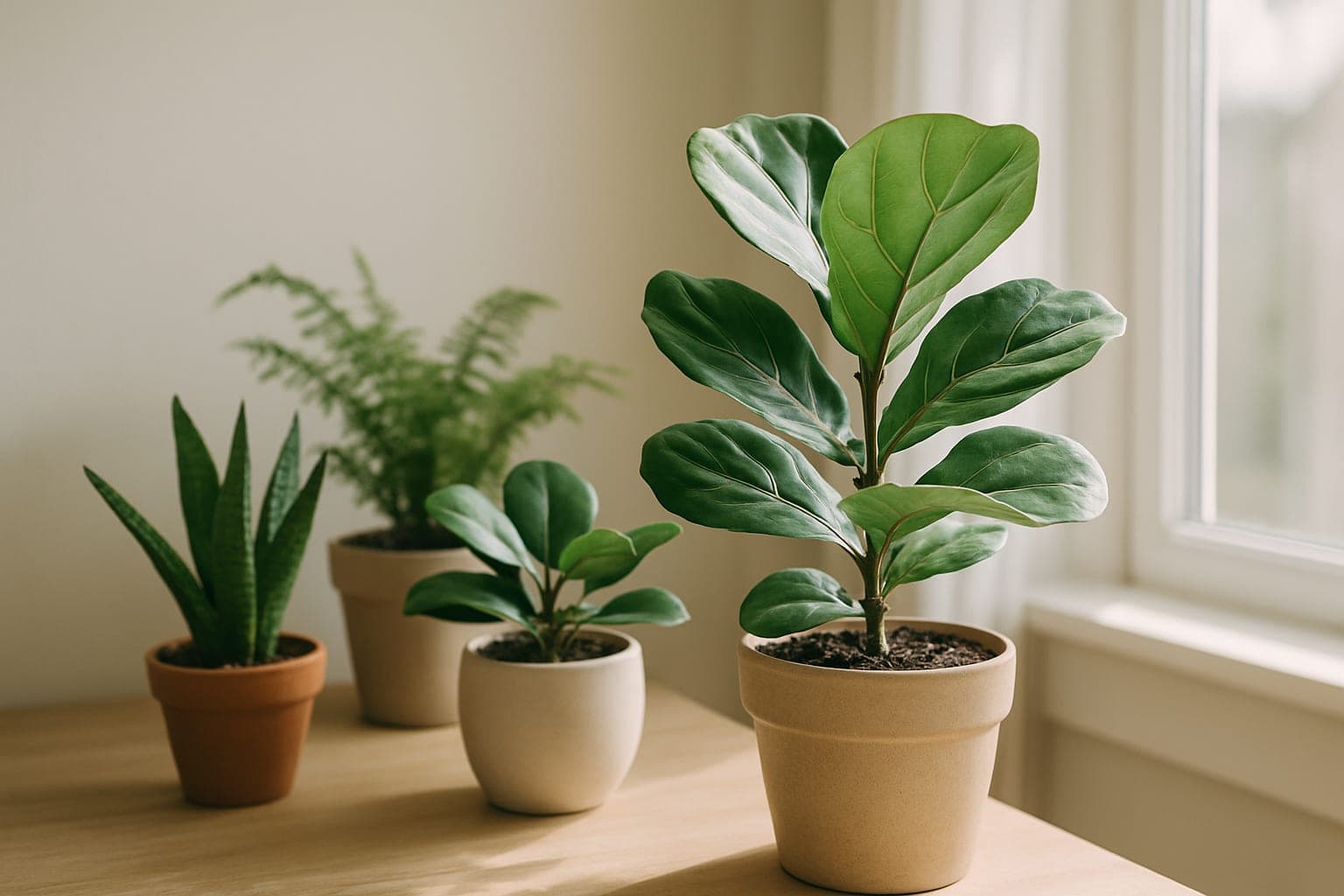
Winter Challenges
Shorter days, lower humidity, and temperature fluctuations stress indoor plants during winter.
Adjust Watering
Reduce frequency as growth slows. Soil dries slower in cooler temperatures.
Increase Humidity
Heating systems dry air. Group plants, use humidifiers, or place on pebble trays.
Supplemental Lighting
Consider grow lights if natural light is significantly reduced.
Avoid Cold Drafts
Keep plants away from windows at night and exterior doors.
Stop Fertilizing
Most plants don't need fertilizer during dormancy.
Tools and supplies for this
Products we'd actually buy for this job. Linking to Amazon — if you buy through these links we earn a small commission at no extra cost to you.
- Weston Mill Pottery Terracotta plant pots, 175mm (pack of 10)
Mid-size workhorse terracotta — perfect step-up for plants outgrowing their nursery pots.
- Weston Mill Pottery Terracotta plant pots, 20cm (pack of 5)
Heavyweight 20cm clay for established plants — the porous walls help prevent the soggy roots aroids hate.
- Whitefurze G04012 7.5cm Garden Pot - Terracotta (Set of 10)
Cheap, cheerful plastic propagation pots — what we actually use for cuttings and small offsets.
- Whitefurze G04013 10cm Garden Pot - Terracotta (Set of 7)
Reliable mid-size nursery pots with proper drainage holes — the boring essential every plant parent runs out of.
Dr. Sarah Green
Plant Biologist
Passionate about helping plant parents succeed with expert tips and proven techniques.
Comments(532)
I'd add that tropical succulents especially benefit from backing off watering entirely during winter—mine went through a rough patch years ago when I kept the same summer schedule. Now I let the soil dry out completely between waterings and it bounces back stronger in spring. The light drop is real too, though honestly my single succulent sits in a south-facing window so it manages okay without a grow light.
I'm curious what you mean by tropical succulents—are you growing something like *Echeveria* or *Aloe*, or something more tender like *Portulacaria*? I've found the watering pullback really depends on the species and how cold it actually gets where they are. My *Aeonium arboreum* basically goes dormant in my med climate winters and I water maybe once a month, but a friend in a heated apartment keeps hers on a lighter schedule than summer but not bone-dry. The south-facing window is ideal though—I'm jealous of anyone who has that light advantage without needing supplemental help!
That's really helpful to know—I've got a few tropical plants that I've been watering on the same schedule year-round, so I'm definitely guilty of that. I'm curious though: when you say let the soil dry out completely, do you mean like several weeks between waterings, or just longer than your summer routine? I have a Monstera and some Philodendrons that I'm worried might suffer if I cut back too much, since I'm in a pretty humid tropical climate anyway.
I'd add that the transition period matters as much as the destination—I've found my *Solanum lycopersicum* seedlings respond better to gradual temperature drops than sudden shifts indoors. Worth noting too that "winterizing" looks completely different depending on whether you're in a climate where plants genuinely go dormant versus just slowing down. Most houseplants in temperate zones don't actually need the deep rest people assume.
I'd push back gently on the "one-size-fits-all" winterizing approach—what actually matters depends heavily on your setup. I keep most of my plants indoors away from drafts, so I mainly cut back watering and stop fertilizing; I barely adjust light since my south-facing window helps. The big mistake I see people make is moving plants closer to heaters or cold windows out of habit rather than thinking about their specific conditions.
You've hit on the exact issue I struggle with in my dry climate—I actually have to *increase* humidity as heating kicks in, which totally flips the script compared to what most guides suggest. My Phalaenopsis especially hates that combo of warm air and low moisture, so I moved mine away from the vent entirely and started misting more often (though I know that's not ideal long-term). Your point about drafts and individual setups is spot on; there's really no substitute for knowing your own space.
I've been dreading winter with my one succulent because I live in a pretty dry climate anyway, and I wasn't sure if I should change anything about watering or placement. This post is really helpful—I didn't realize I might need to adjust my light setup even though it's already sunny where I live. Do you have tips for succulents specifically, or are the basics you mentioned pretty universal for them too?
I find winter care gets framed pretty broadly, but for succulents especially, the shift is less about coddling and more about respecting dormancy. Most of mine actually thrive on the cold snap and reduced watering—I've noticed my *Aeonium arboreum* varieties especially appreciate those crisp nights. The real key is resisting the urge to fuss with them during this quiet season.
Great timing on this! I've been scrambling to adjust my indoor herb setup as temps drop here. I'm curious—do you recommend cutting back on fertilizer entirely during winter, or just reducing frequency? My *Ocimum basilicum* always seems to get a bit leggy once the light hours shift, and I'm wondering if that's just inevitable or something I can actually prevent with the right prep.
I've learned the hard way that "winterizing" really just means backing off—less water, no fertilizer, and accepting slower growth. The biggest mistake I made early on was still watering on my summer schedule when my plants were basically dormant. Now I let the soil dry out more between waterings and watch for signs they actually need it rather than sticking to a routine. Are you finding most people overwater in winter, or is that just been my particular struggle?
I've been worrying about my plants as temperatures drop here in the tropics—even though winters aren't as harsh, my indoor temps do dip. I'm realizing I probably overwater during this season out of habit. Does anyone else struggle with adjusting their watering schedule, or is it mainly about moving plants away from cold drafts? I moved my *Monstera deliciosa* away from a window yesterday and I'm curious if that's the main thing I should focus on.
The draft avoidance is definitely important, but you've hit on something crucial—overwatering is probably the bigger culprit in tropical climates where temps only dip slightly. Since growth slows even in mild winters, I'd dial back watering more than you'd think and let the soil dry out a bit further between sessions. Your *Monstera* will appreciate the move away from drafts, but I'd focus on that watering adjustment first since it affects so many plants at once. Are you checking soil moisture before watering, or mostly going by your usual schedule?
I've found that the transition into winter is really where consistency matters most—I nearly lost a Monstera deliciosa last year by watering it on my old summer schedule, which was a hard lesson. Reducing water frequency and checking soil moisture before watering has made the biggest difference for my collection, especially since my tropical plants slow their growth dramatically in lower light. I'm curious if you touched on humidity, since that's been my other winter struggle in a drier climate.
Yusuf, I've learned that lesson too—Monstera can rot fast when dormancy hits and you're still watering like summer. For succulents the shift is even sharper since mine basically stop entirely in winter, so I barely water my collection from November through February. Humidity's tough in my Mediterranean climate regardless of season, but I find it matters less for my sedums and echeveria than it does for tropical plants like yours; have you tried grouping your plants together to create a pocket of higher humidity around them?
I'd push back slightly on the one-size-fits-all winterizing approach. In my mediterranean climate, most of my plants barely notice winter—I just dial back watering and stop fertilizing, which seems to work fine. The bigger issue I've found is artificial heating creating dry air, not the cold itself. Are you writing from a temperate zone where actual frost is a concern, or is this more about general dormancy management?
I've been dreading the winter shift with my herbs—I have this basil that's already looking a bit sad just thinking about shorter days, I'm pretty sure! Would you recommend moving everything away from the windows where cold air might seep through, or is that overkill? I've got about 11 plants total and I'm still figuring out the balance between giving them light and protecting them from drafts. This was really helpful, though I wish I could upload a photo of my rosemary to ask if it's just being dramatic or actually stressed!
I've found that the biggest mistake I made was waiting too long to adjust my watering schedule—by then my plants were already stressed. Moving them away from cold windows and cutting back on feeding in November has saved me from losing several specimens that were struggling in my first few years. Since I'm in a mediterranean climate, I mostly worry about the rare frost nights, but I'm curious: do you recommend moving plants gradually to lower-light areas before winter, or does sudden relocation not actually stress them that much?
I really needed this reminder—I nearly killed my one succulent last winter by leaving it in a cold draft by the window! Now I'm obsessive about moving it away from the glass once temperatures drop, and honestly it's made all the difference. I've got a photo of how much healthier it looks this year that I'd love to share, but I'm curious: do you have specific tips for succulents in cold climates? Mine's been my hardest plant to keep happy through the freeze.
I've got three plants total and honestly wasn't sure if I needed to change much for winter—my orchid especially seems finicky. Does lowering watering frequency really work for most plants, or is it more about the specific type? I'd love to see what adjustments actually made a difference for people, since I'm still figuring out what my temperate climate needs in the colder months.
I find that winterizing really depends on where you're growing—I'm in a Mediterranean climate, so my winter dormancy looks pretty different from what most guides suggest for temperate zones. My *Teucrium* and other native shrubs actually need *less* water during our mild winters, not the increased humidity everyone recommends. Are you writing this for a specific climate, or should readers be thinking about how their local conditions might shift these tips?
You're so right about climate making all the difference! I'm in a cold zone and learned the hard way that my herbs like rosemary and thyme actually need *less* water in winter too—I used to think the dry indoor heat meant I should mist constantly, but that just invited mold. I'd love to know if you find your *Teucrium* needs any special light adjustments during your mild winters, or if it's mainly the watering that changes?
I've learned the hard way that winterizing is less about doing everything at once and more about gradually adjusting watering as light decreases—my *Ocimum basilicum* got root rot one November when I kept watering on the old summer schedule despite the shorter days. Now I treat the transition like a slow dimmer switch rather than a flip. Are you covering anything specific about humidity, or mainly focusing on watering adjustments?
I'm so glad someone's covering this—I nearly lost my *Ocimum basilicum* last winter because I didn't realize how much it hates the temperature swings near my window! Are you recommending moving plants away from cold drafts, or is humidity adjustment the bigger factor in your experience? I've only got the one basil plant now (learning curve!), so I'm trying to get the winterizing routine down before next season hits.
I feel your pain—basil is such a drama queen about temperature fluctuations. In my experience, drafts are definitely the bigger culprit than humidity for tropical herbs like *Ocimum*. Moving it away from the window is the first thing I'd do, then focus on keeping it in a consistently warm spot (ideally 65°F+). Once you nail that, the humidity tends to sort itself out naturally. Do you have a warmer corner you could relocate it to for the season?
I'm really glad I found this post because I've been wondering if I'm doing too much fussing with my plants when temperatures drop. I keep my home around 18°C in winter and worry that's already stressing them out, but I'm curious whether moving plants away from cold windowsills is equally important as reducing watering, or if one matters more than the other?
I've been dreading winter prep this year since my collection's grown to eleven now! I'm curious though—do you have specific recommendations for veggies like *Solanum lycopersicum* that I'm trying to keep going indoors? Mine are getting leggy under the reduced light, and I'm worried about adjusting the watering schedule without killing them off. I've got a photo on my phone showing how they're looking, but I'd love to hear what's worked for you in a temperate climate like mine.
I'm so glad to see someone tackling winter prep—it's easy to overlook until it's too late. My two orchids have made it through several arid winters now, and the biggest thing I've learned is that dormancy isn't neglect; *Phalaenopsis* especially need that cooler rest period to bloom reliably come spring. How do you typically adjust watering frequency when temperatures drop in your area?
I learned the hard way last winter that my succulents needed way less water than I thought—I nearly killed a beautiful jade by watering it on my usual schedule when it should've been practically dormant. This post is such a timely reminder to actually *change* our routines instead of just crossing our fingers and hoping they survive. My 13-plant collection definitely appreciates it when I remember that winter isn't the time to be generous with the watering can!
I'd add that the definition of "winter" matters hugely here—I keep most of my collection in an arid climate where temperatures rarely drop below 50°F, so my *Haworthia* and *Aloe* need almost no adjustment beyond slightly reducing water. The real concern in my zone is dry air, not cold. I find many winterizing guides assume temperate climates with actual dormancy periods, which doesn't apply everywhere.
I'm moving my collection away from the window this winter since my apartment gets drafty, but I'm worried—will they get enough light? I've read that most houseplants slow down growth in winter anyway, so maybe lower light is okay during that season? I've noticed my Monstera deliciosa seems fine in a shadier spot, but I'm not confident about the others. Any thoughts on how much light is really necessary when temps drop?
I've been moving my tropical plants away from windows these past few weeks—the temperature swings near glass are brutal. The hardest part for me in a Mediterranean climate is that we don't get the obvious cues other regions do, so it's easy to forget plants need less water when growth naturally slows. Have you found that people often overlook the watering adjustment, or do most gardeners catch that instinctively?
You've hit on something I struggle with too—I kept overwatering my *Myrtus communis* last winter because everything looked fine outside. The slow-growth signal is so subtle in our climate that I didn't realize until spring it was getting leggy. I'm curious whether you adjust based on soil moisture checks, or do you have another method to catch when they actually need less?
I've definitely learned this the hard way with my orchids—last winter I kept mine in the same spot by a drafty window and watched the poor thing sulk for months! Moving them away from cold air made such a difference, and honestly, I've found that dialing back watering is the hardest part since it feels counterintuitive when everything inside is so dry. My arid climate makes it even trickier, so I'm always hunting for that sweet spot between dormancy and not letting them completely shrivel up. Thanks for putting together such a practical guide!
I've learned the hard way that "winterizing" really just means backing off—less water, no fertilizer, and accepting slower growth. My biggest mistake was overwatering during the dormant months, which killed more plants than actual cold ever did. The tricky part for me in a mediterranean climate is that our winters are mild enough that some plants never truly go dormant, so I end up treating each one individually rather than following a blanket schedule. What's your approach when plants don't show obvious signs of slowing down?
I've found that the biggest mistake people make is actually *reducing* water too much—in my Mediterranean climate, indoor heating dries things out fast, so my plants often need more frequent watering in winter, not less. The light drop is the real issue to manage. What's your take on supplemental grow lights, or do you prefer just letting plants go dormant during the dark months?
I'd add that succulents are genuinely low-maintenance through winter if you just stop watering—I barely touch mine from November through February and they thrive. The real trap is overwatering thinking they need help during dormancy. Have you found that approach works with your collection, or do you still water on a set schedule?
I'd push back slightly on the one-size-fits-all winter approach—at least in my arid climate, the bigger challenge isn't cold itself but the bone-dry indoor air from heating. My *Schlumbergera* actually thrrive with cooler nights, but my succulents need almost zero extra water, whereas tropical species like *Anthurium* can get stressed by both temperature swings and low humidity. The real key seems to be matching dormancy patterns to your specific plants rather than applying blanket rules.
I just moved my Monstera deliciosa and pothos away from the cold window—didn't realize how much temperature fluctuation could stress them until my leaves started getting those weird brown spots! This is really helpful because I have four plants total and honestly wasn't sure if I needed to change my watering schedule for winter or just the location. Do you recommend cutting back on fertilizer too, or is that mainly about reducing water?
I've been obsessing over this since I moved somewhere with actual winters—my one plant (a *Polystichum acrostichoides* I rescued from a local nursery) nearly didn't make it through last year because I didn't adjust watering soon enough. The biggest game-changer for me was checking soil moisture way less frequently once temps dropped, since evaporation basically stops. Are you finding your readers struggle more with overwatering or underwatering during the cold months?
I learned this the hard way last winter—lost a couple of my tomatoes when I didn't adjust watering fast enough as things cooled down. Now I check soil moisture way more carefully and pull back on the fertilizer too, since growth basically stops anyway. Are you finding that your Mediterranean plants handle the temperature drop better than tropical varieties, or do you still have to baby them indoors?
I'm still figuring this out honestly—I have a few Mediterranean herbs that seem unbothered by the cold, but my fig is definitely struggling indoors this time around, so I think I need to do what you did and dial back watering. Did you find a specific way to check soil moisture that works better in winter, or is it just the usual finger test? I've got six plants total and they're all behaving differently, which is frustrating but I guess that's part of learning.
I needed this reminder—I always panic when the temperatures drop and suddenly forget everything I know about my herbs! My basil basically threw a fit last winter when I moved it away from the window, so I'm definitely bookmarking this for next time. Do you have any tips for keeping rosemary happy indoors when it's cold, or does it just prefer to sulk until spring?
I'd add that temperature *consistency* matters as much as absolute cold tolerance—those sudden drops near windowsills or drafty doors can shock even hardy species more than a steady 55°F would. I've found my *Solanum lycopersicum* (cherry tomatoes) actually thrive under grow lights in winter if I keep them at a steady temperature rather than trying to keep them alive in fluctuating ambient conditions. Worth considering before assuming everything needs to go dormant.
I'd push back slightly on the one-size-fits-all winterizing approach—my tropical vegetables especially don't need the dramatic changes most guides suggest. I keep my setup consistent year-round with decent grow lights, and honestly that beats the fussing with dormancy periods. I'd have photos of my pepper and tomato plants still producing through winter to show the difference, but the real takeaway is that understanding your specific plants matters more than following a seasonal checklist.
I really appreciate this perspective. You're right that consistent conditions can sidestep a lot of the dormancy drama—especially for tender perennials like *Capsicum* species that'll happily keep producing under good light. That said, I'd gently push back on tropical plants being universally fine with "no changes": my *Aloe* and *Echeveria* actually suffer if I don't give them a genuine cool, dry rest, even indoors. The key you've nailed is knowing what your *specific* plants evolved for, rather than treating winter as a blanket shutdown for everything.
I'm definitely going to bookmark this—last winter I nearly killed my monstera by ignoring how much less water it needed once the days got shorter, and I'm still making up for it! The cold window sills in my apartment are rough on anything tropical, so I've learned to shuffle my smaller plants away from glass on freezing nights. Do you have recommendations for keeping humidity up without constantly misting, or is that just a lost cause in a dry winter home?
I had a similar wake-up call with my Anthurium clarinervium last winter—overwatering when dormancy sets in is such an easy trap to fall into. For humidity without constant misting, I've had good results grouping my tropical plants together on a tray with pebbles and shallow water; the microclimate they create really does help, especially if you can position them slightly away from heating vents. A small humidifier is honestly worth it if you're serious about plants that prefer tropical conditions, though I find even just clustering pots closer together makes a noticeable difference.
Honestly, the hardest part for me in winter is resisting the urge to water more often—I have to constantly remind myself that slower growth means slower water uptake. I've got a tropical veggie setup that really suffers if I overcompensate, so I've learned to just check soil moisture before touching anything. Would love to see if others struggle with this same impulse or if I'm the only one fighting it.
I've been dreading winter with my small collection—especially my orchid, which I'm still figuring out. Does moving plants away from cold windows actually make a big difference, or is that just a minor adjustment? I have a photo of mine right now that shows some leaf yellowing, and I'm wondering if that's normal seasonal stress or if I'm missing something about humidity during the dry months.
I've found that winter is actually when my orchids thrive most in my dry climate—the lower humidity and cooler nights mimic their natural conditions beautifully. The trickiest part for me is resisting the urge to water as much; I have to remind myself that dormancy is a feature, not a bug. Do you find that your watering schedule changes significantly in winter, or does it depend more on your specific plants and environment?
Oh, this is so timely—I just realized half my tropical collection is basically sulking in my cold apartment! I've been trying to group them away from the windows where the drafts are, but I'm still figuring out how much less water they actually need when they're dormant. Do you have any tips for monitoring soil moisture without obsessively checking every pot (asking for a friend who definitely has 11 plants and is definitely overthinking this)?
I've found that the hardest part of winter isn't the cold itself, but remembering to *stop* doing things—especially watering. My herbs always suffer when I keep them on their summer schedule. This year I'm moving my basil and oregano away from the window at night since drafts are worse than I realized. Do you have specific tips for herbs, or does the general advice hold up? I'm curious if anyone else struggles with that mental shift from fall to winter care.
I've learned the hard way that winterizing really does make a difference. Last year I neglected to adjust watering for my tropical plants during the cooler months, and lost a lovely Anthurium that had been thriving. Now I'm much more intentional about reducing water and moving my collection away from cold drafts when the temperature drops—my plants have been so much happier since I started doing this consistently.
I've been dreading winter with my small collection—I have a Monstera, a pothos, and two succulents—because I'm never sure if I'm underwatering or overwatering when everything slows down. Does the reduced watering apply to succulents too, or do they need different treatment since they're already drought-tolerant? My pothos is currently on a shelf pretty far from the window, and I'm worried the lower light combined with cold might stress it out.
I'm always curious how people approach this differently depending on their climate—I'm in a Mediterranean zone, so my "winterizing" looks pretty different from what folks up north deal with. Most of my collection actually perks up when temps drop slightly, especially the native species I've been collecting. Are you finding that humidity becomes the bigger issue than cold itself in most homes, or does it really depend on the plant?
I'm curious about something—I've read that you should basically stop fertilizing in winter, but does that apply to all plants or just the ones that go completely dormant? I have a few that seem to keep growing slowly through the colder months, and I'm worried about starving them if I cut off nutrients entirely. This is my first winter with a bigger collection (just hit 11 plants) so I'm trying to get ahead of things before the temperatures really drop here in the Mediterranean.
I've been dreading this season since my *Monstera deliciosa* started looking droopy last winter—turns out I was overwatering it, which I now know is such a common mistake when the plant slows down. I'm definitely bookmarking this for this year since I only have four plants and I want to actually keep them alive through the cold months. Do you have specific recommendations for watering frequency, or does it vary a lot depending on the individual plant?
I've learned the hard way that winterizing isn't one-size-fits-all—my cold-hardy herbs like thyme and oregano barely need adjusting, but tender ones like basil get moved away from windows immediately. The biggest mistake I made was assuming lower light meant less watering across the board, when really it depends on whether my plants are actively growing or dormant. What's your take on humidity levels indoors during winter, since my collection tends to struggle with the dry air from heating?
I'd push back gently on one thing—I find that drastically cutting back watering for all plants in winter isn't always the move, especially for orchids like the ones I grow in a tropical climate. Mine actually need consistent moisture year-round because the air stays warm and humid regardless of season. The real shift is light and air circulation, not necessarily the watering schedule. Worth checking what your specific plants need rather than assuming winter = drought.
I needed this right now—I've been worried about my succulents since the temperature dropped last week. I have nine plants total and honestly wasn't sure if I should move them away from the window or adjust watering. This post sounds like it'll help me figure out what actually matters for keeping them healthy through the cold months.
I totally get that worry—I've killed my fair share of succulents by overwatering them in winter, thinking I was helping! The good news is they're pretty forgiving once you nail the basics: less water, more light if you can manage it, and keeping them away from cold drafts. I'd love to see a photo of your setup, but honestly, moving them to the brightest window you have and basically forgetting to water for a few weeks is usually the winning formula.
I've found winter to be such a critical time for my collection, especially my orchids which really suffer in the dry air from heating systems. This year I'm being extra vigilant about humidity levels and backing off fertilizer—my Phalaenopsis always thank me for the reduced feeding during dormancy. Do you have specific tips for maintaining adequate moisture without creating conditions that invite root rot?
I've learned this the hard way—lost a tomato plant to cold drafts my first winter! Now I move my veggies away from windows in the evenings and dial back watering since they're not growing as fast. Since I'm in a Mediterranean climate, I don't worry too much about freezing, but that dormancy period still catches me off guard sometimes. Are you finding most folks underestimate how much their plants' needs actually change when it gets cooler?
I've got three plants total and my orchid's been struggling this time of year—it sits near a window that gets cold drafts at night, so I'm wondering if that's actually hurting it more than helping? I'd love to see specifics on temperature ranges since I'm still figuring out what "cool enough" actually means for orchids in a temperate climate. Would upload a photo of mine to show the leaf situation, but yeah, definitely need to nail down the winter routine before something dies on me.
Cold drafts are definitely your orchid's enemy—I learned that the hard way when I killed my first one by a drafty window! Most orchids prefer staying above 60°F at night, so if that window is dropping below that, it's probably stressing it out more than the light is helping. Have you considered moving it just a few feet away from the window, or would a small barrier help block the draft without sacrificing light?
I'm curious how much your advice shifts depending on where people are actually located—I'm in a Mediterranean climate, so "winterizing" for me means something totally different than it would for someone in a cold snap zone! Most of my collection barely notices the season change, though I do dial back watering for things like *Aspidistra elatior* that genuinely prefer a rest period. Are you accounting for that regional variation in your tips, or is this geared toward a specific climate?
I've been dreading this time of year since I moved my monstera and philodendrons away from the south-facing window—they're already looking a bit sulky! My biggest challenge is keeping humidity up when the heat kicks in; I usually mist mine, but I'm curious if you'd recommend a pebble tray setup instead, or is that overkill for tropical plants indoors? I'd love to share a photo of my struggling pothos if I could upload one!
I've found that most of my plants actually need *less* intervention than people think—watering cuts naturally because growth slows, and I just move things away from cold drafts. The real issue I run into here in the Mediterranean is when we get those sudden cold snaps; I've lost more plants to temperature shock than anything else. Are you finding that people over-fuss with humidity and fertilizers in winter, or is that just my experience?
I totally relate to the temperature shock thing—I killed a beloved jade once by moving it away from a cold window right into a warm spot, and the stress was brutal. You're spot on about less intervention being better; I've learned to just let my succulents go almost dormant through winter rather than fussing with humidity or fertilizer, which honestly saved me from some overwatering disasters. The hardest part for me in my temperate zone is resisting the urge to baby them when they look a little sad and slow-growing!
I'd gently push back on the idea that all houseplants need the same winterizing approach—especially if you're in an arid climate like I am. My *Lithops* and other succulents actually prefer cooler, drier conditions over winter and need *less* water, not special humidity measures. The real shift for me is adjusting the watering schedule and being mindful of lower light from shorter days, rather than wrapping everything in extra care. Would've been helpful to see the post break down dormancy patterns by plant family.
That's such a good point about succulents needing less fussing in winter—I've been worried I was doing something wrong with mine since all the general advice seemed to emphasize humidity and extra care. I'm in a cold climate though, so I'm still figuring out how dormancy works differently for my native plants compared to tropical ones. Do you find that your *Lithops* actually go fully dormant, or do they just slow down?
You're spot on—dormancy patterns vary wildly, and lumping everything together doesn't help anyone. I'm in a tropical climate where I barely slow down watering at all, and honestly, my succulents (I've got a few scattered in my small collection) would rot if I treated them like my vegetable plants indoors. The light issue is universal though; that's where I notice the real difference across my plants. A breakdown by family would've made the post actually actionable instead of generic.
I've found that winter can actually be easier on herbs than people think—my basil and parsley practically slow down on their own, so I just cut back on watering and move them slightly away from the cold window. The trickiest part for me has been resisting the urge to fertilize when they're dormant. Do you have specific tips for dealing with the dry air from heating systems, or is that something you'd recommend addressing in a follow-up post?
I've been meaning to dial back watering on my basil—*Ocimum basilicum*—since the days got shorter, so this is perfect timing! I'm in a temperate zone where indoor temps drop pretty noticeably, and I've noticed the soil stays wet way longer than it does in summer. Are you finding that most people struggle more with overwatering in winter, or is it the light that tends to trip people up first?
I've learned the hard way that the biggest mistake is moving plants away from windows in winter—they need even more light when days are short, not less. I also cut back watering significantly for most of mine since they're barely growing, and I stopped fertilizing entirely until spring. My pothos and snake plant barely notice the change, but my ficus gets dramatic if I'm not careful with the temperature swings away from vents.
I just moved my collection away from the north-facing windows and noticed how much slower my *Monstera deliciosa* grows once temperatures drop—even indoors. The biggest shift for me was cutting back watering frequency; I was overwatering out of habit until I realized the soil stays damp much longer in winter. Since then, my plants seem much happier and I've had far fewer root issues, especially with the more sensitive species like my *Anthurium* clarinervium.
You've hit on something really important there—that slower metabolism in winter catches so many of us off guard. I made the same overwatering mistake my first few years, and it wasn't until I actually started checking soil moisture before watering that things improved dramatically. The *Anthurium clarinervium* is especially finicky about it, so it's great you caught that pattern before losing any. Did you end up adjusting your watering schedule for different plants, or did you find a general rhythm that works across your whole collection?
I needed this reminder! I've already lost a basil plant to the cold snap last year because I moved it away from the window without thinking it through. This time I'm keeping my herbs closer to the glass even if it means rotating them a bit more—they seem to appreciate the light even on cloudy winter days. What's your take on watering frequency in winter? I always second-guess myself on how much my rosemary and thyme actually need.
I've been dreading this time of year since my tropical plants are so sensitive to the temperature drops in my apartment! I moved my monstera and philodendrons away from the window last week, and I'm already seeing a difference in their growth rate—which honestly feels a bit depressing. Do you have specific recommendations for humidity levels indoors, or is a basic misting routine usually enough during winter months? I'm curious whether you'd suggest investing in a humidifier, since I've heard mixed things about whether it's actually necessary.
I've learned the hard way that moving my plants away from cold drafts makes such a difference—I used to leave mine right by the window in winter and they'd really suffer. Now I group them in a warmer corner of my living room, and they bounce back so much better. The humidity drop in winter gets me every time though, so I've started misting my three plants more frequently to help them through those dry months.
I've found that winter actually brings out the best in my orchids—the temperature drop and lower humidity in my arid climate seems to trigger blooming in some of my Phalaenopsis. That said, the reduced light is always my biggest challenge this time of year, so I'm curious whether you addressed supplemental lighting in the full post, or if you have other strategies you rely on when days get shorter?
I'm trying to figure out the watering schedule shift for winter—does it apply the same way across different plant types, or do tropical plants like my Monstera deliciosa need a different approach than, say, succulents? I have about nine plants total and I'm worried I'll overwater during the dormant season. I'd love to see if there's a simple way to tell when soil is actually dry enough before watering, since I feel like I'm guessing a lot right now.
I'd add that cold drafts are way more damaging than most people realize—I learned this the hard way with an orchid that dropped all its buds one winter. Now I keep my plants away from windows during the coldest nights, even though it means less light. The payoff is worth it, especially if you're in a climate like mine where temps swing wildly.
I've been dreading this time of year with my tropical collection—I'm in a temperate zone, so winter's always a bit of a juggling act. Do you go into detail about humidity in the full post? That's honestly my biggest struggle; my monstera and anthuriums really start sulking once the heating kicks in. I actually just moved a few of my 11 plants away from the window ledges, which I know sounds counterintuitive, but I'd rather sacrifice some light than deal with cold drafts. Would love to hear what you prioritize when you can't do everything perfectly!
I've been dreading this conversation with my plants! I kept my Monstera deliciosa in a drafty spot last winter and it really suffered, so I'm grateful for a reminder about what actually needs to change. Quick question though—do you adjust watering frequency for all houseplants in winter, or just the ones that go dormant? I have a pothos, a snake plant, and a couple of succulents, and I'm never quite sure if I'm under- or over-watering them this time of year.
I've found that winter is actually when my herbs need the most attention—especially my basil, which gets so leggy indoors under grow lights. My biggest tip is moving plants away from cold windows at night; I learned that the hard way when a drafty sill dropped temps way faster than I expected. Are you finding certain plants in your collection struggle more than others when temperatures drop?
I really appreciate you bringing up the cold draft issue—that's such a common overlooked culprit. With my succulents, I've found winter is actually when I *reduce* fussing rather than increase it, since they're dormant and need less water anyway. But you're right that placement matters hugely; I keep my tender species like Aeonium arboreum well away from any temperature swings. Basil's a different beast altogether though—it's not really built for the dormancy game like my echeveria are, so your attentiveness there makes total sense.
I'd push back slightly on the "winterize everything" approach—my orchids actually need less fussing in winter, not more. The key for me has been understanding that most plants just want less water and light, not a complete care overhaul. Cutting back on fertilizer makes sense, but I've found that obsessing over humidity levels or moving plants around constantly does more harm than good, especially in a tropical climate where the temperature swings aren't dramatic anyway.
I've found winterizing to be such a game-changer for my collection, especially with the orchids—they actually seem to appreciate the cooler temps and reduced light that come naturally this time of year. The trickiest part in my arid climate is maintaining humidity without overdoing the watering, since the heating really dries everything out. Are you finding that dormancy strategies differ much depending on whether plants are tropical versus temperate origin?
I'd agree on the humidity challenge—that's where I see most people struggle in winter. With my tropical veggies in particular, I've had better luck grouping them closer together and using a pebble tray than fussing with a humidifier. The watering part is simpler than folks think: I just check soil moisture before watering rather than following a schedule. Tropical plants definitely need a different approach than temperate ones, but honestly it comes down more to what your specific plant actually needs in dormancy rather than where it's from.
I just realized I've been completely winging my winter setup—my basil and parsley are looking a bit droopy near the window, and I'm honestly not sure if it's the cold or me overwatering them (probably both!). I'd love to know if moving them further from the glass helps, since I'm worried about temperature swings at night. Do you have tips for keeping herbs happy indoors specifically, or is it pretty much the same as other houseplants?
I've found that the drop in humidity during winter is often more challenging for herbs than the cold itself—I run a small humidifier near my basil and oregano to keep them from getting too stressed. The shorter daylight is real too, but I've resisted grow lights so far and just accept that my Ocimum basilicum grows slower this time of year rather than pushing it artificially.
I've learned the hard way that winterizing herbs is crucial—my basil collection basically died the first winter I didn't adjust my watering routine! Now I keep my rosemary and thyme on a south-facing windowsill and cut back watering significantly since they're not growing as fast in the cold. Do you have specific tips for herbs, or are you covering all houseplants in the post?
I've found winterizing is mostly about adjusting watering—plants genuinely need less in cold months, and overwatering kills more than cold does. With my orchid in a genuinely cold climate, I've had to dial back frequency significantly and watch the humidity levels closely since heating dries everything out. The bigger challenge honestly isn't the cold itself but managing that dry indoor air that comes with it.
I've found that most of my succulents actually need *less* fussing in winter rather than more—reduced watering is obvious, but I always drop feeding entirely once temps dip below 50°F. The tricky part is light, especially in northern climates; I've had to rotate my collection closer to south-facing windows to avoid etiolation. Are you finding that winter dormancy timing varies much depending on whether plants are indoors under artificial light versus in natural conditions?
I'm getting nervous about winter—I've got 9 plants and I'm still figuring out the humidity thing, especially since my tropical species like *Monstera* and *Anthurium* seem to struggle when the heating kicks in. Would you recommend grouping plants together to create a more humid microclimate, or is that overthinking it? I'd love to see how others handle the seasonal shift without losing leaves!
Grouping is definitely worth trying—I've found it helps, though I'd add that moving plants away from heating vents matters just as much as the humidity itself. With *Anthurium* especially, the dry air from heating is often the real culprit rather than absolute humidity levels. Since you've got tropicals, even just misting a couple times a week or setting them on a pebble tray with water can make a noticeable difference without needing to overhaul your setup.
I'm so glad someone spelled this out—I nearly killed my rosemary last winter by just... leaving it exactly where it was in summer! I've learned the hard way that even herbs that *seem* tough need less water when it's colder, which still catches me off guard. My basil didn't make it, but at least my oregano survived once I moved it away from that drafty window. Really looking forward to reading the full post since I've got nine plants total now and I'm definitely doing something wrong with the seasonal shift.
I've been trying to figure out the right watering schedule for winter—my Monstera deliciosa seems to need way less water than it did in summer, but I'm worried I'm underwatering. Should I be checking soil moisture differently in colder months, or is it just a matter of letting the top inch or two dry out like usual? I recently moved my whole collection away from the window to avoid cold drafts, which I think has helped, but I'm still nervous about getting it wrong.
I've learned the hard way that "winterizing" really just means cutting back on water—most houseplants don't need the fuss people think they do. My biggest mistake was moving everything away from windows to protect them, which actually stressed them more than the cold ever would. Since I switched to leaving my plants in their bright spots and just watering less frequently, I've had way fewer problems. What's your take on humidity during winter, especially for tropical species in a dry climate?
You're spot on about the window move—that's a mistake I made too. In my arid climate, I actually found the bigger issue was *increased* dryness indoors once heating kicks in. For my tropical plants, I group them closer together to create a tiny humidity pocket and mist occasionally, but honestly, reducing watering frequency has been more important than chasing humidity levels. Less water + good light has worked better for me than any humidifier ever did.
I've definitely learned this the hard way—my Phalaenopsis nearly didn't survive last winter because I kept it too close to a cold window in my arid climate. Now I move my three plants away from any drafts come November and resist the urge to water as much, since they're barely growing anyway. The biggest shift for me has been accepting that "less" really is more during those dark months!
I'd add that cold drafts matter way more than people think—I've had orchids struggle not from low temps but from constant air movement near windows. Since I'm in a chilly climate, I just moved mine back from the sill in November and saw immediate improvement. Watering less is obvious, but I found spacing plants slightly farther apart helps too, just to avoid moisture sitting around when humidity drops. I have a photo of my phalaenopsis from last winter that actually rebloomed indoors, though the trick was really just keeping it away from the heater vents.
I love this timing! I've been shifting my watering schedule already, though I'm curious if you touched on dormancy—I find most people assume their plants need less water across the board, when really it depends on the species. Like, my *Citrus* stays fairly active through mild winters here in the Mediterranean climate, while my *Nerium oleander* basically hibernates. Are you covering that kind of nuance, or more the universal stuff like reducing fertilizer?
I'm so glad I found this post—I've been worried about my four plants as the temperatures drop. I'm still figuring out the difference between dormancy and actually killing them, so I'm curious whether all houseplants need the same winterizing approach or if it varies depending on what you're growing?
It definitely varies—herbs especially need different treatment than tropical plants. My basil and cilantro basically check out when it gets cold, so I've moved to accepting shorter seasons or starting fresh indoors under lights. Succulents want less water but don't really go dormant the same way. Are you growing mostly tropical houseplants, or do you have some herbs mixed in?
I'm totally in the same boat—I have nine plants and honestly still get nervous this time of year! From what I've gathered so far, it really does seem to vary a lot depending on the plant, especially since I'm growing mostly natives suited to arid climates. Like, some of mine seem to barely slow down while others go pretty dormant. Have you figured out which of your four plants are the pickier ones about winter care?
Great question—it absolutely varies. Plants from arid zones like my *Aloe* and *Euphorbia* essentially want to dry out and rest, while tropical species such as *Anthurium* just slow down and still need consistent moisture. The key difference is that dormancy means minimal growth and water uptake, not necessarily cold exposure; most houseplants won't actually go dormant unless temperatures drop below 50°F or so. I'd suggest checking what climate each plant comes from—that'll tell you way more than a one-size-fits-all winterizing guide ever could.
I'm so glad someone's covering this—winter is really when houseplant care gets interesting. In my tropical setup, I've found that cutting back on watering and moving my plants away from cold drafts makes all the difference, especially since I'm working with such a small collection where every plant matters. Have you found that certain plants need dramatically different winter treatment than others, or do you take a pretty uniform approach across the board?
I've got 6 plants and honestly winter always throws me off—I'm never sure if I'm underwatering or if they just naturally need less. My pothos seems fine, but I think my snake plant got too cold by the window last year and hasn't recovered the same. Should I be moving everything away from windows entirely, or just the sensitive ones? I'd love to see what other people are actually doing because the general advice doesn't always match up with my Mediterranean climate where it doesn't get that cold.
I find a lot of guides gloss over the humidity piece—everyone talks about cutting water, but in Mediterranean climates like mine, winter heating absolutely tanks the air moisture, and my *Laurus nobilis* really suffered until I started grouping plants closer together. Are you covering humidity strategies, or mostly focusing on watering adjustments? I'm curious whether you're assuming tropical houseplants or if there's advice for tougher stuff that actually *wants* cooler temps.
I've learned the hard way that the biggest mistake is moving plants away from windows in winter—even though there's less light, they still need what little is available. I keep my tropical collection (including a temperamental *Anthurium clarinervium*) in their sunniest spots year-round and just dial back watering instead, which has made a real difference in preventing the leggy growth and leaf drop I used to get.
That's really helpful to know—I've been worried about my orchids getting too cold by the windows, but it sounds like the light trade-off might be worse. I'm in a pretty chilly climate and have nine plants total, mostly tropical, so I'm still figuring out what works. Did you find your *Anthurium* needed any other adjustments for winter besides the watering change, or was that the main thing? I'd love to know if you had to adjust humidity or anything else.
That's such a solid point about light—I made that exact mistake when I first started and spent a whole winter watching my *Philodendron* get skeletal. I've noticed the same thing with my tropical plants: keeping them in the brightest available spot and reducing water frequency makes way more difference than I'd expected. The reduced watering part is key since they're not actively growing in winter anyway, so I actually check soil moisture more carefully than I used to during summer.
I've been dreading winter since I moved to a tropical climate originally—it's weird how the shorter days still affect my plants even when it stays warm! I noticed my Monstera deliciosa started looking pale last January, and I realized I was overwatering because I wasn't checking soil moisture properly in lower light. Now I'm more careful about spacing out watering and moving things closer to my brightest window, which has made a real difference. What's your take on fertilizing during winter—should I cut it back completely or just reduce it?
I'd gently push back on the assumption that all houseplants need winter prep—it really depends on your growing conditions. My orchids, for instance, actually benefit from the cooler, drier air of Mediterranean winters, and I've found they're more forgiving during this season than in summer. The trickier part for me is managing the reduced daylight and occasional heating-induced humidity drops, rather than "winterizing" in the traditional sense. Curious what specific practices you're recommending!
I'm so glad I found this—I just realized half my herb collection is probably going to sulk through winter! I've had better luck keeping my basil and oregano alive by moving them away from the cold window and closer to a lamp, which sounds silly but actually seems to help with both the temperature and light. Are there specific herbs that need extra attention, or should I just assume they'll all slow down anyway?
That's not silly at all—I do the exact same thing with my basil and oregano! I've found that moving them away from cold drafts makes a huge difference, especially since they hate the temperature swings. Honestly, oregano is pretty forgiving once it's out of the cold, but basil really does need that extra light or warmth to sulk less visibly, so you're already on the right track.
I love that you're covering this topic, since winter is when so many of us struggle with our tropicals indoors. I've found that moving my plants away from cold windows and grouping them together really helps maintain humidity—especially important for my Monstera deliciosa and Anthurium clarinervium when the heat comes on. Are you finding that your readers' biggest challenge is watering less frequently, or something else entirely?
I learned this the hard way last year when I moved my tropical plants too close to a cold window—lost a couple of beauties to the temperature shock. Now I'm religious about checking drafts and adjusting watering schedules before the colder months hit. These kinds of seasonal shifts make all the difference, especially since most of my collection comes from warmer climates and really struggles when conditions change suddenly.
I've been dreading the season change with my little Mediterranean herb collection—just three plants, but I'm protective of them! I'm curious whether you lean toward moving them to a brighter window or if you recommend supplemental grow lights? My oregano and marjoram seem to get leggy indoors, so I'm wondering if that's a winter inevitability or something I can actually prevent.
I'd honestly skip most of the fuss unless you're in a genuinely cold climate. I grow mostly vegetables in a tropical setup, so my bigger concern is actually the opposite—keeping humidity up when AC runs constantly and managing the shift in light. If you do live somewhere with real winters and your plants move away from windows, dial back watering significantly; that's the one thing that genuinely tanks plants this time of year. I've got a photo of my chili plant that made it through fine just by sitting further back from the window, but mostly I think people overthink the seasonal shift.
I'd add that it's worth checking your plants' *actual* dormancy patterns rather than assuming all houseplants need the same winter treatment. My *Capsicum annuum* actually stays fairly active under grow lights through winter, whereas most tropical species do genuinely slow down. The key difference seems to be light availability—if you're not supplementing with artificial light, then yes, reducing water and fertilizer makes sense, but I've found that without addressing the underlying light deficit, plants often just decline rather than properly rest.
This is such a good point—I definitely fell into the "winter means everyone hibernates" trap with my collection! I've got eleven mostly tropical plants crammed into a cold climate, and I think I've been underwatering everything out of habit rather than actually watching what they need. Do you find that grow lights are pretty essential if you're not near a bright window, or have you had decent luck with just being more selective about which plants get the light treatment?
I'm really glad you're covering this topic—winter can be such a tricky season for tropical growers like me. I've found that dialing back watering is just as important as adjusting light, especially since my plants are practically dormant in the cooler months. Have you noticed differences in how quickly soil dries out once the heating kicks in, or does that vary a lot depending on someone's setup?
I've learned this the hard way—my monstera nearly didn't survive last winter because I kept watering it like it was summer. The biggest game-changer for me was backing off the water schedule once temps dropped; tropical plants basically go dormant when it gets cold, so they need way less. I'm already moving my 10 plants away from the windows at night since that's where the cold drafts hit hardest. Do you have tips in your post for dealing with low humidity? That's always been my trickiest challenge in the cold months.
Oh, the watering trap—I fell into that one too! I killed a perfectly good aloe my first winter by treating it like summer, so now I basically put my succulents on a watering fast once the temps drop. The humidity thing is brutal though; I've had my jade plants looking pretty sad on the windowsill. I've started grouping them together and setting them on a pebble tray with a bit of water underneath, which seems to help without risking the root rot that would finish them off.
I've found that most of the winterizing advice out there overcomplicates things. For me it really comes down to two things: cut back watering significantly since growth slows, and move anything tender away from cold windows. I keep my four plants on an interior shelf away from drafts once temperatures drop, and honestly that's been enough in my Mediterranean climate where winters are mild. Are you covering any specifics about watering frequency, or more general seasonal adjustments?
I always forget that my Ocotillo (Fouquieria splendens) actually *wants* to go dormant in winter—took me two seasons of overwatering before I learned that lesson! This is such a crucial post because the instinct to coddle plants through cold snaps can backfire faster than you'd think. Are you finding that most people's biggest winterization mistake is watering frequency, or do you see other patterns in what trips folks up?
My orchids have taught me the hard way that winter in an arid climate means way less humidity than they'd like—I killed my first one by basically ignoring that fact! Now I actually mist mine more often during the cold months (even though it feels counterintuitive) and keep them away from heating vents. I'd love to share a photo of how my current orchid's finally thriving, but the struggle was real getting here. Thanks for the reminder to actually think about seasonal shifts instead of just watering on autopilot.
I'd gently push back on the assumption that all houseplants need the same winterizing approach—it really depends on what you're growing and your climate. My orchids, for instance, actually need *cooler* nights in winter to trigger blooming, so I'm deliberately *not* protecting them from temperature drops the way I would, say, a tropical Anthurium. Here in the Mediterranean, the bigger challenge is usually maintaining humidity indoors when heating kicks in, rather than preventing cold damage. Would be curious what specific plants and conditions you're addressing in the tips.
I've found that winterizing really comes down to understanding what each plant actually needs—my cold climate means I'm basically babysitting my five plants through November. The one thing I wish more people talked about is how drastically watering changes; I made the mistake of keeping my native sedums on their summer schedule and nearly lost one. Do you find that humidity matters as much as people say it does, or is that more of a tropical plant thing?
I've learned the hard way that winterizing is so worth the effort—last year I didn't adjust my watering for my tomatoes in time and they really suffered. Since I'm in a Mediterranean climate, I don't have to worry about frost, but the shorter days and cooler temps still mess with my plants' growth. I'd love to see how you handle reduced light, because that's been my biggest challenge with my small setup. Do you have specific tips for vegetables, or is this more general houseplant advice?
I've learned the hard way that most of my plants actually need *less* water in winter, not more—I killed a succulent by overwatering when growth had already slowed. The biggest thing that helped me was moving everything away from cold windows and grouping plants together to create a more humid microclimate, especially in my dry climate where heating totally zaps the air.
I'm always a bit nervous about winter care since my mediterranean climate doesn't really prepare me for it—most of my plants have never experienced a true cold season. This is helpful, though I'm curious whether the tips change much if your home stays around 65-70°F year-round? I wonder if some of us in milder climates might be overthinking the "winterizing" part.
I've found that the trickiest part of winter isn't the temperature drop itself, but the dramatic shift in humidity—especially with heating systems running constantly. My Anthurium clarinervium nearly lost all its leaves last year until I started grouping my plants more closely together and misting regularly. The reduced watering frequency is straightforward enough, but I'd add that checking soil moisture by weight rather than just appearance makes a real difference when growth slows down.
I find a lot of general winter advice assumes everyone's in a cold climate, but I'm curious how you're approaching this in warmer zones—I've got mostly Mediterranean natives in my collection, and honestly, winter here is when things start thriving rather than struggling. Do you have specific tips for folks whose challenge is *preventing* dormancy rather than encouraging it, or should we really just ignore the seasonal shift altogether?
I've found that winter watering is really where most people slip up—my orchids especially suffer if I don't dial back the frequency once the light drops. The bigger win for me has been moving plants away from cold windows at night rather than obsessing over humidity, which honestly does less in a Mediterranean climate like mine. Would've saved myself some leaf drop years ago if I'd focused on those two things instead of trying to create some perfect winter microclimate.
I'm totally with you on the watering—I made that exact mistake with my basil and oregano my first winter, kept them on the same schedule and they just rotted. Moving plants off the cold windowsill at night has been huge for me too, though I've found it also helps to check if they're getting enough *light* during the day since that affects how much water they actually need. Does it ever feel like people overthink the humidity thing in our climate when really the air just isn't that dry to begin with?
I'm so glad you covered this—I learned the hard way that my succulents don't appreciate the dramatic temperature swings from sitting near a heating vent! Moving them away from those hot drafts made a real difference, and honestly, it's been the one seasonal adjustment that's saved me from a lot of shriveled leaves. My collection of 13 has gotten so much happier since I started treating winter more intentionally instead of just... hoping for the best.
Heating vents are definitely a trap—I've seen the same damage on orchids, which are finicky enough already. The temperature swings are worse than the cold itself in my experience. I've got five plants total and my Phalaenopsis basically shut down until I moved it away from the radiator, even though the room stays cool overall. Your point about intentional adjustments over hoping for the best is spot on; that's what actually works.
I've learned the hard way that most of my herbs—basil, cilantro, and parsley especially—actually prefer the cooler temperatures if you can keep them consistently above 50°F. The tricky part for me in my climate is the dramatic day-length drop; I've had to start supplementing with grow lights around November or watch them just give up. Are you finding that light becomes the bigger limiting factor than temperature for your readers' indoor herbs?
I've got three plants I'm trying to keep alive through winter and honestly the hardest part for me is figuring out watering—do I really water less or is that just a myth? My orchid especially seems confused about the shorter days. I'd love to see a post diving deeper into that because most guides just say "water less" without explaining why, you know?
I totally get the confusion—"water less" is such unhelpful advice without context! The real issue is that your plants are growing slower in winter because there's less light, so the soil stays wet longer and they need less frequent watering, not necessarily less water *per amount*. With my orchid, I actually found it helpful to check the pot weight instead of guessing—if it still feels heavy, I skip it another day or two. Have you noticed if your orchid's dropping leaves or just looking kind of stalled out?
I'm curious whether you're focusing on tropical houseplants or if you're covering cold-hardy types too—my approach shifts pretty dramatically depending on that. I've found that a lot of general winterizing advice assumes everyone's dealing with tender species, but I keep several Mediterranean natives that actually thrive with cooler dormant periods. Are you touching on reduced watering and light adjustments, or going deeper into things like humidity control?
I find a lot of winterizing advice tends to assume one-size-fits-all dormancy, but I've had better luck with my succulents treating winter more as a shift than a shutdown. Most of mine actually slow their growth rather than stop it entirely, especially indoors where temperature swings are modest. The key for me has been dialing back water frequency while keeping light consistent—dormancy in my collection usually means less watering, not abandonment.
I really appreciate this take—you're right that dormancy isn't always binary, especially indoors. I've noticed the same thing with my cold-hardy natives; they slow down but don't fully pause. My question is how you're handling light during winter months? I've been debating whether to supplement with a grow light or just let them adjust to shorter days, since I'm in a pretty dim climate and don't want to confuse them if I suddenly ramp light back up in spring.
I'm glad someone's covering this—winter can be rough on tropical plants, especially in my dry climate where heating really zaps humidity. I've had to get creative with my orchids; I group them closer together and run a humidifier nearby to keep my *Phalaenopsis* happy since the air gets so thin. Did you touch on adjusting watering schedules, or is that something you're planning for a follow-up post?
The grouping trick is solid—I do the same with my ferns and calatheas. I'd add that I actually water *less* in winter despite the dry air, since my plants aren't growing much anyway and sitting soil dries slower. It's counterintuitive but overwatering is what gets me every time once the heat kicks in. Your humidifier setup sounds like it's working well though; I've found even just misting the leaves around my orchid helps on the driest days.
I've been dreading winter because my monstera always looks so droopy by February, and I think I've been overwatering it when the soil stays wet longer in the cold. This post is exactly what I needed—I'm especially curious about whether I should move all four of my plants away from the window drafts, or if some can handle it better than others? I've heard succulents are tougher in winter, but I'm not totally sure what the actual difference is.
I just moved my collection indoors last week and was dreading the adjustment period—this timing is perfect! I've been paranoid about my *Solanum lycopersicum* dropping leaves, so knowing I should dial back watering is reassuring. Do you have specific recommendations for humidity levels indoors, or is a basic pebble tray enough? I'm in a temperate zone with pretty dry heating, and I'm wondering if that's going to be my biggest challenge this season.
I've definitely learned this the hard way with my *Phalaenopsis* — one particularly dry winter I forgot that even orchids need less water when growth slows down, and nearly lost the whole thing to root rot. Now I make a point to check my watering schedule the moment temperatures drop, since my arid climate means the heating kicks on and everything dries out faster anyway. The trickiest part has been resisting the urge to fuss over my small collection during dormancy!
I've found that cutting back on watering is crucial, but honestly the hardest part for me is resisting the urge to move everything away from windows—I know they need that light even more in winter, so I just accept the cold drafts and position mine carefully instead. Are you covering any tips about humidity? That's been my biggest winter struggle in my Mediterranean climate, since indoor heating dries everything out so fast.
I learned the hard way that moving plants away from cold windows makes such a difference in winter—I lost a beautiful pothos to drafts before I figured that out. Now I group mine together in a warmer spot, and they're so much happier. The reduced watering is key too, since they're barely growing anyway.
I find myself rethinking "winterizing" entirely since moving to a Mediterranean climate—my Ruscus aculeatus and other native shrubs honestly thrive with minimal intervention once established. That said, I think your framing is spot-on for tropical houseplants indoors; I'm curious whether you're touching on the humidity drop that happens with heating systems? That's been the real culprit in my experience, more than temperature itself, and it's caught me off-guard more than once with my collection.
I'd push back gently on the idea that all houseplants need the same winter treatment—it really depends on what you're growing. My vegetables under lights actually need *more* attention in winter since days are shorter, not less. The bigger issue I've found is overwatering during dormancy rather than cold itself, since most of us keep our homes heated anyway. What specific plants are you covering?
I've found that winter care really depends on where your plants are from—my tropical collection barely needs adjusting since my house stays pretty consistent, but I know that's a luxury not everyone has. The hardest part for me in an arid climate is keeping humidity up without creating moisture problems, so I'm always curious how others balance that during the colder months. What's been your biggest winter challenge with houseplants?
I've been dreading the winter transition with my tropical collection—I'm in a temperate zone so the drop in daylight always throws things off. I find myself watering way less and moving everything away from the cold windows, but I'm curious what you'd recommend for humidity since my heating kicks in and dries everything out? I've got about eleven plants right now and my monstera especially seems to sulk this time of year.
Heating really is the killer for tropical plants in winter—I'd skip the misting routine and instead group your plants closer together to create a humid microclimate, or set them on trays with pebbles and water underneath. The monstera sulking is pretty normal with less light, but honestly, reducing water is the right call; just make sure you're not letting it fully dry out between waterings. Have you tried moving any of them further into the room away from heat vents, even if it means slightly lower light?
I really needed this reminder—my orchids always seem to sulk when the heating kicks in and the humidity drops to desert levels (which, living in an arid climate, is basically year-round for me!). I've learned the hard way that they'd rather sit on a pebble tray with water than anywhere near a heat vent. I have about 14 plants total and that one phalaenopsis is still recovering from last winter's neglect, but I'm determined to do better this year. Would love to see photos of your setup if you have any specific winter tricks!
I learned the hard way that most of my tropical plants hate the dramatic temperature swings near windows during winter—I lost a beautiful Monstera deliciosa to cold drafts before I moved everything a few feet back. Now I'm obsessive about checking my 15 plants are away from any chilly spots, and honestly it's made such a difference in how they hold up through the season. Thanks for putting together a guide on this, since it's easy to overlook until something goes wrong.
Those window drafts are sneaky! I've had better luck with my herbs by moving them back just enough to avoid the worst of it, though I still lost a rosemary to cold shock my first winter—lesson learned. The tricky part is finding that sweet spot where they still get light without the temperature rollercoaster, especially if you're in a climate like mine where it swings wildly between day and night.
I totally feel that—I almost lost a rosemary to drafts last winter before I realized how brutal those temperature swings really are. Now I keep my herbs grouped a bit further from the windows too, though I'm curious if you've found a sweet spot distance-wise? I've been experimenting with moving mine back just enough to avoid the cold but close enough to catch some light, and it's been tricky to balance.
I learned this the hard way last winter when I got lazy about moving my tomato plants indoors—lost three of them to the first frost! Now I'm obsessive about checking my windowsill setups before temperatures drop. My biggest struggle is figuring out the watering schedule since everything slows down so much. Do you have a favorite trick for knowing when to water less frequently, or is it pretty much just watching the soil?
I'd add that "winterizing" really depends on what you're growing—my *Solanum lycopersicum* varieties need something quite different from tropical foliage plants. Since I'm in a temperate zone, I've found that reducing water and backing off fertilizer works for most things, but cool-season crops like leafy greens actually *thrive* with lower light and temperatures, so the blanket approach can backfire. What specific plants or conditions was the post addressing?
I always find winter tricky in my dry climate—my plants actually appreciate the cooler temps, but the heating indoors creates such a moisture desert. I've had to get creative with grouping my tropicals together and using pebble trays more than I'd like to admit. Are you finding that watering needs drop significantly for your readers, or does the low humidity offset that benefit?
I'm glad to see someone addressing this—most guides gloss over the actual differences between what works in theory and what actually keeps plants alive through a cold season. I've found that cutting back on water matters way more than people think, especially for herbs like rosemary and thyme that basically go dormant indoors. My basil always dies off anyway, but the perennials do fine if I let the soil dry out more between waterings. What's your take on humidity? I'm in a dry climate and I'm never sure whether it's worth the effort to mist or group plants together.
I'd skip the misting for those perennials—it's mostly theater in a dry climate, and wet foliage just invites issues. Grouping helps a bit if you're bringing tender stuff indoors, but honestly, the real move is accepting that winter indoors is just drier, and most plants that survive it do so *despite* humidity, not because of it. My orchids actually prefer it that way, honestly.
I've learned the hard way that winter indoors is as much about humidity as temperature—my first year, I moved everything away from heating vents and grouped them closer together, which made such a difference. The dry air from heaters can be just as stressful as the cold itself. Great reminder to think ahead about this.
I'd have a photo of my orchids right now to show you what happens when you *think* you're being smart about winter watering—spoiler alert, I wasn't! Living in the dry Southwest means my 14 plants needed totally different winter strategies than I expected, and my phalaenopsis nearly dropped all its buds before I figured out that the combo of heating systems and less humidity was basically creating a desert within a desert. Really wishing I'd read something like this before November rolled around, so thanks for putting this together!
I've found that the trickiest part of winter isn't the cold itself—it's resisting the urge to water as often. My *Clivia miniata* nearly didn't make it through last year because I kept fussing over it when what it really wanted was to dry out more between waterings. Moving plants away from heat vents has helped mine tremendously too, since that warm air desiccates them faster than the actual cold does.
You nailed it—that's been my biggest winter lesson too. I killed a *Ruscus* my first year by overwatering, thinking it needed more attention in cold weather. Now I actually let my pots sit longer between waterings and my plants thank me for it. The heat vent thing is huge; I moved mine away from the radiator and immediately saw less leaf drop. Do you find you need to water differently depending on where you're located, or is the drying-out pattern pretty consistent regardless?
I've been dreading this time of year with my tropical collection—moving everything away from the windows and adjusting watering is always such a juggling act. My monstera especially gets so dramatic about the reduced light, even though I know it's totally normal. Do you have any tips for grouping plants together to maintain humidity during winter? I've got about 11 plants in my living room and the heating dries everything out something fierce, and I'm curious if clustering them really makes a noticeable difference or if it's more of a myth!
Clustering absolutely works—I've seen real humidity gains from grouping my orchids together, especially in my tropical setup where the AC hammers everything. That said, the effect is modest; you're maybe looking at a few percentage points of relative humidity, not a game-changer. What actually moved the needle for me was a small humidifier tucked near the group rather than relying on plant-to-plant moisture alone. And honestly, your monstera will adapt fine to lower winter light—mine barely notice once they settle in, though growth does slow.
I've learned the hard way that the real trick isn't just moving plants away from cold windows—it's resisting the urge to water them as much as I did in summer. My rosemary nearly drowned last January before I realized the soil was staying damp way longer in the winter chill. Now I let the top inch dry out completely before watering, and my herbs seem infinitely happier for it!
I'm so glad I found this post because I'm honestly not sure if I'm doing enough for my plants right now. I have a few native plants that I'm trying to keep healthy through our cold winters, and I'm worried I might be overwatering or something. What specific changes do you recommend making first as temperatures start to drop?
I learned this the hard way with my *Monstera deliciosa*—moving it even a few feet away from the window in November made a huge difference in preventing the leggy growth I'd get by spring. I now shuffle my tropical plants to the brightest spots I can find before the days get really short, even if it means rearranging the whole living room.
I've found that my herbs—basil especially—really start struggling once the heating kicks in, so I've started grouping my potted ones on a humidity tray this time of year. It makes such a difference! Are you finding certain plants need way more attention in winter, or does it depend mostly on where they're positioned in your home?
I've found winterizing makes a real difference in my collection—last year I nearly lost a *Monstera deliciosa* to cold drafts near a window, so now I'm meticulous about moving tender plants away from glass in December. The trickier part for me in my tropical setup has been maintaining humidity when indoor heating kicks in; I've started grouping plants closer together to create a microclimate, which seems to help species like *Anthurium* fare much better through the dry months.
Winter can be tricky with tropical plants in my Mediterranean climate—I've had to learn that even though we don't get freezing temps, the shorter days and cooler nights still stress things like Anthurium clarinervium and Monstera deliciosa. I've found that pulling my plants back from south-facing windows and cutting way back on watering makes a huge difference. Are you finding your readers need to adjust their approach differently based on climate, or is the general principle of less light and water pretty universal?
I'd add that the real challenge in arid climates is managing humidity *while* reducing watering—most guides assume temperate winters with higher ambient moisture. My *Schlumbergera* and succulents actually thrive on neglect during winter, but tropical species like *Anthurium* can suffer in our dry heat even as growth slows. The instinct to keep everything consistently moist through the season can do more harm than good depending on what you're growing.
You're spot on about the humidity trap—I learned that the hard way with my single *Anthurium* when I moved somewhere with brutal dry winters. I ended up misting more often rather than watering, which made a huge difference. Do you find a humidifier helps, or have you stuck with misting? I'm curious how you manage it without one, since that seems like the real challenge in arid climates.
You're so right about that humidity trap—I learned it the hard way when I nearly killed a couple of my succulents by fussing with them too much last winter. Now I basically ignore mine once the temps drop, and they're honestly happier for it. The tricky part for me in temperate zones is resisting the urge to water when the soil *looks* dry, since the plants barely need anything anyway.
I've got six plants and honestly, I'm still figuring out what "winterizing" actually means for my setup here in the Mediterranean—does it just mean watering less, or is there more to it? I noticed my pothos getting pretty droopy last winter, so I'm guessing I was either overwatering or missing something obvious. Would love to know if there's a checklist I can actually stick to instead of just guessing!
I'm curious whether the advice changes much for those of us in mediterranean climates—I've got maybe ten plants now, mostly native species, and honestly winter here feels less dramatic than what most guides assume. My *Arbutus unedo* barely notices the season shift, but I'm second-guessing whether I should be reducing water anyway just because the calendar says December, or if I should actually be paying closer attention to what *my* plants are doing individually.
Winter's always been tricky for me since I'm in an arid climate—my orchids especially need that humidity boost when the heating kicks in. I've found that grouping plants together and misting more frequently makes a real difference, though I'm curious whether you'd recommend running a humidifier versus other methods for maintaining moisture in drier indoor environments?
I've found that winterizing really comes down to adjusting watering habits—I almost killed my basil last year by keeping it on the same schedule it needed in summer! Now I let the soil dry out a bit more before watering and moved my herb collection away from cold windows. Have you found that different plants need pretty different prep work, or do you recommend the same general approach for everything?
I've learned the hard way that dormancy levels vary wildly—my native Mediterranean herbs basically shut down and barely need water, but my ficus gets cranky if I neglect it entirely. The bigger issue I've run into is light, honestly. Reducing water makes sense once growth slows, but I found moving plants away from windows actually stressed mine more than the cold itself did. Do you keep yours in dim corners through winter, or did you find a sweet spot where they still get decent light without being near the drafts?
I'd skip the heavy winterizing routine unless you're in a genuinely cold climate—I've found it does more harm than good in tropical zones where temps stay warm year-round. If anything, I just dial back watering and watch for the few pests that actually thrive indoors during humid months. Have a photo of my chili peppers from last season that barely noticed the season change, honestly.
I learned this the hard way a couple years ago when I let my tropical plants stay too close to a cold window—lost a beautiful Monstera to what I think was shock. Now I'm obsessive about moving my collection back from windows in winter and checking soil moisture way more carefully since everything dries slower in the cold. This post is exactly what I wish I'd read back then.
I really feel for the Monstera loss—that's a tough lesson. Though I'd gently push back on the "dries slower in the cold" part: in my experience, soil moisture actually stays more consistent in winter because evaporation drops significantly, but the plants themselves need less frequent watering since growth slows down. The real trick is checking the soil before watering rather than sticking to a schedule. Your instinct about distance from cold windows is spot on though.
I've learned the hard way that my tropical plants absolutely do *not* appreciate my drafty windows—lost a beautiful Monstera to cold stress last January before I figured out to move everything away from the glass. Now I group my eight plants in the warmest corner of my living room come November, and honestly, they seem to appreciate the cozy company. Do you find your plants respond better to being clustered together, or do you give them individual spots away from cold sources?
I've been dreading this—my apartment gets chilly in winter and I'm never sure how much to dial back watering. Right now I have a pothos, snake plant, and couple others that seem pretty hardy, but I'm worried I'm still overwatering when they basically go dormant. Should I just check the soil every couple weeks instead of on a schedule, or is there a better way to figure it out?
I've definitely learned this the hard way—my Mediterranean orchids were *not* happy the first winter I moved them away from that south-facing window! Now I'm obsessive about moving them back before the days get too short, even though it means shuffling half my collection around. The light drop in winter is honestly the trickiest part for me, more than the temperature changes. Grateful for reminders like this to get ahead of it!
I'm dreading winterizing my herb collection—last year I somehow managed to overwater everything thinking they needed extra care in the cold! This year I'm planning to just dial back the watering and move my basil and oregano closer to the window since they'll get less light. My mediterranean herbs seem to do okay in cooler temps, but I'm still nervous. Any tips for knowing when the soil's actually dry enough before watering again?
I'm curious what climate zone you're addressing here—I find winter care is so different depending on where you are. In my mediterranean setup, most of my natives actually thrive in the cooler months, so I barely adjust watering rather than drastically cutting back like people up north seem to do. Are you assuming temperate winters, or did you cover regional variation in the full post?
I'd skip the dramatic overhaul most guides suggest—honestly, the biggest shift I make is just backing off the watering. My tropical vegetables like chilis and tomatoes slow way down when the light drops, and overwatering kills them faster than cold ever will. I've got one chili that looks rough right now (would share a photo if I could), but it'll bounce back once we're past winter because I'm resisting the urge to fuss with it.
I'm completely with you on the restraint—that's been my biggest winter lesson too, especially with my orchids that just want to sit quietly in lower light. I killed more plants fussing over them than I ever did from neglect, so now I mostly just watch and wait. That chili will absolutely come back once the days lengthen; do you find yours rebounds faster than, say, tropical houseplants that aren't edibles?
I'd love to see more specifics on orchids in cold climates—that's where most people struggle. I keep five plants, and my Phalaenopsis actually thrives when temps drop to 55–60°F at night, but I had to learn that the hard way. The bigger issue is humidity tanking in winter when heating runs constantly. A pebble tray and grouping plants closer together made more difference for me than any other adjustment.
I always find myself holding back on the watering during winter—it's such a common recommendation, but honestly, it really depends on your setup. My Monstera actually needs *more* water in winter because my place gets so dry from heating, whereas my succulents laugh at the idea of extra moisture. Have you found that humidity plays as big a role as temperature for your readers, or do most people just focus on the cold factor?
I'd say the biggest thing most people miss is actually *reducing* water rather than just adjusting it—my plants almost always get overwatered in winter because folks stick to their summer schedule. I've found that checking soil moisture before watering beats any timeline, especially indoors where heating dries things out unevenly. Are you recommending a specific humidity strategy, or does your climate handle that naturally?
I'd push back a bit on the "one-size-fits-all" winterizing approach—my tomatoes and peppers actually need *less* fussing than people think. They slow down naturally when light drops, so I just dial back watering and skip fertilizing, rather than moving them around or obsessing over humidity. The biggest thing that actually mattered for me was making sure they weren't sitting near a cold drafty window, which killed a few plants before I noticed.
I think you've hit on something important—the draft issue is genuinely underrated. I've lost a few orchids (Phalaenopsis, mostly) to cold window sills before realizing the damage wasn't from low temps per se, but from the rapid fluctuation. Your point about less fussing resonates too; I actually find my plants do better when I resist the urge to tinker and just reduce watering based on slower growth rather than moving them around constantly. The seasonal light shift does most of the work itself.
You're absolutely right about the draft issue—that's been my biggest winter casualty too. I've learned the hard way that my orchids are far more sensitive to cold air than to the reduced light itself. The watering pullback you mention is key; I find most of my collection actually thrives on neglect during these months, especially since I'm in an arid climate where indoor heating already dries things out. Have you found that your peppers recover well once spring light returns, or do you need to do much pruning to get them productive again?
I just moved my three orchids closer to an east-facing window—turns out they actually *want* less water when it's darker and cooler, which I learned the hard way by nearly drowning a Phalaenopsis last January. Since I'm in an arid climate, the heating also dries everything out, so I've been misting the leaves more often rather than increasing watering, and it seems to be the sweet spot for keeping them happy through the shorter days.
I've found that most of my herbs actually struggle more with indoor heating than outdoor cold—the dry air from radiators does way more damage than a mild winter ever would. My basil and oregano have done so much better since I started grouping them together on a pebble tray with water to boost humidity instead of moving them away from vents. Are you finding that indoor conditions in winter are more of a challenge for your plants than the temperature itself?
That's such a good point—I never thought about it that way! I've been worried about keeping my plants warm, but now that you mention it, my Monstera deliciosa has actually been looking droopier since the radiator kicked in. I'm definitely going to try the pebble tray trick with my small collection; did you notice a difference pretty quickly after you set yours up, or did it take a while for the humidity to really help?
I've been dreading the dry air that winter brings to my desert home, but this is the perfect reminder to adjust my watering schedule now rather than scrambling later. My two orchids especially need that humidity boost—I'm already thinking about grouping them closer together and maybe setting up a pebble tray. Do you find that most people underestimate how much less water their plants need once temperatures drop, or is that something you've had to learn the hard way too?
I've definitely learned that lesson the hard way—I once nearly killed a gorgeous echeveria by watering it on my usual spring schedule, forgetting that my succulents basically go dormant in winter and prefer to stay bone dry. The pebble tray idea is smart though; I've found that grouping my plants closer together really does help without the risk of overwatering, which is my eternal struggle anyway!
I've been shifting my tropical collection toward the warmer side of my place as the days get shorter, and it's made such a difference with my Anthurium clarinervium and some of the more sensitive Aroid species. The hardest part for me in a mediterranean climate is actually maintaining humidity without overwatering—I find grouping plants together helps more than any misting routine ever did. What's your approach to humidity during winter, or do your readers find certain plant types are more forgiving about the drier indoor air?
I'm realizing I should probably do more for my plants right now—I have about 9 in my tropical setup and I'm still fuzzy on when to actually stop fertilizing. Does reduced watering during winter apply even if I keep my apartment pretty warm, or is that mainly for people with real temperature drops? I've got a photo of my *Monstera deliciosa* that's looking a bit stressed, and I'm wondering if it's winter-related or just me overwatering like usual.
I'd definitely ease off the fertilizer now—even in a warm apartment, most plants just slow their growth in winter regardless of temperature, so they don't need the extra nutrients. As for watering, I think of it less as "temperature drop" and more as "light levels dropped," which they have! My herbs especially get cranky if I keep watering on a summer schedule once the days get shorter. If your Monstera's stressed, I'd bet overwatering is the culprit before anything else—the slower growth means it needs less, warm apartment or not.
I've found winterizing makes a real difference with my tropical collection—I moved my *Anthurium* and *Monstera* away from the cold drafts near my windows last year, and they barely dropped a leaf. The trickiest part has been resisting the urge to water as frequently; I had to remind myself that slower growth in winter means lower water needs, not neglect. Curious to see what specific strategies you recommend in the full post.
I'd push back on the "winterizing" framing a bit—in my mediterranean climate, that's mostly relevant for the tender tropicals I'm overwintering indoors. The real shift isn't about special winter treatments but stopping the knee-jerk feeding and cutting back on water as growth naturally slows. I've found this matters far more than any dramatic seasonal switch, especially with *Philodendron* and *Anthurium* species that just tick over quietly through the cooler months.
I'm glad to see this topic covered. Winter in my arid climate is actually when some of my tropical plants really struggle with the dry indoor air, so I've had to get creative with humidity—grouping plants together and using pebble trays has been a lifesaver. I'm curious whether you addressed watering frequency in the full post, since that's where I see people make the biggest mistakes this time of year.
I always mess this up the first year or two! I kept my desert natives way too wet during winter and lost a couple before I figured out they basically go dormant and need almost nothing. Now I just stop fertilizing, dial back watering big time, and move everything away from cold drafts. I'd love to snap a photo of my agave right now to show how it's basically just sitting there doing its thing—does the post cover watering schedules specifically, or is it more general tips?
I've learned the hard way that most of my herb collection (basil, *Ocimum basilicum*, especially) really struggles once the days get short and temps drop. This year I'm moving my rosemary and thyme closer to the south-facing window earlier than I normally would—are you finding that light becomes the bigger limiting factor than temperature for most people, or does that depend on their climate zone?
I've learned the hard way that winterizing really comes down to watering less—my Anthurium clarinervium got root rot one January because I kept up the same schedule. Now I let the soil dry out more between waterings and cut back on fertilizer entirely since most tropicals aren't actively growing anyway. The biggest shift for me was moving plants away from cold drafts near windows rather than focusing on temperature itself, since even a few degrees of fluctuation can stress them.
You're spot on about the watering—that's where most people trip up. I'd add though that draft avoidance matters way more than absolute temperature for a lot of plants. I kept my vegetables indoors one winter and they did fine at 55°F away from the window, but moved them closer for light and the drafts absolutely set them back. The soil drying out faster near heat sources also throws people off; they think the plant needs water when really it's the air that's the problem.
I'm so glad you wrote this—I actually lost a tomato plant last winter because I didn't realize how much less water it needed in the cold months. Now I'm being way more careful about checking soil moisture before watering, since evaporation is so much slower. I'd love to hear what you recommend for protecting plants on a sunny windowsill during those bright but cold days—is that different from a shadier spot, or does the temperature matter most?
I definitely needed this reminder! My succulents have been sitting in the same spot all year, and I learned the hard way last winter that they really do appreciate less water when it gets cold—I nearly killed my jade plant with kindness (and overwatering). This year I'm moving a few closer to the window for more light and cutting back the watering schedule, so fingers crossed my collection of 13 makes it through without drama!
I've learned the hard way that winterizing isn't one-size-fits-all—my tropical plants like *Anthurium* and *Monstera* need something completely different from what temperate houseplants require. Since I'm in a tropical climate, my real challenge is maintaining humidity when indoor air gets dry from heating, so I group plants closer together and mist more frequently rather than worrying about cold damage. The biggest shift I made was adjusting my watering schedule, not cutting back drastically but spacing it out since growth slows and soil stays moist longer.
You're absolutely right about the humidity piece—I'm in a cold climate with the opposite problem, but same principle applies! My small collection actually does better when I group them together too, and I've noticed the soil moisture thing is huge; I used to underwater out of habit in winter and nearly killed a native *Aquilegia* I was trying to keep indoors. Did you find a sweet spot for misting frequency, or does it depend on how much your heating runs?
I've been meaning to write down my own winter routine—mine's pretty different depending on whether I'm moving plants away from cold windows or just adjusting watering. Are you finding most people underestimate how much less water plants actually need once temperatures drop? I think that's where I see the biggest mistakes, especially with things like *Ruscus aculeatus* that I grow here in the Mediterranean; dormancy is real and people keep fussing over them.
You're absolutely right about the watering—it's honestly the most common mistake I see, even among people who've been growing plants for years. I keep my herbs (basil, oregano, and the like) on a pretty strict reduced schedule once temperatures drop, and they're far happier for it. The tricky part is that it's so easy to slip back into summer habits, especially if you're moving plants around and they're in different light conditions than usual.
I've learned the hard way that my tropical plants staging a dramatic leaf-drop in November is basically their way of saying "hello, winter." This year I'm actually moving mine away from the cold window ledge before the real freeze hits—fingers crossed I catch them before they start sulking! Are you finding that reduced watering is the trickiest part to get right, or is it more about the light changes?
I'm actually dreading this time of year—my tropical plants always get so sulky when the heating kicks in and humidity tanks! I've had my monstera for years now, and I still struggle with that balance between watering less and not letting the soil completely dry out. Do you have any tricks for bumping up humidity without constantly misting? I've got about eleven plants scattered around and a couple are already looking a bit stressed even though we're not quite there yet.
I totally get the humidity struggle—my succulents actually do better in winter, but I've noticed my aloe gets finicky when the heating dries everything out. I've started grouping a few of my plants closer together, which seems to help trap a bit more moisture around them, though I'm still figuring out if that's actually working or just wishful thinking. Have you tried setting your pots on pebble trays with water underneath? I keep meaning to do it for my collection but haven't committed yet.
I'm curious about winterizing for Mediterranean-climate plants specifically—most of my collection is native to places with mild winters, so I'm never quite sure if the standard "reduce watering" advice applies the same way. Does anyone else struggle with knowing how much to actually dial back, or is it more about watching the individual plant's growth rather than following a schedule?
I've learned the hard way that winterizing really depends on what you're growing—my basil and parsley (Ocimum basilicum and Petroselinum crispum) basically demand a move away from cold windows, while my hardier herbs like thyme handle it better. The biggest game-changer for me has been cutting back on watering since my plants aren't growing as actively anyway. Are you finding that most people underwater or overwater during the colder months?
I've found that winter is really where my Anthurium clarinervium and other tropical specimens show their true resilience—or lack thereof. The trickiest part for me in my setup has been maintaining consistent humidity as heating dries everything out; I started grouping my more sensitive plants together and misting them every few days, which made a noticeable difference. Would be curious to see what winter challenges you cover, especially around watering frequency since I've learned that soil dries much more slowly in colder months.
I'm so glad I found this—I've been second-guessing myself about whether my herbs even need special winter treatment! I keep my basil and oregano indoors anyway, but I'm realizing I probably haven't been adjusting watering like I should. I'm in a mediterranean climate so I'm used to dry winters, but I think my indoor heating is drying things out faster than I expect. Do you have specific tips for herbs, or should I just follow the general plant guidance?
I'm always grateful for seasonal care reminders like this. In my tropical climate, I don't deal with frost, but I've noticed my two plants still appreciate adjusted watering and extra attention to humidity during cooler months—even when "cool" means 70°F instead of 85°F. Do you find that tropical growers need a completely different winterizing approach, or are there principles that translate across climates?
I'd push back slightly on the generic "move everything away from cold windows" advice—my phalaenopsis orchids actually thrive with cool nights (50-55°F) in winter, which triggers blooming. The real issue is drafts and temperature *swings*, not the cold itself. I keep my five plants on an interior shelf away from heating vents rather than moving them around constantly. Cold-hardy orchids especially benefit from that temperature drop if you can avoid the drafty chaos of a sill.
I've definitely learned this the hard way—my first winter with orchids was rough because I kept them too close to a cold window and didn't adjust watering nearly enough. Now I move my three closer to interior walls and let the soil dry out more between waterings since they're barely growing. The arid climate where I live actually helps since heating doesn't create that awful dryness that kills so many houseplants indoors, but I still mist occasionally to keep Phalaenopsis happy. Really useful reminder to shift things up seasonally!
I've learned the hard way that watering less is just the start—moving plants away from cold window drafts made the biggest difference for mine. My Ruscus and Arbutus especially hated the temperature swings. What's your take on humidity during winter, since heating dries things out so much?
I've been dreading winter because I wasn't sure how to help my plants through the cold months—my Monstera deliciosa especially seemed to sulk last year. This post is exactly what I needed; I didn't realize reduced watering was so important, since I kept thinking my plants needed the same care year-round. Do you have tips for dealing with low humidity indoors, or is that something I should worry about less during winter?
Low humidity is definitely still worth tackling in winter—I learned that the hard way with my basil collection last year! I've found that grouping plants closer together and misting them a few times a week makes a real difference, especially since furnaces dry everything out. Have you thought about moving your Monstera away from any heating vents? That alone helped mine perk up noticeably once I shifted it across the room.
I learned the hard way that moving plants away from cold windowpanes makes a huge difference—my pothos nearly didn't make it through last winter before I realized the drafts were the real problem. The shift to less frequent watering is important too, but honestly, backing off on the fertilizer was the tip that saved my collection. Great reminder that winter care really does set us up for a strong spring.
Cold drafts are sneaky! I had a similar wake-up call with my tomatoes last year—I kept them too close to a drafty door thinking they'd get enough light, and they just declined steadily. Moving them back a couple feet made all the difference. Did you find your pothos bounced back pretty quickly once you relocated it, or did it take a while to recover?
I've found winter's actually when my orchids thrive—the cold nights here genuinely trigger blooming better than anything else I've tried. The tricky part is keeping humidity up without overwatering, which most guides gloss over. I'd love to see a photo of my Phalaenopsis right now to show the difference consistent cool temps make, but basically: dial back watering significantly, don't move plants around chasing warmth, and if you have five like I do, group them together to maintain a stable microclimate. Works way better than fussing with individual solutions.
I'm realizing I might be overthinking this—do all houseplants really need the same winterizing routine, or does it depend a lot on where you live? I'm in a mediterranean climate so winters are pretty mild, and I've been wondering if my plants actually need less adjustment than the standard advice suggests. This post sounds helpful though, and I'm curious what specific changes you're recommending.
I've learned the hard way that most of my plants actually need *less* water in winter, not more—I killed a pothos once by overwatering it during the cold months. The biggest thing that's worked for me is moving everything away from cold windows and checking humidity, since indoor heating dries the air out fast. I'd love to snap a photo of my snake plant's new growth to show how much it responded to being moved to a warmer spot, but basically: less water, warmer placement, and maybe a humidity tray if you're running heat constantly.
I've learned the hard way that my orchids absolutely despise the temperature swings near my winter heating vents—I moved my Phalaenopsis to a shadier corner away from the hot air, and the buds finally stopped dropping! Reducing water is obvious, but I found the real trick for my arid setup is maintaining humidity without overwatering, so I started grouping my three plants together to create a microclimate. Great timing on this post as the furnaces kick in.
I've got a question—I'm in a mediterranean climate so winters are mild, but my place gets pretty cold at night now. I have about 6 plants and I'm wondering if I still need to worry about moving them away from windows or adjusting watering like the post suggests, or if my conditions are different enough that I can skip some steps? I'd take a photo of my setup to show, but I'm still learning what actually matters for my specific situation.
I learned the hard way that my succulents don't actually want the "cozy" treatment I was giving them last winter—I moved them away from the window thinking they needed protection, and they got so leggy and sad! Now I make sure they stay in bright light even in colder months, just with less frequent watering. This post sounds like it'll help me avoid that mistake again.
I'm curious whether you're touching on dormancy strategies here—I find so many people assume all houseplants need the same winter treatment, but my *Myrtus communis* and other Mediterranean natives actually want cooler temps and less water, whereas tropical stuff like Anthurium genuinely struggles with the cold-draft scenario. Are you covering that distinction, or focusing more on the general indoor-heating challenges? Would love to hear your take on whether people should adjust light schedules too.
Great point about the different needs—I've learned that lesson myself with my herbs. Most of my Mediterranean species like *Origanum* and *Thymus* actually thrive with cooler conditions and drier soil over winter, which is the opposite of what new plant parents instinctively do. The tropical stuff definitely gets stressed by cold drafts, though I find reduced watering matters more than light for most species indoors since winter daylight is already limited anyway. Do you find your Mediterranean plants need any supplemental light, or do they mostly just coast through on whatever's available?
I totally agree that the tropical vs. Mediterranean distinction gets overlooked! My Anthuriums definitely sulk if the temp drops below 60°F, but I've got a Myrtle that actually thrives when I back off watering in winter—it's such a different mindset. I'm curious whether you adjust your light schedules too, or do you find that matters less than temperature and water for your Mediterranean plants? I've been experimenting with supplemental grow lights for my tropical cluster since natural light gets so sparse here in winter, but I'd love to know if that's overkill.
I'm so glad I found this post—I've been worried about my small collection as the temperatures drop. I'm still learning how to adjust watering schedules in winter, so I'm curious whether you recommend doing this gradually as it gets colder, or making a bigger shift all at once?
I'd ease into it gradually rather than making a sudden shift—I found that with my two orchids, abrupt changes to watering can stress them more than the temperature drop itself. Since orchids especially dislike sitting wet in winter, I start reducing frequency as soon as day length noticeably shortens, checking soil moisture more carefully rather than sticking to a fixed schedule. What's your current watering routine looking like, and do you know the humidity levels in your space during winter?
I've got 6 plants and honestly I'm still figuring out the winter shift—my mediterranean climate means cold but not freezing, which sometimes confuses me about how much to dial back watering. I moved most of my collection away from the window last month because I was worried about the temperature drop, but now I'm second-guessing if that was right since they're getting less light. Would love to know if there's a sweet spot for placement or if I should just accept some growth slowdown and focus on not overwatering instead.
I'd gently push back on the one-size-fits-all approach to winterizing—my orchids, for instance, actually need cooler nights in winter to trigger blooming, so I'm deliberately *not* moving them away from drafts like some guides suggest. The bigger issue I've found is overwatering during dormancy; people see slower growth and assume plants need more care, when really they need less. What matters most is matching adjustments to your specific plants and your growing conditions rather than following a generic winter checklist.
You're absolutely right about the overwatering trap—I caught myself doing that last winter with my basil, and it nearly killed it. I've learned that dormancy really does mean *less* intervention, not more. That said, I'm curious how you manage the temperature thing with orchids specifically? I've got a small herb collection that prefers staying fairly consistent, so I'm wondering if there's a middle ground between babying plants and deliberately exposing them to stress they might actually need.
I find a lot of general winter advice misses the mark for those of us in Mediterranean climates—my Ruscus aculeatus and native Myrtus practically thrive in cooler months! Are you covering the regional differences, or is this more geared toward cold-winter growers? I'm curious whether you're addressing dormancy versus slower growth, since that distinction totally changes my watering schedule.
I always forget that my orchids actually *need* the cooler temps to set buds, so I end up moving mine away from the heater every winter like I'm solving a puzzle for the first time. This post is a good reminder that winterizing isn't just about protecting plants from cold—it's about using the season to their advantage. My mediterranean-climate orchid especially seems to appreciate the shift, even though I live nowhere near the Mediterranean!
I'd honestly skip most of the standard winterizing advice—what actually matters for my tropical vegetable growers is maintaining humidity and watching watering closely since they dry out slower in winter. I've got tomatoes and peppers that struggle way more with inconsistent moisture than cold itself, so I mist around them and back off the frequency rather than fussing with special treatments. Would love to see what specific plants you're covering though, since needs vary wildly depending on what people are actually growing.
I'd add that "winterizing" means very different things depending on what you're growing—my *Euphorbia* and *Aloe* species actually need *less* water in winter, not more, since they're adapted to dormancy in cooler months. For tropical plants like *Monstera*, sure, reduce frequency, but for succulents in an arid climate like mine, the real challenge is avoiding overwatering out of habit. The light drop matters more than temperature for most of my collection.
I've found winterizing to be such a game-changer for keeping my tropical vegetables thriving through the cooler months. The shift in watering and light really does make all the difference—I learned this the hard way when I neglected to adjust my routine a few seasons back. Since I'm working with a pretty small collection, I've been able to pay close attention to how each plant responds, and it's amazing how much they slow down once temperatures drop. Do you find that your plants have different winterizing needs depending on where you keep them in your home?
I totally get the light piece—that's what saved my Aloe vera when I moved it away from a drafty window last year. The real shift for me with my small collection is cutting back water dramatically; succulents especially go nearly dormant in winter, and overwatering is where most people fail. Placement definitely matters, though—my Echeveria near an interior wall stays warmer and needs less fussing than anything closer to glass.
I totally get the hard-won lessons—my orchids nearly gave me a heart attack the first winter I forgot to dial back the watering! The light shift is huge in my arid climate, since even my west-facing windowsill gets pretty dim. I've noticed my orchids especially appreciate the cooler temps and reduced moisture, though honestly with 14 plants spread around the house, the ones near the heating vent suffer way more than those by the cooler, less-sunny hallway. Placement really does seem to be half the battle.
I just moved my small collection indoors last week and I'm realizing I have no idea how much to dial back watering—does it really drop *that* much when plants go dormant, or am I overthinking this? My pothos and snake plant seem fine so far, but I'm worried I'll either drown them or let them dry out completely. This post came at the perfect time since I haven't even checked whether my south-facing window still gets enough light in winter. Thanks for the seasonal reminder!
I'd push back a bit on the idea that all houseplants need the same winterizing approach—I've found it really depends on what you're growing. My vegetables like basil and peppers actually struggle more with inconsistent watering during winter than with cold itself, so I focus on that rather than moving them around. The bigger game-changer for me has been adjusting my fertilizing schedule, not the watering tips most posts emphasize.
You're absolutely right about the variability—my three orchids taught me that the hard way after I killed a Phalaenopsis by following generic "reduce watering" advice without considering that my arid climate means winter humidity plummets. Now I actually *increase* misting frequency instead, even though I water less. Your point about fertilizer is spot-on too; I've stopped feeding mine entirely once the days get short, since they're essentially dormant.
Winter can be tricky in my arid climate—my two orchids especially need a careful hand during the cold months. I've found that reducing watering and being mindful of heating vents makes all the difference for keeping them happy. Do you have any specific tips for orchids during winter, or does your advice apply pretty universally across different plant types?
I've found orchids really do need their own approach—especially the tropical species like *Phalaenopsis* that dominate most collections. Reducing water is spot-on, but I'd add that they actually benefit from a slight temperature dip at night during winter, which mimics their natural habitat and can even trigger blooming. The heating vent concern is crucial though; I learned the hard way when my *Cattleya* struggled until I moved it away from the dry air, then recovered beautifully once I had better humidity around it.
I'm curious whether the "essentials" shift much for those of us in genuinely cold climates—I'm in zone 4 and most of my seven plants sit near windows where temperatures can drop noticeably at night, even indoors. Does reducing watering frequency apply the same way if the air itself is drier from heating systems, or do people sometimes overcompensate? I've read conflicting advice on this and I'm still figuring out what my *Monstera deliciosa* actually needs come December.
I've been dreading the cold months with my *Drosera filiformis* since I live in the Northeast, but I found that keeping it in the coolest corner of my apartment actually triggered better dormancy than babying it in warmth. Do you recommend reducing water frequency across the board for most houseplants, or does it really depend on the species? I'm curious if there are any common mistakes people make when they're trying too hard to protect their plants indoors.
I love that you noticed the dormancy response in your sundew—*Drosera* really do appreciate that cool period. You're spot on that it's species-dependent: my orchids, for instance, actually need that temperature dip to set flower buds, while succulents might rot if you reduce watering too much in a warm house. I think the biggest mistake I see is people assume all plants want the same winter treatment, when really it comes down to knowing what your plant does in nature. Does your *Drosera* live in a particularly dry spot, or do you still maintain some humidity for it through the cold months?
I'm realizing I need to do this soon—my tropical collection of nine plants is still in summer mode and I live in a zone where winters do get chilly indoors. I'm a bit unclear on whether *all* my plants need the same adjustments or if, say, my Monstera deliciosa can handle lower light differently than something like a Syngonium. Would love to see specific details on light and watering changes, since I have a photo of my setup I'd share if I could upload it!
I've found that most of my succulents actually need *less* fussing in winter, not more—the real trap is overwatering when growth slows down. I keep my collection in a cool spot (around 50°F at night) and barely water from November through February. The one thing I do adjust is spacing them farther apart for airflow, since humidity + cold + wet soil is a fast way to lose things to rot. Are you recommending reducing water across the board, or does that depend on the plant types people keep?
I've learned the hard way that "winterizing" really just means watering way less—most of my plants nearly died from root rot before I figured that out. The drop in light and slower growth means they genuinely need less water, not the same schedule year-round. Did you find that adjusting watering frequency made the biggest difference for your collection, or were there other factors that surprised you?
Root rot in winter is such a tough lesson—I've been there too! For me, it wasn't just frequency though; I found that *timing* mattered as much as volume. I water my Mediterranean natives (thinking *Myrtus communis*, *Pistacia lentiscus*) much less often in winter, but when I do, I make sure it's morning so excess moisture isn't sitting around overnight when temps drop. Have you noticed whether your plants respond better to fewer, thorough waterings versus smaller amounts more often?
I appreciate the focus on winter prep—it's such a critical season. That said, I'd gently push back on treating all houseplants the same way through cold months. My succulents, for instance, actually thrive on reduced watering and cooler temps (I keep mine around 50°F at night), which is pretty different from what tropical plants need. The dormancy period is honestly when my collection does best, so it's worth tailoring the approach to what each plant actually wants rather than applying one winterizing template across the board.
I've learned the hard way that winter is when my orchids either thrive or sulk dramatically—last year I killed a beautiful phalaenopsis by moving it too close to a cold window, which honestly still stings. The hardest part for me is resisting the urge to water as much, since I'm used to my tropical setup's humidity. Do you find that people tend to overwater during winter, or is that mostly just my chaotic self?
I totally get that—I've been guilty of overwatering too, especially when my plants look a little droopy and I panic. I'm still learning the balance myself, but it sounds like you've figured out that winter watering is really different from other seasons. Did you end up adjusting your routine after losing the phalaenopsis, or are you still working on finding what works for your space?
I just realized I've been watering my herbs way too much as the days get shorter—I think they're getting root rot from all the extra moisture! This post is a lifesaver because I wasn't even thinking about how my nine plants would handle the temperature drop. Do you have a go-to watering schedule for winter, or does it really depend plant-by-plant?
I've found that reducing watering frequency is critical, but the timing varies wildly depending on the plant—my Ocimum basilicum essentially goes dormant indoors while my rosemary (Rosmarinus officinalis) still needs consistent moisture. Rather than following a one-size-fits-all schedule, I check soil moisture before watering and adjust based on how slowly it dries out in the cooler months, which has saved me more than a few herbs from root rot.
That's the right approach—I've had the same experience with my basil going nearly dormant while my oregano and thyme still drink regularly. The soil moisture check is honestly the only reliable method; I learned that the hard way losing a few plants to rigid schedules. Once you dial in how each herb actually behaves in your space during winter, the guesswork basically disappears.
I've found winter to be such a critical time in my collection, especially for my orchids which can get finicky with the temperature swings. The dry air from heating systems is probably my biggest challenge in the arid climate where I live—I've had to get creative with humidity trays and grouping plants closer together. What strategies do you recommend for keeping humidity up without overwatering during the colder months?
Honestly, the biggest shift I make is just backing off the water—my Echeveria and Aeonium barely need anything once temps drop. I keep them in the brightest window I have since growth essentially stops, and I've found that the cold actually triggers better color development in some of my succulents. Are you finding that readers in colder zones need to adjust dormancy timing differently, or does the calendar work pretty universally?
I totally agree about backing off water—that dormancy period is crucial. With my orchids in particular, I've noticed that Phalaenopsis actually need that cooler stretch to set flower spikes, so I'm careful not to keep them too warm. Your point about cold triggering better color is spot on, though I'd say dormancy timing really does depend more on actual temperature dips than the calendar, especially in arid climates where winters can stay surprisingly mild. Do you find your succulents respond better to natural outdoor temperature swings, or do you keep yours indoors?
I learned the hard way that moving plants away from cold windows is just as important as adjusting watering schedules—I lost a beloved pothos to a drafty spot one January before I realized what was happening. Now I group my three plants together in a warmer corner during winter, and they've done so much better. Thanks for putting together a reminder like this, since it's easy to forget how much their needs shift when the days get shorter.
This is so timely for me—I just moved three of my tropical plants away from the window yesterday because the drafts have been brutal where I live. I've learned the hard way that even a few feet away from glass makes a huge difference when temps drop. What's your take on fertilizing during winter? I've stopped altogether, but I'm wondering if I should do a super diluted feeding just to keep them going.
I've got nine plants and honestly winter always stresses me out—I'm still figuring out the right balance between watering less and not letting everything dry out completely. My tropical plants especially seem to sulk when the heating kicks in, so I'm hoping this post covers humidity solutions? I took a photo of my Monstera deliciosa looking a bit droopy that I'd share if I could upload, because I'm wondering if that's normal winter behavior or if I'm missing something.
I just brought my jade succulent closer to the south-facing window and honestly, it's been the difference between "thriving" and "slowly fading into a sad little nub." The cold snap last year taught me that cold-hardy doesn't mean neglect-proof—I nearly killed mine by watering on my usual schedule instead of backing way off. Would love to see your tips on watering frequency in winter, since that's where I always seem to go wrong!
I've definitely learned this the hard way—my Phalaenopsis nearly didn't survive last winter when I forgot to move it away from the cold window draft. Now I'm obsessive about checking humidity levels in winter, especially since my arid climate makes indoor heating absolutely brutal on orchids. A mist bottle and grouping plants together helps create that pocket of moisture they need when everything else is drying out.
I'm really glad I found this—I have a Phalaenopsis orchid that's been struggling, and I'm pretty sure it's because I haven't been thinking about winter adjustments. I keep my apartment cold (around 60–65°F), which I think is actually good for it, but I'm second-guessing myself on watering frequency now. Do you find that plants need significantly less water in winter, or is that more of a myth? I've got nine plants total and this one's definitely my fussiest.
I really needed this! I've got nine plants scattered around my apartment, and I'm honestly not sure which ones actually need the fussing—my basil practically went dormant last winter and I panicked for nothing. Do you have tips on watering frequency during the cold months? That's where I always second-guess myself, since my place has pretty inconsistent heating and my mediterranean herbs are used to something very different.
The watering confusion makes sense—inconsistent heating throws everything off. Here's what I've found works: check soil moisture before watering, full stop. In winter most plants need way less water than we think, especially herbs like basil. I'd suggest feeling the soil an inch down every few days rather than following a schedule; if it's still damp, wait. Mediterranean herbs especially hate sitting wet in cold conditions. Have you noticed if your heating cycles affect how fast the soil dries out?
I always forget that my Mediterranean orchids actually *prefer* the cooler, drier winter months—it's when they're most likely to bloom, which feels backward compared to my other 14 plants that are basically sulking by February! This is a good reminder to resist the urge to fuss too much; I think I've finally stopped moving everything away from windows just because it's cold outside.
You're spot on about the orchids—that dormancy period really is crucial for reproductive initiation in most Orchidaceae, even though it feels counterintuitive. I've found the same thing with my *Capsicum* peppers indoors; they actually need that cooler spell (around 50–55°F at night) to set fruit properly, so I resist the heating impulse too. The trick is distinguishing between what needs protection from *extreme* cold versus what actually benefits from seasonal temperature shifts.
I've learned the hard way that moving plants away from cold windows makes a huge difference—I lost a beautiful pothos to drafts before I realized how much colder that spot got at night. Now I rotate my three plants to the warmest interior walls in winter and it's made all the difference. Really appreciate you putting together a seasonal guide like this.
I really needed this reminder—my orchids are already giving me the side-eye as the heating kicks in and the humidity drops to about 20%! I've learned the hard way that less water is actually *more* in winter, but the tricky part for me in the desert is keeping them from drying out completely while they're dormant. I'll definitely be reviewing these tips before I accidentally kill another one. (I've got 14 plants total and somehow the orchids are still my biggest winter challenge!)
I'm realizing I've been way too casual about this—I kept most of my herbs (basil, oregano, thyme) in their summer spots by the window, and they've been absolutely sulking now that the days are shorter. I'm moving them to a brighter corner and cutting back on watering, but I wish I'd read something like this earlier in the season! Do you have tips for herbs specifically, or does the general approach work just the same?
I've been doing the rounds with my five plants lately—moving them away from the cold drafts near my windows and honestly cutting back on watering way more than I used to. The tricky part for me in a cold climate is figuring out when to stop fertilizing, since my instinct is always to keep feeding them. Do you have a specific timeline you recommend for stopping fertilizer applications, or does it really depend on each plant's dormancy cycle?
Totally depends on the plant—I stopped fertilizing my tropicals (chilis, peppers) around mid-fall when growth visibly slowed, but honestly I just watch for it rather than follow a calendar. If you're in a cold climate, stopping when daylight drops is a solid rule of thumb. The bigger mistake I see is people still fertilizing dormant plants and wondering why they get leggy or weak; your instinct to feed is working against you there. I'd cut it out now if you haven't already.
Winter is such a critical time for houseplants, especially the ones I keep in my arid climate where heating drifts and low humidity can be brutal. I've found that backing off water and fertilizer makes the biggest difference for me—my two orchids in particular really seem to appreciate the cooler, drier dormancy period. Do you find that most of your readers adjust their watering schedules, or is that something people tend to overlook when the temperature drops?
I definitely overlooked it at first! I'm in a tropical climate where it stays pretty warm year-round, so I didn't think dormancy applied to me—but I realized my Monstera and Philodendrons still slow down when daylight decreases, even without the cold. I've started cutting back water in the shorter days, and they seem healthier for it. Do you find orchids actually need that dry period to bloom, or is it more about preventing rot during their rest?
I'm so glad you brought up watering—that's definitely where I see people struggle most! I've found with my herb collection that Mediterranean species like *Origanum* and *Thymus* actually thrive on that reduced watering during winter, but I have to be extra vigilant about not letting them dry out completely since indoor heating can be so desiccating. Do you find your orchids need any humidity boost despite the drier dormancy, or does your arid climate actually help keep things more balanced?
I'd push back slightly on the "winterize everything" approach—my orchids actually need less fussing in winter, not more. The biggest thing for me is just backing off watering and letting the temperature drop a few degrees at night, which honestly triggers better blooming. Everyone talks about moving plants away from cold windows, but in my tropical climate, keeping them near decent light matters way more than protecting from drafts that aren't really happening here.
I've definitely learned this the hard way—last winter I lost half my herb collection because I didn't realize how much my basil and oregano hate the cold drafts from my windows! Now I move everything away from the glass in November and it's made a huge difference. Do you have specific tips for herbs, or is this more general plant care? I'm always looking for ways to keep my collection thriving through the colder months here.
That's such a valuable lesson about drafts—I've had similar issues with my orchids in winter, even though they're pretty cold-tolerant compared to herbs. Moving plants away from windows is smart, especially in arid climates where the temperature swings can be dramatic. Do you find that your herbs bounce back well come spring, or do you usually start fresh with new plants each year?
I've been dreading winter with my tropical collection—I have nine plants total and I'm still figuring out the best approach for each one. This post is helpful, but I'm wondering: does reducing watering apply equally to all houseplants, or do some (like *Monstera deliciosa*) need different treatment than others during the colder months? I have a photo of my setup that shows pretty low light conditions in winter, which I suspect is part of my problem, but I'd love to know if there are specific adjustments beyond just watering less.
I'd add that cold drafts are the real killer, especially for tropical stuff. I've got five plants total and my orchids definitely struggle if they're near a window in winter—even with the heat on, that temperature swing wrecks them. I moved mine away from the glass this year and it's made a noticeable difference. Would love to see a photo showing the actual temperature drop by a window if you have one, since people often underestimate how brutal that microclimate gets.
I've been dreading winter because I'm still figuring out which of my nine plants actually need less water when it's cold—I think I've been overwatering some of them out of habit. Do you have any tips for telling when a plant is genuinely thirsty versus just sitting in damp soil? I'm especially worried about my native desert plants since they're used to dry conditions anyway.
I've been trying to figure out the right watering schedule for winter—my Monstera deliciosa seems to slow down quite a bit this time of year, and I'm worried I'm still overwatering. Do you have specific guidance on how much to reduce frequency? I moved my collection away from the cold window last week, which has already helped, but I'm realizing I don't really know the science behind why plants need less water when it's cold.
I just realized my orchids have been silently judging me all winter—I keep them in my arid climate where the heating basically turns my apartment into the Sahara, and they're somehow thriving despite my tendency to forget they prefer humidity! This post is a timely reminder that I should probably stop assuming "less watering" means "ignore completely," which is definitely a lesson I learned the hard way with my first orchid casualty back in my collection's early days.
I'd push back slightly on the one-size-fits-all winterizing advice that often circulates—my *Aloe vera* and other xerophytes actually need *less* water in winter, sure, but they're not dormant the way a deciduous plant might be. The bigger issue I've found in arid climates is that indoor heating tanks humidity while outdoor temps drop, which stresses succulents more than cold itself. Might be worth a follow-up on humidity management rather than just watering schedules?
I've learned this lesson the hard way—lost a couple of my tomato plants last winter because I didn't realize how much they'd struggle with the temperature drop and lower light. Now I'm moving my herbs and veggies closer to the south-facing window earlier in the season and backing off the watering. Are you finding that most houseplants need the same adjustments, or do you recommend different approaches for vegetables versus ornamentals?
Oh, I totally get that—I nearly lost my *Origanum vulgare* last winter before I figured out the light situation! I think herbs especially need that south-facing bump since they're so used to Mediterranean conditions, whereas some ornamentals are actually fine dialing back. Are you sticking with just tomatoes this year, or experimenting with other herbs on that sunny windowsill?
I'd gently push back on the idea that all houseplants need the same winterizing routine—my vegetable plants (mostly in containers) actually need *less* fussing than people think. The big one for me has been resisting the urge to water as much; I cut back significantly rather than following summer schedules, and that's done more for winter survival than anything else. Less watering + slightly cooler temps if possible seems to beat the usual advice about moving things around constantly.
I'm curious what climate you're assuming here – I'm in a Mediterranean zone, so my "winterizing" is basically just backing off the water and moving things slightly away from cold drafts, but I imagine folks in actual frost zones need something totally different. Are you planning to cover dormancy versus the dramatic light-reduction thing? That's where I see people get tripped up most, especially with things like *Schlumbergera* that actually need the cold snap to trigger flowering.
That's a really important distinction – I'm in an arid zone too, so I relate to the minimal-water approach, but you're right that dormancy and photoperiod are where most confusion happens. I find with my *Schlumbergera* and similar species, people either panic about the cold entirely or miss that the trigger is the temperature *drop* combined with shorter days, not just low light alone. The post would benefit from separating those mechanisms rather than treating "winter care" as one blanket strategy.
I've found that the transition period in autumn is really where things get tricky—most people wait until temps actually drop, but by then you're already dealing with stressed plants. Since I'm in a tropical climate, I don't have traditional winter dormancy to work with, but I've noticed my single philodendron still slows its growth noticeably when daylight hours shorten and indoor heating kicks in, which creates an oddly arid microclimate. Do you find that humidity management ends up being just as critical as adjusting watering frequency in temperate zones during winter?
Absolutely—humidity is huge for me too, especially since most of my collection is tropical species. I learned the hard way with a *Rhaphidophora tetrasperma* that shriveled before I realized our air conditioning was dropping humidity to nearly 30%. Now I group plants closer together and mist regularly in the mornings, which mimics the damp tropical air they'd get naturally. The reduced light makes them more sensitive to those dry conditions, so I think of winter humidity management as part of the same adjustment, not separate from it.
I've found that the transition into winter is really where watering discipline makes or breaks things—my Anthurium clarinervium nearly got root rot last February because I kept watering on my old summer schedule despite the reduced light. Now I check soil moisture much more carefully and back off the frequency significantly, especially for tropical species that slow down their growth cycle. The cold-weather dormancy period is actually a gift if you respect it rather than fight it.
I've been dreading this transition with my herb collection—I currently have 11 plants and I'm still figuring out which ones actually need less water versus which ones I'm just neglecting! This post is exactly what I needed because I always seem to move them away from windows at the wrong time. Do you have specific recommendations for herbs like basil and mint in temperate climates, or do they basically go dormant anyway?
I've learned the hard way that "winterizing" really just means backing off—less water, no fertilizer, and honestly, accepting slower growth. The biggest mistake I made was moving plants away from windows thinking they needed protection; they actually need every bit of available light during shorter days. Are you covering specific regions in your post, or is this more general advice? I'm wondering how much the mediterranean climate I'm in changes the typical winter routine.
I'd add that "winterizing" really depends on what you're growing—my tomatoes and peppers actually need less fussing than people think, just reduced watering as growth slows. The bigger issue I've found is overcompensating with heat and humidity indoors, which invites pests and fungal problems faster than the cold itself. Might be worth clarifying which plants actually need intervention versus which ones just need you to step back.
I've been dreading winter with my small collection—I have a Monstera deliciosa and a few succulents that I'm worried will just sit dormant and depressed. Does this post cover whether I should actually reduce watering as much as I think, or am I overcomplicating things? I moved my plants further from the window last year and think that might've stressed them more than the cold itself.
I've been dreading the shorter days, but your post is a good reminder that winter doesn't have to mean watching my tropicals suffer. I'm moving most of my collection back from the south-facing windows—the afternoon sun gets harsh when it's lower—and I've already started cutting back on watering. My *Anthurium clarinervium* especially hates sitting in wet soil once the growth slows. Are you finding that humidity becomes the bigger challenge than temperature in your growing zone, or do you have tricks for both?
I've been worried about my little succulent since the weather started getting cooler—I wasn't sure if I needed to change anything about watering or placement. This post sounds really helpful for figuring out what I should actually be doing differently in winter. Do you find that succulents need much adjustment, or are they pretty low-maintenance once you know the basics?
I'd actually push back on the "winterizing" approach for tropical succulents—mine does better if I just let it go dormant naturally rather than forcing changes. The key thing I've found is drastically cutting water (maybe once a month) and keeping it away from cold drafts, but bumping up humidity if your heating dries the air out. Less is genuinely more here, which I know runs counter to most winter plant advice.
I've learned the hard way that my three orchids need way less water once temperatures drop—I killed a Phalaenopsis my first winter by watering on autopilot. Now I just let the media dry out more between waterings and watch for shriveled pseudobulbs as my cue. The arid climate here actually makes winter easier since I don't battle humidity, but moving them even a few feet away from heating vents made a noticeable difference in bud drop.
I'm always grateful for reminders about winter prep—the dry air and lower light in my place really stress my two orchids, especially since I'm in an arid climate where the heating cranks up. Do you find that dormancy periods differ much between tropical species and those adapted to cooler winters, or is it more about individual plant needs?
I'd add that succulents actually need less fussing in winter than most folks assume—I've found that cutting back water and keeping things cool (around 50°F if possible) often matters more than moving plants around. The bigger challenge for me with my collection is resisting the urge to fertilize, which can really push tender growth when dormancy is exactly what these plants want.
That's such helpful perspective on succulents—I'm definitely guilty of overthinking their winter care. The dormancy point really clicks for me; I've been wondering why one of my plants seemed to struggle after I fed it in late fall. Do you find that the 50°F target is pretty achievable in a normal home, or does it require a specific cool room or windowsill setup?
You're spot on about resisting fertilizer—I made that mistake my first winter and ended up with weak, leggy growth on my aloe. Now I just dial back water starting in October and leave the fertilizer alone until spring. The 50°F target is tough in my living room, but even just moving plants away from heating vents and keeping them on the cooler side of a window makes a real difference. Less fussing really is the move.
I'd gently push back on the idea that all houseplants need the same winterizing treatment—I've found my vegetable plants (tomatoes, peppers indoors) actually need *less* fuss than tropical varieties, just steady temps and less water as growth slows naturally. The biggest thing that's made a difference for me is resisting the urge to fertilize or repot when everything's dormant, which seems obvious but I see people do it all the time.
I've been dreading this since my succulents started looking droopy last winter—does reducing water really make that big a difference, or is it more about the temperature drop? I'm in a mediterranean climate so it's mild, but my indoor plants are right next to a radiator which I know is drying everything out. Would love to see what adjustments actually worked for you, since I only have 6 plants and honestly still figuring out the basics of seasonal care.
I find that most people overcomplicate winterizing—honestly, the main things that matter for my succulents are cutting back water drastically and moving them closer to whatever light source I have. I've had far better luck just letting them go dormant naturally than fussing with grow lights or heat mats. Do you find your readers tend to underwater or overwater during the dormant period?
I've been thinking a lot about this lately since my two orchids are heading into their dormancy phase. The trickiest part for me in my dry climate is keeping humidity up without overwatering during the shorter days—I've found a pebble tray helps more than I expected. Are you finding that reduced watering schedules work across most houseplants, or do you adjust differently for plants with different dormancy patterns?
I'm totally with you on the humidity struggle—I've got a monstera and a couple other tropicals that get grumpy in my cold winters, and overwatering is such an easy trap to fall into when everything looks droopy. The pebble tray trick is genuinely great! I've learned the hard way that reduced watering really does depend on the plant; my philodendrons barely need anything, but my ficus still wants a drink every couple weeks, just less frequent. Do your orchids tend to stay completely dry during dormancy, or do you give them the occasional light watering?
I'm realizing I've been way too casual about winter prep—I nearly lost my basil last year because I didn't realize how much less water it needed when it got cold! I'd love to know if the tips apply the same way to herbs, since most of mine are just sitting on a kitchen windowsill and I'm honestly not sure if they need special treatment or if I'm overthinking it.
I've been dreading this time of year—my tropical plants always seem to sulk when the heating kicks in and humidity drops! I've found that grouping mine together really helps, and I've started misting more often, though honestly I'm still figuring out the watering schedule since they need less but the dry air is tricky. Do you find that moving plants away from cold windows makes a big difference, or is it more about the drafts? I've got about 11 plants that need babying through winter, so I'm always looking for what actually works versus what's just plant care folklore.
Oh, this is so timely—I just realized half my tropical collection is probably panicking right now in my cold apartment! I've learned the hard way that my orchids absolutely hate the drafts from my windows, so I've started moving them away from the cold spots in early November. Do you have tips for watering less frequently in winter without accidentally killing everything? I always second-guess myself on that part.
I've learned the hard way that my tropical herbs—especially basil and mint—absolutely despise the temperature swings near my windows come winter, so I've started moving them to a more stable spot away from drafts. The biggest mistake I made in my first year was assuming they'd be fine with less water just because it's colder; turns out they still need consistent moisture, just less frequency. Really appreciate posts like this one because winterizing feels like such an afterthought until suddenly your plants are struggling!
I've been dreading winter with my basil—it always seems to struggle once the days get shorter and the heating kicks in. Does your post cover humidity strategies? I've found that misting alone doesn't really cut it, and I'm wondering if there's a better approach than moving everything to the bathroom (which is admittedly my current solution!). Would love to know your take on whether grouping plants together actually helps or if that's just something everyone says.
This is such a timely post! I've been moving my vegetables indoors lately—my *Solanum lycopersicum* especially needs babying once temps drop—and I'm realizing I need to dial back watering way more than I usually do. Do you have specific humidity recommendations for winter? I've got about 11 plants crowded on my shelves right now, and I'm worried the heating will dry everything out too much. I'd love to hear if anyone else struggles with that balance!
I always forget that my *Monstera deliciosa* actually wants less water in winter—I once nearly drowned mine in February thinking it needed extra TLC! Now I just stick my finger an inch into the soil and wait until it's genuinely dry before watering again. The shift in light and cooler temps really does slow everything down, so it's less about doing more and more about doing less.
That's such a crucial realization—I made the exact same mistake with my *Ocimum basilicum* a couple winters ago, thinking it needed coddling when really it just wanted dormancy. The finger-in-soil method is genuinely foolproof once you get used to it. Do you find that your *Monstera* bounces back faster in spring if you let it dry out more during winter, or does it seem to make much difference for you?
I'd gently push back on the one-size-fits-all winterizing approach—my orchids actually need *less* fussing in winter, not more. The reduced light and cooler temps in my Mediterranean climate naturally trigger blooming cycles, so I'm mainly just cutting back water and skipping fertilizer. I think the key is knowing whether your plants want dormancy or just slower growth, because too much "winterizing" can do more harm than good.
I'm grateful for posts like this since winter is always the trickiest season in my tropical climate. Even here, the shorter days and occasional cool snaps can stress plants, so I've been adjusting my watering schedule and moving my vegetable seedlings closer to the brightest window. Have you found that humidity levels matter as much as temperature when it comes to helping plants through the colder months?
Humidity matters, but I'd say it's secondary to light in my experience. I have five plants total, mostly an orchid collection in a cold climate, and honestly the shorter days hit harder than temperature swings—my phalaenopsis struggled way more when I kept it in a dim corner than it ever did in actual cold. I'd focus your energy on that window placement first, then worry about humidity if you're seeing leaf drop or brown edges.
Humidity is absolutely huge, especially indoors where heating dries everything out! I learned this the hard way with my orchids—I was so focused on keeping them warm that I nearly killed one with the dry air before realizing a simple pebble tray made all the difference. Your instinct to move plants toward the brightest window is spot-on too; between lower light and reduced growth, they need every bit of brightness they can get.
I've learned the hard way that the real challenge isn't the cold itself but the dry indoor air—my *Alocasia* nearly didn't survive last winter until I started grouping plants closer together and misting more frequently. One thing that's saved several of my collection is moving them away from heating vents, even if it means they get less light; the temperature swings are worse than the dimness. Would love to see whether you recommend adjusting watering frequency, since that's always where I second-guess myself!
I completely agree about the dry air being the culprit—my orchids suffer far more from that than actual cold. Grouping plants together is such a smart move, and moving away from heating vents sounds like you've found the real sweet spot. On watering, I've found I actually reduce frequency in winter since growth slows and evaporation drops, especially with the grouping strategy you're using since that further reduces water loss. Do you find your *Alocasia* needs less water now that you've moved it away from those temperature fluctuations, or have you kept your misting routine as a substitute?
I've learned this the hard way—my first winter in a cold climate, I didn't adjust watering at all and basically drowned half my tropical collection! Now I cut back watering significantly once temps drop, since plants aren't actively growing and the soil dries way slower in winter. Do you have tips on humidity? That's been my trickiest problem, especially with my monsteras and philodendrons getting so crispy by February.
I'm so glad someone's writing about this—I nearly lost my basil (*Ocimum basilicum*) last winter because I didn't realize how much it hates the cold drafts. Are you recommending moving plants away from windows entirely, or just the really tender ones? I've been experimenting with grouping mine together for humidity, which seems to help, but I'm curious if that's actually worth doing or if I'm just overthinking it!
I'm realizing I might be neglecting this for my collection—I have about nine plants scattered around my tropical apartment, and I'm honestly not sure how much my indoor heating actually mimics winter conditions for them. Do most tropical houseplants still need a dormancy period even indoors, or is that more important for temperate species? I've got a Monstera deliciosa and a few Anthurium clarinervium that I'm particularly worried about, and I'd love to know if there are specific watering changes I should make beyond just the general "reduce frequency" advice.
I appreciate the focus on winterizing, though I'd gently push back on treating all houseplants the same way through the cold months. My succulents, for instance, actually need *less* water and can tolerate cooler temps better than most tropicals—it's almost the opposite of what people assume. The real trick is matching your care adjustments to what each plant evolved for, which makes winter less about a one-size-fits-all approach and more about understanding your individual plants' dormancy patterns.
I've found that winterizing really comes down to adjusting watering habits more than anything else—my herbs especially (basil, oregano, *Origanum vulgare*) slow their growth dramatically and need far less moisture than in summer. Rather than following a fixed schedule, I check soil moisture every few days and only water when the top inch feels genuinely dry, which usually means going 1–2 weeks between waterings for most of my collection.
I've learned the hard way that underwatering is actually the move once temps drop—I killed a couple plants early on by sticking to my summer routine! My native desert plants have been fine, but I've had to shuffle most of my collection away from the cold windows. Do you have specific tips for plants that really struggle with the temperature swings, or is it mainly about location and cutting back on water?
I've got three plants including an orchid, and honestly winter stresses me out because I'm never sure if I'm doing enough. My orchid especially seems to sulk when the temps drop—is it more about reducing water frequency or adjusting light? I'd love to see what your specific routine looks like, because right now I'm basically just keeping everything away from cold drafts and hoping for the best. I'd share a photo of mine if I could upload it, but yeah, any concrete tips on what actually makes a difference would help!
I'm so glad I found this post—I've been worried about my four plants as the temperature drops, and I'm still figuring out what "winterizing" really means beyond just moving them away from windows. Do you have any tips specifically for cold climates, or does the advice change much depending on where you live?
I've killed more orchids than I'd like to admit by overwatering them during winter—turns out they want even *less* attention when it's cold and dry out here in the Southwest. I wish I'd known sooner that my arid climate actually works in my favor if I just back off and let them rest. With 14 plants scattered around, winterizing is basically my signal to stop fussing and trust the process, though I still catch myself reaching for the watering can out of habit.
I really relate to that instinct to keep watering—I'm still catching myself doing it too. Your point about arid climates actually being helpful is interesting because I've been assuming my Mediterranean climate means plants need more winter moisture, but maybe I'm overthinking it. Do you find there's a particular sign (like leaf texture or soil dryness) that tells you when it's safe to water again in spring, or is it more just going by the calendar?
That's the real trick, isn't it—knowing when to step back. I've definitely been guilty of the same habit watering in winter, thinking I'm helping. Your Southwest setup is honestly ideal for this since low humidity naturally slows evaporation, so you're basically forced into the right approach once you accept it. I find it helps to actually move my watering can out of sight in winter, maybe petty but it kills that automatic reach.
I've been dreading winter prep, but this is really helpful! My basil (*Ocimum basilicum*) always struggles once the heating kicks in and the humidity drops, so I'm curious—do you have specific recommendations for herbs during the colder months? I'm in a temperate zone and my apartment gets pretty dry by January. I'd love to know if moving it away from the radiator makes as much difference as people say!
I totally get that struggle—I'm in a cold climate too and my apartment becomes basically a desert once the heat turns on. Moving plants away from radiators definitely helped me notice a difference, especially with how quickly the soil dries out. Have you thought about using a humidifier or grouping your herbs together to create a little microclimate? I'm curious if that's something people actually do with basil or if I'm overthinking it.
I'm definitely guilty of neglecting this until it's too late! I only have two plants right now—a tomato I'm trying to keep going indoors through winter and a basil—and I learned the hard way last year that moving them away from the cold window made a huge difference. The tomato especially just dropped leaves everywhere when I left it by the glass. Do you have specific tips for vegetables trying to survive the colder months, or is it pretty much the same deal as with houseplants in general? I'd love to see a photo of your setup if you have one that shows the ideal spacing!
I've found that the transition period in fall is more critical than people realize—I start reducing water on my herbs (basil, oregano, *Origanum vulgare*) about 3–4 weeks before temps really drop, since they naturally slow down and soggy soil in winter is a recipe for root rot. One thing I'd add to winterizing advice is checking your indoor humidity; forced heating can be brutal on plants, so I mist my collection more frequently despite lower watering overall.
I've learned this the hard way—my basil got leggy and died last winter because I didn't adjust the watering schedule soon enough. Now I cut back on water way earlier than I used to, and my herbs actually make it through the cold months. Do you have tips for dealing with low humidity, or is that something you handle differently depending on the plant?
I feel you on the watering mistake—I killed a desert marigold that way my first winter! Since I'm in an arid climate, low humidity is actually less of a headache for me than it might be for you, but I've noticed my succulents do better if I just lean into the dryness rather than fussing with humidifiers. Have you tried grouping your herbs together to create a little microclimate, or do they mostly live scattered around your space?
I learned this the hard way last winter—my echeveria nearly didn't survive because I kept watering it like it was still summer! Now I've dialed way back on the watering schedule and moved my succulents closer to the brightest window I have, which seems to make all the difference. Really appreciate posts like this that remind us that winter care isn't just about keeping plants warm, but completely shifting how we treat them.
I've learned the hard way that my tropical babies don't appreciate the sudden shift when the heat kicks in—I watched my Monstera sulk for weeks after I forgot to move it away from the cold window draft! This post sounds like exactly what I needed; I'm always scrambling in November to remember which of my eight plants actually need less water versus just different placement. Do you find that reducing watering is the trickiest part, or is it more about managing the humidity drop?
I appreciate the seasonal focus here. I'd gently push back on the idea that all houseplants need the same winter treatment though—my succulents, for instance, actually thrive on reduced watering and cooler temps, so winterizing for them means *less* intervention rather than more. If you're working with a mixed collection, it's worth grouping plants by their dormancy patterns rather than treating everything uniformly.
This is such important stuff, especially since I move most of my tropical collection indoors when temperatures drop. The shift in light and humidity can catch people off guard—I've learned to bump up my watering schedule for some species while backing off for others depending on how much they're actually growing. Are you finding that misting becomes more critical in winter, or does it depend on your home's heating situation?
Honestly, heating is the whole game for me—my apartment gets pretty dry in winter, and misting alone doesn't cut it. I've had better luck grouping plants together and running a humidifier nearby than spraying individual leaves, which just dries out again anyway. The trickier part is actually backing off water like you said, since less light means slower growth and I always forget and overwater by habit.
I'm so glad I found this post—I've been worried about my small collection since the weather started dropping. I'm still figuring out which of my plants actually need extra care versus which ones can handle my cold climate better, so this timing is perfect. What's your biggest winterizing tip for someone just starting out?
I totally get that worry! My biggest lesson learned the hard way was realizing not all my plants need the same treatment—I almost killed a tomato plant by moving it away from a window it actually needed. Now I keep my Mediterranean veggies closer to light during winter since they're used to bright conditions. Have you figured out yet which of yours are the pickiest about the cold?
I've definitely learned the hard way that succulents need way less water in winter—killed my first echeveria by watering it on my normal schedule during the cold months! Now I just let mine dry out almost completely and keep it near a south-facing window to catch whatever light it can get. I wish I had a photo to show how much happier it looks now that I've figured out the seasonal shift, but I'm grateful for posts like this that spell out what actually needs to change when temperatures drop.
I've been dreading this every year with my small collection—especially my tropical stuff that I stubbornly refuse to move away from the window. One thing I've learned the hard way is that it's not just about watering less; the heating in my place absolutely tanks the humidity, so I've had to get creative with that. Do you have any tricks for managing humidity without making the whole room feel like a terrarium?
I'm realizing I probably should've started thinking about this sooner—my tropical plants are all clustered near a window that gets pretty chilly at night, and I'm not sure if I'm moving them too late in the season. I have about nine plants total, mostly Philodendrons and a Monstera, and I keep reading conflicting advice about whether to reduce watering or just adjust the frequency based on how dry the soil actually gets. Do you recommend a specific temperature threshold where it's time to move everything away from cold windows, or does it depend on the individual species?
I'd move them away from that chilly window sooner rather than later—even hardy philodendrons get stressed below 55°F at night, and your Monstera will really appreciate warmer conditions. As for watering, I've found the soil-check method works best: stick your finger in and water only when the top inch feels dry, since tropicals slow way down in winter and need less than during the growing season. It's never too late to relocate them, though; I recently shuffled mine around mid-December and they bounced back fine. What kind of light are you getting in your new spot?
I really needed this reminder since my apartment gets brutally cold in winter—I actually lost a beautiful Monstera two years ago because I didn't move it away from a drafty window soon enough. Now I'm obsessed with checking my tropical plants' spots before the temperature drops. What's your take on watering frequency during winter? I've been cutting back significantly, but I'm always second-guessing myself on whether I'm doing too much or too little.
I'd push back a bit on the "winter is dormancy for all plants" narrative—my vegetable plants indoors actually need *more* attention this time of year, not less. The bigger issue is usually light drop and inconsistent watering rather than temperature. Curious what specific tips you're covering, since a lot of standard advice doesn't apply if you're growing food crops under lights versus ornamentals by a window.
I've learned the hard way that most of my issues in winter come down to overwatering—the soil stays wet longer in cold months and roots just rot. I moved my six plants away from the cold window sills and closer to my heating vents, which sounds counterintuitive but actually keeps them more stable than sitting in that temperature swing. Would love to see what adjustments others are making; I've got a photo of my setup that shows the difference it made.
I'm definitely in that scramble phase right now—my tropical plants have been so happy on the windowsill all fall, but I can already feel the temperature shifts affecting them. The tricky part for me is that my apartment has these uneven cold spots, so some of my eleven plants actually do better away from the windows in winter, which seems counterintuitive. Do you find that works for people in temperate climates too, or is it more of a case-by-case thing depending on the plant? I'd love to know if there's a general rule I'm missing!
I've learned the hard way that my herbs especially need serious babying come winter—I once lost a gorgeous rosemary to shock after moving it too close to a cold window. Now I'm more intentional about gradually acclimating mine to cooler spots rather than sudden shifts, and I've found it makes a real difference in spring recovery. Would love to hear what you recommend for humidity levels during the colder months, since that's where I still feel like I'm guessing!
I totally relate—I killed a basil plant last winter by moving it abruptly, so now I'm doing the gradual shift thing too. The humidity question is something I'm wrestling with as well; I've noticed my small collection gets pretty dry indoors with the heat on, and I'm not sure if misting is enough or if I should try a pebble tray setup. Did you end up finding a solution that works, or are you still experimenting?
I'm realizing I need to do this properly—my monstera's been dropping leaves and I think it's the temperature swing from our heater. Do you have tips for keeping humidity up without a humidifier? I've got six plants total and winter in the Mediterranean means they're getting less light but it's not freezing, so I'm honestly not sure what counts as "winterizing" for my climate. I'd love to see what actually works for mild winters before I mess something up.
Great timing on this post! I've been paranoid about my basil (Ocimum basilicum) getting leggy under the lower winter light, so I moved it closer to the window even though it means a slightly drafty spot. Have you found that herbs specifically need different treatment than foliage plants during colder months, or is it mostly the same principles?
I really appreciate this reminder to shift my care routine as temperatures drop. My two orchids have been my wake-up call—I nearly missed adjusting their watering schedule last year, and they let me know about it. In my arid climate, winter humidity becomes even more critical, so I've started grouping plants closer together and misting more frequently. Do you find that reducing fertilizer frequency is equally important as cutting back on water, or does that depend on the species?
I've found winterizing to be crucial for my orchids, especially since I'm in an arid climate where heating can really dry things out. The drop in humidity is often harder on them than the cold itself, so I've started misting my Phalaenopsis more frequently and grouping plants closer together to create a more humid microclimate. Do you have specific recommendations for watering frequency during winter, or does that vary a lot depending on the individual species.
Oh, the humidity struggle is so real! I'm in an arid zone too and learned the hard way that my native desert plants actually need *less* water in winter, but the misting thing you're doing sounds perfect for tropical stuff like orchids. I've been grouping my plants together as well—I think I have about 11 now and they seem to do better clustered on my shelf. I'd love to see a photo of your Phalaenopsis setup, but I'm curious: do you find the misting alone enough, or are you also using a pebble tray or humidifier on the side?
I've been paranoid about my basil and parsley this time of year—they absolutely hate the drop in humidity when the heat kicks on. This year I'm grouping them closer together on one shelf to create a little microclimate, and I'm curious if anyone else does this? I find it's made such a difference compared to spreading everything out, though I'm sure the experts would say it risks spreading pests. Have you covered indoor placement strategies in detail, or mostly focused on watering adjustments?
I'm curious what you're emphasizing here—are you focusing mainly on the watering side of things, or are you touching on light too? I've found that in my mediterranean climate, winter's actually less brutal than people assume, so I rarely move plants away from their usual spots. But for folks in genuinely cold regions, the dormancy period can be tricky; I'd hate for someone with a *Zamiodescos zamiifolia* to overwater thinking it needs the same attention as summer. What's your take on letting plants rest versus pushing them through?
I'm so glad you're covering this—I learned the hard way last winter that my succulents really don't appreciate being moved around constantly! I have about thirteen plants scattered around my place, and I've found that even though succulents are supposed to be tough, they get surprisingly moody when the temperature drops. Now I just pick a stable spot away from drafts and resist the urge to fiddle with them until spring. Your timing is perfect since it's that awkward season where you second-guess everything.
I'd push back slightly on the one-size-fits-all winterizing approach—my *Aglaonema* and *Zamioculcas zamiifolia* barely notice seasonal shifts indoors, whereas anything tropical genuinely struggles if I let temps drop below 55°F. The bigger issue in my arid climate is that heating systems absolutely tank humidity, so I've found misting less effective than grouping plants closer together and occasionally running a humidifier near them. Curious what your take is on dormancy versus dormancy-aversion, since not all houseplants actually want to slow down in winter.
I learned this the hard way last year—I kept my tropical plants in their usual spot by a drafty window and lost a beautiful Philodendron to the cold. Now I move my three plants away from any cold drafts as soon as temperatures start dropping, and I've also cut back on watering since they're not growing as actively. A simple thermometer near your plant collection is honestly a game-changer for catching those surprise cold snaps.
I'm realizing I need to do more for my plants before winter hits—I've got a couple that are already looking stressed. The mediterranean climate here means winter isn't brutal, but the cold nights and reduced light are still throwing me off. Are people mostly moving their plants to different spots in the house, or is it more about changing watering schedules? I have a photo of my struggling pothos I'd share if I could upload, but would love to hear what actually makes the biggest difference.
I've been winterizing my herb collection for years now, and honestly the biggest game-changer for me was moving everything away from cold windows at night—I lost a basil plant to drafts before I figured that out! Are you finding that watering frequency is the trickiest part to dial in during the colder months, or is it more about light?
Just winterized my basil collection yesterday actually—I always struggle a bit with *Ocimum basilicum* once the days get shorter, since it really hates that temperature drop. I'm curious how much you emphasize the light side of things in the full post? I found moving mine closer to a south-facing window made way more difference than I expected, but I'm wondering if that's just my temperate zone being weird or if others have noticed the same thing.
I've got five plants total, and honestly the biggest shift for me in winter is just accepting that growth basically stops—especially with my orchid, which I keep in a cold room. People overthink the watering schedule, but I've found it's less about a rigid rule and more about checking soil moisture every week or two. Less light means less evaporation, so I water maybe a third of what I do in summer. If I had a photo to share, you'd see my orchid just sitting there barely changing month to month, and that's exactly what should happen.
I appreciate the focus on winter prep, though I'd gently push back on treating all houseplants the same during colder months. My succulents actually need *less* water and attention in winter—dormancy is their thing—whereas tropical plants might need humidity support indoors. The trick is matching your care adjustments to what each plant naturally does in its climate of origin rather than applying blanket rules across the collection.
I've been dreading this time of year with my tropical collection—I'm in zone 7b so winter's always a battle. One thing that's saved me is moving my plants away from cold windows at night, even though it feels counterintuitive since they need the light. Have you found that supplemental grow lights actually make a difference in preventing the slow decline most people see, or is it more about keeping them from getting shocked by temperature swings? I've got about eleven plants that could probably use some help, and I'd love to know if investing in a light setup is worth it or just overly fussy.
I've learned the hard way that most houseplants need less water in winter, but people often forget about humidity—my herbs especially get crispy when the heat kicks on. I've had better luck grouping my smaller pots together on a pebble tray than trying to mist them daily. Do you find that reducing fertilizer entirely works better than just cutting back, or do you do a diluted feeding schedule?
I'm totally with you on the pebble tray approach—those misters feel like theater when your arid climate is working against you! With my three orchids, I've found that a light fertilizer at half-strength every other watering through winter beats cutting it out entirely, since they're still growing just slowly. The key is matching your feeding to what little growth is happening rather than stopping cold turkey, which can stress them. Your herb grouping trick is smart; I should probably steal that for my Phalaenopsis setups.
I'd gently push back on the one-size-fits-all approach—at least in my arid climate, the real challenge isn't cold but the brutal dry air indoors once heating kicks in. I've found that humidity management matters far more than temperature adjustments for most of my collection. *Schlumbergera* and similar succulents actually need the cooler spell, but they'll drop buds if the air gets too parched.
I'm so glad I found this post—I've been worried about my small collection as the temperatures drop. I'm still figuring out the balance between watering less and not letting things dry out completely, so do you have any tips for knowing when to water during winter? I'm growing mostly native plants that should handle cold, but I want to make sure I'm doing right by them.
I've found that the trickiest part of winter isn't the cold itself but the low humidity—especially with my basil and mint getting pretty crispy indoors. This year I started grouping my herbs on a pebble tray with water and it's made a noticeable difference. Do you have recommendations for watering frequency adjustments, or does it depend pretty heavily on individual plant needs?
The pebble tray trick is genuinely a lifesaver—I learned that lesson after killing a poor succulent with neglect one winter (yes, even succulents can suffer from the combo of cold and dry air). You're right that it varies by plant, but I've noticed my collection actually wants *less* water overall when temps drop, even though the air is drier—the slower growth means they're not drinking as much. With your herbs especially, I'd say check the soil first rather than sticking to a schedule, since that pebble tray will help without making things soggy.
I've learned the hard way that succulents especially need a serious cutback on watering once temps drop—I killed my first echeveria by sticking to my summer routine. Now I just let the soil dry out completely and water maybe once a month, and they've been so much happier through the cold months. Thanks for the timely reminder to get everyone ready.
I'm realizing I've probably been neglecting this step with my small collection—I have a pothos, a snake plant, and two succulents that I just kind of... leave alone when it gets cold. This post is making me think I should actually pay attention to watering frequency and maybe move things away from that drafty window? My pothos especially has been looking a bit pale lately, so I'm wondering if that's cold stress or something else entirely.
I'm so glad I found this! I've got 11 plants total and honestly, I'm a bit nervous about getting my succulents through winter—I live in a temperate climate and I'm still pretty new to all this. Do you have specific advice for succulents, or are the general tips about watering and light pretty much the same for them?
The general watering rule flips for succulents in winter—they need way less, basically dormant. I cut mine back to once a month or even skip it some weeks depending on how dry it is indoors. Keep them in the brightest spot you have since light gets scarce, and honestly, that's the main difference from other houseplants. Are your succulents in regular potting mix or something grittier?
I'd push back slightly on the one-size-fits-all approach here. My succulent honestly thrives with basically no change in winter—tropical climate means consistent temps year-round, so the usual "reduce watering" advice doesn't really apply to me. The thing that actually matters in my setup is not overdoing the moisture when growth naturally slows. I'd love to see posts acknowledge that winterizing looks completely different depending on where you live.
I'd love to see a post specifically on orchids in cold climates—that's where most people stumble. I keep five plants total, and honestly, my phalaenopsis almost didn't make it last winter until I stopped watering as frequently and moved it away from the cold window. The usual "reduce watering" advice works, but the real issue is that cold + wet = root rot fast. If you're somewhere genuinely cold, drafts matter way more than people think.
Your point about cold + wet is exactly what I'm wrestling with right now—I have a phalaenopsis (Phalaenopsis stuartiana, I think?) that I moved away from my drafty window, but I'm still nervous about the watering schedule. Did you find a specific frequency that worked, or was it more about watching the plant itself? I've read "reduce watering" a hundred times but nobody explains *how much* less, so I'm kind of guessing. The draft thing is helpful to know though; I didn't realize that mattered more than the temperature itself.
I've been dreading this time of year with my tropical collection—I'm in zone 6b so winter's always tough. My biggest struggle has been figuring out the watering balance; I tend to underwater because I assume they need less, but then my monsteras get crispy anyway. Do you have specific guidance on watering frequency during winter, or does it really depend plant-by-plant? I'd love to see if anyone else has found a system that actually works!
I've found that the transition period is where most people slip up—I nearly lost a Syngonium podophyllum last winter by moving it away from the window too abruptly rather than gradually acclimating it to lower light. Now I'm more deliberate about it, easing my collection back from the south-facing glass a few weeks before the real cold sets in. The reduced watering has been the biggest game-changer for me though; I check soil moisture way more carefully now instead of sticking to my summer schedule.
I learned this the hard way with my Monstera a few years back—I kept watering on the same schedule through winter and it nearly rotted on me. Now I'm much more careful about cutting back on water and moving my tropical plants away from cold drafts near windows. This post's timing is perfect since I'm already thinking about shuffling my collection around the house to find the warmest spots.
I'd gently push back on one thing—the "winterizing" framing assumes all houseplants need the same cold-weather adjustment, but it really depends on origin. My orchids, for instance, actually prefer cooler nights in winter (mimicking their tropical mountain habitat), which naturally triggers blooming. Meanwhile, my tropical understory plants need consistent warmth. I think it's worth emphasizing that winter care should match each plant's native climate rather than treating it as a universal shift.
I totally needed this reminder—my orchid collection (all 14 of them, yikes) nearly got me last winter when I forgot that arid climates trick you into thinking you still need frequent watering. I'd have a photo of my poor phalaenopsis if I could upload one, but let's just say droopy leaves were my wake-up call. The biggest shift for me was backing way off the watering schedule and double-checking humidity levels indoors, since our desert air gets brutally dry when the heat kicks on. Thanks for putting this together!
Oh, the watering trap is so real! I'm in a temperate zone so winters are cold rather than dry, but I've definitely made that mistake with my basil and other herbs when I wasn't paying attention to reduced evaporation. Did you end up adjusting your indoor humidity setup permanently, or do you dial it back down come spring? I've been thinking about whether a pebble tray would actually help enough in my space during the colder months.
I've killed more orchids to cold drafts than I'd like to admit, so I'm grateful for reminders like this. My three plants now live nowhere near windows once November hits—they seem to appreciate the more stable temperatures away from the glass, even in my dry Arizona home where the swings between day and night can be pretty dramatic. Definitely worth checking those drafty spots before the real cold sets in.
I'd skip the heavy watering advice everyone pushes in winter—I've killed more plants overwatering during cold months than any frost ever did. My tropicals (mostly vegetables like peppers and eggplants) actually need *less* water when growth slows, and the soil stays wet longer anyway. I'd have photos of my setup under grow lights if I could share them, but honestly the biggest thing that's worked for me across my collection is just being ruthless about moving everything away from cold windows and letting the soil dry out more between waterings.
I've found that the trickiest part of winter isn't the cold itself—it's the dramatic drop in humidity most of us face indoors. Last year I nearly lost a Monstera deliciosa to spider mites because I underestimated how dry my apartment gets once the heating kicks in. Now I group my tropical plants closer together and mist more frequently, which has made a real difference in keeping pest pressure down during those months.
I really needed this reminder—I always underestimate how much my tropical plants hate the cold snap we get here. Last winter I nearly killed my monstera by leaving it on a drafty windowsill, so this year I'm moving everything away from the glass and being way more intentional about watering less. What's your take on grow lights for winter? I'm wondering if investing in one or two would help my collection through the darkest months.
I've found that the biggest mistake people make is overwatering during winter—plants are dormant and need way less water than they think. I cut back to about half my usual schedule and my Mediterranean-climate plants (figs, olives, herbs) respond so much better. Are you covering reduced watering in the full post, or focusing more on temperature and light adjustments?
I really needed this! I've got eleven tropical plants crammed into my cold apartment, and I keep second-guessing myself about watering less in winter—like, how much less is actually less? One thing that's helped me is moving my orchids and anthuriums away from the cold window at night, which sounds obvious now that I say it out loud, but I definitely learned that lesson the hard way with some sad leaf damage.
Oh, the watering question is such a tricky one! I've definitely overthought it too—with my single herb collection, I've learned that less frequent is usually the move, but I still check the soil before watering since indoor heating can be weirdly drying. Your window-moving tip is solid though; even my hardy herbs struggle with cold drafts at night. Are you finding that your orchids and anthuriums have bounced back okay, or are you still dealing with some damage this season?
I've found that winter is when my tropical plants really show me what they need—mine definitely struggle with the dry air from heating systems more than the cold itself. The hardest part for me in my arid climate is keeping humidity up without overdoing the watering, since growth naturally slows down anyway. What's your take on misting versus other humidity methods? I'm curious whether you lean toward one approach over others.
I'd push back slightly on the "winterize everything" approach—my orchids actually need less fussing than most plants suggest. I just dial back watering since growth slows anyway, and I'm careful not to move them around chasing warmth. The biggest thing I've learned is that inconsistency hurts more than a bit of cold, so if your home stays reasonably stable, you're probably fine without major changes.
I really appreciate this perspective—I've been overthinking winter care for my Phalaenopsis orchids and moving them constantly, which probably stresses them out more than anything. Your point about consistency making the bigger difference is helpful; I'll try keeping mine in one spot and just reducing water frequency instead. Did you find a specific watering schedule that worked, or do you mostly go by how the substrate feels?
I've found that winterizing really depends on where you live—I'm in the desert Southwest, so my approach is probably different from someone back East. Most of my plants actually need *less* fussing in winter since the dry air is already tough on them. Do you cover the basics like adjusting watering schedules and moving plants away from cold drafts, or does the post dive into humidity tricks too?
I've learned this the hard way—my basil got totally leggy last winter because I didn't move it away from the cold window! Now I rotate all my herbs to a warmer shelf in January and cut back on watering since they're barely growing anyway. Are you finding that shorter daylight is the biggest challenge, or is it more about the actual temperature drops in your area?
I'd push back gently on the "winterizing" framing—most of my plants actually need *less* intervention in winter, not more. The bigger shift for me has been resisting the urge to fuss with them. Lower light and cooler temps naturally slow growth, so I cut back watering dramatically and basically forget about fertilizing until spring. The one thing I do take seriously is moving anything frost-sensitive away from cold windows, but that's more about placement than any special care routine.
I wish I'd read something like this before my orchid collection nearly staged a mutiny last winter! Living in an arid climate, I thought less water automatically meant less humidity, but my poor phalaenopsis taught me that's not how it works. I'd love to show you the new growth it's finally putting out now that I've adjusted my winterizing routine—took me a couple of seasons and 14 plants' worth of trial and error to figure out that my orchids actually needed *more* attention to humidity, not less. These tips are exactly what I needed back then.
My one succulent nearly didn't survive last winter because I thought it was *tougher* than it actually was in cold weather—turns out moving it away from the drafty window made all the difference! I'd love to see a photo of how others are positioning theirs for winter, since I'm always second-guessing whether my setup is actually helping or just fooling me into thinking I've got this figured out.
I'm so glad someone addressed this—winter is when my two orchids really show me what they're made of. The key shift for me in an arid climate is actually *increasing* humidity around them since our heating dries everything out even more, which Phalaenopsis especially resents. I've found that grouping plants together and misting strategically makes a real difference without overwatering. Do you have any tips for managing light during shorter days without relying on grow lights?
This hits home for me—I live somewhere pretty cold and my tropical plants basically go into shock the moment the heating kicks in. I've learned the hard way that moving mine away from drafty windows is just as important as watering less, since the temperature swings mess them up worse than anything else. Do you have tips in here for dealing with low humidity, or is that something you find gets overblown?
I'm realizing I need to be more intentional about this—I have nine plants, mostly tropical species that are probably not thrilled with my apartment getting cooler in winter. I've been reducing watering, which the post mentions, but I'm still confused about whether I should actually move them away from windows or if the lower light is fine since they're dormant anyway? I took a photo of my Monstera deliciosa looking a bit sad by the window and wondering if that's normal seasonal behavior or if I'm doing something wrong.
I've been nervous about my little Mediterranean herb collection—rosemary, oregano, and bay—during the colder months, so this is perfect timing! I'm wondering though: since I keep them by a south-facing window, should I be worried about the temperature swings between the warm daytime sun and cold nights, or is that actually less of an issue than I'm thinking? I feel like *Origanum vulgare* especially gets finicky about sudden changes. Would love to know if anyone else has tips for managing that!
I totally get the worry with *Origanum vulgare*—it really does hate those wild swings! A south-facing window is actually great for winter light, but what I've found helpful is adding a thin curtain or shade cloth you can draw on the coldest nights to buffer those temperature drops without blocking too much sun during the day. Have you noticed if your oregano starts getting leggy or dropping leaves when the swings happen, or is it more of a preventative concern?
I'd add that reducing watering is only half the battle—air circulation matters just as much in winter. My orchids actually do better with a fan on low nearby during cold months, keeps them from getting that stagnant moisture around the leaves. I've got five plants total and honestly, the orchid is the pickiest, but it's worth the attention since cold snaps can knock it back weeks in growth otherwise.
That's such a smart observation about air circulation—I've found the same thing with my Phalaenopsis indoors during winter. The stagnant air is honestly more dangerous than the cold itself, especially when you're already cutting back on watering. A low fan is such a simple fix that makes a real difference. Do you find your orchids recover faster in spring if you've kept that airflow going through the dormant months?
I've found that the biggest difference for me has been cutting back water way more than I initially thought necessary—my pothos and snake plants especially were sitting in damp soil through winter until I realized they barely need anything when growth slows down. Also finally stopped moving my plants around chasing light and just accepted they'll look a bit lankier for a few months. Would love to see photos of what others do to manage the reduced light situation.
I totally agree about the watering—that's been the game-changer for my collection too. I learned the hard way with a *Zamioculcas zamiifolia* that nearly rotted out before I realized dormancy actually means dormancy. The lankier growth phase is real, and honestly I've made peace with it being part of the cycle rather than a problem to fix. Do you find your plants bounce back pretty quickly come spring, or does it take a few weeks of new growth to fill back in?
I'm always grateful for seasonal reminders like this, especially as the days get shorter here in the tropics where temperature swings can still stress plants. My two vegetables—a *Capsicum annuum* and *Solanum lycopersicum*—actually need careful attention to maintain their productivity through the cooler months, even in warm climates. Do you find that reduced watering is the trickiest adjustment for people to get right during winter, or is it something else entirely?
Reduced watering is definitely tricky, but I've found the real challenge is *light*—I learned this the hard way when my *Anthurium clarinervium* got leggy one winter despite consistent watering. Even in the tropics, shorter days mean slower growth, so I dial back fertilizing too, which people often forget about. Your vegetables probably appreciate the cooler temps though, since *Capsicum* especially can struggle with heat stress during peak summer.
I've been dreading winter with my collection—I'm in a tropical climate so I'm still getting used to how much things actually *change* seasonally. My Monstera deliciosa and a few others seem fine, but I'm worried I'm missing something obvious. Should I be adjusting watering across the board, or does it really depend on each plant's specific needs? I have about nine plants right now and I'd love to see if anyone has tips for keeping consistent humidity without constantly misting, since that gets tedious. I'll definitely be bookmarking this.
I really needed this reminder—I lost a beautiful pothos last winter because I didn't adjust my watering schedule soon enough. The colder months mean slower growth, so I've learned to check soil moisture more carefully instead of sticking to my usual routine. Thanks for putting this together, it's easy to forget that our tropical plants notice the change even if we're just moving them away from windows.
I've found that the trickiest part of winter isn't actually the cold—it's the dry indoor air from heating! My basil and oregano really suffered last year until I started grouping them closer together and misting every few days. Do you have any tips for managing humidity without a humidifier? I'm curious whether other people adjust their watering schedule as much as the temperature, since my herbs definitely need less water when it's cooler.
I totally feel this—my tomatoes and peppers got pretty crispy last winter before I figured out the humidity thing. Grouping plants together is such a smart move; I also started setting my potted herbs on a tray with some water and pebbles, which made a noticeable difference without needing to mist constantly. And yes, watering less in winter is crucial—I learned that one the hard way by overwatering my rosemary and watching it decline. Do you find your herbs bounce back quickly once spring humidity picks up, or have you had to restart any of them?
I learned this the hard way when I moved my tropical collection near a cold window last December—lost a beautiful Monstera to the drafts before I realized what was happening. Now I'm much more intentional about moving plants away from vents and keeping them in warmer spots during those colder months. Thanks for putting together a post on this; it's easy to overlook how much plants struggle when temperatures drop, especially if you're growing tropical varieties like I do.
I've learned the hard way that the biggest mistake is overwatering in winter—my pothos nearly rotted last year before I realized the soil just stays damp longer when growth slows down. Now I cut back watering to maybe once every 2-3 weeks depending on the plant, and I moved my collection away from the cold draft by the window. The difference has been night and day with how my plants handle the season.
I needed this! I've been second-guessing myself on watering frequency—my rosemary and basil always seem either parched or waterlogged come January. Do you have tips for adjusting drainage during the colder months, or is it mainly about cutting back on watering itself? I'm hoping to keep at least a few of my herbs alive this year without turning them into compost experiments.
I've found winterizing really depends on where you are—I'm in a mediterranean climate, so my approach is pretty different from what works back east. Most of my collection actually thrives with less water and cooler temps, but I'm curious what your growing zone is? I think the post would help readers more if it acknowledged that dormancy looks different for, say, *Lithops* versus a tropical *Monstera deliciosa*. Are you focusing on one climate zone, or giving general advice?
You're spot on—climate makes all the difference. I'm in the tropics, so my winters barely dip below 20°C, which means my herbs like basil and oregano don't actually go dormant at all. I just dial back watering when humidity drops. The dormancy issue you mentioned is crucial though; most general winterizing guides assume temperate zones, so readers in mediterranean or tropical climates end up overcomplicating things or following advice that doesn't apply.
I always find winter to be such a critical time, especially for my tropical specimens like Monstera deliciosa and Anthurium andraeanum. Moving them away from cold windows and cutting back on watering has made a real difference in keeping them thriving through the darker months. Do you have specific recommendations for humidity, or do most houseplants do okay with the drier air that comes with heating?
The humidity question is where a lot of people struggle unnecessarily—honestly, most houseplants are more forgiving on that front than we think. That said, my orchids absolutely notice the difference between 40% and 60% humidity in winter, and they perform noticeably better at the higher end. I'd say if you're already managing your Monsteras and Anthuriums successfully with your current setup, don't overthink it; but if you see leaf edges browning or buds dropping on anything finicky, a humidity tray or grouping plants closer together usually solves it without fussing with a humidifier.
I really get the window-move strategy—cold drafts are brutal! Though I'd gently push back on the "drier air is just something we deal with" angle. Most tropicals actually struggle more with low humidity than they do cold itself, especially *Anthurium*, which can get spider mites like crazy in heated rooms. I've found that even a simple pebble tray under my plants makes a noticeable difference, or grouping them together helps them create their own microclimate. Have you noticed any pest issues creeping in during winter, or does your setup seem to keep humidity stable enough?
I'm dreading the winter shift every year—my tropical plants always struggle when the heating kicks in and the humidity tanks. I've had decent luck moving a few of my collection away from the radiators and grouping them together to create a little microclimate, but I'd love to hear what others do beyond just the watering adjustments. Does anyone else find their plants actually need *less* light come winter, or is that just my imagination? I've got a monstera and a few anthuriums that seem to slow way down once we hit November, so I'm never quite sure if I should dial back the feeding too.
I've killed more orchids than I'd like to admit by overlooking one thing come November—moving them *away* from heating vents, even though I swear the warmth helps. Turns out Phalaenopsis especially hates the temperature swings. Now I cluster mine in a cool corner near a bright window and just ease back on watering, and they're actually happier. Thanks for the reminder to think holistically about winter care rather than just cranking up the heat everywhere!
I've been dreading the winter shift with my collection, so this timing is perfect! I'm particularly curious about watering frequency—I know most plants enter dormancy, but I've had trouble with my *Solanum lycopersicum* indoors; does the same principle apply to edibles, or do they need different treatment since they're technically still producing? Would love to see what you recommend for keeping humidity up without constantly misting.
I've struggled with tomatoes indoors too—they really don't like the dormancy thing and tend to sulk hard once temps drop. I cut back watering less aggressively than I do for my other houseplants, basically just letting the soil dry out a bit more between waterings rather than going full dormancy mode. For humidity without constant misting, I group my plants closer together and sit them on a pebble tray with water; it actually works better than I expected once I stopped overthinking it.
I'd gently push back on the one-size-fits-all approach here—my *Lithops* and *Aloe vera* actually need *less* water in winter, not the standard reduction everyone suggests, since they're dormant and arid-adapted. For most tropical houseplants the advice is spot-on, but it's worth checking whether your plant's native habitat actually gets a winter chill, or if it thrives year-round in warmth. Makes a real difference in how aggressively you dial back watering.
I've found the biggest shift for winter isn't just temperature—it's the watering. My plants here in the dry climate barely drink in the cold months, so I cut back hard and only water when the soil is actually dry an inch down. I used to stick to my regular schedule and ended up with root rot on two succulents before I learned that lesson.
I'd skip most of the "winterizing" advice I see floating around. In my experience, the main thing that actually matters is cutting back on watering—plants use way less water when it's cold and light is lower. Everything else depends on your specific setup. I keep mine near south-facing windows and barely adjust anything else. Are you finding that people in your climate need to do more, or is reduced watering usually enough to get plants through fine?
You're so right about the watering—I learned that the hard way my first winter when I basically drowned my tomato plant! I've got just two plants going right now in a mediterranean climate, so honestly reduced watering has been my main move too. Though I've noticed my veggie container gets more fussy about drafts near the window than I expected, so I did have to shuffle things around a bit. Do you find your plants bounce back fine in spring, or does the minimal adjustment approach ever cause any slowdown?
I always forget to dial back the watering until my orchids start looking sulky—this year I'm trying to be more intentional about it from the start! The hardest part for me in my Mediterranean climate is that some of my plants genuinely don't experience much dormancy, so I end up treating winterizing more like a gentle slowdown than a total shift. Curious to see what tips resonated most with others since every collection seems to have its own quirks.
I learned the hard way that my succulents needed way less water in winter—I nearly killed a beautiful jade by fussing over it like it was summer! Now I actually set a phone reminder to check soil dryness first, and honestly, they're so much happier. Thanks for the winterizing reminder; I'm already prepping my collection of 13 before the real cold hits.
I totally get that—I killed more than one plant by overthinking winter care before I learned to just step back! My orchids in this dry climate are actually my trickiest winterizers (I'd share a photo of the one I finally got to rebloom if I could), but the lesson's the same: less water, more patience. Your phone reminder idea is genius; I might steal that for my 14!
I've definitely learned this the hard way—forgot to move my orchids away from a drafty window last January and paid the price with some serious leaf drop. The trickiest part for me has been figuring out the watering balance; I tend to underwater during winter and then panic-water in spring. Are you planning to cover humidity strategies too, since indoor heating can be just as harsh as the cold itself?
I totally relate to the watering struggle—I've done the same panic-watering cycle! For me, the key has been checking soil moisture before watering rather than sticking to a schedule, since my tropical plants (*Monstera deliciosa*, pothos, etc.) need way less in winter. And you're right about humidity; I noticed my *Anthurium* was getting crispy edges until I started grouping plants together and misting occasionally, which helped create a little microclimate without the fuss of a humidifier.
I've been dreading this—my little herb collection definitely doesn't love the cold months, and last year I killed two rosemary plants by just... ignoring them through January. This year I'm actually moving my basil and oregano away from the window drafts, which I probably should've done sooner. Do you have thoughts on whether it's worth the effort to set up grow lights, or should I just accept that some herbs won't make it through until spring?
I'd add that cold drafts are way more damaging than most people think—I lost two orchids to window cold before I started cracking those windows open instead of relying on them being "sealed." With only five plants, I can't afford mistakes like that. The biggest shift for me in winter is honestly just watering less and being patient; my Phalaenopsis basically goes dormant in my cold climate, and fighting that rather than working with it used to be my problem.
Totally agree about drafts—I learned that lesson the hard way too. I'm in an arid climate so my winters are mild, but even slight cold exposure messes with my succulents' watering schedule. Your point about working *with* dormancy instead of against it is key; I used to fuss over my plants thinking they needed the same care year-round, and it only stressed them out. How long does your Phalaenopsis usually stay in that dormant phase before you start seeing new growth?
I just realized I've been neglecting this step with my small collection! I have a pothos and a snake plant that seemed fine through last winter, but I'm wondering—should I actually be adjusting watering frequency now, or is that more important once the heating kicks in and dries everything out? I want to do this right for my other two plants before it gets too cold.
Winter's always the trickiest season for my tropical collection here in the Mediterranean—the light drops so much faster than people realize. I've found that moving plants away from cold window drafts and cutting back on watering makes the biggest difference, especially for species like Anthurium clarinervium that despise wet feet in cooler months. What's your take on humidity during winter, do you find a pebble tray makes a noticeable difference in your setup?
This is so helpful! I've got nine plants in my collection, mostly succulents, and I'm honestly never sure how much to dial back the watering when it gets cold. Last winter I think I overwatered my echeveria and it got a bit mushy before I figured out what was happening. I'm going to use these tips to do better this year—do you have specific advice for succulents, or are they generally more forgiving than other houseplants during winter?
I've learned the hard way that "winterizing" means different things depending on where you are—I'm in a tropical climate, so my Monstera deliciosa and Anthurium clarinervium barely notice the season shift. The real game-changer for me was realizing that even in the tropics, reduced daylight still stresses plants, so I've started moving my collection closer to windows in the dry months and cutting back watering by about a third. Would be curious how this advice translates for folks in actual cold climates where temperature drop is the bigger factor.
I've learned this the hard way with my herb collection—I used to just leave everything in their usual spots and watch them slowly decline! Now I move my basil and mint away from cold windows and dial back watering significantly, which has made such a difference. Do you have tips for humidity indoors during winter? That's been my trickiest battle in my climate, and I'm always looking for solutions that don't require a humidifier.
I've found that winter is actually when my herbs suffer the most—my basil pretty much gives up, but my rosemary and thyme surprisingly thrive with less water and cooler temps. Do you have specific recommendations for keeping herbs alive through the colder months? I'm always curious if other people's mint survives as stubbornly as mine does, since it seems to be the one thing I can't kill no matter what I do.
I'd love to see a post specifically on orchids in cold climates—that's where things get tricky. My Phalaenopsis has thrived in my place (temps drop to 50°F at night), but it's all about nailing the watering rhythm and keeping humidity up without creating rot conditions. Most generic winterizing advice doesn't account for how differently cold-tolerant species behave, so I'm hoping you dig into that.
I really needed this reminder—last winter I almost killed my monstera by moving it away from the window thinking it needed less light, when really the shorter days meant it needed *more* access to what little sun we get. Now I keep my tropical plants on the sunniest windowsill I have and dial back the watering instead, which has made such a difference in our cold climate. Are you finding that people struggle more with the light issue or the overwatering trap?
I just moved my small collection indoors for the season and realized I've been watering them way too much—apparently they need less in winter since growth slows down? My *Monstera deliciosa* seems to be adjusting okay, but I'm still nervous about the reduced light from shorter days. I'd love to know if there are any specific signs to watch for that indicate a plant is genuinely struggling versus just going dormant.
I'm so glad I found this post—I've been worried about my four plants as the temperature drops here. I'm still pretty new to all of this, so I'm curious: do indoor plants really need different care in winter, or is it mainly just about keeping them away from cold drafts?
I've learned the hard way that my orchids—especially the Phalaenopsis—really suffer when I let indoor humidity drop below 40% during heating season. This year I'm grouping my three plants together on a pebble tray to create a microclimate, which should help way more than my previous strategy of just hoping for the best. Definitely needed this reminder about winterizing!
I've been dreading winter because I'm still figuring out the humidity thing—my tropical plants like my *Monstera deliciosa* and *Philodendron* usually get more moisture in the summer, and I'm worried about the dry air from heating. Does anyone else struggle with that, or am I overthinking it? I have 9 plants total and only a couple are really cold-sensitive, so I think I'm in okay shape, but I'd definitely appreciate any tips on maintaining humidity without babying them too much.
I totally get the humidity worry—I have mostly succulents so I'm sort of on the opposite end, but I noticed my one tropical plant really struggled last winter when the heat kicked in. I've been reading that grouping plants together can help trap moisture around them, and I'm planning to try that this year instead of misting constantly. It sounds like you've got a good handle on things with only a couple cold-sensitive ones to worry about.
I've been dreading winter since my *Monstera deliciosa* dropped a leaf last January, so I'm really glad I found this. I keep my apartment around 68°F but I'm still worried about the drafts near my windows—should I be moving plants away from there even if it doesn't feel *that* cold, or is it more about the temperature drop at night? I've also noticed my tropical plants seem to dry out slower in winter, which I guess makes sense, but I'm second-guessing my watering schedule now.