Calathea and Prayer Plant Care
Prayer plants reward attentive growers with dramatic foliage and mesmerising leaf movement, but their fussiness around water quality, humidity and light catches many keepers out. Here is how to keep Calathea, Maranta and Goeppertia genuinely thriving.
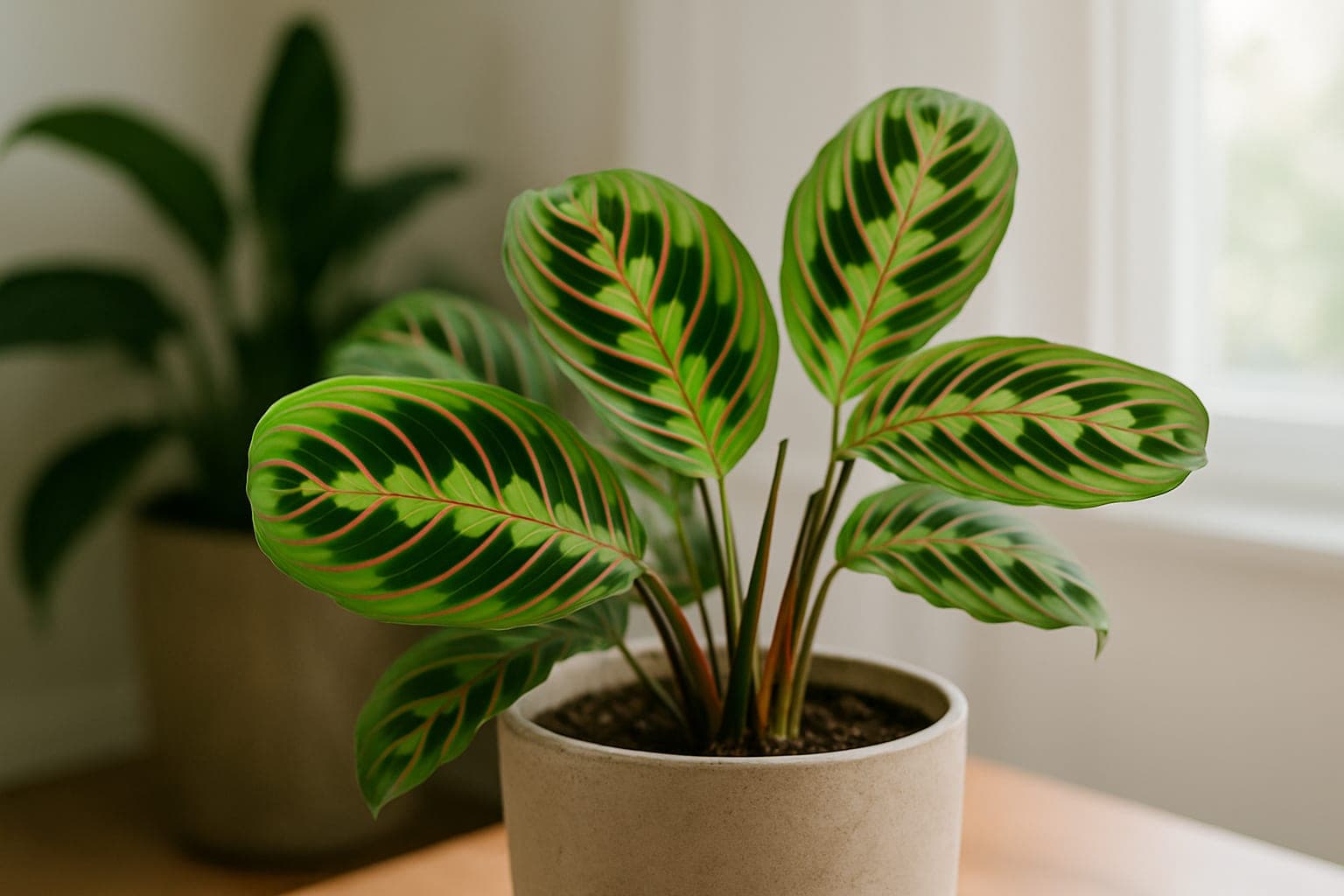
Few houseplants are as theatrical as the prayer plants. Their patterned foliage rises and falls with the daily rhythm of light, and their leaves can look like brushstrokes of paint. They also have a reputation for being temperamental — but most of that fussiness comes down to a handful of specific needs around water quality, humidity and stable conditions. Get those right and they are surprisingly rewarding.
Meet the family: Calathea, Maranta and Goeppertia
The plants commonly sold as Calathea have largely been reclassified into the genus Goeppertia, though garden centres still label them as Calathea. Maranta (the classic herringbone or rabbit's foot plant) is a close relative with similar care needs but a slightly more forgiving constitution. Stromanthe and Ctenanthe belong to the same family (Marantaceae) and follow the same playbook.
All of them share a key behaviour called nyctinasty: the leaves fold upwards at night and relax open during the day. The movement is driven by changes in water pressure within a small joint at the base of each leaf, called the pulvinus. A plant that prays vigorously in the evening is a plant that is happy.
Light: bright but indirect, always
In the wild these plants grow on the shaded forest floor under a canopy. Indoors that translates to bright, indirect light. A spot a metre or two back from an east or north-facing window is ideal, or behind a sheer curtain on a brighter aspect.
- Direct sun will scorch and bleach the patterns out of the leaves, often within a single afternoon.
- Too little light causes weak, leggy growth and reduced leaf movement.
- Rotate the pot a quarter turn every week or two so growth stays even.
If leaf colours look washed out or faded, suspect too much light before anything else.
Water and water quality
This is where most prayer plants are lost. They are genuinely sensitive to the minerals, chlorine, chloramine and fluoride present in many tap water supplies. Hard water and softened water both tend to cause brown, crispy leaf edges and tips over time.
What to use
- Rainwater collected from a clean butt is ideal.
- Filtered water from a decent carbon filter is a good second choice.
- Distilled or reverse-osmosis water works but lacks minerals, so alternate with rainwater if you can.
- If you must use tap water, leave it standing uncovered overnight to off-gas chlorine — though this does nothing for chloramine or fluoride.
How to water
Keep the compost lightly and evenly moist, never sodden and never bone dry. Check by pressing a finger into the top couple of centimetres: water when it feels just starting to dry but the lower compost is still slightly damp. Water thoroughly until it drains from the bottom, then empty the saucer — these plants hate sitting in water just as much as they hate going dry.
In winter, growth slows and watering frequency should drop accordingly. Tepid water is kinder than cold straight from the tap.
Humidity: high, and consistent
Prayer plants want humid air. In a dry centrally heated room, the symptoms appear quickly: crispy brown edges, curling leaves and stalled growth.
- Aim for noticeably humid air — bathrooms and kitchens often work well if light is adequate.
- A pebble tray under the pot helps a little, but its effect is local and modest.
- A small room humidifier running near the plant is by far the most effective fix.
- Grouping plants together raises local humidity through their combined transpiration.
- Misting can lift humidity briefly, but lingering water on the leaves can encourage fungal spotting, so use it sparingly.
Soil, potting and feeding
Use a light, free-draining but moisture-retentive mix. A blend of peat-free houseplant compost with a generous handful of perlite and a little fine orchid bark works well. The roots are relatively fine and shallow, so a wide, shallow pot suits them better than a deep one.
Repot every two years or so, in spring, going up just one pot size. These plants do not enjoy being disturbed, so handle the rootball gently and water in with tepid filtered water.
Feed monthly during spring and summer with a balanced liquid houseplant fertiliser at half the recommended strength. Skip feeding in autumn and winter. Prayer plants are easily scorched by fertiliser salts, which contribute to brown leaf edges, so flush the compost with clean water every couple of months to wash any build-up through.
Troubleshooting crispy edges and other complaints
Brown, crispy leaf edges
The classic prayer plant complaint. Causes, in rough order of likelihood:
- Mineral or chemical content in tap water — switch to rain or filtered water.
- Low humidity — raise it, ideally with a humidifier.
- Fertiliser build-up — flush the compost.
- Inconsistent watering, with periods of bone-dry compost.
Curling, rolled leaves
Usually a sign of thirst or very low humidity. Leaves that stay tightly furled into the day, rather than opening, suggest the plant is under stress.
Yellowing leaves
Most often overwatering or compacted, waterlogged compost. Check that the pot drains freely and let the top of the compost dry slightly more between waterings.
Pests
Spider mites love the dry air that already stresses these plants — fine webbing and stippled leaves are giveaways. Raise humidity, wipe leaves and treat with insecticidal soap or neem. Watch also for thrips and fungus gnats.
Reading the prayer
Once your plant settles, you can read its mood from its leaves. Strong upward folding at dusk and a relaxed open posture by mid-morning is the picture of contentment. Leaves that stay flat all night, or refuse to open by day, are telling you something is off — usually light, water quality or humidity. Treat prayer plants as communicative rather than fussy, and they become some of the most satisfying foliage plants you can grow.
Tools and supplies for this
Products we'd actually buy for this job. Linking to Amazon — if you buy through these links we earn a small commission at no extra cost to you.
- Weston Mill Pottery Terracotta plant pots, 175mm (pack of 10)
Mid-size workhorse terracotta — perfect step-up for plants outgrowing their nursery pots.
- Weston Mill Pottery Terracotta plant pots, 20cm (pack of 5)
Heavyweight 20cm clay for established plants — the porous walls help prevent the soggy roots aroids hate.
- Whitefurze G04012 7.5cm Garden Pot - Terracotta (Set of 10)
Cheap, cheerful plastic propagation pots — what we actually use for cuttings and small offsets.
- Whitefurze G04013 10cm Garden Pot - Terracotta (Set of 7)
Reliable mid-size nursery pots with proper drainage holes — the boring essential every plant parent runs out of.
BotanicBuddy Editorial Team
Plant Care Team
Passionate about helping plant parents succeed with expert tips and proven techniques.


Comments(530)
I'd gently push back on framing these as inherently fussy—I've found the real trick is matching them to your actual climate rather than fighting it. I'm in an arid zone and struggled with Calathea orbifolia until I stopped chasing tropical humidity and instead grew Goeppertia (formerly Calathea) lancifolia, which tolerates drier air far better while keeping that leaf movement appeal. Water quality definitely matters, but filtered rainwater makes a bigger practical difference than people realize.
I've found prayer plants thrive when you stop fighting their nature instead of forcing them into standard care routines. The humidity piece especially—I used to struggle until I realized my arid climate meant I needed to get creative with pebble trays and grouping rather than spraying. Do you find distilled water makes as much difference as the humidity aspect, or does it depend on how finicky the particular species is?
I appreciate you spelling out the genus names—Goeppertia especially gets lumped under Calathea so often that I had to look it up myself. I've had better luck with Maranta leuconeura than the true Calatheas in my cold climate, honestly. The humidity demands here near the Canadian border are relentless, and even my most attentive watering couldn't save a couple of finicky specimens. Do you find that cold-climate growers need to adjust expectations, or have you seen people make these thrive despite heating season dryness?
I've had my share of prayer plant casualties before I finally accepted that my tap water was the villain—once I switched to filtered water, my Goeppertia suddenly stopped sulking and those leaf movements became genuinely theatrical again. The humidity piece still trips me up though; I'm at 13 plants now and somehow my orchids laugh at my efforts while my Calathea gives me the side-eye from across the room. Did you find that a pebble tray or humidifier made more practical difference in your experience?
I've killed two Calatheas before I figured out that my tap water was the real problem—switched to filtered water and suddenly the brown leaf edges stopped. Humidity is non-negotiable in my experience, so I keep mine grouped together on a pebble tray, which honestly makes a bigger difference than anything else I've tried. Would love to see your setup if you have photos of how you're managing the conditions.
The tap water revelation is such a game-changer—I'm glad you cracked that code. Your pebble tray setup sounds ideal, and grouping them together is smart since it creates that microclimate they crave in tropical conditions. I've found that consistent moisture (not wet, just never fully dry) paired with that humidity really does most of the heavy lifting. Are you finding that the grouped setup also helps with pest management, or hasn't that been an issue for you?
I've got to say, I really appreciate seeing someone address the water quality thing—that's where most people trip up. I switched to collecting rainwater for my Maranta a couple years back and the difference was honestly noticeable. My question is whether you've found filtered water works just as well in a Mediterranean climate, or if the mineral content still tends to be an issue? I'm curious because my tap water is pretty hard here and I'd love a backup plan that doesn't require me to obsessively collect rain.
I totally get that—hard water's been my nemesis too living in the Mediterranean! I've had mixed results with filtered water honestly; it helps but my Maranta still gets those brown leaf tips if I rely on it alone. Rainwater collection became my go-to, though I'll admit some months I'm scrambling. Have you considered letting tap water sit out for a day or two before using it? I started doing that as a backup and it seems to take the edge off, though it's obviously not as good as actual rainwater. What kind of filter setup are you using?
I've had good results with filtered water in my Mediterranean setup, though I'll be honest—rainwater still seems to give my Goeppertia the edge. That said, filtered water (even a basic pitcher filter) has definitely helped reduce the leaf spotting I used to see. The hard tap water here can be stubborn, so I tend to use filtered as my go-to and save rainwater for when I really want to pamper them during the growing season. Have you considered a simple inline filter on your watering can, or does that feel like overkill for your routine?
I've been wanting to try a prayer plant for ages, but I'm honestly intimidated by the humidity thing—my apartment is pretty dry, especially in winter. I currently have 4 plants all doing okay, but they're mostly hardy types. Are there any of these genera that are actually more forgiving than the others, or do they all demand similar conditions?
I've learned the hard way that prayer plants really do need that humidity—I killed my first Maranta by just misting it like I do my herbs! Now I group mine together on a pebble tray with water underneath, and they're so much happier. The leaf movement is honestly addictive to watch, especially in my cold climate where they get so crispy from the dry indoor air. What water quality issue have you found trips people up the most?
I've been growing prayer plants for years now and honestly the water quality thing is what finally clicked for me—I switched to distilled water after my Goeppertia kept getting those crispy brown edges, and it made such a difference. Do you have recommendations for humidity solutions that don't feel like babying the plants? I've got my Maranta on a pebble tray, but I'm curious if you've found anything that works better in a temperate climate like mine without needing a full humidifier setup.
I'd love to see more on water quality specifically—I've had decent luck with my Goeppertia orbifolia using filtered water, but I'm curious whether you've found distilled water makes a noticeable difference versus just letting tap water sit overnight? The humidity side I've got down (I basically keep it misted constantly in my temperate climate), but the watering part still feels like I'm walking a tightrope between crispy and root rot.
I've killed more prayer plants than I'd like to admit—mostly by overthinking the watering situation—so I'm really hoping this post has the secret sauce! I currently have two Calatheas that are doing okay-ish in my cold apartment, but they seem perpetually thirsty no matter what I do. Does the water quality thing really make that much of a difference, or am I just paranoid about tap water at this point?
I've learned the hard way that these beauties really do care about their water—my first Maranta basically staged a protest when I switched from filtered to tap water, all crispy edges and droopy stems. The humidity struggle is real in my cold climate too, though I've had decent luck clustering mine together and keeping them away from heating vents. What's your experience with Goeppertia specifically? I keep meaning to add one to my collection but I'm worried it'll be the fussy one that finally breaks my streak.
I'd gently push back on the "fussy" framing—I've found that once you stop thinking of them as finicky and start treating them as plants adapted to dense forest understory, things click. Mine respond better to consistent moderate moisture and indirect light than to the dramatic gestures many people try. The leaf movement is really just their *Nyctinasty* response, nothing mystical, and it settles down nicely once they're not stressed by temperature swings or dry air.
I have to admit, prayer plants intimidate me a bit—I've only got one succulent so far and it's pretty forgiving. But your post makes me want to try a Maranta eventually. I'm curious though: you mention water quality being tricky, but would distilled water or collected rainwater work, or do I need something else? The humidity part especially has me wondering how people manage that in drier climates.
I've learned this the hard way with my Calathea orbifolia – it actually did fine on my shelf until I switched to tap water and watched it decline over weeks. Now I'm filtering water before watering, and honestly, it's made the biggest difference. Have you found that some species in the genus are more forgiving about water quality, or do they all really need that extra care?
Oh, I really appreciate you drilling down into the water quality piece—that's where so many people stumble! I've found that my Goeppertia orbifolia absolutely thrives on distilled water or collected rainwater, but the moment I used tap water with high mineral content, the leaf edges started browning like crazy. Since I'm in a tropical zone, humidity's less of a battle for me, but I'm curious whether you've noticed these plants being pickier about water quality in drier climates, or if it's more about the individual water chemistry?
I've been struggling with this exact issue! My Maranta leuconeura has crispy leaf edges too, and I recently switched to collecting rainwater after reading that tap water minerals can accumulate in the soil. I'm in a temperate climate where humidity is naturally lower, so I'm wondering if that makes water quality even more critical for me—does the dry air compound the problem when the plant's already stressed by mineral buildup? I'm only four plants in, so I'm still learning what works, but your point about individual water chemistry makes sense.
I learned this the hard way with my Goeppertia—killed the first one with tap water before realizing the minerals were the real problem. Your point about water quality is huge because it's the kind of detail people skip over when they're drawn to those gorgeous moving leaves. I've got three prayer plants now that are actually thriving, and filtered water made all the difference alongside the humidity tray setup. Thanks for breaking down what actually keeps them happy instead of just saying they're difficult.
I've been eyeing prayer plants for a while since I love their patterned leaves, but honestly the fussiness intimidates me a bit—especially the water quality part. I'm in a cold climate and my tap water is pretty hard, so I'm wondering if distilled water is really necessary or if I'm overthinking it? This post seems like it might finally give me the confidence to try one.
I totally get the intimidation factor—I've killed my share of them! But honestly, hard water is more of an annoyance than a dealbreaker; I just let my tap water sit overnight and that's usually enough, especially in a cold climate where evaporation is slower anyway. The bigger thing I'd watch for is keeping the soil consistently moist (not soggy) and the humidity decent, which can be tricky in winter up here. Have you thought about where you'd place it light-wise, or is that another concern?
I appreciate the focus on water quality—that's where most people stumble. Though I'd gently push back on grouping these together too tightly: Goeppertia (formerly Calathea) species actually tolerate my arid growing conditions far better than Maranta leuconeura does, and they're noticeably less fussy about mineral content if you're using filtered water anyway. The leaf movement is mostly a humidity response, not a sign of distress like many assume, which has saved me from overwatering mine.
I've found that once you crack the humidity piece with these, everything else falls into place—I keep my Goeppertia orbifolia on a pebble tray and it's transformed how the whole collection responds. The leaf movement really is something special to watch, though I think people underestimate how much inconsistent watering can stress them out before you even see damage. What's your take on filtered versus distilled water for these fussier aroids?
I've learned this lesson the hard way—my first Calathea lasted maybe three months before the leaf edges turned crispy and I gave up in defeat. But your point about water quality really stuck with me, so I switched to collected rainwater and suddenly my current Goeppertia actually started unfurling those gorgeous new leaves instead of just sulking. The humidity part is still my biggest hurdle in my cold climate, though a pebble tray seems to be helping. Are you finding that grouping these plants together helps maintain humidity better, or do they genuinely prefer their own space?
I've learned the hard way that prayer plants are way pickier than they look! My Calathea spent months with brown leaf edges until I finally switched to filtered water—tap water here in the cold north is apparently terrible for them. The humidity struggle is real too, especially in winter when everything dries out. Are you finding a pebble tray works better than misting, or do you do both? I've got about 15 plants now and these are honestly the ones that require the most fussing, but when they're happy, they're so worth it.
I appreciate this—I've killed enough prayer plants to know they're not beginner-friendly, despite what some care guides suggest! I'm curious though: you mention water quality as crucial, but I'm in a cold climate with hard tap water and limited access to filtered options. Does that automatically disqualify me, or are there workarounds that actually work?
I've got to admit, I'm realizing now why my single Maranta has been kind of struggling—I think I've been overthinking the watering and probably stressing it out! I'm in the Arizona area so humidity is basically my arch-nemesis, but this post makes it sound like there might actually be some tricks I haven't tried yet. Are there any low-humidity workarounds you'd recommend, or should I just accept that prayer plants might not be my thing out here?
I appreciate the focus on water quality—that's where most people stumble—but I'd gently push back on the "fussiness" framing. After years with orchids in a tropical climate, I've found that these plants aren't actually demanding once you stop treating them like delicate specimens. They're more forgiving of imperfect humidity than the internet suggests, especially if you get the watering right and avoid cold drafts. The real issue is people overthinking it rather than the plants being genuinely difficult.
I really appreciate that perspective—I've been intimidated by prayer plants for exactly that reason, so hearing they're less fragile than advertised is reassuring. I'm actually just getting started with plants (I have one succulent that's somehow still alive), so I tend to assume everything needs perfect conditions. Your point about people overthinking it makes a lot of sense, and I think that reframing might help me approach new plants with less anxiety instead of assuming I'll fail right away.
I'm really hoping this helps me figure out what I'm doing wrong with my Calathea—I've killed two already and I'm honestly not sure if it's the water or just my dry climate here. Do prayer plants actually need distilled water, or is that overkill? I'm growing mostly vegetables in containers so I'm used to regular watering, but these tropical plants seem to play by totally different rules. Definitely bookmarking this to read through properly.
I've learned this the hard way with my Calathea—tap water gave it brown leaf tips for months until I switched to filtered water. The humidity piece is real too; mine sits on a pebble tray now and actually moves its leaves properly instead of just drooping. These plants are definitely worth the extra attention if you're willing to give it.
The pebble tray trick is solid—I do the same with my Maranta and it's made such a difference. I've found that even just collecting rainwater works if filtered water feels like overkill; my tap water here is pretty hard, so I started doing that a couple years ago and haven't looked back. Do you find your Calathea still gets the occasional brown tip, or has the filtered water pretty much solved it completely?
I've been struggling with my Maranta for months—the leaf edges kept browning no matter what I did—so I'm really hoping this digs into the water quality angle. I've got four plants total and honestly assumed I was just bad at this, but it sounds like I might've been using tap water straight up without considering mineral content? Would love to know if filtering or leaving it out overnight actually makes a difference, or if that's overkill for someone still learning.
I totally get it—I spent months blaming myself for my one succulent's crispy edges before realizing my tap water was the culprit! For Prayer plants especially, the mineral buildup really does add up, and honestly, leaving tap water out overnight or using filtered water made a noticeable difference for me. I'd say it's worth trying since you've already got four plants dealing with it; filtering isn't overkill if it means fewer brown tips and less frustration on your end.
I killed two Marantas before realizing my tap water's mineral content was the real problem—switched to distilled and they finally stopped crispy-leafing on me. The humidity part gets all the attention, but honestly in my dry climate, filtering the water made more difference than any humidifier ever did.
I appreciate the focus on water quality—that's where most people fail with these. I switched to collecting rainwater for my Goeppertia and it genuinely made the difference between struggling plants and ones that actually thrive. The leaf curl stopped, new growth came in darker. That said, I've found they're honestly not worth the effort in my mediterranean climate unless you're willing to basically run a humidifier year-round. Have you found any prayer plant varieties that are slightly more forgiving with humidity, or do they all need that constant attention?
I've definitely learned this the hard way—my first Maranta looked like it had gone through a drought despite me watering it constantly, until I realized our tap water's mineral content was the culprit. Switching to filtered water made such a difference, and now I just keep a pitcher sitting out to use the next day. They really do appreciate that extra attention, but it's oddly rewarding once you crack what each plant actually needs rather than just guessing.
The mineral buildup thing is so real—I had the same issue with my Goeppertia and didn't connect the dots for months. Letting tap water sit overnight actually does help with some of the chlorine too, so you're doing it right. I switched to collecting rainwater when I can, which works great in my mediterranean climate, but honestly the filtered pitcher method is more reliable and way less fussy than I expected. Do you find your Maranta's leaf edges have cleared up completely since the switch, or does it still show some sensitivity?
I really appreciate you lumping these together but pushing back on the "fussy" narrative—honestly, once you nail the water quality piece, *Goeppertia* especially becomes way more forgiving than people think. I've had better luck with mine in drier Mediterranean air than my friend in London with a humidifier running constantly, so I'm curious what your humidity sweet spot actually is? Are you finding they respond better to consistent misting or is that more of a humidity theatre situation?
I've learned the hard way that prayer plants really do live up to their reputation—I killed my first Maranta leuconeura within months before realizing how sensitive they are to tap water minerals. Now I filter everything or use collected rainwater, and the difference in new growth has been striking. Do you find that humidity matters more than light in your experience, or have you had better luck prioritizing one over the other?
I've got a Maranta leuconeura in my collection that's been struggling with brown leaf edges, and I'm pretty sure it's the tap water—I hadn't connected that to water quality before reading this. I'm in a tropical climate so humidity should theoretically be easier for me, but I'm realizing my apartment's AC might be working against that. Would you say distilled water is necessary, or would letting tap water sit overnight help enough?
I'd gently push back on the "fussy" framing—I've found that Calathea and Maranta actually thrive once you accept their real preferences rather than fight them. The leaf curl and browning most people blame on humidity is usually chlorine sensitivity (Goeppertia particularly dislikes tap water), and I've had better results letting my rainwater sit 24 hours before watering than obsessing over a humidifier. They're attentive plants, sure, but more straightforward than their reputation suggests.
You've just made me feel so much better about my setup! I've been stressing over humidity levels in my cold apartment, but I switched to collected rainwater a few months ago and honestly saw the biggest improvement in my Maranta—way less crispy leaf edges than when I was using tap water. I'm still figuring out the light sweet spot (mine seem to sulk equally in dim corners and direct sun), but knowing it's really about accepting their preferences rather than fighting them is oddly calming.
I appreciate the realistic framing here—these plants *are* finicky, and I think that matters to say upfront. That said, I've found the humidity obsession can be overstated; my Maranta does fine in a normal room with the occasional misting, whereas fussing over it with a humidifier actually invited spider mites. The water quality point is solid though—I switched to letting tap water sit overnight and saw a real difference in leaf edges. Curious whether your experience leans toward these needing constant intervention or if there's a sweet spot where they settle in.
I've learned the hard way that these plants really do care about water quality—I switched to collecting rainwater for my Goeppertia orbifolia after it kept developing brown leaf edges despite perfect humidity, and the difference was immediate. The leaf movement is genuinely rewarding once they settle in, though I'd add that even "bright indirect light" needs to mean filtered morning sun rather than afternoon heat, at least in my tropical setup.
That rainwater tip is gold—I've done the same with my herbs in the Mediterranean heat, and it's wild how much mineral buildup matters. I'm curious though, do you find they still need that filtered morning sun approach in your tropical setup, or is it more about avoiding the intense afternoon rays? I've been experimenting with a sheer curtain filter since my place gets pretty harsh direct light, and I'm wondering if I'm being overly cautious compared to what they'd actually prefer.
The rainwater switch is such a game-changer—I did the same with my three herbs after noticing mineral buildup, and honestly it's made me more mindful about water quality across the board. Your point about morning sun versus afternoon heat is spot-on; I'm in a Mediterranean zone so I had to learn that lesson with my *Origanum* and basil the hard way! Have you found that the filtered morning light also helps with the leaf movement being more pronounced, or is that just the humidity doing the heavy lifting for you?
I've got six prayer plants across my collection and honestly, water quality made *all* the difference for me—I switched to distilled water last year after getting brown leaf tips on my Goeppertia, and it was like flipping a switch. My bigger struggle has been nailing the humidity sweet spot in my apartment, especially through winter. Do you find that grouping them together helps, or does each species really need its own microclimate? I've been thinking about trying a pebble tray setup but I'm curious if that's overkill or actually worth the effort.
I learned the hard way that Calathea's sensitivity to chlorine and fluoride in tap water isn't just hype—I switched to distilled water for my Goeppertia orbifolia and finally stopped seeing those brown leaf tips that plagued it for months. The humidity piece is crucial too; I keep mine grouped together on a pebble tray to create a micro-climate rather than misting individual plants, which seems to reduce fungal issues while actually maintaining the moisture they crave.
I appreciate the focus on water quality—that's where most people stumble. Though I'd gently push back on lumping Calathea and Goeppertia together with Maranta; in my experience, *Goeppertia* species are genuinely more forgiving about humidity fluctuations than true *Calathea*, and that distinction matters for someone building their collection.
I've learned the hard way that prayer plants really do need that filtered water situation—my Maranta's leaf edges started browning like crazy until I switched to collected rainwater. The humidity part is what's been trickiest for me in my cold climate though; I've had the best luck grouping my three Calatheas together on a pebble tray rather than misting, which just never seemed to stick. Did you find any particular watering schedule works better than others, or is it more about reading the soil?
I've killed two Maranta before figuring out that my tap water was the actual culprit—switched to collected rainwater and suddenly they stopped looking angry. The humidity part I solved by grouping mine with other plants rather than misting constantly, which felt like a waste. Are you finding that most people struggle more with the water quality issue or is it usually the light that trips them up?
I've had my Goeppertia orbifolia for three years now, and the turning point was finally accepting that tap water was the culprit behind persistent brown leaf edges. Switching to distilled water and maintaining humidity around 65% transformed it—the leaf unfurling at night is genuinely something I look forward to. Your point about light being bright but indirect is crucial too; I learned the hard way that even my tropical setup can bleach the intricate patterns if the afternoon sun hits directly.
That's a solid observation about the water—I've found the same thing with my Maranta, though I've had better luck with collected rainwater than distilled since I'm in a mediterranean climate where rainfall is sporadic. The 65% humidity is the real sweet spot; below that and you're fighting constant crispy edges no matter what water you use. How long did it take you to see improvement after the switch, and did you notice the leaf movement become more pronounced once the plant stopped being stressed?
I've had mixed luck with these—my Maranta does great on a shelf near the kitchen window, but I killed a Calathea trying to give it the "perfect" conditions. Honestly, I think the water quality thing is the real culprit more than people realize; I switched to collected rainwater and it made a huge difference with my second attempt. Are you finding humidity is equally important in your setup, or does it depend more on the specific species?
I've been wanting to try a prayer plant for ages but honestly got intimidated by all the warnings online—glad to know the fussiness is manageable with the right approach! I have mostly succulents in my collection so far, so humidity and careful watering sound like a totally different world compared to what I'm used to. Have you found that filtered water really makes a noticeable difference, or is that more of a nice-to-have?
Filtered water genuinely made a difference for my Maranta—the leaf tips stopped browning once I switched from tap water. I'm in a Mediterranean climate so humidity is my real struggle; I've had better luck grouping mine together and misting than trying individual humidifiers. If you're coming from succulents, prayer plants are basically the opposite, but honestly once you dial in the water quality and find a spot with consistent indirect light, they're less fussy than the warnings suggest!
I've killed my share of Calatheas before realizing the water issue was the real culprit—my tap water's minerals were doing the damage, not the humidity. Switched to collected rainwater and suddenly they stopped complaining. That said, I'm curious whether you've found the humidity threshold actually matters much once water quality is sorted, or if people tend to blame humidity when it's really the chlorine and calcium doing the harm?
I'd gently push back on framing these plants as uniquely fussy—I've found they're actually quite forgiving once you stop overthinking the "perfect" conditions. My Goeppertia orbifolia sits in bright, indirect light away from drafts and gets watered when the top inch feels dry; it's been thriving for three years with zero misting. The real issue I see is that people expect dramatic leaf-closing behavior as a health indicator, when honestly, mine barely does that anymore in my mediterranean climate where humidity naturally sits around 50%. They're far more robust than the internet suggests.
I've had mixed luck with these—my Calathea orbifolia struggled for months until I realized my tap water's mineral content was the real culprit, not the humidity like I initially blamed. Switched to filtered water and suddenly it stopped the brown leaf edges. That said, I'm curious whether you've found success with distilled water specifically, or if filtered is usually enough? I'm still only running 12 plants total so I haven't committed to distilled for the whole collection yet.
I've got a Maranta that taught me the hard way about water quality—it started dropping leaves until I switched to filtered water instead of tap. The humidity part resonates too; I've got about 10 plants in my Mediterranean climate and prayer plants are honestly the pickiest about dry air. Did you find that misting helps enough, or did you end up using a pebble tray setup?
I appreciate the focus on water quality—that's where most people stumble. I'd gently push back on grouping Calathea and Maranta as equally demanding though. Maranta leuconeura is genuinely forgiving once you understand its moisture preferences, whereas some Goeppertia species (formerly Calathea) are legitimately temperamental about mineral content and air movement. I've had better luck with Goeppertia orbifolia in arid conditions than anything else in that genus, but most need that humid-ish microclimate you've described.
I've got to admit, prayer plants have been my stumbling block! I keep just three plants total—mostly herbs for my mediterranean kitchen—so I'm not a collector, but I picked up a Maranta leuconeura last year and it's been humbling me ever since. The leaf curl drama was real until I figured out my tap water was the culprit. Are you finding that distilled water makes that much of a difference compared to leaving tap water out overnight, or is there something specific about mineral content that matters more in certain climates?
I've been eyeing prayer plants for a while but honestly the whole "fussy about water quality" thing intimidated me a bit—I'm still figuring out my basics with my four plants. This makes me feel like it's actually doable though. Quick question: does distilled water really make that much of a difference, or can I get away with letting tap water sit out overnight in my cold climate?
I've had such better luck with these since I stopped obsessing over distilled water and started focusing on consistent humidity instead—my Goeppertia orbifolia finally stopped the brown leaf margins that plagued it for months. The leaf movement really is something special once they settle in, though I admit they're finicky compared to my orchids. What's been your experience with light levels for the variegated varieties, especially in arid climates like mine?
I'd push back gently on the "fussy" label—these aren't actually difficult, just particular. I've had better luck stopping the obsessive misting habit and instead using a pebble tray with consistent watering. The real game-changer for me was realizing they need bright, *indirect* light; most problems I see stem from people putting them in shadier spots thinking they want low light. Mine are in an east-facing window and the leaf movement is noticeably more pronounced than when they were tucked away.
I've learned the hard way that prayer plants really do need that filtered or distilled water—my first Maranta got brown leaf tips that took forever to recover once I switched from tap water. I'm curious though, do you have tips for keeping humidity up without a humidifier in drier climates? I'm in the Southwest and have 11 plants total, mostly natives that actually *like* my arid conditions, so these tropical fussier ones feel like a real challenge on my windowsill.
I killed two Maranta before figuring out that my hard tap water was the real culprit—distilled water made all the difference in stopping the brown leaf edges. They're genuinely easier plants than their reputation once you nail water quality and skip the misting in favor of a pebble tray, especially in arid climates like mine where humidity is basically nonexistent.
I'd agree water quality is huge—I've seen the same browning with *Maranta leuconeura* when tap chlorine gets involved. The pebble tray approach is smart too, though I'd gently push back on skipping misting entirely. Even in arid climates, occasional misting (or grouping plants closer together) can help; the real issue is *constant* wet foliage, which invites fungal problems. A humidity meter around 50–60% seems to be the sweet spot where most Marantaceae actually thrive without fussiness.
I appreciate the focus on water quality—that's where most people slip up with Goeppertia species. I've had better results filtering water or letting it sit overnight before watering, since the sensitivity to chlorine and minerals is real. My collection's only five plants and they're mostly succulents suited to my drier Mediterranean climate, so I've had to work harder to create the right microenvironment for a Calathea I'm experimenting with, but it's worth the effort once you dial in the humidity sweet spot.
I appreciate the focus on water quality here—that's the detail most guides gloss over. That said, I've found prayer plants genuinely less finicky than their reputation suggests, at least in temperate climates where humidity naturally fluctuates. Mine do better with consistent neglect than obsessive misting; they adapt to whatever humidity exists if you just stop fiddling with them. The real limiting factor in my experience has been light, not water. Are you finding humidity is still the main sticking point for most people, or has that shifted?
I've found humidity to be the real gatekeeper here—I keep my Maranta in a bathroom where it naturally gets 60–70% moisture, and it's transformed from struggling to actually thriving. The water quality thing is overstated if you let tap water sit for a day first; the chlorine concern matters far less than consistent watering patterns in my experience. What's your take on bottom watering versus misting for these plants?
I've learned this the hard way with my collection up here in the cold! Prayer plants absolutely hate our tap water, so I started collecting rainwater and it made such a difference with leaf browning. The humidity thing is still my biggest challenge though—I keep mine grouped together and mist regularly, but I'm curious if you have any tricks for maintaining that moisture without creating a soggy mess? My Maranta seems happier than it's ever been, so I'm definitely doing something right now.
Oh, the tap water issue—I'm so glad you brought that up! I've had better luck with my herbs since switching to rainwater too, though I'll admit I haven't tackled prayer plants yet (they intimidate me a bit). Your grouping trick sounds smart; I do something similar with my basil and oregano to trap humidity. Have you noticed if misting helps more when you do it in the morning versus evening? I've read conflicting things about timing and worry I'd just be inviting fungal issues if I get it wrong!
I'll be honest—I killed my first Maranta within weeks because I was overwatering it like it was a vegetable crop! Now that I've got the humidity and watering rhythm down, it's one of my favorite plants to watch, especially those leaf movements in the morning. The water quality tip is huge; I switched to distilled water after noticing brown leaf tips, and it made such a difference. Do you find that prayer plants do better with consistent room temperatures, or is that less critical than the moisture balance?
These finicky beauties have definitely humbled me over the years! I've had better success once I stopped overthinking and just committed to consistent misting—though I know that's easier said than done in a temperate climate like mine. Do you have thoughts on filtering water before use, or have you found tap water works fine for your collection? I'd love to see how other growers handle humidity without creating a swamp situation in their homes.
I've had great results with filtered water—my Goeppertia never quite settled until I switched to rainwater collection, which has made a real difference in leaf health. Consistent misting definitely beats the guesswork, though I find grouping my tropical plants together and using a humidity tray beneath the pots does more for the overall microclimate than constant spraying. What's your setup like now, and are you finding the misting routine sustainable long-term?
I've got just one Maranta leuconeura at home and it's definitely taught me humility—the leaf-curling drama when humidity drops is real! My biggest breakthrough was switching to rainwater after noticing the leaf tips were always crispy despite my best efforts with filtered water. Have you found that water quality makes as much difference with Goeppertia as it does with Maranta, or are some species in that group more forgiving?
I've learned this the hard way with my Calathea—killed my first one with tap water before realizing the chlorine was the culprit. Switching to filtered water and keeping humidity around 60% made such a difference. These plants really do seem to notice when you're paying attention to the details, and that leaf movement is absolutely worth the effort.
I've got three prayer plants and honestly the water quality thing was my biggest wake-up call—I was using tap water for months and wondering why my Calathea looked stressed. Switched to filtered water and it made a real difference. My question though is whether the humidity requirements are actually as strict as they sound, since my mediterranean climate is pretty dry? I'm managing okay with a pebble tray but I'd love to know if I'm just getting lucky or if there's something I'm missing.
You're not getting lucky—pebble trays genuinely work if you're consistent with them, especially in a dry climate. I'd say you're probably fine unless your prayer plants start showing brown leaf edges, which is the real tell that humidity has dropped too far. I have a Goeppertia in my tropical setup that I barely fuss over compared to the fussier ones I keep elsewhere, so climate definitely matters more than the guides sometimes suggest.
I'm glad to see someone addressing the humidity piece—that's where most people stumble with Goeppertia, especially in arid climates like mine. I've found that grouping them together helps create a microclimate, and I've had better luck with distilled water than tap, which made a real difference with leaf spotting. Do you find that misting helps sufficiently, or do you lean more toward the pebble tray method for consistent moisture in the air?
I've ditched misting entirely—it never lasted long enough to matter, and I'd just end up with wet leaves and fungal issues. Pebble trays are my go-to, though honestly, grouping plants like you're doing works better in my med climate because it at least slows evaporation. The distilled water thing is real; even my tap water here leaves mineral buildup on the leaves. Have you noticed the leaf spotting improving with distilled water alone, or did you need to adjust humidity *and* water quality together?
I've learned this the hard way with my Calathea lancifolia—tap water here is so hard that I was getting crispy leaf edges for months before I switched to filtered water. The leaf movement is honestly addictive to watch once they're happy, but yeah, they're definitely drama queens about their conditions. Have you found that humidity matters more than the water quality itself, or do you think they're equally important for getting that thriving stage?
I'd say they're equally demanding—I killed my first Maranta by obsessing over humidity while ignoring that my tap water was full of minerals. Once I switched to filtered water and kept the air around 50-60% with regular misting, the difference was night and day. The leaf movement really is mesmerizing when they're content, but getting both right is what tips them from surviving to actually thriving.
I really appreciate you breaking down the water quality piece—that's where I tripped up with my *Maranta leuconeura* at first, thinking regular tap water was fine. After switching to filtered water, the leaf tip browning finally stopped. Since you mention these plants doing well in temperate climates, are you finding the humidity requirements are easier to manage indoors in winter, or do you still need to be pretty deliberate about misting and grouping?
I've got a Maranta in my collection (my 11th plant, actually) and I'm still figuring out the humidity part—mine does okay on a shelf near the kitchen window but the leaf edges keep getting those brown crispy bits. Does water quality really matter that much, or is it more about getting the humidity right first? I've been using tap water, which might be my problem.
I'm really glad you're breaking down the water quality angle—that's where I see most people struggle with *Goeppertia* especially. I've had my single specimen (a beauty, by the way) absolutely transform once I switched to filtered water instead of tap, and the leaf unfurling is so satisfying to watch. Do you find humidity matters more in certain seasons, or is consistent misting/tray method the way to go year-round in temperate climates?
I'm totally with you on the water quality—it's genuinely transformative, isn't it? Honestly though, I've found humidity matters *way* more than consistency here in my Mediterranean climate. Winter's when my Goeppertia really suffers, even with misting, because the air is just bone-dry. Summer? They practically thrive on ambient humidity alone. Have you noticed seasonal swings affecting yours, or does your space stay fairly stable year-round?
I appreciate you addressing the water quality angle—that's where most people slip up. I'd gently push back on the "fussy" framing though. In my experience, these aren't finicky so much as they're just adapted to forest understory conditions, which means consistent warmth and indirect light matter more than people think. My Goeppertia orbifolia does better with my tap water than distilled, so I suspect the mineral content myth gets overstated too.
I appreciate this so much—I killed my first Maranta with tap water before realizing the chlorine sensitivity, and it felt like such a silly mistake until I learned how many people have the exact same problem! My 13 plants are mostly succulents that forgive neglect, so the prayer plants have definitely humbled me into paying closer attention to what's actually going into my watering can. Looking forward to trying some of these tips!
I've learned this the hard way with my Goeppertia orbifolia—those crispy leaf edges were basically my plant telling me our tap water's mineral content was unwelcome! Now I collect rainwater when I can, and honestly, it's made the difference between "alive but grumpy" and actually seeing those incredible nyctinastic movements at night. The humidity part is less dramatic for me up here in the cold, since my indoor air tends toward the dry side anyway, but I've found that clustering my prayer plants together helps them create their own little microclimate.
Rainwater makes a real difference—I've done the same thing. My one Goeppertia stays in a cold room where humidity hovers around 45%, and it actually does fine there without fussing, which surprised me. The clustering trick works, though I've found prayer plants also respond well to a pebble tray if you're not running a humidifier. The leaf movement really does pick up once you dial in the water quality and stop fighting the dryness.
I'm definitely going to bookmark this—I've been wanting to try a *Goeppertia* (still getting used to that reclassification!) but I've heard the horror stories about tap water sensitivity. Since I'm in a temperate zone with pretty hard water, I'm curious whether you'd recommend distilled water across the board or if there are any workarounds that don't feel like overkill? Also, how fussy are they really about air circulation versus just humidity—I've got one bright spot that gets decent air movement but it's tricky to keep moisture consistent there.
I've had mixed success with these myself—my Maranta is happy enough on a shelf with a humidifier nearby, but I killed a Calathea by overthinking the watering situation. The thing that finally clicked for me was just using collected rainwater instead of tap water; made such a difference. Are you finding that humidity is still the biggest hurdle for people, or is it really the chlorine in the water that trips most folks up?
I've learned the hard way that water quality really does make a difference with these beauties—my first Calathea struggled until I started using filtered water instead of tap. The leaf movement is such a joy to watch once they're settled in, and I appreciate you covering what actually keeps them thriving rather than just surviving. My current trio in the tropical humidity here are finally looking dramatic like they should.
I appreciate the honesty about these being genuinely demanding—too many guides gloss over that. That said, I've had better luck with Maranta than Calathea by a mile, and I wonder if the post distinguishes between them enough. Maranta is forgiving compared to Calathea's fussiness around tap water and temperature swings. Both need humidity, sure, but I've kept a decent Maranta in a normal room, whereas my Calathea still sulks despite a humidifier. Worth flagging that they're not quite in the same difficulty tier?
I think you've hit on something important here—Maranta leuconeura really is more forgiving than most Calathea species. In my experience, the difference comes down to their native habitats; Maranta tolerates a wider range of conditions whereas Calathea (especially orbifolia and crocata) demand that sweet spot of consistent moisture and humidity that's harder to dial in indoors. Have you found any particular Calathea cultivar less temperamental than others, or do you stick mainly with Maranta now?
I've found that the water quality piece really makes the difference with my Goeppertia orbifolia—she was struggling until I switched to filtered water and suddenly the leaf edges cleared right up. The dramatic foliar patterns on these plants are so rewarding when conditions click, though I do think their reputation for fussiness is partly deserved. What's been your experience with humidity levels; do you find a pebble tray does the trick, or do you need something more intensive like a humidifier in your setup?
I totally agree that water quality is underrated—I switched to filtered water for my Phalaenopsis a while back and saw similar improvements with leaf health. For humidity, I've found pebble trays help but honestly aren't enough in my arid climate, so I run a humidifier during the drier months. It's made a real difference with my other orchid, especially during winter. Have you noticed any seasonal shifts in how fussy your Goeppertia orbifolia is, or does she stay pretty consistent year-round?
I have to admit, prayer plants nearly broke me before I finally figured out the humidity thing—I was watering perfectly but my Maranta looked absolutely miserable until I moved it away from the direct afternoon sun and started misting more regularly. These plants are definitely the divas of my 13-plant collection, but knowing they're actually finicky about *conditions* rather than just being dramatic has made all the difference in keeping them happy!
I'll be honest—prayer plants have humbled me more than once! I ended up with just a single succulent after my Calathea phase, mostly because I kept second-guessing the watering schedule and couldn't quite nail the humidity sweet spot in my cold climate. That said, this post makes me wish I'd read something this thorough before killing my first one. The specificity about water quality is the detail I wish someone had stressed when I started out.
I've learned the hard way that prayer plants really do demand that water quality obsession—my Maranta was drooping like crazy until I started using distilled water instead of tap. The humidity part gets easier if you group them together (I've got three clustered on a shelf), but honestly, the light is what trips me up most in my cold climate where winters are dim. Are you finding any of these three genera harder to keep happy than the others, or do they all pretty much want the same fussy conditions?
I totally get the water quality revelation—I had the same lightbulb moment with my Calathea, though I've found filtered water works just as well as distilled and costs me less sanity. The grouping trick is brilliant for humidity; I do something similar with my herbs and prayer plants mixed together, which honestly helps them both. For the light question, I'd say Maranta is the most forgiving of the three when it comes to lower light, whereas Goeppertia can get leggy pretty quickly in dim conditions—Calathea sits somewhere in the middle, at least in my experience.
I've had decent success with Maranta leuconeura in my kitchen, though I'll admit the humidity part always feels like a balancing act—I keep mine on a pebble tray but worry I'm either overdoing it or not doing enough. The leaf movement is genuinely addictive to watch though! Would you say filtered water makes that much of a difference, or is it more about consistency with watering frequency? I'm curious if there are any Goeppertia species you'd recommend starting with if someone's new to the genus but already comfortable with the fussier prayer plants.
Filtered water definitely makes a difference—I've noticed Maranta leuconeura responds better to it, especially if your tap water is high in chlorine or minerals. That said, consistency matters more than perfection, so if your pebble tray setup is keeping humidity steady, you're likely doing fine! For Goeppertia, I'd suggest starting with G. orbifolia if you want something forgiving; it's a bit more adaptable than some of the pickier species. Are you using distilled water or just letting tap water sit before watering?
I learned this the hard way with my Goeppertia—killed the first one with tap water before realizing my setup needed a humidity tray and filtered water to really make it happy. Your point about water quality is spot-on since these tropical plants are so sensitive to minerals and chlorine. I've got three prayer plants now that are finally thriving, and the leaf movement is genuinely worth the extra attention they demand.
I appreciate the focus on water quality—that's where most people falter with these plants. I've had better luck with filtered water than distilled, honestly, since my tap water is already pretty soft in this climate. The humidity part though: I found that consistent 60%+ beats misting every other day. Are you finding prayer plants actually need that dramatic leaf movement to stay healthy, or is it more of a visual indicator that conditions are right?
I've learned the hard way that these plants (especially Goeppertia orbifolia in my collection) are actually much happier once you stop trying to chase "perfect" humidity—I was misting constantly until I realized consistent moisture at the roots with good air circulation worked better than the spray bottle routine. The leaf movement really does settle down when the plant isn't stressed by mineral buildup, so filtering or leaving water out overnight genuinely makes a difference with these fussy ones.
I appreciate you tackling these plants—they're genuinely rewarding once you dial in the specifics. That said, I'd gently push back on the "fussy" framing a bit. In my experience, Calathea and Maranta aren't difficult so much as they're *specific* about what they want, which is different. I've found that consistent, filtered water and stable humidity matter far more than perfect light, whereas a lot of care guides make them sound equally demanding on all fronts. The leaf movement itself is actually a helpful indicator if you're paying attention.
I really appreciate you diving into the water quality piece—that's where so many people trip up with Calathea and Maranta, and it's honestly made the difference in my collection too. The leaf movement is mesmerizing once you get the conditions dialed in, though I'll admit they're a step beyond my orchids in terms of fussiness. Have you found one species in the group that's more forgiving than the others, or does it really come down to individual plant temperament?
I totally understand that question—I've killed my fair share of Calatheas trying to figure out the "easiest" one! From my own fumbles, the Maranta (especially the red prayer plant) seems most forgiving of my tap water mishaps, though honestly I think it does come down to luck and conditions. My one Goeppertia has basically thrived since day one while my beautiful Calathea orbifolia is perpetually dramatic about something, so maybe individual temperament is the real answer here. Do you find your orchids actually easier to keep than your prayer plants, or is it just a different kind of fussy?
I've learned the hard way that prayer plants absolutely hate our tap water up here in the cold north—I switched to filtered water and honestly it changed everything with my Maranta. The leaf curling stopped, and I finally got those dramatic movements you mention without the brown edges driving me crazy. Do you find humidity matters more than water quality in your experience, or are they equally stubborn about both?
I really appreciate you diving into this—I've got a Goeppertia in my collection and she's been my most temperamental plant by far! The humidity part especially resonates because my apartment stays pretty dry, and I've noticed her leaves curl up within days if I slack off with the misting. I'm curious whether you find filtered water makes as huge a difference as people claim, or if it's more about consistency overall? I have a photo of mine mid-prayer move that's honestly adorable, wish I could share it here!
I've honestly struggled more with prayer plants than anything else in my collection—killed my first Maranta by overthinking the watering, then swung too far the other way! The humidity part especially resonated with me since I'm in a Mediterranean climate where everything dries out fast. Did you find that misting helps, or does filtered water through a humidifier actually make a bigger difference? I'm curious whether grouping them together actually creates enough of a microclimate to make a dent, or if that's just wishful thinking on my part.
I'd push back a bit on the "fussy" framing—I've found prayer plants are mostly just honest about their conditions, which I actually prefer to plants that tolerate neglect and hide problems. The water quality thing is real though; I switched to collected rainwater for my two Marantas after years of leaf tip burn, and it made a noticeable difference within weeks. Do you find distilled water works as well, or does something in rainwater seem to matter beyond just the chlorine?
I really like that reframing—you're right, they're more communicative than fussy. I've had good results with distilled water too, though I suspect rainwater has trace minerals that *might* help slightly; it's hard to isolate. My Maranta leuconeura var. kerchoveana bounced back similarly once I ditched tap water, so honestly either beats chlorinated water. Have you noticed any difference between rainwater and distilled in the long run, or did the improvement just stick either way?
I'll be honest—I killed two Prayer plants before realizing they weren't just being dramatic about water quality, they were genuinely suffering! I've got mostly herbs, so I'm still learning, but I switched to collecting rainwater for mine and it's made such a difference. Would love to know if there's a simpler alternative for those of us without a collection system, because I'm definitely going to try again.
Rainwater is ideal, but I've had solid results just letting tap water sit out for 24 hours—takes the edge off chlorine without needing extra setup. That said, if your tap water is particularly hard or mineral-heavy, it's worth testing because Prayer plants genuinely struggle with that. I killed one before switching methods, so I get the frustration, but once I nailed the water quality my Calathea finally stopped with the brown leaf tips.
I've killed two Calatheas before figuring out that filtered water made all the difference—the leaf edges stopped browning once I stopped using tap water. Humidity is huge too, but honestly, I found a pebble tray works better than misting for me since the leaves mark easily. My current Goeppertia actually thrives on a shelf away from direct sun, so I'd be curious what specific light setup you'd recommend for someone in a temperate climate without a north-facing window.
I appreciate the attention to detail here, though I'd gently push back on the "fussiness" framing—I've found these plants are less temperamental once you understand they're signaling specific needs rather than being contrary. The humidity and water quality points are spot-on, but I think light deserves even more emphasis; most struggles I see stem from inadequate indirect light rather than the watering regimen people obsess over. Maranta especially seems to forgive imperfect water if it's getting enough brightness.
I've had better luck with my Calatheas since I started obsessing over humidity levels—though I'll admit my first one didn't survive my learning curve! The water quality point really resonates with me; switching to filtered water made such a noticeable difference in leaf health compared to my tap water phase. Do you find that the light tolerance varies much between the different genera, or is it pretty consistent across Calathea and Maranta once you nail the humidity piece?
I've struggled with both Calathea and Maranta in my drier climate, so I'm really curious to see your approach to humidity without going overboard. Most of my orchids do great with what I give them, but these tropical understory plants are another beast entirely. Do you find that a pebble tray actually makes a meaningful difference, or is it more about consistent misting?
I learned the hard way that pebble trays alone won't cut it for *Calathea* in truly dry climates—they're more psychological than practical once you measure actual humidity change. What actually shifted things for me was grouping several plants together and misting the air around them rather than the leaves themselves, which kept the foliage spotting under control while raising ambient humidity. It's less dramatic than a humidifier but more reliable than scattered trays if you're already managing orchids successfully.
I've been struggling with my Maranta for months—the leaf edges kept browning no matter what I did—and I think I finally understand it might be a water quality issue rather than humidity like I assumed. Do prayer plants really need distilled or filtered water, or is that overkill for someone like me who's still getting the basics down? I'm curious whether the advanced tips here differ much from general tropical plant care, since I also have a Monstera that seems way more forgiving.
I've found that prayer plants really do separate the casual waterers from the committed ones—I killed my first Maranta by overthinking the humidity, then my second by not thinking about it enough. The water quality point resonates with me especially since I'm in an arid climate and had to finally bite the bullet and start collecting rainwater. That said, I'm curious whether you've had better success keeping these tropical plants stable in consistently dry environments, or if you recommend they're better suited to more moderate climates altogether.
I really appreciate you sharing that—the humidity swings sound frustrating. I've mostly stuck with succulents in my Mediterranean climate, so prayer plants have honestly intimidated me, but your rainwater idea is brilliant and makes me think I should actually try one. Did you end up finding a humidity sweet spot, or do you still have to fiddle with it regularly?
I've learned the hard way that these plants really do care about water quality—my Calathea was struggling until I started collecting rainwater instead of using tap water, which made such a difference in my cold climate where I can't always get humidity levels right otherwise. Do you find that filtered water works just as well, or have you noticed tap water being an issue for your collection too?
I've killed two Calatheas before learning the hard way that my tap water was the real culprit—switched to distilled and the third one finally stopped browning at the edges. Humidity's easier than people think too; I just group mine together on a pebble tray and they're happy. The leaf movement is worth the fussiness once you dial in what your specific water source needs.
The water quality piece is so crucial—I've had the same experience with Goeppertia orbifolia responding dramatically to filtered water versus tap. Your pebble tray setup is clever; I do something similar with my Maranta leuconeura, though I've found they genuinely prefer rainwater when I can collect it, which seems to make grouping even more effective. Have you noticed whether your collection prefers distilled or if you've experimented with other water sources?
I've kept a Maranta for a couple of years now, and water quality is honestly the one thing that made the real difference—mine stayed mediocre until I started using filtered water instead of tap. The leaf movement is worth the fussiness once you get the basics right, though I'll admit my Mediterranean climate helps since I don't have to fight humidity like folks in drier regions do. Did you find one of these three species noticeably easier to keep than the others, or are they pretty equally demanding once you nail the conditions?
I appreciate you diving into this—though I'd gently push back on the "fussy" label. In my experience, these plants aren't temperamental so much as they're just signaling clearly when conditions drift. I've found that once I stopped chasing perfect humidity and instead focused on consistent watering with filtered water, my Goeppertia orbifolia settled right in. The leaf movement is such a reward for that attentiveness, isn't it.
I've got three plants total and just picked up a Maranta last month—figured I'd start there before tackling a full Calathea. The water quality thing is what's throwing me right now; I'm using tap water and the leaf edges are already getting brown spots. Should I be filtering it or letting it sit overnight, or is that more of a myth? Also wondering if a basic humidifier would actually help or if I'm overthinking the humidity part since my apartment's pretty dry.
Prayer plants are honestly where most people give up, and rightly so—they're finicky about specifics rather than forgiving of neglect. I've got one Calathea left in my collection of five after learning the hard way that tap water chlorine really does matter with these. Distilled water or leaving it out overnight made the difference between crispy edges and actual thriving, so I appreciate you drilling into the water quality angle since that's the detail nobody talks about.
I completely agree—water quality is genuinely the make-or-break factor that gets overlooked. I lost a Goeppertia orbifolia to chlorine burn before I switched to collected rainwater, and now it's one of my healthiest plants. The leaf movement on Maranta leuconeura is so rewarding once you nail the basics, but it really does demand that attention to detail you're describing. Five down to one is painful, but at least you've got that survivor thriving now.
I appreciate the focus on these Marantaceae—they really do demand a different mindset than, say, my Echeveria collection does. That said, I'd gently push back on the "fussy" framing. In arid climates like mine, the trick is less about obsessive humidity management and more about understanding that prayer plants evolved in rainforest understories where conditions are *stable*, not fluctuating. Once you nail consistent moisture, filtered light, and room-temperature water, they settle in quite contentedly. The leaf movement is genuinely rewarding when you get it right.
I killed my first Maranta through overthinking the humidity—I was misting constantly and it rotted. Switched to a pebble tray with water underneath and letting it dry out slightly between waterings, and suddenly it actually thrived. The leaf movement alone makes these worth the fussiness once you stop fighting their actual needs rather than what you think they should want.
I appreciate you digging into the Goeppertia distinction—most people still lump them all under Calathea. The humidity part resonates with me; I killed a Maranta leuconeura trying to keep it in my cold, dry climate until I started misting with distilled water and setting it on a pebble tray. Have you found that reverse osmosis water makes a noticeable difference compared to filtered tap, or is distilled sufficient for your setup?
I've learned the hard way that these plants are less "fussy" and more just honest about their needs—my Goeppertia orbifolia only stopped dropping leaves when I finally filtered my tap water and bumped humidity above 60%. The leaf movement is genuinely worth the effort though, especially once you find that sweet spot between moisture and airflow in your space.
I love how you framed that—"honest about their needs" is exactly right. I killed my first Maranta by overthinking it, but once I stopped using tap water and set up a pebble tray for humidity, it transformed. That sweet spot you mention between moisture and airflow really does make all the difference, especially in tropical climates where things can get muggy fast.
I've learned this lesson the hard way with my Calathea – those brown leaf edges used to drive me crazy until I realized my tap water was the culprit. Switching to filtered water made such a difference, and now I actually look forward to those evening leaf movements instead of dreading what damage might appear next. Thanks for laying out these tips so clearly; I wish I'd had something like this when I started.
I've got a Maranta and a Goeppertia in my collection, and honestly the water quality thing has been my biggest struggle—I've been using tap water and wondering why the leaf edges keep browning. Does filtered or distilled water really make that much difference, or am I overthinking it? I'd love to see your specific humidity setup since mine tend to dry out fast in my tropical climate, which feels counterintuitive. I have a photo of my Maranta's new unfurling leaf that shows some of the browning I'm talking about if that helps!
I appreciate the focus on water quality—that's where most people slip up. I've got a small collection in my arid climate, and honestly, these aren't ideal for my setup, but I keep a Goeppertia orbifolia alive by using distilled water and grouping it with my other humidity-lovers near a humidifier. The leaf movement is genuinely worth the fussiness once you dial in the conditions, though I won't pretend it's as forgiving as my succulents.
I really respect that you're making it work in an arid climate—that's genuinely tough! Have you found that grouping them together actually helps more than the humidifier alone, or do you think it's really the distilled water that made the biggest difference for your Goeppertia? I'm curious because I've been hesitant to add anything that humidity-demanding to my setup out here in the southwest, but if there's a way to make it stick without constant fussing, I might reconsider.
I appreciate you laying out the real challenges with these genera—water quality is honestly what trips most people up, and it's such a simple fix once you know it matters. Since I'm in an arid climate, I've had to get creative with humidity for my Calathea orbifolia, but it's worth the effort when you see those leaves unfurl. Are you finding that filtered or distilled water makes a bigger difference than humidity levels alone in your experience?
I've been struggling with my Calathea orbifolia for months—the leaf edges keep browning no matter what I do—so I'm really hoping this goes into water quality specifics. I'm in a tropical climate with decent humidity already, but I'm wondering if tap water chlorine is actually the culprit here, or if I'm just overwatering like everyone says I probably am!
I feel your pain—my Calathea went through the same browning leaf phase before I realized it wasn't just the water quality, but also that I was misting it too enthusiastically and getting droplets stuck on the foliage overnight. Chlorine and minerals definitely matter, but I found that letting tap water sit out for a day or two, *plus* backing off the humidity routine and watering only when the top inch of soil is actually dry, made the biggest difference for mine.
I've got a soft spot for Maranta leuconeura, though I'll admit the humidity requirements have me second-guessing myself sometimes—I'm in a temperate zone where winters get pretty dry. Do you find filtered water actually makes a noticeable difference, or is that more of a long-term thing? I've been meaning to set up something for my collection, but I'd love to know if it's worth the effort before I commit!
I've learned this the hard way with my finicky Goeppertia—those crispy leaf edges used to drive me up the wall until I finally committed to filtered water and stopped misting over the foliage like I was watering a garden. The dramatic leaf movements are genuinely worth the extra fussiness, though, and I appreciate that you're being honest about the water quality piece, since that's the bit most guides gloss over and then people blame themselves when things go sideways.
The filtered water thing really is the game-changer—I went through two Goeppertias before I finally made that switch, and I felt ridiculous for not trying it sooner! Your point about misting over the foliage is spot-on too; I learned that one the embarrassing way with crispy edges everywhere. Those nyctinastic movements are genuinely hypnotic once they settle in, so the extra care feels worth it. Have you found a humidity method that works better than misting for you?
I've got a Calathea in my collection of 14 that's finally stopped judging me after I switched to distilled water—turns out my tap water was basically a plant guilt trip in liquid form. The leaf movement is genuinely mesmerizing once you get the humidity right, though I'd love to share a photo of mine since it's recently put out some stunning new growth, but I know uploading isn't an option here. Your point about light really resonated with me, since my arid climate meant I had to rethink placement entirely.
I've found prayer plants genuinely prefer neglect over fussing—the irony being they need *consistent* conditions, not constant attention. My Maranta nearly died when I was obsessively misting it daily; switching to a pebble tray and letting the soil stay evenly moist (not wet) transformed things. They're oddly similar to finicky herbs like rosemary in that respect—they want the right baseline setup, then you step back and let them do their thing.
I've found the water quality thing makes or breaks it—my Goeppertia was struggling until I started using collected rainwater instead of tap. The leaf movement is genuinely worth the effort, but honestly, I think people undersell how much these plants appreciate stable conditions rather than constant fiddling. What's your take on misting versus a pebble tray for humidity?
I've been struggling with the same thing—tap water here seems to cause those brown leaf tips on my Maranta. The rainwater switch makes sense, though I'm curious whether distilled water would work just as well since I don't always have collected rainwater on hand. Your point about stable conditions resonates with me; I think I've been guilty of overwatering while trying to keep humidity up. I have a pebble tray under one plant but honestly wasn't sure if it was actually helping—does it feel noticeably different from misting alone in your experience?
I appreciate how you've highlighted the water quality piece—that's where most people stumble. I've found that even in my arid climate, keeping a small humidifier near my two orchids has taught me how sensitive these foliage plants really are to mineral buildup. Calathea and Maranta strike me as plants that demand that same precision we give tropical epiphytes, just in different ways. Do you find that filtered water makes a noticeable difference for your collection, or is it more about the consistency of humidity levels?
I'd say both matter, but I've found filtered water is genuinely the difference-maker for me in my arid setup. Calathea in particular seems to react within days to chlorine or mineral content—leaf edges brown faster than humidity alone would explain. That said, you're right that consistency matters more than absolute humidity; my Goeppertia thrives at 40–50% if the water stays clean, but spikes and dips seem to stress it more than a steady 35% would. The humidifier approach makes sense for your climate, though I've leaned on grouping mine closer together instead.
I'm glad to see someone addressing the water quality issue—it's genuinely the make-or-break factor that most care guides gloss over. I've had my *Goeppertia ornata* absolutely tank from chlorinated tap water, then recover beautifully once I switched to collected rainwater. The leaf curl and browning everyone complains about often traces back to that rather than light or humidity alone. Do you find filtered water makes a meaningful difference for your collection, or have you stuck primarily with rainwater?
I've got three Maranta scattered around my kitchen and I *still* get the brown leaf tips despite my best efforts—I think it's the tap water, honestly. Do you find that filtered or distilled water makes a noticeable difference, or is that one of those things people swear by but it's really the humidity doing the heavy lifting? I'm genuinely curious because I'd love to stop feeling like I'm failing these beauties every other week.
I appreciate the focus on water quality—that's where most people slip up. I've found that Maranta leuconeura tolerates my tap water fine, but Goeppertia orbifolia gets visibly unhappy without filtering or leaving it out overnight. The humidity angle is tricky though, since these plants really want 60%+ in my experience, which isn't practical for most indoor setups unless you're grouping them densely. Did you find success with any specific humidity workarounds beyond the standard pebble tray approach?
I've been meaning to try a prayer plant for ages, but honestly they intimidate me a bit—my collection is mostly succulents that basically thrive on neglect. Your point about water quality really caught my attention though; I've noticed my Echeveria doing better since I switched to filtered water, so I'm curious if prayer plants are just extra sensitive to the same things. Do you find they need special watering schedules, or is it more about consistency than frequency?
I've been wanting to try a prayer plant for months but honestly the fussiness has intimidated me a bit. I currently have 4 plants that are doing okay, but they're all pretty hardy natives, so I'm worried I'll mess up the watering or humidity with something more delicate. This post sounds like it has the practical tips I need to actually give it a shot—are these plants something you'd recommend for someone still learning, or should I get a few more easy wins under my belt first?
I've found the water quality thing is really the make-or-break factor—my Goeppertia orbifolia went from struggling to thriving once I started letting tap water sit overnight. That said, I'm curious whether you've noticed differences between the Calathea sensu stricto species and the Goeppertia ones in terms of humidity tolerance? My collection's small enough that I wonder if I'm just getting lucky with microclimates in my med climate home, or if there's genuinely more wiggle room with some of them.
I appreciate how much you emphasize water quality—that's where I see most people struggle! I've found that letting tap water sit overnight before watering my Goeppertia makes a huge difference, especially since I'm in a harder water area. Do you have a preferred method for monitoring humidity without those awkward misting routines that just leave the leaves spotty?
I've killed two Maranta already trying to figure out the humidity thing—they just kept getting crispy edges no matter what I did. I'm in the Mediterranean so the air is naturally dry, which I'm realizing is probably working against me here. Would filtered or distilled water really make that much difference, or is it more about the humidity levels you mention? I have a photo of my current one that's finally looking less sad, but I'm still not confident I'm doing this right.
I appreciate the focus on what actually matters here—water quality especially makes a real difference, though I'd gently push back on the "fussy" framing. I've found these plants are less finicky than their reputation suggests once you stop overthinking humidity (mine do fine in normal indoor air) and commit to consistent, tepid watering. The leaf movement is genuinely rewarding, but they're nowhere near as demanding as people make out.
I've learned the hard way that prayer plants are less about being fussy and more about speaking a language I had to actually listen to—my Maranta spent a whole winter sulking before I realized my tap water's chlorine was basically a slow-motion plant argument. The leaf movement is genuinely mesmerizing once they're happy, though, which makes the effort feel worth it. Do you find certain humidity methods work better than others for keeping them thriving in drier climates?
I totally get that—I killed my first Maranta before realizing the same thing about tap water! Now I'm using filtered water and it's made a huge difference, though I'm still figuring out the humidity sweet spot. I've been misting mine, but I'm wondering if that's actually enough or if I should try a pebble tray instead? Your point about them "speaking a language" really resonates because once you tune in, the leaf movements do feel like feedback. Have you found one humidity method that works consistently better for you?
I've learned the hard way that these Marantaceae really do need that humidity bump—I went through a rough patch with my *Goeppertia orbifolia* until I stopped relying on misting alone and invested in a small humidifier near my plant shelf. Water quality matters too; I switched to collecting rainwater and the leaf edges stopped browning almost immediately. The leaf-folding behavior is genuinely useful feedback if you pay attention to it—mine tells me when humidity dips before any visible damage shows up.
I really appreciate you digging into the water quality angle—that's where so many people stumble with Calathea and Maranta, especially in hard water areas. The leaf movement is genuinely rewarding once you get the conditions dialed in, though I find my orchids actually prefer my drier setup to these humidity lovers. Do you find distilled water makes a noticeable difference in your plants, or have you had success with other approaches?
I've been meaning to test distilled water more systematically with my Goeppertia—I'm in a tropical climate so humidity is less of a struggle, but I suspect the mineral buildup is still affecting leaf edges. I currently just let tap water sit overnight, which helps a bit, but I'm curious whether you've noticed a real difference with distilled versus filtered, or if the humidity control ended up mattering more for you in the end?
I appreciate the focus on water quality here—it's genuinely where most people stumble. That said, I'd gently push back on lumping Calathea and Maranta together so thoroughly. Maranta leuconeura is far more forgiving of inconsistent humidity than most Calathea species (and the newly reclassified Goeppertia), which I've found matters more than people realize when they're working with just a humidifier or pebble tray. They've got quite different thresholds for what "attentive" actually means in practice.
I appreciate you grouping these together since they do share similar needs, though I'd gently push back on treating Calathea and Maranta identically—my Goeppertia (formerly Calathea) orbifolia is far more forgiving than the Maranta leuconeura varieties I've kept. The real game-changer for me was ditching tap water entirely and using collected rainwater; the leaf edge browning stopped almost immediately once I stopped fighting mineral buildup. They're finicky, yes, but worth the small effort if you're already managing humidity for other plants.
I completely agree about the water quality piece—it's such an underrated fix. The mineral sensitivity really does vary within the group, and you're right that Goeppertia orbifolia tends to be more resilient than some of the Maranta leuconeura cultivars. Rainwater is ideal, though I've found distilled water works just as well if collecting isn't practical, and either one eliminates so much of the frustration people blame on "fussiness."
I've learned the hard way that prayer plants are drama queens—killed my first Maranta by overthinking the watering schedule! After that, I started using filtered water and keeping a pebble tray nearby, which honestly changed everything. My current one actually moves now instead of just slowly declining. Are you finding humidity is the biggest hurdle for most people, or is it usually the water quality thing that trips folks up?
I've been wanting to try a prayer plant for ages, but I'll admit I'm nervous about the humidity and water quality stuff—those seem like the trickiest parts. My apartment gets pretty dry in winter, which I'm guessing isn't ideal for these plants. Have you found that distilled water really makes that much of a difference, or can tap water work if you let it sit first?
I've found this rang completely true with my own Goeppertia orbifolia—it sat mediocre for months until I started filtering my tap water and bumped humidity to around 65%. The leaf movement is genuinely worth the effort once they settle in, though I admit I've lost a couple of Calathea species to inconsistent watering before I learned to let the soil dry slightly between drinks rather than staying constantly wet. The distinction between these genera matters more than many guides acknowledge.
I've learned the hard way that these plants really do need that attention to detail—my first Maranta nearly died before I realized how much the chlorine in my tap water was bothering it. Switching to filtered water made such a difference, and now I'm much more careful about that with my Calathea too. Thanks for putting together a guide like this, since there's so much conflicting advice out there about what these beauties actually need.
I've been wanting to get better with my prayer plants—I have a Maranta that's doing okay but definitely not thriving the way I'd like. I'm curious whether you found water quality makes *that* much difference, or if it's more about the overall humidity and light balance? I live in a Mediterranean climate so keeping humidity up has been my main struggle, and I wonder if that's overshadowing some of the other care details I might be getting right.
Water quality honestly matters more than most people realize with Marantas—chlorine and minerals can cause those telltale brown leaf tips faster than low humidity alone. That said, in an arid climate like yours, humidity is definitely your biggest challenge, and nailing that will actually help mask some water quality issues since the plant's stressed about drying out anyway. Have you tried grouping your plants together or misting on a schedule, or are you already doing that?
I've killed more prayer plants than I care to admit—turned out my tap water's mineral content was basically plant kryptonite in the arid Southwest. Switched to filtered water and suddenly my Calathea stopped looking like it was staging a protest, which felt like a minor miracle given my track record with humidity-loving plants. Would love to see your setup if you've figured out the light sweet spot, because that's where I'm still fumbling with two of my fourteen.
I really appreciate this—prayer plants have humbled me more than once! I killed my first Calathea with tap water before realizing the mineral buildup was the culprit, and now I'm much more careful about letting water sit overnight. My Maranta's doing better since I stopped chasing perfect humidity and just grouped it with my other plants on a pebble tray, which feels like the sweet spot for my apartment.
I've killed two Maranta before I learned the hard way that tap water was the culprit—switched to filtered and the third one finally stopped browning at the tips. Humidity matters too, but honestly, I've had better luck grouping mine together on a shelf than fussing with a humidifier. Would love to see your setup since these plants seem to do best when someone actually observes what works in their specific space rather than following generic rules.
I've got a Maranta leuconeura in my collection and honestly the leaf movement still surprises me every evening—it's wild how responsive it is to light changes. My question is about water quality though: I've been using filtered water since I read somewhere that tap water minerals cause browning, but I'm not sure if I'm overthinking it or if that's actually the main culprit. Are there other humidity factors I should be focusing on instead, or is the water really that critical?
I've learned the hard way that water quality really is the make-or-break factor with these plants—my Calathea orbifolia was struggling until I started using filtered water instead of tap, and the leaf browning basically stopped. The humidity part I manage by grouping my tropical plants together on a pebble tray, which creates a little microclimate that actually works in my cold climate apartment. Are you finding that one of the three genera responds better to these conditions than the others, or do they all need basically the same fussy treatment?
I've been struggling with my Maranta (I think—the tag fell off) for months, and I'm realizing now it's probably the water situation. I've been using tap water without thinking, but your mention of water quality makes me wonder if that's why the leaf edges keep browning despite decent humidity. Should I be filtering it, or is distilled water really necessary, or am I overthinking this?
I've learned this the hard way—killed my first Calathea with tap water before realizing it was the chlorine doing me in. Now I filter everything for my prayer plants, and they've genuinely transformed. The leaf movement is mesmerizing once you get the humidity and watering rhythm right, so I'm grateful for posts like this that break down what "thriving" actually looks like for these fussy beauties.
I've been eyeing prayer plants forever but kept hearing they're impossible—so it's good to see someone tackle the actual requirements instead of just saying "they're fussy." Though I have to admit, I'm a bit intimidated by the water quality thing; I'm in a cold climate with tap water that's probably not ideal, and I've killed enough plants already without adding another variable! Do you find distilled water is a must-have, or is there a middle ground for those of us still building our plant skills?
I totally get that anxiety—I'm in a cold climate too, and hard tap water was actually why my first Calathea died! Honestly though, I found a middle ground that works: I just let my tap water sit in a watering can overnight to let chlorine evaporate, and that's been enough. Some people swear by distilled, but I think that's overkill unless your water is really mineral-heavy. Have you checked what your local water hardness actually is? That might help you figure out if you even need to fuss with it.
I've got a Maranta in my collection that taught me this lesson the hard way—killed it twice with tap water before realizing our local mineral content was the culprit. Switched to filtered water and suddenly it perked up overnight, which was honestly shocking. Are you finding that prayer plants do better with distilled water specifically, or does filtered tap work just as well in your experience?
I've got two Marantas that finally stopped sulking once I stopped using tap water—turns out my city's chlorine was doing them no favors. The leaf movement is genuinely addictive to watch, though I'll admit my first Calathea taught me a very expensive lesson about humidity levels. Do you find that one species in this group tends to be more forgiving than the others, or does it really come down to individual plant temperament?
I've killed two Maranta before I finally figured out that my tap water was the real problem — switched to filtered water and suddenly they stopped browning out. The humidity part is real too; I keep mine on a pebble tray and that's made the biggest difference. They're honestly worth the fussiness once you dial in those basics, though I'd still say they're pickier than anything else in my collection of six.
I had to learn the hard way that these plants really do mean it about the water quality—my Maranta was declining for months until I switched to distilled water and suddenly it came back to life. The leaf movement is so rewarding once you get the conditions right, and honestly humidity has been my biggest hurdle in a tropical climate where I'd think it would be easier. This guide sounds like exactly what I needed when I first started with these fussy beauties.
Water quality is such an underrated issue with these plants—I totally get why it took you a while to pinpoint! I've found that even in my cold climate where humidity is naturally low, a pebble tray and consistent watering with filtered water made the biggest difference for my Calathea. It's funny you mention humidity being tricky in the tropics; I wonder if air circulation or heat fluctuations are working against you there more than the actual moisture level?
I've been eyeing prayer plants for months but kept hearing they're super finicky, so this is really helpful. I'm in a cold climate with pretty dry winters, which I'm guessing makes the humidity part extra challenging—do you find a pebble tray actually makes a noticeable difference, or is that more of a myth? I only have four plants so far and I'm still figuring out the basics, but I'm definitely ready to try something a little more advanced.
I've got a Goeppertia ornata that's been struggling with brown leaf edges, and I'm pretty sure it's the water quality—I've been using tap water without thinking twice about it. This post makes me wonder if I should try distilled water or if there's something simpler I'm missing? I have nine plants total but the prayer plants are definitely the pickiest of the bunch, so I'm hoping some of these advanced tips actually help me stop killing the leaves.
I've killed exactly two Goeppertia species before realizing my tap water was the real culprit—those minerals were doing more damage than my irregular watering schedule. Now I filter everything for my prayer plants and they've finally stopped looking like they're staging a protest. The leaf movement is genuinely mesmerizing once they settle in, and I think that payoff makes the fussiness worth it.
I've had mixed results with these finicky plants—my Calathea orbifolia is honestly more work than my entire herb collection combined! The water quality point really resonates; I switched to collected rainwater last year and finally stopped seeing those brown leaf tips. Do you find humidity domes or pebble trays more practical long-term? I'm curious whether you prefer one method over the other, since I've struggled keeping consistent moisture without making them waterlogged.
I appreciate the no-nonsense approach here. Honestly, humidity and water quality matter way more than people think—I've killed more Calatheas from tap water chlorine than from anything else. Filtered water made a real difference for mine, and I'd rather err on the side of slightly too humid than too dry in tropical climates like mine. That said, I've had better luck with Maranta in general; they're noticeably more forgiving than Calathea if someone's still dialing in their routine.
I completely agree about the water quality—it's such an underrated factor. I've found the same with my Goeppertia collection; they're dramatically more vigorous since I switched to filtered water. Your point about humidity tolerance is spot on too, especially in a mediterranean climate like mine where I have to work harder for it. Have you noticed any particular Maranta cultivars that tolerate drier air better than others, or do they all seem equally forgiving compared to Calathea?
I appreciate this framing—"rewarding attentive growers" is honest. In my experience, the water quality angle is what actually separates people who succeed with these from people who give up. Tap water killed my first Calathea; switched to collected rainwater and suddenly it stopped being dramatic in the worst way. Light's been less finicky than people claim, though—mine do fine in bright indirect spots without the obsessive rotation everyone warns about. Did you find humidity or water quality was the bigger barrier for most people you've worked with?
I've found prayer plants genuinely easier than their reputation suggests—though I did kill my first Calathea by overthinking the watering, which taught me more than any guide could! The humidity piece is what actually made the difference for me; my Maranta started unfurling properly once I stopped obsessing over distilled water and just kept the air around it consistently moist. Curious whether your experience has been different on the water quality front, since I've had pretty good luck with tap water after letting it sit overnight.
I've got six prayer plants scattered around my apartment and honestly, water quality is *the* thing that finally clicked for me—I switched to filtered water last year and the difference was night and day, especially with my Goeppertia. Do you have thoughts on misting versus using a pebble tray for humidity? I've found misting helps mine in winter, but I'm curious if that's just working around a larger problem with my temperate climate's dry air.
Water quality really is transformative—I'm glad that clicked for you! I've found that in my arid climate, a pebble tray does the heavy lifting for consistent humidity around my Goeppertia, while misting tends to be more of a temporary boost that evaporates before it helps much. That said, if misting is genuinely improving things for you in winter, it might just be the repeated attention that keeps you attuned to when they need it most—sometimes the ritual matters as much as the mechanism.
I've learned this the hard way with my Calathea orbifolia—those crispy leaf edges were telling me something loud and clear. The humidity tip really resonates with me because I finally figured out that misting alone wasn't cutting it; I ended up grouping mine with other tropicals on a pebble tray and that made all the difference. Thanks for laying out the water quality piece so clearly, since that's probably the sneakiest culprit for most people struggling with these beauties.
That pebble tray trick is genius—I'm definitely stealing that! I've got a Maranta that's been putting out new leaves without the crispy edges since I started being more intentional about humidity, but I'm still figuring out the water quality part. Are you using filtered water or distilled, or did you find something else worked better for your orbifolia?
I appreciate this breakdown—those dramatic leaf movements are honestly mesmerizing, though I've found the humidity part to be the real game-changer. I'm actually more of an herbs person (my one plant passion is a thriving *Origanum majorana* that I baby year-round), but I've watched friends struggle with Calathea specs and it always comes down to water quality. Have you found distilled water makes a noticeable difference in your setup, or do you use something else to avoid those crispy edges?
I've been struggling with my Maranta for months—the leaf edges keep browning no matter what I do—so I'm really glad someone's tackling the "advanced" side of this. Most care guides gloss over the water quality part, and I suspect that's been my problem the whole time. I have a photo of mine showing the damage if anyone wants to see, but I'm curious: are you using distilled water exclusively, or is there wiggle room with filtered tap water in a tropical climate? I have nine plants total and can't quite justify the distilled water expense for all of them yet.
I've killed two Marantas before realizing they absolutely hate tap water—switched to distilled and my current one finally stopped dropping leaves. The humidity thing is real too; I keep mine on a pebble tray and mist regularly, which made the biggest difference for me. Thanks for the reminder that these aren't impossible plants, just genuinely particular about their setup.
I really appreciate you addressing water quality—that's where I fumbled my first Calathea badly. After years of struggling, I switched to letting tap water sit overnight and it made a noticeable difference, though I'll admit I still get the occasional brown leaf edge when the humidity dips. These plants definitely demand respect, but once you crack their preferences they're absolutely worth the fuss.
I've had mixed luck with Calatheas honestly—killed two before I figured out that my tap water was the real culprit, not the humidity levels I was obsessing over. Switched to filtered water and one of them actually perked up within weeks. Do you find that most people skip the water quality part and go straight to buying a humidifier?
I totally relate to that—I lost my first Calathea to tap water too before I realized what was happening. Now I use collected rainwater for all my tropicals, and it's made such a difference. You're right that water quality gets overlooked; people jump to humidity fixes first, but once you dial in the water, these plants become so much more forgiving.
I appreciate the focus on water quality—that's where most people slip up. I've got a Goeppertia in my small collection and it genuinely hates tap water minerals, so I switched to filtered and saw a real difference in the leaf edges within weeks. The humidity part is overstated though; mine does fine in my tropical climate without misting obsessively, it's really the consistency that matters more than hitting some magic percentage. Would love to see your setup if you've cracked the light balance—that's still my trickiest variable.
I appreciate the focus on water quality—that's where most people stumble with these. I kept a Goeppertia orbifolia for years before realizing my tap water's mineral content was the real culprit, not humidity alone. Switched to collected rainwater and the leaf curl basically stopped. They're not actually that fussy once you nail that one variable.
These plants are honestly humbling! I've been focused on herbs for years, but I picked up a Goeppertia recently and wow—the leaf movement is addictive to watch. The water quality thing really got me though; I wasn't expecting that to make such a visible difference until I switched to filtered water. Are you finding that tap water sensitivity varies much between the different genera, or is it pretty consistent across Calathea and Maranta too?
I've had mixed success with these honestly—my Maranta does great on a shelf in the bathroom where it gets humidity naturally, but I killed a Calathea before realizing it really does need that filtered water thing you mentioned. Do you find that misting helps as much as people say, or is it more about the overall room humidity? I've got about a dozen herbs thriving in my Mediterranean climate setup, but these tropical fussyheads are a totally different beast for me.
I'm with you on the water thing—I learned that the hard way too! My Maranta actually perks up after misting, but I think you're right that it's more about consistent humidity overall rather than misting being a magic fix. I've got six plants total and they're mostly struggling in my Mediterranean climate, so I'm honestly still figuring out if a pebble tray under them or moving them away from direct sun makes the bigger difference. Did you end up doing anything special to keep your bathroom Maranta happy, or is the natural bathroom moisture just doing all the work?
Misting honestly doesn't cut it for me—it's a band-aid fix that dries out too fast. I've had better luck grouping my prayer plants together and running a humidifier nearby during dry spells, which keeps the air consistently damp without daily fussing. Your bathroom Maranta setup sounds ideal though; if you ever try another Calathea, that same spot might work better than wherever the first one struggled. Have you tested your tap water, or is it more likely the humidity that got to it?
I've been struggling with my Maranta for months—it looked gorgeous when I first got it, but the leaves kept browning at the edges despite what felt like constant misting. After reading about water quality being the culprit, I'm wondering if I should try distilled water instead of tap water, or would rainwater work just as well? I only have four plants total so I'm still figuring out these details, and I'm curious whether the humidity tips here would help my Calathea too, since I assume they'd have similar needs?
I've found the water quality angle is genuinely the make-or-break factor that doesn't get enough emphasis—I switched to rainwater collection a few years back and the difference in my Calathea was immediate. That said, I'm curious whether you've noticed these plants actually need less fussing once that foundation is solid, or if the humidity/light demands stay as demanding as people claim?
I've been eyeing prayer plants for months but kept talking myself out of it—my track record with humidity-loving plants isn't great! This really helps though, especially the bit about water quality since I've honestly just been using tap water and assuming it was fine. I'm curious whether the same watering approach would work for my basil and mint, or if herbs are more forgiving? I'd love to try a prayer plant once I feel ready, but I'm definitely going to bookmark this for when I stop overthinking it!
I really appreciate this focus on the finicky details—so many people give up on Calathea and Maranta without realizing it's usually water quality or humidity swings doing them in, not the plants themselves being impossible. I've had better luck since I started being deliberate about those two factors, though I'll admit they're a bit at odds with my arid climate, so I'm curious what adjustments other desert-area growers have found effective.
I've learned the hard way that prayer plants really do care about water quality—my Maranta went from thriving to spotty leaves once I stopped filtering my tap water. I now collect rainwater when I can, and it's made a noticeable difference. They're fussy, yes, but I find that fussiness is actually reassuring; at least you know exactly what they want, unlike some plants that sulk for mysterious reasons!
I've been struggling with my Maranta for a few months now—the leaf edges keep browning no matter what I do. I'm wondering if it's a water quality thing? I've been using tap water, but maybe I should try filtered or distilled instead? Also, how humid does the air actually need to be, or am I overthinking it?
I appreciate this focus on the finicky stuff—so many guides gloss over why these plants fail! I've found that humidity is honestly the hardest part in my Mediterranean climate; I keep my Maranta on a pebble tray near the kitchen window where there's some ambient moisture. The water quality bit resonates too—I switched to collected rainwater and it made a real difference with leaf browning. Have you found one of these three genuinely easier to keep than the others, or do they all demand the same level of fussiness?
I've been eyeing prayer plants at the nursery for months but kept talking myself out of it because I heard they were difficult. Your post makes me feel like maybe I could actually manage one, though I'm a bit nervous about the water quality part—do you have tips for those of us without fancy filtration systems, or is tap water hopeless for these plants?
I appreciate you breaking down the distinction between Calathea and Goeppertia—so many people still lump them together! That said, I've found Maranta leuconeura is genuinely the forgiving one of the trio, whereas my Goeppertia orbifolia has been temperamental about mineral buildup in tap water. Are you finding filtered water makes a noticeable difference for your collection, or is humidity the bigger hurdle you're seeing people struggle with?
I've got a Maranta that's been limping along for months, so this is perfect timing. My main struggle is humidity—I'm in the Mediterranean and everything dries out fast. Are you finding that misting actually works, or is that more of a temporary fix? I'd love to see how you're managing it since I've only got six plants total and can't justify a humidifier yet. Might try grouping them closer together and see if that helps.
Grouping is definitely worth trying—I do that with my herbs and it genuinely helps create a more humid microclimate. Honestly though, misting alone never stuck for me either; I found it just gave me wet leaves without lasting humidity. What's made the real difference for my Maranta is moving it away from direct air currents and setting the pot on a pebble tray with water—takes two minutes to refill and keeps moisture around the plant longer. Do you have a spot that's a bit more sheltered from your Mediterranean heat?
I've found these plants can absolutely thrive once you crack their preferences, though I'll admit my arid climate makes humidity the trickiest part—I've had better luck grouping mine together and using pebble trays than I expected. Water quality is something I wish I'd understood earlier in my plant journey; switching to filtered water made a noticeable difference with my Calathea. What's been your biggest breakthrough moment with these plants, or is there one particular species in the group that's given you the most grief?
I've been wrestling with my Goeppertia orbifolia for months—the leaf edges kept browning no matter what I did—until I realized it was the tap water! Switched to filtered and she's finally putting out those gorgeous new leaves. Do you have thoughts on humidity levels for the touchier species like G. makoyana, or is it more about consistent watering practices? I'd love to see how other people in temperate climates manage these without a greenhouse setup, since I'm always fighting our dry winters.
I'd love to see prayer plants thrive more often—they're genuinely rewarding when conditions click. The humidity piece is what separates people who keep them alive from people who actually enjoy them; I've had better results just accepting I need a pebble tray or grouping them together rather than fighting it plant-by-plant. Water quality matters too, but honestly filtered or left-out tap water does fine for me in the tropics where I am, unlike what some guides suggest. Would be curious if your approach handles hard water differently.
I've been wanting to try a prayer plant for months but honestly the fussiness has me intimidated—I'm still figuring out watering on my other plants! Do you find that the leaf movement is worth the extra effort, or should I wait until I'm a bit more confident with my succulents first? I have about 11 plants right now and they're all pretty low-maintenance so I'm worried I'd mess it up.
I've found that the water quality point is absolutely crucial—my *Goeppertia orbifolia* was struggling until I switched to filtered water and let it sit overnight to off-gas chlorine. The leaf movement is really a reliable indicator of stress too; when the foliage stays partially furled even during the day, it's usually telling me the humidity has dipped below what it needs. Do you find that certain cultivars within *Calathea* sensu lato are notably more forgiving than others, or does it really come down to individual growing conditions?
I've had my Goeppertia ornata for about three years now and honestly, the humidity piece is what finally clicked for me—I was doing everything "right" until I stopped obsessing over misting and just grouped it with my other tropicals on a pebble tray. Are you a filtered-water person, or have you found tap water works fine depending on your local mineral content? I'd love to know since I'm in a harder water area and always wonder if that's part of why some of mine have struggled more than others.
I've killed two Marantas before figuring out that my tap water's chlorine was the real culprit—filtered water made all the difference. The humidity part is honest though; I gave up fighting it and just grouped mine together in my bathroom where they actually look happy now. What's your take on these plants indoors versus in a greenhouse setup where conditions are more stable?
Ugh, the chlorine thing is so real—I learned that lesson the hard way too! I'm curious though, since my collection is mostly herbs (I'm a bit of a Mediterranean climate devotee with my rosemaries and oregano), how much does that water sensitivity carry over to something like *Maranta leuconeura* versus the pickier *Goeppertia* species? Your bathroom grouping sounds perfect, honestly—I wonder if that humidity boost also helps with pest prevention, which seems to be half the battle indoors?
I really appreciate you lumping these together—though I've found *Goeppertia* (formerly Calathea) can actually tolerate drier air better than *Maranta*, at least in my mediterranean climate where humidity is a constant battle. The water quality point is crucial though; I switched to collected rainwater for my *G. orbifolia* and the leaf curling basically stopped. Do you find the dramatic leaf movements slow down significantly if they're not quite happy, or is that more of a dormancy thing?
I've been growing *Goeppertia orbifolia* for about two years now and it's finally stopped being dramatic after I switched to distilled water—the leaf edges were constantly crispy before that. The humidity piece is what really makes or breaks it though; I keep mine on a pebble tray near an east-facing window and it's night and day compared to sitting on a regular shelf. Are you finding that people struggle more with the watering consistency or the light requirements in your experience?
I appreciate the focus on water quality—I've found that matters far more than most guides admit. With my Maranta leuconeura, tap water gave me brown leaf tips within weeks, but switching to filtered water made a real difference. That said, I'd gently push back on the "fussiness" framing; they're actually quite forgiving once you nail those three variables. They're more finicky than a pothos, sure, but less demanding than people assume if humidity stays consistent.
You've nailed it—water quality really is the sleeper issue that nobody talks about enough! I killed a perfectly healthy Maranta with tap water once before I realized what was happening, so I'm completely converted to filtering now. And I like your reframe about the "fussiness" too; mine have been surprisingly stable since I stopped obsessing and just committed to consistent humidity. That's the real unlock for me at least.
You've nailed it about water quality—I learned that lesson the hard way with my one Goeppertia (I killed two before that). Filtered water truly is the game-changer, and I think you're right that "forgiving" is better framing than "fussy" once those basics click. The humidity consistency piece is what I'd emphasize too; my current one lives happily on a pebble tray, but I had to stop expecting it to handle the dry spikes my arid climate throws at it without that buffer.
I've killed two Calatheas before realizing my tap water was the real problem—switched to filtered water and suddenly no more brown leaf edges. The humidity thing is real too, but honestly I've had better luck just accepting they'll be slightly less dramatic in my dry climate and focusing on getting the watering rhythm right rather than chasing 60% humidity with a humidifier.
I really appreciate you sharing that about the water quality—I had the exact same experience with my Calathea, and it's such a relief once you figure it out. Your point about accepting less-than-perfect humidity is honest and practical. I've learned that consistency matters way more than hitting some ideal number, especially in my tropical climate where I get decent humidity but still have to be careful about overwatering during the rainy season.
I've had mixed success with my prayer plants over the years, so I'm really glad you're addressing the water quality piece—that's what finally turned things around for me once I started using filtered water instead of tap. The leaf movement never gets old to watch. I'm curious whether you've found humidity preferences differ noticeably between Goeppertia and Maranta, or do you treat them pretty much the same way?
I'm glad you brought up the water quality thing—I just switched to filtered water for my Maranta recently and noticed fewer brown leaf tips within a couple weeks. As for humidity differences, I'm still figuring that out myself, but my Goeppertia seems to crisp up faster than my Maranta when the air gets dry, so I've been misting it more often. Do you find one species noticeably pickier about humidity than the other, or have they all been similarly demanding for you?
I've been struggling with my Maranta (I think it's *Maranta leuconeura*, at least?) for months—the leaf edges keep browning no matter what I do, and I never realized water quality might be the culprit. I use tap water, which probably has chlorine or minerals in it. Did you find that filtered or distilled water made a noticeable difference, or is that overkill for someone still figuring out the basics?
I've been struggling with my Maranta leuconeura lately—the leaf edges keep browning despite what I thought was decent humidity, so I'm really keen to see what you've got to say about water quality. I have nine plants in my collection and this is honestly the one giving me the most grief, so I'd love to understand if it's the tap water itself or my misting technique that's the problem. I'd share a photo of the affected leaves if I could, just to get a sense of whether I'm overthinking this!
I appreciate the focus on water quality—that's where most people slip up. I've had better luck with my four plants since switching to distilled water for my Maranta; the leaf browning stopped almost immediately. Prayer plants aren't actually that fussy once you accept they need consistency rather than perfection, which is probably worth stressing since everyone expects them to be drama queens.
I'm so glad to see someone breaking down what actually makes these plants tick—the water quality piece especially tends to get glossed over. My Goeppertia orbifolia took a real turn once I started using filtered water, and the difference in leaf unfurling was night and day. Do you find that humidity matters more than light in your experience, or have you seen growers struggle equally with both?
I appreciate you diving into the fussiness factor—I'd honestly say Prayer plants are harder than people expect! My Maranta took a real turn when I stopped using tap water and switched to collected rainwater; the leaf edges cleared up within weeks. That said, I'm curious whether you find humidity matters more than water quality in your experience, or if they're equally deal-breaking? I've got four herbs thriving on my kitchen shelf with pretty basic conditions, so Prayer plants definitely operate by different rules.
I appreciate the specificity here—most guides lump these together, but *Goeppertia* really does have different needs than *Maranta*, especially regarding humidity tolerance. I've found that in my arid climate, the Goeppertia species actually struggle less with inconsistent watering than people assume, provided you're not using hard tap water. The leaf-curling panic is often more about mineral buildup than the watering schedule itself. What's your take on reverse osmosis versus collected rainwater for these?
I appreciate the focus on water quality—that's where I've tripped up most with my Maranta leuconeura. Distilled water made a real difference once I stopped assuming tap water was fine, though I'm curious whether you've found regional variations matter, or if the same approach works everywhere?
I've got a Maranta that's been doing okay but the leaf edges keep browning despite me misting regularly—I'm wondering if it's actually a water quality issue rather than humidity? I live in a Mediterranean climate so low humidity is definitely working against me, but I'm hesitant to buy a humidifier for just one plant. Would filtering my tap water make that much difference, or am I overthinking this?
I appreciate the focus on water quality—that's where most people slip up. I learned the hard way with my *Goeppertia orbifolia* that even "filtered" tap water wasn't enough; switched to collected rainwater and the leaf curl stopped immediately. That said, I've found prayer plants genuinely thrive with less coddling than their reputation suggests once you nail those three variables. My four succulents don't need the constant attention these require, but when they do click, the payoff is worth it.
I appreciate the focus on water quality—that's genuinely where most people slip up. I'd gently push back on grouping Calathea and Maranta together though. Maranta leuconeura is far more forgiving of the humidity swings most homes experience, whereas Calathea orbifolia and its relatives really do demand that consistent 60%+ environment to avoid leaf edge browning. For someone with a smaller collection like mine, that's the difference between a low-maintenance prayer plant and one that needs a humidifier.
I appreciate you addressing water quality—that's where so many people falter with these plants. I've found that my Calatheas genuinely respond better to filtered or distilled water, and the difference is noticeable in leaf edges after a few weeks. That said, I'm curious whether you've had success with them in arid climates like mine, since humidity is usually the real bottleneck for me even with regular misting.
I appreciate the focus on what actually trips people up—water quality especially. That said, I'd gently push back on framing these as inherently fussy. I've had better luck treating them as low-light tolerant rather than humidity-obsessed; consistent temps and avoiding tap water chlorine matter way more than misting every other day. They're finicky about *neglect*, not attention, which is different from fussy.
I really appreciate that reframing—you're absolutely right that "finicky about neglect" is a much more useful way to think about it. I've found the same with my Goeppertia; it's less that it demands constant fussing and more that it won't tolerate being ignored or stuck in a corner with hard water. The low-light tolerance point is spot on too, since I keep mine well away from direct sun in my arid climate where that's actually the bigger challenge. Have you found any particular water filtration method works better than others for you, or do you just let tap water sit overnight?
You're making a really smart distinction there. I've found the same thing with my Goeppertia orbifolia—once I stopped obsessing over humidity levels and focused instead on filtered water and stable conditions, it genuinely thrived in a corner that gets maybe 3–4 hours of indirect light. The neglect angle is spot on; they seem to want consistency more than constant fussing. Have you noticed any particular tap water issues in your area, or do you filter everything out of habit?
I've found that water quality genuinely matters here—my Goeppertia was struggling until I started collecting rainwater instead of tap water, and the difference was noticeable within weeks. The humidity part I'd push back on slightly though: in my Mediterranean climate they do fine at 40–50% if I'm careful with watering frequency, so I think "fussy" sometimes means people are overcompensating. Did you find humidity requirements varied much between the different genera, or do you treat them all the same?
I killed my first Calathea with tap water—brutal lesson learned! Now I'm religiously filtering or letting water sit, and honestly it's made all the difference. My orchids handle arid conditions way better than these humidity lovers, but I've managed to keep one healthy enough that I'd snap a photo of its leaf unfurling if I could upload here. The attention they demand is real, but totally worth it once you nail the routine.
Oh, the tap water lesson—I feel that in my soul! I murdered a Maranta the exact same way before I wised up and started collecting rainwater. Now I'm that person with buckets by the windows, but honestly, once the leaf unfurling starts happening regularly, it's almost meditative to watch. Do you find the filtered water routine easier to maintain than it sounds, or is it still a bit of a hassle you've just accepted?
I've learned the hard way that these plants really do demand distilled or rainwater—tap water minerals built up in my Goeppertia leuconeura over two seasons before I figured out why the leaf edges kept browning. The humidity piece is tricky too in my cold climate; I've had better luck grouping mine together and misting in the mornings rather than investing in a humidifier. Do you find prayer plants respond noticeably better to specific light conditions, or is consistent indirect light really the main thing?
I've killed exactly two Goeppertia before realizing my tap water's mineral content was the culprit—switched to distilled and my remaining specimen finally stopped looking reproachful. The leaf movement really does feel like a reward once you dial in those humidity and water quality basics, though I'll admit I'm still fighting my arid climate on this one. Great to see these species getting the nuance they deserve instead of the usual "just keep it moist" advice.
The mineral content thing is huge—I learned that the hard way too. I'm in a med climate so humidity is already my nemesis, but filtering the water made a genuine difference with my Calathea. Have you found any tricks that actually work for boosting ambient humidity without just misting constantly, or are you still in that struggle phase?
The mineral buildup thing is real—I've found it matters less with Maranta leuconeura than with Goeppertia, which seem far pickier about it. Since you're in an arid climate, have you tried grouping them closer together? Even just three plants in proximity creates a microclimate that takes some pressure off constant misting. My Goeppertia orbifolia genuinely thrives in that setup where I'd otherwise be fighting humidity all day.
I've learned the hard way that these plants really do need that humidity love—I killed my first Calathea by thinking regular misting would cut it, when what it actually needed was a pebble tray and consistent moisture in the air. The water quality point resonates too; I switched to filtered water for my Marantas and the leaf browning pretty much stopped. Thanks for the thorough breakdown on getting these beauties to actually thrive rather than just survive.
I totally get why people find these plants intimidating—I killed my first Maranta by overthinking the watering schedule and then swung the other way with neglect. My current one's finally happy in a humid corner by the kitchen sink with filtered light, and honestly, I wish I'd just trusted that simpler setup from the start instead of fussing with misters. Excited to read your tips on keeping them genuinely thriving rather than just alive!
I've learned the hard way that these plants really do demand that attention to detail. My Calathea sat in a corner for months looking dull until I realized our tap water's mineral content was the culprit—switched to filtered water and the difference in leaf color was noticeable within weeks. They're definitely not for someone wanting low-maintenance greenery, but if you're willing to meet them halfway, they're absolutely worth it.
The mineral thing is so real—I made that same mistake with my Goeppertia orbifolia and felt silly once I figured it out! Filtered water genuinely changed the game for me too. I'm curious though, did you stick with filtered water long-term, or did you eventually find a rhythm that felt less demanding? I've been considering a small humidifier setup since humidity seems to be the other big hurdle for keeping them looking their best.
I've struggled with both Calathea and Maranta in my arid climate, so I'm really curious what specific humidity strategies you'd recommend for someone who can't rely on natural moisture in the air. They're worth the effort though—I have a Goeppertia that's finally perking up after I switched to distilled water, and watching those leaves fold at night never gets old.
I've learned the hard way that these plants really do mean it about the water quality—my Goeppertia orbifolia was mysteriously declining until I switched to collected rainwater instead of tap, and the difference was almost immediate. The leaf movement is genuinely addictive once you get the conditions right, though I'll admit my first prayer plant spent more time brown-edged than thriving before I stopped overcomplicating the humidity situation.
I appreciate the focus on water quality—that's genuinely where most people fail with these plants. I've had better luck filtering my water or letting tap water sit overnight than fussing endlessly with humidity domes. That said, I'd push back slightly on the "fussy" narrative; they're finicky about *specifics*, not high-maintenance overall. My Goeppertia has been solid for three years in a cold climate with consistent cool nights, which actually works in my favour. Would be curious whether you've found temperature swings matter as much as humidity in your experience.
I appreciate the focus on water quality—that's often overlooked, but it's made a real difference with my small collection. Prayer plants and Calathea really do seem to respond better to filtered or rainwater, especially in harder water areas. Since I'm in a Mediterranean climate, keeping humidity consistent has been trickier than I expected; I've had better luck with Goeppertia orbifolia when I group it with my other tropicals rather than isolating it. Would've liked to see more on light intensity thresholds, since the line between what they need and what causes fading can be pretty narrow.
I've killed two Calatheas before I figured out that my tap water was the culprit—chlorine and minerals were causing those brown leaf tips no matter how perfect everything else was. Switched to filtered water and suddenly the new growth came in clean. The humidity part I manage with a pebble tray since I don't have room for a humidifier in my apartment, and it's made a real difference with my current Maranta. Would love to see your specific light setup because that's still the trickiest variable for me in my place.
I appreciate you breaking down the water quality piece—that's what trips up most people, I think. The leaf movement in Maranta is genuinely captivating, though I have to admit these aren't my usual go-to in my collection given how thirsty they get in my arid climate. Do you find that misting helps bridge the humidity gap, or are you more of a pebble tray person?
I'm totally with you on the humidity struggle—I live in a pretty dry Mediterranean zone and these plants have definitely humbled me! Honestly, I've found pebble trays work better than misting for me, since misting here just dries out again within hours. What really made the difference was grouping my Calathea with my other tropical plants so they create their own little microclimate. Have you tried that, or does your setup make it tricky to cluster them together?
I've struggled with both Calathea and Maranta myself—the leaf edges always seemed to crisp up no matter what I tried—so I'm really glad you're addressing the water quality piece, since that's often overlooked. Most of us focus on humidity and forget that tap water minerals are a genuine problem in arid climates like mine. Did you find one method for improving water (distilled, collected rainwater, filtering) works better than the others, or does it depend on local water hardness?
I've got five plants total and no Calathea or Maranta, but I've watched enough people struggle with these that I appreciate you focusing on water quality—that's genuinely where most fail. The humidity piece is real too, though I've found cold climates actually work in your favor here since the air tends to be drier anyway, which forces you to be intentional about misting rather than just hoping. Would be curious how your approach differs if someone's dealing with hard tap water versus soft.
I appreciate the focus on water quality here—it's something I don't see emphasized enough. With my small collection in a Mediterranean climate, I've had to get creative with humidity for *Goeppertia* species, since our dry air works against them. Distilled water made a noticeable difference in leaf health compared to tap water, which I'd be happy to document with a photo of the improvement if uploads were available. These plants definitely demand more precision than the succulents I typically grow, but the payoff with that leaf movement is worth it.
I've had my Calathea orbifolia for about three years now, and honestly the water quality thing was a total game-changer for me—I switched to distilled water after it kept getting brown leaf tips, and the difference was immediate. That said, I'm curious whether you've found humidity matters *more* than light flexibility, or if they're equally important? I've got eleven tropical plants in my temperate apartment, and the prayer plants are definitely the pickiest, but I'd love to know if I'm overthinking the humidity part since my setup tends to be pretty dry in winter anyway.
I'd say humidity matters more in my experience—I've kept prayer plants in lower light than ideal and they've bounced back, but let them dry out or stay in stagnant air and they spiral fast. That said, winter dryness is tough; I've had better luck grouping mine together and running a humidifier a few hours daily than relying on misting alone. The distilled water trick is solid too, though I'd be curious if your tap water's mineral content is unusually high or if it was just the shift that helped.
I've found the humidity part to be overblown—my Maranta does fine in my dry Mediterranean climate with just weekly misting, nothing fancy. The water quality angle is real though; I switched to leaving tap water out overnight and saw actual improvement in leaf edges. Are you finding that filtered water makes a meaningful difference, or is the overnight sitting enough in most cases?
I'm honestly in the same boat as you—my Mediterranean setup means humidity is basically a non-issue, and I've got maybe three Prayer plants that are totally happy with just occasional misting. The water thing though, that's where I learned the hard way. I killed my first Maranta with tap water chlorine before I figured it out, and yeah, just leaving it overnight made a huge difference for me too. I haven't splurged on a filter since the sitting method works, but I'm curious if you've noticed any difference between letting it sit one night versus two?
I appreciate how you've highlighted water quality as the primary culprit—so many people overlook that their tap water is the real problem, not their care routine. Since I'm in an arid climate, I've had to get creative with humidity for my two orchids, and I imagine Calathea and Maranta would benefit from some of those same strategies. Have you found that misting alone cuts it, or do your readers need to invest in a humidifier to see real success with these plants?
I appreciate the focus on water quality—that's genuinely where most people slip up. That said, I've found prayer plants are far less finicky than their reputation suggests once you stop chasing perfect humidity. Mine do fine in my temperate kitchen (not a bathroom) with regular misting and a pebble tray; they seem to care more about consistency than hitting some magic humidity number. Curious if your experience with Goeppertia differs much from Maranta, since they usually behave pretty similarly in my care.
I'm totally with you on the consistency thing—that's been my biggest win with the few prayer plants I keep. I actually killed a Maranta by obsessing over humidity percentages before I realized it just wanted the same conditions every day. That said, I've noticed my Goeppertia does seem slightly less forgiving about dry air than Maranta; it'll start edging faster when I slack on misting. But you're right that they're fundamentally similar, and honestly, a pebble tray has been more helpful than any humidifier fussing ever was for me.
I appreciate this—prayer plants genuinely need the right conditions to stop being a frustration. My Goeppertia has thrived once I stopped overthinking it and just committed to consistent humidity and filtered water, but I'd argue the light piece matters more than people think. Too bright and the foliage bleaches; too dim and the leaf movement slows right down. Worth mentioning that tropical humidity isn't a nice-to-have for these, it's the actual difference between a plant that survives and one that actually performs.
I learned the hard way that these plants (I've got three Goeppertia species now) absolutely despise tap water with high mineral content—I switched to rainwater collection and saw a huge difference in leaf health within weeks. The leaf movement is genuinely rewarding once you dial in consistent humidity and avoid those temperature swings, though I'll admit I still lose the occasional leaf tip to my inconsistent watering schedule.
I've got a Maranta leuconeura in my collection and I'm still figuring out the humidity sweet spot—mine keeps getting brown leaf edges even though I mist regularly. Is that usually a water quality issue, or am I missing something about the air moisture itself? I'd love to see your setup for these if you ever share photos, since they seem so picky about their conditions.
I've killed two Marantas before I realized my tap water was the actual problem—switched to filtered and the third one finally stopped browning. The humidity thing is real too, but honestly a pebble tray and regular misting got mine through winter without drama. Wish I'd read something like this earlier instead of assuming they were just inherently difficult.
The tap water thing is huge—I've seen it derail otherwise solid care routines. Filtered or distilled makes a real difference, especially if your water is hard. Humidity matters less than people think though; I keep one Calathea in my cold climate alongside four other plants, and consistent indirect light plus stable temps actually do more heavy lifting than obsessing over a pebble tray. Once mine settled in, the leaf curl stopped and movement came back. Sounds like your third one found the right setup.
I had to learn the hard way that my prayer plants were suffering from the minerals in my tap water – their leaves started getting those brown crispy edges and I couldn't figure out why. Switching to filtered water made a huge difference, and now my Calathea is putting out new growth constantly. These plants really do reward you for paying attention to the details, and I appreciate you laying out the specifics here since there's so much conflicting advice out there.
I've learned the hard way that these plants aren't actually that fussy—they just need consistency, which is different. My Calathea leuconeura has been solid for two years once I stopped fiddling with it and committed to distilled water and a humidity tray that stays wet. The leaf curl thing everyone panics about usually signals inconsistent watering, not impossible demands. That said, I'll admit they're not plants to neglect; they need someone paying actual attention. Are you finding humidity trays work better than misters in your experience, or do you use something else entirely?
I appreciate the focus on water quality—that's genuinely where most people struggle. That said, I've found that obsessing over humidity levels can actually work against you in temperate climates; my Maranta does better with consistent watering and airflow than it does sealed under a humidity dome. These plants are more forgiving than the "fussy" reputation suggests if you nail the basics and stop treating them like they need greenhouse conditions.
I really appreciate you breaking down the water quality piece—that's where so many people slip up, and it's especially critical in arid climates like mine where tap water mineral content can be brutal. I've found that my Goeppertia orbifolia actually started thriving once I switched to filtered water, which seems like a small detail but made a real difference in leaf unfurling. Did you find that certain species within the genus are more forgiving on this front than others?
I appreciate the emphasis on water quality—I learned that lesson the hard way with my Goeppertia orbifolia, which developed brown leaf tips until I switched to distilled water. That said, I'm curious whether you've found success with any of these in a cold climate like mine? I keep mine away from drafts and near a humidifier, but I suspect the low winter humidity here limits what I can realistically maintain in this group.
I feel that struggle—I'm in a cold, dry climate too, and honestly, prayer plants have been my hardest lesson. I've got just two succulents that actually thrive here, so I gave up on Calathea and Maranta altogether after the leaf edges kept browning no matter what I did with water quality or humidity. The winter air here just works against them. Your setup with the humidifier is smarter than what I tried, but I'd wonder if you're fighting an uphill battle; if the ambient humidity won't cooperate seasonally, those Goeppertia species seem to need constant babysitting.
I've been meaning to tackle this properly because my Maranta has been... well, let's say inconsistent. I think I've been overthinking the watering part though—would you say filtered water is really essential, or is it more about consistency? I'm in a mediterranean climate so humidity is my real challenge, and I'm curious whether the misting route actually works long-term or if I should be looking at something like a pebble tray instead.
I've kept a couple Marantas alongside my orchids over the years, and honestly, they're almost harder to dial in than some of my cold-growing phals. The water quality thing is real—my tap water here was killing leaves until I switched to distilled. Humidity matters more than people think too, but I found a pebble tray does the job without needing a humidifier. Would love to see what specific tricks you're recommending for light, since that's where I still get inconsistent results.
I totally relate to the water quality struggle—I switched to distilled for my Calathea a couple years ago and it made such a difference. The pebble tray approach is smart, though I've found it works best when I'm consistent about refilling it (which, honestly, I sometimes forget!). For light, have you tried keeping them a few feet back from an east-facing window instead of closer to it? I get the best results when mine get that gentle morning light without the intensity, but I'm curious what your setup looks like—are you working with bright indirect, or more shade-tolerant conditions?
I've learned the hard way that Maranta leuconeura will forgive almost anything except tap water—switching to filtered or distilled water transformed mine from perpetually crispy-edged to actually happy. The humidity part gets easier once you accept that these aren't plants for dry climates like mine, so I grouped mine together on a pebble tray and called it a day rather than fighting it individually. Really looking forward to what you've found works for the Goeppertia species, since I'm still wrestling with mine.
I've got a couple of Maranta in my collection and honestly, the humidity thing has been my biggest struggle! I keep them in my bathroom now, which seems to help, but I'm still worried I'm not getting it right. Do you find that a humidifier actually makes a difference, or is misting enough? I'm always nervous about watering them too much since I killed a Calathea last year with tap water—didn't even know that was a thing until it was too late.
I'd push back slightly on "fussiness"—I've found that Goeppertia ornata and Maranta leuconeura actually settle in fine once you accept they're signalling plants, not fussy ones. The leaf curling gets interpreted as distress, but it's often just their natural response to dry air, which my Mediterranean setup handles by grouping them together rather than misting. The real issue tends to be overwatering in response to that drama, not the humidity itself.
I really appreciate this perspective—you've hit on something I learned the hard way with my Maranta. I was convinced it was dying when the leaves would curl up, so I kept fussing with it, and that's when the root rot actually set in. Once I accepted the curling as just their way of communicating and stepped back, things shifted. Your point about grouping them is smart; I've noticed my three plants do seem happier clustered together in one spot rather than spread out.
I've learned the hard way that filtered or distilled water really does make the difference with Calathea—mineral buildup from tap water causes those brown leaf tips way more often than people realize. My *Goeppertia orbifolia* was struggling until I switched, and the improvement was noticeable within weeks. The humidity piece is equally important though; I keep mine on pebble trays and they seem far happier than when I was just misting occasionally.
I've only got three plants and somehow two are orchids, but I picked up a Goeppertia orbifolia last year and it's taught me more about my own negligence than anything else! The water quality thing really gets me—my tap water was clearly the culprit behind those crispy leaf edges until I started collecting rainwater. These plants are absolutely worth the fussiness once you dial in the conditions, though honestly I'm still figuring out the humidity sweet spot in my arid climate.
The rainwater switch makes such a difference—I did the same thing after my first Maranta nearly gave up on me! For humidity in arid climates, I've found that grouping my herbs and prayer plants together on a shallow tray with pebbles and water (not touching the pots) helps them support each other's microclimates without me fussing constantly. The Goeppertia orbifolia sounds like it's teaching you well—honestly, plants that demand this much attention often end up being the most rewarding once they finally settle in.
I appreciate you addressing water quality specifically—that's what finally stopped my Goeppertia orbifolia from slowly declining. Distilled water made a noticeable difference, though I've had better luck just collecting rainwater since I'm in a cold climate where tap mineral buildup was the real culprit. Do you find humidity misting helps enough, or are you mainly relying on other methods like pebble trays?
I appreciate the focus on what actually trips people up—most guides gloss over the water quality part and then wonder why their plants get brown tips. I've had decent success with prayer plants by filtering my tap water, but I'm curious whether you've found distilled water worth the hassle in colder climates, or if filtering alone cuts it?
I appreciate the focus on water quality—that's where most people slip up with Calathea. Distilled or rainwater really does make a measurable difference with the leaf spots and browning, especially in harder water areas. That said, I've found these plants genuinely easier in my Mediterranean climate than the internet suggests, mostly because consistent warmth and airflow help offset humidity fussiness. Are you finding they respond better to grouping with other plants to boost humidity, or do you prefer individual humidifiers?
I've been struggling with my Maranta leuconeura for months—the leaf edges keep browning no matter what I do—so I'm really hoping this post clarifies the water quality issue. I've been using tap water because I didn't think it mattered that much, but I'm guessing chlorine or minerals might be the culprit? Looking forward to reading the specifics on humidity and light, since those seem to be where I'm getting it wrong.
Tap water is almost certainly your culprit—Maranta leuconeura is quite sensitive to chlorine and mineral buildup, especially in harder water. I switched to collected rainwater for my tropical vegetables and noticed the difference immediately with finicky plants. Have you tried letting tap water sit out overnight before watering, or do you have access to filtered water to test whether that helps with the browning.
I appreciate the focus on water quality here—it's something a lot of guides gloss over. That said, I'd gently push back on treating *Calathea*, *Maranta*, and *Goeppertia* as interchangeable in care. The reclassification shuffled things around, but *Maranta* leuconeura is genuinely more forgiving than most *Goeppertia* species in my experience. I've had better luck with slightly drier soil on the *Maranta* while my *Goeppertia* orbifolia demands that consistency. Grouping them by humidity tolerance rather than genus might give readers clearer expectations.
I completely agree on the water consistency point—my *Goeppertia orbifolia* was struggling until I stopped treating it like my *Maranta leuconeura*, which genuinely tolerates brief dry spells between waterings. The reclassification made things confusing, but those care differences are very real in practice. Humidity tolerance is probably the more useful frame for grouping them, since *Maranta* can handle a bit more fluctuation there too.
I appreciate you spelling out the Latin names—so many guides lump these together without acknowledging how differently *Goeppertia* responds to dry air compared to *Maranta*. I've found the humidity thing is less about hitting a magic number and more about consistency; my Goeppertia orbifolia actually struggled worse when I was misting sporadically than when I committed to a pebble tray setup. Do you find water quality (chlorine, minerals) makes a visible difference in your collection, or is that more of a long-term concern?
I appreciate the focus on water quality—that's where I see most people struggle with Marantas, not just the humidity. I've had better luck filtering my tap water or letting it sit overnight before watering my *Goeppertia* orbifolia, which seemed far pickier about chlorine than my herbs ever were. The leaf movement is genuinely rewarding once conditions click, though I'll admit these are probably my most demanding houseplants among the eight I keep.
I appreciate the focus on water quality—that's genuinely where most people stumble. That said, I've found humidity matters far less than the posts usually suggest if you're using filtered or distilled water consistently. My Calatheas sit in a fairly dry tropical climate and do fine; the real issue was tap water leaving mineral deposits on the roots. Worth mentioning that these plants are actually pretty forgiving once you nail the water chemistry, even if they look dramatic about it.
I've got a Maranta leuconeura that's been teaching me the hard way about water quality—mine started getting brown leaf tips until I switched to filtered water, which made a real difference. I'm still figuring out the humidity piece though; I'm keeping mine in a small terrarium-like setup in my tropical space, but I'm curious whether those plants actually need constant high humidity or if they just need it consistently? Looking forward to reading your tips on light, since mine seems to prefer bright indirect rather than the dimmer spots I initially thought it wanted.
I appreciate the focus on water quality—that's often overlooked. That said, I'd gently push back on the "fussy" framing for arid climates. I've found Maranta leuconeura and especially Goeppertia orbifolia actually tolerate lower ambient humidity better than most sources suggest, provided you're consistent with soil moisture and avoid hard tap water. The real trap is overcorrecting with daily misting, which just invites fungal issues rather than solving the underlying problem.
I really appreciate this pushback—you've nailed something I've learned the hard way with my own Goeppertia. I spent months obsessing over humidity levels before realizing my inconsistent watering was the actual culprit, and the daily misting was just masking the problem like you said. Since I switched to filtered water and steadier soil moisture, I've had way better luck than any humidifier ever gave me.
I appreciate the focus on water quality—that's genuinely where most people stumble with these plants. That said, I've found that obsessing over distilled water or perfect humidity can actually work against you. My Maranta does perfectly fine with tap water that's sat out overnight, and I stopped trying to maintain 70% humidity ages ago. The real game-changer for me was indirect bright light and consistent (not wet) soil. They're fussy, sure, but often in different ways than people expect.
I've learned this the hard way—killed my first Calathea because I used tap water and didn't realize the chlorine was the problem! Switching to filtered water made such a difference, and honestly that single change turned things around for me. Do you find that humidity matters more than light in your experience, or are both equally critical? I'm in a dry climate so I've been hovering mine over a pebble tray, but I'm curious if I'm overthinking it.
I appreciate the focus on water quality—that's where most people slip up with these plants. I've found that letting tap water sit overnight cuts issues with leaf browning significantly more than people expect. The humidity piece matters too, but I've had better luck grouping mine together on a pebble tray than investing in a humidifier; they create their own microclimate that way.
I appreciate you tackling the humidity question head-on—so many guides gloss over it and then people wonder why their Goeppertia orbifolia suddenly drops leaves. That said, I'd gently push back on the idea that these plants are inherently fussy. I keep a few Marantas in my arid climate with decent success, mostly by accepting they won't have that perfect greenhouse shimmer and adjusting my watering schedule accordingly. The leaf movement is still there, just less dramatic. I think the real trick is matching expectations to your actual growing conditions rather than fighting them.
I killed two Calatheas before realizing my tap water was the problem—filtered water made all the difference for mine. The humidity thing is real too, but I found a pebble tray works better for me than misting since it's actually consistent. Nice to see these lumped together since they really do have the same demands.
I appreciate you diving into the fussiness factor—that's so real! I've had better luck with my Maranta once I stopped overthinking the humidity and just committed to watering with filtered water, which made a bigger difference than I expected. Are you finding that one of the three genera is genuinely easier to keep happy than the others, or does it really come down to individual plant variation?
I've been eyeing prayer plants for a while but honestly got intimidated by all the warnings online about how finicky they are. This post makes it sound more manageable though—I especially appreciate that you're breaking down which specific conditions trip people up. I currently have four plants and they're all pretty hardy natives that don't mind my cold climate, so prayer plants would definitely be a step up for me. Are there any prayer plant varieties you'd recommend as a gentler starting point, or do they all have similar care requirements?
I'd honestly skip prayer plants if you're looking for something forgiving—they really do demand consistent conditions, and jumping from hardy natives to *Maranta* or *Goeppertia* can be frustrating. That said, if you're committed to leveling up, *Maranta leuconeura* varieties are typically more resilient than the fussier *Calathea* species, so they're a gentler entry point to the group.
I've killed exactly one Goeppertia (the shame!), and it was humidity that did me in—I thought my mediterranean climate was close enough, but those dramatic leaf movements stopped dead within weeks. Now I let mine sit on a pebble tray with a humidifier running nearby, and the difference is genuinely night and day. Your point about water quality is spot on too; I switched to collected rainwater and suddenly the leaf edges stopped browning.
I really appreciate you sharing that humidity lesson—I have nine plants total, mostly succulents which are happy in my mediterranean climate, so I've never had to think much about pebble trays or humidifiers before. It sounds like prayer plants need something pretty different from what I'm used to. Did switching to rainwater make a noticeable difference quickly, or was it more gradual? I'm curious whether I'd need to collect my own or if there are other water options that work.
I appreciate the focus on water quality—that's often glossed over in favor of humidity hype. That said, I'd gently push back on grouping *Calathea* and *Goeppertia* together so tightly. The former genuinely needs that finicky approach you're describing, but *Goeppertia* (formerly *Calathea*) species like *G. orbifolia* are noticeably more forgiving in my experience, especially around tap water sensitivity. *Maranta leuconeura* sits somewhere in the middle. Worth parsing out if readers are deciding which one to commit to?
I've definitely found the water quality bit to be the real game-changer with mine—I switched to collected rainwater a few months back and my Goeppertia orbifolia stopped looking so rattled. That said, I'm curious whether you find humidity matters as much in mediterranean climates? I've got nine plants total and honestly my Marantas seem less neurotic here than they apparently do for folks inland, even though I'm not actively misting. Could just be the ambient moisture from being closer to the coast though. Do you think there's regional variation in how fussy they actually are?
I've learned this the hard way with my collection—my first Calathea lasted about three weeks before the leaf edges turned crispy brown, which I now know was the tap water doing it in! These plants definitely aren't forgiving like my succulents are, but there's something satisfying about finally nailing the humidity and filtered water situation. Looking forward to reading your tips on keeping them genuinely happy rather than just alive.
I've learned the hard way that water quality really is non-negotiable with these plants—my Calathea orbifolia got crispy edges for months until I started collecting rainwater instead of tap water. The leaf movements are incredible once they settle in, but I've found they're actually pickier about consistent indirect light than humidity alone; mine stopped moving altogether in a shaded corner despite perfect moisture levels. Glad to see someone addressing the actual requirements instead of pretending these are beginner plants.
I appreciate this—water quality is genuinely important, though I'd gently push back on it being *non-negotiable* for everyone. I've had decent results with filtered tap water in my area, and I know others have too, so it depends on your local mineral content rather than being a universal rule. That said, your point about light mattering more than humidity is spot-on; I've made the same observation. They're finicky plants, but once you nail the light, everything else gets easier.
I've learned the hard way that prayer plants really do need that filtered water thing to be true—my first Maranta got brown leaf tips within weeks using tap water, and I was so frustrated until I switched to rainwater. The humidity part is tricky in my Mediterranean climate though, so I've started grouping mine together on a pebble tray, which seems to help them keep that dramatic look. What's your take on misting versus the tray method? I'm curious if one works better for keeping those leaves from getting that papery texture.
Rainwater made the difference for me too—tap water here is pretty hard and those brown tips are brutal. I've ditched misting entirely in favor of the pebble tray method; misting just invites fungal issues and doesn't hold humidity long anyway. The grouping approach works well, though I've also found that running plants closer together in general (I keep mine in a compact corner) naturally traps more moisture. Have you noticed whether your grouped plants actually leaf out faster, or is it mainly about preventing that papery look?
I've found the water quality piece is genuinely where most people struggle—I switched to collected rainwater for my Goeppertia orbifolia and the leaf curl stopped almost immediately, whereas distilled water alone didn't help. That said, I'd push back slightly on "fussiness" as a framing; these aren't difficult plants so much as they're sensitive to *specific* things. Once you dial in your tap water situation and nail the humidity sweet spot (I use a pebble tray in my mediterranean climate), they're honestly more reliable than people think. The leaf movement is worth the setup.
I've been meaning to test rainwater on my Phalaenopsis, but now I'm wondering if I should try it on one of my prayer plants instead—I have a Maranta that's been curling despite my humidifier setup, so maybe water quality is the culprit rather than humidity alone. Did you find rainwater made a difference quickly, or did it take a few weeks to see improvement? I'm in a cold climate, so collecting enough rainwater consistently might be tricky for me.
I'm definitely going to try the rainwater thing—I've been wondering if that's why my maranta's edges keep browning despite me obsessing over humidity! The pebble tray tip is really helpful too; I have one for my basil but hadn't thought to use it for calatheas. Do you find the rainwater collection takes much effort in a mediterranean climate, or does it pretty much rain enough to keep you stocked?
I've learned the hard way that these plants are less fussy than finicky—there's a real difference. My *Goeppertia* orbifolia nearly died before I realized our tap water's chlorine was the culprit; switching to collected rainwater transformed it completely. The humidity part gets easier once you accept you don't need 80%+ if you're consistent with misting and group them together, though I keep mine on a pebble tray anyway since I'm in a drier climate.
I've learned this the hard way with my Goeppertia—tap water gave me brown leaf tips for months before I switched to filtered water, and suddenly it actually started putting out new growth! The humidity thing is still my biggest challenge living somewhere cold and dry, though misting helps a bit. Do you have any tricks for keeping consistent moisture without overwatering? I feel like I'm always walking that tightrope with mine.
Oh, I feel that tightrope! I've killed more prayer plants than I care to admit in my collection of 14, and honestly, the water quality thing was my biggest "aha moment" too. For the moisture balance, I've had better luck with a pebble tray under the pot than misting alone—the arid air here would just undo the misting in minutes anyway. I'd love to show you a photo of how my Goeppertia's new leaves have filled in since I switched to it, but the key is that consistent humidity boost without the soil staying soggy.
I've learned the hard way that prayer plants are *way* more dramatic about their water than most people realize—I killed my first Maranta by using tap water for months before switching to filtered. The leaf movement is honestly addictive to watch once you get the humidity right, though I'll admit my cold climate makes that trickier than I'd like. Are you finding that a pebble tray works well enough for maintaining humidity, or do most people end up needing something more involved?
I've learned the hard way that these plants really do care about water quality—my Goeppertia orbifolia sat there looking miserable until I switched to filtered water, and suddenly the leaf curling stopped. The humidity piece is what gets most people, I think; I keep mine clustered together on a pebble tray, which feels like cheating but genuinely helps in my dry climate.
I've found that these plants are actually way less finicky than their reputation suggests—the real issue is that most care guides skip over what "proper" humidity actually looks like in an arid climate like mine. I keep my small collection of Calatheas fairly happy with a pebble tray and grouped placement rather than constant misting, which honestly just invites fungal problems anyway. Are you finding that filtered or distilled water makes a noticeable difference for your plants, or does it depend more on your local water hardness?
I've killed two Calatheas before I figured out the water thing—tap water chlorine was doing half the damage. Switched to collected rainwater and humidity trays, and the leaf curling finally stopped. They're genuinely worth the fussing once you nail the basics, though I'll admit they're still pickier than the rest of my small collection.
The water thing is huge—I learned that lesson the hard way too with my first Calathea. Rainwater made such a difference for mine, and I've also had good results just letting tap water sit out overnight to let some of the chlorine dissipate. Your humidity trays are key; I keep mine on a pebble tray and it's transformed how my plants look.
I've learned the hard way that these plants are far less fussy than they seem—the real issue is usually water quality. I switched to collecting rainwater and my Goeppertia orbifolia stopped flagging between waterings, which made humidity control feel manageable instead of impossible. The leaf movement is genuinely rewarding once you dial in consistent conditions.
That rainwater tip is gold—I did the same thing last winter when my maranta started getting brown edges, and honestly it changed everything. I've got about 15 plants total and the herbs are way more forgiving than these prayer plants, so I really feel the difference when water quality matters. Did you notice your humidity levels actually stabilize faster once the plant stopped being stressed, or did you still need to adjust your setup?
That's really helpful to know about the water quality—I've been struggling with my Maranta and honestly wasn't sure if it was the humidity or something else I was doing wrong. Rainwater collection sounds like a game-changer, though I'm in a cold climate so I'm wondering if you collect year-round or just when it's possible? I'm eager to try this before I give up on prayer plants entirely.
I appreciate you tackling these finicky beauties—they really do demand precision. My experience has been that water quality matters far more than people realize; I switched to collecting rainwater for my Goeppertia and saw a dramatic improvement in leaf health within weeks. These plants are worth the extra effort once you dial in their preferences.
I've found prayer plants way less fussy than their reputation suggests, honestly! My Maranta's been thriving for three years in my Mediterranean kitchen with filtered afternoon light and regular misting—though I will say the water thing is real. I switched to letting tap water sit overnight before watering, and that made a noticeable difference in leaf health. Are you recommending distilled water, or have you had success with any tap water treatments?
I appreciate the focus on actually making these work rather than just "keep it humid." That said, I'd gently push back on framing them as universally fussy—mine do fine with filtered tap water and standard room humidity once they're past the initial adjustment phase. I think the real culprit is usually light: too dim and they sulk regardless of perfect watering. Worth emphasizing that part, since it's the variable most people misjudge indoors.
These really aren't my usual zone—I grow mostly vegetables in tropical conditions and keep my collection around 15 plants—but I've had two Calathea fail on me before I learned that filtered or distilled water actually matters here, not just "occasional misting." Now I use collected rainwater and they're stable, though honestly they're higher maintenance than anything in my garden beds. The leaf movement is worth it if you're willing to commit to consistency, which seems to be what separates thriving from merely surviving with these.
I've had such a tough time with Maranta leuconeura in the past—the brown leaf tips were relentless until I finally invested in a humidifier and started using filtered water. Do you find that distilled water makes a noticeable difference compared to just letting tap water sit overnight? I'm curious whether the mineral content is really the main culprit or if it's more about chlorine sensitivity. I'd love to snap a photo of my current setup to compare, though I'm mostly focused on herbs in my collection now!
I've been eyeing prayer plants for a while now but honestly got a bit intimidated by all the talk about how finicky they are. Your post makes it sound less overwhelming though. I have mostly succulents in my Mediterranean setup, so the humidity and water quality thing feels pretty foreign to me—would prayer plants just hate my dry climate, or is there a way to make it work indoors? Either way, I appreciate you breaking down what actually makes them thrive rather than just listing all the ways they fail.
I've killed two Calatheas before realizing the problem wasn't me—it was my tap water. Switched to filtered water and suddenly they stopped dropping leaves, which honestly felt like a miracle. The humidity piece is real too, though I found a pebble tray works better than misting for actually sustaining it rather than creating temporary dampness. Are you finding that one of these three genera tolerates slightly drier conditions better than the others, or do they all demand roughly the same commitment?
I've killed more prayer plants than I'd like to admit before realizing my tap water was the real culprit—switching to filtered water transformed my Calathea completely. The leaf movement is honestly addictive to watch once you get the humidity right, and it sounds like your post covers exactly what tripped me up those first few times. Really appreciate the focus on water quality since that's the detail most care guides gloss over.
I appreciate the focus on water quality—that's genuinely where most people stumble—but I'd gently push back on the "fussy" framing. I've found these plants are actually pretty forgiving once you stop chasing perfect humidity (mine do fine in my dry temperate climate) and just commit to consistent, tepid water. The real trick is letting them dry *slightly* between waterings rather than keeping them perpetually damp, which contradicts what a lot of care guides say.
I've found that the leaf movement in Goeppertia (formerly Calathea) orbifolia is genuinely rewarding once you dial in the humidity—I keep mine around 65–70% in my tropical setup, and the nyctinasty becomes almost clock-like. The water quality point really resonates; my Maranta leuconeura struggled badly until I switched to filtered water and let chlorine evaporate first. These plants aren't actually fussy so much as they're honest about their conditions, which I appreciate.
I've killed more Goeppertia specimens than I'd like to admit before realizing my tap water's mineral content was the culprit—switching to distilled water genuinely transformed my success rate with these plants. Since I'm in an arid climate, I've also found that grouping my three orchids together creates a microclimate humid enough that the prayer plants nearby actually perk up, though I suspect this is less scientific and more just... beneficial accident on my part.
I've been eyeing prayer plants forever because of those gorgeous leaf movements, but honestly they intimidate me! I currently have 11 plants, mostly succulents that basically thrive on neglect, so the idea of worrying about water quality and humidity levels feels like a totally different ballgame. Are these plants something a still-learning grower like me should attempt, or should I wait until I've got more experience under my belt?
I've found that for these plants, water quality matters way more than people think—I switched to collected rainwater two years ago and honestly saw the biggest difference in leaf health. Humidity's the real challenge in my dry Mediterranean climate though; I keep my Calathea in a grouped setup with other plants rather than solo, which actually works better than misting ever did. Are you finding that grouping makes a practical difference for your readers, or do most people still end up going the humidifier route?
I appreciate the emphasis on water quality—that's the real issue most people gloss over. I've had better luck with prayer plants since switching to distilled water, and honestly, it made more difference than fiddling with humidity levels. That said, they're still not in my core rotation of five; I find orchids more rewarding for the effort, especially in my cold climate where I can actually leverage the temperature swings they need. But if someone's committed to getting the conditions right, this is solid advice.
I've got a Maranta and a Goeppertia (still getting used to the name change!), and the water quality thing really caught me off guard—I was using tap water for months wondering why the leaf edges kept browning. Switching to filtered water made a noticeable difference, though I'm still experimenting with humidity since my tropical climate should help but my indoor setup stays pretty dry. Looking forward to the specific tips in your post, especially around light levels, since I'm never quite sure if mine are getting enough without scorching the leaves.
Oh, the tap water thing gets everyone! I learned that lesson with my Calathea the hard way too—took me way longer than it should have to connect those brown edges to chlorine. Since you're already filtering, you're ahead of most people. For humidity in a dry indoor space, I've had the best luck grouping my tropicals together on a pebble tray with a little water underneath; it creates a microclimate that honestly saves me from constantly misting. Have you tried that approach, or are you looking for something lower-maintenance?
I appreciate the focus on water quality—that's genuinely where most people falter—but I'd gently push back on lumping Calathea and Maranta together as equally demanding. In my experience with a few Goeppertia species, they're considerably more forgiving than the reputation suggests, especially around humidity; a consistent watering routine matters far more than the 60%+ RH people often cite. Maranta, though, absolutely needs that attention to detail you're describing.
I appreciate the focus on these plants' actual needs rather than the "impossible to grow" narrative they usually get. That said, I'd gently push back on water quality being the main culprit for most people—in my experience, inconsistent watering (especially overwatering between checks) tanks them faster than tap water ever did. Humidity matters, sure, but I've had better luck accepting they'll be slightly less dramatic and focusing on not drowning them than chasing perfect moisture levels.
I've killed more Goeppertia than I'd like to admit before realizing my tap water's mineral content was the real culprit—switched to distilled and suddenly they stopped sulking. The leaf-folding thing is honestly my favorite part of housekeeping; there's something satisfying about watching them tuck in at night, even if it does mean I've probably fussed over the humidity levels more than necessary.
I've only got one succulent so far, but I'm curious about trying something totally different like a prayer plant. Your post makes it sound like they need a lot more attention than what I'm used to with succulents—especially the water quality part. Do you find that filtered water really makes that much of a difference, or is it more about consistency? I'm in a pretty dry climate, so I'm wondering if humidity is even possible for me without a whole setup.
Filtered water honestly changed the game for me—I was getting brown leaf tips constantly until I switched, so it's worth trying before you assume it won't help! For humidity in a dry climate, I've had success just grouping my herbs and prayer plants together on a pebble tray with a little water; it creates a microclimate without needing anything fancy. Have you thought about starting with a Maranta instead of Calathea? They're slightly more forgiving while you figure out your humidity sweet spot.
I've had mixed results with prayer plants over the years—my Maranta does fine on a shelf, but a Goeppertia I kept died from root rot despite what felt like careful watering. The water quality point really resonates; switching to distilled water made a noticeable difference with my remaining Calathea, especially reducing those brown leaf tips. Curious what your approach is to humidity without creating stagnant conditions, since that's where I've struggled most.
Oh, the humidity-without-stagnation struggle is so real! I've been trying to crack that with my herbs (I know, different plants, but same principle), and what's helped is just running a small fan on low near my prayer plant shelf a couple evenings a week—keeps the air moving without it feeling like a wind tunnel. I'm also still figuring out the watering sweet spot myself, so I'm taking notes on the distilled water tip!
I've learned the hard way that those brown tips often come from tap water minerals—glad distilled water worked for you. For humidity, I mist my Calathea orbifolia every couple days rather than running a humidifier constantly, and I keep it on a pebble tray with just enough water that the pot doesn't sit directly in it. The key seems to be air movement: I have a small fan on low in the room, which prevents that stagnant feeling while keeping humidity up around the plant. Do you find your Goeppertia's soil stayed wet longer than the Maranta, or was it more about the water quality itself?
I've found the water quality point absolutely crucial—my *Goeppertia orbifolia* was struggling until I started collecting rainwater instead of using tap water with high mineral content. The leaf movement is honestly what hooked me on these plants years ago, but I'd add that consistent humidity matters even more than people think; misting alone never cut it for me in my dry climate, so I invested in a pebble tray and it made a real difference in reducing the brown leaf edges that plagued my collection.
I've been struggling with my Maranta (still getting used to the Goeppertia name!) for months—the leaf edges kept browning no matter what I did. After reading about water quality here, I realized I'd never considered that my tap water might be the culprit, so I switched to filtered water last week and the new growth already looks healthier. Do you find distilled water works just as well, or is filtered better for these plants?
I'm so glad you figured out the water quality angle—that's been my biggest lesson too! I've had decent results with both filtered and distilled, though honestly I've found filtered works better for me since distilled can sometimes leave my plants feeling a bit nutrient-starved over time. That said, if you're in a really hard-water area like I am, distilled might be worth trying alongside filtered to see which your Maranta prefers. Have you noticed any other improvements since switching, or is it mainly the new growth that's looking different?
I'm honestly relieved to see someone tackle this! I've got a Goeppertia makoyana that's been my humility check—those leaf movements are gorgeous when conditions align, but man, one day of tap water chlorine and it sulks for weeks. Have you found filtered water makes a significant difference with the more sensitive species, or is it more about consistency overall? I'd love to know what humidity range you're actually hitting with yours, since I've read wildly different recommendations and I'm wondering if some of that contradictory advice is just regional variation.
I've learned the hard way that water quality is the real blocker with these—I killed two Calatheas before realizing my tap water's mineral content was the culprit, not my humidity setup. Switched to filtered water and they actually started putting out new leaves. The leaf movement is addictive once you get past that initial learning curve. What's your experience been with mineral buildup on the foliage, or does that not seem to be an issue where you are?
I appreciate you breaking this down—the water quality angle is so often glossed over! I've found that my Goeppertia orbifolia settled down dramatically once I switched to collecting rainwater instead of tap; the chlorine was genuinely causing those crispy edges people blame on humidity alone. That said, I'm curious whether you've noticed regional variation in tap water sensitivity? My Mediterranean climate means our water's quite alkaline, so I'm wondering if that's a bigger culprit for some growers than others, or if it's pretty universal across species in this group.
I appreciate the focus on water quality—that's genuinely where most people stumble. That said, I'd gently push back on framing these as inherently fussy. I've had better luck treating them less like high-maintenance specimens and more like plants that just need consistency; once you nail the watering routine and humidity for your specific space, they settle in. The dramatic leaf movement actually stops when they're stressed, so if yours aren't moving, it's usually a signal to dial back intervention rather than add more.
I'd gently push back on framing these as universally "fussy"—I've found *Goeppertia* (formerly *Calathea*) far more forgiving than the reputation suggests, especially compared to *Maranta leuconeura*, which genuinely does demand consistent moisture and humidity. The real issue I've seen is that most of these are tropical understory plants, so they need filtered light and steady conditions rather than dramatic swings; once that's locked in, they're actually quite stable. My three specimens are far less needy than, say, a finicky *Anthurium* clarinervium.
I really appreciate this—you've nailed what I learned the hard way with my orchids in this arid climate. I've got a Goeppertia that actually thrives once I stopped treating it like it needed constant fussing, and you're right that steady conditions matter way more than people think. The filtered light bit especially resonates; I used to assume "tropical" meant "bright," which was a quick path to crispy leaves. My collection of 14 mostly comes down to finding that sweet spot rather than daily babying.
I've got one orchid and two other plants so I'm definitely still figuring things out, but I've been eyeing prayer plants because of that leaf movement everyone talks about. My main concern is the water quality thing—do you really need distilled water, or is filtered tap okay? I've got a photo of my current setup that I'd share if I could upload, but basically I'm in a temperate climate with decent humidity already, so I'm hoping that part won't be my bottleneck.
I appreciate the focus on water quality here—that's genuinely where most people slip up with Goeppertia (still getting used to that reclassification, honestly). Though I'd gently push back on the "fussiness" framing; I've found these plants are less demanding than they seem once you stop treating humidity as the main lever. In my Mediterranean climate, I get better results keeping consistent soil moisture and decent air circulation than obsessing over misting, which feels counterintuitive but makes a real difference with fungal issues.
I've been wanting to try a prayer plant for a while now, but I've heard they're pretty temperamental. The part about water quality is making me wonder—do you mean distilled water, or is filtered tap water okay? I currently have four plants in my collection and they're all pretty low-maintenance, so this would definitely be a step up for me.
I've killed at least two Marantas through sheer neglect of the humidity front, so I really appreciate this framing—it's not that they're impossible, just that they *know* what they want. My breakthrough came when I finally filtered water for my three orchids and started using that same batch for my Goeppertia; the difference was honestly remarkable within a couple of weeks. The leaf curl stopped looking panicked and more like their actual sleep cycle.
I appreciate the focus on what actually trips people up, though I'd gently push back on the "fussy" framing—I've found these plants are more about consistency than complexity. The water quality thing is real (chlorine really does bother them), but honestly, letting tap water sit overnight solves most of it. Where I've seen real struggles is people swinging between extremes with humidity rather than aiming for steady 50%+. They don't need a greenhouse, just predictability.
I learned the hard way that these plants really do care about water quality—I switched from tap water to rainwater collected on my porch, and my Goeppertia orbifolia finally stopped getting those brown leaf tips that plagued it for months. The humidity piece is real too, but I found that grouping mine together with my other tropicals actually creates a microclimate that keeps them happier than trying to babysit individual humidifiers.
I appreciate this—prayer plants nearly killed my enthusiasm for houseplants entirely until I stopped overthinking and just committed to distilled water. The leaf curl was always humidity, never underwatering like I assumed. My Maranta's finally stable after moving it away from my south-facing window, which felt counterintuitive given my Mediterranean climate, but that afternoon heat was too intense. Have you found these plants actually worth the maintenance effort long-term, or do you keep them because you've already solved the puzzle?
I learned this the hard way with my first Calathea—chlorine in tap water really did mess with it more than I expected. Now I let water sit overnight before watering, and it's made such a difference in leaf health. Your point about humidity is spot on too; I keep mine grouped with my other tropical plants and they're noticeably happier that way.
I've learned the hard way that prayer plants are basically tiny divas with a water quality obsession—my first Maranta sulked for months until I switched to distilled water and stopped using tap straight from the tap. The leaf-folding drama is gorgeous when they're happy, but those brown crispy edges were my wake-up call that humidity matters as much as the watering schedule itself. What's your experience been with these plants in a cold climate setup, or do you find the humidity challenge is pretty universal?
I've got a Calathea that's been hit or miss for me—leaves look great one week then crispy the next. I'm wondering if water quality is really the main culprit since I've been using tap water. Would distilled or filtered water actually make that much difference, or should I focus on humidity first? I'd upload a photo of mine but can't from here, so hard to say if what I'm seeing is normal stress or actual damage.
I've learned this the hard way with my three orchids in the desert—humidity is everything, and prayer plants are basically orchids' fussy cousins in that respect. My Goeppertia never forgave me for tap water until I switched to distilled, but honestly, what's saved me most is grouping them together so their microclimates actually work. That leaf curl is usually the plant's way of saying the air feels like the inside of a toaster oven.
I've got 11 succulents and they're pretty forgiving, so I'm definitely intimidated by prayer plants! I've been eyeing a Calathea at the garden center but the whole "fussy about water quality" thing has me nervous—do you find filtered water is really necessary, or is that more of a nice-to-have if you're trying to perfect things?
I totally get the nerves—I have 11 plants myself and prayer plants definitely feel like a step up from succulents. From what I've learned, filtered water seems to make a real difference for Calathea (mine actually started recovering once I switched), but I'm wondering if it's because I live in a harder water area. Have you checked what your tap water is like? Maybe you could try one plant with tap water and see how it goes before committing to the filtered route—sometimes the fussiness gets overstated.
I've learned this the hard way with my Goeppertia—those leaves look so forgiving until the tap water hits them and suddenly you're dealing with brown edges everywhere. Switching to filtered water was genuinely transformative for mine, though I still can't quite nail the humidity sweet spot in my tropical kitchen without the leaves getting crispy at the edges. Really appreciate you spelling out the difference between these three because I honestly treat them almost identically and they're definitely not having it.
I killed two Maranta before realizing my tap water's mineral content was the real problem—not my watering schedule. Switched to rainwater collection and they've been solid ever since. The leaf movement thing is genuinely satisfying once you get the humidity and light balance right, though I'll admit these aren't forgiving if you're inconsistent. Are you finding one of these genera easier to keep than the others, or do they all demand the same obsessive attention?
I appreciate the focus on water quality—that's where most people stumble. Though I'd gently push back on grouping Calathea and Maranta as equally finicky. In my experience, Maranta leuconeura is genuinely forgiving in arid climates if you let the soil dry slightly between waterings, whereas Goeppertia (formerly Calathea) species are far less tolerant of seasonal humidity dips. They're fundamentally different plants with different thresholds.
I've learned the hard way that prayer plants (especially *Goeppertia* species) are far less fussy than their reputation suggests—the real issue is usually tap water. Switching to filtered or distilled water made a huge difference with the brown leaf tips on mine, and honestly that single change improved results more than obsessing over humidity ever did.
I'd push back gently on the "fussiness" angle—I've found these plants are less finicky and more just... honest about their conditions. They don't actually need distilled water if you're using decent filtered tap water and letting it sit overnight; they just show you immediately when something's off, which is useful feedback. The real trick is consistency over perfection. My Goeppertia has been stable for three years in a humid corner with regular rainwater, and I think a lot of people abandon them after minor leaf curling rather than treating it as information to adjust by.
I appreciate the focus on water quality—that's what really separates struggling Calathea from thriving ones. I lost a Goeppertia orbifolia to chlorine sensitivity before I started collecting rainwater, and now my plants actually unfurl their leaves instead of curling up in protest. The humidity piece is trickier in my dry climate, so I've found that grouping them together does more for me than any humidifier could.
I'm glad you brought up the rainwater angle—chlorine and fluoride sensitivity is real, and it's frustrating how often it gets glossed over. Grouping is genuinely effective, though I've found it helps even more if you rotate the plants so the ones on the periphery get a turn in the center cluster where humidity stays highest. I keep my herbs (basil, oregano, and a few others) nearby partly for that microclimate effect, even though they need drier conditions—the evaporation from the Calathea helps without drowning the Mediterranean species.
I'm glad you brought up Goeppertia orbifolia specifically—chlorine sensitivity varies quite a bit even within the genus, and orbifolia does seem particularly finicky about it. Grouping is genuinely smart for arid climates; you're essentially creating a microclimate that buffers both humidity and air movement, which these plants prefer anyway. My five are clustered in one corner, and I've noticed they're far more forgiving about the occasional dip in ambient humidity than when I kept them scattered around.
I appreciate this focus on the actually tricky parts—water quality especially. I killed my first Maranta leuconeura years ago before realizing our tap water's mineral content was the real problem, not neglect. Switched to collected rainwater and suddenly it thrived. That said, these aren't plants for everyone, and I think that's worth saying plainly. I keep four succulents because I respect what they need, and prayer plants demand something I can't reliably give them in my climate. Your post sets realistic expectations, which matters more than cheerleading.
I appreciate the focus on water quality—that's genuinely where most people stumble. I'd gently push back on the "fussiness" framing though; *Maranta leuconeura* and the Goeppertia species are fairly forgiving once you understand they're understory plants that evolved in consistent conditions, not capricious ones. The leaf movement (nyctinasty) is actually a sign they're comfortable, not stressed. I find they do better when I stop chasing perfect humidity and instead prioritize stable, indirect light and soil that dries slightly between waterings rather than staying perpetually moist.
You make a great point about the consistency angle—I've definitely had better luck since I stopped obsessing over humidity levels and just kept things stable. My Goeppertia got so much happier once I realized I was actually overwatering it while trying to maintain that perfect moisture. Do you find filtered or distilled water makes a noticeable difference for you, or is it more about the watering routine itself?
I've been battling with my *Goeppertia makoyana* for months—those window leaf patterns are so stunning when they're happy, but mine kept getting brown edges no matter what I did with the humidity. Finally figured out it was the tap water doing it in, so I switched to filtered and things have turned around. Do you find that misting helps, or does it tend to leave mineral deposits on the foliage? I've got a small collection of four plants and the prayer plants are honestly the pickiest of the bunch, so I'm always looking for better strategies!
I've found that filtered water makes a real difference with my Goeppertia orbifolia—the leaf edges were constantly browning until I switched from tap water. The dramatic folding each evening is genuinely rewarding once you dial in the humidity sweet spot, though I keep mine away from heating vents rather than misting obsessively. Your point about light sensitivity resonates; mine thrive in bright indirect conditions but seem to sulk in anything dimmer than an east-facing window.
That's really helpful to hear about the filtered water—I've been struggling with brown edges on my Maranta too and hadn't made that connection. I'm still figuring out the humidity sweet spot myself; I have nine plants total but the prayer plants are definitely the pickiest in my tropical setup. Did you find a particular humidity range works best, or was it more about trial and error with your Goeppertia orbifolia?
I've only got an orchid and two other plants, so I'm still figuring this stuff out—glad to hear the filtered water actually matters since I wasn't sure if that was real or just something people say. The humidity thing is making more sense now too; I was misting constantly and getting nowhere. How often do you actually change out to filtered water, or do you just use it whenever you water? I'd take a photo of my orchid to compare conditions if I could, but it's doing okay in my east-facing spot so maybe I'm accidentally doing something right there.
I've been eyeing prayer plants for months but honestly got a little intimidated by all the warnings about how picky they are! This makes me feel like it's actually doable though—I have 11 succulents doing pretty well, so I'm hoping I can handle something that needs more attention. My main worry is the water quality thing since I've never really thought about that before. Do you think filtering tap water would be enough, or do most people actually use distilled water?
Honestly, I'd start with filtering your tap water and see how your plant responds—I've had good success with that in my mediterranean climate where the water's already pretty decent. If you notice brown leaf tips creeping in after a few weeks, that's usually chlorine or minerals talking, and then distilled might be worth trying. Since you're already managing 11 plants successfully, the attention part should be fine; prayer plants just want consistency more than anything else, which is actually easier than it sounds once you get their rhythm down. What's your tap water like where you are?
You've got this. I'd start with filtered tap water and see how your plants respond—many of us in mediterranean climates find it works fine, though if you notice brown leaf tips accumulating, that's usually chlorine or mineral buildup telling you to switch to distilled. The good news is prayer plants are actually quite forgiving once you dial in the watering routine, and honestly, the leaf movement alone makes the extra care worth it. Are you thinking of starting with Maranta or going straight for one of the trickier Goeppertia species?
I appreciate how you're diving into the *why* behind prayer plant fussiness—honestly, I've had better luck once I stopped obsessing over humidity levels and started filtering my water instead. That chlorine sensitivity was my biggest culprit! That said, I'm curious whether you've found light requirements differ much between the Calathea and Maranta in practice, since they seem to want slightly different things in my experience.
I have to admit, I've been intimidated by prayer plants—I killed a Maranta last year by overthinking the watering, I think—but I'm really curious about the water quality angle you mention. I've got nine plants mostly herbs that seem pretty forgiving, so I'm wondering if filtering my tap water or letting it sit would actually make a noticeable difference, or if that's overkill for a beginner like me?
Honestly, letting tap water sit overnight made a huge difference for my herbs in particular—the chlorine dissipates and it's zero extra effort. I killed a basil once by being impatient with cold tap water, so now I always let it reach room temp anyway. Prayer plants are honestly pickier about it than most herbs, but if you're already being thoughtful with your nine plants, you're probably halfway there already. Do your herbs seem to prefer the sit-and-wait method, or haven't you noticed much change either way yet?
I appreciate the focus on water quality here – that's honestly where most people stumble with Goeppertia, myself included when I first started. The leaf movement is genuinely magical once you dial in the conditions, though I've found the humidity piece even trickier in my arid climate than people usually admit. Do you find that misting alone cuts it, or are you recommending a pebble tray setup for serious growers?
I appreciate this so much—I killed my first Maranta by treating it like my succulents and letting it dry out completely, which was a humbling lesson! Your point about water quality really resonates; I've noticed my prayer plants perk up noticeably when I switched to filtered water instead of tap. They're nowhere near as forgiving as my 13 succulents, but once you crack that humidity sweet spot, they're honestly worth the extra attention.
I've had mixed luck with *Goeppertia* (still getting used to the reclassification, honestly!), but you're spot on about water quality being the make-or-break factor—my *G. orbifolia* really took off once I switched to filtered water instead of tap. The humidity part I've nailed since I keep several humidity-lovers clustered together, but I'm curious whether you find perlite in the potting mix actually helps with their drainage needs, or if it's more about the watering frequency itself?
I've learned the hard way that these plants really do demand that extra attention—I killed my first Calathea by ignoring the water quality issue, thinking it was just being dramatic. Now I filter my water before watering and keep a humidifier running near my collection, and the difference is night and day. Thanks for laying out the specifics so clearly; it's exactly the kind of detailed approach these beauties need to show off those incredible leaves.
I completely relate—I made the same mistake with my *Goeppertia orbifolia* early on, assuming tap water sensitivity was overstated. Switching to filtered water genuinely transformed how the foliage unfurled, and the leaf movement became so much more pronounced. The humidifier investment really does pay off; I've found even a small one near my collection makes the difference between thriving and merely surviving.
I appreciate the focus on water quality—that's where most people genuinely struggle with Calathea. That said, I've found the humidity obsession can be overstated; my three Goeppertia specimens do fine in my Mediterranean climate (around 45–50% humidity) once they're past the initial adjustment phase. The real game-changer for me was consistent watering with collected rainwater rather than chasing 70% humidity. Curious whether your experience leans more toward the moisture side or if you've seen keepers succeed without the typical humidifier setup.
I've been wanting to try a prayer plant for ages but honestly the fussiness intimidates me a bit—I only have four plants so far and I'm still figuring out the basics. The part about water quality really got me though, since I never thought that mattered as much as just keeping the soil moist. Does anyone else struggle with the humidity part in a cold climate, or is that actually easier for us since we're not fighting constant dry heat?
I've been struggling with my Maranta for months—the leaf edges keep browning no matter what I do—so I'm really hoping this dives into water quality specifics. I've got four plants total and the prayer plant is definitely the diva of the bunch. Does tap water chlorine actually make that much difference, or am I overthinking it?
I've had mixed luck with these honestly—my Maranta does great, but I killed a Calathea pretty quickly before realizing how much it hated my tap water. Did you find filtered or distilled water made the biggest difference, or is it more about consistency? I'm curious because I'm thinking about trying another Calathea, but I want to get the water situation right first since that seems to be where I went wrong.
I really appreciate you diving into the finicky side of these plants—so many people give up after the leaf edges brown, not realizing it's usually the tap water doing the damage. I've had better luck since switching to filtered water and keeping humidity consistently above 60%, though I'll admit it's a challenge in my dry climate. Do you find that grouping them together helps with humidity, or do you recommend individual humidifiers for serious collectors?
Grouping definitely helped me—I've got three plants clustered together on a shelf, and they do create a little microclimate that takes some pressure off. That said, I learned the hard way that in a truly dry climate, grouping alone won't cut it. I ended up putting a small humidifier nearby rather than individual ones, which felt more practical than managing multiple devices. The filtered water switch is huge though, and honestly that single change made the biggest difference for me.
I've learned this the hard way with my two Calatheas—those brown leaf tips haunted me for months before I finally accepted that my tap water was the culprit, not my humidity levels (which I'd already obsessed over). The dramatic foliage really does make the fussiness feel worth it once you crack the code, though I'll admit they're still the plants that keep me most humble in my collection of 15.
I'd push back a bit on the "fussy" framing—these plants aren't difficult so much as they're specific about what they need. I've got a Goeppertia in my collection and it's honestly more forgiving than people make it out to be once you stop overthinking the humidity. Filtered water and consistent moisture without waterlogging matter far more than obsessing over misting. Curious whether your post addresses the light angle, because I've found they actually prefer bright indirect rather than the low-light setup most guides suggest.
I've killed two Calatheas before realizing the issue wasn't neglect—it was my tap water. Switching to distilled water cut my leaf browning in half, and running a humidifier nearby made the real difference. They're finicky, but once you nail the water quality piece, they stop being drama and actually grow.
I've got a Maranta leuconeura (red prayer plant) that's been my humbler since I got it—the leaf edges keep browning no matter what I do. I'm wondering if it's the water quality issue you mention? I've been using tap water, but I'm considering switching to distilled or collecting rainwater. Do you find that makes a noticeable difference, or is humidity the bigger factor in your experience?
I've found that Goeppertia ornata responds way better to distilled water than tap water in my tropical setup—the leaf edges stopped browning once I switched. The humidity piece is crucial too; I keep mine on pebble trays and mist daily rather than relying on a humidifier alone. Did you find any particular species in the Calathea/Maranta group more forgiving than others, or are they all equally temperamental about water quality?
I've been wanting to try a prayer plant for ages, but I'm honestly intimidated by all the fussiness. Your mention of water quality has me curious—does this mean I can't just use tap water from my tap, or is it more about letting it sit? I'm in a cold climate with pretty dry winters, so the humidity part sounds like it might be my biggest challenge. Do you have tips for keeping humidity up without turning your whole space into a greenhouse?
I totally get the intimidation—I have a Goeppertia that's been touch-and-go for me! The tap water thing depends on your area; mine has chlorine that seems to bother it, so I've started letting water sit overnight before watering. For humidity in winter, I've had modest success grouping my plants closer together and setting them on pebble trays with water (though I'm still figuring out if it actually helps). Have you considered trying a Maranta first? I've read they're supposedly more forgiving than Calathea, though I haven't tested that myself yet.
I totally get the intimidation—I killed my first Calathea within two weeks! The tap water thing depends on your local minerals, but I found that letting it sit overnight helps way more than I expected. For humidity in my cold, dry place, I've had the most success grouping my prayer plants together on a pebble tray with a bit of water underneath; it creates a little microclimate without needing a humidifier. Have you considered a small humidifier, or are you trying to keep things super low-tech?
I've had mixed luck with these—killed my first Calathea within months before I figured out that my hard tap water was the real culprit, not neglect like I thought! Now I filter everything, and honestly that single change made the biggest difference. Do you find that humidity alone isn't enough, or is the water quality piece something your readers tend to overlook too?
I totally get that—I'm still figuring out the water thing myself! I've got a couple of Marantas that seem okay with my tap water, but I'm genuinely unsure if I'm just lucky or if they're more forgiving than Calathea. I've been meaning to try filtering, but I'm curious whether distilled water alone would help, or if you stick with filtered tap? I wish I could show you a photo of my slightly struggling Goeppertia to see if the leaf edges look like what you experienced, but either way it sounds like water quality is definitely the piece I've been glossing over.
I appreciate this so much—I killed two Calatheas before realizing my tap water was the villain, not me! Now I filter water for that whole corner of my apartment, and honestly, it's made all the difference for the ones I have left. Prayer plants are definitely in that category where the fussiness pays off if you can crack their code, so I'm excited to read your advanced tips and maybe finally get one to move those leaves around like it's supposed to.
I really appreciate you tackling water quality—that's the detail most guides gloss over, and it's genuinely made the difference in my Calatheas staying healthy rather than just surviving. I've found filtered water makes such a noticeable impact on leaf browning. My one slight pushback is that I've had better luck in my dry climate by grouping these plants together rather than individual humidifying, which creates a little microclimate they seem to love. Have you found success with clustering, or do your Calatheas prefer more breathing room?
I've been eyeing a prayer plant for months but got nervous about the fussiness factor—especially the water quality thing, since my tap water is pretty hard. This breakdown really helps! I'm curious though: would filtering my water or letting it sit overnight make a real difference, or am I overthinking it? My nine little plants are mostly herbs that tolerate my Mediterranean climate pretty happily, so stepping up to something this temperamental feels like the next challenge!
I've killed exactly two Marantas before I figured out that my tap water's mineral content was the culprit—now I collect rainwater for mine and they're finally happy. The leaf-folding theatrics are worth the extra effort, though I'll admit I still get nervous when Goeppertia orbifolia decides to be dramatic about humidity. Thanks for the specifics on keeping them thriving rather than just alive!
I've learned this the hard way with my Calathea orbifolia—those crispy leaf edges haunted me for months before I finally stopped using tap water and switched to filtered. The humidity part clicks for me since I'm in a Mediterranean climate, but it means I basically keep mine in a bathroom corner where it actually thrives instead of fighting my dry air. I think your point about water quality is the real game-changer that doesn't get enough attention; people assume these plants are just inherently dramatic, when really they're often just reacting to chlorine or minerals.
I've learned the hard way that prayer plants are less "fussy" and more "honest"—they'll tell you immediately if something's off, which I actually appreciate! My one Calathea orbifolia taught me that filtered or distilled water made all the difference; tap water's minerals were causing those crispy leaf edges I kept blaming on humidity. Now I'm curious whether you recommend anything specific for the harder-to-please Goeppertia species, since my arid climate has me running humidifiers just to keep them from staging a botanical protest.
I've been eyeing prayer plants forever but kept hearing they're super finicky, so this is really helpful! I have mostly succulents in my collection (11 plants so far, all pretty low-maintenance), so the humidity and water quality stuff sounds intimidating—do you think a prayer plant could handle a temperate home with average humidity, or would I need to invest in a humidifier right away?
I've killed exactly two prayer plants through overconfidence, so I'm genuinely grateful for this—I've got a Maranta that's been sulking in my mediterranean kitchen despite my best efforts, and I'm wondering if the water quality issue might be my culprit since I've been using tap water. Would filtered or distilled water actually make that much difference, or am I overthinking it?
I've only got one succulent so far, but this makes me curious about trying something totally different. Prayer plants sound beautiful with all that leaf movement, though I have to admit the idea of getting humidity and water quality just right is a bit intimidating. Do you find there's a threshold where things suddenly click, or is it more of a gradual process figuring out what your plants actually need in your specific space?
I've had mixed success with Maranta leuconeura—they're stunning when happy but those brown leaf tips from tap water minerals drove me mad until I switched to filtered water. The humidity thing is real too; I keep mine on a pebble tray in my temperate setup, though I'm curious whether you've found misting actually helps or if it's mostly theatre? I don't grow many ornamentals in my collection (mostly vegetables, if I'm honest), but the Prayer Plants are the exception—there's something oddly satisfying about watching those leaves fold up each evening.
I appreciate this post diving into the actual needs of these plants rather than glossing over them. Water quality is really where people stumble—I've found that letting tap water sit overnight or using distilled makes a noticeable difference with my Goeppertia, especially in my dry climate where I'm already fighting low humidity. Have you found one particular Calathea or Maranta variety that's more forgiving than the others, or do they all demand the same level of attention?
I appreciate this deep dive—prayer plants have humbled me more than once! My one concrete tip from years of trial and error: if you're struggling with leaf edges, try collecting rainwater or letting tap water sit for 24 hours before watering; the minerals in hard water really do seem to bother Maranta more than most houseplants I keep. That said, I've had better luck with Goeppertia in my arid climate by clustering it near my orchids, where the microhumidity helps without me having to mist constantly.
I've got two Maranta leuconeura in my collection and they're honestly the plants that taught me humidity actually matters—mine were sulking until I moved them closer to my bathroom. I'm still figuring out the water quality thing though; is tap water really that much of a problem, or does it depend on how hard your water is? I'd love to see your specific setup if you've got photos, since I'm trying to dial in the light balance without moving them again.
I totally get the humidity struggle—I only have one succulent so I'm pretty new to all this, but I'm realizing that prayer plants are basically the opposite of what I'm used to. Your bathroom move sounds smart. I've read that hard water can definitely be an issue with these plants since they're sensitive, but I'm honestly still figuring out whether that's the main thing or if it's everything combined. Curious what you end up discovering about the light balance.
I appreciate the realistic framing here—these plants really do demand specificity! I've kept a Maranta for about two years now, and honestly the water quality thing was my biggest learning curve; filtered water made a huge difference with the leaf browning. My only gentle pushback is that I've found them way less fussy in moderate light than the "bright indirect" prescription suggests, at least in my dry climate where they seemed to actually prefer dappled shade. What's your experience been with light levels—do you find they're more forgiving than people assume, or am I just lucky?
I'm honestly in a similar boat—my Maranta has been happiest in dappled afternoon light rather than that bright indirect sweet spot everyone prescribes, though I suspect it helps that my Mediterranean climate naturally gives it humidity relief it wouldn't get in hotter, drier conditions. The filtered water tip is gold; I switched to collected rainwater a few years ago and it genuinely transformed the leaf quality. I'd guess your experience isn't luck so much as climate working in your favor—these plants seem more flexible on light than they do on that combination of moisture and air quality.
I've found that the water quality piece really makes or breaks success with these—my Goeppertia orbifolia struggled for months until I switched to distilled water and it's been noticeably happier ever since. The leaf movement is such a reward for getting the conditions right. Are you recommending any specific humidity methods in the full post, or do you find certain setups work better than others?
I've learned the hard way that these plants (I keep a Goeppertia orbifolia) are less about fussiness and more about consistency—they hate sudden changes more than anything else. My biggest win was stopping the obsessive misting and instead keeping them on a pebble tray with standing water; the passive humidity beats daily spraying, which just invites fungal issues. Would love to see how you're handling water quality since that's where I still struggle most.
The pebble tray approach sounds smart—I've been doing the misting thing with my Maranta and honestly it's exhausting and probably not helping. I'm in a mediterranean climate so humidity is naturally lower, which makes me wonder: are you using filtered water in that standing water, or just tap water? I've read a lot about minerals causing those brown edges but I'm not sure how much it actually matters versus just keeping things consistent like you said.
I've been struggling with my Maranta (or is it technically Goeppertia now?) for months—the leaf edges kept browning no matter what I did—and I think the water quality thing might be my culprit since I never considered that before. Does anyone else find the humidity requirements genuinely difficult to maintain in a regular home, or am I just impatient? I'm curious whether a pebble tray actually makes a measurable difference or if I need to bite the bullet and get a humidifier.
I've been there with the humidity struggle—killed my first Calathea because I kept it next to a heating vent like an idiot! Now I use a pebble tray and group it with my other tropicals, which really helps. I'm curious though: do you have specific recommendations for water type? I'm in the desert, so tap water here is pretty hard, and I'm wondering if that's been part of my problem or if it's just the dry air working against me.
I'm definitely in the "caught out" category—I killed my first Maranta because I didn't realize how picky it was about water quality. This post is really helpful because I'm thinking about trying again, but I want to get the humidity and light situation right this time. What's been your experience with using filtered or distilled water, and does it actually make that big of a difference compared to tap water?
I've got to admit, prayer plants humbled me hard when I first started collecting! I killed my first Maranta by overthinking the watering—thought more frequent watering meant better care, but the tap water minerals and inconsistent moisture just wrecked it. Now I'm doing better with filtered water and letting the top inch dry out slightly, though I'm still figuring out the humidity sweet spot in my Mediterranean climate where everything tends to be pretty dry. What's your take on misting versus other humidity methods—does one actually outperform the other for these dramatic leafers?
I'd push back slightly on the "fussy" framing—these plants aren't finicky so much as they just need consistency, which honestly beats chasing exotic conditions. My Goeppertia has been solid for two years in my cold climate setup with distilled water and a humidifier running nearby; the key was stopping the constant adjustments. Light is where most people slip up though—they think "indirect" means dim, when these actually want bright filtered light or they'll sulk quietly. If I had a photo to share, you'd see mine sitting a meter from an east-facing window and putting out leaves weekly.
I totally agree with you on the consistency angle—I've found that once I stopped fiddling and just committed to a routine, my Calathea got so much happier. The light thing really resonates too; I learned that lesson the hard way with a Maranta that was just... existing in a corner until I moved it closer to an east window like yours. I'd love to see that photo of your Goeppertia putting out weekly leaves! Are you using distilled water exclusively, or do you ever switch it up, or is that genuinely non-negotiable for you in your setup?
I appreciate the focus on what actually matters with these plants—water quality really is the difference between surviving and thriving. I've had better luck since switching to distilled water for my single Maranta, though I'll admit it's overkill for a four-plant collection mostly focused on vegetables in my tropical setup. The humidity piece is what trips people up most, I think; they assume misting works when it's really about creating sustained moisture around the plant. Wish I could show you the leaf unfurling on mine right now—it's the small payoff for getting the conditions right.
I appreciate the focus on what actually matters here—water quality especially. I'd gently push back on framing these as inherently fussy though. I've kept a couple of Goeppertia for years in my tropical climate where humidity sits naturally around 70–80%, and honestly they're far more forgiving than people suggest. The real issue is when folks expect them to thrive in dry indoor air; they're not fussy, they're just telling you the environment isn't right. Worth distinguishing between genuinely difficult plants and ones that just need conditions you might not easily provide.
You've hit on something I wish I'd understood sooner—I killed my first Maranta by treating it like a problem rather than listening to what it was asking for. Once I stopped fiddling and just committed to a pebble tray with consistent moisture and filtered light, it absolutely thrived. Your point about climate versus fussiness is spot on; mine are part of my 13-plant collection now, and they're genuinely some of the easiest keepers I have.
You make a really good point about the environment factor—I think I've been conflating "fussy" with "needs specific conditions" when they're not quite the same thing. I'm in a tropical climate too, so I've had better luck with my Maranta and Goeppertia than I expected, but I still struggle with my Calathea orbifolia's leaf edges. Is that more about the water quality the post mentioned, or am I still missing something about humidity or light that the tropical air alone doesn't solve?
I really appreciate you breaking down the water quality angle—that's something I wish I'd understood earlier with my *Goeppertia orbifolia*. I've been using filtered water for a while now and honestly the difference in leaf health is noticeable. Do you find that humidity matters more than the water itself, or are they equally important in your experience? I'm in a temperate climate so winter's always been my weak point with these plants.
I appreciate the focus on water quality—that's where most people slip up. I've had better luck with my Maranta since filtering or letting tap water sit overnight, but honestly, I've found the humidity thing gets overstated. My plants do fine in my dry climate as long as I'm not inconsistent with watering. Are you finding humidity is actually the make-or-break factor for Calathea, or is it more about avoiding the extremes?
I appreciate the focus on water quality—that's where most people stumble, I think. I've found that the fussiness often gets overstated though; Maranta leuconeura is actually pretty forgiving compared to its reputation, especially if you're already filtering out chlorine. The Goeppertia species (formerly Calathea) are the real temperament cases in that genus. I keep just three plants, and honestly the leaf-folding theatrics are less about stress and more about their natural nyctinasty, so I try not to read too much into the evening movement as a sign something's wrong.
I've had mixed luck with these beauties, honestly—my *Goeppertia* orbifolia was struggling until I realized our hard tap water was the culprit. Since switching to collected rainwater, the leaf curl has basically stopped. Do you find humidity is the bigger challenge than water quality for most people, or does it really depend on the individual plant's mood? I'm thinking about expanding beyond my current three herbs to try a Maranta, but I'm slightly nervous about juggling another fussy plant's needs alongside my basil and oregano!
I appreciate you breaking down the specific needs here—I've definitely been the "attentive grower" who still managed to brown the leaf edges on my Maranta despite misting constantly! I'm curious though: you mention water quality being crucial, but I've read conflicting advice on whether distilled water is actually necessary or if I'm overthinking it with my cold tap water situation. Has that made a real difference in your experience, or is humidity the bigger culprit when things go sideways?
I've kept a Calathea for three years now and honestly, water quality made the biggest difference for me—I switched to collecting rainwater instead of tap water and the leaf browning pretty much stopped. That said, I find they're actually less finicky than people claim once you nail those basics. Do you have thoughts on humidity without going full terrarium? I've been hesitant about grouping mine with other plants since my collection's so spread out, but I'm curious what's worked for others.