The Complete Guide to Orchid Care
Demystify orchid care with this comprehensive guide to keeping these elegant plants blooming.
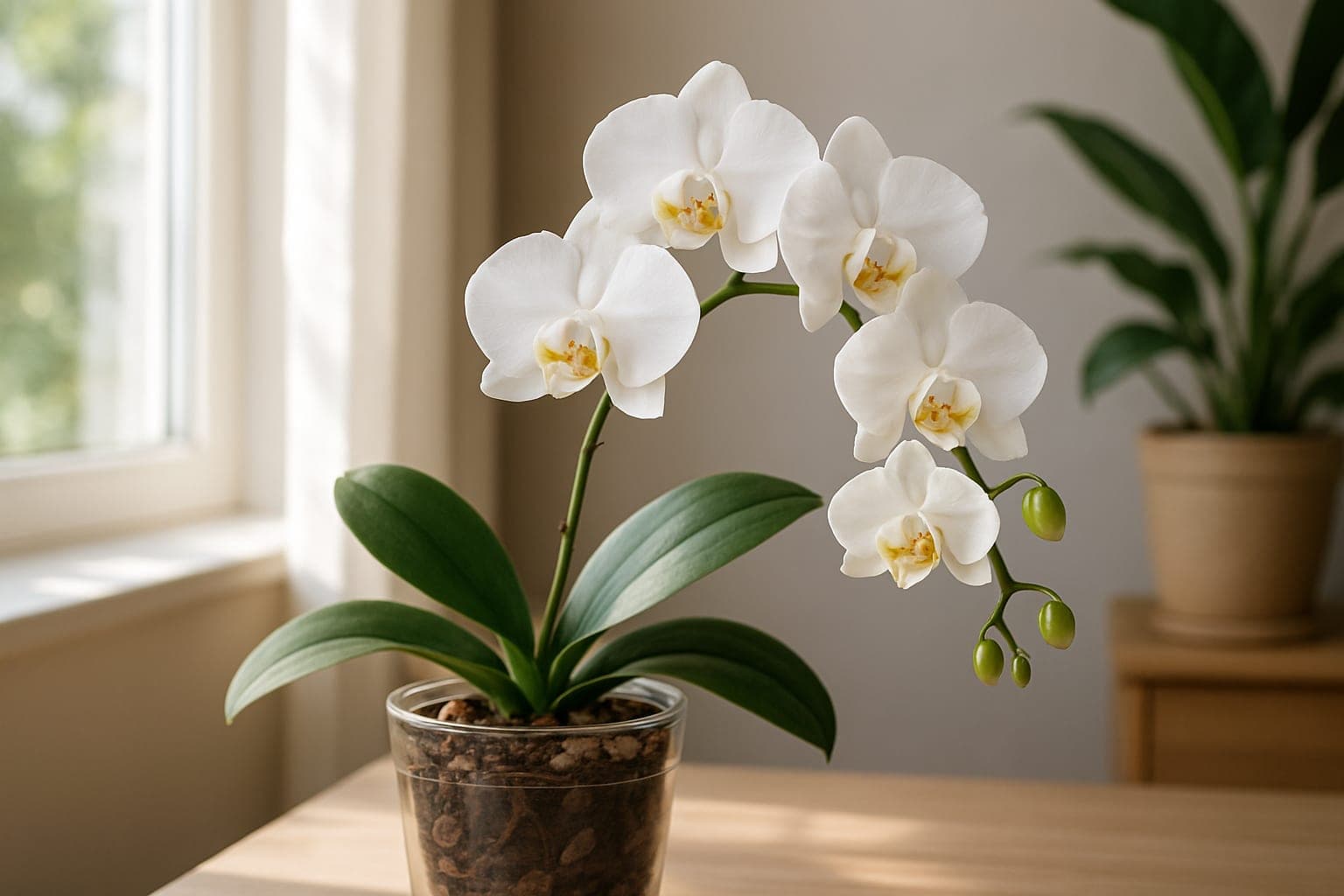
Orchid Basics
Orchids are epiphytes, growing on trees in nature. They need air circulation around roots and can't sit in water.
Light Requirements
Bright, indirect light. East windows are ideal. Leaves should be light green, not dark (too little light) or red (too much).
Watering
Water once weekly, allowing pot to drain completely. Never let roots sit in water.
Humidity and Temperature
Prefer 50-70% humidity and 60-80°F. Slight nighttime temperature drop encourages blooming.
After Blooming
Cut spike above node to encourage rebloom, or remove entirely for plant to rest.
Tools and supplies for this
Products we'd actually buy for this job. Linking to Amazon — if you buy through these links we earn a small commission at no extra cost to you.
- Weston Mill Terracotta Pots, 15.5cm (pack of 10)
Honest British terracotta — breathable walls let roots dry between waterings, ideal for anything prone to rot.
- Weston Mill Pottery Terracotta plant pots, 175mm (pack of 10)
Mid-size workhorse terracotta — perfect step-up for plants outgrowing their nursery pots.
- Whitefurze G04013 10cm Garden Pot - Terracotta (Set of 7)
Reliable mid-size nursery pots with proper drainage holes — the boring essential every plant parent runs out of.
- Ekirlin Plant Pot Indoor 14cm Ceramic Flower Pots White Planter with Drainage Hole and Saucer
Clean white ceramic that actually has a drainage hole and matching saucer — rarer than it should be.
Jessica Liu
Orchid Specialist
Passionate about helping plant parents succeed with expert tips and proven techniques.


Comments(529)
I appreciate the focus on demystifying orchid care, though I have to admit these aren't really my wheelhouse—I'm much more drawn to tropical vegetables like Capsicum annuum and Solanum lycopersicum. That said, I've picked up that orchids need the right humidity and light conditions, which reminds me of what I'm constantly tweaking in my own setup for tomatoes and peppers. Do you find that orchid enthusiasts and vegetable growers struggle with similar environmental challenges, or are they pretty different worlds?
I've kept orchids for a few years now, and honestly they're way less finicky than people think—though I'll admit the watering part took me forever to get right. My biggest win was realizing my cold apartment was actually perfect for them since they like those temperature swings. Did you go into specifics about light requirements in the full post? That's usually where I see people struggle most, especially in winter when we're all desperate for blooms.
I'd push back gently on the "demystify" framing—in my experience, orchids aren't actually mysterious once you stop treating them as exotic rarities. Most of mine thrive on the same basic principles as other houseplants: appropriate light, humidity, and a growing medium that doesn't retain water. The real shift for me was realizing that epiphytic orchids like *Phalaenopsis* need air movement and drainage far more than they need babying, which contradicts a lot of beginner advice out there.
I've been intimidated by orchids for ages, so I'm really looking forward to diving into this. I have a couple that are struggling with blooming, and I'm wondering if there's something specific about watering or humidity that I'm missing — my mediterranean climate is pretty dry compared to what orchids seem to want.
I've had my Phalaenopsis for about eight months now and it's finally reblooming, though I'm still not entirely sure what I did right—was it the cooler nights or the reduced watering schedule? I'd love to read the full guide since I'm hoping to eventually tackle some of the more temperamental species like Cattleyas, especially given my tropical climate. I actually have a photo of my current setup that I'd share if I could upload it, just to see if my setup is on the right track!
Orchids get hyped as finicky, but honestly they're just different—not harder. I've got four plants in my tropical setup and they thrive once you stop treating them like houseplants and start treating them like what they are: epiphytes that want air movement and drainage over moisture. The biggest shift for me was ditching the myth that they need special orchid bark forever; I'd love to see this guide address how often that actually needs refreshing, because that's where people usually mess up.
I really appreciate this perspective—I've been stressed about my two orchids thinking I was doing something wrong, but your point about air movement clicks for me. I'm in a mediterranean climate so humidity isn't my issue, but I haven't paid enough attention to airflow around the roots. Do you find that bark refresh schedule changes depending on how often you water, or is it more about how compacted it gets over time? I'd hate to repot mine if they're still doing okay, but I'm not sure what "still doing okay" actually looks like for orchids yet.
I've got to admit, orchids intimidated me for years! I finally gave one a shot last spring after killing a few succulents (which sounds backward, I know), and I'm shocked how much the humidity and watering routine actually matter more than I expected. Since I'm in a Mediterranean climate, I had to get creative with a pebble tray to keep moisture up during our dry summers. Are you finding that people struggle most with overwatering, or is it usually the light situation that trips folks up?
I've killed my fair share of orchids before realizing they mostly just want to be ignored—my Phalaenopsis finally flowered once I stopped fussing and moved it to my bright, dry windowsill where it could actually experience some temperature swing between day and night. Nothing fancy needed, just the basics done right, which is exactly what this guide seems to nail.
I really appreciate you sharing that—the "stop fussing" approach is so important and something I learned the hard way too. My succulents taught me that same lesson, actually. I used to overthink everything until I realized they thrived on neglect and bright light. It sounds like your Phalaenopsis finally got what it needed, and that temperature variation you mentioned makes a real difference.
I've kept a couple orchids over the years with mixed results, so I'm curious what your take is on watering frequency—I've heard everything from weekly to "barely touch them." The one I managed to get reflowering seemed happiest when I let the bark medium dry out almost completely between waterings, but I'm wondering if that's just luck or if there's actually a pattern there. Do you have a preferred method that's worked consistently for different orchid varieties?
I'm still building my orchid skills (I've got mostly succulents in my collection), but I've been eyeing orchids and this is super helpful! It sounds like you figured out something really important—I've read similar advice about letting the medium dry out, so I don't think you got lucky. Do you find that approach works for all your orchids, or do some of them seem to want more frequent watering?
I appreciate the focus on orchids, but I'll be honest—they've never stuck around my place for long. My two succulents, on the other hand, thrive on neglect. That said, I've picked up that orchids really do need that humidity and airflow piece dialed in, which is basically the opposite of what works for my *Echeveria* setup. Curious if your guide covers why so many people kill them with kindness (overwatering especially).
I'd push back on one thing most guides gloss over: cold nights genuinely matter more than people think. I keep five plants total, mostly orchids, and the ones that actually rebloom consistently are the ones I let drop to 50–55°F at night. It forces better flowering than any fertilizer schedule. The trick is having a space that naturally cools—a drafty window works, but don't blast them with direct cold air. I've got a photo of one of mine mid-spike that shows exactly what I mean, but the difference is night-and-day compared to when I kept everything warm year-round.
I've had such better success with my *Phalaenopsis* since I stopped trying to recreate tropical humidity in my desert home—turns out many orchids adapt beautifully to arid conditions if you nail the watering schedule. Looking forward to seeing what specific care tips you cover, especially for blooming cycles. Do you address dormancy periods, or is this more focused on year-round care?
I've kept a couple of orchids over the years and honestly, they intimidated me way more than they should have! My main struggle was always overwatering—I think a lot of people treat orchids like regular houseplants and drown them. What specific care tip from the guide do you find makes the biggest difference with orchid blooming? I'm curious if there's one thing that changed the game for you.
I've been intimidated by orchids for a while now, so I'm really glad I found this guide. I mostly stick with succulents in my little Mediterranean setup, but I've got one orchid that's been struggling, and I think I've been overwatering it like crazy. Do you have any quick tips for someone just starting out with orchids, or should I dive into the full guide first?
I appreciate the focus on orchids, though I'll admit they're outside my usual wheelhouse—I'm much more at home with succulents in dry conditions. That said, I've found that a lot of orchid troubles stem from the same root cause as succulent issues: people overestimate how much water and fussing these plants actually want. Curious whether your guide emphasizes that orchids thrive on neglect rather than constant tending, since that seems to be the hardest lesson for most growers.
I've killed more orchids than I'd like to admit before figuring out the real issue—mine were getting too much water and not enough air movement. In an arid climate like mine, I found they actually thrive with less frequent watering than most guides suggest, especially if you've got decent humidity from a bathroom or can cluster them together. The biggest game-changer was switching to bark-heavy potting mix and letting roots dry out between waterings.
I'd love to see more emphasis on watering frequency varying wildly by climate—I'm in a temperate zone and my orchids need way less water than most guides suggest, especially in winter. The "soak and drain" method works fine, but honestly, I've had better results just letting mine dry out more between waterings than conventional wisdom says. Curious if others with similar climates have found the same thing.
I totally get this—I'm in a Mediterranean climate and my orchids basically thrive on neglect compared to what those guides recommend! I learned the hard way by overwatering my first one, and now I space waterings out way more than I'd expect. The soak and drain method works, but honestly, I find myself just letting the potting mix get pretty dry between waterings without stressing. Have you found there's a particular time of year where you can dial back even further, or does it stay pretty consistent year-round for you?
I'm totally with you on the climate thing—being in an arid area has taught me the hard way that most guides assume way more humidity than I've got! My orchids actually seem happier when I let them dry out more, and I've stopped second-guessing myself when they're not as thirsty as the books say they should be. I'd love to see a photo of how your setup looks in winter, since I'm still tweaking mine to figure out the sweet spot between dormancy and neglect.
I've killed more orchids than I've kept alive, honestly. The turning point for me was ditching the "special orchid soil" and just using bark with perlite—way better drainage. I keep mine in a bright spot without direct sun, water when the media's actually dry, and that's pretty much it. Most of my failures came from overwatering or keeping them too warm at night. Are you covering anything about humidity levels, or should I be doing more than just misting occasionally?
Oh, I totally relate to the orchid graveyard experience! Your bark-and-perlite mix sounds like exactly what I need to try—I've been fussing with mine way too much. The part about letting the media dry out is helpful; I think I've been treating orchids like my herbs and watering on a schedule instead of actually checking. Do you find humidity matters more in drier climates, or is misting really just a nice-to-have?
I've been meaning to dive deeper into orchids, but I have to admit they intimidate me a bit! My one houseplant is actually a basil (*Ocimum basilicum*) that I've had success with in my temperate kitchen, so I'm more comfortable with herbs. Are orchids really as finicky as they seem, or is it mostly just getting the watering schedule right? I'd love to know if there are any beginner-friendly varieties to start with before I commit to a whole collection.
I'd love to see more about humidity specifics here—I've found that people often overthink orchids when really consistent air movement matters as much as the percentage itself. Mine do fine in my 40% winter humidity as long as there's decent air circulation, but that's rarely mentioned in guides that fixate on the 50-70% range. Curious if you've noticed that trade-off in your own growing?
I've had better luck with my Phalaenopsis since I stopped treating them like typical houseplants—they really do prefer that cooler nighttime drop and slightly drier conditions between waterings. The advice about air circulation is spot-on; I noticed my collection of eleven plants started thriving once I positioned them where they get consistent gentle airflow, which has made a real difference in preventing root rot that plagued me before.
That nighttime temperature drop makes such a difference—I've learned that the hard way in my cold climate, since my house naturally cools way down at night anyway! I'm curious what you're doing for air circulation in winter though, since I struggle to keep things moving without creating those harsh cold drafts that stress my tropicals. Are you using a small fan, or did you rearrange your space in a way that works with your heating system?
I appreciate the orchid focus, but I'll be honest—they've never stuck around in my tropical setup. I've got four plants going strong (mostly vegetables), and I find the humidity here actually works against orchids since mine kept rotting at the roots. I'd love to see what you're doing differently, because the watering advice most guides give just didn't translate to my climate. If you've cracked the code for tropical growers, I'm listening.
I've killed more orchids than I'd like to admit before realizing they just need way less water than I thought. This guide looks like it covers the essentials, so I wish I'd had something like this when I started. My current orchid finally rewarded me with blooms after I stopped fussing with it so much and just let it dry out between waterings.
I've kept my orchids alive longer than I kept my first marriage, though I'll admit they're nearly as temperamental! The biggest shift for me was realizing they don't want the fussing I was giving them—less water and better air circulation actually made the difference. I'm curious whether your guide touches on humidity without creating a swamp, since that's where I see most people stumble.
I'm always excited to see orchid care getting this kind of thoughtful attention. My two Phalaenopsis have really thrived since I learned to respect their need for air movement and humidity rather than constant moisture—it's made such a difference in my arid climate where everything tends to dry out fast. What aspects of orchid care do you find people struggle with most, or have you covered those in the guide?
You nailed it with the air movement point—that's huge, especially in drier climates. I've got a Phalaenopsis that nearly died under my care until I realized I was treating it like a tropical rainforest plant when it actually needed better airflow and less frequent watering. The hardest thing I see people stumble on is light; they either keep orchids too dark or blast them with direct sun that scorches them. If this guide covers that balance well, it'll help a lot of folks succeed where they've failed before.
I've been meaning to dive deeper into orchids—they always seem so finicky compared to the herbs I usually grow! My basil and oregano are pretty forgiving, but I keep hearing orchids need very specific humidity and light conditions. Are there any particular varieties you'd recommend for someone just starting to branch out from herbs, or should I expect a steeper learning curve? Would love to see what's worked for you!
I've killed more orchids than I'd like to admit before I figured out that my cold apartment was actually the problem—I was overwatering because I thought they were struggling, when really they just needed way less frequent watering in the cooler temps. Did this guide touch on adjusting watering schedules for different climates? That's been a total game-changer for my tropical plants, especially since I live somewhere pretty chilly.
I've kept a couple of orchids for years now, and honestly the biggest game-changer for me was ditching the standard potting mix entirely and switching to bark chips with a bit of sphagnum—mimics how they grow on trees in nature, and drainage improved overnight. Most people overthink the watering; I just check the roots through a clear pot and water when they're silvery-gray. Did you cover media in the guide, or did you focus more on the light and humidity side of things?
I've killed more Phalaenopsis than I'd like to admit before realizing they just wanted to dry out between waterings—I was essentially drowning them with kindness. The biggest shift for me was treating them less like tropical houseplants and more like epiphytes that naturally perch on tree bark in their native habitat, which meant ditching regular potting soil entirely. Now that I've switched to bark-based media, they're far happier, and I'm finally seeing consistent reblooming without the guilt!
I've gotta admit, orchids intimidated me for years—I stuck with my tomatoes and peppers in the Mediterranean sun where I actually knew what I was doing! But after killing two phalaenopsis plants by overwatering (rookie mistake), I finally got curious enough to try again, and your guide makes so much more sense than the scattered advice I'd been getting. Do you have thoughts on humidity levels for orchids indoors, or is that something you mainly deal with in more humid climates?
I've killed two orchids before figuring out the real issue—I was watering on a schedule instead of checking the roots first. Now I let mine dry out almost completely between waterings, and they actually flower. The biggest thing that changed for me was understanding that orchids in my mediterranean climate need way less water than people think, especially in winter. This guide sounds like it covers the stuff I had to learn the hard way.
I appreciate the focus on orchids, though I'll admit they're outside my usual wheelhouse—my collection gravitates toward succulents like *Aeonium* and *Echeveria*, which thrive in my Mediterranean climate with minimal intervention. That said, I've been curious about orchid humidity requirements, especially since they seem to demand such precise conditions compared to what I'm used to. If you covered strategies for maintaining humidity without creating rot-prone environments, that would've been the section I'd dig into most.
I've killed exactly two Phalaenopsis before figuring out that my arid climate was actually a *feature*, not a bug—the low humidity meant I could water less often and let roots dry between sessions, which honestly saved me from the root rot that was my signature move. This kind of guide would've saved me a lot of grief, so I'm grateful you're laying it all out for folks; even us serial plant murderers appreciate the demystifying.
I totally relate to the root rot struggle—I learned the hard way with a Phalaenopsis that I was basically drowning with kindness. Your point about low humidity being an advantage is such a good one, and I think a lot of us forget that orchids don't need the jungle conditions we imagine. I'm in a tropical climate where humidity is naturally high, so I've had to get creative with airflow instead, and it's made all the difference with my collection.
I've killed more orchids than I'd like to admit before realizing that the biggest mistake was overwatering—I was treating them like my other tropicals, which was completely wrong. The turning point came when I started growing mine in bark media that actually *drains*, mimicking their natural epiphytic habitat on tree branches. Now my Phalaenopsis and Dendrobium are finally staying healthy enough to rebloom.
Your point about drainage really resonates with me—I've mostly stuck to succulents so far, but I'm intimidated by orchids and always assumed I'd mess them up. It's helpful to hear that it's really about matching their natural conditions rather than just guessing. I'm curious whether orchid bark media would work in a Mediterranean climate like mine, or if I'd need to adjust watering differently in the heat?
I've kept orchids for years and honestly, I find most care guides overcomplicate things. The real issue isn't humidity or fancy potting media—it's light and airflow. My phalaenopsis only started thriving when I moved it closer to a south-facing window and stopped fussing with the watering schedule. Does your guide emphasize light as much as people usually emphasize humidity?
I've had my phalaenopsis for three years now and honestly the biggest game-changer for me was ditching the idea that they need constant moisture—once I switched to watering on a proper schedule and actually let the roots dry out between waterings, the blooms came back way more reliably. I'd love to see what specific advanced techniques you're covering in the full guide, since I'm always looking to improve my care routine with the rest of my tropical collection!
I've been meaning to tackle orchids for ages—they seem so intimidating compared to my herbs! This guide sounds like exactly what I need to stop being afraid of them. My main question: do orchids need the same kind of attention to humidity that my basil and oregano do, or is it a totally different ballgame? I'm worried I'll overwater them since I'm still getting the hang of that with my current nine plants.
I have to admit, orchids have always intimidated me a bit—I've got a small collection of herbs that I feel pretty confident about, but orchids seem like a different beast entirely. I'm curious whether the guide covers watering frequency, since that's always seemed like the trickiest part for me. Have you found there's a big difference depending on the variety, or is there a general rule that works across most orchids?
I've killed more orchids than I'd like to admit before realizing my arid climate was the real culprit—turns out they weren't being dramatic, just thirsty! I'd love to see a photo of my current Phalaenopsis thriving on a pebble tray setup, though I'm pretty sure guides like this would've saved me years of trial and error. Thanks for laying it all out so clearly for folks like me who learn better from understanding the "why" behind the care.
I've found that understanding the specific needs of your orchid genus makes all the difference—I keep a Phalaenopsis and a Cattleya, and they really do want different things despite both being orchids. This guide looks like it covers the nuances well. What aspect of orchid care do you find trips up most people in your experience?
You've hit on something I've learned the hard way—I killed my first Phalaenopsis by treating it like my Cattleya! I think humidity is the biggest culprit for people in arid climates like mine; folks assume all orchids are tropical swamp plants, but my Paphiopedilum actually prefers things much drier than I'd expect. A humidity tray with pebbles and water beneath (not touching the pot) made all the difference.
I've kept orchids for years in my dry climate, and I'd say the biggest breakthrough for me was understanding that "tropical" doesn't always mean "wet." Most of my collection thrives with careful watering and good air circulation rather than the humid greenhouse conditions people assume they need. Have you found that orchid success really depends on matching care to your specific environment, or do you think there's a more universal approach that works everywhere?
I've kept orchids for years in a cold climate, and honestly the biggest game-changer for me was ditching the myth that they need constant warmth—mine actually bloom better with cool nights. The temperature swing between day and cool evenings triggers flowering way more reliably than any fertilizer schedule. I'd love to see if this guide addresses that, since so many care articles gloss over it. I have a Phalaenopsis right now that's thriving on basically neglect and cooler conditions, and the difference from my early days of fussing is night and day.
I've killed exactly two orchids before finally realizing they just wanted to be left mostly alone—turns out my "loving care" was basically drowning them in attention and humidity I couldn't actually provide in my cold apartment! I'm curious whether you recommend any particular orchid varieties for someone like me in a less-than-ideal climate, or if the tips in your guide work pretty universally across species?
I've killed two orchids before I realized the biggest mistake—overwatering and poor air circulation. Now I keep mine in a bright, airy spot and water only when the roots look silvery-white, which in my dry climate is maybe every 10 days. The switch to bark medium instead of regular soil made the biggest difference for me.
I've been growing orchids for years now, and I still learn something new from guides like this. The tropical varieties really do thrive when you stop overthinking the watering—I find my Phalaenopsis are happiest when I let the bark medium dry out between waterings, which took me longer than it should have to realize. What aspect of orchid care do you find trips up most people in your experience?
I've killed two orchids before I realized they actually need way less water than my other plants—I was basically drowning them. Now I treat mine more like my succulents: water thoroughly but let them dry out between waterings, and they've finally started reblooming. The comprehensive approach here probably helps a lot of people avoid that same mistake.
I've killed more orchids than I'd like to admit before realizing they actually want less water and more air movement than I was giving them—turns out my "tropical greenhouse" approach was just drowning them. Now I keep mine in a bright west-facing window with weekly watering and they're finally reblooming consistently. What's your take on bark-based media versus sphagnum for Mediterranean climates, or do you find it doesn't matter as much as people think?
I've got to say, orchids always intimidated me until I finally figured out that they're way less fussy than people think—it's really just about nailing the light and humidity. I'm growing a couple of *Phalaenopsis* hybrids right now alongside my veggies, and they actually seem happier on my sheltered balcony where they get bright indirect light. Do you cover the roots-in-moss approach in the guide, or do you lean more toward bark media? I'd love to see your take on that since I'm still experimenting with what works best in my temperate climate.
I'm with you on the light piece—that's honestly where most people stumble. I've found that *Phalaenopsis* really does thrive with bright indirect light, and it sounds like your balcony setup is ideal. On the media question, I've had better luck with bark-based mixes in my tropical humidity; sphagnum moss tends to stay too wet for me and invites root rot if I'm not obsessively vigilant about watering frequency. That said, bark needs more frequent watering, so it's a trade-off depending on your routine and local climate.
I've killed more orchids than I'd like to admit before realizing they just need way less water than I thought. This guide looks like it covers all the tricky stuff—I especially appreciate guides that don't shy away from the humidity and light balance, since that's where I finally turned things around with mine. Thanks for putting this together.
I have to admit, orchids have always intimidated me a bit—I've killed two already! But I'm really drawn to them because they're so stunning. I have mostly succulents in my collection right now, so the watering requirements for orchids feel totally opposite of what I'm used to. Did you cover anything about getting them to rebloom, or is that something you'd suggest tackling after you've just gotten the basics down?
The watering flip is real—I went through the same thing transitioning from succulents. What actually helped me: I stopped thinking "water less" and started thinking "water differently." Orchids in my dry climate need weekly watering even though they hate sitting wet, so I water thoroughly but let bark dry between soakings. Once you nail that rhythm, reblooming is just about giving them a slight temperature drop and bright light, so totally doable as a next step.
I appreciate the focus on orchids, though I'd gently push back on the idea that they need to be "demystified"—most of my success with them came from accepting they're just plants with specific needs, not finicky mystery boxes. Since I primarily grow succulents in my arid climate, I've always found orchids a bit outside my wheelhouse, but I'm curious whether your guide addresses how differently they perform depending on humidity levels. That's been the real game-changer for folks I know who've struggled with them.
I've had mixed luck with orchids over the years, but this guide really helped me understand why my Phalaenopsis kept dropping buds—turns out I was watering on a fixed schedule rather than checking the bark's moisture level. The humidity tip about grouping them together has been a game-changer for my collection; I've noticed my Cattleya blooms more reliably now that it sits near my other tropical plants. Thanks for breaking down what actually matters versus the fussy myths.
I've been wanting to branch out from my herb collection into orchids—they seem intimidating at first, but I love how finicky plants force you to really pay attention to humidity and watering cycles. Does your guide go into detail about root health? I've read that orchids are pretty particular about airflow around their roots, and I'm curious whether the same principles apply across different genera like Phalaenopsis versus Cattleya. Would definitely help me figure out if I'm ready to take the plunge!
I totally get the intimidation factor! Honestly, I've had way better luck with orchids than I expected once I stopped overthinking the watering—mine sit in a cold spot by the window, so I water way less frequently than the guides suggest, and they're finally happy. Root health is definitely key, and yeah, the airflow thing is real, but I'd say if you're already dialed in on humidity and drainage for your herbs, you've got most of what you need. Have you thought about starting with a Phalaenopsis? They're pretty forgiving compared to Cattleyas, which I haven't quite conquered yet.
I really appreciate this comprehensive approach to orchid care. Living in an arid climate, I've found that the humidity challenge is often what trips people up with *Orchidaceae*, and I'm curious whether your guide addresses microclimate strategies—things like grouping plants together or using pebble trays. What's been the most surprising care requirement you've encountered when working with orchids?
I've killed my fair share of orchids before realizing they mostly just want to be ignored—my Phalaenopsis finally started reblooming once I stopped fussing with it and let the humidity from my shower bathroom do the heavy lifting. In my dry climate, getting that air moisture right was the real game-changer, so I'm curious if your guide touches on humidity strategies for arid environments, since that's where most people seem to struggle.
I have to admit, orchids still intimidate me a bit—I've managed to keep nine herbs alive in my mediterranean spot, but those fancy orchids feel like a totally different challenge! This guide sounds like exactly what I need to finally stop killing them with kindness (aka overwatering). Do you have any tips for someone who's more comfortable with practical herbs like basil and rosemary but wants to branch out without completely failing at it?
I've found that getting orchids to rebloom consistently in my arid climate really comes down to nailing the temperature fluctuations and not overwatering—most folks underwater their Phalaenopsis and Cattleya in dry conditions, which actually works in our favor. With thirteen orchids in my collection now, I've learned that what works for tropical regions needs real adjustment here, so I'm curious what specific environmental tweaks this guide recommends for drier climates?
I've got to be honest—orchids intimidated me for years, but I finally got one to rebloom last spring by treating it more like the herbs I know than like some finicky exotic. The key for me was stopping the overwatering and remembering they want that airy root environment, kind of like how my basil needs good drainage. Have you found that people's biggest mistake is still the watering, or is there something else you see tripping folks up most?
I've got five plants in my collection now, mostly because I kept killing orchids until I stopped overthinking them. The biggest shift for me was accepting that cold nights actually help—I'm in a cool climate, which turned out to be an advantage rather than a limitation. I'd love to see a photo comparison of my current bloom cycle if I could upload here, but the real game-changer was matching watering to my actual environment instead of following generic schedules. Solid guide approach.
I killed two orchids before figuring out that less watering actually works better—I was drowning mine out of guilt. Now I stick to watering once a week and let them dry out between sessions, and my third orchid has been flowering consistently for months. The biggest shift for me was accepting that orchids aren't fussy, they just want what's different from regular houseplants, so this guide sounds like exactly what I needed back then.
I've always found orchids intimidating, honestly—they seem so finicky compared to my herbs! I'd love to try growing *Dendrobium* orchids since I've read they're more forgiving, but I'm curious: does this guide cover humidity management specifically? That's what I'm most worried about in my temperate climate, since I keep my space pretty dry for my basil and oregano.
Dendrobiums are a solid choice—I started with them too and they're genuinely more forgiving than Phalaenopsis. The humidity thing is the real hurdle though; I learned the hard way that my tropical plants needed their own microclimate separate from my herbs. I end up grouping my orchids together on a pebble tray with water underneath, which keeps humidity around them without affecting the rest of my space. Definitely check if the guide addresses humidity specifics, since that's the make-or-break factor in drier climates.
I totally get that hesitation, but Dendrobium really is a smart choice for someone moving into orchids. Humidity can definitely be tricky in an arid space—I've had to get creative with mine—so I'd definitely scan the guide for that section. Have you considered a small pebble tray or grouping your orchids together to create a microclimate, even if your overall space stays dry?
I've always found orchids intimidating, so I'm curious what this guide says about watering—that's where I tend to mess up. I have four plants total and they're mostly herbs, so I haven't seriously attempted orchids yet, but a friend swears by misting instead of traditional watering. Is that covered here, or does the guide recommend something different?
I totally get that intimidation factor—I actually killed my first orchid by overwatering it, which was a painful lesson! From what I've read, misting alone usually isn't enough since orchids need proper hydration at the roots, but it can help with humidity, especially in my dry Mediterranean climate. The key thing I learned is that they want to dry out between waterings, unlike a lot of houseplants. Did your friend's misting method work for them, or were they just offering a tip they'd heard about?
Misting alone definitely won't cut it—I learned that the hard way with my first phalaenopsis! The key is that orchids need water at the roots, but less frequently than most people think, and the medium matters hugely (bark-based mixes dry faster than soil). Since you're mostly growing herbs, you might actually find orchids easier than expected once you nail the watering rhythm. Are you thinking of starting with phals, or are you leaning toward a different type?
I've kept a few orchids alongside my succulents over the years, though I'll admit they're not my specialty—those Mediterranean dryland plants suit my climate better. That said, I appreciate guides that cut through the mystique, since orchids really do respond well to consistent conditions rather than magic. What's your take on humidity in drier climates; do you find a pebble tray setup actually moves the needle, or is it mostly theater?
I appreciate the comprehensive approach, though I'd gently push back on treating all orchids the same way. I've found that phalaenopsis and cattleyas have pretty different needs—especially around watering frequency and humidity. The "soak and drain" method works great for my phals, but my cattleya actually prefers drying out faster between waterings. Worth breaking down by type rather than one-size-fits-all advice.
Orchids get way more hype than they deserve—honestly, I've had better luck with my hot peppers and tomatoes in this tropical climate. That said, I'd agree the watering myth needs debunking; most people kill them with kindness. I keep mine on a weekly soak-and-drain in the rainy season, less in dry spells, and they're fine. Would love to see if your approach matches what actually works versus the fussy reputation they carry.
I've killed more *Phalaenopsis* than I care to admit before realizing the biggest issue was overwatering—orchids genuinely prefer to dry out between waterings, and I switched to watering only when the roots looked silvery instead of green. Since then, my blooming rate has jumped dramatically, so I'm curious whether this guide emphasizes that detail, since it seems to be where most people (myself included) go wrong.
I've been wanting to try orchids forever but honestly they intimidate me a bit—everyone says they're so finicky! I have a bunch of succulents doing well, so I'm hoping that means I can handle an orchid or two. Are orchids really that much harder than succulents, or is it just a different kind of care?
I've got to admit, orchids intimidated me for years until I finally committed to learning them properly! My Mediterranean balcony gets pretty intense sun, so I've had mixed success—lost a couple Phalaenopsis before realizing they needed way more filtered light than I was giving them. Now I'm curious what your take is on humidity levels here? I've been misting, but I'm wondering if that's even the right approach or if I should try something else entirely.
I've killed more orchids than I care to admit before learning that the watering schedule everyone parrots actually works—mine stay happiest on a weekly soak rather than daily misting. I'd love to see a photo comparing a healthy root system to a rotted one, since that's honestly what finally clicked for me instead of just following generic rules.
I hear you on the root system thing—that's exactly what changed my approach too. I went from losing orchids to keeping a couple thriving once I stopped guessing and actually looked at what healthy roots should feel like. Weekly soaking works great, though I've found the trick is letting them dry out completely between waterings, especially in tropical humidity where mine sit. That visual comparison would honestly help a lot of people, because orchid care isn't mysterious once you stop overthinking it.
I'm with you on the weekly soak—that's been my move too, and it's made the biggest difference. The root system comparison idea is spot on; I spent way too long overwatering before I actually looked at what healthy roots should feel like. Have you found that the soak method works differently depending on your potting medium, or does it stay pretty consistent for you?
I've killed more Phalaenopsis than I care to admit before realizing my mistake was watering on a schedule rather than checking the medium first—in my dry climate, they often need water only every 10–14 days. The biggest shift for me was understanding that most orchids aren't actually tropical rainforest plants that want constant moisture; they're epiphytes that prefer to dry out between waterings. Did you touch on the difference between watering needs for different genera, or focus mainly on the most common types people keep?
I've been intimidated by orchids for a while now, so this guide is exactly what I needed. Most of my collection is succulents that practically thrive on neglect, but I picked up an orchid last month and I'm still figuring out the watering schedule—it's so different from what I'm used to. Really appreciate you breaking down what seems complicated into manageable steps.
I've killed more orchids than I'd like to admit before finally understanding that they're less fussy than we think—they just need the right *conditions* rather than constant fussing. After years of overwatering mine into oblivion, I've found that my tropical setup actually works in my favor since I can mimic their natural humidity without a humidifier. Are there specific climate challenges you address in the guide for people in drier regions, or does it lean toward tropical growing?
I've been growing *Phalaenopsis* in my arid climate for a while now, and I really appreciate guides like this that address the specific challenges we face with orchids in dry air. Humidity and watering are such a balancing act when your environment naturally works against you. What techniques have you found most effective for orchid growers dealing with low humidity, or do you have recommendations for which species tend to be more forgiving in arid regions?
I've had better luck with my *Phalaenopsis* since I started grouping plants together—they create a little microclimate that helps with humidity, which seems to matter more than I initially thought. I'm curious whether you've tried that, or if your space just doesn't allow for it? I'm still experimenting with the watering schedule myself, so I'd be interested to hear what's actually worked for you in your arid climate.
I've got to admit, orchids have always intimidated me—I'm much more comfortable with my rosemary and basil! That said, I picked up one last year and realized a lot of the mystique is just about humidity and patience, which honestly isn't that different from keeping Mediterranean herbs thriving indoors. Are you finding that orchids do better with the same kind of bright, indirect light setup most finicky plants prefer, or is there something totally different about their needs?
I'd push back slightly on the humidity parallel—most Mediterranean herbs like your rosemary actually prefer drier air, whereas tropical orchids (particularly Phalaenopsis) really do need sustained moisture in the air to avoid root issues. That said, you're right that bright, indirect light is the sweet spot for most orchids; I keep mine near an east-facing window where they get morning sun without the afternoon scorch. The real shift from herbs is airflow—orchids need it constantly, which is why they fail in still rooms more often than from underwatering.
I appreciate the effort to demystify orchids, though I'd gently push back on the "elegant but finicky" narrative that often dominates these guides. After years with houseplants, I've found orchids respond better to consistent neglect than fussy schedules—I water mine roughly every 10 days and they bloom reliably. The real game-changer for me was ditching regular potting mix entirely and using bark, which prevents root rot way more effectively than any watering technique.
I've always struggled with orchids compared to my herbs—they seem to want conditions that feel opposite to what I've learned works for Ocimum basilicum and other cold-hardy species. This guide sounds really useful though, especially the advanced tips. Do you address humidity management differently for orchids grown indoors in drier climates, or does that apply universally across most varieties?
I've killed more Phalaenopsis than I care to admit before realizing the real issue wasn't watering frequency—it was air movement around the roots. Now I keep mine on a small fan set to low, and they actually prefer it. The moisture-trapping enclosed spaces most people use are exactly what triggers root rot, so if your orchids keep struggling, that's worth troubleshooting before anything else.
That air movement tip is really helpful—I hadn't thought about the enclosed space issue being the main culprit. I've got two Phalaenopsis that have been struggling, and I've been obsessing over watering schedules when maybe they just need better air flow. Do you find the fan needs to run all day, or just a few hours? I'm worried about drying them out too much since my Mediterranean climate is already pretty dry.
I've been nervous about orchids for ages, thinking they were impossible, but this guide is making me reconsider. I do wonder though—are all orchids really as fussy as they seem, or is that more of a myth? I'm in a mediterranean climate where things dry out quickly, so I'm curious if that actually works in my favour rather than against me like I've always assumed.
I've been wanting to move my orchid out of that bright south-facing window because I thought it needed shade, but now I'm wondering if I've been underwatering it instead—the tips are browning. How do you know if it's a light issue versus a watering one? I'd love to share a photo if I could, but I'm hoping this guide has something that'll help me figure out what's actually wrong before I kill it.
I appreciate the focus on orchid care, though I have to admit these beauties aren't really my specialty—I'm much more into tropical vegetables like *Capsicum* and *Solanum lycopersicum*. That said, I've picked up that orchids and edibles actually share some similar humidity preferences in tropical climates, which is why my small collection does okay alongside my veggie setup. Are there any tips in your guide about humidity control that might overlap with what vegetable growers should know?
I've killed two orchids before I figured out the watering thing—they actually want to dry out between waterings, which sounds wrong but makes all the difference. My current phalaenopsis has been reblooming for two years straight now that I'm treating it more like a succulent than a tropical plant. I'd love to see if your guide covers humidity without making it sound impossible for people in dry climates like mine.
I've killed exactly two Phalaenopsis before realizing my arid climate was the real problem—turns out these tropical epiphytes were basically gasping for humidity! Now I mist mine religiously and keep them clustered together to create a little microclimate, which has made all the difference with blooming. This guide sounds like it would've saved me those casualties, so I'm bookmarking it.
I have to admit, orchids intimidated me for years before I finally tried one! I killed my first two pretty spectacularly, but after reading guides like this I realized I was overwatering like crazy—such a common mistake. Now I've got a couple thriving in my collection alongside my tomatoes and peppers, and honestly the care tips about humidity and light made all the difference. Do you find that people struggle more with the watering or the repotting side of things?
I'm still working through orchid care myself, so I'm curious whether this guide addresses the difference between tropical and temperate species—I've read conflicting advice on winter dormancy requirements, and I'm not sure if that's species-specific or a myth. I've got a couple of Ophrys specimens I'm trying to establish, which seem to have very different needs from the typical hybrid orchids most guides focus on.
I've been growing orchids for a couple of years now, and honestly the biggest thing that changed my success was learning to water less than I thought I needed to. I killed my first one by fussing over it too much, but once I switched to watering maybe once a week and really letting the bark dry out between waterings, my plants actually started reblooming. A guide like this would have saved me some frustration early on.
I appreciate the focus on orchids—they're one of those plants that intimidates a lot of people, but honestly, I think the "difficult" reputation is overblown. I've had better luck with phalaenopsis than with some supposedly "easy" houseplants, mostly because their care needs are pretty straightforward once you understand them. That said, I'm curious whether this guide addresses orchids that can actually thrive in cold climates, or if it's mainly focused on tropical varieties? I'd love to see more content around hardy orchids that don't require a greenhouse setup.
I've killed more orchids than I'd like to admit before realizing that air movement was my missing piece—I now keep mine near a gentle fan, and my Phalaenopsis actually rebloomed this year instead of sulking. The timing on humidity is crucial too; I mist in the morning so water dries before evening, which has cut my fungal issues dramatically.
I totally get that—I learned the hard way too! My collection's mostly veggies in the Mediterranean sun, but I inherited an orchid a few years back and nearly drowned it with love before I figured out the watering thing. Your point about air movement is gold, and I'm stealing that fan idea because our hot, dry summers could actually work in my favor if I stop being so heavy-handed with the misting. Do you find the morning misting makes a big difference with your humidity levels overall, or is it more about preventing that fungal creep?
I appreciate the comprehensive approach here, though I have to admit orchids aren't really my focus—I'm much more drawn to growing vegetables in my tropical climate. That said, I've picked up a few things about orchids over the years since they're such finicky houseplants, and I'm curious whether your guide addresses the humidity challenges specific to tropical growing conditions, or if the strategies are more universal?
I'd love to hear more about your vegetable setup since that sounds amazing. On the orchid humidity question though—I've found that in tropical climates, the challenge is actually keeping humidity from getting *too* high, which can lead to root rot if air circulation isn't right. My Phalaenopsis does best when I make sure water drains quickly and there's good air movement around it, which might be a different focus than what someone in a drier climate would need.
I'm with you on focusing elsewhere—orchids aren't my thing either, honestly. That said, I've found humidity matters way less than people think if you get the watering right; I killed mine for years by overcomplicating it. Since you're in a tropical climate, you're probably already sorted for humidity naturally, so the universal advice about weekly watering and drainage might be your real win here. Does the guide go into drainage specifics, or mostly focus on the humidity angle?
I've killed two orchids before realizing they actually want *less* water than I thought—mine are thriving now on a weekly soak instead of daily misting. The humidity thing is real though; I've got mine clustered near the kitchen window where they get the moisture from cooking. Would love to see if you have tips on the repotting schedule because that's still my weak spot.
I've been growing orchids for a few years now and honestly, they're way less fussy than people think—once you stop treating them like they need coddling! My Phalaenopsis has been reblooming consistently since I figured out the watering thing (less is more in my temperate climate). Do you get into the humidity tricks in the guide, or focus more on the basics? I'm always curious how different growers approach that, since my setup doesn't have a dedicated humidifier.
I've killed more orchids than I'd like to admit before realizing my cold apartment was the real problem—turns out they hate the drafty window where I kept mine! Now I group my three orchids together away from vents and they're finally reblooming. Would love to know if you have specific tips for humidity in colder climates, since that's been my biggest struggle keeping tropical plants happy up north.
I appreciate the focus on orchids, though I'll admit they're outside my usual wheelhouse—I tend to stick with herbs like *Ocimum basilicum* and *Thymus vulgaris*. That said, I've picked up that orchids are far less finicky than their reputation suggests, mainly needing decent air circulation and the right watering rhythm. Would've been curious to see whether you touched on root rot as a preventative rather than a rescue, since that seems to trip up most newcomers I know.
I killed two orchids before realizing they just needed way less water than I thought—I was basically drowning mine. Now I bottom-water every 7–10 days and they're actually flowering, which never happened before. Would love to see what specific methods you recommend in the full guide since orchid care seems to have a lot of conflicting advice out there.
Oh, the watering thing is *huge*—I learned that lesson the hard way too! I actually switched to watering mine maybe once a week in winter and every 5–7 days when they're actively growing, but honestly it depends so much on your humidity and air circulation. What kind of medium are you using now, bark or something else? I found that makes a bigger difference than people realize, especially since I'm in a cold climate where everything dries slower anyway.
I've been intimidated by orchids for years, so I'm bookmarking this! I actually started with herbs because they felt more forgiving, but I'm ready to try one of these—maybe a phalaenopsis since I've heard they're more beginner-friendly? What's your take on watering frequency versus the whole "less is more" thing I keep reading about?
I've always found orchids a bit intimidating compared to my succulents, but this guide makes it seem way more manageable. I'm curious to give one a try since I've got the bright, dry conditions they apparently love. Thanks for breaking down what actually matters instead of all the myths floating around.
I've always found orchids intimidating compared to my herbs—they seem so finicky! But I'm curious about one thing: are there orchid varieties that tolerate the kind of neglect my *Ocimum basilicum* puts up with, or are they genuinely that much higher maintenance? I'd love to give it a shot if there's a forgiving species to start with.
I've had great success with my Phalaenopsis and Cattleyas by treating them more like their natural habitat than typical houseplants—bright, indirect light and a real dry period between waterings has made all the difference. What specific orchid genus are you focusing on in the guide, or are you covering the care differences across multiple types?
I really appreciate that approach—respecting their native conditions makes such a difference. I'm with you on the dry period between waterings, especially in an arid climate like mine where it's almost built in. I've found my two orchids respond so much better when I let the substrate dry out completely rather than fussing with them. Are you finding that the Cattleyas need more aggressive drying than the Phalaenopsis, or do they have pretty similar preferences once you dial in that habitat mimicry?
I appreciate the comprehensive approach, though I'd gently push back on the "demystify" framing—orchids aren't actually mysterious so much as context-dependent. What works brilliantly in a Mediterranean climate like mine (I grow mostly Phalaenopsis) can fail completely in humid subtropical conditions. The real skill isn't following one set of rules, but learning to read *your* specific environment and adjusting accordingly. That said, a solid guide like this is invaluable as a starting point.
I've been intimidated by orchids for forever, but this guide actually makes me feel like I might be able to keep one alive! My biggest struggle is always figuring out the watering schedule — I keep reading conflicting advice online. Does your guide cover how often you should water in different seasons, or is that something you'd recommend diving deeper into?
I have to admit, orchids have always intimidated me—I've killed two already—so I'm definitely bookmarking this. My basil and thyme thrive in my setup, but those orchids just seemed finicky in comparison. Are there specific humidity tricks you'd recommend for someone in a drier climate, or is that pretty much a lost cause? I'm curious if there's a foolproof orchid variety for people like me who want to branch out from herbs.
I've been wanting to try orchids for ages but honestly they intimidate me a bit. My succulents are finally thriving after I stopped overthinking the watering, so maybe I'm ready to tackle something more finicky. Do you have tips for someone who's kept mostly low-maintenance plants? I'm curious whether orchids need as much special attention as people say, or if it's more about getting a few key things right.
I've been intimidated by orchids for a while now, so I'm really glad to see a guide like this. I'm still working with just a few plants in my collection, so the idea of getting one to rebloom feels pretty ambitious—but your post makes it sound more manageable than I thought it would be. What's the one thing you'd say beginners mess up most often with orchids?
I've always been intimidated by orchids, so I appreciate this guide! I tried growing one a couple years ago and it died pretty quickly—I think I was watering it like my tomatoes and peppers, which obviously didn't work. Have you found that Mediterranean climates are actually better or worse for orchids indoors? I'm curious if the dry air here makes them harder to keep happy compared to someone in a more humid region.
I've killed exactly two orchids before realizing they actually *want* to dry out between waterings—turns out I was drowning them with kindness! This guide is making me reconsider whether my current Phalaenopsis is salvageable or if I should start fresh. What's been your biggest orchid game-changer, temperature control or humidity?
Temperature's been the bigger game-changer for me, honestly. I'm in a cold climate and my orchids actually thrive with the 10–15°F night drop—it triggers better blooming than any humidity fiddling ever did. For your Phalaenopsis, if the roots aren't mushy and there's at least some green showing, it's probably salvageable; I'd just let it recover at room temp for a few weeks before pushing watering back up.
I appreciate the focus on orchids, but I have to admit they've never stuck around in my collection—I'm much more comfortable with succulents where Mediterranean conditions actually work in my favor. That said, I'm curious whether your guide addresses the humidity issue that seems to trip up most people, or if you lean more toward the high-light, low-water approach that some growers swear by?
I've struggled with orchids for years, but this guide really clarifies what I was getting wrong with watering and humidity—especially the part about mimicking their natural epiphytic conditions. My Phalaenopsis finally rebloomed after adjusting my approach, and I'm itching to apply these tips to the Cattleya I picked up last month. Have you found any particular orchid genus easier to rebloom indoors than others?
I've been nervous about orchids since mine started dropping buds last year, so this is exactly what I needed. I only have two right now in my collection of six, and I think I've been overwatering them—the humidity here in my mediterranean climate is already pretty high, so I'm wondering if that's actually working against me rather than helping. Would love to see if there are specific tips in here about watering frequency for drier indoor conditions.
I appreciate the focus on orchids, though I'll admit they're outside my usual rotation—I stick mostly to culinary herbs in my cold climate setup. That said, I've killed enough Phalaenopsis to know the biggest mistake is overwatering, which seems like it'd be covered in a guide like this. Are the tips here geared more toward beginners trying to keep a single orchid alive, or toward people looking to get multiple plants to rebloom consistently?
I totally get that—orchids feel like a different world compared to herbs! I've actually had better luck with my few orchids since I started treating them like I do my cold-hardy rosemary and thyme: way less frequent watering and lots of air circulation. Are you thinking about branching out into orchids, or just curious about whether the guide would help if you ever picked one up?
I've kept a couple of orchids over the years with mixed results, honestly—they seem so finicky compared to my herbs! What's your take on watering frequency? I've always worried I was drowning mine, and I'm curious if there's a window where you can actually be a bit more generous with them.
I appreciate the focus on orchids, though I'd gently push back on the "complete guide" framing—orchid care really does vary wildly by genus. I grow a few epiphytic species (mostly *Phalaenopsis*), and what works for them is completely different from, say, *Cattleya* or terrestrial orchids. The light, humidity, and watering needs shift so dramatically that I find it more helpful to think in terms of their natural habitat first, rather than applying one set of rules across the family.
I've been intimidated by orchids for years, thinking they were way too finicky for someone like me who's still getting the hang of succulents. This guide actually makes it seem doable though—I especially appreciated the section on watering frequency since I tend to overwater everything. I'm thinking about trying my first orchid once I feel more confident with the basics, but I'm curious: do orchids need the same kind of bright, indirect light that my succulents prefer, or is their light requirement totally different?
I've kept orchids for years now and honestly they've been some of my easiest tropical plants—I think a lot of people overthink the watering thing! My phalaenopsis has been putting out spikes consistently since I stopped misting it and switched to a weekly soak instead. I'd love to see if your guide covers the humidity question, since that's where I see most people struggle in my temperate climate. Do you have tips for orchids that don't seem to want to rebloom?
The soak method really does work better than misting—I made the same switch with my phalaenopsis and it cut down on rot issues completely. For humidity without overdoing water, I've had good luck grouping plants together and setting them on pebble trays in my arid climate; it creates just enough microhumidity without the constant misting trap. For reblooming, the one thing that actually worked for me was a noticeable temperature drop at night—even just moving my orchids away from the heater made a difference.
I appreciate the thoroughness here, though I'll admit orchids aren't really my thing—I'm much more comfortable with succulents where you can actually let the soil dry out between waterings. That said, I've found that the one orchid I kept alive longest (a Phalaenopsis) responded best when I treated watering like I would for my Echeveria: infrequent and thorough, letting the medium dry significantly between sessions. The aerial roots seemed happier that way than with the constant moisture most guides recommend.
I've been nervous about my Phalaenopsis ever since it dropped all its blooms last year, so I'm really glad to see a guide like this. I kept it in my bedroom away from the window thinking lower light would help it recover, but I'm realizing now that was probably the worst thing I could've done—does this guide explain how much light they actually need to rebloom, or is that covered separately?
I've killed more orchids than I'd like to admit before realizing my biggest mistake was overwatering—I kept thinking they needed the tropical humidity treatment, but here in my cold climate, that just rotted the roots. Now I let mine dry out almost completely between waterings and they're actually thriving! Does your guide get into the humidity vs. moisture balance, or is that something you'd recommend tackling separately?
I've been eyeing orchids for months but honestly they intimidate me a bit—I mostly stick to succulents since they're more forgiving! This guide sounds like it might finally give me the confidence to try one. Are orchids actually as finicky as everyone says, or is that just a myth?
I've found that understanding *Phalaenopsis* humidity requirements was the turning point for my collection—I was overwatering thinking I was helping them thrive. After moving three struggling specimens to a bright bathroom with morning mist and better air circulation, they've finally produced spikes consistently. This guide's emphasis on replicating their natural tropical conditions rather than fussing over them is exactly what most orchid owners need to hear.
I've killed more orchids than I care to admit, so I'm bookmarking this. My breakthrough came when I finally stopped watering on a schedule and started checking the roots instead—they turned from dark mushy things to healthy silver-gray almost overnight. Excited to see what other tips I've been missing.
The root-checking shift makes all the difference—glad you caught that. In my experience, the mushy root problem usually stems from people watering the medium itself rather than letting air reach the roots. Have you adjusted your potting mix since then, or did just the watering change alone fix it for you?
I've got to admit, orchids intimidated me for years before I finally gave them a real shot! My biggest breakthrough was realizing they actually want *less* water than I was giving them—I was basically drowning mine out of nervousness. Now I've got one that reliably reblooms, and honestly it's made me braver about trying other finicky plants. Do you find most people struggle more with the watering or the light requirements?
Honestly, orchids have never clicked for me—I've always gravitated toward herbs I can actually use. That said, I appreciate guides like this that push past the "they're impossible" myth because I've seen people give up too easily. My one question though: do you find the humidity requirements vary much between orchid types, or is there a baseline approach that works across most varieties?
I've killed more orchids than I'd like to admit before realizing mine just needed way less water than I thought—mine stay happiest on a weekly soak rather than constant moisture. The Mediterranean climate here means my Phalaenopsis actually does better near a bright window without direct afternoon sun, which I wouldn't have guessed. What's your take on humidity for orchids in drier climates, or do you find they adapt pretty well without the typical greenhouse setup?
I'm totally with you on the watering—I lost a few Phalaenopsis myself before I stopped treating them like typical houseplants. For humidity in dry climates, I've found that orchids (especially tropical epiphytes like *Phalaenopsis* and *Cattleya*) genuinely need it to thrive, but you can work around it: I group mine together, set them on pebble trays with water, and mist the air around them a few times a week rather than the leaves directly. It made a real difference in my blooming cycles compared to when they were isolated.
I've got eleven plants now and orchids are honestly the ones that surprised me most—I thought they'd be finicky nightmares, but once I stopped watering them like my other tropicals, everything changed. The blooms last forever when you get it right. Do you find that people struggle more with watering frequency or with the whole repotting-into-bark situation? I'd love to see what your setup looks like if you've got photos—I just mounted a phalaenopsis on some cork and I'm paranoid I'm going to kill it!
I've been meaning to get into orchids, but honestly they intimidate me a bit—I'm much more comfortable with my herb garden! That said, I picked up a paphiopedilum last winter thinking it'd be easier than people said, and I nearly killed it by overwatering in my cold Minnesota home. Do you have tips in here for adjusting watering schedules in colder climates? I'd love to give orchids another shot without repeating that mistake.
Oh, I completely feel this—I've drowned more than my share of orchids in my cold climate before I figured out that watering schedules need a total reset when it's chilly and humid indoors. Paphiopedilums are especially sneaky about holding moisture, so you're not alone! I'd love to know if the guide goes into dormancy-season watering, since that's been my saving grace for keeping mine alive through winter.
I appreciate the orchid focus, though I'm curious whether you're covering the distinction between tropical epiphytes and terrestrial species—they really do need different approaches to watering and humidity. I've found most orchid struggles come from treating them as one category rather than understanding where they actually grow in nature. Are you diving into that, or keeping things more general for beginners?
I appreciate the focus on orchids, though I'll be honest—they're not really my thing. I stick to vegetables in my tropical setup, and with only four plants going, I'm maximizing space with what actually feeds me. That said, I've kept an orchid alive before (photo somewhere in my phone), and the one thing that made the difference was ditching the idea that they're fussy and just matching their natural humidity. If you're covering the basics on light and watering without overcomplicating it, you're already ahead of most people.
I've been intimidated by orchids forever, so I'm really excited to dig into this guide! I've got nine plants total right now, mostly native desert stuff, and I keep thinking orchids would be totally out of my league in this dry climate. Does this guide have tips for growing them indoors with humidity, or is that the main route most people take?
I totally understand that hesitation—orchids seemed impossible for me too until I realized many thrive in arid climates. I'm growing two Phalaenopsis in my dry home with just a simple humidity tray and regular misting, and they're doing great. Since you've already mastered desert plants, you might find some orchids easier than you'd expect. Have you considered trying a hardy genus like Oncidium first, or are you set on the tropical types?
I've killed more orchids than I care to admit, but once I stopped treating them like delicate mysteries and just matched their natural habitat—bright indirect light, good air movement, and watering only when the medium was truly dry—mine actually started thriving. The shift from guilt-watering to restraint was huge for me. What's been the biggest mindset change for readers who finally got their orchids to rebloom?
I appreciate that perspective—though I'd gently push back on the "dry medium" part, since most tropical orchids (think *Phalaenopsis* or *Cattleya*) actually need consistent moisture, just with excellent drainage to prevent root rot. The real shift for me was understanding that "dry" means the bark has dried between waterings, not waiting until the plant looks stressed. That said, you're spot on about air movement and light being non-negotiable; those matter far more than people realize.
I killed my first two orchids by drowning them in love—literally drowning them. Out here in the desert, I finally figured out that less frequent watering and way more air circulation is the secret. I've got one Phalaenopsis that's somehow thrived for three years now, and I'd love to share a photo of the blooms it's putting out this season. Your guide would've saved me a lot of grief back then!
I appreciate the focus on orchids, though I have to admit they're outside my usual wheelhouse—I'm much more drawn to growing vegetables like *Capsicum* and *Solanum lycopersicum* in my tropical setup. That said, I've always been curious whether the humidity and air circulation principles for orchids translate to vegetable gardening in similar climates. Do you find that orchid enthusiasts and veggie growers approach environmental control differently, or are there surprising overlaps?
I appreciate the effort here, but I'd gently push back on "complete" — orchids are honestly so variable by type that a universal guide can miss important nuances. I've had better luck treating phalaenopsis, cattleyas, and oncidiums almost like different plants entirely rather than following one watering or light schedule. The fundamentals matter, sure, but I've found success comes more from observing what *your* specific orchid actually needs than memorizing rules.
I've kept a few orchids over the years, and honestly, I found them way less finicky than people claim—though I think growing in a mediterranean climate helps since I can give them that natural humidity drop at night. My main thing is never letting them sit in water, which I learned the hard way with my first phalaenopsis. Do you cover specific orchid types, or is this more general care? I'm always curious whether the fancy mounting techniques people rave about actually make a difference versus potting mix.
I've killed two orchids before realizing they just needed better air circulation and less frequent watering than I thought. This guide sounds like exactly what I needed back then—orchids get such a reputation for being fussy, but I think people mostly just overwater them. Looking forward to reading through the full tips.
I'd skip orchids entirely if I were starting fresh—they're finicky for the time investment, and honestly, I get more reliable harvests from my four tropical veggies with a fraction of the fussing. That said, if someone's committed to orchids, the biggest win I've seen is nailing humidity and air movement rather than obsessing over watering schedules. I have a photo of my setup that shows how simple it gets once you stop overthinking it, but the core reality is orchids reward patience more than technique.
I appreciate the effort to make orchid care more accessible, though I'd gently push back on treating all orchids the same way—the variation between, say, *Phalaenopsis* and *Cattleya* is pretty significant when it comes to watering and light. That said, I'm curious whether the guide addresses the humidity challenge, since that's often where people struggle most with these plants indoors. My succulent-focused collection is much more forgiving, but I've learned that even a small humidity tray can transform orchid outcomes.
I appreciate the focus on orchids, though I'll admit they've been my biggest challenge compared to the herbs I usually grow. The one thing that finally clicked for me was understanding that most common orchids (like Phalaenopsis) need way less water than people assume—I was basically drowning mine. Since I'm in a cold climate, I've had to be especially careful about root rot during winter dormancy. Are there any tips in your guide for adjusting care seasonally, or strategies for orchids in cooler environments?
I've been trying to get my Phalaenopsis to rebloom for months now, and I suspect it's a light issue—I'm in a tropical climate but my apartment's pretty dim. Would this guide dive into specific light requirements for different orchid genera, or is it more general? I have nine plants total and only two are actually flowering right now, so I'm clearly missing something fundamental.
I've had better luck with my Phalaenopsis once I stopped treating them like delicate specimens and actually let them dry out between waterings—the biggest mistake I made early on was keeping the roots perpetually moist. My collection's grown to eleven plants now, and I find the tropical conditions here are ideal, though air circulation remains the real challenge that most guides gloss over.
I appreciate the focus on demystifying orchid care, though I'd gently push back on the "elegant but finicky" narrative that often surrounds these plants. Most of the orchids people struggle with—particularly Phalaenopsis—actually thrive on benign neglect once you nail the basics: bright indirect light and infrequent watering. I've found they're far more forgiving than, say, getting *Solanum lycopersicum* to fruit reliably in a temperate climate, which demands much more precision with feeding schedules and pruning.
I'll be honest—orchids have never been my thing. I've got my four succulents thriving in the southwest-facing window, and I stick with what works in an arid climate. But I picked up one *Phalaenopsis* last year just to test my limits, and the biggest thing I learned was that people overthink the watering. Mine's finally reflowering after I stopped treating it like it needed constant moisture. Figured I'd give this guide a read to see if there's anything else I've been getting wrong.
I've killed more orchids than I'd like to admit before realizing they actually *want* to dry out between waterings—I was drowning mine out of pure love! Now I keep my three phalaenopsis orchids near an east-facing window in my cold climate home and only water when the roots look silvery, which honestly changed everything. Did you cover humidity tricks in the guide? That's been my other big learning curve since my apartment gets pretty dry in winter.
I appreciate the focus on orchids—they're honestly intimidating to me! I've stuck mostly with herbs over the years, so I'm curious whether you cover the watering frequency differences between orchid types? I've killed a couple trying to treat them all the same way, and I suspect that's where a lot of people go wrong. Any tips on figuring out what your specific orchid actually needs?
I've killed more orchids than I care to admit, but this comprehensive guide would've saved me years of trial and error. The key thing I learned the hard way is that orchids in my tropical climate actually prefer slightly drier conditions than I thought—I was drowning mine with good intentions. Really appreciate guides like this that break down the mystery.
I've been struggling with my Phalaenopsis for months—it seemed happy enough but wouldn't rebloom—so I'm really hoping this guide covers dormancy requirements. Most care articles just say "bright, indirect light" without explaining *why* that matters for flowering, which honestly confuses me. I'm curious whether the tips here get into seasonal temperature drops or if that's mostly for the more finicky species.
I've had the same frustration with my Phalaenopsis—it took me a while to realize that consistent warmth actually prevents reblooming, even though they seem content. A modest temperature drop (around 5–10°C at night during winter) triggers flowering in most Phalaenopsis, and it sounds like this guide might cover that since it's positioning itself as comprehensive. The light detail matters because those lower light conditions during dormancy help conserve energy for blooms rather than just foliage growth, so hopefully they get into that connection.
I've killed more Phalaenopsis than I'd like to admit before realizing my arid climate was actually a gift—I just needed to adjust my watering schedule and embrace the lower humidity instead of fighting it. This guide looks like it covers the essentials, and I'm curious if you touched on how differently species respond to dry conditions, since my three orchids have wildly different preferences depending on their native habitat.
I've killed more orchids than I'd like to admit before realizing mine were drowning in potting mix—switched to bark-based substrate and suddenly they thrived. The biggest shift for me was understanding that "watering orchids" really means mimicking their natural drying cycles between soakings. Do you find that people struggle more with overwatering or with getting the light conditions right?
I appreciate the focus on orchids, though I'll admit they're outside my usual wheelhouse—I'm mostly growing herbs like *Ocimum basilicum* and *Thymus vulgaris* in my cold climate setup. That said, I picked up a *Phalaenopsis* last year out of curiosity and learned the hard way that my instinct to water frequently nearly killed it. The orchid's real needs ended up being so different from my herbs that I'm curious: do you find most beginners make the same watering mistakes, or does it vary widely depending on which orchid type they start with?
I've only got two orchids in my collection, but they've taught me so much about what these plants really need versus all the myths out there. I'm curious whether your guide digs into humidity strategies specifically for arid climates, since that's been my biggest hurdle with Phalaenopsis and getting them to rebloom consistently.
I've been meaning to branch out into orchids since my succulent collection has been so forgiving, but I'm honestly a bit intimidated! My track record with anything that needs consistent humidity is... let's just say my pothos has seen better days. This guide sounds like exactly what I need to finally give orchids a real shot without killing them in a week.
I totally get that nervousness—I'm still learning too, and humidity has definitely been my stickiest challenge here in my mediterranean climate. But I'd say don't let that pothos incident scare you off orchids completely. They're actually pretty forgiving once you nail the watering rhythm, which is different from keeping humidity high 24/7. Maybe start with just one and see how it goes?
I appreciate the comprehensive approach, though I'd gently push back on the idea that orchids need mystifying—most of the species I've worked with (Phalaenopsis, Cattleya, Dendrobium) actually just want what we already provide in arid climates: excellent drainage, infrequent watering, and bright indirect light. The real challenge for me has been resisting overwatering rather than mastering some secret technique. Curious whether your guide addresses the humidity question differently for drier regions, since that's where most care guides seem to miss the mark.
I came to this post hoping to finally crack the orchid code, though I'll admit my cold climate apartment has been pretty humbling—I've got just the one succulent that actually thrives in my conditions! That said, I really appreciated how you broke down the mystery of orchid care here; it's easy to think these plants are impossible when really they just need specific conditions you've clearly laid out. If I ever work up the courage to try an orchid, I'm definitely bookmarking this as my reference guide.
I've had mixed success with orchids over the years—my Phalaenopsis is thriving, but I murdered a Cattleya last winter by overwatering like an amateur. This guide looks like it covers the nuances I wish I'd known earlier, especially about humidity and air circulation. I'm curious whether you recommend any particular watering methods? I've been using the ice cube trick for my current one, but I'm wondering if that's actually best practice or just lazy gardening. Also, do you have thoughts on reblooming Phals indoors, or is that mostly a greenhouse situation?
I've kept my collection mostly to herbs and Mediterranean plants, so orchids have always intimidated me a bit—they seem to need such finicky conditions! That said, I picked up a phalaenopsis last year out of curiosity, and the biggest game-changer for me was realizing I was watering it like my basil. Once I switched to watering less frequently and letting the roots dry out between sessions, it actually thrived. Are there particular orchid varieties you'd recommend for someone moving into orchids for the first time?
I totally get that—I came to orchids the same way, and honestly, the watering shift you made is half the battle right there. Phalaenopsis are genuinely forgiving once you nail that, which is why they're such a good entry point. I'd stick with them or try a paphiopedilum if you want something a bit different; they're slower growers but just as low-fuss about watering. The real thing is matching whatever you pick to your actual home humidity and light rather than chasing some ideal setup.
I've kept orchids for years now, and I wish I'd had a resource like this when I first started—they're so often written off as impossible when really they just need the right conditions. Since I'm in an arid climate, humidity has been my biggest hurdle, but a simple pebble tray setup has made all the difference for my collection. What's your take on misting versus other humidity methods, especially for growers who live in drier areas?
I've killed more orchids than I'd like to admit before realizing the issue was always watering—I was drowning them out of guilt. Switching to weekly soaks and letting them dry completely between has made all the difference in my collection. Does your guide address the humidity question, or is that less critical than people think?
I've kept orchids for years now and honestly, they get such a bad rap! I think a lot of people give up after the first bloom cycle, but once you stop treating them like delicate treasures and just accept their quirks, they're actually pretty forgiving. I'd love to see what specific tips you're covering—are you going into humidity strategies? That's where I see most people struggle in my temperate climate. I actually have a photo of my Phalaenopsis from last month with three new spikes that I'd share if I could upload here, because the setup that finally worked for me might help others!
I've had my two orchids for a few years now, and honestly the biggest shift for me was understanding that they're not as finicky as everyone says—just different from typical houseplants. This guide looks like it covers the essentials really well. I'm curious what your take is on watering frequency in arid climates like mine; I've found that weekly soaking works better than the traditional "once every two weeks" advice, but I know that varies so much depending on humidity levels.
I've been intimidated by orchids for a while, but this guide makes it seem more manageable! I just got my first Phalaenopsis a couple months ago and kept killing it with too much water—I think I was treating it like my other tropical plants. One thing that's finally clicked for me is that the roots actually need to dry out between waterings, which felt counterintuitive. Are there any orchid types you'd recommend as a second one for someone still building confidence?
I've been curious about orchids for a while since they seem so finicky, but I mainly stick with herbs like *Ocimum basilicum* and *Petroselinum crispum* in my setup. That said, I've got one orchid I'm trying not to kill! Does your guide cover humidity levels specifically? I'm in a temperate climate where things dry out pretty quickly, and I'm wondering if there are any tricks for keeping that moisture consistent without overwatering, since I've heard that's the biggest killer.
I've been struggling with my orchids lately—I have two Phalaenopsis and a couple others scattered around my tropical space—so I'm really glad I found this. I'm still figuring out the watering rhythm and humidity balance, and I'd love to understand more about dormancy periods since mine don't seem to be reblooming as consistently. I actually have a photo of one of my plants that's been looking a bit peaked, and I'd share it if I could, but I'm hoping a guide like this helps me nail the basics before I try anything fancier with my collection.
I've kept orchids for years now, and honestly the biggest thing that shifted for me was ditching the idea that they need special treatment—they're just plants with specific light and humidity preferences, nothing mystical about it. My Phalaenopsis thrives on a bright windowsill with weekly watering, and that's pretty much it. What aspect of orchid care do you find most people struggle with in your experience?
I've killed two orchids before I figured out the watering thing—turns out mine needed way less water than I thought, and the pot drainage mattered more than the fancy orchid mix. Now I've got three phalaenopsis that actually rebloom, and the key was just matching humidity and light to what they get in their native habitat. Would love to see your take on which types are genuinely beginner-friendly versus the ones that need constant fussing.
I've found that understanding the specific needs of your orchid's natural habitat makes all the difference—I grow mostly Phalaenopsis in my arid climate, and the key for me has been nailing the humidity and air circulation rather than fighting against my environment. This guide looks like it covers the essentials well. Are you focusing on any particular orchid genera, or is this meant to work across the board?
I've killed more orchids than I'd like to admit before realizing my biggest mistake was overwatering—I live somewhere cold and dry, so my Phalaenopsis barely need water in winter. This guide looks like it covers the essentials! Are you addressing the humidity issue for folks in cold climates, or mostly focusing on tropical conditions? I've found that grouping my orchids together helps create their own little microclimate.
That grouping idea is smart—I've got nine plants total now and I'm definitely noticing my orchids doing better when I cluster them together too! I'm also in a tropical climate so I'm still figuring out the watering thing; my Phalaenopsis seems to want more moisture than I'd expect, but I'm terrified of root rot. Did you find any good way to check soil moisture without just guessing, or is it mostly trial and error at this point?
I appreciate the focus on orchids, but I'd gently push back on "complete guide" framing—in my experience, orchid care varies so much by type and your specific conditions that one-size-fits-all advice can steer people wrong. What worked for my phalaenopsis in a humid bathroom is totally different from what my local growers do with their cattleyas in a temperate greenhouse. Would love to see this acknowledge that complexity rather than flatten it.
I've killed two orchids before I finally figured out that mine just needed way less water than I thought—they were rotting, not thriving. This guide looks like exactly what I wish I'd had back then. The tropical humidity in my place actually helps orchids thrive once you get the watering right, so I'm excited to revisit this with better technique.
Oh, the watering trap is so real—I've definitely been there with other tropical plants! Since you've got that humidity working in your favor, you're actually in a great spot now. Have you thought about trying a different orchid variety this time around, or are you sticking with the same type to see if technique was really the issue?
I appreciate the focus on demystifying orchids—they definitely have a reputation for being finicky! I've had better luck with mine once I stopped overthinking the watering (mine are in a brighter bathroom where humidity just naturally stays higher). That said, I'm mostly an herb person, so I'm curious if your guide covers orchid varieties that are genuinely easier than the Phalaenopsis everyone assumes they should start with?
I've been wanting to try orchids for a while but was always intimidated by them—this guide actually makes it seem doable. I'm in a mediterranean climate so I'm wondering if the humidity tips apply the same way, or if I should adjust them for my drier environment? I have a photo of my current setup that I'd share if I could upload, just to see if the lighting would work. Do you find that orchids need as much fussing as people say, or is that mostly a myth?
I killed two orchids before I realized I was watering them like my other houseplants—turns out the weekly soak method actually works way better than regular watering. The one I have now lives in a bright spot by my window (Mediterranean sun helps) and blooms reliably every year. Would've saved myself a lot of frustration if I'd known this upfront, so glad to see it laid out clearly.
Oh, the weekly soak method—I need to try that! I've been nervously hovering over mine, worried I'm doing it wrong, and this actually gives me a concrete thing to test. I'm in a Mediterranean climate too, so it's encouraging to hear yours thrives with just a bright window spot. Did you find a particular container or soaking vessel that worked best, or is it pretty forgiving once you get the frequency right?
I've kept orchids for years and honestly, the biggest game-changer for me was ditching the idea that they need special treatment—they're just plants with specific light and humidity needs, nothing magical. In a mediterranean climate like mine, the real trick is finding the right spot with bright indirect light and not overwatering; I've lost more to rot than anything else. What approach has worked best for your readers—are most of them struggling with watering frequency or something else entirely?
Ivan's absolutely right about the rot problem—it's the silent killer in drier climates. I'm in an arid zone too, and I've found that the real variable isn't orchid "difficulty" so much as matching the species to your conditions. Phalaenopsis and Paphiopedilum handle lower humidity better than, say, Oncidium, which expects seasonal wet-dry cycles. The watering frequency question almost answers itself once you accept that it depends entirely on your evaporation rate, not some universal rule.
I've found that the biggest shift in my orchid success came when I stopped treating them like typical houseplants and started mimicking their natural epiphytic environment—especially with humidity and air circulation. My *Phalaenopsis* collection has gone from sporadic blooming to reliably flowering year-round once I accepted that these plants want moisture around the roots, not saturated potting media. Looking forward to seeing which care practices you emphasize, since there's so much conflicting advice out there.
I've killed exactly two orchids before realizing they just wanted to be left alone—honestly, the biggest game-changer for me was ditching the soil entirely and going full bark media. Mine seem genuinely happier now, and I'm not constantly second-guessing whether they're drowning or desiccated. The Phalaenopsis in my collection has rewarded this neglect with three flower spikes this year, which feels like redemption.
I totally relate to that journey—bark media really is transformative once you commit to it. The improved drainage and aeration makes such a difference, especially in drier climates like mine. Three spikes on your Phalaenopsis sounds like genuine redemption indeed. Have you experimented with different bark grades, or did you find one ratio that just clicked for your collection?
I've killed two Phalaenopsis orchids before realizing they just needed way less water than my other tropicals—I was treating them like my Anthurium clarinervium, which was a mistake. The arid air in my climate actually works in my favor here, though I do have to be careful about the roots drying out completely in potting media. What's your take on bark-based mixes versus sphagnum for orchids in dry climates?
I've killed exactly two orchids before I figured out that they mostly just want to be left alone—which feels backwards after years of fussing with my other tropicals! This guide is making me want to give them another shot; I especially appreciated the humidity tips since my cold climate apartment is basically a desert. Do you find that people tend to overwater orchids more than anything else, or is the light situation usually the bigger culprit?
I'll be honest—I killed my first orchid spectacularly before I realized they don't want what I thought they wanted! I've got about ten plants now and only recently added a couple of orchids to the mix, so this guide is exactly what I needed. I'm in a Mediterranean climate which actually works in my favor for air circulation, but I'm still figuring out the watering rhythm since it's so different from my tomatoes and peppers. Are there specific orchid varieties you'd recommend for someone who's more experienced with vegetables than flowers?
I appreciate the focus on orchids, though I have to say they're a bit outside my wheelhouse—I'm really a succulent devotee, especially since they thrive in the arid conditions where I live. That said, I've always been curious about the orchid obsession and might finally give one a proper shot if it's truly as approachable as this guide suggests. Do you find that most of the intimidation factor is just myth?
I think the intimidation is partly real—orchids (especially Phalaenopsis) do need consistent humidity and airflow that succulents definitely don't—but the myth part is oversold. The key thing I learned after killing my first two was that they mostly just want to dry out between waterings and good light; people treat them like delicate museum pieces when they're actually tougher than they seem. If you can manage the humidity in your space, they're honestly worth trying.
I appreciate the focus on orchids here, though I'll admit they've been my biggest challenge in a cold climate—my Phalaenopsis kept dropping buds until I realized my drafty window was the culprit. I've had better success with hardier genera like Dendrobium, which tolerates the temperature swings in my setup. Since you're covering advanced tips, I'm curious whether you address the humidity/air circulation balance that seems to trip up so many growers, or if there's a particular orchid type you'd recommend for someone coming from an herb-focused collection?
I've killed two orchids before I realized they just need way less water than I thought—mine sits in a bright window and gets watered maybe once a week at most. The biggest shift for me was understanding that those aerial roots aren't a sign something's wrong, they're totally normal. I'd love to see a photo of your setup to compare growing conditions, but this guide hits the practical stuff that actually matters.
I've been intimidated by orchids for years, so I'm really glad I found this guide. I actually have a few succulents thriving in my Mediterranean setup, but I keep telling myself orchids are "too difficult" for someone still learning the basics. This makes me want to finally try one and see if I can figure out where I've been going wrong. Do you find that orchid care is actually harder than people think, or is it more about understanding what they need versus other houseplants?
I totally get that intimidation factor—I avoided orchids for years too. Honestly, they're not harder, just different. The big shift for me was realizing they want less fussing than most houseplants, not more. Once I stopped overwatering and found the right light spot, they honestly became some of my easiest growers. Your Mediterranean setup sounds perfect for trying a hardy species like a Phalaenopsis; that's where I'd start.
I've been trying to keep *Phalaenopsis* alive for months now and they're finally putting out a new spike—I'd love to see how your approach compares to what I've been doing. My biggest confusion is still around watering frequency in my tropical humidity; I know orchids hate soggy roots, but I'm worried I'm being too cautious. Do you cover any tricks for adjusting care based on your local climate, or is that something I'll have to figure out through trial and error?
I've kept orchids for years and honestly, the blooming obsession misses the point—they're surprisingly tough once you stop fussing and let them dry out between waterings. My phalaenopsis in particular just sits in bright indirect light and barely gets attention, yet it flowers reliably. Did you cover the dormancy period in the full guide? That's where most people fail, not the watering itself.
I've had my Phalaenopsis for about six months now and I'm still figuring out the watering schedule—mine seems to prefer drying out more than I expected between waterings. I'd love to know if that guide covers different orchid types since I'm wondering if my experience would be different with something like a Cattleya. The tropical humidity where I am probably helps, but I feel like I'm always second-guessing whether I'm overdoing it.
I have to admit orchids intimidate me a bit—I'm much more comfortable with my little Mediterranean herb collection (basil, oregano, and some *Salvia rosmarginalis* that's doing brilliantly). That said, I've been curious about trying one since they seem to thrive on similar low-humidity conditions. Does this guide go into detail about dormancy periods? I'm wondering if my bright kitchen window would actually work for them, or if I'd need something more specialized.
I have to admit, orchids have been my white whale—I've killed two already and I'm almost afraid to try again! But this guide makes it sound way less intimidating than I thought. I'm curious whether the humidity tips would work for someone like me growing mostly herbs in a drier Mediterranean climate, or if orchids are just fundamentally different beasts. Either way, I'm bookmarking this for when I finally gather the courage to give it another shot.
I've kept orchids for years now, and honestly the biggest game-changer for me was ditching the idea that they need warmth. My Phalaenopsis thrives in my cold bedroom (nights around 55°F) and blooms way more reliably than it ever did on a warm shelf. If you're in a colder climate, lean into it rather than fighting it—orchids don't mind cool temps as long as you adjust watering accordingly. Would love to see if this guide touches on that, since most care advice seems written for tropical setups.
I've killed exactly two Phalaenopsis before finally understanding that my arid climate meant I was basically mummifying them—turns out "water weekly" is a joke when you live where humidity hovers around 20%. These days I group my three orchids together and mist obsessively, which feels ridiculous but actually works. Really appreciate guides that acknowledge regional differences, because one-size-fits-all watering advice is how good plants meet their doom in places like mine.
I've been intimidated by orchids for so long, but this guide makes it sound way more manageable than I thought. I only have four plants total and none are orchids yet—they seem like they'd need really specific conditions that I'm worried I can't provide in my climate. Are there any orchid varieties that do okay in colder regions, or should I stick with what I'm already growing?
I've had my phalaenopsis for three years now and finally got it to rebloom last month—honestly, the humidity thing made all the difference for me. I'm curious though, does your guide cover anything about dealing with those stubborn root issues when you're in a drier climate? I've got a photo of mine thriving in a pebble tray setup I could share, and I'm always looking to see if there's something I'm missing with the other tropical plants in my collection.
I've killed more orchids than I'd like to admit before learning that the key is really just mimicking their natural habitat—I keep mine near a bright window but out of direct afternoon sun, and I water only when the roots start turning silvery. This guide looks like it covers exactly the kind of details I wish I'd known earlier, so I'm bookmarking it for the next time I'm tempted to bring one home.
I really appreciate you sharing that—the silvery roots tip is exactly the kind of detail that would've saved me! I've got nine plants going (mostly herbs in my Mediterranean setup) and I'm definitely not ready to tackle orchids yet, but your comment makes me feel a bit less intimidated about trying eventually. Do you find that the bright-but-indirect window spot works year-round for you, or do you adjust seasonally?
I've kept a few orchids over the years up here in the cold, and honestly they're pickier than my herbs—way more finicky about humidity and air movement than most people realize. The blooming window is narrow if you're not nailing the temperature drop at night, which is doable indoors but takes intentionality. Do you cover specific strategies for winter rest, or more general year-round maintenance?
I appreciate the focus on orchids, though I'd gently push back on the "complete guide" framing—these plants are genuinely variable depending on genus. I've had better luck treating my *Phalaenopsis* and *Cattleya* almost like separate species rather than following one-size-fits-all watering or humidity rules. Would be curious whether your guide acknowledges that *Oncidium* species, for instance, have pretty different dormancy requirements than the typical recommendations most people see.
I've found that a lot of orchid guides gloss over the humidity piece, but in my mediterranean climate it's honestly been the biggest hurdle—most of mine live on a pebble tray now rather than the windowsill. Are you covering humidity in the full post, or focusing more on the classic watering and light stuff? I'm curious whether you're addressing the differences between, say, *Phalaenopsis* and something like *Oncidium*, since they have pretty different needs even though people tend to lump them together.
I appreciate the focus on orchids, but I'd gently push back on "complete"—honestly, after years of plant care, I've found orchids are so variable by type that one-size-fits-all guidance can actually do more harm than good. The difference between how a phalaenopsis and a cattleya need to be treated is pretty significant, and I've seen more orchids killed by well-meaning overcare than neglect. Curious whether the guide breaks things down by genus or sticks more to general principles?
You're hitting on something real—I've killed more orchids following generic advice than I ever did with my herbs, which taught me to respect how differently plants actually behave. The phalaenopsis versus cattleya split is a perfect example; watering needs alone are worlds apart. Without breaking it down by type, even a well-intentioned guide can lead people to rot their roots or underwater blooms. Did the guide actually differentiate, or did you have to learn the hard way like I did?
I appreciate the focus on demystifying orchid care—these plants have such a reputation for being finicky. That said, I have to admit orchids aren't really in my wheelhouse; I'm much more comfortable with succulents, which are honestly more forgiving in a cold climate like mine. I did try a Phalaenopsis years ago and learned the hard way that overwatering was my downfall. I'd love to see how your approach handles the humidity and temperature swings I deal with out here, since those seem to be orchids' biggest demands.
I've killed my share of orchids before realizing most need far less water than I was giving them—I learned that lesson with a Phalaenopsis that took months to recover from root rot. The one thing that finally changed everything was checking the medium's moisture at the base rather than just the surface, since bark-based mixes can look dry on top while staying wet underneath. Eager to see what advanced techniques you've covered here.
I have to admit, orchids have humbled me more times than I'd like to count—I've killed at least three trying to force them into my mediterranean setup. This guide looks like it might finally explain why my humidity attempts keep flopping. I'm curious whether the watering advice here works for someone who's had better luck with herbs that actually *want* to dry out between waterings!
I feel you—I've lost a couple myself before adjusting expectations. The thing is, most orchids genuinely don't need the humidity levels people think they do, especially indoors in a mediterranean climate like ours. What actually worked for me was ditching the misting routine and instead watering thoroughly but less often, letting the medium dry significantly between waterings (way more like your herbs than typical houseplant advice). Have you tried that approach, or does the guide suggest something different?
I appreciate the orchid focus, but I've found most guides undersell how differently tropical orchids actually behave compared to what works for temperate varieties. I'm growing a handful in my collection of 15, and honestly the biggest shift for me was ditching the "let it dry out completely" advice—in my climate that just stresses them. Curious if your guide addresses regional humidity differences, since that's where most people I know actually struggle.
I've killed exactly two orchids before finally understanding they don't want the fussy care I was lavishing on them—turns out mine just needed a bright window, weekly watering, and patience to rebloom. This guide sounds like it would've saved me a lot of grief! My current Phalaenopsis is finally putting out a flower spike after sitting neglected-but-happy on a shelf for months, which feels like a small miracle given my track record. Do you find that orchids are more forgiving once people let go of the perfectionism?
I totally get that—orchids really do punish overthinking. My experience is similar: once I stopped fussing and let mine dry out properly between waterings, they thrived. The Phalaenopsis is honestly the easiest entry point for this exact reason. Have you tried letting yours go even drier between waters, or does it seem content with the weekly routine you've landed on?
I'll be honest—orchids intimidated me for years, so I stuck with herbs! But I finally grabbed a phalaenopsis last spring after reading something similar to this, and it's been thriving on my kitchen windowsill. The biggest shift for me was realizing they don't need as much fussing as I thought. Are you finding most people overthink the watering, or is it something else that trips them up?
That's wonderful that your phalaenopsis is doing well. I think watering is definitely the culprit for most people—it's hard to resist the urge to coddle them—but I've found that the bigger issue in my arid climate is humidity. Phalaenopsis *loves* moisture in the air, so I group mine together and mist occasionally, which has made a huge difference. Do you find your kitchen windowsill has naturally decent humidity, or have you had to adjust anything there?
I've had my Phalaenopsis for about six months now and I'm still figuring out the watering—mine kept getting root rot until I started watering just once a week and letting the bark medium dry out completely between waterings. I'm curious though, does this guide go into different strategies for other orchid types? I have a Cattleya I'm nervous about because I've read they need different conditions than the Phalaenopsis, but I'm not totally sure what the main differences are.
I appreciate the focus on orchids, though I'd gently push back on the idea that they're as finicky as their reputation suggests—at least the hardy genera like *Phalaenopsis* and *Dendrobium*. The real challenge I've found in my arid climate is humidity rather than light or temperature; a simple pebble tray does far more for me than most of the specialized equipment people buy. Curious whether your guide addresses how dramatically orchid needs shift across different genera, since lumping them together often leads to overwatering.
I've killed exactly two orchids before finally understanding they actually *want* neglect—or at least, my arid climate demands it. This guide would've saved me a lot of guilt! I'm currently nursing three phalaenopsis back to health and they're actually thriving now that I've stopped fussing and let the air do its thing. Would love to share a photo of the one that's about to spike again, but I wish I could've read something this thorough when I started my collection.
I've kept a couple of orchids over the years, but I'll admit they've never been my strong suit—herbs are really more my jam! That said, I picked up a Phalaenopsis last year and finally got it to rebloom by being way more patient with the watering than I expected. Do you go into detail about humidity levels in the full post? I'm curious whether your approach is different for people in drier climates versus tropical-leaning setups, since that seems to be where most people struggle.
I've found that understanding the specific needs of different orchid genera really changes the game—Phalaenopsis and Cattleya are so different in their watering preferences, yet both thrive in my Mediterranean climate with the right setup. This guide sounds like exactly what people need to move past the myth that orchids are impossible to grow. Are you focusing on any particular orchid types, or covering the full range?
I totally agree—once I stopped treating all orchids the same way, mine actually started blooming. I've got a Phalaenopsis that basically tells me when it's thirsty, while my Dendrobium needs that dry spell between waterings or it sulks. The Mediterranean climate comment is interesting since I'm in a temperate zone with way more humidity swings, and I've learned I need to be pickier about airflow than someone in your situation. Would love to see how this guide breaks down those genus differences, because that's what actually moves the needle.
I appreciate the focus on orchids, though I'd gently push back on the "complete guide" framing—orchid care really varies wildly by genus. I've found *Phalaenopsis* is forgiving indoors, but *Cattleya* and *Dendrobium* species have such different light and humidity demands that one-size-fits-all advice often leads to disappointment. Curious whether your guide breaks things down by type, or if you're treating them more as a general category?
I've kept orchids alongside my herbs for a few years now, and honestly they're finickier than anything else in my collection—though I've found they reward patience way more than people expect. The trick is realizing they're not actually that delicate, just different from typical houseplants. Since you mention this is comprehensive, I'm curious whether you cover the watering mistakes people make in cold climates, since standing water in winter is a real killer up here.
I've killed exactly two Phalaenopsis before realizing my biggest mistake was overwatering—I was treating them like my other houseplants instead of respecting that they're epiphytes used to drying out between waterings. Now I let mine dry almost completely between soakings, and they're actually thriving in my dry Arizona climate, which I never thought would be ideal for orchids. Really appreciate when guides emphasize that these plants want air movement and light, not coddling.
I killed my first orchid by watering it like a normal plant—turns out weekly drowning isn't the move! Your guide would've saved me that heartbreak. I'm slowly rebuilding my orchid confidence with a Phalaenopsis now, and I'm curious: do you find that orchids do better with a specific type of pot, or is it mostly about the drainage holes and air circulation that matter most?
Oh, I feel that drowning guilt! I actually killed a basil plant the exact same way before I figured out less-is-more with watering. Since I mostly grow herbs in my Mediterranean setup, I haven't tackled orchids yet—they seem intimidating—but I'm wondering if the pot situation is similar to how my oregano and thyme need that air circulation around the roots? Your Phalaenopsis sounds like a good gentle restart.
I've killed my fair share of orchids by overwatering, so I appreciate guides like this—though I'll admit I'm mostly a veggie gardener and orchids still feel a bit mysterious to me! That said, the one thing that finally worked for me in our dry climate was letting them dry out almost completely between waterings, which seemed counterintuitive at first. Curious if your recommendations lean into that, since I know humidity preferences can vary so much depending on the species.
I'm glad you've found what works in your arid environment—that's really the key to orchid success. Most of mine thrive on infrequent watering too, though I've learned that *how* dry matters: I let the medium dry between waterings but never let the roots completely desiccate. For me in a dry climate, the real game-changer has been humidity around the plant rather than in the medium itself—a pebble tray or grouping them together makes a huge difference. Have you found that strategy helps, or does your setup rely mainly on the watering schedule alone?
I've killed more orchids than I'd like to admit before finally understanding that my mediterranean climate was actually an *advantage*—low humidity just means I can get away with less frequent watering and better air circulation. This guide would've saved me years of guilt over those crispy roots! The comprehensive approach here is exactly what I needed when I first started, though I'll admit I still learn something new from detailed posts like this one.
I really appreciate you sharing that—it's so helpful to hear that orchids can actually thrive in drier climates when you work *with* your environment instead of against it. I used to obsess over creating humidity for mine in my tropical spot, and honestly, better air circulation ended up mattering more than I expected. Sounds like you've found your rhythm now.
I've killed more orchids than I'd like to admit before realizing mine needed way less water than I thought—just weekly soaking for most of the year worked better than daily misting. Since I'm in a mediterranean climate, the dry air actually works in my favor once I got past the overwatering trap. What's your take on humidity levels for phalaenopsis indoors, or does the guide cover that?
I appreciate the focus on orchids, though I'll admit they're outside my wheelhouse—I've stuck with succulents, especially cold-hardy varieties like *Sempervivum* and *Sedum*, which suit my climate much better. That said, I picked up a struggling *Phalaenopsis* last year just to see what I could manage, and the humidity requirements alone made me realize orchids operate by completely different rules than what I'm used to. I'd be curious whether your guide addresses dormancy triggers, since that seems to be where most people struggle based on what I've read.
I appreciate the emphasis on demystifying orchids—so many guides make them sound impossible! That said, I've found the biggest breakthrough for me was realizing how much *light* matters over fussing with humidity levels. My Phalaenopsis really only started reblooming consistently once I moved it to a bright east-facing window. Are you finding that's the case with your collection too, or does your climate require a different approach?
You're totally right about light being the game-changer! I've got to admit though, I'm more of a veggie grower myself—my collection is mostly tomatoes, peppers, that kind of thing in my Mediterranean climate. But I've got a couple orchids hanging around that I've definitely neglected in shadier spots before moving them to brighter spots, and yeah, they responded way better. Did you have to adjust anything else once you moved yours to that east-facing window, or was the light shift pretty much all it needed?
I've killed more orchids than I care to admit before realizing they mostly just need air movement and humidity rather than constant fussing—I now keep mine near a fan on low during the day, and it's made a huge difference with my *Phalaenopsis* and *Cattleyas*. The guide looks like it covers the real fundamentals that actually matter instead of the usual myths, so I'm curious what your take is on media refresh intervals, since that's where I usually see people go wrong.
I've been eyeing orchids for a while since my Mediterranean balcony stays pretty warm year-round, but I've heard they're finicky about watering—is that really the biggest hurdle, or am I overthinking it? I've got ten plants going right now and honestly my veggies have been way more forgiving than I expected them to be, so I'm curious if orchids are in a totally different league or if it's just one or two key things you need to dial in.
I appreciate the focus on demystifying orchid care, though I'd gently push back on treating them as a monolith—*Phalaenopsis* tolerates our temperate indoor conditions far better than, say, *Cattleya*, which really needs that seasonal temperature swing most of us can't provide. I've had better success accepting that some orchids just aren't realistic for my setup rather than wrestling with them. Curious whether the guide addresses this variation or leans toward the more forgiving types?
I've had mixed luck with orchids over the years—they're honestly way fussier than my herbs! That said, I finally got one to rebloom after realizing mine was sitting in direct afternoon sun (killed it every time). Do you touch on humidity much in the full post? I've found that's where a lot of people struggle, especially if they're coming from growing basil and mint like I do.
I appreciate the focus on orchids, but honestly they're not my thing—I've got fifteen plants and they're all vegetables thriving in tropical humidity. Orchids need such specific conditions that I'd rather spend my energy on plants that actually produce food. That said, I respect the guide existing for people with the patience for them; the blooming payoff is undeniably beautiful when you get it right.
I totally get that—I've got eleven plants and honestly, orchids took me a while to stop overthinking! But I've found they're way less finicky once you stop thinking of them as these fragile rarities and just treat them like the tropical epiphytes they actually are. Do your vegetables thrive in high humidity? I'm curious if you've ever tried a dendrobium or phalaenopsis in those same conditions, since they're surprisingly forgiving compared to the fussier types.
I've been intimidated by orchids for years, but this guide actually makes sense! I kept killing mine by overwatering—I was treating them like my herbs, which was a huge mistake. Have you found that orchids do better in cooler temperatures? I'm in a pretty cold climate, so I'm wondering if that's actually working in my favor for once.
Oh, I totally get the overwatering thing—I did the same with my succulents when I first started out! I'm in a temperate zone too, so I'm curious whether cooler temps actually help orchids stay healthier long-term, or if they just prefer consistency? It sounds like you might have accidentally stumbled onto the perfect setup for them though!
I totally get that—orchids really are different beasts from regular houseplants. The overwatering thing is so common because they look like they need care, but they honestly prefer to dry out a bit between waterings. As for cooler temps, you're actually in a great spot. My orchids definitely prefer it when nights drop, and I've noticed they bloom more reliably in my tropical climate when I can give them that temperature shift. Your cold climate might be one of your best advantages here.
I wish I'd had a guide like this when I killed my first phalaenopsis through sheer overwatering—now I'm up to 14 plants (mostly orchids) and finally getting the watering rhythm right in my arid climate, which honestly feels like learning a completely different skill. I'd love to share a photo of my current bloomer, but I've definitely bookmarked this to reference when my next one starts looking temperamental!
I've had mixed success with orchids over the years—they're honestly trickier than the native plants I usually gravitate toward, especially in my cold climate where humidity is a real challenge. I'd love to know if you have any tips specific to keeping them happy indoors during winter, since that's when mine tend to struggle most. Do you find that most people kill theirs through overwatering, or is it something else entirely?
I have to admit, orchids intimidate me a little—I've got eleven plants going right now, mostly herbs, and they're way more forgiving than these beauties seem to be! I'd love to try one eventually, but I keep hearing about the watering and humidity requirements and worry I'll kill it in a week. This guide sounds like exactly what I need to stop overthinking it and just give one a shot!
I totally get that nervousness—I killed my first orchid by overwatering it, thinking I was being helpful. The truth is, once you understand that they want to dry out between waterings, they're less fussy than people make them sound. I'd say start with just one and keep it near a humidity source like a bathroom or kitchen, and you'll surprise yourself. They're worth the try.
I've found that treating orchids more like epiphytes than traditional houseplants made all the difference for my collection—letting them dry out between waterings and using loose bark media really helped mine thrive in my mediterranean climate. The key insight I wish I'd grasped sooner is that most of the orchids we grow are tropical species adapted to dappled light and air movement, not the soggy soil so many guides recommend. Have you found certain genera respond better to specific humidity levels, or does it mostly come down to individual care adjustments?
I've been growing orchids for a couple years now and still feel like I'm learning something new with each plant—glad to see a resource like this because there's so much conflicting advice out there! My Phalaenopsis finally rebloomed after I figured out it needed a temperature drop, which I'm kicking myself for not trying sooner. Do you cover the difference between potting media for epiphytic versus terrestrial species, or is that getting too deep into the weeds?
I appreciate the focus on orchids, though I'd gently push back on "complete"—honestly, after years with Cattleyas and Dendrobiums, I've found that most orchid struggles come down to one thing: people are watering on a schedule instead of checking substrate moisture first. The Mediterranean climate where I grow makes this easier (low humidity naturally), but I'm curious whether your guide addresses how regional humidity affects watering frequency, or if it assumes a more standardized approach?
I've been eyeing orchids for ages but always talked myself out of it—figured they'd be the plant that finally defeats me after my recent rosemary incident! This guide is exactly what I needed to stop being intimidated. My one question though: I keep my Mediterranean herbs pretty dry between waterings, so I'm assuming orchids want something totally different? Would love to know if there's a simple way to tell when they actually need water without overthinking it.
I've been trying to keep orchids alive for months with mixed results—right now I have one that's actually reblooming but I'm terrified I'll mess it up. My mediterranean climate is pretty dry, so I'm guessing humidity is my biggest challenge? Would love to know if there are any tricks that actually work without turning my whole apartment into a greenhouse, because I've got 5 other plants competing for space already!
I totally get that fear—I killed my first orchid by overwatering, so I feel you! For humidity without the greenhouse vibe, I've had the best luck misting mine in the morning a couple times a week and grouping them near my other plants, which creates a little microclimate. Since you've got 5 other plants already, that clustering trick might be your easiest win. What kind of orchid is the reblooming one—is it a phalaenopsis?
I totally get the fear—I've killed plenty of orchids before figuring out what works! Humidity is definitely tricky in dry climates, but I've had better luck just grouping my plants together (I keep mine on a single shelf) than trying to create a microclimate. The air circulation between them helps, and they seem to appreciate being near each other anyway. Since you've got a rebloomer going, have you noticed what conditions it's actually in right now—is it near a window, away from heat vents, that kind of thing? Sometimes the answer is just replicating whatever's already working.
I've always found orchids a bit intimidating, honestly—they seem so finicky compared to the herbs I usually grow! That said, I'm curious whether the guide covers anything about humidity levels, since that's what trips me up most in my temperate climate. Do you go into detail on creating microclimates, or are there simpler tricks for keeping them happy without a whole setup? Would love to finally get one of these to rebloom!
I've been meaning to try orchids for years but always chickened out—they seemed so finicky! My problem is I keep my place pretty cold in winter since I'm in a chilly climate, so I'm curious if that's actually something I'd need to worry about or if there are varieties that could handle lower temps? I've got 15 plants going right now but they're mostly herbs, so orchids would be a fun challenge if they're not a total lost cause for someone like me.
I'd push back gently on "comprehensive" guides that treat all orchids the same—I've had better luck tailoring care to what I actually grow. My phalaenopsis and dendrobiums want different humidity and watering rhythms, and my tropical climate means I skip the artificial dormancy period most guides insist on. If the post gets into those specifics rather than broad strokes, it'll be far more useful than typical orchid advice.
I've killed more orchids than I'd like to admit before realizing they mostly just want to be ignored—well, *strategically* ignored anyway. This guide sounds like exactly what I needed back then, since I've finally figured out that my tropical climate is actually an orchid goldmine once you stop fussing with them. Do you find most people struggle more with watering frequency or with the humidity/air circulation balance?
I've got to be honest—orchids intimidated me for ages, so I really appreciate guides like this! I've been focusing mostly on herbs (my one plant baby is a *Ocimum basilicum* that's thriving in my temperate setup), but I've been eyeing some orchids because they seem like the next natural challenge. Are there any beginner-friendly species you'd recommend starting with, or would you say the care principles in your guide work across most varieties? I'd love to see a photo comparison of healthy versus struggling orchids if you have one.
I totally get the intimidation factor—I killed my first orchid by overwatering it within a month. The good news is that once you dial in the basics, they're really rewarding. Phalaenopsis orchids are genuinely the most forgiving to start with, and if you can keep your basil happy in a temperate climate, you've already got good instincts for not fussing too much. That's half the battle right there.
I've killed more *Phalaenopsis* than I'd care to admit, but the breakthrough for me was realizing my arid climate actually works *in* my favor if I stop fighting it—I now water less frequently and focus on humidity pockets around the plants rather than ambient moisture. My three orchids finally seem to agree with this approach, though I'm still learning which of my windowsills qualify as "bright indirect light" versus "slow death by sunburn."
I totally get the windowsill confusion—I've definitely had plants crisp up in what I thought was perfect light! Your humidity pocket idea is genius though, especially for cold climates like mine where the air is naturally dry. Have you found any particular spots in your home that work better than others, or is it more trial and error with each orchid?
I've killed more orchids than I'd like to admit before learning that the key for me was stopping the daily misting routine. My Phalaenopsis finally started reblooming once I switched to watering the roots directly every week or so instead, letting the humidity from my tropical climate do most of the work. This guide looks like exactly what I needed back then—glad there's something this thorough out there for folks trying to crack the orchid code.
I've been curious about orchids for a while since my tiny apartment gets that bright, indirect light they seem to love, but I've always stuck with my herbs—right now just basil, oregano, and rosemary doing great in my mediterranean-style setup. Does this guide get into whether orchids actually need as much fussing as everyone says, or is that just a myth? I'm wondering if I should finally take the plunge, though I'd hate to crowd out my oregano!
The good news is the "fussy orchid" myth is mostly overstated—they're actually pretty forgiving once you nail the basics, which honestly sounds like you already have with that bright indirect light. Since you're comfortable with Mediterranean herbs, you'd probably do well with something like a Phalaenopsis (moth orchid) or even a hardy Cattleya; they're far less demanding than people think. Your oregano's safe!
I've been intimidated by orchids for ages, but this sounds like exactly what I need—I have a Phalaenopsis that's been stuck in leaf-only mode for two years now. I'm curious whether the guide covers humidity levels specifically, since I'm in a tropical climate but my apartment can get pretty dry. One thing that finally helped my other plants was misting in the early morning, so I'm wondering if orchids respond the same way or if that's actually discouraged.
I appreciate the focus on orchids—they're really in a different league from the herbs I usually grow! I've got a single Ocimum basilicum that keeps me busy enough, but I've always been curious about orchid humidity requirements in temperate climates. Are there specific species that do better with less humidity, or does it really come down to mimicking their native environment no matter what? I feel like orchid care gets this mystique around it, so it's nice to see someone breaking it down like this.
I've always been a bit intimidated by orchids—they seem to demand such precision—but this guide makes me want to give them another shot. My Mediterranean climate actually works against me here since orchids prefer that humidity I can't easily replicate indoors, so I've stuck mostly with my herbs where I can at least blame the heat for any casualties! Still, I'm curious whether your watering approach would translate if someone tried growing them in a drier environment.
I've got three orchids and honestly they still stress me out—I feel like I'm either watering too much or not enough. This guide sounds like exactly what I need since mine are just sitting there with no blooms. I'd love to know if the tips work better for specific orchid types, since I'm not even sure what varieties I have. I'd share a photo if I could, but I'm hoping this actually helps me get them flowering again.
I totally feel this—my first orchid spent two years sulking before I realized I was drowning it! The watering thing is genuinely tricky in a cold climate like mine, so I'm hoping this guide breaks that down. I'd be curious too whether the advice changes for Phalaenopsis versus Cattleyas, since those seem to have pretty different needs. Have you checked the tags on your orchids, or are they mystery plants at this point?
I've been growing orchids in my arid climate for years now, and this is exactly the kind of resource I wish I'd had starting out. The trick with Phalaenopsis in dry air is really nailing that humidity balance without promoting rot—something I still dial in carefully with my collection. What approach do you recommend for folks dealing with low ambient moisture, especially during winter heating season?
I totally get that challenge—I learned the hard way when my Phalaenopsis started dropping buds during our dry season. What's worked for me is grouping them closely together on a pebble tray with water below (not touching the pots) and misting the air around them rather than the leaves directly. It sounds like you've already found your rhythm, but I've noticed running a humidifier nearby a few times a week, especially during heating season, makes a huge difference without creating the stagnant conditions that invite rot.
Orchids aren't really my area—I've got my hands full with succulents—but I appreciate guides like this that cut through the mystique. Most people kill them with overwatering and poor drainage, yeah? I'm curious whether your approach works as well for species orchids as it does the hybrids, since I know those can be pickier about dormancy cycles.
I've been struggling with my Phalaenopsis for months, so I'm really glad I found this—I have nine plants total but orchids are definitely my weakest spot. I'd love to know if the humidity tips you cover apply the same way to tropical climates, since I'm in a pretty humid region already and I'm worried I might be overdoing it. I have a photo of my current setup I could share if it helps explain the yellowing I'm seeing on the lower leaves!
I'd gently push back on the "demystify" framing—orchids aren't really mysterious once you stop treating them as a monolith. *Phalaenopsis* wants something totally different from *Cattleya*, and in my arid climate I've found success by matching humidity and air movement to the specific genus rather than following generic orchid rules. Looking forward to seeing if the guide acknowledges that variation, since that's usually where people run into trouble.
I really appreciate this point—I'm mostly an herb person myself, but I've killed enough orchids by following one-size-fits-all advice to know you're onto something. Do you find that most people struggle more with humidity consistency, or is it more about the air movement piece? I'm curious whether your arid climate actually made orchids *easier* once you dialed in the specifics, since that seems counterintuitive.
I've got to admit, orchids intimidated me for years before I finally gave one a shot! The biggest thing that changed everything was realizing they actually want *less* water than I thought—I was drowning mine before. Since I moved to a colder climate, I've learned they actually appreciate the temperature swings we get here, especially at night. Do you have tips in your guide for adjusting care during winter months? That's where I always struggle with mine.
I've got three plants total and just picked up my first orchid last month—still figuring out the watering situation honestly. This guide sounds like exactly what I need since I keep reading conflicting stuff about how often to water. I'd love to see if anyone else struggles with knowing when the roots actually need water versus when they're just wet. I took a photo of mine to compare, but can't upload it here.
I've killed more orchids than I'd like to admit before realizing they just need way less fussing than I was giving them—turns out my "kindness" was mostly overwatering! This guide sounds like exactly what I needed back then, especially for the tropical varieties I'm trying to keep alive in my cold climate. Do you have a favorite orchid type that's been more forgiving for beginners, or are they all pretty demanding once you get the basics down?
I've been growing orchids for years now and honestly, they're way less finicky than people think—I actually have three blooming right now! My biggest game-changer was realizing they need way more air circulation than other tropicals in my collection, especially in my temperate climate where humidity can be pretty inconsistent. I'd love to know what you recommend for orchids that are past their bloom cycle—are you an advocate of the whole "cut above the node" thing, or do you do something different?
I've killed more orchids than I'd like to admit, but living in the desert finally forced me to figure out what these plants actually want! Turns out my humidity struggles became a blessing once I stopped overwatering and learned to respect their roots—now three of my fourteen plants are orchids and they're thriving. I'd love to see this guide's take on indoor conditions, since that seems to be where most people run into trouble.
I've kept orchids for years now, and honestly, the "difficult plant" reputation does more harm than good. Most people just overwater them—I've found that in my Mediterranean climate, watering once a week (sometimes less in winter) and using a terracotta pot with chunky bark media is really all they need. The air circulation here helps too. Are you covering specific humidity techniques in the guide, or focusing more on the basics?
I appreciate the focus on orchids here, though I'd gently push back on the idea that they're as finicky as people assume. Coming from an arid climate myself, I've found that the same principles I use for my succulents—respecting dormancy periods and avoiding excess moisture—actually translate well to orchids, especially the xerophytic types like *Epidendrum* species. The key difference is really just understanding their specific niche rather than treating them as impossibly delicate.
I've been meaning to dive deeper into orchids, though I have to admit they intimidate me a bit! My current collection is all herbs—mostly *Origanum* varieties and a gorgeous *Salvia rosmarinus* that thrives in my Mediterranean setup—but I've been eyeing an orchid for ages. Are there any beginner-friendly species you'd recommend that don't need a ton of fussing? I'd love to see how you approach their watering since that seems to trip up most people I know.
I've kept a couple orchids over the years, but I have to admit they're not really my jam compared to my herbs—though I did pick up one useful tip: the moment mine started thriving was when I stopped watering on a schedule and started checking the bark medium first. Since I'm used to the drier mediterranean climate, I was probably overwatering like crazy. Are you finding that's the biggest mistake people make, or is there something else that trips folks up most often?
I've killed exactly two orchids before realizing they actually *want* to dry out between waterings—something that goes against every instinct I had coming from my humid climate. Now I've got one thriving in my arid home that's been reblooming for two years, and I wish I'd found a guide like this earlier! My whole 14-plant collection benefited once I stopped treating orchids like they needed tropical conditions and started working with what I actually have. Would love to see if there's anything in here about humidity tricks that don't involve constant misting.
I appreciate guides like this because orchids get such a bad reputation for being fussy, when really they just need the right conditions. I've had better luck with Phalaenopsis since moving to my mediterranean climate—the lower humidity means I can finally avoid the root rot issues I battled up north. Do you find that certain orchid types adapt better to specific climates, or is it more about matching the microclimate in your home?
I really appreciate the focus on orchid care, though I'll admit these beauties aren't my specialty—I tend to gravitate toward succulents where the margins for error feel wider. That said, I've found that a lot of the principles around light and drainage translate surprisingly well across the board. I'm curious whether your guide touches on the humidity aspect, since that's where orchid care seems to diverge most from what works for my arid-climate plants.
I've had orchids for years now and honestly, they're so much less fussy than people think—though I do wish more guides stressed the humidity factor! My phalaenopsis sits on a pebble tray with water, and that's been the real game-changer for blooms. I'd love to know if you have tips for getting dendrobiums to rebloom indoors; mine flowered beautifully last winter but has been stubborn since. Do you find watering frequency changes much depending on potting media?
I appreciate the comprehensive approach here! Honestly, orchids intimidated me for years until I realized I was overthinking the watering schedule—turns out my kitchen windowsill's humidity was doing half the work for me. Have you found that climate makes a bigger difference than people expect, or do you think most of the common advice holds up pretty universally?
I've killed two orchids before I finally figured out that mine needed way less water than I thought—once a week was drowning them. Switched to every 10 days and they actually started putting out new growth. The light situation matters too; I keep mine on an east-facing shelf and they're finally reliable bloomers instead of just sitting there looking sad.
I've been meaning to try orchids for ages—they always intimidated me since my collection's mostly vegetables and herbs, but this guide makes it seem way more approachable! I killed a phalaenopsis orchid last year by watering it like my tomatoes, so I'm definitely stealing these tips. Are you finding that people struggle most with the watering or the light requirements when they're getting started?
I've been hesitant about orchids since I killed my first Phalaenopsis, but this guide makes me want to try again—especially the humidity tips for cold climates, where my apartment sits at 30% RH in winter. Are there any orchid genera you'd recommend starting with if you're prone to overwatering? I'm curious whether something like Oncidium might be more forgiving than the standard hybrids.
I've been wanting to get better at orchids—I have nine plants total in my tropical setup and they're honestly the ones that stress me out most. This guide sounds like exactly what I need, especially the part about demystifying care since I keep second-guessing myself on watering frequency and humidity levels. I'd love to see if your tips help me figure out why a couple of mine aren't reblooming like they should!
I've killed exactly two orchids before realizing they weren't actually as fussy as I thought—just different from my other houseplants. I'm curious whether your guide covers cold-growing orchids specifically? Mine seem to actually prefer the chilly corner by my window, which feels backwards compared to everything I read about tropical plants, but they're happier there than anywhere else in my small collection.
You're absolutely right about that counterintuitive preference—many orchids like Paphiopedilum and some Dendrobium species genuinely need cooler temperatures to set flower buds, so your chilly corner is probably ideal. I learned this the hard way when I moved my Cattleya away from a drafty spot thinking I was helping it, only to get no blooms that year; once I accepted it actually thrived in cooler conditions, the flowers came back reliably.
I've killed more orchids than I'd like to admit before I figured out that they honestly don't want much—just good air circulation and watering restraint! My biggest breakthrough was realizing my cold apartment actually helps them since they need that temperature drop to set buds. Do you cover specific humidity tricks in the full guide? I'm always hunting for better ways to keep mine happy without turning my whole place into a rainforest.
I've killed exactly two orchids through overwatering before learning they actually *want* to dry out between waterings—which feels backwards when you're used to tropical plants. This guide is the kind of thing I wish I'd read before those casualties, especially since orchids can live for decades if you get the basics right. Do you find that most orchid struggles people encounter come down to watering, or are there other sneaky issues that trip people up just as often?
I've got a Phalaenopsis that's been sitting in my living room for months without blooming, so this is exactly what I needed. I'm wondering if mine just isn't getting enough light—I have it by an east-facing window but it barely gets direct sun. Should I move it to a brighter spot or would that shock the roots? I'd love to share a photo of how it's looking now, but I'm hoping this guide has the answer before I start moving things around.
East-facing light is actually decent for Phalaenopsis, but if it's been months without blooms, insufficient light is definitely a likely culprit—they really do need brighter conditions to flower reliably. I'd gradually move it to a spot with more indirect brightness rather than shock it with direct sun, especially in an arid climate where that can stress them out. Have you checked whether it's getting enough of a temperature drop at night, or is that something you've already ruled out?
I've always found orchids more forgiving than people think, especially once you understand that most of us are overwatering rather than underwatering. My Phalaenopsis has been thriving since I stopped fussing and let the roots dry between waterings. What's your take on humidity—do you find a humidity tray makes a real difference, or is air circulation the bigger factor in a mediterranean climate like mine?
I've killed more *Phalaenopsis* than I care to admit before realizing they actually prefer drying out between waterings—my arid climate made me underwater them initially, which paradoxically was better than my old overwatering habit. Since switching to a weekly soak method, they've been much happier. Does your guide cover the difference between orchid types and their watering needs, or focus mainly on the popular varieties?
I totally get that—I've definitely overshooted the watering can with my succulents too, and it took a few crispy casualties before I learned that "less is more" really does apply to plants! Your weekly soak method sounds smart; I'm curious whether the guide breaks down those watering differences by orchid type, since I imagine *Phalaenopsis* have pretty different needs than, say, *Cattleyas* or *Oncidiums*. That distinction could be super helpful for people just getting into orchids.
I appreciate the comprehensive approach, though I'd gently push back on treating all orchids the same way—I've found that phalaenopsis and cattleyas have pretty different watering needs in my experience. The orchid I've had longest thrives on neglect and bright indirect light, which contradicts some of the fussier advice out there. Would be curious if your guide addresses this variation, since that's often where people struggle most.
I've got to admit, orchids intimidated me for years—I killed two before finally giving one a proper home in my Mediterranean setup! Turns out I was watering way too much; now I let mine dry out between waterings and it rewards me with blooms every winter. This guide sounds like it would've saved me a lot of grief back then. Do you cover humidity preferences, or is that something you handle in a follow-up post?
I appreciate the focus on demystifying orchid care, though I'll admit orchids still fall outside my main interests—I've always gravitated toward herbs like basil and mint (*Ocimum* species) where you see faster results. That said, I've kept a couple of Phalaenopsis around for years, and the one thing that finally clicked for me was treating watering more like a weekly inspection than a schedule: I check the bark medium for actual dryness before adding water, rather than guessing based on the calendar. Wondering if your guide emphasizes that approach or leans more toward set intervals.
I've kept orchids for a few years now and honestly, they stressed me out at first—I was way overthinking the watering. The one thing that finally clicked for me was treating them more like the herbs I grow; I check them when I *see* they need it rather than sticking to a schedule. Have you found that orchid lovers tend to struggle more with moisture control or with getting them enough light indoors?
I wish I'd had this guide when I killed my first phalaenopsis by watering it like a regular houseplant—turns out my orchids preferred neglect over my enthusiasm! Your point about matching watering to the potting medium really resonates; switching to bark-based soil was a total game-changer for me in my chilly climate where everything dries slower. What's your take on orchids as a gateway to other tropicals, or do you find they're finicky enough to stand alone?
I totally get the overwatering trap—I learned that lesson with my first Phalaenopsis too. The bark medium makes such a difference, especially in drier climates like mine where I actually have to water more frequently than people might expect. I'd say orchids are less a gateway and more their own thing; once you dial in the light and air movement, they're surprisingly low-maintenance compared to tropical aroids. Do you find yourself drawn to other epiphytes now, or are you sticking with orchids?
I appreciate the emphasis on demystifying orchid care—they really do get an unfair reputation for being fussy! That said, I'm curious whether the guide addresses the difference between tropical orchids and those that actually need a cold winter dormancy period? I've found that Phalaenopsis gets all the attention, but temperate natives like some Dactylorhiza species have totally different needs, and I suspect a lot of people struggle because they're applying tropical care to everything.
I've honestly struggled more with orchids than any of my six plants—they seem to punish me for overthinking, which is apparently my default setting. My one success came when I stopped treating them like the delicate prima donnas I'd imagined and just let them breathe in bright, indirect light with minimal fussing. I'm curious whether your guide addresses the watering frequency thing, since that's where I've killed the most.
I've been meaning to dive into orchids for ages, but they always intimidated me—I'm so much more confident with my herb collection! This sounds like exactly what I needed. Do you cover anything about humidity levels? I live somewhere pretty dry and cold, so I'm wondering if that's a dealbreaker for orchids or if there are tricks to make it work indoors.
I've killed two orchids before realizing they just need way less water than I thought — mine now sits in a bright window and gets watered maybe every 10 days, and it's finally reblooming after two years. I'd love to see photos of your setup because orchid success really does come down to light and airflow in my experience.
I appreciate the effort here, but I've found orchids aren't really my thing—I stick with succulents, which is where my one plant thrives in this tropical climate. That said, I respect how much orchids demand; they're honest plants that won't pretend to be fine if you're off on humidity or watering. I'd be curious whether this guide emphasizes that consistency matters way more than having "perfect" conditions, since I see a lot of people overthink it.
I totally get that—orchids aren't for everyone, and honestly, I've killed my share before I figured out what I was doing wrong! I've had way better luck with my herbs in this cold climate than I ever did chasing perfect orchid conditions, so I feel you on the overthinking part. Do you find your succulents are pretty forgiving about watering schedules, or is consistency still key for you even with the lower-maintenance stuff?
I've learned the hard way that orchids (at least the common Phalaenopsis and Dendrobium species I grow) care way more about airflow and humidity consistency than people assume. I killed my first two by overthinking fertilizer ratios when really they just needed better air circulation around the roots—switched to mounting a couple on cork and the difference was night and day. Would love to see if this guide addresses that often-overlooked aspect.
I've had mixed results with orchids over the years—they're honestly one of the few plants that have humbled me. I appreciate guides like this because so much of the advice out there feels generic, and orchids are pretty specific about what they want. Since I'm in a cold climate, I've struggled most with getting the humidity and light balance right during winter months. Are you finding that certain orchid varieties are more forgiving than others for people just starting out, or is it more about dialing in the environment?
I've been lurking on orchid posts for months because mine always seem to drop their buds, and I'm realizing I've probably been overwatering like crazy! This guide sounds like exactly what I need—I'm particularly curious about the humidity tips since my mediterranean climate is basically the opposite of what orchids want. Do you have any tricks for keeping them happy without turning my whole apartment into a greenhouse? I'm still mostly an herb person (basil and oregano are my comfort zone!), but I'm determined to add at least one orchid to my little plant family.
I've killed more orchids than I care to admit, but once I stopped treating them like delicate greenhouse specimens and started respecting their actual growing conditions—bright indirect light, proper air circulation, and watering only when the medium is truly dry—everything changed. My phalaenopsis has been reblooming consistently for two years now, which honestly felt impossible before. Would love to see what specific care routines you're recommending here.
I really appreciate you sharing that, Iris—the greenhouse myth is so real. I learned the same lesson the hard way with a phalaenopsis I nearly drowned in my humid tropical climate. Once I realized they actually need that air movement and drier conditions between waterings, everything shifted. Your two-year rebloom streak is impressive and honestly the goal we're all after with these plants.
I have to admit, orchids intimidated me for years until I finally broke down and got one last spring. Mine's a Phalaenopsis and honestly it's been thriving on my sunny windowsill with way less fussing than I expected—mostly just watering when the bark feels dry and letting it be otherwise. I'm curious though, does the humidity thing really make that much difference in a drier Mediterranean climate like mine, or can they adapt okay with regular room air?
I've killed exactly two *Phalaenopsis* before I figured out that my arid climate was actually working *for* me instead of against me—turns out they're terrified of the constant moisture everyone recommends. Now I let mine dry out almost completely between waterings, and they've finally stopped sulking. Would love to see a guide that addresses how brutal desert conditions can actually be an advantage with the right approach!
I've had my *Phalaenopsis* for about eight months now and finally got it to rebloom last month—I think the key was realizing I was overwatering it. This guide looks really helpful because I'm still fuzzy on the humidity and light requirements, especially since my apartment doesn't have a ton of natural light. Are orchids generally more forgiving about light than people say, or did I just get lucky?
I've killed two orchids before realizing they just need way less water than I thought — mine sit in a bright window and I water maybe every 10 days, letting the bark dry out completely between waterings. The humidity thing everyone stresses about? A pebble tray works fine in a mediterranean climate like mine, especially since my air's naturally drier. Did you find one watering schedule works across different orchid types, or do you adjust based on the species?
I've killed exactly three orchids before I figured out that my watering routine was the problem—turns out they really do prefer that "neglect" everyone talks about! This guide is exactly what I wish I'd read before I started drowning mine in good intentions. My current phalaenopsis is actually reblooming after I switched to weekly soaking instead of constant misting, and I'm almost afraid to believe it's working. Do you find that orchid care differs much depending on the variety, or is the watering-and-humidity balance pretty universal across species?
Oh, I totally relate to the drowning-with-good-intentions thing—I've definitely been there! I'm still figuring out the variety question myself (I have 11 plants and they all seem to have *opinions*), but I've noticed my phalaenopsis and cattleyas are way more forgiving than my paphiopedilums, which seem pickier about humidity. The weekly soaking trick sounds amazing though; I might steal that since my cold apartment makes misting feel kind of futile anyway!
I've kept a few orchids over the years and the biggest thing that changed my success rate was ditching the myth that they need special treatment—they're actually pretty straightforward if you match their light and watering to your climate. In the Mediterranean, I found they do best with bright indirect light (morning sun works great) and watering only when the media is truly dry, maybe every 10–14 days depending on humidity. Did you cover anything specific about root rot prevention, since that's where most people seem to run into trouble?
I've been growing orchids for years in my arid climate, and I wish I'd had a guide like this when I started—so much trial and error with humidity and watering. The fact that you're breaking down care by type rather than just throwing general tips at people is really smart, since a Phalaenopsis needs something completely different from a Cattleya. My collection is up to 13 now, and each one has taught me something new about what works in dry air. Are you focusing on any particular genera in the guide, or covering the full range?
I've killed two orchids before I realized they just need way less water than I thought—mine now live in a bright windowsill and get watered maybe once a week when the medium is actually dry. The biggest shift was accepting they're not delicate drama queens, just different from my other five plants. Would love to see what specific conditions you're recommending here, since orchid needs seem to vary so much by type.
You're so right about the watering—I've learned that lesson the hard way too! I'm curious though, which types are you growing? I've found that *Phalaenopsis* really does tolerate my neglect, but I have a *Cattleya* that seems pickier about drying out completely between waterings. I'd honestly love to see a photo of your setup if you ever get a chance to share—windowsill light can vary so much, and I'm always looking to dial in my own conditions better!
I've been growing orchids in a cold climate for years now, and the biggest game-changer for me was accepting that most of what worked for tropical conditions just doesn't apply here. My Phalaenopsis sits in an unheated room where temps drop to 50°F at night—sounds wrong, but it blooms reliably every winter because of that temperature differential. I'd love to see this guide address cold-climate specifics, since so many people assume you need warmth when really the challenge is managing humidity and avoiding temperature swings that shock the roots.
I appreciate the focus on orchids, though I've found they're quite different from the succulents I typically work with—they need that humidity and frequent watering that would rot most of my collection. That said, I've picked up a few tricks from orchid-growing friends, and the key seems to be replicating their natural environment rather than following rigid rules. Looking forward to seeing what angles you cover, especially around light and air circulation.
I'll be honest—orchids intimidated me for years until I realized they're actually less fussy than most of my herbs! The key thing I wish I'd known sooner is that they hate sitting in wet soil way more than people think. Since I switched to watering mine less frequently (I'm in a Mediterranean climate, so that helps), they've been so much happier. Are you covering media recommendations in the full post? I'd love to know if you prefer bark-based mixes or if you've had success with alternatives.
I've killed more orchids than I'd like to admit before figuring out that the watering advice most people give is backwards for arid climates like mine—they need way less frequent watering than the "weekly soak" routine suggests, and air circulation matters more than humidity here. Curious to see what this guide says about regional differences, since I suspect a lot of blanket orchid care advice doesn't account for how dry it gets in places like mine.
I've killed my share of orchids before I realized they just need way less water than I thought—I was basically drowning them. Now I let mine dry out almost completely between waterings, and my Phalaenopsis actually rebloomed this year for the first time. The biggest shift for me was accepting that orchids aren't as fussy as their reputation suggests; they just want different care than most tropicals in my collection.
I've found that once you dial in the humidity and air movement for *Phalaenopsis*, they really reward you with consistent blooms—it's been a game-changer for my collection here in the Mediterranean. The watering rhythm is honestly the trickiest part for most people, so I'm curious what approach you recommend for determining when they actually need water rather than going by a fixed schedule?
I've killed more orchids than I'd like to admit before realizing they just need way less water than I thought—weekly misting is useless if the roots are sitting wet. My Phalaenopsis finally thrived when I switched to watering only when the bark was completely dry, which in my Mediterranean climate means every 10-14 days. Did you touch on the importance of air circulation in your guide, since that's honestly what made the biggest difference for me?
Ah, the overwatering trap—I fell into that same hole before I realized orchids really aren't thirsty plants! Your point about air circulation is spot on; I've found it's criminally underrated compared to all the fuss about watering schedules. I'm curious though—in your Mediterranean climate, do you find that the air movement alone helps dry out the bark faster, or are you also relying on the lower humidity to prevent root rot? I've been tinkering with my setup in a temperate zone and wondering if I should adjust my approach.
I've been wanting to try an orchid for ages but always thought they'd be impossible in my cold climate. This guide really helps break down what I was getting wrong about their needs. I'm especially curious about the humidity part – do you have any tips for keeping that up during our dry winters without creating mold problems on the other plants nearby?
I'd skip the humidity tent approach—it does create problems with mold spread. Instead, I group my orchids closer together on a pebble tray with water underneath; they create their own microclimate without affecting the rest of my collection. In a cold, dry climate, that's honestly your best bet. Are you planning on a specific orchid type, or still exploring what might work for you?
I've been meaning to try orchids for ages, but they always intimidated me—I figured if I could kill a succulent (which I somehow managed with my first echeveria by overwatering like an overeager parent), an orchid didn't stand a chance! This guide makes it seem way less mysterious though, and I'm actually tempted to give one a shot now. Thanks for breaking it down in such an approachable way!
I've killed exactly two orchids before realizing my arid climate meant I was basically mummifying them—wish I'd had a guide like this back then! Now I'm babying three phalaenopsis with a humidity tray and actually getting blooms, which feels like a small miracle given my track record. Would love to see your setup if you have a photo to share, because clearly there's still plenty I'm doing the hard way with my collection of 14.
I'd push back slightly on "comprehensive" being the goal here—orchids are honestly split into such different camps (epiphytic vs. lithophytic, cool-growing vs. warm) that blanket guidance often misses the mark. I've had better luck treating my Phalaenopsis and *Cattleya* hybrids almost as separate problems entirely, especially around humidity and dormancy. Curious what angle this takes—does it drill down into specific genera, or stick more broadly?
I've killed more orchids than I'd like to admit before realizing my biggest mistake was overwatering during winter—I keep mine in a cold corner of my apartment, so they need way less water when growth slows down. Would this guide cover anything about adjusting care seasonally, or is it more focused on the basics? I'm always looking to dial in my approach since I've finally got three of them thriving now.
I've been growing *Phalaenopsis* in my arid climate for a couple of years now, and this kind of comprehensive guide would have saved me so much trial and error early on. The key thing I've learned is that orchids aren't nearly as fussy as their reputation suggests—they just need the right conditions for your specific environment. What aspect of orchid care do you find most people struggle with?
I've been growing orchids for about five years now and honestly, they're so much easier than people think—once you stop treating them like the fragile prima donnas everyone says they are! The humidity and air circulation piece is what finally clicked for me; I actually moved a couple to my bathroom where they've thrived. Do you dive into anything about reblooming in the guide? I've got a Phalaenopsis that flowered beautifully last year but I'd love some solid tips for getting it to do it again.
The bathroom trick is inspired—I did the same with a couple of my Phalaenopsis once I realized how much they appreciate that ambient moisture. Reblooming really does come down to nailing the temperature drop and light duration, so I'm curious what the guide covers on that front. Have you experimented with adjusting the night temps in your bathroom, or are you looking to dial in a different variable?
I've killed more orchids than I'd like to admit before realizing they just need way less water than my other plants! Do you touch on humidity in the full guide? I'm in a cold climate where my house gets super dry in winter, and I finally got my phalaenopsis to rebloom by misting it a few times a week—total game changer for me.
I've had mixed luck with orchids—they're honestly outside my usual wheelhouse since I mostly grow herbs, but I picked up a phalaenopsis last year and finally got it to rebloom by moving it away from direct sun and letting it dry out more between waterings than I initially thought necessary. Are you finding that most people overwater them, or is that just been my mistake?
Overwatering is *definitely* the biggest culprit—you're not alone! I've killed more orchids that way than I care to admit, and it took me years to internalize that they actually want to dry out between waterings. The phalaenopsis you have is honestly one of the more forgiving types, so if you got it to rebloom, you've cracked the code for most of the others too. Have you tried any other varieties since, or are you sticking with phals for now?
Orchids aren't really my focus—I'm mostly succulents in a Mediterranean setup—but I appreciate guides like this because orchid neglect is so common. The humidity and watering precision they demand is the opposite of what I work with daily. Are you finding that most people struggle more with overwatering or with maintaining consistent humidity levels?
I've been struggling with my Phalaenopsis for months—it wasn't blooming and I couldn't figure out why. After reading about light requirements, I realized my tropical apartment actually gets less bright, indirect light than these plants need, so I moved it closer to an east-facing window and added a humidity tray. It's finally putting out a spike! Do you have tips on how often to repot orchids, or does that depend on the species?
I'm so glad you figured out the light issue—that's awesome! I'm still learning the ins and outs myself; I have nine plants including a couple of Phalaenopsis, and I'd love to know the answer to your repotting question too. From what I've read, it seems like most orchids prefer repotting every one or two years, but I'm curious if the post goes into whether that changes for different genera or if media breakdown is the real signal to watch for.
I killed my first orchid by overwatering it, which taught me that less is definitely more with these plants. Your guide sounds like exactly what I needed back then—I've got three orchids now that are finally thriving, and I love seeing those delicate blooms come back year after year. Thanks for putting this together.
I've found that the key to getting my Phalaenopsis to rebloom consistently was finally understanding that they need that temperature drop—I was keeping mine too warm year-round in my tropical climate. Once I started moving them to a cooler spot for a few weeks, the flower spikes came back reliably, which made all the difference compared to my earlier failures with them.
That temperature drop is huge—I've had the same realization with my herbs indoors, where I was basically coddling them in consistent warmth and they got lazy. It's counterintuitive when you first start out! Do you find you need to do anything special to protect them during that cooler period, or do they handle it pretty well once they're established?
I appreciate the focus on orchids, though I'll admit they're outside my usual wheelhouse—I'm much more comfortable with herbs like *Ocimum basilicum* and *Thymus vulgaris* in my cold climate. That said, I've learned the hard way that many orchids have similarly finicky humidity and drainage requirements to some of my more temperamental culinary herbs. Did you find that orchids in your experience are more forgiving once you nail down the basics, or do they really demand the level of precision this guide suggests?
I've killed exactly two orchids before finally understanding they actually *want* to dry out a bit between waterings—my tropical-loving brain kept wanting to drown them! This guide sounds like the reality check I needed back then. I'm curious whether you find phalaenopsis orchids easier to rebloom indoors than some of the fussier varieties, or does it really just come down to patience and humidity?
I'd say phalaenopsis are genuinely more forgiving than a lot of orchids—they tolerate lower humidity and inconsistent conditions better—but I've found the rebloom thing really does come down to giving them a proper cool, dry rest period in winter, which takes patience more than skill. The humidity helps, but I've had decent results in my fairly dry temperate setup just by being strict about that dormancy window, so don't feel like you need a greenhouse to make it happen.
I've found that once you understand their epiphytic nature, orchids become far less mysterious—I keep a few Phalaenopsis and a temperamental Dendrobium in my collection, and the real game-changer for me was mimicking their natural humidity and air circulation rather than fussing with watering schedules. Looking forward to seeing what this guide covers, especially whether it addresses the common mistake of repotting into regular soil instead of bark media.
I struggled with orchids for years before realizing my tropical humidity was actually working against me—I was overwatering like crazy. This guide sounds like it covers the kind of practical details that would've saved me from losing three Phalaenopsis before I finally got it right. Really appreciate posts like this that break down what actually works instead of just repeating the same myths.
I've been intimidated by orchids for a while, so I'm really glad I found this guide—I just picked up my first *Phalaenopsis* last month and I'm still figuring out the watering schedule. Mine's in a bright window but I keep second-guessing whether it's getting enough humidity. Do you find that orchids are actually less fussy once you understand their natural environment, or is that just what people say to make beginners feel better?
I've killed my fair share of orchids by overwatering—turns out they're far more forgiving than I gave them credit for once you stop treating them like thirsty houseplants! My collection of 13 has finally taught me that the real secret is nailing the humidity and air circulation, especially in my tropical growing climate where I can actually mimic their natural conditions. Does your guide dive into the differences between care for tropical versus cooler-climate orchids, or do you find the basics work across the board?
Yeah, the overwatering thing gets everyone at first! I'm actually in a Mediterranean climate, so I've had to go the opposite direction—my orchids need way less humidity than what tropical growers like you have going. I've found that a single fan on low in my growing space makes all the difference since I can't rely on ambient moisture. Do you find your orchids prefer specific humidity ranges, or is it more about just keeping air moving around them?
I really appreciated reading this because I've killed exactly two orchids through overwatering before realizing they actually *want* to dry out a bit—such a counterintuitive shift from my other houseplants! My current phalaenopsis is finally looking happy in my cold apartment, though I'm still figuring out whether it needs less frequent watering than the guides suggest. Do you find that cold climate growers need to adjust the typical watering schedules, or is that more of a drainage/potting medium issue?
I've kept a few orchids over the years and honestly found them way less fussy than everyone says—though I'll admit they're pretty different from the herbs I usually grow! My biggest breakthrough was realizing they need way more air circulation than I was giving them. Are you covering humidity in the full post, or mainly focusing on watering and light? I'd love to know if you have tips for keeping them happy long-term since mine always peter out after the initial blooms.
I appreciate the ambition here, but I'd push back on the "complete guide" framing—orchid care really depends on which genus you're working with. Phalaenopsis and Cattleya are worlds apart in their needs, and treating them the same way is where most people hit trouble. In my mediterranean setup, I've found that nailing the humidity and air movement matters far more than any single watering schedule, especially with the tropical species that make up most collections.
I've killed more orchids than I care to admit before finally figuring out that mine just needed way less fussing than I thought. This guide looks like it covers all the tricky stuff—I wish I'd had something like this when I was overwatering mine into oblivion. My Phalaenopsis is thriving now that I've embraced the "neglect with purpose" approach, and I'm excited to try these tips on some of the native tropical varieties I've been eyeing for my collection.
I've been intimidated by orchids for ages, so I'm really glad to see this guide! I've got mostly herbs going (nine plants, mostly thriving, mostly 😅), but I've been curious about branching out. Would this guide work for someone in a Mediterranean climate, or are orchids pretty particular about humidity regardless of where you live?
I've kept orchids for years now, and I'd say the biggest thing that shifted for me was stopping trying to recreate their natural habitat perfectly and instead focusing on what actually works in my space. The tropical humidity and airflow matter way more than people think—I got consistent blooms once I stopped obsessing over exact temperatures and started paying attention to how my plants breathed. Curious what angle this guide takes on that balance between precision and pragmatism.
I'd push back gently on "comprehensive" — orchid care really hinges on understanding *which* orchid you have. Phalaenopsis and Cattleya need wildly different watering rhythms and humidity, and most guides gloss over that. After years with tropical species, I've found that nailing your specific microclimate matters far more than following generic rules.
You're spot on—I learned this the hard way with my first phalaenopsis, which nearly died because I was treating it like a cattleya. The microclimate angle is crucial; I've had way better luck once I stopped chasing perfect humidity numbers and just watched what each plant actually needed in my specific space. Since you've worked with so many tropical species, have you found any shortcuts for quickly identifying what an orchid's telling you when conditions are off?
I've been wanting to dive deeper into orchids, but I have to admit they intimidate me a bit—my Mediterranean climate is pretty dry, and I've heard orchids like humidity. I'm currently growing three herbs that are thriving in my setup (basil, oregano, and a lovely *Salvia rosmarinus*), but I'm curious if there are any orchid varieties that might tolerate lower humidity without constant fussing? Would love to see if this guide covers that challenge!
I totally understand the intimidation factor—I killed my first orchid by overwatering it, thinking more moisture meant more humidity. The good news is that some varieties like Oncidiums and Dendrobiums are actually more forgiving than the typical high-humidity types, and they do better with the kind of air circulation you probably already have in a Mediterranean setup. I've had success grouping mine together to create a little microclimate without needing a humidifier, so it might be worth trying a hardier variety first to build your confidence.
I've always found orchids intimidating—they seem so finicky! I'm more of a culinary herbs person myself (my single *Ocimum basilicum* takes up most of my attention), so I tend to steer clear of anything that feels temperamental. That said, I'm curious whether the guide covers humidity management, since I've heard that's where most people struggle? Would love to know if there are any low-maintenance orchid varieties that might actually play nicely with temperate growing conditions.
I've been eyeing orchids for months but kept convincing myself they'd be impossible—turns out I've been intimidating myself for no reason! My basil and rosemary are thriving in my Mediterranean setup, so I'm finally feeling brave enough to try an orchid since they seem to like similar light conditions. Really grateful for a guide that makes this less mysterious!
I spent two years killing orchids before realizing they actually thrive on neglect rather than fussing. Once I stopped watering mine so frequently and let the roots dry out between waterings, my Phalaenopsis finally rewarded me with blooms that lasted months. I'm excited to dig into this guide since I've got a few picky species in my collection now and I'm always looking to improve my technique.
I've been intimidated by orchids for years, but I'm actually thinking about trying one since I've had better luck keeping my basil and mint alive in my cold apartment lately! My biggest concern is the watering—I tend to either underwater or drown everything. Do you have a go-to method that works in cooler climates, or does temperature not really matter much for orchids compared to regular houseplants?
I've had my Phalaenopsis sitting on a north-facing shelf for months with barely any blooms, so I'm hoping this guide helps me figure out what I'm missing. I know they're supposed to prefer indirect light, but I'm wondering if "north-facing" is actually too dim? Also, I've read conflicting things about watering frequency—some sources say weekly, others say every 10 days. Would love to understand the reasoning behind the recommendation here!
I'd gently push back on the idea that orchids are inherently difficult—I've found *Phalaenopsis* genuinely forgiving in my Mediterranean climate, though I suspect the "demystifying" framing sometimes oversells how straightforward they can be once you stop overthinking watering. The trickier part for me has been the humidity balance; my three phals do better with morning misting than the heavy-handed advice you often see, probably because our dry air means they're not dealing with fungal pressure like growers in damper regions.
I've got to admit, orchids intimidated me for years—I stuck with my tomatoes and peppers in the Mediterranean sun where I knew what I was doing! But I finally took the plunge with a Phalaenopsis last year, and your guide actually made me realize I was overthinking the watering part. Do you find that most people kill theirs through overwatering, or is it more about the light situation where you are?
I've been trying to get my Phalaenopsis to rebloom for months without much luck—mostly just green leaves. Does this guide go into detail about light requirements? I'm wondering if my setup near an east-facing window is bright enough, or if I need to move it somewhere with more intensity.
I appreciate the focus on demystifying orchid care—they really do get an unfair reputation for being fussy! Though I have to admit, my collection leans heavily toward herbs like *Origanum* and *Thymus*, so orchids have always felt a bit outside my wheelhouse. That said, I've been curious about trying one since they seem to have such specific humidity and light needs. Are there any beginner-friendly orchid varieties you'd recommend for someone in a temperate climate who's mainly experienced with more straightforward plants?
I'm right there with you—my nine plants are basically all herbs, and orchids feel intimidatingly fancy! Though I've heard Phalaenopsis (moth orchids) are supposedly the most forgiving for beginners, so maybe that's worth a try? I'm curious too since my Mediterranean climate is probably drier than what they'd prefer, but I'm thinking of experimenting with one near a bathroom window where it gets a bit more humidity naturally.
I appreciate the orchid focus, though I'll admit they're outside my wheelhouse—my mediterranean climate and small collection (mostly natives) don't favor them. That said, I've killed enough orchids to know the biggest mistake is overwatering, which seems to be where most guides undersell the brutality of their roots. Did you get into specific watering schedules based on potting medium, or more general frequency advice?
I've killed two orchids before I realized they just need way less water than I was giving them—especially in my dry climate. Now I bottom-water mine once a week and let them dry out almost completely between waterings, and they're finally happy. The biggest shift for me was treating them like the epiphytes they actually are instead of typical houseplants.
That's such an important realization—treating them as epiphytes really does change everything! I've found the same thing with my Phalaenopsis collection here in the tropics, though my challenge is the opposite: even with humidity, I have to be careful not to overcompensate. Do you find that bottom-watering helps you dial in the frequency better, or did you mainly switch because it reduced the risk of rot around the crown?
I've been intimidated by orchids for years, but this guide actually makes me want to try again—I think my past failures came from overwatering more than anything else. My one success was a phalaenopsis I kept in a bright windowsill and mostly left alone, which feels like the opposite of what I thought orchids needed. Would love to see how these tips might apply to someone who's more comfortable with the low-maintenance herbs I usually grow!
I've killed my share of orchids by overwatering—turns out my "tropical houseplant" instincts were all wrong for the cold, dry air in my place. The biggest shift for me was treating them more like the epiphytes they actually are, letting the roots breathe between waterings instead of keeping them perpetually moist. I'm curious what humidity strategies you recommend for those of us in lower-moisture climates, since that seems to be where most of my orchid failures have started!
I've got to be honest—I've never tried orchids because everything I read makes them sound finicky, and I'm still figuring out the basics with my tomatoes and peppers in this dry climate. But I'm curious if the tips in here would actually work in an arid environment, or if orchids are just too humidity-dependent for someone like me? I'm only managing five plants right now, so adding something temperamental feels risky, but maybe I'm overthinking it.
I've kept orchids alongside my herb collection for a couple years now, and honestly they're finicky in ways herbs aren't—I've lost a few *Phalaenopsis* to root rot before figuring out that my watering schedule needed a complete overhaul. Would love to see what angle this guide takes on humidity and air circulation, since those seem to be where most people struggle in colder climates like mine.
I've been meaning to branch out from my one trusty succulent into something more demanding, and orchids keep calling to me—though I'll admit the humidity requirements make me nervous in my dry climate! This guide sounds like exactly what I need to stop treating them like finicky mysteries. Really appreciate you laying out the care steps so clearly; I have a feeling my first orchid is in my near future, fingers crossed it survives my learning curve.
I totally get the humidity worry—I'm in a mediterranean climate too, so I've had to get creative! The thing is, most orchids (especially the commonly available Phalaenopsis hybrids) don't actually need the tropical greenhouse conditions people assume. A simple pebble tray with water under the pot works wonders, and honestly, grouping plants together raises humidity naturally. Have you thought about which type you'd want to start with, or are you still exploring?
I get the humidity anxiety—I'm in an arid zone too—but I've found orchids (especially Phalaenopsis) are less fragile than their reputation suggests. The real trick is that they don't actually need constant high humidity; they need *good air movement* and water that dries between waterings, which plays to our climate's strengths. My first one definitely had rough patches, but once I stopped obsessing over misting and focused on roots instead, things clicked. You've already got the succulent discipline down, so you're honestly well-positioned for this.
I've always found orchids intimidating, honestly—they seem so finicky compared to the herbs I usually grow like *Ocimum basilicum* and *Petroselinum crispum*. But I've been curious whether the "orchids are impossible" thing is just a myth or if there's real truth to it. Does your guide cover common mistakes that beginners make, or is it more focused on the conditions needed for reblooming? I'd love to know if there are any orchid varieties that are more forgiving than others!
I've killed more orchids than I care to admit, so I'm always happy to see a guide like this. My big lesson was learning that overwatering is usually the culprit—I now water mine only when the roots start to look silvery instead of green, and it's made all the difference. Really appreciate you breaking down what can feel like such a mysterious plant.
I appreciate the focus on demystifying orchid care—these plants definitely get an unfair reputation for being fussy. That said, I'll admit orchids aren't really my area since I'm much more drawn to herbs like Origanum and Thymus. But I've picked up that orchids respond really well to the same principle I use with my Mediterranean herbs: matching their watering to their natural habitat rather than following a rigid schedule. Looking forward to reading through the full guide to see what insights I might apply.
I've killed exactly two orchids before finally realizing they don't actually want to be fussed over constantly (whoops!). This guide looks like exactly what I needed—I'm hoping it'll help me stop overwatering my Phalaenopsis, which seems to be my go-to mistake. Do you have any tips specifically for orchids in cold climates? I'm in zone 5 and I'm always worried about temperature swings near my windows, even though that's probably the best light spot in my apartment.
I've had my orchid for about six months and it finally rebloomed last month—I'm still amazed it actually worked. This guide is so helpful because I realized I was probably overwatering it before. Do you have tips for keeping them happy year-round, or does the care change much with the seasons where you live?
I'll be honest, orchids have always intimidated me! I've got mostly succulents in my collection (about 11 plants now), and they're so forgiving compared to what I've read about orchids. This guide sounds like exactly what I need to finally try one without killing it—are there any orchid types you'd recommend for someone who's still learning the basics?
I've been curious about orchids for a while but always heard they were fussy—does this guide make the case that they're actually easier than people think, or does it lean into the complexity? I've got four plants going right now (mostly herbs, admittedly), so I'm wondering if orchids would be a realistic addition or if they need totally different attention than what I'm used to giving my basil and mint.
I've got to admit, orchids intimidated me for years! I finally grabbed one last winter thinking it'd be a quick failure, but after reading up on the humidity thing, I started misting mine every few days and honestly? It's thriving now. My one tip from the hard way—don't repot them just because you think you should. I killed my first one doing that. Have you found any particular orchid variety that's more forgiving for beginners?
I appreciate the focus on demystifying orchid care, though I have to admit these aren't really in my wheelhouse—I'm much more comfortable with herbs like *Ocimum basilicum* and *Mentha spicata*, which are forgiving in my cold climate. That said, I've killed enough orchids to know they're finicky about humidity and air circulation, and I'm curious whether your guide covers dormancy periods? I found my *Phalaenopsis* actually thrived once I stopped fussing with it and let it experience proper seasonal cooling.
I've got to say, orchids intimidate me way more than my herbs ever do! I'm really more of a Ocimum basilicum person, but I've been eyeing some Phalaenopsis because they seem like they might not hate me in my temperate climate. Does this guide get into humidity tricks for people who don't have a greenhouse setup? I feel like that's where I always get tripped up when friends try to grow them indoors.
I've kept orchids for years and found that most people overthink the watering—mine do best when I treat them more like my other plants and water on a schedule rather than waiting for the "right" feel. The aerial roots and bark medium actually make it harder to overwater than people think. Does your guide cover the difference between phalaenopsis and cattleyas, or did you keep it general across orchid types?
I killed my first phalaenopsis by watering it like my succulents, so I'm grateful for guides like this—turns out orchids and I needed to have a very different conversation about moisture! I've got fourteen plants now and my arid climate actually works in my favor once I stopped fighting it and started spacing out watering. Would love to share a photo of my current bloom if I could upload here.
I'll be honest—orchids intimidated me for years until I realized they're actually less fussy than most of my herbs! The key difference is they need that air movement and humidity sweet spot, which I've finally nailed by grouping mine near a south-facing window with a small fan on low. Have you found that humidity levels make a bigger difference than people think, or does it really depend on the species?
I'm so glad you brought up air movement—I've been struggling with that balance myself! I have a Phalaenopsis that was getting crown rot until I added a small fan, and now it's doing so much better. I'm curious though: when you say you've nailed the humidity sweet spot, what range are you actually aiming for? I've read everything from 50% to 80% depending on the species, and I'm never quite sure if I'm overthinking it or if that difference really matters as much as people claim.
I've kept orchids for years in a cold climate, and honestly the biggest game-changer for me was ditching the idea that they need warmth. My Phalaenopsis actually thrives in my 55-60°F nights—blooms longer than when I babied it with heat. The key is consistent temps and airflow, not coddling. Would love to see how you're handling dormancy periods, since that's where most people overthink it.
I have to admit, orchids intimidate me a little—I've only got my one succulent so far and it's already keeping me on my toes. But this guide makes it seem way less mysterious than I thought. I'm curious whether any of the orchid tips about humidity and light might actually apply to succulents too, or if they're completely different beasts. Thanks for breaking this down so clearly.
I've been intimidated by orchids forever, but this guide actually makes it sound doable! I'm in the desert Southwest so I'm usually drawn to tougher plants, but I'm curious—do orchids need that humidity boost even in dry climates, or can you get away with less if you're strategic about watering? I've got nine plants going right now and they're all pretty drought-tolerant, so orchids would be a total shift for me.
Great question! Honestly, I think orchids could work in your setup if you're willing to adjust your routine a bit—they're not quite as thirsty as people think, but humidity is trickier to dodge than just watering less. I've been reading a lot about this lately since I'm also in an arid zone, and from what I gather, the real trick is airflow and not letting them sit wet, rather than misting constantly. Have you considered grouping them together to create a microclimate, or does that seem like too much fussing for what you're already doing with your drought-tolerant plants?
I'm still working on my first orchid—a Phalaenopsis I picked up last spring—and I'm curious whether the advice here applies across different genera or if, say, *Dendrobium* species need something totally different? I've read that light and humidity requirements can vary wildly, but I'm not sure if that's overstated or if I should actually be treating each type more like its own puzzle.
I have to admit orchids aren't really my thing—I'm much more drawn to herbs, especially the Mediterranean ones like *Origanum vulgare* and sage. That said, I've been trying to keep a phalaenopsis alive for the past year and your guide sounds like exactly what I've been missing! Does your post get into humidity levels? I feel like that's where I keep going wrong, and my little collection of three plants would probably benefit from any tips you've shared.
I appreciate the orchid focus, but I'll be honest—they're not really my thing. I'm much more hands-on with vegetables in my tropical setup, and orchids feel like they reward patience in ways I don't have the headspace for. That said, I've managed to keep one alive for years by basically ignoring it except for occasional watering, which tells me half the orchid stress people describe is probably overthinking it. Would love to see your approach if you lean into the structured care side of things.
I've been struggling with my Phalaenopsis for months, so I'm really hoping this guide covers humidity levels—I live in a tropical climate but my apartment is pretty dry from air conditioning. Does the post get into the specifics of how often to mist, or are there other methods that work better than I'd expect?
I've kept orchids for years now and honestly, they're way less fussy than everyone thinks—though I do have one finicky Phalaenopsis that refuses to rebloom no matter what I do! My biggest breakthrough was realizing my temperate apartment needed way more humidity than I was giving them, so I started grouping mine together on a tray with pebbles. Do you get into the specifics of humidity levels in the guide, or focus more on watering and light? I'd love to see if there's something I'm missing with that stubborn one!
I've been nervous about orchids for ages because everyone says they're fussy, but this guide actually breaks it down in a way that makes sense. I just picked up a Phalaenopsis last month and I'm still figuring out the watering schedule—I think I've been drowning mine in humidity when maybe it just needs better air circulation? Would love to know if there are any orchid varieties that are more forgiving for someone still learning the basics.
I've killed more Phalaenopsis than I'd like to admit before realizing my mistake was overwatering during dormancy—they genuinely need those drier months to set flower buds. Now I water mine heavily only during active growth and cut back significantly in winter, and the difference in blooming is night and day. Glad to see a guide that treats orchids as the specific plants they are rather than generic tropicals.
Oh, this is so helpful to know! I've been nervous about orchids because they seem so finicky compared to my herbs, but your point about dormancy makes total sense—I never thought to treat the seasons that deliberately. I'm definitely guilty of the "water everything the same year-round" approach, so I'm going to try the heavy-then-cut-back method you described. Did you find any visual cues that helped you figure out when to switch from active growth to that drier phase, or was it mostly just following the calendar?
That dormancy insight is gold—I made the exact same mistake with my one orchid before realizing it needed that dry period to actually flower. Your watering approach makes total sense, and honestly it mirrors how I've learned to treat a lot of my desert natives: sometimes the best thing you can do is just back off. Do you find the winter drying helps with anything else, like pest prevention, or is it really just about forcing that bloom cycle?
I appreciate this guide—orchids have always intimidated me a bit, honestly! My one succulent collection keeps me plenty busy in my cold climate, and I figured orchids would be even fussier. But seeing how much of orchid care actually comes down to understanding their natural environment makes me think I've been overthinking it. Might finally give one a shot if I can nail the humidity and watering balance.
I've killed exactly two Phalaenopsis before realizing they're actually pretty forgiving—my problem was watering on a schedule instead of checking the roots. Now I just let the bark medium dry out between waterings, and they've rewarded me with blooms for months. Would love to see this guide dig into the species-specific differences, since caring for a temperate *Cypripedium* is basically the opposite of what works for tropical orchids!
I've been intimidated by orchids for a while, so I'm really glad to see a guide like this—I have a Phalaenopsis that's been struggling with blooming cycles, and I'm never quite sure if it's a light, humidity, or watering issue. I'd love to learn more about the specific conditions that trigger flowering since that seems to be where most people (including me) run into trouble. I'll definitely be coming back to this!
I've been nervous about trying orchids since I only have four plants and they all seem so fussy, but this guide makes it sound way more manageable than I thought. I'm in a pretty cold climate, so I'm wondering if orchids are even realistic for me, or should I stick with hardier native plants for now?
I killed my first orchid by watering it like a regular houseplant, so I really appreciate guides like this that break down what makes them different. Mine have thrived once I switched to a weekly soak method and stopped fussing with them so much—turns out they prefer a bit of neglect. This comprehensive approach is exactly what I wish I'd had when I started out.
I've killed more orchids than I'd like to admit, but I finally figured out it's all about mimicking their natural habitat—especially humidity and air movement. My biggest breakthrough was moving mine closer to a humidifier instead of trying to mist them constantly, which just invites rot. These plants are finicky, but once you crack the code, they're so rewarding to watch bloom.
I completely agree about the humidifier approach—it's so much more effective than misting for most species, especially the epiphytic orchids like Phalaenopsis. The key difference is maintaining consistent humidity without wetting the foliage, which as you say, creates ideal conditions for fungal issues. Once you dial in that balance of moisture and air circulation, the plants really do thrive. Did you find that certain orchid genera responded better to this setup than others?
I've killed more *Phalaenopsis* than I care to admit by overthinking watering, so I'm genuinely grateful for guides like this—turns out my arid climate is actually perfect for orchids if you let the roots dry between waterings instead of misting them constantly like I used to do. My three orchids are finally happy now that I've stopped treating them like they need a rainforest in my living room.
That's a great realisation—the misting myth does a lot of damage, especially in drier climates. I've found the same thing in my Mediterranean setup; my *Phalaenopsis* and *Cattleya* hybrids actually prefer the periodic dry-down you're describing over constant humidity. The key seems to be matching watering to *your* environment rather than forcing rainforest conditions everywhere, which honestly makes orchids far more forgiving than their reputation suggests.
I appreciate the focus on demystifying orchid care, though I'd gently push back on "complete"—orchid needs vary wildly by genus. I've found that treating, say, a Phalaenopsis and a Cattleya as interchangeable leads to disappointment in arid climates like mine, where humidity management becomes the real challenge. Would be curious whether the guide addresses genus-specific requirements or takes a more generalised approach.
I've kept orchids for years now, and honestly the biggest game-changer for me was accepting that they don't need nearly as much fussing as people think. My cold climate actually works in my favor—the temperature swings between day and night trigger blooming way better than a constant warm room ever did. I'd love to see a photo of how you're handling humidity without creating rot issues, since that's where most people struggle in colder regions.
I've been growing Phalaenopsis and Cattleyas for years in my arid climate, and one thing that finally clicked for me was ditching the idea that orchids need constant moisture—they really thrive when you let them dry out between waterings, especially indoors where air circulation tends to be lower. I'm curious whether your guide emphasizes the importance of humidity levels for different genera, since that's often where people struggle most in dry climates like mine.
I've killed more orchids than I'd like to admit, but the one thing that finally clicked for me was understanding that they don't want to sit in soggy soil like most houseplants. Once I switched to watering just once a week and making sure the pot had excellent drainage, my phalaenopsis actually rebloomed. This guide sounds like exactly what I wish I'd had when I started.
I totally relate to the orchid graveyard phase! That drainage insight is gold—I'd add that in my mediterranean climate, I actually water even less frequently during winter, maybe every ten days or so, since the air is naturally drier. The difference between a thriving orchid and a rotted one really does come down to those unglamorous pot holes and bark medium choices rather than any mystical orchid magic.
Oh, the soggy soil trap—I've been there! It's such a relief when that light bulb finally goes off, isn't it? My phalaenopsis lived on the edge of death for months before I realized I was basically drowning it with kindness. Once I switched to that weekly watering routine with a chunky bark mix, the difference was night and day. Have you experimented with any other orchid types since your phalaenopsis success, or are you sticking with what works?
I've been intimidated by orchids for years, so I'm bookmarking this! My succulent collection is thriving, but I killed two orchids before realizing they wanted basically the opposite of everything I was doing—way more humidity and gentler light. This guide sounds like exactly what I needed to finally give them another shot without drowning them in well-meaning care.
I appreciate you sharing this—orchids have always intimidated me a bit! I'm more of a succulent person myself (my one echeveria has somehow survived my cold apartment despite my best efforts to overwater it), but I've been curious about orchids for ages. This guide looks like exactly the kind of detailed breakdown that might finally make me brave enough to try one, especially since I'd love to see if I can keep something that finicky thriving in my chilly space!
I've had great success with my two orchids by really nailing down the watering schedule—it took me a while to understand that they're far more forgiving when you let the medium dry out between waterings, especially in my arid climate where humidity is the real challenge. I'd love to know what specific strategies you recommend for folks dealing with low humidity, since that's been my biggest hurdle with keeping Phalaenopsis happy.
I totally get the humidity struggle—I'm in a cold climate and it's been my nemesis too! What finally helped me was grouping my orchids together on a pebble tray with a bit of water (making sure the pots don't sit directly in it), which creates a little microclimate. Have you tried that approach, or do you find your Phalaenopsis still does better with the drier medium regardless?
I've tried orchids a couple times and honestly they stressed me out way more than my basil and mint—do you find that orchids really need the fussy humidity levels everyone talks about, or is that overstated? I'm curious whether the tips in your guide make them actually manageable for someone like me who tends to prefer lower-maintenance herbs.
I appreciate the orchid focus, though I'd gently push back on treating orchids as a monolith—care for *Phalaenopsis* hybrids differs quite a bit from, say, *Cattleya* species or temperate *Dendrobium* types. In my experience with a small collection, matching conditions to the specific genus (particularly light and watering frequency) makes far more difference than general "orchid care" advice. Curious whether your guide addresses those distinctions.
I've been nervous about my orchid (I think it's a Phalaenopsis?) because the care seems so complicated, but this guide actually makes sense of things—especially the humidity part, since my apartment is pretty dry. I'm still figuring out the watering schedule though; does anyone else struggle with knowing when the roots actually need moisture, or is that just me being overly cautious?
The watering anxiety is real—I'd say it's the biggest hurdle most people hit. With Phalaenopsis, the trick is checking the roots themselves: if they're silvery-gray, they're dry and ready for water; if they're green or dark, hold off. I keep mine in bark mix specifically because it lets me see what's going on. For dry apartments like yours, regular misting between waterings makes a bigger difference than people think, though I'd focus on the air humidity around the plant rather than wetting the leaves constantly. Once you dial in the watering, orchids honestly stop being fussy.
I have to admit, orchids intimidate me—I've stuck with my one hardy succulent that tolerates my cold apartment without complaint! But I've been eyeing an orchid for ages, so this guide is exactly what I needed to stop making excuses. The tip about not overwatering really resonates since that's how I nearly killed my first plant (rookie mistake). If I ever actually take the plunge, I'll be bookmarking this.
I've kept orchids for years and honestly, most guides overcomplicate things. The real secret in my climate is nailing the basics: bright indirect light, proper air circulation, and watering only when the medium is nearly dry. I found that once I stopped fussing with humidity domes and expensive fertilizers, my plants started thriving. Did your guide touch on the differences between orchid types, or does it take a general approach?
I appreciate the orchid focus, but honestly they're not really my thing—I stick to vegetables in my tropical setup, and orchids feel like they want conditions I'm not set up for. That said, I've killed enough of them to know the watering misconception is real; people drown them thinking they're fussy when they just hate wet roots. If anyone reading this wants to try them, that's probably the first thing to nail down.
I'm with you on that—I've found orchids genuinely easier once I stopped treating them like delicate things and just let them dry out between waterings. That said, I'd push back a bit on the "not my thing" angle: if you've got the humidity for vegetables, most orchids are actually less demanding than people think, especially the hardier hybrids. But fair point that there are better uses of space if they don't excite you. The wet roots thing though—absolutely, that's where most failures happen.
I totally get that—orchids aren't for everyone, and honestly the watering thing tripped me up when I first tried one too. I was convinced mine was dying until I realized it just needed air around the roots instead of constant moisture. Since you're already dialed in with tropical conditions, you're actually halfway there if you ever get curious again, but no pressure. Vegetables are definitely more rewarding for most people.
I've killed two orchids before learning the real trick—they don't want what most plants want. After switching to weekly watering instead of daily misting and giving mine bright, indirect light near a south-facing window, the one I have now has actually rebloomed twice. These guides help a lot, but honestly the biggest shift for me was realizing orchids aren't fussy so much as they're just different.
I've kept orchids for a couple of years now and wish I'd read something like this earlier—they seemed so intimidating at first. The biggest thing that changed for me was realizing they don't actually want as much water as I was giving them; I learned to water less frequently and let the roots dry out between waterings, which finally stopped the root rot I kept dealing with. Thanks for putting together such a thorough guide.
Root rot was my problem too—I killed my first orchid that way before I figured out that the potting medium matters as much as the watering schedule. Once I switched to bark-based mix and backed off, mine finally started blooming again. Glad you found what works!
I've been intimidated by orchids for ages, so this is exactly what I needed! I picked up a Phalaenopsis last month thinking I'd killed it within weeks—turns out I was overwatering. Do these guides typically cover how to tell when it's actually time to repot, or is that something you go into detail on? I'm still learning the difference between what looks like distress versus normal dormancy.
I've had great success with my Phalaenopsis collection by focusing on air movement and humidity rather than constant watering—seems like so many people overthink the moisture part. What aspect of orchid care do you find gives people the most trouble, or has your experience shown something surprising about what actually matters most for getting them to rebloom?
I've killed exactly two Phalaenopsis before realizing my arid climate was the real culprit—they were drowning in my misguided kindness, not thriving. Once I started mimicking their natural conditions with a weekly soak-and-drain method rather than constant moisture, even my notoriously finicky Cattleyas started rewarding me with blooms. This guide sounds like it covers what I wish I'd known earlier!
I've been intimidated by orchids for ages, so I'm really glad I found this. I just got my first one a few months back and it's still alive, which feels like a win, but I'm never quite sure if I'm watering it right or if the humidity in my mediterranean apartment is enough. I'd love to know more about what actually signals when an orchid needs watering versus when people overthink it—does that get covered?
I've always found that orchids reward patience more than anything else—so many people think they're finicky, but really they just need consistent conditions and good drainage. My Phalaenopsis collection has thrived once I stopped fussing with them and gave them bright, indirect light in my mediterranean setup. What's your experience been with humidity levels for different orchid genera, especially the tropical species that prefer it higher?
I've kept orchids for years now, and honestly the biggest game-changer for me was realizing they don't need as much fussing as people think. My phalaenopsis handles the cold temps in my place fine—just needs a bright spot away from drafts and watering when the bark is genuinely dry, which takes longer in winter. I'd love to see a photo showing the setup you're recommending, though I'm curious if you address how dramatically dormancy changes the care routine. That's where most people trip up.
I've kept a couple of orchids over the years and honestly, they're less finicky than people think—the real issue is overwatering and poor air circulation, which kills more of them than anything else. Mediterranean conditions actually work in our favor since our homes tend to be drier. Have you found certain orchid types adapt better to typical indoor setups than others, or do you treat them all the same way?
I've killed my fair share of orchids by overthinking the watering—turns out I was drowning them with kindness! This guide sounds like exactly what I needed, though I have to admit orchids aren't really my thing compared to my herb collection. Still, I'm curious whether the advice here accounts for different humidity levels, since my Mediterranean climate is pretty dry and I imagine that's a real challenge for orchids that normally grow in tropical conditions.
I've had mixed results with orchids in my mediterranean climate—they honestly prefer the humidity I struggle to provide indoors. Have you found success with any of the hardy terrestrial species like Dactylorhiza, or are you mostly focusing on the tropical epiphytes? I'm curious whether your guide addresses regional climate differences, since I suspect orchid care looks pretty different in, say, a desert versus a coastal setup.
I've been curious about orchids for a while since they seem so finicky, but I'm honestly more of a herbs person—just got my *Origanum vulgare* thriving on the windowsill. Do you find orchids require a totally different mindset than growing something like oregano, or is it just the watering that throws people off? I'd love to hear which part of orchid care surprises people most, since the "elegant but demanding" reputation is kind of intimidating!