Choosing and Using Grow Lights
Natural light is not always enough, especially through dim winters or in north-facing rooms. This guide explains how to choose grow lights, position them correctly and use timers to keep your houseplants thriving year-round.
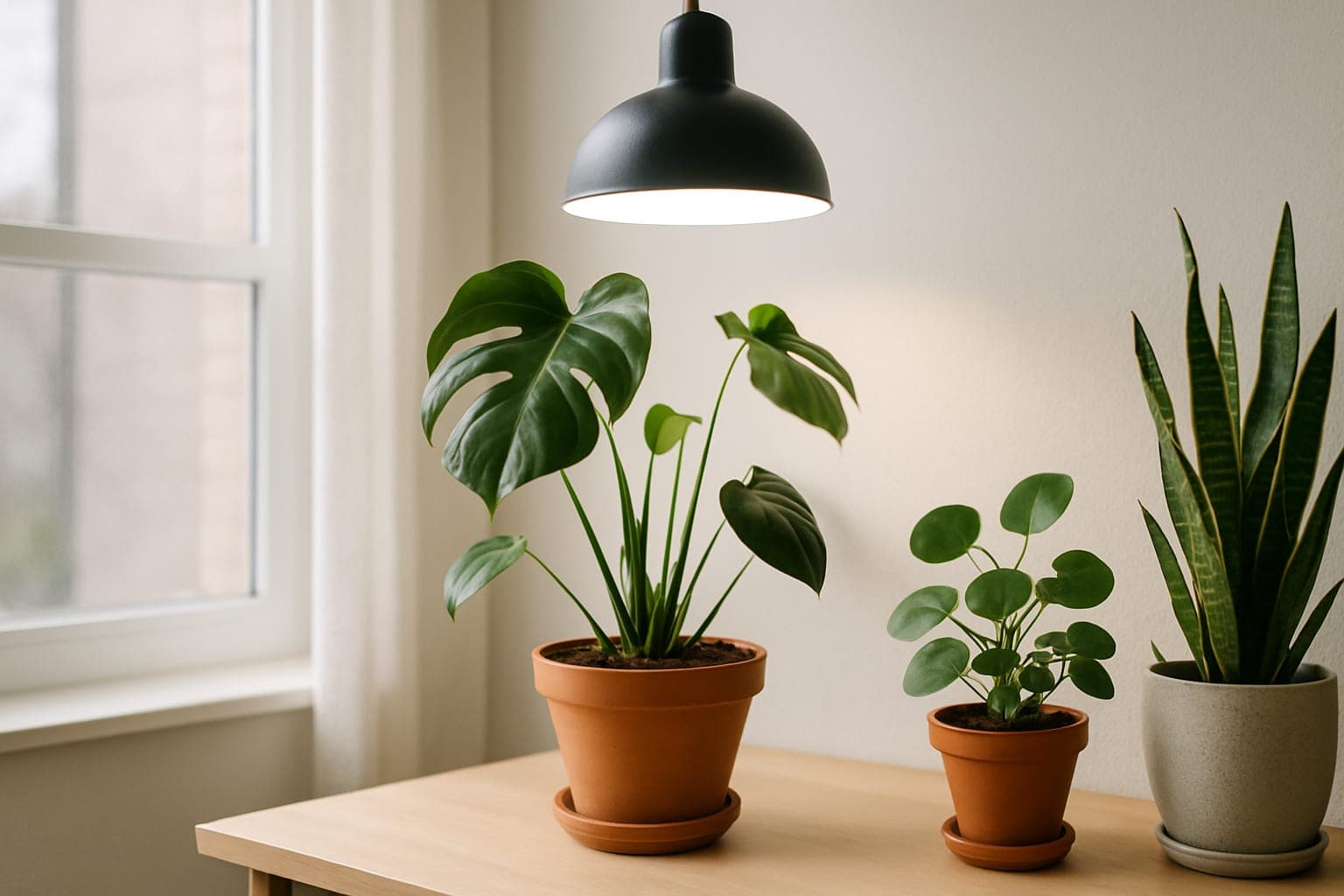
Even the brightest windowsill has its limits, and many popular houseplants come from environments far sunnier than the average British living room. Grow lights bridge that gap, allowing you to keep tropicals lush through winter, raise seedlings, or simply brighten a dim corner where you would like a plant to live. Choosing the right lamp and using it well is more important than spending heavily on the latest model.
Signs Your Plants Need More Light
Before buying any equipment, learn to read your plants. Symptoms of insufficient light are usually obvious once you know what to look for, and they appear gradually rather than overnight.
- Leggy, stretched growth with long gaps between leaves as stems reach towards the nearest window.
- Smaller new leaves that are paler or thinner than older ones.
- Loss of variegation, with cream or pink patches reverting to plain green.
- Leaning heavily in one direction, even after you rotate the pot.
- Slow or stalled growth during what should be the active season.
- Lower leaves yellowing and dropping while the plant invests energy in reaching upwards.
- Soil staying wet for far longer than expected, since a plant in low light uses very little water.
If you see two or three of these together, supplemental light is likely to help.
LED Full-Spectrum vs Fluorescent
The two practical choices for indoor growers are LED and fluorescent. Incandescent and halogen bulbs are not suitable: they produce far more heat than usable light and waste energy.
LED Full-Spectrum
Modern full-spectrum LEDs are the best all-round choice for houseplants. They are energy-efficient, run cool enough to sit relatively close to foliage, last many years and come in shapes ranging from bulbs that fit ordinary lamp sockets to slim bars and panels. Look for the phrase "full spectrum" or a colour temperature in the 4000-6500K range, which produces a natural white light pleasant to live with. Older blurple (blue-and-red) panels still work, but the pink glow is unflattering in a living space.
Fluorescent
T5 fluorescent tubes remain a sensible option, particularly for seedlings, low-growing herbs and shelves of small plants. They are inexpensive, give an even spread and produce gentle, diffuse light. The drawbacks are bulkier fittings, gradual dimming over time and the need to replace tubes every year or two as output falls. Compact fluorescent bulbs in desk lamps can work for a single specimen but are less efficient than LEDs.
Distance and Duration
Two grow lights at the same wattage can give very different results depending on how far away they are placed. As a rough starting point:
- Low-light foliage such as pothos, philodendron, calathea and ferns: 45-60 cm from the light source.
- Medium-light plants such as monstera, peace lily and most aroids: 30-45 cm.
- High-light plants such as succulents, cacti, citrus and Ficus: 20-30 cm, sometimes closer with low-wattage bulbs.
Watch the plant for the first week or two. Crispy, bleached patches on the upper leaves mean the light is too close or too intense; raise it. Continued stretching towards the light means it is too far away or too weak.
How Long to Run Them
Most houseplants do well with 10-14 hours of light per day in total, combining whatever daylight they receive with supplemental hours. Seedlings and high-light plants sit at the upper end of that range; shade-tolerant foliage at the lower end. Plants also need a genuine dark period each night to respire properly, so resist the urge to run lights around the clock.
Using Timers
A simple plug-in timer is the single best accessory you can buy. It removes the guesswork, keeps the schedule consistent and means your plants are not at the mercy of whether you remember to flick a switch. Mechanical timers are cheap and reliable; digital and smart plugs offer more flexibility, including gradual sunrise effects and seasonal adjustments.
Set the lights to come on in the morning and switch off in the evening so the rhythm matches natural daylight. In winter, you may extend the schedule by an hour or two at each end to compensate for short, dull days. In summer, you can often reduce or pause supplemental lighting altogether.
Practical Setup Tips
- Position lights directly above the plant rather than off to one side, or it will lean.
- Rotate pots a quarter turn each week for even growth.
- Keep a small thermometer nearby: even cool-running LEDs can warm a tight shelf, particularly inside cabinets.
- Wipe dust off leaves and light fittings regularly, as both block usable light.
- If you are growing on open shelving in a living room, choose warm-white LEDs (around 3500-4000K) for a more comfortable atmosphere.
- Check that the fitting is rated for the bulb wattage, and never leave damaged cables near damp soil or misters.
Final Thoughts
Grow lights are not a luxury reserved for serious collectors. A single full-spectrum bulb in an ordinary lamp, paired with an inexpensive timer, can transform a struggling plant into a thriving one. Start small, watch how your plants respond and adjust the height and duration until growth looks compact, leaves are well-coloured and new foliage emerges at a healthy size.
Tools and supplies for this
Products we'd actually buy for this job. Linking to Amazon — if you buy through these links we earn a small commission at no extra cost to you.
- Weston Mill Pottery Terracotta plant pots, 175mm (pack of 10)
Mid-size workhorse terracotta — perfect step-up for plants outgrowing their nursery pots.
- Weston Mill Pottery Terracotta plant pots, 20cm (pack of 5)
Heavyweight 20cm clay for established plants — the porous walls help prevent the soggy roots aroids hate.
- Whitefurze G04012 7.5cm Garden Pot - Terracotta (Set of 10)
Cheap, cheerful plastic propagation pots — what we actually use for cuttings and small offsets.
- Whitefurze G04013 10cm Garden Pot - Terracotta (Set of 7)
Reliable mid-size nursery pots with proper drainage holes — the boring essential every plant parent runs out of.
BotanicBuddy Editorial Team
Plant Care Team
Passionate about helping plant parents succeed with expert tips and proven techniques.


Comments(529)
I've learned this the hard way—my poor monstera spent last winter looking increasingly sad in my north-facing window until I finally broke down and got a basic LED panel. The difference was honestly night and day, and now I'm kicking myself for not doing it sooner given how affordable they've become. I'm curious, do you find that most people struggle more with choosing the *right* light, or with actually remembering to keep the timer consistent?
I totally get that—I have a couple plants in pretty dim corners too, and I've been eyeing grow lights but honestly feeling a bit overwhelmed by all the options. Your question about the timer consistency is making me think though, because that seems like the easier part to mess up. Do you find that certain types of timers work better than others, or is it mostly just about picking any reliable one and sticking with it?
I've been there with my basil and mint struggling through the winter—they'd get so leggy I'd barely recognize them come spring! Finally bit the bullet on a simple LED setup last year, and honestly, it's transformed how I grow herbs indoors. The positioning advice really matters; I had mine too far away at first and it made almost no difference. Timers are a game-changer too, since I'm terrible at consistency on my own.
I'm glad you mentioned positioning—I've been struggling with my mint (Mentha spicata) getting pale and weak even under my new grow light, and I'm wondering if distance was my problem too. How far do you keep yours from the plants now? I've also been curious whether the timer duration matters as much as consistency, since I'm still figuring out what works for my tropical setup.
I've found grow lights absolutely essential here in the desert—natural light is intense but inconsistent, and my two orchids (a *Phalaenopsis* and a *Cattleya*) really benefited once I got the positioning right. The timer tip is crucial; I was surprised how much difference consistent 12-hour cycles made versus my haphazard natural light schedule. Are you recommending LED specifically, or do you cover other types in the full post?
I've been relying on grow lights for my tropical vegetables since I moved away from a south-facing window, and it's made such a difference in my productivity through the dry season. The positioning tip is especially crucial—I learned the hard way that too much distance just wastes energy. Do you find that your readers prefer LED setups over fluorescents, or does it really depend on what they're growing?
I've been wondering if grow lights are really necessary for me since I'm in a mediterranean climate with pretty decent natural light most of the year. I have a few plants on a north-facing shelf though that definitely seem to stretch toward the window, so maybe they'd benefit? What wattage or type would you recommend starting with if I want to avoid overdoing it—I'd rather not waste energy if I can help it.
I learned this the hard way when my monstera started stretching like crazy during our rainy season. Adding a simple LED panel above it made all the difference, and now I'm actually using grow lights on about half my collection. The timer tip is gold too—I used to forget to turn mine off and wondered why my plants looked stressed until I realized they weren't getting any rest at night.
I've learned this the hard way—my orchids absolutely demanded supplemental light during our Mediterranean winters, even though I thought they'd be fine with what little sun filters through my north-facing window. Switching to a simple LED panel on a timer genuinely transformed how they bloom, and I wish I'd done it years earlier instead of watching them sulk for months. This guide sounds like exactly what I needed back then!
I completely relate—I spent two winters wondering why my Phalaenopsis wasn't reblooming before I finally admitted my north-facing setup just wasn't cutting it during the short days. The LED timer combo really is transformative; I found even 12 hours of supplemental light makes an enormous difference for getting those flower spikes to develop properly. So glad you found the guide, because that "sulking orchid" phase is frustratingly common and so avoidable!
I've been eyeing grow lights for my kitchen herbs since our winters here get pretty gloomy, and this is exactly the clarity I needed! I'm still figuring out whether I need full-spectrum bulbs or if regular LEDs will do the trick—my basil especially seems to get leggy without enough light. Do you find that position matters a ton, or is it mostly about the wattage? I'm hoping to avoid another plant mishap like last year's attempt at indoor oregano!
I've killed more seedlings than I'd like to admit by positioning lights too close—learned the hard way that even "gentle" LEDs can scorch tender leaves. Now I keep mine about 12 inches up and adjust as the plants grow, which makes such a difference for my tomato and pepper starts through winter. The timer tip is gold too, since I can never remember to turn anything off manually!
That 12-inch distance is really helpful to know—I've been wondering if I'm burning my seedlings or just not giving them enough light, so it's good to hear there's actually a sweet spot! Do you find the distance changes much depending on the wattage of your LEDs, or is 12 inches pretty standard across the board? I'm still getting the hang of my setup and definitely agree about the timer being essential; I've forgotten to turn mine off more times than I can count.
I've found grow lights absolutely essential for my small collection—especially my *Echeveria* and *Aloe*, which were stretching badly in my north-facing window. Switched to a simple LED panel on a timer last winter and the difference in compact growth was immediate. Positioning matters more than people think; I keep mine about 6 inches above the rosettes and dial back the hours in summer since they still get ambient light. Definitely worth the investment if you're serious about keeping succulents in shape indoors.
I learned this the hard way when my pothos started getting leggy during our rainy season—I picked up an inexpensive LED panel and positioned it about 12 inches above my plants, and the difference was incredible. The timer tip is gold too, since I used to just leave mine on constantly until I realized my plants actually need that dark period to stay healthy.
I've been relying on grow lights for my orchid collection since moving to such a dry climate—they've been a game-changer, especially for keeping my Phalaenopsis happy through the darker months. The positioning advice is crucial; I learned the hard way that distance matters as much as wattage. Do you find your plants respond better to consistent 12-hour days, or have you experimented with longer photoperiods for certain species?
I've got three plants total, including an orchid that's been struggling through winter in my temperate apartment. I wasn't sure if grow lights were worth the investment, but this is actually helpful—I didn't realize positioning matters that much. I'm still figuring out the right distance and photoperiod for my orchid though. Do most people run lights 12-14 hours a day, or does it depend on the plant? I'd share a photo of mine if I could, but I'm definitely trying this approach before I give up on it.
I'd add that wattage gets oversold—I've had better results matching light *spectrum* to what I'm actually growing. For my vegetables indoors, warm LEDs worked fine until I switched to full-spectrum and the difference was noticeable. Also, distance matters way more than people think; I learned the hard way that "just hang it higher" doesn't solve poor placement, and a timer only helps if the light is actually reaching your plants effectively.
I've found grow lights absolutely essential since moving to a cloudier climate—my *Anthurium clarinervium* was struggling until I switched to a 6500K LED setup positioned about 12 inches above the canopy. The timer tip is crucial; I aim for 14 hours daily rather than running lights constantly, which has made a real difference in preventing the leggy growth I used to see on my collection's understory plants.
That 6500K setup sounds spot-on—I did something similar with my native tropical plants last winter and was amazed at the difference. I'd been running lights way too long before realizing that 14-hour sweet spot, and you're right about the leggy growth; my understory plants finally started looking full instead of stretched. The positioning is everything too.
I've been using grow lights for my herb collection for about three years now, and honestly it changed the game—especially for keeping my basil and cilantro from getting leggy during winter. My one thing: I learned the hard way that positioning matters way more than wattage. I kept my lights too high at first and the plants were stretching like crazy. Once I moved them closer (about 6 inches for most herbs), the difference was immediate. Do you have thoughts on LED versus fluorescent, or are they pretty comparable at this point?
I've been wondering about this because my echeveria and aloe sit in a pretty dim corner, and I noticed they were getting a bit stretched out last winter. This post really helped me understand that it's not just about brightness—the positioning matters too. I'm thinking about trying a simple LED setup, though I'm still a bit confused about lumens versus watts. Do you find that most houseplants need the full 12-16 hours of light, or can you get away with less for succulents?
I've had the same stretching problem with my rosemary in winter—it gets leggy and sad! For succulents, I've found 10-12 hours usually does the trick, especially if the light's intense; they're pretty forgiving compared to herbs like basil, which really wants that full 14-16. On lumens versus watts, I just think of it this way: watts is what the bulb uses, lumens is what actually reaches your plants, so lumens matter more—though honestly, I started with a cheap LED panel and adjusted the height by watching how my plants responded rather than getting too caught up in the numbers.
I've been struggling with my north-facing window situation, so this is really helpful. I'm still figuring out the timer settings though – do you find that different plants need different light durations, or is there kind of a standard schedule that works for most houseplants?
I've been eyeing grow lights for my herb collection since my basil and oregano started looking so leggy this winter—I think I finally have permission to pull the trigger! My question is whether I should go with LEDs or something else, since I've heard conflicting things and I'm still figuring out what actually matters. The timer tip sounds especially useful since I'm terrible at remembering to move plants around anyway. Hoping this guide walks me through the basics without overwhelming me!
I've found LEDs are really the way to go—they run cool enough to position closer without burning leaves, and the electricity savings add up fast when you're running lights daily like I do. The positioning tip is crucial though; I learned the hard way that even good lights underwhelm if they're too far away. I'd love to see your specific recommendations for wattage because that's where people usually get it wrong.
I'm definitely considering LEDs for my collection—I've got nine plants spread across a north-facing room that barely gets indirect light in winter. I'm still figuring out the distance thing though; do you find that the optimal distance varies much depending on the plant species, or is it more about the light's actual wattage output? I have a photo of my setup I'd share if I could, since I'm trying to decide whether to upgrade before the season really kicks in.
I've been struggling with my pothos and monstera in my north-facing apartment, so this is exactly what I needed! I didn't realize how much the positioning of the light matters—I've just been pointing a lamp at my plants without thinking about distance or angle. Are there any specific watt recommendations for someone just starting out with grow lights, or does it really depend on the plant species?
I've had to get creative with grow lights in my arid climate—natural light here can actually be *too* intense and dry out my orchids faster than I'd like. I found that positioning LEDs about 12 inches above my Phalaenopsis helped it rebloom without the leaf scorch I was getting from direct sun. A timer set to 14 hours made all the difference, especially through winter when my collection needs that extra boost.
That's such a smart workaround for intense climates—I hadn't thought about grow lights as a *filter* for too much sun, but that makes total sense. I do something similar with my Mediterranean herbs; the afternoon heat here can actually stress my basil and oregano, so I've started using a sheer curtain with supplemental LEDs on cloudier days instead of relying on full window exposure. Did you find the 14-hour timer helped specifically with reblooming, or was it more about overall plant health through winter?
I've found grow lights absolutely essential in my arid climate where the winter sun barely moves. My tropical plants were stretching badly until I switched to full-spectrum LEDs positioned about 12 inches above them. The timer has been a game-changer too—I keep mine on 14 hours daily and it's made such a difference with my Monstera and Phalaenopsis. Are you recommending specific wattages or color temperatures in the full guide, or do you find one setup works across different plant types?
I've been struggling with my north-facing windowsill all winter—my phalaenopsis orchid basically went dormant on me—so this is exactly what I needed! I grabbed a basic LED panel last month and honestly, seeing my tropical plants actually *grow* in December feels like witchcraft. My one question: how close should the light be to the plants? I keep second-guessing myself and moving it around like I'm looking for the sweet spot.
I've learned this the hard way with my tropical plants during winter—I lost a beautiful Anthurium to low light before I invested in a decent grow light setup. Now I keep one over my shadier corner collection and it's made all the difference, especially for the native species that need consistent brightness. Your point about positioning is spot on; I wish I'd known from the start that height matters as much as duration does.
That Anthurium loss sounds rough—I'm learning the hard way too with my tropical collection (only nine plants in, so still figuring things out). I'm curious about your point on height though: are you adjusting the light as your plants grow, or do you keep it at a fixed distance? I just got a basic LED panel and I'm worried I'm either too close or too far from my Monstera, and I haven't found clear guidance on whether that changes seasonally.
I've been using a basic LED panel over my herb shelf for about two winters now, and honestly it's been a game-changer—my basil and parsley actually stay productive instead of getting leggy and weak. My main tip is to position the light closer than you think you need to; I kept mine about 6 inches above the plants at first and noticed way better growth once I dropped it to 4 inches. Do you have a recommendation for timer duration, or does it depend on the plant type?
That's great you're getting solid growth with your herbs! The 4-inch distance is spot-on—I made the same discovery with my mint, which seemed to explode once I got brave about moving the light closer. On timer duration, I've found 14–16 hours works well for most herbs in winter, but basil especially seems to prefer the longer end since it's so sun-hungry. Do you adjust your timing seasonally, or just stick with one schedule year-round?
I learned the hard way that wattage alone doesn't tell the story—spectrum matters just as much, especially for tropical plants like my Anthurium clarinervium that struggled under cheap blue-heavy LEDs. Switching to a full-spectrum bulb positioned about 12 inches above the canopy made a real difference, and adding a simple timer (I use 14–16 hours for most of my collection) has honestly been one of the least fussy upgrades I've made.
I've found grow lights absolutely transformative for my tropical collection during our darker months—especially for the more light-hungry species like Anthurium clarinervium. My question for you: do you have recommendations for balancing spectrum needs between foliage plants versus those pushing for blooms? I'd love to hear if you lean toward full-spectrum or adjust based on growth stage.
I'd add that spectrum matters more than wattage for most houseplants—I've had better results with full-spectrum LEDs around 5000K than with generic bright bulbs, especially for species like *Lithops* that need that visual cue for dormancy. Worth mentioning that distance is equally critical; even the best light loses intensity rapidly, so positioning matters as much as the timer itself.
I've found grow lights genuinely transformative for my tropical collection here—especially for the more light-hungry species like *Anthurium clarinervium*. I kept mine on a 14-hour cycle through winter and noticed a real difference in leaf production compared to relying on my north-facing windows. The positioning tip is crucial; I learned the hard way that even a few inches makes a significant difference in light intensity reaching the lower leaves.
I've learned the hard way that positioning matters more than wattage—I kept my grow lights too far from the foliage and wondered why growth stalled until I moved them closer. The timer is genuinely essential; I'm terrible at consistency but my plants don't miss a day now. For mediterranean-climate plants especially, I found that supplementing during winter keeps them from going completely dormant indoors. What distance from the leaves are you recommending for standard LED setups?
I'd add that spectrum matters more than raw wattage for most houseplants—I've found my orchids (particularly the Phalaenopsis) respond better to cooler 6500K lights during growth phases, then warmer 3000K during blooming, rather than just cranking up lumens. Also worth mentioning that positioning distance changes everything; even a "full spectrum" light loses effectiveness quickly with height, so I keep mine within 12 inches for my collection, though that varies by plant type.
I've been relying on grow lights for my herbs the past couple winters, and honestly it's changed the game—especially for my basil and oregano, which were getting leggy on my north-facing shelf. One thing I wish I'd known sooner: positioning matters way more than wattage. I kept mine too high at first and the plants just stretched anyway. Now I keep them about 6–8 inches above the canopy and adjust as they grow, and the difference is night and day. Are you finding certain plant types need more light duration than others, or is a consistent 12–14 hour day pretty universal?
I've been relying on grow lights for my tropical collection for a couple of years now, and honestly they've been a game-changer—especially during our gloomy winters here. My question is about positioning: do you find there's a big difference between lights on stands versus mounted above? I currently have mine on adjustable stands, but I'm wondering if I'm wasting energy compared to a more permanent setup. Also, how close do you keep them to your plants? I've got a Monstera and a couple of Philodendrons that seem to get burned if I go too close, but I'd love to find that sweet spot.
I learned this lesson the hard way last winter when my tomatoes got so leggy I thought I'd have to start over! Adding a simple LED panel above them made all the difference—they actually produced fruit instead of just stretching toward the window. Do you have any tips on how close the lights should be, or does it depend on the plant species? I've got about 10 plants getting supplemental light now and want to make sure I'm not burning anything out.
I've learned this the hard way with my monstera getting leggy during winter. A simple LED grow light mounted above my shelf made such a difference in just a few weeks, and I love that you're covering positioning too—I made the mistake of placing mine too far away at first and wondered why it wasn't helping. The timer tip is gold, since I kept forgetting to turn mine off and nearly fried a couple of leaves.
I've learned the hard way that positioning matters way more than wattage—I kept my lights too far from seedlings and wondered why they got leggy before realizing they were basically doing nothing at 24 inches up. Now I keep them close enough that I can feel warmth on my hand, and the difference is night and day. For my collection, a simple timer on a 14-hour cycle has been more reliable than me trying to remember consistency. Are you covering the practical stuff like reflectors, or mostly focused on light types and distance?
I've learned this the hard way—my monstera and pothos were getting leggy and pale through our brutal winters up here, and nothing changed until I finally invested in a decent grow light. I went with a simple LED panel on a timer set for 14 hours a day, positioned about 12 inches above the leaves, and the difference was honestly night and day. Do you have a preference between full-spectrum LEDs versus the more affordable blue/red combo lights, or does it really depend on what you're growing?
I've been relying on grow lights for my tropical vegetables since moving to a shadier space, and it's made such a difference. The timer tip is crucial—I learned the hard way that consistent photoperiods matter more than I expected, especially for *Capsicum annuum* fruiting. Do you find LED panels work better for vegetable crops than fluorescents, or does it depend more on the specific spectrum?
I've been using a simple LED grow light over my basil and mint for about two years now, and it's genuinely made a difference—they're so much bushier than they used to be in winter. My question though: do you have thoughts on how close is too close? I burned some new seedlings last spring by positioning mine too aggressively, and now I'm a bit nervous about it.
I've been struggling with my north-facing apartment and how to keep my tropical plants happy through winter—this is exactly what I needed! I'm still figuring out whether LED or fluorescent is the way to go for my collection of nine, and I'd love to know if anyone has experience with how close you really need to position them. I have a photo of my *Monstera deliciosa* looking a bit leggy that I'd share if I could, but the timer tip is super helpful since I tend to forget consistency!
I've been running a mix of LEDs and fluorescents over my collection through the Minnesota winters, and honestly the positioning makes all the difference—I learned the hard way that too-close LEDs can bleach foliage on sensitive species like *Anthurium clarinervium*. A timer's been essential too; I keep most things on 14 hours during the short days, which has cut down on the leggy growth I used to get. This guide sounds like it'll save people from that particular mistake.
I struggled with my tropical plants getting leggy during winter before I finally invested in a grow light, and it made such a difference. The timer tip is especially helpful—I set mine for 12–14 hours and watched my plants perk up within weeks instead of stretching toward the window. For anyone hesitant about the cost, even a basic LED panel positioned a few inches above your plants will transform what you can grow indoors.
I've found grow lights genuinely helpful, especially for my Salvia rosmarinus and other Mediterranean herbs that sulk in low light—though I do think the "year-round" angle glosses over something important. Even with the right spectrum, I've noticed my plants seem to need that natural seasonal shift, so I use supplemental lights mainly from November through February rather than running them constantly. Are you finding your readers need them more in specific climates, or do you recommend the same setup regardless of where they're gardening?
I've learned this the hard way with my Phalaenopsis—even in an arid climate where light seems abundant, my north-facing setup was hopeless until I added a modest LED fixture. The game-changer for me was positioning it about 12 inches above the foliage and running it on a timer for 14 hours daily, which kept my orchids blooming through winter without the stretch and weakness I was getting from inconsistent natural light. Worth every penny of the electricity bill!
I've found grow lights essential for my succulents during temperate winters—the reduced daylight really does stunt growth if you're not supplementing. LED panels positioned about 6 inches above the canopy work far better than I expected, especially for maintaining compact growth on species like Aeonium arboreum. The timer recommendation is spot on; I keep mine on a 14-hour cycle and it's made a noticeable difference in preventing etiolation.
Thanks for sharing that! I've got a small Haworthia that's been looking a bit stretched lately, and I'm wondering if the 6-inch distance works for smaller succulents too, or if they need adjusting since they tend to be more compact? I've been nervous about getting lights too close and cooking them, so hearing your setup works well is reassuring. Did you notice any difference in growth rate once you dialed in the 14-hour cycle, or was it mainly the etiolation that improved?
I've been using a basic LED panel over my herb shelf for about two years now, and honestly it's been a game-changer for my basil and parsley through winter—they actually stay bushier instead of getting leggy and sad. My one tip: don't underestimate how close you can actually position LEDs without burning anything. I keep mine about 6-8 inches above the foliage and they seem to love it way more than when I had them higher up. Are you finding that people tend to overestimate the wattage they need, or is that just my experience?
You're spot on about the distance—I've got the same setup over my chili peppers and they've been producing way better since I dropped the lights down. The 6-8 inch range is pretty ideal for LEDs. On wattage, I think people often buy more than they need, but it depends on what's actually under the lights; herbs are forgiving, but if someone's trying to fruit-set heavy feeders like tomatoes or peppers, underpowering is the real mistake. I'd say it's less about overestimating wattage and more about not pairing it with solid positioning and consistent 12-16 hour photoperiods.
I've totally noticed that too! My monstera and philodendrons under LED panels are so much fuller than they used to be, and I keep mine at a similar distance. I think people do tend to overcomplicate the wattage thing—I started with way more power than needed and ended up just wasting electricity. Have you experimented with the light duration, or do you stick with a set schedule? I'm still tweaking my timer settings to find what works best for my collection.
I've been struggling with my north-facing setup since moving to the tropics—I thought heat would mean endless light, but it doesn't work that way! I'm currently using a basic LED panel for three of my nine plants, but I'm still confused about whether I should be measuring PAR or lux, and if my current 12-hour timer is enough during our shorter "dry season" months. Would love to know more about positioning, especially since I'm worried about putting lights too close to something like *Monstera deliciosa* and causing leaf burn. I have a photo on my phone showing my current setup if it helps!
I've been relying on grow lights for my herbs the past few winters, and honestly, the timer has been more game-changing than the light itself—I used to obsess over positioning and ended up with leggy basil anyway until I got consistent 14 hours of light on a schedule. Curious whether you cover spectrum differences, since I've noticed my Mediterranean herbs seem less fussy about intensity than they are about that consistency.
I've learned this the hard way with my Phalaenopsis—even in my arid climate where sun seems plentiful, winter just doesn't cut it. Since adding a grow light positioned about 6 inches above the leaves on a 14-hour timer, I've actually gotten blooms consistently instead of just surviving. The timer part is key; I was terrible at remembering to turn mine off until I automated it!
This is exactly what I needed! I've been struggling to keep my tropical plants happy through winters here, and I have this north-facing window situation that's basically a lost cause. I didn't realize how much difference positioning actually makes—I was just sort of hoping the light would magically spread, which, spoiler alert, it doesn't. Do you have a recommendation for how close the lights should be, or does it depend on the plant? I'm terrified of accidentally burning anything since I already have an 11-plant track record of learning things the hard way.
I've got an orchid that sits in a north-facing window and barely bloomed last year—winters were rough. Been thinking about trying a grow light but honestly wasn't sure if it would actually help or just be overkill for three plants. This post makes it sound pretty straightforward though, especially the timer part. Does positioning really matter that much, or is it more about just getting *some* extra light on there? I have a photo of my setup I could share but can't upload here.
Positioning absolutely matters—distance and angle determine whether you're actually giving your plants usable light or just wasting electricity. With only three plants, you can be strategic about it; I'd focus the light directly over whatever needs it most (probably your orchid) rather than spreading it thin. I have a similar setup in my tropical space where I angle lights about 6–12 inches above the foliage, and the difference in blooming is real. A timer takes the guesswork out too, so you're not eyeballing hours every day.
This is so relevant for me—I'm in a pretty cold climate and my herbs basically stopped growing once November hit. I finally invested in some LED grow lights last year and honestly, it changed everything. My basil and parsley actually made it through winter instead of getting leggy and sad. Do you have a preference between hanging the lights or using those adjustable clip-on styles? I'm still figuring out the best setup for my 15 plants without taking over my whole apartment!
I totally get the winter struggle—I'm in a temperate zone too and my tropicals definitely slow down come November. I've gone back and forth between both styles, honestly. The clip-ons are more flexible when you're rearranging, which I do constantly, but I found hanging lights work better for me because they free up shelf space and I can adjust height more easily as plants grow. That said, with 15 plants you might need a mix? I use clips for my smaller pots and a hanging setup over my main plant shelf. How much vertical space do you have to work with in your setup?
I've been struggling with my north-facing setup, so this is exactly what I needed! I have a Monstera deliciosa that's been looking pretty sad, and I'm wondering if a grow light would actually help it recover or if I should just move it first. Also, do you have recommendations on wattage—I've seen everything from 20W to 100W+ and I'm not sure what's overkill for a small apartment with maybe 8 plants.
I'd try moving the Monstera to a brighter spot first before investing in lights—they're pretty forgiving and often just need better indirect light! That said, if you're set on a grow light for your setup, I've found that 40–60W works great for my small herb collection in a similar space, and you don't need to blast everything at maximum wattage. What kind of plants are you mostly growing? Herbs and leafy greens need way less than, say, fruiting plants, so that might help narrow it down.
I've been struggling with my monstera in a north-facing spot through winter—it just stops growing. This is really helpful because I wasn't sure if a grow light was even worth it for just 6 plants, but it sounds like it could actually make a difference? I'm curious though: do you find they need to run all day, or is a few hours enough? I'd love to see your setup if you have photos of how you position them.
I've been wondering about this—I have a north-facing window where my Monstera deliciosa barely survives winter, and I suspected grow lights might help but wasn't sure where to start. Do you have a preference between LED and fluorescent options? I'm trying to figure out if the initial cost difference is worth it for a small collection of about nine plants, mostly tropical species that probably need pretty consistent light.
I've been relying on grow lights for my *Origanum* and *Thymus* collection through winter—they're total light hogs in a Mediterranean climate mindset! What wattage and spectrum are you recommending for herbs specifically? I'm curious whether the positioning advice changes much when you're growing something like oregano versus, say, a more delicate basil variety that seems pickier about photoperiod.
I've been relying on grow lights for my tropical collection through our Mediterranean winters, and the difference is honestly night and day. Proper positioning makes such a difference—I learned the hard way that my *Anthurium clarinervium* needed to be much closer than I initially thought to get enough PAR. Do you have recommendations for different light intensities depending on plant type, or is that something you're planning to cover in a follow-up?
I'm totally with you on that—I had the same wake-up call with my tomatoes indoors last winter! They were looking so sad until I realized they were basically getting decorative light rather than actual grow light. I've found that even moving them a few inches closer made a huge difference. Are you adjusting your light height as your plants grow, or keeping them at a fixed distance? I'm curious how you're managing that with a whole collection.
I'm curious about this too—I've got a few tropical plants including an *Anthurium* of my own, and I'm still figuring out the sweet spot for distance. Did you end up measuring the PAR at different distances, or was it more trial and error? I've read that low-light tolerant plants like *Pothos* can manage further away, but I'm not confident enough yet to say whether that's actually the case for my collection.
I've found grow lights absolutely transformative for my herbs—especially my basil and oregano through winter—though I'll admit I made the rookie mistake of positioning my first light way too close and nearly gave my poor mint a sunburn! The timer tip is gold; I set mine to mimic a Mediterranean summer (about 14 hours) and it's made all the difference in keeping my collection from getting leggy.
I've been relying on grow lights for my two orchids through Arizona's dry winters, and positioning has made all the difference. I found that keeping them about 6-12 inches above my Phalaenopsis helped me avoid the leaf burn I was getting before, while my Cattleya actually needed to be closer. A timer was honestly a game-changer for maintaining consistent photoperiods without overthinking it. Do you have recommendations for different light distances depending on plant type, or is it more about observing how individual plants respond?
I've been struggling with my succulents during winter because my apartment doesn't get much direct sun, so this is really helpful. I'm curious whether grow lights would work for my collection of 9 plants if I group them together, or if I need separate lights for each one? Also, do you have any recommendations for which type of grow light is gentlest on succulents—I worry about them getting too much heat and drying out even more.
I learned this the hard way with my native tropical plants—I kept them too far from my north-facing window and watched them get leggy and sad. Once I added a simple LED grow light on a timer, everything changed. Now my collection actually thrives through the winter months instead of just surviving, and I wish I'd figured this out sooner with my first few plants.
I appreciate this guide—grow lights genuinely transform what's possible indoors. One thing I'd gently push back on though: folks often assume they need the most intense spectrum available, but succulents like my Echeveria and Aloe actually prefer cooler, less intense setups than typical houseplant recommendations suggest. I've had better results with modest LED panels positioned 12–18 inches above the rosettes rather than high-powered rigs. The timer advice is spot-on though; I keep mine on 14 hours during winter and dial it back as natural light returns.
I've had the most humbling experience trying to keep my Phalaenopsis blooming through our arid winters—turns out my sunny windowsill wasn't cutting it once the days got short. A simple LED panel positioned about 12 inches above the leaves with a 14-hour timer has been genuinely transformative; my orchids are finally setting buds reliably again instead of sulking for months. This guide sounds like exactly what I wish I'd read before wasting money on those expensive overhead fixtures that just cooked everything underneath them.
I've found grow lights absolutely transformative for my orchid collection, especially during our dry winters here. The positioning advice is key—I learned the hard way that too much intensity can stress even light-loving plants like Phalaenopsis, so I appreciate you emphasizing that. Do you have thoughts on full-spectrum versus LED setups for plants that prefer lower light conditions?
I learned this the hard way last winter when my tomatoes got all leggy and weak—turns out I was way too far from the window! Got myself a basic LED setup after that, and honestly it's been a game changer for keeping my veggie seedlings happy through the darker months. How close do you usually recommend positioning the lights to the plants? I'm still figuring out the sweet spot without scorching anything.
Oh, the leggy seedling struggle is so real—I did the same thing with my basil last winter and felt silly! From what I've learned with my herbs, I keep LED lights about 6–12 inches above the leaves and adjust as they grow, but honestly I still worry I'm either too close or too far. I'd love to know what distance worked best for your tomatoes once you found your sweet spot!
I've had mixed luck with grow lights over the years—my first setup was way too intense and basically cooked my basil collection. Now I keep mine about 6-8 inches above my herbs and run them for 14-16 hours rather than all day, which seems to be the sweet spot. Curious whether you'd recommend different heights for different plant types, since I imagine something like mint might tolerate closer proximity than, say, oregano.
I've been using a 24W LED panel for my Anthurium clarinervium and it's been a game-changer—the leaf fenestration is so much more pronounced now. I'm curious whether you have a preference between full-spectrum LEDs and the warmer bulbs? I've found my tropical plants seem to respond better to slightly warmer light in winter, but I'm wondering if that's just confirmation bias on my part.
I totally get what you're observing—I noticed something similar when I set up lights for my collection of tropical natives. I switched to warmer LEDs during our dry season and my Anthurium seemed to put out leaves faster, though honestly I think it was partly the increased photoperiod that made the difference. Your instinct about warmth might not be confirmation bias at all; tropical plants do respond to spectral shifts in nature as seasons change, so experimenting with what works for your specific conditions is really the best approach.
I've been using a cheap LED panel for my small collection through our brutal winters here, and it's honestly been a game-changer—my native ferns actually stayed green instead of going pale and leggy. That said, I'm still figuring out the sweet spot for distance and duration since different plants seem to want different things. Do you find that most people overthink the timer settings, or is that just me being neurotic about it?
I've found grow lights essential for my orchids in particular—they're surprisingly fussy about light quality in winter, and even a good south window drops off fast once the angle shifts. The timer angle is crucial; I use 14 hours on my Phalaenopsis and it made a real difference in blooming consistency. Would be curious if your guide covers spectrum recommendations, since cool whites work fine for most of my collection but warm light seems to help flowering more than people realize.
I've been wondering if I actually need grow lights for my setup—I have mostly indirect light plants, but my pothos and peperomia do seem to slow down in winter here. Is it worth getting lights just for the darker months, or does it make more sense to rotate plants around and accept the slower growth? I have about 6 plants total and limited space, so I'm trying to figure out if it's overkill for my collection.
I totally get the hesitation—I have 11 plants and still debated this for ages! Honestly, for just a couple of slow growers like pothos and peperomia, rotating them to your brightest spots might be enough if you're okay with slower winter growth. But if you find yourself shuffling plants around constantly or they're looking leggy by spring, even a small affordable light over a shelf could be a game-changer without taking up much space. Have you noticed whether your pothos actually struggles or just grows more slowly? That might help you decide if it's worth the investment.
I've learned the hard way that my north-facing apartment basically requires grow lights if I want anything beyond pothos to survive winter—I nearly lost a lovely Monstera last year before I finally bit the bullet. The timer advice is a lifesaver because I kept forgetting to turn my lights off and was convinced I was burning my plants, but it turns out consistent 12-14 hour cycles were exactly what they needed. Do you have a recommendation for which plants benefit most noticeably from supplemental lighting, or does it really just depend on the individual specimen?
I'd push back slightly on the "not always enough" framing—I've found that even in temperate winters, supplementing with modest T5 or LED panels works better than going full-spectrum from the start. My experience with Solanum lycopersicum indoors taught me that 12–14 hours of lower-intensity light often beats shorter periods at max brightness, especially since most home growers overestimate their actual PPFD needs. The positioning advice is crucial though; I'd emphasize that distance matters far more than wattage for avoiding photoinhibition in compact spaces.
I learned this the hard way last winter when my Monstera started stretching like crazy—turns out my "bright" north-facing window wasn't cutting it. After setting up a basic LED panel on a timer, the difference has been night and day. My question though: do you have any tips for preventing that weird leaf burn some people get when they first introduce grow lights? I'm nervous about moving my newer plants under them.
I wish I'd read this before my one succulent started stretching like it was reaching for the moon during our brutal winters here! I ended up grabbing a basic LED panel pretty late in the game, and even that made such a difference—though I definitely positioned it wrong at first and nearly cooked the poor thing. The timer tip is gold; I'd love to see a photo of your setup to compare, but I'm curious whether you'd recommend adjusting light hours seasonally or just keeping it consistent year-round?
I've found that positioning matters as much as wattage—I keep my herbs (Ocimum basilicum, Petroselinum crispum) about 6–8 inches below LED panels rather than farther away, which made a real difference in leaf density. One thing worth emphasizing: many people set timers for 14–16 hours daily and then wonder why their plants look leggy anyway, forgetting that intensity drops fast with distance. Glad this covers the practical setup side.
I've been relying on grow lights for my herbs for about three winters now, and honestly it's changed everything—especially for my basil and parsley, which were getting so leggy before. One thing I'd add from experience: don't underestimate how much the distance matters. I kept mine too far away at first and wondered why my plants weren't responding, then moved them closer and saw results within weeks. Are you recommending specific wattages or color temperatures for different herbs, or does the post cover that?
I've found that most people overthink the spectrum question, but honestly for general houseplants in a Mediterranean climate, basic full-spectrum LEDs do the job fine—I've had good results with simple shop lights positioned 6-12 inches above foliage. The timer part matters way more than people realize though; I keep mine on 14 hours during winter and dial it back in summer, and that consistency alone prevents the leggy growth I used to get. Are you recommending any specific wattage or positioning for more demanding plants like succulents versus leafy types?
I've been using a basic LED panel over my succulents for two winters now and it's made a real difference—they actually stay compact instead of stretching toward the window. My one tip: position the light closer than you think (mine's about 6 inches above the plants) and use a timer set to 12–14 hours rather than leaving it on all day. Saved me from overwatering too, since I wasn't constantly moving plants around chasing light.
That's really helpful about the distance—I've been worried about burning my plants and kept my light too far back, which probably explains why my Monstera deliciosa is still looking a bit leggy despite having the lamp for a month now. I'm curious whether that 6-inch distance works for everything or if you adjust it depending on the plant's light needs? I have nine plants total in my tropical collection and they're all over the place light-wise, so I'd love to know if there's a general rule I'm missing.
I've been struggling with my tomatoes getting leggy indoors since it's so dry here, and I just set up a cheap LED panel above them last month. The positioning tip is huge—I had them way too far away at first and the difference once I moved them closer was obvious. Still figuring out the timer settings though; how many hours a day are you recommending for vegetables specifically? Mine are on about 14 hours but I'm not sure if that's right.
I've been wondering if grow lights are actually worth it for my setup—I only have six plants and most are in decent light already, but my pothos in the corner really struggles in winter. Do you find that even a budget LED strip makes a noticeable difference, or is it one of those things where you need to invest properly to see results? I'd hate to buy something and have it be a waste, but if it'll keep my plants from getting leggy I'm probably due to try it.
I've learned the hard way that positioning matters as much as wattage—I burnt out a basil seedling by putting a T5 too close, and now I keep mine about 6 inches above the foliage for most herbs. The timer tip is crucial too; I switched from guessing to a strict 14-hour photoperiod for my *Ocimum basilicum* and *Petroselinum crispum*, and the growth difference was immediate. Do you have recommendations for dimmer-capable fixtures, or do you find that fixed-schedule timers work fine for most people?
I've got a small collection and honestly, grow lights made the biggest difference for my chili peppers indoors—they went from struggling to actually producing fruit. The positioning tip is key; I learned the hard way that too close causes heat stress. Would love to see more on spectrum choices though, since there's so much marketing noise around "full spectrum" these days. I have a photo of mine thriving under LEDs I could share if uploads were an option.
I'd push back gently on the "not always enough" framing—it really depends on your plant's actual light requirements and your climate. I'm in an arid zone with intense sun, so most of my collection (including a temperamental *Saintpaulia*) does fine on a bright shelf, but I do use supplemental LEDs in winter mainly to maintain photoperiod consistency rather than raw lux. The positioning and timer discipline matter far more than the wattage, so I'm glad you're covering that.
I learned this the hard way last winter when my basil and parsley basically gave up on me in my north-facing kitchen! Once I added grow lights about 6 inches above them and set a timer for 14 hours a day, the difference was honestly night and day. Do you have any tips for positioning lights without them looking too industrial? I've got 15 plants now and I'm trying to figure out the cleanest setup possible.
I've found grow lights genuinely transformative for my succulent collection, especially since most of mine need that intense, direct light you can't replicate with a north-facing window. The positioning piece is so important—I learned the hard way that even a good light placed too far away won't give you the spectrum intensity these plants demand. If anyone's new to this, I'd say don't overthink the timer settings; I keep mine on a simple 14-hour cycle and my Echeveria and Aloe have never looked better.
I totally agree about positioning—I made that same mistake with my basil last winter, thinking a decent grow light from three feet away would cut it. Moved it closer and the difference was night and day. Do you find the 14-hour cycle works across the board for your succulents, or do you adjust seasonally at all? I've been experimenting with my herbs and wondering if I'm overthinking the timer like you mentioned.
I learned this the hard way when my Anthurium started dropping leaves during our rainy season—I didn't realize how much light it was actually losing. Adding a simple LED panel above it made such a difference, and now I'm more intentional about positioning lights 6-12 inches above my plants depending on the species. The timer tip is gold too, since I used to forget consistency until I set one up.
I've learned this the hard way—my monstera and philodendrons were getting leggy fast during our brutal winters up here. Switching to a simple LED panel on a timer made such a difference, especially since I keep them on a north-facing shelf. The positioning tip is huge; I was making the mistake of placing lights too far away and basically wasting electricity. Are you recommending specific wattages for different plant types, or does it depend more on the room size?
I've found grow lights absolutely essential for my tropical vegetables here—especially during the shorter days. The positioning tips are crucial; I learned the hard way that distance matters far more than wattage alone. What spectrum are you recommending for folks growing edibles indoors, or does that depend heavily on which crops they're targeting?
I've got three plants and spent way too long last winter watching them stretch toward the window before I finally bit the bullet on a basic LED panel. Positioned it about 12 inches above my pothos and it made a real difference—no more leggy growth. The timer recommendation is spot on; I was inconsistent before and it showed. Wish I'd done this sooner instead of just accepting that my north-facing setup meant accepting sad plants.
I've been wondering about this since my *Ruscus aculeatus* started looking leggy last winter—does the spectrum really matter that much for foliage plants, or is it mainly for flowering? I'm considering picking up a basic LED panel but hesitate to invest heavily without understanding if I actually need full-spectrum or if something simpler would work for my setup in a Mediterranean climate where I'm mostly fighting weak winter light rather than complete darkness.
I've been relying on grow lights for my herbs the past couple winters, and honestly it's been a game-changer—especially for basil and oregano, which get so leggy without enough light. My one tip: don't underestimate how close you need to position them. I made the mistake of hanging mine too high at first and barely saw any difference until I moved them down to about 6 inches above the plants. Are you finding that most people overthink the timer aspect, or do you have a setup that works particularly well?
I'd push back slightly on the positioning advice most people give—I've found that distance matters far less than duration for tropical foliage plants like Monstera deliciosa or Philodendron species in temperate climates. I run my lights 12–14 hours daily rather than obsessing over the perfect 6-inch gap, and growth is noticeably more consistent. The timer is honestly the game-changer here, not the millimeter-perfect setup everyone fixates on.
I've been wrestling with this exact problem in my north-facing kitchen—my basil and oregano were getting leggy by February. Finally bit the bullet on a decent LED panel last year, and honestly it's been a game-changer for keeping my Mediterranean herbs in decent shape through winter. Do you have thoughts on light intensity for culinary herbs specifically? I'm still figuring out if I'm overdoing it with my current setup.
I've found grow lights essential for my succulents through the Mediterranean winter—even species like Aeonium arboreum that seem drought-tolerant get leggy without enough light intensity. The timer recommendation is spot-on; I keep mine on a 14-hour cycle and it's made a noticeable difference in compact growth. Would've loved to see specifics on lumens or color temperature recommendations, since that varies quite a bit depending on whether you're growing high-light lovers versus shade-tolerant species.
I've found grow lights genuinely transformative for my Mediterranean natives during winter—especially the more light-hungry species like *Cistus* varieties I've been experimenting with. That said, I'm curious whether you touched on spectrum differences in the post? I've noticed T5s and LEDs perform quite differently depending on what I'm growing, and I wonder if you have thoughts on matching colour temperature to specific plant needs rather than just lumens.
I totally get that—my orchids have been so much happier since I added LEDs to my collection, and I've noticed the color temperature really does matter. I'm growing mostly tropical species like *Phalaenopsis* and *Cattleya*, which seem to prefer warmer spectrums, but I'm curious whether your Mediterranean plants respond better to cooler light? I've been thinking about bumping up my spectrum for winter blooming but haven't committed yet.
I totally get that—I learned the hard way with my tomatoes last year when I grabbed whatever LED was cheapest and they got leggy anyway! The spectrum thing is huge, especially for fruiting crops. I've had better luck with warmer LEDs (around 3000K) for my Mediterranean herbs, but I'm still dialing in the balance between that and the blue spectrum I use earlier in the season. Have you found one particular spectrum works best for your *Cistus*, or do you switch things up depending on the growth stage?
I'd agree—spectrum matters more than most people think, especially with orchids. I've got a Phalaenopsis that genuinely struggles under cool LEDs but thrives under warmer 3000K bulbs, even at the same lux. That said, I've found that beyond getting the temperature in a usable range, consistency and duration beat spectrum tweaking for most houseplants. Since I'm in a cold climate, I'm mostly fighting insufficient *total* light rather than the wrong *type*, so I haven't needed to get too granular there—but for your Mediterranean stuff, I'd imagine spectrum would make a sharper difference.
I learned the hard way that positioning matters as much as wattage—I had a Monstera deliciosa under a light that was too high, and it took months of sparse growth before I lowered it to about 6 inches above the canopy. Now I use timers set to 12–14 hours depending on the species, which keeps my tropical plants from getting confused during winter. The difference in leaf size and color within a few weeks was honestly striking.
Your Monstera story really resonates with me—I had the same issue with a native Brazilian philodendron a couple years back and felt silly once I realized how simple the fix was. That detail about leaf size and color coming back is so important to mention because people often think the light just isn't strong enough, when really it's just the distance. I've settled on 12-14 hours too and it's made such a difference with my tropical collection through our winter months.
I learned this the hard way last winter when my Monstera started stretching like crazy—turns out my "bright" north-facing window just wasn't cutting it in my cold climate! Switching to a simple LED grow light on a 12-hour timer completely changed the game. Do you have a recommendation for light heights, or does it really depend that much on the wattage? I'm still tweaking mine and would love to hear what's worked best for others.
I wish I'd read this before my succulents started getting leggy last winter! I moved them closer to a south-facing window, which helped, but I'm realizing now that a proper grow light setup would've saved me from playing plant rearrangement games every few weeks. The timer tip is gold—I'm definitely stealing that idea so I don't accidentally leave lights on 24/7 like I did with my propagation station.
I totally get that—I learned the hard way too when my *Rhaphidophora tetrasperma* started stretching toward the window like it was desperate. A timer is genuinely essential, especially if you're forgetful like me. I use a simple 12-hour cycle and position my lights about 6–8 inches above the canopy, which makes a noticeable difference without the constant rearranging. Succulents are actually pretty forgiving once they get consistent light, so you'll probably see them compact back up pretty quickly once you dial in the setup.
I've found grow lights absolutely transformative for my orchid collection during winter months. In my arid climate, the dry air combined with low natural light was really stressing my Phalaenopsis, but since adding LED panels on timers, they've been far more vigorous. I'm curious whether you have recommendations for positioning lights at different distances for plants with varying light requirements, or if you keep yours at a consistent height?
I've found grow lights genuinely transformative for my herbs—rosemary and bay especially struggle through winter without them. My one hard-won tip: position the light closer than you think (I learned this after a year of spindly basil), and don't assume a timer solves everything if the spectrum isn't right for what you're growing. Would love to hear what setup others have found works best.
I'm absolutely with you on the positioning—I've killed more orchids than I'd like to admit by keeping lights too far away, thinking distance equals safety. For my three Phalaenopsis, I've found that positioning the fixture about 6–12 inches above the leaves depending on wattage makes a real difference in blooming, though I still manage to scorch something every few years. The spectrum point is huge too; I switched to full-spectrum LEDs and finally got my Paphiopedilum to rebloom consistently.
I've learned this the hard way with my finicky Phalaenopsis—winter here is brutal for light-hungry plants. Positioning the lights about 6–12 inches above the leaves made a real difference, though I initially had them too far away and just wasted electricity. The timer bit is gold; I set mine to 14 hours a day and my orchids actually bloomed again instead of just sulking.
I learned this the hard way when my Monstera started stretching toward the window during our rainy season. Adding a simple LED panel above it made such a difference, and honestly, I wish I'd done it sooner instead of watching it get leggy. The timer tip is gold too—I set mine to 12 hours and my plants have been way happier and more consistent. Thanks for the practical breakdown on positioning.
I've found that most people overestimate the wattage they need—especially with succulents. My Aeoniums and Echeveria get by fine under basic LED panels at 20-30cm distance, which cuts electricity costs compared to what the packaging suggests. The timer part is crucial though; I keep mine on 12-14 hours daily and saw a real difference in compact growth versus the leggy mess I got from inconsistent light. Are you recommending specific color temperatures, or does that matter less than total lumens for general houseplant health?
I'd add that spectrum matters more than raw wattage for most growers—I've found warm LEDs (2700K) work fine for leafy vegetables like *Lactuca sativa*, but anything fruiting really benefits from cooler temps and supplemental blue around 6500K. Also worth noting that distance is critical; I burned seedling leaves badly when I positioned a fixture too close, and the inverse-square law means even small adjustments make a real difference. Timers are essential, but I'd caution against the common mistake of running lights 16+ hours daily—my greens actually do better with a proper dark period.
I've got a north-facing window and my orchid was getting leggy, so I picked up a basic LED grow light last month. I'm still figuring out the right distance and duration though—do you have a rule of thumb for how many hours orchids specifically need, or does it depend on the variety? Would love to see what setup you're running if you have a photo.
That's awesome you tackled the legginess issue! I actually use grow lights for my tomatoes in winter since I'm in a mediterranean climate and our short days still aren't quite enough—I've had better luck keeping them around 14-16 hours daily, though I know orchids can be pickier about variety. Have you checked if your specific orchid type prefers less light than others? I'd love to see a photo of your setup to compare notes, but honestly the distance seems to matter more than I expected when I first started out!
I've been struggling with my plants getting leggy in my north-facing window, so this is exactly what I needed. I'm still figuring out the timer setup though—do you recommend a specific schedule for seedlings versus established plants, or is it more about matching natural daylight hours where you live? I'd love to hear what's worked best for others in colder climates.
I've been using a small LED panel over my basil and mint for about two years now, and honestly it's been a game-changer for winter harvests. My question though—do you find that the warmth from the lights matters as much as the light itself? I'm in a pretty cold apartment and wondering if I should be worried about heat output, or if it's more about getting the spectrum right.
I've learned this the hard way with my herb collection—I lost a whole basil crop one winter before I finally invested in proper grow lights. The positioning tip is huge; I was making the classic mistake of hanging them too high, so my rosemary and thyme were stretching like crazy. Once I got them closer and set up a timer for 14 hours a day, everything perked up. Do you have a preference between LEDs and fluorescents, or does it depend on the plants?
I'd add that spectrum matters more than wattage for most of us. I switched to 5000K LEDs for my small collection and saw real differences in node spacing on *Crassula* and *Echeveria*—the plants stayed more compact than under the warmer bulbs I was using before. Timer consistency is crucial too, but I've found that mimicking actual seasonal day length (shorter in winter) rather than running a fixed 14 hours year-round keeps things more in sync with dormancy cycles, especially for arid-climate species.
I've been running T5s over my tomatoes and peppers for three years now, and honestly the positioning matters way more than people think—too close and you'll bleach the leaves, too far and they just stretch uselessly. The timer recommendation is spot on; I use a simple 16-hour on/off cycle and it's kept my tropical veggie setup consistent through winter. If you're in a dim climate like I am, this stuff genuinely makes the difference between decent harvests and nothing.
I really appreciate you sharing that—the distance thing is so easy to underestimate. I killed my basil seedlings by hanging a grow light too close last winter, and now I obsess over the spacing! Your 16-hour cycle is smart; I've found my Mediterranean herbs actually prefer a bit less intensity than tropical plants seem to need, so I dial mine back slightly, but that consistent rhythm you're describing is the real game-changer.
I've learned this the hard way with my succulents during winter—my south-facing window just doesn't cut it once November hits, and I ended up with some embarrassingly stretched-out plants before I invested in grow lights. Getting the positioning right made such a difference, so I'm glad you're emphasizing that part because it's easy to just slap a light above and hope for the best!
I totally relate—I have a pothos that started getting leggy on my north-facing shelf, and I kept thinking natural light would eventually be enough. After reading about grow lights, I grabbed an affordable LED panel, but I'm still figuring out the right distance and duration. How close do you keep yours to the plants, and did you end up using a timer from the start, or did you adjust over time? I'm worried about burning anything if I set it too close.
I've been using a basic LED panel for my herbs through the Minnesota winters and it's made a real difference—no more stretched basil by March. The positioning tip matters more than people think; I had mine too high at first and it wasn't worth much. Do you have a preference between full-spectrum LEDs and the cheaper shop lights, or does it really come down to what you're growing?
I learned the hard way that distance matters more than wattage—I burned the leaf tips on my Anthurium clarinervium when I placed a cheap LED too close, thinking higher intensity would speed growth. Now I keep lights 12–18 inches above foliage depending on the fixture, and my tropical plants are noticeably happier through winter. A timer really is essential; I use a basic 24-hour one to keep things consistent, which seems to regulate their water needs better too.
That leaf burn lesson is so relatable—I did the same thing with my basil under a new LED! I've found that distance is definitely the move, especially since I'm in a mediterranean climate where my herbs are already used to intense summer sun but get confused by grow lights indoors. The timer tip resonates with me too; consistent photoperiod seems to stabilize everything, not just growth but also when they actually need water. Do you find your tropical plants need less frequent watering once the light schedule is locked in, or was that just a coincidence for you?
I wish I'd read something like this before my monstera went pale and spindly last winter—I was convinced it was dying until I finally broke down and got a cheap LED panel. Positioning it 12 inches above was the game-changer for me, though I still managed to accidentally blast my pothos with way too much light and bleached a few leaves before finding the sweet spot. Are you finding that the timer really makes a difference in terms of plant vigor, or is consistent positioning the bigger factor?
I wish I'd read something like this before I killed my first orchid with inadequate light! Living in an arid climate means I get plenty of sun, but my north-facing bedroom is a different story—I finally invested in a simple LED grow light last winter and my orchids actually rebloomed for once. The timer tip is huge; I used to just eyeball it and wonder why plants looked stressed. Would love to see your thoughts on light positioning since I'm still figuring out the sweet spot for my collection of 14.
I've found grow lights absolutely transformative for my tropical collection during the Mediterranean winter months. The positioning advice is crucial—I learned the hard way that even a great light placed too far away won't give plants like Anthurium clarinervium the intensity they need. How do you typically handle the heat output from your lights, especially if they're close to sensitive foliage?
I've found grow lights essential for my orchids in winter—without them, I'd lose flowering altogether. The timing piece is underrated; I run mine 12–14 hours daily and it's made more difference than the wattage itself. Would be curious if you covered spectrum choices, since cool white works fine for most of my collection but I've seen claims that warm light matters more than people think.
I've been struggling with my tropical plants through winter—my north-facing window just isn't cutting it—so this is exactly what I needed. I'm still figuring out the difference between LED and fluorescent setups, and I'm curious whether the light spectrum matters much for general houseplants or if that's more important for flowering? I have a photo of my Monstera that's looking pretty leggy, and I'm wondering if adding a grow light would help it recover, but I want to make sure I set it up right rather than guessing.
I've learned the hard way that positioning matters as much as wattage—I kept my *Schefflera arboricola* too far from the fixture and wondered why it got leggy before moving it closer. Now I run my lights on a 14-hour timer during winter and honestly it's made the difference between my plants surviving and actually pushing new growth through the cold months up here.
I've been using a simple LED panel over my herb shelf for the past couple winters, and it's made such a difference—my basil and parsley actually produce through January now instead of just surviving. My one tip: don't assume you need to go expensive. I started overthinking the specs, but honestly, positioning it about 12 inches above the plants and sticking to 14-16 hours on a timer did more for me than chasing the "perfect" lumens. What's your experience been with positioning—do you find most people put their lights too high?
I'm totally with you on the positioning—I've found the same thing with my oregano and thyme under lights. Twelve inches is such a sweet spot, and yeah, I think people do tend to mount them too high out of fear of burning the foliage. I'm curious what your setup looks like though—are you using a standard full-spectrum panel, or did you go with something more specialized? I've been wondering if I should upgrade my current rig, but your point about not overthinking the specs is honestly reassuring.
I found grow lights made a real difference with my collection once I stopped guessing on placement—keeping them 6–12 inches above foliage and on a timer for 12–14 hours daily got my plants through winter without the stretching I used to see. The upfront cost stings, but honestly, it beats losing established plants or dealing with weak growth that takes months to recover from. What type of setup are you running, or are you just starting to experiment with supplemental light?
I've been relying on grow lights for my tropical plants for a few years now, and honestly it's made the biggest difference in winter—especially here where it's so dry and the days get short. The positioning piece is key; I learned the hard way that too close and you can actually stress the leaves. Are you finding that your readers tend to prefer LEDs for the energy savings, or do some still swear by fluorescents?
I've found grow lights absolutely essential for my orchids in my dry climate—the low winter humidity here means I need to compensate with extra light intensity, and natural light just doesn't cut it. I'd add that positioning matters hugely; I learned the hard way that even a few inches too far from the canopy makes a difference with Phalaenopsis. Timer consistency has been a game-changer for me too, especially keeping that rhythm steady during shorter days.
I'd agree on positioning—I've noticed Sempervivum and other xerophytes are far less forgiving of distance than people assume, even though they're supposedly tough. The humidity angle is interesting though; do you find the added light intensity alone helps compensate, or are you also running a humidifier alongside? I've been relying mostly on seasonal watering adjustments in my Mediterranean setup, but winter here still dries things out more than I'd like.
I've learned this the hard way with my herbs—my basil and parsley basically gave up on me last winter in my cold climate until I invested in a simple LED panel. The positioning tip is so important; I was making the mistake of placing lights too high and wondering why my seedlings were still stretching. Are you recommending a specific timer schedule, or does it depend on the plant type? I'm curious because I've got about 15 plants that could probably benefit, but I'm still figuring out the sweet spot for hours per day.
I've been relying on grow lights for my herbs for about three years now, and honestly it's been a game-changer for keeping basil and parsley productive through winter. My one tip: don't just go by the wattage—I made that mistake and ended up with lights way too close to my plants. Once I measured the actual light distance recommended for each bulb type, everything improved. How many hours a day are you recommending people run theirs? I've found 14-16 hours works great for my setup, but I'm curious if that differs depending on the plant type.
I love that you caught the distance mistake—that's such a common pitfall. For orchids specifically, I've found they're pretty forgiving with 12-14 hours since they're adapted to variable light in nature, but your 14-16 hour range would work well too depending on the species and your local winter darkness. I'm curious whether you've noticed a difference in light duration between your herbs and any other plants you might be growing under the same setup, or do you stick mostly to the culinary herbs?
I've been eyeing grow lights for my oregano and basil since our kitchen doesn't get enough winter sun, so this is perfect timing! I'm still a bit confused about the difference between LED and fluorescent though—are LEDs really worth the extra cost if I'm just trying to keep a few herbs alive through the cold months? Also, how close should the light actually be to the plants, or does that depend on the type?
I learned this the hard way when my monstera started getting leggy during the winter months—I finally invested in a simple LED panel and positioned it about a foot above the plant, and the difference was remarkable. Your point about timers is spot on; I set mine for 12-14 hours and it's made keeping my collection of 15 plants way more manageable without that guilt of watching them stretch toward the window.
I've been using grow lights for my herbs (mostly *Ocimum* and *Petroselinum*) for three winters now, and positioning has made all the difference—I learned the hard way that too close scorches tender leaf tips, but too far and they get leggy. The timer advice is crucial; I keep mine on 14-16 hours since my basil especially seems to need that consistency through the cold months. What spectrum are you finding works best for vegetative growth versus flowering herbs?
I've been wondering about this! My succulents are on a north-facing shelf and honestly they look a bit sad during winter—I wasn't sure if grow lights would actually help or if I'd just be wasting money. How far should the lights actually be from the plants? I have about 11 plants taking up that shelf and I'm worried about fitting everything under one light without scorching them.
I've been using grow lights for about three years now, and honestly it's been a game-changer for my tropical collection—especially through winter when everything gets so leggy. My monstera actually produced new leaves way faster once I added a light over it. I'm curious whether you have thoughts on the difference between LED and fluorescent for someone who's just starting out? I switched to LEDs for cost savings, but I wonder if I'm missing something for certain plants.
I think you're on the right track with LEDs—they're genuinely more efficient for most houseplants now, and the spectrum options have gotten so much better. That said, fluorescents can still work fine for lower-light tolerant plants, whereas LEDs really shine (literally) if you're pushing growth or working with light-hungry species like succulents. Since you've got tropicals, you're probably fine either way, but if you ever add any Sempervivum or Echeveria to the mix, the LEDs will definitely give you better form and color saturation.
I'd push back slightly on the "not enough" framing—it really depends on what you're growing. My *Anthurium clarinervium* does fine in a north window with no supplemental light, but try that with *Hoya* and you'll hit flowering issues fast. The positioning angle is spot on though; I learned the hard way that distance matters way more than wattage, especially in my Mediterranean climate where winter sun is weak but direct. A timer set to 14–16 hours beats guessing every day.
I'd push back slightly on the "not always enough" framing—my orchids actually prefer the gentler light of north-facing windows in summer, and I find most houseplants are more forgiving about winter dormancy than we think. That said, grow lights genuinely shine (pun intended) for seedlings and fussy types like *Paphiopedilum*. The timer advice is spot-on; I've had better results being consistent with 12–14 hours daily than cranking up intensity.
I've been using grow lights for about three years now, and honestly they've been a game-changer for my tropical plants during winter—I have this beautiful Anthurium that was really struggling in my north-facing bedroom before I set up a simple LED panel. My one thing though is that I still see people putting lights way too close to their plants and basically cooking them. Did you cover the distance issue in the guide? I'd love to know what you recommend since heights can vary so much depending on the light strength.
I've been wondering about this because my north-facing apartment gets pretty dim, and I'm worried my Monstera deliciosa and a few others aren't getting enough light even in summer. Do you have any recommendations for how close the lights should be, or does it depend on the wattage? I'd love to see photos of your setup if you have them—I've got one in mind but want to make sure I'm not overcomplicating it.
I've been using grow lights for a couple of years now, and honestly they've been a game-changer for my collection—but I'd push back a bit on the "year-round" framing. In my Mediterranean climate, I found I actually *don't* need them through winter since the sun's still pretty decent, but spring and early summer when I'm propagating like mad? That's when they earn their keep. Did you find one type of bulb works better than others, or does it really depend on what you're growing?
That's such a good point about climate making a huge difference—I'm in an arid zone too and sometimes forget not everyone's dealing with the same conditions! I've got nine plants now and mostly kept them on a south-facing shelf, but I'm curious whether you'd recommend grow lights even for succulents and desert natives, or if those are more forgiving during dimmer months? And did you notice a difference between LED and fluorescent bulbs for your propagations?
I've found grow lights are a total game-changer for my herb collection—especially since I keep my basil and parsley in a corner that barely gets any real sun. My one tip from experience: don't skimp on the timer. I used to adjust mine manually and was so inconsistent that my plants got confused. Once I set it to a proper 14-hour cycle, everything perked up noticeably. Are you recommending LED over fluorescent, or does it depend on the setup?
I wish I'd read this before killing my first orchid through sheer neglect of winter light! Now with fourteen plants scattered around my place, I've finally accepted that my arid climate means zero humidity *and* weak winter sun, so grow lights have been a game-changer—especially for coaxing my orchid to rebloom when it would otherwise just sulk. The timer tip is crucial; I'd probably forget and leave mine on 24/7 otherwise.
I've been using grow lights on my herbs for the past couple winters and it's honestly been a game-changer—my basil and oregano actually stay perky instead of getting all leggy and sad. My one tip: don't underestimate how close you need to keep them! I made the mistake of mounting mine too high at first and the plants weren't getting enough intensity. Once I moved them down to about 6-8 inches, the difference was noticeable within a week or two. Are you recommending LED panels specifically, or do you cover the older fluorescent types too?
I've definitely learned this the hard way—my single succulent made it through last winter only because I finally broke down and got a cheap LED panel. Before that, it was stretching toward the window like it was desperately seeking an exit! The timer tip is gold; I feel like I've found a better rhythm with consistent light hours rather than just hoping the cloudy days wouldn't pile up. If I could upload a photo, you'd see how much more compact it's gotten since I sorted this out.
I've been struggling with my Monstera deliciosa in a north-facing corner, so this is perfect timing. I'm still figuring out the difference between LED and fluorescent—does the color temperature actually matter that much for tropical plants, or am I overthinking it? I have about 9 plants total and only a couple seem genuinely unhappy with the light situation, so I'm hesitant to invest in full setup yet. Would love to see what positioning you recommend for small spaces.
I've found grow lights absolutely transformative for my succulent collection, especially since many of mine prefer the intense light of arid climates. The positioning advice is crucial—I learned the hard way that even high-output lights need to be at the right distance, or you risk stretching tender rosettes like Echeveria elegans. One thing I'd add is that while succulents are generally more forgiving in low light than other houseplants, they still show you when they're underperforming, so those timers become essential for maintaining consistent photoperiods through winter.
I've found grow lights absolutely essential since moving to a climate with shorter winter days. I used to struggle keeping my Anthurium clarinervium from getting leggy, but once I added a full-spectrum LED panel on a 14-hour timer, the new leaves started showing that crisp white variegation again. The positioning really does make a difference—I learned the hard way that too close causes bleaching, while too far defeats the purpose entirely.
I wish I'd read this before killing my first orchid with insufficient light—she just slowly declined and I had no idea why! Now I've got grow lights on a timer for half my collection, and the difference has been night and day, especially for my Phalaenopsis in our arid Arizona home where the winters are brutal. I'd love to see a photo of your setup if you have one to share; I'm still figuring out the sweet spot for positioning mine without scorching anything.
I've been using a basic LED grow light over my basil and parsley for about two winters now, and it's made such a difference—those herbs were basically dormant before. My one tip: don't position the light too close at first, since I accidentally scorched some leaf tips when I got eager. How far above the plants do you recommend starting, especially for herbs that can be a bit more sensitive than succulents?
I've been wrestling with this myself—my little Mediterranean herb collection (oregano, thyme, and rosemary) gets pretty sad during winter here, and I realized my north-facing shelf just wasn't cutting it. Have you found that certain light spectrums work better for herbs specifically, or does it matter less than people think? I'm curious whether full-spectrum is worth the extra cost or if standard LEDs do the job. Would love to see photos of your setup if you've got one!
I learned this the hard way last winter when my tomatoes started getting leggy despite being my only south-facing window—turned out I needed to supplement with actual grow lights, not just hope for the best! How close do you recommend positioning them to seedlings versus established plants? I've got about ten plants in my little Mediterranean setup and I'm still figuring out the sweet spot without scorching anything.
I've learned this the hard way with my pothos and monstera in my apartment—they were stretching like crazy until I invested in a basic LED grow light. The positioning tip is huge because I used to hang mine too high and barely saw a difference, but once I got it within 6-12 inches of the leaves, the growth was noticeably better. A timer really does take the guesswork out of it too.
I've been struggling with my succulents getting leggy during winter, so this is really helpful. I didn't realize grow lights could make such a difference—I've always just moved my plants around chasing the sun. Do you have a recommendation for how close the lights should be to succulents specifically? I'm worried about overheating them since they seem pretty sensitive.
I've had the same issue with my succulents getting stretched out! From what I've read, most grow lights can sit pretty close—like 6–12 inches depending on the wattage—but succulents are actually pretty heat-tolerant, so overheating is less of a concern than underwatering if the soil dries faster under the lights. I'd start at the higher distance and adjust based on how your plants respond rather than chasing the sun constantly like we both were doing!
I've found grow lights genuinely make the difference for orchids in my climate—the winters here are long and dark enough that natural light alone just doesn't cut it. I'm using LED panels positioned about 12 inches above my plants, and the improvement in blooming is noticeable. My only real advice: dial in the timer at 12–14 hours rather than guessing, and don't assume one light works for your whole collection. I have five plants and needed two fixtures to avoid light stress. If I could upload a photo of my phalaenopsis under lights right now, you'd see exactly what I mean.
I've found grow lights genuinely transform winter survival for my Mediterranean natives—I keep a couple of Cistus and Eremophila under LEDs through the darkest months. That said, I'm curious whether you touched on spectrum preferences in the full post? I've noticed some species (especially those that flower) seem way more responsive to fuller-spectrum lights, whereas others are happy with basic cool-white panels. Do you find intensity matters as much as color temperature in your experience?
I'm actually curious about this too—I've got a couple of succulents that aren't flowering like they should, and I'm wondering if it's a light spectrum thing or just me underwatering them (pretty likely honestly). Are you saying the fuller-spectrum LEDs are worth the extra cost, or is that more of a nice-to-have if you're serious about blooms? I've been using basic cool-white panels so far and they've kept my plants alive through winter, but I'd like to know if I'm missing something for the flowering ones.
I've found the biggest mistake people make is positioning lights too far away—I kept mine at the ceiling and wondered why my succulents weren't responding. Once I moved them to 6-8 inches above the plants, the difference was night and day, especially for my finicky peperomia. A timer's essential too; 14-16 hours worked way better than leaving them on constantly.
This is so true—I made that exact mistake my first winter! I had my lights practically mounted to the ceiling and couldn't figure out why my monstera wasn't perking up. Moving them closer made such a difference, though I did fry a leaf or two on my anthurium before I found the sweet spot with mine at about 10 inches. Do you find the 14-16 hour window works consistently for all your plants, or do you adjust it depending on the species?
I've been relying on grow lights for my herbs for about three winters now, and I'd say positioning them closer than most people think is key—I keep mine about 6 inches above my basil and oregano, and they've stopped getting leggy. My only pushback on the "year-round" angle is that I actually dial back my timer in winter to match the shorter days rather than giving plants constant long photoperiods; has that been your experience, or do you find plants do better with consistent light no matter the season?
I appreciate the practical focus here, though I'd gently push back on one thing—for most vegetable crops I grow indoors (tomatoes, peppers, leafy greens), the timer duration matters just as much as light intensity. I've found that 14–16 hours daily works better than mimicking natural seasonal patterns, since vegetables tend to respond to cumulative light energy rather than photoperiod cues the way ornamentals do. Spectrum gets all the attention, but honestly, consistency and duration have made more difference in my setup than chasing the perfect kelvin rating.
I've been using grow lights for the past couple winters and they've been a game-changer for my small collection—especially since I'm in a pretty dark climate. My one thing is getting the height right; I made the mistake of positioning mine too close at first and basically cooked a few plants before I figured out the sweet spot. Did you find one distance works well for most plants, or do you recommend adjusting based on light intensity?
I've been using a basic LED panel over my tomato plants for about two years now, and honestly the timer made more difference than the light itself—consistent 14 hours beats sporadic natural light every time. My main take: don't overthink the spec sheet if you're in the tropics like I am. The heat management matters way more than lumens in my climate, so I ended up ditching one of my original setups because it was cooking the leaves even with good air flow. Would love to see you touch on thermal considerations since most guides skip that part entirely.
I've found grow lights absolutely necessary for my orchids in my cold climate—winter light here is basically nonexistent. The positioning tip is key; I learned the hard way that too-close LEDs can actually stress plants more than help. Timers have been a game-changer for consistency, though I'd add that most houseplants need a genuine dark period to stay healthy long-term. I have a photo of my orchid setup that really shows the difference proper placement makes if you ever want to see what worked for my collection.
I've been struggling with my succulents getting leggy in winter, so this is really helpful. I didn't realize grow lights could make such a difference—I thought they were only for serious growers. My Mediterranean climate means plenty of sun usually, but those shorter days definitely affect my collection. I'm curious about the timer setup you mentioned: would the same schedule work for all plant types, or do succulents need something different?
I totally understand that frustration with winter legginess. The good news is that succulents are pretty forgiving compared to tropical plants like my Rhaphidophora tetrasperma—they actually prefer shorter photoperiods, so you could get away with 12-14 hours daily rather than the 16 hours some tropicals want. Since you're in a Mediterranean climate, you might find just supplementing those dim winter months makes a huge difference without needing to run lights year-round. Are you thinking of setting up permanent fixtures, or would you prefer something moveable for the darker season?
I learned this the hard way last winter when my tomatoes started getting leggy in my kitchen—turns out I was way too far from the window! Grabbed some LED grow lights and honestly it's been a game-changer, especially since I'm in a pretty sunny Mediterranean area but my kitchen faces north. Do you have any tips on how close the lights should be to different plant types, or does it mostly depend on the wattage?
I'm really glad someone's writing about positioning—that's where I see people go wrong most often. I've got a *Ruscus aculeatus* that looked terrible under overhead light until I moved it closer and angled the panels, and honestly it made all the difference. Do you find that most people underestimate how close the light needs to be, or is it more about choosing the wrong colour temperature for their plants? I'm curious whether you've had better results with full-spectrum bulbs or if you're seeing people get good outcomes with the cheaper alternatives.
I've been struggling with my tropical plants through winter in my cold climate, so this is such a timely post! I ended up putting a cheap LED strip light about 6 inches above my orchids and phalaenopsis, and honestly it made such a difference—they actually started budding again instead of just sulking. I'm still fuzzy on the timer settings though; are you saying 12–14 hours is the sweet spot for most tropicals, or does it depend on the plant?
I'd add that light *spectrum* matters more than people realize—I learned this the hard way with my *Monstera deliciosa* under a basic LED bulb. Switched to 5000K+ color temperature and the difference in leaf size and stem strength was noticeable within weeks. The positioning advice is crucial too; I keep my lights 6–12 inches above depending on the species, since "as close as possible" can actually bleach sensitive plants.
I've been meaning to figure this out—I lost my basil collection last winter and honestly thought I was just bad with herbs! This is so helpful because I never realized positioning matters as much as just having the light. Do you have a preference between LED and fluorescent, or does it depend on what you're growing? I'm definitely investing in a timer too since I can never remember when I turned things on.
I learned this the hard way when my monstera started stretching toward the window in our tropical apartment—turns out even constant warmth doesn't make up for short winter days. Adding a simple grow light made such a difference that I've since picked up two more for my collection. This guide hits all the practical stuff I wish I'd known earlier, especially about positioning and timer settings.
I've been thinking about adding grow lights since my pothos and snake plant aren't thriving in my north-facing apartment through winter—they just seem to pause growing. Do you have a preference between LED and fluorescent for someone just starting out? I have six plants total so I'm not looking to invest heavily, but I want to actually see results rather than guessing if they're getting enough light. My setup is pretty basic right now, so a straightforward recommendation would help.
I've struggled with my succulents getting leggy during winter, so I finally invested in a basic LED grow light last year. The biggest thing I learned was positioning—I kept mine too far away at first and didn't see much difference. Once I moved it closer (about 6-12 inches depending on the light strength), the difference in compact growth was noticeable. Setting a timer was honestly the game-changer though, since I'm terrible at remembering to turn things on and off consistently.
That distance thing is spot-on—I made the same mistake with my basil and cilantro indoors. The timer is equally crucial; I learned the hard way that inconsistent light cycles stressed my herbs more than low light did. These days I run mine 14-16 hours daily through winter and haven't looked back.
I've had better luck with grow lights than I'd like to admit—turns out my "bright windowsill" was mostly just optimistic thinking! For herbs especially, I find that positioning the light about 6 inches above the foliage makes a real difference; too high and they get leggy, too close and you risk scorching. The timer part is easy to overlook, but my basil stopped bolting once I locked in a consistent 14-hour day.
I've found that spectrum matters far more than raw wattage for most tropical species. Last winter I switched my Monstera deliciosa and Anthurium clarinervium to full-spectrum LEDs positioned about 12 inches overhead, and the difference in leaf development was immediate—the new growth came in noticeably larger. A timer set to 14 hours daily has been crucial for keeping my collection of eleven plants on a consistent cycle through the darker months.
I've found that positioning matters way more than wattage—I keep my lights 6–12 inches above the canopy depending on the plant, and even cheap LEDs work fine if they're close enough. The timer thing is crucial too; I learned the hard way that plants actually need darkness, so I stick to 14–16 hours on rather than running them all day. What distance are you recommending in the guide, and do you have a preference between full-spectrum LEDs and the cheaper single-color ones?
This is so timely for me—I just invested in grow lights for my herb collection since my kitchen only gets a couple hours of indirect light in winter. I made the mistake of positioning them way too high at first and my basil got so leggy, but once I lowered them to about 6 inches above the plants everything perked up. Do you have a preference between LED and fluorescent, or does it really come down to what fits your space?
I've learned this the hard way—my pothos and monstera were getting leggy in my apartment's north-facing corner, and I finally invested in a simple LED grow light last winter. The difference was immediate, and now I use a timer so I'm not constantly second-guessing the hours. This guide would've saved me months of fumbling around, so I'm bookmarking it for when I expand my little collection.
I'd add that light spectrum matters more than raw wattage for most edibles—I've found that cool white (5000–6500K) works better than warm for leafy greens like *Lactuca sativa*, while fruiting crops benefit from the fuller spectrum you get mixing cool and warm LEDs. Positioning is crucial too; even two feet away the intensity drops significantly, so I keep my lights much closer than the generic recommendations suggest, usually 6–10 inches depending on the fixture.
I've been experimenting with grow lights for my herb collection this winter, and honestly it's been a game-changer—my *Ocimum basilicum* is finally putting out decent leaf nodes again instead of just stretching toward the window. I'm curious whether you have a preference between LED and fluorescent setups, or does it really come down to what you're growing? I'd love to see photos of your actual setup if you have them!
I've had mixed results with grow lights—wasted money on fancy full-spectrum ones before realizing a basic LED shop light 6 inches above my plants did the job just as well. The timer part is what actually made the difference for me though; I was inconsistent with manual on/off until I locked in 14 hours a day, and that's when my pothos and snake plant stopped looking leggy. Worth the small investment if you're dealing with a genuinely dark spot.
I totally agree about the timer being the real game-changer—I did the same thing with my basil and mint last winter, and consistency made all the difference. Do you stick with 14 hours year-round, or do you adjust it seasonally? I've been experimenting with dropping to 12 hours in summer since my herbs get some natural light, but I'm curious if that's overthinking it.
I've learned the hard way that positioning matters more than wattage—I kept my lights too high and wondered why my plants got leggy before adjusting them closer. The timer piece is crucial too; I'm running 14 hours on my Mediterranean natives through winter and they've stayed compact instead of stretching toward whatever weak light they can find. What distance are you recommending from the foliage, or does that vary much by species?
Absolutely—distance varies quite a bit. I run LEDs about 12 inches above most of my tropicals (Monstera deliciosa, Anthurium clarinervium), but Saintpaulia and other gesneriads need closer to 6–8 inches to avoid stretching. The rule I follow is watching leaf temperature; if it's warm to touch but not hot, you're in the ballpark. Your 14-hour window is smart—I found that shorter, intense periods beat longer dim exposure for preventing legginess.
I learned this the hard way when I lost a couple of tropical plants to inadequate light during our rainy season—now I keep LED panels on timers for my collection and it's made such a difference. The positioning tip is really the game-changer; I used to think closer was always better, but finding that sweet spot above the plants prevented the leaf burn I was getting before. This is such a practical guide for anyone struggling with low-light conditions.
I've been struggling with my setup during winter—my north-facing shelf gets almost no direct sun—so this timing is perfect. Do you have a recommendation for grow lights that won't heat up too much? I'm worried about burning the leaves on my smaller plants, especially since my apartment stays pretty warm already with the Mediterranean sun when it does come through.
I totally get that concern—I've had the same worry with my setup! From what I've learned, LEDs are your best bet since they run much cooler than traditional bulbs and still give plants the light spectrum they need. I've been using a basic LED panel positioned about 12 inches above my smaller plants, and I haven't had any heat issues even in my warm tropical climate. Maybe start with one on a timer for 12–14 hours a day and watch how your plants respond before adjusting?
I've been using grow lights for about three years now, and they've made such a difference for my tropical plants during our arid winters. My Monstera and Philodendrons especially seemed to stall out without supplemental light, but now they're growing consistently year-round. I'm curious whether you cover LED efficiency in the full post—that's what finally convinced me to make the switch from fluorescents, since I was worried about my electricity bill.
LED efficiency is worth it—I switched my setup about two years ago and the difference in my electricity bill was real, even with lights running 12 hours daily. The upfront cost stung, but my Pothos and Philodendrons are thriving on way less wattage now. I'd have a photo of my shelf setup if I could upload, but honestly the best part is finally getting consistent growth through winter without the heat output of fluorescents.
I've found grow lights absolutely transform my winter rotation—especially for the more light-hungry species like *Streptocarpus*. My question though: are you covering the spectrum debate in the article? I used to think full-spectrum was non-negotiable, but honestly, I've had better results with a combo of cool and warm LEDs positioned asymmetrically around my plants rather than one "perfect" light. Do you find most people overthink the colour temperature side of things?
I've found grow lights absolutely essential in my arid climate—natural light through our intense sun is actually less of an issue, but the dry air combined with winter dormancy means my two orchids still need supplemental light to stay vigorous. I'm curious whether you have recommendations for balancing light intensity with humidity requirements, since I've noticed the heat from some fixtures can make my growing space even drier.
I learned this the hard way after my pothos basically stopped growing during winter—I was convinced something was wrong with the plant! Adding a simple LED panel made such a difference, especially since my apartment gets pretty limited natural light. The timer tip is gold too; I was randomly leaving mine on and probably overdoing it. How close do you typically recommend positioning the lights to avoid leaf burn? I've been nervous about getting mine too near since I only have three plants and don't want to damage them while I'm still figuring out the right setup.
I've found grow lights make a real difference, especially for my Aloe and other xerophytic species that demand that intense light. One thing I'd gently push back on though—while timers are helpful, I've noticed my succulents do better when I adjust duration seasonally rather than keeping a fixed schedule year-round. Winter dormancy is natural for many of them, and mimicking that shorter photoperiod actually seems to improve their resilience come spring.
That's a really good point about seasonal adjustments—I hadn't thought about mimicking natural dormancy cycles. I'm still on a fixed 12-hour schedule with my lights, mostly because I have a mix of plants (some tropicals, some succulents), but now I'm wondering if I'm actually preventing the dormancy period that succulents need. Do you gradually shift the photoperiod throughout winter, or make more dramatic adjustments?
I've found that most people overkill the intensity—especially with LEDs. A modest setup 6–12 inches above the plants works fine for foliage houseplants; you don't need the full spectrum rigs designed for seedlings. My biggest win was pairing a basic LED panel with a simple timer rather than manually switching it on and off. What's your take on light duration—are you recommending the standard 12–14 hours, or have you noticed plants respond differently depending on what they are?
I've been struggling with my north-facing apartment all winter, so this is exactly what I needed. I'm still figuring out the difference between all the light spectrum options, but I'm curious—do you recommend starting with LED grow lights for someone just beginning to supplement natural light, or should I experiment with what I have first?
I've been relying on grow lights for my small collection through our brutal winters here, and positioning really does make all the difference—I learned the hard way that just hanging one above isn't enough. Do you have thoughts on LED versus fluorescent for cold climates? I switched to LEDs mostly for the heat factor, but I'm curious if there's a tradeoff I'm missing in terms of plant response.
I've had great luck with LEDs in my mediterranean climate too—they run so much cooler, which honestly matters more than people think, especially if you're already dealing with winter stress on plants. The one thing I noticed is that fluorescents can feel a bit gentler during germination (I use them for starting basil and oregano seeds), but for established plants, I haven't seen my herbs respond any differently to LEDs. Have you experimented with the color temperature, or are you sticking with one spectrum for everything?
I've been using grow lights for my orchid collection in this dry climate, and it's made such a difference during the shorter days. The positioning advice is crucial—I learned the hard way that too-close LEDs can stress even light-hungry phalaenopsis, while too far away they're just wasting energy. What wattage and spectrum are you finding works best for plants that normally live in shadier understory conditions?
I've found that spectrum matters more than raw wattage for understory species—I keep my *Anthurium* and shade-tolerant vegetables like leafy greens under 3000–4000K LEDs at moderate intensity rather than cranking up brightness. The real win is the photoperiod consistency rather than mimicking intense light; even orchids adapted to dappled forest light respond better to steady 12–14 hours of moderate output than sporadic high-intensity exposure. Positioning at 12–18 inches works well for most, though I adjust based on leaf response rather than relying on a fixed rule.
I've been struggling with my north-facing setup all winter—my Pothos and Philodendron were getting pretty leggy—so this is exactly what I needed! I'm still figuring out the difference between LED and fluorescent options, though. Do you have a recommendation for someone just starting out with grow lights, or should I expect to experiment a bit to find what works for my small collection?
I learned this the hard way with my tropical collection during our brutal winters—my Monstera and Philodendrons were stretching like crazy until I finally invested in some LED panels. The timer tip is clutch; I keep mine on a 14-hour cycle and it's made a huge difference. What distance are you recommending from the light source, since I've read different things depending on the wattage?
I've got five plants in my collection, and honestly grow lights made the biggest difference for my orchids in winter—they were getting leggy before I invested in proper LED strips. The positioning advice matters way more than people think; I had to experiment with distance and angle before mine stopped getting scorched. My one note is that timers are non-negotiable if you're serious about this, since I found plants actually do worse with inconsistent photoperiods than with slightly suboptimal intensity.
I totally get the scorching issue—I learned that lesson the hard way with my succulents under a new LED panel, watching them go from happy to crispy in what felt like days. Your point about timers is spot-on; I've definitely noticed my plants prefer boring consistency over my well-intentioned "I'll just turn this on whenever" approach. It's such a game-changer once you set it and forget it!
I've got five plants going right now and honestly, I'm still figuring out the light situation in my dry climate—the sun's intense but my tomatoes were getting leggy indoors last winter. Does the timer recommendation work the same way for veggies as it does for regular houseplants, or do they need different daily hours? I'm thinking about grabbing a grow light but want to make sure I'm not overthinking it.
I've found grow lights absolutely transformative for my tropical collection, especially since my Mediterranean climate means winter light is genuinely limiting. The positioning advice is so important—I learned the hard way that even a few inches of distance makes a huge difference with intensity, particularly for my Anthurium clarinervium and Philodendron varieties. Are you recommending specific wattages or color temperatures for different plant types, or does that depend more on individual species needs?
I've found that most people oversell how much light plants actually need—I started with expensive full-spectrum stuff before realizing my Mediterranean natives were happier under basic LED panels positioned 6-8 inches above. The timer investment paid off faster than the lights themselves; consistency matters more than wattage. What distance are you recommending for seedlings versus established plants, since that seems to be where people mess up most?
I've learned this the hard way with my *Anthurium* clarinervium—those stunning dark leaves just started looking washed out until I realized my "bright indirect" spot was barely cutting it through winter. A decent full-spectrum LED positioned about 12 inches above the canopy made all the difference, and honestly, the timer was the real game-changer so I'd stop obsessing over whether the plant was getting enough hours. Would've saved myself months of second-guessing if I'd just invested in one from the start.
I've definitely learned this the hard way—my Phalaenopsis was sulking badly until I added a grow light to my setup, and it's made all the difference through our dry desert winters. The timer tip is crucial; I now use 14 hours of supplemental light and it's transformed how my orchids bloom, though I still managed to accidentally fry a leaf or two when I first positioned the light too close. If anyone else is new to this, even a basic full-spectrum LED makes a real difference and won't break the bank.
I'd push back gently on the "not always enough" framing—for orchids especially, I find the issue is often *quality* over quantity. My Phalaenopsis does fine on a north-facing shelf through winter without supplemental light, but a south-facing spot with afternoon sun would actually stress it. That said, if you're growing high-light species like some Cattleyas, or stacked collections where lower plants get shaded, grow lights absolutely change the game. The timer angle is spot-on though; consistent photoperiod matters far more than wattage alone in my experience.
I wish I'd read this before my orchids started sulking through our Arizona winters! Even with all the sun we get here, the angle shifts so dramatically that a couple of mine ended up in surprisingly dim spots. I finally invested in some LED panels last year, and honestly, it's been a game-changer—especially for getting blooms when they'd normally just sit there looking moody. The timer tip is crucial; I learned that one the embarrassing way after leaving a light on 24/7 and nearly cooking a plant. Great breakdown of what actually matters when choosing them.
That 24/7 mistake is so common—glad you caught it before it became a pattern! I've found LEDs genuinely are worth the investment, especially in Arizona where that winter angle shift you mention is brutal. The timer thing seems obvious until you're managing multiple lights, and then suddenly one setup gets forgotten. For orchids specifically, I'd add that even with supplemental light, I've had better bloom results by respecting their natural dormancy rather than trying to trick them into constant growth—the lights help, but they're not a substitute for that winter slow-down they actually need.
I'd gently push back on the "not enough" framing—it really depends on the species. I grow tomatoes and peppers indoors, and they genuinely need supplemental light in winter here, but my leafy greens like *Lactuca sativa* actually tolerate surprisingly low lux if I extend the photoperiod to 14–16 hours. The positioning advice is spot on though; I've found that distance matters far more than wattage for most vegetables, and most people underestimate how much light falls off with height.
I've found that spectrum matters more than wattage for herbs—my basil and parsley really took off once I switched to a full-spectrum LED positioned about 12 inches above the foliage rather than the generic shop bulb I started with. The timer aspect is crucial too; I keep mine on a 14-hour cycle year-round, which seems to prevent the leggy growth I used to get in winter without overdoing it like a constant 16-hour day would.
That's really helpful—I've been wondering if my generic bulb was the problem or just user error! I only have four plants right now, so I haven't invested in full-spectrum LEDs yet, but hearing that basil and parsley responded so well makes me want to try it. Do you find the 14-hour cycle works equally well for leafy greens, or does that depend on the species?
I've definitely learned this the hard way—my monstera spent one gloomy winter looking distinctly unimpressed before I finally invested in a grow light. The positioning tip is gold; I discovered that keeping mine about 12 inches above the plants makes a real difference, and now I can actually keep my collection thriving through our long Mediterranean winters instead of just keeping them barely alive. The timer suggestion is practical too, since I was wildly inconsistent about turning mine on and off before.
That 12-inch distance is really helpful to know—I've been guessing with mine and worried I was either too close or way too far. Your monstera story gives me hope because mine definitely got sad last winter, and I'm thinking a grow light might be the answer. Did you find a particular wattage or type worked best, or does it depend more on the plant?
I've learned this the hard way—I killed my first Monstera trying to keep it alive through a Wisconsin winter on a north-facing windowsill! Now I use a cheap LED panel on a timer, and honestly it's been a game-changer for my tropicals. Do you have recommendations for how close the light should be, or does it vary by plant? I'm still figuring out the sweet spot for my philodendrons.
I've found that bulb color temperature makes a bigger difference than wattage for my setup—cool white for leafy plants, warmer for flowering. The positioning tip is crucial too; I learned the hard way that even a good light won't help if it's too far away. Do you have recommendations for adjusting photoperiod by season, or do you find a standard 12-14 hour day works across the board?
I've been using a basic LED panel over my pothos and philodendrons for the past year, and honestly it made the biggest difference during winter when everything was getting leggy. The positioning tip matters more than I expected—I had to move mine closer than I thought because plants actually don't get scorched by LEDs the way I feared. If you're on the fence about whether you need one, I'd say try it if your space gets less than a few hours of direct sun, especially in a temperate climate like mine where the dark months are real.
I've been using grow lights for my herbs the past few winters and honestly it's been a game-changer—my basil and oregano actually thrive now instead of getting leggy and sad. My one tip: don't underestimate how close the light needs to be to the plants. I kept mine too far away at first and wasted electricity. Are you recommending LED specifically, or do you cover other types too?
I've been wondering about this since my apartment gets so little natural light in winter. Do most people find LED grow lights work just as well as the older fluorescent ones, or is there a noticeable difference? I'm still working with just four plants, but I'd hate to accidentally stunt their growth by choosing the wrong type.
I've been struggling with this exact problem—my north-facing apartment gets almost no direct light in winter, and I noticed my Monstera deliciosa was starting to look pretty pale. I picked up a basic LED grow light a few months ago, but I'm still figuring out the right distance and duration. How do you know if you're giving plants too much light versus too little? I set mine to about 12 hours a day, but I'm wondering if that's overdoing it for plants that naturally get less in their native tropical understory.
I've been meaning to invest in grow lights for my basil and oregano—they get pretty leggy by February—so this is perfectly timed! My one tip from trial and error: I learned the hard way that closer isn't always better; I burned the tips of my mint by keeping the light too near, and now I'm much more careful about the distance recommendations for each type. Excited to dial in the timer settings with some of these guidelines.
I've been wondering about this—my monstera gets pretty leggy by February and I'm in a Mediterranean climate so winters are mild but dark. Do you recommend LED grow lights over the older fluorescent ones? I have six plants that could probably benefit, but I'm not sure if I should invest in a full setup or start with something cheaper to test it out first. Would love to see how others position theirs too since my north-facing windowsill space is limited.
This is so timely for me—I've got about 15 plants now and winter in my climate absolutely kills my indoor herb setup without supplemental light. I learned the hard way that positioning matters way more than I expected; my basil was stretching like crazy until I moved my light closer and adjusted the timer to 14 hours. Do you have thoughts on LED versus fluorescent in your guide? I'm curious whether the extra upfront cost is really worth it for someone just starting with grow lights.
I'd argue most people overkill the intensity—especially in tropical zones where I'm growing. My chilis and peppers do fine on cheaper LED strips at 12-14 inches, positioned over the seedlings only when they're getting leggy. The timer part is what actually matters; consistency beats wattage every time. I have a photo of my setup if you're curious, but honestly the positioning tips here would've saved me a lot of trial and error when I started.
I've been wrestling with this exact problem—my Mediterranean herbs like *Origanum* and *Thymus* were getting leggy by February in my north-facing corner. Just switched to a simple LED panel on a timer, and honestly, the difference in growth is night and day. How close do you typically recommend positioning the lights to avoid leaf burn? I'm still tweaking the distance on mine.
I've been there with my succulents getting leggy in winter—I finally broke down and grabbed a basic LED panel last year, and honestly, it's made such a difference. I'm still figuring out the ideal distance and timer settings (my echeveria collection thanks me now, at least), but this guide is exactly what I wish I'd had before I went overboard ordering three different types. The positioning advice especially would've saved me some trial and error!
Same experience here—I learned the hard way that my tomatoes and peppers were stretching like crazy until I finally set up grow lights in my kitchen last winter. Three different types sounds about right for how I approached it too! Did you end up sticking with just the one LED panel, or are you finding you need different setups for different plants? I'm still tweaking my timer schedule to match what each species actually needs.
I learned this lesson the hard way when my Anthurium started dropping leaves during our tropical wet season—turns out even with all that humidity, the shorter daylight hours weren't cutting it. Adding a simple LED panel above it made such a difference, and now I'm kicking myself for not doing it sooner. Your point about positioning really resonates with me, since I had to experiment a bit to find that sweet spot where the light helps without scorching leaves.
I've been experimenting with grow lights for my Mediterranean natives over the past year, and I'd love to know your take on spectrum—do you find you need to adjust the colour temperature seasonally, or does a single full-spectrum bulb work equally well year-round? I'm currently running 6500K through winter but wondering if I'm overthinking it, especially since most of my collection is pretty adaptable to lower light anyway.
I'd say you're likely overthinking it—most Mediterranean species are pretty forgiving on spectrum once you've got sufficient PAR. That said, I've found shifting toward warmer temps (3000–4000K) in winter can help offset the reduced day length and mimics what these plants experience seasonally, even if they don't strictly *need* it. Since you're already at 6500K, I'd stick with it unless you notice stretching or flowering issues; the difference is subtle for adaptive growers like yours.
I think 6500K is honestly solid year-round—I've been running the same setup on my tropical collection for a couple of winters now and haven't felt the need to switch. That said, I've noticed my Monsteras and Philodendrons seem *slightly* more vibrant when I bump up to a warmer 3000K spectrum in the darkest months, though it might just be placebo! Are your Mediterranean plants actually showing signs of needing a change, or is it more a preventative thing you're experimenting with?
I've found grow lights absolutely transformative for my herbs—especially during those dreary winter months when my basil and oregano would otherwise sulk on the windowsill. The timer tip is gold; I learned the hard way that my plants actually prefer consistent 14-hour days over my well-intentioned but erratic "whenever I remember" approach. Looking forward to reading your positioning advice, as that's always been my trickiest variable.
I've found grow lights make a real difference for my succulent collection during winter, though I'd gently push back on the idea that they're necessary for most succulents in typical homes. Even my finickier species like Aeonium arboreum tend to tolerate lower light better than, say, a flowering African violet would. That said, if you're in a genuinely dim climate or growing something like Lithops that demands intense conditions, proper positioning and a timer are absolutely worth the effort—I use both and it's simplified my care routine considerably.
I've been struggling with my herbs getting leggy through the winter here, so this is really helpful. I'm thinking about getting a grow light setup but I'm still confused about wattage—do I need the same strength for seedlings as I do for established plants like my basil and oregano?
I'd add that spectrum matters more than wattage for most indoor growers—I've found that plants like *Haworthia* and *Lithops* actually struggle under full-spectrum LEDs marketed as "full-spectrum," since they evolved under intense, narrow-band desert sunlight. Keeping intensity modest and duration short (10–12 hours) often beats the temptation to blast them 16 hours daily.
I appreciate that point about spectrum—though I'd push back slightly on the desert succulents example. In my experience, *Haworthia* and *Lithops* do fine under quality full-spectrum LEDs if you're mimicking their actual dry-season dormancy rather than trying to force year-round growth. The real issue I've seen is intensity and duration working together; you're right that 10–12 hours is usually sufficient, but I've had better results with modest light than dim light extended to 16 hours, which just seems to stretch them.
I've been struggling with my plants getting leggy during our long winters here, so this is really helpful. I'm still figuring out the difference between all the light types though—is LED really that much better than fluorescent, or is it more about placement and how long you run the lights? I only have four plants right now but I'm determined to keep them healthy through the cold months.
LED is genuinely better—lower heat output, better spectrum, and they actually run cool enough to position closer to plants without burning them. Fluorescent works, but you're stuck farther away and paying more to run them. That said, placement matters most; I've seen people waste money on fancy LEDs positioned too high or at the wrong angle. For four plants through winter, one decent LED panel on a timer beats fussing with multiple setups. What kind of plants are you trying to keep healthy—are any particularly light-hungry?
I've found grow lights genuinely transform winter care for my collection, especially with my Anthurium clarinervium and other shade-lovers that still need consistent photoperiods. I used to rotate plants obsessively between windows, but switching to a simple LED setup on a timer took all the guesswork out—my Scaphigottis costaricensis in particular started flowering reliably once I got the duration right around 12 hours daily.
I've been relying on grow lights for my orchid collection through winter, and positioning really does make all the difference—I learned the hard way that too close burns the leaves while too far just wastes energy. The timer tip is crucial; I keep mine on a 12-14 hour cycle depending on the season, which has dramatically improved blooming on my Phalaenopsis. Do you have recommendations for different light intensities depending on whether someone's growing high-light orchids versus shade-loving species?
I've got 15 plants in a tropical climate, so I don't usually need grow lights, but I picked up a setup last year for my vegetable seedlings during the rainy season when light gets genuinely scarce. The positioning tip is key—I made the mistake of hanging mine too high at first and the seedlings got leggy. Once I dropped them closer and used a timer for 14 hours daily, the difference was immediate. Would love to see your take on LED vs. fluorescent, since that's where I see people waste money most often.
I've been struggling with my succulents getting so leggy over winter, and I think this might be exactly what I need. I have nine plants total and they're all clustered on a south-facing shelf, but even that doesn't seem like enough once the days get short. Do you find that grow lights work well for succulents specifically, or do they prefer to stay dormant during winter? I'm still learning so much about what my plants actually need.
I've found grow lights genuinely helpful for my orchids during Mediterranean winters, though I'd gently push back on the idea that they're essential for most houseplants—a lot depends on what you're actually growing. Phalaenopsis do appreciate the extra photoperiod, but many common foliage plants are far more forgiving than people assume. The positioning advice is spot-on though; I learned the hard way that even a great light placed too far away makes little difference.
I've learned the hard way that distance matters more than wattage—I burned leaf tips on my Anthurium clarinervium when I kept a cheap LED panel too close, even though it was "only" 30W. Now I position lights about 12 inches above most tropical plants and adjust based on their reaction over a few weeks. The timer tip is spot-on too; I use a simple 24-hour cycle rather than trying to mimic seasonal changes, and my collection of 13 plants has been noticeably happier since I stopped overthinking it.
You're totally right about the distance issue—I had a similar wake-up call with my basil seedlings under a new LED! I've found that herbs are especially finicky about it since they're used to intense outdoor sun. Now I keep mine around 10-12 inches too, though I'll creep them closer as they get bigger and more established. That 24-hour timer approach sounds smart; I've been adjusting mine seasonally out of habit, but honestly my oregano and thyme don't seem to care either way. Did you find certain plants in your collection reacted faster to the light adjustments than others?
I learned this the hard way last winter when my tomato seedlings got all leggy and sad under my kitchen window—totally wish I'd known about proper positioning back then! Now I've got a couple of LED panels on timers in my Mediterranean setup, and the difference for my veggie starts has been night and day. What distance do you usually recommend between the lights and leafy greens versus fruiting plants like peppers?
I've learned this the hard way—my poor monstera got so pale last winter I thought it was dying! A simple LED grow light positioned about 12 inches above it made all the difference, and I was shocked how much my electric bill *didn't* go up. The timer recommendation is golden; I set mine for 14 hours and suddenly had way fewer leggy, desperate-looking plants. Do you find that certain plant species respond noticeably faster to supplemental light than others, or is it pretty universal once they get enough hours?
I've found that spectrum matters more than raw wattage for herbs—my basil and parsley actually grew bushier under full-spectrum LEDs than under the cheaper warm-only lights I started with. The positioning tip is crucial too; I kept my lights too far away initially and got leggy growth before I learned to adjust them closer as the plants developed. Timers are non-negotiable if you want consistent results, especially since most herbs do well with 14–16 hours of light daily rather than the 12 hours I see recommended elsewhere.
I wish I'd read something like this before I killed my first succulent collection with a grow light positioned way too close—totally scorched them. Now I keep mine about 12 inches above the plants and use a timer religiously, which has made such a difference through winter. My 13 plants are actually thriving instead of just surviving, so thanks for laying this out clearly!
I've learned this the hard way—my monstera was basically giving up by February until I finally invested in a decent grow light. The positioning tip is huge; I keep mine about 12 inches above the canopy and it's made such a difference, especially since my apartment faces north and winter light here is pretty brutal. What wattage are you usually recommending for someone just starting out with grow lights, or does it depend a lot on the specific plants?
I totally get it—my monstera was struggling too until I committed to a grow light. For someone just starting out, I'd say don't overthink the wattage; a basic LED panel in the 20-40 watt range works well for most common houseplants, and you can always adjust the height if your plants seem to need more or less intensity. The timer made the real difference for me though—consistency matters more than raw power.
I'm curious about this too—I have a north-facing window and my Philodendron seems to stall in winter, so I've been thinking about picking up a grow light. The 12-inch distance is really helpful to know; I wasn't sure if closer meant better light or if there was a risk of burning the leaves. I'd love to hear what wattage the post recommends, because I see everything from 20W to 100W+ online and have no idea what's actually necessary for a small collection like mine (only 9 plants so far).
I've been relying on grow lights for my herb collection for a couple winters now, and honestly it's a game-changer—my basil and parsley actually stayed productive through January instead of getting leggy and sad. My one tip from experience: don't underestimate how much closer you can position LED lights than older fluorescents, which saved me a ton of space on my shelf. Do you have thoughts on whether full-spectrum matters more than wattage when you're just trying to keep herbs alive through the dark months?
I've found grow lights absolutely transformative for my tropical collection during our Mediterranean winters—especially for the more light-hungry species like Anthurium clarinervium. My main question is whether you touched on spectrum differences in the guide, since I've noticed my plants respond quite differently to full-spectrum LEDs versus standard bulbs. What's been your experience with different color temperatures?
I'd gently push back on positioning—I've found that distance matters far more than most guides suggest. With my three vegetable seedlings under LEDs, I learned that even a modest 30W panel needs to be within 6–12 inches of foliage depending on spectrum, or you end up with leggy growth that no timer adjustment fixes. The photon flux density really does dictate the outcome, not just photoperiod alone.
You're absolutely right about the distance—I've watched my *Aquilegia canadensis* seedlings stretch pathetically under a panel I thought was "close enough," and moving it down 8 inches made all the difference. The tricky part I've found is that cold-hardy natives often need more intensity than tropical houseplants, so that photon flux density really is the hidden variable most people miss. Timers are great for photoperiod, but they can't compensate for a light that's too far away.
I've found grow lights especially helpful for my collection of high-light succulents like Echeveria and Aeonium during winter months—though I'd gently push back on the idea that they're needed equally across the board. Many succulents actually benefit from reduced light and dormancy in colder seasons, so I'm curious whether your guide addresses that distinction. The timer advice is solid though; consistent photoperiods have made a real difference in preventing stretching when I do supplement.
You've touched on something I think gets overlooked too often—that dormancy bit is crucial. I've got a *Carpobrotus edulis* that genuinely sulks if I try to keep it in active growth through winter with extra light, whereas my Echeveria collection does perk up with supplementation. It's such a species-by-species call, isn't it? Do you find your succulents actually need less total light during dormancy, or is it more about the *quality* of the light they're getting naturally that matters to you?
I've been struggling with my north-facing window situation for months, so this is exactly what I needed! I just got my first grow light last winter and honestly wish I'd done it sooner—my Phalaenopsis actually rebloomed, which felt like a miracle. Quick question though: how close should the light be to the plants themselves? I'm still figuring out the sweet spot without accidentally cooking anything.
I've been running cheap LED strips over my monstera and pothos for two winters now, and honestly it's been a game-changer—my plants actually grew through January instead of just surviving. My one hard-won lesson: don't position them too close or the leaves get bleached. I had to learn that the painful way with my first setup. Are you recommending a specific height range in the post, or does it really depend on the light type?
I've found grow lights absolutely transformative for my tropical plants during our Mediterranean winters—especially for keeping my Anthurium clarinervium and Monstera deliciosa happy when daylight hours drop. The timer tip is crucial; I learned the hard way that my plants were getting exhausted from too many hours under the lights before I dialed in a proper photoperiod. Did you find that certain plant types responded better to specific light spectrums, or has that been less of a factor than people assume?
I've been struggling with my north-facing apartment in the tropics—seems counterintuitive, but my Monstera deliciosa and a few others get surprisingly little direct light even here. I'm curious whether LED grow lights would help me avoid stretching without drying out the soil faster, since I'm still figuring out the watering balance. Do you find that plants under lights actually need water more frequently, or is that just a myth I picked up?
I totally get that north-facing struggle! I learned this the hard way with my succulents—I have about 13 plants now, and the ones I moved under LED lights definitely didn't dry out faster, which surprised me too. The light itself doesn't change the soil moisture much, but I did notice they grew more actively, so I watered slightly more often just because they were actually using water. An LED setup should help your Monstera without the stretching, and you can dial in the watering schedule by checking the soil like usual—no need to change everything at once.
I've been running my three orchids under LED panels for two winters now, and it's made all the difference—especially for my Phalaenopsis, which was getting pretty sparse without enough light. The hardest part for me in our dry climate was remembering that the closer lights get to the plants, the more the air around them dries out, so I had to adjust my humidity setup. A 14-hour timer has become my best friend for keeping things consistent.
I've learned the hard way that my north-facing apartment basically guarantees plant drama without supplemental light—my poor pothos was barely hanging on until I finally invested in a grow light setup. I'm curious what wattage you'd recommend for someone with a modest collection of tropical plants on a tight budget, and whether full-spectrum bulbs really make that much difference compared to cheaper alternatives?
I've had to rely on grow lights for half my collection since my apartment gets almost no direct winter sun. The timer thing made the biggest difference for me—I was overthinking the distance and angle until I realized consistency mattered way more than perfection. My pothos and snake plants honestly look better now than they did by the window. Would love to see your setup if you've got photos of how you've arranged yours.
I've been struggling with my Monstera deliciosa in a north-facing corner, so I'm really glad I found this. I picked up a basic LED panel last month but I'm still figuring out the right distance and photoperiod—would you say 12–14 hours is generally safe for most tropicals, or does it vary a lot by species? My setup feels a bit trial-and-error right now!
Ugh, I feel that trial-and-error phase—I killed a Philodendron with too much artificial light when I first started using panels! For most of my tropical collection, 12–14 hours is honestly the sweet spot, though I've found that Monsteras especially seem pretty forgiving in that range. The bigger thing I learned was backing the light away gradually until the leaves stop looking pale, since distance matters way more than I expected. Is your Monstera showing any bleaching, or are you mainly just trying to dial in the growth rate?
I've been using a basic LED panel over my orchids all winter and honestly it's been a game-changer—I was losing so many buds before! My one question though: how close should the lights actually be to the plants? I keep second-guessing myself and I'm worried I'm either cooking them or not giving them enough. Also, are those timers really necessary, or can I just turn things on and off manually?
I've been using grow lights for my vegetable seedlings indoors for the past couple of seasons, and it's honestly been a game-changer—especially since my apartment only gets decent light on one side. My question though: do you have thoughts on spectrum for edibles specifically? I've noticed my *Solanum lycopersicum* seedlings respond differently to different color temperatures, but I'm not sure if I'm overthinking it or if there's actually something there worth adjusting. I'd love to hear if you've tested this out with your own collection!
I've learned the hard way that wattage matters way less than spectrum—I wasted money on cheap full-spectrum bulbs before switching to 6500K for vegetative growth on my Anthurium and Philodendrons. The real game-changer for me was positioning lights 6–12 inches above the canopy and using a timer set to 14–16 hours daily; my Monstera deliciosa actually started putting out larger leaves within a month. Worth the investment if you're serious about winter growth.
Spectrum absolutely makes the difference—I've had the same experience with 6500K for leafy plants. That said, I found positioning matters even more than people think; I had to dial mine in to about 10 inches on my Pothos before the leaves stopped getting scorched underneath. Did you notice any heat stress at first, or did your plants adapt quickly to that 14–16 hour schedule?
I've found grow lights essential for my cold climate—my orchids especially need that consistency through winter when natural light is basically nonexistent for weeks. The positioning tip matters more than people think; I learned the hard way that too-close LEDs can actually bleach foliage, while too far defeats the purpose. My setup now keeps lights about 12 inches above the canopy and runs 14 hours daily, which has made a real difference in bloom frequency. Would be curious what wattage ranges you recommend for different plant types, since that's where I see the most confusion.
I learned this lesson the hard way when my monstera started stretching toward the window in winter. Adding a simple LED panel above it made such a difference, and I wish I'd done it sooner. The timer tip is gold—I set mine for 14 hours and it keeps everything on a consistent schedule without me having to think about it. This is such a practical guide for anyone whose plants aren't getting enough natural light.
I totally relate to the stretching problem—my basil and parsley were getting leggy last winter before I invested in proper lighting. Fourteen hours sounds like a sweet spot; I've found that consistency matters more than intensity for most herbs, since they're pretty forgiving. Did you stick with one timer for all your plants, or do you adjust the photoperiod depending on what you're growing?
I'd add that spectrum matters more than wattage for most houseplants—I've found cooler LEDs (5000–6500K) work better for vegetative growth in my *Solanum lycopersicum* seedlings than the warmer bulbs people often default to. Positioning height is crucial too; too close and you risk photoinhibition, especially with seedlings.
I've been thinking about setting up a grow light for my Ocimum basilicum since our winters here get pretty gray, and this timing is perfect! Do you have any thoughts on LED spectrum for herbs specifically? I've read a lot about blue vs. red wavelengths, but I'm curious whether you'd recommend anything different for culinary plants versus ornamentals—I imagine basil has different needs than, say, a flowering houseplant?
I've been struggling with this exact problem—my north-facing apartment barely gets usable light in winter, and I suspect my *Monstera deliciosa* is getting leggy because of it. I'm still figuring out which grow light spectrum actually matters (cool white vs. warm?), so this guide sounds really helpful. Do you find that most houseplants need the same light duration, or does it vary a lot by species? I have about nine plants now and I'm hoping I don't need separate timers for each one.
I've learned this the hard way—my succulents got so leggy last winter that I barely recognized them! Grabbed a basic LED grow light on a timer, positioned it about 6 inches above my collection, and honestly it's been a game-changer. I'm curious whether you'd recommend adjusting light duration for dormancy periods, since I've got some echeveria that seem to prefer less intensity in their "rest" season?
I totally get that leggy succulent panic—I've been there! I'm still learning the balance with my single echeveria, but I've noticed it actually seems happier when I dial back the hours in winter rather than the intensity itself. I'd love to see a photo of how yours responded to the grow light setup, because I'm always curious how other people's cold-climate timing works out!
I've learned this the hard way—my Monstera spent last winter looking like it had given up on life until I finally caved and got a cheap LED panel. I wish I'd done it sooner instead of rotating plants around my apartment like they were musical chairs! The timer tip is gold; I set mine to 12 hours and stopped second-guessing whether the light was "enough." Have you found a particular color temperature works better for different plant types, or does one setting pretty much cover all your tropicals?
I'd add that spectrum matters more than most people realize—I've noticed my *Solanum lycopersicum* seedlings respond quite differently to 6500K versus 3000K, even at the same wattage. The cooler spectrum keeps them more compact during the vegetative stage, which saves space in my modest setup. Worth dialing in before committing to a full winter lighting system.
I've learned this the hard way—my tomatoes got so leggy last winter that I almost gave up! Picked up a basic LED panel and honestly, it's been a game-changer for keeping my veggie seedlings compact and healthy through the darker months. Do you have a preference between full-spectrum LEDs and those warmer bulbs, or does it really come down to what you're growing?
I feel your pain—I've definitely had my share of stretchy seedlings! I've found full-spectrum LEDs work better for me overall, especially since I'm growing a mix of natives and cool-season stuff (lots of *Hepatica* and ferns), but honestly, warmer bulbs can do the job if your plants aren't too picky about photoperiod. The real game-changer for me was dropping the lights closer than I thought necessary—most people keep them too high up. Even a couple inches made the difference between leggy and compact.
I'd say it depends on the stage—I've found that seedlings and vegetative growth really do benefit from the cooler, bluer spectrum (around 5000–6500K), which keeps them compact like you experienced. But for fruiting crops like *Solanum lycopersicum*, a warmer mix or even shifting toward more red during flowering can help with flower set and fruit development. Full-spectrum LEDs are convenient since they cover both, though they're usually a compromise rather than optimized for either phase. What are you growing now?
I've been using grow lights for a couple years now, and they've made such a difference for my tropical plants during our dry winters. The positioning advice is crucial—I learned the hard way that too close can actually stress plants, and too far defeats the purpose. Do you have recommendations for anyone dealing with particularly low light spaces, or does it depend more on the individual plant's needs?
I've been relying on grow lights for my two orchids through the Arizona winters—the supplemental lighting makes such a difference when daylight hours drop. I'm curious whether you recommend LED fixtures over fluorescent for orchids specifically, since I've heard conflicting advice about spectrum and heat output in arid climates.
I'd push back slightly on the "not always enough" framing—I've kept my orchids healthy for years in a north-facing room without supplemental lights, mostly by being selective about which plants go there. That said, grow lights have genuinely transformed what I can grow, especially through tropical wet seasons when cloudy stretches hit hard. The positioning advice matters way more than most people realize; I learned this the hard way after months of lights positioned too high. Curious how much you emphasize light duration versus intensity in the guide.
I've learned this the hard way with my herbs—my basil and *Ocimum basilicum* varieties were getting leggy by February without supplemental light. I ended up switching to LED panels on timers, and the difference in compact growth and leaf quality has been dramatic. Do you have recommendations for light spectrum differences between herbs and foliage plants, or is a full-spectrum bulb pretty universal for most houseplant collections?
I've been thinking about adding grow lights for my oregano and marjoram—they get pretty leggy by February in my spot. Do you find that LED panels work better than fluorescent for herbs, or is it more about getting the right spectrum? I'd love to see your setup if you have a photo of how you position yours. My collection is small (just three plants really), so I'm trying to figure out if it's worth the investment for something modest or if I'm overthinking it!
I'm in a similar boat with my nine plants in the dry Southwest—natural light can be pretty harsh or inconsistent depending on the season! From what I've read, LEDs are supposed to be more efficient and run cooler, which sounds ideal for herbs, but I'm honestly still figuring out the spectrum thing myself. Have you tried just moving your oregano and marjoram to a brighter spot temporarily, or are you set on the grow light route for year-round growing?
I've had mixed success with grow lights in my arid climate—they can dry things out faster than expected, which nearly did in my *Phalaenopsis* until I started misting more frequently under the lights. The timer advice is spot-on though; I set mine for 12–14 hours depending on the season, and it made a real difference in blooming consistency even with my small collection of three orchids.
I've been struggling with this exact problem—my north-facing apartment is pretty dim, and I'm wondering if I should invest in grow lights for my collection before winter hits. My Monstera deliciosa seems to slow down so much in the darker months. Do you have any tips on how close the lights should actually be, or if cheaper LED panels work just as well as the pricier setups? I'd love to see if I could get away with something compact since space is already tight with my nine plants.
I've learned this the hard way with my *Trillium* seedlings—they were getting leggy despite being near a north window, and adding a basic LED panel made all the difference. The positioning tip is gold; I used to think closer was always better, but my *Sanguinaria* nearly burned under intense light held too near. Now I keep my lights about 12 inches up and adjust based on whether the leaves start looking bleached, which has saved me from a few casualties.
Oh, this is so helpful to hear—I've got a few herbs struggling in my north-facing kitchen and was worried I'd need to give up on them! I'm definitely bookmarking the 12-inch distance tip because I have a bad habit of thinking "more light = better results" and then wondering why everything looks stressed. Did you find that the LED panel made a noticeable difference pretty quickly, or did it take a bit of adjustment time to figure out the right setup?
I'd add that spectrum matters more than raw wattage for most vegetable growers—I've had much better fruiting on my *Solanum lycopersicum* indoors since switching to full-spectrum LEDs rather than the cool-white bulbs I started with. Duration is equally important; I found 14–16 hours daily works better than the sometimes-recommended 24/7, though I suspect that varies by species. The positioning advice is crucial since intensity drops dramatically with distance.
I've been struggling with my pothos and string of pearls through winter here in the Mediterranean—they still get decent indirect light, but growth basically stops. I'm thinking about trying a grow light for the first time, but I'm confused about wattage and how far away it should hang? Would love to see what setup you're actually using if you have a photo to share. I have 6 plants and don't want to overthink it, just want something practical that works.
I've learned the hard way that positioning matters just as much as the light itself. I used to hang my grow light way too high and wondered why my plants weren't responding, then moved it closer and saw a real difference within weeks. The timer tip is gold too—I set mine to 12-14 hours depending on the season, and it's made managing my small collection so much easier during our tropical rainy months when natural light gets pretty sparse.
I'd agree on the positioning—I learned that lesson with my Ocimum basilicum (basil) setup. I now keep my panels about 6–12 inches above the foliage and adjust as the plants grow, which makes a real difference in leaf thickness compared to when I had them further back. Your seasonal timer approach is smart; I do something similar and find that respecting the plant's actual photoperiod needs beats just running lights on a fixed schedule year-round.
I've been struggling with my Monstera deliciosa in a north-facing corner, so this is really helpful! I'm still figuring out the difference between LED and fluorescent bulbs—would you recommend one over the other for general houseplants, or does it depend on what you're growing? I picked up a basic timer last month and it's already made a noticeable difference in leaf size on my newer growth.
LED all the way—I ditched my fluorescents years ago and haven't looked back, especially in my arid setup where heat management matters. They're pricier upfront but run cooler and last forever, which is clutch when you're trying to keep orchids happy under lights. That timer trick is golden; I dial mine to 14 hours for my Phalaenopsis and they absolutely reward that consistency.
I'm so glad the timer is working for you already—that's exciting. From what I've been reading, LEDs seem to be the way to go these days since they use less energy and don't get as hot, but I'm still learning too. Have you noticed any difference in how your Monstera responds to the light, or are you still in the early stages of seeing results?
I've found grow lights absolutely transformative for keeping my tropical plants happy through the Mediterranean winters here—especially my Anthurium clarinervium, which would otherwise get leggy in my north-facing bedroom. I'm curious whether you recommend any specific light spectrum for flowering versus foliage plants, or do you find most houseplant enthusiasts do fine with a standard full-spectrum bulb?
I've been using a cheap LED panel for my pothos and peperomia through our long winters up here, and honestly it's made such a difference—though I had to learn the hard way that closer isn't always better when it comes to heat. Are you covering the specific distance recommendations for different light intensities in the post? I'm curious whether you mention anything about supplementing with natural light on the few bright days we get, or if full-time grow lights work better for consistency.
I've been struggling with my Monstera deliciosa in a north-facing corner, and I'm wondering if grow lights would actually help or if I should just move it instead? I have a small collection of about 8 plants and don't want to overcommit to equipment I might not use properly—do you find that most people need full-spectrum lights or is regular LED okay for general foliage plants?
I totally get the hesitation—I've got about 10 plants myself and learned the hard way that moving a Monstera is usually the easier first step! That said, if you're already set up in that corner, a basic LED actually works fine for foliage plants; you don't need full-spectrum for most tropicals. I grabbed a cheap clip light last winter and it made a huge difference for my struggling Philodendron without any fuss. Have you considered trying a move first, or is the corner really your only option?
I've been running grow lights over my succulents for about two years now, and it's made such a difference during those long dark months. My biggest mistake early on was positioning them too far away—I learned the hard way that succulents especially need pretty intense light to stay compact and colorful. Getting the distance right (I keep mine about 6-8 inches away) has honestly transformed how my plants look.
I'd definitely agree that grow lights are a game-changer, though I've found the positioning part is more nuanced than most guides suggest—I got burned out a few of my plants early on by keeping them too close. How do you typically handle the distance for more delicate plants like African violets? I'm also curious whether you recommend full-spectrum bulbs across the board, or do you adjust based on what you're growing?
I've been relying on grow lights for my two orchids since moving to this arid climate where winter light is pretty sparse. The positioning advice is especially helpful—I realized I was keeping my Phalaenopsis too far from the source and it was struggling to bloom. Do you have recommendations for light spectrum differences between orchids and other tropical plants, or do you find a standard full-spectrum setup works across most houseplants?
I've been considering grow lights for my setup since my north-facing windowsill plants really struggle in winter—would love to know if there's a noticeable difference in growth speed once you switch them on? I have maybe 6 plants right now and I'm worried about the electricity cost and whether it's actually worth it for just houseplants, though I could definitely share a photo of my sad pothos if it helps explain my situation!
I've learned the hard way that spectrum matters more than wattage—I burned out a whole shelf of Anthurium clarinervium seedlings before I realized my cheap full-spectrum bulb was actually too blue-heavy for the photoperiod I was running. Now I stick with 5000–6500K for vegetative growth and keep the lights about 12 inches above the canopy, adjusting as they grow. A timer on a 14–16 hour cycle has been the real game-changer for consistency across my tropical collection.
I've been eyeing grow lights for my herbs since our winters get pretty gloomy, so this is perfect timing! I'm still a bit fuzzy on whether I need full-spectrum or if regular LEDs would work—do you find herbs are less picky than say, flowering plants? I've got nine plants total and I'm worried I'll somehow fry my basil with the wrong setup, but it sounds like a timer takes some of the guesswork out at least.
I've found grow lights totally transform my herb setup during winter—I keep my basil and cilantro under LED panels for about 14 hours a day, and they actually stay productive instead of getting leggy and sad. My one tip: don't just go by wattage alone; I learned the hard way that the color temperature matters way more than I expected. What distance do you recommend for seedlings vs. established plants?
I've been struggling with my Monstera deliciosa in a north-facing corner, so this is really helpful! I'm still figuring out the difference between LED and fluorescent—does one work better for flowering plants, or is that more about light intensity? I started using a simple timer on a clip lamp and I'm already noticing faster growth, which surprised me. Would love to know the actual distance you'd recommend placing the light from the plant leaves, since I'm worried about burning them.
LEDs are generally better for flowering because you can dial in the spectrum, but honestly for a Monstera the intensity matters way more than the type—they're pretty forgiving. I'd start around 12 inches from the leaves and adjust based on what you see; most houseplants won't burn unless the light is scorching hot, which clip lamps usually aren't. The timer habit is the real win here—consistency beats perfection.
LED will definitely serve you better for flowering—they run cooler, have better spectral distribution, and you can target the wavelengths plants actually use, whereas fluorescents waste energy as heat. For distance, it really depends on your lamp's wattage and spectrum, but 12–24 inches is a safe starting range; watch your *Monstera* for signs of photoinhibition (bleached or papery leaves) and adjust down if needed. The timer habit is smart—consistent photoperiod matters more than most people realize.
I've found that most people overthink the positioning part—I just keep my lights 6-12 inches above the plants and adjust based on what I'm growing, since closer isn't always better if you're dealing with delicate foliage. The timer advice is spot on though; I run mine 14 hours in winter and dial it back when natural light picks up, which beats the "always 16 hours" approach I see recommended everywhere. Did you find any particular light spectrum made a real difference for your plants, or was it more about getting enough total lumens?
I've found grow lights genuinely transformative for overwintering tender Mediterranean natives—I have a *Pittosporum* that was struggling in my north-facing corner and bounced back immediately under a simple LED panel. That said, I think it's worth stressing that wattage alone doesn't tell the whole story; spectral distribution matters just as much, especially if you're trying to prevent leggy growth. Do you have thoughts on whether full-spectrum or warm-leaning lights work better for different plant types? I'm curious what your experience has been.
I've learned the hard way that it's not just about having a light—positioning matters more than wattage. I kept my pothos too far from a decent LED panel and it still got leggy; moving it within 6 inches made all the difference. A timer was essential too, since I was inconsistent about turning mine on and off. Do you recommend any specific timer duration for Mediterranean-climate plants, or does it depend more on the individual species?
I'd add that spectrum matters more than wattage for most vegetable seedlings—I've found cool white (5000–6500K) works better for leafy greens like *Lactuca sativa*, while warmer bulbs can actually encourage bolting indoors. The positioning advice is spot-on though; I keep my lights 6–12 inches above the canopy and adjust as they grow, which makes a tangible difference in stem strength compared to the common mistake of mounting them too high.
You're spot on about spectrum—I've had the same experience with lettuce and spinach bolting under warmer lights when I was trying to stretch my indoor season. The 6–12 inch range is exactly where I've landed too, though I find myself adjusting more often than I expected, especially once seedlings hit their growth spurt. It's one of those details that doesn't sound like much until you see the difference in actual stem thickness.
I've learned this the hard way—my herbs basically went dormant last winter until I finally bit the bullet and grabbed a cheap LED panel. Game changer, especially for my basil and parsley which were getting leggy in my north-facing window. How close are you usually recommending people position the lights? I made the mistake of putting mine too far away at first and didn't see results for weeks!
I wish I'd read this last winter! I killed my favorite jade with good intentions by sticking it under a cheap desk lamp way too close to the leaves—lesson learned the expensive way. Now I've got a couple of my succulents under proper LED grow lights with timers, and the difference is honestly night and day. They're finally growing instead of just...existing. This guide would've saved me from that particular disaster, so I'm bookmarking it for next season.
Oh no, the jade situation sounds painful! I'm actually worried I might be doing something similar right now—I have a pothos under a basic LED setup that's maybe 8 inches from the leaves, and I'm not sure if that's too close or if the timer duration matters beyond the standard 12-14 hours. Did you find a specific distance worked best for your succulents, or does it depend on the light type?
I've been eyeing grow lights for my basil and mint since my kitchen window doesn't cut it through winter, so this is perfect timing! I'm still a bit fuzzy on whether full-spectrum is worth the extra cost though—is that really necessary for herbs, or would a basic LED do the job? I've got nine plants taking up space and I'd rather not break the bank, but I also don't want to waste time on something that won't help them through the gray months.
I'd push back slightly on the "not always enough" framing—I've found that even in my Mediterranean climate, winter light can be pretty limiting indoors. The positioning advice is gold though; I made the mistake of hanging lights too high over my *Citrus limon* and spent weeks wondering why it wasn't responding. Are you recommending full-spectrum LEDs over traditional fluorescents, or does it depend on what you're growing?
I've been wrestling with grow lights for my small collection, and I finally invested in LEDs after killing a *Justicia californica* with inadequate winter light—turns out arid natives still need their photons! The positioning advice is what I wish I'd had sooner; I used to just slap lights overhead without thinking about distance or angle. Do you find that most people underestimate how much closer the lights need to be than they'd assume, or is that just been my learning curve?
I've found grow lights absolutely essential in my arid climate where winter days are short and intense. The positioning advice is key—I learned the hard way that too much direct light from LEDs can actually stress tropical plants, even though they love brightness. Have you noticed a difference in growth rates between different light spectrum types, or do you find most modern bulbs perform similarly for general houseplants?
I've stuck with basic full-spectrum LEDs and haven't noticed a dramatic difference for my collection, but I'm growing mostly Mediterranean natives that are pretty forgiving about spectrum. Your point about stress from too-close positioning hits home though—I burned out a salvia's foliage before I figured out the 12-inch rule. Have you found a sweet spot distance that works for your tropicals, or does it vary by species?
I've found that most people oversell how powerful grow lights need to be—I use basic LED panels 12 inches above my plants and they do the job fine, especially combined with whatever natural light comes in. The timer part is crucial though; I stick to 14 hours on, 10 hours off and it's made a real difference with my slower-growing species. Did you end up recommending specific wattages or color temperatures, or does it depend too much on what someone's growing?
I'd add that spectrum matters more than people realize—most houseplants do fine with standard LEDs around 5000K, but if you're serious about flowering or fruiting (say, with *Capsicum* or *Solanum*), bumping to 6500K during the day and dropping to 2700K for a shorter evening helps trigger blooming more reliably than just cranking up duration. Duration is easier to dial in with a timer, but spectrum is where I see people waste money on overkill setups.
I've found that timing matters just as much as spectrum—I was running my basil and parsley under 5000K for 16 hours straight and they got leggy anyway, but dropping to 12 hours with a proper evening dark period made a huge difference. Your point about 6500K for flowering is spot on; I've had better luck with *Capsicum* once I started being intentional about that shift rather than just leaving lights on constantly. Do you find the 2700K evening period needs to be a full hour or two, or even brief exposure works?
I've been thinking about getting grow lights for my tomatoes—I keep them in containers on my patio, but the winter light here in the Mediterranean just isn't cutting it like I hoped. Do you have any recommendations for something that won't take up too much space? I only have a couple of plants, so I don't want to go overboard, but I'd hate to lose my tomato production just because the days get shorter!
I've learned the hard way that light distance matters more than wattage—I burned the leaf tips on my *Anthurium clarinervium* when I underestimated how close my LED panel was, even though it seemed dim from across the room. Now I keep my spectrum lights about 12 inches above foliage for most tropicals and use a timer for 14 hours daily, which has made a real difference with slower growers like *Homalomena* varieties through winter.
I've been struggling with this—my Monstera deliciosa in the north corner of my apartment barely grows anymore once winter hits, and I've been wondering if a grow light would actually help or if I'm overthinking it. This is super helpful because I wasn't sure about positioning or how long to actually run them. Do you have thoughts on which type works best for lower-light tolerant plants like pothos versus something that needs more intensity? I have about nine plants total and most are pretty adaptable, but I'd rather not buy the wrong setup if I can help it.
I've found grow lights absolutely essential for my orchid collection, especially since I'm in an arid climate where winter days are so short. The timer tip is crucial—I learned the hard way that inconsistent photoperiods stress plants more than too little light, so having that automated schedule has made a real difference in bloom rates. Have you found that certain light spectrums work better for specific plant families, or does a standard full-spectrum setup cover most houseplants adequately?
I've had such mixed results with grow lights over the years—my oregano actually got leggy under my first setup because I didn't realize how close it needed to be! Positioning really is everything, especially with herbs that are used to intense Mediterranean sun. I've found that 6–12 inches above the foliage works much better for me than the "general" recommendations, and I wish I'd experimented sooner rather than burning through grow lights that were doing more harm than good.
I've been using a basic LED panel over my herb shelf for a couple winters now, and honestly it's been a game-changer—my basil and parsley actually stay productive instead of getting leggy and sad. My one tip from experience: don't skimp on the timer, because I tried eyeballing the on/off routine at first and my plants hated the inconsistency. Do you find certain herbs respond better to grow lights than others, or is it mostly just about getting enough total light hours?
I've noticed a real difference with timing—consistent light hours absolutely matter more than I expected. On the herbs front, I'd say it's mostly about total light, but basil and parsley are pretty forgiving compared to something like cilantro, which I find bolts faster under lights even with good hours. Probably just the genetics of how quickly they mature, though. What wattage panel are you running over your shelf?
I've learned this the hard way—my poor succulents got so stretched out during last winter that I barely recognized them! Finally invested in a basic LED grow light, and honestly, it's been a game-changer. The timer feature alone has saved me from guilt-watering them at odd hours, and they're actually looking compact and happy again. Great breakdown on positioning, because I definitely had to move mine closer once I realized it was still too far away to make a real difference.
I've found grow lights absolutely transformative for my orchid collection, especially since I'm in an arid climate where winter light gets pretty sparse. The timing aspect really matters—I use a timer set to 14 hours daily for most of my Phalaenopsis, and the difference in bloom cycles is night and day compared to relying on window light alone. Do you have recommendations for balancing light intensity when plants are at different distances from the fixture?
I've learned this the hard way—my desert rose nearly died two winters ago because I kept it in a north corner and assumed it'd be fine. After adding a simple LED panel on a timer, it bounced back like crazy. Do you have a recommendation for how close the light should be, or does it depend on the wattage? I'm trying to figure out the sweet spot for my collection without scorching the leaves.
Distance really depends on the bulb type and intensity, but I've found that starting at 12 inches and watching for leaf response works better than any formula. With LEDs especially, you can usually go closer than you'd think—I keep mine 6-8 inches from my orchids in winter without issues. The real tell is if leaves start looking bleached or papery; pull back an inch or two if that happens. Since you've already got the timer down, that's half the battle.
I've learned this the hard way—my monstera got leggy after a brutal winter in my north-facing apartment, and I finally bit the bullet and grabbed a simple LED panel. What made the biggest difference for me was actually the timer; I was inconsistent with turning it on/off, and once I set it to 12 hours daily, my plants really perked up. Do you have recommendations for the distance to keep lights from tropical plants, or does that vary a lot by species?
I've got a Phalaenopsis orchid that barely gets indirect light where I keep it, so this is exactly what I needed. I'm still figuring out what wattage and color temperature actually matter—does it have to be full-spectrum, or will standard LED bulbs work fine? I'd take a photo of my setup if I could upload, but basically I'm worried about burning the leaves if I put the light too close. How far away should it be?
I've been struggling with my desert plants this winter—they're getting leggy on my north-facing shelf—so this is exactly what I needed! I have about 9 plants now and honestly never considered grow lights before, but it sounds like they might actually be worth it. Quick question though: do you have any recommendations for budget-friendly options, or are the expensive ones really that much better? I'm worried about messing up the timing aspect too, since I'm still pretty new to all this.
This is so timely—I've been wrestling with my basil and parsley through winter and realized my north-facing shelf just wasn't cutting it. I've heard conflicting things about LED versus fluorescent though. Do you have a preference, or does it really depend on what you're growing? I'm curious whether the investment in full-spectrum LEDs is worth it for herbs specifically, since I'm mostly trying to keep *Ocimum basilicum* and *Petroselinum crispum* from getting leggy while I wait for spring.
I've learned this the hard way—my pothos collection nearly went pale as ghosts during my first winter in a north-facing apartment! A simple LED panel positioned about 12 inches above my plants made such a difference that I kicked myself for not investing sooner. Now I'm curious whether you find certain plant types respond better to specific light spectrums, or has that been pretty consistent across your collection?
I've had a similar wake-up call with my Anthurium clarinervium—it sulked terribly that first dim winter before I added supplemental lighting. The spectrum question is fascinating because I've noticed my tropical plants do seem to prefer the warmer end of the spectrum, though honestly the positioning and duration matter so much more than I initially thought. Have you experimented with adjusting your light schedule seasonally, or do you keep it consistent year-round?
I've been struggling with my plants getting leggy through the winter months, so this is really helpful. I'm still figuring out the technical side of things—would you recommend LED grow lights for someone just starting out, or should I go with something simpler first? I have four plants I'm hoping to keep happy through the cold season, so I want to get this right without breaking the bank.
I've been using a cheap LED panel over my rosemary through the winter months, and honestly it's made such a difference—the growth is noticeably bushier than when I was relying on ambient light from my north-facing window. My one tip: don't underestimate how close you can actually position these lights without burning delicate herbs. I initially kept mine too far back out of caution, but once I moved it closer (maybe 6–8 inches above the leaves), the results were dramatic. Did you find any specific wattage or spectrum works best for herbs, or does it mostly come down to duration of exposure?
I've been growing tomatoes and peppers in my Mediterranean climate for years, but last winter I realized my indoor setup was completely lacking. Got some basic LED panels and honestly, it's been a game-changer—my seedlings are finally sturdy instead of stretching all over the place. The timer tip is huge because I kept forgetting to turn lights off and was worried I'd mess up their cycles. Do you have a preference between hanging panels versus those clip-on lights, or does it really just come down to space?
I've had my basil and mint absolutely sulk through winter without supplemental light, so this is timely for me! My tropical herbs need that long photoperiod, and I finally invested in a basic LED setup last year—positioned it about 12 inches above my little herb shelf and set a timer for 14 hours. The difference has been remarkable; my cilantro actually produced instead of just looking sad and leggy. Would love to know if you have thoughts on whether those cheaper panel lights are worth it or if it's better to save for quality ones.
I'd agree that grow lights are essential for most houseplants indoors, though I'd gently push back on positioning—distance matters far more than people realize, especially with orchids like my *Phalaenopsis*, which can actually bleach under intense LED if placed too close. For anyone starting out, it's worth measuring PAR output rather than just relying on wattage, since that varies wildly between fixtures.
I learned this the hard way last winter when my Monstera started getting that stretched, desperate look—turns out my "bright indirect light" corner just wasn't cutting it once the days got short. I grabbed a basic LED panel and honestly it's been a game-changer. Do you have any thoughts in the guide about how close the lights need to be, or does that vary a lot depending on the plant? I'm still figuring out the sweet spot for my collection without accidentally cooking anything.
I've been struggling with my one succulent getting leggy in the winter, and I think this might be exactly what I need. I'm still figuring out all the technical stuff with lumens and color temperature, but your explanation about positioning them the right distance away really helped clarify things. Do you find that grow lights work better for some plants than others, or is it pretty universal?
I've been wondering about grow lights since my north-facing apartment gets so dark in winter – this is really helpful. I'm still figuring out the timer settings and whether I should get LED or fluorescent, so I'm curious what you found works best for cold climates where the growing season is shorter anyway?
I've been stubborn about grow lights for years, convinced my Mediterranean herbs would just have to tough it out by the window, but last winter I finally broke down and added one over my basil and oregano—and what a difference! I wish I'd done it sooner, especially for the tender stuff. The timer tip is gold; I was wildly inconsistent about light duration until I automated it, and my plants visibly settled into a happier rhythm once they knew what to expect.
I totally get that resistance—I was the same way with my tropical stuff! Once I finally set up a light over my Monstera deliciosa, I realized how much I'd been undershooting it even in a bright spot. That consistency you mentioned with the timer is huge; plants really do respond to that predictability. Are you sticking with the grow light setup year-round, or do you dial it back once your basil and oregano get their summer boost?
I've found grow lights absolutely essential for my orchids in the arid climate here—without supplemental light through winter, even my most established Phalaenopsis specimens start to sulk. I'm curious whether you recommend any specific color temperatures for different plant types, or do you find that full-spectrum lights work universally well for most houseplants?
I learned this the hard way last winter when my pothos started stretching like crazy despite being near a window. Got a simple LED grow light and it made such a difference—my plants are so much bushier now. The timer tip is gold too; I set mine for 12 hours and haven't had to think about it since.
I've found a decent LED panel makes all the difference for the darker months—I have one over my pothos and philodendron setup and they actually put out new growth consistently instead of just sitting there. The positioning thing is real too; I learned the hard way that too close bleaches leaves and too far away defeats the purpose. A simple timer has honestly saved me more plants than I care to admit, since I'm terrible at remembering to turn things on and off regularly.
I've found grow lights absolutely crucial for my succulents during winter—even the sun-loving types like Echeveria need that extra boost when daylight hours drop. The positioning tip is key; I learned the hard way that too much distance weakens growth, but too close can actually stress the plants. A timer has been a game-changer for keeping things consistent, especially since I tend to forget when I started the cycle.
I've had mixed luck with grow lights—killed a basil seedling once by positioning the bulb too close—but I've found that even modest LED panels make a real difference for my herb collection through winter. The timer tip is crucial; I learned the hard way that my oregano actually *needs* that dark period to stay healthy, so it's not just about logging hours under the light.
Ah, I totally get that! I made the same mistake with my oregano (Origanum vulgare) last winter—thought more light meant faster growth, but yeah, that dark period is essential. Did you end up adjusting your timer settings after that, or do you now give it a set schedule like 14 hours on and 10 off? I'm curious whether you found a sweet spot that works year-round or if you adjust seasonally.
I've found grow lights genuinely transformative for my collection, especially during our tropical wet season when cloud cover gets thick for weeks. I switched from guessing at distances to positioning my lights about 12 inches above my more demanding species like *Anthurium clarinervium*—the difference in leaf development was noticeable within a month. The timer advice is spot on; I run mine on a 14-hour cycle and it's kept my plants more consistent than I ever managed with natural light alone.
I've learned the hard way that a cheap grow light barely makes a difference—I wasted money on a basic LED before upgrading to one with proper spectrum coverage, and the difference in my plants' growth was night and day. My biggest win was positioning lights 6–12 inches above the plants and running them on a timer for 14 hours; takes the guesswork out of it. Are you recommending specific wattages or color temperatures, or does it depend entirely on what you're growing?
I've been struggling with this exact problem—my Monstera deliciosa in the north-facing corner started getting leggy, and I wasn't sure if a grow light would actually help or just waste electricity. This post gives me the confidence to finally try one, though I'm still a bit fuzzy on what "correct positioning" means in practice. Should the light be a specific distance from the leaves, or does it depend on the wattage? I have nine plants total and only one or two really seem to suffer in winter, so maybe I don't need to light the whole collection.
I've found grow lights absolutely essential in my tropical collection—I'm at 11 plants now and winter would be brutal without them. My Anthurium clarinervium especially struggles with the reduced daylight, so I positioned a full-spectrum LED about 12 inches above it on a 14-hour timer, which mimics its natural photoperiod far better than my north-facing window ever could. The timing aspect you mention really is the game-changer; plants respond to consistent day length just as much as light intensity.
I'd push back slightly on the "year-round" angle—at least in my mediterranean climate, winter dormancy is actually useful for most tropicals. I run lights mainly spring through autumn and let things slow down when days are genuinely short; plants seem healthier for it. That said, the positioning advice is spot-on. I learned the hard way that distance matters far more than wattage, and most people keep lights way too far from the canopy to be effective.
I really appreciate you pointing that out—I've been assuming year-round supplemental light was always better, but that makes so much sense for tropicals in a mediterranean climate. Do you find there's a sweet spot where you can still keep plants looking decent during the slow months without forcing growth, or do they tend to get a bit leggy no matter what? And I'm curious about the distance thing too; I've been nervous about moving my lights closer, worried they'd scorch the leaves, but it sounds like that's not really the main risk?
I learned this the hard way last season when my Anthurium clarinervium started stretching toward the window. Since adding a modest LED panel on a timer—about 14 hours daily—I've noticed tighter internodes and way more consistent flowering on my tropical plants. The positioning makes all the difference; I keep mine about 12 inches above the canopy and adjusted it as plants grew, which felt obvious in hindsight but I definitely didn't do it right at first.
I've found grow lights absolutely essential here in the desert—my two orchids, especially a Phalaenopsis I've had for years, really struggle without supplemental light during winter when days are short. The timing aspect you mention is crucial; I keep mine on a 12-hour cycle and it's made such a difference in blooming frequency. Do you have recommendations for light intensity levels for different plant types, or is that something you plan to cover in a follow-up post?
I'd gently push back on the "not always enough" framing—I've found that most houseplants genuinely don't *need* supplemental lights if you're willing to adjust expectations seasonally. That said, grow lights have completely changed my winter vegetable growing indoors, especially for greens that would otherwise bolt or get leggy. The positioning advice matters way more than people realize; I wasted money on decent lights before I understood that distance and duration are what actually move the needle, not just having the lights on.
I've been experimenting with grow lights for my herb collection after realizing how much my basil and parsley struggle in winter—those short days really do make a difference. The positioning advice is gold because I learned the hard way that too much intensity can actually stress tender seedlings. Are you finding that LED panels work better than fluorescent for herbs specifically, or does it come down more to the spectrum and duration you're running them?
I've had great success with LEDs for my tropical setup, and I think you're right that spectrum matters more than the bulb type itself. My basil perked up noticeably once I switched to a light with more red wavelengths—it seemed to prefer that warmth over the cooler fluorescent I started with. The duration thing is real too; I used to leave mine on way too long and my plants got stressed, so dialing back to 12-14 hours made all the difference.
I'm still figuring out the LED vs. fluorescent thing myself—I have two of my 11 plants under LEDs and honestly can't tell a huge difference yet, though my setup is pretty chaotic! What *has* helped me is just being stingy with the hours; I started my tropical plants on 14 hours a day and they seemed happier than when I accidentally left them on for 16. Your point about seedling stress is super helpful though—I didn't realize that was a thing until my last attempt went sideways!
Spectrum and duration matter far more than the tech type—I've had solid results with both LEDs and fluorescents on herbs. That said, LEDs stay cooler and let you position them closer without burning tender growth, which is the real win for seedlings. I'd dial in 12–14 hours daily and keep the light 6–8 inches above your basil; that's worked consistently across my collection.
I've found grow lights essential here in winter—my pothos and philodendrons were getting leggy by June without them. The timer piece is key; I learned the hard way that 16 hours is my sweet spot rather than leaving them on all day. Are you recommending LED specifically, or have you found fluorescents still worth the heat trade-off?
I've been using grow lights for my herbs for about three years now, and honestly it's been a game-changer—especially during our Mediterranean winters when the daylight just disappears. My one concrete tip: don't underestimate how close the light needs to be. I kept mine too far away at first and my basil got all leggy before I realized the intensity drops way faster than you'd think. Are you recommending any specific color temperature, or does that matter less than people think?
I've had good luck with standard LED panels over my herb shelf through winter—they're cheap enough that you can experiment without breaking the bank. The positioning advice matters way more than people think; I learned the hard way that even a few inches makes a difference in whether my basil actually grows or just survives. Do you find that most people overestimate how many hours their plants need, or is that just the folks I talk to?
I've been using a 6500K LED panel about 12 inches above my Echeveria and Sempervivum collection through winter, and it's made a huge difference—they stay compact instead of stretching toward the window. The timer's been essential too; I run it 14 hours daily and the growth rate is noticeably steadier than relying on inconsistent natural light. Do you find that most people underestimate how close the light needs to be, or is positioning usually the first thing they dial in?
I've been relying on supplemental lighting for my tropical collection through our Mediterranean winters, and positioning has made all the difference. I used to keep lights too far from my Anthurium clarinervium, but once I got them closer and dialed in the photoperiod, the leaf fenestration became so much more pronounced. Do you find that most people underestimate how much closer grow lights need to be compared to natural light?
I'd push back slightly on the "not enough" framing—natural light is usually sufficient for most houseplants if you're honest about what actually needs supplementing versus what just *prefers* more. That said, grow lights have genuinely transformed what I can grow indoors. The positioning tip is crucial; I've seen people mount lights too high and wonder why their plants stretch. Getting them close enough that you can comfortably hold your hand under them makes a real difference.
I really appreciate that distinction—I think I've been conflating "not thriving" with "not growing fast enough," which are different things. My pothos seems fine by the window, but my Syngonium podophyllum in the north-facing room definitely gets leggy. I'm curious about the hand-under-the-light test you mentioned—is that working for any specific light spectrum, or does it apply whether I'm using LED or fluorescent?
I've found grow lights genuinely transformative for my succulent collection—especially those finicky mesembs that need intense light to maintain their color and compact form. One thing I'd gently push back on though: not all houseplants need the same spectrum or duration. I keep my Lithops and Haworthia under lights for maybe 12–14 hours, but overdo it and they'll get leggy despite the intensity. Positioning matters as much as wattage.
I'd add that wattage matters less than spectrum and placement—I've seen people buy expensive full-spectrum lights then mount them too far away, which defeats the purpose. For orchids especially, I found that positioning lights 6–12 inches above the plant and running them 12–14 hours daily works better than stronger lights at a distance, and it uses less electricity too.
You're so right about placement—I've learned that lesson the hard way with my Ocimum basilicum, which honestly got leggy before I repositioned my light closer. Do you find the 12-14 hour window works across different herb species, or do you adjust timing depending on what you're growing? I'd love to hear if you've experimented with other herbs besides orchids, since most of mine seem to prefer that mid-day intensity.
I've been using a combo of LED strips and a clip lamp for my tropical plants through winter, and honestly it's been a game-changer—especially for my monstera that sits in a north-facing corner. My main question is about light duration: I've read conflicting advice on whether 12 hours is enough or if some plants need closer to 14-16 hours? I currently run mine for about 12 and my plants seem fine, but I'd love to know if I'm leaving growth on the table. Do you have a preference based on what you've seen work best?
I've had to lean hard on grow lights here in the desert—turns out arid climates have their own challenges with winter daylight! I've found that positioning LEDs about 6-12 inches above my orchids makes a huge difference, especially for my finicky *Phalaenopsis*. One thing I'd add: don't underestimate how much heat some lights generate; I had to adjust my setup when I realized it was drying out the humidity my plants were desperately needing.
I've had a north-facing kitchen for years and finally broke down and got a simple LED panel last winter—total game changer for my basil and parsley! My one tip: don't position it too close at first. I made the rookie mistake of putting it 6 inches from my herbs and they got a bit stressed before I backed it off to about 12 inches. Are you finding that certain herbs respond better to specific light spectrums, or does standard full-spectrum work fine for most culinary varieties?
I've found grow lights absolutely transformative for my orchid collection, especially through our dry winters here. The positioning piece really matters—I learned the hard way that too-close lights can scorch delicate Phalaenopsis foliage, while too far away defeats the purpose entirely. Do you have thoughts on spectrum preferences for orchids specifically, or does your experience suggest most houseplants do equally well across different color temperatures?
I've had decent success with grow lights for my native desert plants, though I learned the hard way that more light doesn't always mean happier plants—my first Justicia californica nearly got scorched before I figured out the right distance and duration. The timer tip is gold; I use one now to keep my plants on a consistent 14-hour cycle, which has made a real difference with my smaller collection. Do you have recommendations for LED setups that work well for plants requiring less intense light, or are most of the quality options pretty standard across brightness levels?
I've been burning through grow light setups trying to find the sweet spot in my cold climate—turns out I was positioning them way too far from my tropicals and running them at odd hours. This guide sounds like exactly what I needed, especially the part about positioning since I'm still figuring out the balance between keeping my eight plants happy without cooking them. Do you have a preference between LED panels and the old fluorescent setups, or does it mostly come down to what fits your space?
I'd push back slightly on the "not enough" framing—I've found that most tropical houseplants actually do fine with supplemental light rather than full replacement, especially in Mediterranean climates where winters are mild. The real game-changer for me was learning that distance matters far more than wattage; I moved my LEDs from 60cm to 30cm above my *Anthurium clarinervium* and the difference in petiole strength was immediate. Timers help, but I've had better results matching photoperiod to actual seasonal daylight rather than running a rigid 12-hour schedule year-round.
You're right about distance—I learned that the hard way too. I kept my succulents too far from the light and they just stretched endlessly before I figured it out. Moving them closer made a huge difference in compact growth. That said, in my tropical zone the heat from LEDs at closer distances was actually a problem until I switched to cooler bulbs, so that's worth watching if someone's already dealing with warm conditions.
I've been eyeing grow lights for my cold-climate setup—my orchid especially seems to sulk during those endless grey winters—but I keep getting tangled up in all the wattage and spectrum options. This is exactly the kind of practical breakdown I needed! My only question is whether there's a sweet spot for distance from plants, or does that really vary wildly depending on the fixture? I'm worried about accidentally cooking something in my little 10-plant collection while trying to rescue another from darkness.
I totally get the worry—I once positioned a grow light too close to my echeveria and nearly turned it into a crispy chip! The distance really does vary by fixture wattage, but I've found starting around 12 inches and watching for any leaf bleaching over a week or two gives me confidence I'm in the safe zone. Since you've got succulents in the mix, they're actually pretty forgiving compared to more delicate plants, so that's in your favor. Starting conservative and adjusting up is way safer than the reverse!
I've learned this the hard way with my one lonely succulent—it got so stretched and pale last winter that I barely recognized it! Getting a grow light was honestly a game-changer, though I definitely had to fumble with the height and timing before finding what worked. Your point about positioning really resonates; I wish I'd known sooner that too close can actually scorch the leaves. If I could upload a photo, I'd show how much fuller and more colorful it's become, even through our cold months.
I've been relying on grow lights for my small collection through our brutal winters, and positioning really does make all the difference—I learned that the hard way after my first setup left some plants stretched and others scorched. The timer tip is gold too; I used to just eyeball it until I realized my ferns were getting way more light than they needed. Do you have thoughts on whether LED or fluorescent bulbs work better for cold climates, or does it mostly come down to the specific plants you're trying to grow?
I'd push back slightly on the one-size-fits-all approach here—light requirements vary wildly depending on what you're growing. I've had success with modest LED setups for leafy greens like *Lactuca sativa*, but fruiting vegetables like tomatoes really demand those higher PAR values, which most casual growers underestimate. Positioning matters just as much as wattage; I learned that the hard way when my seedlings got leggy despite adequate lumens because the fixture was too far away.
I've learned the hard way that positioning matters as much as wattage—my basil (Ocimum basilicum) stretched like crazy when I first hung lights too high, then nearly burned when I moved them closer without adjusting the timer. Now I keep mine about 6 inches above my herb seedlings and run them 14 hours daily through winter, which has made a huge difference for my parsley and chives. Do you have recommendations for grow light height depending on plant type, or does that tend to be more trial-and-error?
I've learned the hard way that my north-facing apartment basically requires grow lights if I want my tropical babies to survive winter—I nearly lost a Monstera to etiolation before I finally invested in LEDs. The timer tip is game-changing too; I used to just eyeball it and wonder why my plants looked confused. Do you have recommendations for light duration depending on the plant, or is the standard 12–14 hours pretty universal?
I've found grow lights essential for my collection through winter, but placement matters more than wattage—I ditched my expensive full-spectrum setup when I realized a basic LED panel 6–8 inches above the plants worked just as well. The timer piece is crucial too; I've had better results keeping it simple at 12–14 hours daily rather than chasing the "perfect" photoperiod. Are you recommending specific light heights for different plant types, or does distance mainly depend on heat output?
I'd add that spectrum matters more than raw wattage for most houseplants—I've found my orchids respond much better to lights around 3000–4000K than the common 6500K recommendation, especially since they naturally grow under dappled, warmer light in their native habitats. Also worth noting that positioning distance is plant-specific; what works for succulents craving intensity won't suit shade-loving aroids, so it's worth adjusting rather than assuming one setup fits all.
I've been struggling with my Monstera deliciosa in a north-facing corner, so this is exactly what I needed! I'm still figuring out the difference between LED and fluorescent, but I'm curious—does the color temperature really matter that much, or is any bright light enough? I've noticed my plants seem happier when I started using a simple timer, even if I'm not sure I have the light distance quite right yet. Definitely saving this to reference when I finally take the plunge on actual grow lights.
This is exactly what I needed to read—I've been struggling to keep my basil (Ocimum basilicum) alive through winter in my north-facing kitchen, and I suspect it's just not getting enough hours of decent light. Do you have a preference between LED and fluorescent setups, or does it really depend on the plant? I'm trying to figure out if investing in a proper grow light is worth it for just the one herb collection I'm maintaining, or if there's a budget-friendly workaround I'm missing.
I've found grow lights genuinely essential for my orchids in my cold climate—winter here just doesn't cut it with natural light alone. The timer advice is spot on; I run mine 12–14 hours daily and it's made a real difference in blooming cycles. My only addition: don't underestimate how much heat some bulbs put out. I had to raise my lights higher than I expected to avoid scorching leaves, and now I have a photo of one of my plants from last winter showing exactly that issue if you're curious about what too-close positioning looks like.
I've been running grow lights for my orchids for a couple of years now and it's made such a difference, especially during our dry winters out here. The timing aspect is huge—I learned the hard way that blasting plants 16 hours a day doesn't always beat a well-calibrated 12-14 hour cycle. Do you have a preference between LED and fluorescent setups, or does it depend mostly on the specific plants being grown?
I've been relying on grow lights for my tropical collection through our Mediterranean winters, and the difference is honestly remarkable—especially for keeping my *Anthurium clarinervium* and *Monstera deliciosa* from getting leggy. The timer tip is something I wish I'd known earlier; I was overdoing the photoperiod at first and it actually stressed some of my plants. Did you find that certain plant families respond better to artificial light than others, or has your experience been pretty consistent across different species?
I've been that person holding my Phalaenopsis up to a north-facing window in December, watching it slowly sulk—until I finally broke down and got a simple LED panel. Game changer, especially in my arid climate where the air is already dry and I need to be careful not to cook the roots with heat lamps. Your point about positioning really resonates; I learned the hard way that my three orchids need consistent distance, not just any light shining down on them. This is the kind of practical stuff that actually keeps plants alive through winter instead of just keeping them technically alive.
I learned this the hard way when my native tropical plants started stretching toward the windows during our rainy season. Adding a simple LED grow light made all the difference—suddenly my collection actually stayed compact and healthy instead of getting leggy. Timers are a game-changer too; I set mine and stop second-guessing how many hours my plants really need.
I wish I'd read this before killing my first orchid with inadequate winter light—turns out "near a window" doesn't cut it in an arid climate where the sun barely grazes my north side! Since adding a simple LED panel on a timer, my phalaenopsis has actually rebloomed, which felt like a minor miracle. Would love to see your thoughts on positioning height, since I'm still experimenting with how close is too close without cooking the leaves.
I've been using a simple LED panel over my basil and parsley through winter, and honestly it's made such a difference—they actually stay bushy instead of getting leggy and sad. My one tip: don't assume closer is better with the light positioning, because I scorched some mint leaves when I had mine too low. Are you finding most people underestimate how important the timer is, or do they usually get that part right away?
I've definitely learned that lesson about distance the hard way too—I scorched some new growth on my *Hoya* carnosa when I first set up my panel. The timer is huge though; I found I was way too inconsistent with manual on/off until I committed to 14 hours daily, and my tropical plants responded immediately. Most people I talk to seem to underestimate it, honestly—they focus on wattage but then run lights haphazardly.
I've been struggling with my plants in my north-facing apartment, so this is perfect timing. I'm still figuring out the basics of grow lights—do you find that LED lights work just as well as fluorescent ones, or is there a real difference for someone just starting out?
I learned this the hard way when my succulents started stretching like they were reaching for something just out of frame—turns out a north-facing window wasn't cutting it through winter! A simple LED grow light positioned a few inches above them made all the difference, and now I actually look forward to those darker months instead of watching my collection slowly lean toward despair.
I've been running LEDs over my tomatoes and peppers for three years now, and honestly the positioning matters way more than wattage—I learned that the hard way after wasting money on an oversized fixture. Getting them 6-12 inches above the canopy and running them 14-16 hours daily made the real difference for consistent fruiting in my tropical setup. A timer is non-negotiable if you want steady growth instead of leggy mess.
I wish I'd read something like this before my monstera started looking like it was having an existential crisis in my north-facing bedroom! Grow lights have been a game-changer for my tropical collection through winter—I learned the hard way that distance matters way more than I thought, and proper timing prevents the "confused plant thinking it's perpetually midnight" situation I accidentally created. Do you have a recommendation for balancing grow light use with natural daylight, or does it matter if they're on simultaneously?
I've had mixed results with grow lights over the years—my basil and oregano actually prefer the subtle afternoon light from my south window, but during our grey winters here I definitely need supplemental lighting to keep them from getting leggy. One thing I'd add: don't underestimate how much the *height* of your light matters. I learned the hard way that too-close bulbs can stress delicate herbs even if the wattage seems right. Have you found certain herb varieties respond better to artificial light than others?
I've been eyeing grow lights for my herbs since my kitchen window barely qualifies as north-facing—it's basically a cave! I'm still a bit confused about the different types though. Is LED really worth the higher upfront cost compared to fluorescent, or am I overthinking it? I'd love to get my basil and oregano through winter without them getting all leggy and sad like last year.
I've been relying on a single grow light for my *Ocimum basilicum* through winter, and it's made such a difference—the basil actually puts out usable leaves now instead of getting leggy and pale. I'm curious about your thoughts on light duration though: I've been doing 14 hours daily, but I wonder if that's overkill for herbs or if they'd benefit from even more? I'd love to see your take on dialing in the hours per day depending on what you're growing.
I wish I'd read this before my one succulent nearly ghosted me last winter—turns out a north-facing window and December don't mix! I've been eyeing grow lights since then, so this breakdown on positioning and timers is exactly what I needed. My setup is pretty minimal, but I'm hopeful a simple light might be the difference between my plant looking sad and actually thriving when the days get short again.
I finally bit the bullet and got a grow light for my succulents last winter after watching them get all leggy and pale by February, and it's genuinely been a game-changer. I kept them too far away at first (rookie mistake), but once I moved the light closer and set up a timer so they weren't getting blasted 24/7, they compacted right back up and looked happy again. This post would've saved me some trial and error!
I've learned this the hard way—my monstera was getting leggy in my north-facing apartment until I finally bit the bullet and got a grow light. The timer thing is clutch because I kept forgetting to turn it off and was honestly worried I'd overdo it, but once I set it to 12 hours a day, the difference was noticeable within a few weeks. Do you have recommendations for which types of lights work best for tropical plants versus succulents, or does it matter less than people think?
I've been struggling to keep my plants happy through the winters here, so this timing is perfect. I have a north-facing window and honestly didn't realize grow lights could make such a difference—I thought they were just for serious plant people. Do you find that certain types of lights work better for native plants, or does it matter less than positioning and the timer schedule?
I totally get the "serious plant people" feeling—I felt the same way until I finally broke down and got a cheap LED panel for my orchids last winter, and honestly, it was a game-changer! From what I've found, positioning and timer consistency matter way more than the specific light type, though I do think warmer spectrum lights work nicely for most tropicals if you're shopping anyway. Have you settled on a spot in that north-facing room, or are you still figuring out where to set things up?
I learned this the hard way last winter when my basil and parsley basically gave up in my north-facing apartment—they got so leggy I almost tossed them! Switched to a simple LED grow light on a timer, and honestly, it's been a game changer. Now I'm curious about the positioning tips you mentioned—are you recommending a specific distance from the plants, or does it vary depending on the light type?
I've finally stopped killing my basil in winter thanks to a decent LED setup—turns out I was positioning my light way too far away! The difference between 6 and 12 inches is genuinely night and day for herbs, especially once the days get short. A timer has been equally transformative; I used to fuss with turning mine on and off manually, which was inconsistent at best. Great reminder that this doesn't have to be complicated or expensive.
I'd add that spectrum matters more than raw wattage for most houseplants—my orchids respond far better to full-spectrum LEDs than to old fluorescents at the same brightness. Also worth noting that positioning is genuinely finicky; too close and you risk photoinhibition or leaf burn, especially with high-output lights, so I always start conservatively and adjust based on how individual plants react rather than following a fixed distance rule.
You're spot on about spectrum—I've noticed the same with my *Ocimum basilicum* under full-spectrum LEDs versus the old shop fluorescents I started with. The basil actually has better flavor and doesn't get that pale, stretched growth. Do you find the sweet spot distance changes much between species, or does your orchid pretty much dictate what works for everything else under the same light?
I switched to a cheap LED panel two winters ago when my pothos started getting leggy, and honestly it's made the biggest difference. I keep it about 12 inches above my plants and run it for 14 hours a day—way simpler than I expected, and my collection actually looks fuller now instead of stretching toward the window. Would love to see your take on how far down you'd go price-wise; I know there are some pricey setups out there but mine was under $30.
I've found grow lights absolutely essential for my succulents during winter—especially since mine are in a Mediterranean climate where the season still brings shorter days. I use LED panels positioned about 12 inches above my Aeonium and Echeveria, and timers set to 14 hours daily keeps them compact and prevents the etiolation that happens under inadequate light. The energy savings with LEDs versus older bulbs makes it worth the upfront cost. Do you have specific recommendations for positioning lights if you're growing mixed species with different light demands?
I learned this the hard way last winter when my tomatoes got leggy and pathetic—I was trying to nurse them through January in my kitchen corner, thinking natural light would cut it. Once I got a simple LED setup on a timer, the difference was night and day. My question though: do you have preferences between full-spectrum LEDs and the cheaper pink ones? I'm thinking about expanding my setup since I've got about ten plants now that could use the boost, but I don't want to overspend if they're basically the same thing.
I've been relying on grow lights for my orchids through our dry winters here, and the difference is noticeable. Positioning really does matter—I learned the hard way that too close burns the leaves, but too far and you lose that intensity your plants need. Do you have recommendations for LED spectrum when growing plants like Phalaenopsis that aren't as light-hungry as some others?
I've been struggling with my north-facing window situation, so this is super helpful! I'm still figuring out which lights would work best for my small collection—are LED grow lights worth the upfront cost compared to regular fluorescents, or is that more of a long-term thing?
I'd gently push back on the idea that most houseplants actually need grow lights—I've found that choosing the right plants for your available light works better than adding equipment. That said, if you're growing vegetables indoors (which I do), grow lights become genuinely necessary, not optional. The positioning advice is key though; I learned the hard way that distance matters way more than wattage for most setups.
I've been relying on grow lights for my tomatoes and peppers through winter—such a game-changer, especially since most of my apartment faces north. Do you have a preference between LED and fluorescent setups? I'm still tweaking my timer schedule to mimic natural photoperiods, and I'm wondering if there's a sweet spot that works better for *Solanum lycopersicum* versus *Capsicum annuum*, or if 14–16 hours is pretty universal. I'd love to hear what's worked best for you!
I've been struggling with my succulents during winter—they get so leggy and pale in my apartment—so I'm really glad I found this! I've heard grow lights help but honestly wasn't sure if they were worth the investment or how to even set one up. Do you have recommendations for budget-friendly options, or does it really matter which brand you go with?
I've found grow lights genuinely transform what I can grow indoors—especially helpful in my tropical setup where I'm trying to fruit vegetables year-round. The positioning part is key though; I made the mistake of keeping lights too far away initially and my seedlings got leggy before I figured out distance actually matters more than wattage. If anyone's experimenting with this, I'd suggest starting with lights 6-12 inches above foliage and adjusting based on how your plants respond rather than following generic charts.
I've been wanting to try grow lights for my collection since my succulents seem to stretch a bit during winter, even though they're supposed to be pretty hardy. This guide really helped me understand the difference between LED and fluorescent options—I was honestly confused about that before. I'm thinking of starting with just one light for my shadier plants and seeing how it goes, so thanks for breaking down the positioning and timer setup in a way that actually makes sense.
I love that you're starting with one light to test things out—that's exactly how I approached it with my tropical collection in this dry climate. LED is definitely the way to go if you're planning to keep the light on regularly; they run cooler and last forever. Have you thought about which plants you'll put under it first, or are you going to rotate them through?
I learned this the hard way when my native tropical plants started getting leggy during our rainy season. Adding a simple LED grow light over my collection made such a difference, especially for the ones in my north-facing corner. The timer tip is gold—I used to forget to turn mine off and nearly cooked a few of my favorites before settling on a consistent 12-hour schedule.
I've definitely learned this lesson the hard way—my succulents used to get so leggy during winter, stretched toward the window like they were begging for help. Adding grow lights was a game changer, especially since my apartment gets pretty dim once the days get shorter. The timer tip is gold; I was inconsistent with turning mine on and off until I automated it, and now my plants are so much happier and more compact. Thanks for breaking down the positioning part too, because I had no idea I was keeping mine too close at first!
I've been using a basic LED panel for about two years now and honestly it's been a game-changer for my collection—especially for keeping my native sedums happy through our long winters up here. My one thing though is that I underestimated how much light some plants actually need when you're supplementing versus relying on windows. I ended up getting burned a couple times before realizing I had to dial back the hours for some of my more shade-tolerant species. Did you find most people struggle more with overdoing it or underdoing it when they first switch to grow lights?
I've had exactly one success with orchids indoors, and it was entirely thanks to switching to grow lights—my Phalaenopsis was sulking in a north-facing window until I set up a simple LED panel on a timer. The positioning tip is crucial; I learned the hard way that too close will scorch new growth, but too far and you're just running up the electric bill. Worth figuring out the right distance for whatever species you're growing.
I've been using a basic LED panel for my Alocasia through winter and it's made a real difference—no more stretching toward the window. My main takeaway was positioning matters as much as the light itself; I had to raise mine higher than I expected to avoid bleaching the leaves. Are you covering the timer aspect for different plant types, or more general guidelines? I'm curious whether you recommend the same photoperiod for everything or if something like succulents needs different treatment than my tropical stuff.