Snake Plant Care: The Near-Unkillable Houseplant
The snake plant (Dracaena trifasciata) earns its reputation as the near-unkillable houseplant by thriving on neglect. Learn how to keep yours healthy by mastering the one thing that actually trips most people up: watering.
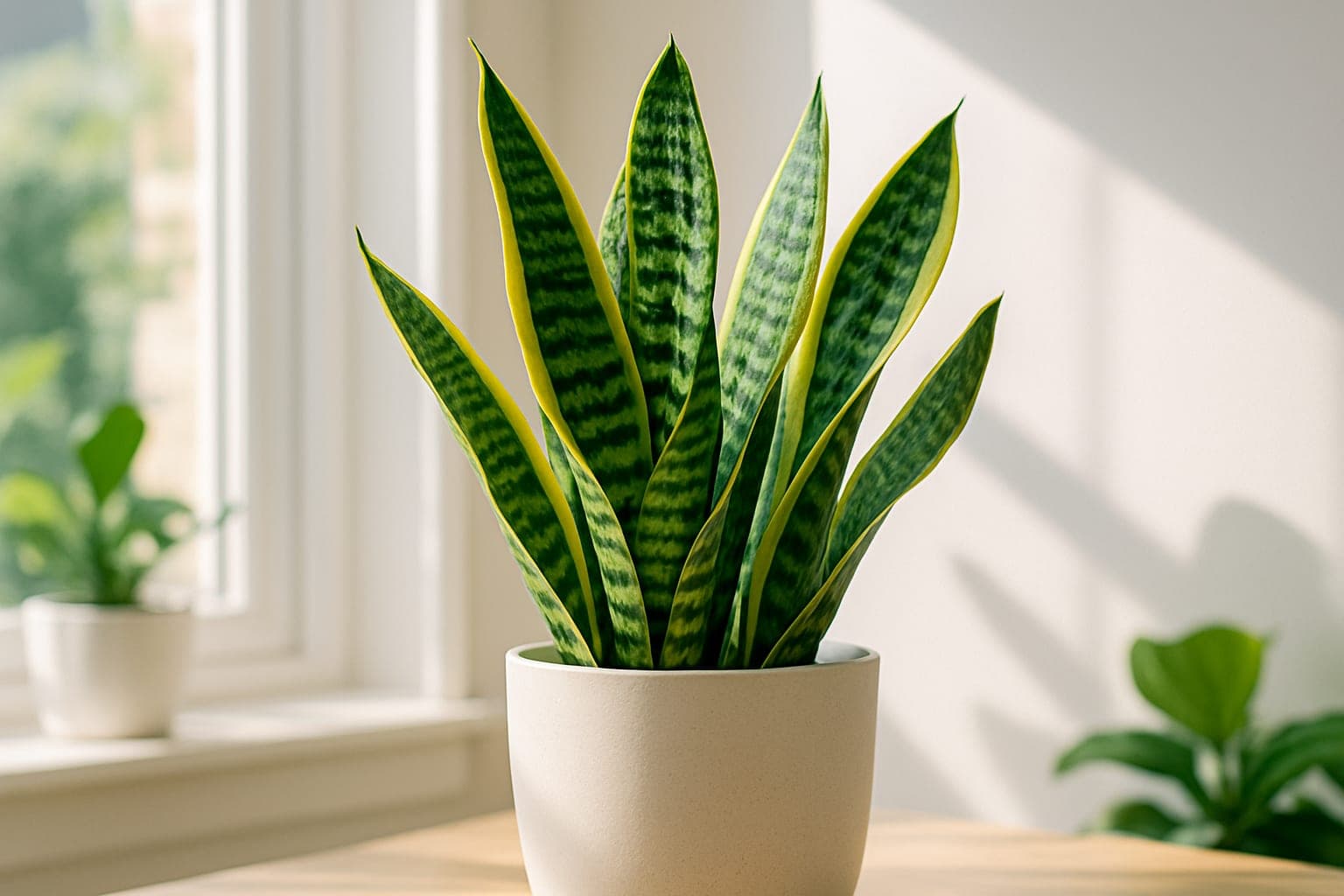
If you have ever managed to kill a houseplant and assumed you simply weren't cut out for plant parenthood, the snake plant is here to change your mind. Formally known as Dracaena trifasciata (and still widely sold under its old name, Sansevieria), this architectural evergreen tolerates low light, dry air, missed waterings and general inattention. The only real way to harm it is to be too kind with the watering can.
Meet the plant
Snake plants are native to rocky, dry parts of West Africa. Their stiff, upright leaves grow from a tough underground rhizome and store water rather like a succulent. That storage system is the key to everything: it makes the plant marvellously drought-tolerant, but also extremely vulnerable to soggy soil. Once you understand this, you understand snake plant care.
Popular varieties you'll come across include the tall, yellow-edged 'Laurentii', the silvery 'Moonshine', the compact 'Hahnii' (bird's nest) and the cylindrical-leaved Dracaena angolensis, often sold as a snake plant relative.
Light: flexible, but not invincible
Snake plants are famous for tolerating low light, and they will indeed survive in a dim hallway or a north-facing room. Survival, however, is not the same as thriving. In low light they grow very slowly, produce thinner leaves and may lose some of their variegation.
For the best growth and strongest leaf markings, give them:
- Bright, indirect light for most of the day, such as a spot a metre or two from a sunny window.
- A few hours of gentle direct sun, especially morning sun, which they enjoy.
- Protection from harsh, prolonged afternoon sun through unshaded glass, which can scorch the leaves.
If you're moving a snake plant from a dim corner to a brighter spot, do it gradually over a week or two so the leaves can adjust.
Watering: the only thing that really matters
This is where almost every snake plant problem begins. The plant stores plenty of water in its leaves and rhizome, so it would much rather be slightly thirsty than constantly damp.
How to water
- Wait until the soil is completely dry all the way through the pot. Push a finger deep into the compost, or lift the pot to feel its weight.
- Water thoroughly, letting excess drain freely from the bottom.
- Empty the saucer. Never let the pot sit in standing water.
- Wait again. Don't water on a schedule; water on observation.
How often, roughly
In a warm, bright room in spring and summer, that might mean watering every two to three weeks. In winter, or in a cool, low-light spot, it can stretch to once a month or even less. When in doubt, wait another few days.
Signs you're overwatering include yellowing leaves, soft mushy bases, leaves toppling out of the pot, and a sour smell from the compost. Signs of underwatering are far gentler: leaves may wrinkle, curl inwards along their length, or feel slightly soft. Underwatered plants bounce back quickly once watered; overwatered ones often don't.
Soil and potting
Drainage is everything. Use a gritty, free-draining mix — a cactus and succulent compost works perfectly, or mix two parts general houseplant compost with one part perlite, coarse sand or fine bark.
- Choose a pot with drainage holes. Decorative cover pots are fine, but tip out any water that collects inside.
- Terracotta pots are ideal because they dry out faster than plastic.
- Snake plants like to be a little pot-bound. Only repot every two to three years, or when rhizomes are pushing against the sides or cracking the pot.
- Spring is the best time to repot.
Temperature and humidity
Average room conditions suit snake plants beautifully. They prefer temperatures between roughly 18–27°C and dislike cold draughts or anywhere that drops below about 10°C for long. They tolerate dry indoor air without complaint, so no misting or humidifiers are needed — another reason they suit modern centrally heated homes.
Feeding
Snake plants are light feeders. During spring and summer, a balanced houseplant fertiliser diluted to half strength once a month is plenty. A cactus fertiliser also works well. Skip feeding altogether in autumn and winter, when growth slows.
Propagation
Snake plants are very easy to propagate, which makes them excellent for sharing with friends or filling out a sparse pot.
Division
The most reliable method. Tip the plant out of its pot, gently tease the rhizomes apart so each section has roots and at least one leaf, and pot up separately in dry, gritty compost. Wait a few days before watering.
Leaf cuttings
Cut a healthy leaf into sections about 5–10 cm long, remembering which end is the bottom (cuttings only root from the original lower edge). Let the cut ends dry and callus for a day or two, then push them upright into damp gritty compost or stand them in a shallow glass of water. Roots take several weeks; a new pup will eventually emerge from the base. Note that variegated forms like 'Laurentii' lose their yellow margins when grown from leaf cuttings — use division to keep the variegation.
Common problems
- Yellow, soft leaves at the base: almost always overwatering or poor drainage. Let the soil dry fully and check the roots for rot.
- Leaves toppling outwards: often too little light, or a pot that's become waterlogged.
- Brown, crispy leaf tips: usually inconsistent watering, or occasionally sensitivity to tap water minerals.
- Wrinkled, curling leaves: underwatered — give it a thorough drink.
- Pests: uncommon, but watch for mealybugs in leaf crevices and the odd spider mite in very dry conditions. Wipe leaves with a damp cloth and treat with insecticidal soap if needed.
A plant that rewards restraint
The secret to a happy snake plant is simply doing less. Give it decent light, a gritty pot that drains well, and the patience to leave it alone between waterings, and it will quietly get on with the job of being one of the easiest, most handsome houseplants you can grow.
Tools and supplies for this
Products we'd actually buy for this job. Linking to Amazon — if you buy through these links we earn a small commission at no extra cost to you.
- Weston Mill Terracotta Pots, 15.5cm (pack of 10)
Honest British terracotta — breathable walls let roots dry between waterings, ideal for anything prone to rot.
- Weston Mill Pottery Terracotta plant pots, 175mm (pack of 10)
Mid-size workhorse terracotta — perfect step-up for plants outgrowing their nursery pots.
- Weston Mill Pottery Terracotta plant pots, 20cm (pack of 5)
Heavyweight 20cm clay for established plants — the porous walls help prevent the soggy roots aroids hate.
BotanicBuddy Editorial Team
Plant Care Team
Passionate about helping plant parents succeed with expert tips and proven techniques.
Related Articles

10 Best Indoor Plants for Beginners
Start your plant journey with these easy-to-care-for houseplants that thrive indoors with minimal effort.
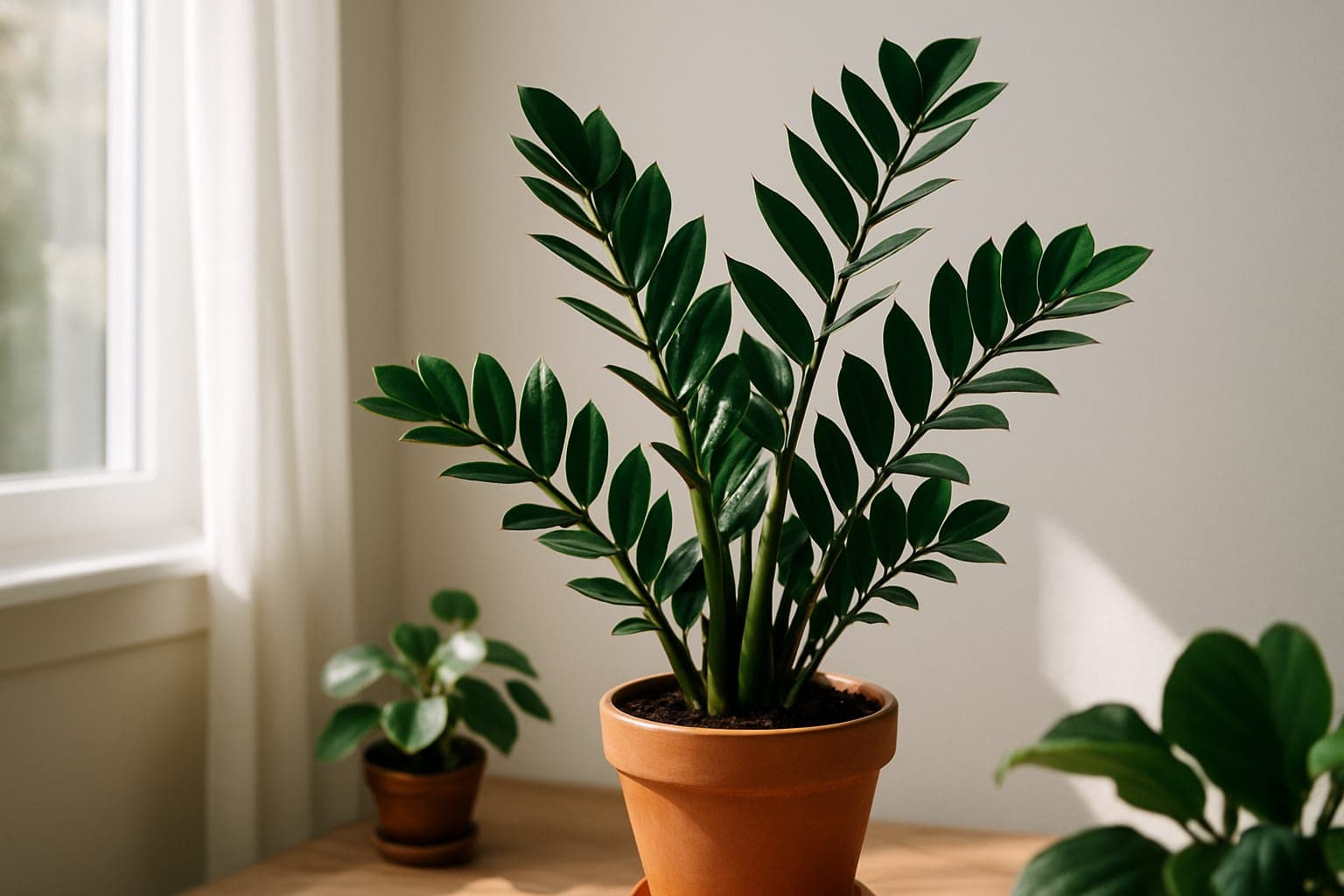
ZZ Plant Care for Busy People
The ZZ plant thrives on neglect, tolerates low light and stores its own water in chunky underground rhizomes — making it the ideal houseplant for busy or forgetful owners.

Comments(531)
I've killed exactly one snake plant in my collection of thirteen, and it was pure negligence—I watered it like a Monstera and let it sit in wet soil for weeks. You're absolutely right that watering is the real test here; I've learned to let the soil dry out completely between waterings and to check the pot for drainage before bringing one home. The trifasciata can handle low light and irregular feeding, but that soggy soil is genuinely the only reliable way to lose it.
That's such a valuable lesson about drainage—honestly, it's the difference between success and failure with Dracaena trifasciata. I'm glad you caught that early in your collection. I've found the same thing in my mediterranean climate where the air is drier; the soil just dries so much faster that overwatering almost never happens by accident. Do you find that pot material makes a big difference for you, or is it really just about checking the drainage holes?
I'd push back gently on the "thrives on neglect" framing—*Dracaena trifasciata* is more accurately drought-tolerant than neglect-tolerant, which is a meaningful distinction. Neglect can mean inconsistent light or temperature swings, which the plant definitely won't enjoy. That said, you're spot on about watering being the real stumbling block; I've seen more of these killed by well-meaning overwatering than anything else. The key is treating the soil moisture question almost clinically rather than on a schedule.
I'd actually push back a bit on the "thrives on neglect" framing—mine nearly died from *under*-watering because I took that advice too literally! Turned out my Mediterranean climate dries things out faster than expected, so I water mine every 10–12 days during summer instead of waiting weeks. The real trick is checking the soil first instead of sticking to a schedule. Have you found that watering frequency varies a lot depending on humidity where your readers live?
You're spot on—I made the same mistake early on here in the Mediterranean. The "neglect" advice works fine if you're in a humid climate, but our dry air and heat mean my snake plant actually needs water more often than I expected. Checking the soil genuinely is the only reliable method; I just stick my finger two inches down before watering. Do you find there's a noticeable difference between summer and winter watering for yours, or does the climate stay consistent enough that it's less dramatic than in colder regions?
You're so right—I totally fell into that trap too! I killed my first snake plant by being *too* neglectful, thinking it wanted to be ignored, and now I'm paranoid and check the soil way more often than I probably need to. Your point about climate is really helpful; I'm in a cold, dry apartment, so I wonder if that's actually working in my favor for once instead of against me (usually my tropical plants suffer here). Do you find that humidity affects it more than temperature, or is it really just about how quickly the soil dries out?
I needed to read this because I've been second-guessing myself with my own snake plant. I got mine about six months ago and kept worrying I wasn't watering it enough, but it turns out I was actually overwatering it the whole time. This post really clarifies that balance, and I'm glad to know I'm not the only one who struggles with that part. My collection is getting bigger and it's helpful to understand what these plants actually want rather than what my anxiety tells me they need.
I appreciate the focus on watering—that's definitely where I've seen people struggle—but I'm curious whether the "thrives on neglect" framing might actually set beginners up for trouble. In my experience with *Dracaena trifasciata*, it's more that it *tolerates* neglect than thrives under it; mine grows noticeably faster and fuller when I pay proper attention to drainage and soil moisture cycles. Does the post get into the difference between those two things, or mostly just the watering schedule?
I appreciate you zeroing in on watering—that's genuinely where I see people sabotage these plants, even experienced growers. I killed my first *Dracaena trifasciata* by fussing with it constantly before I realized the soil needs to dry out almost completely between waterings, especially in colder months. Now I let mine go weeks without touching it and it's far happier. Do you find that people tend to underwater them once they finally get it, or do they slip back into overwatering habits?
I'd gently push back on the "thrives on neglect" framing—*Dracaena trifasciata* is genuinely drought-tolerant, but that's different from indifferent to conditions. I've found mine actually produces noticeably more growth when I'm intentional about light (bright indirect is where mine thrives best) and soil drainage, even if watering restraint is the real make-or-break factor. The neglect narrative sometimes sets beginners up to stick it in a dark corner and then wonder why growth stalls.
I'd push back slightly on "thriving on neglect"—mine actually sulks without enough light, even though it tolerates low light. The watering advice is spot on though; I killed my first one by fussing with it constantly. Now I water mine maybe once a month in winter, every 3–4 weeks in summer, and it's the most forgiving plant I own. Are you finding that watering frequency varies much depending on pot size and soil mix, or does that barely factor in compared to just waiting for the soil to dry out?
I totally get why snake plants have that reputation—I killed my first one by *over*watering, which is embarrassing since I grow herbs and thought I knew better! Since then I've learned to just stick my finger in the soil and only water when it's completely dry, usually every 3-4 weeks in my cold climate where everything dries slower. Have you found that watering frequency changes much depending on season or pot size?
I totally relate to that—I overwatered my first succulent too and it was such a learning moment. Your finger-in-the-soil method sounds solid, and I've noticed the same thing with seasonal changes in my space. I'm in a Mediterranean climate so things dry faster, but I still find myself watering way less in winter. I'm curious if pot size really makes that big of a difference though, since I've got a few snake plants in different sized pots and honestly can't tell if I'm just lucky or if I'm missing something obvious.
I've killed a lot of plants, so I'm really drawn to this one. I have a snake plant that's been sitting in a corner of my apartment for months and it's somehow thriving while everything else around it is struggling. I'm curious though—since I'm in a cold climate, does that change anything about watering frequency? I've read that plants need less water in winter, but I'm not sure if that applies to snake plants the same way it does to others.
I laughed at "thriving on neglect" because I definitely tested that theory—twice! My snake plant survived my worst watering sins, but you're spot on that overwatering is the real culprit. I've found that letting mine dry out completely between waterings, then waiting another week or so before I actually water, has made all the difference. It's counterintuitive when you're used to fussing over herbs that actually want attention!
I've killed plenty of plants before I figured out watering, so this hits home. With my snake plant, I switched to checking the soil moisture before touching the water can—sounds obvious but I used to just stick to a schedule. In my dry climate it dries out faster than the usual advice suggests, so I water roughly every 3-4 weeks instead of the "once a month" thing I read everywhere. It's been solid for two years now, no drama.
That's such a smart adjustment—I've learned the hard way that blanket watering schedules are basically useless depending on where you live. I'm in a more humid temperate zone, so mine can go longer, but I also have a couple in a sunnier corner that dry out way faster than the others in my collection. Do you find the soil type makes much of a difference for you, or is it pretty much just about checking before you water? I've got a photo of one of mine that's finally putting out a new leaf after I stopped second-guessing myself on the watering!
Exactly—the soil check is everything. I learned that lesson the hard way too, killing my first snake plant by watering on autopilot. Now I just feel the pot weight before watering, and honestly, that's been my game-changer. I'm in a mediterranean climate so I'm usually closer to your 3-4 week range, especially in winter when it barely needs anything.
I really needed this—I've got a Dracaena trifasciata that I inherited from my mom, and I was convinced I was killing it by underwatering until I read that it actually prefers to dry out between waterings. Turns out I was the problem, not the plant! Do you have any tips for telling when it's *actually* thirsty versus just looking a little droopy?
I totally agree that watering is where people mess up with these! I've killed exactly one snake plant in my life, and it was because I got paranoid and watered it way too often during a humid summer. Now I just stick mine in a bright corner and forget about it for weeks, which sounds bad but honestly works great. Do you find that people tend to overwater more in certain seasons, or is it pretty consistent year-round?
Overwatering definitely spikes in spring and summer when people see new growth and assume the plant needs more water—that's when I see the most problems. In my experience, the real trap isn't seasonal though, it's humidity. *Dracaena trifasciata* sitting in a genuinely humid space (like a bathroom) stays wet at the roots way longer, so I water mine maybe half as often in summer if the air's damp versus during our dry Mediterranean months.
Overwatering's definitely worse in humid seasons—I learned that the hard way with my *Sansevieria* collection. In summer, the soil stays damp longer, and people second-guess themselves thinking the plant needs help. Winter's actually safer because everything dries faster, even indoors. The key is just checking the soil before watering, not following any calendar rule.
I've killed exactly one plant in my tiny collection, and it was a *Sansevieria trifasciata* because I somehow convinced myself it needed more water than air—turns out "neglect" really does mean neglect! Now I just water mine when I remember, which is roughly once a month, and it's finally forgiven me. The hardest part really is trusting that a plant can be *happy* being ignored.
I'd actually push back gently on the "thrives on neglect" framing—mine nearly rotted out last year when I watered on a fixed schedule, which I think is what really catches people. *Sansevieria trifasciata* wants you to actually *forget* about it between waterings, not just water less often. The distinction matters because "neglect" sounds passive, but you really do need to check the soil and wait for it to dry completely. What's your take on seasonal differences—are you adjusting watering in winter, or does that not apply where you are?
I've found that Dracaena trifasciata really is the exception that proves the rule—most tropical plants reward attention, but this one punishes it. The watering advice is spot on; I killed my first snake plant by fussing over it, and now my approach is basically "water when bone dry, then wait longer." Have you noticed any difference in how the plant responds depending on pot material or soil composition, or is that mostly a non-factor compared to getting the watering rhythm right?
I've definitely noticed the watering thing—I killed my first one by being too generous too. Right now I have two snake plants in terracotta and one in plastic, and honestly the terracotta one dries out so much faster that I actually water it more often, which feels backwards? I'm still figuring out if that's just because of the pot or if I need different soil, but the neglect rule seems to hold either way. Do you find terracotta actually helps prevent overwatering, or is it mostly just a visual cue that the soil is dry?
I'd push back on the "thrives on neglect" angle—mine nearly rotted out last year from that exact mindset. The real issue is watering frequency, yeah, but tropical humidity actually helps snake plants stay perkier than people realize. I keep mine in a spot with decent air moisture and let the soil dry out fully between waterings, and they're noticeably healthier than my drier-climate friends' plants. Not saying you need a humidifier, just that "neglect" can work against you if your air's bone-dry.
I've got a *Dracaena trifasciata* in my collection and honestly, you nailed it—watering really is the sneaky killer. I made that exact mistake when I first started and nearly rotted one out before realizing it actually *wants* to dry out completely between waterings. Have you found that the pot material makes a big difference? I switched mine to terracotta and it's been much more forgiving with my watering schedule.
I've had my *Dracaena trifasciata* for about eight months now and definitely killed the watering thing at first—I was so worried about neglect that I actually gave it too much water instead! It's sitting in a bright corner of my apartment, and I've learned that waiting until the soil is completely dry before watering makes all the difference. I'd love to know if anyone else struggles with that balance, since the "neglect-loving" reputation almost made me *over*care for mine.
I love that you're zeroing in on watering—that's where *so* many people stumble! Though I'd gently push back on the "thrives on neglect" framing; I find *Dracaena trifasciata* actually prefers consistent (if infrequent) moisture in its root system rather than going completely dry for months. At least that's been my experience with the three I'm growing in my med climate. Do you find yours behave differently depending on your light conditions, or is the watering rule pretty universal for your readers?
I love this so much because my snake plant genuinely thrived while I was traveling for three weeks and completely forgot about it—meanwhile, I somehow managed to kill a succulent through *kindness* (read: overwatering). The watering angle is spot-on; I learned the hard way that "neglect" really does mean neglect, and my one remaining lesson is to just let the soil dry out completely between waterings. Have you found that certain potting mixes work better for keeping them happy, or is it really just about that watering discipline?
I killed my first succulent by loving it to death with water, so I totally get why watering trips people up—it's counterintuitive when you're used to thinking plants need care! I don't have a snake plant myself (I'm still nursing my one echeveria back to health in my cold climate), but I've definitely noticed they thrive in the same "ignore me and I'll be fine" way my succulents do when I finally stop fussing over them. This is such a practical reminder that sometimes the best thing we can do is just... not water.
I'm glad someone finally called out watering as the real culprit—I killed my first snake plant by *loving* it too much, which sounds ridiculous in retrospect. Mine now lives in a corner of my kitchen and barely sees me for weeks, and it's the happiest plant I own. Do you have a preference between watering on a set schedule versus just checking the soil? I've switched to the latter and it's made all the difference for me.
I appreciate the focus on watering—that's definitely where I've struggled most with mine. Though I'm curious whether the watering rhythm changes much in cold climates like mine? My *Dracaena trifasciata* seems to dry out slower in winter, so I've been guessing at the schedule rather than following a fixed rule. Does that match what you've observed, or am I overthinking it?
You're not overthinking it at all—that slower drying in winter is exactly what happens in cold climates, and adjusting your watering to match is actually the smartest approach rather than sticking to a fixed schedule. I do the same thing with my two orchids in the desert; the rhythm shifts dramatically between seasons, so checking the soil before watering beats any calendar rule. Have you found a particular way to gauge when it's actually dry enough to water again, or are you still experimenting with that part?
I've got one of these in my collection and honestly it's been a lifesaver for my confidence! I killed a couple of other plants before realizing I was basically drowning them, so it's nice having something that actually wants me to forget about it. My snake plant lives in a pretty dim corner of my apartment—is that still okay, or does it need at least some bright indirect light to really thrive?
I'd add that even "neglect" has limits—I nearly killed my one snake plant by watering it on a schedule rather than checking the soil first! Now I use the "stick your finger in" method, especially during humid months when mine barely needs water. The dramatic wilting when it's *actually* thirsty is your friend; they're so forgiving that it's hard to miss the signal.
I'm so relieved to hear someone finally say it's the *watering* that gets you, not the neglect part! I killed my first snake plant by trying to be helpful and watering it like it was a tropical orchid (which, okay, I have way too many of those in my cold apartment). Now I just wait until the soil is completely dry and pretend my snake plant is judging my inconsistency—which somehow makes me less likely to overwater out of guilt.
Ha, I love that guilt motivation! I actually did the same thing with my basil when I first started—killed it with kindness by watering constantly in my cold Minnesota kitchen. Now I've got about 15 plants and my rule is basically "if the soil isn't bone dry, don't touch it," especially with my snake plants. The funny thing is once you get that restraint down, snake plants become so forgiving that they almost feel boring—do you find yourself gravitating toward more finicky plants now, or are you sticking with the low-maintenance crew?
I've got one of these and honestly the watering thing is spot-on—I killed my first snake plant by watering it like I do my other plants, which is apparently way too much. Now I'm on a schedule where I wait until the soil is completely dry and I check maybe once a month, and it's finally happy. Would love to see a photo of what overwatered damage actually looks like though, so I know what to avoid next time!
I killed my first snake plant with kindness—literally drowned it with weekly waterings because I thought that's what "caring" meant! Now I've got three thriving in my collection, and the difference is night and day once you realize they genuinely prefer to dry out between waterings. This post nails it; watering is truly the only hurdle, and honestly it's been the best lesson I've learned with any of my succulents.
I've killed plenty of plants through overenthusiasm, but somehow managed to keep *Dracaena trifasciata* alive despite my best efforts—which honestly tells you everything you need to know. My breakthrough came when I stopped thinking of "neglect" as a guideline and actually let the soil dry out completely between waterings; I now just water mine when I remember to check it, maybe once a month or less depending on the season. If you're someone who defaults to fussing, that shift in mindset is probably the real game-changer here.
I have to say, *Dracaena trifasciata* really deserves all the hype—I've got one that's practically thriving in a corner I barely remember about. You're spot on that overwatering is the real culprit; I learned that lesson the hard way with my first succulent collection. What's your take on watering frequency during the tropical wet season versus drier months—do you adjust your routine much, or does the plant basically regulate itself if you're using well-draining soil?
I've killed plenty of plants, but I've never managed to kill a *Dracaena trifasciata*—you're absolutely right that watering is where people stumble. I learned the hard way that "barely water it" doesn't mean a occasional splash; I actually let mine dry out completely for weeks between waterings and it thrives. The soil should feel bone-dry before you even think about watering again, especially in cooler months.
I'd push back slightly on the "thrives on neglect" framing—mine nearly died from that exact mindset when I first got it. The real issue is that people water when the soil *looks* dry on top, not when it actually *is* dry throughout. I keep mine on a simple schedule: I water thoroughly every 3–4 weeks and actually stick to it, rather than guessing. Much more reliable than the "neglect" approach. How are you recommending people check soil moisture—the finger test, or something else?
I'd push back slightly here—snake plants are forgiving, sure, but they're not actually thriving on neglect so much as surviving it. I've killed two in five years by overwatering in low light, which is the real culprit. Mine does best with infrequent watering *and* bright indirect light; skip either and it'll just sit there looking dull. The watering advice is spot-on though—I wish I'd nailed that sooner.
I've been nervous about getting a snake plant because I assumed I'd mess something up, but this makes it sound so doable. The part about watering being the main thing to watch out for is really helpful—I think I've killed other plants by overwatering, so it's good to know that's actually the trap with these. Do you find that the watering schedule changes much between seasons, or is it pretty consistent year-round in a cold climate like mine?
I'd push back slightly on the "thrives on neglect" framing—mine actually sulks visibly when I let the soil dry out completely for weeks at a time, even though it won't die. The real issue is that *Dracaena trifasciata* is forgiving of irregular watering, not indifferent to it. In my mediterranean climate, I water mine every 10–14 days during growing season and maybe once monthly in winter, and that consistency matters more than people think. Great that you're highlighting watering as the real pitfall though—most beginners do kill theirs through overwatering, not neglect.
You make a really good point about consistency mattering more than the "neglect" narrative suggests. I learned this the hard way with mine—I'd go weeks without watering, then feel guilty and drench it, and it was definitely not thriving. Once I settled into a regular schedule during the growing season, even just checking it every couple weeks, it perked up noticeably. Your watering range sounds spot-on for active growth.
I've had my Dracaena trifasciata for about six months now and totally agree that watering is the tricky part—I killed my first one by being *too* attentive! Now I wait until the soil is completely dry and the pot feels light, and it's been so much happier. Mine sits in medium indirect light and barely needs anything else, which is honestly why I keep it around when I'm testing care routines with my other plants.
I'll be honest—I killed my first snake plant by *over*watering it, which feels silly in retrospect. The "thrives on neglect" thing is real, but I learned the hard way that neglect only works if you're also neglecting to water it constantly. I now let mine dry out completely between waterings and it's finally thriving. Is the post going into the signs of overwatering, or mainly focusing on the watering schedule itself?
Oh, I feel that in my bones—I overwatered mine too when I first got it, and it took months to bounce back! Your tip about letting it dry out completely is spot-on; I actually stick mine in a corner by a north-facing window in winter and basically forget about it for weeks, which sounds counterintuitive but works great in my cold climate where things dry slower anyway. Did you end up adjusting your watering schedule seasonally, or does the "completely dry" approach work year-round for you?
I love that you're zeroing in on watering as the real challenge with *Dracaena trifasciata*—it's honestly where most beginners stumble, even though everything else about this plant is forgiving. I've found that the "soak and dry" approach works beautifully in my mediterranean climate, where the soil dries out predictably, but I'm curious how you approach watering during cooler months when the plant's dormant and needs even less.
I wish I'd read something like this before I nearly drowned my first snake plant—though honestly, it's been my most forgiving friend since then! The watering thing is so real; I think I spent two years overcompensating after killing a more fussy orchid, and my snake plants basically said "we're fine, thanks." Now I let mine dry out completely between waterings and they're thriving. Really helpful breakdown here.
Ha, I totally get that—I did the exact same thing with my herbs after losing a basil once! The funny thing is, my snake plant has become my confidence builder; when it thrives on neglect, it reminds me I'm not hopeless. How long did it take yours to bounce back after the initial overwatering, or was it pretty quick to recover?
I really needed this post because I've been overthinking my snake plant's watering schedule. I have nine plants total, mostly succulents, so I'm used to the "less is more" approach, but I kept second-guessing myself with the snake plant and worried I was doing something wrong when it just sat there looking the same. Sounds like that's actually the whole point though.
That second-guessing phase is so common—I went through it too with my first orchid, expecting dramatic growth when really it was just... content. With snake plants especially, "looking the same" for months is genuinely a good sign. The real killer is watering on a schedule instead of checking the soil first; I've seen more die from well-meaning overwatering than neglect. Stick with your "less is more" instinct and you'll be fine.
I've killed so many plants by overwatering that I'm really glad to see someone calling that out as the actual problem. I have a small snake plant that's been sitting in my cold apartment barely getting any attention, and it seems to be the one thing that actually survives alongside my struggling pothos. Do you find that snake plants do okay in colder climates, or do they prefer warmth?
I killed my first snake plant by loving it too much—watered it constantly until the roots rotted. Now I just stick my finger in the soil every couple weeks and only water if it's completely dry, and mine's thriving. The post is spot on that watering is really the only trick to get right with these.
I appreciate you zeroing in on watering as the real challenge with *Dracaena trifasciata*—so many people assume a plant that tolerant of neglect is completely foolproof, then accidentally kill it with kindness. I've found the same goes for most of my tropical vegetables; they're remarkably forgiving until you overwater them. Did you cover drainage in your full post, or focus mainly on frequency?
I've definitely learned this the hard way—I killed my first *Dracaena trifasciata* with kindness (read: overwatering) before I realized it actually *wants* to be ignored. The turning point for me was switching to a terra cotta pot and only watering when the soil was bone dry, which in my cold climate means maybe once every three weeks in winter. Now it's thriving in a corner that gets indirect light, and I barely think about it anymore!
I'd push back slightly on the "thrives on neglect" framing—mine actually suffered when I stopped paying attention to watering schedules entirely. The trick isn't neglect; it's understanding that in my mediterranean climate, the soil dries fast enough that I water every 2–3 weeks without overthinking it. Overwatering is definitely the killer, but underwatering for months isn't ideal either. What's your take on whether the neglect reputation actually sets people up for problems?
I'd gently push back on the "thrives on neglect" framing—at least in my arid climate, I've found that *Dracaena trifasciata* is more accurately "tolerant of neglect" rather than thriving because of it. The real difference is that it's forgiving when you get watering wrong, which is huge for beginners. My experience has been that these plants actually do better with intentional, minimal care than pure neglect—occasional feeding, bright indirect light, and letting the soil dry fully between waterings produces noticeably healthier growth than just leaving it in a corner.
I killed my first snake plant by *over*-loving it—watering weekly like it was some delicate tropical darling instead of the drought-resistant succulent it actually is. Now I let mine dry out completely between waterings and check the soil with my finger before even thinking about the watering can, and they're thriving. It's such a relief having plants that actually reward you for forgetting about them sometimes, especially in my chilly apartment where everything else seems to sulk. Do you find that people tend to underestimate how much neglect these really prefer?
I've got three snake plants in my collection right now and honestly watering is exactly where I keep second-guessing myself—I always worry I'm doing it too often even though I know they prefer drying out. Do you have any tips for telling when the soil is actually dry enough to water again? I've been using the finger test but I'm never totally confident about how deep to check, and I'd hate to rot one after keeping them alive this long.
I have to laugh—I killed my first snake plant through *kindness*, which wasn't even supposed to be possible! Turns out my arid climate meant the soil was drying faster than I realized, and I was watering on a schedule instead of actually checking it first. Now I have one thriving in my collection of 14, and it's genuinely the easiest thing I grow (I'd share a photo if I could—it's looking smugly perfect right now). The hardest part really is just letting it be.
I've definitely learned this lesson the hard way—killed my first snake plant with kindness, drowning it in water when it would've thrived on abandonment! They're so forgiving otherwise that I think most beginners don't realize overwatering is genuinely the bigger risk than underwatering. Mine now lives happily in a corner I almost forget about, which is probably the ideal situation for these plants. Do you find that people tend to struggle more with the watering aspect, or do you see other common mistakes pop up in your experience?
I totally relate to the overwatering trap! I killed a snake plant with what I thought was care, and now I'm paranoid about it with my other plants. What finally helped me was treating my snake plant like I'd treat my rosemary—barely touching the watering can unless the soil is completely dry. That shift in mindset actually made me better with my whole herb collection, so the snake plant accidentally became my best teacher.
I've killed exactly one snake plant in my ten years of collecting, and yep—it was definitely the watering. I was convinced mine was thirsty during a cold snap and drowned it, which taught me the hard way that they genuinely prefer to dry out completely between waterings, especially in winter. Now I just stick my finger in the soil once a month and only water if it's bone dry. Have you found that most beginners struggle more with overwatering, or do you see people killing them other ways too?
I'd push back slightly on the "thrives on neglect" framing—in my experience, *Dracaena trifasciata* does better with intentional care than true neglect, especially in Mediterranean climates where our dry air can actually stress them if light is too low. You're absolutely right that watering is the real skill to nail, though. I've found the soak-and-dry method works better than the vague "water when soil is dry" advice most sources give, and it's made the difference in my collection.
You make a fair point—I think "thrives on neglect" can be misleading, especially since light really does matter more than people think. I've had better luck with *Dracaena trifasciata* in brighter spots too, even if they tolerate low light. The soak-and-dry method is genuinely the game-changer though; I switched to it about a year ago and it's honestly transformed how I approach watering across my whole collection. Do you find the method changes much between seasons, or do you keep it pretty consistent year-round?
I killed my first *Dracaena trifasciata* by overwatering—sounds backwards, right? You're absolutely right that watering is the real pitfall; I learned the hard way that waiting until the soil is bone dry and the pot feels light is non-negotiable, especially in tropical humidity where mine stays indoors. Now I water mine maybe once a month in the rainy season and stretch it even longer in cooler months, and they're thriving.
I really appreciate you sharing that—I'm still dialing in my watering schedule and tend to panic when leaves look a bit droopy! I have one *Dracaena trifasciata* among my nine plants, and it's definitely the hardest one for me to resist watering. Your point about tropical humidity making the soil stay moist longer is helpful; I hadn't considered that as much as I should. Do you find the "bone dry" test easier to judge by weight than by sticking your finger in, or do you do both?
I appreciate the focus on watering—that's definitely where most people stumble with *Dracaena trifasciata*. I'd gently push back on "thriving on neglect" though; in my experience, the real skill is matching watering to your specific humidity and pot drainage rather than just underwatering by default. I killed one years ago in a humid climate with retentive soil by assuming the neglect approach would work everywhere. Now I check the soil before watering regardless of the calendar, and mine are far happier for it.
I really needed this! I killed my first snake plant by watering it like it was a thirsty herb—which, in hindsight, was silly of me—but your post makes me feel like round two might actually work out. I've got a new one sitting in a bright corner now, and I'm forcing myself to wait longer between waterings. Do you have any tricks for remembering when you *last* watered, or is it just trial and error until you get the rhythm?
I've got three plants right now and honestly my snake plant is the only one I'm not second-guessing myself on—though I did almost kill it my first month by watering way too often. This post nails it because the "neglect" thing is real, but I still wasn't sure if I was doing it right until I read about letting the soil dry out completely. My orchid is a whole different animal and gets way more attention, so it's actually refreshing to have one that just sits there.
I really appreciate you zeroing in on watering as the real challenge with Sansevieria—so many people assume "easy" means they can ignore it completely, then wonder why their plant suddenly collapses from root rot. I've found that letting the soil dry out completely between waterings makes all the difference, especially in my arid climate where moisture just evaporates anyway. Have you found that the frequency changes much depending on pot size or soil type?
I appreciate you nailing the real culprit here—overwatering is genuinely the main thing that kills these plants, even more than low light. I keep mine in a pretty arid spot and barely touch the watering can, which honestly feels like cheating after years of fussing over my orchids. Have you found that the watering needs shift much between seasons, or do you stick to the same sparse routine year-round?
I'd push back gently on the "thrives on neglect" framing—in my experience, *Dracaena trifasciata* thrives on *appropriate neglect*, which is different. I've killed a few by underwatering in low humidity (I'm in the Southwest), and the real skill isn't ignoring it, it's recognizing when your specific conditions call for slightly more attention. The watering advice is spot-on though; that's definitely where most people slip up.
You've got a great point about regional humidity—that's something I didn't fully appreciate until I moved to a drier climate myself. The distinction between neglect and *appropriate* neglect really does matter, especially for folks in arid areas where Dracaena trifasciata can get genuinely stressed. It sounds like you've learned the hard way that the plant's tolerance has real limits. Have you found a watering schedule that works better for your Southwest conditions, or do you mostly just check the soil more frequently?
I'd actually kill my snake plant years ago by overwatering it in my cold apartment—kept thinking it needed more help than it actually did. Now I water mine maybe once a month in winter and let the soil dry out completely between waterings, which has been a total game-changer. Have you found that people struggle more with watering frequency or with using the wrong soil mix?
I appreciate the focus on watering—that's definitely where most people stumble with Sansevieria trifasciata. That said, I'd gently push back on the "thrives on neglect" framing. Mine actually performs noticeably better with a deliberate watering schedule (roughly every 3–4 weeks in my temperate climate) rather than truly haphazard watering. The real trick seems to be letting the soil dry out completely between waterings rather than ignoring the plant entirely, which is a subtle but important distinction for anyone actually trying to grow a healthy specimen.
I've learned this the hard way with my three plants—somehow I managed to nearly kill the one houseplant that's supposedly immortal by fussing over it too much. Turns out Dracaena trifasciata really does mean it when it wants to dry out between waterings; I switched to watering mine only when the soil is completely bone-dry and it's thrived ever since. Great reminder that sometimes the best plant care is actually just leaving well enough alone.
I really needed to read this because I've somehow managed to overwater my snake plant twice now—you'd think a plant that thrives on neglect would be foolproof for me, but apparently I have an urge to baby everything! I'd love to see a photo showing what the soil should actually look like before watering, since I think that's where I keep going wrong. Do you find that letting the soil dry out completely is really the sweet spot, or is there a happy medium?
I just got my first snake plant a few months ago and honestly the "neglect" part is the only reason it's still alive—I was paranoid about watering it at first and kept checking the soil way too often. I think I finally have the rhythm down now, but I'm curious: since mine's in a pot without drainage holes (I know, rookie mistake), should I be even more cautious than the post suggests, or just wait longer between waterings?
I'm laughing because this is so true—I killed my *first* snake plant by overwatering, which felt impossible given their reputation! Since then I've had way better luck treating mine like a succulent and basically ignoring it for weeks at a time. Do you find that people struggle more with overwatering indoors, or is it also an issue in drier climates? I'm in a temperate zone where humidity's all over the place seasonally, so I'm always curious how that plays into the watering schedule.
I've learned this the hard way—killed my first snake plant with *kindness* by watering it like it was a tropical thirsty thing (which, given my cold climate, should've been a clue). Now I'm three years into my current one with barely a glance, and it's somehow my most robust plant. That bit about watering being the real culprit really resonates; it's funny how the easiest plants trip us up precisely because we expect them to need more attention. Have you found there's a difference in watering needs depending on pot size or soil type?
I'd push back gently on the "thrives on neglect" framing—in arid climates like mine, *Dracaena trifasciata* actually needs more attention to watering frequency than the standard advice suggests, since indoor air is so dry that soil dries faster than people expect. The real trick isn't ignoring it, but matching your watering rhythm to your environment rather than following a generic schedule.
I appreciate you zeroing in on watering—that's honestly where I see people struggle most, even with their hardier plants. I'm primarily an herb grower (just got three going in my Mediterranean setup), so I'm used to plants that *want* attention, but I actually keep a snake plant on my kitchen shelf as a "reality check" when I'm overwatering my Ocimum basilicum. Do you find that the watering needs shift much depending on pot size or substrate, or is the "let it dry out completely" rule pretty universal?
Great point about the reality check! I've found substrate makes a real difference—I use a grittier mix (lots of perlite and bark) for mine, and it lets me water slightly more often without the rot risk, whereas friend's in standard potting soil needs that complete dry-out between waterings. Pot size matters too; my snake plant in a smaller terracotta pot dries faster than it would in ceramic, so I'm watering more frequently there. Have you noticed your *Ocimum* prefers a particular pot material, or does that matter less since it likes staying moist?
I've had my snake plant (Dracaena trifasciata) for about eight months now and can confirm the watering thing is real—I killed the first one by overwatering, thinking I was helping it! With my current one, I've found that waiting until the soil is completely dry and then waiting another week actually works way better than my instinct to water on a schedule. It's definitely the easiest plant in my collection once you get past that hurdle.
Your "wait another week" rule is brilliant—I wish I'd known that before I nearly drowned my first snake plant! I've had better luck since treating the soil dryness as a suggestion rather than a signal, and honestly, my Mediterranean climate helps because the air's naturally dry. It's funny how the hardest part of an "unkillable" plant is just resisting the urge to fuss with it, but that restraint has served me well across my whole collection.
I'm really glad you mentioned that extra week thing—I've been struggling with the same problem! I killed my first one too by basically drowning it, and I'm still getting the hang of trusting that the soil can stay dry for longer than feels right. I have one about six months old now and I'm trying to resist the urge to water it, but do you check the soil with your finger each time or just go by a rough timeline?
I completely agree that watering is where people struggle most with Sansevieria—I've seen so many perfectly healthy specimens rot from too much love. The beauty of this species is really how little it asks for, especially in a mediterranean climate like mine where the air tends drier. Since you're focusing on watering, I'd be curious whether you recommend adjusting frequency seasonally, or do you find the "only when soil is completely dry" rule holds year-round regardless of season?
I'd push back slightly on the "thrives on neglect" framing—mine actually suffered when I treated it that way early on. The real trick is understanding that *Dracaena trifasciata* needs infrequent watering, not no attention at all. I check soil moisture weekly and only water when it's genuinely dry several inches down, usually every 3–4 weeks in winter. That intentional monitoring beats the "forget about it" approach most people default to.
I'd gently push back on the "thrives on neglect" framing—*Dracaena trifasciata* is more accurately drought-tolerant than neglect-tolerant. The distinction matters because neglect often means inconsistent conditions (light, temperature swings), whereas these plants genuinely prefer stable environments with infrequent water. You're spot on that watering is the real stumbling block though; I've found most issues stem from people either overcompensating after a dry spell or keeping soil warm and moist, which invites root problems fast.
I'd push back slightly here—snake plants are genuinely forgiving, but I've seen plenty killed by overwatering, especially in cold climates where soil stays wet longer. The real trick isn't just watering less; it's matching frequency to your actual conditions. I keep mine in an unheated room and water maybe every 3-4 weeks in winter, less often than most guides suggest. If you're in a cold spot, let the soil dry out completely between waterings. Would share a photo of mine from last winter to show what healthy neglect actually looks like, but the takeaway is: know your environment first.
I've managed to kill exactly one snake plant in my life, and it was purely through kindness—overwatering it to death while my Phalaenopsis orchids were thriving on the opposite side of my (admittedly very dry) living room. The post nails it; Dracaena trifasciata really does seem designed to punish good intentions. My trick now is to wait until the soil is bone dry and then wait another week, which sounds harsh but honestly works beautifully for this one.
I'd actually argue the one thing that trips people up is *not* watering—it's the temptation to water anyway when you're anxious about neglect. I killed my first Dracaena trifasciata by fussing over it constantly, even though I knew better. Now I water mine on a strict schedule every three weeks and check soil moisture first; they're honestly some of my easiest plants alongside my culinary herbs. Have you found that most beginners err on the side of overwatering, or do you see a mix of mistakes?
I really appreciate you zeroing in on watering as the actual pain point—so many guides gloss over that and it's exactly where snake plants end up struggling. I've found that in my arid climate, mine actually prefer even longer stretches between waterings than most care sheets suggest, and I check the soil moisture more than I follow a schedule. That said, I'd gently push back on the "thrives on neglect" framing, since these are still living plants that do benefit from attention to their conditions, even if that attention is minimal. Great entry point for beginners though.
I've killed my fair share of "easy" plants before I learned this lesson the hard way—watering is genuinely where I mess up, even with tough species like Dracaena trifasciata. Mine actually got root rot twice before I realized my arid climate wasn't the real problem; I was watering on a schedule instead of checking soil moisture first. Do you find that people tend to underwater or overwater their snake plants more often?
I'd gently push back on the "thrives on neglect" framing—*Sansevieria trifasciata* actually prefers consistent conditions, just not fussy ones. The real appeal is tolerance for inconsistency, which is different. You're spot-on about watering though; I've found the mistake most people make isn't underwatering but overwatering in winter when growth slows dramatically and soil dries much slower.
I've killed two pothos before I got my first snake plant, and honestly this post makes me feel less terrible about myself! Mine's been sitting in a corner of my living room for like eight months with maybe two waterings, and it's somehow doing better than my monstera that I obsess over. I'm still not 100% sure about the watering schedule though—how do you tell when the soil is actually dry enough? I don't have a moisture meter yet.
The soil dry-enough test is honestly simpler than it sounds—just stick your finger about an inch down and if it feels completely dry, you're good to water. With Dracaena trifasciata in an arid climate like mine, I water maybe once a month in winter and stretch it even longer if it's been humid. Your instinct to underwater is actually spot-on, since overwatering is what gets most people, and it sounds like your plant knows what it likes. What's your living room light situation like—is it bright indirect, or more on the dim side?
The soil-check method that actually works: stick your finger about an inch down—if it feels dry, water it. If there's any moisture at all, wait another week. Snake plants are way more forgiving of underwatering than overwatering, so honestly, erring on the dry side is your safest bet. You don't need a meter; your finger does the job fine.
I've killed plenty of plants before I learned this lesson, so I really appreciate you calling out watering as the real culprit. My snake plant sits in a corner of my living room and honestly thrives on me forgetting about it for weeks—I only water when the soil is completely dry, usually every three weeks or so. The one time I tried being attentive and watering it regularly, the roots started rotting and I nearly lost it. Now I treat it like the low-maintenance friend it wants to be, and it's been my most reliable plant by far.
That rotation experiment sounds rough, but I'm glad you found the rhythm that works! I've learned the same lesson with my herbs—I kill way more with kindness than neglect. The tricky part for me in a cold climate is that Dracaena trifasciata's dormancy in winter means I water even *less* frequently, maybe once a month or longer, and I always second-guess myself. Do you find your watering schedule shifts at all between seasons, or does your corner stay consistent enough that you stick to the same routine year-round?
I laughed at the "thriving on neglect" part because I've somehow managed to *fail* at that with my snake plant—turns out my arid climate means I was watering it less out of laziness than actual necessity, and it was getting crispy. Your point about watering being the real culprit really resonates; I wish I'd understood the difference between neglect and the specific conditions my dry air actually demands. Now that I've adjusted, it's finally doing what it's supposed to do!
I'd gently push back on the "thrives on neglect" framing—I've found that *Dracaena trifasciata* actually thrives on *appropriate* conditions rather than true neglect, and watering is only half the story. Light and drainage matter just as much in my experience, especially in humid climates where root rot sneaks up fast. That said, you're absolutely right that it's forgiving compared to most houseplants, which is why it's such a great starter plant.
I love how you've zeroed in on watering as the real challenge with Sansevieria trifasciata – it's such a common misconception that these plants are truly zero-effort when really it's just about understanding their xeric nature. I've found that the "soak and dry" approach works perfectly in my mediterranean climate, though I imagine folks in more humid regions need to be even more cautious about letting the soil stay wet. Have you noticed differences in watering needs depending on pot material or soil composition?
I've had my *Dracaena trifasciata* for a couple years now and honestly the watering thing is so real—I killed my first one by being way too attentive! Have you found that people struggle more with watering frequency or with the soil moisture level itself? I'm curious if you recommend checking the soil first or just going by a strict schedule.
I'm totally with you on the over-watering trap—I learned that lesson early too. I think most people struggle more with *frequency* than understanding what "dry" actually feels like, which is why I always tell folks to stick a finger two inches down before watering rather than follow a calendar. It sounds like you've got the hang of it now though. Do you find the watering rhythm changes much between seasons in your space, or does it stay pretty consistent year-round?
I totally get that—I once drowned a snake plant by treating it like my basil (which, fair warning, demands constant attention). I've found most people struggle more with *frequency* than understanding moisture itself; they see dry soil and panic-water before checking how bone-dry it actually needs to be. I always stick my finger two inches down first, and if it's still damp, I wait another week—soil checking beats schedules every time for me.
I totally get that—I did the same thing with my first snake plant, drowning it with good intentions. For me, the soil moisture check is the real game-changer; I learned to stick my finger about an inch down before watering, and that one habit saved my collection. A strict schedule never worked in my tropical climate since humidity fluctuates so much, so I ditched it in favor of just feeling the soil when I remember to check.
I'd add that the real lesson I learned after killing my first *Dracaena trifasciata* was understanding that "thriving on neglect" doesn't mean zero attention—it means the soil *must* dry out completely between waterings, and most people underwater in summer then overwater in winter out of guilt. I keep mine in terracotta now and only water when the pot feels genuinely light, which has eliminated my overwatering problem.
I'd actually disagree a bit here—I've killed more snake plants from *overwatering* than I care to admit, even after years of keeping tropicals! My current one (gorgeous variegated beauty that I wish I could show you a photo of) finally thrived once I switched to watering maybe once a month in winter. Do you find that people in temperate climates tend to water them more often because of indoor heating, or is it just a universal thing?
I'd gently push back on the "thrives on neglect" framing—*Dracaena trifasciata* actually has pretty specific needs, just forgiving ones. The real charm is that it tolerates *irregular* watering and low light, not that it doesn't care about them. I've found mine grows noticeably faster with bright, indirect light and letting soil dry completely between waterings rather than just ignoring it, which might help readers move beyond "unkillable" to "actually thriving."
I've got a snake plant that's been sitting in the corner of my living room for months, and honestly it's one of my nine plants that actually looks happy without constant attention. The watering advice here is so helpful because I was definitely overthinking it at first—I kept worrying it wasn't getting enough water. It's nice to know that underwatering is basically impossible to mess up with these, and overwatering is really the only way to kill them. Thanks for breaking down what actually matters instead of making it seem complicated.
I've kept Dracaena trifasciata in my small collection for years now, and you're absolutely right that watering is really the make-or-break factor—I've seen far more plants suffer from overwatering than underwatering. The tropical climate where I grow my plants means I can sometimes go even longer between waterings than temperate zone growers might. Have you found that your own watering schedule changes noticeably with the seasons, or do you keep it pretty consistent year-round?
I love that you're calling out watering as the real challenge with Dracaena trifasciata—it's so true. Most people kill these through kindness, and honestly, I've seen it happen even with experienced growers who forget that xeric plants need that dry-down period. My snake plant sits happily in my Mediterranean climate where it gets minimal attention, which suits it perfectly. Do you find that people struggle more with overwatering indoors, or is it mainly those in humid environments fighting root rot?
I've definitely killed one through overwatering, so I learned that lesson the hard way. I think it's less about climate and more about people watering on a schedule rather than checking if the soil is actually dry—I let mine go weeks between waterings now and it's thriving. The dry-down period is real; I have mine in a pot with drainage and I don't water until the soil is bone dry an inch or two down, which honestly takes forever indoors where it's cooler.
I'd push back slightly here—snake plants are forgiving, sure, but I've seen plenty die from overwatering in cold climates like mine. The bigger issue isn't just frequency; it's that people don't account for slower evaporation in winter or lower light conditions. I keep five plants total, mostly orchids, and my snake plant gets watered maybe once every three weeks in winter, twice in summer. The soil needs to dry out *completely* between waterings, not just "mostly dry." That's the real make-or-break detail I'd stress more than watering schedule alone.
I've got to laugh because I killed my first snake plant by *overwatering* it, which feels like failing at the one job where failure should be impossible! I've since learned that less is genuinely more with *Dracaena trifasciata*—I basically water mine once every 3–4 weeks and let the soil dry out completely between. Since switching to that approach, they've honestly become my easiest growers alongside some of my veggies. Do you find most people struggle more with watering frequency or with choosing the right pot drainage, in your experience?
Ha, I needed this reminder! I killed a snake plant once by overthinking it—kept fussing with watering when it honestly wanted to be left alone. Now I treat mine like my basil and rosemary: water when the soil is completely dry, maybe every 3-4 weeks depending on my cold basement setup. Have you found that the watering schedule really does shift with seasons, or does yours stay pretty consistent year-round?
I love this approach. I made the exact same mistake with one of mine years ago—watering on a schedule instead of checking the soil first—and it took me a while to trust that it actually wanted to dry out completely. Seasonal shifts definitely matter in my tropical setup though; in the rainy season my snake plants go longer between waterings since the air stays humid, but come the drier months I'm more intentional about that "completely dry" rule you mentioned.
I really appreciate this focus on watering—it's honestly the biggest hurdle I see people struggle with, and Dracaena trifasciata is so forgiving in almost every other way. I keep mine in my arid climate with minimal fuss, which is exactly why I love the species. The "neglect-friendly" reputation is earned, but you're right that understanding the watering rhythm is what separates thriving plants from sad, rotting ones. Have you found that watering frequency changes much between seasons in your climate, or do you stick to the same schedule year-round?
I definitely dial it back in winter—my snake plants barely get a drop from November through February, which honestly makes them even easier to manage. The tricky part I've learned is that it's less about a fixed schedule and more about checking the soil; I just stick my finger down a couple inches before watering, and if it's still damp, I wait another week. Works beautifully in my mediterranean climate where things dry out fairly quickly anyway!
I killed my first snake plant by *loving* it to death—watering every week like it was some kind of tropical thirstbucket. Now I've got three thriving ones scattered around, and honestly, I barely remember they're there until I walk past and think "oh right, that exists." The shift to watering deeply but infrequently was such a game-changer for me, and it's wild how many of my plant disasters traced back to that same overwatering impulse.
I really appreciate you zeroing in on watering—that's honestly where I see people struggle too, even though *Dracaena trifasciata* is so forgiving otherwise. I've found the "neglect" angle can actually backfire a bit; folks end up overcompensating by checking on their plant constantly and fussing with the soil. Have you found that people do better with a specific watering schedule (like "once a month"), or does the "wait until it's completely dry" approach work better in your experience?
I've killed way more snake plants than I'd like to admit—all from overwatering in my cold apartment! Took me a while to realize they actually *prefer* to dry out completely between waterings, especially when it's chilly. Now I just stick my finger in the soil once a month and only water if it's bone dry, and honestly, they're thriving. Have you found that watering frequency changes much with the seasons?
I've killed a lot of plants but somehow managed to keep my snake plant alive for two years now—though I'll admit I was way too generous with water at first and it got mushy. The post's focus on watering makes sense because that's exactly where I went wrong. I'd love to know if there's a reliable way to tell when the soil is actually dry enough to water again, since I'm still a bit guessing with mine.
I'd gently push back on the "thrives on neglect" framing—I've found *Dracaena trifasciata* actually responds well to intentional care, it's just forgiving of *inconsistency*. The real distinction matters because neglect and drought-tolerance aren't the same thing. That said, you're absolutely right that watering is the sticking point; in my arid climate, I water mine roughly every three weeks and let the soil dry completely between, which has kept all five of mine thriving far better than the old "forget it exists" approach ever did.
I killed my first snake plant through *kindness*—overwatering it like it was some delicate tropical darling—so I really appreciate you zeroing in on that one thing. It took me moving to a colder climate and having to rethink my whole watering approach before mine actually started thriving. Now I've got three doing great in my collection, and honestly they're my confidence boost whenever I inevitably overwater something else. Do you find people tend to underwater them once they get the message, or does it stay overwatering as the main culprit?
I'd actually argue that snake plants (*Dracaena trifasciata*) are even more forgiving than people realize—I've kept mine alive through two winters in a cold apartment where I basically forgot about it for months. That said, you're right that watering is the real culprit; I learned the hard way that the "soak and dry" method works great in normal conditions, but in winter or cool climates it dries much slower and I had to adjust my schedule accordingly. Have you found that watering needs change significantly based on season or indoor temperature?
I wish I'd read this before I nearly drowned my first snake plant! Out here in the desert, I kept thinking the arid air meant it needed more water, and I killed it faster than I've ever killed anything—which is saying something after fourteen plants and a few orchid casualties. Now I'm much more cautious with watering, and my newer snake plant is actually thriving. If I had a photo to share, you'd see how much better it looks compared to my early houseplant days!
Oh, I totally get it—I made that same mistake with my first snake plant years ago. The desert air threw me off too, and I kept watering thinking it needed more help, when really it just wanted to be left alone. I'm glad you figured it out before losing more plants. The fact that your newer one is thriving now is awesome, and that caution you learned is honestly gold for keeping the rest of your collection happy.
I've killed exactly two things in my life—my first orchid and my overwatering habit—so this post speaks to me. Sansevieria (still love that old name) really does forgive almost everything except soggy roots, and I've found the "wait until the soil is genuinely bone dry" rule applies even more strictly in my arid climate than most guides suggest. My single snake plant has basically become a baseline for what I can neglect, which somehow makes it the most useful plant I own.
I've had a snake plant for years and honestly the watering thing is spot on—I killed my first one by being *too* attentive, which sounds ridiculous but it happens! Mine now lives in a terracotta pot near a window and I basically ignore it for weeks. The only trick I've learned is checking the soil moisture by sticking my finger in rather than going by a schedule. Do you find most people tend to overwater, or is it more of a guessing game depending on their home's humidity?
I've got a snake plant in my collection and honestly it's been such a relief after killing a few other things. The watering thing makes so much sense now—I think I was drowning mine at first without realizing it. Do you have tips for knowing when the soil is actually dry enough to water again, or is it more of a feel thing? I'm still figuring out the difference between "thirsty plant" and "I'm just being paranoid."
I really needed this! I killed my first snake plant by watering it like my basil—turns out they're basically the opposite of herbs. I've got a new one now and I'm forcing myself to wait until the soil is completely dry, which feels wrong but I'm trying to trust the process. Does anyone else struggle with the "neglect" part, or is it just me being an overenthusiastic plant parent?
I totally get why people call these things unkillable—I've definitely tested the limits with my own! But you're spot on about watering being the real culprit. I killed my first snake plant by fussing over it too much, and now I just water mine once a month in winter and maybe twice in summer. Have you found that the soil type makes a difference, or is it really just about staying hands-off?
I've killed far more plants with kindness than neglect, so I really appreciate you zeroing in on watering—that's where I see people (myself included, more than once) go wrong. My one orchid lives in a Mediterranean spot with great drainage, and even that beauty sulks if I overwater it, so I can only imagine how quickly a snake plant would rot if treated the same way. The "near-unkillable" label is honestly reassuring for anyone starting out; it takes the pressure off and lets you learn what your space actually needs.
I totally relate—I've definitely been guilty of that "loving it to death" thing too! The drainage point you made is huge. I keep my Dracaena trifasciata in a terracotta pot with chunky soil mix, which honestly does half the work for me. Since you mentioned that Mediterranean spot with your orchid, I'm curious: do you find your snake plant actually prefers drier conditions in that same bright area, or does it seem pretty indifferent to light as long as the soil dries out between waterings?
I love your point about killing with kindness—that's such a common pattern, and it's refreshing to see someone own it. The snake plant really does thrive on that hands-off approach, which makes it perfect for learning restraint with watering. Since you've got success with orchids in well-draining conditions, you already understand the principle that applies here too. Have you found a watering schedule that works for your space, or do you tend to let the soil moisture guide you?
I appreciate you calling out watering as the real culprit—that's honest! Though I'd gently push back on the "thrives on neglect" framing. Sansevieria trifasciata *tolerates* neglect, which is different; mine actually perks up noticeably when I water on a schedule rather than leaving it parched for months. I'm in a mediterranean climate, so my specimen dries faster than someone in a humid zone might expect. Do you find watering frequency varies much by location, or does the "wait for bone-dry soil" rule hold pretty consistently regardless?
I love that you're zeroing in on watering as the real challenge with Dracaena trifasciata—so many people kill these with kindness. In my arid climate, I've found that letting the soil dry out completely between waterings has been key, and I check mine maybe once a month rather than following a fixed schedule. Since snake plants are so forgiving with neglect, have you found that beginners struggle more with the psychological difficulty of *not* watering, or is there a specific watering mistake you see most often?
I'd gently push back on the "thrives on neglect" framing—mine actually started declining when I stopped paying attention to watering rhythms, even though snake plants are forgiving. You're right that overwatering is the real killer, but I found it helps to think of it as "intentional neglect" rather than true neglect, if that makes sense. In my arid climate, I water mine maybe once a month and let the soil dry out completely between waterings. Have you found the frequency varies much depending on pot size or soil mix?
I killed my first snake plant by watering it like I was keeping it alive instead of letting it be, so this really speaks to me! The "thriving on neglect" part is actually reassuring—I'm much better at forgetting things than remembering a watering schedule anyway. Do you have any tips for knowing when the soil is actually dry enough to water, or is it more of a feel-it-out situation?
I've been meaning to add a snake plant to my collection—I'm at 11 plants now and keep telling myself to slow down, but this post makes it sound so doable! I'm definitely the over-waterer type, so I appreciate the focus on that. Do you recommend letting the soil dry out completely between waterings, or just mostly dry? I'm worried I'll kill it the second I bring it home 😅
Honestly, overwatering killed my first snake plant before I figured out that "let the soil dry out completely" actually means *completely*—I was still watering every two weeks like it needed me. Now I water mine maybe once a month in winter and check the soil first every single time. I have one in a corner that barely gets light and it's somehow my most vigorous plant, so yeah, the neglect thing is real. Wish I'd read something like this before wasting that first one.
I killed my first snake plant by loving it to death with water—twice a week like clockwork because I thought that's what plants wanted! Now I've got three thriving in my apartment, and the funny thing is they barely notice when I forget about them for weeks. The "neglect" part really is the secret, though it took me a humbling failure to understand that less attention is actually more attention in the best way possible. Do you find that most people struggle more with overwatering or with the guilt of not watering enough?
I totally relate to that humbling moment. I nearly drowned my first snake plant too, and it taught me more than any successful plant ever could. Now I've got a handful of them scattered around my tropical home, and honestly, the ones I ignore the longest look the best. I think people struggle most with the guilt piece—there's something that feels wrong about neglecting a plant, even when that's exactly what it wants.
I've got three Dracaena trifasciata scattered around my tropical setup, and you're absolutely right that overwatering is where people stumble—I almost lost one of mine years ago by being too generous. The key I learned was treating it like a xerophyte, even though it's technically an understory plant; letting the soil dry completely between waterings made all the difference. Now they're some of my most reliable performers, which is saying something given my collection size.
I appreciate the honesty about watering being the real pitfall—I've definitely killed a Sansevieria trifasciata or two by trying to love it to death, which is embarrassing considering how bulletproof these things are supposed to be. My surviving specimen lives in a bright corner of my (admittedly dry) home and I water it maybe every three weeks in summer, less in winter, and it's finally forgiven me for the soggy years.
I think you've nailed it—the "bulletproof" reputation actually works against people because they second-guess themselves and overcompensate with water. Three weeks in summer sounds about right for my environment too, though I've found mine actually prefer the neglect even more in winter (I'm spacing it out to five or six weeks). The dry home probably helps you avoid that trap entirely. It's honestly one of those plants where a slightly stressed, thirsty specimen looks better than a plump, well-watered one.
I killed my first snake plant by loving it to death—literally drowned it with weekly waterings because I was convinced neglect meant I was a bad plant parent. Now I've got three thriving in my collection, and you're so right that watering is the real game-changer. I've learned to wait until the soil is bone-dry and the pot feels light, which feels *wrong* at first but makes all the difference!
I'd push back slightly on the "thrives on neglect" framing—mine actually suffered when I treated it that way. The real issue is watering frequency; I've found that letting the soil dry out *completely* between waterings matters far more than how often you remember to water. Once I switched to checking the soil moisture properly instead of just guessing, my *Dracaena trifasciata* became genuinely low-maintenance.
You nailed it—that soil-moisture check is the actual difference maker. I killed my first snake plant by watering on a schedule, then learned to stick my finger an inch down before touching the pot. In my dry climate it's usually ready every 3–4 weeks, but I've seen people in humid places go twice that long. Once you read the soil instead of guessing, the "unkillable" part actually kicks in.
I'd actually argue the watering thing cuts both ways—I've killed more snake plants by *trying* to care for them than by neglect! Mine finally thrived once I switched to watering only when the soil was completely bone dry, maybe once a month in winter. Do you find that most people in your experience tend to overwater, or is it a mix of both extremes?
I wish I'd read this before I nearly drowned my one succulent last winter! I kept thinking that keeping it "cozy" indoors meant more frequent watering, but turns out cold-hardy plants like mine actually need even *less* water when it's chilly. I'd love to see how you recommend adjusting care seasonally—I have a photo of my survivor that's finally bouncing back, though I can't quite figure out how to share it here. The watering advice really is the make-or-break part, so thanks for zeroing in on that.
I've been wanting to try a snake plant since I keep hearing how forgiving they are, and this makes so much sense—I think I've actually killed other plants by *over*watering them without realizing it. Does the watering advice in the post work the same way if you're in a cold climate, or do they need even less water during winter months?
I'd agree that watering is the real culprit—I've managed to kill exactly one snake plant in my six years of keeping herbs and houseplants, and it was definitely drowning, not from neglect. The funny thing is that once you stop fussing and just let the soil dry out completely between waterings, they practically reward you for ignoring them. Mine sits in a corner that barely gets direct light and still puts out new growth, which never stops feeling like a small miracle.
I've definitely learned this the hard way! I killed my first Dracaena trifasciata by overwatering, which feels almost embarrassing given the hype around how hardy they are. Now I just water mine when the soil is completely dry and it's been thriving ever since. The funny thing is, once you realize they actually *want* to be ignored most of the time, they become genuinely foolproof—do you find that most of your readers struggle with the watering impulse, or are there other care mistakes you see pop up a lot?
I love this focus on watering—it's genuinely the biggest obstacle I see people hit with Sansevieria species. They're so forgiving with light and humidity that everyone assumes the same applies to water, then suddenly the rhizomes are rotting. I've found the best approach in my arid climate is to let the soil dry completely between waterings and resist the urge to check on it constantly. Have you found that watering frequency changes much depending on pot material or soil composition?
I really appreciated this piece—I've killed plenty of plants through overwatering, so it's nice to see someone cut through the noise and focus on just the one thing that actually matters. That said, I'm curious if watering needs shift in colder climates? I'm in a chilly zone and my snake plant seems to want even *less* water than the typical advice suggests, which makes me wonder if dormancy or slower growth in winter changes the equation at all. Either way, I'm keeping mine as a confidence builder while I learn not to drown my orchids!
I've found that watering is genuinely the biggest hurdle with Dracaena trifasciata—I actually killed my first one by being too attentive, which felt ironic given the reputation. Now I let mine dry out completely between waterings and check the soil with my finger before reaching for the watering can; in my Mediterranean climate, that usually means once every three weeks or so in summer. Would love to see how you're handling drainage in your setup, since that's made the difference between thriving and barely-surviving specimens in my small collection.
I completely relate to that irony—I killed my first snake plant with kindness too! Now I'm much stricter about waiting until the soil is bone-dry, and honestly, it's freed up so much mental energy since I can just let them sit and do their thing. Your three-week summer schedule sounds spot-on for Mediterranean conditions; I'm on a similar rhythm here, though my orchids demand far more fussing than my Dracaenas ever will.
I'd actually gently push back on the "thrives on neglect" framing—at least in my Mediterranean climate, I've found Sansevieria trifasciata does *best* with intentional, minimal care rather than true neglect. The watering advice is spot-on though; I killed my first one by fussing with it constantly, but once I switched to a well-draining substrate and only watered when the soil was completely dry, it transformed. What's your take on soil composition—do you find standard potting mix works, or do you lean gritty like I do?
I absolutely needed to read this! I've killed two succulents through overwatering, so I'm clearly the "drown them with kindness" type—but I just got a snake plant last month and I'm terrified of repeating my mistakes. The watering advice is super helpful; I'm doing the "wait until the soil is bone dry" thing now and it's actually working. Do you have any tips for snake plants in lower light? Most of my nine plants are herbs in a sunny spot, so I'm not totally sure what this one needs.
I've killed a lot of plants while learning, but honestly the snake plant has saved my sanity more times than I can count—especially during those weeks I forget about my whole collection up here in the cold! My one hard-earned tip: I use the "lift the pot" test instead of guessing, since overwatering in winter is such an easy trap. Does yours get direct light, or have you found it thrives fine in a corner?
The lift test is such a smart approach—I do the same thing with my orchids in the arid climate here, since that dry air can be deceptive about soil moisture. Snake plants really do seem to forgive almost everything except wet feet, and honestly that winter dormancy period makes them even more forgiving if you just back off the watering. I keep mine in a bright indirect spot, but I've definitely seen them hold their own in shadier corners too. Have you noticed yours changing growth patterns at all between seasons, or does it stay pretty consistent year-round where you are?
I appreciate this post because watering is genuinely where I've watched even confident plant people stumble! I killed my first *Dracaena trifasciata* years ago by fussing over it—total overwatering situation. Now I treat mine like I treat my orchids: I wait until the soil is completely dry, sometimes even a week longer. The difference is remarkable, and honestly, this plant has made me rethink my whole approach to houseplants.
I appreciate the focus on watering—that's definitely where most people struggle with Sansevieria trifasciata. I'd gently push back on the "thrives on neglect" framing though. In my experience growing succulents in an arid climate, these plants do much better with intentional, occasional care than true neglect. The difference is subtle but real: neglect often means inconsistent watering and poor drainage, while what they actually want is infrequent but deliberate watering in well-draining soil. It's a small mindset shift that keeps them from rotting out.
I've got a cold apartment and have been mostly focusing on orchids, so I haven't tried snake plants yet—though I have nine other plants at this point and keep hearing they're basically impossible to kill! The watering advice is really helpful since I know that's where I mess up most often. I'd love to hear if Dracaena trifasciata does okay in cooler conditions, since everything I grow seems to prefer warmth. Do you find they're still that forgiving with water if you keep them somewhere chilly?
I totally agree that watering is the real culprit! I've had my snake plant for about four years now, and honestly the biggest shift for me was just accepting that it genuinely *wants* to dry out between waterings—I used to second-guess myself constantly. Do you find that people in more humid climates struggle less with this, or does it trip everyone up regardless of where they live?
I'd add that snake plants are genuinely forgiving, but I've learned the hard way that "neglect-friendly" doesn't mean *complete* abandonment—I nearly lost one to root rot by watering on a schedule rather than checking soil moisture first. The real skill is reading when the soil is actually dry, especially in cold climates where mine takes forever to dry out. Do you find that most of your readers are struggling with overwatering, or are there other common mistakes you've noticed?
I grabbed a snake plant on impulse a couple years ago when I was traveling for work a lot, and honestly it's been my least fussy plant by far—though I did nearly kill mine my first year by *overwatering* it, which feels like the opposite problem most people talk about! Once I let it dry out completely between waterings, it just... thrived. I'm curious though: do you find there's a difference in watering needs depending on pot size or soil mix, or is it pretty forgiving across the board?
I've been meaning to try *Dracaena trifasciata* since I only have two plants right now, and this post nails the real challenge—I see so many people kill theirs with kindness, drowning them when they'd rather be ignored. The watering advice is spot on for tropical growers like me too, where humidity tempts you to water more often than you should. Have you found a particular watering schedule works best for different seasons, or is the "only when bone dry" rule pretty universal?
I've got one of these in my collection and honestly the watering thing has been my main struggle too—I keep second-guessing myself on whether the soil is actually dry enough. I have mine in a fairly humid tropical spot, so I'm wondering if that changes the frequency at all compared to drier climates, or if the "less is more" rule pretty much applies no matter what? Either way, it's nice to know I'm not alone in overthinking this one.
I totally agree that watering is the sneaky culprit! I've got one *Dracaena trifasciata* that's honestly thriving in a corner I barely remember exists, but I killed my first one by fussing over it too much. The switch to letting the soil dry out completely between waterings was a game-changer. Do you find people tend to underwater or overwater more often in your experience? I'm always curious if the problem shifts depending on climate—I'm in a pretty temperate zone, so winter waterings are basically nonexistent for mine.
I've killed way more snake plants through overwatering than I've seen go dry—it's definitely the bigger trap, especially in humid tropical climates like mine where the soil stays moist longer anyway. My turning point was repotting one into a terracotta pot with chunky potting mix; the faster drainage made it almost impossible to accidentally overwater. Winter's actually when I'm most cautious here since air circulation is lower, even though I'm in the tropics.
Overwatering is definitely the bigger problem I've seen, but it shifts with climate like you said—I'm tropical, so mine never really dormant, and I still only water every two weeks or so because the humidity does half the work. Your point about fussing is spot on; people assume neglect means death, when really the plant just wants to be left alone. I've got a *Dracaena trifasciata* in my collection that's honestly the least interesting plant I own because it refuses to fail.
I've killed more snake plants with kindness than neglect, so I'm right there with you. In my tropical climate, I actually water mine a bit more often than folks in temperate zones might—the heat and humidity mean the soil dries faster—but I still wait until it's genuinely dry to the touch. I think the real issue is that people see a plant and feel like they need to do *something*, when the best thing you can do is just leave it alone.
I've kept a snake plant for years and completely agree—it's the watering that gets people, not light or anything else. I water mine maybe once a month in winter and every six weeks in summer, and it's thriving. The real trick is accepting that it genuinely prefers to dry out between waterings, which goes against the instinct to care for it regularly. Have you found that most beginners struggle more with overwatering out of guilt, or do they just not realize how drought-tolerant these actually are?
I appreciate the focus on watering—that's where most people stumble. Though I'd gently push back on "thriving on neglect"; *Dracaena trifasciata* does better with intentional care than true abandonment. I've found mine actually benefit from occasional feeding during the growing season and the right pot drainage, which people often overlook. The watering angle is spot on though—that's genuinely the make-or-break factor for this species.
I've had decent luck with my *Dracaena trifasciata*, but I'm curious whether the "thrives on neglect" framing actually sets people up to fail—mine did worst when I assumed it wanted nothing, then swung the other way and overwatered it anyway. The post mentions watering as the real challenge, which matches my experience, but I wonder if part of the issue is that people don't realize *how much* less water it actually needs compared to, say, a typical houseplant? What drainage setup do you recommend for someone just starting out?
I killed my first snake plant by watering it like I thought a plant *should* be watered—turns out that's the opposite of what it wants. Now I water mine maybe once a month in winter and only when the soil is completely dry, and it's finally thriving. The neglect approach really does work; I'd actually take a photo of mine to show the new growth, but the main thing I'd tell anyone starting out is just trust that it doesn't need you fussing over it.
I'd push back slightly on "thriving on neglect"—snake plants are forgiving, sure, but they do have preferences. The real issue isn't that people underwater them; it's that most folks *overwater* out of guilt, which rots the roots in days. I've had mine in a bright corner with infrequent watering and it's solid, but I've also seen them decline fast when someone waters on a schedule rather than checking the soil first. Your focus on watering as the actual problem spot is spot on.
I love this focus on watering—it's genuinely the trickiest part with Sansevieria, even though people assume it's foolproof. I've found that the mediterranean climate here actually works against me since I have to resist watering more often than the plant needs, especially in cooler months. It's such a forgiving plant otherwise that overwatering almost feels like the only real way to fail. Do you find that readers struggle more with watering frequency or with resisting the urge to water on a schedule?
I've killed exactly one snake plant in my five years of collecting, and yep—it was the watering thing. I was convinced mine needed more moisture than it actually did, and it rotted out before I realized what was happening. Now I water mine maybe once a month in winter and only when the soil is bone dry, which honestly feels wrong at first but works perfectly. Do you find that people tend to underwater or overwater more often in your experience?
Ah, I'm totally with you on that counterintuitive feeling! I've found most people (myself included at first) tend to overwater—there's something almost guilty about leaving it alone. The thing is, *Dracaena trifasciata* evolved in pretty arid conditions, so that monthly winter schedule you've landed on makes total sense. I'm curious whether you let it dry out completely between waterings in the growing season too, or do you shift to something different come spring?
I killed my first snake plant by *loving* it too much—watering weekly like it was a thirsty tropical instead of a desert dweller! Now I have three thriving ones that I basically ignore for weeks at a time, and they're somehow my healthiest plants. That single watering lesson really is the whole game, isn't it? Have you found that people struggle more with overwatering or with the guilt of leaving them dry too long?
I'm right there with you—I murdered my first *Dracaena trifasciata* the exact same way, and it honestly felt worse than killing a finicky Anthurium because I'd expected it to be bulletproof. I've found that most people struggle way more with the guilt than the plant ever does; they see those thick leaves and assume they're storing water for show, then panic and water on a schedule. My trick now is I literally wait until the soil is bone-dry and the leaves show the tiniest bit of wilt, then water thoroughly. It's counterintuitive but works every time.
I've had my Dracaena trifasciata for about six months now and definitely killed it with kindness at first—watered it weekly like my other plants and the soil stayed soggy. Once I switched to watering only when the soil was completely dry, it perked up noticeably. I'm curious though: does the pot size matter much? Mine's in a fairly large terracotta pot and I'm wondering if that's making the soil take longer to dry out between waterings.
I've had my snake plant for about a year now and I think I finally stopped killing it with kindness—literally watering it way too often. The "thrives on neglect" thing is reassuring, but I'm curious whether the watering advice changes much if you're in a humid climate like mine? I worry that the standard guidance doesn't account for how differently plants behave in mediterranean conditions, so I'd love to know if you adjust your approach based on local humidity.
I've had my snake plant for almost a year now and I'm still amazed at how little it seems to care about my forgetfulness. The watering advice is really helpful because I was honestly guessing before—I'd water it on a schedule like my other plants and it just sat there looking unhappy until I realized it actually prefers to dry out. Have you found that the watering needs change much between seasons, or is it pretty consistent year-round?
I've definitely noticed mine slack off in winter—I water way less, honestly almost forget about them for weeks, which they seem to love. In my arid climate, the bigger challenge is that they dry out *faster* than people expect, so it's less about seasonal schedules and more about just checking the soil when you think of it. I killed my first orchid by overwatering it like a snake plant, so I learned that lesson the hard way!
I'd argue the snake plant's real superpower is how forgiving it is of *everything* except what you mentioned—I've definitely killed the soil faster than the plant itself! I've had better luck since I started thinking of winter watering almost like a suggestion rather than a schedule, especially since my Mediterranean climate means they're barely using water in cooler months. They're honestly the ideal gateway plant for anyone nervous about houseplants.
I love this—the snake plant saved me when I first started out because I was *terrible* at remembering to water anything! Mine lived through a whole winter in my cold apartment while I basically ignored it, which is saying something since I'm in a climate where most of my tropical plants need constant attention. The watering thing is so real though; I killed my first one by being too generous, thinking I was helping. Now I just let the soil dry out completely and water maybe once a month in winter. Have you found that the pot size makes a difference, or is it mostly about the watering schedule?
I totally get that—I killed my first snake plant the same way, drowning it with good intentions! I've had better luck since I started using terracotta pots, which dry out faster and seem to keep me from overwatering. Mine are scattered around my mediterranean apartment now, and they're honestly thriving on neglect while my herbs demand constant fussing, which feels backwards somehow.
I totally get why snake plants have that reputation—I killed mine twice before realizing I was basically drowning it out of guilt! Now I've got three thriving in different corners of my apartment, and honestly they've become my test plants for visitors who swear they can't keep anything alive. The watering thing is so real; I switched to checking the soil with my finger before touching the pot, and that one habit made all the difference. Do you have any tips for snake plants in lower light, or do they really need that bright indirect spot?
I appreciate the focus on watering—that's really where people stumble. I've found that my snake plant (I keep two in a cold sunroom) actually does better when I let the soil dry out completely between waterings, especially over winter when growth slows. The "neglect" angle is accurate, but I'd push back slightly on it being truly unkillable; I've seen plenty killed by too much moisture in poorly draining soil. What's your experience been—do you find certain soil mixes work better than others for preventing root rot?
I appreciate how you've zeroed in on watering as the real challenge with *Dracaena trifasciata*—that's where I see most people stumble too. I grow orchids in a pretty dry climate, so I've actually borrowed some of the snake plant's drought tolerance philosophy for my own collection. The parallel between neglect-loving succulents and the watering restraint needed for many orchids has definitely made me a better plant parent overall. Did you find there were any specific watering frequencies that worked best depending on pot size or soil mix?
I've got four plants in my collection and honestly, my *Dracaena trifasciata* is the one I worry about the least—which sounds great until you realize I've been way overthinking the watering situation. I kept mine too moist for months thinking I was being helpful, and it took some serious leaf yellowing before I finally backed off. Your point about watering being the real culprit resonates so much with me. Do you have a specific watering schedule you'd recommend for tropical climates, or is it more about reading the soil and just being patient between waterings?
I love that you're zeroing in on watering—that's honestly where I see people struggle most with these. I killed my first snake plant by *overwatering* it, which felt ridiculous given their reputation, but now I just wait until the soil is completely dry and check maybe once a month. Do you find that people in humid climates have an easier time with them, or does overwatering still happen regardless?
I've got six plants total and my snake plant is honestly the easiest—I water it maybe every 6-8 weeks and it's thriving. The overwatering thing totally makes sense though, especially since I live in a Mediterranean climate where it's dry most of the year. I'm curious if that actually helps me, or if I'm just getting lucky? I have a photo of mine that's putting out new growth and it looks so much healthier now that I backed off watering, but I'm still not 100% sure what the "right" schedule is versus just getting lucky.
I'd push back gently on "thriving on neglect"—*Dracaena trifasciata* is genuinely drought-tolerant, but that's different from indifferent to care. In my arid climate, I've actually had better results giving mine sparse but deliberate watering on a schedule than just leaving it alone. The real skill is matching water frequency to your environment's humidity and pot drainage, not just assuming it'll survive without attention. Glad the post focuses on watering as the actual crux, though—that's where most failure happens.
I appreciate this post because I *finally* stopped killing my snake plants once I realized I was basically drowning them out of guilt! I kept one in my kitchen for ages thinking it needed regular water like my tomatoes and peppers out back, but it was just sitting there looking miserable until I switched to the "forget about it" approach. Now I've got a couple thriving in different spots around the place—do you find that people tend to struggle more with overwatering indoors compared to outdoor plants, or is it just a general beginner thing?
I killed my first snake plant by watering it like it was thirsty all the time—turns out that's the quickest way to rot the roots. Now I have three of them scattered around my apartment, and they're genuinely the easiest plants I own. The advice about watering being the real trick is spot on. I've found that waiting until the soil is bone dry and then giving it a thorough drink works perfectly for my tropical climate where humidity is already high.
I've killed plenty of plants over the years, but snake plants have always pulled through—even when I forgot about them for weeks in my cold living room! Honestly, the watering thing is spot-on. I learned the hard way that my instinct to "help" them was drowning them. Now I just let the soil dry out completely and water maybe once a month in winter. Do you find that people struggle more with overwatering or with the guilt of leaving them alone?
I've killed enough plants to know that "thrives on neglect" isn't quite true for me—I was actually overwatering my *Dracaena trifasciata* until it got root rot! I'm curious whether you have any tips for figuring out the right watering schedule, since mine is in a pot without drainage holes (I know, rookie mistake). Does the soil moisture meter actually help, or should I just wait until the soil is bone-dry like some people say?
I've got a single *Ocimum basilicum* that's been thriving on my shelf for ages, and honestly the same principle applies—I kill way more plants by fussing over them than by leaving them alone! That said, I'm curious about your take on watering frequency in different seasons. Does the advice change much if someone's in a cooler temperate climate versus a warmer one? I feel like my basil's water needs shift pretty dramatically between winter and summer.
I really needed this because I've somehow managed to kill two snake plants already—I know, I know, they're supposed to be impossible! I think you've just identified my exact problem: I kept watering mine like it was a needy herb garden, when it clearly wanted me to basically ignore it. I'll try the watering advice you've laid out and hopefully my third attempt sticks around longer than a few months!
I killed two snake plants before I finally got it right—turns out I was watering them like they were thirsty tropical plants instead of desert dwellers. Now I wait until the soil is completely dry and stick to once a month, maybe less in winter, and mine are honestly thriving on that schedule. The neglect thing is real; I have one in a corner that barely sees light and it's still my healthiest plant. Would love to share a photo of it next to my first one to show the difference proper watering made.
That's such a satisfying turnaround! I did the same thing with mine when I first started—totally anthropomorphized them. What I've noticed with *Dracaena trifasciata* is that the soil drying out completely is really key; they seem to almost prefer a bit of stress. My corner plant sounds similar to yours, barely any indirect light, and it's honestly one of my strongest growers out of my 14. Do you find the ones in brighter spots actually need less frequent checking, or is it pretty consistent across your collection?
I'd actually push back slightly on the "thrives on neglect" framing—mine do better with intentional underwatering than true neglect. The real killer is inconsistent moisture; I water deeply once every 3-4 weeks in my Mediterranean climate, then let the soil dry completely between waterings. Way fewer problems than the folks who water on a schedule regardless of conditions. Have you found a particular watering frequency works best for your readers, or does it vary wildly depending on their setup?
I've killed more plants by loving them to death than by neglect, so reading that snake plants *thrive* on neglect was genuinely liberating! I finally stopped second-guessing myself with mine last year and it's honestly the happiest one in my cold-climate collection. The watering thing really is the culprit—I learned that lesson by watching my first one slowly rot despite all my good intentions. Have you found a particular watering schedule works best, or is it more about reading the soil and adjusting seasonally?
I'm totally with you on the "loving to death" thing—I lost my first Dracaena trifasciata the same way. Now I just wait until the soil is completely dry, then wait another week or so before watering. In the tropics where I grow, that's roughly every 3–4 weeks during the rainy season and even less during dry months, but honestly, I check the pot weight more than I follow a schedule. The biggest shift for me was accepting that slight wrinkles in the leaves aren't an emergency—they're actually the plant telling me it's fine with less water than I think it needs.
I appreciate the focus on watering—it really is the difference between a thriving snake plant and a rotted one. I've found that the "soak and dry" approach works better than the usual "water every X days" advice, especially in temperate climates where indoor humidity varies so much. Just let the soil dry out completely between waterings, and you'll rarely run into trouble.
I completely agree—the soak and dry method has saved me from the common pitfall of overwatering my Dracaena trifasciata. I used to water on a schedule until I realized the soil in my pot was staying damp for weeks, which is basically an invitation for root rot. Now I water thoroughly until it drains from the bottom, then let it dry out almost completely before watering again, usually every three weeks or so depending on the season. It's counterintuitive for beginners who expect houseplants to need regular care, but that's exactly what makes this species so forgiving.
I'd push back slightly here—watering is definitely the trap, but honestly the bigger killer in my experience is pot choice. I've seen people nail the watering schedule then use a pot with drainage holes that are too small, and the soil stays wet anyway. In my med climate I've had better luck with terracotta and letting it dry out completely between waterings, almost to the point of the leaves getting slightly soft. Have you found certain pot materials work better than others for snake plants, or does it mostly come down to the drainage holes themselves?
I appreciate the focus on watering—that's genuinely where most people struggle with *Dracaena trifasciata*. I've found that the biggest mistake isn't underwatering but rather watering on a schedule rather than checking soil moisture first. The rhizomes are incredibly tolerant of drought, but sitting water is where things fall apart fast. Have you found a particular watering interval works best for most home conditions, or does it really depend entirely on individual pot size and humidity?
You've nailed it—soil moisture checking beats any fixed schedule every time. I've found that in my tropical climate, *Dracaena trifasciata* needs water maybe every three weeks or so, but honestly, I just stick my finger in the pot and wait until it's completely dry before watering again. The rhizomes really do forgive drought far better than they forgive wet feet. Do you find that pot material makes much difference for you, or is it mostly about the watering restraint itself?
I killed my first snake plant by *over*loving it with water, so this post is exactly what I needed to read! I've got three of them now in various corners of my mediterranean apartment, and they're honestly the confidence boost my plant collection needed after some herb casualties. The watering bit is so true—I now just check the soil before I even think about reaching for the watering can, and suddenly they're thriving instead of getting all soft and sad.
I've got one of these and honestly watering is where I messed up at first—I kept thinking it needed more than it did. Mine's finally looking decent after I backed off and let the soil dry out completely between waterings. I'd love to know if there's a reliable way to tell when it's actually thirsty though, because I'm still second-guessing myself sometimes. The Mediterranean heat here dries things out faster, so I'm not sure if my watering schedule would even apply to someone in a more humid climate.
I'd push back slightly on "thriving on neglect"—mine actually suffered when I ignored it for months. The real trick is consistent *under*-watering rather than no watering at all. I water mine every 3–4 weeks in my Mediterranean climate, which stays fairly dry indoors, and it's been solid for years. The post nails it though: watering is where people mess up, usually by doing too much. Do you find that soil type makes a difference in how often readers should water, or is that less critical than people think?
I've kept a snake plant for years now and honestly agree that watering is the real stumbling block—I killed my first one by fussing over it way too much! The trick I learned is to wait until the soil is completely dry, then wait another week before watering. Since my home gets pretty cool in winter, I only water mine maybe once a month during the cold months. Have you found that the watering schedule changes much depending on whether someone has their plant in a pot with drainage?
I appreciate the focus on watering—that's honestly what makes or breaks snake plants for most people. Though I'd gently push back on the "thrives on neglect" framing; mine actually sulks in dim corners and grows way better with decent indirect light. Neglect-proof isn't quite the same as light-proof, and I think newer growers benefit from knowing the difference so they're not disappointed when theirs just... stalls.
You make a really good point about the light thing—I think I've been underestimating that myself. I have a snake plant in a pretty dim corner and honestly wondered why it seemed so slow compared to the one by my window, so this is helpful context. Do you find there's a minimum amount of indirect light they need, or is it more of a "the more the better" situation?
I killed my first snake plant by overwatering—which feels like a personal failure considering the whole point is that they're supposed to thrive on neglect! But honestly, that one mistake taught me more than any care guide, and now my collection of 13 has at least three snake plants that are doing brilliantly. The watering lesson really is the key; I basically treat mine like I'm slightly suspicious of them and only water when the soil is completely dry.
I'd actually argue that snake plants *are* unkillable—I've managed to nearly drown mine in a ceramic pot with drainage holes, and it still bounced back within weeks once I switched to terra cotta and backed off the water. The pot material honestly made more difference for me than anything else, since it lets soil dry out faster and forgives my occasional overwatering lapses. Great reminder that neglect really is the way to go with these!
You're totally right about the pot material—terra cotta has been a game-changer for my collection too, especially since I tend to fuss over my herbs more than my Dracaena! I'm curious though, do you find terra cotta helps equally with other low-water plants, or is the snake plant just particularly forgiving of that switch? I've got a struggling *Origanum* that might benefit from the same treatment.
I wish I'd read this when I first got my snake plant—I nearly killed it with kindness by watering it constantly. Once I switched to the "neglect" approach and only watered when the soil was completely dry, it took off. The hardest part really is trusting that it doesn't need you fussing over it, but that's exactly what makes it perfect for someone like me who travels a lot.
I appreciate the focus on watering—that's genuinely where I've struggled with mine too. Though I'm curious whether the "thrives on neglect" framing might trip up colder-climate growers like me? My *Dracaena trifasciata* barely grows in winter here, and I've noticed it needs even less water than summer, which I didn't expect. Did you address seasonal watering changes, or is that something you'd handle differently depending on someone's setup?
I've had my Dracaena trifasciata for about eight months now and honestly it's been the easiest plant in my collection of nine—though I think I'm *still* overwatering it because I keep second-guessing myself. I'd love to know if there's a reliable way to tell when the soil is actually dry enough, since I have a tendency to fuss. I have a photo of mine that's started putting out a new leaf, but I'm never sure if that's normal growth or if I'm just getting lucky with neglect!
Snake plants really do live up to the hype, though I'd push back slightly on the "neglect" framing—mine actually sulked when I ignored it for months. The watering thing is spot on though; I've killed far fewer plants by switching to the "soak and dry completely" method than by the usual advice. The real trick is resisting the urge to fuss with them, which is harder than people think. I've got five plants total and this is genuinely the one I worry about least, but that's because I respect its actual needs rather than treating it like a decoration that needs constant attention.
I'd push back slightly on "thrives on neglect"—mine nearly rotted out before I learned that "neglect-friendly" doesn't mean you can ignore watering completely. The real trick is that it *tolerates* irregular watering better than most plants, but it still needs the soil to dry out fully between waterings. I killed my first one by overwatering while assuming the neglect reputation gave me a pass. Now I check soil moisture every couple weeks and only water when it's bone dry, which honestly happens less often than you'd think indoors.
I actually killed my first snake plant, which sounds impossible but I managed it by watering way too much! Now I've got three of them scattered around my place, and the trick that finally worked was treating them like my tomatoes in summer—long stretches of dry soil in between. Since I'm in a Mediterranean climate, they barely need anything once established. Have you found that watering needs change much seasonally, or is it pretty consistent year-round regardless of where someone lives?
Ha, I totally get the overwatering trap—I nearly did the same with my *Ocimum basilicum* when I first started out! The dry soil approach is spot-on; I've found that in my temperate climate, winter is basically when I forget about my plants entirely, which honestly works great for *Dracaena trifasciata*. Summer's a bit different since things dry out faster with more light, but I'd say the golden rule is still just letting the soil get genuinely dry between waterings year-round. Do you stick to that same schedule with your three, or do you adjust based on which room they're in?
I killed my first snake plant through kindness, watering it like my other tropical plants every week until the roots just gave up. Now I have three thriving in different corners of my place, and you're absolutely right that watering is the real skill to nail. The funny thing is once you stop fussing with them, they actually seem to appreciate it.
I love this angle on snake plants—you're absolutely right that watering is where people stumble! I've killed exactly one snake plant in my six years of collecting, and it was from enthusiasm rather than neglect (soggy soil in winter). Now I just water mine when the soil is completely dry, usually every three weeks or so in my Mediterranean climate, and they're bulletproof.
I'd actually gently push back on the "thrives on neglect" framing—I've found *Dracaena trifasciata* does much better with intentional care, just not fussy care. The real trick is understanding that neglect and low-maintenance are different things. Mine in the med climate here get watered maybe monthly in summer, but I'm deliberate about checking soil moisture first. Have you found people tend to overwater because they feel guilty about the neglect narrative, or does that match your experience?
I've got one of these and honestly the watering thing is exactly where I messed up at first—kept thinking it needed more water because I was used to my other plants. Mine's finally looking decent now that I've backed off completely. The low light tolerance is what sold me on getting it in the first place since my apartment doesn't get great sun, and it's genuinely thriving. Would love to know if you have tips for when they start to lean, because I've got a photo of mine doing that and I'm not sure if it's a light thing or if I'm still doing something wrong with watering.
I totally get it—I made that same watering mistake with mine! The leaning is usually a light thing in my experience; even though they tolerate low light, they'll stretch toward whatever light source they can find if it's not bright enough. I moved mine closer to a south-facing window and it straightened up within a few weeks. That said, if the soil's staying wet, overwatering can also weaken the base and make them flop over, so maybe check that the pot's draining well? Have you noticed if the lean started after you backed off on watering, or was it already doing that?
I'd gently push back on the "thrives on neglect" framing—*Dracaena trifasciata* does tolerate neglect, but it actually performs better with intentional, minimal care. The watering point is spot-on though; I've found that erratic watering ruins more snake plants than anything else. What helped me was treating the soil moisture like a reset button—let it dry completely between waterings rather than guessing on a schedule. It's less about neglect and more about consistency, which beginners can absolutely manage.
I've killed plenty of plants over the years, but you're spot on—my snake plant is honestly thriving in a corner of my living room that barely gets any light, which feels almost unfair compared to my finicky tropicals! The watering thing is real though; I learned the hard way that even these tough guys will rot if you're too generous. I keep mine on a "neglect schedule" and only water when the soil is completely bone dry, which in my cold apartment means maybe once a month in winter. Have you found there's much difference in watering needs depending on pot size or soil mix?
I'm totally on board with this—watering is genuinely where I see people mess up with *Dracaena trifasciata*. Mine sits in a corner that gets maybe two hours of indirect light, and I literally forget about it for weeks. The one time I killed a snake plant years ago was because I was overwatering it thinking I was being helpful! Now I just stick my finger in the soil and only water when it's completely dry. Do you find most people struggle more with overwatering or underwatering, or is it pretty split?
I'm definitely in the overwatering camp with most people I talk to—there's this guilt factor, right? Like you have to *do something* to care for it. I've found the finger test works great, though I'll admit I'm a bit more cautious than you since my Mediterranean climate dries things out so fast. Have you noticed yours needs water more often during certain seasons, or does it stay pretty consistent year-round where you are?
I absolutely agree that watering is the snake plant's kryptonite—I once nearly drowned mine by treating it like my rosemary, which was a humbling reminder that not all plants want Mediterranean-style care! The one thing that finally clicked for me was checking the soil moisture two inches down before I even *thought* about watering; it sounds simple, but it genuinely changed my success rate.
I'd agree that watering is really where most people stumble with Sansevieria trifasciata—it's funny how a plant that asks for so little can fail because we give it too much. I've found the key is matching water frequency to your specific climate and pot setup rather than following a fixed schedule, since my arid conditions mean I water mine maybe once every three weeks. Do you find that readers are more likely to underwater or overwater when they first start out?
I'd say it's heavily skewed toward overwatering—people equate neglect with "occasional care" rather than actual neglect. Your three-week cycle makes sense for arid climates, but I've found the real tell is the soil: mine stay bone-dry for a month or more in my Mediterranean setup before they need water. The pot matters too—terracotta over plastic changes everything. Most beginners underestimate how much water sits in dense potting mix, especially the standard stuff that comes pre-bagged.
I have to say, the watering angle is spot-on—I've seen so many people lose Sansevieria trifasciata to kindness rather than neglect. In my arid climate, I barely water mine and they're thriving, which makes them perfect companions for my orchids since I'm already thinking in dry terms. Do you find that the watering mistakes are mostly from overwatering, or do you see people struggling with the frequency question too?
I'd push back slightly here—watering is definitely the trap, but I've found that light matters more than people assume. My snake plant in a dim corner of my living room stalled completely until I moved it near a window. It doesn't need direct sun, but it does need *some* brightness to actually grow. Once I fixed that, watering became genuinely easy because the soil dried out on a predictable schedule. Are you finding that most people who struggle with theirs have them in genuinely dark spots?
I killed my first snake plant through sheer kindness—I was convinced it needed more water than it actually did, and it rotted within weeks. Now I have three thriving ones scattered around my apartment, and the turning point was accepting that they genuinely *want* to be ignored. The watering advice here is spot-on; I learned the hard way that "when in doubt, don't water" is basically their life motto.
I'd argue watering is actually the *second* thing people mess up—the first is pot choice. I've seen more Sansevieria trifasciata rot in standard nursery soil than anything else. Switch to gritty cactus mix and watering becomes almost forgiving. That said, I'm curious what your take is on winter dormancy—do you adjust frequency then, or keep the "neglect" approach year-round?
I killed my first snake plant by watering it too much—felt silly since everyone said they were so easy. Now I have three thriving in my collection and honestly, the shift to "water when it's actually dry" changed everything for me. This post nails it; watering really is the main thing to get right, and once you do, these plants practically take care of themselves.
I'd push back slightly on the "thrives on neglect" line—mine nearly died from exactly that mindset. What actually works is spacing out waterings to every 3-4 weeks and letting the soil dry completely between them. Cold temps (I'm in a chilly climate) slow everything down, so I water even less in winter. The real killer is inconsistency, not the plant itself. If you treat it like you're supposed to forget about it but then remember randomly and water it, that's where people run into problems.
I'd push back slightly on the "thrives on neglect" framing—*Dracaena trifasciata* actually prefers consistent conditions, just not fussy ones. The real trick in arid climates like mine is resisting the urge to water; I let mine dry out completely between waterings and they're happier for it. Agreed that overwatering is the main killer, but I'd add that drainage matters just as much as restraint.
I'd actually gently push back on the "thrives on neglect" framing—I've found *Dracaena trifasciata* does way better with intentional care than true neglect, just not the fussy kind. Mine really perked up once I stopped watering on a schedule and started actually checking the soil. The real trick seems to be matching watering to your specific climate; in my mediterranean setup, mine barely needs water in winter but gets thirsty faster in summer heat than most people expect. Did you find a particular watering rhythm worked best, or does it vary a lot depending on someone's home environment?
I totally agree—neglect sounds nice but intentional checking really does make the difference. I've got mine in a bright spot and I was definitely overwatering at first because I couldn't tell the soil was still moist underneath. Now I just poke my finger in before watering, which sounds obvious but honestly changed everything. The seasonal thing you mentioned resonates with me too; mine definitely needs less water from November through February here. I'd be curious if you stick to checking it on a set day of the week, or if you just check whenever you think about it?
I've got to admit, I killed my first snake plant by *over*watering it—learned that lesson the hard way! Now I'm on my second one and it's thriving in my Mediterranean spot where I basically forget about it for weeks. The dry air here actually works in my favor for once. Do you have tips for someone who struggles with the watering schedule, or is it really just a "feel the soil and trust your gut" situation?
I've got one of these and honestly I was killing it with *too much* care at first—kept watering thinking that's what plants need. Finally backed off and now it's actually thriving, which is weird but makes sense after reading this. My one question though: mine's in a pot without drainage holes (I know, rookie mistake) so I'm extra paranoid about overwatering. Should I just bite the bullet and repot it, or can I make it work with super careful watering?
Repot it—honestly, that's the one thing worth doing. I learned this the hard way with an orchid in a closed pot years ago; you can be careful as you want, but without drainage you're basically playing Russian roulette every time you water. Snake plants are forgiving, but drainage holes remove the guesswork entirely, and it takes five minutes.
I've got one of these (Dracaena trifasciata) in my collection and honestly the watering advice is what I needed to hear—I was convinced I was killing mine by not fussing over it enough, but turns out I was actually overwatering. My question is whether the frequency changes much between seasons, since I'm in a tropical climate where it stays pretty warm year-round? I'd love to share a photo of mine to see if the slight yellowing at the base is normal or if I'm still getting it wrong!
I'd gently push back on the "thrives on neglect" framing—in my experience, *Dracaena trifasciata* does better with intentional care than true neglect. You're absolutely right that overwatering is the main killer, but I've found that letting mine dry out *completely* between waterings, then giving a proper soak, produces far better growth than the water-sparingly-and-forget approach many people take. The boring truth is it still needs attention, just a different kind.
I killed my first snake plant by watering it constantly—thought I was helping. Now I've got three thriving in different corners of my flat, and the difference is night and day once you stop fussing and just let the soil dry out completely between waterings. Honestly, it's the one plant where "neglect" really is the strategy, and I wish I'd read something like this before drowning that poor first one.
I've got three snake plants and honestly they're the only reason I haven't given up on houseplants yet—I kept killing everything else by overwatering! I'm in the Southwest so the dry air here seems perfect for them. My question is, how often should I actually be checking the soil, or am I overthinking this? Like, do you just wait until the pot feels super light?
I've had my *Dracaena trifasciata* in a corner of my living room for years with minimal attention, but you're absolutely right that watering is where people stumble—I nearly lost mine early on by overwatering despite thinking I was being careful. Now I just let the soil dry out completely between waterings, and it's genuinely one of the lowest-maintenance plants in my collection of eleven.
I've killed way more plants by overthinking them than by neglecting them, so this is refreshing to hear! My snake plant has been sitting in the same corner of my kitchen for like two years barely getting watered, and honestly it's one of my healthiest plants—meanwhile my herb collection demands constant attention. What's your take on watering frequency in winter vs. summer? I always second-guess myself on that.
I laughed at the "thriving on neglect" part because I've definitely killed easier plants through sheer anxiety and overwatering! Snake plants really do flip the script compared to something like my orchids, which demand that perfect balance of attention. That said, I've found the watering advice is spot-on—I think most people underestimate how long these can go between drinks, especially if they're in decent light. Have you noticed a big difference in watering frequency depending on pot material or season?
I love this focus on watering, since that's genuinely where most snake plant troubles start. I've found that in my arid climate, I can stretch waterings even longer than the typical guidance suggests—sometimes two months between drinks for my larger specimens. The key is really observing the soil and the plant itself rather than sticking to a rigid schedule. Have you noticed watering needs changing seasonally where you are, or does your climate stay pretty consistent year-round?
I've got a *Dracaena trifasciata* that's been sitting in my collection for about eight months now, and I'm honestly still figuring out the watering rhythm—mine's in a pot without drainage holes (I know, rookie mistake) so I'm extra paranoid about overwatering. This post is helpful because I keep reading conflicting advice online, and I'd love to know if you have any tips for knowing when the soil is actually dry enough without a moisture meter. I have a photo on my phone showing how the leaves look right now, and I'm wondering if they're displaying any signs I should watch for?
Honestly, ditch the pot without drainage holes if you can—that's the real game-changer, not the watering schedule. Once you have drainage, snake plants are genuinely forgiving; I water mine every 2–3 weeks in summer and maybe once a month in winter, but it's the drainage that lets you actually recover from mistakes. The finger test works fine: stick it an inch down and water only when it's completely dry. Overwatering in a draining pot is much harder to do than people think.
I actually just got a snake plant a couple months ago, and I was shocked how long it went without water before I realized it needed anything—I think I almost killed it *by* watering it too much at first! So glad to read that's the main thing people mess up, because that matches exactly what happened to me. Since I'm in the desert Southwest, I'm guessing my plant needs even less frequent watering than someone in a humid climate, right?
I'd push back slightly on the "thrives on neglect" narrative—mine nearly died from that assumption until I realized the real issue was watering on a schedule instead of checking soil moisture first. Cold winters here mean mine needs water maybe once every 6–8 weeks, but spring is different. The post nails it that watering is the main killer, though. What's your experience been—do you find people tend to underwater or overwater more often?
I'd agree the watering piece is where most people stumble—I killed my first *Dracaena trifasciata* by being too generous, even though I knew better with other tropicals. The trick I learned was to let the soil dry out completely between waterings, and in winter I barely water at all. Once I switched to a pot with proper drainage and stopped fussing with it, the plant actually took off.
That drainage-first approach makes all the difference—I've found the same thing with mine. The real shift for me was recognizing that *Dracaena trifasciata* actually prefers to be ignored; the moment I stopped treating it like other tropicals that want consistent moisture, it stopped rotting. Winter dormancy is key too, since growth essentially stalls in lower light anyway.
I'd mostly agree, though I'd push back slightly on neglect being the whole story. I killed my first snake plant by watering it too often in a cold room—the soil stayed damp and it rotted. Now I keep mine in my cooler apartment and water maybe every three weeks, letting it dry out completely between waterings. That one adjustment made the difference. They're genuinely forgiving once you stop treating them like they need attention.
I love that you're zeroing in on watering—that's honestly where most people sabotage themselves! I've got three *Sansevieria trifasciata* scattered around my place in different conditions, and the one I nearly lost was actually in a terracotta pot where I couldn't resist the urge to water. Have you found that soil composition makes a bigger difference than pot choice, or do your readers struggle more with the frequency itself?
I killed a snake plant once (yes, really!) by watering it like it was a thirsty basil plant—turns out my Mediterranean herbs made me way too generous with the watering can. Now I stick mine in a corner and basically ignore it for weeks, which sounds wrong but actually works beautifully. Thanks for spelling out that watering is the real trick; I wish I'd known that before!
I'd push back slightly on the "thrives on neglect" angle—mine actually does worse when I forget about it for months. The real trick in my climate is finding the right watering rhythm for *your* conditions; I water mine every 10–14 days in summer and stretch it to three weeks in winter, but that's specific to my setup. You're absolutely right that overwatering kills more than underwatering, though. What's your experience been—do you find the watering needs shift much with season or pot size?
I love that you're zeroing in on watering as the real challenge with Sansevieria trifasciata—it's honestly where most people stumble, especially those of us coming from other houseplants. I've found that my snake plants actually prefer the arid conditions in my home, so they've become perfect companions alongside my orchids. Do you recommend adjusting watering frequency seasonally, or do you find a single schedule works year-round for most growers?
I'd push back slightly on the "thrives on neglect" framing—mine nearly rotted out when I treated it that way. The real issue is that snake plants are *forgiving* of inconsistency, but they still prefer a rhythm. Once I figured out that my tropical humidity meant watering every 10 days instead of the typical "once a month" advice, things clicked. It's less about neglect and more about finding what actually works in your specific conditions rather than following a blanket rule.
I've killed more plants through overwatering than any other mistake, and snake plants were actually my wake-up call. I kept mine in a pot without drainage holes and watered on a schedule—rookie error. Now I let the soil dry out completely between waterings and use a pot with drainage, and it's been thriving for years. The hardest part is genuinely resisting the urge to fuss with it.
I'd actually argue that snake plants *thrive* on neglect a bit too well—I've got one that's been in the same spot for three years and honestly forgot about it until it started pushing out a flower spike, which surprised me! But you're totally right that watering is the real culprit; I killed my first one by overwatering because I felt guilty leaving it alone. How do you typically handle watering in a more humid climate? I'm in a temperate zone and my schedule is pretty sparse, but I'm curious if people in different conditions need to adjust.
I'd push back slightly on "thriving on neglect"—mine nearly died from *too much* neglect, sitting in a dark corner for months. They're forgiving about water, sure, but light matters more than people think. I keep mine in a bright spot (not direct sun, which bleaches the leaves here in summer) and water maybe every three weeks. The real trick is just letting the soil dry completely between waterings. Have you found that watering schedule varies much depending on pot size or soil mix, or is it mostly just pot size?
I killed my first snake plant by *over*watering it, which feels embarrassing given the whole "unkillable" thing! I learned the hard way that they really do prefer dry conditions, and now I only water mine when the soil is completely bone dry. Since I live in a Mediterranean climate, that's maybe once a month in winter and a bit more often in summer. What's your experience—do you find people in humid climates struggle with this differently, or is overwatering still the main culprit?
I've got one of these and honestly the watering thing is exactly what confused me at first—I kept thinking I wasn't doing enough, but mine actually started getting soft spots. Now I water maybe once every three weeks and it's so much happier. I'd share a photo of how it's finally perking up, but I'm still a bit unclear on the signs that it *really* needs water versus just looking a bit droopy. How do you tell the difference?
I love that you're calling out watering as the real culprit—I see so many people kill their snake plants with kindness! Mine sit in a corner of my kitchen, and I honestly forget about them for weeks at a time, which is exactly what they want. My one tip: I let mine get bone dry *between* waterings, and in winter I basically pretend they don't exist. Are you finding that most beginners tend to underwater or overwater theirs?
Definitely overwater—every time. People see a bit of brown leaf tip and panic, reaching for the watering can when the soil's still damp. I've learned to stick my finger down an inch or two first; if there's any moisture, I walk away. Your winter approach is spot-on; I basically do the same with mine. Do you find they recover quickly if you do accidentally let them dry out longer than usual, or is there a point where the damage sticks around?
I've killed exactly one snake plant in fifteen years—overwatered it to death in my cold climate where everything dries slower anyway. Since then I've learned to let the soil dry out completely between waterings, which feels counterintuitive when you're used to fussing over herbs like *Ocimum basilicum* that demand consistent moisture. The Dracaena trifasciata just sits there looking the same for months, so it's easy to forget it's even alive until suddenly it's not. Do you find that people struggle more with overwatering or do you see other care mistakes derail beginners pretty often?
Your point about that counterintuitive drying cycle really resonates with me. I've only got two plants in my collection and they're both orchids, so I'm used to air drying out quickly here in the arid climate—but when I tried a snake plant indoors last year, I almost made the same mistake you did. The lack of visible change is such a trap. It seems like the ones that look "dead" are often the healthiest, which is the opposite of what beginners expect. Did you end up trying another Dracaena after that experience, or did you stick with plants that give you more feedback as you go?
I've killed plenty of plants through overenthusiasm, but you're right—the snake plant is genuinely hard to mess up once you accept that less is more. My one in the corner has survived some genuinely shameful stretches of neglect, though I did finally learn the hard way that "well-draining soil" isn't optional if you want to keep it alive past year two!
Ha, yes—the well-draining soil revelation! I learned that lesson the hard way too; my first *Dracaena trifasciata* looked fine for about eighteen months before root rot caught up with me. Now I just mix in extra perlite or coarse sand, and honestly it's made the difference between a thriving plant and one that's just... tolerating me.
I've killed far fewer plants by accepting that my snake plants actually *prefer* the drought I naturally inflict on them—especially in my arid climate, where I basically water mine once a month if I remember. The real trap I fell into was fussing over them like they were delicate, when Dracaena trifasciata just wants to be left alone in decent light and dry soil. Great post on nailing the one variable that actually matters here.
I've had my *Dracaena trifasciata* for about eight months now and can confirm the watering thing is real—I nearly killed it by being *too* attentive early on! I've found that waiting until the soil is completely dry and the pot feels light actually works way better than my instinct to check on it constantly. This is honestly the one plant in my small collection that's made me rethink how often I water everything else.
I'd actually argue watering isn't even the trickiest part—it's resisting the urge to repot them constantly! I've killed two snake plants by fussing, moving them around, and giving them fresh soil when they were perfectly happy being root-bound. These days I leave mine alone for literal years, and they've never been better. The one thing I *do* stay on top of is making sure the pot drains well, because that's where neglect can actually backfire.
I love this reality check about watering—I've absolutely drowned more plants than I've killed through neglect, and my three orchids taught me that lesson the hard way. *Sansevieria trifasciata* really does seem to mock our attempts to care for it, which honestly makes it perfect for someone like me who tends to get a bit too enthusiastic with the watering can. The arid climate here means my snake plant barely needs water in winter, so I've started using that as my excuse to leave it alone for weeks at a time, and it's never been happier.
I'm glad you mentioned the seasonal difference—I've got mine in a tropical climate and definitely overwatered it at first because I assumed it needed more in the heat. Turns out the warmth just means faster evaporation, not necessarily more frequent watering. I've found that letting the soil dry out completely between waterings (which takes longer here than I expected) has made a huge difference. Did you find a specific watering schedule that works, or do you mostly just check the soil before watering?
I've had my *Dracaena trifasciata* for about eight months now, and I'm genuinely curious about the watering advice here—I've read conflicting things about letting soil dry out "completely" versus just mostly dry. In my cold climate setup, mine's in a north-facing room and seems to prefer staying slightly drier than my other plants, but I worry I'm being too cautious. Does "completely dry" really mean you can leave it without checking for weeks at a time?
I've killed exactly one snake plant in seven years, and it was pure overwatering—mine sat in a pot without drainage holes like an idiot move on my part. The neglect reputation is earned, but you're right that water is the real trap. I keep mine bone dry between waterings now, and they're honestly happier. What's your take on pot choice—do you find terracotta actually makes a difference versus plastic, or is drainage holes the only part that really matters?
I'd push back slightly on the "unkillable" label—mine nearly died from overwatering in my first winter here in the high desert before I learned that *cold* temperatures slow metabolism even more than people realize. Now I water my Dracaena trifasciata maybe once every six weeks in the cooler months, and it's finally bouncing back. The post nails it on watering being the real culprit; I wish I'd understood that letting the soil dry out completely between waterings isn't a suggestion, it's basically mandatory if you're in a climate without much ambient humidity.
I appreciate the focus on watering—that's genuinely where most people stumble with *Dracaena trifasciata*. Though I'd gently push back on the "thrives on neglect" framing; what's really happening is that the plant tolerates irregular watering because of its rhizomatous storage capacity, not because it doesn't care about conditions overall. I've found mine actually responds noticeably to better light and the occasional fertilizer during growing season, even if it technically survives in a dim corner. The near-unkillable thing is real, but it's more about forgiving than thriving.
I'd gently push back on the "thrives on neglect" framing—in arid climates like mine, *Dracaena trifasciata* actually does need more deliberate watering than people assume, since low humidity accelerates soil drying and the plant won't signal distress until it's genuinely stressed. You're absolutely right that overwatering is the real killer though; I've found the trick is matching the watering rhythm to your specific air moisture rather than following a generic schedule.
I'd actually push back a little on the "thrives on neglect" angle—mine nearly died from *too much* neglect when I forgot about it for three months and the soil turned rock hard! That said, you're spot on about watering being the real culprit; I've found that watering on a fixed schedule is way riskier than just checking if the soil is actually dry first. Have you found that the watering advice changes much depending on pot size or your home's humidity?
I'd agree that overwatering is the culprit for most snake plant casualties, but I'd push back slightly on the "thrives on neglect" angle—mine actually grows noticeably faster and has better color when I water it on a loose schedule rather than just forgetting about it entirely. The real skill is finding that middle ground where you're checking soil moisture occasionally rather than treating it like a set-it-and-forget-it plant. That said, this is solid advice for beginners who tend to fuss.
You've hit on something really important here. I've found the same thing with mine—that sweet spot of occasional attention makes a real difference in vigor and leaf color. It seems like "neglect-tolerant" gets misread as "ignore completely," when really Dracaena trifasciata just wants you to let the soil dry out between waterings rather than fuss constantly. Have you noticed any difference in growth rate between your plants depending on light levels, or is the watering schedule the main variable you've played with?
I killed my first snake plant by *loving* it too much—watered it every week like I thought I was doing something good! Now I've got three thriving in various corners of my place, and they've honestly become my confidence builders for the rest of my collection. That bit about watering being the real culprit really resonates; once I backed off and let the soil dry out properly, they just... took off. Such a relief to have plants that actually reward neglect instead of punishing it.
I love your turnaround story—those weekly waterings are such an easy trap to fall into, especially when you're new to plants. I had the same wake-up call with my first orchid, which obviously has even less tolerance for wet feet than *Dracaena trifasciata*. Once you internalize that "less is more" lesson with a snake plant, it really does shift how you approach the rest of your collection. Are you finding that confidence carries over to plants that do want more consistent moisture, or do you find yourself hesitating now?
I've killed exactly one snake plant in my fourteen years of plant parenting, and yes, it was absolutely the watering—I somehow convinced myself that more frequent watering would make it happier, which is hilarious in retrospect. They're genuinely forgiving otherwise, though I will say my orchids in this dry climate have taught me way more restraint with the watering can than any snake plant ever could. If you're in an arid zone like me, these things basically take care of themselves once you accept that "neglect" really does mean neglect!
I've definitely been guilty of overwatering mine—killed a perfectly good *Sansevieria* that way before I realized the soil should basically dry out completely between waterings. The hardest part for me was actually trusting that it could handle the neglect! Do you find that people struggle more with restraint on watering, or are there other care mistakes you see come up a lot? I'd love to know if there are any other common pitfalls besides moisture management.
I really appreciate the focus on watering—it's genuinely the only way to mess these up! I killed my first one years ago with kindness (sound familiar?), but I've since learned that the "sip and forget" approach works best. My current snake plant lives in a west-facing spot and I water it maybe once a month, sometimes less in winter, and it's never been happier.
I'd actually push back slightly on the watering advice being the main thing—in my experience with Sansevieria it's really the soil that makes or breaks it. I killed my first one in standard potting mix, but once I switched to a gritty succulent blend my second one's thrived for years on basically monthly watering. The plant itself is genuinely bulletproof, but the soil drainage is what separates "neglected but alive" from actually healthy.
You're absolutely right—I learned this the hard way with my first Sansevieria too. Standard potting mix stayed damp for far too long, and even though the plant didn't die outright, it was clearly struggling. Once I repotted into a gritty mix with extra perlite, the difference was immediate and obvious. I think watering and soil drainage are really two sides of the same coin, but you've hit on an important point: you can follow perfect watering advice and still fail if the medium won't let water drain properly.
I appreciate this post—though I'll admit my three orchids would dissolve into puddles if I treated them this way! The watering advice really resonates with me though; I've found that the "soak and dry" approach works beautifully for Dracaena trifasciata, especially in my dry climate where I'm constantly fighting overwatering instincts. It's such a relief to have a plant that actually wants me to forget about it for a while.
I've got five snake plants now and I'm honestly amazed at how little they actually need—I was definitely overwatering mine at first, which sounds silly since everyone says they're hard to kill. The watering advice is really what I needed to hear because my first one looked kind of droopy and pale, and I was convinced something was wrong with it. Once I backed off and let the soil dry out properly between waterings, it bounced back fast. I'd love to get a photo of how different it looks now compared to a few months ago!
I'd push back slightly on "thriving on neglect"—mine actually started declining when I treated it that way. The real issue is that people overwater thinking they're helping, then get paranoid and underwater forever. I found the sweet spot was watering roughly every 3–4 weeks in my temperate climate, letting the soil dry out completely between waterings. Once I stopped second-guessing myself and checked the soil instead of the calendar, it perked up noticeably. Agree that watering is the crux though—everything else about snake plants is genuinely forgiving.
I'd actually push back a bit here—watering is definitely the trap, but I've found the bigger issue is people *still* overwater even after they know they shouldn't! I killed my first snake plant by being too cautious about "neglect" and watering on a schedule instead of checking the soil. Now I just stick a finger in every couple weeks, and only water if it's bone dry. Are you recommending checking soil moisture, or more of a "wait for wrinkles" approach?
I appreciate the soil-check approach—that's really the sensible middle ground. I find the "wait for wrinkles" advice can be misleading because by the time *Dracaena trifasciata* shows visible stress, you're already pushing the plant toward root issues. Sticking a finger two inches down every couple weeks is honestly the most reliable method I've found, especially in arid climates where soil dries faster than people expect.
I've had my snake plant for about two years now and I have to say, it's been the easiest plant in my little collection of nine. I actually killed a succulent way faster by overwatering it, so I appreciate you calling out that watering is the real challenge here. Mine sits in a bright corner and I basically ignore it for weeks, but I'm curious—do you have any tips for knowing when the soil is actually dry enough? I sometimes second-guess myself and worry I'm still giving it too much water.
I've had my *Dracaena trifasciata* for about six months now and I'm still figuring out the watering thing—I definitely overwatered at first and the leaves got soft and translucent, which scared me. Your point about neglect being the real trick really resonates with me, since it's so different from how I treat my other tropical plants. How often do you typically water yours in a humid climate like mine? I'm still not confident about the timing.
I appreciate the focus on watering since that's genuinely where most people stumble with *Dracaena trifasciata*. That said, I'd gently push back on the "thrives on neglect" framing—in my experience, these plants are more accurate described as drought-tolerant rather than neglect-tolerant. There's a real difference when it comes to light and soil composition. I've found mine actually perform better with bright, indirect conditions and well-draining soil rather than just getting shoved in a corner. Still, for beginners looking for something forgiving, it's absolutely a solid choice.
You make a really good point about the light difference—I definitely had mine tucked in a corner at first and wondered why it wasn't thriving, then moved it to a bright spot and saw actual growth! I'm still learning the distinction between "forgiving" and "actually neglected," so thanks for clarifying that. My question is, when you say well-draining soil, do you amend regular potting mix or use something specific? I've got a few herbs that seem to hate sitting wet, so I'm guessing the same principle applies.
I appreciate the focus on watering—that's genuinely the make-or-break factor with Sansevieria. I've only got two plants in my collection, and neither is a snake plant, but I've watched friends struggle with overwatering theirs far more often than underwatering. Since you're in an arid climate like mine, do you find the soil dries out quickly enough that you can use a more frequent watering schedule than typical care guides suggest, or does the reduced humidity actually make it easier to stick with the standard neglect approach?
I've killed way more plants by overwatering than neglect, so I appreciate you zeroing in on that—it's really the crux of it with *Dracaena trifasciata*. I learned the hard way that in my cold climate, the soil stays damp longer, so I water mine maybe once a month in winter and check the soil before doing anything. The "neglect" thing is only true if you actually let it dry out between waterings, which takes discipline when you're used to fussing over herbs that want constant moisture. Have you found that most beginners struggle more with the watering itself or with resisting the urge to water?
I've got a *Dracaena trifasciata* that's been sitting in a corner of my living room for months, and honestly I think I've been overwatering it—the soil stays damp way longer than I expected in my tropical climate. This post is making me realize that might be the problem! I'd love to know if the watering needs change much in higher humidity, since my place is pretty muggy year-round. I have nine plants total and the snake plant is definitely the easiest, but now I'm curious if I'm actually making it harder for itself.
You've diagnosed it perfectly—that tropical humidity is definitely working against you here. In my cold climate I water mine maybe once a month in winter, but if your soil stays damp, you might actually do better stretching it to every three weeks or so, even in the growing season. The real tell is the soil itself: I only water when the top inch is completely dry, and honestly, it's worth letting it get a *bit* neglected. Your snake plant will thank you for it.
I've got one snake plant and it's honestly the only thing keeping my confidence up as a plant parent—the other two I have are orchids and way more finicky. The watering thing really does seem to be the trick; I killed my first snake plant by babying it too much, but my current one just sits there looking solid. Still figuring out the exact watering schedule for my climate though, since I'm in a temperate zone and it gets pretty humid in summer. Does the frequency change that much with seasonal humidity, or am I overthinking it?
I killed my first snake plant by overwatering—totally guilty of that mistake! I was convinced it needed regular drinks since it looked a bit droopy, but I later realized I'd basically drowned it. Now I have a new *Dracaena trifasciata* that I'm determined not to mess up, so this post came at the right time. Does the "wait until the soil is completely dry" rule apply year-round, or should I be less strict during winter when growth typically slows down?
I killed my first snake plant by loving it to death with water, so I really appreciate this focus on watering. Mine now lives in a corner of my bedroom and I check the soil maybe once a month—it's thriving in a way my fussier plants never do. The relief of having at least one plant that doesn't demand constant attention is real.
I've killed two snake plants already somehow, so this is exactly what I needed to read! I think overwatering is definitely my problem—I keep worrying mine will dry out completely. Quick question though: how do you know when the soil is actually dry enough to water again? I've got one that's still recovering from sitting in wet soil, and I'd love to get it right this time before it's too late.
I appreciate you zeroing in on watering—that's where I see people struggle most, even with naturally hardy plants. I've found that in my arid climate, *Dracaena trifasciata* can go weeks longer between waterings than most guides suggest, which actually makes it even more forgiving than folks expect. The biggest shift for me was learning to trust the soil dryness check rather than following a calendar. Do you find that readers in different climates need totally different watering schedules for the same plant?
I've got three Dracaena trifasciata scattered around my place, and you're absolutely right—watering is where people stumble. I was overwatering mine for months before I realized the soil should dry out completely between waterings. Once I switched to a schedule based on what the pot actually felt like rather than a calendar, they started looking noticeably more vigorous. It's funny how the "unkillable" plants are really just adapted to dry conditions, not neglect in the emotional sense.
I appreciate this honest take on Sansevieria—the "neglect-friendly" reputation is well-earned, though I've somehow managed to nearly kill mine with *over*-enthusiasm. The watering point really is the crux; I learned the hard way that in my arid climate, I was checking the soil far too often and second-guessing myself. These days I water mine maybe once every three weeks in summer and practically ignore it in winter, which feels counterintuitive but works beautifully.
I'd actually push back a bit here—in my experience with Mediterranean herbs over the years, snake plants are nearly bulletproof *except* when people overthink the watering advice. I killed my first one by watering on a schedule instead of checking the soil, which sounds obvious but took me longer than I'd like to admit to figure out. The real trick I've found is just letting it dry out completely between waterings, especially in cooler months. Do you find that most people err on the side of too much water, or do you see other common mistakes pop up in comments?
Yeah, I totally get that—I killed my first *Dracaena trifasciata* the exact same way by sticking to a watering schedule like clockwork. With my collection now I'm way more mindful about actually checking the soil, and honestly I think most people do lean toward overwatering because it *feels* like care, you know? I'm curious though—do you find the watering needs shift much between seasons for you, or have you pretty much settled on a rhythm that works year-round?
I'd agree that watering is where most people stumble with *Sansevieria trifasciata*—I've seen more killed by overwatering than anything else. What finally clicked for me was treating the soil like it needs to dry out *completely* between waterings, not just mostly dry. Winter especially, I barely touch mine.
I killed my first snake plant by loving it to death—watered it constantly because I thought I was helping. Now I have three thriving in different corners of my place, and you're absolutely right that watering is the real skill to master. The relief of having a plant that actually *wants* to be ignored has been a game changer for my collection.
I'd actually gently push back on the "thrives on neglect" framing—I've found *Dracaena trifasciata* does genuinely better with a bit of intentional attention, especially around drainage and light. Mine sits in a bright spot without direct afternoon sun and seems way happier than when I treated it like true neglect could work! The watering angle is spot-on though; I'm curious whether you lean toward the "wait until bone dry" school or do you check the soil first?
I love this—watering is genuinely where I've stumbled most with my own plants, though admittedly I tend to kill things through *over*care rather than neglect! With my three orchids in this dry climate, I've learned that less is almost always more, and Dracaena trifasciata seems to follow that same philosophy. I'm curious whether you cover the drainage hole situation, since that's made all the difference for me—even neglect-tolerant plants need a way for excess water to actually escape.
I laughed at this because my snake plant has genuinely survived me forgetting about it for three months, while my basil—*basil*—somehow managed to wilt despite my obsessive watering schedule. You're absolutely right that overwatering is the real enemy here; I've learned the hard way that these plants would rather sit dry than sit soggy. Great reminder that sometimes the best plant parent move is just... stepping back.
I've killed plenty of plants before landing on snake plants, and honestly the watering thing is dead-on—I was overwatering mine out of guilt for ignoring it. Once I switched to watering only when the soil was completely dry (and I mean *completely*, I'd stick my finger down there), it went from pale and mushy to thriving. In an arid climate like mine, that's maybe every three weeks in summer and basically never in winter. They're genuinely forgiving if you get that one thing right.
I've got to laugh because I killed a snake plant once by *over*-watering it—something I thought was impossible! Turns out my Mediterranean apartment stays pretty dry, so I was basically drowning the poor thing while trying to be a good plant parent. Now I stick to watering mine maybe once a month in winter and let the soil dry out completely between waterings, and they've been thriving ever since. Have you found that people tend to struggle more with overwatering than underwatering with these, or does it depend on their climate?
I've killed exactly one snake plant in my decade of collecting, and it was because I watered it like a tropical—which is basically the opposite of what it wants! Since I switched to the "forget it exists" approach with mine, they've been some of my most reliable plants, especially in my cold climate where things dry out slower anyway. Do you find that people tend to overwater more in humid climates, or is it pretty universal?
I appreciate the focus on watering—that's honestly where I see most people struggle, even with hardy plants. I've kept *Dracaena trifasciata* thriving in my tropical setup with minimal fuss, and you're right that less really is more here. The biggest shift for me was learning to let the soil dry out completely between waterings rather than following a schedule. Since you mention it's the main pitfall, do you find people tend to overwater more in humid climates, or is that pretty universal regardless of where someone lives?
I'd push back slightly on the "thrives on neglect" angle—mine actually deteriorated when I treated it that way. The real issue is that people either underwater consistently or overwater once and assume it's fine. In a tropical climate like mine, soil stays damper longer, so I've had better luck watering less frequently and checking the soil first rather than following a schedule. It's a resilient plant, sure, but it still needs *some* attention to the fundamentals.
You're right—neglect is oversold. I've got a snake plant that stalled out completely when I just forgot about it for months, thinking that was the whole point. What actually works is exactly what you said: knowing your conditions and checking soil moisture before watering. In my cold, dry climate, mine needs even less water than the tropical baseline, but I still have to stay aware of it. Resilient doesn't mean invisible.
I appreciate the focus on watering—that's definitely where most people stumble with *Dracaena trifasciata*. That said, I'd gently push back on the "thrives on neglect" framing. In my experience with arid-climate succulents, snake plants do have preferences; they're just forgiving when you get things generally right. Overwatering will kill them just as dead as any fussy plant, so calling it neglect-proof sometimes sets people up to treat it worse than it actually needs.
I learned this lesson the hard way with my first snake plant—I was so worried about keeping it alive that I watered it constantly and nearly rotted the roots. Now I just stick my finger in the soil once a month and only water if it feels completely dry, and mine has never looked better. Your point about watering being the real challenge is spot on, since people often assume something so hardy needs more care than it actually does.
I love that you're zeroing in on watering as the real challenge with Dracaena trifasciata. In my experience, people assume "low maintenance" means they can ignore it entirely, but those succulent rhizomes really do need that balance of drying out between waterings. Have you found that soil composition makes a big difference, or is it mainly about the watering schedule itself?
I love this take on snake plants—honestly, they're so forgiving that people overthink them! I killed my first one by watering too much, thinking I was being helpful, so I'm glad you're emphasizing that's the real pitfall. These days I barely water mine, maybe once a month in winter and every couple weeks when it's warm. Have you found that pot size makes a big difference with watering frequency? I switched to slightly smaller pots and it genuinely changed how often I needed to water.
I love this take—snake plants really do expose how much damage we can do with kindness! I've killed far more plants by overwatering than neglect, and my snake plant collection has basically become my "oops, I forgot about this corner for six months" success story. The watering thing is spot-on; once you accept that these thrive on dryness, it gets so much easier. Do you find that soil choice matters as much as watering frequency, or is that overthinking it?
I totally get why people love snake plants—I've got three of them scattered around my apartment and they're basically impossible to kill! My biggest lesson came the hard way when I overwatered one and it got root rot, so now I just wait until the soil is bone dry before watering. Have you found that people in colder climates need to water less often, or does the neglect-loving reputation hold up pretty much everywhere?
I've killed plenty of plants before I learned that watering less is genuinely the answer with snake plants—not just something people say. I water mine once every three weeks in winter and maybe every two weeks when it's warmer, and they're honestly thriving. The one I have in lower light does just as well as the ones by the window, so that part really does live up to the hype. Wish I'd started with this instead of fussing over my first few houseplants.
I've had a *Dracaena trifasciata* for about eight months now and I'm honestly amazed how little it seems to care about my attention! I killed a pothos last year by watering it constantly, so I'm really curious about the watering advice here—is there a reliable way to tell when it actually needs water, or is it more of a "wait until the soil is bone dry" situation? I have a photo of mine on my phone that's starting to get pretty tall, so I'm wondering if I'm doing something right or just getting lucky.
I killed my first snake plant through sheer kindness—basically drowned it with good intentions before I learned that "thrives on neglect" actually means *thrives* on it. Now I've got one that lives in my cold bedroom window and barely gets watered in winter, and it's honestly the only plant in my collection that makes me look like I know what I'm doing. The watering lesson really is the key; I wish I'd read something like this before I learned it the expensive way!
I really appreciate you zeroing in on watering—it's honestly the make-or-break factor for Dracaena trifasciata. I've seen so many people kill theirs with kindness, overwatering when the plant is basically asking to be left alone. My specimen has been thriving in my mediterranean climate with maybe one good watering every three weeks in summer, practically nothing in winter. Have you found that the watering schedule shifts much between seasons where you are?
I've got three snake plants scattered around my apartment, and honestly, overwatering is *still* something I have to actively resist even after years of keeping tropicals—there's something about that instinct to water that's hard to shake! I'm curious though: do you find that people struggle more with overwatering in humid climates versus drier ones? I've noticed my snake plants in my bedroom (which gets pretty dry) can go longer between waterings than the one near my kitchen, and I'm wondering if that's just my observation or a real pattern worth accounting for.
I'd push back slightly on "thriving on neglect"—*Dracaena trifasciata* is genuinely tough, but mine actually declined when I ignored it completely for months in my arid climate. It turns out the real magic is matching watering to your environment; I water mine every 3–4 weeks year-round, but someone in humid conditions might need half that frequency. The neglect reputation might actually set beginners up for root rot if they interpret it too literally.
Ha, I've got to agree about the watering thing—I killed my first snake plant by *overwatering*, which felt ridiculous given the reputation. Now I just wait until the soil is completely bone dry and the pot feels super light before I water mine, and it's been thriving for years in my arid climate. Have you noticed the watering needs change much seasonally where you are, or do you keep yours on pretty much the same schedule year-round?
I really needed this because I killed my first snake plant by watering it way too often—I think I was treating it like my pothos, which actually needs regular moisture. After reading that these prefer to dry out between waterings, I picked up a new *Dracaena trifasciata* last month and I'm finally seeing new growth, so fingers crossed I've got it right this time. Do you have any tips for figuring out the watering schedule during winter, or does it stay pretty much the same year-round?
I've killed plenty of plants before I learned the hard way that snake plants genuinely *do not want* frequent watering—mine sits in a corner and gets water maybe once a month, sometimes less in winter. The real trick I found was switching to a pot with drainage and gritty soil because even these tough plants will rot if they're sitting wet. What's your take on repotting frequency, or do you usually just leave them where they are?
I'm totally with you on the drainage setup—that's been the game changer for me too. I've got two snake plants in my arid climate, and they honestly thrive on the neglect, but yeah, the soil composition matters way more than people think. I repot mine every couple of years just to refresh the medium since gritty, well-draining soil breaks down over time, but I'm curious whether you've found a particular soil mix that works best for you, or do you just use standard cactus soil?
I'd actually gently push back on the "thrives on neglect" messaging—I've seen way too many snake plants rot from overwatering because people took that advice too literally! Mine definitely prefers being ignored, but "ignored" still means I check the soil every few weeks and only water when it's completely dry. Have you found that most beginners struggle more with watering frequency or with using the wrong soil mix? I'm curious if that's what trips people up most, or if there's something else I'm missing.
I have to say, this post hits home for me—Sansevieria trifasciata is genuinely one of my two plants, and you're absolutely right that watering is where people stumble. I've seen so many well-meaning plant parents drown theirs with kindness. The tropical humidity where I grow mine actually makes me even more careful about letting the soil dry out completely between waterings, since it's easy to assume the plant needs more moisture than it actually does. What's your approach when growing them in more humid climates—do you find they need less frequent watering than the general advice suggests?
I'd argue snake plants are actually *too* forgiving, which is why I somehow managed to kill one through sheer overattention—watering it like my basil! Once I accepted that "neglect" really does mean neglect, my replacement thrived. The watering bit is genuinely the crux; I've found it helps to let the soil dry out completely between waterings, and in my mediterranean climate that's honestly every 3–4 weeks in summer, much less in winter.
I've had my Dracaena trifasciata in a corner for years with minimal attention, and you're absolutely right—overwatering is the real killer. I actually lost one years ago by being *too* attentive, drowning the rhizomes before I understood that these plants store water. Now I let mine dry out completely between waterings, and it's been thriving ever since.
I've killed plenty of plants through overwatering, but I somehow managed to neglect my snake plant so thoroughly I forgot where I put it—found it three months later behind my couch looking perfectly fine! That said, I do have an orchid that demands the opposite approach, so I appreciate the reminder that different plants want different things. The watering advice is spot-on; I wish I'd read this before turning my first snake plant into a mushy mess out of pure good intentions.
I've got one of these and honestly overwatering is exactly where I went wrong at first – killed the soil drainage completely. The post mentions mastering watering, so I'm curious: does the "soak and dry" method work the same in my Mediterranean climate where it's pretty warm year-round, or do I need to adjust the timing? I'd share a photo of mine to show the damage I caused, but it's finally recovering now that I'm letting it dry out properly between waterings.
I've killed plenty of plants by overthinking them, but snake plants forced me to learn the hard way that less really is more. My biggest breakthrough was switching to a watering schedule based on soil dryness rather than a calendar—I check the pot weight and only water when it feels genuinely light. Even then, I probably go too often compared to what mine actually needs in my mediterranean climate. Have you found that watering frequency differs much between indoor and outdoor grown plants?
I appreciate this post because my one succulent—a snake plant I somehow inherited—nearly died from me *over*watering it, which feels like failing at the easiest possible plant parenting task. The neglect angle really resonates with my cold climate though, since I basically forget about it for months during winter anyway. I'd love to snap a photo of how it's bounced back, but I'm just glad to finally understand that less is genuinely more with these guys.
Oh, I totally get that feeling—I've definitely overthought watering before and worried my plants to death instead of letting them be. It's great that yours bounced back though. Since you're in a cold climate like me, do you find the snake plant just sits dormant through winter and needs basically nothing, or does it still need occasional water even when it's not actively growing?
I love this take on snake plants—they really do forgive neglect, but you're spot on that watering is where people stumble. I killed my first one years ago by fussing over it constantly, and now I treat mine like I treat my rosemary: barely remember it exists until it's visibly thirsty. The shift from "helpful caretaker" to "benign neglector" was genuinely hard for me, but it's made all the difference.
I had the exact same wake-up call with my first Dracaena trifasciata—overwatering it into root rot felt like a personal failure at the time. The rosemary comparison is perfect; once I started checking the soil moisture before touching the watering can instead of watering on a schedule, everything changed. That shift from anxious caretaker to intentional neglector honestly made me better with other tropical plants too.
I killed my first snake plant by overwatering—felt like such a failure since everyone said they were impossible to mess up. Once I figured out that "barely water it" actually means *barely*, mine took off. I've got three now in different corners of my place, and they're honestly the most forgiving plants I own. Great reminder that the hardest part is doing less, not more.
I'd push back slightly on the "thrives on neglect" framing—*Dracaena trifasciata* actually does better with intentional conditions than pure neglect. The real win is that it's forgiving of irregular watering, not that it wants to be ignored. In my experience, the plants that fail are the ones in poorly draining soil or positioned where they're getting watered on someone else's schedule rather than the plant's. The excerpt nails it though: watering consistency is genuinely what separates a thriving specimen from a struggling one.
I've got to agree that watering is really where people mess up with these! I actually killed my first *Dracaena trifasciata* by being too generous—sounds funny given the whole "unkillable" thing, but I was treating it like my tomatoes. Now I wait until the soil is genuinely dry, and mine's been thriving for years. Do you find that people tend to overwater even after they learn about the drought tolerance, or is it more of a one-time mistake thing?
I'd push back slightly on the "thriving on neglect" framing—*Dracaena trifasciata* does tolerate neglect, but there's a meaningful difference between tolerance and thriving. In my experience with five plants across an arid climate, they genuinely perform better with deliberate infrequent watering on a schedule rather than truly random neglect. The post nails it though: overwatering is the actual killer, not underwatering.
I appreciate the focus on watering—that's where I've made mistakes too—but I'm curious whether the "thrives on neglect" framing actually works against beginners. In my experience, *Dracaena trifasciata* is forgiving of infrequent watering, sure, but calling it unkillable can make people complacent about drainage and soil quality, which I think matter more than people realize, especially in humid climates. Have you found that the neglect angle resonates with your readers, or do some still end up overwatering despite the messaging?
I appreciate this focus on watering—that's really where people stumble with *Dracaena trifasciata*. Coming from an arid climate myself, I've found that the biggest shift for new plant parents is accepting that less is genuinely more here. My snake plant sits in a bright corner and honestly goes weeks between waterings, which feels wrong to people used to fussing over their plants. Are you finding that readers tend to underwater or overwater more often once they break that initial habit?
I appreciate the focus on watering—that's genuinely where most people stumble, even with the tough ones. Sansevieria trifasciata really does have that bulletproof reputation, though I've found the arid conditions in my place actually make it even easier since I'm naturally inclined to underwater rather than fret over the plant. Have you noticed any difference in how forgiving the plant is depending on whether someone's working with clay or plastic pots?
I've killed plenty of plants over the years, but snake plants have honestly saved me more than once—they're forgiving in ways that make you feel like you actually know what you're doing. I do think you're spot on about watering being the real culprit; I've seen more of these die from overwatering than anything else, especially in humid climates where people assume they need more moisture. Since you're in an arid climate like mine, did you find that watering frequency changes much seasonally, or do you pretty much stick to the same schedule year-round?
I love hearing that snake plants have been your saving grace. I'm still pretty new to this, so knowing they're forgiving is honestly reassuring. The watering thing makes so much sense now that you mention overwatering being the main issue—I think I've been worried about underwatering mine too much. Do you find that you adjust your watering at all when the seasons change, or does the "neglect" approach pretty much stay the same even in winter?
I'd love to see you tackle overwatering specifically—that's where I see people struggle most, even more than underwatering. I killed my first snake plant by fussing with it constantly, and now I just water mine when the soil is completely dry, maybe once a month in winter. Have you found that the pot drainage makes a bigger difference than pot size, or do you recommend a specific soil mix to help prevent water issues?
I appreciate you calling out watering as the real challenge with Dracaena trifasciata—so many people assume these plants are bulletproof when really it's just that they forgive everything *except* overwatering. I've found the "soak and dry" method works best in my mediterranean climate, though I'm curious whether you adjust your recommendations based on humidity levels, since that can really shift how quickly the soil dries out.
You're absolutely right that humidity makes a huge difference—in my arid climate, I can stretch watering intervals way longer than I could back east, and I think a lot of people don't account for that. The soak and dry method is solid, and I'd add that letting the soil dry completely between waterings is almost non-negotiable with Dracaena trifasciata, even more than with some of my orchids that prefer slightly more moisture. Do you find the method works differently for your snake plants depending on the season, or is it pretty consistent year-round where you are?
I killed my first snake plant by overwatering it, so I really appreciate you calling out that one mistake. I've got three of them now and they're thriving in my tropical setup with just a light touch of water every few weeks—they honestly do better when I forget about them a little. Great reminder that the easiest plants still need respect.
I'd gently push back on the "thrives on neglect" framing—I've found *Dracaena trifasciata* does genuinely prefer consistency, just not fussiness. Mine actually struggled when I treated watering as "whenever I remember," but settled into a predictable schedule. The real magic seems to be understanding that neglect and a reliable routine aren't the same thing, especially in temperate homes where humidity fluctuates seasonally.
You've made a really good point—I definitely fell into that "neglect means I can forget about it entirely" trap with mine! I've had better luck since switching to watering on a set day each week, even if the soil isn't quite bone dry yet. It's funny how "low-maintenance" got mixed up with "no maintenance" in my head. Thanks for the reality check!
I'd love to see a post specifically about watering frequency in arid climates—I'm in Arizona and I honestly let mine go way longer between waterings than the standard advice suggests, and it's thriving. I used to kill snake plants by fussing over them too much, so now I just check the soil and wait until it's bone dry. Do you have experience with how climate affects watering schedules, or do you recommend the same routine regardless of humidity levels?
I needed this wake-up call! I've somehow managed to kill two snake plants in the past year by overwatering them—turns out my "weekly check-in spritz" habit is the opposite of what they want. This post makes me feel less like a plant serial killer, and I'm definitely trying the "wait until the soil is completely dry" approach you mention. Fingers crossed my third snake plant makes it, since I've got 11 total in my apartment and this one's the easiest that should work!
I've learned this the hard way with my own snake plant—I nearly killed it with kindness by watering too often. Once I switched to the "forget about it" approach and only watered when the soil was completely dry, it took off. The post nails it that watering is really the only thing that matters with these.
I killed my first snake plant by loving it to death with water—so embarrassing! I've got thirteen succulents now and learned the hard way that snake plants really do want you to forget about them. Your point about watering being the actual challenge totally resonates; I now treat mine like I treat my aloe, and it's finally thriving.
I'd gently push back on treating *Dracaena trifasciata* exactly like aloe—they're quite different thirst-wise. Snake plants need even less water than most succulents; I water mine maybe four times a year in my arid climate, whereas aloe typically wants a bit more frequency. The key difference is that snake plants store water in their rhizomes rather than fleshy leaves, so they're genuinely indifferent to neglect in ways aloe isn't. Glad yours recovered though!
I'm so relieved to read this because I definitely over-watered mine into a sad state last year—it took me forever to realize that "thriving on neglect" actually meant I needed to *stop fussing* with it! My basil and oregano taught me the same lesson (the hard way), so I've learned that mediterranean herbs and plants really do prefer you to just leave them alone between waterings. Thanks for putting the focus on that one thing, because it's honestly the hardest part for someone like me who wants to nurture everything.
I'd actually argue snake plants are *easier* to kill with too much attention than neglect! I made that mistake my first year—kept fussing with mine until the roots rotted. Now I water mine maybe once a month in winter and let the soil dry out completely between waterings, and it's honestly my lowest-maintenance plant. That said, I've noticed mine does better with bright indirect light than people usually think, even though it tolerates low light fine. Are you finding that watering frequency is the main issue people struggle with, or do you run into other problems too?
I've got to push back a tiny bit here—I think watering is *one* of the tricky parts, but I've seen just as many people struggle with light. My snake plant in the corner basically stalled out until I moved it closer to the window, and now it's finally putting out new growth. They're definitely forgiving, but I wouldn't call them truly unkillable if they're stuck in a dark spot. That said, yeah, overwatering is the #1 killer I've encountered. Do you find your readers tend to overwater more often, or is it a mix of problems?
I'm so glad you emphasized the watering piece—that's exactly where I went wrong with my first snake plant. I was convinced I needed to keep it moist and nearly rotted the roots before I realized less really is more with these guys. Now I water mine maybe once a month and it's thriving, which has honestly made me braver about trying other low-maintenance plants.
Oh, I needed this! I killed my first snake plant by watering it like it was a thirsty herb—turns out my mediterranean climate actually works *in* snake plants' favor since they love dry air. I'm on plant number two now and I'm forcing myself to wait until the soil is bone dry, which feels wrong after nursing all my basil and oregano. Thanks for putting "the one thing" front and center; I think that's what I was missing before.
I've got a snake plant that's been sitting in the corner of my kitchen for years basically ignored, and honestly it's thriving way better than my tomatoes ever do! But you're so right about the watering thing—I killed my first one by being *too* kind to it, thinking it needed regular moisture like my vegetables do back home. Now I just let the soil dry out completely and check maybe once a month, and it's been indestructible. Do you find that people usually err on the side of overwatering, or do you see other common mistakes crop up?
Ha, I totally get that—I've made the same mistake with my herbs when I first started out, treating everything like it needed constant attention! Overwatering is definitely the #1 killer I see, especially with snake plants in humid climates like mine here. The one thing I'd add is checking the pot drainage too—I had a gorgeous snake plant that looked fine on top but was secretly rotting because the pot had no holes. Do your pots have good drainage holes, or have you found that matters less with your neglect-and-check routine?
Overwatering is definitely the culprit I see most often! I actually killed my first snake plant the same way you did—I was treating it like my other tropicals and it just rotted out. Now I'm almost paranoid about it, haha. The trick I learned was to wait until the pot feels genuinely light when you pick it up, not just checking the top inch of soil. Since I'm in a cold climate, my plants dry out slower anyway, so that monthly check works perfectly for me too.
I killed my first snake plant by overwatering it, which feels silly now that I know better. Once I moved mine to a brighter spot and let the soil dry out completely between waterings, it took off—I've got three now and they're probably my lowest-maintenance plants. This post nails it on the watering piece being the real trick, since "neglect" only works if you're neglecting it the right way.
I'm right there with you on the overwatering lesson—learned that one painfully too. The dry-out-completely part is key, especially in an arid climate like mine where the soil goes fast anyway. Once you stop trying to keep it "happy" with water, it actually thrives. Three plants is a solid collection.
I appreciate this focus on watering—it's genuinely the culprit behind most snake plant casualties I've seen, and honestly, it took me embarrassingly long to stop fussing with mine. I've found that in my arid climate, I can stretch waterings even further than most guides suggest; I only water when the soil is completely dry *and* the pot feels light. Since I'm admittedly better with orchids than succulents, I treat my *Dracaena trifasciata* like a xerophyte and it rewards that neglect beautifully.
I'd gently push back on the "thrives on neglect" framing—mine actually struggled until I stopped treating it like a set-and-forget plant. The watering angle is spot on, but I found the bigger issue was light; mine sat in a dim corner for months looking pale and slow, then perked up noticeably once I moved it somewhere brighter. It's still incredibly forgiving compared to most houseplants, but it does want *some* attention to do well.
I desperately needed this post—I somehow managed to kill a snake plant last year by watering it way too much, which felt like a personal failure given their reputation! I've got a new one now and I'm forcing myself to wait until the soil is completely dry before watering again. Hopefully I've finally learned that lesson!
I appreciate the focus on watering since that's honestly where I've seen the most mistakes with snake plants too. Mine sits in a corner with minimal light and barely drinks anything—I water maybe once a month in winter, sometimes less. The tricky part I've found is that people seem to panic when the leaves get a little wrinkled and think they're dying, when really the plant's just using its water reserves. Do you recommend waiting for visible wrinkling as a signal, or do you have a different approach for knowing when it's actually thirsty?
I killed my first snake plant by watering it like I cared (spoiler: it didn't want my love), so I'm glad this post leads with that! I've got one now that's finally stopped looking offended at me, and I genuinely think the "neglect is the answer" approach is what finally clicked. I'd love to see a photo of yours thriving—I swear mine still has a slight lean from those early overwatering days, though at least it's alive to be dramatic about it.
I'd actually gently push back here—snake plants are super forgiving, but I've seen plenty of people kill them with *too much* neglect, especially in humid climates like mine where they rot faster than people expect. The watering advice is spot-on though; I keep mine on a schedule where I only check the soil every 3–4 weeks, and honestly that's saved me more than once. Have you found that watering frequency needs to shift depending on the season, or do you stick with the same approach year-round?
I've killed exactly one snake plant in seven years, and it was pure overwatering—let it sit in wet soil for weeks like I was doing the plant a favor. The thing that finally clicked for me was treating the soil like it needs to dry *completely* between waterings, not just "mostly dry." Now I water mine maybe once a month in winter and check the soil first every single time. Have you found a difference in how often people need to water depending on their pot size or material?
Your observation about complete dryness really resonates with me—I've noticed the same thing with my Dracaena trifasciata. Pot material definitely matters; I switched from plastic to terracotta, and the soil dries noticeably faster, which has actually made watering more forgiving since there's less risk of that lingering moisture. Have you experimented with different pot materials, or do you find the soil-checking habit alone is reliable enough across whatever container you're using?
I've killed my fair share of plants through overwatering, so I really appreciate the focus on that one issue—Dracaena trifasciata seems to forgive almost everything except soggy soil. I've got one thriving in a corner of my arid home with minimal fuss, and honestly, it makes me feel like maybe I'm not a complete plant disaster. Do you find that people struggle more with watering frequency or with choosing the right pot drainage, or is it pretty evenly split?
I'm so glad I found this post – I've been second-guessing myself with my snake plant because I keep worrying I'm not doing enough for it. It sounds like I've actually been overthinking the watering part, which makes sense since that's where I tend to get anxious with all my plants. What watering schedule do you recommend for someone in a cold climate, since I imagine that affects how quickly the soil dries out?
I'd push back gently on "thriving on neglect"—mine nearly rotted out when I treated it like it genuinely wanted nothing. The trick isn't ignoring it, but *actively* neglecting the watering can. In my arid climate I water maybe every three weeks, but I've seen folks in humid regions kill theirs by sticking to the same schedule. The real lesson is that *Dracaena trifasciata* is forgiving about light and feeding, not about moisture—it just needs the soil to dry out fully between waterings.
I really appreciate you calling out watering as the actual challenge with Dracaena trifasciata—it's so much more nuanced than "just ignore it." I've found that the transition from thinking "low maintenance" means "zero thought" to understanding the difference between drought tolerance and actual neglect has made a real difference in my own collection. Have you noticed the watering needs shifting much between seasons where you are, or does your setup stay pretty consistent year-round?
You've hit on something I learned the hard way when I killed my first snake plant by drowning it. I'm in a tropical climate where things stay warm year-round, so my watering stays pretty consistent, but I've definitely noticed the soil dries slower in my humid season. The real shift for me was checking the soil before watering instead of sticking to a schedule—that one habit changed everything with my collection.
Seasonal shift is real for me—winter here is basically dormant season, so I cut back hard on watering from November through February. Summer's the only time mine actually needs regular attention. I think people miss that the "neglect tolerance" only works if you're neglecting *correctly*, which means reading the soil, not just setting a schedule and forgetting it. Do you find your watering rhythm changes much, or does your setup stay pretty stable year-round?
I'd push back slightly here—snake plants are forgiving, sure, but I've seen plenty killed by overwatering in cold climates where soil stays wet for weeks. The "neglect" reputation only holds if your conditions actually dry things out. I keep mine in an unheated room and water maybe every three weeks in winter, but someone in a humid basement might need half that. What's your experience been with seasonal adjustments?
I'd agree that watering is the real culprit—I've killed more plants by being *too* thoughtful with the watering can than by neglecting them! With my snake plants, I've found that erring on the dry side, especially in winter, keeps them looking sharp. Do you have any tips for people who live in really humid climates? I'm in the Mediterranean, so it's less of an issue for me, but I'm curious whether that changes the watering frequency at all.
I think humidity definitely helps, though the real factor is air circulation rather than humidity itself—*Dracaena trifasciata* is prone to rhizome rot when soil stays consistently moist, and stagnant air makes that worse regardless of climate. Even in the Mediterranean, I'd watch the soil drying out between waterings rather than assuming the drier air means you can water more. If anything, a humid climate without good air movement might need even longer intervals than you'd expect.
I appreciate the focus on watering—that's genuinely where people stumble, and it's the one thing I had to learn the hard way with my Dracaena trifasciata before it finally thrived. The "neglect is a feature" angle is dead accurate; I've found mine does better when I basically forget about it for weeks in my cold climate. The rest of the care is almost embarrassingly simple once you stop fussing. Did you find there's much difference in watering needs between seasons, or does the neglect approach work year-round?
I'd push back slightly on the "thrives on neglect" framing—mine nearly rotted out before I realized my cold apartment was keeping soil wet for weeks. Once I moved it away from the drafty window and let the pot dry completely between waterings, it took off. The watering advice is spot-on, but if you're in a cool climate like I am, you really need to account for slower evaporation. Still the easiest plant in my five-plant collection, just not quite as bulletproof as the reputation suggests.
You make a really good point about cold climates slowing evaporation—I hadn't thought about that before. I'm in a cold area too with just four plants, so I'm definitely going to be more careful about letting the soil dry out completely rather than assuming it'll bounce back no matter what. Did you find a specific spot in your apartment that worked best, or was it more just trial and error?
I'd push back slightly here—snake plants are forgiving, sure, but I've killed one by overwatering in a pot without drainage, and I've seen plenty of others rot the same way. The "neglect" angle can lull people into thinking they can ignore drainage entirely, which isn't true. What actually works is good drainage plus watering every 3–4 weeks in my tropical climate (more in cooler areas). I have one that's been bulletproof for years now, and honestly the difference between mine and the failed ones I've seen comes down to pot choice, not just watering frequency.
I've killed plenty of plants before learning this lesson, but overwatering a *Dracaena trifasciata* is genuinely one of the easiest ways to wreck one—the rhizomes rot faster than you'd expect. My turning point was repotting mine into a terracotta pot with gritty, well-draining soil and only watering when the pot felt completely dry to the touch. Now it's one of my most reliable growers after years of neglect.
I've got a *Dracaena trifasciata* that's been sitting in my tropical bedroom for months, and I think I've finally figured out why it looked so droopy at first—I was definitely overwatering it like it needed constant moisture. The post really hits on what seems to be the main trick, which is honestly counterintuitive when most of my other nine plants seem to want more frequent water. I'd love to know if the watering schedule changes much between the dry season and rainy months here, since I'm still getting the feel for what "let the soil dry out" actually means in practice.
I totally get that confusion—I made the same mistake with my snake plant at first! The "let it dry out" thing is still fuzzy for me too, honestly. I've started checking the soil a couple inches down before watering, and that's helped way more than guessing by feel. I'm curious whether you've noticed a real difference between seasons in your tropical climate, since I'm in a temperate zone and the plant seems pretty stable year-round so far.
I've got three *Dracaena trifasciata* in my collection, and you've nailed the real challenge—I killed one years ago by fussing with it too much, especially overwatering during our humid season. Since then I've learned to let the soil dry out completely between waterings, and they've honestly become my most reliable growers.
I'd actually push back a bit on the "thrives on neglect" framing—mine got leggy and weak when I genuinely ignored it for months. What *does* work is infrequent but deliberate care. You're spot on about watering being the real hurdle though; I've killed more snake plants by fussing with them than by leaving them alone. I let mine dry out completely between waterings (usually 3–4 weeks in my tropical humidity) and they've stayed compact and healthy. The one I have photos of actually took off once I stopped second-guessing the watering schedule.
You're making me feel better about my own snake plant situation—I've been so worried I'm doing something wrong that I water mine maybe twice a month, and it seems fine, but then I second-guess myself constantly. That 3–4 week schedule you mention is helpful; I think I've been confusing "neglect" with "no attention whatsoever" and it's good to hear that deliberate spacing actually matters more. Does the completely dry-out phase apply even in lower-humidity climates, or would that timing shift?
I kept killing my pothos for years before I realized I was basically drowning it with kindness, so I totally get why watering trips people up! My snake plant has been the opposite problem for me—I genuinely forget it exists for months, and it just sits there looking fabulous. The hardest part was accepting that *not* fussing over it was the actual care strategy, which felt backward at first.
I'd push back slightly on the "neglect" framing—in my experience, *Sansevieria trifasciata* actually fails most often when people overthink it rather than underthink it. The real killer is watering on a schedule instead of checking soil moisture first. I keep three of them in different light conditions and they're all thriving because I just let the pot dry out completely between waterings. Did you find most beginners struggle more with overwatering than underwatering, or is it split?
You're spot on—I've killed more plants by *caring* than by neglecting them, snake plants included. I have one in my arid climate that basically gets watered when I remember it's there, and it's my most bulletproof plant out of my fourteen. The ones that suffered were always the ones I fussed over with "regular watering schedules." I wish I had a photo of my current one to share, but honestly, the dramatic difference between my neglected specimen and my old overwatered attempts really drove home that letting the soil dry completely is the real secret.
I'm totally with you on the overthinking angle—I've killed way more plants by fussing than by leaving them alone! With my three orchids I've learned that same lesson the hard way, though admittedly they're fussier about their media than *Dracaena trifasciata*. Your point about checking soil moisture first is spot-on; I'd guess most beginners do err on the overwatering side since it *feels* like care, even when it's the opposite.
I've killed plenty of plants through overwatering, but snake plants were actually my turning point—once I realized *less* was more, I stopped second-guessing myself with everything else too. The hardest part for me was trusting that the soil could stay dry for weeks, especially in winter when mine sits in a corner and barely needs anything. I'm curious whether you've found watering needs differ much between the variegated and solid-green varieties, or is that mostly aesthetic?
I killed my first snake plant by loving it to death—watering it weekly like I did my other plants. Once I learned to let the soil dry out completely between waterings, mine thrived, and now I have three in different rooms. Your point about watering being the real challenge is spot on. They really are forgiving plants if you can just resist the urge to fuss with them.
I killed two snake plants before I figured out that "neglect" actually means *neglect*—I was watering mine like they were thirsty toddlers instead of desert survivors! Now I check the soil before I even think about the watering can, and my current one is thriving in a corner I honestly forget about for weeks. This post would've saved me a lot of guilt and dead plants early on.
I'd actually love to see your take on watering frequency across different seasons—I keep a single pothos in my kitchen and it's honestly taught me way more about plant needs than I expected! Snake plants are great for beginners, but I'm curious whether you recommend waiting for obvious leaf wrinkles before watering or if there's a less risky approach, since I've heard overwatering is where most people slip up. Do you find soil moisture meters are worth the investment for this?
I've been eyeing a snake plant for months because I heard they're basically impossible to kill, and this post finally convinced me. The watering thing makes so much sense now—I think I've been overwatering my other plants like crazy. Do you find that the frequency changes much between seasons, or is the neglect approach pretty consistent year-round?
I'd agree that watering is the real stumbling block—I killed my first *Dracaena trifasciata* by fussing over it, not through neglect. The "unkillable" framing is helpful for beginners, but I've found the soil matters more than people expect in arid climates like mine; standard potting mix stays damp too long, so I switched to a grittier mix with extra perlite and the plant really took off.
I'd gently push back on the "thrives on neglect" framing—mine actually suffered when I ignored it for months, though admittedly it recovered faster than most plants would have. You're absolutely right that watering is the real skill here; I've found that letting the soil dry completely between waterings matters far more than any other factor, especially in temperate climates where indoor humidity tends to be lower. The hardest part for me was resisting the urge to water on a schedule rather than reading the soil first.
I appreciate you zeroing in on watering as the real challenge—it's so true, and it applies across my whole collection, even the orchids I'm obsessed with. The irony is that Dracaena trifasciata survives in conditions that would kill most other plants, but that same toughness makes it easy to overthink care. I've found the soil-moisture test (sticking my finger an inch down) beats any watering schedule, especially in my dry climate where things dry out faster. Have you noticed the timing varies much between seasons in your experience?
You're so right about the finger test—I swear by it too, especially since I'm in a temperate zone where my *Ocimum basilicum* and other herbs dry out pretty inconsistently depending on the season. Winter is always the trap for me with snake plants; I'll go weeks without checking and suddenly realize the soil's still damp from October. Do you find orchids actually need more frequent checking, or is the principle pretty similar once you tune into your specific environment?
I appreciate the focus on watering—that's genuinely where most people stumble with Sansevieria. I'd gently push back on the "thrives on neglect" framing though. In my experience with a handful of these, they're more accurately *tolerant* of neglect, which isn't quite the same. They still want well-draining soil and occasional water; they just won't dramatically die if you forget for a while. The real magic is understanding they're adapted to arid conditions, so treating them more like a succulent than a tropical houseplant makes all the difference.
I needed this reminder so badly—I've somehow managed to nearly kill *two* snake plants by watering them like they actually wanted my attention! Turns out I was drowning them out of guilt. Now I just water mine when the soil is completely bone dry, which for me in my cold apartment means maybe once a month, and they're finally actually growing instead of just... existing. This post makes it sound so simple that I'm almost worried I'll mess it up again.
I'd argue watering is only half the battle—in my experience, the other culprit is light. I've seen plenty of people kill snake plants by keeping them in near-darkness, thinking "low light" means "almost no light." Mine do fine in bright indirect conditions, and they're noticeably slower to rot when they're actually getting some light. That said, you're right that overwatering is the main killer. Do you find the watering frequency changes much with pot size, or does the "only when bone dry" rule hold up pretty consistently for you?
You're absolutely right about light—mine perk up noticeably when they're not tucked in a corner! I've found pot size does matter more than people think, though; a snake plant in a small terra-cotta pot dries out faster than one in a large plastic container, so I end up watering my smaller ones slightly more often even though I'm still waiting for them to feel genuinely dry. The "bone dry" rule definitely holds as a philosophy, but paying attention to *how long* that actually takes has saved me more than once.
I'd love to second this! I killed my first snake plant through sheer kindness—drowning it with water because I thought I was helping. Now I treat mine like it's judging me for even *thinking* about watering it, and it's never been happier. The funny thing is, once you stop overthinking it, snake plants become this confidence-builder for the rest of your collection. Have you found that people tend to struggle more with watering frequency or with the temptation to "freshen up" the soil?
I've had my snake plant for about five years now and honestly, I still mess up the watering sometimes! It's funny how it's marketed as impossible to kill, but you're absolutely right that overwatering is really where people stumble. I've actually got a photo of mine right now showing some slight yellowing at the base, which I'm pretty sure is from being too generous last month—have you found that the damage is reversible if you catch it early, or does it stay discolored?
I've definitely seen that yellowing reverse if you dial back watering right away—mine bounced back within a couple of months once I let it dry out properly between waterings. The key is catching it before the rot spreads too far up the leaf. If the base feels mushy when you check, you might need to repot into fresh soil, but if it's just discoloration, time and drier conditions should handle it.
I really appreciate you zeroing in on watering as the actual challenge—I've definitely been guilty of thinking "neglect-friendly" meant I could just ignore mine completely, which backfired. Mine sits in a bright corner of my kitchen and I've found that waiting until the soil is completely dry works best, but I'm still figuring out if that changes with the seasons here in the Mediterranean. Do you find the watering schedule shifts much in winter, or is it pretty consistent year-round?
You're spot on—that complete dryness check is exactly right! In my Mediterranean climate, I definitely water less in winter, maybe every 3–4 weeks instead of the usual 2, since growth basically stops. The bright kitchen corner helps though; if it were shadier, I'd probably stretch it out even more. Have you noticed if yours stays in that corner year-round, or does the light change much where you are?
I laughed at the "thrives on neglect" line because my snake plants genuinely seem offended when I pay them too much attention—meanwhile, my Mediterranean orchids demand the opposite and I'm over here checking soil moisture like a nervous parent. The watering point really resonates though; I've killed more houseplants by drowning them than by forgetting them exist, so I'm glad someone's finally saying it plainly.
I'd agree watering is the real sticking point—I've killed far more plants by being too generous than by forgetting them entirely. My snake plants sit in a corner under low light and barely get attention, which honestly works better than any deliberate care schedule. The one thing I'd push back on is assuming they're truly unkillable; they're forgiving, sure, but sitting in wet soil for weeks will rot them out. I've got five plants total and my snake plants are the lowest-maintenance of the bunch, but they still need that basic dry-out period between waterings.
I've got three snake plants and somehow still managed to overwater one last year—it's honestly reassuring to read that watering is the main thing to watch. Mine are in a bright corner but not direct sun, and I water maybe once a month in winter, less in summer. Do you have any tips for knowing when the soil is actually dry enough, or is it just a feel-it-out situation? I'd love to share a photo of my variegated one since it's finally putting out new growth after I backed off the watering.
I'd actually argue the watering thing is even trickier in cold climates—I've killed more *Dracaena trifasciata* specimens by keeping them too moist during winter than I ever did by neglecting them. The soil just doesn't dry out the same way when it's cool, so I had to completely rethink my schedule from October through March. Now I basically ignore mine for months and they're much happier. Did you find that dormancy period affects watering needs in your experience?
I've definitely put my snake plants through their paces over the years—they're forgiving enough that even I can't seem to kill them, though I've honestly tried by overwatering more than once! The watering bit really is the crux of it; I've found they're far happier sitting dry for weeks than getting a drink they don't need. Do you find that people tend to struggle more with watering frequency or volume when they're starting out?
I've been nervous about killing my snake plant since I got it a few months ago, so I'm really glad you're addressing the watering thing—I think that's honestly where I've been second-guessing myself the most! I tend to water everything on a schedule, which I'm learning is totally wrong for succulents. Do you have a specific way you check if the soil is actually dry, or is it more of a gut feeling after a while?
I love this focus on watering—it's honestly the make-or-break factor for Sansevieria trifasciata. I've found that my biggest wins come from just letting the soil dry out completely between waterings, especially during winter when growth slows. The hard part isn't the plant; it's resisting the urge to fuss with it. What's been your experience with seasonal watering differences?
I'd add that the watering trap catches even more people when they move their snake plant indoors for winter—the soil dries even slower in low light and cool temps, so I cut back to maybe once every 4–6 weeks rather than my usual monthly schedule. The *Dracaena trifasciata* really does prefer staying slightly dry, and that's where I see most overwatering happen.
I'd push back slightly on the watering angle—in a tropical climate, the real killer is actually air circulation and humidity trapping moisture around the base. I've got four plants total and my snake plant nearly rotted out twice before I figured that one out. Neglect works great in dry climates, but here you genuinely have to pay attention to airflow or you're fighting fungal issues constantly. Photo would show the soil setup I switched to, but the tldr is: pot with drainage holes, terracotta if possible, and a fan nearby makes all the difference.
I've killed exactly two plants in my life—both orchids, naturally—but my Dracaena trifasciata has survived my arid climate and my tendency to forget it exists for months at a time. The watering thing is real though; I finally figured out that I was actually *helping* mine by just checking the soil every couple weeks and watering only when it was completely dry. Somehow less attention turned out to be the right amount of attention!
I've got three snake plants scattered around my apartment, and honestly the watering thing is *exactly* what got me the first time—I nearly rotted one out by treating it like my tropical plants. Now I just wait until the soil is bone dry and then some, and they're basically thriving on their own. Have you found that people are more likely to kill them with kindness in humid climates, or is overwatering pretty universal?
I've definitely seen overwatering transcend climate—it's more about habit than humidity. That said, I did notice my *Dracaena trifasciata* in my kitchen (where steam from cooking lingers) needed slightly longer intervals between watering than the one by my bedroom window, so ambient moisture probably does play a small role. But you're right that the kindness-kills pattern is remarkably universal; people just struggle with the psychology of "neglect" even when they know better intellectually.
I'd agree that watering is the real test—I've killed far fewer plants by under-watering than by trying to be helpful. The one thing I'd add is that snake plants are forgiving enough to teach you *what* overwatering actually looks like (mushy base, that distinct smell), which is valuable information you'll use on everything else. They're genuinely good teachers if you pay attention. I have one that's been neglected in a cold corner for two years and honestly looks better than when I fussed with it.
I've had my *Dracaena trifasciata* for about a year now and can definitely confirm the watering thing is where I messed up initially—I was so worried about neglecting it that I watered too often and the soil stayed damp. Once I switched to letting it dry out completely between waterings, it bounced back and has been thriving ever since. The post's focus on that one crucial habit is really helpful because it's easy to assume "unkillable" means you can ignore it entirely, but it's more that it's forgiving of *underwatering* specifically.
I really appreciate you sharing that—overwatering is exactly what I'm worried about doing with mine. It sounds like the key is finding that sweet spot where you're intentionally letting it dry out, not just occasionally forgetting to water it. How long did it take yours to bounce back after you switched to the drier schedule?
I have a *Dracaena trifasciata* that's been sitting in a corner of my apartment for months and honestly I barely think about it—which I guess is exactly the point! My main question though is whether the watering advice changes at all in a tropical climate? I'm in Southeast Asia and everything stays warm and humid year-round, so I'm wondering if I need to water mine less frequently than someone in a dry climate would, or if the "neglect" approach works the same way regardless of conditions.
I've got three plants right now and honestly the snake plant is the only one I'm not worried about killing. My question though—I keep reading "let it dry out between waterings" but how dry is actually dry? Like should the soil be bone dry or just the top inch? I've been checking mine constantly which I know defeats the purpose, but I'd rather get that part right from the start since everything else about them seems pretty foolproof.
I really appreciate you zeroing in on watering as the actual challenge—most guides gloss over it and just say "low maintenance" without explaining why so many people still manage to kill theirs. With my Sansevieria collection, I've found that the soil type makes a huge difference in getting the watering rhythm right, since standard potting mix holds way more moisture than these plants want in an arid environment. Curious whether you covered drainage considerations in the full post.
I wish I'd read this before I nearly drowned mine last year—turns out my "helpful" weekly watering schedule was basically a death sentence! Now I keep mine in a corner and forget about it for weeks, and it's never looked better. The hardest part really is fighting the urge to fuss over it, especially when you're used to keeping thirsty tropical plants. Have you found that people tend to underwater or overwater more often when they finally do decide to water?
I've had my Dracaena trifasciata for about eight months now and I definitely killed my first one by overwatering—so true that watering is the real trick! Mine sits in a bright corner but honestly seems fine even in lower light. I've started letting the soil dry out completely between waterings, and it's made a huge difference. Do you have a preferred way to check soil moisture, or do you just go by feel?
I'm with you on the overwatering thing—I killed my first one too! I've started just sticking my finger about an inch into the soil before watering, and if it feels even slightly damp I wait another week. Mine's doing way better since I stopped fussing with it. How often are you watering now? I'm trying to figure out if once a month is normal or if mine just likes being ignored.
I check the soil with my finger about two inches down—if it feels bone dry, that's my cue to water. With my collection, I've found that *Dracaena trifasciata* actually prefers to stay on the dry side even longer than you'd expect, so I sometimes go three or four weeks between waterings depending on the season. The lower light tolerance you mentioned is spot-on; mine have done equally well in a north-facing spot and a bright south window, which is honestly one of the reasons I keep recommending them to friends.
I've killed plenty of plants, but never a snake plant—and that's exactly because I stopped overthinking it. The watering thing is real; I learned the hard way that "when in doubt, don't" is the actual rule. Mine sit in a bright corner and get water maybe once a month in the dry season, less in winter. Honestly, they're more forgiving than most succulents I've grown, which is saying something.
I'd actually argue the watering thing isn't even the hardest part once you get it—for me, it's been more about resisting the urge to repot them constantly! I kept moving mine around thinking it wasn't happy, when really it just needed to sit put. That said, I do think snake plants are honestly perfect for beginners, though I've seen people kill them with kindness (overwatering in winter especially). Have you found that most of your readers tend to underwater or overwater theirs?
I've killed a lot of plants before I learned this lesson, so I'm glad you're leading with watering! My snake plant nearly rotted out last winter because I was watering it on a schedule instead of checking the soil first—that's when I realized "neglect" actually means *benign neglect*, not forgetting it exists. Now I just stick my finger an inch down and only water if it's bone dry, and mine's thriving in my cold upstairs bedroom. Have you found that people tend to underwater or overwater theirs more often?
I love that you're zeroing in on watering as the real hurdle—that's where I see most people struggle too, even with their easier plants. Dracaena trifasciata really does thrive on neglect, which is almost the opposite of what beginners expect. I've found that in my arid climate, I can go weeks between waterings without any issues, but I'm curious whether you have any tips for folks in more humid regions where overwatering might be an even bigger temptation?
I killed my first snake plant through sheer kindness—drowned it with love, basically. Now I've got three thriving ones scattered around my apartment, and the biggest lesson was really just stepping back and letting them do their thing. The watering bit is spot-on; I went from checking mine weekly to maybe once a month, and that's when they actually started looking happy instead of mushy.
I love that shift in perspective—that "stepping back" moment is so important, especially for those of us who come in with the best intentions. I find the same principle applies to my orchids in the desert climate here; they actually prefer the drier air and infrequent watering once you dial it in. It sounds like your three are thriving now that they're on that monthly schedule. Do you find the frequency varies at all between seasons, or have you settled on once a month year-round?
I'd actually push back a bit on the watering advice being the *only* thing to master—I killed my first snake plant by putting it somewhere too humid and dark, which seems to get less attention than the overwatering warning. That said, you're absolutely right that watering is where most people slip up! I keep mine in a bright corner and let the soil dry out completely between waterings, usually every 3-4 weeks in my apartment. What's your take on light levels—do you find they're honestly forgiving with lower light, or is that when the watering mistakes start compounding?
I've had mine for about eight months now and somehow managed to overwater it twice before I realized that was even possible—so this is really helpful. I'm curious though, does the "thriving on neglect" thing hold up the same way in a mediterranean climate? I feel like my snake plant might need slightly different watering than what someone in a humid region would do, but I'm still figuring out the rhythm myself.
I love this framing! Though I'd gently push back on the "thrives on neglect" line — in my experience, *Dracaena trifasciata* thrives on *inattention to fussing*, which is different. Mine actually sulked when I gave it too much indirect light in my med climate, and perked up once I moved it somewhere brighter and honestly warmer. That said, you're absolutely right that overwatering is the real killer. How often do you find people struggle with the "soak and dry" rhythm, versus just the watering frequency itself?
I laughed at "thriving on neglect" because I definitely put that theory to the test—my first snake plant sat in a corner for three months while I forgot about it, and it actually *looked better* when I finally remembered it existed! The watering thing is real though; I've killed plants that supposedly couldn't die just by being too eager with the watering can. Do you find most beginners err on the side of overwatering, or is it pretty split?
I'd push back slightly here—snake plants are definitely forgiving, but I've seen plenty killed by overwatering, which happens just as often as underwatering in my experience. The real trick isn't just watering less; it's understanding that they genuinely prefer dry conditions and that most people's instinct to "help" their plants actually works against them. Worth emphasizing that drainage matters as much as restraint does.
I'd push back gently on "thriving on neglect"—mine actually started declining when I ignored it too long in my dry Phoenix climate. The soil dried out so completely that water just ran straight through without absorbing, and the leaves got that papery texture. Now I water mine every 2–3 weeks during growing season and let it dry almost completely between waterings, which seems to be the sweet spot. You're absolutely right that watering is the real challenge though; it's way easier to kill with kindness than with forgetfulness. Are you finding most people underwater or overwater theirs?
I'd actually push back a little here—I've got eleven plants now and killed my first snake plant through *overwatering*, which feels like the classic beginner trap you're warning about. Mine sits in a corner that gets maybe two hours of indirect light, and I water it like once a month in winter, sometimes less. I wish I'd known that low light doesn't mean it needs more water, just that it'll grow slower. Have you found people tend to overwater because they think neglected plants need rescue, or is it something else?
I'm glad someone finally put "near-unkillable" in quotes, because I definitely managed to kill mine last year by *under*watering—which sounds backwards, I know. I'd read so much about them tolerating neglect that I basically ignored mine for four months in my cold apartment, and the soil got rock-hard. Is it possible the neglect-tolerance thing gets overstated for people in colder climates where growth slows way down? Mine's recovering now, but I'm curious if the watering advice changes depending on season or temperature.
I'm laughing because I definitely killed a snake plant my first year—turns out I was watering it like one of my herbs! Now I water mine maybe once a month and it's actually thriving. The hardest part for me was accepting that less really is more with these things, since I'm used to fussing over my basil and oregano. This post makes me wish I'd read it sooner!
Oh, I totally get that—I had the same problem when I first brought a snake plant into my cold apartment! I kept thinking it needed the TLC my tropical plants demand, but it just rotted on me. Now I actually let mine dry out completely between waterings, and that's when I know it's safe to water again. Have you noticed yours prefers a particular spot, or does it seem happy wherever you've stuck it?
I've got to say, the watering bit really resonates with me—I killed my first *Dracaena trifasciata* by basically drowning it with kindness! Now I have three of them scattered around the house and they're honestly the stars of my little collection. Do you have any tips for folks who live in really humid climates where the soil stays damp longer, or do the same rules pretty much apply across the board?
I've killed plenty of plants, but snake plants aren't usually the culprit—it's always something else I neglect that dies first. That said, I did manage to rot one by watering on a schedule instead of checking the soil. In an arid climate like mine, I water maybe every three weeks, sometimes longer, and only when the pot feels genuinely light. The "neglect" reputation is real, but you still have to actually *check* before watering or it catches up with you fast.
I'd gently push back on the "thrives on neglect" framing—mine nearly rotted out before I realized *how* much less water it actually needs than most people assume. The real trick isn't neglect, it's understanding that Dracaena trifasciata is semi-succulent and wants to dry out almost completely between waterings. I went from weekly watering (like I treated my other houseplants) to once a month or longer, depending on season and pot size. Have you found people tend to underwater once they get the message, or do they still struggle with the temptation to water?
I appreciate how you've zeroed in on watering as the real challenge—it's genuinely the downfall for most people with *Dracaena trifasciata*, even though the plant itself is forgiving in almost every other way. Coming from an arid climate background myself, I've found that the hardest part is just resisting the urge to check on them constantly. Have you found that your readers tend to underwater or overwater more often?
I'd push back slightly on the watering being the main trip-up—it's actually the biggest strength of snake plants if you just let them dry out completely. The real killer I've seen (and made the mistake with early on) is poor drainage soil, especially in colder climates where things stay damp longer. I'm in a cold zone with five plants total, mostly orchids, but my snake plant sits in a gritty cactus mix and barely needs attention. It's honestly more forgiving than most people realize once you accept that "neglect" actually means *really* dry conditions between waterings.
I've killed plenty of plants over the years, but you're right that snake plant (Dracaena trifasciata) is genuinely hard to mess up—I've got three in my collection and they're probably my lowest-maintenance herbs companion plants for my cold climate setup. The watering advice is spot-on though; I learned the hard way that "neglect" doesn't mean "ignore completely," and I overwatered mine twice before I realized less is genuinely more. Do you find that the soil type matters much for the watering frequency, or is it mainly about checking the pot before reaching for the water?