ZZ Plant Care for Busy People
The ZZ plant thrives on neglect, tolerates low light and stores its own water in chunky underground rhizomes — making it the ideal houseplant for busy or forgetful owners.
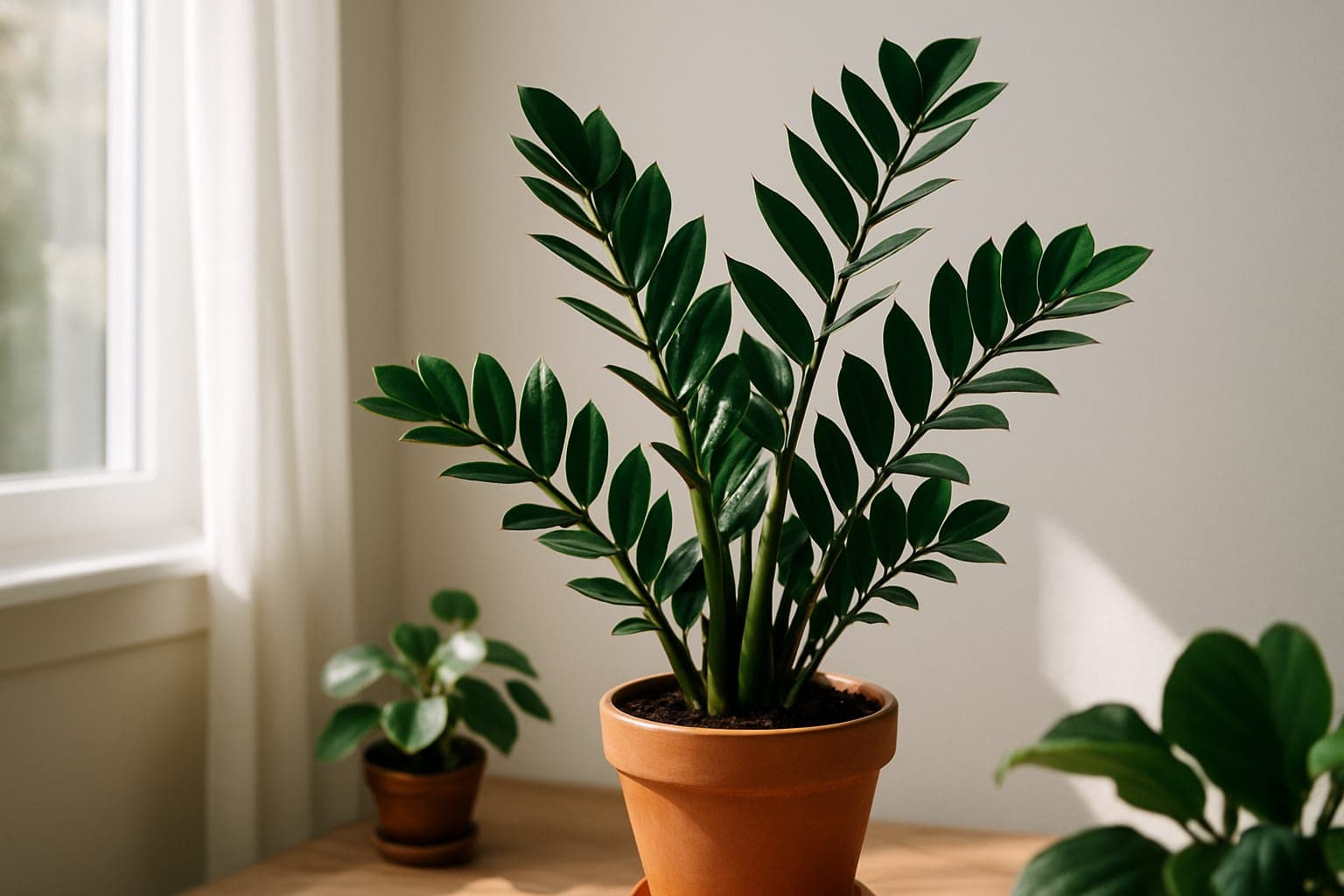
If your schedule is hectic, your windows are dim, or you simply forget to water, the ZZ plant (Zamioculcas zamiifolia) might be the most forgiving houseplant you can buy. With glossy, deep green leaflets arranged along arching stems, it offers a sculptural look while asking almost nothing of you in return. Here is how to keep one happy with minimal effort.
Why ZZ Plants Are So Low-Maintenance
The secret to the ZZ plant's resilience lies underground. Beneath the soil, it produces fleshy, potato-like rhizomes that store water and nutrients. This means the plant can draw on its own reserves during dry spells, droughts or weeks when you simply forget it exists. Combined with thick, waxy leaves that limit moisture loss, the ZZ is built to cope with inconsistency.
It is also slow-growing, so it rarely outgrows its pot in a hurry, and it tolerates a wide range of indoor conditions that would stress fussier plants.
Light Requirements
ZZ plants are famous for tolerating low light, and they genuinely will survive in a dim hallway or a north-facing room with no direct sun. However, there is a difference between surviving and thriving.
Best light
- Bright, indirect light produces the fastest growth and the glossiest leaves.
- Medium light is perfectly acceptable and what most homes provide.
- Low light works, but expect slower growth and longer, leggier stems as the plant reaches toward the light.
What to avoid
Harsh, direct midday sun can scorch the leaves, leaving pale or brown patches. A sheer curtain or a position a metre or so back from a sunny window is ideal.
Watering: Less Is More
More ZZ plants are killed by overwatering than by any other cause. Because the rhizomes store water, the plant is far more tolerant of drought than of soggy roots.
A simple watering routine
- Wait until the top 5-7 cm of soil feels completely dry. A wooden skewer or your finger works well to check.
- Water thoroughly so it runs out of the drainage holes.
- Empty the saucer after a few minutes — never let the pot sit in standing water.
- Wait again. In a typical home, this often means watering every 2-3 weeks in summer and every 3-4 weeks (or longer) in winter.
If in doubt, leave it another few days. A slightly thirsty ZZ recovers quickly; a waterlogged one may rot at the rhizome and collapse without warning.
Soil and Potting
Good drainage is non-negotiable. A free-draining mix prevents the rhizomes from sitting in moisture.
- Use a standard houseplant compost amended with perlite, pumice or coarse sand — roughly one part grit to three parts compost.
- Cactus and succulent mixes also work well straight from the bag.
- Always choose a pot with drainage holes. Terracotta is a great choice because it wicks excess moisture away from the soil.
ZZ plants actually prefer to be a little snug in their pot and only need repotting every 2-3 years, or when you can see rhizomes pushing against the sides or lifting the soil. Repot in spring using a container only one size larger.
Humidity and Temperature
Average household humidity is fine — no misting, pebble trays or humidifiers required. ZZ plants are happy in temperatures between roughly 18-26°C and dislike anything below about 10°C. Keep them away from cold draughts, unheated porches and radiators that blast hot, dry air directly onto the foliage.
Feeding and Growth
Because the ZZ grows slowly, it does not need much feeding. A balanced liquid houseplant fertiliser diluted to half strength, applied once a month during spring and summer, is plenty. Skip feeding in autumn and winter when growth naturally pauses.
Do not expect dramatic results overnight. New stems emerge as pale green spears that gradually unfurl and darken — a satisfying but unhurried process.
A Note on Toxicity
All parts of the ZZ plant contain calcium oxalate crystals, which can cause irritation if chewed and skin irritation in some people who handle the sap. It is mildly toxic to pets and children if ingested, typically causing mouth irritation, drooling or an upset stomach rather than anything more serious. Keep it out of reach of curious cats, dogs and toddlers, and wash your hands after pruning or repotting.
Common Problems
Yellowing leaves
Almost always a sign of overwatering or poor drainage. Check the rhizomes — if they feel mushy, trim away the rot, let the plant dry out and repot into fresh, gritty mix.
Wrinkled stems or curling leaflets
The opposite problem: the plant has used up its stored water. Give it a thorough drink and it should plump back up within a few days.
Brown leaf tips
Often caused by very dry air combined with tap water high in minerals or fluoride. Try filtered or rainwater if this is a persistent issue.
Pests
ZZ plants are largely pest-resistant, but occasionally pick up mealybugs, scale or spider mites. Wipe leaves regularly with a damp cloth — this keeps them glossy and lets you spot problems early. Treat any infestations with insecticidal soap or diluted neem oil.
The Bottom Line
The ZZ plant is one of the most genuinely beginner-friendly houseplants available. Give it decent light, water it sparingly, choose a well-draining pot and otherwise leave it alone. In return, you will get a handsome, architectural plant that quietly thrives while you get on with your life.
Tools and supplies for this
Products we'd actually buy for this job. Linking to Amazon — if you buy through these links we earn a small commission at no extra cost to you.
- Weston Mill Pottery Terracotta plant pots, 175mm (pack of 10)
Mid-size workhorse terracotta — perfect step-up for plants outgrowing their nursery pots.
- Weston Mill Pottery Terracotta plant pots, 20cm (pack of 5)
Heavyweight 20cm clay for established plants — the porous walls help prevent the soggy roots aroids hate.
- Whitefurze G04012 7.5cm Garden Pot - Terracotta (Set of 10)
Cheap, cheerful plastic propagation pots — what we actually use for cuttings and small offsets.
- Whitefurze G04013 10cm Garden Pot - Terracotta (Set of 7)
Reliable mid-size nursery pots with proper drainage holes — the boring essential every plant parent runs out of.
BotanicBuddy Editorial Team
Plant Care Team
Passionate about helping plant parents succeed with expert tips and proven techniques.
Related Articles
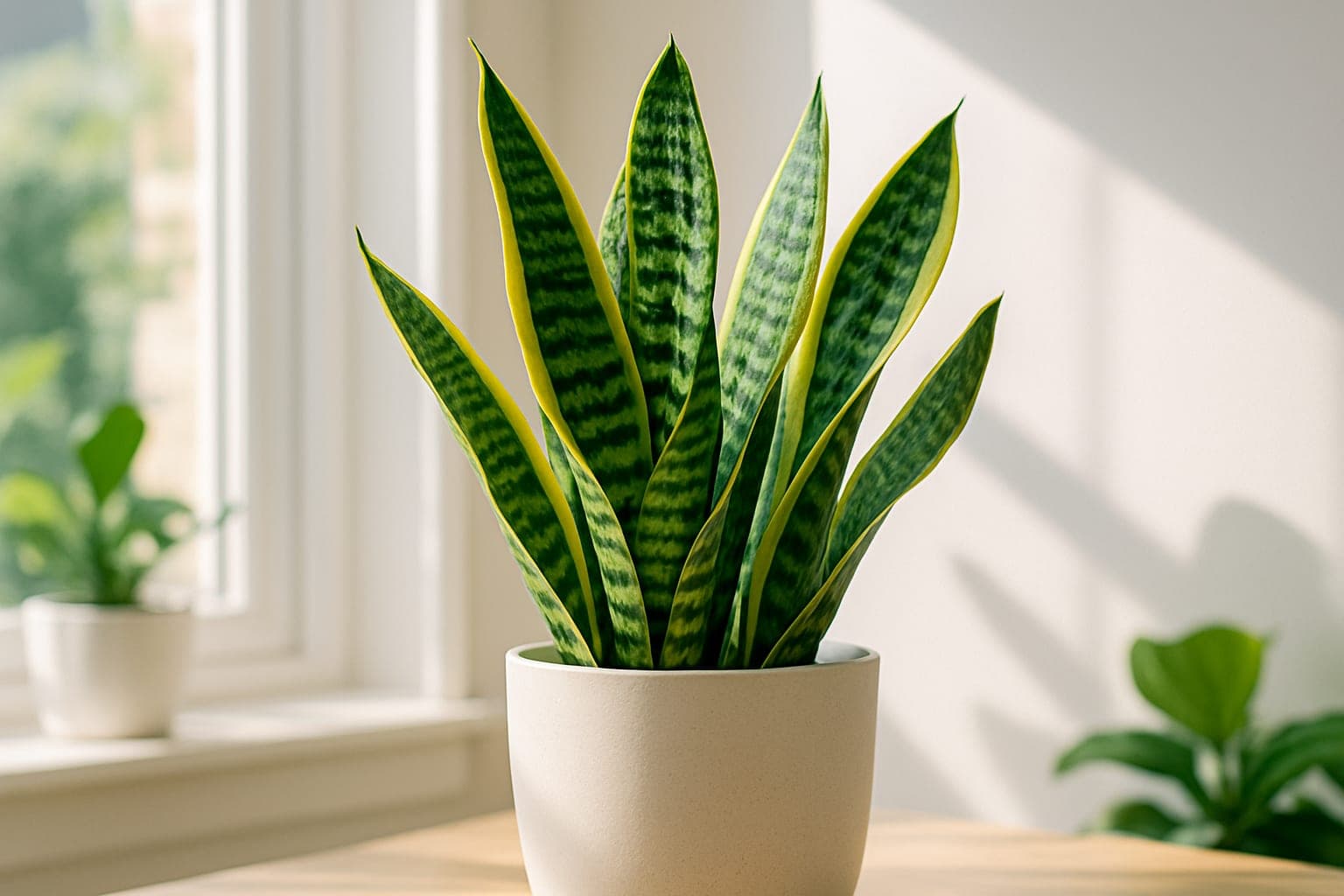
Snake Plant Care: The Near-Unkillable Houseplant
The snake plant (Dracaena trifasciata) earns its reputation as the near-unkillable houseplant by thriving on neglect. Learn how to keep yours healthy by mastering the one thing that actually trips most people up: watering.

10 Best Indoor Plants for Beginners
Start your plant journey with these easy-to-care-for houseplants that thrive indoors with minimal effort.

Comments(526)
I'd mostly agree with this, though I've actually found ZZ plants do better with *occasional* attention rather than true neglect — mine really took off once I started checking the soil every couple weeks instead of just watering on a whim. They're definitely forgiving, but that rhizome storage works best when you're not drowning them. Have you noticed a difference in growth depending on light levels, or does yours stay pretty consistent even in dim corners?
I'd push back slightly on "thrives on neglect"—mine actually does noticeably better with occasional attention. What's true is it *tolerates* neglect way better than most plants, but I've found it grows faster and looks fuller when I water it every couple weeks rather than leaving it bone dry. The low light tolerance is spot on though, and honestly that's what makes it genuinely useful for busy people, since you don't have to fuss with positioning.
I just picked up a ZZ plant (Zamioculcas zamiifolia) last month because I kept killing my pothos with overwatering, and honestly, this description is spot-on—I've basically ignored mine and it looks happy! Quick question though: I've read conflicting things about whether they prefer to dry out completely between waterings or just mostly dry. Mine's in moderate indirect light right now, and I'm still second-guessing myself on the watering schedule since I can't quite tell when the soil is actually dry.
Ha, I totally get the second-guessing! With *Zamioculcas*, I'd say let it dry out *completely*—those rhizomes are basically little water tanks, so err on the side of under-watering rather than over. I usually wait until the soil pulls away from the pot edges before I water mine again, which honestly might be every 2–3 weeks depending on your humidity. Moderate indirect light is perfect for it, by the way. How's the soil draining in your pot—are you using a gritty mix, or just standard potting soil?
I've had my ZZ (Zamioculcas zamiifolia) for about four months now and honestly it's been a relief—I tend to overwater everything else in my collection. The rhizome thing is wild; I didn't realize it was storing water down there until I read about it. I'm still figuring out the right watering schedule though—how often do you actually water yours in a tropical climate? I feel like I'm either doing it too much or not enough, haha.
I've been wanting something tough because I keep forgetting to water my plants, and the ZZ plant sounds perfect for that. Those rhizomes storing water is such a clever feature—so I'm guessing I really can't overwater it even if I tried? I just worry about getting the light situation right since my apartment is pretty dim.
I've killed plenty of plants through overwatering, so I really appreciate how honest this is about ZZ's actual needs—they genuinely *want* you to forget about them for a while. My only gentle pushback is that while they'll survive low light, I've noticed mine get noticeably bushier and more vigorous when they're in medium indirect light, even though they don't strictly need it. Have you found that people tend to still overwater these despite the warnings, or does the "thrives on neglect" messaging actually stick?
I'd gently push back on the "thrives on neglect" framing—*Zamioculcas zamiifolia* actually does much better with intentional watering schedules than truly random care, even though it's forgiving when you forget. The rhizomes are genuinely great for drought tolerance, but I've found inconsistent watering (feast or famine) causes more problems than a simple weekly or bi-weekly routine. That said, you're spot on about low light; it's one of the few I keep in a corner with minimal natural light and it holds its own.
You're absolutely right about that—I've learned the hard way with mine! I used to think "neglect-friendly" meant I could just wing it, but once I switched to a consistent bi-weekly watering schedule, the difference was noticeable. Mine's tucked in a shadier corner of my living room (I have eleven plants competing for south-facing windows), and honestly it's the least demanding of the bunch. Do you find the watering frequency changes much with seasons, or do you stick pretty closely to the same routine year-round?
You're right—I learned that the hard way! I was so excited about the "neglect-friendly" angle that I basically forgot about one of mine for three weeks, then overcompensated and drowned it. Switching to a simple bi-weekly watering schedule (I just set a phone reminder) has made such a difference. And yeah, mine in the shadiest corner of my apartment is somehow still thriving, which is wild considering how finicky some of my tropical plants are about light.
I've had a ZZ for about two years now and honestly it's been the most forgiving plant I own—I water it maybe once a month and it just keeps thriving in the corner of my living room. Though I'd gently push back on the "low light" thing: mine really came alive once I moved it closer to an east-facing window. Still minimal effort compared to my basil, which demands constant attention, but it does seem to prefer *some* light if you can manage it. Have you found they actually do better with a bit more brightness, or does yours genuinely prefer staying dim?
I'd agree the ZZ is forgiving, though I've found the "thrives on neglect" thing can be overstated—mine actually got leggy in genuinely dim corners. They do best with bright indirect light, even if they technically survive without it. That said, the rhizome storage is real and makes them genuinely low-maintenance for watering, which is where I think they actually shine for busy people. I'd post a photo of mine to show what proper lighting does for the shape, but the core point stands—good choice for someone who can't commit to frequent watering.
I've killed plenty of fussier plants, but my ZZ (Zamioculcas zamiifolia) has been bulletproof for three years with minimal attention—though I did learn the hard way that "tolerates low light" doesn't mean it *thrives* there, and mine got leggy before I moved it closer to a window. The rhizome storage is genuinely forgiving though, and I water mine maybe every three weeks. Have you found that ZZ plants actually have any real downside, or is the main limitation just slow growth?
I appreciate the honesty about the ZZ plant being forgiving, but I'd gently push back on "thrives on neglect"—mine actually sulked for months in a corner before I moved it to bright indirect light. That said, the rhizome thing is *chef's kiss* for someone like me who travels a lot. Have you found they're any less tolerant of cold temperatures, or does that not come up much in your experience?
I killed my first ZZ plant by overwatering it (turns out "thrives on neglect" is literal), but now that I've learned to let the soil dry out completely, it's honestly my favorite low-maintenance plant in my collection. The rhizomes really do their thing—I can go two weeks without watering and it doesn't even blink!
Yeah, the overwatering trap is real—most people kill ZZ plants with kindness. I learned that lesson early too. Two weeks is solid for standard conditions, though mine honestly goes longer in winter. If you've got five plants like I do, the ZZ is the one you can genuinely forget about and it'll be fine. Much harder to mess up than an orchid, which is what I actually lose sleep over in my cold apartment.
I've managed to kill exactly two orchids through overwatering, so I deeply respect any plant that actively *wants* to be ignored—the ZZ plant sounds like my kind of companion. Those rhizomes are genuinely brilliant; I've read they can go weeks without water, which beats my track record with *Phalaenopsis* by a mile. Might finally be the low-maintenance piece my collection needs while I fuss obsessively over the three I've currently got!
I love how forgiving ZZ plants are, though I'm curious whether "thrives on neglect" might be a bit of an overstatement? I've had mine for a few months now and it seems happier when I actually remember to water it occasionally rather than leaving it completely dry. Maybe the rhizomes just mean we get more forgiveness than with other plants, rather than no attention at all?
I'd love to grow ZZ plants but honestly I'm drawn more to vegetables in my collection—though I have to say, the low-maintenance aspect really appeals to me since I'm juggling so much right now. Do you find they still put out new growth if you're keeping them in genuinely low light, or do they just survive without really thriving? I've got a shady corner where I'm struggling with *Solanum lycopersicum* varieties, so I'm curious if the ZZ's tolerance could work where other plants just stall out.
I'd push back slightly on "thrives on neglect"—mine actually started declining when I treated it that way. It does handle neglect *better* than most plants, sure, but it still needs decent indirect light and proper drainage to really do well. The low-light tolerance is real, but I've found it grows noticeably better in a bright spot. For genuinely busy people, I think the honest sell is "forgiving of irregular watering," not that it needs nothing.
I've had my ZZ for about eight months now and honestly it's been the easiest plant in my collection—barely watered it over winter and it's still thriving. My only question is whether I should repot it at some point? It came in a pretty small pot and I'm wondering if it's outgrowing it, but I'm hesitant to mess with something that's working so well. The rhizome storage thing really does make a difference in my mediterranean heat where everything else dries out quickly.
I'd actually gently push back on the "thrives on neglect" framing—*Zamioculcas zamiifolia* is incredibly *tolerant* of neglect, but it definitely performs better with a bit of intentional care! Mine gets way lusher when I give it bright indirect light and let it dry out fully between waterings rather than just leaving it in a corner. That said, you're totally right that the rhizomes are a game-changer for forgetful waterers. Do you find yours grows noticeably faster with occasional feeding, or does it stay pretty compact on its own?
I'd gently push back on "thrives on neglect"—mine actually declined when I treated it that way. ZZ plants are certainly resilient and drought-tolerant, but they do perform noticeably better with consistent (if infrequent) watering and moderate indirect light rather than genuinely low conditions. The rhizomes are brilliant for surviving stretches of drought, which is why they're so forgiving, but there's a difference between forgiving and thriving.
You make a really good point—I learned that the hard way with my ZZ when I moved it to a dark corner thinking it'd be fine. It got pretty sluggish before I realized it actually wanted some decent indirect light. I think "thrives on neglect" is misleading; you're right that the rhizomes make it *forgiving* of neglect, which is different. Have you found a watering schedule that works well for yours, or does it depend on your setup?
I've had my ZZ for two years with basically zero effort, and the rhizome thing is real—I was convinced I'd killed it after forgetting to water for three months, but it came back fine. The one thing I'd add: make sure it's actually in a pot with drainage holes, because the only way I've seen these fail is sitting in wet soil. Otherwise yeah, it's genuinely hard to mess up.
I've killed plenty of plants by overthinking them, so I'm genuinely grateful for posts like this! The ZZ's rhizome system really is a game-changer—I learned the hard way that the worst thing you can do is water too often. I keep mine in a corner that barely sees direct light and it's somehow my most reliable grower, which feels almost wrong after years of fussing over my herbs.
I really relate to the overthinking thing—I've definitely been guilty of that! I have a ZZ plant (Zamioculcas zamiifolia) that I initially wasn't sure about because I kept wondering if the low light corner was *too* low, but you've given me some confidence. Do you find the rhizomes ever need repotting, or can they just sit happily for years? I'd love to see a photo of yours if you ever feel like sharing!
I'd actually gently push back a bit here—while ZZ plants are definitely forgiving, I've found they do way better with *some* attention, especially in arid climates like mine. Mine sit in a bright spot and actually reward you with faster growth than the low-light versions I've seen. That said, you're totally right about the rhizomes being a game-changer for busy people; I only water mine every 3-4 weeks and it thrives. Have you noticed a difference in growth rates depending on light levels, or do yours do equally well in dimmer spots?
I keep killing things through overthinking, so a plant that actually *wants* to be ignored sounds like it might finally be my speed! Those rhizomes storing their own water is genius—I'm assuming that means I can really let the soil dry out between waterings without guilt? I've got mostly herbs right now and they're all dramatic about moisture, so this would be a nice low-stakes addition to my little collection.
I've had my ZZ for about three years now and honestly it's saved me from plant guilt more times than I can count—I once forgot to water it for two months and it didn't even flinch! That said, I'd gently push back on the "thrives on neglect" part; mine actually started dropping leaves when I went too long without watering, so I think there's still a sweet spot even though it's super forgiving. Have you found that the light really doesn't matter much, or does yours do noticeably better in brighter spots?
I've been meaning to get a ZZ plant (*Zamioculcas zamiifolia*) for months because my schedule is honestly chaotic, so this is perfect timing. I do have a question though—I've read that they prefer bright indirect light even though they tolerate low light, and I'm wondering if there's a noticeable difference in how fast they grow between a dim corner and a brighter spot? I just killed a pothos last year by overwatering it, so the whole rhizome-storage thing is super appealing to me right now.
I've killed plenty of plants by *over*-caring, so I really appreciate this one—my ZZ has been quietly thriving in a corner I basically forgot about for months. That said, I'd gently push back on the "low light" bit; mine actually perked up noticeably once I moved it somewhere brighter (nothing crazy, just an east-facing spot). The rhizomes are genuinely forgiving about watering though, which is why I keep mine alongside my rosemary and oregano—they share similar "leave me alone" vibes.
You're spot on about the light—I've noticed the same thing with mine. "Tolerates low light" and "thrives" are two different things, and moving mine to brighter indirect light definitely made a difference in growth speed. The rhizome storage thing is real though; I actually test the soil moisture before watering mine and it's often still damp weeks later. That's a smart pairing idea with the herbs—do you find they need the same watering schedule, or does the ZZ's slower metabolism make it hard to water them together without overwatering the herbs?
This is exactly what I needed to hear! I've been intimidated by houseplants because I travel a lot for work, but the idea that a ZZ plant actually *wants* to be neglected is kind of freeing. Do you have any tips for someone starting out—would you recommend it as a first plant, or are there other equally forgiving options for cold climates?
I needed to read this because I've been second-guessing myself with my ZZ plant. I kept thinking I was doing something wrong since I only water it maybe once a month, but knowing it actually stores water in those rhizomes makes so much sense now. Mine's been thriving in a corner of my apartment that doesn't get much direct light, so this is really reassuring. Thanks for the reminder that some plants actually prefer being left alone.
Your experience is exactly what makes ZZ plants so reliable. Once you stop fighting their nature and accept that they genuinely prefer infrequent watering, they become almost impossible to kill. I've found the same thing in my arid climate—they're far happier with that monthly schedule than any fussing. How long have you had yours, and has it put out any new leaflets since you've backed off the watering?
I'd push back a little on "thrives on neglect" — I've found *Zamioculcas zamiifolia* actually does better with occasional attention rather than total abandonment. Mine got leggy and weak until I realized it genuinely preferred brighter, indirect light than my shadiest corner. That said, the rhizome thing is spot on, and it's definitely forgiving about watering schedules. Have you noticed yours prefer being left dry between waterings, or do you stick to a loose schedule?
I can totally vouch for this. My ZZ sat in a corner of my bedroom for months while I was dealing with work chaos, and it honestly looked better when I finally paid attention to it again than some of my other plants that I was fussing over constantly. The rhizomes thing is real—I learned that the hard way by overwatering it at first, but once I backed off it became basically foolproof. It's been one of my three plants that actually rewards you for being too busy to hover over it.
I'd gently push back on "thrives on neglect" — mine definitely prefer regular attention, just not fussy attention. What they really excel at is *forgiving* irregular watering thanks to those rhizomes, but I've found they grow noticeably better with consistent bright indirect light and occasional watering on a schedule rather than complete neglect. That said, they're genuinely one of the most resilient houseplants out there, so this is still solid advice for busy folks.
I appreciate how you've highlighted the rhizomes as the real MVP here—that water storage is honestly why ZZ plants are so forgiving compared to what I typically fuss over with my orchids. I do think it's worth mentioning that even though they tolerate low light, they'll grow noticeably faster and fuller in bright indirect conditions, so busy folks might want to find at least a decent spot if they can. Have you found there's a watering frequency that works best, or is the "when it's completely dry" approach pretty universal?
I'd agree that Zamioculcas zamifera is genuinely low-maintenance, though I'd push back slightly on the "thrives on neglect" framing—mine actually deteriorated when I watered it weekly out of habit. The rhizomes are forgiving, but I've found it does better with a proper drying-out period between waterings rather than occasional flooding. That said, it's still one of the most resilient plants I own, and the low-light tolerance is real.
I'm gonna be honest—I killed my first ZZ plant by watering it too much, which I guess proves your point about the neglect thing. I've got one of my five plants doing way better now that I just let the soil dry out completely between waterings. Quick question though: mine's in a corner with pretty dim light and it's still growing, but slower than I'd expect. Is that normal, or should I move it somewhere brighter?
I've had my ZZ (Zamioculcas zamiifolia) for about six months now and this really resonates—I was worried I'd kill it since I travel a lot, but it's honestly thriving in a corner with indirect light. My one question though: mine seems to be growing pretty slowly, and I'm wondering if that's normal or if I'm somehow under-watering despite the "neglect" reputation? I've been sticking to the dry soil rule, but I'm second-guessing myself.
I've got to push back gently here—while ZZ plants are definitely forgiving, I wouldn't say they *thrive* on neglect so much as they tolerate it! Mine got leggy and droopy when I treated it like a true set-it-and-forget-it plant, and it perked up noticeably once I gave it brighter indirect light and watered on an actual schedule (even if sparse). That said, they're still wonderfully low-maintenance compared to, say, my temperamental orchids, and I'd absolutely recommend them to anyone just starting out.
You're right—there's a real difference between tolerating neglect and actually thriving. I learned that the hard way with mine too; it survived in a dim corner for months but looked pretty sad until I moved it to a brighter spot. The watering schedule thing matters more than people think, even if the intervals are generous. Have you found a sweet spot for how often you water yours, or does it vary based on season?
I wish I'd known about those rhizomes before I killed my first ZZ by overwatering it! Out of my 14 plants, that one's probably my proudest recovery story—I've basically learned to ignore it now, which sounds rude but apparently works wonders. That said, I'm curious how this advice translates to my arid climate; I've got an orchid that's thriving in the same dry conditions, so I'm wondering if ZZ plants appreciate the low humidity as much as some of my other neglect-tolerant friends do.
I totally get that overwatering panic—I killed my first ZZ the exact same way before I understood those rhizomes were basically water tanks! I've found mine actually do fine in my cold, dry climate (which probably helps prevent that whole rot situation), though I water even less than I would if I lived somewhere humid. Have you noticed your ZZ responding differently to the dryness than, say, your orchid does, or does it seem equally unbothered?
I murdered my first ZZ plant by *overwatering* it, which feels like missing the whole point of a plant literally designed to forgive forgetfulness! But honestly, once I realized those rhizomes are basically tiny water tanks and backed way off, it became genuinely impossible to kill. Now it's one of my favorites in my collection—thrives in a corner where my other tropicals would stage a protest. Have you found that ZZ plants do better with even less attention than the article suggests, or is there a sweet spot you've landed on?
I love that the ZZ plant sounds so forgiving—I've been nervous about killing plants since I started my collection, so hearing that it actually *wants* to be neglected is reassuring. The rhizome thing is cool; I'm still getting used to how different plants store water differently. Do you find that people with ZZ plants tend to underwater them less often than other houseplants, or is it more about just being flexible with watering schedules?
I think you're onto something with the underwatering angle—honestly, the ZZ's rhizomes are so efficient that it's way easier to err on the side of dry soil than to overwater it. I've killed more plants by being *too* attentive than too hands-off! My three herbs (basil, oregano, thyme) are the opposite and actually need consistent moisture, so the ZZ feels like a nice break when I inevitably forget about it for weeks. What kind of plants are you leaning toward as you build out your collection?
I've got one of these in my bedroom and it's honestly a lifesaver. I used to kill plants constantly by overwatering, but the ZZ just sits there looking great even when I forget about it for weeks. The one thing I learned the hard way is that it really does prefer to dry out completely between waterings—I almost lost mine by being too generous, thinking I was being helpful.
Ha, I feel that! I'm still getting the hang of the whole "less water is more" thing—it goes against my instinct to fuss. My herbs definitely punish me for overwatering, so I'm taking notes on how forgiving the ZZ sounds. Does yours ever get a little dust on the leaves, or is it pretty low-maintenance in that department too?
I'd gently push back on "thrives on neglect"—mine actually sulks without the occasional attention. What's true is that *Zamioculcas zamiifolia* genuinely tolerates neglect, which is different. I've found the real win is that you can't kill it through underwatering like you can most tropicals, but it still grows noticeably faster with bright, indirect light and monthly soakings rather than the "ignore it" approach. Perfect for busy, yes, but it rewards a little care.
You've nailed the distinction—"tolerates" really is the more honest word. I've got a couple *Z. zamiifolia* in my collection and noticed the same thing; mine near an east-facing window absolutely outpaces the one in my dim corner, even though both survive fine. The rhizomes do buy you forgiveness on watering, which is genuinely valuable for busy folks, but you're right that it's not a set-it-and-forget-it situation if you want the plant to actually thrive.
I've had Zamioculcas zamifera for a few years now and it's genuinely one of the most reliable plants I own. The rhizomes really are a game-changer for folks with unpredictable watering schedules—mine actually does better when I forget about it for a while. Have you found that the newer cultivars like 'Raven' have the same forgiving nature, or do they need a bit more attention?
I love this question! My Raven has been just as bulletproof as my standard ZZ—honestly, I've neglected it just as badly and it's thrived. The dark foliage makes it easier to spot when something's actually wrong, which I appreciate since I tend to kill plants through inattention rather than active mistreatment. If anything, the darker cultivars seem slightly less forgiving of *constant* wet feet, but that's more a feature than a bug for someone like me.
I love this take on ZZ plants—I've killed far more demanding things than *Zamioculcas zamiifolia*, so the negligence tolerance is genuinely reassuring. My one tip from experience: those rhizomes are fantastic at storing water, but they're *also* prone to rot if the soil stays wet, so even though they're forgiving about underwatering, err on the side of dry and you'll have an even happier plant.
I'd love to agree with the "thrives on neglect" angle, but I've actually managed to kill two ZZ plants through *under*-watering—turns out my "neglect" was more like abandonment! That said, they're genuinely forgiving compared to my orchids, which I coddle constantly here in my Mediterranean climate. If you're someone who actually remembers to water occasionally, these really do handle everything else beautifully.
I really appreciate you sharing that—I was starting to think "thrives on neglect" meant I could just ignore mine completely, but your experience makes me realize there's still a balance! I have a ZZ (Zamioculcas zamiifolia) that's been sitting in my tropical setup for a few months now, and I'm still figuring out the watering rhythm since the humidity here might be masking how dry the soil actually gets. How often do you end up watering yours, roughly?
I'd gently push back on "thrives on neglect" — *Zamioculcas zamiifolia* actually prefers bright, indirect light and will get leggy in low conditions. That said, the rhizome storage is spot-on, which does make it genuinely forgiving between waterings. I've found the real win for busy people is that it signals thirst clearly by drooping slightly before any permanent damage occurs, so you get a built-in reminder system rather than pure neglect-tolerance.
I'd gently push back on "thrives on neglect" — mine actually does better with occasional attention than total abandonment. What *is* true is that ZZ plants are forgiving of irregular watering, which is different from actually preferring to be ignored. I found mine stayed healthier once I started checking soil moisture every couple weeks and watering when the top inch dried out, rather than just letting it go months between waterings.
I'd gently push back on the "thrives on neglect" framing—*Zamioculcas zamiifolia* does tolerate neglect, but there's a difference between tolerant and thriving. I've found mine actually performs noticeably better with occasional feeding and brighter indirect light than it does when truly ignored. The rhizomes are genuinely forgiving with watering though, which is what makes it practical for busy people rather than the plant literally preferring abandonment.
I'm totally saving this post! I've been nervous about getting a ZZ plant because I thought I'd kill it like I did my first succulent, but the idea that it actually *wants* to be neglected is such a relief. Do you have any tips for someone who tends to overwater everything out of guilt? I'm worried I'll mess up even the low-maintenance ones.
I totally needed to read this—I've been overthinking my ZZ plant (*Zamioculcas zamiifolia*) watering schedule, checking the soil constantly when I probably shouldn't be. The rhizome storage thing is actually genius; it explains why mine's thriving in a corner of my apartment that barely gets indirect light. I'm definitely guilty of forgetting about plants, so knowing something can actually *prefer* that sounds like the plant match I've been waiting for!
Ha, I'm totally with you on the overthinking—I killed my first ZZ by watering it like it was a thirsty tomato! Now I just stick mine in a corner and check it maybe once a month. The rhizome thing really is a game-changer, especially since I grow a lot of veggies that demand constant attention in my Mediterranean garden. It's nice to have at least a few plants that don't need babysitting. Have you thought about propagating yours from those leaflets, or are you just enjoying the low-maintenance vibe for now?
I've got to respectfully push back a bit here—while ZZ plants are definitely forgiving, I've found they actually *prefer* brighter indirect light and do much better with occasional watering than true neglect. Mine got pretty leggy in my shadiest corner! That said, they're still brilliant for busy people; I just give mine a drink every 3-4 weeks and it thrives. Have you noticed a difference in growth when yours gets more light?
I'd second this—Zamioculcas zamifera is genuinely one of the few plants that won't punish you for irregular watering. I've had mine in a corner with maybe 4 hours of indirect light for two years and it just keeps putting out new leaflets. The real game-changer for me was switching to a terracotta pot so any overwatering dries out faster, since that's really the only way to kill one.
TheRepottedLife's terracotta tip is spot on—I learned that the hard way with my single houseplant, a Zamioculcas that I almost drowned before realizing the pot was holding too much moisture. That chunky rhizome really does prefer drying out between waterings, and terracotta's breathability makes it nearly impossible to accidentally kill through overwatering.
I appreciate this perspective—though I'll admit my three orchids would stage a mutiny if I tried the "neglect" approach! That said, I've definitely learned the value of the ZZ's philosophy. Those rhizomes are genuinely clever storage systems, and I've found that erring on the dry side (especially in arid climates like mine) beats the alternative. If you're busy, the real win is just remembering to water less often than your gut tells you to.
I'm laughing at the orchid mutiny—those plants definitely operate under a different rulebook! I've killed more tropical specimens by overwatering out of guilt than by actually neglecting them, so the ZZ's "less is more" philosophy has genuinely saved my collection. That dry-side preference is spot-on; I've noticed mine actually looks perkier when I let the soil dry out completely between waterings. Do you find your orchids are happier in your arid climate than they'd be in more humid conditions, or are they just drama queens regardless?
I've killed plenty of "unkillable" plants through pure neglect, but the ZZ (*Zamioculcas zamiifolia*) has genuinely earned its reputation in my care — I water mine maybe once a month and it's thriving in a corner that gets almost no direct light. The rhizome storage system really is a game-changer if you're someone (like me) who forgets to water until the guilt sets in!
I'd push back slightly on the "thrives on neglect" claim — mine actually declined when I watered on a set schedule without checking soil moisture first. The rhizomes do store water, but that's exactly why overwatering kills them faster than underwatering. Once I switched to checking the soil and only watering when it was bone dry, it took off. Are you finding people tend to overwater these even knowing about the rhizome storage, or is that just my experience?
I wish I'd known about those rhizomes before I nearly drowned my first ZZ with overwatering guilt! Mine's thriving now in a corner that barely gets indirect light, which is honestly perfect since my arid climate means I can stretch watering intervals even longer than most people. Out of my 14 plants, this one gives me the least grief—I'd snap a photo of how unfazed it looks in my neglect, but it genuinely deserves a medal for tolerating my inconsistency.
I'd actually gently push back on the "thrives on neglect" framing—Zamioculcas zamiifolia definitely tolerates neglect better than most, but I've found mine actually perks up noticeably with consistent (if infrequent) watering and decent indirect light. The rhizomes are brilliant for drought tolerance, sure, but I wonder if calling it neglect-proof sets people up to underwater it chronically? Have you noticed a difference in growth rate or leaf color between yours in truly dim corners versus brighter spots?
I've been eyeing a ZZ for my collection, honestly because I'm usually drowning in herbs like Ocimum basilicum and Petroselinum crispum that demand constant attention! Does the ZZ really do okay with that low-light situation, or does it eventually start stretching? I'm wondering if it could actually thrive in a corner of my kitchen that gets maybe an hour of indirect light—or if I'm setting myself up for disappointment.
I feel you on the herb situation—my basil and parsley are basically demanding roommates! From what I've read, ZZ plants can *survive* in low light, but they'd probably stretch a bit in just an hour of indirect. Mine's in medium indirect light and it's still pretty compact, so I'd maybe try a spot with a couple more hours if you can find one? That said, if your kitchen corner is all you've got, it's worth a shot—they're forgiving enough that even my plant mishaps haven't killed mine yet!
I've got a ZZ plant and honestly the "thrives on neglect" part is what sold me on it. I water mine maybe once every three weeks and it just keeps growing. My question though—mine's in a corner that gets indirect light, but is that actually ideal or am I just getting lucky? I'd love to see if there's a difference between one in brighter light. Also does anyone else struggle with overwatering these despite what people say?
I'd love to have a ZZ plant, but honestly I'm worried about overwatering since I kill things out of *care* more than neglect — I tend to fuss! How often are you actually watering yours in a cold climate like mine? I've got 15 plants at this point and my herbs are what I'm best with since they're pretty forgiving, but something as low-maintenance as a ZZ sounds perfect for someone like me who gets distracted.
I'd argue the ZZ gets oversold on the "neglect" angle—mine actually started declining when I watered it on a true set-it-and-forget-it schedule. What actually works is infrequent but thorough watering once the soil dries out completely, which for me in a cold climate means maybe every 3–4 weeks. The low light tolerance is spot on though, and that's genuinely handy since I keep mine in a corner with indirect light only. If I had a photo to share I'd show how much fuller it got once I stopped guessing and just let the soil tell me when it needed water.
I'd push back slightly on "thrives on neglect"—mine actually got leggy in a dim corner, and it responded better once I moved it to indirect bright light. The drought tolerance is real and genuinely useful, but I've found they still prefer consistent watering rather than being forgotten for months on end. That said, they're definitely low-maintenance compared to most, and the rhizome storage is a genuine advantage if you travel.
I've been eyeing ZZ plants because they seem so forgiving, but I'm still a bit nervous about getting the watering right—do you find that people tend to overwater them more often than underwater? I'm in a cold climate and my apartment can be pretty drafty, so I'm wondering if that changes anything about their care.
I've had my ZZ for three years now and it's genuinely one of the few plants I can forget about for weeks without guilt. The rhizome thing is real—I learned that the hard way by overwatering it at first and watching the stems yellow. Once I switched to watering maybe once a month and let it sit in medium indirect light, it just... grew. No drama. I'd share a photo of how tall it's gotten, but honestly the best endorsement is that it's thriving in the corner of my bedroom where I barely look at it.
That overwatering experience is such a common lesson with Zamioculcas zamiifolia—those rhizomes really are bulletproof once you understand they're essentially water tanks. Your bedroom corner setup sounds ideal, and I love that you've found the sweet spot with monthly watering. Have you noticed any difference in growth speed between that corner location and brighter spots in your home?
I actually have to push back a little here—while ZZ plants are definitely low-maintenance, I've found they *really* don't like being ignored with watering. Mine got root rot twice before I realized that "thrives on neglect" doesn't mean you can just forget about it entirely. Once I switched to a proper watering schedule (letting the soil dry out completely, then watering thoroughly), it thrived. Have you found that the neglect angle actually works for people, or do you think that messaging sets folks up for disappointment?
I'd push back slightly here—while Zamioculcas zamiifolia is certainly forgiving, calling it thriving on neglect undersells what makes it genuinely useful. I keep one in my small collection and it performs best with occasional watering and bright indirect light, even if it *survives* neglect. That rhizome storage is the real magic though, which is why Mediterranean-climate growers like me actually prefer it over fussier succulents for low-attention periods.
I really appreciate you clarifying that distinction—I've definitely fallen into the "neglect = thriving" trap with my own plants! You're right that there's a big difference between surviving and actually doing well. I'm keeping my ZZ in medium indirect light now and watering maybe every three weeks, and it's noticeably happier than when I was just ignoring it completely. That rhizome thing is genuinely clever; I'm curious if you've found the ZZ more reliable than your herbs during dry spells? I'm still figuring out how to keep my oregano and thyme happy without constant fussing.
I wish I'd known about those rhizomes before I killed my first ZZ with kindness—literally drowned it with weekly watering! Now I've got one that's thrived in my shadiest corner for two years with maybe monthly attention, and it's honestly my most reliable plant. Perfect for someone like me who tends to forget about anything that isn't a thirsty succulent screaming for water.
I've killed easier plants than this, so I was skeptical—but you're right about the rhizomes being the key. Mine sat in a corner with barely any indirect light for months and didn't complain. The one mistake I see people make (and did myself initially) is watering on a schedule instead of waiting until the soil is actually dry. Those rhizomes hold enough water that overwatering kills it faster than neglect ever will. Do you find they eventually grow toward better light, or do yours stay compact in low conditions?
I killed my first ZZ plant by overwatering it, thinking I was being helpful, so I'm glad you're putting this out there. Once I finally understood those rhizomes were basically built-in water tanks, everything clicked. Mine now sits in a corner of my living room that gets almost no direct light, and it's honestly thriving better than some of my fussier plants.
The overwatering trap is real—I made the same mistake with mine before I realized those rhizomes meant I could basically water it and forget about it for weeks. Now I just let the soil dry out completely between waterings, and it's been one of my most reliable plants in my arid climate. Glad yours found its happy corner!
I'd agree the ZZ (Zamioculcas zamiifolia) is genuinely forgiving, though I'd gently push back on "thrives on neglect"—mine actually suffered when I watered it on a schedule instead of waiting for the soil to dry completely. That rhizome storage is real and a huge advantage, but it's also why overwatering kills them faster than underwatering. Have you found a good watering frequency works for most people, or does it vary wildly depending on their home's humidity and light?
I've got a ZZ (Zamioculcas zamiifolia) in my collection and this is so reassuring to read! I've been a bit nervous about underwater watering it since I'm still figuring out the rhythm with my nine plants, but knowing it's built to handle neglect actually takes the pressure off. I'm curious though—do you find the rhizomes really do store enough water that you can go weeks without checking, or is that more of a safety net? I'd love to see how often you actually water yours.
I needed this permission slip! I've killed two succulents through overwatering (my go-to stress response apparently), so hearing that a plant actually *wants* neglect feels revolutionary. The rhizome thing is genius—basically a built-in water tank for when I inevitably forget to water for three weeks. Definitely adding one to my collection of 13 when I find the right spot.
I totally get the overwatering trap—I did the same thing with my first succulents and lost a couple before learning that "dry soil" really means *dry*. The ZZ plant's rhizomes are honestly game-changing if you tend to water out of habit rather than need. Just one tip from my experience: even though they're forgiving, I still check the soil every couple weeks just to make sure I'm not slipping into old patterns, which has kept my collection thriving.
I wish I'd known about those rhizomes earlier—I killed my first ZZ by watering it constantly because I felt guilty ignoring it! Now I've got one thriving in the corner of my kitchen that I honestly forget about for weeks, and it's one of my healthiest plants. Do you have any tips for someone wanting to try one in a lower-light bedroom, or does it really need at least some indirect light to do well?
I've killed enough orchids through overwatering to know the appeal of a plant that actually *wants* to be ignored! My ZZ (Zamioculcas zamiifolia) sits in a corner that gets maybe two hours of indirect light, and it's honestly thriving better than my fussier specimens. The rhizome thing is real—I learned the hard way that it's nearly impossible to underwater these compared to, say, a Phalaenopsis that'll wilt if you so much as look at it thirsty. Great reminder that not every plant needs a complicated routine.
I just realized my ZZ (*Zamioculcas zamiifolia*) has been sitting in the same corner for months without water, and it looks *better* than when I was fussing over it constantly—those rhizomes really do seem to handle everything. I'm curious though: I've read conflicting things about whether they actually prefer low light or just tolerate it, and whether they'd grow faster with brighter conditions? Mine's doing fine where it is, but I'm wondering if I'm leaving potential on the table.
This is exactly what I needed to hear! I've killed enough tropicals with overwatering that I'm honestly a little nervous about adding a ZZ to my collection, but knowing it actually *wants* to be neglected is oddly freeing. Do they eventually get leggy in low light, or is that one less thing to worry about compared to, say, a pothos?
I love your perspective on this. From what I've read, ZZ plants can get a bit leggy in very low light, but they're honestly so forgiving that it seems way less dramatic than other plants I've struggled with. I'm still figuring out the sweet spot in my own apartment—mine's in a corner that gets indirect light, and it seems happy enough. Have you found a spot in your home that gets at least some indirect light, or are you planning to go full low-light mode?
I've had a ZZ for about two years now and it's honestly been the opposite of thrilling for me—great plant, but I find the "thrives on neglect" thing gets overstated. Mine actually did better once I stopped treating it like it needed nothing and started watering on a regular schedule instead of waiting months. That said, you're totally right that it's forgiving, and I think that's the real selling point for busy people. Have you found there's a sweet spot with watering frequency, or do you really just let yours go bone dry between drinks?
I wish I'd read this before killing my first ZZ with kindness! I was watering mine like I do my succulents, and it took me embarrassingly long to realize those rhizomes meant "please just leave me alone." Now I have three that barely see me during the week, and they're thriving while my fussier plants get all the attention. Honestly, they've made me a better plant parent by forcing me to stop overthinking everything.
I'd push back a bit here — ZZ plants do tolerate neglect better than most, but "thrives on neglect" oversells it. Mine's been healthy for years, but it actually grows noticeably faster with occasional watering and bright indirect light. The rhizomes are genuinely useful for forgiveness between waterings, though, so it's still a solid low-maintenance choice. Just don't expect vigorous growth if you're actually ignoring it.
I'd gently push back on "thrives on neglect"—mine actually suffered from it. What ZZ *really* excels at is tolerance of irregular watering and lower light, but it still wants decent drainage and occasional feeding to actually look vibrant rather than just... surviving. The rhizomes are genuinely impressive for water storage, though, so you're right that it's forgiving between waterings in a way many plants aren't.
I've had my ZZ (Zamioculcas zamiifolia) for about four months now and I'm honestly amazed how little it demands—I water maybe once every two weeks and it's still growing steadily. My question though: I keep mine in a corner that gets mostly indirect light, and I've read that they can handle even lower light, but does that actually slow their growth significantly? I'm wondering if I should try moving it closer to a window to speed things up, or if I should just be patient and let it do its thing.
I'm still figuring out the light sweet spot myself—I have a ZZ in a pretty dim corner of my living room too, and it's definitely slower than the one I moved closer to an east-facing window a few months ago. From what I've read, they won't suffer in low light, but they do grow noticeably faster with bright indirect light, so if you have a window spot available it might be worth experimenting! I'd be curious to know if you end up moving yours and see the difference.
I'd push back slightly on the "thrives on neglect" framing—Zamioculcas zamiifolia does tolerate neglect better than most, but mine actually suffered from underwatering when I treated it too casually. The rhizomes are forgiving, sure, but they rot just as easily in soggy soil. What I've found works best is watering deeply once every 2–3 weeks and letting it dry completely between. Have you noticed a difference in growth rate when people actually stick to a schedule versus just ignoring it entirely?
I'm glad someone's singing the praises of ZZ plants—they really are forgiving! Though I have to say, after years of mostly growing herbs, I found mine actually prefers a bit more attention than "neglect" implies. Mine started dropping leaves when I watered on a strict schedule instead of checking the soil first. Once I switched to the "poke the soil" method every couple weeks, it bounced back beautifully. Do you find yours is genuinely fine with irregular watering, or do you still check in on it occasionally?
I'm with you on the soil-check method—I've learned that lesson with my herbs too, and it applies here. My ZZ has been happiest when I actually stick my finger in the soil rather than watering on autopilot, even though they're marketed as bomb-proof. The rhizomes do buy you time, but "neglect" is probably overselling it a bit. Have you found the recovery time after overwatering is still faster with ZZ than with other houseplants, or does it take just as long?
I'd love to recommend the ZZ to everyone, but I have to admit—I killed my first one through *overwatering*, which feels like cheating on a plant literally built to survive neglect! The rhizomes are forgiving, but they really do prefer drying out between waterings. Now I treat mine like my hardy sedums and only water when the soil is completely dry, usually every 3–4 weeks in winter, and it's been thriving ever since.
I'd gently push back on the "thrives on neglect" framing—*Zamioculcas zamiifolia* actually prefers consistent (if infrequent) watering and moderate indirect light rather than true low-light conditions. The rhizomes are brilliant for drought tolerance, but I've found that occasional neglect paired with decent brightness keeps mine fuller and more vibrant than when I tested it in genuinely dim corners. Still a fantastic low-maintenance choice, just less forgiving of the absolute darkest spots than the post suggests.
I killed my first ZZ plant by overwatering it, thinking I was helping it along, so I really appreciate you spelling out that it actually *wants* neglect. I've got one now in a corner of my living room that barely sees indirect light, and honestly it's one of my most reliable plants—barely needs water every couple weeks. Perfect for someone like me who gets absorbed in other things.
I've had my ZZ for about three years now and honestly it's been such a reliable plant—I barely think about it! The only thing I'd add is that I learned the hard way not to overwater, even though it's forgiving. Mine actually started getting soft stems when I was being too generous, and once I backed off it bounced right back. I'm curious though—have you found that ZZs in really low light grow much slower? Mine's in a medium-light corner and it's been steadily putting out new leaflets, but I have a photo of one that's barely moved in a shadier spot and I wonder if that's just normal.
The soft stems you caught early are a great callout—*Zamioculcas zamiifolia* really does store water in those rhizomes, which can work against you if the soil stays wet. On the low-light question, yes, growth absolutely slows in shade, but I'd suspect yours in that shadier spot might also be stretching between leaf nodes rather than truly stalling. I've found they're willing to exist in dim conditions but they really prefer medium indirect light if you want that steady new growth you're seeing in your corner plant.
I'm so glad you brought up the overwatering thing—I've definitely been there! I killed my first ZZ through sheer kindness before I learned they actually *prefer* to dry out between waterings. And yes, I've noticed the same slow-growth pattern in low light; mine in a shadier corner takes forever to produce new leaves compared to the one near my north-facing window. I think it's normal, just the plant being efficient with what little light it gets—have you tried moving that shy one a bit closer to a light source to see if it picks up the pace?
I'm definitely the forgetful type, so this is reassuring to hear! Though I have to admit, I'm still mostly focused on keeping my orchid alive in my cold apartment—that one definitely *doesn't* thrive on neglect. I'm curious whether ZZ plants would actually work in lower light conditions if someone genuinely had almost no natural light, or if "low light" still means a bit of indirect sun? I'm always trying to figure out what's actually possible versus what's marketing speak.
I've been wanting to try a ZZ plant since I keep forgetting to water things, so this is really helpful! Quick question though — you mention they store water in rhizomes, but does that mean I should still let the soil dry out between waterings, or can I basically just ignore it completely? I'm worried I might accidentally overwater it like I did with my other plants.
I wish I'd known about those rhizomes when I started out—I killed my first ZZ by overwatering like crazy, thinking I was helping! Now I've got one tucked in a corner of my kitchen that barely sees direct light, and it's honestly thriving better than my tomatoes some seasons. Do you have any tips for someone trying to transition from ZZ plants to vegetables? I'm wondering if that same "neglect" philosophy works for anything I can actually eat.
I've got to push back a little here—ZZ plants are genuinely great, but I'd say they're more forgiving than truly thriving on neglect! Mine (Zamioculcas zamiifolia) definitely perks up with bright indirect light and actually grows noticeably slower in my shadier corner. That said, the rhizome water storage thing is real and honestly a game-changer for us chaos gardeners. Do you find yours does okay in genuinely low light, or are you thinking more "low maintenance" than actual low-light tolerance?
I appreciate how you've highlighted the rhizomes—that's really the key to why Zamioculcas zamiifolia is so forgiving. I keep one in a corner that gets barely any attention, and it just keeps pushing out new leaflets. My only question is whether you've found a particular watering schedule works best, or do you really just let the soil dry out completely between waterings?
I've found that "let it dry completely" works better in theory than practice—I water mine roughly every 3–4 weeks, but I always check the soil first since it really depends on your pot size and drainage. The rhizomes are genuinely forgiving about occasional overwatering, but *chronic* moisture is where things go wrong, so I err on the side of less rather than more. In my arid climate it's easier, but I'd imagine the schedule shifts quite a bit depending on humidity.
I just got my first houseplant a few months ago and I've been nervous about keeping it alive, so this is really helpful to hear. I actually have a succulent that seems pretty forgiving too, though I'm still figuring out the watering schedule. It sounds like a ZZ plant might be even easier though—that rhizome thing storing water is such a clever feature. I'm curious if ZZ plants do okay in drier climates like mine, or if that water-storing ability means they'd prefer more humidity.
I totally relate to the nervousness! I just got my second plant a few months ago and honestly the ZZ's rhizomes really do seem like a game-changer compared to my succulents—I've definitely killed those with overwatering. From what I've read, ZZ plants actually prefer drier conditions, so that water storage means they're genuinely happy with low humidity rather than needing it. My one concern is that I'm still not 100% sure how to tell when mine needs watering since the soil takes forever to dry out—do you have a method that's working for you with your succulents?
I get that—I've only got three plants myself and was definitely nervous at first! The ZZ's rhizome thing is what makes it so forgiving, honestly. From what I've read, they actually prefer drier conditions, so if your climate is dry that's probably better than too much humidity. I'm in a temperate zone and mine seems pretty happy, though I'm still figuring out the exact watering schedule myself. Have you thought about grabbing one to compare with your succulent, or are you waiting to feel more confident first?
I needed to read this because I've been nervous about killing my plants with my chaotic schedule. The part about storing water in rhizomes is really helpful—I think I've been overwatering some of my succulents out of guilt for not checking on them enough. Do ZZ plants do okay in a mediterranean climate, or are they more of a tropical thing? I'm curious if I should add one to my collection of nine, since you're saying they basically forgive you for forgetting about them.
I'll be honest—I've killed plenty of "unkillable" plants by watering them too much, and the ZZ was no exception my first time around. The rhizome thing is real, but it also means overwatering is way more dangerous than underwatering. Low light tolerance is genuinely useful though, especially in winter where I am. Are you recommending this more for people who forget to water, or also for those with genuinely dark spaces?
I've definitely seen the overwatering trap with ZZ—it's real. Honestly, I'd say it works better for the forgetful waterer than the dark space dweller. Mine survives low light fine, but it actually grows noticeably better with bright indirect conditions. If someone's dealing with genuinely dark corners, I'd recommend pothos or snake plant instead. The rhizome storage is the plant's superpower, but only if you respect it and let soil dry out between waterings.
I've killed way too many plants by *overwatering* them before I understood the rhizome thing, so I appreciate you spelling that out! My ZZ sits in a corner that gets almost no direct sun, and it's honestly thriving better than my orchids are in my Mediterranean setup—which says something about my watering discipline. Perfect plant for the chronically distracted like me.
I totally get this—the rhizome thing is genuinely life-changing once it clicks. Though I'd gently push back on the "no direct sun" part: mine actually perked up noticeably when I moved it from a dim corner to indirect bright light (still thriving, just noticeably fuller). Low light works, but it's not where they *prefer* to be. That said, if yours is doing well where it is, there's no reason to move it—they're remarkably flexible.
I'd gently push back on the "thrives on neglect" framing—*Zamioculcas zamiifolia* actually prefers consistent (if infrequent) watering and moderate indirect light to truly flourish. The rhizomes are more of a drought buffer than a license to ignore it, and I've found mine actually sulks with yellowing leaflets when I underwater too aggressively. That said, it's absolutely bulletproof compared to fussier tropicals, so the core point about it being beginner-friendly still holds.
You're absolutely right about that distinction—I've got three orchids that have taught me the hard way that "tolerates neglect" and "actually wants care" are very different things! I'd add that even with ZZ's rhizome buffer, consistent watering on a schedule (even if it's just monthly) beats the boom-bust cycle. Mine perked up noticeably once I stopped treating it like a true abandonment plant and just... watered it regularly and lightly. Still bulletproof compared to *Phalaenopsis*, though!
I've killed plenty of plants trying to baby them, but the ZZ's rhizome storage really does work—I went three weeks without watering mine once and it didn't even sulk. The low-light tolerance is genuine too, though I found mine actually perks up noticeably with bright indirect light if you can swing it. Have you noticed the growth rate changes much depending on how much light they get, or does it stay pretty sluggish no matter what?
I'd love to grow a ZZ but honestly I'm more of an herbs person — rosemary, oregano, that kind of thing thrive in my mediterranean setup. That said, I'm curious whether *Zamioculcas zamiifolia* would do okay in the same bright, dry conditions I keep my collection in, or if that rhizome storage means it prefers something different? Do you find it actually needs less water than people think, or is the "neglect" thing a bit overstated?
I'd agree that *Zamioculcas zamiifolia* is genuinely hard to kill, but I learned the hard way that "thrives on neglect" can be misleading—mine actually got root rot from overwatering before I realized those rhizomes really do store enough moisture to go weeks between waterings. Now I treat it more like a succulent and only water when the soil is completely dry, and it's never looked better.
That's such a valuable correction—I've made the same mistake! I killed my first ZZ by thinking "neglect-proof" meant I could ignore the watering schedule entirely. Now I let mine dry out almost completely between waterings, and the difference is honestly night and day. It's counterintuitive because the plant *looks* like it wants care, but those rhizomes really are little water tanks.
I'd gently push back on the "thrives on neglect" framing—ZZ plants are definitely forgiving, but they do appreciate occasional attention to watering and light. That said, you're spot on about the rhizomes being their superpower; I've found mine actually prefer to dry out between waterings rather than sit consistently moist, which naturally works well for people with unpredictable schedules. They're honestly one of my go-to recommendations for beginners precisely because that margin for error is so forgiving.
I'd gently push back on "thrives on neglect"—mine actually deteriorated when I tested that theory. What *does* work is infrequent watering with bright, indirect light; even Zamioculcas zamiifolia responds better to intentional spacing than true neglect. The rhizomes are genuinely forgiving for 3-4 weeks between waterings, though, which is where the low-maintenance appeal really lives.
I appreciate the honesty about ZZ plants being forgiving, though I'd gently push back on "thrives on neglect"—mine actually sulked in a corner for months until I moved it to medium indirect light and stopped watering so conservatively. Those rhizomes (*Zamioculcas zamiifolia* stores a ton of water, true), but I learned they still need occasional deep watering rather than constant moisture. It's more accurate to say they tolerate neglect than thrive under it. Have you noticed a difference in growth rates between your ZZ plants in varying light conditions?
This is so true! I killed my first ZZ by *overwatering* it because I felt guilty ignoring it, so I'd say the hardest part is actually resisting the urge to fuss with it. Mine lives in a corner that gets maybe 2–3 hours of indirect light and it's honestly thriving better than some of my herbs that need constant attention. Have you found that people still struggle with the watering part, or is that mostly a beginner thing?
I totally get that guilt thing! I have one in a similar low-light corner and I keep second-guessing myself about whether it actually needs water. The tricky part for me is figuring out the soil moisture — I've read you should wait until it's pretty dry, but how dry is dry enough? I'd love to see a photo of yours thriving in those conditions because honestly mine's still just... existing, not really growing. Is there a reliable way to check besides sticking your finger in and guessing?
I've had my ZZ for about 4 months now and honestly it's been the easiest plant I own — barely watered it and it's still growing. My main question though: how do you know when it actually *needs* water? I've read conflicting stuff about checking soil moisture vs just waiting for visible drooping, and I don't want to accidentally overwater it since that seems to be the main way people kill them. If I had a photo of my plant's soil right now I'd share it to see if I'm on the right track!
I'd actually gently push back on the "thrives on neglect" angle—mine definitely got leggy when I left it in a genuinely dark corner for months! They're *tolerant* of low light, sure, but they still prefer bright indirect. That said, the rhizome thing is spot on; I've learned the hard way that overwatering kills them faster than underwatering ever could. Have you found a sweet spot for watering frequency, or do you just let the soil dry out completely between drinks?
I've had Zamioculcas zamiifolia thriving in a corner of my living room for years with minimal fuss, and you've nailed why it's such a reliable choice. Those rhizomes really do feel like built-in insurance against my watering mishaps. Have you found that people tend to underwater or overwater them more often in your experience?
I've killed exactly two orchids by overwatering them out of pure anxiety, so I really appreciate this reminder that some plants actually *want* to be ignored! My ZZ has been the one thing thriving in my arid apartment while I fret over my other 13 plants—those rhizomes are basically plant insurance. I'd love to get a photo of mine to show the waxy leaves, but I'd honestly just be bragging about how little I've done for it.
I'm so glad I found this post because I just picked up a ZZ plant last month and honestly wasn't sure if I was already killing it by forgetting to water it. The rhizome thing is such a relief to know about—I was worried something was wrong with the soil. Do you have any tips for knowing when it actually does need water, or is it really just a "less is more" situation?
I totally get that worry! The "less is more" thing is real, but I'd actually feel the soil before watering rather than just sticking to a schedule—let the top inch or two dry out completely between waterings. *Zamioculcas zamifera* will definitely tell you if it's thirsty (leaves get a bit dull and limp), but it's way more forgiving of underwatering than overwatering, which can rot those rhizomes. Have you checked if your soil drains well? That's honestly the biggest factor I've found with mine.
I love this perspective on ZZ plants. Those rhizomes really are the secret weapon for anyone who can't stick to a watering schedule, and I appreciate how you've highlighted that they're genuinely low-maintenance rather than just "surviving." Since I keep a small collection in my tropical space, I find they actually grow quite vigorously once established, which surprised me at first. Have you noticed any difference in growth rates between the variegated varieties and the standard green ZZ?
I have to respectfully push back a bit here—while ZZ plants are definitely forgiving, I wouldn't say they *thrive* on neglect. Mine actually got leggy and pale when I ignored it in a darker corner for months. Once I moved it to bright indirect light (even just near a north-facing window), it perked up completely. The drought tolerance is real though, so if you're busy, that's your actual superpower with this plant. Have you found they do better with occasional bright light, or have yours genuinely stayed compact in lower conditions?
I'd agree the ZZ's tough, but I'd push back slightly on the "thrives on neglect" framing. Mine actually got leggy and pale in genuinely low light—it *tolerates* it, but doesn't thrive. What made the difference was a bright indirect spot with decent humidity. The rhizomes are definitely forgiving about watering though; I've forgotten mine for weeks without issue. Have you found they perform noticeably better in brighter conditions, or do yours actually do well in dimmer rooms?
I've killed plenty of plants by overthinking them, but my ZZ actually thrives when I ignore it for weeks. The one thing I'd add though—make sure the pot drains well, because even though it tolerates neglect, sitting in wet soil will rot those rhizomes faster than anything else. I learned that the hard way.
ZZ plants are genuinely tough, though I'd push back slightly on the "low light" claim—mine actually stalled in a dim corner until I moved it to bright, indirect light. That said, the rhizome storage is real and forgiving; I water mine maybe every three weeks and it's thriving. If you're actually busy, this is solid advice, especially compared to the orchids in my collection that demand specific conditions.
I killed my first ZZ by *over*loving it—watering on a schedule instead of actually checking the soil—so I'm grateful for posts like this that remind people these plants really do mean it when they say they want to be left alone! The rhizome thing is honestly genius for us chaotic plant parents. How long did it take before you noticed a real difference in your plant's health once you stopped fussing with it?
I've got to say, I wish I'd known this before killing my first ZZ plant by watering it constantly! I was convinced something so architectural-looking needed fussing over, but you're absolutely right about the neglect thing. These days I barely touch mine and it just keeps getting bushier. Do you find the rhizomes ever start poking out of the soil? Mine seems to be doing that and I'm not sure if it needs repotting or if that's just normal behavior.
I totally get that—I drowned a couple myself before realizing they genuinely prefer indifference! The rhizomes poking up is actually a good sign; mine do that too and it just means they're thriving and running out of real estate. I'd repot when it starts happening, just give them a bit more room to spread out, and honestly they bounce back so fast it's hard to mess up. My arid climate is probably why I've kept most of my 14 plants alive (the orchid collection, though—that's where I earn my failures!).
I've killed plenty of thirsty plants through sheer neglect, so I appreciate this take! Though I have to say, even my herbs—which demand way more attention than a ZZ—have taught me that "thrives on neglect" can be a bit of a trap if you're *truly* forgetful. That said, the rhizome storage thing is genuinely clever, and I've found the same principle works wonders with underwatering-tolerant plants like rosemary. The trick seems to be picking plants that match your actual watering schedule rather than hoping neglect will magically work.
You've nailed it—"thrives on neglect" is misleading marketing speak. I've found ZZs do need *some* water, just infrequently and with room for error, which is different from truly thriving on zero attention. Your point about matching plants to your actual habits is spot on; I'd rather have four plants I water properly every couple weeks than ten I half-ignore. Does rosemary actually do well with your watering schedule, or does it still demand more fussing than the ZZ?
I appreciate the practical angle here, though I'd push back slightly on "thrives on neglect"—in my experience with *Zamioculcas zamiifolia*, it's more accurate to say it tolerates inconsistency without dying. Mine actually perked up noticeably once I watered it on a loose schedule rather than forgetting it entirely. The rhizome storage is genuinely its superpower though; I've seen mine bounce back from months of neglect that would kill most herbs I keep. Have you noticed any difference in growth rate between ZZ plants in very low light versus brighter indirect spots?
You're right that "thrives" is overselling it—mine grew noticeably faster once I started watering every 2–3 weeks instead of randomly. The rhizome is definitely the real asset though; it's saved mine from some genuinely bad neglect on my part. I've kept one in a north-facing corner for years and growth is slow but steady, while a brighter spot near an east window does fill out faster. Do you think the difference is worth the extra light effort, or does the slow-grow version work fine for your space?
I've been meaning to get a ZZ plant for ages—my track record with watering schedules is honestly terrible! The rhizome thing is genius though; I'm used to herbs that basically demand attention, so the idea of a plant that *wants* me to forget about it is weirdly appealing. Quick question: do they do okay in lower light, or do they still need a decent window even if they're not fussy otherwise?
I killed my first ZZ by *over*watering it, thinking I was being helpful. Once I backed off and let the soil dry out completely between waterings, it took off. The rhizome thing is real—mine went months barely looking at water and came back greener than ever. Honestly, it's the one plant I can actually forget about without guilt.
I've kept my collection small—just two orchids—because I wanted to really focus on plants with specific needs, but I'm genuinely tempted by what you're describing here. The rhizome system sounds almost foolproof for someone juggling a lot. Have you found that Zamioculcas zamiifolia does equally well in arid climates, or does it prefer more humidity than the typical neglect-friendly reputation suggests?
I wish I'd known about those rhizomes before I nearly drowned my first ZZ in sympathy watering! Now it's one of my most reliable plants—I basically ignore it and it rewards me with those gorgeous glossy leaflets. The low light tolerance is a genuine game-changer since most of my apartment is shadier than I'd like. Have you found that ZZ plants grow noticeably faster once you stop fussing with them, or is that just my imagination?
I'm laughing at the "sympathy watering" phase—I've absolutely been there! My ZZ took a good year to bounce back from my early overenthusiasm, but you're right that once you truly leave it alone, the growth is almost spooky. I think the speed difference is real; mine seemed to sulk while I was hovering, then suddenly put out new fronds the moment I stopped checking on it weekly.
Ha, I totally get that! I nearly killed my first ZZ the same way—felt guilty leaving it alone, you know? I've actually noticed mine does grow faster once I back off, but I think it's more about consistency than the plants rewarding you for neglect. The moment I stopped with the sympathy watering and irregular light, it seemed to settle in and just... thrive. I have one in a pretty dim corner of my apartment that's been quietly putting out new leaflets for months. Do yours ever get those little brown spots, or have you found they stay totally blemish-free with the low-maintenance approach?
I killed my first ZZ plant by *over*watering it, which feels like missing the whole point—but that rhizome thing you mentioned finally clicked for me, and my second one has been thriving on my kitchen shelf for two years now with barely a glance. Honestly, it's been my gateway plant to understanding that sometimes less is more, especially when life gets hectic.
I'd mostly agree with this, though I'd push back slightly on the "low light" claim—mine does noticeably better in bright, indirect light than in the corner I originally tried. That said, the rhizome storage is real and genuinely forgiving; I water mine every 2–3 weeks and it handles it fine. If you're actually busy, that's your biggest advantage here.
I've got a ZZ plant myself and I do appreciate how forgiving it is, though I'm wondering if "thrives on neglect" might be a bit of an overstatement. Mine seemed to sulk pretty badly when I forgot about it for two months straight. I think the more accurate takeaway is that it tolerates neglect better than most plants, which is still wonderful for someone like me with a busy schedule. Have you found there's a sweet spot for watering frequency, or does it really do just fine with the absolute bare minimum?
I've had my ZZ for three years now and it's honestly my favorite plant because it actually *rewards* neglect—I once forgot to water it for two months and it was totally fine! The one thing I learned the hard way though is that they're way more susceptible to root rot than the post might suggest, so I'd say the bigger challenge for busy people is remembering not to overwater rather than underwatering. Have you found that's been an issue with yours, or does the rhizome thing really just handle everything?
I'm so glad I found this post because I've been nervous about keeping my ZZ plant alive. The part about the rhizomes storing water is really helpful to know—does that mean I should let the soil dry out completely between waterings, or is there a happy medium I should aim for?
I wish I'd known about those rhizomes when I killed my first ZZ a few years back by watering it constantly! Now I've got two thriving in my apartment and they're honestly perfect for someone like me who gets distracted. My only thing is—I tried tucking one in a dark corner of my bedroom and it got a little leggy, so I moved it to indirect light and it bounced back. Do you find that low light ZZs still do okay, or does yours definitely prefer *some* brightness?
I totally get the watering trap—those rhizomes really are forgiving, but only if we actually let them do their job. Your experience with the leggy growth is spot on; while Zamioculcas zamiifolia handles low light better than most, it definitely stretches without adequate brightness. Mine all live in bright indirect conditions and are noticeably more compact and vigorous than when I first experimented with shadier spots. Have you noticed the new growth coming in bushier now that it's in better light?
I've killed three succulents in the past year but somehow my ZZ plant just keeps... existing? I finally have a plant I can't murder, which is honestly life-changing. The watering schedule alone has saved me from my usual "water everything constantly then panic" cycle—I genuinely forget about it for weeks and it's thriving. I do wish I'd known about those rhizomes earlier instead of assuming it was dying when the soil dried out!
I just picked up a ZZ plant last month after killing two pothos from overwatering, and this really makes sense now—I was watering it like my other plants until I read about those rhizomes storing water. Mine's been thriving in a corner of my apartment that barely gets indirect light, which honestly shocked me after struggling so much with my other houseplants. Do you have tips for knowing when it actually *needs* water, or is the "less is more" approach pretty foolproof?
I wish I'd known about those rhizomes before I nearly drowned my first ZZ plant! It's reassuring to hear that neglect is actually the goal here—I'm definitely good at that part. I'm mostly growing herbs right now, which demand way more attention than I sometimes give them, so adding a ZZ sounds like the perfect low-maintenance companion for my chaotic schedule.
I'd gently push back on "thrives on neglect"—mine definitely prefers being ignored over fussed with, but I've noticed *Zamioculcas zamiifolia* actually performs better with occasional deeper watering rather than sporadic splashing. The rhizomes do store water, but I've found letting the soil dry out completely between waterings, then watering thoroughly, keeps the stems fuller than the truly neglectful approach. Still an excellent choice for busy people though, just maybe reframe it as "forgiving of your schedule" rather than thriving *because* of neglect.
I've got three plants right now and honestly my orchid is the total opposite—it demands attention or it sulks. Thinking about grabbing a ZZ plant just to have something that won't guilt me when life gets hectic. Quick question though: if it stores water in those rhizomes, how do you know when it actually needs watering? I'd hate to accidentally drown it while trying to neglect it properly.
I appreciate the honesty about neglect being a feature, not a bug! Though I have to admit, my little collection is pretty herb-focused—mostly *Origanum vulgare* and some rosemary that demand way more attention than I'd like to give them. Do you find that once you've got a ZZ thriving, it kind of spoils you for everything else? I'm curious whether people who start with low-maintenance plants like this eventually branch out to fussier stuff, or if they just stick with the reliable ones.
I appreciate the emphasis on those rhizomes—they really are the secret to the ZZ's resilience. I've found that in my arid climate, the main thing busy people need to watch for is *overwatering* rather than underwatering, since the chunky storage system means they can go surprisingly long between drinks. It's honestly one of the few low-maintenance plants that won't punish you for a neglectful schedule. Have you found that watering frequency differs much depending on someone's local humidity levels?
I've had my ZZ (Zamioculcas zamiifolia) for about six months now and I'm still amazed at how little it demands—I water maybe once every three weeks and it's thriving in a corner that gets indirect light. My only question is whether those rhizomes eventually need repotting, or if mine will be happy in the same pot indefinitely? I'm keeping it on that schedule mostly because I keep forgetting to check on it, which apparently is exactly what it wants!
You'll want to repot it eventually—those rhizomes do expand, and after a couple of years you'll notice it's rootbound even if the plant looks fine on top. I repot mine roughly every two to three years into just one size up, and it bounces back fast. Your three-week watering schedule is spot-on for most setups, honestly.
I'm so glad to hear yours is thriving with that schedule. I only have one succulent right now (a jade plant), so I'm still getting the hang of plants that store water like that, but the ZZ sounds amazing for someone like me who forgets to water things. Your question about repotting is exactly what I've been wondering too—it seems like if they're happy to be neglected, maybe they're also happy to stay put for a while. The fact that you're forgetting to check on it and it's still doing great is honestly encouraging.
I wish I'd known about those rhizomes before I nearly drowned my ZZ plant three times—turns out "neglect" really is the operative word here! Mine is finally bouncing back in a corner that gets maybe two hours of indirect light, and I'm learning to resist the urge to fuss with it. This is honestly the first plant in my collection of 11 that doesn't make me anxious about watering schedules.
This is so true—I actually got into plants because of a ZZ! Mine sits in a corner of my living room that gets maybe indirect light, and I honestly forget to water it for weeks at a time. The rhizomes are such a game-changer for that reason. I'm mostly into orchids these days (tropical climate makes them happy!), but I always recommend ZZ plants to friends who think they'll kill everything. Have you found that they actually prefer being slightly underwatered, or does it depend on the pot drainage?
I'm totally with you on the rhizome advantage—mine practically thrives on my neglect! I'd say it's less about preferring underwatering and more about hating wet feet; as long as your pot drains well, you're golden. I notice mine actually grows faster when I let the soil dry out completely between waterings rather than keeping it consistently moist. Since you're in a tropical climate with orchids, have you experimented with giving your ZZ plant warmer conditions, or does it seem to do just fine in whatever ambient temperature you keep?
I appreciate the honesty here, though I'd gently push back on "thrives on neglect"—mine nearly died from the opposite problem when I first got it. The rhizomes are genuinely forgiving with water, but I learned the hard way that inconsistent watering cycles in cold climates can still cause issues. That said, for someone juggling a packed schedule, Zamioculcas zamiifolia is still a solid choice; I'd just recommend checking soil moisture every couple weeks rather than setting it and forgetting it entirely.
I've had my ZZ for three years now and it's honestly the MVP of my small collection—barely gets a glance and somehow looks better than my fussier tropicals! My one hard-learned lesson: I killed the first one by *overwatering* because I felt guilty neglecting it, so now I wait until the soil is bone dry before watering. Have you found that most people's biggest mistake with these is still watering too much, or is it something else?
I actually have a ZZ plant that's been sitting in a corner of my living room for months with barely any attention, and it's somehow thriving while my other plants sulk — so this totally checks out. The watering thing is what got me though; I kept worrying I was underwatering it until I realized those rhizomes really do hold water for ages. My question is, does the low light tolerance mean I can keep it even further from my window, or is there a point where it stops growing altogether? I'd love to know if anyone's had theirs in genuinely dim spots without issues.
I'd say there's definitely a floor — mine stops putting out new growth in corners that get zero direct light, though it won't die. I've found the sweet spot is indirect light near a window rather than genuinely dim corners; it grows noticeably faster and the stems stay stockier. They're forgiving enough that you can get away with less than most plants, but "tolerates low light" doesn't quite mean "thrives in it," if that makes sense.
I'd love to try a ZZ plant, honestly—my tiny mediterranean balcony gets pretty intense sun, and I'm worried about overwatering since I mostly grow herbs like *Origanum vulgare* and *Salvia officinalis*. Are ZZ plants forgiving enough if they accidentally get less water in hot climates, or do they actually prefer cooler conditions? I only have space for three plants total, so I'm always weighing whether something would genuinely thrive in my setup versus just survive.
I'd gently push back on "thrives on neglect"—*Zamioculcas zamiifolia* actually prefers consistent (if infrequent) watering rather than complete abandonment, and it'll develop yellowing leaflets if the soil stays waterlogged. That said, the rhizomes really are the secret: they're genuinely drought-tolerant compared to most houseplants, so it's forgiving of missed waterings in a way that matters for busy people. I've found mine grows much better with bright indirect light than in genuine low-light corners, though it won't *die* there—just slower.
I'd gently push back on "thrives on neglect" — it's more accurate to say it *tolerates* neglect without dying, which is different. Mine actually grows noticeably faster with bright, indirect light and regular (but infrequent) watering rather than being left completely alone. The rhizomes are genuinely the selling point though; I've gone weeks without watering and it handles it fine, whereas most tropical plants would suffer.
You're right that distinction matters—I've seen the same thing with mine. It definitely *survives* neglect, but mine perks up with consistent watering when the top inch dries out and a decent bright spot. The rhizomes are the real safety net, not an excuse to ignore it entirely. Have you found a watering schedule that works best, or does yours depend on your light conditions?
I'd push back slightly on "thrives on neglect"—mine got pretty leggy when I genuinely ignored it for months! That said, *Zamioculcas zamiifolia* is genuinely forgiving with irregular watering, which is the real win for busy schedules. My bigger question: have you found they actually do better in slightly brighter indirect light, even if they tolerate low light? I've got one that's noticeably fuller since I moved it away from a dim corner.
I've killed hardier plants through overwatering, so I appreciate the reassurance here—though I'll admit ZZ (*Zamioculcas zamiifolia*) took me a while to trust. My breakthrough was realizing those rhizomes really do mean you can go weeks without watering; I now just check the soil once a month and water only if it's bone dry. The low-light tolerance is genuinely useful too, since my cold-climate apartment gets pretty dim in winter. It's become one of my most reliable specimens.
I've been eyeing a ZZ plant for a while because I keep forgetting to water my other plants, so this is exactly what I needed to hear. Those rhizomes sound like a game-changer for someone like me who can go weeks without remembering to check on things. How often do you actually end up watering yours once it's established?
I've had my ZZ (Zamioculcas zamiifolia) for about six months now and I'm honestly amazed how little it demands—I water maybe once a month and it's still putting out new leaflets. My only confusion is whether I should be fertilizing it, since the rhizomes seem to store everything? I'm keeping mine in a corner with indirect light and it's doing fine, so this post is spot on for someone like me juggling eight plants without much of a routine.
I love that you're getting new growth on just monthly watering—that's the sweet spot! On fertilizing, I'd say the rhizomes store *water* really efficiently, but they'll still appreciate a light feed during the growing season (spring through early summer). I do half-strength every 6–8 weeks rather than a full dose, since Zamioculcas zamiifolia doesn't need much. With eight plants, are you finding a fertilizing schedule that works across the board, or do you tailor it per plant?
I've had my ZZ (Zamioculcas zamiifolia) for three years now and it's honestly the most forgiving plant I own—I water maybe once a month and it hasn't complained once. The one thing I'd add: those rhizomes are so good at storing water that overwatering is actually the bigger risk than underwatering, especially if you're in a humid climate like mine. I learned that lesson after my first one developed root rot from too much enthusiasm on my part.
I've killed plenty of things trying to baby them, so I appreciate the honesty here! My ZZ's been quietly thriving in a corner of my kitchen for years with barely a glance from me—though I did learn the hard way that those rhizomes want *drier* soil than most people expect, especially in winter. If you're someone who tends to overwater (guilty), that's probably the main thing to watch.
That's so reassuring to hear! I've got a ZZ (Zamioculcas zamiifolia) that I inherited from a friend, and I was worried I'd already messed it up by watering it too much early on. Your point about the rhizomes needing drier soil is really helpful—I'm definitely someone who defaults to watering when I'm not sure what a plant needs. Do you find that the soil dries out noticeably slower in winter, or do you just stick to a set schedule and forget about it?
I totally get the appeal—I've got about 15 plants at this point and the ZZ is honestly one of the few that doesn't make me feel guilty on weeks when I'm slammed. My one tip from experience: don't let that "thrives on neglect" thing fool you into thinking it *needs* neglect. I nearly killed mine by underwatering it for months because I kept putting it off, haha. Do you find they actually do better in low light, or is that more of a "they can survive it" situation?
I really needed to hear this! I killed my first ZZ by watering it way too much (turns out those rhizomes are basically tiny water tanks), but my second one has been thriving in a corner of my apartment that barely gets any light. It's honestly the least fussy of my eleven plants, which is saying something given my track record with tropicals. This post would've saved me a lot of guilt!
I totally feel that guilt—I've definitely drowned a ZZ or two before realizing those rhizomes really are little water storage units! It's so satisfying when one finally clicks and just... thrives on its own, isn't it? Your corner-dwelling specimen sounds like it's found its sweet spot, and honestly that low-light tolerance is such a gift when you're working with a smaller space like mine. Have you found a watering schedule that works, or do you just kind of go by feel now?
I've been hearing so much about *Zamioculcas zamiifolia* lately, and honestly it sounds almost too good to be true for someone like me who travels a lot. Those rhizomes really are a game-changer — I'm assuming the low-light tolerance means it could handle a corner away from a window? I've mostly stuck with herbs that need more attention, so this might finally be my chance to branch out without guilt-watering everything to death!
I love hearing that ZZ plants are so forgiving because I definitely fall into the forgetful category. Those rhizomes sound like a game-changer—do they really store enough water that you can go weeks without watering? I'm currently trying to keep four plants alive in my cold climate, and most of them seem to need constant attention, so this sounds like the low-maintenance option I've been looking for.
I'd agree the ZZ's pretty forgiving, though I've found watering it *less* matters more than people think—mine nearly died from overwatering before I realized the rhizomes really do their job. Low light is accurate, but mine actually grew noticeably faster once I moved it to bright indirect light. Still one of my five plants I'd recommend to anyone pressed for time, just worth the adjustment after the first month or so.
You're so right about the overwatering thing—I learned that the hard way too! I actually have a ZZ in my bedroom that barely gets any light, and it's totally fine, but the one on my shelf gets bright indirect light and yeah, the difference in growth is pretty striking. I think that's the thing people miss: it survives neglect, but it doesn't *thrive* on it. Have you found a sweet spot for how often you water yours now, or does it just depend on the season?
I've been considering a ZZ plant since I kill herbs constantly from overwatering, so this is encouraging—does the "thrives on neglect" part really mean I can go weeks without checking on it, or is that an exaggeration?
I needed to hear this. I've been so worried about killing my plants with neglect, but it sounds like a ZZ plant might actually thrive in my lifestyle. I have a few succulents that are pretty forgiving, but they still need more attention than I sometimes remember to give them—do you think a ZZ plant would pair well with a succulent collection, or would they have totally different watering needs? I'm definitely considering adding one to my nine plants.
I've been eyeing a ZZ plant for my collection, so this is perfect timing! I do wonder though if "thrives on neglect" might be a bit strong—I've read that they still prefer their soil to dry out between waterings rather than sitting bone dry indefinitely. That said, the rhizome storage thing is genius and definitely makes them forgiving compared to my finicky calatheas. I'm thinking this might be exactly what I need for a shadier corner of my flat.
You're totally right about that distinction—I think "thrives on neglect" is more about their forgiveness than actual neglect! My one ZZ has been happily in a corner I basically forget about, but you've got me thinking I should probably check the soil more deliberately rather than just assuming it's fine. Have you decided on a spot for yours yet, or are you still scoping out that shadier corner?
You're totally right about that—I learned the hard way that "thrives on neglect" doesn't mean you can forget it exists forever! Mine actually sulked for months when I went too far with the neglect philosophy, so I appreciate you flagging that. The rhizome thing really does save you though; even my one succulent here in the cold struggles more with erratic watering, so a ZZ for a shady corner sounds like a genuinely smart move.
I appreciate this so much—I've got one succulent that's basically teaching me that I'm the busy person in this relationship, and knowing there are plants out there designed to handle neglect is honestly reassuring! The rhizome thing is genius; I wish my echeveria could store water like that instead of punishing me every time I forget it's winter. Might have to grab a ZZ just to give myself a break from the guilt cycle.
I've got to push back a little here—while ZZ plants are definitely forgiving, I wouldn't say they thrive on *complete* neglect! Mine started dropping leaves when I went three weeks without watering during a particularly hectic summer. The rhizomes are great for storing water, but they're not infinite. That said, you're spot on about low light tolerance; I keep one in a corner with barely any direct sun and it's honestly doing better than some of my herbs that need more attention. Have you found a watering schedule that works, or do you just wing it?
I'd actually gently push back on the "thrives on neglect" framing — mine definitely sulks if I ignore it for too long! That said, you're spot on about the rhizomes making it forgiving. I find *Zamioculcas zamiifolia* genuinely prefers to dry out between waterings, so the real win is that you won't kill it from underwater like you might with, say, a Calathea. Have you found a difference in growth speed between low light and brighter spots, or does it stay equally slow regardless?
I've got a ZZ (Zamioculcas zamiifolia) in my collection and it's honestly been a lifesaver—I travel for work pretty often and it just... sits there looking unbothered. I do have a question though: I've read that they actually prefer *bright* indirect light to thrive, even though they tolerate low light. Mine's in a corner that's fairly dim, and while it's alive, it grows really slowly. Should I move it closer to a window, or is the slow growth just normal for how forgiving they are?
I wish I'd known about those rhizomes before I killed my first ZZ with kindness—turns out watering it like my orchids was a terrible idea! Now I've got one tucked in a corner of my living room that honestly thrives better when I forget about it, which tracks perfectly with my chaotic schedule. Definitely the low-maintenance champion of my 14-plant collection, even if it's not as flashy as some of the fussier species I enjoy torturing myself with.
The rhizome thing really is the key—I made the same mistake early on, thinking regular watering would help. Now I water mine maybe once a month in winter and just let the soil dry out completely between waterings in warmer months. The funny thing is, my ZZ is honestly more reliable than the other three plants I actually pay attention to. What's your watering schedule looking like now, and have you found a spot that works better than others, or does it genuinely not matter?
I wish I'd known about those water-storing rhizomes before I nearly drowned my first ZZ plant! Once I stopped fussing and actually embraced the neglect thing, it became my most reliable performer—perfect because my succulent collection tends to hog all my attention and I inevitably forget about the ZZ sitting in the corner.
I've killed three plants before I landed on ZZ plants, and honestly they've been the only thing that's actually stuck around. The rhizome thing is real — I went on vacation for three weeks once and mine didn't even blink. Low light is a huge plus since my apartment's pretty dim. Only thing I'd add is don't overthink the watering; I check the soil and only water when it's actually dry, which ends up being like once a month for me.
I'd agree the ZZ (Zamioculcas zamiifolia) is genuinely forgiving, though I learned the hard way that "thrives on neglect" has limits—I killed my first one by watering on a schedule rather than waiting for the soil to dry completely. Now I check the pot weight before watering and it's been thriving for three years, barely needing attention beyond that.
That pot-weight method is spot-on—I do the same with my *Zamioculcas*, and it's made all the difference. The rhizomes really are water tanks, so "thrives on neglect" is only half the story; it's more accurate to say it *tolerates* irregular watering better than most plants, but soggy soil is still its biggest threat. Your three-year success speaks louder than any care guide.
I really appreciate you sharing that—I've been nervous about getting a ZZ because I wasn't sure how "neglectful" I could actually be without killing it. The pot weight trick is genius; I've been doing the finger-in-soil test for my other plants, but I can see how that might be less reliable with something storing water in rhizomes like *Zamioculcas zamiifolia*. Did you find the soil takes a long time to dry out, or is it just easy to miss the signs?
I'd gently push back on "thrives on neglect"—Zamioculcas zamiifolia definitely tolerates neglect better than most, but it still prefers bright indirect light and will get leggy in genuinely dim corners. That said, the rhizome storage is spot-on and makes inconsistent watering way more forgiving than, say, a Ficus. I've found mine actually grows noticeably faster with occasional feeding and better light, even though it survives without either.
You're absolutely right—I learned that the hard way when mine got all pale and stretched in my shadiest corner! Mine perked up considerably once I moved it to a bright spot near a window, even though it's still incredibly forgiving about watering. The rhizome thing really is the game-changer for people juggling busy schedules.
You're absolutely right—I learned that the hard way when mine got all gangly in my bedroom corner! Moved it to a bright shelf and the difference was genuinely shocking. I think "thrives on neglect" is more about the forgiveness factor than the ideal, which makes it perfect for someone like me with thirteen plants and a questionable memory for watering day.
I appreciate how you're highlighting the rhizomes as the real MVP here—that water storage is such a game-changer for anyone who forgets to water regularly. I keep mine in a corner that gets only indirect light, and it's honestly more forgiving than my tropical vegetables, which demand much more attention. Have you found that ZZ plants actually prefer to dry out between waterings, or do they tolerate inconsistency pretty well either way?
I've definitely learned the hard way that ZZ plants prefer to dry out between waterings—I overwatered mine when I first got it and the rhizomes started to rot. Now I let the soil get pretty dry before watering again, and it's thrived ever since. They're definitely more forgiving than tropical plants that want consistent moisture, so if you're already having good results with inconsistency, you're probably doing exactly what it wants.
I've got a ZZ in my collection and honestly, it's saved me more times than I can count—especially during those weeks when I completely forget I have plants! The one thing I learned the hard way though is that "thrives on neglect" doesn't mean it loves sitting in a dark corner forever. Mine looked pretty sad until I moved it to a spot with at least some indirect light, and the difference was night and day. Have you found there's a sweet spot between neglect and actual care, or does it really handle anything you throw at it?
I've got a ZZ plant that's honestly thriving despite me barely looking at it, so this post totally checks out. The thing that confused me at first was whether I should water it differently than my other plants, but once I realized those rhizomes actually store water I stopped obsessing over the watering schedule—way less stress. I do have one question though: mine's in a corner with pretty dim light and it's still growing, but would it grow faster if I moved it somewhere brighter, or is that unnecessary?
I've got four plants in my collection and honestly, the ZZ (*Zamioculcas zamiifolia*) is my favorite for those weeks when life gets hectic—I literally forget to water it and it's fine! That rhizome storage system is such a game-changer. I'm actually curious though: have you found any difference in growth rates between plants kept in genuinely low light versus medium indirect? I have one tucked in a corner that's content but definitely slower than the one by my east window.
I've got to say, the ZZ plant saved me when I first started getting into houseplants—though I'd gently push back that it *thrives* on neglect. Mine actually perked up noticeably once I stopped watering it on a schedule and started checking the soil first. That rhizome thing is real though; I water mine maybe once every three weeks and it's happier than ever. Have you found that people tend to overwater these anyway, or does the "thrives on neglect" messaging actually help them succeed?
I'd agree with your pushback—I've killed more ZZ plants with kindness than neglect, honestly. Once I switched to letting the soil dry out completely between waterings, mine (Zamioculcas zamiifolia) stopped getting that droopy look. The messaging probably does help some people resist the urge to fuss, but I think it backfires for others who interpret it as "I never need to check on this thing." Do you think a soil moisture meter would help people find that sweet spot, or does that feel like overkill for such a forgiving plant?
I've killed hardier plants through sheer inattention, so I appreciate the honesty here—though I'd gently push back that *any* plant truly thrives on neglect. That said, Zamioculcas zamiifolia is genuinely forgiving, and those rhizomes are a game-changer for anyone prone to overwatering like I am. My only tip from experience: even though it tolerates low light, mine perked up noticeably when I moved it from a corner to bright, indirect conditions. Still doesn't need much, but the difference was real.
I've killed more "easy" plants than I care to admit, but honestly the ZZ (*Zamioculcas zamiifolia*) is one of the few that actually lives up to the hype! My one tip: err on the side of underwatering. I learned the hard way that those rhizomes can rot if the soil stays damp, so I only water mine when the top inch feels completely dry—sometimes that's three weeks in winter. Have you found a watering schedule that works best, or do you just go by feel?
I'd push back a little on "thrives on neglect" — *Zamioculcas zamiifolia* definitely tolerates it, but I've found mine actually grows noticeably faster with occasional attention to drainage and light. That said, the rhizome thing is spot-on; I've basically forgotten about mine for two months and it bounced back instantly. Have you noticed much difference in growth rate between a ZZ in genuinely low light versus one that gets bright indirect sun?
I completely agree — "thrives on neglect" overstates it. Mine in a north-facing corner grows slowly but survives, whereas the one by an east-facing window with decent indirect light is noticeably bushier and puts out new leaflets way faster. The rhizome resilience is real though; I've tested that patience myself and it always recovers, which is genuinely useful for a busy schedule.
I'd push back slightly on the "thrives on neglect" framing—mine did okay with neglect until it got leggy and weak from the low light. The rhizomes are genuinely forgiving, but I've had better results giving it bright indirect light and watering every 3–4 weeks rather than just leaving it alone. Still the easiest plant I own, though, and way more practical than the fussy herbs I keep trying to maintain in my cold climate. Have you noticed a difference in growth between ZZ plants in truly dim corners versus ones with some actual light?
I've had *Zamioculcas zamiifolia* in my collection for years and honestly it's one of the few plants I can leave alone for weeks without guilt. Those rhizomes really are a game-changer for us chaotic plant parents. My only question—do you find it grows noticeably faster in bright indirect light, or does it seem equally happy languishing in a corner?
I appreciate how you've highlighted the rhizome advantage—that's really the key to ZZ's resilience. I've found Zamioculcas zamiifolia pairs wonderfully with orchids in my collection since they have such different watering needs; the ZZ reminds me not to fuss, while my Phalaenopsis demand precision. Have you found that the low-light tolerance makes ZZ a good fit for spaces where you'd otherwise struggle to keep plants alive?
I love the contrast you're drawing between the two—I've got my ZZ (Zamioculcas zamiifolia) in a pretty dim corner of my apartment and it's honestly thriving while everything else struggles there. I'm still figuring out the exact watering schedule though; I have mine in a pot without drainage holes, which I know isn't ideal, and I'm worried I might be overcompensating. Do you find the rhizome storage means you can really go weeks between watering, or does it depend on your pot setup?
I'd gently push back on the "thrives on neglect" framing here—ZZ plants are definitely forgiving, but they still prefer bright, indirect light and do better with occasional watering rather than true neglect. That said, you're spot on about the rhizomes being a game-changer for busy people. I've got a few in my collection and they're wonderfully low-maintenance once established, which honestly makes them more practical than some of the trendier succulents that demand precise watering schedules.
I really appreciate you making that distinction—you're right that "thrives on neglect" sets up unrealistic expectations. I've found the same thing with mine; *Zamioculcas zamiifolia* actually appreciates that bright indirect spot way more than people assume, and they reward you for it with faster growth. The rhizomes are definitely the secret to why they're so forgiving though—do yours ever produce new leaflets during the dormant months, or do they wait until spring to push new growth?
I've got three plants right now and honestly I'm drawn to low-maintenance stuff, though my orchid is definitely teaching me you can't neglect *everything*. The part about storing water in rhizomes sounds perfect for someone like me who forgets to water on schedule—do ZZ plants actually need way less frequent watering than most houseplants, like every couple weeks or longer? I'd love to see photos of a mature one to know what I'm aiming for size-wise.
I'd agree ZZ plants are forgiving, though I've learned the hard way that "thrives on neglect" can mean root rot if you're not careful with watering frequency—especially in humid climates. Mine actually does better with occasional neglect than constant attention, which is the sweet spot for my schedule. Have you found they perform noticeably different depending on whether people give them tap water versus filtered?
You've hit on something I learned the hard way too—my first ZZ nearly succumbed to my well-intentioned overwatering! I've found that in my arid climate, the real trick is letting the soil dry out completely between waterings, which honestly makes them even lower-maintenance than people think. As for tap versus filtered water, I haven't noticed much difference with mine, though I do wonder if it matters more for my orchids (Phalaenopsis in particular seem fussier about minerals).
I'd actually push back a bit here—ZZ plants are tough, sure, but "thrives on neglect" sets people up for disappointment. They *tolerate* neglect better than most, but mine grew visibly faster once I stopped underwatering it and gave it bright indirect light. The rhizomes do store water, so yeah, you can let the soil dry out completely between waterings, but that doesn't mean they prefer it. Good for busy people? Absolutely. But they're not quite as bulletproof as the hype suggests.
I'd gently push back on "thrives on neglect"—*Zamioculcas zamiifolia* actually prefers bright, indirect light and will noticeably slow growth in dim corners. That said, the rhizome storage is absolutely the key advantage; it genuinely does tolerate infrequent watering far better than most beginner plants. In my dry climate, I've found mine happiest with deep watering every 3–4 weeks rather than the weekly schedule many people default to.
I'd push back slightly on the "thrives on neglect" framing—mine definitely prefers consistent (if infrequent) care over actual neglect. That said, the rhizome storage thing is real and genuinely useful; I water mine maybe once every three weeks in my tropical climate and it handles that rhythm well. Low light tolerance is legit too, though I've noticed faster growth when it gets bright indirect light. If you actually *forget* your plant exists for months, it'll survive, but it won't thrive.
I've got a ZZ plant that's honestly been thriving while I've basically ignored it for weeks, which is exactly what I needed since I only have six plants total and I'm still figuring out watering schedules. My one question though — mine's in a corner that's pretty dim, and I keep reading that low light is fine, but does it eventually need *some* brighter spot, or can it genuinely live happily in almost darkness? I'd love to know if there's a limit to the neglect tolerance.
I've had my ZZ for two years now and honestly it's saved me more than once when life got hectic. My one tip: don't overthink the watering. I learned the hard way that those rhizomes really do store water, so I wait until the soil is completely dry before watering again. It's such a forgiving plant that it actually thrives on the neglect.
I'd push back slightly on the low-light claim—mine absolutely stalls in dim corners, but perks up noticeably near a bright window. That said, the rhizome storage is spot-on; I can go weeks without watering and *Zamioculcas zamiifolia* just doesn't care. It's genuinely one of the most forgiving plants I own, though I've found they prefer drying out completely between waterings rather than staying consistently moist. Have you had better results with a specific watering schedule, or does yours really handle anything?
I've been killing plants left and right for years, so I finally grabbed a ZZ plant (Zamioculcas zamifellia) last month out of desperation—and wow, this thing actually seems unkillable. I keep waiting for it to crisp up in the corner of my living room, but the rhizomes really do seem to handle my erratic watering schedule. My only question: is there a point where I'm *under*watering it, or can it genuinely go weeks without attention?
I love that you're highlighting the rhizomes as the real MVP here. In my experience, that water-storage system is genuinely forgiving—I've accidentally gone three weeks without watering and my ZZ bounced back without complaint. The low-light tolerance is fantastic too, especially since most of my two plants are tucked into corners that wouldn't suit my orchids. Have you found that people tend to overwater ZZ plants despite their drought tolerance, or does the "thrives on neglect" message usually stick with folks?
I think overwatering is definitely the main killer—I've seen it happen to friends who feel guilty leaving plants alone! With my herbs, I've learned that guilt-watering is the enemy, and ZZ plants seem to bring out that tendency even though they're literally built for neglect. The rhizome thing is such a game-changer though; have you found that one watering schedule works year-round for yours, or do you adjust it seasonally in your space?
I've had my ZZ for about four years now and honestly it's been one of my most reliable plants—I water it maybe once a month and it just keeps growing. Though I'd gently push back on the "thrives on neglect" thing: mine actually does noticeably better with bright indirect light and a proper watering schedule, even if it can survive without either. Do you find yours perks up with a bit more attention, or have you really kept it completely hands-off? I'm curious if the tough reputation sometimes makes people *too* lazy with them.
I really appreciate you saying that—I've killed enough plants by *thinking* they wanted to be ignored that I'm learning the difference between "tolerates neglect" and "actually thrives!" My basil and oregano taught me that lesson the hard way. I bet the same applies to ZZ plants; mine definitely looks perkier since I moved it to a brighter spot, even though it's not exactly demanding. Thanks for the reality check on that!
I wish I'd known about those rhizomes when I killed my first ZZ by overwatering—I thought it needed regular drinks like my other tropicals! Now I keep mine in a corner with maybe indirect light and water it once a month at most, and it's honestly the most thriving plant in my collection. Do you have any tips for propagating them from leaf cuttings, or is that pretty tricky?
I'd push back slightly on the "thrives on neglect" framing—mine nearly rotted from *too much* neglect and inconsistent watering. What actually works is consistency: water deeply every 3-4 weeks (I use the knuckle test on soil), then leave it alone. The rhizomes do buy you forgiveness that other plants won't, but they're not magic. Low light is spot-on though; I keep mine in a north-facing corner and it's thriving after years there.
I wish I'd known about those rhizomes before I killed my first ZZ plant by drowning it—I somehow managed to mess up the one plant that's supposed to be impossible! Now I've got one tucked in a dim corner of my apartment and it's thriving while I ignore it, which is honestly more my speed than the orchids in my collection that demand actual attention. This would've saved me so much grief when I was first starting out.
I keep coming back to ZZ plants whenever I need something that won't guilt me for missing a watering—which, let's be honest, happens even with 13 plants in my collection. What really impressed me was learning they can actually go weeks without water thanks to those rhizomes; I used to think I was just getting lucky. That said, I've found they really do perk up with a bit more attention than "complete neglect" suggests, especially if you're hoping for faster growth. Have you noticed much difference in growth rate between your ZZ plants in low light versus brighter spots?
I haven't noticed a huge difference with mine in low light versus bright spots, but I do think the brighter placement grows noticeably faster—mine by the window is definitely fuller than the one tucked in the corner. You're right that they appreciate a little more care than the "neglect" reputation suggests; I learned that the hard way after assuming mine could just sit forever and wondering why growth had stalled.
I've only got three plants in my collection and somehow still managed to kill my first attempt at *Zamioculcas zamifera* by overwatering—so I appreciate this post's honesty about the neglect part! I've had better luck since letting the soil dry out completely between waterings and resisting the urge to fuss with it, which I know sounds counterintuitive when you're used to orchids that demand attention.
I totally get the orchid hangover—I came from succulents and herbs that actually *want* attention, so my first ZZ was awkward too. The key thing that helped me was accepting that bone-dry soil is literally the goal, not a sign I'm neglecting it. Have you found a watering schedule that works, or are you still going by feel?
I'd push back slightly on the "thrives on neglect" framing—mine actually declined when I underwatered it for months thinking that was the point. What worked was infrequent but thorough watering when the soil dried out completely, then leaving it alone. Low light tolerance is spot-on though; mine does fine a few meters from a north window. Are you finding people mostly struggle with overwatering them, or is underwatering the bigger problem in your experience?
I'd agree the ZZ is forgiving, but I've learned the hard way that "thrives on neglect" can be misleading—mine got leggy in genuinely low light, even though it technically survived. It does way better with moderate indirect light and infrequent watering (I water mine maybe every 3 weeks). The rhizome storage is real though, which is why overwatering is the main way to kill it. Have you noticed a difference in growth when yours gets better light conditions versus truly dim corners?
I've kept a ZZ for about three years now in a corner that barely gets indirect light, and I've honestly forgotten to water it for weeks at a time without any drama. The rhizomes really do their job. That said, I'd gently push back on the "thrives on neglect" framing—mine actually started declining when I got too hands-off with watering. It seems to prefer a consistent schedule even if that schedule is "once every few weeks." Have you found a sweet spot between true neglect and actual care, or does it really depend on the individual plant's environment?
I totally get what you're saying—I've learned that lesson with my own herbs, where even the hardiest ones like *Origanum vulgare* can get cranky if you swing too wildly between wet and dry. With ZZ plants, I think "neglect-tolerant" is maybe more accurate than "thrives on neglect," since you're right that consistency matters more than total abandonment. Do you find yourself checking the soil before watering, or have you landed on a pretty fixed schedule that just works for your plant's corner?
I'd push back slightly on the "thrives on neglect" framing—Zamioculcas zamiifolia does best with *infrequent* watering, not actual neglect. The rhizomes are great insurance, but I've seen them rot from sitting in wet soil longer than people think. Monthly watering in winter, every 2-3 weeks in growth season, and you're golden. Low light is accurate though. Have you found a preferred watering schedule, or do you just go by the soil dryness test?
I absolutely needed to hear this when I killed my first ZZ with kindness (aka overwatering). Now I've got one tucked in a corner of my apartment that I genuinely forget about for weeks, and it's somehow thriving while my fussier tropical babies demand constant attention. Those rhizomes are basically little water tanks, which is perfect for someone like me who gets distracted. Have you found ZZs to adapt well to cold indoor climates, or do they still prefer warmer spots?
I've killed plenty of plants through overwatering, so when I finally got a ZZ a couple years ago I was honestly skeptical about the "neglect" claim. Turns out it's legit—mine sits in a corner that barely gets indirect light and I water maybe once a month in winter, less in summer. The only thing that actually matters is pot drainage; I learned that lesson the hard way with my first attempt. If you're new to plants and keep forgetting to water, this one genuinely works.
I appreciate the practical angle here, though I'd gently push back on "thrives on neglect"—mine got leggy in a corner with insufficient light, and it took months to recover once I moved it to brighter indirect conditions. The rhizomes are genuinely forgiving about watering inconsistency, which is the real strength, but they still prefer not to sit in soggy soil. Have you found that busy plant parents sometimes overcompensate by watering ZZ plants *more* because they feel guilty?
I've had my ZZ for three years now and honestly it's been a lifesaver during my chaotic winters—I keep it in a corner that barely gets indirect light and I probably water it once a month if that. The one thing I learned the hard way though is that these rhizomes really do hate sitting in wet soil, so I made sure to use a pot with drainage and gritty soil mix. Have you found that people tend to overwater them anyway, even knowing they're supposed to be low-maintenance?
Absolutely—overwatering is the biggest killer I've seen, even more than light neglect. The rhizomes can handle months of drought, but they rot fast in soggy soil. I use a very fast-draining mix (extra perlite, coarse sand) and honestly I water mine even less frequently than monthly during winter. The gritty substrate you switched to makes all the difference; it's almost impossible to drown *Zamioculcas zamiifolia* in properly aerated soil.
I'd push back slightly here—ZZ plants definitely tolerate neglect better than most, but "thrives on" is overselling it. I've got one that's been in the same corner for three years with minimal water, and it's alive but honestly looks better when I remember to water it monthly instead of quarterly. The real win with ZZ is that you won't kill it through forgetfulness, which is worth a lot. Just don't expect vigorous growth if you're truly abandoning it.
I just realized my ZZ plant (*Zamioculcas zamiifolia*) has been thriving in a corner of my apartment that barely gets indirect light, and I've probably watered it maybe three times this year—so this post finally explains why it's not dying on me! I was honestly worried I was neglecting it, but knowing about those rhizomes storing water makes so much sense. I'm curious though: how do you know when it actually *needs* water, or is the "when in doubt, don't" approach pretty much the rule?
I've killed plenty of plants in my learning phase, but ZZ plants (*Zamioculcas zamiifolia*) have genuinely never let me down. The one thing I'd add: those rhizomes store water *really* well, so overwatering is your actual enemy—I learned that lesson by nearly rotting mine with too much care. Water only when the soil is fully dry, and it'll happily sit in a corner for weeks.
I'd gently push back on the "thrives on neglect" framing—*Zamioculcas zamiifolia* definitely tolerates it better than most, but I've found mine actually perks up noticeably with occasional attention to soil moisture and a brighter indirect spot. Are you finding yours genuinely thrives with zero input, or does it just survive? I'm curious whether the rhizome storage means people end up overwatering out of guilt!
I'd push back slightly here — the ZZ plant does tolerate neglect, but it doesn't *thrive* on it. Mine actually got leggy and weak when I barely watered it, then bounced back once I settled into a real schedule. The rhizomes help it survive dry spells, sure, but for actual growth you need consistent moisture during the growing season. Low light is where it truly excels though, no argument there.
You make a great point about the growing season distinction — I've had similar experiences with my own collection. The ZZ (Zamioculcas zamiifolia) definitely *survives* neglect, but you're right that it needs that consistent moisture from spring through fall if you actually want it to fill out nicely. Mine sits in a pretty dim corner and still produces new leaflets steadily once I stopped being lazy with watering. Did you find a particular schedule works best, or do you just water when the soil dries out a couple inches down?
I'd gently push back on "thrives on neglect"—*Zamioculcas zamiifolia* actually prefers consistent (if infrequent) watering over true neglect, and while it tolerates low light, it genuinely flourishes in bright, indirect conditions. That said, the rhizomes are indeed a huge advantage for irregular waterers, and I've found it far more forgiving than, say, a Calathea when life gets hectic.
I've had *Zamioculcas zamiifolia* for about three years now, and it's honestly become my baseline for what I recommend to anyone starting out. Mine sits in a corner of my living room that gets maybe three hours of indirect light, and it's still putting out new leaflets steadily. The rhizomes are genuinely the MVP—I once went six weeks without watering during a work crunch and it didn't even sulk. If someone tells me they kill every plant they touch, a ZZ is where I'd start them.
I appreciate how much ZZ plants (*Zamioculcas zamiifolia*) actually ask so little of us—those rhizomes really are their superpower. I've been focusing my energy on the two orchids in my collection, so having something genuinely forgiving in between has been a relief. That said, I'm curious whether you've found they eventually need repotting despite their low-maintenance reputation, or do they just keep chugging along indefinitely in the same soil?
I totally get that—ZZ plants are perfect for filling gaps in a collection! Mine definitely needed repotting after a couple of years though, not because it was struggling, but the soil just got compacted and the rhizomes felt cramped. I'd say it's less urgent than with other plants, but I noticed watering became less predictable once that happened. Have you checked yours to see if the rhizomes are pushing against the pot sides, or are you still in the sweet spot with yours?
I'd gently push back on "thrives on neglect"—I've found ZZ plants do better with *intentional* spacing rather than true neglect. Mine actually declined when I got too hands-off with watering; they seem to prefer a light touch rather than complete abandonment. That said, you're absolutely right about the rhizomes being their real superpower—they're genuinely forgiving compared to most houseplants, and they'll definitely tolerate the irregular care schedules that come with busy lives.
I'd agree that ZZ plants are bulletproof for neglect, though I'd push back slightly on the low light claim—mine does noticeably better with bright indirect light, even if it technically survives shade. That said, if someone's genuinely busy, ZZ is still a solid choice. I've got five plants total and honestly keep my orchid on a stricter schedule than my ZZ, which I water maybe once a month.
I just picked up a ZZ plant (Zamioculcas zamiifolia) last month because I kept killing my pothos with overwatering, and honestly this thing has been a game-changer—I've watered it once and it still looks happy! My only confusion is whether the rhizomes need as much drainage as I'm giving it, since I'm terrified of root rot, but I'm learning that "neglect" really does work here.
Oh wow, this is so reassuring! I've got a ZZ plant that's been sitting in a corner of my living room for months, and honestly I kept feeling guilty about not fussing over it more — but it actually looks pretty happy? I have mostly succulents in my collection, so I'm still getting used to plants that don't need to dry out completely between waterings. Does the water storage in the rhizomes mean I can go on vacation without asking my neighbor to plant-sit like I usually do?
You can definitely skip the plant-sitter for a ZZ—I've left mine for three weeks without worry. The rhizomes really are like built-in water savings accounts! Though I'd gently say they still prefer *some* moisture (not bone dry like succulents), so maybe give it a good drink before you go rather than letting it fully parch. It's such a relief once you realize guilt isn't a plant-care requirement.
I appreciate the angle here, but I've gotta push back a little—ZZ plants are *forgiving*, sure, but I wouldn't say they thrive on neglect so much as they survive it. Mine's been in my collection for a few years now, and it actually perks up noticeably when I water it properly on a schedule rather than just forgetting about it for months. That said, the rhizome thing is absolutely the real MVP; I've definitely left mine bone dry longer than I'd admit and it bounced right back. Have you found there's a difference between how they perform in truly low light versus moderate indirect light?
Oh, this is exactly what I needed to hear! I've been so paranoid about watering everything on a schedule, but knowing the ZZ stores its own water is genuinely reassuring—I think I've been overwatering my herbs out of anxiety. I'm definitely going to try one of these since my basil collection takes up most of my mental energy already, and I could use at least one plant I don't have to fuss over constantly.
I appreciate the enthusiasm here, though I'd gently push back on the "thrives on neglect" framing—mine definitely shows it when I slack on watering, even with those rhizomes doing their thing. That said, you're spot on about the low-light tolerance; it's honestly one of the few plants I'd trust in a shadier corner. My question is whether you've found a watering schedule that actually works? I tend to let mine dry out completely between waterings, which seems to prevent the rot issues some people complain about, but I'm curious if that matches your experience.
I've had my Zamioculcas zamiifolia for three years now and it's honestly the most forgiving plant I own — I once forgot to water it for two months and it didn't even sulk. The rhizome system really is a game-changer for those of us juggling a lot. My only addition would be that even though they tolerate low light, mine absolutely took off once I moved it to a bright spot, so there's real upside if you ever do have a window available. Do you find your ZZ adapts better to neglect or to periods of attention?
I'm definitely guilty of neglecting my plants, so this is really helpful to know. I have a single succulent that somehow survives my inconsistent watering schedule, and I'm always amazed at how tough these plants are. Do ZZ plants do okay in really dry climates too, or is that more of a succulent thing?
I'd second this—I killed my first ZZ by *overwatering* it, thinking I was helping. Once I backed off and let the soil dry out completely between waterings, it bounced back fast. The rhizomes really do handle extended dry spells, which is exactly what makes it so forgiving. I have a photo of mine now thriving in a corner that gets basically no direct light, and honestly it's one of my lowest-maintenance plants.
I've killed enough plants to know I needed something forgiving, and my ZZ has been the one bright spot in my otherwise chaotic plant corner! Those rhizomes really do seem magical—I went on vacation once and completely forgot to water it, came back after three weeks convinced it'd be gone, and it was just sitting there looking unbothered. Have you found that they eventually outgrow their pots, or do yours stay pretty manageable?
Mine's only been with me about six months, but it's already putting out new growth pretty steadily! I'm honestly still figuring out the repotting schedule—I read somewhere that *Zamioculcas zamiifolia* can stay in the same pot for years since it's so slow-growing, but I'd love to know what you've experienced. Did yours eventually need upsizing, or did you find a rhythm where it just stayed happy? I have a photo of mine that's sprouted a few new fronds I could compare if you're curious.
I killed my first ZZ plant by overwatering it, thinking I was helping. Once I learned about those rhizomes and backed off completely, my next one has thrived for years with barely any attention. It's honestly one of my favorite plants now because it lets me focus care on the more demanding species in my collection.
I had almost the same experience! The rhizomes really are the key—*Zamioculcas zamiifolia* essentially acts as its own water reserve, so most of us err on the side of too much attention. Once you accept that it genuinely prefers drying out between waterings, it becomes wonderfully low-maintenance. I've found mine actually grows faster when I water less frequently and use well-draining soil; the reduced watering paradoxically seems to encourage healthier root development.
I just got a ZZ plant a few months ago and this is so reassuring to read. Mine's in a corner that doesn't get much direct light, and I was worried I was doing something wrong, but it sounds like that's actually fine. The rhizome thing is wild—I had no idea they stored water like that. Do you have any tips for someone like me who tends to overwater out of guilt?
Oh, the guilt watering! I totally get that—I killed my first ZZ by drowning it with good intentions. My saving grace was switching to a pot with drainage holes and just waiting until the soil is totally dry before watering, which honestly takes forever with these guys. Now I actually set a phone reminder every 3 weeks just to *check*, not necessarily water. Does yours have drainage, or is it in a decorative pot?
I'd push back slightly on the "thrives on neglect" angle—mine actually suffered when I watered it on a schedule like most people do. The rhizomes are genuinely the star here; they store enough water that I only drench it every 3-4 weeks and let it dry out completely between. Low light is accurate though, which is why Zamioculcas zamiifolia works where other plants fail.
You've nailed the real issue—"thrives on neglect" is misleading shorthand that gets people overwatering. The rhizomes are genuinely forgiving of *underwatering*, but they rot quickly if the soil stays wet. Your 3-4 week schedule sounds right; I water mine only when the soil is bone dry, which honestly works out to monthly or longer depending on the season.
That watering schedule makes so much sense—I've been doing exactly what you warned against, watering mine weekly, and it's definitely not happy. So when you say "drench it every 3-4 weeks," do you mean soak the whole pot or just water until it drains? I'm in a Mediterranean climate so things dry faster here, but I'd rather err on the side of drier. I have one in a pretty dim corner and it's honestly my best-looking plant, so I'm convinced on the low light part!
I've got three plants total and my ZZ is honestly the one I worry about least. I used to underwater it constantly because I thought those thick stems meant it needed more attention, but once I realized it actually prefers to dry out between waterings, everything changed. Now I just water it every few weeks and it's thriving in the corner of my living room where it barely gets direct light.
I'd love to agree that ZZ plants are truly neglect-proof, but I've somehow managed to kill one through sheer underwatering—turns out even those rhizomes need *some* moisture eventually! That said, they're still leagues ahead of my orchids in terms of forgiveness, and I keep coming back to them as reliable backbone plants in my collection of fifteen.
I appreciate the ZZ plant love, though I have to admit it's not really my area since I'm all about herbs! My single plant is a potted *Ocimum basilicum* that demands way more attention than what you're describing here. That said, I've killed exactly zero ZZ plants at friends' places where I've watered them maybe twice a year, so you're definitely onto something with the rhizome storage system. Do you find that people still manage to overwater them despite the whole "thrives on neglect" reputation, or is that mostly a non-issue?
I'd agree the ZZ handles neglect well, though I'd push back slightly on "low light"—mine actually slowed down noticeably in dim corners until I moved it closer to a window. They're forgiving enough that it won't die in low light, but they do better with moderate indirect light if you want decent growth. The rhizome storage thing is spot on though; that's what makes them genuinely hard to kill. I have five plants total and the ZZ is legitimately the one I worry about least.
I appreciate the practicality here, though I'd gently push back on the "thrives on neglect" framing. ZZ plants (*Zamioculcas zamiifolia*) are definitely forgiving, but they do perform noticeably better with occasional attention—a drink every few weeks and some indirect light makes all the difference in growth. Since I only have two plants right now, I'm probably more hands-on than your target reader, but I've found that even minimal care rewards you with those glossy new leaflets fairly quickly. What's been your experience with how ZZ plants respond to different watering schedules?
I totally agree with you—"thrives on neglect" is a bit of an overstatement! I've got a ZZ in my collection of eleven, and honestly, the difference between letting it go bone dry for months versus giving it water every three to four weeks is pretty dramatic. Mine puts out those gorgeous new fronds so much faster when I'm consistent, even if "consistent" just means a quick drink when I walk by. Do you find yours responds better to tap water or filtered, or does it seem to make no difference either way?
I've been keeping a ZZ plant (Zamioculcas zamiifolia) for about six months now and honestly it's been the least demanding of my four plants—I almost forgot to water it last month and it looked fine! My main question though: does the low-light tolerance mean it'll actually *thrive* in dim corners, or just survive? Mine's in medium indirect light and seems happy, but I'm curious if I'm giving it more than it needs.
I've killed plenty of herbs through overwatering, so I appreciate this perspective! That said, I'd gently push back on the "thrives on neglect" framing—my ZZ did eventually sulk in a genuinely dark corner until I moved it somewhere with at least indirect light. The rhizomes are definitely forgiving about watering gaps, but they're not quite as bulletproof as the neglect narrative suggests. Great plant for busy folks, just maybe not *complete* neglect.
You're right—I've found the same thing with my herbs in low light, they just slowly fade instead of dramatically dying. The ZZ's rhizomes really do buy you time on watering, but light is a hard requirement. I think "low-maintenance" is more honest than "neglect-proof," since even the toughest plants need *something*. Have you found a sweet spot for yours, or does it need regular shuffling around your space?
I wish I'd known about those rhizomes before I nearly drowned my first ZZ in the name of "regular watering"! It's genuinely freeing to have a plant that doesn't guilt you for forgetting it exists for weeks—especially since my cold apartment means my tropical plants already take up so much mental energy. Have you found that ZZ plants are also pretty forgiving if you accidentally let them get a bit too dry, or is there a point where even they start to sulk?
I've been meaning to try a ZZ plant myself since I'm pretty hands-off with my single herb collection, but I'm curious—how does the low-light tolerance actually compare to something like Ocimum basilicum that needs more sun? I know they're totally different plants, but I'm wondering if a ZZ could handle the shadier corner of my kitchen while my basil gets the good window spot!
You're right that they're totally different beasts—Ocimum basilicum really does need that bright light to thrive, whereas ZZ plants genuinely tolerate shade, though they do grow slower in it. The nice thing is they're not competing for the same spot, so your shadier corner is actually perfect for the ZZ while your basil soaks up the window light. I'd say go for it if you want something genuinely low-maintenance in that dimmer area.
I'd gently push back on the "thrives on neglect" framing—I've found *Zamioculcas zamiifolia* does way better with intentional underwatering than true neglect. The rhizomes are brilliant for drought tolerance, but mine really responded when I let the soil dry completely between waterings rather than just... forgetting about it. Have you noticed a difference between plants you deliberately underwater versus ones that genuinely get ignored for months?
I have to say, I've killed far more "forgiving" plants than I'd like to admit, so I'm always a bit skeptical of the "thrives on neglect" promise—but the ZZ plant genuinely lives up to it in ways others don't. The rhizomes really are the secret; I learned the hard way that my usual herb-watering instincts were drowning mine until I finally backed off and let it dry out properly between waterings. Now it's one of my lowest-maintenance plants, even compared to my rosemary.
You're so right about those rhizomes being the game-changer! I made the exact same mistake with mine—overwatered it for months because I couldn't shake my tropical plant habits. Now I just water mine once every three weeks or so and it's thriving. Have you found a good way to tell when it actually needs water, or do you just stick to a schedule?
I've got a ZZ plant that's been thriving in the corner of my bedroom for years with minimal attention, so I can definitely vouch for this. The one thing I learned the hard way was overwatering in the beginning—those rhizomes really do hold onto moisture, and I nearly lost mine before I realized less is more with these. Now it's one of my most reliable plants, and honestly, it's nice to have something in my collection that doesn't demand constant fussing.
Yeah, that's helpful to know about the overwatering—I've been worried I'm not doing enough since I'm used to fussing with my orchid constantly. So basically just let the soil dry out completely between waterings? I've got a ZZ in my collection of 3 plants and it's been sitting there looking fine, but I genuinely can't tell if it's thriving or just... existing. If I had better lighting I'd snap a photo to compare, but my setup is pretty dim.
I'd push back slightly on the "thrives on neglect" framing—mine actually got leggy and pale in a dim corner until I moved it somewhere with indirect but bright light. That said, the rhizome thing is real; I water mine maybe once a month and it's been bulletproof for two years. The bigger win for busy people is that it's genuinely hard to kill with inconsistent watering, so it's forgiving without being *actually* neglect-proof. Have you found a light level where yours really took off, or does it do okay in genuinely low-light spaces?
I just realized my ZZ (*Zamioculcas zamiifolia*) has been sitting in a corner with barely any direct light for months, and it's still doing fine—honestly better than my other plants that get more attention! I was worried I was killing it through neglect, so it's reassuring to know that's basically what it wants. My only question: how do you know when it actually *needs* water if it's storing so much in those rhizomes? I've been guessing and probably overwatering.
The rhizomes are genuinely forgiving, but the easiest tell is the soil—let it dry out almost completely between waterings, then give it a thorough drink. I've found that waiting until the top inch or two feels papery actually prevents the root rot that overwatering causes, which is the main way people accidentally harm these plants. Since you're clearly not neglecting it intentionally, you're probably right that you've been watering too much. How often are you currently watering yours?
I've got a ZZ (Zamioculcas zamiifolia) that's been sitting in a corner of my apartment for months with minimal attention, and honestly it's thriving way better than my more fussy plants. I had no idea about the rhizome water storage until reading this — that explains so much about why mine bounced back after I forgot to water it for like six weeks. I'm curious though: does low light eventually slow down growth, or can they stay happy indefinitely in shade? I have nine plants total and most need bright spots, so having a ZZ that doesn't is already saving me space.
I've got to say, the ZZ plant (*Zamioculcas zamiifolia*) is genuinely one of the most forgiving plants out there, though I'd gently push back on the "thrives on neglect" framing—mine does noticeably better with occasional attention. That said, you're absolutely right about the rhizomes being a game-changer for people with inconsistent watering habits. I keep mine in a bright corner with minimal fussing and it just keeps growing. Have you found that they perform differently depending on light levels, or does yours stay equally happy in dim spots?
I totally get what you mean about the attention part. I learned that lesson the hard way with my own ZZ—I figured "neglect-proof" meant I could ignore it completely, but it really does perk up with a little care. Mine sits in medium indirect light and seems so much happier than when I had it tucked in a dim corner. They're still ridiculously forgiving either way, which is why I love them, but you're right that they're not quite as set-it-and-forget-it as the phrasing suggests.
I've been meaning to try a ZZ plant for ages, and this makes it sound so straightforward. I do wonder though — when you say it "thrives on neglect," does that mean it's actually happier with less attention, or just more forgiving if you forget about it? I'm in a pretty sunny spot in my mediterranean home, so I'm curious whether they'd actually appreciate that, or if I should tuck it somewhere shadier to avoid overwatering it.
I'd totally agree that ZZ plants are forgiving, though I have to say my herbs definitely don't share that trait—I'm constantly fussing with my basil and oregano! That said, I did try a ZZ a few years back and found the real trick was resisting the urge to water it. Do you have any tips for people who tend to overwater? I kept second-guessing myself on whether it actually needed a drink, and I'm curious if that's a common sticking point for beginners.
ZZ plants are genuinely tough, though I'd push back slightly on the "low light" claim—mine does way better with bright, indirect light even if it survives in shadier spots. That said, the rhizome storage thing is real and honestly the main reason they're so forgiving. I've got five plants total and the ZZ is the one I can ignore for weeks without guilt.
I'd push back slightly on the "thrives on neglect" claim—mine actually performs noticeably better with occasional attention. The rhizomes are genuinely forgiving of underwatering, sure, but I get faster growth and fuller foliage when I water on a loose schedule rather than genuinely abandoning it. Low light tolerance is real though; *Zamioculcas zamiifolia* survives where most plants fail, just grows more slowly. For busy people, that's the actual selling point—it won't die on you, even if it won't win growth races.
I appreciate this post because I actually kill plants *by* overwatering them — my Ocimum basilicum would probably thrive with the ZZ's approach! That said, I'm curious: since ZZ plants store water so efficiently, do you find they're equally forgiving if someone occasionally forgets to water for, say, three weeks? I'm thinking about adding one to my setup, but I want to make sure I'm not just trading one neglect problem for another.
I've had a ZZ for three years now, and yes—three weeks is absolutely fine, even in my Mediterranean summer heat. The rhizomes are genuinely the plant's insurance policy. That said, the one thing I'd watch for is soggy soil in winter when growth slows; that's where mine nearly rotted once. With basil you're dealing with the opposite problem entirely, so the ZZ's probably your safest bet. Have you considered moving your basil somewhere brighter or windier to help it dry out faster between waterings?
I've killed a lot of plants before my ZZ came along, so I really appreciate how forgiving it is! Mine's been in a corner with barely any natural light for almost two years now and it just keeps putting out new fronds. My only tip: I learned the hard way that they actually prefer to dry out completely between waterings—I was overwatering at first thinking I was being helpful. Do you find that people mostly struggle with the watering aspect, or is there another common mistake you see?
I've had the same ZZ for three years with basically no attention, and it's honestly foolproof. Mine sits in a corner that gets maybe two hours of indirect light and I water it maybe once a month—sometimes longer. The rhizomes really do hold water like you said, so the risk is overwatering rather than underwatering. Only thing I'd add: they're slow growers, so don't expect fast results, but that's fine when you're too busy to fuss anyway.
I've been thinking about getting a ZZ plant actually—sounds like it might be perfect for me since I tend to forget about watering schedules. Quick question though: does the low light tolerance mean it would do okay in a corner with just indirect light, or does it still need some brightness to stay healthy? I'm in Arizona so I've got plenty of sun, but my apartment is kind of dark in certain spots.
I love this take on the ZZ plant. Those rhizomes really are a game-changer for someone like me who travels frequently—I can disappear for weeks and come back to healthy foliage. That said, I've found they do appreciate occasional bright indirect light even though they'll survive in dimmer spots, so if you ever get a chance to move yours closer to a window, it'll reward you with slightly more vigorous growth. Do you find they perform better in any particular location in your home?
I've had *Zamioculcas zamiifolia* for about three years now and it's genuinely one of the most forgiving plants in my collection—I once forgot to water mine for two months and it barely noticed. The rhizome storage really does make a difference; I've learned to err on the side of underwatering rather than overwatering, which feels backwards compared to my other tropical plants. Great post for anyone starting out.
That two-month drought story is wild! I'm definitely more of an herbs person myself—my little Mediterranean collection (rosemary, oregano, thyme) demands way more attention—but I've been curious about ZZ plants precisely because of that rhizome trick. Do you find the underwatering approach works better in your climate too, or is that something you've had to adjust over time?
I totally agree about the underwatering instinct—it took me killing a *Zamioculcas* early on to really trust that approach. Two months is impressive though; I'm curious whether you let the soil dry out completely between waterings, or do you still give it a little drink before it gets to that point?
I wish I'd known about those rhizomes before I killed my first ZZ with kindness—I was watering it like a thirsty succulent when it really just wanted to be left alone! Mine's been thriving in a corner of my apartment for over a year now with basically zero attention, which is exactly my speed these days. Definitely the hardest-working plant in my collection of 13.
I'd gently push back on the "thrives on neglect" framing—*Zamioculcas zamiifolia* actually prefers consistent (if infrequent) watering rather than true neglect, and it performs noticeably better in medium to bright indirect light than in genuinely low conditions. That said, the rhizome storage is spot-on, which does give it real flexibility between waterings. I've found it more accurate to call it forgiving of irregular schedules than thriving *because* of them.
I really appreciate this clarification—I've been watering mine pretty sparingly and it's been surviving, but "surviving" and "thriving" are definitely different things. I have one in a lower-light corner of my apartment and one closer to a window, and now that you mention it, the brighter one does look noticeably fuller. I'm still learning the rhythm with mine, so this distinction between neglect-tolerant and schedule-flexible is actually really helpful. Do you find that consistent watering on a loose schedule works better than waiting for the soil to dry out completely?
I'd push back slightly on the "thrives on neglect" bit—I killed mine by watering on a schedule when it was happy in a corner getting watered maybe twice a month. The rhizomes really do hold water, so the actual challenge for busy people is *resisting* the urge to fuss with it. Once I stopped treating it like my other plants, it took off. Does anyone else find ZZ plants actually prefer being ignored more than other low-light options?
I've killed exactly two tropical plants through overwatering before my ZZ finally taught me the lesson—those rhizomes are basically little water tanks, so I can go weeks without thinking about it and it's still thriving in the corner of my bedroom. The low-light tolerance is a lifesaver too, since my place doesn't get great natural light. Do you find there's much difference in growth speed between ZZs in bright indirect light versus shadier spots, or does the plant pretty much set its own (very patient) pace regardless?
I'd push back slightly on the "thrives on neglect" framing—mine actually stalled for months in a dim corner until I moved it to bright indirect light. The rhizomes are genuinely forgiving with watering, but Zamioculcas zamiifolia still wants decent luminosity to grow worth a damn. That said, it's absolutely the right choice for someone who travels or waters inconsistently, just not quite as bulletproof in genuinely low-light setups as the reputation suggests.
I wish I'd known about those water-storing rhizomes before I killed my first ZZ by drowning it in good intentions! Out of my 14 plants, the ZZ is honestly the one that makes me look like I actually have my life together—I could probably ignore it for weeks and it'd be fine (though I've learned not to test that theory). If only my orchids were this forgiving; those things seem to judge me for even thinking about watering them wrong in my dry climate.
I've had my ZZ (Zamioculcas zamiifolia) for about eight months now and this really resonates—I was honestly worried I'd kill it from underwatering since I travel a lot, but those rhizomes are genuinely forgiving. My one tip: I made the mistake of repotting it into regular potting soil instead of something chunkier, and it stayed wet longer than I expected, so mixing in extra perlite or orchid bark has helped me feel more confident about my watering schedule.
I've killed far more dramatic plants than the ZZ, so I appreciate that this one basically laughs at my negligence! My one tip from years of orchid obsession is that even though ZZ (*Zamioculcas zamiifolia*) genuinely loves being ignored, I still check mine once a month just to make sure the pot hasn't become a swamp — those rhizomes will rot before they'll wilt. Perfect for the busy crowd, though I'm living proof that low-light tolerance doesn't mean it won't reward you with faster growth if you can toss it near a window.
I've been eyeing a ZZ plant for my collection but was worried I'd kill it since I tend to underwater things. The fact that it actually stores water in those rhizomes is such a relief—sounds like it won't judge me when I forget to water for a couple weeks. Do you have tips on whether they do okay in lower light spots, or should I still try to give mine some brighter indirect light?
I'd push back slightly on "thrives on neglect"—mine actually does noticeably better with occasional attention. The rhizomes do store water, so you can skip watering for weeks, but I've found that letting it get completely bone-dry repeatedly makes the leaflets yellower than they need to be. A quick check every couple weeks and watering when the top inch is dry keeps mine looking fuller. That said, yes, it's genuinely forgiving compared to most houseplants, so it's still a solid choice for busy people—just not quite *neglect-proof* in my experience.
I'd gently push back on "thrives on neglect"—mine actually declined when I watered too infrequently, thinking it could go months. They're drought-tolerant, yes, but they still need *some* attention to the soil moisture and occasional feeding. Low light works, but I've noticed mine perks up noticeably with bright indirect light. Good plant for busy people, absolutely, just not quite a set-it-and-forget-it situation.
This is honestly the plant I recommend to everyone, especially since I learned the hard way that overwatering kills them faster than anything else. I killed my first one by fussing over it too much before I realized those rhizomes were basically little water tanks—now I just water mine once a month and call it a day. Have you found that people in colder climates struggle less with ZZ plants, or does the neglect factor pretty much cancel that out?
I've had a ZZ for about three years now and honestly it's been one of my lowest-maintenance plants, though I'd gently push back on the "thrives on neglect" thing—mine actually started yellowing when I watered it too often trying to be helpful. Once I switched to a drier schedule it bounced right back. The rhizome thing is real though; I barely water mine in winter. Are you finding people tend to overwater these even with the warnings, or is that just my experience?
I'd agree the ZZ plant is hard to kill, but I'd push back slightly on the "thrives on neglect" framing—mine actually sulked in a dark corner for months until I moved it to bright indirect light, and that's when it started putting out new growth. The rhizomes definitely mean you can skip watering for weeks without consequences, which is the real win for busy people. Have you found a difference in growth rates between ZZ plants in low light versus brighter spots, or does yours do fine either way?
I'm totally with you on this—I'd say "tolerates low light" is more accurate than "thrives" in it. My ZZ (*Zamioculcas zamiifolia*) definitely perks up under bright indirect conditions, though the growth is noticeably slower in dimmer spots. The real appeal for busy people isn't that it *wants* neglect, but that the rhizomes give you a genuine buffer against irregular watering, which is different and way more useful.
I've killed plenty of herbs through overwatering, so I really appreciate how forgiving ZZ plants are in that department. Those rhizomes are genuinely magical—I went two months without watering mine during a hectic summer and it didn't even sulk. The one thing I'd add is that they really do prefer drying out between waterings, so if you're the type who waters on a schedule regardless, it's worth setting a reminder to *check* the soil first rather than just reaching for the watering can.
The rhizome thing really is the key difference—I've got five plants in a cold apartment, and my ZZ is honestly the least demanding of the bunch. Your point about checking soil first is spot on; even "neglect-tolerant" plants will rot if you're watering on autopilot. I've seen that happen more often than actual underwatering. Cold temps seem to slow everything down anyway, so if anything my ZZ needs even less frequent watering than someone in a warmer climate would give theirs.
This is exactly what I needed to hear! I've been nervous about killing plants because I travel for work pretty often, and the whole "water on a schedule" thing stresses me out. The part about storing water in those rhizomes sounds like it was basically made for my lifestyle. I'm thinking about grabbing one for my living room since it handles low light too — my apartment doesn't get much sun. Have you found that they actually stay green and healthy without much fussing, or do they still need *some* attention?
I'm in a similar boat—I travel a fair bit and have six plants now, mostly because I kept killing things before I figured out what actually works. The ZZ has been by far the easiest; I water mine maybe once a month and it's still thriving in a corner that barely gets indirect light. Honestly, the only "attention" mine needs is a quick dust-off every couple months since the leaves collect dust, but that's more cosmetic. They're genuinely low-maintenance plants, not just the marketing version of it.
I appreciate the ZZ plant love here—though I'll admit my three orchids would wilt in despair if I neglected them quite so thoroughly! That said, you're absolutely right about the rhizomes being a game-changer for anyone who forgets to water. I learned the hard way that even ZZ plants prefer their soil to dry out *between* waterings rather than staying perpetually damp, so if someone's going to err on the side of neglect, at least it's the right direction.
You've hit on something I wish I'd known earlier—I killed my first ZZ by overwatering, thinking I was being helpful! Now I've got one thriving in a corner of my living room that barely sees direct light, and honestly, it's one of my favorites in my collection of eleven. Have you found that your orchids do better in a specific spot, or is it more about the watering discipline? I'm curious whether you've ever tried underwatering an orchid intentionally, since it seems like the opposite of what most people attempt.
I completely agree about the watering misconception—I've seen too many people kill their Zamioculcas zamiifolia with kindness! My own ZZ is tucked in a corner with minimal light, and it honestly looks better when I let the soil dry out completely between waterings. Your orchids sound like they'd never forgive that treatment, though; I have a couple Phalaenopsis in my collection and they definitely need a different touch. The rhizomes really are the secret—once you understand that they're basically water tanks, the whole "plant it and forget it" thing finally makes sense.
I'd push back slightly on the "thrives on neglect" angle—mine actually died from *too much* benign neglect when I watered on a schedule instead of checking soil moisture first. That said, Zamioculcas zamifera is genuinely bulletproof if you get the watering cadence right; I water mine maybe twice a month in my Mediterranean climate and it's perfect. The rhizome storage is real, but the bigger win is that it genuinely doesn't care about light inconsistency, which is what saves most people. Have you found the watering-on-schedule approach works, or do you recommend people do the touch test?
I completely agree that Zamioculcas zamiifolia is one of the most forgiving houseplants out there. I've had mine for a couple of years now and it genuinely seems to thrive when I forget about it for weeks at a time — those rhizomes really are incredible for water storage. The low light tolerance is a game-changer too, especially since my apartment doesn't get much direct sun. Have you found that they grow noticeably faster with brighter indirect light, or do they seem content at whatever luminosity you give them?
I love hearing this from someone with actual experience. I'm still pretty new to houseplants (only have four so far), and the ZZ plant seems like the perfect low-pressure way to build confidence without worrying I'll kill it. Your question about light is really helpful too — I've been wondering if I should move mine to a brighter spot or just leave it where it is. Does yours seem noticeably happier in better light, or does it really not make much difference?
I'd gently push back on the "thrives on neglect" framing—I've found Zamioculcas zamiifolia does *better* with occasional attention, even if it survives without it! Mine sits in bright indirect light and actually puts out new fronds faster when I water on a loose schedule rather than letting it completely dry out. Have you noticed a difference in growth speed between your ZZ and one you water more regularly, or does yours seem happy either way?
I wish I'd known about those rhizomes before I killed my first ZZ by drowning it in good intentions! Mine's thriving now in a corner that gets maybe two hours of indirect light, and I've honestly forgotten to water it so many times that I've stopped feeling guilty about it. With fourteen plants in my arid apartment, it's become my low-maintenance MVP—though I have to admit my orchids demand way more attention and still somehow manage to look offended most of the time.
I'd agree that *Zamioculcas zamiifolia* is forgiving, though I'd push back gently on "thrives on neglect"—mine actually performs noticeably better with occasional attention to light, even if it survives in dim corners. The rhizome storage is real and genuinely useful for irregular watering, but I've found erring on the drier side prevents more problems than underwatering ever could. If you're truly busy, this plant works, just don't assume it asks for nothing.
I'd honestly reach for my herbs first, but I totally get why ZZ plants are everywhere—I have one tucked in a corner of my kitchen and it's basically invisible until I remember it exists. The rhizome thing is wild; I've only had to repot mine once in three years. That said, I've found they're way pickier about drainage than people say, especially if you're in a humid climate like mine. Have you noticed that, or does the "thrives on neglect" thing hold up everywhere?
I've got a ZZ in my tropical collection and it's honestly been the most forgiving plant I own—I basically ignored it for two months while traveling and it didn't skip a beat. Those rhizomes really are something special; I learned the hard way early on that overwatering is the only real way to mess one up, so now I just let the soil dry out completely between waterings. Perfect plant for anyone who wants something green and thriving without the daily fussing.
That two-month neglect test is honestly making me want to grab a ZZ plant! I've got a small succulent collection mostly, but I'm intrigued by how different the care is—especially that whole rhizome water storage thing. Do you find it's actually harder to kill with underwatering than overwatering, or is it pretty forgiving either way once you know the rules?
I wish someone had told me about those rhizomes before I killed my third ZZ by overwatering! I've got fourteen plants now and my orchids in the arid corner definitely don't have the same forgiveness—they'd stage a revolt if I forgot them like I do with my ZZ. This post would've saved me so much guilt.
Those rhizomes are truly a game-changer once you understand them—I'm glad you've found your rhythm now. I actually keep my ZZ (Zamioculcas zamiifolia) in the same low-light corner as some of my tropical aroids, and it's so refreshing to have something thriving there while my more demanding plants demand attention elsewhere. Do you find that having that one forgiving plant has changed how you approach your collection overall?
I'd push back slightly on the "thrives on neglect" framing—*Zamioculcas zamiifolia* definitely tolerates it, but I've found mine actually perks up noticeably with monthly watering and bright indirect light rather than relying on its drought tolerance. The rhizome storage is real and forgiving, though, so yeah, it's genuinely hard to kill. Great starter plant, just worth giving it *some* attention if you want it to actually grow rather than just survive.
You're making me rethink my approach—I've basically been letting mine sit in a corner and assuming that's what it wanted! I'll try bumping up to monthly waterings and moving it closer to a window; honestly, "survive" was my whole strategy, so "actually grow" sounds way better. Thanks for the gentle reality check!
I wish I'd known about those rhizomes when I killed my first ZZ plant by overwatering! Once I switched to a "water when the soil is bone dry" approach and just let it sit in indirect light, it bounced back beautifully. Mine's been thriving in a corner of my kitchen for two years now with basically zero attention—definitely my lowest-maintenance plant alongside my herbs. Have you found that they're just as forgiving with temperature fluctuations, or is that where they get finicky?
I've had the same ZZ (*Zamioculcas zamiifolia*) in a corner of my apartment for two years with barely any attention, and it's honestly outperformed every other plant in my tiny collection. The rhizome thing is real—I watered it maybe four times last year and it still put out new fronds. Only downside is it grows slowly, so don't expect dramatic changes, but that's actually perfect if you want something stable and undemanding.
I'm nodding along hard here—I've got one in my cold apartment too, and it's genuinely the most reliable thing I own. I stopped second-guessing myself on watering once I realized those rhizomes really do act as a water bank. My only complaint is that slow growth means it took forever to fill out, but you're right that it's weirdly reassuring to have a plant that won't punish you for forgetting about it for weeks. Have you noticed if yours prefers one spot over another, or does it really not care where you put it?
I wish I'd read this before I killed my one succulent with kindness! I have this jade that I basically ignore for weeks, and it's somehow thriving while I'm over here second-guessing every watering decision. The part about those rhizomes storing water is so reassuring—sounds like the ZZ plant and I speak the same language: forgetfulness. Might have to snag one of these to prove I can keep *something* alive in my cold corner apartment.
I'd gently push back on the "thrives on neglect" framing—ZZ plants are definitely forgiving, but they do appreciate regular watering during the growing season, just less frequently than most houseplants. What really makes them ideal for busy folks is their tolerance for inconsistency rather than actual neglect. I've found mine (Zamioculcas zamiifolia) actually performs better with a consistent watering schedule every 2-3 weeks than when I've genuinely forgotten about it for months.
I've heard so much buzz about ZZ plants being low-maintenance, and honestly, I'm tempted to give one a shot even though I'm usually all about herbs like *Ocimum basilicum* and *Petroselinum crispum*. The whole "thrives on neglect" thing is appealing when life gets hectic—do you find that people still run into issues with overwatering despite the rhizome storage, or is it really as forgiving as it sounds?
Overwatering is still the main killer, even with the rhizome buffer—people see dry soil and panic-water anyway. I've found ZZ plants are genuinely forgiving *if* you actually leave them alone, but "thrives on neglect" can mislead folks into thinking they're invincible. They'll tolerate low light and irregular watering, sure, but they still appreciate decent drainage and a real break between waterings. Coming from herbs like yours, it's a different mindset—less "keep me happy with attention" and more "actually forget about me for weeks."
I've killed enough orchids through overwatering to appreciate this philosophy! My one ZZ sits in a corner that barely gets indirect light, and it honestly seems happier the less I fuss with it—those rhizomes really are the plant equivalent of a built-in water tank. For anyone nervous about watering schedules, this is genuinely the low-stress plant to start with.
I love your approach here. The rhizomes really are remarkable—they're essentially why *Zamioculcas zamiifolia* can handle neglect better than most houseplants. That said, I'd gently push back on the "barely gets indirect light" bit: mine actually grew noticeably faster once I moved it from a low-light spot to medium indirect light, even though it technically survives in both. Not saying your corner setup is wrong—just that ZZ plants might surprise you with growth if you ever want to experiment.
I wish I'd known about those rhizomes before I killed my first ZZ by overwatering! That said, I've had better luck with my orchids in this arid climate—they actually seem to prefer the neglect, though I'll admit I've learned that the hard way too. With 14 plants in my collection, the ZZ is definitely the one I can ignore longest without guilt, which is saying something.
I actually picked up a ZZ plant last month after reading something similar, and I have to say it's lived up to the hype—I've basically ignored it and it's doing fine. My only confusion is whether I should be watering it differently in summer vs winter here in the Mediterranean, since the heat changes things. I've got it in a corner with medium-indirect light and it seems happy enough, so I'm not touching it unless something goes wrong. Definitely the least demanding of my six plants so far!
I'm curious about your seasonal watering too—I've read that ZZ plants (Zamioculcas zamiifolia) need even less water in winter since they're basically dormant, but I'm still figuring out the exact rhythm in my tropical climate where it stays warm year-round. Your Mediterranean setup sounds ideal though; that corner spot with medium light is probably doing it a lot of favors!
I've had my ZZ for three years with basically no fuss, and honestly it's the only plant I don't worry about between trips. The rhizomes thing is real—I learned that the hard way by overwatering mine the first month and watching it sulk until I backed off completely. Now I water maybe once every three weeks and it's thriving in a corner with medium indirect light. Perfect starter plant if you kill everything else like I used to.
I'd gently push back on the "thrives on neglect" framing—mine actually suffered when I underwatered it for too long, thinking the rhizomes were a free pass to ignore it completely. It prefers consistent moisture during the growing season, just not waterlogged soil, so I've had better results treating it like I do my basil: checking the soil weekly rather than just hoping for the best.
This is exactly what I needed to hear. I've been so paranoid about watering everything on a schedule, but my succulents have taught me that sometimes less is more. I'm thinking about adding a ZZ plant to my collection—I have nine plants right now and they're mostly thriving, though I'll admit I've killed a couple of pothos by overthinking their care. Does the ZZ plant do okay in lower light situations like a north-facing window, or does it still need some decent brightness?
I'd gently push back on "thrives on neglect"—*Zamioculcas zamiifolia* actually does best with consistent (if infrequent) watering rather than erratic care. The rhizomes help it survive neglect, sure, but I've found mine performs noticeably better when I water it every 3–4 weeks rather than just whenever I remember. Low light is spot-on though; mine sits in a north-facing corner and has never complained.
You make a fair point about the consistency angle—I've noticed the same thing with mine! Mine actually started dropping lower leaves when I was truly neglecting it, but once I got into a regular watering rhythm (I water all my tropicals on Sundays), it bounced back pretty quickly. Do you find the 3–4 week schedule stays consistent year-round for you, or do you adjust it seasonally? I'm curious whether you need to dial it back in winter, since mine definitely seems to need less in the colder months.
I've got to say, the ZZ plant saved me when I first started collecting—I was way too eager and killed like three plants by overwatering before I realized some of them actually *wanted* to dry out! My ZZ has basically thrived on me forgetting about it for weeks, especially during our hot, dry summers here. Have you found that people still struggle with the watering even though it's supposedly low-maintenance, or does the rhizome thing really make it foolproof?
I'd say the rhizome thing helps but doesn't make it foolproof—I've seen people still kill ZZs with kindness, watering on a schedule rather than checking soil moisture first. The real trick is just resisting the urge to fuss. In my Mediterranean climate the plant basically goes dormant in summer, which works perfectly with neglect, but I'm curious whether you've noticed yours slow down seasonally too, or does it just keep steady year-round?
I've got a ZZ that's been sitting in a corner with barely any attention for two years and it's honestly thriving better than plants I fuss over. The water storage thing is real—I learned the hard way that overwatering kills them faster than neglect ever could. If you're someone who waters on a schedule rather than checking soil dryness first, this plant will save you from yourself.
I love the practical angle here. ZZ plants really are forgiving, though I've found that even in my arid climate they appreciate the occasional deep watering rather than neglect—those rhizomes are efficient but not magical. Since you mention low light tolerance, I'm curious whether you've noticed any difference in growth rate between yours in dimmer corners versus brighter spots, or do they pretty much maintain the same steady pace regardless?
You're spot on about the watering—neglect has limits. I've got an orchid that demands way more attention than my ZZ, so I appreciate how forgiving it is, but yeah, deep watering on a schedule beats hoping those rhizomes can stretch forever. On the light question, I've definitely seen faster growth in brighter spots, though it's subtle enough that I wouldn't call the ZZ picky about it. The real difference shows up over months rather than weeks, which fits the whole "set it and forget it" appeal for busy people.
I'm so glad someone's highlighting Zamioculcas zamifera for beginners – those rhizomes really are a game-changer for inconsistent watering schedules. I've had mine in a corner with barely any natural light for months and it just keeps putting out new leaflets without complaint. The only thing I'd add is that the real danger is overwatering rather than neglect, so I always let the soil dry out completely between waterings. Have you found a particular watering frequency works best, or does it really just depend on the individual growing conditions?
I'd push back slightly here—the ZZ (*Zamioculcas zamiifolia*) is genuinely low-maintenance, but "thrives on neglect" overstates it. I've found mine actually declined when I ignored it for months; the rhizomes are storage, not a free pass. That said, weekly watering checks and bright indirect light are all it needs, so it's definitely forgiving compared to finicky herbs like basil that demand consistent attention.
I'd push back a bit on "thrives on neglect"—mine actually got leggy and weak when I watered it sporadically. The real win is that it forgives irregular watering *if* you nail the soil drainage, so it's more about setting it up right once than ignoring it forever. That said, for low-light spots it genuinely can't be beat, and I've kept one in a corner office for years with minimal fussing.
You've nailed it—"thrives on neglect" is really an oversimplification. *Zamioculcas zamiifolia* stores water in its rhizomes so it *tolerates* irregular watering better than most, but it still needs decent drainage and occasional moisture to actually grow well. I've found the same thing: mine got spindly when I treated it like a true set-and-forget plant, but once I switched to a gritty potting mix, it became genuinely low-maintenance. The low-light tolerance is where it really shines though.
I wish I'd known this before I killed my first ZZ with kindness (read: overwatering)! Now I've got one tucked in a corner of my arid apartment that I basically ignore, and it's thriving better than half my orchid collection—which, let's be honest, demand way more attention than they deserve. The rhizome thing is genius; I finally stopped panicking every time I forgot to water for two weeks.
I've been there—forgetting to water for weeks and then panicking. The ZZ plant saved me from plant guilt. I'd add that the one thing that tripped me up was overwatering, which actually caused root rot before I learned the rhizomes really do hold enough water. Now I just water mine every couple weeks in the growing season and basically ignore it the rest of the year, and it's thriving.
I love that you're highlighting how forgiving ZZ plants are, though I'm curious whether "thrives on neglect" might be a bit of an overstatement. Mine seems happy with infrequent watering, but I've noticed it actually grows more noticeably when I give it a bit more light than what I'd call truly low conditions. Maybe it's just my mediterranean apartment being brighter than average, but I wonder if the key is more about them being tolerant rather than thriving without attention at all?
I think you've hit on something real—mine definitely perks up when I move it closer to a window, even though it'll survive in a corner. I've found the sweet spot is bright *indirect* light; they don't need the intensity of, say, a Phalaenopsis, but "low light" might sell them a bit short. The rhizomes are wonderfully forgiving about watering lapses, which is the real selling point for busy folks like me!
I've had my ZZ plant (Zamioculcas zamiifolia) for about six months now and I'm realizing I've probably been *overthinking* it—I keep wanting to water more often than it needs, which I guess is the opposite problem most people have! The rhizome thing really does make sense now that I understand it's basically a water storage system, so I'm trying to trust that it can go longer between waterings. Mine's in a corner with indirect light and it's actually looking fuller than when I brought it home, which is encouraging for someone still figuring out the basics.
That's such a relatable struggle—I do the same thing with my herbs, constantly second-guessing myself! The good news is your ZZ sounds happy, and that fuller growth is a great sign you're actually nailing the neglect part. I'd just say trust your instinct to *not* water; I've found that waiting until the soil is completely dry (or even a few days past) works way better than staying on a schedule. How often are you watering now?
I wish I'd known about those rhizomes before I nearly drowned my first ZZ Plant! Out here in the desert, I've actually had better luck with it than most of my orchids—less fussing required, which is saying something. Mine's been sitting in a corner getting maybe two hours of indirect light, and it's honestly thrived more than my finicky phalaenopsis ever has.
I've got a ZZ tucked in a corner of my living room that barely sees indirect light, and it's honestly thriving better than plants I actually fuss over! My mistake early on was watering it too much—I killed my first one that way before I learned those rhizomes really are like little water tanks. Now I just water when the soil is bone dry, maybe once every three weeks or so. Have you found that ZZs do better in cooler homes, or does that not really matter since they're so low-maintenance?
I've definitely put my three orchids through their paces, and I have to say—while I can't quite get *Zamioculcas zamifera* to look as dramatically neglected as some people manage, I appreciate how forgiving those rhizomes really are. The one thing I'd add from my own mishaps is that "tolerates low light" doesn't mean it *wants* to live in a dark corner; mine actually perked up noticeably when I moved it a few feet closer to a window. Still one of the easiest plants to keep alive while you're busy, though.
I'd push back slightly on the "thrives on neglect" framing—mine actually performs noticeably better with occasional attention than total abandonment. The rhizomes are genuinely forgiving with watering, but I've found *Zamioculcas zamiifolia* responds well to a light feeding during growth season and appreciates being moved to bright, indirect light if you can manage it. Low light works, sure, but it's more "tolerates" than "thrives." Still, solid advice for someone genuinely time-strapped.
I've killed plenty of plants before getting a ZZ, so I was skeptical about the "thrives on neglect" claim—but it actually holds up. Mine sits in a corner that gets maybe 2–3 hours of indirect light and I water it every 3 weeks at most. The rhizomes really do handle the storage, so if I forget for an extra week it doesn't even flinch. Only thing I'd add: make sure your soil drains well or you'll rot those rhizomes, which is the one way I've seen these actually fail.
That drainage tip is gold—I learned that the hard way with mine! I was so thrilled the ZZ didn't need water that I didn't think about the soil, and yeah, got some rhizome rot before I caught it. Now I use a chunky mix with extra perlite and it's been bulletproof for the past couple years. Have you found a potting mix ratio that works really well for yours, or do you just eyeball it?
I really appreciate this perspective! I've got a Mediterranean apartment that gets inconsistent attention, and while my ZZ is thriving in a corner, I somehow managed to kill an orchid once by *over*-fussing with it—constant humidity adjustments, checking the roots... the irony isn't lost on me. The ZZ's rhizomes are honestly genius for people like us; it's the opposite anxiety spiral.
I'd gently push back on "thrives on neglect"—ZZ plants are definitely forgiving, but they actually prefer bright, indirect light and will grow noticeably slower in genuinely low conditions. That said, you're spot on about the rhizomes making them low-maintenance; I've found they're far more tolerant of underwatering than overwatering, which is where most people struggle anyway.
I have to admit, I've been intimidated by plants that need "low light" because I assumed that meant they'd sulk, but hearing that ZZ plants actually *thrive* on neglect is weirdly reassuring! My Mediterranean kitchen gets pretty bright, so I'm wondering if they'd actually do okay in that kind of sun, or if I should stick to my herbs where I know what I'm doing. The rhizome thing is clever though—sounds like I can stop myself from the guilty over-watering that's killed most of my attempts at non-herb plants.
I totally get that guilt—I've definitely killed plants by loving them too much with water. From what I've read, ZZ plants can handle bright light just fine, they're just forgiving if you can't give it to them. Since you've got a sunny Mediterranean kitchen, that could actually work really well for a ZZ. Have you thought about trying one alongside your herbs to see how it goes?
I've got a ZZ (*Zamioculcas zamiifolia*) that's honestly thriving on my neglect, which is reassuring since I'm still figuring out the watering schedule for my other nine plants. The rhizome storage thing makes so much sense now—I was worried I was underwatering, but it sounds like that's actually the whole point? I'd love to know if there's a specific sign I should watch for to know when it actually needs water, since the "wait until the soil is completely dry" advice feels vague to me.
I totally get the confusion—I have four plants and still second-guess myself on watering! For my ZZ, I've started just sticking my finger about an inch into the soil, and if it feels bone dry, I water. The leaves also get a tiny bit softer (less glossy) when it's thirsty, though honestly mine seems happiest when I forget about it for a while. With nine plants you're managing, the neglect approach seems like a win!
I needed to hear this! I killed my first succulent through *over*-watering (shocking, I know), so when I picked up a ZZ plant last year, I basically committed to ignoring it out of self-preservation. Best decision ever—it's honestly thriving on my neglect while the rest of my 13 plants demand constant attention. Those rhizomes really are like little water tanks, which is perfect for someone like me who gets distracted and forgets the watering schedule for weeks.
I love how much grace the ZZ plant gives you. I learned this the hard way when I forgot to water mine for three weeks during a hectic period, and it didn't even flinch. The rhizomes really are like built-in insurance, though I'd say the one thing that finally tripped me up was overwatering out of guilt—so if you're someone who tends to overcompensate, just remember that this one actually prefers neglect over fussing.
I couldn't agree more about Zamioculcas zamifera being a forgiving choice. I have one in a corner that barely gets indirect light and I water it maybe once a month, yet it just keeps putting out those gorgeous glossy leaflets. The rhizomes really are a game-changer for folks who travel or get caught up in life. Have you found that they grow faster with a bit more attention, or do they seem happiest when left alone?
I'd gently push back on the "thrives on neglect" framing—*Zamioculcas zamiifolia* actually prefers consistent moderate light and will develop thinner, more spaced-out leaflets in dim conditions. The rhizomes are definitely a huge advantage for irregular watering, though, which is genuinely what makes it forgiving. I've found mine does best with bright indirect light and occasional deep watering rather than treating it as a set-and-forget plant.
I'd actually push back a little here—while ZZ plants are super forgiving, I've found they still do better with *some* attention, especially if you want them to actually grow rather than just survive. Mine got pretty leggy in a corner until I moved it to brighter indirect light. That said, you're absolutely right about the watering forgiveness; I water mine maybe once a month and it's thriving. Have you noticed a difference in growth speed depending on light levels?
You make a really fair point—mine spent an embarrassing year in a dim corner doing absolutely nothing, and once I gave it some bright indirect light, the difference was night and day. I think "thrives on neglect" can be misleading; it's more that *Zamioculcas zamiifolia* forgives neglect rather than prefers it. I've also found that the better light mine gets, the faster those rhizomes seem to push out new growth, though I admittedly have a tiny collection so I can't claim any scientific rigor here!
I appreciate this post because ZZ plants really do live up to the hype—those rhizomes are genuinely brilliant for drought tolerance. That said, I've found they grow noticeably faster with bright indirect light, even if they technically survive in low light. In my arid climate, I actually prefer them to some of my orchids for low-maintenance stretches. Have you noticed a difference in growth speed between your ZZ plants in dimmer versus brighter spots?
I've got a ZZ in my bedroom that's basically thriving on my total neglect, so this resonates hard! The one thing I learned the painful way is that those rhizomes *do* hold water, which means overwatering will kill it faster than underwatering ever could. I was worried mine was suffering in low light and kept fussing with it until I nearly rotted the roots out. Now I just water maybe once a month and let it do its thing—honestly my easiest plant of the ten I have. Have you found they actually prefer being left alone, or do they eventually show signs they need something?
I'd agree the rhizomes are the real MVPs here—I've gone three weeks between waterings on my ZZ and it didn't blink. That said, I've found "low light" is doing some heavy lifting; mine actually perks up noticeably when I moved it from a dim corner to indirect bright light, even though it technically survives in darker spots. Still beats fussing with a finicky Monstera, though—have you found a sweet spot light-wise where yours really thrives without becoming leggy?
I've got one of these and honestly it's been a lifesaver—I travel for work pretty often and it just sits there looking fine for weeks. My only confusion is whether I'm underwatering or if the soil just stays moist longer because of those rhizomes you mentioned? I'd love to know how often people actually water theirs because I'm still guessing a bit. The low light thing is great for my setup though, since most of my six plants are fighting over the same sunny windowsill!
I've been eyeing a ZZ plant (Zamioculcas zamiifolia) for my collection since I keep reading they're nearly indestructible, but I'm still a bit confused about watering—if they store water in their rhizomes, does that mean I can really go weeks without watering, even in my tropical climate? I have a photo of mine next to my Monstera that I'd share if I could upload, and honestly the difference in how often I need to water them is pretty striking so far!
You're definitely onto something—ZZ plants really do laugh at neglect! In my mediterranean climate, I water mine maybe every three weeks in summer, even less in winter, while my herbs are practically screaming for daily attention. The tropical humidity you've got might actually work in your favor since it reduces evaporation, so you could stretch those intervals even further. The main thing I've learned the hard way is that overwatering is basically the only way to hurt them, so when in doubt, wait another week!
I'd push back slightly on "thrives on neglect" — I've found *Zamioculcas zamiifolia* actually does much better with a sensible watering schedule than total abandonment. The rhizomes do store water, sure, but overwatering still kills them faster than underwatering. Low light tolerance is spot-on though; mine in a north-facing corner keeps growing steadily while my Alocasia in the same spot sulks.
I'd second this entirely—I've had mine in a corner with indirect light for two years and it's honestly thriving better than plants I actually fuss over. The rhizome thing is real; I learned that lesson by *severely* underwatering it early on and watching it bounce back fine. Only thing I'd add is don't let it sit in water, because that's where it actually struggles. I have a photo of mine putting out a new frond right now that I'd share if I could upload, but yeah, this is genuinely the plant to grab if you're not a daily waterer.
I wish I'd known about those rhizomes before I killed my first ZZ with kindness (aka overwatering). Now I've got one that basically ignores me for weeks at a time, which is honestly perfect since my succulent collection already demands most of my plant-parent attention—and even *they* sometimes make me feel neglectful. This post would've saved me from that early mistake!
I've had a ZZ for about three years now and it's honestly the most forgiving thing in my collection of 11. Mine's tucked in a corner that barely gets indirect light, and it just... keeps doing its thing. My only pushback would be that while they tolerate neglect, I've found mine actually *thrives* when I water it properly on a schedule rather than totally ignoring it — mine got a bit droopy once when I went two months without watering. Do you find that the "thrives on neglect" reputation sometimes gives people false confidence and they end up underwatering instead?
I'd push back slightly on the "thrives on neglect" claim—mine actually does better with a light touch of attention. What I've found works is checking soil moisture every couple weeks rather than just letting it sit; the rhizomes do store water, but overwatering still kills them faster than underwatering. Low light tolerance is spot on though, and that's genuinely what makes them practical for busy people.
I appreciate this post — though I have to admit my own ZZ sits in a corner I honestly forget about for weeks, and it somehow looks *better* for it than my herbs do with all my fussing! The rhizome thing is genuinely clever, and I think it's worth mentioning that even though ZZ plants are forgiving, they still hate wet feet, so that's where most people slip up. Great encouragement for anyone nervous about keeping anything alive.
Ha, I totally relate to the neglect working in your favor! I learned that wet feet lesson the hard way with my first ZZ—I was trying to be a good plant parent and watering on a schedule, and it got pretty sad pretty fast. Now I just let the soil dry out completely between waterings, and mine's thriving. Do you find the low-light corner actually works better, or is it more that the plant just doesn't care either way?
I'd gently push back on "thrives on neglect"—in my experience with *Zamioculcas zamiifolia*, it's more accurate to say it *tolerates* neglect, which is different. Mine grows visibly faster and develops healthier leaflets when I water it on a consistent schedule rather than waiting until I forget. The rhizomes do store water brilliantly, so it forgives irregular watering, but that's a safety feature, not its preference. That said, it's still one of the most reliable plants I own for low light.
I've been curious about ZZ plants since everyone keeps saying they're impossible to kill! My only worry is whether they'd do okay in a cold apartment—I've got about ten plants now, mostly orchids that prefer it chilly, and I'm wondering if a ZZ would just sit there sulking in those conditions or if the whole "thrives on neglect" thing means it's tougher than my finicky orchids about temperature swings.
ZZ plants do handle cold better than orchids in general, but I'd still keep yours above 60°F if possible—they'll genuinely stall out below that. The "thrives on neglect" thing is real for watering and light, but temperature is where they show their limits. Since you already have the chilly apartment dialed in for orchids, a ZZ might just sit dormant rather than sulk, which isn't ideal for growth.
I really appreciate this post! I've been curious about ZZ plants since they seem like the opposite of my usual herb obsession—I'm all about *Ocimum basilicum* and *Thymus vulgaris*, which demand way more attention. That said, I've been thinking about adding something lower-maintenance to my collection just to have at least one plant that won't guilt me on hectic weeks. Do you find the rhizomes actually need less water than most people think, or is it more that they're just forgiving if you forget?
I wish I'd known about those rhizomes before I killed my first one by overwatering—I was convinced it was thirsty! Out of my 14 plants, my ZZ is honestly the lowest-maintenance, which feels almost suspicious sometimes. I'm more of an orchid person (arid climate struggles are real), so having at least one plant that doesn't require constant attention has been a nice change of pace.
I'd gently push back on the "thrives on neglect" framing—ZZ plants are *tolerant* of neglect, which is different. Mine actually grew noticeably better once I watered it on a proper schedule rather than leaving it completely dry for months. The rhizomes are genuinely impressive for water storage, but that doesn't mean the plant *prefers* drought; it just means occasional lapses won't kill it like they would with, say, a Phalaenopsis.
I completely agree that Zamioculcas zamiifolia is ridiculously forgiving—I've neglected mine for weeks and it just keeps thriving. The rhizome storage system really is the secret weapon for anyone without a strict watering schedule. Have you found that they eventually outgrow their space, or do yours stay manageable in typical pots?
Mine's definitely gotten huge—I have one that's been in the same pot for like three years and it's starting to look a bit cramped! I actually just repotted it last month and was shocked at how massive the rhizomes had gotten underneath. Since I'm more of an herbs person (I've got way too many basils and mints), I don't usually plan ahead for that kind of growth, but I'd say if you're not into repotting, just letting it get root-bound doesn't seem to hurt it much. Have you had to divide yours at all?
I've been eyeing ZZ plants at the garden center, but I wasn't sure if they'd work in my cold climate indoors. The part about storing water in those rhizomes is helpful—so I'm guessing I really do need to let the soil dry out between waterings, even more than with my other plants? I'm still building my confidence with houseplants, so the idea of something that actually wants to be neglected is pretty appealing.
I wish I'd known about those rhizomes before I killed my first ZZ by drowning it in good intentions! Now that I understand they're basically little water tanks, mine actually thrives in the corner of my living room where I forget about it for weeks—which, honestly, is perfect for my chaotic schedule. Out of my 14 plants, the ZZ is definitely the one that makes me look like I have my life together.
I'd push back slightly on "thrives on neglect" — mine actually got leggy and pale until I moved it to bright indirect light. The rhizomes are genuinely forgiving with watering, but they still need *some* light to grow well. That said, it's absolutely one of the most bulletproof plants I own, and I'd still recommend it to anyone with an unpredictable watering schedule.
I'd love to recommend ZZ plants to everyone, but I have to push back a little—they're great for low maintenance, yeah, but "thrives on neglect" can set people up for root rot if they're not careful about watering. I killed my first one by being *too* hands-off with the pot sitting in a damp corner. Now I've got one doing well in brighter indirect light, and it's noticeably happier than when I kept it dim. Are you finding that low light really is the sweet spot, or have you noticed they adapt better to moderate light once they're established?
I'd actually push back on the "thrives on neglect" thing—mine nearly died when I watered it on a schedule like the article implied. The rhizomes do store water, sure, but they rot fast if you don't let the soil dry out completely between waterings. Once I switched to a "water when bone dry" approach, it took off. Do you find that most people overwater these despite the low-maintenance reputation?
You're absolutely right—I've killed more ZZ plants with kindness than neglect, honestly. That "thrives on neglect" messaging is a bit misleading because it really means "thrives when you forget about it," which is different from actively underwatering on purpose. Mine sit in a corner and I water maybe once a month or longer, and they're happier than ever, but I had to learn that lesson the hard way too. Do you find yourself checking the soil now before watering, or have you settled into a rhythm where you just kind of *know* when they're ready?
I've got to say, the ZZ (*Zamioculcas zamiifolia*) has been a lifesaver in my collection—I keep one in a corner of my kitchen that barely gets indirect light, and it honestly thrives better when I forget about it for weeks. That rhizome system is wild; I wish more people understood how much water it's actually storing down there so they'd stop overwatering! Do you find that most beginners kill theirs by being *too* attentive, or is neglect still the main issue you see?
I'm totally with you on the overwatering thing—I've seen it happen so many times with *Zamioculcas*. Mine actually bounced back from what looked like serious root rot because those rhizomes are so resilient, but it definitely took patience. I think beginners get anxious when the plant looks sparse or slow-growing and assume it needs more water, when really that's just the ZZ being the ZZ. Have you had better luck educating people about the rhizome storage, or do most folks only learn the hard way?
I'd totally agree about the ZZ being low-maintenance, though I've found it actually prefers *some* light if you can swing it—mine was pretty lackluster in a corner until I moved it closer to a window. That said, if someone's genuinely busy, the drought tolerance is real and such a relief compared to my herbs that'll throw a fit if I miss a watering. Do you find they grow noticeably faster with better light, or does it just stay the same slow, steady pace?
I'm with you on the light thing—mine definitely perks up with brighter indirect light, though I wouldn't call it a dramatic difference. The growth is still slow either way, but the new leaves look fuller and less stretched when it's closer to a window. That said, the real draw for busy people really is the drought tolerance; I can go weeks without watering mine and it's fine, which beats my tomatoes by a mile.
I killed my first ZZ plant by *over*watering it, so I'm glad you're emphasizing that neglect thing—it's so easy to fuss over plants when you're used to veggies like tomatoes that demand constant attention. Now I've got two ZZ plants in my collection that honestly thrive on my forgetfulness, which is kind of freeing after years of obsessing over my Mediterranean garden. Do you find the low-light tolerance makes them work in weird corners, or do they eventually get leggy if you keep them too shaded?
This is so true—I got my first ZZ two years ago when I was traveling constantly for work, and honestly it survived better than my more "needy" plants! The rhizomes thing really clicked for me once I understood it; I was actually killing mine with kindness by watering too often until I finally just backed off. My one tip: I keep mine in a corner with indirect light and water maybe once every three weeks, and it's thriving. Have you found that people still struggle with overwatering these even knowing they're drought-tolerant, or does the rhizome explanation usually help them get it?
I totally relate to the overwatering thing—I made that exact mistake with my ZZ when I first got it! I was so worried it would dry out that I kept checking the soil, and it took me embarrassingly long to realize the rhizomes were basically water storage tanks. Your three-week watering schedule sounds perfect; I'm still figuring out mine, but I've learned to wait until the soil is actually dry before watering, which goes against my instinct. Does yours ever get any direct light, or do you find it genuinely prefers the corner setup?
I totally relate—I learned the hard way too. I killed my first Zamioculcas zamiifolia by watering on a schedule rather than waiting for the soil to dry out completely. Now I just let mine sit until the pot feels genuinely light, which for me is closer to every 4–5 weeks depending on the season. I think people understand the rhizome concept intellectually, but emotionally it's still hard to resist watering a plant that looks "fine," so your hands-off approach is honestly the best mindset to teach.
I've had my ZZ (Zamioculcas zamiifolia) for about six months now and can definitely confirm the neglect part — I honestly forget it exists until I walk past it! My only question is whether I should be watering it differently in the tropical humidity where I live, since the rhizomes seem built for drier conditions. Does anyone else in a humid climate find they need to water less frequently, or am I overthinking it?
I appreciate the practicality here, though I do wonder if "thrives on neglect" might set expectations too high for some folks. In my experience with more finicky plants like my *Phalaenopsis*, I've found that even tough species like ZZ plants benefit from *some* intentional care—even if it's minimal. The rhizome storage is genuinely impressive though; that's real horticultural resilience. Have you noticed any difference in growth when people give theirs even just occasional bright, indirect light compared to truly dark corners?
I've been thinking about getting a ZZ plant since I keep forgetting to water stuff, but I'm in Arizona so I'm worried about the dry air messing with it—does it still do well in really arid climates, or would I need to do anything special for humidity?
ZZ plants are honestly pretty tough in arid climates—those rhizomes really do their job storing water, so the low humidity in Arizona shouldn't be a major issue. I keep mine in a mediterranean climate and rarely mist, and it's thriving. The bigger thing to watch is that the soil drains really well, since overwatering is way more of a problem than dry air. Have you thought about what kind of light situation you'd have for it in your space?
I'd push back slightly on "thrives on neglect"—mine actually looked worse when I watered it weekly out of habit. Once I switched to every three weeks and let the soil dry completely between waterings, it perked up noticeably. The rhizome thing is real though; that's genuinely why it handles inconsistency so well. Are you finding in practice that people still overwater these despite knowing about the storage capacity?
I really appreciate this take on the ZZ plant—it's such a reliable choice for anyone juggling a hectic schedule. Those rhizomes are genuinely remarkable; I've found mine (Zamioculcas zamiifolia) can go weeks without water and still look pristine. My only suggestion would be to emphasize that "neglect" really does mean neglect—I see a lot of beginners overcompensate with watering and accidentally create rot issues. Have you found a particular watering schedule works best, or do you just wait until the soil is completely dry?
Oh, this is exactly what I needed to hear! I've killed more thirsty plants than I care to admit, so a plant that *wants* to be neglected sounds like my kind of match. Those rhizomes sound genius—kind of like having built-in water insurance. I'm curious though: is there anything ZZ plants actually *don't* tolerate well, or is it truly the unicorn of low-maintenance houseplants? My nine plants are mostly herbs that demand constant attention, so this would be a nice break from my usual routine.
I love your enthusiasm about the rhizomes—they really are a game changer. The one thing I'd warn about is overwatering, which ironically trips up a lot of people trying to be helpful. My ZZ nearly rotted from well-meaning watering before I learned to let the soil dry out completely between drinks. Other than that, it's genuinely hard to mess up, so you should have a much easier time compared to your herbs.
I've got a ZZ that's been sitting in a corner of my bedroom for two years barely getting watered, and it's honestly thriving better than plants I actually pay attention to. The rhizome thing is real—I learned that the hard way when I overwatered mine once and had to repot it, but now I just let the soil dry out completely between waterings and it's fine. If you're someone who forgets plants exist, this one actually won't guilt you for it.
I'd mostly agree, though I'd push back slightly on the low-light thing—mine actually perks up noticeably with bright indirect light, even if it technically survives in dimmer spots. The rhizome storage is real though; I've definitely killed plants by fussing over them more than I killed this one by forgetting about it for weeks. Just make sure your soil drains well or that water-storing ability becomes a liability.
I've got a ZZ in my collection and honestly it's been my saving grace during hectic weeks—I basically forget it exists and it just keeps looking gorgeous. My one tip from experience: resist the urge to water it "just in case" during winter, since that's when mine got root rot from sitting too wet. What's your take on pot size? I'm wondering if going bigger helps with the whole water-storage thing, or does it just make overwatering easier to mess up?
I've got a ZZ (*Zamioculcas zamiifolia*) that's been in the corner of my bedroom for months with barely any attention, and it's honestly thriving while my more "needy" plants struggle! The rhizome thing really does seem to make a difference — I watered it maybe twice over winter and it didn't mind at all. My only question is whether I'm being too hands-off; is there a point where neglect becomes actual harm, or does the ZZ really just want to be left alone?
I totally get the guilt about under-watering! I've killed way more plants by fussing than by neglect, so I'm with you on the ZZ's vibe. The rhizomes really are forgiving—mine in my arid climate probably goes even longer between waterings than yours, and it's happily one of my 14 that I actually don't stress about. The main thing I've noticed is that as long as the soil dries out completely between waterings, the ZZ just... doesn't seem to mind the hands-off approach, even when it turns into months. If it's still putting out new growth, you're probably in the sweet spot!
I appreciate the honesty about the ZZ plant's tolerance for neglect, though I'd gently push back that it truly *thrives* on it—mine does better with occasional attention. That said, for someone juggling a lot, Zamioculcas zamifera is genuinely one of the easiest species to keep alive, and those rhizomes are a real game-changer for water storage. I'm much more of an orchid person myself, so I'm curious: do you find ZZ plants work well alongside higher-maintenance plants, or do they do better when they're the only thing someone's caring for?
I wish I'd known about those rhizomes when I killed my first ZZ plant by overwatering it out of guilt! I've got an orchid in my dry climate that's taught me the same lesson the hard way—sometimes neglect really is the best care plan. Out of my 14 plants, the ZZ is honestly one of the few that doesn't make me second-guess myself between waterings.
I'd gently push back on the "thrives on neglect" framing—*Zamioculcas zamiifolia* actually prefers consistent (if sparse) watering and benefits from bright indirect light, even if it survives low-light conditions. The rhizomes are genuinely drought-tolerant, but I've found mine grows noticeably better with a regular schedule and good drainage. It's forgiving, yes, but calling it neglect-proof might set busy people up for a plant that merely survives rather than thrives.
I've got to say, I wish I'd known about those rhizomes earlier! I killed my first ZZ by overwatering like crazy—I thought I was being helpful, but turns out that's the opposite of what it wants. Now I've got two thriving in my place and they honestly make me look like I have my life together, which is hilarious because I'm definitely not watering them on any kind of schedule. Do you find yours actually grows noticeably faster in brighter spots, or does it stay pretty slow either way?
I've killed three orchids through overwatering, so I deeply respect the ZZ's water-storage superpower—those rhizomes are basically the plant equivalent of my procrastination strategy! That said, I'd gently push back on the "thrives on neglect" framing; mine actually perked up noticeably once I gave it bright, indirect light instead of relegating it to a corner. It's forgiving enough to survive neglect, sure, but it'll reward you if you don't.
I've got to say, I really appreciate posts like this because they help people succeed instead of feeling guilty! Though I have to admit, the ZZ isn't really in my wheelhouse—I'm pretty much a herbs-only person (currently just obsessing over my Ocimum basilicum). But I'm curious: do you find that people still manage to *overwater* these despite the rhizome storage system, or is that mostly a non-issue? I imagine that's probably the biggest way to mess one up, right?
Overwatering is absolutely the culprit—I've killed more ZZ plants that way than I'd like to admit! The rhizomes are genuinely forgiving, but sitting in wet soil will rot them faster than you'd think. I let mine dry out completely between waterings, and honestly, I err on the side of neglect; a ZZ in a corner for six weeks doesn't hold it against you.
I'd actually gently push back on the "thrives on neglect" framing—*Zamioculcas zamiifolia* definitely tolerates neglect better than most, but I've found mine actually perks up noticeably with a bit more attention to watering rhythm and brighter indirect light. That said, you're absolutely right about the rhizomes being a game-changer for forgiving folks like me who occasionally forget! Have you noticed yours doing better in any particular spot in your home, or does it seem genuinely indifferent to placement?
I'm definitely a convert to ZZ plants for this reason—I killed my first one by *over*watering because I couldn't believe how drought-tolerant it actually was, but now I've got two thriving in my apartment and barely think about them. The rhizome thing is wild once you realize what you're looking at when repotting. Are you finding people still struggle with them despite the "neglect" reputation, or does the low-light tolerance usually win them over?
I've been eyeing ZZ plants at the local nursery but wasn't sure if they'd work in my cold apartment where I keep my other houseplants. Are they okay with cooler temperatures, or do they really need warmth to thrive? The whole rhizome water-storage thing sounds amazing for someone like me who tends to overwater everything.
I've had Zamioculcas zamifera for a couple years now and it's been such a reliable companion. The rhizomes really do feel bulletproof once established—I honestly forget about mine for weeks at a time and it just keeps looking glossy. My only addition would be that while they tolerate low light, they genuinely thrive with brighter indirect conditions if you can manage it. Have you found watering frequency varies much depending on your climate, or is the "when in doubt, don't water" rule pretty universal?
I killed my first ZZ plant by overwatering it, thinking I was helping, so I appreciate this reminder that they genuinely prefer being ignored. I've got one now in a corner of my apartment that barely sees direct light and I water it maybe once a month—it's honestly thriving better than plants I fuss over. Perfect recommendation for anyone who travels or just doesn't have mental space for a demanding green friend.
I love that someone finally gave the ZZ plant its due—those rhizomes really are miraculous little water banks. I killed my first orchid by fussing over it constantly, so I'm a firm believer in the "neglect as a feature" approach now. The only thing I'd add from my own experience: even though they tolerate low light, they genuinely perk up with a bit of indirect brightness, and the difference in their growth is noticeable after a month or two.
I needed to read this because my schedule has been crazy lately. I've got mostly succulents that do fine with neglect, but I've been nervous about adding anything else to my collection of nine plants. The part about the rhizomes storing water is really helpful—I didn't realize that's why ZZ plants can go so long without watering. Sounds like they might actually be even lower-maintenance than my echeverias in some ways.
I love this perspective on the ZZ plant. Those rhizomes really are the secret to its resilience, and I've found Zamioculcas zamiifolia holds up beautifully in conditions where most other plants would sulk. The low-light tolerance is genuinely impressive too, which sets it apart from a lot of the "easy" plants people recommend. Have you noticed a difference in growth rate between plants kept in dimmer spaces versus brighter indirect light, or does the ZZ pretty much maintain the same steady pace regardless?
I'd push back slightly on the "thrives on neglect" framing—mine actually started declining when I underwatered it thinking that was the whole point! Turns out those rhizomes still need *some* water, just way less frequently than most plants. I water mine every 3-4 weeks now and it's happy, whereas I was going 2 months before and the leaves got droopy. Have you found a sweet spot with watering frequency, or do you just let yours tell you when it needs a drink?