Fiddle Leaf Fig: Care and Troubleshooting
The fiddle leaf fig has a reputation for being temperamental, but most of its complaints come down to inconsistent light, watering or sudden change. Learn how to keep Ficus lyrata settled and thriving indoors.
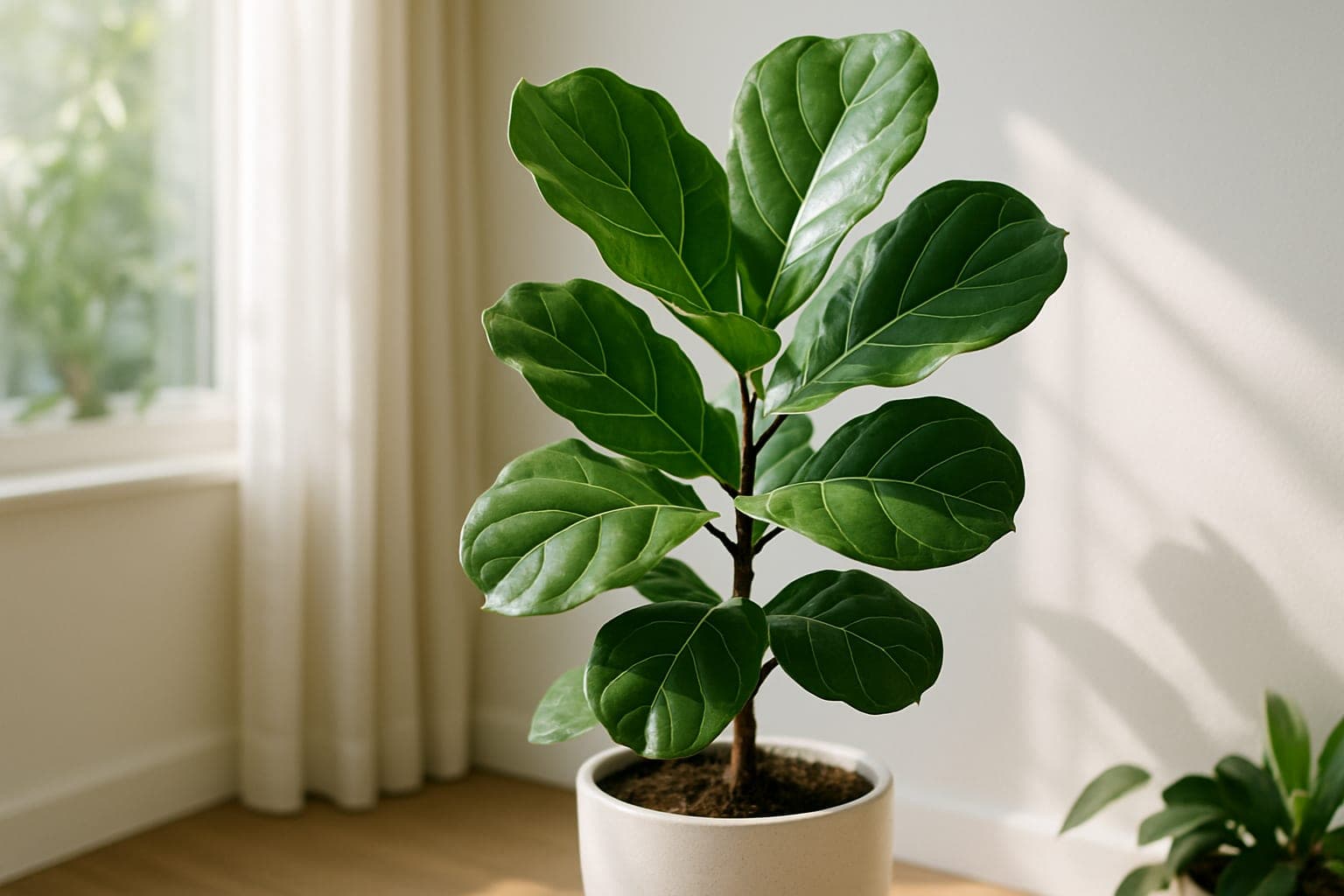
The fiddle leaf fig (Ficus lyrata) is one of the most striking houseplants you can grow, with its glossy, violin-shaped leaves and architectural form. It also has a reputation for being fussy — but in truth, most problems stem from a handful of avoidable issues. Get the basics right and your fig will reward you with steady growth and dramatic foliage.
Light: the single most important factor
Ficus lyrata is a tree in its native habitat and needs far more light than most people give it indoors. A spot directly in front of a bright east, south or west-facing window is ideal. If the plant sits more than a metre or two from a window, growth will slow, new leaves will be smaller, and the lower leaves are likely to drop.
Signs your fig wants more light include leggy stems with widely spaced leaves, pale new growth, and a general lean towards the nearest window. Rotate the pot a quarter turn every week or two so the canopy grows evenly. If natural light is limited, a good full-spectrum grow light positioned above the plant can make a real difference.
Direct sun and acclimation
Mature fiddle leaf figs tolerate some direct sun, but a plant that has been growing in lower light will scorch if moved straight into a sunny window. Introduce stronger light gradually over two to three weeks.
Watering: consistency above all else
The fiddle leaf fig prefers an even, predictable watering routine. Let the top 3–5 cm of soil dry out, then water thoroughly until water runs from the drainage holes. Empty the saucer afterwards — sitting in water is a fast route to root rot.
- Underwatering signs: dry, crispy brown patches on leaf edges, leaves curling inwards, soil pulling away from the pot.
- Overwatering signs: dark brown spots that start in the centre of the leaf, a musty smell from the soil, and leaves dropping despite damp compost.
A moisture meter or simply pushing a finger into the soil takes the guesswork out. Water needs vary enormously with light, season and pot size, so resist watering on a fixed schedule.
Humidity and temperature
Ficus lyrata is happy in normal household humidity, roughly 40–60%. Very dry air, particularly near radiators in winter, can cause crisp leaf edges. Grouping plants together or running a humidifier nearby helps if your home is especially dry.
Keep the plant in a stable temperature range, ideally around 18–24°C. Avoid cold draughts from doors and windows, and never place it directly beside a radiator or air-conditioning vent. Sudden temperature swings are a common cause of leaf drop.
Soil and potting
Use a well-draining, chunky potting mix. A blend of good-quality houseplant compost with added perlite and a little bark works well — the aim is a mix that holds moisture but drains freely and lets air reach the roots. Always pot into a container with drainage holes.
When to repot
Repot every two to three years, or when roots are circling the pot and pushing up through the surface. Choose a pot only 3–5 cm wider than the current one; an oversized pot holds too much wet soil around the roots. Spring and early summer are the best times to repot.
Why is my fiddle leaf fig dropping leaves?
Leaf drop is the most common complaint and almost always points to stress from change. Common triggers include:
- Moving the plant to a new location or home.
- A sudden drop in light levels.
- Cold draughts or proximity to heating.
- Inconsistent watering — either bone dry then soaked, or persistently wet.
- Repotting shock.
Expect some leaf drop after any major change. As long as new growth eventually appears and the remaining leaves stay firm, the plant is adjusting.
Understanding brown spots
The pattern of browning tells you the cause:
- Dark brown or black spots in the middle of leaves, often spreading: root rot from overwatering. Check the roots — healthy ones are pale and firm, rotten ones are dark and mushy. Trim away damaged roots and repot into fresh, dry mix.
- Crispy tan or brown patches at leaf edges: underwatering or very low humidity.
- Pale, bleached patches: sunburn from sudden exposure to harsh direct light.
- Small reddish-brown freckles on new leaves: oedema, caused by the plant taking up more water than it can use. Reduce watering and improve light.
Acclimating a new plant
Bringing a fiddle leaf fig home is stressful for the plant. To ease the transition:
- Choose its long-term spot before you buy and stick to it — moving it around repeatedly only prolongs the stress.
- Don't repot for at least a month, unless the rootball is clearly waterlogged.
- Hold off on fertiliser until you see new growth.
- Check the soil every few days and water only when the top few centimetres feel dry.
- Expect one or two leaves to yellow or drop — this is normal adjustment, not a crisis.
Common pests
Watch for spider mites (fine webbing and stippled leaves), mealybugs (white cottony patches in leaf joints) and scale (small brown bumps on stems and leaf undersides). Wipe leaves regularly with a damp cloth — this keeps them dust-free and helps you spot problems early. Treat infestations with insecticidal soap or neem oil, repeating every week or so until clear.
Final thoughts
Fiddle leaf figs aren't truly difficult — they're just honest. They tell you quickly when something isn't right, and they reward patience and consistency. Give yours bright light, steady watering, a stable spot and a little time to settle, and it will grow into the showpiece you hoped for.
Tools and supplies for this
Products we'd actually buy for this job. Linking to Amazon — if you buy through these links we earn a small commission at no extra cost to you.
- Weston Mill Pottery Terracotta plant pots, 175mm (pack of 10)
Mid-size workhorse terracotta — perfect step-up for plants outgrowing their nursery pots.
- Weston Mill Pottery Terracotta plant pots, 20cm (pack of 5)
Heavyweight 20cm clay for established plants — the porous walls help prevent the soggy roots aroids hate.
- Whitefurze G04012 7.5cm Garden Pot - Terracotta (Set of 10)
Cheap, cheerful plastic propagation pots — what we actually use for cuttings and small offsets.
- Whitefurze G04013 10cm Garden Pot - Terracotta (Set of 7)
Reliable mid-size nursery pots with proper drainage holes — the boring essential every plant parent runs out of.
BotanicBuddy Editorial Team
Plant Care Team
Passionate about helping plant parents succeed with expert tips and proven techniques.
Related Articles
Monstera Deliciosa Care Guide
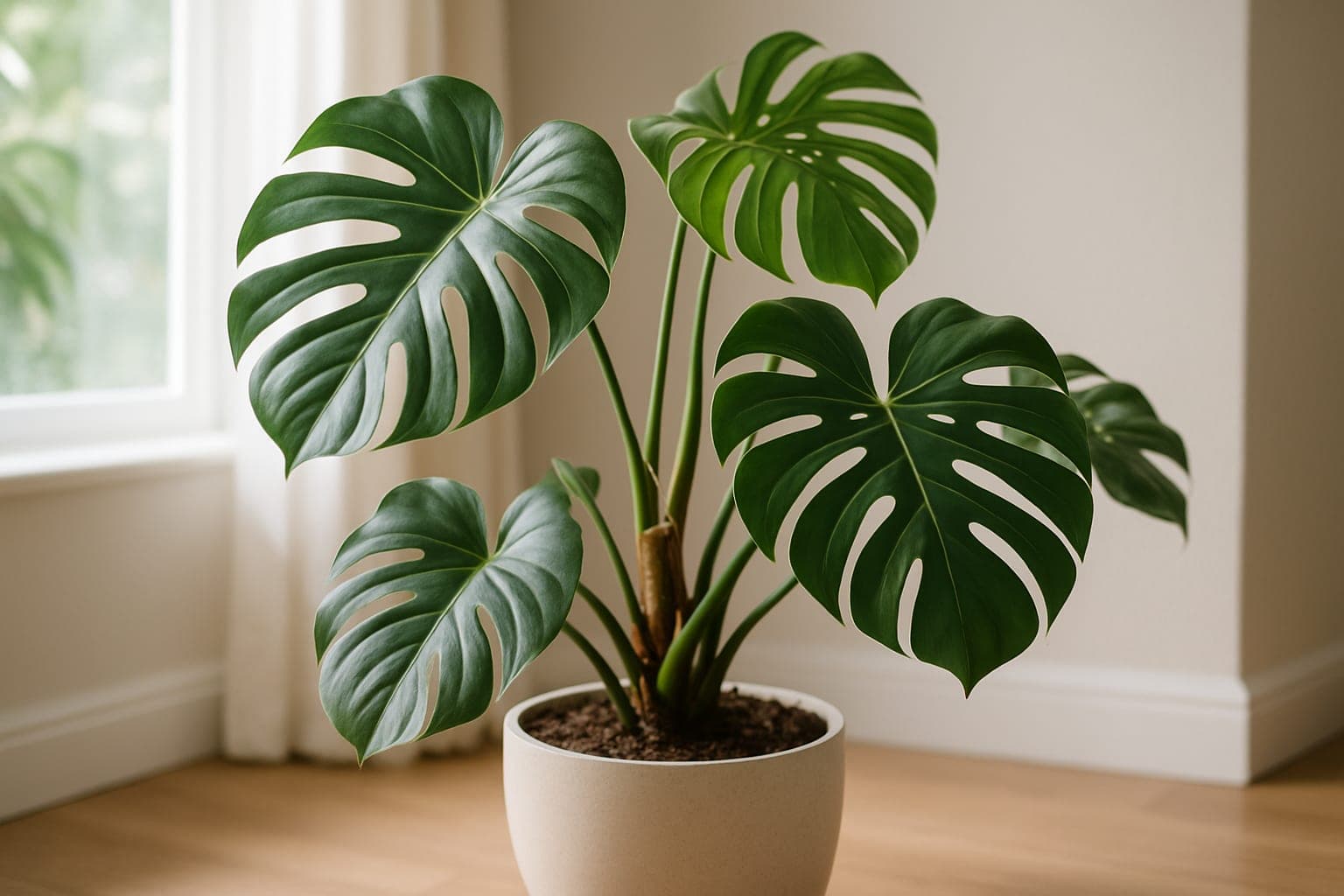
The Monstera deliciosa, or Swiss cheese plant, is a rewarding tropical climber prized for its dramatic split leaves. This guide covers everything from light and watering to moss poles and the secrets behind those iconic fenestrations.
Seasonal Plant Care: Adjusting for the Changing Year
Adapt your plant care routine throughout the year to keep your houseplants healthy and thriving.

Comments(525)
I appreciate the focus on consistency here—that's really the heart of it with Ficus lyrata. Though I'd gently push back on the "temperamental" label; I find they're actually pretty forgiving once you stop moving them around. My experience has been that people struggle more with the psychological pressure of keeping a large statement plant happy than the fig itself actually misbehaving. Glad to see the emphasis on stable conditions rather than chasing some magic watering schedule.
You've totally nailed it—I spent my first year shuffling mine around chasing the "perfect" spot, and it punished me every time with dropped leaves. Once I just... committed to a corner and stopped second-guessing myself, it took off. I think you're right that the plant's actually the easy part; the hard part is giving it permission to stay put and trusting the process. Have you found a particular type of light works best for yours, or does it really just need consistency over perfection?
I've killed two fiddle leaf figs before realizing they just need to stay put—mine finally settled down once I stopped moving it around chasing the "perfect" light spot. Now it lives in a consistent bright corner and I water only when the soil dries out a few inches down. The inconsistency angle is spot on. Are you finding that people struggle more with the moving-it-constantly problem or the watering side of things?
I'd say it's about 50/50, but watering tends to do more damage faster—people see a droopy leaf and panic-water, which kills it quicker than moving it around. The "stop fussing" lesson is real though. I kept mine in one spot for three years with barely any attention and it's my healthiest plant. Have you noticed yours actually grow noticeably after you stopped moving it, or just stabilize?
I totally get that—I learned the hard way with my first fig, which I shuffled around so much it probably got whiplash. Your point about inconsistency really resonates with me because I think watering and moving are actually connected; people move the plant hoping it'll fix a problem, when really it just needs time to adjust. I've found most folks struggle with both, but the moving habit tends to be the sneakier culprit since it feels like you're helping.
I've learned this lesson the hard way with my fiddle leaf fig—mine dropped leaves like crazy until I stopped moving it around and found a bright spot by the window where it could stay put. The consistency part really is everything. I think a lot of people treat these plants like they need constant adjusting, when really they just want to be left alone once they're happy in one spot.
I killed my first fiddle leaf fig by moving it around too much—I thought I was helping it find the perfect spot. Now I keep mine in one bright corner and it's finally happy after two years. The inconsistent light and watering advice really resonates with me; these plants just want stability more than anything else.
I'd push back slightly on "temperamental"—*Ficus lyrata* is really just honest about its needs in a way some forgiving species aren't. In my arid climate, the bigger issue I've run into is overwatering driven by guilt; the plant actually tolerates drought far better than most people assume. Consistency matters way more than perfection, and that's true for light placement too.
You've nailed something I learned the hard way—my fiddle leaf fig started thriving once I stopped treating brown leaf edges like a personal failure and just... let it be drier than I thought it wanted. The guilt-watering thing is so real, especially coming from keeping tropical plants in a cold climate where I'm already anxious about everything. Do you find the light consistency matters more in arid climates, or is it pretty much the same challenge everywhere?
I've been eyeing a fiddle leaf fig for my collection, but I've heard they can be finicky so I've been hesitant. Your point about consistency really resonates with me—I've learned the hard way that my succulents hate when I move them around or change their watering schedule suddenly. Do you find that they need a lot more attention than other houseplants, or once you nail down the routine does it get easier?
I've killed more fiddle leaf figs than I'd like to admit, but you're spot on about the consistency piece—mine finally stopped dropping leaves when I stopped moving it around looking for the "perfect" light spot. In my arid climate, I learned the hard way that I needed to water less frequently than the guides suggested, so I'd definitely encourage folks to adjust for their humidity rather than follow a standard schedule.
Oh, this is so helpful to hear! I've been nervous about my fiddle leaf fig because I live in a pretty temperate zone and kept thinking I was doing something wrong with watering—good to know that humidity really changes the game. Did you end up sticking with a set watering schedule once you figured out what worked, or do you kind of eyeball it based on how the soil feels?
I love that you're tackling the fiddle leaf fig's bad reputation—I've definitely had my share of drama with mine before I realized it was basically screaming for consistency rather than coddling. The "sudden change" point really resonates with me, since I learned the hard way that moving one across a room could trigger leaf drop for weeks. Have you found that tropical growers have an easier time with them, or does the temperament show up regardless of climate?
I think you've nailed it—consistency really is the magic word. I've found that my Ficus lyrata actually does appreciate the stable humidity and warmth of a mediterranean climate, but honestly, I've seen thriving specimens in cooler regions too, so I'd say the temperament shows up everywhere if the conditions shift suddenly. The key seems to be finding that sweet spot for your specific setup and then just... leaving it alone. Have you settled yours in a permanent spot now, or are you still experimenting with placement?
I wish I'd read this before killing my first fiddle leaf fig with inconsistent watering! I've got just two plants right now—both thriving in my Mediterranean climate where the light is pretty forgiving—but I learned the hard way that these really do hate being moved around. Mine's finally settled into a spot by the west-facing window and has been so much happier. Do you have tips for dealing with that brown spotting on the leaves, or is that usually a water quality thing?
I've killed two fiddle leaf figs before I figured out the light thing actually matters. Mine now sits about 6 feet from a north-facing window and it's finally stable—no more leaf drop every time I move it. The inconsistency part is real; I used to water on a schedule and that was my main mistake. Now I let the soil dry out properly between waterings and it's honestly one of my easier plants. Wish I'd read something like this before wasting time and plant.
I appreciate the realistic take here—Ficus lyrata really does get unfairly blamed when it's usually just homesickness for stable conditions. I've found they're actually pretty forgiving once you stop fussing with them, though I'll admit they're nothing like the succulents in my collection that practically thrive on neglect. The key insight about sudden change is spot on; I'd add that even moving one across a room can trigger drama before it adjusts.
You've nailed it—I think "homesickness for stability" is exactly the right way to frame it. I've watched my fiddle leaf fig go into a sulk just from rotating it, which taught me the hard way that consistency matters more than perfection. Your point about sudden change is crucial; I've found even swapping from one bright corner to another can cause leaf drop weeks later, so now I move mine in stages if I have to move them at all.
I've learned the hard way that fiddle leaf figs really do hate change—I moved mine across the room once and it dropped leaves for weeks, even though the new spot had similar light. The inconsistent watering point resonates with me too; I started using the finger test in the top inch of soil rather than guessing, which made a huge difference. Did you find that most people's problems come down to one particular issue more than the others, or is it pretty split between light and water?
I totally feel your pain on the leaf drop—mine had a meltdown too when I rotated it, even though nothing actually changed! The finger test is honestly the game-changer; I've noticed that in my arid climate, people tend to underwater more often than overwater, which surprises a lot of folks. I'd say inconsistent watering edges out light for me, but it's almost always a *combination* that tips them over the edge—the stress of moving plus slightly off watering is worse than either alone.
I've had better luck with my fiddle leaf fig since I stopped moving it around so much—I kept adjusting it chasing the "perfect" light spot and it hated that. Now I leave it in one bright, indirect window and only water when the soil is actually dry an inch down. My herbs are way more forgiving, honestly, but this fig's been stable for over a year now. Do you find that most people's issues come from overwatering, or is the light thing equally common in your experience?
I've had decent luck with Ficus lyrata once I stopped fussing with it so much—you're totally right about the sudden changes being the culprit. Mine took weeks to recover after I moved it across the room thinking it needed more light, ha. I'm mostly an herb person (my kitchen Ocimum basilicum gets way more attention), so I was surprised how much the fig and I eventually clicked. Did you find that consistency mattered more than getting the "perfect" conditions, or do you still have to dial in the light pretty precisely?
I appreciate the focus on environmental consistency here—that's been my biggest lesson with finicky plants overall. I've found that my herbs struggle far less with actual neglect than with erratic conditions, and I'd imagine *Ficus lyrata* follows the same logic. The temperamental reputation seems partly unfair when the real issue is that people move these around constantly or forget they need stable light. Have you found one placement strategy works better than others for fiddle leaf figs, or is it mostly about letting them adjust for a few weeks?
I've been struggling with my Ficus lyrata for months, moving it around trying to find the "perfect" spot, and I think that's been half my problem—it hates being shuffled around! I finally settled it in a bright indirect spot by my east window and stopped obsessing over the watering schedule, and it's already looking less droopy. Does inconsistent light really cause as much damage as watering issues, or is it just that people notice the drooping leaves more quickly?
I've had mixed luck with fiddle leaf figs—honestly, they're just not my thing compared to my herbs and rosemaries, which are so much more forgiving! But I do agree that light is the real culprit; I watched a friend's fig absolutely sulk when she moved it away from her south-facing window. The sudden change angle really resonates with me too, since my basil gets droopy just from being shuffled around the kitchen. Did you find that the watering advice changes much depending on the season, or is it pretty consistent year-round?
I've killed two of these before I realized mine needed to stay in one spot—even rotating it for even growth stressed it out. Now I keep it in bright, indirect light by my east window and only water when the top inch is actually dry, which takes longer than you'd think. The leaf drop stopped completely once I stopped fussing with it. Are you finding that people usually overwater these, or is inconsistent light the bigger culprit in your experience?
I've had mixed results with fiddle leaf figs over the years—they do seem to demand consistency, which honestly isn't my strongest suit in winter when natural light gets so scarce up here. Mine finally settled down once I stopped moving it around and committed to a spot by the brightest window I had, even if it's not ideal. That said, I'm curious whether you found any luck with lower-light workarounds, or is it basically a "bright window or bust" situation for keeping it happy?
I've killed two fiddle leaf figs before I realized mine was basically living in a corner—they really do need that bright, consistent light to stay happy. Once I moved mine closer to a west-facing window, the leaf drop stopped and it actually started pushing new growth. The watering thing is real too; I water less frequently than my other houseplants since the arid air here means the soil dries faster than I'd expect indoors.
I appreciate the honest take here. I've found the "temperamental" label is mostly fair though—these really do respond dramatically to shifts, even small ones. My experience is that once you stop moving them around and nail a consistent spot (bright indirect is key), they settle down fast. The watering part I'd push back on slightly: I've had better luck erring toward drier rather than consistent moisture, especially in winter. Just my two cents from keeping a few finicky ones over the years.
I totally agree about the drier side—I've found *Ficus lyrata* actually prefers to dry out between waterings more than most people think, especially in my Mediterranean climate where humidity is lower anyway. The "consistent moisture" advice can definitely lead to root issues. Have you noticed a difference in leaf drop when you pulled back on watering, or was it more about preventing rot in the first place?
I've never had much luck with Ficus lyrata myself—my arid climate just doesn't cooperate with the humidity it craves—but I really appreciate how you've boiled down its temperament to those three core issues. So many people seem to think fiddle leaf figs are just inherently fussy, when really they just need consistency. Have you found that one of those three factors tends to be the biggest culprit for most people struggling with theirs?
I totally get that—I've been there with mine too! Mine actually survived my neglect pretty well once I stopped moving it around every few weeks, but I'm still figuring out the watering rhythm since I live somewhere pretty temperate with decent indoor humidity. I'm curious whether you've had better luck with other ficus species in your arid climate, or if you've mostly stuck with more drought-tolerant plants?
I've had better luck with *Ficus lyrata* than most people seem to, but honestly I think it's because I stopped fussing with it so much! Mine sits in the same bright corner year-round and I water on a pretty rigid schedule—no guessing games. That said, I'm really more of an herb person (my basil and oregano are thriving right now), so I'm curious what you'd recommend for someone like me who prefers lower-maintenance plants? Does the fiddle leaf fig really need as much babying as its reputation suggests, or is it mostly about finding the right spot and leaving it alone?
I've struggled with this myself—I killed my first one by moving it around too much, which I didn't realize was stressing it out. The "temperamental" reputation seems fair, but you're right that it's really about stability rather than any mysterious fussiness. Do you find in your experience that Ficus lyrata does better in a spot where it gets bright, indirect light all day, or does it tolerate lower light if you keep everything else consistent? I'm curious whether the light requirement is the hardest part to nail down indoors, or if watering is actually the bigger culprit for most people.
I'd push back slightly on the "temperamental" reputation—I think fiddle leaf figs actually just have straightforward needs, they're just less forgiving of neglect than, say, a pothos. The real issue I've seen is people overthinking it. Consistent indirect bright light and letting soil dry between waterings works fine; it's the constant fiddling (pun intended) and moving them around that causes problems.
I appreciate the focus on consistency here—that's really the heart of it with Ficus lyrata. I'd just gently push back on the "temperamental" framing though. In my experience, these plants are actually pretty straightforward once you accept that they're not adapted to typical indoor conditions and stop trying to treat them like something more forgiving. The real issue is that they demand what they want (bright, indirect light; stable temps) and people interpret that as fussiness rather than just... having needs. I've had better luck accepting those requirements upfront than fighting them.
I've learned this the hard way with mine—it sat in a corner for months looking droopy before I realized it was basically sulking from low light. Once I moved it closer to my south-facing window, it perked up pretty quickly! The watering thing still trips me up sometimes though, since I'm used to Mediterranean plants that prefer drying out between drinks. Do you find fiddle leaf figs are more forgiving if you let them adjust to a spot gradually, or do they bounce back just as well from a sudden move?
I appreciate you tackling the "fiddle leaf fig is impossible" myth—I think a lot of people give up too quickly when the first leaf drops. That said, I've found mine is way pickier about humidity than the post suggests, especially in my dry winters up here. Do you find that misting helps, or is it mostly about steady conditions overall?
I totally get that—humidity can definitely be the hidden culprit, especially in winter. In my experience, consistent ambient humidity matters more than misting alone, since misting is pretty temporary. I've had better luck grouping plants together or running a humidifier nearby than relying on daily misting. That said, I'm mostly growing tropical vegetables here, so I'm curious whether you've found a particular humidity threshold where your Ficus lyrata stops dropping leaves?
I've been struggling with mine for months—it keeps dropping leaves and I couldn't figure out why since I thought I was watering it right. Does inconsistent light really make that much difference? I live in the Mediterranean so I have bright sun most days, but my fig is inside near a window that gets afternoon light. I'd love to know if moving it would actually help or if I'm missing something else entirely. I'd share a photo of mine to show the damage, but I'm curious if this guide covers what happens when you've already stressed the plant.
I love that you're tackling the light and consistency angle—that's really where *Ficus lyrata* trips people up. I killed my first one by moving it around constantly (I was convinced it wanted "the perfect spot"), and my second one thrived once I finally just... left it alone in a bright corner. The sudden-change bit is so true; mine actually sulked for weeks after I rotated it 180 degrees. Now I just rotate it a quarter turn every few months and call it a day.
Your quarter-turn approach is smart—I've learned the same lesson the hard way. My first fiddle leaf fig dropped leaves like crazy after I kept moving it, and now I'm much more deliberate about placement. The "leave it alone" strategy really does work once you nail the initial spot, though I do find that even my established one gets fussy if the light shifts seasonally. Have you had to adjust care at all as the days get shorter in your growing area?
Your quarter-turn approach is genius—I've found the same works beautifully with my *Phalaenopsis* orchids in my arid climate, where they're already stressed by low humidity. The fiddle leaf fig's dramatics seem to come from that same place: it wants stability above all else. I killed my share before I realized consistency beats perfection every single time!
I've had a fiddle leaf fig sitting in my living room for about two years now, and honestly it took me way too long to realize it was basically screaming for more light—I kept thinking I was overwatering it when really it just hated that corner spot! Once I moved it closer to my south-facing window, it completely turned around. The sudden change thing really resonates with me too, since I learned the hard way that even shuffling mine a few feet can stress it out for weeks. Do you find that people tend to underestimate how much light these actually need indoors?
I've been wrestling with my Ficus lyrata for about three months now—it seemed to sulk every time I moved it to a different spot in my apartment, and I couldn't figure out why the lower leaves kept dropping. Your point about sudden changes really clicked for me; I think I was rearranging things too often trying to find the "perfect" light. I'm going to commit to keeping it in one place and being more deliberate about watering instead of just guessing. Do you find that people usually underwater or overwater these more often?
I've had my Ficus lyrata in a bright corner for about three years now and it's finally stopped being so dramatic about everything. You're absolutely right that consistency is key—I used to shuffle mine around thinking a new spot would help, but that just stressed it out more. The watering advice resonates with me since I learned to let the top inch or two dry out between waterings rather than following some rigid schedule. What's your take on fertilizing during the growing season—are you a regular feeder or more minimal with it?
I'm totally with you on the moving-around trap—I did the same thing with mine! For fertilizing, I've found I'm pretty minimal during growing season; I do a diluted feed maybe once a month at most, since fiddle leaf figs seem to get leggy if you overdo it. Are you noticing your plant putting out new leaves pretty steadily now, or is it still a slow grower even after settling in?
I'm totally with you on the moving-around trap—I did the same thing early on! For fertilizing, I've found I'm pretty minimal with my herbs, so I tend to take the same approach with my fiddle leaf fig: just a diluted feed every few weeks during spring and summer, nothing fancy. I've noticed it actually responds better to that restraint than when I was trying to push growth, honestly. Does yours show any signs of nutrient deficiency, or does it seem happy at the lighter feeding level?
I've had such a tough time with my Ficus lyrata—it drops leaves the moment I move it across the room! I'm curious whether you'd recommend acclimating it gradually to a new spot, or does it eventually just adapt if I leave it alone? I'm in a tropical climate so I don't struggle with humidity the way some people do, but that light sensitivity seems to be my biggest challenge with it.
I appreciate you naming the real culprit—*Ficus lyrata* really isn't temperamental so much as demanding about consistency, which is different. I've found mine settles fastest when I stop fussing and commit to a rhythm rather than reacting to every drooping leaf. That said, I'm curious whether you touch on humidity in your troubleshooting? Mine's in a mediterranean climate but still struggles without regular misting, and I wonder if that's something people overlook when they're focusing on light and water.
I've had my *Ficus lyrata* for about four months now and it's finally stopped dropping leaves after I moved it away from my north-facing window—I think the inconsistent light was the main culprit. Do you have any tips for figuring out the right watering schedule in a tropical climate where humidity is already high? I'm worried I'm overwatering since the soil stays moist longer than I'd expect.
I've killed two fiddle leaf figs before realizing they just hate being moved around—I kept rotating mine for "even growth" and it absolutely lost it! Now I keep mine in one bright corner and barely touch it, and it's finally putting out new leaves. The inconsistent watering thing is so real too; I switched to checking the soil deeply before watering rather than sticking to a schedule, and that made the biggest difference for mine.
I've never been able to keep a fiddle leaf fig happy, honestly—they're just so finicky compared to my herbs, which I can basically ignore. But I think you're right about the sudden changes being the killer; I moved one once and it dropped leaves for weeks. Do you find that people struggle more with overwatering or underwatering, in your experience? I'm curious if it's something most folks could fix just by picking a spot and leaving it alone.
I think you've hit on something really important—that need for consistency matters way more than the specific watering schedule. In my experience, most people struggle with *both*, but in sequence: they underwater initially (worried about root rot), the plant gets stressed, then they panic and overcompensate. Ficus lyrata isn't actually that fussy compared to, say, a finicky Laurus nobilis, but it definitely lets you know when you've moved the goalposts. Have you thought about giving one another try in a stable spot, or are you pretty done with them?
I appreciate you tackling Ficus lyrata—it's such a striking plant but definitely dramatic about its conditions. In my experience, the light piece is really the linchpin; I've found that even small shifts in window placement can trigger leaf drop, whereas the watering issue gets blamed for problems that are actually about light consistency. What's your take on acclimating them to lower-light spaces, or do you find that's just a losing battle?
I've honestly had better luck with my tomatoes and peppers in the Mediterranean sun than I ever did with a fiddle leaf fig indoors! Mine dropped leaves constantly until I realized it was the drafts from my window—not the watering like I'd assumed. Do you find that people underestimate how much light these actually need, or is the sudden change aspect usually the bigger culprit in your experience?
I've killed two fiddle leaf figs in my cold apartment before realizing they were basically screaming at me for more light—I had them tucked in a corner like they were shy! Moving my current one to a brighter spot made such a difference, even though my winters are pretty gloomy. Really hoping this post's troubleshooting section helps me figure out why the bottom leaves are still dropping; is that usually the watering thing, or could it be from moving it around too much?
I've found *Ficus lyrata* responds really well to consistency, though I'd gently push back on the "temperamental" framing—it's more that the plant is honest about its needs rather than fussy. I keep mine in a bright, stable spot and water only when the top inch of soil is truly dry, which in my temperate climate means roughly weekly in summer and every 10–14 days in winter. The biggest breakthrough for me was accepting it won't tolerate being moved around, so I spend time finding the right corner before bringing it home rather than troubleshooting placement issues later.
I've killed two fiddle leaf figs before I finally figured out mine actually *hates* being moved—I learned that the hard way by rotating it for "even growth" and watching it drop leaves for weeks! Now I keep mine in the same bright corner year-round, and it's been so much happier. Do you find that people struggle more with the light aspect or the watering part?
I really appreciate this practical breakdown of Ficus lyrata—so many people give up on these beauties when they're actually just asking for consistency. In my experience, the light piece is really the cornerstone; once that's dialed in, the watering becomes much more intuitive. I've found they're far less fussy than their reputation suggests, almost like they reward you for paying attention. Do you find that most of your readers struggle more with the initial adjustment period, or is it usually maintenance issues down the line?
I've been struggling with my Ficus lyrata for months now, and I think inconsistent watering might be the culprit—I kept moving it around chasing the best light spot in my apartment, which probably stressed it out more. Do you have any tips for figuring out the right watering frequency in tropical humidity? I'd love to see how yours looks if you have a photo to share, since mine's still recovering with some brown leaf edges.
I've been struggling with my Ficus lyrata for months and finally realized it was getting moved around too much—I kept rotating it for even growth and that seemed to stress it out more than help. Once I settled it in one bright spot by the window, it actually started putting out new leaves. I'm still figuring out the watering schedule though; mine seems to prefer drying out more than I'd expect. Does anyone else find that the soil moisture recommendations vary so much depending on your home's humidity?
I've killed two fiddle leaf figs before finally keeping one alive—turns out I was moving mine around like I was rearranging furniture every week, which it absolutely hated. Once I stopped fussing with the placement and committed to one bright spot away from the heating vent, it actually started thriving instead of just existing. The watering thing is still my weak point in this cold climate though, since they seem to dry out so unpredictably indoors. Are you finding that people tend to overwater more than underwater, or is it pretty split down the middle?
I'd say it's genuinely split, but the pattern differs by climate—in drier regions like mine, underwatering is actually more common since people assume indoor air is more forgiving than it is. Your point about placement stability is spot on though; Ficus lyrata really does resent the constant micro-adjustments. For the watering inconsistency you're experiencing, I've found checking soil moisture an inch or two down (rather than relying on a schedule) helps way more than any rule of thumb, especially in cold climates where evaporation slows considerably.
I appreciate this—I've learned the hard way that my one plant (a succulent I'm nursing through winters here) gets genuinely grumpy with sudden shifts, so I totally believe fiddle leaf figs are the same way. The inconsistent light point really resonates; even my hardy little succulent throws a fit if I move it around too much. I'd love to see your setup if you've got a photo of a thriving one!
Oh, I totally get that—I've killed more plants by moving them around than anything else! I started keeping my herbs (rosemary, oregano, that sort of thing) in the same spots and it's made such a difference. I'm still nervous about fiddle leaf figs though; they sound like they need a steadier hand than I've got, but your succulent story gives me hope that consistency really is the secret.
I've never had much luck with fiddle leaf figs myself—they're just too fussy compared to my herbs, honestly! That said, I borrowed a friend's approach of keeping hers in one spot by a bright window and resisting the urge to move it around, and it made a real difference. Do you find that people struggle more with the light or watering side of things in your experience?
I'd push back slightly on the "temperamental" label—mine's been rock-solid for three years once I stopped overthinking it. The real issue is that people treat them like they need constant fiddling when they actually just want consistency and patience. Light matters most in my experience; I moved mine away from a west-facing window that was too intense, and the leaf drop stopped immediately. Did you find one factor stood out more than the others when working with yours?
I've wrestled with fiddle leaf figs before—they're honestly not my go-to since I'm in a desert climate and they really want that humid, stable environment. But you're spot on about the sudden changes being the killer; I had one drop leaves like crazy when I moved it just three feet across the room. Have you found that people in drier climates need to adjust the humidity recommendations, or does consistent placement pretty much solve it regardless of location?
I've been struggling with my *Ficus lyrata* for months and this really helps clarify things—I think I've been moving it around too much looking for the "perfect" spot, which probably stressed it out more than anything. The point about sudden change really resonates; mine dropped leaves like crazy after I watered differently. I'd love to know if there's a way to recover a plant that's already lost most of its foliage, or if I should just accept it and start fresh with better consistency this time around?
I've definitely been there with the constant rearranging. My fiddle leaf fig actually bounced back after losing a bunch of leaves once I stopped fussing with it and kept everything consistent—same spot, same watering schedule. It took a few months, but new growth did come in. I'd say give yours a chance if the stems still look green and healthy inside, but if you do start fresh, that consistency from day one makes all the difference.
I killed my first fiddle leaf fig by moving it constantly—learned that lesson the hard way. Mine's been stable for two years now in a bright west-facing spot with a set watering schedule, and honestly it's been fine. I'd love to see if you have photos of what early decline actually looks like, because I think people miss the subtle signs before things get really bad.
I totally get that—my first one also hated being shuffled around the apartment. The west-facing spot sounds ideal for them. I'm curious whether you've noticed any specific early warning signs before yours stabilized? I feel like by the time people realize something's wrong, the damage is pretty far along, so I'd be interested in knowing what to actually watch for month-to-month.
I've definitely had my fiddle leaf fig drama—mine sulked for months after I moved it three feet away from the window, which taught me that these plants really do mean it about their light demands! Your point about sudden changes resonating with me, since I've learned the hard way that they'd rather stay in one slightly-imperfect spot than get shuffled around constantly. Mine's finally settled into a rhythm now, though I still have my orchids to blame for my inconsistency habit.
I've found *Ficus lyrata* responds better to consistency than perfection—mine sat in the same spot for two years without complaint, but moving it to a "better" location triggered leaf drop immediately. The trick I've learned is treating the adjustment period as seriously as the initial placement; even shifting it a few feet can stress it for weeks. What's your experience with how long these typically need to acclimate after being moved?
I appreciate you tackling Ficus lyrata—it really does get a bad rap when the issue is usually just environmental inconsistency. I've found that arid climates can actually work in our favor here since overwatering is such a common culprit, though the low humidity does require more attention to leaf health. Have you noticed differences in how the tree responds to seasonal light changes, especially in winter months?
I appreciate the focus on consistency here—I've killed more plants than I'd like to admit by moving them around or changing my watering schedule on a whim. *Ficus lyrata* definitely punishes that kind of neglect. My experience has been that once you find the right spot away from heating vents and direct afternoon sun, they're actually pretty forgiving. Do you find that most people struggle more with the initial adjustment period, or do they tend to overthink the watering later on?
I'd say it's both, but the watering overthinking hits harder. People get the light sorted, the fig settles in, then they convince themselves it needs more water because a leaf looks slightly droopy—when really it just needs patience. I learned that the hard way with mine; I nearly drowned it trying to "help." Once I stopped fussing and stuck to a schedule that actually matched my home's humidity, it stopped complaining.
I think you've hit on something real—that initial adjustment phase is brutal because people expect immediate perfection, but Ficus lyrata honestly needs a few weeks to settle before you can even tell what it actually wants. I've found the overwatering trap sneaks up later, though, especially once someone gets confident. They see new growth and suddenly think "oh, it must love water!" when really it's just finally happy. Have you noticed a particular season where yours gets fussier, or does it stay pretty stable once you've nailed the spot?
I killed my first fiddle leaf fig by moving it around too much—lesson learned the hard way. Now I keep mine in one bright spot and resist the urge to fidget with it, and it's doing so much better. This post nails it about the sudden changes being the real culprit, so I'm bookmarking it to send to friends who think they have a brown thumb.
I totally get that—I did the same thing with my basil once, constantly moving it to find the "perfect" spot, and it just stressed out. Fiddle leaf figs seem to really need that settling-in period. Do you find yours prefers a specific direction of light, or does it just need consistent brightness regardless of which window it's in?
I appreciate the practical focus here—*Ficus lyrata* really does respond well to consistency rather than fussiness. That said, I'd gently push back on "most complaints" being just those three factors. In my experience, the temperament people encounter often stems from underestimating how much bright, indirect light it genuinely needs indoors; many setups fall short and no amount of stable watering fixes that. Since I only have three houseplants and one is *Ficus*, I've found it thrives far better near an east-facing window than the middle of a room, even when everything else stays constant.
I've had my Ficus lyrata in the same spot for two years now, and I think that's honestly the key—it really does hate being moved around. I learned that the hard way after shuffling mine between windows trying to find the "perfect" light, which just stressed it out more. Once I committed to a bright indirect spot and stuck with it, the leaf drop stopped and it actually started putting out new growth.
I'd push back slightly on the "temperamental" label—I've found Ficus lyrata responds really well to consistent conditions, but the key is committing to one spot near bright indirect light and sticking with it. Mine hated being moved around, so once I stopped rearranging it, the leaf drop stopped too.
I've found that Ficus lyrata really does reward consistency above all else—mine took a few months to settle after I moved it, but once I stopped fussing with it and committed to a regular watering schedule near my sunniest window, it started putting out those gorgeous new leaves. The temperamental reputation seems to come mostly from people treating it like a fidgety houseguest rather than a plant that just wants predictability. Do you find that most issues show up right after someone brings one home, or do you see problems crop up later from changes in their routine?
That's such a good point about consistency! I killed my first fiddle leaf fig by moving it around constantly trying to find the "perfect" spot—I think I stressed it more than helped it. Now mine (my second attempt, thankfully going better) stays put near my brightest window, and I've noticed it's way happier when I stop second-guessing myself. The hardest part for me in my cold climate is resisting the urge to move it away from drafts, so I'm curious—do you ever have to shuffle yours seasonally, or have you found a spot that works year-round?
I've kept one of these for a few years now, and I'd add that they're less temperamental than just finnicky about *consistency*. Mine settled down completely once I stopped moving it around chasing the "perfect" spot—turns out a steady medium-bright location beats rotating it every month. The watering advice is spot-on though; I water when the soil's actually dry an inch down, not on a schedule. Have you found that fiddle leaf figs recover faster from underwatering or overwatering in your experience?
I totally agree about the consistency thing—that's been my experience too, though I'll admit I've killed a couple with overwatering before I learned better. Underwatering seems gentler; mine bounced back within a week or two once I resumed proper watering, but overwatering rot takes longer to recover from, if it does at all. The one inch down rule is perfect, though I've found that in winter I can stretch it even longer since mine aren't growing much. Do you let yours dry out differently between seasons, or does it pretty much stay on the same schedule year-round?
I've found Ficus lyrata can be surprisingly forgiving once you nail the light situation—mine sits in a bright east-facing window and barely complains anymore. The inconsistency angle really resonates with me; I think people underestimate how much these plants dislike being moved around or having their routine shifted. Do you find that most of the fiddle leaf figs people struggle with come down to one primary issue, or are they usually dealing with a combination of problems?
I'd love to see the troubleshooting section, because my fiddle leaf fig and I have had quite the learning curve in my arid climate—turns out "occasional watering" and "occasional" mean very different things when the air is already dry! I've got 14 plants now, mostly orchids that tolerate my neglect better, but I'm determined to keep that fig happy. If you've got tips on humidity without creating root rot, I'm all ears.
I've had good luck with my fiddle leaf fig once I accepted that it really does need that bright indirect light—mine sulked for months in a corner before I moved it closer to the window. The inconsistent watering point resonates with me too, since my arid climate means I have to resist the urge to overwater. Have you found that people struggle more with the light or watering aspect when their figs start dropping leaves?
I appreciate the focus on inconsistency as the root cause—that's dead on. That said, I'd push back gently on the "temperamental" framing; *Ficus lyrata* isn't fussy so much as it's genuinely sensitive to environmental shifts in a way that, say, a *Monstera* simply isn't. The difference matters because it changes how we approach care. I've found that once you establish stable conditions (not perfect, just *stable*), the plant settles remarkably well. It's less about perfect watering schedules and more about recognizing that it wants predictability.
You nailed it—I've got one in my bedroom that was dropping leaves constantly until I stopped moving it around and kept the watering rhythm consistent. It genuinely doesn't care if my light isn't "perfect," just that it stays the same. The shift in mindset from "fussy" to "prefers stability" actually makes it easier to care for, because you're not chasing some ideal setup. Wish I'd understood that sooner instead of rotating it obsessively.
I've killed two fiddle leaf figs before accepting they need *consistent* conditions—mine finally stopped dropping leaves once I stopped moving it around and stuck to a watering schedule based on soil dryness, not a calendar. The sudden change thing is real; even shifting it a few feet closer to the window triggered a protest. They're less temperamental than people think, just less forgiving of neglect than pothos or snake plants. Are you finding most people struggle more with the light consistency or the watering part?
I've been avoiding fiddle leaf figs because I heard they're finicky, but this makes sense — I think my orchid struggles for similar reasons when I move it around too much. Do you find that once they settle into a spot, they're actually pretty low-maintenance? I'm only working with 3 plants right now so I'm trying to figure out which ones are worth the fussing.
I've killed two fiddle leaf figs before finally getting one to stick around—turns out moving it constantly was my biggest mistake! Mine now lives in a bright corner of my living room and I resist the urge to shuffle it around, which honestly took discipline. Have you found that people struggle more with the light aspect or the watering? I'm curious because I think the light requirements are what trip most folks up in colder climates like mine.
I haven't had much luck with Ficus lyrata myself—gave up after the second leaf drop incident—but I've learned that the "temperamental" label is pretty fair. Since I'm in an arid climate, I found the real trick is keeping humidity up without overwatering; I now mist mine weekly and it's finally stopped being dramatic. Definitely agree that consistency matters more than perfection, especially with sudden relocations.
I've had my fiddle leaf fig for three years now, and I'd say the "temperamental" reputation is mostly fair—but you're right that it's really about consistency. Mine lived in a corner with mediocre light for the first year and dropped leaves constantly until I moved it closer to a west-facing window. The difference was night and day. I'm curious whether you find they're more forgiving about watering frequency in arid climates, or if that's actually made it trickier for you to dial in the right amount.
I've been eyeing a fiddle leaf fig for ages but always chickened out—your point about sudden change is making me reconsider though! I kill herbs left and right by moving them around, so I'm clearly bad at stability. Would this be a good plant to start with if I commit to keeping it in one spot, or should I master my rosemary and basil first?
I'd push back slightly on the "temperamental" label—mine stopped dropping leaves the moment I stopped moving it around and committed to a bright, consistent spot. The real killer is that people expect it to bounce back from neglect like a pothos. Have you found that the recovery timeline differs much depending on which problem caused the leaf drop initially?
I've definitely learned this the hard way—my fiddle leaf fig spent a solid year being dramatically unhappy until I realized I kept moving it around chasing the "perfect" light spot. Once I committed to one bright corner and stopped fussing with it, the transformation was wild. The sudden change thing is so real; these plants really do want consistency over perfection, which honestly takes some of the pressure off.
I've definitely had my share of fiddle leaf fig drama—mine sulked for months after I moved it three feet across the room, which felt absurdly dramatic at the time! Your point about sudden change really resonates; I've found that these plants do so much better when you treat environmental shifts like a slow fade-in rather than a switch flip. The one thing that's genuinely helped me is wiping those massive leaves every couple of weeks, partly for dust but mostly because it forces me to check in and catch watering issues before they spiral.
I totally get the drama—mine threw a fit when I rotated it, so I feel your pain! That leaf-wiping tip is gold though; I started doing it with my herbs too and it's honestly become my favorite way to spot problems early. Do you find the fiddle leaf fig needs that attention more than other plants, or is it just because those leaves are so massive and obvious about being unhappy?
I really appreciate this breakdown because my fiddle leaf fig taught me the hard way that it's *way* less about being finicky and more about committing to a spot—I moved mine twice in the first month and nearly lost it before I realized that was the whole problem! Mine lives in an east-facing window now and has finally stopped the dramatic leaf drop. I'd love to see a photo of yours thriving, since I'm curious how you manage humidity in an arid climate like mine—that's been my trickiest balance with my other 13 plants.
Totally get that—I killed my first one the same way before learning to just leave them be. Humidity's been my biggest challenge too in my mediterranean climate; I've found that grouping mine with other plants helps more than misting ever did, and I water from below when the soil starts pulling away from the pot edges. Have you tried clustering yours, or does your space not really allow for that?
I learned the hard way that fiddle leaf figs really do hate being moved around—mine dropped half its leaves after I rotated it just once. Now I keep mine in one spot with consistent bright, indirect light and it's been so much happier. The watering part was trickier for me than expected since my tropical climate means more frequent watering, but once I figured out that the soil should dry out between waterings rather than staying damp, everything clicked into place.
I'd love to see this covered, but fiddle leaf figs honestly aren't on my radar—they're tropical and I'm strictly mediterranean climate, so I stick with what thrives here without fighting against nature. That said, I've watched friends struggle with the exact issues you mention, and inconsistent light seems to be the real killer every time. Have you found a particular light situation works best, or does it depend heavily on the individual plant's history?
I've been eyeing fiddle leaf figs for ages but never took the plunge because I figured they'd hate my setup—I'm all about Mediterranean veggies and herbs, and those tend to be pretty forgiving compared to finicky houseplants! Do you find that the light requirements are really as strict as people say, or is it more about consistency like you mentioned? I'm curious whether someone with inconsistent indoor light could make it work with a grow light, or if that'd be overkill.
I've killed two fiddle leaf figs before I finally figured out that mine was getting too cold near the window—I live in a really drafty old place and didn't realize how much the temperature swings were stressing it out. Now I keep mine a few feet back from the window during winter and it's been so much happier. Does your guide touch on temperature fluctuations, or is that something you've noticed with yours?
Oh, temperature swings are such a sneaky culprit—I'm glad you figured that out! I've had better luck with my herbs when I keep them away from cold drafts too, though I'll admit the fig isn't my usual thing (I'm more of a basil and oregano person). That said, your point about sudden changes really resonates with me; I've noticed even my rosemary gets unhappy with wild temperature shifts. Did moving yours away from the window help with leaf drop, or did you see other improvements too?
Temperature swings are huge—glad you caught that. I'm in a cold climate and my orchids are way more sensitive to drafts than my other five plants, so I'd expect a fiddle leaf fig to react similarly. Moving it back a few feet is the right call; those figs don't need to be pressed against glass anyway. The real killer is the combo of cold + wet soil, so if you're watering less frequently during winter (which you should be), you've probably solved half the problem already.
I appreciate this so much—I've killed two fiddle leaf figs by moving them around like I was rearranging furniture (turns out they hate that!), so I'm really hoping the third time's the charm now that I know about the "sudden change" thing. My herbs are much more forgiving, honestly. Do you have any tips for figuring out the right watering schedule indoors? I always second-guess myself with these bigger plants.
I've been eyeing fiddle leaf figs for a while now, but I was intimidated because I kept hearing they're so finicky! This makes me feel a lot better—it sounds like the main thing is just being consistent rather than doing anything super complicated. I currently have a mix of succulents that are pretty forgiving, so I'm wondering if the watering needs for a fig are totally different, or is there some overlap in what they're looking for?
I'm definitely guilty of moving mine around too much—that sudden change thing really gets me! My setup is pretty mediterranean in terms of light, so I've had better luck keeping it in one bright corner rather than chasing the sun. Do you find that people struggle more with overwatering or underwatering? I've got three plants total and they're all herbs, so I'm used to drier conditions, and I wonder if that's actually helped me avoid the fiddle leaf fig curse that everyone talks about.
I've actually had better luck with my fiddle leaf fig since I stopped moving it around so much—I learned that lesson the hard way when mine dropped half its leaves after I rotated it for "even growth." Now I keep it in one bright spot and just turn the pot slightly instead, and it's been so much happier. Do you find that most people struggle more with the light or watering side of things, or is it pretty split?
I'd push back slightly on the "temperamental" label—I think fiddle leafs just have very clear preferences, which is actually easier to work with than true fussiness. The bigger issue I've noticed is that people wait too long to move them if light conditions aren't right, then blame the plant when it's already stressed. Mine took a while to adjust to its spot but has been rock-solid for years now. The consistency angle you mention is spot-on though.
I've learned the hard way that fiddle leaf figs really do despise being moved around—I rotated mine once thinking it needed even light, and it dropped leaves for weeks. Now I keep mine in the same bright, indirect spot and only adjust watering with the seasons, which has made all the difference. The inconsistency angle you're hitting on is spot-on; these plants want routine more than anything else.
I've been struggling with my Ficus lyrata for a few months now—the leaves keep getting brown spots and dropping, which is frustrating since it's such a striking plant. I'm curious whether you'd recommend adjusting watering frequency in winter versus summer in tropical climates, or if the light requirements stay pretty consistent year-round? I have a few other figs doing okay, so I'm wondering if I'm just being too inconsistent with this one.
I've been circling around getting a Ficus lyrata for months now, but I'm wondering if the "sudden change" issue applies to acclimation too? I moved my Rhamnus alaternus indoors last winter and it dropped leaves for weeks even though I didn't change anything else about watering or light. Does the fig really settle that quickly, or should I expect an adjustment period when bringing it inside from a nursery?
I have to admit, fiddle leaf figs aren't really my thing since I'm more of a succulent person, but I've killed enough of them to know this advice is spot on. Mine always got dramatic the second I moved them or changed up the watering schedule, which I learned the hard way means they really do need that consistency you're talking about. A friend finally got hers to stop dropping leaves once she stopped fussing with it and found a stable bright spot—sounds simple but honestly makes all the difference with these guys.
I totally get the succulent preference—I'm the same way with my collection. But you've nailed why *Ficus lyrata* trips people up: they want stability in a way that's almost the opposite of how we treat succulents. Where I can ignore my *Aloe* for weeks, a fiddle leaf fig will absolutely punish you for that neglect or inconsistency. Your friend's breakthrough about finding one spot and leaving it alone is really the secret most people miss.
I've been intimidated by fiddle leaf figs for ages, so I'm really glad to see this spelled out—especially the part about sudden changes making them unhappy. I killed my first one by moving it around constantly (oops), but my second one is finally settling in now that I've left it alone in one bright corner. Do these behave similarly to my rosemary when it comes to light, or are they way more fussy?
I've been struggling with my Ficus lyrata for months and never realized how much the sudden changes were stressing it out—I kept moving it around trying to find the "perfect" spot. Does the plant really do better if you just commit to one location and let it adjust, even if the light isn't ideal? I'm in a tropical climate so I have decent brightness, but I'm curious whether consistency matters more than actually having bright indirect light.
I'd say consistency definitely wins here—I've seen my own fiddle leaf fig settle beautifully in a spot with just moderate indirect light once I stopped fussing with it. The stress from moving it around probably did more damage than less-than-perfect brightness would have. Since you're in a tropical climate, you're honestly in a great position; just pick a stable spot away from direct afternoon sun and let it acclimate for a few weeks before judging whether it's actually happy there.
I'd push back slightly on the "temperamental" label—mine's honestly been bulletproof once I stopped fussing with it. The inconsistent light thing is real though; I realized I was rotating mine too often, which stressed it more than just picking a bright spot and leaving it. If you're in a tropical climate like mine, the real trick is not overwatering during humidity spikes. I'd love to see photos of anyone successfully growing one in lower light, because I think that's where most people actually struggle.
I've killed two fiddle leaf figs before realizing they just need to stay put—I was moving mine around chasing "perfect" light instead of letting it acclimate to one spot. Mine finally took off once I stopped fussing and committed to a bright, indirect corner. The watering consistency thing is real; I let the soil dry out between waterings but check it regularly since indoor conditions change so much week to week. Have you found one location tends to work better than others, or does it really depend on the individual plant's temperament?
I've learned this the hard way with my own fiddle leaf fig—it really does hate being moved around. Mine spent months dropping leaves until I found a bright spot near an east-facing window and just left it alone. The inconsistent watering was my other culprit; I switched to letting the soil dry out a bit more between waterings and it perked up noticeably. This post nails the real issue, which isn't that the plant is fussy, it's just that it needs you to commit to a routine and stick with it.
I've had better luck with Ficus lyrata than most people, but that's only because I stopped moving mine around—it really does hate the drama. Mine sits in bright indirect light about 2m from an east-facing window and gets watered when the top inch of soil is dry, which in my Mediterranean climate means roughly weekly in summer and maybe half that in winter. The biggest breakthrough was accepting that it's just not the plant for someone who likes to rearrange their space constantly. Have you found that most of your readers struggle more with the light or watering side of things?
I really appreciate you sharing that—the consistency angle resonates with me. I've got a Ficus lyrata that's been doing okay since I stopped fussing with it, though I'm curious whether the weekly summer watering you mention is specific to your soil mix and pot size, or if that's pretty standard? I'm in a mediterranean zone too, but mine seems to dry out faster than I'd expect, so I'm still figuring out the rhythm. The light placement sounds ideal though—I think I might be slightly underlit at my current spot.
I've killed more *Ficus lyrata* than I care to admit before realizing mine just needed to stop moving every time I rearranged furniture—apparently they're committed to their spot once settled. The inconsistent light point really resonates with me, since my current one finally stopped dropping leaves once I accepted it wasn't going near the window I *wanted* it by.
Oh man, I feel that in my bones—I've been guilty of the furniture rearrangement thing too! It's so hard to resist moving plants around when you're redecorating. So when you say yours finally settled, how long did it take before you stopped seeing the leaf drop? I'm asking because I got a fiddle leaf fig a few months ago and I'm still getting some occasional drops, so I'm wondering if I just need more patience or if something else is off.
I've killed two Ficus lyrata before I figured out that mine needed a spot with genuinely bright indirect light—not just "near a window." Once I moved mine away from the wall and closer to my east-facing glass, the leaf drop stopped and new growth actually appeared. The inconsistency thing is real; they're far less finicky than people say once you find the right stable conditions.
I've never had great luck with fiddle leaf figs myself—they're so finicky compared to my herbs! But you're spot on about the sudden changes thing. I moved mine away from a west-facing window once thinking it needed less intense light, and it dropped leaves like crazy. Now I keep it in the same spot year-round and it's much happier. Do you find that people tend to overwater these more than underwater, or is it pretty split?
I've kept *Ficus lyrata* for two years now and have to agree—the "temperamental" reputation is overblown. Mine actually stabilized once I stopped moving it around chasing the "perfect" light spot and just committed to one bright, indirect location. The leaf drop I had early on stopped completely after that. Are you finding that most people struggle more with the light consistency aspect, or is watering still the bigger culprit in your experience?
I totally get why people struggle with these—I killed my first one by moving it around too much, thinking I was helping! Now I keep mine in one bright spot and barely touch it, and it's actually my easiest plant. The whole "temperamental" thing seems overblown once you just commit to a location and stick with a consistent watering schedule. Do you find that people's biggest mistake is the constant repositioning, or is it more about overwatering?
I've found Ficus lyrata does better with neglect than coddling—mine finally took off once I stopped adjusting its position every week. The light consistency point is key; mine sits in the same bright indirect spot year-round and hasn't dropped a leaf in two years. Do you find people struggle more with overwatering or the relocation habit?
I love that you nailed the neglect angle—I killed my first fiddle leaf fig by fussing with it constantly, moving it around like I was rearranging furniture! Mine finally settled once I gave it a permanent bright spot and stopped second-guessing myself. I think overwatering trips up more people, but the relocation habit is definitely the sneaky culprit nobody talks about.
I've learned the hard way that fiddle leaf figs really do hate surprises—I killed my first one by moving it around too much trying to find the "perfect" spot. Now I keep mine in consistent bright indirect light and only water when the top inch of soil is dry, which has been way more effective than all the fussing I used to do. Do you find that most of your readers struggle more with the light or watering aspect?
I'd say it's split, but light issues are harder to fix since most homes just don't have enough of it. Watering's easier to correct once someone realizes they're overwatering—one mess-up and they adjust. Your point about consistency is dead right though; I've got four plants in my collection and the fiddle leaf fig is genuinely the least forgiving when it comes to location changes. Keeping mine in one spot and leaving it alone has made all the difference.
I've been trying to keep one alive for about four months now and honestly the light thing is making sense for the first time—mine was drooping until I moved it closer to the south-facing window. Still getting used to the watering schedule though, does yours prefer to dry out almost completely between waterings or just the top inch? I have a photo of it perking up after the move that I'd share if I could, but anyway this is helpful because I was starting to think fiddle leafs just weren't for me.
I've killed two fiddle leaf figs before I finally figured out that mine was just getting moved around too much—once I stopped repositioning it every time it looked slightly droopy, it actually settled in. The inconsistent light and watering thing is spot on; I now water only when the soil is genuinely dry a couple inches down, and I leave mine in the same bright corner year-round. Mine's finally putting out new leaves without dropping the old ones, which honestly feels like a win.
Honestly, I'd skip the fiddle leaf fig if you're in the tropics like me—it's finicky indoors and honestly overkill when you could grow something actually useful instead. I've got four plants going right now, all vegetables, and I'd rather put that fussy energy into tomatoes or peppers that'll actually produce. That said, you're spot on about light and consistency being the real issues; people move these things around constantly and then act shocked when they drop leaves.
I've had the same experience with my Ficus lyrata—it was dropping leaves constantly until I realized I was moving it around too much chasing the "perfect" spot. Once I settled it in bright, indirect light by my east-facing window and stuck to a consistent watering schedule, it stabilized within a few weeks. The temperamental reputation is really just the plant being honest about what it needs, which isn't actually that demanding.
I've kept one for about three years now, and you're spot on about the consistency part—mine actually thrives once I stopped fussing with it. The biggest shift for me was realizing it needs genuinely bright indirect light, not just "a bright room," and that watering on a schedule beats guessing. Mine sits about two meters from a south-facing window here in the Med and barely needs water in winter. Do you find that most people underestimate how much light these actually need, or is it usually the watering that trips them up?
I've actually had better luck with my fiddle leaf fig since I stopped moving it around so much—I used to rotate it every week thinking that was helpful, but once I found it a bright corner and left it alone, it settled right in! My bigger challenge has been resisting the urge to water it constantly when the leaves start drooping. Do you find most people struggle more with the light or watering side of things?
That's such a great observation about the moving—I've definitely learned that lesson the hard way with my orchids in the Arizona heat, where they actually *need* that stability even more than a fiddle leaf fig does. The watering thing gets me too; I think the drooping leaves trick so many of us because it *looks* like thirst, but half the time it's either overwatering or just the plant adjusting to a new spot. I'd guess people struggle with both equally, but maybe the watering impulse is harder to resist since it feels so proactive!
I killed two fiddle leaf figs before realizing they hate being moved—I kept rotating mine for even growth and it just stressed out. Now I keep mine in one bright spot and only water when the soil actually feels dry a few inches down, which in my Mediterranean climate means maybe every 10 days in summer. The "temperamental" reputation is really just them being honest about what they need. Are you finding consistency is the hardest part for people to stick with, or do you see other common mistakes in your experience?
I think you've nailed it—the moving thing is real. I've found Ficus lyrata actually settles faster than people expect once they stop fussing with it, but the consistency angle cuts both ways. In an arid climate like mine, the bigger trap is watering *too much* out of guilt; folks see a leaf drop and assume it's thirsty, when often it's just adjusting. Your 10-day rhythm sounds spot-on for Mediterranean conditions, though I'd guess most indoor growers in humid climates are doing half that frequency and still overwatering.
I've had my Ficus lyrata for about four months now and it's finally stopped dropping leaves—turns out mine was getting watered way too often. I moved it closer to my east-facing window and now I only water when the top inch of soil is completely dry, which is maybe once a week in my tropical humidity. The sudden change thing is so real though; even shifting it a few feet made it sulk for weeks. Does anyone else find they need to adjust watering based on the season, or is that just a tropical climate thing?
I've learned this the hard way—my fiddle leaf fig went from thriving to dropping leaves like crazy when I moved it across the room for better light, and it took me weeks to realize the sudden shift was the culprit! Now I know to make any big moves gradually and keep it in one sweet spot. That said, in my cold climate I struggle most with watering during winter when growth slows down; do you have tips for adjusting the watering schedule seasonally, or does it stay pretty consistent year-round?
I appreciate this take on Ficus lyrata—the "temperamental" label does it a disservice. I've found they're actually pretty forgiving once you stop moving them around. My experience has been that people panic over minor leaf drop and then make things worse by adjusting everything at once. Consistency really is the key, just as you've outlined.
I appreciate you breaking down Ficus lyrata care like this—the temperamental reputation is really just about consistency, which is so different from the drama I experience with my orchids in the dry air here. I've noticed the fiddle leaf fig does seem to punish sudden shifts more than most plants, so your point about avoiding change really resonates. Have you found that people struggle more with the light or watering aspect once they commit to a routine?
I've been eyeing fiddle leaf figs at the nursery but got nervous about the "temperamental" reputation. It's really helpful to hear that most issues come down to a few specific things like light and watering consistency rather than the plant just being difficult. I'm keeping my collection small since I'm still learning, so I'm trying to be pickier about which plants I bring home. Does the inconsistency issue mean fiddle leaf figs would struggle in a colder climate where indoor light changes more dramatically through the seasons?
I've got only four plants and none are figs, but I appreciate the straight talk here—the "temperamental" label is mostly user error. I had a friend kill a Ficus lyrata by moving it three times in two months, and honestly, that's the real killer more than anything else. Consistency beats perfection every time.
I killed my first fiddle leaf fig by moving it around constantly—I learned the hard way that these really do hate sudden changes! Now mine lives in the same spot by my brightest window and I barely touch it. The biggest game-changer for me was realizing that inconsistent watering was worse than slightly under-watering, so I let the soil dry out more than I initially thought was safe. Have you found that one spot in your home that just works for them, or do you move yours seasonally?
I've definitely learned this the hard way with my one succulent—turns out they're pickier about sudden shifts than people think too! My echeveria nearly sulked itself to death when I moved it away from the window during a cold snap, even though I thought I was protecting it. Your point about consistency really resonates with me; I'd love to see a photo of a fiddle leaf fig that's truly thriving indoors, because I imagine it needs that same steady hand you're describing.
I've found that fiddle leaf figs are honestly easier than people think—they just need you to pick a spot and leave them alone. I kept mine in consistent bright indirect light away from drafts, watered only when the top inch of soil dried out, and stopped fussing with it. The biggest mistake I see is people rotating them constantly or moving them around, which defeats the whole point of letting them acclimate to a space.
I really needed to hear this because I just moved mine three times in two weeks trying to find the "perfect" spot, and now it's dropping leaves like crazy. So the consistency matters more than finding ideal conditions? I've got it in bright indirect light by a south-facing window now and I'm going to force myself to stop moving it, but I'm worried about watering—how do you know when the top inch is actually dry, or do you just stick your finger in and check?
I killed my first fiddle leaf fig by moving it around too much, thinking I was helping it find the perfect spot. Now I keep mine in one bright corner and it's finally happy after a year of settling in. Your point about sudden changes really resonates with me—these plants just need consistency more than anything else.
I've had mixed success with Ficus lyrata over the years, but you're absolutely right that consistency is the key—mine really turned around once I stopped moving it around chasing the "perfect" spot. The tricky part in my arid climate is keeping humidity up without overwatering, which I've managed by grouping it near my orchids where I'm already misting. Do you find that fiddle leaf figs respond better to bottom watering, or does your experience suggest top watering works just as well?
I appreciate you tackling this one since fiddle leaf figs get such a bad rap! I've never managed to keep one happy myself—they're just too finicky for my mediterranean-leaning setup where I'm all about low-maintenance herbs. But I've noticed the exact thing you mentioned with friends' plants: they do way better once people stop fussing with them and just find a stable spot. Have you found that one particular factor (like light vs. watering) tends to be the biggest culprit when they start dropping leaves?
Honestly, I'd say inconsistent watering trips up people more than light does—figs are dramatic about wet feet but also hate drying out completely between drinks. That said, moving them around is probably the second biggest killer, which sounds like it might clash with your setup if you're rearranging seasonally for your herbs. Have you considered just parking one in a bright, stable corner and calling it done, or does your space just not have that kind of static real estate?
I've had my Ficus lyrata for about four months now, and I'm still figuring out what it wants—mine was dropping leaves like crazy until I realized my spot near the window wasn't actually giving it enough direct light. Moving it closer really helped, though I'm curious if anyone else finds the watering part tricky? I've been trying to let the soil dry out between waterings like most guides say, but I'm never quite sure how dry is "dry enough."
I totally get the watering puzzle—that "dry enough" thing is so vague! I've found it helps to get a feel for the weight of the pot; once you know what it feels like when the soil is actually dry a couple inches down, you can skip the guesswork. That said, *Ficus lyrata* can be picky about tap water minerals too, so if you're noticing any other leaf drop even with better light and watering rhythm, that might be worth checking. Are you using filtered water, or has the leaf situation totally stabilized since the move?
I'd push back slightly on the "temperamental" narrative—I find *Ficus lyrata* is actually pretty predictable once you accept it's a West African understory species that needs consistent warmth and moderate, dappled light rather than the bright indirect most guides suggest. The real issue I've seen is people treating it like a tropical generalist when it's actually fairly specific about humidity and air movement; in my arid climate, I've had better luck grouping mine with other plants and being strict about misting than I ever did isolating it.
I really appreciate this perspective—you're right that understanding *what* it actually wants beats just following generic "bright indirect" advice. I've had much better luck with my herbs by grouping them too, though I'm curious whether you find the misting routine sustainable long-term, or did you eventually shift to something else? I got tired of the daily commitment and ended up moving mine closer to a humidifier instead, but I'm always looking to dial in the approach.
I really appreciate this perspective—you're right that "temperamental" frames it wrong. Mine sits in a cluster with my monstera and anthurium, and honestly, that's when it finally stopped dropping leaves after months of sulking in my living room corner. Do you find the misting routine gets easier to maintain over time, or does it feel like a constant commitment? I'm always curious how people in drier climates stay consistent with humidity without it feeling like a second job.
I totally agree about the light being the biggest factor—I've had much better luck with my herbs once I stopped moving them around so much! Ficus lyrata definitely seems pickier than, say, my basil, but I wonder if the sudden changes thing applies to humidity too? I'm in a temperate zone where the air gets pretty dry in winter, and I'm curious whether you'd recommend treating it differently during those months or if consistent conditions year-round are what really matters.
I've killed exactly two fiddle leaf figs before realizing they were basically screaming at me about light consistency—I was rotating mine like some sort of well-meaning plant torturer. My one surviving Ficus lyrata finally settled down when I stopped moving it around and committed to a bright, indirect spot by the window, which I suppose is the opposite of how I baby my orchids with their constant humidity adjustments. This post sounds like it'll save people from my particular brand of well-intentioned neglect.
I really appreciate this straightforward approach to Ficus lyrata—you're right that so much of the drama comes down to consistency rather than anything mysterious. I've learned through my orchids that plants in controlled indoor environments crave predictability above all else, and it sounds like the fiddle leaf fig is no different. Are you finding that most people struggle more with the light component or the watering rhythm when they first bring one home?
I've never had much luck with Ficus lyrata—kept mine in a spot that seemed bright enough, but it dropped leaves like crazy within weeks of bringing it home. This post makes me realize I was probably moving it around too much and shocking it with changes. I'm more of a herbs person anyway (currently obsessed with my Ocimum basilicum), but I'm curious: did you find that fiddle leaf figs are extra finicky about humidity, or is that more of a myth?
I'd love to read this—I've been eyeing fiddle leaf figs for ages but held off because everyone says they're drama queens! My Mediterranean climate is usually pretty forgiving with plants, but I'm curious whether the light advice here accounts for how intense our sun gets. I've killed enough plants by assuming "bright light" means the same thing everywhere, so did the post mention anything about filtering direct sun, especially in summer?
I've had mixed luck with fiddle leaf figs honestly—they're so different from the herbs I usually grow. Mine spent two years sulking in a corner before I realized it needed way more light than I thought, and then suddenly it took off. The inconsistent watering thing is so real though; I think people underwater them way more than overwater them because they're scared. Have you found that moving them around a lot actually matters, or is it more about the light quality itself?
I've had good luck with Ficus lyrata once I stopped overthinking it—consistency really is the key. My experience with orchids taught me that plants are often more forgiving than they seem, and I imagine the fiddle leaf fig works similarly. The sudden change point resonates with me especially since I keep my collection in a pretty stable arid environment. Are you finding that people tend to move these around too much while they're adjusting, or is it more about the watering habits that cause trouble?
I've learned the hard way that fiddle leaf figs really do need that consistency—I moved mine around too much my first year trying to find the "perfect" spot, and it thanked me by dropping leaves. Now I keep mine in one bright corner and resist the urge to relocate it, which sounds simple but honestly required some restraint on my part!
I've learned the hard way that fiddle leaf figs (Ficus lyrata) absolutely despise being moved around—I lost one to constant repositioning before I realized it wasn't about the care itself, just the stress of relocation. Now I keep mine in a bright, indirect spot and leave it there unless something's genuinely wrong. The watering inconsistency point really resonates with me too; I switched to letting the top inch or two dry out between waterings rather than sticking to a schedule, and that made the biggest difference in reducing leaf drop.
I learned this the hard way with my fiddle leaf fig—mine dropped leaves like crazy until I realized I was moving it around too much trying to find the "perfect" spot. Now I keep it in consistent bright indirect light by the window and barely touch it, and it's finally happy! The watering thing is tricky though, especially in my cold climate where the soil dries so slowly. Do you have any tips for watering during winter months when growth basically stops?
I totally get that—I've had herbs do the same thing when I fuss over them too much! For winter watering, I'd suggest letting the top inch or so of soil dry out before watering again, since you're right that it stays wet longer in cooler months. I actually stick my finger in the soil every few days rather than watering on a schedule, and that's saved me from root rot more than once. Does your fig sit near a heater at all, or is it in a cooler part of your house?
I've had mixed success with *Ficus lyrata*—mine finally stopped dropping leaves once I stopped moving it around like I was rearranging furniture every season. The inconsistency thing really is key; I learned the hard way that even shifting it a few feet away from the window can set it off. Keeping it in one spot with steady indirect light made all the difference for me.
I'm relieved to hear someone say this—I spent my first year convinced I had a black thumb until I realized my fig was basically staging a protest every time I moved it across the room. Now I keep mine in the same bright spot and resist the urge to fuss, which has somehow made all the difference. That consistency thing you mentioned is really the whole battle with Ficus lyrata.
Exactly—I learned that lesson the hard way with my fig too. The "don't move it" rule felt counterintuitive at first since I'm used to rotating my herbs for even growth, but fiddle leaf figs really do sulk over it. Once I stopped treating it like a decoration to rearrange and just let it settle, the leaf drop stopped. Have you noticed it getting pickier about watering now that it's stable, or has consistency helped with that too?
I really needed to hear this—I've been moving mine around trying to find the "perfect" spot, and now I'm wondering if that's why the lower leaves keep dropping. It's reassuring that consistency matters more than having ideal conditions, since my apartment doesn't get brilliant light anywhere. Did you notice improvement pretty quickly once you stopped moving it, or did it take a while to bounce back?
I've killed two of these before I figured out the core issue—they genuinely need *bright* light, not just "a spot near a window." Once I moved mine to where it gets direct morning sun for a few hours, the dramatic leaf dropping stopped. The watering thing gets oversimplified though; I found it matters less than people think if the light is actually sufficient. Are you finding most problems stem from light deficiency, or are you seeing other patterns in what people complain about?
I've been there with fiddle leaf figs—mine sulked for months after I moved it to a shadier corner, dropping leaves like crazy. I finally accepted that my Mediterranean apartment gets intense afternoon sun and it actually *wants* that brightness, which sounds obvious now but I was so worried about scorching it. Do you find that most people underestimate how much light these need indoors, or is inconsistent watering usually the bigger culprit in your experience?
I'd push back a bit on the "temperamental" label—I think fiddle leaf figs just punish neglect harder than most houseplants do, which feels different to me. The real game-changer for me was stopping the constant fussing and actually committing to a spot with good indirect light rather than rotating it around. Once I stopped moving mine, it settled down completely.
I'd agree the fiddle leaf fig gets unfairly blamed for being fussy when it's really just inflexible about what it wants—mine settled in once I stopped moving it around and kept the watering consistent. The bigger issue I've found is people overestimate how much light they can actually provide indoors; honest assessment of your space saves a lot of dropped leaves. (I'd have a photo to show the difference between my struggling one by a north window versus the one that finally thrived near a bright west-facing spot, but the setup works great now.)
I'd push back slightly on the "temperamental" label—Ficus lyrata is actually pretty forgiving once you stop moving it around. The real issue I've seen is people treating it like a typical houseplant when it wants consistent conditions more than anything else. I kept mine in the same spot for two years and barely thought about it; started relocating it seasonally and suddenly there were problems. Placement matters more than technique here.
I've learned this the hard way with my fiddle leaf fig—mine dropped leaves like crazy until I stopped moving it around so much. Once I found it a bright, consistent spot away from the AC vent, it really settled down. The inconsistency thing you mention is so true; I think people underestimate how much these plants notice sudden changes in their environment.
I've killed exactly two fiddle leaf figs before learning that Ficus lyrata really does want that consistent light—I kept moving mine around like I was rearranging furniture, which basically guaranteed leaf drop. Now I'm three plants in (my pride and joy is an orchid, but I do have a fig that's finally stopped judging me), and the big shift was stopping the obsessive watering cycle. Your point about sudden change is spot-on; mine finally settled when I stopped tinkering and let it adjust to its spot.
I've learned this the hard way with my fiddle leaf fig—mine got absolutely sulky when I moved it across the room thinking it'd love the extra brightness, and the leaf drop was brutal! Turns out it really does need that consistency you mentioned, even if the new spot looks perfect. Have you found that gradual acclimation helps when people absolutely have to relocate theirs, or is it best to just pick a spot and leave it alone?
I killed my first fiddle leaf fig in about three months—turns out I was moving it around constantly looking for the "perfect" spot, which stressed it out way more than having slightly imperfect light would've done. Once I stopped fussing and committed to one bright corner, my current one has been so much happier. Do you find that people tend to overwater these too, or is inconsistent placement usually the biggest culprit you see?
I totally get that—I learned the same lesson with my tomatoes in a roundabout way! They hated being shuffled around the patio while I chased the "perfect" sun spot, and honestly, I think fiddle leaf figs are similar in that they just want consistency over perfection. From what I've seen with my small collection, overwatering definitely happens too, but it usually *follows* the moving-around phase because people panic and think the plant's unhappy, so they water it more. Have you found a sweet spot with watering frequency now that yours is settled?
I've killed two fiddle leaf figs already, so I'm really hoping this post helps me break the curse with my third attempt! I think my problem has been moving it around too much trying to find the "perfect" spot—I'm learning that consistency matters way more than I expected. Do you have any tips for someone in a cold climate trying to keep one happy? I'm nervous about the temperature swings near my windows in winter.
I've killed exactly one fiddle leaf fig in my three-plant collection, and it was definitely the sudden relocation that did it in—moved it from a bright north-facing window to a corner "just for a few weeks" and watched it stage a dramatic leaf drop. Now I keep mine in the same spot year-round and it's finally stopped being so dramatic about life. The consistency thing really does seem to be key with Ficus lyrata, even more than with my orchids, which are honestly more forgiving about position changes than people assume.
I've had my fiddle leaf fig for about three years now, and honestly the "temperamental" label made me overthink it way more than I needed to. Once I stopped moving it around chasing the "perfect" light spot and just committed to one consistent corner, it finally settled down. I'd love to see what you recommend for watering schedules though—I've always eyeballed it based on soil moisture, but I'm curious if you lean toward a stricter routine? (I actually have a photo of mine right now with some gorgeous new growth I'd share if I could upload!)
I've had mixed success with Ficus lyrata over the years, but you're absolutely right that it's mostly about consistency rather than being genuinely finicky. Once I stopped moving mine around chasing the "perfect" light spot and committed to a steady east-facing window, it really turned the corner. The watering advice is key too—I think a lot of people either drown them or let them dry out completely between waterings. Have you found one particular issue comes up more often than the others in your experience?
I totally agree about the moving-around trap—I learned that lesson with my own Ficus lyrata after it dropped leaves twice. East-facing light is ideal since it avoids that intense afternoon burn while staying consistent. From my experience with houseplants in a cold climate, I'd say the watering issue is definitely the biggest culprit, especially in winter when people overcompensate thinking the plant needs more help, when really it just needs less frequent watering as growth slows. Do you adjust your watering schedule seasonally, or do you stick with the same routine year-round?
I appreciate the realistic take here—Ficus lyrata really does get a bad rap when honestly most of the drama stems from that trio you mentioned. I'd add that people often underestimate how much it dislikes being moved around the room; mine settled down considerably once I stopped rotating it every few weeks chasing the "perfect" light spot. That said, I do find it less forgiving than some of my succulents, which makes me grateful for the lower-maintenance stuff in my collection.
I appreciate you breaking down the real culprits behind fiddle leaf fig drama—I've definitely been guilty of moving mine around too much! My *Ocimum basilicum* is way more forgiving, which is probably why I stick mostly to herbs, but I'm curious whether the "sudden change" issue applies equally to light vs. temperature shifts? Like, if I finally got brave enough to try a *Ficus lyrata*, would gradual acclimation to a new spot actually make the difference, or is it more about finding the right spot from the start?
I've had a fiddle leaf fig for about two years now, and I learned the hard way that mine absolutely hates being moved around—I kept rotating it for even light and it just dropped leaves like crazy until I finally left it in one spot by the window. The "sudden change" thing is so real! Do you have tips in the post for helping them adjust if someone does need to relocate theirs, or is it more about prevention?
I've had my Ficus lyrata in a bright corner for two years now and it's finally stopped being so dramatic about every little adjustment. I think the key insight here is that these plants really do prefer stability over perfection—I used to fuss with mine constantly and move it around, which was making things worse. Do you find that most people struggle more with the light requirements or the watering schedule?
I'd push back slightly on the "temperamental" framing—*Ficus lyrata* is actually quite predictable once you accept it dislikes relocation and fluctuating moisture. I've found the real issue is that people expect it to thrive in mediocre indoor light, when it genuinely needs bright, indirect conditions to stay happy. In my arid climate I've had better luck with consistent, measured watering than the common advice suggests.
I've been eyeing a fiddle leaf fig for months but kept talking myself out of it—this post makes me feel braver about trying! My herbs have taught me that consistency is everything, so I'm realizing that's probably my biggest hurdle with a fussy plant like this. Do you find that people struggle more with overwatering or underwatering these, or is it really just about whatever light situation they happen to have?
I've had my fiddle leaf fig for about two years now, and the biggest thing that helped was stopping myself from moving it around every time it looked slightly unhappy. Mine really struggled until I found a bright spot by an east-facing window and just left it there. The inconsistency was definitely my problem, not the plant's.
I've been struggling with mine for months—it keeps dropping leaves and I couldn't figure out why. Reading that it's mostly about consistency makes sense because I was moving it around a lot trying to find the "perfect spot." I'm in a mediterranean climate so light isn't usually my problem, but I think I was overwatering. Is there a way to tell if you've already damaged the roots, or do they bounce back if you just dial in the watering now?
I killed my first fiddle leaf fig by moving it around constantly—thought I was helping, but it hated the instability. Once I found a bright spot near a west-facing window and left it alone, it finally put out new leaves. The watering thing is real too; I wait until the top inch or two of soil is actually dry now instead of guessing. Mine's been stable for over a year, which honestly feels like a win with this species.
I've killed two of these before I realized they just need to pick a spot and stay there—mine finally thrived once I stopped moving it around chasing the "perfect" light. The inconsistent watering was my real problem though; I switched to letting the soil dry out noticeably between waterings instead of the usual houseplant schedule, and that's when it actually took off. Have you found that most people underwater or overwater theirs?
I appreciate this breakdown because fiddle leaf figs really aren't the divas people make them out to be—they just need you to commit to a routine and leave them alone, which honestly I struggle with more than the plant does. My biggest win was stopping myself from rotating it constantly; once I found a decent bright spot and resisted fiddling with it every week, the drama mostly stopped.
I totally get that—I was the same way with my basil and oregano when I first started, always tinkering and moving things around! It sounds like you've figured out the hardest part, which is honestly just patience. Since you mention finding a bright spot, do you keep yours near a window or further back in a room? I'm curious whether you've had to adjust anything seasonally where you are, since light changes so much depending on the time of year.
I feel that in my bones—I've definitely killed more plants by "helping" them than by actual neglect! My orchids in particular have taught me that lesson the hard way; I used to think moving them around to catch different light angles was good care, but they were just stressed the whole time. Once I picked a spot and committed, even in my arid climate where everything's working against me, things got so much better. That "leave it alone" part is genuinely harder than the actual plant care.
I appreciate this framing—I've killed two *Ficus lyrata* before assuming they were just finicky, when honestly I think I was moving them around too much and second-guessing my watering. My question is whether "inconsistent light" means fluctuating brightness day-to-day, or moving the plant between different light zones? I keep mine in a cold room (zone 5, lower winter light) and I'm wondering if the key is picking a stable spot and leaving it alone, rather than chasing ideal brightness.
I've had my *Ficus lyrata* for about four months now and it's been such a learning curve—mine dropped leaves like crazy when I first brought it home, which I now realize was probably the shock of the move combined with my inconsistent watering. I'm curious whether you'd recommend checking soil moisture before watering every single time, or if there's a better rhythm to follow? I'm in a tropical climate so I wonder if that changes the usual advice you see online.
I'd definitely check the soil before watering each time—that's been key for me too, especially since I'm in the tropics as well. My *Ficus lyrata* was dropping leaves until I realized I was watering on a schedule rather than responding to what the plant actually needed; the higher humidity here means the soil stays moist longer than typical care guides suggest. Once I started feeling the soil about two inches down and only watering when it felt dry, leaf drop stopped entirely.
I killed my first fiddle leaf fig by moving it three times in two months—totally my fault, not the plant's! Since I learned to just pick a bright spot and leave it alone, mine's been so much happier. I think people expect these to be fussy when really they just hate being fussed over, which is honestly a relief given my collection of 13 other plants competing for my attention.
I'd push back slightly on the "temperamental" framing—I think fiddle leaf figs just need consistency, which honestly any plant does. The real issue is they're dramatic about showing you when something's off, so people notice problems faster than with, say, a pothos. That visibility makes them seem needier than they actually are. After years with orchids that hide stress until they've basically given up, I almost appreciate the honesty.
I appreciate you calling out the inconsistency piece—that's been my biggest lesson with *Ficus lyrata*. I killed my first one by moving it around constantly, thinking I was helping. Now I keep mine in the same spot by a north-facing window and it's finally stopped dropping leaves. Does your experience suggest that fiddle leaf figs are more forgiving once they've acclimated to a particular light level, even if it's not ideal?
I've learned this lesson the hard way with my fiddle leaf fig—it really does hate being moved around! Mine spent two years sulking after I rotated it for even light, dropping leaves like it was personally offended. Now I keep it in one spot by a south-facing window and water only when the top inch of soil is dry, and we've finally made peace. The consistency thing is genuinely the whole game with this plant.
That two-year sulk sounds rough, but I'm glad you've found your rhythm with it. Ficus lyrata really does seem to have a "set it and forget it" preference—it's so different from my orchids, which actually benefit from some air movement and position changes. Your south-facing spot in an arid climate must be ideal. Do you find the dry-down method works year-round for you, or does the season affect how often you're watering?
I killed my first fiddle leaf fig by moving it three times in two weeks—apparently they really do hate drama! Since I've settled mine in a bright corner and stopped fiddling with it constantly, it's finally putting out new leaves. Does anyone else struggle more with the urge to *help* their plants than with actual care?
I'd respectfully push back on the "temperamental" label—mine thrives because I treat it like what it actually is: a plant that wants stability over perfection. The real killer is moving it around chasing light instead of finding one spot and leaving it alone. I've got five plants in a cold climate, and the fiddle leaf fig is honestly one of my easier keepers compared to my orchid, which demands way more precision. Consistency matters more than technique.
I appreciate the honest framing here—the "temperamental" label is mostly just low tolerance for neglect rather than actual fussiness. That said, I've found light is genuinely the non-negotiable one for me; inconsistent watering I can usually recover from, but even moving mine a few feet away from the window tanks it fast. Curious if you've seen success with them further from bright indirect light, or if that's just not realistic for the species?
I haven't had much luck moving mine away from bright light either—mine sits right by a north-facing window and even that feels like the bare minimum sometimes. I'm curious about your experience though, since you mention moving yours just a few feet made such a difference. Do you think a grow light would help bridge that gap, or does the plant just need that natural window light specifically?
I've got three plants total and honestly my fiddle leaf fig is the one giving me the most trouble—keeps dropping leaves even though I thought I was doing everything right. I'm curious if the inconsistent light thing applies indoors where I can't really move it around much, or if I should be rotating it more often? I could snap a photo of mine to compare, but this post is making me think my watering schedule might actually be the culprit here.
I've had Ficus lyrata in my small collection for about two years now, and honestly the biggest shift for me was just accepting that it *hates* being moved around. Mine went from dropping leaves constantly when I kept rotating it for even light, to totally stable once I found a spot by the east window and left it alone. The inconsistency thing really is the core issue—do you find that most of your readers struggle more with the light or the watering side of things?
I'd say it's usually the watering that trips people up more—light problems are at least obvious, but overwatering sneaks up on you, especially indoors where evaporation is slower. That said, your point about movement is spot-on; I've found my orchids are the same way. Once they're dialed in, fussing with placement just for aesthetics creates more problems than it solves. Consistency beats perfection every time.
I've actually had better luck with my Ficus lyrata since I stopped moving it around so much—it was dropping leaves like crazy until I realized how sensitive it is to those sudden shifts you mentioned. I'm curious though, since I'm more of an orchid person and my tropical setup is pretty humid, have you found that extra humidity helps fiddle leaf figs, or does it create other problems like fungal issues? I'd love to see how yours looks now if you have an update!
I've never had much luck with fiddle leaf figs honestly—they're so finicky compared to my herbs! But I think you nailed it with the "sudden change" point. I moved mine away from a window once to make room for my basil setup, and it absolutely threw a tantrum with dropped leaves for weeks. Now I'm really careful about keeping it in one spot. Are you finding that people struggle more with the watering or light side of things?
I'd push back a bit on "temperamental"—mine actually thrives because I stopped fussing with it. The real issue is people move them constantly chasing light or adjust watering based on mood. I keep mine in one bright spot and water when the top inch is dry, which in my tropical climate means every 4-5 days. They're honestly less finicky than most succulents I've tried.
I'm so glad I read this because I've been blaming myself for my fiddle leaf fig's drama when it's probably just been my inconsistent watering schedule! I tend to fuss over my herbs more regularly since they actually get used, so I'll definitely try being more intentional about the light and moisture routine here. Do you have a recommendation for checking soil moisture without overwatering—I always second-guess myself on these larger plants.
I totally get that—I have three plants total and my orchid definitely calls me out when I'm inconsistent. For checking moisture without guessing, I've been sticking my finger about an inch into the soil, and if it feels dry there, I water. The fiddle leaf fig seems pretty forgiving once you lock in a routine, honestly, way less temperamental than my orchid.
I've been wanting to try a fiddle leaf fig for a while now, but I'm honestly intimidated after hearing how finicky they are! The part about sudden changes really resonates with me—I moved my rubber plant last month and it threw a fit for weeks. So when you say they need consistency, do you mean I shouldn't move it around at all once I find the right spot, or is occasional repositioning okay?
I'd say occasional repositioning is fine as long as you do it gradually—I move mine around seasonally without issues, but I acclimate them over a week or two rather than moving them straight to a different light zone. The real culprit with Ficus lyrata is usually the shock of *dramatic* change all at once, like relocating from a bright window to a dim corner. Your rubber plant probably just needed that adjustment period. Start with a spot that gets bright, indirect light and you'll find it's far less temperamental than its reputation suggests.
I've learned this the hard way with mine—it dropped like half its leaves when I moved it across the room! Now I keep it in the brightest spot I can find and try not to shuffle it around. Do you find that people usually overwater these, or is inconsistent light the bigger culprit in your experience? I'm in an arid climate so I have to be really careful about humidity, and I'd love to know if there are any tricks beyond misting that actually work.
I've had the same experience with Ficus lyrata—mine spent two years sulking in a corner before I moved it closer to an east-facing window, and the difference was immediate. The inconsistency piece really is the crux of it; I think people expect them to be fussy when they're actually just responsive to their environment. Mine's been stable for ages now, though I had to learn the hard way that it despises being rotated more than once a month.
I've killed exactly two fiddle leaf figs before finally understanding that mine was basically screaming for *consistency* rather than constant fussing—I was rotating it obsessively and second-guessing every watering, which probably stressed it more than helped. Now it's one of my favorites, sitting in the same spot by my north-facing window and barely complained once I stopped overthinking things. Do you find that people struggle more with the overwatering side or the light side of the equation?
I've killed two fiddle leaf figs before figuring out the real issue—mine were in a corner that looked bright to me but clearly wasn't cutting it for the plant. Moving my current one to a south-facing window made the biggest difference, way more than tweaking my watering schedule ever did. The sudden change thing is real too; I learned that the hard way when I rotated it and it dropped half its leaves in protest.
I totally get why these have a reputation—I killed my first one by moving it around too much when it started dropping leaves! Now I keep mine in the same bright corner year-round, and it's finally happy. The inconsistent light thing is huge, especially in winter where I live; I've learned that even moving it a few feet can stress it out. Does your post touch on acclimating them to lower light, or is that something you'd recommend avoiding altogether?
I've learned this the hard way with mine—it dropped leaves like crazy when I moved it to a shadier corner. Once I found the right bright spot away from direct afternoon sun, it really settled in. The consistency thing is key; I basically treat watering like a routine now rather than guessing, and it's made all the difference. Great to see someone breaking down that "temperamental" reputation, because honestly it's just fussy about stability, not impossible.
I'd push back slightly on the "temperamental" framing—I think fiddle leaf figs get unfairly blamed when really they're just inflexible about their preferences. The light and water consistency points are spot-on, but I've found the bigger issue is people moving them around or repotting too often. Mine took off once I stopped fussing with it and accepted that it wanted the same corner, the same watering schedule, year-round. They're demanding, sure, but predictably so.
I appreciate the focus on consistency here—that's been my biggest lesson with temperamental plants too. I've found that Ficus lyrata responds really well to a stable spot away from heating vents and cold drafts, which matters even more in my climate where indoor conditions swing wildly between seasons. Do you find that people tend to overwater these more than underwater them, or is it pretty split in your experience?
I'd say overwatering is definitely the more common culprit in my experience—people want to nurture them, but Ficus lyrata really prefers to dry out a bit between waterings. Your point about drafts resonates with me too; in my arid climate I'm battling the opposite problem with low humidity, so I've had to get creative with placement near a humidifier rather than a heat source. Have you found any tricks for managing those seasonal swings without moving the plant around too much?
I killed my first fiddle leaf fig by moving it three times in two months—turns out they really do hate that! Since then I've learned to pick a spot with bright, indirect light and just... leave it alone, which has honestly been the hardest part for me. My current one has finally stopped dropping leaves, though I'll admit it's still the fussiest of my 14 plants. Glad to see someone breaking down that it's usually just one of those three culprits—would've saved me a lot of frustration earlier!
Oh, this is so helpful because I've been blaming myself for every crispy leaf on my fiddle leaf fig when really it was probably me moving it around too much! I'm mostly growing herbs in my Mediterranean-style setup, so I'm still learning the houseplant basics—and I think my biggest mistake was thinking it needed the same consistency as my rosemary. I'm going to try keeping mine in one spot and see if that actually makes a difference!
I totally get that—I have a Ficus lyrata too and moving mine around felt like the right thing to do at first! The sudden change thing really hits different from herbs like rosemary, which are way more forgiving. I'm curious if you've noticed a difference in light consistency where you're keeping it now, since I'm still figuring out whether my tropical setup is bright enough without direct sun.
I killed my first fiddle leaf fig by moving it around too much—thought I was helping it find the perfect spot. Now I keep mine in a bright corner and barely touch it, and it's finally putting out new leaves. The inconsistent watering thing is real; I switched to letting the top inch dry out between waterings instead of guessing, and that made the biggest difference. Wish I'd read something like this before wasting a year troubleshooting.
I really relate to the "moving it around too much" phase—I did the same thing with my Phalaenopsis until I realized I was just stressing it out! Your point about the top inch drying out is spot-on; I've found that tactile check actually beats any watering schedule, especially in my dry climate where things evaporate faster than I expect. Glad yours finally found its groove in that corner!
I've been struggling with mine for months and honestly thought it was just doomed, but reading that it's usually about consistency makes so much sense—I keep moving it around chasing better light and probably stressing it out. Does inconsistent watering include letting it dry out completely between waterings, or is that actually okay? I have one that's finally looking healthier since I stopped fussing with it, so I'm wondering if I'm just getting lucky or if I'm actually doing something right now.
I've killed two *Ficus lyrata* before I realized they just needed me to stop moving them around—I was convinced I was helping by chasing the light! Now mine lives in one bright corner and ignores my nervous fussing. The inconsistent watering point really resonates; I switched to letting the top inch dry out completely between waterings and suddenly it stopped dropping leaves like it had a personal vendetta against me.
I've learned this the hard way with my own fiddle leaf fig—mine dropped leaves like crazy until I realized I was moving it around too much chasing the "perfect" light spot. Once I committed to a consistent corner with bright, indirect light and stuck to a regular watering schedule, it really settled down and started putting out those gorgeous new leaves. The temperamental reputation is so real, but you're right that it's mostly about creating stability rather than doing anything fancy.
I've had my fiddle leaf fig for about three years now, and honestly the biggest game-changer for me was accepting that it just needs to stay put—I moved mine twice in the first year and it absolutely hated that! Mine's finally putting out those gorgeous new leaves, and I think the consistency in light (bright indirect by an east-facing window) made all the difference. Have you found that people often move theirs around too much trying to find the "perfect spot," or is that just me being impatient?
I've killed two fiddle leaf figs before I learned they really do hate being moved around—I swear mine dropped leaves just from rotating it! Now I keep mine in the same spot and it's actually thriving, which surprised me since I'm much more comfortable with my succulents that forgive my neglect. Thanks for breaking down what actually matters with these; I think a lot of people assume they're just impossible when really they just want consistency.
I've been struggling with my Ficus lyrata for months—it keeps dropping leaves even though I thought I was watering it right. This post makes me wonder if I'm moving it around too much chasing the "perfect" light spot in my apartment, since you mention sudden changes are a big issue. I'd love to know if there's a way to tell the difference between underwatering and a light problem, since the symptoms seem similar? I have a photo of mine showing the leaf loss pattern that I'd upload if I could, but it might help me figure out what's actually going wrong.
I love that you're demystifying *Ficus lyrata*—it really does get an unfair reputation. In my experience, the sudden environmental shifts are what trip people up most; I've seen folks move theirs closer to a window for more light and then panic when it drops a few leaves during the adjustment period. Since you mention consistency, do you find that people struggle more with the watering aspect, or is the light component usually the bigger culprit in your observations?
I've had mine in the same spot for two years now and it's finally stopped dropping leaves—turns out mine was getting moved around too much. Once I committed to a consistent bright window and stopped fussing with the watering schedule, it actually thrived. The "temperamental" thing is real, but you nailed it: these plants just want stability more than anything else.
I appreciate the focus on consistency—that's really the crux of it with Ficus lyrata. I've found that mine does better with a steady spot near bright indirect light than constantly shuffling it around, even with good intentions. The watering part rings true too; I let mine dry out noticeably between waterings rather than keeping it evenly moist, which seems to prevent the root issues people complain about.
I've killed exactly two fiddle leaf figs in my pursuit of orchids, so I say this with hard-won humility: the "inconsistent light" point really is everything. My third plant finally stopped dropping leaves once I committed to the same sunny west-facing spot year-round—turns out my rotating schedule was more stressful than helpful. I still mostly kill things, but at least now I understand why!
I totally agree about the light piece—I've had way better luck with mine once I stopped moving it around so much. My question though: do you have tips for dealing with the leaf dust buildup? I've seen people recommend different cleaning methods and I'm never sure what's actually safe for the plant versus what might clog the pores.
I've been eyeing a fiddle leaf fig for months but got scared off by all the horror stories—so this is really helpful! I'm in a mediterranean climate and most of my nine plants are herbs, so I'm admittedly out of my depth with finicky houseplants. Quick question: when you say inconsistent light, do you mean it needs the same amount every day, or just a consistent *spot* by the window? I killed a pothos last year by moving it around too much, so I'm wondering if that's the same principle at work here.
I've had better luck with Ficus lyrata since I stopped moving mine around so much—that sudden change piece really resonates with me. In my arid climate they actually do better with less frequent watering than most guides suggest, which I think a lot of people miss. Have you found that the light requirements vary much depending on where folks live, or does it stay pretty consistent regardless of regional humidity?
I'd agree on the watering front—in arid climates, Ficus lyrata's susceptibility to root rot actually makes infrequent watering the safer bet, even if it sounds counterintuitive. Light needs are pretty consistent regardless of humidity (it's fundamentally about photosynthetically active radiation), but in drier regions you might notice the plant tolerates brighter, more intense light better since lower humidity naturally limits transpirational stress. I've found mine actually thrives closer to a south-facing window here than typical indoor guidance would suggest.
I'm glad you're tackling this one—Ficus lyrata gets such a bad rap, but you're absolutely right that it's mostly about consistency. I've had better luck with mine by being almost stubborn about not moving it around once I find the right spot. The light especially matters; mine sits in a spot that gets bright indirect light most of the day, and that's made all the difference for leaf drop.
I'll be honest—my fiddle leaf fig lived in my living room for exactly six months before staging what I can only describe as a dramatic leaf-shedding protest, and I'm pretty sure it was the sudden move away from that north-facing window that did it in. Reading that the real culprit is usually inconsistent conditions rather than some mysterious fiddle leaf fig curse is both reassuring and a little embarrassing in hindsight! I'm curious whether the troubleshooting section covers recovery—mine eventually bounced back once I stopped fussing with it and found it a stable, bright spot.
The recovery part is key—I've found fiddle leafs are oddly resilient once you stop moving them around. Mine took a solid month of stable, consistent light before new growth showed up, and I was tempted to repot it halfway through, which would've been a mistake. If yours bounced back, you probably learned the hardest lesson already: these plants want to stay put more than they want perfect conditions.
I appreciate this breakdown since I've mostly stuck to herbs in my apartment, but I've definitely heard the fiddle leaf fig horror stories! My understanding is that Ficus lyrata is so finicky about light consistency—does your post dig into whether artificial grow lights can actually replace natural window light for these, or do they really need that direct sun? I'm curious because I've got a pretty bright north-facing spot and I'm wondering if that's even worth attempting, or if I should just stick with my basil and oregano that actually cooperate with my setup.
I've had good success with Ficus lyrata in bright indirect light, though it definitely prefers that consistent brightness—a north-facing spot might be a bit dim for it to really thrive. Grow lights can absolutely supplement, but they work best paired with some natural light rather than as a full replacement. Since you've got herbs that are happy there, maybe that's your sign to stick with what works for you rather than force it.
I've killed two fiddle leaf figs before I figured out that mine was basically sulking from being moved around too much—I kept rotating it for even growth and it absolutely hated that! Now I keep mine in one spot by my brightest window and only water when the soil is actually dry, and it's finally putting out new leaves. Do you find that people tend to overwater these, or is the moving-it-around thing pretty common?
I've been struggling with mine for months and kept assuming it was just "difficult," so it's helpful to see that narrowed down to those three factors. Quick question though—when you say inconsistent light, do you mean the plant needs to stay in the exact same spot, or is it okay to move it seasonally as the sun's angle changes? I'm in a mediterranean climate and my light situation shifts pretty dramatically between winter and summer, so I'm curious if that's something *Ficus lyrata* can adapt to or if I should be more protective of its position.
I killed my first fiddle leaf fig by moving it around constantly, thinking I was helping it adjust. After that disaster, I learned to just pick a bright spot and leave it alone—mine has been so much happier since. This post nails it about the sudden change thing; they really do seem to sulk when you rearrange their whole world.
I've found *Ficus lyrata* much more forgiving than its reputation suggests once you nail the light situation—mine really turned a corner when I moved it closer to a south-facing window. The inconsistency piece you mention is key; I think people often panic and adjust everything at once rather than letting the plant acclimate. Do you find that most of the fiddle leaf figs folks struggle with are dealing with multiple stressors at once, or is it usually one main culprit?
I think you've nailed it—it's almost always the panic adjustment trap! I've definitely fallen into that myself. With my six plants, the fiddle leaf fig is actually the one I've had the least trouble with once I stopped fussing, but I've noticed friends who struggle are usually dealing with the cascading effect of low light *plus* overwatering out of concern. The light thing is huge though; I kept mine in an east-facing spot for years before realizing it was just barely getting by. Moving it closer to brighter indirect light made such a difference.
I appreciate this breakdown because honestly, I've had better luck with my Ficus lyrata than with some of my vegetable crops, which surprises people! The inconsistent light point really resonates—I moved mine away from a west-facing window last year and it stopped dropping leaves within weeks. Do you find that people struggle more with the watering aspect, or is it usually the light that catches them off guard?
In my experience, it's honestly the light that trips people up more—watering they can usually figure out with a moisture meter, but light is harder to diagnose because the plant takes weeks to show you it's unhappy. I kept mine in moderate light for two years wondering why it stayed stunted, then moved it closer to a bright window and the growth difference was immediate. West-facing is actually solid if your arid climate means the afternoon sun doesn't scorch it, so you landed in a good spot with yours.
I'd push back a bit on the "temperamental" label—I think fiddle leafs just need you to commit to a spot and leave them alone. Mine spent two years sulking after I kept moving it around, then thrived once I stopped. The watering and light advice here tracks with what actually works, though I'd add that the pot size matters way more than people acknowledge. Are you finding that most people's issues come from moving the plant frequently, or is overwatering still the bigger culprit in your experience?
I've been struggling with my Ficus lyrata for months and didn't realize how much the light was affecting it—mine sits near a west-facing window that gets intense afternoon sun, and I think that's been stressing it out more than helping. Your point about sudden changes really resonates because I moved it last month and it dropped leaves like crazy. I'm curious whether you'd recommend a more diffused light setup, or if I should just let it acclimate longer before moving it again?
I appreciate this take—I've killed my share of fiddle leaf figs by moving them around like they'd offended me, only to realize they just wanted to be left alone in their spot! The consistency angle really resonates with me, especially since I've had much better luck treating mine more like an orchid in terms of patience and minimal fussing. That said, I'm curious whether you find they actually recover faster from neglect or from overwatering in your experience?
I totally get that impulse to relocate them when they look unhappy—I've done it too! My experience has been the opposite of yours though; my fiddle leaf fig bounced back faster from underwatering than the one I overwatered, which basically gave up after getting root rot. Now I err on the side of letting the soil dry out more between waterings, and honestly, it's been my most stable plant since I stopped second-guessing myself.
I totally get why fiddle leaf figs have that reputation—I killed my first one by moving it around constantly! Now I keep mine in the same bright spot year-round and it's so much happier. Since I'm in a cold climate, I've also learned to be extra careful about watering during winter when growth slows way down. Do you find that most people underwater or overwater theirs?
I appreciate this breakdown—I've killed my share of *Ficus lyrata* by moving it around like it offended me, so the "sudden change" bit really resonates. Mine finally settled down once I stopped rearranging it every time I wanted to redecorate, and honestly it's been the least fussy of my three plants since then (my orchids certainly don't forgive that kind of whimsy!). The consistency angle seems to be the real secret here.
I've had my fiddle leaf fig for three years now, and I'd say the "temperamental" label is really just code for "this plant communicates clearly." Mine actually thrives in my bright west-facing window, though I learned the hard way that moving it around looking for the perfect spot just stresses it out. The inconsistent watering is definitely the biggest culprit I see with people struggling—they either let it dry out completely or keep it soggy. Have you found that most people err on the side of overwatering, or does it seem pretty split?
I've killed two *Ficus lyrata* before I realized mine was basically suffocating in medium light near a north-facing window—they really do need that bright, indirect spot to stay happy. Once I moved it closer to my east-facing glass, the leaf drop stopped and new growth came in noticeably larger. The watering consistency part is key too; I now wait until the top couple inches of soil are dry rather than following a schedule.
I've been eyeing a fiddle leaf fig for months but kept talking myself out of it—seems like the temperamental reputation might be overblown if it's really just about consistency! My herbs get fussy in exactly the same way when I move them around too much, so this makes total sense. Think I'm finally ready to give it a shot, though I'm nervous about the watering part since I still sometimes forget if I actually watered something yesterday or just *meant* to. Any thoughts on whether they're forgiving if you occasionally let the soil dry out?
I get the watering anxiety—I'm still figuring out my own routine! From what I've read, *Ficus lyrata* does seem more forgiving of occasional drying than its reputation suggests, but it really hates swinging between bone dry and soggy. I've found that checking soil moisture before watering (just stick your finger in) helps way more than trying to remember the last time I actually did it. Might be worth keeping a simple note or phone reminder until it becomes habit?
I've been struggling with my Ficus lyrata for months—it keeps dropping leaves even though I thought I was watering correctly. This post makes me think the problem might be inconsistent light rather than overwatering like I assumed. I actually have a photo of it looking pretty stressed that I'd upload if I could, but I'm curious: do you find that fiddle leaf figs need a specific number of hours of bright light daily, or is it more about the intensity? I have nine plants total in my tropical setup and this one's definitely the pickiest so far.
I killed my first fiddle leaf fig by moving it around too much—I was convinced it needed the "perfect" spot. Once I finally left mine alone in a bright corner and stuck to a watering schedule, it stopped dropping leaves and actually started putting out new growth. Your point about sudden changes really resonates with me because these plants seem to want consistency more than anything else. Mine has been happy for over a year now, so I'd say this advice is solid.
I'd push back slightly on the "temperamental" framing—in my experience, *Ficus lyrata* is pretty forgiving once you stop moving it around. The real issue is that people treat it like a decorative object they can shuffle between rooms. Mine's been in the same bright (but indirect) spot for three years with zero drama, just a water-when-dry routine. The sudden-change bit is spot on though—that's where mine actually complains, not from neglect.
You're absolutely right—I've noticed the same thing with my three orchids, actually. They're drama queens about relocation but rock-solid once they settle in. I think *Ficus lyrata* gets lumped into the "fussy" category partly because people expect it to be, then panic at the first dropped leaf. Your three-year track record in one spot says everything. The consistency over moving seems to matter way more than getting the light or water "perfect."
I've never had much luck with fiddle leaf figs honestly—they're so finicky compared to my herbs! But I think you're spot on about the light piece; I watched a friend's struggle for months until she moved hers closer to a south-facing window, and suddenly it just... settled. Do you find that people tend to underwater them more, or is it the opposite in your experience? I'm curious if the inconsistent watering thing is as big a culprit as the light.
I've definitely learned the hard way that fiddle leaf figs are less "diva" and more "creature of habit"—mine sulked for months after I moved it three feet closer to the window, of all things! The inconsistency angle really resonates with me; I think people expect them to be finicky when they're actually just not forgiving of the chaotic energy. Since you mention sudden changes, do you find that acclimating them slowly to new spots makes a bigger difference than people realize, or is the damage usually already done by the time someone notices the leaf drop?
I've been struggling with my Ficus lyrata for a few months now—lots of leaf drop—and I'm pretty sure it's the watering situation since I keep moving it around looking for the perfect light spot. This post makes it sound like I should just pick a location and stick with it, which honestly hadn't occurred to me. Do you think consistency matters more than finding the *ideal* light conditions, or do I need both?
I've been eyeing a fiddle leaf fig for months but kept talking myself out of it—until I read that it's mostly about consistency! My herbs have taught me that lesson the hard way (goodbye, stressed basil), so I'm feeling more confident now. Going to try one and see if I can finally stop moving plants around every time the light changes.
Consistency is definitely the key—glad your herb experience is giving you confidence! I'd say the fiddle leaf fig is actually more forgiving than finicky basil once it settles in. The main thing is picking a decent spot and leaving it alone; moving it around is what usually causes the problems people blame on the plant itself. I have one that's been in the same corner for two years now with zero drama, so you've got this.
I've learned the hard way that fiddle leaf figs really do hate being moved around—mine dropped leaves for weeks after I rotated it for even lighting. Now I keep mine in one spot with bright, indirect light and only water when the top inch of soil is dry, which honestly works way better than trying to maintain some perfect routine. The biggest thing that helped was accepting it prefers stability over attention. Are you finding there's a particular light condition that works best for your climate, or does it depend more on the individual plant's temperament?
I've been struggling with my Ficus lyrata for months—it keeps dropping leaves even though I thought I was watering correctly. I'm realizing now it's probably the light; my apartment gets pretty indirect sun. Do you have specific recommendations for how many hours of bright light it actually needs, or is that something that varies depending on climate? I'd love to see how you set yours up if you have a photo to share.
I've always found fiddle leaf figs frustrating compared to my herbs—they're so drama-prone about light placement! That said, I finally got mine to stop dropping leaves once I stopped moving it around so much. I think people underestimate how much they hate being shuffled from room to room, even if the light seems "similar." Have you found that consistency matters more than finding the "perfect" spot, or does location quality really make a huge difference?
I've been wanting to try a fiddle leaf fig forever, but I got intimidated by all the horror stories online. This makes it sound so much more manageable though—I didn't realize inconsistent watering was usually the culprit. Right now I just have a little jade plant in my living room, but I'm thinking this post might give me the confidence to finally branch out beyond succulents.
I totally get that—Ficus lyrata definitely has a mystique around it. The good news is that once you dial in the watering rhythm (which sounds like you're already thinking about), it's honestly more forgiving than people make it out to be. Since you're in an arid climate like me, the real trick is just not letting it dry out completely between waterings, which actually feels easier to manage than the constant dampness some plants demand. Have you thought about what kind of light situation you'd be putting it in?
I've definitely fallen into the "sudden change" trap—moved my fiddle leaf fig three feet to catch better winter light and it dropped leaves like I'd offended it personally. Your point about consistency really resonates; I think people treat these like they need constant tweaking when they actually just want to be left alone once they're settled. Mine's finally happy in its spot after I stopped fussing!
I've been eyeing a fiddle leaf fig for months but kept talking myself out of it—your point about sudden changes is exactly what scared me off! I killed a pothos once just by moving it three feet across the room, so I'm definitely the "sudden change" type. Does the fig need a few weeks to adjust if you do have to move it, or should I just pick a spot and commit to it from day one?
I killed my first fiddle leaf fig by moving it around too much, thinking I was helping. Once I finally left mine in a bright spot by the window and stuck to a consistent watering schedule, it transformed into one of my favorite plants. This post nails it—they're not actually difficult, just particular about staying put.
I killed two of these before realizing light was the real issue—mine were nowhere near a window bright enough. Now I keep one about 3 feet from an east-facing window and it's finally stopped dropping leaves. The watering thing everyone warns about is real too, but honestly once you nail the light, the rest gets easier because the plant actually tells you what it needs.
I've killed two fiddle leaf figs before learning that mine needed way less water than I thought—the soil drying out completely between waterings was actually the fix, not the problem. The "temperamental" reputation is real, but you're spot on that it's usually self-inflicted through moving it around or overwatering. Since I got mine settled in one bright spot, it's been rock-solid. Are you finding that most people struggle more with light consistency or the watering part?
I appreciate you breaking down Ficus lyrata's needs like this—it's definitely gotten an unfair "drama queen" reputation when really it just wants stability. I'd add that folks often underestimate how much indirect light it actually needs; a north-facing window rarely cuts it, even for supposedly shade-tolerant figs. From my experience with succulents in arid conditions, I've learned that plants are less fussy about one perfect parameter and more bothered by swings between extremes, which seems to apply here too.
I've learned this the hard way—my first *Ficus lyrata* dropped leaves like it was staging a protest, and it turned out I kept moving it around chasing the "perfect" spot. Now I keep mine in one bright corner and resist the urge to fidget with it, which goes against my plant-parent instincts but genuinely works. The consistency angle you're hitting is everything; these figs seem to care more about knowing what to expect than about having ideal conditions.
Your point about consistency resonating more than perfection really rings true—I've found the same holds for my herbs under grow lights. I used to shuffle my basil around thinking it needed more direct exposure, but once I committed to a fixed setup (even if not "ideal"), it stabilized. The *Ficus lyrata* definitely seems to penalize disruption more than most plants, so anchoring it in one spot and letting it adjust is solid advice.
I've been wanting to try a fiddle leaf fig for ages, but honestly the "temperamental" reputation scared me off! It's reassuring to hear that it's really just about consistency—that makes so much sense. I have 11 plants right now (mostly succulents, which I find way more forgiving), so I'm wondering if you have tips for someone who tends to overthink the watering schedule? Do you find it's better to wait until the soil is completely dry, or is there a sweet spot in between?
I totally get the overthinking—I did the same when I first brought home my Ficus lyrata. The sweet spot I've found is waiting until the top inch or two of soil feels dry to the touch, then watering thoroughly. The key is that with succulents you're probably used to erring on the dry side, but fiddle leaf figs really hate sitting in soggy soil, so it's more about draining well than staying bone-dry. Since you're thoughtful about your plants, I'd just check the soil before watering instead of following a fixed schedule—that consistency matters more than the exact timing.
I've killed exactly two fiddle leaf figs before accepting that my arid climate just isn't their scene—turns out they really do want that consistent humidity I can't provide. That said, your point about sudden changes resonating with me; I've noticed even my notoriously fussy orchids settle down faster when I make environmental shifts gradually rather than all at once, so I imagine Ficus lyrata would appreciate the same courtesy.
I've had my Ficus lyrata for about three years now, and the turning point was accepting that it genuinely needs bright, consistent light—mine sits about four feet from a south-facing window and stopped dropping leaves once I stopped moving it around. The watering advice here is spot on; I switched to checking soil moisture rather than following a schedule, and that made all the difference with my collection of tropical species.
I appreciate this take. While I'm more of a succulent person myself—my collection's heavy on Echeveria and Aloe species—I've found that most finicky houseplants, including Ficus lyrata, really just want consistency above all else. The temperamental reputation often comes from people moving them around or changing their care routine, not from the plant itself being difficult. Your point about sudden changes hitting hard resonates with what I've observed in my own collection when I've adjusted watering schedules or light exposure too quickly.
You're spot on about consistency—I've learned that the hard way with my basil and mint! I actually killed a fiddle leaf fig years ago by constantly rotating it for "even growth," which was such a rookie mistake. Do you find that your succulents forgive gradual changes better than the fig does, or are they equally fussy about sudden shifts? I'm curious if there's a difference in how forgiving different plant families are.
I've found that the inconsistent light piece really resonates with my experience—even though I'm more of an orchid person, I picked up a Ficus lyrata a while back and it definitely sulked until I committed to a consistent spot. The drama around watering makes sense too, since these figs seem to hate both neglect and fussiness. Do you find that people struggle more with overwatering or the light side of things?
I've killed two fiddle leaf figs before I realized mine were basically begging for a west-facing window—they need *real* light, not just "bright indirect." The inconsistent watering thing is huge too; I switched to waiting until the soil actually dried out a couple inches down instead of guessing, and that made the difference. Do you find that people tend to underwater or overwater these more often?
I've had better luck erring on the side of underwatering too—my fiddle leaf fig actually dropped fewer leaves once I stopped fussing with it. The tricky part is that they're so dramatic about thirst that people panic and water more, when really that drying-out-a-few-inches rule you mentioned is spot on. West-facing light is definitely the sweet spot in my mediterranean climate, though I've noticed mine tolerates it better if I'm not also moving it around constantly.
I'm so glad to see someone address this—I've definitely had my fiddle leaf struggles! Mine finally settled down once I stopped moving it around chasing the "perfect" light spot. I kept it in one consistent spot by a north-facing window, and the difference was honestly night and day. Do you find that consistency matters more than having bright, direct light, or does yours prefer something in between?
I killed my first fiddle leaf fig by moving it around constantly—turned out it hated the relocations more than anything else. Mine's been solid for two years now in a bright west-facing spot with a watering schedule I actually stick to. The inconsistency angle really resonates; these aren't fussy plants so much as they're just particular about *consistency*, which is something I can actually control.
I killed my first fiddle leaf fig by moving it three times in one month—turns out they really do hate that! Mine finally settled down once I found a bright corner and just left it alone, which felt counterintuitive after all the fussing I was doing. This post would've saved me a lot of heartache, though I'm glad my string of pearls didn't judge me too harshly during my learning phase.
I've definitely learned this the hard way—my first fiddle leaf fig dropped leaves like it was being paid to do so, all because I kept moving it around while chasing the "perfect" light spot. Now that I've settled mine in one spot and stopped fussing, it's actually thriving, which feels like a small miracle. Do you find that most people struggle more with the watering side of things, or is the light inconsistency the bigger culprit in your experience?
I'd agree about the light being the real issue—mine only settled down once I stopped moving it around chasing the "perfect" spot. That said, I find fiddle leaf figs way pickier than my orchids, which actually prefer the neglect. If you've got a cold home like mine, they're honestly not worth the fuss; they'll just drop leaves no matter what you do. I've got five plants total and ditched my fig years ago to focus on what actually thrives in my climate.
I hear you on the cold-climate struggle—I ditched mine too after it kept sulking below 60°F, even with consistent care. My herbs like rosemary and thyme are way more forgiving in my space. That said, I'm curious if you've found fiddle leaf figs actually need that stability more than true neglect tolerance, or if it's really just the temperature that was the dealbreaker for you?
I've had my Ficus lyrata for about four months now and it's finally stopped dropping leaves after I moved it away from my north-facing window—apparently the indirect bright light from my east side was exactly what it needed. I'm still figuring out the watering rhythm since it seems so sensitive to changes, but I've found that letting the soil dry out more between waterings has helped more than the "keep it consistently moist" advice I read initially. Did you find that most people underwater or overwater these, or does it really depend on their specific setup?
I really appreciate you naming *Ficus lyrata* specifically—so many care guides treat it like a monolith when the reality is that light needs vary depending on your climate. I'm in a med zone and found mine actually tolerates slightly less dramatic light swings than people claim, probably because the ambient light quality is different. That said, I've definitely killed one with "helpful" rearranging, so the sudden change point really resonates. Did you find a particular watering cadence worked better than the usual "when top inch is dry" advice, or does that still hold in most indoor setups?
I've been wanting to try a *Ficus lyrata* in my sunny kitchen window—I have three herbs going strong there already and the light is honestly perfect for Mediterranean types. My main hesitation has always been that reputation you mention, but this makes it sound way more manageable than I thought. Do you find that once they settle in, they're pretty stable, or is it more of an ongoing attention thing? I'd love to see your setup if you ever share photos!
I've been struggling with mine for months and now I'm wondering if it's just the light—I keep it by a west-facing window but maybe it's getting too much afternoon heat here in the Mediterranean summer? Mine keeps dropping lower leaves and I can't tell if I'm overwatering or if it's stressed from something else. Would love to see a photo of what healthy new growth actually looks like on one of these, since I'm not sure what I'm aiming for anymore.
I've had my fiddle leaf fig for about three years now, and honestly the biggest shift for me was realizing it really does hate being moved around—I used to rearrange my living room constantly and wondered why it kept dropping leaves! Now that I've given it a dedicated bright corner away from the heating vent, it's been so much happier. Do you find that most people underestimate how much the sudden change aspect matters, or are watering issues usually the culprit when someone reaches out for help?
I've had my fiddle leaf fig in the same corner for three years now, and it's finally happy—turns out it just needed to stop moving around. I killed my first one by constantly repositioning it, thinking a little extra light here or there would help. This post nails it: once you find that sweet spot and stick with it, the plant really does settle down and reward you with those gorgeous leaves.
Your experience with finding that stable spot really resonates—I've seen the same pattern with my herbs under grow lights, where constant adjustments actually stressed them more than helping. With *Ficus lyrata*, I think the key is that it needs time to acclimate to whatever conditions you give it, even if they're not perfect. Once it establishes, moving it around essentially resets that adjustment period. Sounds like your patience paid off!
I'd mostly agree with this, though I've found that "inconsistent light" deserves more nuance—mine actually sulked less when I stopped chasing the "bright indirect light" sweet spot and just committed to one decent spot with consistent conditions, even if it wasn't perfect. Have you noticed that fiddle leaf figs are more forgiving once they acclimate, or do you find they're genuinely fussy even after settling in?
I killed my first fiddle leaf fig by moving it around constantly, thinking I was helping. Turns out it just wanted to be left alone in bright, indirect light near a west-facing window. Now I have one that's been in the same spot for two years with minimal fussing—the difference is night and day. Glad you're covering the consistency angle because that's really what matters with this plant.
I appreciate the focus on *Ficus lyrata*'s actual needs rather than just accepting the "diva plant" narrative—though I've found they're way less forgiving of the Mediterranean light I'm used to indoors! Mine sits maybe three feet from a south-facing window and still looks pale compared to outdoors. Do you find that most of the problems you see stem from people underestimating just how much bright, indirect light these need, or is inconsistent watering usually the bigger culprit in your experience?
I totally get what you're saying—that pale look is so frustrating! Honestly, I think it's both, but in my experience, people tend to underestimate the light requirement *and then* overcompensate by watering more, which compounds everything. My fiddle leaf has finally perked up since I moved it closer to a bright west-facing window, but I'm curious whether you've tried adjusting yours further in, or are you more concerned about the direct afternoon sun at that distance?
I've had the same experience with my Ficus lyrata—it actually thrives once you stop fussing with it. Mine sits in the same bright, indirect spot year-round, and I water only when the top inch of soil is dry, which in my tropical humidity might be every 10 days or so. The real breakthrough came when I stopped moving it around; I think people underestimate how much the shock of relocation stresses these plants.
I've got fifteen plants in rotation and somehow my fiddle leaf fig is still the one that makes me second-guess myself most! Mine finally settled down once I stopped moving it around chasing the "perfect" light spot—turns out it just wanted consistency more than brightness. Your point about sudden change really resonates; I learned that lesson the hard way with a winter relocation that nearly cost me a few leaves.
Oh, I totally get that! I've only got three plants in my little Mediterranean setup, so I'm definitely more conservative with moving things around—but even my *Origanum majorana* threw a fit when I shifted it just once last month. It sounds like you've figured out what works for yours, which honestly is half the battle with *Ficus lyrata*. Do you find it's settled into a permanent spot now, or are you still making minor adjustments?
I killed my first fiddle leaf fig by moving it around too much—thought I was helping it find the perfect spot, but all that disruption stressed it out. Now mine stays put in bright, indirect light and seems so much happier. I appreciate you emphasizing that consistency piece, since that's really what made the difference for me.
I'm so glad someone laid this out because I've killed two of these already—turns out I was moving mine around constantly trying to find the "perfect" spot, which was basically the opposite of what it needed! I'm attempting number three right now and I'm keeping it in one corner and forcing myself not to touch it unless the top two inches of soil are dry. Fingers crossed this one sticks around longer than a month!
I really appreciate this post pushing back on the "temperamental" narrative—I've found *Ficus lyrata* is honestly pretty forgiving once you stop moving it around! My experience is that people struggle most with the watering part; they either drench it or let it dry out completely between waterings. I keep mine on a consistent schedule based on my indoor humidity rather than guessing, which has made a huge difference. Are you recommending a specific watering frequency in the post, or more of a "feel the soil" approach?
I'm really glad you mentioned the watering schedule approach—I've been struggling with that exact problem! I have a *Ficus lyrata* that I kept either drowning or neglecting, and I like your idea of basing it on humidity rather than guessing. Do you check the soil moisture before watering each time, or is it more about finding a rhythm that works with your home's conditions?
I'm with you on the watering consistency—that's been the real game-changer for me too. I've found the "feel the soil" approach gets messy because most people either check too often or not often enough, so tying it to humidity like you do makes actual sense. My fiddle leaf fig stays in one spot now and mostly just needs water when the top inch feels dry, which in my temperate climate means roughly every 10 days in growing season, way less in winter.
I really appreciate you tackling Ficus lyrata since it gets such a bad rap. In my experience, the "temperamental" label is mostly unfair—they're really just particular about stability, which honestly makes sense for a plant that evolved under rainforest canopies. I've had better luck treating mine like it wants consistency above all else rather than fussing with it. Do you find that people struggle more with the light requirements or the watering aspect when they come to you with struggling plants?
I've had mixed success with Ficus lyrata—mine actually dropped leaves constantly until I stopped moving it around and committed to one bright spot. The inconsistent light point really resonates; it seemed to hate being rotated or repositioned more than it hated my occasional watering mistakes. That said, I'm curious whether you've found these are easier to keep stable in consistently warm climates, or if the temperament issue is pretty universal regardless of where people live?
I've killed two fiddle leaf figs before I figured out the light situation—turns out my "bright indirect" spot wasn't nearly bright enough, especially during winter here. Now I keep mine about three feet from an east-facing window and it's finally stopped dropping leaves. The sudden change part really resonates too; I learned that lesson when I moved one across the room and it threw a fit for weeks. Do you find that people tend to overwater them, or is it more about the light that trips folks up?
I totally get the light struggle—I've been gradually moving my herbs closer to windows and realizing how much I underestimated what "bright" actually means! That three-feet-from-east-facing spot sounds like the sweet spot. I haven't tackled a fiddle leaf fig yet (nine plants is already testing my attention span), but I'm curious whether the overwatering happens *because* of low light, like people are trying to compensate? That would explain why the two issues seem tangled together.
I've been eyeing fiddle leaf figs for a while but honestly got intimidated by all the horror stories about them being impossible to keep alive. This post makes it sound much more manageable – so it's really just about consistency rather than some special trick. I'm curious though, since I'm in a cold climate with pretty limited natural light in winter, do you think a fiddle leaf fig would even be worth attempting, or should I stick with my current collection of tougher plants?
I appreciate the focus on consistency—that's really the heart of it with Ficus lyrata. I'd gently push back on the "temperamental" framing though; I find it's more that this species just has narrower preferences than, say, a pothos or snake plant. Coming from an arid climate background myself, I'm always struck by how much easier I find keeping succulents happy indoors, since they actually tolerate neglect. The fiddle leaf fig demands attention but rewards it reliably once you dial in the light and watering rhythm.
I'd gently push back on the "temperamental" framing—Ficus lyrata is actually pretty straightforward once you accept it's genuinely light-hungry and prefers to stay put. In my experience, most failures come from moving it around or underestimating how much bright indirect light it needs indoors, rather than from finickiness about water or humidity.
I've murdered exactly two fiddle leaf figs before realizing they just wanted to be left alone—turns out I was fussing with the watering schedule way too much. Your point about sudden changes really resonates; I've learned that even moving mine a few feet closer to the window can trigger a dramatic leaf drop tantrum. These days I treat mine like my rosemary: find the spot with decent indirect light, water when the soil dries out, and resist the urge to helicopter-parent it.
I've had mixed luck with fiddle leaf figs, honestly—my first one dropped leaves like crazy until I realized it hated being moved around my living room. Now I keep mine in one spot with consistent bright, indirect light and it's finally happy. My main struggle has been resisting the urge to water it too often since I'm used to tending my Mediterranean veggie plants that need way more frequent watering. Do you have tips for anyone dealing with root rot, or is prevention the main thing?
I've been struggling with my Ficus lyrata for months, so this timing is perfect. Mine kept dropping leaves and I couldn't figure out why until I realized I was moving it around too much trying to find the "perfect" spot—I think the constant change was stressing it out more than the actual light levels. Once I settled it in one bright corner and stopped fussing with it, things improved. Does the post go into detail about acclimating a fig to a new location, or should I expect some adjustment period no matter what?
I've been struggling with my Ficus lyrata for months and honestly thought I was just bad at plants, but this makes sense—I keep moving it around looking for the "perfect" spot. Do you have tips on how to know when it's actually settled in versus just tolerating a location? I'd share a photo of mine if I could, but I'm curious whether the adjustment period is just a few weeks or if it needs longer to show real improvement.
I've been wanting to try a fiddle leaf fig for months, but honestly they intimidate me a bit—everyone says they're so finicky! It sounds like a lot of their issues come down to being consistent with care rather than anything crazy complicated. I'm in the Southwest so my place gets pretty dry, and I'm wondering if that would actually be worse or better for them since they seem to like consistency? Would a humidifier help, or is that overkill?
I've had Ficus lyrata for three years now, and the turning point was realizing it genuinely hates being moved around—I kept rotating mine for even light, which only stressed it more. Once I found a stable spot with bright indirect light and stuck with it, the leaf drop stopped within weeks. The inconsistency angle really resonates with me; these plants want predictability far more than they want perfection.
That's exactly what got mine to stop dropping leaves too—I stopped fussing with it. The arid air where I live actually works in my favor since overwatering is harder to do, but the real lesson was just leaving it alone once I found the right spot. Fiddle leaf figs really do reward patience over constant adjustment.
I've been intimidated by fiddle leaf figs for a while now, so I'm glad to read that most of the issues come down to just a few basic things. I'm currently trying to keep one alive in my cold climate apartment, which feels like it might be extra tricky—do you have any specific tips for these plants in low-light winters, or should I just accept that mine might get a little grumpy until spring?
I've found that *Ficus lyrata* really does respond well to consistency, though I'll admit my experience is mostly with orchids in my drier climate. The part about sudden changes resonates with me—I've seen how dramatically plants react when their environment shifts, even slightly. Since you mention light and watering as the main culprits, do you find one of those tends to be the bigger issue for most people, or do they usually go hand in hand?
I've been struggling with my fiddle leaf fig for months and honestly thought I was just bad at plants! It keeps dropping leaves whenever I move it around, which I didn't realize was such a big deal—I guess I need to stop rearranging my living room so much. Do you have any tips for the best spot to put it so I'm not tempted to keep moving it? I'm trying to nail down the watering thing too since that seems to be where I mess up most.
I've killed two fiddle leafs before I figured out the real issue—mine were in a corner that looked bright to me but didn't have direct enough light. Once I moved mine closer to a south-facing window, the drama stopped completely. The inconsistent watering thing is real too, but honestly light was what made the difference for me. Does your approach work differently if you're in a lower-light space, or is direct sun pretty non-negotiable for this one?
I'd argue the "temperamental" label is mostly overblown—mine's been solid for three years in a bright west-facing spot with weekly watering. The one time I moved it across the room, it absolutely tanked and dropped leaves for weeks, so your point about sudden change really hits home. I have a photo of mine recovering afterward that shows how dramatic the rebound can be once it settles. Consistency matters way more than perfect technique.
I've got three plants total and honestly I'm intimidated by fiddle leaf figs—they seem finicky compared to my orchid. I keep reading that light is everything with these, but I'm confused about what "bright indirect" actually means in a temperate home like mine. Does it need to be near a window or can it do okay a few feet back? I'd snap a photo of my space to show you, but I'm definitely gonna try this because I hate giving up on plants.
I've found that Ficus lyrata really does respond well once you nail the fundamentals—consistent bright indirect light makes the biggest difference in my experience. My orchids are much more forgiving of the occasional watering mishap than fiddle leaf figs are, which is saying something given how particular Phalaenopsis can be about their environment. Are you finding that most people struggle more with the light aspect or the watering schedule when they first bring one home?
I'd gently push back on the "temperamental" label—I think Ficus lyrata gets unfairly blamed when it's really just demanding about its specific conditions rather than fussy in the way, say, a finicky orchid can be. The consistency angle you mention is spot on though; it's less about complexity and more about commitment to stable light and watering rhythms. That said, I've found they're far more forgiving of neglect in a bright, humid spot than most people assume.
I've never had much luck with fiddle leaf figs myself—they're such drama queens compared to my herbs! But you're spot on about the inconsistency thing. I killed my first one by moving it around too much, thinking I was helping. Now I'm curious though: do you find they're actually harder than people say, or is it really just that folks expect them to be low-maintenance like a pothos?
I've had my Ficus lyrata in the same spot for three years now—consistent bright, indirect light seems to be the real key that everyone overlooks. I see people shuffling theirs around constantly and wondering why the leaves drop, but mine stabilized once I stopped moving it and settled on a weekly watering schedule that matched my tropical humidity levels. The sudden change point you mention is spot on; even shifting it a few feet closer to the window can stress it out for weeks.
I'm glad someone wrote this—I see so much fiddle leaf fig panic online! I've never kept one myself (my apartment's a bit dim and I'm more of a basil and mint person), but I've watched friends struggle with them before killing the plant through sheer overthinking. Do you find that people are usually overwatering, or is it more often the lighting issue that gets them?
I've been struggling with my fiddle leaf fig for months—it kept dropping leaves and I was convinced I was killing it. Turns out I was moving it around too much trying to find the "perfect" spot, which I didn't realize counted as sudden change! I'm keeping it in one bright, indirect-light corner now and honestly it's already looking happier. This post makes me wonder if my watering schedule is still off though; how often do you actually let the soil dry out between waterings?
The leaf drop from moving it around makes so much sense—Ficus lyrata really does hate that disruption! For watering, I'd say let the top inch or so dry out between waterings rather than sticking to a rigid schedule, since it varies so much with season and how much light that corner actually gets. Are you noticing the soil staying wet for days after watering, or does it dry pretty quickly? That'll tell you a lot about whether you need to adjust frequency.
I've had my fiddle leaf fig for about three years now, and you nailed it—the temperament thing is so overblown! Mine actually thrives once I stopped moving it around every time I thought it looked sad. The biggest shift for me was accepting that it genuinely prefers to stay put in bright indirect light rather than following me from room to room. I do have one that's been a bit stubborn about the lower leaves dropping, though, and I'm wondering if you see that as mainly a watering issue or if inconsistent light could be the culprit even when the plant stays in one spot?
I've found Ficus lyrata really rewards consistency more than anything else—mine sits in a bright east-facing spot and has been stable for years once I stopped fussing with it. The leaf drop I used to get was always about watering changes, never the plant being "difficult" in my experience. Do you find that most people struggle more with overwatering or underwatering theirs?
I've found fiddle leaf figs genuinely easier than their reputation suggests, though I'll say the "sudden change" point is the real culprit—mine sulked for weeks after moving it three feet across the room. The inconsistent watering angle rings true though; I water mine only when the soil is properly dry, not on a schedule, and that's made the biggest difference. Do you find that most people struggle more with overwatering or underwatering in your experience?
I've killed two fiddle leaf figs before learning that they *really* don't want to move once they're happy—mine sat in the same corner for two years without a single dropped leaf. The inconsistent watering was my main culprit the first time around; in my arid climate they dry out faster than I expected, so I switched to checking soil moisture weekly instead of guessing. They're honestly less temperamental than people claim if you find the right spot and leave them there.
I'd push back gently on the "temperamental" framing—Ficus lyrata is actually quite predictable once you accept it wants stable conditions and bright, indirect light year-round. The real issue I've found is that people treat it like a typical houseplant and move it around or change their watering schedule seasonally, which it genuinely hates. Mine settled in after I stopped fussing and let it stay in one spot with consistent moisture during the growing season.
You've hit on something I think gets lost in care guides—it's less about the plant being difficult and more about it needing *consistency*, which is almost the opposite of temperamental. I've noticed the same thing with mine; it's been in the same bright corner for three years now and barely complains. Do you find the moisture sweet spot changes much between seasons, or have you landed on something that works year-round? I'm curious whether you adjust at all during the shorter days, or if that "consistent" approach really means the same watering rhythm throughout.
I've had my *Ficus lyrata* for about eight months now, and honestly the light situation was my biggest hurdle—I initially had it in a corner that seemed bright enough to me, but it wasn't thriving until I moved it closer to my west-facing window. The inconsistency thing really resonates because even small shifts seem to stress it out way more than my other tropicals do. Did you find that people tend to underestimate how much light these actually need indoors, or is that just my experience?
I've learned this lesson the hard way with my fiddle leaf fig—it absolutely hates being moved around. I kept rotating mine for even light and it dropped leaves like crazy until I finally committed to one spot by a north-facing window. Now that it's settled in, it's honestly one of my easiest plants. The consistency thing really is the secret.
I've learned this lesson the hard way with my fiddle leaf fig—mine dropped leaves like crazy until I finally stopped moving it around every time I rearranged the room. Once I found it a bright spot and left it alone, it bounced back beautifully. This post nails it about the temperamental reputation being mostly about consistency, which is such an important reminder for anyone new to these plants.
I've killed more fiddle leaf figs than I care to admit, but honestly the inconsistent light thing was my biggest culprit—I kept moving mine around like I was redecorating every week! Since I stopped fussing and picked one bright spot (and *left it there*), my current one has finally stopped dropping leaves. I'd snap a photo of how much happier it looks now if I could upload one, but yeah, this post nails what actually matters.
I appreciate you tackling the "temperamental" myth—I've found fiddle leaf figs are actually pretty straightforward once you accept they hate being moved around. The real issue is people keep rotating them or shifting them to different rooms, which tanks them faster than anything else. Consistency matters way more than getting the perfect light level, so I just pick a spot and leave mine there.
I've never had great luck with fiddle leaf figs—they're so different from my herbs! But I'm curious about the "sudden change" angle you mention. I've noticed my basil gets dramatic about temperature swings too, though it bounces back faster. Do you find that these figs need a longer adjustment period when you move them to a new spot, or is it more about avoiding the move altogether?
I've killed two *Ficus lyrata* before I realized mine were basically begging for a spot near an east-facing window—they need that bright, indirect light to really settle in, not just "adequate" light. The inconsistency thing is real; I stopped moving mine around once I found the right corner, and the leaf drop finally stopped. Watering by feel rather than schedule made the biggest difference for me.
I'm curious whether the light recommendations change much if you're not in a bright-indirect setup—I've got limited south-facing windows in my Mediterranean climate, and I'm wondering if Ficus lyrata even makes sense for my space, or if I should stick with native plants that actually want that intensity. Does it really need to stay in one spot, or is the "sudden change" thing more about the move itself than the location swap?
I appreciate you demystifying Ficus lyrata—so many people assume it's finicky when really it just wants consistency. I've found that once you nail the light situation, everything else falls into place. The sudden change point really resonates with me since I learned that lesson the hard way by moving mine too often. What's been your experience with watering frequency indoors? Does it vary much between seasons where you are?
I've had my Ficus lyrata in the same spot for three years now, and honestly it thrives once you stop moving it around—I learned that the hard way. Mine sits about four feet from an east-facing window where it gets consistent morning light, and I water only when the top inch of soil is completely dry. The biggest shift for me was accepting that it doesn't need the attention other houseplants crave; it just wants stability.
Your point about stability really resonates—I've found the same thing with mine. Moving it even slightly seemed to stress it out more than underwatering ever did. East-facing light is honestly the sweet spot; my fig gets afternoon indirect from a west window and it's noticeably slower than when I had one positioned like yours. Does yours ever drop leaves in winter, or does the consistent conditions mean it stays pretty stable year-round?
I've been eyeing fiddle leaf figs for months but kept talking myself out of it—they seemed so fussy! Your point about sudden changes really resonates with me though, since I just moved my herb collection around last week and watched my basil throw an absolute tantrum. I'm wondering if the same "let them adjust gradually" approach would work for a fig, or do they need something different than the herbs I'm used to growing?
I killed my first fiddle leaf fig through sheer neglect—moved it around constantly and watered on a whim—so I'm really glad you're hammering home the "no sudden changes" thing. Once I finally planted one in a corner by the window and left it alone, it actually thrived! Are you finding that most people struggle more with the watering side or the light requirements? I grow mostly veggies in my mediterranean climate, so low-maintenance is kind of my baseline, and I've got to say the fig is testing my patience compared to my tomatoes and peppers.
I've had *so* much better luck with my Ficus lyrata since I stopped moving it around chasing "perfect" light—turns out my plant was more stressed by the relocation than by being in a slightly less-than-ideal spot. The inconsistency thing really resonates with me; mine developed those brown leaf tips whenever I'd water on a whim instead of sticking to a schedule. Have you found that most people struggle more with the watering frequency or the light requirements when they're starting out?
I've had my fiddle leaf fig for about three years now, and honestly the "temperamental" reputation scared me at first—but you're so right that it's really just about consistency. Mine took a while to adjust when I first brought it home, dropped a few leaves, but once I stopped moving it around the house looking for the "perfect" spot, it settled down completely. The hardest part for me was resisting the urge to water it whenever I walked by! Do you find that most people overwater theirs, or is light the bigger culprit in your experience?
I've had my Ficus lyrata for about four months now and it's finally stopped dropping leaves, which I think was from moving it around too much when I first brought it home. I'm still figuring out the watering schedule in my humid tropical apartment—does anyone else find the "stick your finger in the soil" test gives you wildly different results depending on pot size? I'm curious if the light recommendations change much depending on whether you're in a bright indirect spot versus something closer to a window.
I'd actually push back on the "temperamental" label—mine's been solid for years in my tropical climate where I can keep it consistently warm and bright. The one thing I'd add to your troubleshooting: people often underestimate how much direct light these need indoors. Moving mine to a sunnier spot solved more than half its problems. I'd share a photo of how much it's grown if I could, but the core point is that "inconsistent" really is the culprit—once you nail your setup, it stops being dramatic.
You're absolutely right about the light—I've found the same thing with my orchids in this arid climate, where I have to be pretty intentional about placement to avoid the intensity becoming an issue, but Ficus lyrata seems to thrive on it once you commit. That consistency angle is spot on; it's less about the plant being fussy and more about it hating surprises. Did you have to adjust your watering schedule at all once you moved yours to that brighter spot, or did it pretty much stay the same?
I'd actually push back a little here—I think *Ficus lyrata* gets unfairly blamed for being fussy when really it just needs you to commit to a spot and leave it alone. I moved mine around constantly at first (classic beginner move), and once I planted it by my south-facing window and resisted the urge to fuss, it went from dropping leaves to putting out two new ones in a month. Do you find that most people's problems stem more from overthinking the watering schedule, or is it really the light inconsistency that causes the biggest issues in your experience?
I'd say it's usually *both*, but light inconsistency seems to be the silent killer—people get the watering right, then move the plant around chasing perfect humidity or trying different spots, and that's when the real trouble starts. Your south-facing window placement is honestly the ideal setup for *Ficus lyrata*; I learned the hard way that mine absolutely thrives with that kind of commitment to one location. Once it's settled, the watering becomes almost intuitive because the plant's growth rhythm stabilizes.
I killed my first fiddle leaf fig through sheer neglect, so I appreciate the reminder about consistency—honestly, the hardest part for me is resisting the urge to fuss with it once it's settled. I've had better luck since I stopped moving mine around chasing the "perfect" light spot and just committed to one bright corner, even though my arid climate means I'm battling dryness constantly. Pretty sure Ficus lyrata would prefer my orchid's humidity, but we make do!
I've had better luck with my orchids in arid conditions than I ever did with a fiddle leaf fig, so I really appreciate you breaking down those fundamentals. The point about sudden change really resonates with me—I moved one once and it dropped leaves for months. It sounds like Ficus lyrata just needs that consistency more than anything else. Have you found that people struggle more with the light aspect or the watering side of things?
I'm actually wrestling with this myself right now—I have a Ficus lyrata that's been pretty dramatic about light, so I'm leaning toward that being the trickier variable. Mine seems more forgiving if I mess up the watering schedule slightly than if it doesn't get enough bright, indirect light, but I'd love to hear if others have found the opposite! I wish I could share a photo of mine to see if you think it's getting enough where it's sitting.
I've had my fiddle leaf fig in the same spot for three years now, and honestly the "temperamental" reputation feels overblown once you stop moving it around. The biggest shift for me was accepting that my arid climate means I water way less frequently than most guides suggest—I check the soil first and only water when it's actually dry a few inches down. Have you found that watering frequency varies dramatically depending on someone's local humidity, or do you think the standard advice holds up pretty consistently.
I've never had much luck with fiddle leaf figs honestly—they're just so different from the herbs I usually grow. But I moved mine away from a corner spot closer to my south-facing window last year, and it finally stopped dropping leaves. Do you find that the light requirement varies a lot depending on your home's climate? I'm in a mediterranean zone so I get pretty intense sun, and I wonder if I'm overthinking the watering part when really it's just the consistency that matters, like you mention.
I've killed two fiddle leaf figs before I figured out the light part—turns out my "bright indirect" wasn't actually bright enough. Mine only settled down once I moved it closer to a south-facing window, even with the sheer curtain. The inconsistency thing is real; I now water on a loose schedule rather than sticking to a rigid weekly routine, which made the biggest difference. Are you finding that people's main struggle is the light, or is the watering drama equally common in your experience?
I'd say it's usually both, but light is the silent killer—people don't realize how dim their "bright indirect" actually is until the plant tells them by dropping leaves. The watering thing is easier to fix once someone stops overthinking it. I've got five plants total and my one orchid in a cold spot taught me this lesson hard; it needed way less water than I thought, but it also needed honest light to bloom. Your south-facing window move probably did more work than the watering schedule shift, even if the schedule felt like the breakthrough.
I'd push back slightly on the "temperamental" framing—Ficus lyrata isn't really fussy, it's just sensitive to environmental shifts, which is different. I've found that once you establish a consistent spot with bright indirect light and let the soil dry between waterings, it settles in. The real issue I see is people moving it around or changing their watering schedule seasonally, which triggers the leaf drop everyone complains about.
I'd gently push back on the "temperamental" framing—I think Ficus lyrata gets unfairly blamed when it's really just finicky about *specifics* rather than genuinely difficult. In my experience, the real issue is that people move them constantly or water on a schedule instead of checking soil conditions first. That said, I've found them far less forgiving than my orchids about humidity swings, so if you're in a truly dry climate, it's worth managing expectations.
I've been eyeing a fiddle leaf fig for months but kept talking myself out of it—this post makes it seem so much more doable! I'm mostly growing herbs right now, so moving up to finicky houseplants feels like a big step, but I'm realizing the inconsistent light and watering thing is probably what got to me before with other plants too. Do you have any tips for someone in a mediterranean climate who tends to underwater rather than overwater? I'm curious whether the same consistency rules apply.
I've had better luck with *Ficus lyrata* than most people seem to, honestly—my one thrives in a bright north-facing corner with infrequent deep watering. The real shift for me was stopping the constant fussing; I used to move it around chasing "perfect" light, which just stressed it out. Now I leave it put and only water when the soil is genuinely dry an inch down. Still easier than keeping my *Aeonium* arborescens* from etiolating in this desert climate, though.
I killed my first fiddle leaf fig by moving it around too much—lesson learned. Now I keep mine in one bright spot away from heating vents and only water when the top inch of soil is dry. The inconsistency thing really is the main culprit; these aren't actually that fussy once you stop fiddling with them. Glad to see a post that actually addresses this instead of pushing them as easy plants.
Your experience mirrors mine exactly—I moved my Ficus lyrata three times in the first month before realizing it just needed to settle. Once I stopped second-guessing myself and committed to that one bright corner, it finally pushed out new leaves. The heating vent tip is gold, too; I learned that the hard way with mine getting crispy edges. Do you find the soil dries out faster in your mediterranean climate, or does the consistent spot help regulate that pretty well?
I've definitely learned this the hard way—my one succulent collection started with a fiddle leaf fig that I moved around constantly while trying to find it the "perfect" spot, and it dropped leaves like it was shedding a winter coat! I wish I'd known then that consistency matters more than perfection. These plants really do seem temperamental until you realize they just want to be left alone once they're settled, which honestly takes some restraint on my part.
I completely agree about the consistency piece—that's really where most people trip up. What I've noticed with Ficus lyrata in my collection is that the "temperamental" label actually masks how straightforward it is: it's just less forgiving of oscillation than, say, a Pothos. Once it acclimates to a spot with stable indirect light and you settle into a watering rhythm, the leaf drop stops fast. The hard part is genuinely leaving it be for a few weeks while it adjusts, which runs counter to how we're wired to fuss with new plants.
I totally get that—I moved mine three times in the first month before it finally settled in a bright corner near my east window. Now it's one of my most reliable plants, which honestly shocked me. You're so right that consistency beats perfection; I think a lot of people assume these figs are just fussy when really they're just asking us to commit and stop fiddling with them.
I've had my Ficus lyrata in a north-facing corner for three years now, and the breakthrough came when I stopped moving it around. Mine was dropping leaves constantly until I realized it was the shuffling between rooms that stressed it most—once I committed to one spot with bright indirect light and stuck to a consistent watering schedule, it finally settled down and put out those dramatic new leaves. The article's point about sudden change really resonates with me.
I've had my Ficus lyrata for about six months now and it's been such a learning curve—mine dropped leaves like crazy when I first brought it home, which I'm pretty sure was shock from the move. I'm still figuring out the watering schedule since I tend to overwater, but I'm trying to be more disciplined about letting the soil dry out between waterings. Would you say the amount of light needed really is the biggest factor, or is that just my experience because my spot by the east window seems to be working better than expected?
I've had mixed luck with fiddle leaf figs honestly—killed my first one with inconsistent watering, but the second one's been pretty forgiving once I stopped moving it around so much. I think a lot of people underestimate how much those sudden changes stress them out. My question is, do you have any tips for dealing with lower leaf drop during winter? Mine always sheds a few leaves when the days get shorter, and I'm wondering if that's just normal adjustment or if I'm missing something.
I've got a fiddle leaf fig tucked in the corner of my living room, and honestly it's been one of my trickier plants—I killed my first one by moving it around too much when it started dropping leaves. Now I keep mine in the same spot and water on a consistent schedule, and it's finally settled down. The sudden change thing really resonates with me because I learned that the hard way! Do you have tips for dealing with the brown leaf edges that show up sometimes? I've got about 15 plants total, mostly herbs since I'm in a cold climate, so fiddle leaf figs aren't my usual thing.
I've been eyeing fiddle leaf figs for months but kept talking myself out of it—they seemed so fussy! This really helped demystify things though. I'm curious whether the light and watering advice still applies if you're keeping one in a Mediterranean climate like mine, or if the natural brightness changes things? Most of my collection is herbs that genuinely thrive on neglect, so I'm a bit nervous about jumping to something with a reputation! 😅
I appreciate this take—the "temperamental" label is so unfair when the fig really just wants stability. I've learned that mine does best with consistent bright indirect light and a watering routine I stick to, rather than fussing with it constantly. The sudden change point really resonates with me; mine dropped leaves after I moved it once, and I won't make that mistake again. Are you finding that people tend to overwater them more often, or is inconsistent light the bigger culprit in your experience?
I think it might depend on climate—I'm in a cold zone and my fiddle leaf fig seems more forgiving about water than light, honestly. When days are shorter here, I notice it gets leggy even near a window, which makes me wonder if inconsistent light is the real silent killer for most people. That said, I've definitely killed plants by overwatering out of guilt, so I'm still figuring out that balance myself.
I appreciate you tackling the fiddle leaf fig's drama—though I'd gently push back on the "temperamental" label. I've found *Ficus lyrata* is actually pretty forgiving once you understand it's essentially a canopy tree that wants consistent, bright indirect light and isn't fussy about water if your drainage is solid. My biggest win was realizing it hates being moved more than it hates slight underwatering. Have you found certain room positions work better than others for keeping them stable, or is it mostly about nailing the routine?
I love this perspective—it's making me realize my fiddle leaf fig drama might've been self-inflicted! I've only got herbs in my collection so far, but I'm definitely taking notes on that "hates being moved" thing, since I'm guilty of shuffling plants around chasing the perfect light. Your point about drainage being the real hero makes total sense; I've noticed my basil gets fussy in the same way when I overthink the watering instead of just trusting the soil.
I've been struggling with my Ficus lyrata for months—it keeps dropping leaves no matter what I do. I think my problem is that I move it around too much trying to find the "perfect" spot, so this reminder about sudden changes is really helpful. I'm going to commit to one location with bright indirect light and stop fidgeting with it, but I'm curious whether you'd recommend letting the soil dry out completely between waterings or just the top inch or two?
I've had decent success with mine by keeping it in one spot with bright indirect light and watering only when the soil is genuinely dry—the "temperamental" reputation seems mostly justified by people moving it around constantly or overwatering. Mine actually prefers to dry out a bit between waterings, which contradicts a lot of advice I see out there. Have you found that the drying-out period is something people commonly underestimate with these?
I totally get what you mean about the drying out—I killed my first fiddle leaf fig by fussing over it too much, moving it around and watering on a schedule instead of checking the soil first. Now I've got one that's finally happy just sitting by my east-facing window, and you're right, it really does prefer that dry spell between waterings. Do you find it bounces back quickly if you accidentally let it go a bit too long, or is it still pretty dramatic about neglect?
I've had my fiddle leaf fig for about four months now and it's finally stopped dropping leaves, so this timing is perfect. I think I was overwatering it at first—I kept worrying about it being too dry. Now I'm doing less water and it seems happier, but I'm still not totally sure how often I should water in winter since my place is pretty cool and bright. Is that something that changes, or should I just stick to one schedule year-round? (I'd share a photo of it if I could, but it's looking way better than when I started.)
I've been struggling with my Ficus lyrata for a few months now—it keeps dropping leaves even though I thought I was watering it consistently. After reading this, I'm wondering if the issue might actually be light; my apartment doesn't get direct sun in the spot where it sits. Do you have any tips on whether a grow light would help, or should I just accept that it might not thrive in my current setup? I'd love to share a photo of mine to compare, but either way, this was really helpful for narrowing down what could be wrong.
I've been struggling with my Ficus lyrata for the past few months—it keeps dropping leaves even though I thought I was doing everything right. After reading this, I'm wondering if moving it around so much to find the "perfect spot" might be the culprit? I have it near an east-facing window now and I'm trying to resist the urge to relocate it again, but it's hard to tell if it's actually getting enough light or just stressed from the constant changes.
Stop moving it—that's almost certainly your problem. Fiddle leaf figs hate change, and an east-facing window is actually solid for them (morning sun, afternoon shade). Give it at least 4-6 weeks in that spot without touching it before you decide if the light is working. I made the same mistake with mine, shuffling it around constantly, and it didn't recover until I just left it alone. The leaf drop will slow down once it stops being stressed.
Stick with the east-facing spot—that's solid light for a fiddle leaf fig in a mediterranean climate, and honestly, the stress from moving it around is probably doing more damage than insufficient light would. I'd give it a solid month or two without relocating before you decide if it needs brighter conditions. The leaf drop should slow down once it realizes you're not going to keep shuffling it around. Are you also checking your watering consistency, or was the moving the main variable you changed recently?
I feel your pain—I learned this lesson the hard way with my basil a couple winters ago, moving it constantly between windowsills trying to optimize light, and it just got angrier each time. Your east-facing window is actually solid for a fiddle leaf fig, so I'd say resist that urge! Give it at least a month or two in one spot before you judge whether it's getting enough light; that way you can tell if it's actually recovering versus just stressed out from the shuffling. Have you noticed if the new leaves coming in look any healthier than the ones it dropped?
I've killed two Ficus lyrata before I learned that "inconsistent" was the real culprit—mine were getting moved around constantly while I searched for the perfect spot. Now I keep mine in the same bright, indirect light and resist the urge to fuss with it, and the difference is night and day. The arid climate here actually works in my favor since overwatering is the bigger killer anyway. Do you find that people struggle more with the light or watering side of things?
I've had mixed luck with *Ficus lyrata*—honestly, I think the "temperamental" rep is partly deserved, but you're spot on about the light being the real deal-breaker for me. Mine dropped leaves like crazy until I realized my west-facing window wasn't cutting it in winter. Are you finding that people tend to overwater them more out of anxiety, or is inconsistent watering really the bigger culprit you're seeing? I'm curious because I've had better results with a drier approach than most guides suggest, especially here in the Mediterranean climate where my indoors dry out faster anyway.
I appreciate this breakdown! My one houseplant is a succulent I've somehow managed not to kill over two winters in a cold climate, so I'm definitely not a fiddle leaf fig person—those dramatic leaves seem like they'd judge me for every mistake I make. But you've made me realize the "sudden change" thing probably applies to my desert rose too; I moved it once and it threw a fit for weeks. I'll keep this post handy for when someone inevitably gifts me a ficus and I need to figure out why it's looking sad.
I'd push back slightly on the "temperamental" label—mine's been rock-solid for three years now in a cold north-facing window. The real issue I see people run into is overthinking it once something goes wrong. Inconsistent watering is definitely the killer, but I've found fiddle leaf figs actually handle cooler temps better than they're given credit for. I'd have a photo to share if I could upload, but honestly the key difference between my thriving one and a struggling friend's was just picking a spot and committing to it rather than moving it around.
You're spot on about the commitment piece—I've noticed the same thing with my Ficus lyrata. Mine sits in bright indirect light and I barely touch it, whereas I watched someone kill theirs by chasing the "perfect" spot every month. The cold tolerance point is interesting; I haven't pushed mine quite that far north, but tropical doesn't necessarily mean it needs warmth the way people assume. Sounds like yours has found its groove and you've let it stay there—that's honestly the whole game.
I killed my first fiddle leaf fig by moving it constantly—thought I was helping by chasing the light. Now I keep mine in one bright spot and leave it alone, and it's finally pushing new leaves. The inconsistent watering thing is real too; I learned to let the soil dry out more than I expected before watering again. Wish I'd read something like this before wasting a year on trial and error.
I've been eyeing fiddle leaf figs for my collection but kept hearing they're drama queens—good to know it's mostly about consistency rather than some special trick. Since I'm in a cold climate with pretty inconsistent light through winter, do you think they'd struggle more than, say, my basil or mint if I can't give them steady conditions year-round?
I've had a fiddle leaf fig sit in my collection for a couple years now, and honestly the "temperamental" reputation scared me at first! Mine really turned a corner once I stopped moving it around—I kept rotating it for even growth and that was a total mistake. Now it stays in the same bright spot and actually looks happy. Does your post touch on how sensitive they are to relocation, or is the light and watering stuff the main culprit you've found with yours?
I've been meaning to try a fiddle leaf fig since I already have nine plants and figured one more wouldn't hurt, but I've heard they're pretty finicky. This post makes it sound more manageable though—I didn't realize so many issues boil down to just keeping things consistent. I killed a succulent once by moving it around too much looking for the perfect spot, so I get how sensitive plants can be to change. Do you find they do better in a specific room of the house, or is it really just about finding that one stable location and leaving it there?
I've killed exactly two Ficus lyrata in my time, and both were victims of my overwatering guilt—I'd convinced myself that brown leaf edges meant thirst when they actually meant soggy roots. Since then I've learned to let mine dry out almost completely between waterings, and it's been so much happier. The light piece is crucial too; mine now sits in a bright north-facing window and finally stopped dropping leaves like it had somewhere else to be.
The brown leaf edge confusion is so common—people see damage and default to watering when it's almost always the opposite. I've found F. lyrata really benefits from that drying period you mentioned; mine gets watered roughly every 10-14 days depending on season, and it's solid. Interesting that yours thrives in north-facing light though—I'd have expected it to want something brighter given its tropical origin. Does it still put out new growth at that light level, or does it just maintain without pushing much?
I've had mixed success with Ficus lyrata—my first one dropped leaves dramatically after I moved it, which taught me that these really do hate disruption. What worked for me was finding a stable spot with bright indirect light and then basically leaving it alone except for watering. Since most of my collection is herbs, I'm more used to plants that actively want attention, so the fiddle leaf fig's preference for neglect took some adjusting. Do you find that the light requirement is the biggest culprit when people struggle with these, or is it usually the watering?
I totally get that—moving from herbs to Ficus lyrata is like switching from high-maintenance to the strong silent type! From what I've observed with mine, I'd say watering trips people up more often than light does, mostly because they second-guess themselves. Herbs are pretty forgiving about frequency, but lyrata seems to punish both overwatering and the anxiety that comes with it. Did you find a watering schedule that stuck, or do you mostly go by soil moisture now?
I appreciate how you're zeroing in on the real culprits here—Ficus lyrata really does respond well to consistency, which I think gets lost in all the "impossible houseplant" talk online. I've found that the sudden change piece is especially important in my arid climate, where moving one to a different window can stress it out far more than most people realize. Have you noticed particular seasons when your readers struggle most with keeping these steady?
I killed my first fiddle leaf fig by moving it around too much—I thought I was helping by chasing the light. Now I keep mine in one spot with bright, indirect light and resist the urge to fuss with it, and it's finally putting out new leaves. The inconsistent watering part really resonated with me since I learned that lesson the hard way too. Great to see someone breaking down why these plants get such a difficult reputation when they just need a little stability.
I totally relate—I did the exact same thing with mine when I first got it! Mine's been in a north-facing corner of my living room for almost two years now, and honestly that stability has made all the difference. My one tip that really helped was setting a watering schedule (I do mine every 10 days and check the soil first) instead of watering on a whim, since that inconsistency was my biggest killer before. Do you find yours prefers to dry out a bit between waterings, or does it like staying more consistently moist?
I've never had much luck with fiddle leaf figs myself—they seem to want everything *just so*—but I've noticed they're nothing like the herbs I typically grow. That said, your point about sudden changes really resonates with me; I learned the hard way that even my hardy rosemary sulks if I move it without warning. I'm curious whether you've found a "sweet spot" light level that works indoors, or if it's truly different for every home?
Ficus lyrata really does demand consistency in ways that herbs don't—I've found bright indirect light works best, ideally 10,000+ lux, but honestly the key is keeping it in one spot once it settles. Mine get finicky if I shuffle them around chasing the "perfect" window, whereas my Aeonium and other succulents actually benefit from the rotation. Have you noticed your rosemary reacts the same way to relocation, or is it just the initial shock that bothers it?
I've had my *Ficus lyrata* for about three years now, and I'd say the biggest shift for me was stopping the constant fussing—I kept moving it around thinking I was helping, but it absolutely hates that disruption. Once I committed to a bright, consistent spot away from heating vents, the leaf drop stopped and it actually started putting out new growth. The watering part took trial and error in my tropical humidity, but you're right that it's more about consistency than some magic formula.
Honestly, the "temperamental" rep is mostly overblown—I've had mine stable for three years now just by keeping it away from drafts and letting the soil dry out properly between waterings. The sudden-change thing is real though; I made the mistake of moving mine once and it dropped leaves for months. Worth mentioning that these really do need that bright indirect light to look full—mine gets leggy if I slack on positioning. Good call highlighting the consistency angle instead of making it sound like some fussy diva plant.
I appreciate this take—though I'd gently push back on "temperamental." In my med climate, *Ficus lyrata* actually thrives outdoors with consistent warmth and bright indirect light, which makes me think a lot of the indoor drama might be about fighting against its natural preferences rather than the plant being fussy. That said, sudden change is definitely the silent killer indoors. I killed one years ago by moving it between rooms too often. Are you finding that people who succeed with theirs tend to pick one spot and leave it alone, or do you see folks managing to rotate them for even growth?
I've killed two of these before I realized they actually need to stay *put* — mine were getting moved around constantly to catch better light. Now I keep mine in one bright spot and just rotate it monthly, and it's been solid for two years. The inconsistent watering thing is real too; I switched to letting the soil dry out more between waterings since my place is cooler in winter. Have you found that the light requirement varies much depending on whether people have south-facing vs north-facing windows?
I'm curious whether the light advice holds for lower-light spaces—I've read Ficus lyrata *needs* bright indirect light, but I'm wondering if that's absolute or if there's a threshold where it just grows slower. My Mediterranean climate gets intense sun, so I've been hesitant to bring one indoors where I can't match that intensity. Does anyone have experience with these in genuinely dim corners, or does it really just sulk?
I've found that Ficus lyrata is actually less temperamental than its reputation suggests—mine perked up significantly once I stopped moving it around chasing "perfect" light. The real game-changer for me was settling it in one bright spot and leaving it alone; it took a few weeks to adjust, but then growth was noticeably steadier. Consistency really is everything with this species.
I appreciate the honesty here—I've killed enough of these to know the reputation is earned, but you're right that it's mostly about consistency. My one fiddle leaf fig survived two years before I moved it, and the shock from that alone set it back months. I'm curious whether you've found success with them in lower light situations, or if they really do need that bright indirect spot to stay happy?
I've been struggling with my Ficus lyrata for months, so this is exactly what I needed! Mine started dropping leaves like crazy after I moved it, and I think that sudden change you mentioned is probably what did it. I'm curious though—when you say inconsistent light, do you mean it needs the same amount every day, or is it more about avoiding sudden shifts between bright and dim spots? I have it near a west-facing window in my tropical apartment, and I'd love to get it stable before things get worse.
I've been nervous about trying a fiddle leaf fig since I've heard they're so finicky, but this makes it sound much more manageable than I thought. Do you find that people struggle more with the light or watering part, or is it usually the sudden changes that trip people up?
I've had my Ficus lyrata for about six months and it's definitely taught me patience! Mine dropped leaves like crazy when I first brought it home, and I think it was the combination of low light in my apartment plus me watering too often. Once I moved it closer to a west-facing window and let the soil dry out more between waterings, it seems much happier. I'm still learning to read what it actually needs versus what I *think* it needs, so I'm glad to see this breakdown of the common issues.
I've learned this the hard way with my *Ficus lyrata*—mine dropped leaves like crazy until I stopped moving it around and committed to one bright, indirect spot by an east-facing window. The inconsistent watering is real too; I now wait until the top inch of soil is dry before watering again, which keeps it happier than my old "water on a schedule" approach. Glad to see someone addressing the reputation issue, because it's honestly just a plant that needs stability more than anything fussy.
I'd add that fiddle leaf figs really hate being moved around—I lost mine twice before learning that lesson. Mine finally settled after I stopped adjusting its spot every time it looked droopy, then gave it consistent bright indirect light and let the top inch of soil dry out between waterings. The "temperamental" reputation is mostly just them being dramatic about stability, I think. Are you finding that most people underwater or overwater theirs?
I'd lean toward overwatering being the bigger culprit—people see a few dropped leaves and panic-water, which just compounds the problem. But honestly, the moving-around thing you mentioned might be the real issue hiding in plain sight. I've found that inconsistent conditions mask what the plant actually needs, so people keep tweaking instead of letting it settle. Once mine had a stable spot with decent light, the watering rhythm became obvious pretty quickly.
I've been wanting to try a fiddle leaf fig for ages, but honestly I'm a little intimidated—they seem so fussy! I'm in Arizona with pretty intense direct sun, so I'm wondering if that actually works in my favor here, or if I'd need to filter it? Right now my collection is mostly desert natives that laugh at my watering schedule, so this sounds like it'll be a totally different beast for me.
The intense Arizona sun might actually be perfect for it, honestly—fiddle leaf figs love light, just not scorching afternoon rays through glass. I'd say try bright indirect or filtered sun and see how it responds; the post mentions consistency is key, so at least you won't have to worry about cloudy days messing with your routine. Do you think you'd struggle more with the watering side of things, or are you willing to adjust from your desert plant schedule?
I've been trying to keep a Ficus lyrata happy for about six months now, and honestly the inconsistent light bit really resonates—I think I've been moving mine around too much trying to find the "perfect" spot. Mine's still adjusting after I relocated it, so I'm curious whether you have a sense of how long the shock typically lasts before you see new growth? I've got nine plants total in my tropical space but this one feels pickier than the rest, so I'd love to nail down the light requirements more precisely.
I've killed more fiddle leaf figs than I'd like to admit, but honestly? Once I stopped moving mine around every time it looked sad, everything changed. Mine sits about 6 feet from a north-facing window in my apartment, and it's been stable for over a year now—no drama. I think the "temperamental" thing is really just that they hate change, like you said. Did you find that consistency matters more than having *perfect* light, or is there a threshold where they really do need brighter conditions?
I've found that Ficus lyrata really does settle once you stop overthinking it—mine took about two months to adjust to my bright east-facing window before it finally stopped dropping leaves. The key thing I'd add to light and watering is keeping it away from drafts and heating vents; even my fairly established one gets fussy when the temperature swings. Have you found that certain room positions work consistently better than others for your readers' plants?
I killed my first fiddle leaf fig through sheer overwatering guilt, so I really wish I'd read something like this earlier! Living in a dry climate means my Ficus lyrata actually thrives on neglect (the irony is not lost on me), but I learned the hard way that those dramatic leaf drops really do signal something specific rather than just the plant being dramatic. I've got 14 plants now and this one's honestly become one of my easier keepers—I'd swear it's mocking my orchids in the corner if I could snap a photo of the comparison!
I've killed two fiddle leaf figs before realizing they just need to stay put—I kept moving mine around chasing the "perfect" light spot, which stressed it out way more than anything else. Now I just pick one decent bright corner and leave it alone, and honestly it's my most drama-free tropical plant. Do you find that people struggle more with the watering side of things, or is the light inconsistency your biggest troublemaker that you see?
I've had my Ficus lyrata for about four months now, and honestly the "temperamental" label scared me off for way too long. Mine started dropping leaves like crazy when I first brought it home, but I realized I kept moving it around trying to find the perfect spot—total mistake. Since I settled it in bright, indirect light by my east-facing window and stopped fussing with it, things have stabilized a lot. I'm still figuring out the watering rhythm in my tropical climate, though—how often do you find you need to water yours during the dry season?
Ah, the constant shuffling—I did the same thing with my basil collection when I first started! It's wild how much Ficus lyrata just wants consistency. I'm in a temperate climate so my watering is pretty different from yours, but I'd guess in the dry season you'd want to let the soil dry out more between waterings since there's less evaporation happening? Do you check the soil moisture before watering, or are you going more by a set schedule?
I appreciate you sharing that—the "stop moving it around" lesson is something I had to learn the hard way too. My experience has been that Ficus lyrata really does settle faster once it's got a stable spot and consistent conditions. For watering in drier months, I've found it helps to let the top inch or two of soil dry out between waterings rather than following a fixed schedule; I just check by touch every week or so. Tropical climates probably give you an advantage with humidity, which mine definitely struggle with in winter.
I've had better luck with *Ficus lyrata* than I expected once I stopped obsessing over it. The inconsistent watering was definitely my biggest problem—I was treating it like my orchids need to be treated, which doesn't work at all for fig trees. Your point about sudden changes really resonates with me; mine visibly sulked for weeks after I moved it across the room. Have you found that people tend to underwater or overwater these more often?
I've definitely seen both extremes, though overwatering seems more common—people assume because it's a big leafy plant it needs consistent moisture, when really *Ficus lyrata* prefers to dry out between waterings. Your point about treating it differently from orchids is spot on; I made that same mistake when I first got mine. The sulking period you mentioned is so real—I think that's actually when a lot of people give up and toss the plant, not realizing it just needs time to adjust.
I'd gently push back on the "temperamental" label—I find fiddle leafs are actually pretty straightforward once you stop moving them around. The real issue is that people treat them like they need constant adjustment, when they mostly just want one good bright spot and a loose watering schedule they can stick to. Mine lives the same way year-round in my tropical climate, barely moves, and hasn't complained in years.
I've killed more Ficus lyrata specimens than I care to admit—turns out my arid climate and inconsistent watering habits were a brutal combo! Your point about sudden change really resonates with me; I finally got one to stick around by committing to a spot near my brightest window and just leaving it alone. The fiddle leaf fig definitely demands less fussing than its reputation suggests, though I suspect half the trouble comes from people moving it around like it's furniture.
I've kept one for three years now, and honestly the "temperamental" label is overblown—mine settled in once I stopped moving it around chasing the "perfect" spot. The real issue is people expect it to adapt quickly, but it just needs consistency. My main frustration is the dust that collects on those huge leaves; I've found quarterly wiping with distilled water actually helps it breathe and look healthier. Did you find one particular issue (light, water, or movement) comes up most often in your experience?
I've been eyeing fiddle leaf figs for a while but got nervous about the "temperamental" label—thanks for breaking down that it's really just about consistency. I'm still pretty new to plants (only have 4 right now), so the part about sudden change really resonates with me. Do you find that people struggle more with the light or watering aspect, or is it pretty equal?
I've never had much luck with fiddler leaf figs myself—they just don't vibe with my setup—but I really appreciate you pointing out that it's usually about consistency rather than some magic trick. I think a lot of people get intimidated and then overthink it, which honestly makes things worse. Do you find that people struggle more with the watering or the light aspect in your experience?
I've killed exactly one fiddle leaf fig in my six years of plant parenting—moved it three times in two months while rearranging my tiny flat, and it basically gave up on me. Your point about sudden change really resonates; they seem to need that "set it and forget it" energy way more than my fussy herbs do. I've had better luck since I stopped fussing and just found one bright spot near my south-facing window where it could stay put.