Low-Light Champions: Plants for Dark Spaces
Brighten up dim corners with these shade-loving houseplants.

What is Low Light?
Low light doesn't mean no light. It refers to areas away from windows or with north-facing exposure.
Best Low-Light Plants
- Pothos: Nearly indestructible, trails beautifully
- ZZ Plant: Tolerates neglect and darkness
- Snake Plant: Survives weeks without care
- Cast Iron Plant: Named for its toughness
- Chinese Evergreen: Colorful variegation even in shade
Care Tips
Water less frequently in low light. Plants grow slower and use less water.
Supplemental Lighting
LED grow lights can help if natural light is very limited.
Tools and supplies for this
Products we'd actually buy for this job. Linking to Amazon — if you buy through these links we earn a small commission at no extra cost to you.
- Weston Mill Pottery Terracotta plant pots, 175mm (pack of 10)
Mid-size workhorse terracotta — perfect step-up for plants outgrowing their nursery pots.
- Weston Mill Pottery Terracotta plant pots, 20cm (pack of 5)
Heavyweight 20cm clay for established plants — the porous walls help prevent the soggy roots aroids hate.
- Whitefurze G04012 7.5cm Garden Pot - Terracotta (Set of 10)
Cheap, cheerful plastic propagation pots — what we actually use for cuttings and small offsets.
- Whitefurze G04013 10cm Garden Pot - Terracotta (Set of 7)
Reliable mid-size nursery pots with proper drainage holes — the boring essential every plant parent runs out of.
Emily Thompson
Indoor Gardener
Passionate about helping plant parents succeed with expert tips and proven techniques.
Related Articles
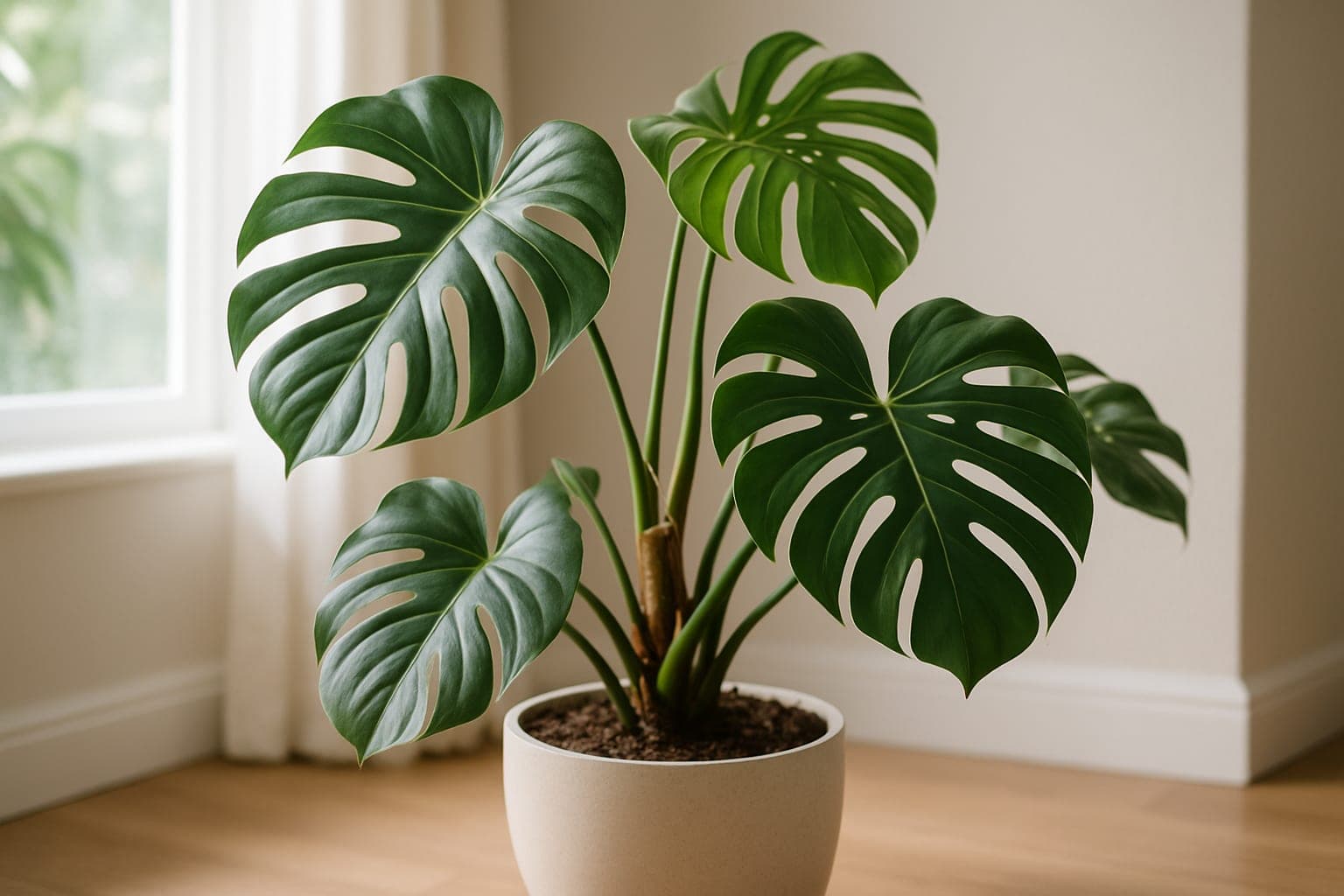
Monstera Deliciosa Care Guide
The Monstera deliciosa, or Swiss cheese plant, is a rewarding tropical climber prized for its dramatic split leaves. This guide covers everything from light and watering to moss poles and the secrets behind those iconic fenestrations.
Seasonal Plant Care: Adjusting for the Changing Year
Adapt your plant care routine throughout the year to keep your houseplants healthy and thriving.

Comments(529)
I'd gently push back on the "low-light champions" framing—most shade plants still need *some* light to thrive, and there's a real difference between "tolerates dim" and "actually thrives." I've had pothos and snake plants survive in genuinely dark corners, sure, but they grew slower and looked duller than when I moved them to indirect light. If someone's got a truly dark space, supplemental grow lights are honestly worth the investment rather than expecting any plant to genuinely flourish in near-darkness.
You're absolutely right—I've made that mistake myself, tucking a basil cutting into a dim corner and wondering why it turned leggy and sad! Even my most forgiving herbs need at least a few hours of indirect light to actually *grow*, not just survive. A small grow light really does change the game for dark spaces, and it's so much kinder to the plant than asking it to slowly fade in a corner.
I appreciate this one—I killed my first tomato attempt by tucking it into a shadier corner, thinking it'd be fine, and learned the hard way that most vegetables really do need their light! That said, I've had decent luck with my lettuce and spinach under a bright indirect spot that doesn't get full sun, so I'm curious if you have any shade-tolerant edibles to suggest? My mediterranean climate is usually too intense anyway, so working *with* less light might actually help me through summer.
I appreciate the focus on low-light plants, but I've found that "low-light champion" can be a bit misleading—even shade lovers like pothos and snake plants really do perform better with *some* indirect light rather than complete darkness. In my experience, the difference between a dim corner and one with a bit of reflected light is huge for growth rates. Do you find that's true with your collection, or have you had success with plants in genuinely dark spots?
I learned this the hard way when I moved a philodendron into a corner I thought was hopeless—turns out it thrived there while my brighter spots stayed empty. These low-light options are lifesavers for making neglected spaces feel alive without fussing over grow lights.
I've been struggling with a dark corner in my kitchen for ages, so this is exactly what I needed! Most of my nine plants are herbs that love sun, which means I've basically given up on that spot—but now I'm wondering if I could try something shade-tolerant there just to fill the space. Do any of the plants you recommend tolerate occasional neglect? I seem to be good at forgetting things in corners. 😅
I totally get it—I killed my first pothos by overthinking it, but then realized it actually *thrives* on neglect in low light. Cast iron plants are another solid option if you want something genuinely forgiving; I've had mine in a shadowy corner for years and it barely asks for anything. The key is matching the plant's tolerance for both darkness and dryness, since those dim spots tend to dry out slower anyway.
I appreciate the focus on low-light tolerance, though I'd gently push back on the idea that shade-loving plants truly *thrive* in dim corners—most are just more forgiving of suboptimal light than, say, sun-worshippers. I've found even Philodendron hederaceum performs noticeably better with bright, indirect light; it just won't die in a dim spot. For actual edible growing in low light, I've had modest success with mizuna under basic LED panels, though it's hardly comparable to proper daylight. The real win is finding plants that tolerate shade rather than expecting them to flourish there.
Honest take: most "low-light" plants still need *some* light to actually thrive, not just survive. I've got a chili pepper doing okay in medium indirect light, but it's a fraction of what it'd produce by a bright window—and that's one of the tougher vegetables. If you're genuinely in a dim corner, you're better off rotating plants through there for short periods than expecting anything to truly flourish. Would love to see what specific lumens you're measuring, because "low-light" means very different things depending on the space.
I've learned the hard way that "shade-loving" really means different things—my Scaphophyllum wallisii looked decent in moderate indirect light but genuinely struggled in the corner I thought was perfect for it. These days I prioritize plants like *Aglaonem ma* varieties and *Rhaphidophora tetrasperma* for my darker spots, though even they need *some* ambient light to stay vibrant. The key I found is that low-light plants still need a few hours of indirect bright light daily, not complete darkness.
I've been struggling to find something for the dark corner of my living room, so this is perfect timing. I currently have four plants and most of them seem to want more light than I can give them, so I'm really interested in learning which shade-lovers would actually thrive in my setup. Do you have recommendations for cold climates, or do most low-light plants prefer warmth?
Oh, I feel your pain! I've got ten plants crammed into a cold apartment, and finding shade-lovers that don't mind cooler temps was a game-changer for me. Pothos and ZZ plants are seriously forgiving in low light *and* cold, but honestly, Sansevierias can surprise you too—I nearly killed mine by overthinking it. Have you thought about a Philodendron? They're tropical so they'd prefer warmth, but mine survives just fine in my chilly corner as long as I don't overwater.
I appreciate the focus on shade-tolerant plants—so many people assume dark corners mean dead zones. That said, I find even "low-light" plants do better with a bit of strategizing. In my experience, moving a pothos or philodendron just a few feet closer to an indirect light source can make a real difference in growth speed, even if the spot still feels dim to us. Worth trying before giving up on a tricky corner.
I'm totally with you on this—I've got a struggling oregano in a corner that honestly just needed to shuffle two feet closer to the window, and suddenly it perked up. Even herbs that tolerate shade still appreciate what light they can get, so your point about strategic placement is spot on. Sometimes the difference between "barely alive" and "actually thriving" is just finding that sweet spot rather than assuming a plant has to go somewhere or fail entirely.
I've been trying to figure out which of my herbs could handle the shadier corner of my kitchen—mostly basil and parsley so far—so this is perfect timing! I have this one mint plant that I'm pretty sure I've been slowly starving of light, and I'd love to know if there are any shade-tolerant herbs worth growing since my sunny windowsill is already packed with eleven plants fighting for space. Do any of the plants you mentioned actually tolerate lower light while still being useful in the kitchen, or am I stuck with just the sun-worshippers?
Mint is actually tougher than most herbs in lower light—I have one thriving in a corner that only gets a couple hours of indirect sun, so your plant might bounce back nicely if you move it. That said, basil and parsley really do prefer brighter spots, so you're probably better off keeping those on your sunny sill and filling that shady corner with something like pothos or a snake plant instead. I learned that lesson the hard way after wasting months trying to make basil work in dim conditions.
I'd push back slightly on "shade-loving" as a catch-all—most of these plants *tolerate* low light, but they're not thriving in it. I've kept orchids for years, and even the supposedly shade-tolerant varieties flower better with filtered bright light. If someone's dealing with genuinely dark corners, they're better off rotating plants through that space rather than expecting them to flourish permanently there.
You're making a really important distinction there. I've found the same thing with my succulent collection—even the shade-tolerant species like some *Haworthia* varieties will eventually stretch and weaken if they never see decent light. Rotation is such a smart solution, and honestly it keeps all the plants healthier overall rather than consigning something to permanent dim duty.
I've been struggling with my orchid in a corner that doesn't get much direct light—it's been my biggest challenge with the three plants I have. This post is super helpful because I wasn't sure if orchids could actually survive in lower light or if I was just setting myself up for failure. I'd love to know if any of the plants you mentioned would pair well with orchids in the same space, or if I should move mine somewhere brighter?
I appreciate the focus on shade tolerance, though I'd gently push back on "low-light champions"—most of these plants still need *some* light to thrive, just less than sun-worshippers. I've found that even Aspidistra elatior (cast iron plant) and Sansevieria perform noticeably better with bright indirect light than in true darkness. In my arid climate, the real challenge with shade plants is overwatering since evaporation slows dramatically; that's where most failures happen for me, not the darkness itself.
You're so right about the watering trap—I've definitely killed more shade plants by fussing over them than by the darkness itself! I keep my herbs (basil, oregano, thyme) in a brighter spot, but I noticed my mint in a shadier corner was getting leggy and droopy until I backed way off the watering schedule. Even in my Mediterranean climate where everything dries fast, those lower-light spots stay damp so much longer.
You're spot on about the watering piece—that's where I see the most casualties too. I've got a *Rhaphidophora tetrasperma* in a genuinely dim corner that trudges along until I forget it's there and water it on schedule rather than waiting for the soil to dry. Switched to checking it every couple weeks instead, and it perked up noticeably. The "low-light" framing does gloss over the fact that even the toughest shade plants need *some* photosynthesis happening.
I've been trying to figure out which of my herbs could handle the shadier corner of my kitchen, so this is perfect timing! Most of mine are pretty sun-hungry, but I've had decent luck with mint and parsley in indirect light—they're not thrilled, but they're stubborn enough to survive my neglect. Would any of the plants you mentioned work in a spot that gets maybe 2–3 hours of dappled morning light, or am I better off moving my herbs to the brightest window I have?
I appreciate posts like this since low-light tolerance is such a practical concern, though I have to admit my collection leans heavily toward bright-indirect setups—especially with my orchids needing that sweet spot. That said, I've had decent success with Philodendron hederaceum in shadier spots; it won't thrive in truly dark conditions, but it's more forgiving than most. Do you find certain plant families consistently outperform others in genuine low-light, or is it more about individual species variation?
I've been struggling with a really dark corner in my apartment, so this is perfect timing! I picked up a Pothos a few months ago thinking it would help, and it's honestly done so much better than I expected—barely any yellowing even though it barely gets indirect light. I'm curious though: are there shade-tolerant plants that don't grow quite so vigorously? I have limited space and the Pothos is already taking over.
I've had good luck with pothos and snake plants in my darker corners—they actually seem to prefer not being in direct sun, which is the opposite of what I thought when I started. The real game-changer was realizing that "low light" doesn't mean no light, so even a north-facing window usually works. I'd love to see photos of your setup if you have any tricky spots because I'm still figuring out my bedroom, which barely gets any indirect light at all.
I've killed more shade plants than I'd like to admit by overwatering—they need way less than we think since they're not photosynthesizing as much. My ZZ finally thrived when I switched to watering it every three weeks instead of every week. The real game-changer for me was accepting that "low-light" still means *some* light; a north-facing window or a few feet from a south-facing one made all the difference. What's your experience—do you find most people underestimate how little water these plants actually need?
You've nailed it with the watering—I learned that lesson the hard way too. I killed a gorgeous pothos in my first year by treating it like it needed constant moisture, when really it just wanted to dry out between waterings. The light thing is so important, and I've found even my native tropical plants that tolerate shade still perk up noticeably with that indirect bright light you mentioned. I think people often assume low-light means *no* light, which sets these plants up to fail from the start.
I've got a pretty dark corner in my kitchen and have been hesitant to put anything there, but this is exactly what I needed. I'm mainly growing herbs since I'm in a cold climate, so I'm wondering if any shade-tolerant herbs would actually work in low light—mint maybe? Right now I'm just focused on getting my basil and parsley to cooperate, but I'd love to expand into some lower-maintenance options if they're possible.
I appreciate the focus on low-light plants, but I've found the reality is more nuanced than "shade-loving." Most of these tolerate low light rather than thrive in it—they just decline slower than sun-hungry plants. In my Mediterranean climate, even my "shade" plants like pothos get decent indirect light, which makes a real difference in growth speed and leaf colour. If someone truly has a dark corner, they're probably better off rotating plants through the space or accepting very slow growth. What's your take on that trade-off between survival and actual vigour?
You make a really good point—I've noticed this with my own pothos (Epipremnum aureum) too. I kept it in what I thought was a low-light spot, and it just... stalled. Once I moved it to bright indirect light, the growth was noticeably faster and the leaves got bigger. I'm still figuring out where the line is between "survives" and "actually grows," so do you find rotating plants through darker spaces works better than leaving them permanently there, or is that more of a maintenance hassle?
I'd gently push back on "shade-loving"—most of these plants are actually shade-*tolerant* rather than true shade-lovers, which is an important distinction. I grow a lot of *Solanum lycopersicum* varieties, and even my low-light cherry tomatoes eventually start stretching if they don't get at least 4–6 hours of decent indirect light. The same goes for most popular houseplants; they survive in dim corners but won't thrive there long-term. Worth clarifying in the post that these are better framed as "plants that handle low light better than others" rather than genuinely preferring darkness.
I appreciate this topic—I've definitely had my share of dark corner casualties! That said, I've found that most of my herbs really do need decent light, even the "shade-tolerant" ones like mint and parsley. I've had better luck moving them to brighter spots than trying to make them work in genuinely dim spaces. If you're determined to grow something edible in low light, mint is genuinely your best bet; it's stubborn enough to soldier on even when it's not thriving.
I totally agree—I've killed more herbs in dim corners than I'd like to admit! Mint really is the resilient friend of the bunch, though even mine gets a bit leggy when it's not happy with the light. I'm curious whether you've found success moving those herbs seasonally, or do you just accept that some plants are better off in a permanent bright spot?
I love this topic because it opens up so many possibilities for spaces that feel hopeless. That said, I'm curious whether you touched on humidity preferences in your recommendations—I've found that low-light plants often have very different moisture needs depending on their origin, and that's where people tend to struggle most in arid climates like mine. Do you have any favorites that tolerate both shade and drier air?
I've been struggling with a super dark corner in my apartment and didn't think anything would survive there, so this is perfect timing! I just picked up a pothos a few weeks ago and it's already looking way happier than I expected—do you have any tips for watering plants in low light since they probably don't need as much as ones in bright spots?
I'd gently push back on the framing here—low-light plants won't really *brighten* a dark space, they just tolerate it better. I've found the real trick is matching expectations: a pothos or snake plant will survive dim corners, sure, but they grow slowly and stay fairly muted. If you actually want visual impact in a dark area, it's often worth investing in a cheap grow light rather than expecting miracles from shade-tolerant varieties alone.
You've made a solid point—I'd say the same thing applies to my succulents in lower light. Echeveria and Haworthia can technically handle shadier spots, but they etiolate and lose that compact rosette form that makes them appealing in the first place. A modest grow light really does change the game, especially if someone wants their plants to actually thrive rather than just survive.
I'd push back slightly on the "brighten up" framing—these plants survive in low light, they don't thrive. I've kept a pothos and ZZ in genuinely dark corners for years, and they just... exist. They grow maybe an inch a month. The real win is using them where you *can't* put anything else, not expecting them to perform like sun-lovers. That said, if the post recommends actual tolerant species and realistic expectations, it's useful. What's your take on watering frequency in low-light conditions? I find most people underwater these plants out of guilt.
I've had such good luck with pothos and snake plants in my basement setup—they're honestly lifesavers for my cold climate since I can't keep as much going outside. My one tip: even the shade-lovers seem to appreciate *some* light, even if it's indirect, so I rotate mine every couple weeks to prevent them from getting too leggy. What low-light plants are you finding work best in really dim corners, like away from any windows?
I love your rotation trick—I've definitely learned that lesson the hard way with a pothos that decided to get weirdly sparse on one side! I've had similar success with a ZZ plant in a corner that barely gets any indirect light, though it grows at a glacial pace, which honestly works fine for me since I already have eight plants competing for my attention. Do you find the basement setup stays consistently cool, or does it warm up enough in summer that you worry about the humidity levels?
I'm curious whether "low-light" here means genuinely dark corners (like north-facing with minimal indirect light) or just "less bright than a south window"—I've found those need pretty different plants. Most of what I've tried does okay in moderate shade, but I'm still figuring out which ones actually thrive when it's genuinely dim. Do you have recommendations that specifically handle <100 foot-candles, or should I be realistic about supplementing with grow lights for anything beyond pothos and maybe a sansevieria?
I'd gently push back on "brighten up"—these plants won't actually increase ambient light, though they'll certainly survive where others won't. I've had good success with *Aspidistra elatior* in genuinely dim corners, but I find most so-called low-light plants actually prefer moderate indirect light and just tolerate darkness. In my arid climate, the real challenge is keeping humidity up for shade-lovers like ferns without creating rot issues, so I'm curious what others do with that tradeoff.
That's a solid distinction—"tolerate" really is the honest word for most of them. I've found the same with my orchids in tropical humidity; even shade-tolerant varieties perk up noticeably with better light, they just won't die without it. The rot risk you're describing is real though; I've learned that low light + high moisture is a rougher combo than people admit. I tend to err toward less frequent watering in dim spots rather than trying to maintain the humidity those plants technically prefer.
I've got a pothos in a corner that barely sees indirect light, and it's been thriving for years—though I've noticed it grows slower than the one on my shelf with actual brightness. My real challenge has been the herbs though; even my shade-tolerant mint struggles without decent light. Have you found any low-light herbs that actually produce well, or is that pretty much a lost cause? I'm always looking to squeeze more growing space out of my place!
I totally get the mint struggle—I've got nine plants in my collection and that's been my experience too. Pothos (Epipremnum aureum) really is the low-light MVP, though you're right that growth slows down noticeably. For herbs specifically, I've read that mint and parsley can survive in lower light, but I haven't had much success with actual harvest yields myself yet. I'm still learning if it's just not worth the effort in truly dim spaces, or if I'm not giving them *just enough* light to make a difference—would love to know if you figure it out!
I'd gently push back on the framing here—most so-called "shade plants" still need *some* light to thrive, and I've found that a dim corner often isn't enough unless you're willing to accept slow growth and sparse foliage. What actually works better is being honest about what "low-light" really means (bright, indirect light near a window) versus genuinely dark spaces, where grow lights become pretty essential if you want the plant to do anything interesting.
I've got a pothos in a corner that barely gets any indirect light and it's honestly thriving better than some of my tropical plants in brighter spots—do you find that to be pretty common? I'm curious if you covered any of the slower growers in your piece, since I feel like that's where people sometimes get discouraged. I'd love to see photos of the setup if you have any!
I've learned the hard way that "shade-loving" doesn't mean zero light—even species like Scindapsus pictus need *some* indirect light or they'll stop growing entirely. I kept mine in a genuinely dark corner for months and watched it stall, but moved it to a spot where it catches bright reflected light from across the room, and it's taken off. If you're working with a truly dim space, I'd suggest testing it first with a plant you're willing to sacrifice before committing a more finicky species.
I've been struggling to figure out what to do with the dark corner in my bedroom, so this is exactly what I needed right now. I only have four plants total and none of them are doing great in low light, so I'm really hoping to find something that actually thrives in shade instead of just surviving. Do you have a favorite from the ones you mentioned, or is there one that's easiest for beginners to care for?
I've learned the hard way that "low-light" doesn't mean "neglect-proof"—my first pothos nearly didn't survive because I thought dark corner = never water. That said, I've had the best luck with a couple shade tolerant tropicals like my ZZ plant, which has honestly thrived on my benign neglect in a north-facing spot. Since I'm in a cold climate and can't rely on natural light much in winter, I'm curious whether you have recommendations for shade plants that don't sulk as much during the darker months?
I'd push back slightly on the "shade-loving" framing—most of these plants tolerate low light rather than thrive in it. I've found they do noticeably better with even modest indirect light. That said, if you're stuck with genuinely dark corners, pothos and ZZ are solid picks. Out of my five plants, only my orchid actually struggles in low light, though cold-growing types need decent light anyway to set flowers, so I keep it near a bright window regardless.
I've had decent luck with pothos and ZZ plants in genuinely dark corners, but I'd push back a bit on "low-light" becoming a catch-all excuse—most of these plants still need *some* indirect light to thrive, not just survive. In my mediterranean climate the real challenge is keeping them from getting leggy when they're competing with all that outdoor brightness elsewhere in the house. What's your take on rotation schedules for these plants, or do you find they adapt better to one spot than moving them around?
I think you're spot on about that distinction between thriving and just surviving. I learned that lesson with my pothos the hard way—it technically lived in a corner, but once I moved it a few feet closer to a window with filtered light, the growth was noticeably faster and fuller. For rotation, I've found that these plants seem to prefer consistency over frequent moves, at least in my tropical space where I don't have your contrast between indoor and outdoor light. Maybe a seasonal shift is enough rather than shuffling them around constantly?
I've had great success with *Rhaphidophora tetrasperma* in a corner that gets almost no direct light—it actually seems to prefer the dimmer conditions and puts out new leaves more consistently than when I initially kept it closer to a window. These low-light adapted species really do deserve more attention since they thrive where most people assume nothing will grow, and I find they often become the most reliable performers in a collection.
I've killed exactly zero plants in dark corners, which honestly feels like my greatest achievement considering my track record elsewhere! My orchids absolutely refuse to cooperate without bright indirect light, so I've learned to reserve my shadowy spots for pothos and snake plants instead—those two have single-handedly saved my 14-plant collection from total embarrassment more times than I'd like to admit. Would love to see photos of how people are styling their low-light setups!
I learned the hard way that "low-light" is relative—what thrives in my shady desert apartment would actually prefer more light than most people think. I've had the best luck with pothos and snake plants, but I had to dial back watering since they're slower growers in dim spots. If someone's in an arid climate like mine, they might actually do better rotating plants between low and bright light every few weeks rather than leaving them permanently in a dark corner.
I'd push back slightly on rotating—I've found that consistency matters more than the light boost, especially in tropical climates where humidity stays high. My pothos definitely slows down in low light, but it stays healthier when left alone than when I shuffle it around. That said, you're right that "low-light" is misleading; even shade-lovers need *some* light, and arid conditions absolutely change the equation since less water evaporates anyway.
I've killed more orchids than I'd like to admit trying to force them into dim corners, so I really appreciate posts like this! My *Phalaenopsis* eventually told me it wanted bright, indirect light by basically staging a leaf-drop protest. These days I save my shadier spots for pothos and ZZ plants, which are genuinely unfussy, and keep my three orchids in the brightest window I can manage—even if it means rearranging furniture like I'm constantly redecorating.
I've learned the hard way that not every plant thrives in my shadier corners—I killed a pothos once trying to prove it could handle low light, turns out mine just got leggy and sad! Are you mostly focused on ornamental plants, or would you cover any shade-tolerant veggies? I'm always hunting for herbs or leafy greens that don't need full sun since my kitchen gets pretty dim.
I feel that—leggy pothos is rough. On the veggie side, it's tough in truly low light, but I've had decent luck with leafy greens like lettuce and spinach under a basic LED bulb in my tropical setup. Shade-tolerant herbs are way more limited than people think, honestly. Mint grows anywhere, but most others really do need decent indirect light to taste like anything. If your kitchen's dim, supplemental lighting might be worth it rather than expecting full harvests from ambient light alone.
I've learned the hard way that even "low-light" plants appreciate what light they can get—I moved my pothos away from that dark corner and into a spot with just a bit of indirect morning sun, and the difference in growth was night and day. That said, this is such a helpful roundup for those tricky spaces we all have. I'm curious which plants you'd recommend for someone in a tropical climate where the challenge is actually *too much* direct sun rather than too little.
I've been pushing my *Scaphophyllum* into darker corners lately with decent results, though I do miss how vibrant the foliage gets with more indirect light. The challenge I've found is that even the most shade-tolerant tropicals still need *some* light to thrive long-term—which plants did you end up prioritizing for the truly dark spots, the ones that barely get any windows nearby?
I'm realizing my herb collection might be in trouble because half of them are probably *not* shade lovers! Most of mine seem to sulk without decent light, especially the basil and oregano. I'm curious whether any of the plants you mentioned could work in a bright-but-indirect spot—I have a north-facing corner that gets maybe a few hours of dappled sun. Would that be enough for, say, a pothos or snake plant to thrive alongside some of my herbs?
I'd say your north-facing corner could definitely work for pothos—I have one in a similar spot and it's doing fine, just slower growth than I'd like. Snake plants are tougher and seem pretty forgiving with light from what I've read, though I haven't tested that myself yet. The herbs are probably your real constraint though; basil especially seems to need actual brightness. Have you thought about rotating them in and out, or keeping the shade-lovers in that corner permanently while moving the herbs somewhere brighter when they start looking pale?
I've definitely learned the hard way that "low-light" doesn't mean "neglect it forever"—I nearly killed my pothos by assuming dim corner = zero water needs! That said, I'm curious which of these you'd recommend for someone like me who has more north-facing windows than anything else? My collection's small enough that I'm still experimenting, and I'd love to know if any are particularly forgiving when the season shifts and light gets even scarcer.
I'd gently push back on "brighten up" here—most shade plants won't actually brighten a space the way a lamp would. What they do excel at is surviving dim conditions, though they'll grow slower and more sparsely than in moderate light. I've had better luck in my arid home treating low-light plants as more of a design compromise than a solution; they're legitimately useful for corners, but I manage expectations about their vigor. Would've appreciated the post specifying lux ranges or mentioning which ones truly tolerate deep shade versus which just *prefer* it.
I've learned the hard way that "shade-loving" still needs *some* light—I killed a pothos in a genuinely dark hallway before realizing even low-light plants need indirect brightness. Now I rotate my Epipremnum aureum and Scindapsus pictus between my shadier corners and brighter spots every few weeks, and they're much happier. Do you have tips for assessing whether a space actually has enough ambient light, or is it mostly trial and error?
I totally get that—I've definitely had my share of plant casualties in what I thought was "low light" but was really just *dark*. The thing that helped me most was honestly just spending time in those spaces at different times of day and noticing if I could read a book comfortably without a lamp. Now with my 14 plants scattered around, I've learned that even my orchid (which actually does prefer indirect light in my arid climate) still needs enough brightness to cast a soft shadow. Rotating plants between spots is such a smart move, and I'd say that's way more effective than guessing!
I totally get that—I've made the same mistake with a pothos in my cold apartment's darkest corner! What helped me was holding my hand up to the space at different times of day: if I can see a clear shadow, there's usually enough ambient light for low-light plants. Your rotation trick is genius though; I do something similar with my Scindapsus pictus, and it's made such a difference. Have you found that certain rooms in your space stay consistently brighter, or does the light shift a lot throughout the day where you live?
I'd gently push back on the "low-light champion" framing—most shade plants still need *some* indirect light to actually thrive, not just survive. I've found that even supposedly low-light tolerant plants like pothos and snake plants grow noticeably better a few feet from a north-facing window than in a genuinely dark corner. If a space gets zero natural light, honestly, no houseplant is going to do well long-term, no matter what the internet says.
I wish I'd read this before killing my first orchid in a corner I *thought* was perfect! Since I'm in an arid climate, I've learned the hard way that low-light doesn't mean low-maintenance for moisture—took me a couple of sad specimens to figure that out. Curious if you've got recommendations for shade plants that actually tolerate dry air, since most of my 14 plants are clustered by the sunny window out of necessity.
I'm curious whether "shade-loving" here means plants that genuinely *prefer* low light, or plants that merely *tolerate* it—I've noticed a lot of guides blur that distinction. Most of my collection struggles in genuinely dark corners, even the ones supposedly tough. Are you finding success with any of these in rooms that get almost no direct sun, or is indirect light still pretty essential?
Good catch—that distinction matters. Honestly, most "shade-tolerant" plants still need *some* indirect light to actually thrive; they just don't need direct sun. In my experience with Mediterranean light, even my tolerant ones (pothos, philodendron) slow down noticeably in genuinely dark corners. I've had better luck accepting that truly airless rooms need either a grow light or regular rotation to brighter spots. Are you working with rooms that get any window light at all, or is it complete darkness?
I totally get the frustration—I've killed enough orchids in dim corners to know that distinction matters! In my arid climate, even my "shade-tolerant" plants seem to need at least some indirect light to actually thrive rather than just survive. If I had a photo of my latest orchid attempt in a corner with only ambient light, you'd see exactly what you mean—it just... stalled. I've had better luck accepting that truly dark spots might need a small grow light rather than pretending a plant will genuinely prefer being there.
I'd gently push back on "brighten up" here—shade plants won't actually brighten a space, they'll just tolerate it better than most. What I've found with my small collection is that even the most shade-tolerant species (like *Aspidistra elatior*) still need some indirect light to photosynthesize meaningfully. The real win is choosing plants that won't suffer in low light, not expecting them to thrive the way they would near a window.
You're absolutely right about that distinction. I've learned the same thing with my Scaphophyllum wallisii and other shade-tolerant tropicals—they survive low light, but they're not actually thriving in the way they do with bright, indirect conditions. The key is matching expectations to reality, which is what separates struggling plants from happy ones. Do you find certain species are more forgiving than others when you really do have those truly dim corners?
I've learned the hard way that low-light plants still need *some* light to thrive—even my pothos started getting leggy in a truly dark corner. Moving it just a few feet closer to a window made all the difference, so I'd say test placement before giving up on a space. These shade-lovers are wonderfully forgiving, but they're not meant for complete darkness.
This post came at the perfect time for me! I've got a north-facing corner in my apartment that stays pretty gloomy, and I finally planted a pothos there last month—it's actually thriving way better than I expected. My one tip from trial and error: even shade-lovers appreciate *some* light, so I rotate mine closer to the window every few weeks just to make sure it's not getting completely neglected. Have you found that certain low-light plants do better in cold climates than others, or is the lack of natural light usually the bigger limiting factor?
I've been trying to figure out what to do with that shadowy corner by my kitchen door, so this is perfect timing! Most of my nine plants are herbs that seem to demand all the sun they can get, but I'm curious—would any shade-tolerant plants work well in a low-light spot if I'm eventually hoping to harvest them? I'm still learning which herbs are actually flexible about light versus which ones will just sulk at me, so I'd love to know if there's any crossover before I go experimenting again (my basil already taught me a harsh lesson about wishful thinking).
I totally get the basil struggle—I've been there too. From what I've picked up so far, most culinary herbs really do crave that light, but I've heard mint can tolerate shadier spots better than others. Since you have way more plants than me (I'm still at four), I'm curious whether you've had any luck with shade-tolerant herbs, or if you're planning to stick with your sun-lovers and use this corner for non-edible plants instead?
I totally get the appeal of these low-light picks, but I have to admit I learned this lesson the hard way—I tried growing tomatoes in a shadier corner of my place and they just got leggy and sad! Now I keep my veggie collection in the brightest spots I can find, and I've got some of the shade-tolerant herbs like mint and parsley tucked into dimmer areas instead. Have you found any edible plants that actually thrive in low light, or are you mainly focusing on ornamentals for those tricky dark corners?
Haha, tomatoes in low light—yeah, that's a recipe for disappointment! I've made similar mistakes with my tropical plants when I first moved to a colder climate and didn't have enough natural light to go around. Mint is such a good call for shadier spots; I've got mine thriving in a corner that barely gets any direct sun. Have you tried growing microgreens or leafy greens like lettuce indoors under those conditions? I've had better luck with those than with most herbs in my dimmer spaces.
I've learned the hard way that low-light plants still need *some* light—I nearly killed my pothos by tucking it into a corner with almost no windows. Now I make sure even my shade-lovers get a few hours of indirect light near a window, even if it's across the room. Makes such a difference in keeping them actually thriving rather than just surviving.
That's the key insight right there—"surviving vs. thriving" sums it up perfectly. I've got five plants total, mostly orchids, and even my cold-hardy ones need that ambient light to actually grow. A corner with zero natural light is basically a plant graveyard no matter what species you pick. I'd rather be honest about placement limitations than pretend a dark spot will work; better to find the least-bad corner near a window or rotate plants through better-lit areas periodically.
I've had mixed success with shade plants over the years—killed a pothos once by overwatering it in a dim corner, convinced it needed extra care! These days I've found that even "low-light" plants seem to do better with *some* indirect light, and the trick for me has been resisting the urge to water as frequently as I would under brighter conditions. Would love to know which of these you've found most forgiving in genuinely dark spots.
I appreciate this topic since my two orchids demand bright conditions, but I've been curious about what actually thrives in low light. My arid climate means most shade plants I see recommended need too much humidity, so I'm wondering—do you have any suggestions for shade tolerant species that don't mind dry air? Would love to finally fill that corner by my bedroom window.
I'd honestly skip most shade plants for your climate—they're usually humidity lovers. If you want something practical for a dry corner, pothos or snake plant will survive it, but they'll just survive rather than thrive. I've had better luck growing leafy greens like spinach or lettuce in my shadier spots here in the tropics, though they need more consistent watering than you might want. I have a photo of my spinach setup I'd share, but the real answer is that genuinely shade-tolerant *and* drought-tolerant plants are rare because those two traits rarely coexist in nature.
I totally relate to that arid climate struggle—most shade recommendations assume you're in a humid jungle! Pothos and ZZ plants genuinely don't mind dry air and will tolerate lower light, though they're not herbs. If you want something you can actually use, though, I've had decent success with mint in a shadier spot; it gets leggy but keeps producing. Your bedroom corner might work if it gets even a bit of indirect light.
I've got a few shade-tolerant herbs in my collection—mint and parsley do surprisingly well in lower light, though they're definitely not thriving like they would on a sunny windowsill. My one tip: even the most shade-tolerant plants benefit from *some* indirect light, so I'd be curious which specific varieties you'd recommend for truly dark corners, like interior hallways? That's where I always struggle.
I totally get the hallway struggle—that's where I hit a wall too! Though I'd gently push back on herbs being shade-tolerant; Mentha and Petroselinum really do need more light than most realize, so it makes sense they're just surviving for you rather than thriving. For genuinely dark interior spaces, I've had better luck with Aspidistra elatior or Sansevieria—they're practically indestructible. Have you considered rotating plants between darker and brighter spots every few weeks instead? Even shade-lovers seem to reset that way.
I've got a soft spot for shade plants since my apartment's north-facing windows are pretty limiting, but I've had better luck than I expected with a couple of native understory plants—they seem way more forgiving than the usual suspects. That said, I'm curious whether you focused on tropical low-light plants or if you included any cold-hardy options? I only have room for five plants total, so I'm always trying to maximize my picks for what actually thrives in my climate rather than just surviving indoors.
I'm really curious about those native understory plants you mentioned—I've been slowly learning that the usual tropical suspects can be fussy in cold climates, and I suspect hardy options might actually be more reliable for year-round growth rather than just barely hanging on. My north-facing setup has made me appreciate how much slower everything grows indoors in winter, so I'm wondering if your native picks actually maintain their foliage better through the cold months, or if they're more dormant than tropical shade lovers?
I've had such good luck with Ocimum basilicum in a shadier spot—it's definitely not the ideal setup, but it still produces leaves if I rotate it toward the window every few days. Have you found that low-light herbs struggle more with flavor or vigor, or does it really depend on the species? I'd love to try some of the suggestions here since my one plant collection could use some better organization around my apartment's dimmer areas!
I've had great success with pothos and snake plants in the shadier corners of my home—they're honestly forgiving enough that even my early mistakes didn't kill them. My one hard-won lesson was realizing that "low-light" doesn't mean "no light," so I finally moved my struggling philodendron a few feet closer to an east-facing window and it perked up immediately. I'm excited to see which other species you're recommending since I'm always looking to fill those darker spots without sacrificing my plant collection.
I've got a pothos in a corner that barely gets any indirect light and it's honestly doing better than some of my plants in brighter spots—I'd share a photo if I could, but it's definitely thriving. My question is, does it actually matter if I rotate shade plants since they're not getting much light anyway, or can I just leave them where they are? I have six plants total and most seem fine in lower light, but I'm wondering if I'm missing something about keeping them healthy long-term.
I've had such a hard time keeping anything alive in my apartment's shadiest corner until I finally tried a pothos—now it's my most forgiving plant! What I wish I'd known sooner is that "low-light" doesn't mean zero light, so I moved mine about six feet from an east-facing window instead of tucking it in a dark closet, and it completely transformed. Does the post go into the difference between "tolerate shade" and "actually thrive" plants? That distinction has saved me so much frustration with my small collection up here in the cold.
I've got three plants total and just picked up an orchid last month—kept it in a shadier corner at first because I was nervous about light, but it actually started dropping buds. After moving it closer to a window, it's doing way better. Would love to know which of these shade-tolerant plants you'd recommend pairing with an orchid without competing for the same spot, since I'm working with limited bright corners in my apartment.
I'd suggest pairing your orchid with a Pothos or Philodendron in that darker corner—they genuinely thrive in low light where orchids struggle, so you're not fighting over the same real estate. I learned this the hard way when I crowded my Phalaenopsis with other plants thinking shade-tolerance meant they'd all be happy together, but the orchid still wanted brighter indirect light to rebloom reliably.
I'd push back a bit on "brighten up" — these plants won't actually brighten a dark room, they'll just survive in it, which is honest but different. In my experience, low-light tolerance is really a spectrum; something like a pothos will technically live in a dim corner indefinitely, but it'll grow maybe a quarter the speed it would in indirect bright light. Worth setting expectations right so people don't end up frustrated. Have you found certain low-light plants that actually maintain decent growth rates, or is that just the reality of the trade-off?
You're spot on—I've learned that lesson the hard way. My pothos in the darkest corner barely moves, while the one by the east window is unstoppable. The real low-light winners in my collection are the ZZ plant and cast iron plant; they're genuinely slow growers anyway, so the difference is less noticeable, and they don't get leggy like pothos does. Still slower than bright light conditions, but they stay compact and functional. Have you found any that buck the trend, or is it just accepting the tradeoff?
I'm glad someone's tackling this topic! I've had decent success with pothos and philodendrons in my shadier spots, though I'll admit my basil and mint actually *sulk* without good light—they get leggy and lose flavor fast. Have you found any low-light herbs that actually perform well, or is that basically a lost cause? I'm curious whether the plants you're featuring work as actual functional plants or if they're more on the decorative side.
I'd gently push back on "shade-loving" as a catchall—most of these plants *tolerate* low light rather than thrive in it, which is a meaningful difference. I've found that even supposedly low-light champions like Philodendron or Pothos grow noticeably better with bright, indirect conditions. That said, if someone's genuinely stuck with a dark corner, these are certainly more forgiving choices than, say, trying to keep an orchid there!
You've nailed the distinction—tolerance versus thriving is exactly right. I've got a cold-hardy orchid that sits in what most would call low light, and it survives but barely flowers. Move it closer to the window and the difference is stark. That said, I think the post's value is in being honest about what actually works when you're genuinely limited by space, not overselling these plants as happy in darkness.
I really appreciate posts like this because low-light plants get overlooked. In my arid climate, I've found that shade-lovers actually do better indoors anyway since they're less likely to get scorched by my dry air—my Pothos and ZZ plant are thriving in corners where my tropicals would struggle. Have you noticed any difference in watering needs between your low-light plants and the ones in brighter spots?
I've been wanting to fill that dark corner in my apartment for months, so this is perfect timing. I have a succulent that honestly seems to tolerate lower light better than I expected, though I'm still learning the limits—does it need more water in lower light conditions or less? Either way, I'm excited to try some of these shade-loving options because I was starting to think every plant needed a sunny window.
I appreciate the focus on shade-tolerant plants, though I'd gently push back on the idea that succulents belong in that category. Most of us work with species that genuinely need bright, indirect light to thrive—even the tougher ones like Haworthia or certain Echeveria can get leggy and weak in dim corners. For truly low-light spaces, the conventional wisdom pointing toward Pothos or Sanseviera makes a lot of sense, but if someone has a sunnier spot they're willing to dedicate, the succulent options suddenly open up quite a bit.
I appreciate the focus on shade-tolerant plants, though I'd gently push back on the "brighten up" framing—these species thrive in low light precisely because they've adapted to absorb what little is available, not to radiate it back. In my experience with a compact collection, plants like *Zamioculcas zamiifolia* actually seem happier and more resilient in genuinely dim corners than in the bright, dry air many of us provide by default. They're forgiving, sure, but low light + inconsistent watering still catches people out.
I've been meaning to try growing some shade-tolerant herbs since my kitchen corner barely gets any direct light—do you have any recommendations for culinary ones? I know Ocimum basilicum can get leggy in low light, but I'm curious if something like Mentha or Petroselinum crispum might actually thrive there instead of just surviving. Have you experimented with herbs specifically for dimmer spots?
I've learned the hard way that "shade-loving" is relative—most houseplants still want *some* indirect light, even the tolerant ones. My Zamioculcas in the darkest corner of my place survives but doesn't thrive, and I finally moved it closer to a window where it actually grows. Worth mentioning: low-light tolerance isn't the same as preference. Are you covering actual metrics in the post, like how close these plants need to be to a light source, or more about which species handle neglect best?
You're absolutely right—I made that mistake with my basil! I kept it in what I thought was a "bright corner" and wondered why it was so leggy and sad. Moved it three feet closer to the window and it perked up within weeks. I'd love to know those specific distance metrics too, since "indirect light" is so vague to me—does a plant two feet from a north window get enough, or should it be closer?
I've got one question though—does this apply to orchids? I have a phalaenopsis that's been struggling in my temperate apartment, and I'm wondering if moving it to a shadier spot might actually help instead of hurting it. I only have three plants total so I'm still figuring out the basics, and everything I read says orchids need light, but I'd love to know if there's a low-light option that actually works.
I appreciate the focus on shade plants, though I'd gently push back on "brighten up" — even the most shade-tolerant species still need *some* light to thrive, and I've found that most people underestimate how dim their corners actually are. With my small collection, I've had better luck being honest about light levels and either repositioning plants seasonally or adding a cheap grow bulb than assuming a plant labeled "low-light" will do fine in actual darkness.
I appreciate the focus on low-light plants, though I'd gently push back on the idea that succulents belong in that category—they really need bright indirect light to thrive, and I've seen too many stretched, pale specimens struggle in dim corners. That said, if someone's set on having *any* plant in a truly dark space, pairing it with a simple grow light makes all the difference and keeps options open.
I've learned this the hard way—I killed my first echeveria by shoving it in a corner thinking "less light means less fussing," which is backwards for succulents! But this post is spot-on; I've had much better luck pairing my darker shelves with pothos and snake plants while keeping my sun-worshipping sedums by the window where they belong. Definitely helpful for anyone trying to green up those tricky shadowy spots without making the same mistakes I did.
I've learned the hard way that "shade-loving" doesn't mean *no* light—even my Rhaphidophora tetrasperma in what I thought was a dark corner started stretching badly until I moved it near a north-facing window. The difference between a truly dim space and one with indirect ambient light matters way more than most guides acknowledge. Worth testing with a light meter app before committing a plant there, honestly.
I've had decent luck with pothos in my shadier spots, but honestly I've found that even "low-light" plants benefit from *some* indirect light—I noticed my pothos got pretty leggy when it was truly tucked away. Do you find certain plants are more forgiving than others in genuinely dark corners, or is that just my experience? I'm curious because I have a basilica and mint I'd love to move away from the window if possible, but I'm worried about sacrificing flavor!
I totally get that concern—leggy pothos is such a telltale sign! With my herbs, *Ocimum basilicum* especially needs more light than most people think to maintain flavor and oil content, so I'd be hesitant to move yours far from the window. That said, mint (*Mentha* spp.) is genuinely more forgiving and can handle dappled indirect light better than basil. Are you able to give them a spot with even a couple hours of gentle morning light, or is that not an option in your space?
I'd push back gently on "brighten up"—shade plants won't transform a truly dark corner, but they'll definitely survive there better than most. I've had good success with *Laurus nobilis* (bay laurel) in a dim spot near my north-facing window; it's technically an herb, grows slowly indoors, and honestly doesn't mind neglect. The key I've found is matching plant expectations to light rather than expecting the plant to compensate.
I've had great success with Phalaenopsis in shadier spots, though I'll admit they're not my usual choice since I'm mostly growing orchids in my arid setup where they prefer bright indirect light. For genuinely low-light spaces, pothos and ZZ plants have been reliable in my collection—they don't ask for much and still put out new growth. Have you found any surprising low-light performers that most people overlook?
I've had mixed luck with pothos in my shadier corners—they *survive*, but honestly, they get leggy and a bit sad. Where I've been surprised is with mint and oregano in partial shade; they're not *thriving* exactly, but they keep producing usable leaves without getting sparse, which beats losing a whole plant to low light. I think herbs are underrated for dim spots since we're usually just harvesting anyway, not expecting them to be showstoppers!
I've had the same struggle with a shady corner in my place, and I finally picked up a Philodendron last year that's thriving there now. It's amazing how much those low-light lovers can transform a space that feels forgotten. Looking forward to reading which other plants you recommend—I'm always curious to try something new in that dark spot.
I've had decent luck with pothos and snake plants in my shadier corners, but I'm curious—do you have any herb recommendations for low-light spots? Most of my herbs (basil, oregano, mint) really seem to sulk without much sun, and I'm itching to expand beyond my four plants without having to reorganize my whole setup.
I'd push back slightly on this one—most of what people call "shade-loving" really means "tolerates shade," not thrives in it. In my experience with succulents, even the shade-adapted ones like Sempervivum arachnoideum need more light than a genuinely dark corner provides. What's your threshold for "low-light"—are we talking north-facing window or interior room away from windows entirely?
I've found that low-light tolerance is actually pretty variable—some "shade-loving" plants still need better light than people think to actually thrive rather than just survive. My pothos got leggy in a genuinely dark corner until I moved it a few feet closer to an indirect window, and now it's finally putting out decent growth. Which plants from your list have you found actually *grow* in truly dim spaces versus just hanging on?
I'd push back a bit on "brighten up" — these plants won't magically fix a genuinely dark space, they'll just survive in it. In my experience, even shade lovers like pothos and snake plants grow noticeably slower in really dim corners. I've had better luck moving them into indirect light by a north-facing window than accepting the darkest spot in the room. What's your take on supplementing with grow lights instead, or does that feel like cheating?
I'd push back slightly here—most true shade plants are ferns and pothos types, which honestly aren't my thing since I work with succulents. That said, I've had decent success with Haworthia in lower light than people typically assume, especially H. cooperi var. truncata. It won't thrive in a dark corner, but it handles maybe 2-3 hours of indirect light without completely giving up, which is more than I'd expect from most succulents. The key is dialing back water since growth is slower.
I've had the same experience with Haworthia—mine's in a north-facing spot and genuinely seems fine with minimal light, though yeah, it grows at a snail's pace. The watering point is crucial; I learned that the hard way by overwatering one early on. If someone's determined to keep succulents in dim spaces, that's honestly the most realistic option, but I'd still lean toward pothos or a snake plant for actual low-light corners where you want something that actually grows.
I've had mixed luck with low-light plants—turned out my "dim corner" was actually just neglectfully dark, and I wasn't watering nearly enough once I realized the difference! That said, I'd love to know which of these shade-lovers you'd actually recommend for someone with *truly* minimal light, like an interior hallway with maybe one small window at the far end? I've got orchids that do fine in bright indirect, but I'm curious if any of the plants you mention could handle genuinely challenging conditions.
I've got a pothos and a snake plant in corners that barely get indirect light, and honestly they're my easiest keepers. The real trick I learned is that "low-light" doesn't mean "no water schedule"—I was overwatering mine thinking darker spaces meant slower growth. Now I just check the soil before watering and they're thriving. Would be curious if you covered that in the post since I see a lot of people struggle with that balance.
I've been experimenting with low-light herbs in my basement grow area—mint and parsley actually do surprisingly well with just a grow light, which saved me from constantly replacing them through winter. Have you found that any of the shade-tolerant plants you mentioned also tolerate the dry air that comes with most indoor spaces, or is humidity still a big factor even for the low-light lovers?
I've been struggling with a dark corner in my apartment, so this is perfect timing. I have one succulent that's been my only plant so far, and honestly it's thriving in my sunny window—maybe too much sun actually. I'm curious though, do shade-loving plants need less water too, or is that a separate thing? I'd love to try adding something to that dim spot since you make it sound so doable.
I'd gently push back on "brighten up"—these plants thrive in low light, but they won't actually brighten a space the way a light source would. That said, I've had good success with *Zamioculcas zamiifolia* and *Aspidistra elatior* in genuinely dim corners of my place; they're remarkably tolerant of neglect too, which matters when you can't monitor moisture as easily in low-light spots. The real trick is matching a plant's actual light requirements to your space rather than forcing a shade-lover into a dark corner and expecting it to perform.
I've been growing pothos and philodendrons in my shadier spots for years, and they're honestly lifesavers in a temperate apartment like mine—though I've noticed my tropical plants definitely sulk without bright indirect light! The tricky part I've found is that "low-light" doesn't mean *no* light; even my most tolerant plants get leggy if I push it too far. Do you have a favorite among these that actually thrives rather than just survives in dim corners? I'm curious if there's something I'm missing for that one really dark hallway in my place.
I've killed more plants trying to force them into low light than I care to admit. The trick I've learned is that "low light" tolerant doesn't mean they thrive there—they just survive. I moved my pothos and ZZ plant to a genuinely dim corner and they basically went dormant for months. Now I rotate them into brighter spots every few weeks and they're actually doing well. For actual dark spaces, I'm curious what you'd recommend that doesn't just plateau; are you finding certain species actually grow in those conditions, or mostly just maintain?
I've been trying to fill some shadier spots in my place, so this is really helpful. Though I'm curious—I keep hearing that *all* low-light plants will thrive in basically any dim corner, but I've had mixed results even with supposedly shade-tolerant ones. Do you find that some of these need at least a bit of indirect light to really do well, or am I just not watering them right?
I've found that low-light tolerance varies way more than most guides suggest—my *Aspidistra elatior* thrives in a corner that killed my first pothos attempt. The real game-changer for me was realizing that "low light" doesn't mean *no* water reduction, which I learned after overwatering a struggling *Zamioculcas* for months. Have you noticed certain shade-lovers doing better in cold climates like mine, or does dormancy in winter change how they handle darkness?
I appreciate this so much—my one succulent has taught me the hard way that not everything thrives in a corner! I've been trying to rehab it after moving it away from that dark shelf, and honestly, seeing it perk up has been eye-opening. I'd love to try some of these shade-tolerant options for the spots where my succulent clearly isn't happy, just to actually fill those dim areas instead of watching plants slowly sulk. Great timing!
I totally get that—I learned the same lesson with one of my plants. It's so satisfying when you move something to better light and it actually perks up. I'm curious, are you thinking of sticking with low-light plants for those dark corners, or will you keep trying different spots for your succulents?
I'd push back a little here—most "low-light champions" still need *some* light, and I've learned that the hard way. I keep five plants total, mostly orchids, and honestly the cold climate where I live means my windows aren't great either way. What actually works is being realistic about how dim "dim" really is. If a corner gets zero direct sun and stays gray all day, even pothos struggles. I'd love to see a post distinguishing between "bright indirect" and genuinely dark, because that changes everything about what survives versus what just slowly declines.
I'd gently push back on the framing here—shade-loving plants won't actually brighten a space, they'll just survive in it. They still need *some* light to photosynthesize. What I've found works better is matching expectations: pothos and peace lilies genuinely tolerate neglect, but they grow slowly and stay small. If the goal is visual impact in a dark corner, you're often better off with a brightly-lit spot elsewhere and rotating plants through the dim space occasionally.
I've been struggling with a dark corner in my living room, so this is perfect timing! I currently have 9 plants but most of them need way more light than I can give them there. Are these low-light plants still pretty slow growers, or can they fill out a space reasonably well even without much sun? I'm trying to figure out if it's worth it or if I should just accept that corner as a lost cause.
I've been struggling with a dark corner in my apartment—my Epipremnum aureum keeps getting leggy there, so I'm really glad to see this post. I have a few shade-tolerant plants already (Aspidistra and a struggling Monstera deliciosa, honestly), and I'd love to know if any of these champions would actually thrive where I have maybe 2–3 hours of indirect light, or if I'm being too optimistic. I took a photo of my setup that I'd share if uploads were possible—it's pretty dim! Do you have recommendations for the lowest-light tolerance, or am I better off just moving what I have?
Honestly, 2–3 hours of indirect light is workable, but it depends on the plant. My Aspidistra handles worse than that without complaint, so you're already in good territory there. The Monstera's struggle makes sense in that light though—it'll survive but won't really grow. I'd skip anything needing "bright indirect" and stick to true shade lovers like Pothos or ZZ if you want something actually thriving rather than just existing. Leggy growth is your signal to either move the plant closer to a window or accept slower growth; there's no real workaround there.
I appreciate this so much—my one succulent has taught me the hard way that not every plant needs a sunny windowsill! I've got a jade that somehow survived being shoved in a corner for months (probably thriving on neglect, honestly), though I'd love to see if any of these shade-tolerant options could actually keep my plant company without me feeling guilty about the lighting. Would've grabbed a photo of my surprisingly happy jade if I could share it here!
I appreciate the focus on shade-tolerant plants, though I'd gently push back on the idea that low-light conditions are ideal for most houseplants. Even the most shade-adapted species (like *Aspidistra elatior*) typically perform better with some indirect bright light—they just tolerate dimness better than others. In my experience with my collection, I've found that moving a struggling plant even a few feet closer to a window often makes a bigger difference than swapping it for a "low-light champion."
I've been meaning to tackle the dark corner in my living room, so this is perfectly timed. Though I'm curious—do "shade-loving" plants still need *some* light, or can they truly thrive in a space with almost no natural window access? I have a few shadier spots and I'm never quite sure how little light is too little before even the tough ones start struggling.
I've been struggling with a dark corner in my living room and honestly wasn't sure what would actually survive there. This is helpful because I've killed a pothos before (not sure how, but I did), so I'm nervous about trying again. Do these shade plants still need some indirect light, or can they really handle almost zero natural light? I'd love to see which ones grow fastest since I have limited space with my six plants already.
I love this topic. In my arid climate, I've found that low-light plants often struggle more with humidity and air circulation than actual darkness, so I'm curious whether your recommendations account for that or if you're assuming more temperate conditions. My two orchids live in shadier spots than most growers would dare, and they're surprisingly resilient there—do you have any experience with shade-tolerant orchids like Paphiopedilum species?
That's a great point about humidity—I hadn't considered how differently low-light plants behave in arid climates! I'm in a much more temperate zone, so I'm honestly not experienced enough with orchids to weigh in on Paphiopedilum. But I've had decent success with shade-tolerant herbs like mint and parsley in my dimmer corners, and I've noticed they actually need *less* frequent watering in lower light, which might work in your favor if you're careful about air movement. Do your orchids need any special treatment for the drier air, or do they adapt pretty naturally?
I'd gently push back on "brighten up"—these plants won't actually add light to a dark corner, they'll just survive there, which is different. I've learned that even low-light lovers like *Zamioculcas zamiifolia* or *Aspidistra* still grow noticeably slower without decent indirect light. In my dry climate, I find the bigger challenge is that dim corners often stay damp longer, so I've had more rot issues with shade plants than light-loving ones. Worth mentioning alongside the species recommendations!
I've got a pothos and a snake plant thriving in corners that barely see any indirect light, so I'm totally with you on this! Though I'll say my ZZ plant surprised me—everyone says it's low-light tolerant, but mine actually looks perkier with a bit more brightness. Have you noticed that some of these "shade champions" still perform better with at least moderate indirect light, or do you find they genuinely thrive in true dark conditions?
I think you're onto something with the ZZ plant—Zamioculcas zamiifolia can definitely tolerate low light, but it doesn't necessarily love it. In my experience with orchids, I've learned that "tolerates low light" and "thrives in low light" are two very different things, and I suspect the same applies here. Most of these plants will survive in dim corners but genuinely flourish with at least some moderate indirect light. Have you found a sweet spot for your ZZ where it looks its best?
I've been trying to get more green into my apartment's shadier corners, so this is perfect timing! I'm curious though—when you mention "low-light" plants, are you talking about spaces that get zero direct sun, or just a few hours? I have a Rhaphidophora tetrasperma in what I'd call medium-indirect light and it's thriving, but I'm hesitant to move it anywhere darker. Do you find certain shade-lovers actually struggle once you go *too* dim, or is that mostly a watering issue?
I've been curious about this since my basil (*Ocimum basilicum*) really struggles in the corner of my kitchen—it's honestly the shadiest spot in my place. Are you finding that shade-tolerant herbs exist, or is this more focused on foliage plants? I know most culinary herbs prefer bright light, so I'm wondering if there's a workaround I'm missing or if I just need to accept that corner stays empty!
I've been struggling with a really dark corner in my apartment, so this is perfect timing! Most of my collection is succulents that seem to hate anything less than bright indirect light, so I'm curious—are there any shade-tolerant succulents you'd recommend, or should I just accept that corner is a lost cause? I have about 11 plants right now and I'm trying to figure out what would actually survive over there.
I've learned the hard way that "low-light" still needs *some* light—even my pothos struggled until I moved it a few feet closer to a window. In my arid climate, the real challenge isn't darkness, it's humidity, so I'm curious which of these plants actually tolerate the dry air that comes with indoor heating. That's usually what kills them faster than low light does.
I appreciate the focus on low-light plants—I've had mixed results with them honestly! Most of my herbs really do need that bright windowsill, but I've found pothos and snake plants genuinely thrive in my shadier corners. My question is, have you tested any of these in *really* dim spots, like interior bathrooms with no windows? I'm curious if there's a practical lower limit before even "shade-loving" plants start struggling, because I suspect some recommendations might be more "tolerant of lower light" than actually thriving in it.
I've got a pothos and a satin pothos in my shadiest corner, and honestly they're thriving better than some of my brighter-light plants—though I'm curious if you included any tropical varieties in your list? I'm always looking to add more foliage plants that don't need that intense indirect bright light, since my apartment doesn't get a ton of it. Do you have a personal favorite from your picks for really dim spaces?
I've had mixed luck with shade lovers—my pothos does great in a corner I'd honestly given up on, but I murdered a philodendron there once by overwatering because I felt guilty about the light situation! These days I stick my Mediterranean herbs (rosemary, oregano, thyme) near a north-facing window instead of anywhere truly dark; even shade-tolerant plants seem happier with *some* indirect light. Curious to see which ones you'd recommend for genuinely low-light spots!
I love seeing posts like this because shade tolerance gets overlooked so often. In my tropical climate I'm always hunting for plants that can handle the shadier spots under eaves, and it's nice to have a good reference for what actually thrives rather than just survives. Since you're focusing on low-light options, I'm curious whether you're recommending any productive plants—I've had mixed results with shade-tolerant vegetables like leaf lettuce indoors, and I'd love to know what you've found works best in genuinely dim conditions.
I'd push back slightly on the "low-light champions" framing—most shade-tolerant plants still perform better with at least some indirect light. I've found Rhaphidophora tetrasperma and Scindapsus pictus genuinely thrive in dim corners, but they're really just *tolerating* rather than thriving. The real win is matching plant to light level honestly: if you've got a truly dark space, expect slower growth and less vibrant foliage, no matter what you plant there.
You're absolutely right—I've definitely learned that distinction the hard way with my oregano and basil, which I kept insisting would do fine in a shadier spot until they got leggy and sad. Even my more forgiving herbs like mint need that honest conversation about light. I think calling plants "shade-tolerant" rather than "shade-thriving" would save people a lot of disappointment, though I do find a few herbs like parsley can genuinely make do with less without completely giving up on me!
I've been struggling with a dark corner in my living room and this is exactly what I needed! I'm growing a pothos right now and it's doing way better than I expected in low light, but I'd love to know if there are other options that are just as forgiving. Would something like a snake plant handle the same conditions, or does it need more light than the pothos? I have about six plants total and most of them seem to prefer brighter spots, so it's good to know there are actually decent choices for the shadier areas.
I love this topic. My Zamioculcas zamiifolia has been thriving in a corner that gets barely any indirect light, and I've found it's way more forgiving than people expect. The key for me has been resisting the urge to overwater since growth slows in low light anyway. Are you leaning more toward the sculptural plants like ZZ or monstera deliciosa, or the bushier, leafier types for filling space?
I've been testing this out in my chilly apartment where natural light is basically nonexistent, and I've had the best luck with pothos and philodendrons—they're basically impossible to kill even when tucked away from windows. My one hard-learned lesson: even shade-lovers still need *some* light, so I moved mine from a completely dark corner to a spot where they at least catch ambient light from across the room, and they perked up immediately. Do you have recommendations for low-light plants that don't get leggy, or is that pretty much unavoidable in really dim spaces?
I appreciate posts like this because so many people assume dark corners are lost causes. I'm currently working with just two plants in my tropical setup, and while I focus mainly on vegetables, I've found that understanding shade tolerance has been key—especially for leafy greens like Ocimum basilicum var. African Blue, which handles lower light better than most realize. Do you find that even "shade-loving" plants benefit from occasional bright indirect light, or have you had success keeping them thriving in truly dim conditions long-term?
I've found that low-light tolerance varies so much even within genera—I have a couple of Phalaenopsis orchids that genuinely surprise me with how little light they need compared to most of my collection, though they'll never rebloom without better conditions. Most of my orchids are pretty light-hungry, so I'm curious which shade-tolerant species you'd recommend for someone like me who's really devoted to growing them in an arid climate. Do you have a favorite low-light plant that's still rewarding to care for?
I've learned the hard way that "low-light" still needs *some* light—I killed a pothos in a genuinely dark corner before realizing it needed at least indirect brightness. Now I keep my snake plant and ZZ plant near a north-facing window instead of a shelf with zero natural light, and they're actually thriving. Would've saved myself months of yellowing leaves if I'd understood that distinction upfront.
That's a really important distinction you've hit on—even shade-tolerant species like *Epipremnum aureum* and *Zamioculcas zamiifolia* still need some ambient light to photosynthesize meaningfully. I made a similar mistake with a *Scindapsus pictus* I thought could handle a genuinely dark hallway, and it took months of slow decline before I moved it to a spot with reflected north-facing light. The recovery was dramatic once it got that minimum threshold of brightness.
I've had mixed success with shade plants over the years—my pothos thrived in a dark corner, but I murdered a cast iron plant by assuming it needed even *less* light than advertised. The one thing that's genuinely helped is moving things slightly closer to a window every few weeks during winter when light is scarce, just to give them a little seasonal boost. Curious to see which plants made your list!
I've had good luck with pothos in my darkest corner, though I'm curious—do you find that even shade-lovers grow slower in low light, or have you noticed some that maintain decent growth anyway? I've been considering a peace lily for that spot too, but I'm a bit worried it'll just sit there looking sad. What's been your experience with which ones are actually *worth* putting in dim spaces versus which ones just survive?
I'd gently push back on "brighten up" here—these plants won't actually solve a lighting problem, they'll just *survive* it, which is different. I've learned the hard way that even shade-tolerant species like Zamioculcas zamiifolia grow noticeably slower in genuine low light. They're perfect for spaces where you can't put anything else, but they're not thriving, just persisting. Worth clarifying that distinction for readers setting expectations.
I've been struggling with a dark corner in my living room and didn't think anything would survive there, so this is really helpful. I have a pothos already, but I'm curious—are there any shade-loving plants that are native to cold climates? Most of what I read about seems to be tropical, and I'm wondering if I'm limiting myself by preference or if there are actually cold-hardy options that do well indoors.
I've had mixed luck with shade plants, honestly—my pothos did great in a corner, but I killed a philodendron by overwatering it because I figured less light meant less evaporation. Now I'm curious what you recommend for herbs specifically, since most of mine (mint, basil, oregano) seem to sulk without decent brightness. Do you have any shade-tolerant culinary herbs, or am I stuck putting them near a window?
I've killed more *Pothos* than I care to admit by overwatering them in low light, but once I figured out that they genuinely *want* to dry out more in shade, everything changed. My corner specimen of *Epipremnum aureum* has been thriving for three years now with barely a glance from me, which honestly feels like cheating. Would love to hear which low-light plants you've had the best luck with!
I've been growing my mint and parsley in a corner that barely gets afternoon light, and honestly they've surprised me—way more resilient than I expected! That said, I found they still do *better* with at least a few hours of indirect sun. Are you covering herbs in this post, or mostly foliage plants? I'm curious if you have tips for keeping the flavor as punchy when they're not getting ideal light.
I totally get the herb situation—I tried the same thing with a succulent collection in my darkest corner and learned pretty quickly that even the toughest ones eventually start stretching for light! Your mint doing okay surprises me a bit though, since herbs usually need more than my succulents do. I'd be curious what you find works best for keeping that flavor going, because I've mostly stuck to foliage plants in dim spots and left the herbs closer to a window.
I've got to say, this is exactly what I needed to read! My kitchen corner gets barely any indirect light, and I've been hesitant to put anything there beyond a pothos. Have you found that shade-tolerant plants generally grow slower, or is it more about adjusting expectations on leaf size? I'm curious if any of the plants you mentioned would actually tolerate the kind of deep shade I'm dealing with—like, genuinely 8+ feet from the nearest window. I'd love to squeeze in something a bit more interesting than what I'm already growing in my collection of 11.
I appreciate the focus on shade-tolerant plants, though I'd gently push back on the idea that succulents can't thrive in low light—a lot depends on what we mean by "low." Even my *Haworthia* and *Gasteria* species, which are genuinely shade-adapted, still need bright indirect light to maintain their color and compact form. True dark corners might be better suited to ferns or pothos, but if there's decent ambient light, some of the smaller succulents can surprise you.
You make a great point! I've learned that lesson the hard way—I stuck a little *Haworthia* in what I thought was a "bright corner" and it got so pale and stretched I barely recognized it. Moving it to a spot with actual ambient light transformed it back to its compact self. You're right that "low light" really does need that caveat; there's a huge difference between dim and genuinely dark, and succulents can be surprisingly forgiving if there's *some* decent indirect light in the mix.
I've learned the hard way that "shade-loving" doesn't mean *no* light—even Scindapsus pictus needs some indirect brightness or the variegation fades to solid green. My best success in truly dim corners has been with Aspidistra elatior, which is genuinely tough, but I still rotate it monthly toward a window. If you're dealing with actual darkness, grow lights are worth the investment rather than watching plants slowly decline.
You're so right about that variegation fading—I've seen it happen too! My one houseplant (a pothos I've had for years) definitely loses its vigor in actual darkness, even though it tolerates shade pretty well. I'm curious whether you've found grow lights that don't eat up your electric bill, or is it more of a "pay a bit extra for healthier plants" trade-off for you?
I'd push back a bit on the idea that shade plants will "brighten" dark corners—they'll survive there, sure, but they won't thrive the way they do with decent indirect light. Out of my five plants, I learned this the hard way with an orchid I kept too far from the window; it just stalled. Now it's on a shelf with morning light and finally putting out new growth. For truly dark spaces, I'd say manage expectations and rotate plants in and out rather than pretend they're happy long-term in a dim spot.
I really appreciate you saying this—I've been wondering if I'm doing something wrong with my pothos in a corner that barely gets any light. It's alive but hasn't grown in months, so that tracks with what you're describing. The rotation idea is clever though; do you find that even shade-tolerant plants bounce back quickly once you move them to brighter spots, or does it take a while? My mediterranean apartment has these awkward dark hallways and I'd rather not waste space on plants that are just surviving.
You're making a really good point about managing expectations—I think I've been guilty of hoping plants would just be fine in my darkest corner. The rotation idea is smart; do you find there's a sweet spot where you can keep a plant for a few months before it needs to move back to brighter light, or does it depend totally on the species?
I'd gently push back on "brighten up" here—shade plants won't actually add much light to a space, they're just tolerant of low light. That said, I've found *Aspidistra elatior* genuinely thrives in corners where most houseplants fail, which is more useful than chasing plants that merely survive dim conditions. Worth distinguishing between low-light tolerators and actual shade-lovers if you're expanding the post.
I've been struggling with a dark corner in my apartment and just tried a Pothos (Epipremnum aureum) there—it's doing surprisingly well after a month! I'm curious though: do these low-light plants still need any direct sun at all, or can they truly thrive in spaces with zero natural light? I have about 8 plants total and most are in brighter spots, so I'm still getting the hang of which ones actually prefer shade.
I've had great luck with Ocimum basilicum var. 'African Blue' in a shadier corner of my kitchen—it's not the most low-light tolerant herb out there, but it's surprised me with how it adapts to moderate indirect light. I'm curious though, did you include any culinary herbs in your recommendations? Most of mine need brighter spots, so I'd love to know if there are shade-tolerant varieties I'm missing for my setup.
I've been struggling with a dark corner in my kitchen for ages, so this is perfect timing! I tried a pothos there last year and it actually thrived—way better than I expected. Have you found any luck with shade-tolerant herbs? I'm always looking to expand my collection beyond the usual basil and mint, since most herbs seem to demand so much light up here in the cold.
I appreciate this topic since my collection is small and I'm always looking to maximize what I can grow in my arid climate. That said, I'm curious whether you touched on low-light orchids in the full post—Phalaenopsis can surprise people with how little light they actually need compared to the sun-worshipping types I usually fuss over. Are there any shade plants you'd specifically recommend for someone whose apartment just doesn't get much indirect light?
I'd push back a bit on "brighten up"—shade plants won't fix genuinely dark spaces, they'll just survive them. I've found the real trick is being honest about how dim your corner actually is. My pothos and snake plant do fine in low light, but they're not *thriving* there, just existing. If you can position a plant within a few feet of *any* window (even north-facing), that's where you'll see actual growth. Otherwise, accept it's maintenance mode and water less accordingly.
I really appreciate you clarifying that distinction—I think I've been conflating "survives low light" with "thrives in low light" in my own collection. I have a pothos and a couple *Zamioculcas zamiifolia* in corners that aren't quite as lush as the ones closer to my north-facing window, and now I'm wondering if I've just been accepting slower growth as normal. Do you find that moving a shade plant even a foot or two closer to indirect light makes a noticeable difference, or does it need to be that few-feet range you mentioned?
I've tried a bunch of these in my cold climate setup, and honestly, most low-light plants are slower growers here—which actually works in my favor since I don't have space for rapid expansion. That said, I've had real success with pothos and philodendrons, but I'm curious whether you'd recommend any of the shade-tolerant herbs? Most culinary herbs I grow demand light, and I'm always looking for exceptions.
I totally get the slow-growth silver lining! For cold climates, I'd honestly skip most culinary herbs for deep shade—they really do crave light. But if you've got even moderate indirect light, *Mentha* does surprisingly well in cooler spots, and I've kept a patch of garden mint (M. × piperita) alive in a north-facing corner without much fuss. Parsley leans similar, though it's slower. The real game-changer for me was accepting that shade herbs just won't be as robust, so I treat them more as a bonus than a crop.
I appreciate the focus on shade-tolerant plants, though I'd gently push back on the idea that low-light spaces need to be "brightened up" with foliage. In my experience growing succulents in an arid climate, I've learned that some of the most rewarding plants actually thrive in conditions we might overlook—and that acceptance of a space's natural light rather than fighting it often leads to healthier specimens. That said, I'm curious which plants made your list, since true low-light tolerance in houseplants is rarer than many realize.
I'm with you on that—I've had better luck accepting my space's limits than forcing it. That said, orchids are a genuine exception I'd mention; I've kept several thriving in genuinely dim corners where most things would sulk, though you need the right species (Phalaenopsis especially). The trick isn't fighting low light so much as choosing plants bred for it rather than assuming all shade-tolerant plants are equally forgiving.
I wish I'd read this before killing three pothos in my dark bedroom corner—turns out "low-light tolerant" doesn't mean "ignore it indefinitely!" Out of my 14 plants, my orchids are honestly my trickiest ones since they *hate* those shadowy spots, but I've had better luck with some of the tougher spreaders you probably mention here. Would love to see which varieties you'd recommend for someone in an arid climate who's still learning the difference between "shade-loving" and "totally neglected."
Ha, I feel that pothos struggle—I learned the hard way that "low-light tolerant" is definitely not the same as "set it and forget it!" I've had better luck with snake plants and ZZ plants in my shadier corners, especially since I'm in a Mediterranean climate where everything else wants full sun. Have you tried any trailing varieties besides pothos, or are orchids just taking up most of your plant energy right now?
I've been struggling with a dark corner in my apartment and didn't want to waste space there—this is exactly what I needed! I have a pothos that's somehow thriving in basically no light, which made me wonder if I was just lucky or if there were other plants I could try. Would snake plants work in similarly low light, or do they need at least some bright indirect light? I'd love to see a photo comparison of how different shade plants actually look when they're happy versus struggling, since I'm still learning to read the signs.
I've been experimenting with some of the shade-tolerant Araceae in the darker corners of my apartment, and I'm really impressed by how well they adapt—Philodendron hederaceum especially has surprised me with its resilience. My only challenge is remembering not to overwater them since they're using less energy in low light. Do you find that watering frequency is the trickiest adjustment when moving plants to darker spots?
Yes, the watering thing is so easy to mess up! I've found that with *Philodendron hederaceum* especially, I actually need to resist the urge to fiddle with it—in low light it can sit happily for weeks longer between drinks than it would on a bright shelf. Have you noticed any difference in growth rate, or is it pretty much just a slower pace overall? I'm curious because I moved one to a shadier corner in my place and it's definitely more sluggish, but I'm not sure if that's the light or if I'm just being impatient.
I love seeing posts like this because low-light tolerance is such an underrated trait. Most of my collection thrives in bright indirect light, but I've had real success tucking a few shade-tolerant species into corners—they're lifesavers for making a space feel greener without needing to rearrange everything around a plant. Do you find that certain low-light plants still surprise people with how vibrant they can look, or do most readers expect them to stay pale and slow-growing?
I appreciate this topic since most of my collection thrives in bright light, but I've had success tucking a potted Ocimum basilicum 'African Blue' into a shadier spot in my kitchen—it still produces usable leaves, just more slowly than it would on a sunny sill. For anyone with low-light corners, I'd suggest starting with the shade tolerants you mention and being patient with watering, since plants use less water when they're growing slower. It makes such a difference knowing which plants actually work in those tricky spaces rather than fighting against them.
I'd push back slightly on the "shade-loving" framing—most of these plants tolerate low light, they don't actually thrive in it. I've kept five houseplants for years including an orchid in a cold room, and I've learned that even shade tolerant species grow visibly better with what feels like minimal light to us. Better to set realistic expectations than have people disappointed when growth stalls.
I've been meaning to try some shade lovers in my apartment's north-facing corner—my one plant spot that never gets direct sun! Are you leaning more toward foliage plants, or do you have recommendations for ones that'll actually flower in low light? I've had decent success with *Aspidistra elatior* before, though I'm curious if there are any native options I'm missing for a cold climate setup.
Native shade bloomers are tough in cold climates, but *Maianthemum dilatatum* (false lily-of-the-valley) is genuinely low-light tolerant and flowers reliably indoors if you keep it cool—I've had mine in an unheated corner for years. For foliage, *Aspidistra* is such a solid choice, though if you want something a bit different, have you considered *Carex* species? They're sedges rather than typical houseplants, but they thrive in low light and that cold preference you mentioned. What's your apartment temperature like in winter?
I'd definitely recommend *Schlumbergera* (Christmas cactus) if you want reliable blooms in low light—they actually prefer less direct sun and thrive in cold climates. For foliage, cast iron plant is a solid choice you already know, but *Aspidistra* has some lovely variegated cultivars that add visual interest beyond solid green. Since you're in a cold climate with a north-facing spot, have you considered hardy ferns or *Fatsia japonica*? They both handle shade beautifully and the temperature swings your corner likely experiences.
I've definitely learned the hard way that "shade-loving" doesn't mean "neglect-proof"—my pothos taught me that one! That said, I've had the best luck keeping herbs like mint and parsley in lower light than you'd think, though they do get a bit lankier. They're still edible and seem happy enough, which is more than I can say for my attempt at growing basil in a corner. Looking forward to seeing which plants made your list!
I've been struggling with a dark corner in my apartment and didn't want to give up on it, so this is really helpful. I have a pothos that's been there for a few months and it's actually thriving, which surprised me since I thought all plants needed tons of light. Do these shade-tolerant plants still need *some* indirect light, or can they truly survive in basically complete darkness? I'd like to move my snake plant there too if it'll work.
I've learned the hard way that "shade-loving" doesn't mean they thrive in actual darkness—my pothos nearly died in a corner with zero natural light until I moved it somewhere with at least ambient brightness. Even low-light plants need *some* light to photosynthesize. That said, I'm curious what species you're recommending, since most shade tolerant plants I've had success with still prefer indirect light rather than truly dim spaces. What's your experience been with plants in genuinely dark corners?
You're absolutely right—I've made that same mistake. My ficus was basically just existing in a dark hallway corner until I realized I needed to at least get it near a window with sheer curtains. Even my most forgiving plants (pothos, ZZ) noticeably picked up once they had some ambient light to work with. It's the difference between surviving and actually growing. Have you found any species that genuinely tolerate true darkness, or do you think that's just marketing?
I've been struggling to fill the darker corner of my living room—it barely gets any indirect light—so this is exactly what I needed! I'm curious though: are there real differences in how tolerant plants like Pothos versus Philodendron are to low light, or is that more of a myth? I have a photo of my current setup I'd share to get specific advice, but I'm still figuring out which shade-lover would actually thrive there versus just survive.
Both do tolerate shade pretty well, but I've found Pothos is slightly more forgiving in really dim corners—I have one in my kitchen that gets almost no direct light and it's honestly thriving better than I expected. Philodendrons seem to prefer a *little* more brightness to stay perky, at least in my experience. That said, are you open to trying something like a ZZ plant? I killed a couple before realizing it actually likes neglect *and* darkness, which honestly changed my life for that one awkward corner of my place.
I've learned this the hard way living in a basement apartment—my pothos and ZZ plant basically kept me sane those first few winters! The pothos especially bounces back from neglect way better than my tropical stuff, which honestly just sulks in low light. Do you have recommendations for something a bit more interesting than the usual suspects? I'm eyeing my dark corner and wondering if there's anything with more personality that won't give up on me.
I totally get the appeal of wanting something with more personality—I've definitely been there staring at a dark corner! I haven't had much luck with truly low-light veggies in my arid climate, but I've found that shade-tolerant herbs like mint actually thrive in partial darkness way better than you'd expect, and they've got way more character than pothos once they get going. Might be worth a shot if you've got any culinary interest!
I've got a couple shade-tolerant herbs in my collection that have honestly saved me—mint grows like crazy even in my basement setup, and I've had way better luck with parsley in lower light than I ever expected. The real game-changer for me was realizing that "low-light" doesn't mean *no* light, so I moved my seedlings closer to a north-facing window and they perked up immediately. Are you finding certain plants do better in shade than others, or is it more about the specific conditions in each space?
I love that you've found success with those herbs—mint is genuinely unstoppable. My experience has been pretty similar with the low-light thing: I learned the hard way that my philodendron was struggling not because of shade, but because it was *too far* from any light source at all. Once I moved it a few feet closer to an indirect window, it bounced back. I think you're right that the conditions matter more than the label—some plants are forgiving enough to adapt, but they still need *something* to work with.
I've learned the hard way that "shade-tolerant" doesn't mean "neglect-proof"—my Philodendron hederaceum nearly died in a corner because I assumed low light meant low water needs too. Turns out consistency matters even more in dim spots since evaporation is slower. Now I check soil moisture more carefully in my shadier areas, and the difference in growth has been noticeable.
I appreciate the angle, though I'd gently push back on the idea that succulents don't work in low light—they absolutely can, just differently than in bright conditions. I keep a few Haworthia and Gasteria species in shadier spots, and while they grow slower and won't flower as reliably, they're surprisingly hardy in those spaces. The key is accepting they'll become more of a foliage plant than the compact rosettes we see in full sun.
That's a really fair point! I've actually made the mistake of assuming my succulents *needed* bright light, and honestly I was surprised when my Haworthia didn't die in my shadier bedroom corner—it just got leggy and way less dramatic than I expected. I'm curious though: did you find there's a minimum light threshold where they actually start to struggle, or have yours held up okay even in pretty dim spots?
I've been struggling with a corner of my apartment that barely gets any indirect light, so this is perfect timing! I managed to keep a Pothos alive there for a few months, but it's been growing really slowly and the leaves look kind of pale. Should I be expecting that kind of growth rate in low light, or is there something else I might be doing wrong? I'm curious which of these shade-tolerant plants would actually grow faster in dim conditions since I'm still figuring out the basics of what different plants can handle.
I wish I'd known about shade-tolerant plants before my orchid collection started! Most of mine are struggling in my arid climate where I can't seem to find that sweet spot away from intense sun, so I'm definitely bookmarking this—maybe I can finally give a few of my 14 plants some relief in corners that don't get the afternoon blast. I'd love to see a photo of how you've arranged yours if you have any in shadier spots!
I've been struggling with a couple of dark corners in my apartment, so this is perfect timing! I have a Pothos (*Epipremnum aureum*) that's doing okay in low light, but I'm wondering if there are other options that are equally forgiving for beginners like me. I'd love to see if any of these plants would handle the humidity levels in my tropical setup—I've got about 9 plants now and most prefer it pretty warm and moist. Do you cover any plants that thrive in low light *and* higher humidity?
I'd definitely try a Rhaphidophora tetrasperma if you can find one—it handles low light surprisingly well and loves the warm, humid conditions you're describing. I learned the hard way that it'll get leggy in dim spots, but it recovers beautifully with consistent moisture and warmth. Pothos is solid, but if you want something with a bit more personality in those dark corners, the mini monstera really shines in tropical setups like yours.
I appreciate this topic since I'm always looking to maximize my small collection in my tropical apartment, where the shaded corners don't get nearly enough light. The challenge is that most of my vegetables really do crave direct sun—I've struggled with leafy greens in particular in low-light spots. Have you found any edible plants that truly thrive in shade, or does this guide focus mainly on ornamental foliage?
I've got a Monstera Deliciosa tucked in a corner that barely gets indirect light, and honestly it's thrived better there than in brighter spots where I overwatered it trying to compensate. This post would've saved me some grief when I was starting out. Shade-loving plants are such a game-changer for making those awkward dark corners feel intentional instead of neglected.
Your Monstera sounds like it found its sweet spot. I've learned the same lesson with my own collection—sometimes less light actually means less temptation to fuss with watering, which is half the battle. It's such a relief to have plants that genuinely prefer those dark corners rather than treating them as a compromise.
I've got a pothos and a few philodendrons thriving in my shadier corners, so I'm always curious about other low-light options! Do you have a favorite among the ones you mentioned, or do they all perform pretty equally in your experience? I'm thinking about adding something different to my collection—currently at 11 plants—and I'm wondering if there's one that really stands out as the most adaptable to truly dim spaces (I'm talking barely any natural light).
I'm totally in the same boat with pothos and philodendrons—they're workhorses! I'd honestly go with a pothos if you want something that can handle *really* dim light; mine survived in a corner of my basement for months before I moved it. That said, I've had better luck with snake plants in those barely-any-light situations since they're so forgiving about neglect too. Have you ever tried either of those, or are you specifically looking to branch out from the Araceae family?
I wish I'd read this before I tried forcing my phalaenopsis orchid into a north-facing corner—it sulked for months before I finally moved it! Out here in the arid Southwest, I've learned the hard way that even shade-loving plants still need *some* light, and my low-light specimens seem to appreciate what indirect sun they can get. That said, I've had better luck with pothos and snake plants in genuinely dim spots than I ever did with that moody orchid, which is apparently determined to remind me that not every plant belongs in every space.
I appreciate this focus on shade-tolerant plants, though I have to say most of my collection thrives in bright, tropical conditions. That said, I've had surprising success with a pothos in a corner that gets almost no direct light—it's been growing steadily for months. I'm curious whether you'd recommend any shade-tolerant *edible* plants for someone like me who's more vegetable-focused, or is that pretty much limited to herbs?
I appreciate the focus on low-light plants, though I'll be honest—most of my collection wouldn't survive in truly dark corners! I live in the Southwest, so I'm used to coaxing plants toward whatever natural light I can get. That said, I've had surprising success with a pothos in a north-facing bedroom, and it's taught me that "low-light" really means "indirect light" rather than actual darkness. Did you include any native shade understory plants in the post? I'm curious if there are options beyond the typical tropicals.
That's a really solid distinction about indirect vs. actual darkness—I've learned that the hard way too. I'm in a mediterranean climate, so I'm always fighting the opposite problem, but I've found pothos genuinely reliable in those dimmer spots. Since you're in the Southwest looking for native options, have you tried any local shade understory species? I've been curious whether desert plants adapted to canyon shade would handle indoor low-light better than typical tropical houseplants, but I haven't tested it myself yet.
I've had mixed luck with shade plants, honestly—my basil has definitely suffered in low light, but I've found pothos practically thrives in corners I'd forgotten about. The trick I've discovered is that even "shade-loving" plants appreciate *some* indirect light, so I've had better success moving them a foot or two closer to a window rather than tucking them away completely. Would love to know which of these are the real troopers for genuinely dark spots!
I've definitely learned this the hard way—my first few succulents basically gave up on me in a corner that barely saw any indirect light, and I felt terrible about it! Now I keep my tougher shade-tolerant plants like pothos in those darker spots, and honestly, it's been a game-changer for making my whole apartment feel less empty. Would love to hear which plants you'd recommend most for genuinely dim spaces, since even my 13 plants are still clustered around the few bright windows I have.
I appreciate this topic since so many people assume darker spaces mean giving up on plants entirely. That said, I've found that even shade-tolerant species really benefit from whatever ambient light they can get—I keep my two orchids near an east-facing window specifically for that indirect morning glow, even though many Orchidaceae are marketed as low-light friendly. Did you include any recommendations for people in truly dim corners, or would you suggest supplementing with grow lights for those situations?
I'm curious how you'd define "low-light" here—I've found there's a huge difference between true shade (under 50 foot-candles) and what most people consider dim. Most of my shade-lovers, like *Aspidistra elatior*, will tolerate low light but genuinely thrive in bright indirect, and I wonder if that distinction matters for your recommendations? Also, are you leaning toward tropical shade-plants or Mediterranean natives, since the two have pretty different moisture needs?
You're making a crucial distinction—I've definitely learned that lesson with my herbs in the cold months. Even shade-tolerant species like mint and parsley will get leggy and weak in genuinely low light, whereas they're productive in bright indirect. I suspect the post is probably aiming at "bright corners away from direct sun" rather than true shade, which is what most people actually have. Did you find any herbs that genuinely thrive in lower light, or have you stuck mostly to ornamentals for those spaces?
I've been struggling with a dark corner in my apartment and didn't realize how many options I had—I thought most houseplants needed bright indirect light! I'm curious whether plants like Pothos (*Epipremnum aureum*) and ZZ (*Zamioculcas zamiifolia*) actually grow at different rates in low light versus brighter spots, or if they're just... slower everywhere? I have one of each in my collection and they seem pretty forgiving, but I'd love to know if I'm accidentally stunting them. Do you have recommendations for shade plants that still show visible growth without becoming total zombies?
I've been trying to figure out which plants would actually survive in my bathroom corner, so this is perfect timing! I currently have a Pothos (Epipremnum aureum) thriving there, but I'm curious—would something like a Zamioculcas zamiifolia do better in very low light, or is it about the same? I've read that ZZ plants are tougher, but I'm still learning to tell the difference between "low light" and "actually no light."
I've been struggling with a dark corner in my living room, so this is perfect timing. I have a pothos that's doing okay there, but it's growing really slowly—is that normal for low-light conditions, or should I expect faster growth once it adjusts? Also, I'm in a mediterranean climate where it stays pretty warm year-round, so I'm wondering if these shade plants need less water than my sun-loving ones since they're not photosynthesizing as much. I'd love to see what others in similar climates have found works best.
I've killed more *Monstera deliciosa* than I care to admit by assuming they'd thrive in the darkest corner of my flat—turns out even these forgiving tropicals need *some* light to split their leaves properly. This roundup is exactly what I wish I'd read first; there's something liberating about embracing the genuinely shade-tolerant species instead of fighting with a plant that's just slowly giving up on you. Curious which of these you'd recommend for that murky spot where even pothos seems to sulk?
I'm so glad you covered this because I've been struggling with a dark corner in my living room. I do have a question though—would these low-light plants still do okay in my Mediterranean climate where I get intense sun most of the year, or are they really only suited to permanently shady spots? I've got about eleven plants now and I'm realizing I might be putting some in too much light out of habit.
I appreciate the focus on realistic plant placement, but I'd push back gently—most "shade-tolerant" plants still need *some* light to actually thrive, not just survive. In my tropical setup, I've found that even my hardiest plants end up leggy and weak in genuinely dark corners. If someone's stuck with very low light, I'd honestly suggest rotating plants through the space rather than expecting one to stay happy there long-term. Would love to see what specific lux levels you're recommending for each plant mentioned.
I've been struggling with a dark corner in my living room and didn't want to waste another plant, so this is exactly what I needed! I have a pothos that's actually thriving there now, but I'm curious—would something like a peace lily handle my mediterranean climate okay, or does it need more humidity than I can give it? I only have six plants total and I'm still figuring out what actually works versus what I just kill by overthinking it.
I appreciate the focus on low-light options, though I'd gently push back on the idea that succulents belong in truly dim spaces—most of what we grow do need some bright indirect light to thrive. That said, if someone has a moderately lit corner, I've had great success with *Haworthia* species, which tolerate lower conditions better than typical sedums while still maintaining that succulent appeal I love.
I'm totally with you on the succulent reality check—I've killed my share trying to tuck them into actual dark corners! *Haworthia* is such a smart call though; I've found they genuinely seem happier with less light than most people expect, and they're forgiving about the watering too, which helps when you're not obsessively checking a dim spot every few days.
I really appreciate you clarifying that about succulents—I was wondering if my little Haworthia would actually be okay in the darker corner I had in mind, so this helps a lot. It sounds like there's a real difference between "low light" and "truly dim," which I'm still getting a feel for. Have you found that Haworthia needs any special care compared to other succulents, or is it pretty straightforward once you've got the light situation right?
You're absolutely right about the succulents—I made that mistake early on with my *Sempervivum* collection when I thought dimmer was fine! I've had much better luck with *Haworthia* too, actually. Have you experimented with any of the shade-tolerant leafy greens in low-light spots? I'm trying to squeeze more vegetables into my 11 plants, and I'm curious if you've had success with anything like *Lactuca* varieties in those moderately lit corners.
I appreciate this topic since my rosemary and basil *insist* on bright light, but I've had better luck than expected with shade-tolerant mint in a corner—it's actually less prone to bolting, though it grows slower. Still, I find that even "low-light champions" perk up noticeably with a few hours of indirect bright light if you can manage it, rather than true darkness. Curious which plants made your list!
I've learned the hard way that "shade-loving" doesn't mean *no* light—even my pothos and snake plants sulk if they're truly dark. I keep mine near a north-facing window where they get indirect light for a few hours, and they thrive. The bigger issue I've run into is overwatering in low light since growth slows down and soil dries slower. Which plants from your list work best in genuinely dim corners, or do they all need at least some ambient light to actually survive?
I've found that even shade-lovers can struggle if the light is *really* dim—I learned this the hard way with a pothos in my north-facing corner. That said, I've had great luck with snake plants and ZZ plants in those tricky spots, though they're slow growers compared to my herbs! Do you have any tips for telling the difference between "low light" and "too dark to bother"? I'd love to know where you'd draw that line.
I've definitely learned the hard way that not every plant thrives in a corner—my poor succulents were getting so leggy and pale when I tried pushing them into shadier spots! That said, I'm curious about which shade-tolerant options might work for someone like me who gravitates toward succulents; I've had decent luck with haworthia in medium indirect light, but I'm always looking to expand beyond my usual rotation of 13.
I'd push back slightly on the "low-light champion" framing—most of these plants tolerate low light, but they don't actually thrive in it. I've learned this the hard way with orchids; mine survive dim corners but flower reliably only when I move them to bright indirect light. If someone genuinely has a dark space, they're better off rotating plants in and out, or accepting that growth will be slow and flowering unlikely.
I've been trying to find something for my north-facing corner for ages—most of my collection is native desert stuff that basically demands sun, so this is super helpful! Do any of these do okay in pretty dry air, or are they all humidity lovers? I've killed a few shade plants by accident because I watered them like my succulents, and I'd hate to make that mistake again.
I appreciate the focus on low-light plants, though I'd gently push back on "shade-loving"—most of these species tolerate low light rather than prefer it. I've found that even Zamioculcas zamiifolia and Aspidistra elatior, which genuinely handle neglect well, still grow noticeably faster and fuller with moderate indirect light. In my arid climate, I've had better luck rotating lower-light plants through brighter spots periodically rather than leaving them permanently dim, which seems to prevent the weak, leggy growth that often disappoints people.
I've been struggling with a really dark corner in my apartment and just picked up a Pothos (Epipremnum aureum) based on similar advice—it's honestly thriving there while my other plants would probably sulk. My question is, do these shade plants still need *some* indirect light, or can they genuinely survive in almost complete darkness? I'm wondering if I'm just getting lucky with the location or if I'm missing something about light requirements.
I've had decent success with pothos and snake plants in my darker corners—they're forgiving enough that I can actually keep them alive without obsessing over light levels. The real game-changer for me was realizing that "low-light" doesn't mean *no* light, so even repositioning a plant a foot or two closer to a window made a noticeable difference in growth. I'd love to see your thoughts on ZZ plants since I'm considering adding one to my collection and want to know if they're as bulletproof as everyone claims.
I've been trying to get *Ocimum basilicum* to cooperate in my shadier kitchen corner for ages—do you have specific lux recommendations for herbs, or should I just accept that most culinary ones really do need that bright windowsill? Would love to see which shade-tolerant herbs made your list, since mine honestly just leggy and sad whenever I try to stretch them into lower-light spots!
Basil's a tough sell in shade—I'd honestly accept that one belongs in bright light. What I've had better luck with are oregano and thyme, which'll tolerate lower light without getting completely leggy, though they won't thrive the way they do in sun. I'm in a mediterranean climate so I might be working with different conditions than you, but the real issue is that most culinary herbs evolved for full sun and just can't photosynthesize efficiently enough in dim corners. Do you have *any* spot that gets a couple hours of direct light, even morning sun?
I've been trying to figure out which of my plants can actually handle the darker corner of my living room, so this is perfect timing! I have a Pothos that seems fine there, but I'm curious whether Philodendron hederaceum would do equally well or if there's a meaningful difference in their shade tolerance. I'd love to see what specific plants you'd recommend—I currently have 9 houseplants total and most are clustered near my windows, so I'm definitely ready to spread them out more if I can find the right low-light varieties.
I've been struggling with a dark corner in my kitchen for ages, so this is exactly what I needed! Most of my collection is herbs that demand sun, so I'm curious—do any shade-tolerant plants work well for culinary use, or am I better off sticking with my rosemary and basil by the window? I've had decent luck with mint in lower light, though it grows a bit slower than I'd like.
Mint is honestly your best bet for culinary herbs in low light—it'll keep producing even if it's sluggish. I've had similar results with parsley and chives, though they're not quite as forgiving. The trade-off is real though: lower light means slower growth and less intensity of flavor, so you might find yourself harvesting less frequently than you'd like. Have you considered moving just one herb plant to that dark corner as an experiment, or does your setup not allow rotation?
I appreciate the focus on shade tolerance, though I'd push back a bit on "brighten up"—most of these plants genuinely thrive in low light rather than transforming dim spaces. In my experience with succulents, the real challenge is finding anything in this category that actually works for me since most need that Mediterranean intensity. The exception I've found is Haworthia, which legitimately handles neglect and lower light better than almost anything else I grow. Are you finding certain shade-tolerant plants actually perform better than their reputation suggests?
I appreciate this topic since most of my collection lives in indirect light—a necessity in my cold climate where I can't always position plants near south-facing windows. That said, I've learned the hard way that even shade-tolerant species slow down considerably in low light, and watering needs drop significantly. My one experiment with a trailing pothos in a truly dim corner taught me that "tolerates shade" doesn't mean thrives in it. Would love to see specific lux recommendations in posts like this, since the difference between bright indirect and actual low light is huge for plant health.
I've had mixed luck with low-light plants honestly—my pothos thrived in a corner with almost no direct sun, but I killed a ZZ plant by convincing myself "low light" meant I could just ignore it completely. Turns out they still need *some* attention! Do you have a favorite from these shade-lovers that's basically impossible to mess up?
I totally get that—*Epipremnum aureum* is forgiving about light, but ZZ plants (*Zamioculcas zamiifolia*) are trickier than people assume. Low-light doesn't mean neglect; they still need occasional watering and airflow, just less frequent than sun-loving plants. For something genuinely bulletproof in dim corners, I'd honestly go with a pothos or Philodendron, but if you want variety, *Aspidistra elatior* is nearly indestructible and slower-growing, so less fussing overall.
I appreciate the focus on shade-tolerant plants, though I'd gently push back on the idea that low-light spaces need to be "brightened up" with foliage alone. As someone who grows mostly succulents, I've learned that some of the most striking houseplants actually suffer in dim corners—they need that bright, indirect light to thrive and show their best colors. That said, there's definitely a place for shade-tolerant varieties if you're working with real constraints, and I'm curious which ones you'd recommend for spaces that genuinely can't accommodate light-hungry species.
I've been trying to convince myself my orchid would thrive in a shadier spot, but I'm skeptical—does the "low-light champion" label apply equally to orchids, or are they more of a special case? I have about ten plants total and most seem fine with less light than I expected, but my orchid's definitely the diva of the bunch. Would love to know if there are any shade-tolerant orchid varieties, or if I should just accept that mine needs the brightest windowsill I can offer!
I've been slowly converting my shadiest corner into a little low-light zone, and I have to say it's been humbling—turns out my succulents were *not* the answer there, despite my optimism! But I'm excited to see what other options might actually thrive without my constant guilt about insufficient sunlight. Thanks for tackling this, because honestly it's nice to know I don't have to choose between dark corners and keeping things alive.
I'd push back slightly on the "brighten up" framing—these plants won't actually brighten a space visually, but they'll definitely survive there, which is what matters. I've had good success with *Plectranthus* (Swedish ivy) in a genuinely dim corner; it's more forgiving than most herbs about low light, though I've noticed the leaf flavor gets milder compared to plants in brighter spots. Definitely worth trying before assuming a space is hopeless.
I really appreciate that distinction—"survive" is the honest word here. I'd add that if someone actually wants to *grow* vegetables in low light, they're fighting an uphill battle; even the most shade-tolerant herbs like parsley get leggy and weak on me in genuinely dim spots. That said, your point about Swedish ivy holding up flavor-wise better than expected is useful—I've noticed the same with mint, though you're right that it's noticeably less punchy. Sometimes "good enough to harvest occasionally" is the realistic goal rather than thriving production.
I've been meaning to experiment more with shade lovers since my mediterranean light doesn't always cooperate in winter. Are you planning to cover *Scaphophyllum* or other aroids? I find they handle low light better than most of my tropical collection, though I'm always curious what others have had success with in genuinely dark corners.
I'd gently push back on the "brighten up" framing—most true shade plants actually prefer lower light and can struggle under bright conditions. In my experience with *Aspidistra elatior* and *Zamioculcas zamiifolia*, the real win is finding plants that *thrive* in dim spaces rather than merely tolerating them. That said, I'm curious which species you'd recommend, since many popular low-light suggestions (like pothos) are more "tolerant" than genuinely adapted to dark corners.
I've been struggling to fill the dark corner in my living room, so this is exactly what I needed to read. I only have a couple of plants right now and they're all pretty demanding about light, so I'm excited to learn which shade-lovers might actually thrive in those gloomy spots. Do you have recommendations for cold climates specifically, or do most of these plants do well anywhere indoors?
I've found that "low-light" often gets oversold—most of these plants still need *some* decent indirect light to actually thrive, not just survive. Pothos and snake plants will technically live in a dark corner, but they grow glacially slow and get leggy. I had better results moving my shade plants closer to a north-facing window than keeping them truly dark. Are you covering actual no-window spaces here, or mostly spots with ambient light?
I'd add that while most shade-tolerant plants *tolerate* low light, they rarely thrive in it—I've found even the toughest ones (like Aspidistra elatior) grow noticeably better with at least a few hours of indirect light daily. That said, if you're looking for herbs specifically, mint and parsley will survive in moderate shade better than most, though they'll be less vigorous than sun-grown specimens. The real trick is honest assessment of your space before choosing.
I've learned the hard way that "low-light" still needs *some* light—I killed a pothos in a genuinely dark corner before realizing it needed at least indirect brightness. Now I rotate my snake plant and ZZ plant between my north-facing window and a shadier shelf, and they're way happier. The real win is matching the plant to how much actual ambient light your space gets rather than just calling it "dark" and hoping for the best.
I've been meaning to try some shade-tolerant herbs indoors since my apartment gets pretty limited light, and this is super helpful! Most of my growing experience has been with sun-hungry stuff like basil, so I'm curious—do you have any recommendations for culinary herbs that'd actually thrive in low light? I'm thinking something like Ocimum basilicum might be too demanding, but I'd love to know what could work in a darker corner of my kitchen.
Most culinary herbs are genuinely tough in low light—basil included—so I'd temper expectations here. That said, *Petroselinum crispum* (parsley) is more forgiving than most, and mint (*Mentha* spp.) will tolerate shade better than people expect, though growth slows noticeably. I've had better luck treating low-light herbs as a compromise: they'll survive, but yields drop. If your kitchen corner gets even a few hours of indirect bright light, that changes things considerably.
Mint is honestly your best bet for low-light herbs—I keep a potted spearmint in my kitchen corner that barely sees direct sun, and it's thrived way better than my basil ever did in similar conditions. Parsley's another solid option I've had good luck with, though it's slower to take off. Have you considered growing them hydroponically or with a small grow light? I resisted that idea for ages, but even a cheap LED bulb made a huge difference in my cold climate where winter light is basically nonexistent.
I've been growing pothos and ZZ plants in my basement for years now, and honestly they've saved me from accepting that corner as a lost cause! My only hard-won tip: even "low-light" plants still want *some* indirect light, so I rotate mine closer to a window every few weeks just to keep them from getting leggy. Are you finding certain shade-lovers do better than others in your climate, or does it vary more by space?
I appreciate this roundup. While I'm mostly focused on orchids in my small collection, I've found that even shade-tolerant species like Phalaenopsis can surprise you in lower light—they'll just bloom less frequently. My arid climate actually makes low-light spaces trickier for me since they tend to retain more moisture, so I'm curious whether you have recommendations for plants that handle both shade and drier air well?
I've got a couple of pothos trailing from a shelf in my bedroom corner that barely gets any direct light, and they've honestly been some of my easiest plants to keep alive. I learned the hard way that I was overwatering them at first, thinking the low light meant they needed extra care, but once I backed off they really took off. These shade tolerant plants are lifesavers for making the darker spots in your home feel less empty.
I'd push back a bit on the "low-light champion" label—most of these plants *tolerate* shade, they don't thrive in it. I've kept a pothos and ZZ in genuinely dim corners, and they're alive but growing maybe a quarter of their potential speed. In my mediterranean climate I'm lucky to have bright indirect light almost everywhere, so I've never had to truly test the limits, but I suspect the real win is finding the least-terrible dark spot rather than expecting vigorous growth. Have you noticed different results with seasonal light changes, or does your space stay consistently dim year-round?
I hear you—I've made the same mistake with my Rhaphidophora tetrasperma. It *survived* in a corner, sure, but once I moved it closer to an east-facing window, the growth was night and day. I think the term "low-light tolerant" would be more honest. In my tropical climate the light stays fairly consistent, but even small seasonal shifts make a noticeable difference in how actively things put out new leaves. The real lesson I learned is that these plants will live in shade, but they're essentially just holding on rather than thriving.
I've got a small pothos in the shadiest corner of my apartment and it's honestly thriving better than some of my sunnier plants—though I did notice it grows slower, which is totally fine by me since I don't have to repot it as often. My real question is whether you'd recommend any shade-tolerant *herbs*? Most of my collection is mediterranean stuff that craves light, so I'm curious if there's anything like parsley or mint that could handle lower light without getting too leggy.
I've got six plants in my tropical setup and honestly, most of what thrives in shade here are foliage plants—Pothos, Philodendrons, that sort of thing. But if you're after something useful, try growing herbs like mint or parsley in medium-indirect light; they'll stretch a bit but still produce. The real trick is being honest about what "low light" actually means in your space—most shade plants still want *some* bright, indirect light, not a dark corner.
I love the focus on shade-tolerant plants—they're absolute lifesavers for my tropical apartment where I have limited light in certain corners. I'm curious whether you covered any vegetables that can handle lower light, since most of what I grow tends to need full sun, but I'd love to expand my options in shadier spots. Have you had success growing any edibles in genuinely dim conditions?
I appreciate the focus on shade-tolerant plants, though I'd gently push back on the idea that succulents belong in that category. Most of the ones I grow—Echeveria, Sempervivum, even hardy Aloe—really do need bright light to maintain their form and color, and they'll get leggy and pale in dim corners. If someone's working with genuinely low light, they'd be better served by ferns or pothos than stretching their succulents thin.
I've killed more plants than I'd like to admit by stubbornly putting them in spots that looked convenient rather than bright enough, so this is exactly what I needed! I'm constantly moving my pothos and snake plants around my apartment like a houseplant shuffle—mostly because I keep forgetting that "indirect light" doesn't mean "dark corner." Do you have a favorite low-light plant that's honestly forgiving enough to bounce back after someone like me overwatered it out of guilt?
I feel that guilt-watering impulse! For my money, *Aspidistra elatior* is genuinely unbeatable in low light—it's practically indestructible and actually prefers to dry out a bit between waterings, so it's forgiving of both neglect and overenthusiasm. Pothos is great, but I've found it can get leggy and sulk more in truly dim corners, whereas the cast iron plant just... exists contentedly. Have you tried letting the soil dry noticeably before watering, or does that feel risky after past losses?
I've been struggling with the shadier corners of my apartment, so this is really helpful! I have a Pothos that's doing okay in low light, but I'm curious whether plants like Philodendron hederaceum actually need *some* indirect light to thrive, or if they can genuinely handle near-total darkness. I'd love to see if any of these suggestions would work better than what I'm currently growing—I'd share a photo of my setup if I could! With nine plants total, I'm trying to figure out which ones I should move around to maximize their potential.
I've learned the hard way that "low-light" doesn't mean *no* light—my pothos nearly died in a genuinely dark corner until I moved it to an east-facing hallway. Now I rotate my snake plant, ZZ, and pothos between the dim spots in my apartment, and they're actually thriving. The trick is finding that sweet spot where there's enough indirect light, even if it doesn't feel bright to us. I have a photo of my snake plant's new growth that would prove how much that placement shift mattered!
I've found that "low-light" plants still need *some* light to thrive—I made that mistake early on and ended up with leggy, struggling specimens. Even my pothos in the darkest corner does noticeably better when I rotate it near a window once a month. What's your threshold for "low light"—are we talking north-facing indirect, or genuinely dark corners with no natural light at all?
I appreciate the focus on low-light tolerant plants, though I'd gently suggest that most true shade-lovers still need *some* indirect light to thrive—it's more about adapting to less-than-ideal conditions than thriving in actual darkness. That said, this is a helpful topic since so many of us work with imperfect spaces. I've found that even my succulents, which typically crave sun, can get by in bright indirect light for a while, though they'll eventually stretch if kept there long-term.
I've found that low-light plants can be tricky in arid climates—they need less water, but my instinct is always to overcompensate! My pothos has been my saving grace in a north-facing corner; it tolerates both the dim conditions and my tendency to forget about it for weeks. Would love to hear if anyone else struggles with the watering balance in dry climates, since these shade lovers seem extra vulnerable to root rot when we're not careful.
I've had great success with pothos and snake plants in my shadier corners, though I'll admit they grow more slowly than my bright-loving tropicals—which is fine by me since my collection stays manageable at seven plants. The real game-changer for me was realizing that "low-light" doesn't mean "no light," and positioning plants near an east-facing window made all the difference even if they're not in direct sun. Are you finding that certain low-light plants outperform others in your own space, or do you rotate them out periodically?
I've been struggling with a corner in my apartment that barely gets any indirect light, so this is perfect timing. I have a *Rhaphidophora tetrasperma* that's been doing okay there, but I'm wondering if it would actually thrive better elsewhere or if it's genuinely a low-light plant? I'd love to see which species you'd recommend for truly dim spots—I think my collection of nine plants could use one more shade-tolerant friend, especially something that doesn't need constant checking.
Rhaphidophora tetrasperma actually prefers bright indirect light—it'll survive in low light but won't thrive or put out new growth reliably. I'd move it somewhere brighter and try a Pothos or ZZ plant for that corner instead; both genuinely tolerate dim conditions without getting leggy, and they're forgiving if you forget about them for weeks. Have you noticed your Mini Monstera actually growing, or mostly just holding on?
I've had better luck with *Aspidistra elatior* in my shadiest corner than anything else—it genuinely seems to thrive on neglect. That said, I've learned the hard way that "low-light" is relative; even shade lovers need *some* indirect light, or they'll just slowly decline. My one question: do you have suggestions for herbs that tolerate shade? Most of my collection is sun-hungry basil and oregano, but I'd love to grow something useful in those darker spots.
I'd gently push back on "brighten up" here—most low-light plants do better when we stop expecting them to actually brighten a space and instead just accept slower growth in genuinely dim corners. I've found *Zamioculcas zamiifolia* and *Aspidistra elatior* are genuinely bulletproof in shade, but they're not going to transform a dark room the way a well-placed lamp would. The real win is matching the plant to the actual light level rather than forcing a shade-tolerant species into near-darkness and hoping for the best.
I'd push back a bit on the "brighten up" framing—these plants won't actually brighten a dark space, they'll just survive it. That said, low-light tolerance is genuinely useful. I've had good luck with pothos and ZZ plants in my collection, though honestly most of my five plants are orchids, and the cold climate where I live makes finding decent indirect light tricky anyway. Would be curious what you'd recommend for someone who's genuinely light-limited rather than just wanting to fill a corner.
I've been slowly converting my basement into a plant zone and honestly, low-light plants have been a lifesaver—my orchids definitely didn't appreciate being down there, but I'm curious if there are any tropical options that could work in really dim spots? So far I've mostly stuck to pothos and philodendrons, but with 11 plants now I'm itching to branch out and try something different if it's actually feasible in darker corners.
I've got a pothos and a philodendron in my shadiest corner and they're honestly thriving better than I expected—though I did notice the pothos grows slower and with more space between leaves than in brighter spots. Have you found that low-light plants still benefit from occasional brighter days, or do they genuinely prefer staying put in the dark?
I've been experimenting with low-light herbs in my north-facing apartment, and mint has been such a game-changer—it honestly doesn't mind the shade like I thought it would. Do you have any favorite shade-tolerant herbs to recommend? I'm curious if there are any I'm missing for my collection since most of my 15 plants are in brighter spots.
Mint is a great find for shade. If you're looking to expand your herb options, I'd suggest trying *Plectranthus* (Swedish ivy) or even *Ruscus aculeatus*—both are surprisingly functional in low light and add nice texture to a space. Shade-tolerant herbs can be tricky since most prefer brightness, so I'm curious what your north-facing setup looks like—are you using any grow lights, or relying purely on ambient light?
I appreciate the focus on low-light plants—my arid climate means I'm always struggling to find tropicals that'll tolerate the dim spots in my apartment. I've had decent luck with pothos and snake plants, though I've noticed they grow more slowly than in brighter conditions, which is honestly fine by me since my collection is already at capacity. What's your experience been with watering frequency for shade plants? I find myself second-guessing whether they need less water or if it's just the slower growth that makes me think they do.
I've got a shady corner in my apartment that stays pretty dark, and honestly, my pothos and snake plant are thriving there while my tropical stuff struggles—it's been a game-changer for reducing that guilt of having dead zones! Have you found any of the lower-light plants tend to grow slower, or do some of them surprise you with decent speed despite the dimness?
I've had mixed luck with shade plants over the years—my pothos has thrived in a north-facing corner, but I massacred a philodendron once by overwatering it out of guilt for "poor lighting." The key I've learned is that low-light doesn't mean no care; if anything, these plants need less frequent watering since they're growing slowly. Would love to see your take on which of these actually tolerate the drier air that comes with heating seasons, since that's where my herbs always struggle indoors.
I've had good luck with pothos and snake plants in my dim hallway—they're genuinely forgiving and don't guilt you for neglect. What I learned the hard way is that "low-light" still means *some* light; even these guys got leggy when I stuck them in a genuinely dark corner. A spot near a north-facing window made all the difference for me, and I'd love to see what you'd recommend for spaces that are actually pitch black most of the day.
I've got a small basil plant that's been surprisingly resilient in my north-facing kitchen corner—not ideal light, but it still produces enough leaves for cooking if I pinch it back regularly. That said, I'm curious whether you'd recommend any herbs specifically for low-light spots, since most of what I grow (basil, parsley, thyme) really prefer brighter conditions? I've had mixed results trying to force them into shadier areas.
I wish I'd read this before I brought home my phalaenopsis orchid—it's been sulking in my bedroom corner for months, and I finally realized it was basically living in a cave! I've got fourteen plants scattered around my place in Arizona, and the orchid's definitely taught me that even shade-lovers have limits in low light. Moving it closer to an east-facing window has made such a difference, though I had to laugh at myself for expecting it to thrive in the dimmest spot in my house. Would love to see your recommendations for genuinely low-light orchids if you cover those!
I'd push back slightly on the "shade-loving" framing—most of these plants tolerate low light rather than thrive in it. I've kept orchids for years in a cold room with minimal natural light, and honestly, they just survive, they don't flourish. That said, if you're realistic about expectations and willing to water less frequently, low-light plants work fine for filling dead space. I'd rather see people accept slower growth than pretend a pothos is going to reward them with vigor in a dark corner.
I've been struggling with a dark corner in my apartment, so this is perfect timing! I currently have 9 plants, mostly natives for our dry climate, but they all seem to want more light than I can give them. Are the plants you're recommending in this post pretty forgiving if I accidentally give them a bit more sun than they'd prefer, or should I be careful about that?
I totally get that struggle—I've killed more sun-lovers in shade than I care to admit! From what I've found with my herbs, most shade plants are actually pretty forgiving if they accidentally get a bit of extra sun, though it depends on the specific plant. The ones that seem most flexible are pothos and philodendrons, which have thrived for me even when I misjudged their spot. That said, I'd still peek at each plant's preferences before committing, since some genuinely prefer to stay shaded. Have you checked what light level your dark corner actually gets throughout the day?
I've definitely relied on shade-tolerant plants more than I'd like to admit—my kitchen corner gets maybe two hours of indirect light, and that's on a good day! Pothos has been my steadiest friend there, though I've also had decent luck with a trailing philodendron. That said, I've learned the hard way that even "low-light champions" appreciate a bit more brightness than we sometimes think; mine grew noticeably bushier once I moved them just slightly closer to a north-facing window. Curious to see which plants made your list!
I've had such good luck with low-light plants in my dry climate—turns out shade-lovers appreciate the reduced evaporation stress. My one concern with dark corners is that even tolerant species like Phalaenopsis can get leggy or struggle to bloom without *some* indirect light, so I'm curious whether you're addressing supplemental lighting options in the full post, or focusing mainly on plants that can genuinely thrive with minimal intervention?
I'd push back a bit on the "brighten up" framing—these plants won't actually make a dark corner feel lighter, they'll just survive there better than most. That said, I've had solid results with pothos and ZZ in genuinely dim spots, though growth does slow noticeably. The real game-changer for me was accepting that low light means less frequent watering, which I used to get wrong and overcompensate for. Curious whether you're covering the difference between "low light" (still getting indirect window glow) versus actual darkness, since that changes the conversation entirely.
I've had great success with Philodendron hederaceum in my shadier spots—they're so forgiving and still put out new growth even away from direct light. My Zamioculcas zamiifolia takes the neglect beautifully too, which I appreciate in corners I don't visit as often. Are you finding that any of these low-light plants actually thrive better with less light, or do they seem to just tolerate it as a compromise?
I'd say most genuinely tolerate rather than thrive in low light—they're making do, not flourishing. That said, I've noticed my *Rhaphidophora tetrasperma* actually seems happier away from direct sun; intense light can stress it out. And the *Z. zamiifolia* you mention is a great example of that compromise—it grows slowly in shade but stays healthier than it would if I'd somehow managed to scorch its leaflets with too much direct exposure in my tropical setup.
I've learned the hard way that low-light plants still need *some* light—my pothos nearly died in a completely dark corner before I moved it to an east-facing window. These days I lean heavily on native tropical species for my shadier spots since they evolved to thrive under dense canopy. Really appreciate you highlighting these options because so many people assume dark spaces are plant-free zones.
I've learned the hard way that low-light plants are lifesavers—my kitchen corner gets maybe two hours of indirect light, and I killed three pothos before realizing I was overwatering them in the shade! Now I've got a thriving philodendron and pothos combo back there, which is ironic since I'm mostly a veggie grower. Do you have any tips for low-light herbs, or is that pretty much a lost cause in dark spaces?
I've had great success with Zamioculcas zamifera in my shadiest corner—it's remarkably tolerant of neglect, which pairs well with low light. That said, I find the real challenge isn't finding plants that *survive* in low light, but rather ones that actually *thrive* without becoming leggy. Have you found certain species perform better in your experience, or does it largely depend on how low the light actually goes?
I really needed this because my apartment's basically a cave and I've killed exactly two pothos trying to give them "indirect light" (turns out my corner is *really* indirect). I'm eyeing a few of these for my shadier spots—do you have thoughts on which ones are the most forgiving for someone who's still figuring out watering schedules? I've got 11 plants now and I'm determined to stop leaving them to slowly suffer in the wrong conditions!
Pothos can handle surprisingly low light, so if yours didn't make it, watering was likely the culprit—they rot way faster than they'll die from shade. For your skill level, I'd skip the fussier options and stick with philodendrons or ZZ plants; they're genuinely forgiving about both light *and* water. I have one philodendron I barely think about in a corner that gets maybe 30 minutes of indirect sun a day, and it's honestly thriving better than my peppers out on the bright shelves.
This is so helpful! I've been struggling with a dark corner in my kitchen where I wanted to grow herbs, and I kept killing basil and parsley. Recently I moved a pothos there instead and it's thriving—I didn't realize how much light those herbs actually needed. Do you have any shade-tolerant herbs you'd recommend? I'm curious if there's anything I can actually grow in that spot besides just ornamental plants.
Honestly, herbs are tough in real shade—basil and parsley need decent light. That said, mint and chives are your best bets for dimmer spots, though they'll grow slower than in bright light. I've had decent success with mint in a corner that gets maybe 2-3 hours of indirect light. Have you considered moving that corner setup closer to a window, or does the layout not allow it?
I've learned the hard way that even "low-light" plants appreciate whatever indirect light they can get—I had my pothos tucked away in a corner with almost no natural light, and it just stalled out. Moving it to a spot with at least a bit of ambient brightness made a real difference. These darker spaces are tricky in tropical climates too, since humidity drops near inside walls, so I've found that grouping shade plants together helps create a more forgiving microclimate for all of them.
Absolutely—I've had the same experience. "Low-light tolerant" really doesn't mean "thrives in darkness," and that corner stall is so common. I'll add that grouping plants together is smart, but I've also noticed it matters *what* you group: I killed a pothos by putting it next to a fussy anthurium that needed more consistent moisture, and the shared pot-checking routine didn't help either. Matching humidity needs alongside light levels makes the microclimate actually work.
I'd love to see more about low-light herbs on this topic—most guides skip right past them! I've had decent success keeping parsley and mint going in a corner that gets maybe 2-3 hours of indirect light, though they're definitely slower growers than my sun-loving rosemary. They're not *thriving* there, but they're alive, which honestly beats buying sad bunches from the store. Did you include any culinary herbs in your picks, or are you sticking mainly to foliage plants?
I've had decent luck with shade-tolerant herbs like mint and parsley in my shadier corner—though I'll admit they're slower growers than their sunnier cousins, and I have to resist the urge to overwater them since they're evaporating less. If you do try herbs in low light, giving them even a couple hours of indirect sun makes a real difference in flavor and vigor.
I'd push back gently here—most "low-light" plants actually do better with indirect bright light than we admit. I've kept orchids for years in tropical humidity, and even the shade-tolerant ones got leggy and stopped flowering until I moved them closer to a window. Low-light plants survive in dim corners, sure, but they don't thrive. If someone's stuck with a genuinely dark space, they're better off rotating plants through it rather than expecting any to actually flourish there.
I've had mixed success with "shade-loving" plants in my cold climate—I learned the hard way that low light plus drafty windows near my door was a recipe for slow decline, even with species like Pothos. Now I keep my shade plants farther from cold air leaks and water less frequently in winter. Have you found that low-light tolerant plants need different watering schedules depending on temperature, or is it mostly about the light availability itself?
I'd gently push back on the framing here—most "shade-loving" plants still need *some* light to thrive, even if they're more forgiving than sun-worshippers. I've had better luck in genuinely dim corners by rotating plants in and out every couple of weeks rather than expecting them to live there permanently. Since I garden in an arid climate, I find things like *Aspidistra elatior* handle my dry air better than the typical tropical low-light picks, though they do still appreciate a spot with bright, indirect light a few days per week.
You're spot on about the rotation trick—I do the same thing with my collection. I've found that even my toughest plants (I keep an Aspidistra too) get visibly happier when they spend a week or two in better light before going back to the dim corner. The bigger issue I see people run into is confusing "tolerates low light" with "thrives in low light," then wondering why growth stalls. Have you found a rotation schedule that works best, or does it depend on the plant?
I'd gently push back on "brighten up" here—shade plants won't actually brighten a space the way light would, but they'll certainly *survive* and even thrive in low-light conditions, which is the real win. I've had solid success with *Aspidistra elatior* and *Zamioculcas zamiifolia* in genuinely dim corners, though I've noticed they grow noticeably slower than they would near a window. Worth managing expectations that low-light plants are more about resilience than growth.
I appreciate this clarification—you're right that "thrive" is doing some heavy lifting there. In my experience with *Zamioculcas* in my arid home, the real constraint isn't just the reduced growth rate but also how it affects watering schedules; they need even less moisture in low light since transpiration drops significantly. The tolerance is genuine, but it's a tolerance rather than preference, and I think that distinction matters for people setting up expectations around care.
I've learned this the hard way—my first orchid spent a winter in what I thought was "indirect light" but was really just... darkness, and it sulked for months! Now I'm much more intentional about pairing plants with their actual light conditions, and honestly, embracing the shadier corners of my home has made me a better plant parent. It's oddly freeing to stop fighting a space and just find what actually thrives there instead.
I'm curious whether "low-light" here means truly low (like a north-facing room with minimal direct sun) or just indirect light, since I've found those need pretty different plants. Most of what I've tried in genuinely dim corners—my *Aspidistra elatior* included—still seem happier with at least some dappled light. Are you finding certain species actually thrive in near-darkness, or is that more marketing speak?
I'm totally with you on that distinction—it's such an important one that gets glossed over! My experience mirrors yours: even my most "shade-tolerant" plants (and I've definitely killed a few trying to prove otherwise) seem to do better with at least some ambient brightness. I'd argue true low-light is almost a misnomer for most houseplants; what they really mean is "tolerates indirect light better than, say, a sun-worshipping succulent." Have you found any that genuinely seem unbothered by genuinely dim corners, or do you think it's all a spectrum?
I'd gently push back on the framing here—these plants don't really *brighten* dim corners so much as survive in them, which is different. I've had a pothos in a legitimately dark spot for years and it does fine, but it's definitely slower and less vibrant than the one by my window. If someone's actually trying to add visual interest to a dark space, they might get better results pairing a shade-tolerant plant with a small grow light than expecting foliage alone to feel "bright."
I'd push back a bit on the "brighten up" framing—low-light plants won't actually brighten a space, they'll just survive it. That said, I've had real success with pothos and philodendrons in my shadier corners; they grow slower than in bright spots, but they're genuinely forgiving. The one thing I'd add is that even "shade-loving" plants appreciate whatever indirect light you can give them, and watering less frequently in low light saves a lot of root rot headaches.
I've learned this the hard way—I killed my first pothos by giving it *too much* light, thinking it needed help in my cold Minnesota apartment! Now I rotate my shade-lovers (currently got a heartleaf philodendron and a satin pothos doing great in my north-facing corner) and honestly, they're some of my lowest-maintenance plants. Are you finding certain low-light tropicals do better in colder climates, or is it mainly just about consistent care regardless of region?
I've had good success with Laurus nobilis in a corner that gets maybe 2–3 hours of indirect light, though I'll be honest—it grows slower than my basil, which demands brighter conditions. The key for me has been patience with watering in low light; soil stays wetter longer, so I check moisture before reaching for the can rather than sticking to a schedule. Curious whether your recommendations included any herbs, since most prefer more light than people expect.
I've been struggling with a north-facing corner in my apartment that barely gets any indirect light, so this is perfect timing! I have a Pothos that's somehow surviving there, but I'm curious whether Zamioculcas zamiifolia would do better—I keep hearing it's more tolerant of low light than most plants. Would love to know which of these shade-lovers are the most forgiving for someone still figuring out the watering schedules!
I've got a few dark corners in my apartment that I've been hesitant to fill, so this is perfect timing. I'm mostly growing herbs and they seem to demand way more light than I can give them in winter—even my basil gets leggy by February. Are the plants you're recommending actually shade-tolerant, or do they just survive in low light? I want to make sure I'm not just keeping something alive versus having it actually thrive.
I wish I'd read this before killing my first three orchids in shadier spots—turns out they're not the forgiving low-light types I assumed! I've learned the hard way that my arid climate makes me especially dependent on finding that sweet spot where there's *some* indirect light, even if it's minimal. Out of my 14 plants, the ones that actually thrive in darker corners are the real MVPs, and I'd love to see which species made your list to compare notes.
I've had mixed luck with shade plants myself—my pothos thrived in a corner but my attempt at growing leafy greens there was a total flop! That said, I've found that even "low-light champions" benefit from at least a few hours of indirect light if you're trying to keep them truly healthy, especially if you're in a dry climate like mine where the air's already working against you. Would be curious to see which specific plants you'd recommend for genuinely dim spots versus just "not direct sun."
I really relate to your point about the dry climate factor—that's been my biggest lesson too. I've had better success with *Zamioculcas zamiifolia* and *Rhaphidophora tetrasperma* in my shadier corners, but honestly, they both slow way down without that indirect light you mentioned. I've found myself rotating plants every few weeks rather than leaving anything permanently in deep shade, which feels like cheating but keeps them from getting too leggy. Do you find certain low-light plants just tolerate the dryness better than others, or are you still mostly relying on that pothos workhorse?
I appreciate this topic, though I have to admit most of my three plants are absolute sun worshippers—growing herbs in a mediterranean climate means I'm spoiled for light! That said, I've been curious about shade-tolerant herbs like Ruscus aculeatus for shadier corners. Do you have any herb recommendations in there, or is the post mostly focused on foliage plants? I'd love to hear if anyone's successfully grown culinary herbs in low-light spots, since that's usually where my knowledge hits a wall.
I'm mostly limited to tropical vegetables in my small collection, so I haven't had much success with Mediterranean herbs like Ruscus in shade either. That said, I've had decent results with Ocimum basilicum var. africanum (African blue basil) in moderate indirect light—it's not ideal, but it tolerates dappled conditions better than most culinary basils. Have you experimented with any shade-tolerant herbs in your garden, or are you thinking of trying some indoors?
I really needed this post about a year ago—I killed my first tomato plant by sticking it in a corner that barely got any indirect light, thinking it'd be fine. Now I'm more strategic about placement, though I'll admit most of my collection does better in brighter spots. Do you have a favorite low-light plant that actually produces something useful, or are these mostly foliage plants? I'm curious if there are any vegetables or herbs that could handle a shadier corner in my Mediterranean setup!
I've learned the hard way that "low-light" doesn't mean "neglect-proof"—my pothos nearly gave up in a corner I thought was perfect until I realized I was watering it like it still needed bright Mediterranean sun! That said, I'm curious whether you'd recommend any of these for genuinely dark spots, since even my shade-tolerant plants seem happier with *some* indirect light nearby.
I've been struggling with a dark corner in my kitchen for ages, so this is perfect timing! I've had the most luck with pothos and snake plants in shadier spots, though I also keep a few shade-tolerant herbs like mint and parsley back there—they're not quite as vigorous as they'd be with more light, but they still produce enough for cooking. Do you have any recommendations for herbs specifically that do okay in lower light? I'm always looking to maximize what I can grow in my cold climate setup.
That's great that pothos and snake plants are working for you! I'm curious about the herbs too—I have nine plants total and mostly stick to low-light tolerants like pothos and *Sansevieria*, but I've wondered if mint (*Mentha*) really thrives in shade or if it just barely survives. Have you noticed a big difference in how fast they grow compared to a brighter spot? I'm in a tropical climate so my challenge is usually too much light, but I'm still learning what actually does well with less.
Pothos and snake plants are solid choices. Honestly, herbs in low light are tough—mint's probably your best bet since it's fairly tolerant, but I'd manage expectations on yield. In my mediterranean climate I don't have this problem much, so I'm curious: have you tried moving them to a brighter spot seasonally, or does your kitchen layout not allow that? Sometimes rotating plants between dim and bright areas works better than keeping them permanently in shade.
I've learned the hard way that even shade-lovers have limits—my poor echeveria spent a winter in my north-facing corner and got so etiolated I barely recognized it! Moved it back to a bright window and it's recovering, but now I'm definitely pairing my darker spaces with actual low-light plants instead of hoping succulents will magically adapt. Really useful to have a guide like this so I stop banishing my light-hungry ones to the shadowy spots.
Oh, I totally feel this! I made the same mistake with a pothos I thought could handle my cold north-facing window—it just sulked for months. The thing I've learned is that "low-light" doesn't mean *no* light, and it definitely doesn't mean abandoning the plant there forever. Now I rotate my shade-tolerant ones (like my philodendrons and ZZ plants) between darker corners and brighter spots every few weeks, and they seem way happier. Have you found any plants that actually thrive in your north corner, or are you still figuring out which ones to trust there?
I'd gently push back on "low-light" as a catch-all category—most of these plants tolerate shade rather than thrive in it, which is an important distinction. My *Zamioculcas zamiifolia* survives in a north-facing corner, but it grows noticeably faster once I moved it to indirect bright light. In arid climates especially, even shade-tolerant species benefit from whatever ambient brightness you can offer, since dry air already stresses them. The real trick is matching expectations to the space rather than expecting growth in genuine darkness.
I've definitely appreciated having low-light options, though I'll admit most of my six plants are sun-worshippers! That said, I've had surprisingly good luck with a pothos in a corner that barely sees direct light—it's been a forgiving companion while I figure out my apartment's quirks. Would love to know which of these shade-lovers you'd recommend for someone who wants *some* greenery in dark spots but isn't ready to commit to a whole collection of them.
I've been meaning to try some shade-tolerant herbs in my kitchen corner since it only gets indirect light—would you recommend any culinary ones besides mint? I'm thinking *Ocimum basilicum* might struggle there, but I'm curious if something like parsley or chervil could handle it. My one plant collection is pretty much herbs at this point, so I'm always looking to expand what I can grow in the dimmer spots!
I've killed more orchids than I'd like to admit in low-light corners, so I appreciate this reminder that not everything needs to live under grow lights! My Phalaenopsis finally stopped sulking when I moved it to a spot with at least some indirect brightness, but I'm bookmarking this for my darker spaces—sounds like there's hope for those shadowy spots after all.
I've been struggling to figure out what to do with the dark corner in my bedroom, so this is perfect timing. I only have a few plants right now and they're all pretty finicky about light, so I'm really curious which of these shade-lovers would be easiest for a beginner to keep alive. Do you have a recommendation for someone still learning the ropes?
I've had the hardest time with low-light setups in my apartment—turns out my "bright indirect" corner was basically cave-adjacent once winter hit! I finally cracked it by pairing a pothos with a snake plant, and honestly, the pothos took off once I stopped overthinking it. Have you found that some of these shade lovers actually prefer staying slightly drier, or is that just my overwatering trauma talking?
I'd push back gently on "brighten up" here—most shade plants are genuinely fine in low light, but they won't actually brighten a room the way you might hope. They survive, they don't shine. That said, I've had great success with pothos and snake plants in genuinely dim spots. The one thing I'd add: even "low-light" plants appreciate whatever indirect light you can give them. My orchids definitely sulk without at least dappled morning sun, so context matters depending on what you're actually growing.
You're totally right about that distinction—I've learned that lesson the hard way with my orchids in particular. I've got one that looked absolutely miserable until I moved it to a spot with dappled morning light, and honestly, it's been night and day since then. My arid climate means I get pretty harsh sun most of the time, so finding that sweet spot of indirect light without scorching is tricky, but when I do, the blooms are worth it. The pothos and snake plants really do just... exist contentedly in darker corners, which is kind of their superpower!
I'd push back slightly here—most "shade-loving" plants still need *some* light to thrive, not just survive. I've learned this the hard way with my small collection. The real trick is matching the right plant to your specific dim space rather than assuming low-light plants are truly low-light. My orchid, for instance, gets maybe 2–3 hours of indirect morning light through a north-facing window and that's barely enough; it flowers maybe once every 18 months if I'm lucky. Would've been helpful to see recommendations split by just-barely-dim versus genuinely dark spaces.
I really appreciate you clarifying that—I've definitely made the mistake of assuming "low-light" meant my plant would just *be fine* anywhere dark! I have a basil that I moved to a corner thinking it'd be happy, and it got so leggy I almost didn't recognize it. Your point about matching plants to *specific* dim spaces makes so much sense; it sounds like you've learned (the hard way, like me) that there's a big difference between "tolerates shade" and "thrives in actual darkness." That orchid situation is humbling too—I'd probably have given up way sooner!
I've had the best luck with pothos and snake plants in my north-facing apartment—they genuinely thrive without fussing. My one lesson learned the hard way: even "low-light champions" still need *some* light, so I moved mine a few feet closer to the window and saw way better growth. Would love to see what species you're recommending since everyone's "dark corner" is different.
I've always struggled with the shadier corners of my place—my basil collection basically gave me the cold shoulder until I moved them closer to a window! That said, I'm curious whether you've had luck with any herbs in low light, since most of mine really do demand that tropical sun I can give them. For the five plants I actually manage not to kill, light seems to be the non-negotiable factor, so I'm genuinely interested in whether shade-tolerant herbs exist or if I should stick to decorative foliage for the dim spots.
Totally agree that most culinary herbs are light hogs—basil especially! That said, if you're willing to think beyond the typical kitchen herbs, *Ruscus aculeatus* actually thrives in shade and has that nice textural foliage, though admittedly it's not going to flavor your pasta. I've had better luck reserving my dim corners for genuine shade lovers like ferns and *Aspidistra elatior* rather than trying to force herbs into low light. Have you found any herbs that surprised you and actually tolerated less bright spots?
I'd push back a bit on the "brighten up" framing—these plants won't actually brighten a dark space, they'll just survive there, which is honestly what matters. I've had a pothos in a genuinely dim corner for years and it grows, but slowly and with smaller leaves than the one by a window. They're great for making use of awkward spots, just worth knowing they're not thriving, they're tolerating.
I've killed exactly three Pothos before accepting that my dark bathroom corner wasn't actually *that* dark—I just wasn't watering properly! Your post is making me wonder if I've been overlooking other shade lovers that might actually thrive in my genuinely dim spots (I'm talking the corner that doesn't see direct sun for months). Have you found any shade plants that are surprisingly forgiving about inconsistent watering, or does low light usually mean the plant's metabolism slows down enough to handle my neglect anyway?
Ha, I totally get that! I spent way too long blaming my "impossible" corner before realizing my watering schedule was all over the place. Honestly, I've had better luck with shade plants that like to dry out a bit between waterings—they're way more forgiving of my inconsistency. Pothos and philodendrons bounced back for me once I stopped treating them like they needed constant moisture just because they're in low light. Have you tried anything with thicker leaves that can store water better, like a ZZ plant?
I learned the hard way that even "shade-loving" plants still need *some* light—I nearly killed a Scindapsus pictus in a corner with almost no natural light before moving it closer to a north-facing window. Now I think of low-light plants as "tolerant of shade" rather than thriving in darkness, which changed how I arrange my collection. A small grow light made all the difference for the darker spots in my apartment.
I've had decent luck with pothos and snake plants in genuinely dim corners—they're reliable enough that I stopped worrying about them. The real lesson I learned was that "low light" doesn't mean no light; even these plants perk up noticeably when I moved them a few feet closer to a window. If a space gets basically zero natural light, I'd honestly rotate plants through there rather than expect anything to truly thrive long-term.
I'd love to see orchids get more love in low-light roundups—Phalaenopsis especially are surprisingly forgiving in indirect light, though I'll admit my early attempts had them sulking for months before I figured out they still needed *some* brightness. My desert air doesn't help matters, so I've had to get creative with placement near north-facing windows. Would've saved myself from a lot of leaf-drop if I'd known that sooner!
I've been meaning to try some shade-tolerant herbs in my kitchen corner—would Ocimum basilicum var. 'African Blue' work in lower light, or should I stick with something like Mentha for a dimmer spot? I currently keep most of my collection in a pretty bright window, so this is new territory for me!
I've had mixed luck with low-light plants honestly—my pothos thrives in a corner that barely gets indirect light, but I killed a philodendron in the same spot, which surprised me. I think people sometimes assume low-light means *no* light, when really even shade plants need *some* brightness to photosynthesize. Have you found any of these actually work in truly dim spaces, or are they more tolerant than truly thriving plants?
I've been trying to figure out which plants could handle the shadowy corner of my apartment, so this is perfect timing! I recently moved my Pothos (Epipremnum aureum) there and it's actually thriving, though I'm curious whether it would do even better with occasional indirect light. I've got about 8 plants now and most seem to want more sun than I thought, so I'm definitely going to try a few of the shade-tolerant ones you mention to fill those darker spots.
Pothos is such a forgiving plant—I've had mine in some pretty dim corners and it still grows, just slower. The occasional indirect light would definitely speed things up, though honestly mine seems just as happy with minimal light as long as the soil stays right (I learned the hard way that shade + overwatering = trouble). Have you noticed any difference in how fast it's putting out new leaves compared to when it was in brighter spots?
I'd push back slightly on the "brightening up" framing—shade plants won't actually produce more light, of course. That said, I've had good success with *Petroselinum crispum* (parsley) in a north-facing corner with just a few hours of indirect light; it grows slower than in my sunnier spots but stays productive for months. The key is matching expectations to what the plant can actually do in low light rather than expecting it to thrive.
I've been struggling to fill that corner by my basement stairs where almost nothing gets direct light, so this is perfect timing. I'm curious—would any of these work well in a really cold spot? My apartment gets chilly in winter and I'm worried about combining low light with cold temperatures, since most of my current plants seem to hate both conditions together.
I'm always torn on low-light plants because so much of what I grow—oregano, thyme, rosemary—really craves that Mediterranean sun, and my three herbs have honestly started getting leggy in shadier spots. That said, I've had decent luck tucking a pothos in a dim corner just to see what happens, though it's definitely not thriving like it would with more light. Are there any shade-tolerant herbs you'd recommend? I'd love to find something useful for the kitchen that doesn't need to be right by the window.
I've had decent luck with pothos and ZZ plants in my cold apartment's shadier spots, but honestly I find most "low-light" claims are overstated—they tolerate low light, they don't thrive in it. The real game-changer for me was accepting that herbs like mint and parsley genuinely need bright indirect light, so I stopped fighting that and gave them the sunniest window instead. What's your take on whether any of these shade plants actually *prefer* dim conditions versus just surviving them?
I'd push back slightly here—most of my collection struggles in genuinely low light, even the "shade-tolerant" ones. Pothos and Philodendron manage it, sure, but they grow slower and get leggy without supplemental light. Before recommending low-light plants, I always ask people how many hours of indirect light they actually get. A north-facing window beats a dark corner every time, and honestly a cheap LED grow light solves more problems than hunting for mythical no-light plants.
I really appreciate you bringing this up—I've definitely made that mistake myself. I have a pothos in a corner that looked pretty sad until I moved it closer to a window, and now it's actually thriving. I'm curious though: do you think a cheap grow light would help succulents in darker spaces, or are they pretty much a lost cause without decent natural light? I've got nine plants total and most are succulents, so I'm still learning what's actually realistic versus what's just optimistic plant shopping.
I love this topic since my two orchids are thriving in medium indirect light, but I'm curious whether you covered any shade-tolerant species in the Orchidaceae family. Most people assume orchids need bright light, but Phalaenopsis and some Paphiopedilum varieties can actually adapt to lower-light conditions better than folks realize. Did you include any orchids in your recommendations?
I've killed more plants than I'd like to admit by stubbornly trying to grow sun-lovers in my shadowy apartment, so I'm excited to finally give some of my darker corners a proper shot with shade-tolerant species. My pothos and ZZ plant have actually thrived in spots where everything else languished, which gave me the confidence to experiment with a couple of the other low-light options. Do you have a favorite shade-loving plant that surprised you with how resilient it was?
I've been struggling with a corner of my apartment that barely gets any indirect light, so this is perfect timing! Most of my collection is succulents which obviously need way more sun, but I'm curious—do any of the plants you recommend in the full post do okay in temperate climates, or are they mostly tropical? I'm worried about humidity and temperature shifts in my place during winter.
I'd push back gently on the "low-light champions" framing—most of these plants tolerate low light rather than thrive in it, which is an important distinction. I've had better results accepting that some corners just won't support much growth and rotating plants through them periodically, rather than expecting them to genuinely flourish under consistent dim conditions. That said, this is solid practical advice for spaces where you're stuck with limited options.
I appreciate the focus on shade-tolerant plants, though I'd gently push back on "brighten up"—these beauties won't actually lighten a dark room the way a lamp would! That said, I've found that a lot of the typical low-light recommendations (like pothos) can get leggy in genuinely dim corners. Have you found certain species perform better than others when light is *really* limited, or does it depend more on the individual space?
I really appreciate posts like this because low-light plants get overlooked. Most of what I grow are tropical plants that crave humidity and bright indirect light, so I had to experiment quite a bit to find species that wouldn't sulk in my shadier corners. A pothos eventually became my reliable go-to, though I'm curious—did you include any of the fussier aroids in your recommendations, or stick mostly with the forgiving ones?
I've been struggling with a dark corner in my living room and this is exactly what I needed. I have a pothos that's somehow thriving there, but I wasn't sure if I could add anything else without it getting leggy. Do these shade plants still need some indirect light, or can they genuinely survive in almost complete darkness? I'm in a Mediterranean climate so my place gets plenty of sun elsewhere, but that one corner is pretty hopeless—would love to know if it's worth trying a second plant there or if I should just stick with what's working.
I've been cycling through low-light plants in my apartment for years, and honestly, the trick is matching the plant to *how* dark your space actually is—there's a big difference between "no direct sun" and "basically a cave." I'd love to know which plants you'd recommend for truly dim corners versus spots that get a bit of ambient light, because I've had success with pothos and snake plants in my darker areas, but I'm always looking to add something with a bit more personality to my collection. Do you have a personal favorite that surprised you with how well it tolerates shade?
I'm definitely saving this one! My kitchen gets almost no direct light and I've killed more herbs than I'd like to admit trying to grow them there—though I did manage to keep a mint alive for a solid three months, which felt like a victory. I'd love to know if any of these shade-tolerant plants work well for culinary herbs, since that's mostly what I grow. I have 11 plants now and honestly most of them are in my sunniest spots out of pure desperation!
I've been struggling with my darker corner for months, so this is perfect timing! I have a few succulents but I'm realizing they probably need more light than I thought—do shade-loving plants and succulents overlap at all, or should I look for something totally different for those dim spots in my place?
I appreciate the focus on shade-tolerant plants, though I'd gently push back on the idea that succulents belong in this category. Most of the popular ones I grow—Echeveria, Aeonium, Aloe—really do need bright indirect light to maintain their form and color. They'll stretch and lose that compact rosette structure in dim corners pretty quickly. That said, there are a few like Haworthia truncata that can tolerate lower light better than their cousins, so it's worth distinguishing between species rather than lumping succulents together as shade plants.
You've made a really solid point—I've definitely watched my Aeonium get leggy in a corner and learned that lesson the hard way! I think you're right that lumping succulents together does them a disservice. The Haworthia suggestion is perfect; I've had better luck with those in my shadier spots than I ever did expecting my other rosettes to stay tight. It's one of those situations where a little species specificity would save people a lot of disappointment.
You make a solid point about the stretching—I've watched my Aloe vera get leggy and pale in a corner that seemed bright enough, and it never recovered that tight form. I'm curious whether you've found Haworthia actually thrives in low light or just survives it? I've had better luck rotating mine into brighter spots periodically rather than leaving it permanently dim, but maybe I'm being overly cautious.
I'd push back slightly on "brighten up" — even shade plants need *some* light to survive, and I've found most of these so-called low-light champions actually plateau in truly dark corners. They do much better in indirect bright spots or near north-facing windows. My pothos sits in a genuinely dim hallway and just... exists rather than grows. Which plants from your list have you actually tested in the darkest rooms of your home?
I love this topic, though I have to admit my two plants are both sun-worshippers so I'm always looking for low-light options to fill those awkward corners in my space. The tropics get plenty of light, but indoor shaded areas are a whole different challenge. Are there any shade-tolerant edibles you'd recommend? I'd be curious if anything vegetable-wise could handle dimmer conditions while still producing something worthwhile.
I'm still building my collection, so I haven't tried many shade-tolerant edibles yet, but I've been wondering the same thing. I know some herbs like mint can handle lower light, though I'm not sure how productive they'd actually be without much sun. Have you had any luck experimenting with edibles in dim spots, or are you starting fresh with this too?
I've had good luck with pothos and snake plants in my shadier corners—they're genuinely forgiving and actually seem happier without direct sun beating on them. The one thing I'd add is that "low light" still needs *some* light; I learned that the hard way by stuffing a plant in what was basically a closet. Even shade lovers need a bright indirect spot to actually thrive. I've got a photo of my pothos trailing from a shelf in a north-facing room that shows how far they can go with patience.
I've been struggling with a dark corner in my apartment and just picked up a pothos to test it out there. My orchid is definitely NOT going in that spot—I know it needs way more light than most plants. I have a photo of it on my phone that I'd share if I could upload here, but basically I'm curious: would any of these shade plants do okay with maybe 3-4 hours of indirect light? I only have three plants total so I'm trying to figure out my space before adding more.
I've definitely learned the hard way that "low-light" doesn't mean *no* light—I killed a Zamioculcas zamiifolia by thinking a truly dark corner would work, which was silly in retrospect. These days I'm much more cautious about what goes where, especially since I'm working with mostly desert natives that frankly prefer sun. Do you find there's a minimum light threshold even for the most shade-tolerant species, or have you had success with plants in genuinely dim spaces?
I've learned the hard way that not every plant appreciates my shady bathroom corner—my poor succulents basically turned into sad, stretchy versions of themselves! But I've had decent luck tucking a pothos and some peperomia into the dimmer spots around my apartment, and they seem genuinely happier there than fighting for light elsewhere. Really wish I'd known this before my plant collection ballooned to 13, because I could've saved myself some rearranging!
I've had good luck with pothos and snake plants in my dimmer corners—they genuinely don't seem to mind it. The one thing I'd add is that even "low-light" plants still need *some* light; I learned that the hard way when I stuck a pothos in a genuinely dark hallway and it just stalled out. A spot near a north-facing window or a few feet from any window makes all the difference.
You've hit on something really important there—that distinction between low-light tolerance and no light is crucial. I've made that same mistake with a Rhaphidophora tetrasperma in what I thought was a perfectly acceptable corner, and it just sat there sulking until I moved it closer to a window. Even a few feet makes such a difference. Do you find that the pothos and snake plants actually grow noticeably faster once they're positioned near that light source, or do they just maintain better color and vigor?
You're spot on about that distinction—there's a huge difference between low-light and no-light. I've only got four plants total, but my pothos near the north window thrives while a cutting I experimented with in an interior hallway went nowhere. The practical takeaway is that even tolerant plants need *some* ambient light to actually photosynthesize. If I had a photo of my setup I'd show how much difference a few feet makes.
I've definitely needed this advice—my kitchen corner gets almost no direct light, and I killed two pothos before realizing they actually *prefer* it dimmer than I was giving them. Now I'm curious though: do shade-loving plants still need some indirect light, or can they genuinely survive in near-total darkness? I've got nine plants going at the moment, mostly herbs for cooking, but they're all sun-worshippers so this is new territory for me!
I've been trying to squeeze more plants into my apartment and honestly, low-light spots have been my saving grace! I killed a tomato plant once by sticking it in a corner (rookie mistake—they need so much sun), but since then I've had much better luck with shade-tolerant stuff. Do you have any recommendations that'd work in a Mediterranean climate? I'm curious if some of these dark-corner plants could actually handle some time outside on my patio during warmer months.
I've been struggling with a really dark corner in my apartment, so this is perfect timing! I have mostly succulents right now and I know they usually need tons of light, so I'm curious—are there any shade-tolerant succulents worth trying, or should I just accept that corner belongs to other types of plants?
I've been trying to get more greenery into my apartment's shadier spots, so this is perfect timing! Most of my collection is tropical stuff that usually demands bright indirect light, so I'm curious—are you covering any of the Aroid family in the full post? I've had decent luck with Scindapsus pictus in lower light, though the variegation fades a bit compared to when I had it near a window. Do you find that's a common tradeoff with the shade-tolerant plants, or are there some that hold their colors pretty well even in dim spaces?
I'd gently push back on "shade-loving"—most of these plants tolerate low light rather than truly thrive in it. I grow a few shade-tolerant specimens, and they're noticeably slower than the same species in moderate indirect light. They'll survive in dim corners, sure, but expectations matter; they're not going to put on the lush growth you'd see with brighter conditions.
I've been trying to keep herbs alive in my cold apartment's shadiest corner for years, and honestly, low-light plants saved me! I finally stopped fighting it and added a pothos near my north-facing window—it's thriving while my basil consistently struggles there. Do you have specific recommendations for herbs that actually tolerate shade? I'd love to find something I can use in the kitchen without moving it to a brighter spot every season.
I've been trying to get more greens into my dark hallway and kitchen corners, so this is perfect timing! Most of my collection does fine in bright indirect light, but I've had surprising success with *Aspidistra elatior* in a shadier spot—it's genuinely tough. Are you covering any of the variegated shade-lovers, like pothos varieties? I'm curious whether the lighter leaf patterns hold up as well without much light, since I'm worried mine might lose some of that appeal.
I've been struggling with a really dark corner in my apartment, so this is perfect timing! I recently picked up a Pothos (Epipremnum aureum) that's been thriving there, but I'm curious whether those other low-light options need less frequent watering than my other plants—does the slower growth in shade mean they use water differently? I'm still getting the hang of the whole "let the soil dry out" thing, so any tips on adjusting my watering schedule would be helpful!
Pothos is solid for dark corners—I've got a few myself. The slower growth does mean less water uptake, so yes, adjust your watering down, but the real factor is soil moisture retention in low light; shade means slower evaporation, so your soil stays wet longer regardless of plant speed. I'd skip the "let soil dry out" schedule entirely for shade plants and instead check soil moisture before watering—stick your finger in an inch or two. That matters way more than any fixed routine, especially in dim spots where conditions stay pretty consistent.
I've found that "low-light plants" is often oversold—most of what gets labeled that way still needs *some* decent indirect light to actually thrive, not just survive. In my experience, pothos and ZZ plants genuinely tolerate neglect, but things like calathea or ferns just get leggy and sad in my shadiest corner. I'd be curious whether the plants you're recommending actually show growth in truly dark spaces, or if they're more "tolerant of lower light than most"?
I think you've hit on something really important here—there's a big difference between "low-light tolerant" and actually *thriving* in darkness. I've killed my share of calatheas in dim corners, so I completely agree on that front. What I've found with my herbs (admittedly a Mediterranean bias) is that even shade-loving mint and parsley need at least a few hours of indirect light to put out decent new growth, not just hold on by a thread. The pothos point is spot-on though—that one genuinely seems unbothered by neglect in ways the others aren't.
I've been struggling with a dark corner in my living room and just got a Pothos and what I think is a Philodendron hederaceum to test things out. They seem to be doing okay so far, but I'm curious—do these really need *some* indirect light, or can they genuinely survive in almost complete shade? I have a photo on my phone showing how dim that corner actually is, and I'm wondering if I'm setting myself up for disappointment. My collection's still pretty small (only 9 plants total), so I'm still learning what actually thrives versus what just barely survives.
I'd love to see what you're growing in those dark corners, but honestly I've found that "shade-loving" can be misleading—most plants I've kept still need *some* light, even if it's indirect. My pothos has done fine in a dim spot, but it grows so much faster near a window. Since I'm in the tropics with year-round humidity, I've had better luck using that to my advantage than just pushing low-light plants into genuinely dark spaces. What's the actual lighting situation you're working with?
I'd gently push back on the "brighten up" framing—most shade plants actually thrive because they've adapted to *lower* light, not despite it. In my experience growing vegetables indoors, I've found that even shade-tolerant leafy greens like *Lactuca sativa* var. *crispa* (looseleaf lettuce) still perform noticeably better with supplemental grow lights than in genuinely dim corners. Worth mentioning that "low-light champion" often means "tolerates low light," not "prefers it."
I appreciate the focus on low-light plants, though I'd gently push back on the idea that succulents belong in that category. Most of the ones I grow—even the more forgiving *Haworthia* species—really struggle without bright indirect light, and dim corners often lead to etiolation and rot issues for me. That said, if someone has a shadier spot, *Zamioculcas zamiifolia* and *Rhaphidophora tetrasperma* genuinely shine where other plants falter.
I've got one of those awkward corners in my apartment that barely gets any natural light, so this is exactly what I needed. I currently have a pothos there that seems to be surviving, but it's growing pretty slowly. Would these shade-loving plants actually grow faster in low light, or is slow growth just something I have to accept? I'd love to try a few more options before winter hits—I've only got 6 plants total, so I'm being picky about what I add.
Slow growth in low light is pretty much unavoidable—plants still need light energy for photosynthesis, so even shade-tolerant species like pothos will grow slower there than in brighter spots. That said, some plants genuinely tolerate dimness better than others without deteriorating, which might feel like a win if you're aiming for something that looks healthy rather than vigorous. Before adding more, I'd honestly consider whether that corner could handle even a small grow light; it transforms the whole game and costs less than you'd think.
I've learned the hard way that "shade-loving" doesn't mean they'll thrive in complete darkness—my *Alocasia* varieties still need at least some indirect light or they start dropping leaves. The real trick is finding that sweet spot in a north-facing corner where there's enough ambient light to read by, then matching that to genuinely tolerant species like *Epipremnum* or *Zamioculcas*. Glad to see this topic covered since people often give up on dim spaces too quickly.
I appreciate you clarifying that—I've noticed the same thing with my *Zamioculcas zamiifolia*, which I thought was bulletproof in shade but actually perks up noticeably with more ambient light. Do you find there's much difference between north-facing corners and interior spaces further from windows, or is it more about that minimum threshold you mentioned? I'm still figuring out which of my plants are genuinely low-light tolerant versus just *tolerating* low light temporarily.
I've had great success with a pothos and a ZZ plant in my shadiest corner—they honestly seem happier there than my brighter spots. The pothos especially grows like crazy without direct sun, which surprised me at first since I'd assumed all plants needed light to thrive. Definitely beats leaving a dark corner looking dead.
I'd push back a bit on "brighten up" — these plants survive low light, but they don't really transform a genuinely dark space. What they do is stop you from feeling guilty about that corner. I've had good success with pothos and ZZ in my shadier spots, though they grow slower than I'd like. The real win is accepting they're maintenance plants, not showstoppers. Have you found any low-light plants that actually look vibrant, or are we all just settling?
I've learned the hard way that low-light plants still need *some* attention to thrive—I killed a pothos once by assuming it could survive in complete darkness. Now I rotate my shade-lovers every couple months toward a window to keep them happy, and it makes such a difference. My collection of ferns and philodendrons finally stopped looking so pale once I gave them this simple care tweak along with the dim spot.
I'd push back slightly on calling these "low-light champions"—most shade plants still need *some* decent indirect light to actually thrive rather than just survive. I've got five plants total, including an orchid that genuinely struggles in my cold apartment, and honestly the limiting factor is never light for me, it's humidity and air movement. If you're working with truly dim corners, you're better off rotating plants through that space every few weeks than trying to keep anything permanent there. Would've been useful to see a breakdown of actual foot-candle minimums by plant.
I appreciate that point about rotation—it's honest advice. Though I'd gently suggest the "survive vs. thrive" distinction matters less for vegetables, which is where I've had better luck in low-light setups. Leafy greens like *Lactuca sativa* tolerate surprisingly dim conditions if you're harvesting regularly rather than expecting full growth. That said, you're absolutely right that humidity and air movement often become the real bottleneck before light does, especially indoors. The foot-candle breakdown would've been useful too.
I've learned this the hard way—I killed my first pothos trying to give it "bright indirect light" when it honestly thrives in my dim bedroom corner! For anyone nervous about low-light plants, I'd say start with a pothos or ZZ plant; they're basically impossible to mess up. The real game-changer for me was realizing that low-light doesn't mean *no* light, just fewer waterings since growth slows down. What's your experience been with these plants—do you find certain ones perform better in different shade levels?
I've had decent luck with pothos and snake plants in my cold apartment's shadier spots, but honestly, even "low-light champions" need *some* indirect light to actually thrive—they'll survive in near-darkness, sure, but growth stalls fast. The real game-changer for me was moving my herbs closer to whatever window light I could get, even if it meant rearranging everything. Are you finding that readers often overestimate how dark their spaces really are, or have you found actual winners that do genuinely well in the dimmer corners?
I love this topic because shade tolerance is such a game-changer for apartment living. My bigger challenge has actually been the opposite—I'm in an arid climate, so even my shade-loving plants need careful watering to avoid root rot in low light where evaporation slows. That said, I've had great success with Phalaenopsis orchids in indirect light; they're surprisingly forgiving compared to the high-light cattleyas in my collection. Did you include any orchids in your recommendations, or did you focus more on foliage plants?
I really relate to the arid climate challenge—I'm in a Mediterranean zone and the slower evaporation in shade is honestly something I underestimated at first. Phalaenopsis is such a smart pick for that situation; I've found *Aspidistra elatior* similarly reliable in low light and genuinely forgiving with watering inconsistency. Have you tried any native Mediterranean species in shade, or does your collection lean more tropical given the orchids?
I've found that *Rhaphidophora tetrasperma* actually does better in my low-light corners than I expected—it's more forgiving than the Pothos everyone always recommends. The key thing I learned the hard way is that "low-light" still needs *some* indirect light; I killed a plant by tucking it into a genuinely dark bathroom corner before realizing that was different from actual shade tolerance.
I'm so glad someone wrote about this—I've been struggling with a corner in my apartment that barely gets any indirect light, and I finally picked up a pothos to test the waters. It's been thriving for months now, which honestly surprised me since I figured nothing would survive there. Have you found any shade-tolerant plants that actually have interesting foliage beyond the typical green? I'm wondering if there's anything with variegation or texture that wouldn't completely fade in low light.
I've had better luck with shade-tolerant herbs like mint and parsley than I expected—they don't get that intense variegation you'd see in bright light, but the foliage stays vibrant enough, and you get the bonus of actually harvesting them. If you want something with real visual interest, I'd gently push back on the low-light assumption and see if you could steal just a bit more indirect light for a variegated oregano or marjoram; they're surprisingly flexible and the leaves stay patterned even in compromise conditions.
I'd push back a bit here—most "shade-tolerant" plants still need *some* light to actually thrive, not just survive. I've got a succulent that's my only houseplant, and it's taught me that even low-light recommendations usually mean bright indirect light. If a corner barely gets any ambient light, even the toughest plants will just slowly decline. Better to be honest about what "low-light" really means than set people up for disappointment.
I'd push back slightly here—most "shade lovers" still need *some* indirect light to thrive, and I've learned that lesson the hard way with my collection. For genuinely dark corners, you're really working with pothos and maybe a ZZ plant, but they'll stall out over time. Better approach is moving plants closer to windows than you'd think, or being honest about accepting slower growth. I've got a photo of my pothos setup near a north-facing window that actually produces regularly, if that helps.
I've been struggling with a corner in my apartment that barely gets any indirect light, so this is perfect timing! I picked up a Pothos last month thinking it would handle it, and honestly it's doing better than I expected—though I'm still not 100% sure if it's *thriving* or just surviving. Are some of these shade-tolerant plants actually better than others for really dark spaces, or is the difference just slow growth versus faster growth? I'm curious whether there's a scientific reason some species handle low light so much better than others.
I've found that low-light plants are honestly lifesavers for those of us in arid climates where we're trying to avoid the harsh afternoon sun. Most of my collection actually thrives in bright indirect light rather than direct rays, which has made it easier to arrange things around my space. That said, I'm curious whether you touched on humidity considerations in the full post—since a lot of shade-loving plants tend to prefer more moisture in the air than what we typically get indoors, and I'd love to know if you have suggestions for managing that trade-off.
I'm curious about this too—I've got a few shade plants like Philodendron hederaceum and Scindapsus pictus in my collection, and I've noticed they seem happier when I mist them, but I'm still figuring out if that's actually making a real difference or if I'm just guessing. I'd love to know if you've found any practical tricks for humidity in drier spaces that don't feel like overkill, since I'm in a tropical area but still struggle to keep consistent moisture around some of my plants in darker corners.
I've learned the hard way that "low-light" doesn't mean "no light," even with these tough species. My pothos was struggling until I realized the corner I'd put it in was basically pitch black at night—moving it to a spot that gets at least a few hours of indirect light during the day made all the difference. These plants are forgiving, but they still need *some* brightness to really thrive.
I've got a pothos and a satin pothos in my shadiest corner, and honestly they're thriving while my tropical plants in brighter spots sometimes struggle with the heat. Do you have experience with how these low-light plants respond once you move them to better light? I'm always curious whether they can adapt or if they prefer staying put—I have a spot in my collection that could use reshuffling but I'm nervous about shocking them!
I've been struggling to find anything that thrives in my north-facing kitchen corner, so this is perfect timing! Most of my herbs really do want all the sun they can get, but I'm curious—would any of the plants you mention tolerate a spot that gets maybe 2–3 hours of indirect light? I'm determined not to give up on that dark corner without trying at least one low-light option.
I'd push back on the "brighten up" framing—these plants don't actually fix poor light, they just tolerate it. I've had good results with pothos and ZZ in genuinely dim spots, but they grow *slower*, and I've learned they still need *some* indirect light to avoid etiolation. The real solution is usually moving them closer to a window or accepting minimal growth. Are you finding certain shade-tolerant plants actually thrive rather than just survive in your experience?
I've killed more plants in low-light corners than I'd like to admit, so I was relieved when I finally accepted that my dark hallway needed genuinely shade-tolerant species rather than my wishful thinking. My one orchid success has been *Phalaenopsis*, which actually thrives in the indirect light I can offer—turns out I didn't need that bright windowsill I was convinced was mandatory. It's made me rethink what "dark spaces" really means for different plants, and I'm curious which shade champions made your list!
I really relate to this—I've also learned the hard way that "low-light" doesn't mean "no light," and I was surprised when my *Pothos* actually started growing better after I moved it away from a sunny spot where it was getting scorched. Your point about *Phalaenopsis* is interesting though; do you find it needs the occasional brighter period, or has it genuinely adjusted to staying in that hallway year-round? I'm still figuring out whether my tropical plants just need consistent dimness or if they're secretly craving more light than I think.
I've had decent luck with pothos and philodendrons in my shadier corners, but honestly my real MVP has been mint—it's surprisingly tolerant of lower light and I still get usable leaves for tea, which feels like a win! Do you have a preference between the trailing types versus the more upright growers for dim spaces, or does it really just depend on what someone's trying to do with the layout?
I'd gently push back on the framing here—low-light plants won't actually brighten a dim corner the way a lamp would. What they *do* is survive in it without declining, which is genuinely useful but different. I've found pothos and ZZ plants are reliable for genuinely dark spots, but they grow slowly and stay modest in size. If someone wants visual impact in a shadowy space, honestly pairing a shade-tolerant plant with some ambient lighting gives much better results than relying on the plant alone.
I've learned the hard way that low-light plants still appreciate *some* light, even if it's indirect—I nearly killed my pothos by tucking it into a corner with zero windows. Now I make sure mine get at least a few hours of diffused light daily, and it's thriving. Would love to see which plants you recommend most for truly dim spaces, since that's been my biggest challenge.
I totally get that—I nearly did the same thing with my one succulent when I first got it! Even though mine's an aloe that's supposed to be tough, I learned it still needs *some* brightness or it just stretches out and gets weird. The tricky part in my cold climate is that winter light is so weak anyway, so I've had to get creative about placement near south-facing windows. Sounds like you've figured out that sweet spot with a few hours of diffused light, which honestly seems to be the real magic number.
I've learned the hard way that "low-light" doesn't mean no light—I killed my first Scaphiflagella elegans by sticking it in a genuinely dark corner. Now I keep my shade plants (Rhaphidophora tetrasperma, Epipremnum pinnatum) near north-facing windows where they get bright, indirect light for a few hours. Even the toughest tropicals need *some* illumination to photosynthesize, so I'd love to see the post clarify the difference between low-light tolerance and complete darkness.
I've been burned more times than I'd like to admit trying to force sun-lovers into my shadier corners, so this is right up my alley! My mint and basil have actually thrived in moderate indirect light once I stopped worrying they needed full sun—though I did lose a cilantro to a truly gloomy spot before I learned that lesson. Would love to know which of your recommendations handles low light without getting leggy, since that's been my real challenge with herbs in darker areas.
I appreciate the focus on shade-tolerant species, though I'd gently push back on "brighten up"—most of these plants don't actually produce light, they just tolerate *less* of it. In my experience growing five species in an arid climate, low-light plants often need a humidity boost to thrive indoors, which can be tricky in dry environments. I've had better success with Aspidistra elatior and Sansevieria species that genuinely handle neglect without developing the weak growth I see in fussier shade plants.
I've learned the hard way that "shade-loving" doesn't mean my orchids will thrive in a corner—I nearly killed a beautiful Phalaenopsis by tucking it away thinking it needed a break from light! That said, I've had much better luck pairing some lower-light tolerant plants around my collection to fill those awkward spots in my Mediterranean-style setup where the sun just doesn't reach. Really appreciate posts like this that actually acknowledge which plants can genuinely handle dim spaces without slowly fading away.
I've learned the hard way that "shade-loving" doesn't mean *no* light—even my pothos (Epipremnum aureum) got leggy when I stuck it in a genuinely dark corner. I've had better luck using my low-light herbs like mint and parsley in north-facing windows where they still get a few hours of indirect sun, rather than true darkness. Have you found any culinary herbs that actually tolerate deep shade, or do you mainly recommend ornamental plants for those really dim spaces?
I've had mixed luck with shade-loving plants, honestly—my pothos thrived in a dark corner for years until I neglected it one winter! That said, I've found herbs like mint and parsley can handle partial shade better than most people expect, though they won't be quite as vigorous as their sunnier counterparts. If you're growing in genuinely dim spots, I'd suggest pairing whichever low-light plant you choose with a really consistent watering routine, since they tend to dry out more slowly and it's easy to accidentally overwater them.
I've got a couple of these tucked into the darker corners of my apartment, and honestly they've been lifesavers—my Pothos especially has thrived in spots where I thought nothing would survive. That said, I learned the hard way that even "low-light" plants still need *some* light; I nearly killed mine by putting it in a closet corner! Do you have a favorite from the list for really stubborn dark spots, or have you found one that surprised you with how little it actually needs?
I've been dying to find something that actually thrives in my kitchen's shadiest corner—would any of the plants you mentioned work for culinary herbs? I currently have a single potted *Ocimum basilicum* that I baby under a grow light, but I'd love to experiment with shade-tolerant options like mint or parsley if they'd actually produce decent leaves without turning leggy. Do you have experience growing edible herbs in low-light conditions?
I'd challenge the "brighten up" framing a bit—low-light plants won't actually brighten a room, they'll just survive in it, which is different. That said, I've had good luck with pothos and snake plants in genuinely dim corners; they're reliable enough that I forget about them for weeks. The real trick is managing expectations: even shade-lovers need *some* indirect light, and they'll grow slowly. What's your threshold for "low-light"—are we talking a north-facing corner or something even darker?
I appreciate this topic since most of my two plants are tropical vegetables that actually prefer bright, indirect light. That said, I've been curious about trying some shade-tolerant options for corners of my space—do you have recommendations specifically for edible plants that can handle low light? I'm always looking to expand beyond my current setup without needing to invest in grow lights.
I'd gently push back on the "low-light champion" framing—most shade-tolerant plants still need *some* light to thrive, even if it's indirect. I grow *Solanum lycopersicum* (tomatoes) in a temperate climate, and they're actually quite light-hungry, so I've learned the hard way that "tolerates shade" doesn't mean "thrives in darkness." For genuinely dim corners, I'd be curious whether your recommendations are truly photosynthesising effectively or just surviving aesthetically.