Peace Lily Care and Getting It to Rebloom
The peace lily is famously forgiving, but coaxing it back into bloom takes more than the occasional drink. Here is how to read its dramatic droop, brighten its light and keep those leaf tips green.
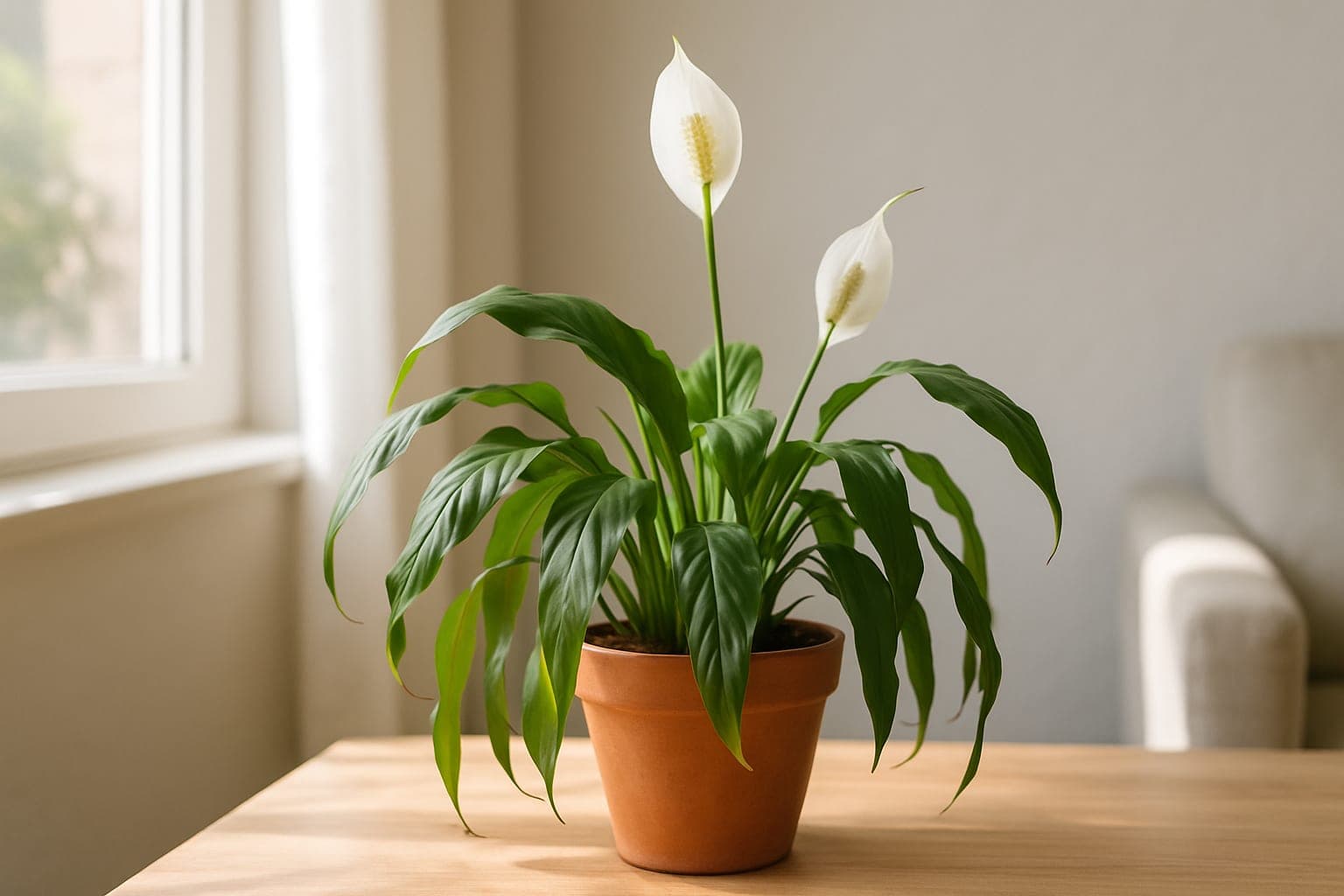
Few houseplants communicate as theatrically as the peace lily (Spathiphyllum). One day it stands proudly, the next its leaves collapse like a fainting Victorian — a habit that makes it both endearing and easy to care for, once you learn its language. Getting it to flower again, however, is a slightly more nuanced affair.
Reading the Dramatic Droop
The peace lily's signature wilt is one of the clearest watering cues in the houseplant world. When the soil dries out, the leaves and stems lose turgor and flop dramatically, often within hours. A thorough watering usually has them standing upright again by the next morning.
While this makes the plant easy to read, repeatedly letting it wilt is not good practice. Each severe droop stresses the plant, can cause leaf-tip damage and gradually weakens it. Aim to water just before it droops rather than after.
A practical watering routine
- Check the top 2–3 cm of compost with your finger. Water when it feels dry but the deeper soil is still faintly moist.
- Water thoroughly until it runs from the drainage holes, then tip away anything left in the saucer.
- Expect to water roughly once a week in summer and every 10–14 days in winter, but always check first — pot size, light and warmth all change the timing.
Peace lilies dislike sitting in soggy compost just as much as they dislike drought. Constantly wet roots lead to yellowing lower leaves and root rot.
Light: The Key to Reblooming
This is where most peace lilies go wrong. They are sold as low-light plants, and they will indeed survive in a dim corner — but they will not flower there. To rebloom, a peace lily needs bright, indirect light for much of the day.
A spot a metre or two back from a north- or east-facing window is ideal. A west-facing window works too, provided the harshest afternoon sun is filtered through a sheer curtain. Direct midday sun will scorch the leaves, leaving pale patches and crispy edges.
Signs your peace lily wants more light:
- Lush foliage but no flowers for many months.
- New leaves smaller and darker than older ones.
- Slow growth even during spring and summer.
Why It Has Stopped Blooming
If your peace lily refuses to produce its white spathes, work through these likely causes in order:
- Not enough light. By far the most common reason. Move it somewhere brighter before changing anything else.
- Too young or recently divided. Small plants and freshly split divisions often skip a season while they re-establish.
- Lack of feed. Flowering takes energy. Feed every 4–6 weeks during spring and summer with a balanced houseplant fertiliser, diluted to half strength. Skip feeding in winter.
- Wrong temperature. Peace lilies bloom best when kept consistently between about 18–24°C. Cold draughts and temperatures below around 13°C will stall flowering.
- Pot-bound, or the opposite. A slightly snug pot can actually encourage flowering. Repotting into a much larger container often delays blooms for a year.
Reblooming can also be coaxed by giving the plant a slightly cooler, drier rest period in late autumn, followed by warmer temperatures and regular feeding in spring.
Tackling Brown Leaf Tips
Crispy brown tips are the second most common peace lily complaint. They are almost always caused by one of a small handful of issues:
- Inconsistent watering — letting the plant wilt repeatedly, or alternating between bone dry and waterlogged.
- Low humidity — central heating, in particular, can dry the air enough to damage leaf tips.
- Tap water sensitivity — peace lilies can react to fluoride and chlorine in hard tap water. Try rainwater, filtered water, or tap water left standing uncovered overnight.
- Over-feeding — a build-up of fertiliser salts in the compost will burn the tips. Flush the pot through with plain water every few months.
Trim damaged tips off with clean scissors, following the natural leaf shape, to keep the plant looking tidy. New leaves should emerge healthy once the underlying cause is fixed.
Soil, Potting and Humidity
Use a good-quality peat-free houseplant compost with a handful of perlite mixed in to keep it open and well-draining. Pot into a container only one size larger than the rootball, and always one with drainage holes.
Peace lilies enjoy moderate to high humidity. Grouping plants together, standing the pot on a tray of damp pebbles, or running a small humidifier nearby all help — especially in winter when heating dries the air.
When to repot
Repot every 2–3 years, ideally in spring. Tell-tale signs include roots circling the bottom of the pot, water running straight through without soaking in, and the plant needing water every couple of days.
Propagation by Division
Mature peace lilies form clumps of crowns that can be separated. When repotting, gently tease the rootball apart into two or three sections, each with healthy roots and several leaves. Pot each division into a snug container, water well and keep somewhere warm and bright but out of direct sun while they settle.
A Quick Recap
To keep a peace lily happy and flowering: water just before it droops, give it bright indirect light, feed lightly through spring and summer, and watch out for harsh tap water and dry air. Treat it well and the rewards are generous — glossy arching foliage and those unmistakable white spathes rising above the leaves.
Tools and supplies for this
Products we'd actually buy for this job. Linking to Amazon — if you buy through these links we earn a small commission at no extra cost to you.
- Weston Mill Terracotta Pots, 15.5cm (pack of 10)
Honest British terracotta — breathable walls let roots dry between waterings, ideal for anything prone to rot.
- Weston Mill Pottery Terracotta plant pots, 175mm (pack of 10)
Mid-size workhorse terracotta — perfect step-up for plants outgrowing their nursery pots.
- Weston Mill Pottery Terracotta plant pots, 20cm (pack of 5)
Heavyweight 20cm clay for established plants — the porous walls help prevent the soggy roots aroids hate.
- Whitefurze G04012 7.5cm Garden Pot - Terracotta (Set of 10)
Cheap, cheerful plastic propagation pots — what we actually use for cuttings and small offsets.
BotanicBuddy Editorial Team
Plant Care Team
Passionate about helping plant parents succeed with expert tips and proven techniques.
Related Articles
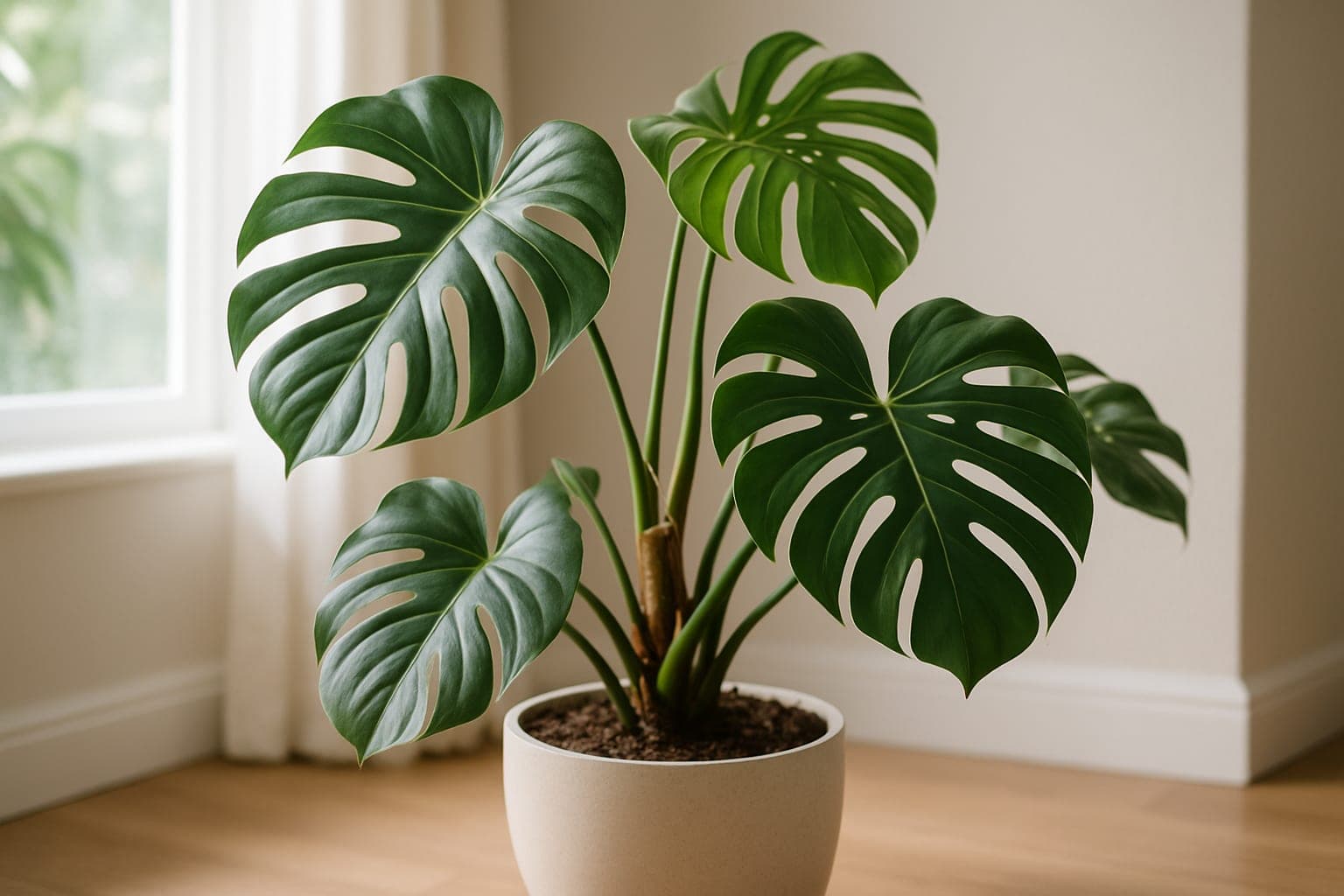
Monstera Deliciosa Care Guide
The Monstera deliciosa, or Swiss cheese plant, is a rewarding tropical climber prized for its dramatic split leaves. This guide covers everything from light and watering to moss poles and the secrets behind those iconic fenestrations.
Seasonal Plant Care: Adjusting for the Changing Year
Adapt your plant care routine throughout the year to keep your houseplants healthy and thriving.

Comments(528)
I appreciate you breaking down the rebloom requirements—peace lilies do have that reputation for being easygoing, but you're right that flowering is a different beast entirely. Since I'm more in the orchid corner myself, I'm curious whether the light boost you're recommending differs much from what Spathiphyllum needs just to stay healthy, or if reblooming really demands that next tier of brightness?
Great question! In my experience, *Spathiphyllum* can survive in pretty low light, but you're right that blooming demands noticeably brighter indirect light—I'd say bright enough to read by comfortably. I kept mine in a shadier corner for years and got lush foliage but zero flowers, then moved it closer to an east-facing window and saw spathes within weeks. It's not orchid-level brightness, but it's definitely a meaningful step up from mere survival mode.
I've learned the hard way that peace lilies (*Spathiphyllum* spp.) need more consistent moisture than my other tropicals, especially in my dry climate—I keep mine in a pebble tray with water that I top up regularly. The dramatic drooping is actually useful feedback, but I found that waiting for that signal every time stresses the plant and delays reblooming. Have you found a reliable watering schedule works better, or do you still go by the droop method?
I've been eyeing a peace lily for my kitchen herb corner—I know it's technically not an herb, but I'm drawn to anything forgiving since I somehow managed to kill a basil plant (still not entirely sure how). Your bit about reading the dramatic droop really appeals to me since I'm still learning the difference between "I'm thirsty" and "I'm just being theatrical." I'd love to see how yours looks in bloom if you ever get a chance to share a photo!
I love that you mentioned the dramatic droop—mine does that constantly and I always panic thinking something's wrong. I've been keeping my peace lily in a corner that's honestly pretty dim, so I'm excited to try moving it to brighter light and see if that actually gets it to flower again. Have you found that reblooming is pretty quick once you adjust the conditions, or does it take a while to see those blooms come back?
I've had my peace lily (Spathiphyllum wallisii) for about six months now, and I'm still figuring out the whole reblooming thing—mine flowered when I first got it, but nothing since. I'm curious about the light part since mine sits in medium indirect light; would moving it closer to a bright window actually help trigger flowers, or is that more about overall plant health? The drooping leaf drama is real though—I've definitely gotten fooled into overwatering because of it!
I totally get the overwatering trap—I did the same thing with mine! Honestly, I found that bumping it closer to a bright window *did* help mine finally rebloom after months of nothing, so it's worth trying. The trick I learned the hard way is that peace lilies are drama queens about water but actually want more light than people think to flower. Have you tried feeling the soil before watering instead of just responding to the droop? That's what finally stopped me from drowning mine.
I've had my peace lily for three years now, and honestly the leaf tip browning was my biggest frustration until I started misting it regularly—turns out my apartment's dry winters were the culprit! That said, mine took forever to rebloom until I moved it closer to a bright window (still indirect, since I'm up north and overexposed plants get scorched here). Have you found that reblooming depends more on light or on waiting out dormancy?
Peace lilies aren't really my usual thing—I lean succulent—but I appreciate the pragmatic approach here. The "dramatic droop" signal is genuinely useful since it removes guesswork from watering. My question though: does the reblooming advice still hold in lower light conditions, or is that really the hard constraint that trips most people up?
I'll admit peace lilies have humbled me—I kept mine in a dim corner for ages, wondering why it looked so sad despite being "low-light tolerant." Once I moved it closer to an east-facing window, the difference was dramatic, and blooms came back within weeks. The leaf tip browning issue finally clicked for me when I switched to filtered water instead of tap; apparently my local water's mineral content was the culprit all along. Curious to try some of your specific reblooming strategies!
I've definitely learned the hard way that my *Spathiphyllum* would put on its most theatrical collapse right before I had guests over—turns out it was begging for a humidity boost, not just water. The leaf tip browning is such a giveaway; I started misting mine more consistently and switched to distilled water, which made a real difference. Great reminder that "forgiving" doesn't mean it won't sulk until you figure out what it actually needs to flower again.
Oh, the *dramatic* timing of that droop! I feel this in my soul—mine always seems to wilt right when I'm about least prepared to notice. I've had better luck since I started grouping my peace lily with a few other tropicals to naturally bump up the humidity around them, though I still mess up the distilled water part more often than I'd like to admit. Did you find the misting alone was enough, or did switching to distilled water make the bigger difference for the leaf tips?
I've had mixed success with peace lilies—the dramatic wilting is real and honestly useful as a watering signal, but I found the rebloom part frustrating for years. Turns out mine wasn't getting enough indirect light; it was just surviving, not thriving. Moving it closer to an east-facing window made the difference, and now it flowers reliably without me fussing constantly. Did you find that light was the biggest factor in getting yours to rebloom consistently, or were you wrestling with something else?
Light made all the difference for mine too—I had one languishing in a corner for ages before I realized it needed that indirect bright spot to actually put energy into flowers instead of just keeping leaves alive. Though I'll admit, I also had to learn the hard way that my arid climate meant the air was too dry; I finally got consistent blooms once I grouped it with a few other plants to bump up humidity. The wilting signal is genuinely handy though, especially since I have fourteen plants and can't keep track of everyone's mood otherwise!
I've been struggling with my peace lily for months—it keeps drooping dramatically and I wasn't sure if I was just underwatering or if something else was wrong. This is really helpful because I didn't realize reblooming required such specific care beyond just keeping it alive. I'm going to try adjusting the light situation since mine sits in a pretty dim corner. Do you find that peace lilies need a lot more attention once they've stopped blooming, or is it more just about consistency.
I've learned the hard way that peace lilies are dramatic for a reason—that droop is basically their cry for help, but it's also a useful signal! Mine finally rebloomed after I moved it closer to an east-facing window; turns out my "bright indirect light" corner wasn't quite bright enough. The leaf tip browning stopped too once I switched to distilled water. Do you find that consistency with watering schedules matters more than people think, or is it really all about that light boost?
I killed my first peace lily by overwatering it to death, so I appreciate you emphasizing that reblooming isn't just about water! The dramatic drooping was honestly my cue to panic and water more, which was totally backward. I've got a second one now that's finally putting out flowers again after I moved it closer to a window—do you find that most people underestimate how much brighter light they actually need to bloom, or is overwatering still the bigger culprit?
I'd gently push back on the "forgiving" reputation—*Spathiphyllum* can be finicky about one thing in particular: they're sensitive to mineral buildup and tap water chlorine, which often causes those brown leaf tips before people realize it's a water quality issue rather than humidity. I switched to distilled water and saw immediate improvement in mine. The light advice is spot on though; mine wouldn't rebloom until I moved it closer to a north-facing window where it gets bright indirect light for most of the day.
The dramatic droop is actually useful—mine tells me when it needs water far more reliably than a schedule ever could. That said, I'd push back slightly on the "forgiving" label: Spathiphyllum wallisii tolerates neglect, sure, but it won't rebloom without decent indirect light and consistent warmth. I've found that moving mine away from a dark corner made all the difference; it now flowers reliably without any special treatment beyond what it already gets.
I've got to admit, peace lilies aren't my usual focus—I'm more of a succulent person—but the dramatic droop thing is real. I had one struggling in a corner for months until I realized it needed way more light than I was giving it, even though it supposedly tolerates low light. Once I moved it closer to a bright window and adjusted watering around that, the rebloom happened pretty quickly. Does your experience suggest light is usually the limiting factor, or do you find people mess up the fertility side of it more often?
I'm still figuring out my own orchid's blooming situation, so I'm taking notes here! The light thing makes total sense though—I kept mine in a medium spot and nothing was happening until I realized I needed to actually commit to bright, indirect light. I'm curious whether peace lilies need the same kind of precision or if they're more forgiving once you nail the basics like you did. My guess is fertility probably matters more for reblooming, but I honestly don't know if that's just wishful thinking since feeding is easier than rearranging my whole setup.
I love this insight about the light thing. I have a peace lily too, and it's honestly been my trickiest plant—I kept wondering why it wasn't reblooming even though it looked okay, and now I'm wondering if mine is also not getting enough light. Your point about it tolerating low light but maybe not thriving in it really makes sense. Did you end up keeping yours near that bright window permanently, or did you find a sweet spot where you could move it back a bit?
I've definitely learned the hard way that peace lilies are drama queens about blooming—mine spent two years just sitting there looking lush and leafy before I realized it was practically begging for brighter indirect light. Now that I've moved it closer to my east-facing window, it actually flowers again, which feels like a minor miracle given how many succulents in my collection I've accidentally killed with too much attention. The tip about reading that famous droop is so helpful though; I was always second-guessing whether it needed water or just being theatrical!
I've had my peace lily for three years and finally got it to rebloom last spring! Mine was stuck in a corner where it just wouldn't flower, and I realized I was basically keeping it alive but not thriving. Moving it closer to an east-facing window made such a difference—not direct sun, but much brighter indirect light. Have you found that most people underestimate how much light these plants actually need, or do you think it varies a lot by home setup?
I learned the hard way that my peace lily was actually begging for better light, not just water—it took me moving mine from a corner to an east-facing window before I finally saw new flowers again. The dramatic drooping is such a helpful signal once you understand it's not always thirst. Really glad you covered the leaf tip issue too, since that frustrated me for months before I realized my tap water was the culprit.
I've only got three plants and somehow managed to let my Spathiphyllum get leggy while ignoring its drooping cries for help—turns out I was confusing "forgiving" with "requires zero attention." Your point about light is spot-on; mine started reblooming once I moved it closer to an east-facing window, and the leaf tips finally stopped looking like burnt toast. Definitely bookmarking this for when I inevitably neglect it again.
That burnt toast description made me laugh because I just dealt with that on a couple of my succulents when I misjudged how much direct sun they could handle. It's funny how "forgiving" really just means they'll survive your mistakes, not that they'll thrive while you ignore them. I'm still learning the difference between watering when they ask versus actually giving them what they need, so your east-facing window tip is super helpful—I'll definitely keep that in mind if I ever add a peace lily to my collection.
I've got a peace lily tucked in my living room that taught me the hard way that "forgiving" doesn't mean neglect! Mine went months without blooming until I realized it was basically living in a dark corner. Moving it closer to the window made all the difference, and now I get flowers pretty regularly. Are you finding that most people underestimate how much light these guys actually need, even though they're marketed as low-light plants?
I've found peace lilies respond best to consistent brightness rather than fussing with fertilizer schedules—mine rebloomed reliably once I moved it closer to a window, even in my mediterranean climate where I have to be careful about direct afternoon sun. The dramatic drooping is useful feedback, but I think people overwater trying to prevent it; I only water when the soil actually feels dry an inch down. Did you find a particular light threshold where reblooming kicked in, or does it vary a lot depending on the variety?
I've had decent luck getting my peace lily to rebloom, though I'll admit it took me longer than expected! The light thing really is key—mine sits near an east-facing window now and flowers way more reliably than when I had it in a dimmer corner. One thing I'd add is that I stopped fertilizing it as heavily, which seems counterintuitive, but the blooms actually came back more consistently once I dialed that back. Does your experience suggest overfeeding is a common mistake people make, or am I just an outlier?
I appreciate the focus on the drama—peace lilies really do communicate! One thing I'd add from experience: they'll droop theatrically for water, but that doesn't mean they want to be kept perpetually moist. I've found mine reblooms most reliably when I let the soil dry noticeably between waterings, almost to the point of mild stress. It seems counterintuitive given how thirsty they appear, but consistent overwatering actually suppresses flowering more than anything else.
I killed my first peace lily by keeping it too dim—total rookie mistake in my cold apartment where I was paranoid about direct sun! Now I've learned that mine actually needs that brighter indirect light to even think about flowering. The dramatic drooping is real though; mine goes from thriving to tragically wilted in like 12 hours if I skip a watering. Are you finding that people mostly struggle with the light requirement, or is it more about humidity for getting them to rebloom in drier climates?
I've got three *Spathiphyllum wallisii* in my collection, and you're absolutely right about the light being the real bottleneck for reblooming—mine were stuck in a corner for months before I moved them closer to an east-facing window, and within weeks I saw new spathes forming. The dramatic wilting is helpful as a watering signal, but I've found it's worth checking soil moisture before relying solely on that visual cue, especially in humid tropical conditions where they can stay deceptively moist at the base.
That's really helpful to know about the east-facing window—I've been wondering if my peace lily just needs more light since it hasn't flowered in over a year. I'll definitely try moving mine and checking the soil moisture more carefully before watering, since I live somewhere pretty cold and dry, which is probably the opposite of what these plants want. How long did it take yours to produce new flowers after you moved it closer to the window?
I've had my Spathiphyllum wallisii for about two years now, and it took me embarrassingly long to realize that those droopy tantrums weren't just thirst signals—mine was begging for more light. Moving it closer to an east-facing window made a huge difference with reblooming, though I'm still working on keeping the leaf tips from browning in my dry Arizona air. Do you find that humidity needs are a bigger factor than people usually assume when it comes to getting them to flower again?
I completely relate to the Arizona struggle—humidity is definitely underrated! I've found that grouping my herbs and houseplants together helps create a little microclimate, and even just misting the peace lily a couple times a week made a noticeable difference in both leaf health and flowering. Have you tried that, or does the dry air make it feel like a losing battle? The east-facing window move sounds perfect though.
I've had great success with my *Spathiphyllum* by treating the reblooming as a light problem first—mine sits in bright, indirect conditions near an east-facing window and flowers consistently. The drama of that droop really is a superpower though; it makes watering so much easier to time compared to fussier tropicals. Did you find that increasing light alone was enough to trigger blooms for your plant, or did you need to dial in humidity or fertilizer as well?
I appreciate this so much—I killed a peace lily through pure neglect once, then overcompensated by drowning the next one! The tip about light really resonated with me, since I've learned the hard way that "forgiving" doesn't mean it'll bloom in a dark corner. Mine finally reflowered after I moved it closer to a window, and now I actually watch for that dramatic droop instead of panicking when I see it.
I learned this the hard way with my *Spathiphyllum* – mine went almost two years without blooming because I had it tucked in a corner that felt bright to my eye but wasn't nearly enough. Once I moved it closer to an east-facing window, the flowers came back within a couple months. The dramatic drooping is useful feedback, but consistent bright indirect light really does seem to be the threshold between "surviving" and "actually flowering."
I've found peace lilies (Spathiphyllum wallisii) can be deceptively finicky about reblooming despite their reputation for forgiving neglect—mine sat in decent light for two years before I realized it needed more consistent humidity and warmer nights. The dramatic wilting is actually useful feedback, though I had to learn not to overcompensate by watering constantly after the first droop. Did you find in your experience that one factor (light, humidity, temperature) seemed to make the biggest difference in getting them to flower again?
I'm actually in the opposite boat—I have a ton of succulents but just got my first peace lily a few months ago, so I'm still figuring it out! Your point about humidity really resonates though because mine's been looking kind of droopy even when the soil is moist, and I live in a pretty dry climate. I'm curious whether you had to do anything special to maintain that humidity, or did you eventually move it somewhere like a bathroom? Also, when you say it needed warmer nights, were you basically keeping it away from drafty windows?
I've got three peace lilies scattered around my cold apartment, and the reblooming thing has definitely been my biggest challenge! Mine basically stopped flowering until I moved one closer to an east-facing window—apparently the "indirect bright light" advice was doing way less than I thought. Have you found that certain light conditions work better than others for triggering blooms, or is it really more about consistent care across the board?
I've got a peace lily tucked in the corner of my kitchen, and honestly it's been the easiest of my ten plants—until I wanted flowers! Mine sat there looking perfectly green for like two years before I realized it was basically just existing, not thriving. Bumping it closer to the window made all the difference, and now I actually see blooms again. Do you find that most people give up on them before trying to improve the light situation?
Light really is the turning point—peace lilies are so tolerant of shade that people assume that's their preference, but they need brightness to flower. I kept mine in low light for ages, and once I moved it to an east-facing spot, the difference was dramatic. Two years of green foliage sounds about right for what I'd call survival mode. Do you find yours needs adjusting seasonally, or has that one window spot kept it blooming year-round?
I've learned this the hard way with my own peace lily—it'll sulk for weeks if you don't give it enough indirect light, even though everyone says they're so easy. Mine finally rebloomed after I moved it closer to an east-facing window, which made all the difference. Thanks for the reminder about those leaf tips, that's such a useful signal I used to miss.
I've had mixed results with peace lilies—they thrive on neglect until suddenly they don't. The dramatic droop is real, but I found mine actually rebloomed when I stopped moving it around chasing "bright indirect light" and just committed to one spot with decent ambient light. Curious whether you've noticed they're pickier about consistency than most forgiving plants, or if it's just mine being difficult?
I appreciate this breakdown! Peace lilies get such a bad rap for being "dramatic," but honestly that droop is genuinely useful feedback—way better than plants that just silently decline. I'm curious whether you found light to be the biggest factor in getting them to rebloom, or if it was more about the fertilizer routine? I keep a lot of herbs going in my space and I'm always hunting for reliable bloomers, so I might have to give one of these a proper shot if it'll actually flower consistently.
I've been struggling with my peace lily's leaf tips turning brown, so this is perfect timing! I have it in a corner that's pretty dim—sounds like that might be part of the problem. Do you think moving it closer to a window would help it bloom again, or does it need a specific type of light?
I'd definitely try moving it closer to a window—mine perked up noticeably once I stopped hiding it in the shadows, though I learned that lesson after letting the leaf tips get pretty crispy first! Bright, indirect light seems to be the sweet spot for getting them to actually flower rather than just survive. Hope the move does the trick for you!
Peace lilies do respond to neglect better than most, but you're right that reblooming is the real challenge. I've found consistent warmth matters more than people realize—mine sits near (not on) a heat source in winter, and that alone keeps the flowers coming. The light advice is solid too; mine needed a move closer to an east-facing window before it stopped just looking pretty and actually bloomed again.
I've learned the hard way that peace lilies (*Spathiphyllum wallisii*) are way more particular about reblooming than their "forgiving" reputation suggests! Mine spent two years sulking in medium light before I finally moved it closer to a bright window—suddenly it was flowering again. The dramatic droop is definitely a useful signal, but I found that waiting for that cue meant I was probably already underwatering. Now I check the soil more proactively, and the leaf tips have stopped their crispy protest.
Oh man, the "crispy leaf tips protest" – I feel that in my soul! I've got about 15 plants and my peace lily was definitely one of my harder lessons. I've found that in my cold climate here, I have to be extra careful with watering consistency since the air gets so dry indoors in winter. Did moving yours closer to the window help with the crispy tips too, or was that purely a watering fix for you?
I appreciate the focus on actually getting these to reflower—so many guides treat them like they're self-sufficient once they're established! That said, I've found *Spathiphyllum wallisii* can be pretty finicky about humidity in my Mediterranean climate, where the air is naturally dry. Are you finding that misting helps, or do you lean more toward the pebble-tray approach? I'm curious whether your readers are in humid regions where the plant might genuinely coast along, versus drier areas where it demands more attention to leaf health.
I've had better luck reblooming peace lilies than my orchids, honestly—they're far less finicky about humidity swings. The light point resonates with me though; I kept mine in a dim corner for years wondering why it never flowered, then moved it closer to an east-facing window and got blooms within weeks. The dramatic drooping is real, but I've learned it's actually useful feedback rather than the plant being "dramatic"—it tells you exactly when it needs water, which beats guessing.
I've had mixed luck with mine—it *does* droop dramatically, but I learned the hard way that overwatering in response is tempting and usually wrong. The real game-changer for me was moving it closer to a window (mine was in genuinely dim corner light) and backing off the watering schedule. It took several months, but the rebloom was worth it. Curious whether you found humidity matters much for the leaf tips, since I'm in a dry climate and just accepted some browning as inevitable.
I've learned the hard way that my peace lily was basically a drama queen living in a corner—it took moving it closer to a window (bright indirect light, not direct sun) before I got any flowers. The watering thing is real too; I was overwatering and got nowhere. Now I wait until it droops slightly, water thoroughly, and it bounces back with blooms. Humidity helped with the crispy leaf tips, though honestly just misting when I remembered made the biggest difference for me.
I appreciate this breakdown of peace lily care—they really are dramatic plants when they want attention. I'm curious though: in your experience, does the rebloom timeline differ much depending on whether someone's growing them in low light versus bright indirect? I've found my orchids are pretty finicky about light consistency, so I'm wondering if peace lilies follow similar rules once you're trying to push them toward flowers rather than just keeping them alive.
I've got one of these that's been sitting in the corner for months without a single flower—just healthy leaves. I'm guessing the light there isn't cutting it? I moved it closer to my east-facing window last week and I'm already seeing new growth, so fingers crossed. I'd love to know if there's a specific light level that actually triggers blooming, or if it's more about consistency. My Mediterranean apartment gets pretty intense sun, so I'm wondering if I'm overdoing it on the other end.
I've been struggling with my peace lily's leaf tips turning brown, so this is really helpful timing. I'm still figuring out the balance between watering and light in my cold climate—do you find it needs different care depending on the season, or is the routine pretty much the same year-round?
The seasonal shift definitely matters—in winter my orchids actually need *less* water and benefit from that dormancy, so I'd guess peace lilies follow similar logic in a cold climate. That said, they're more forgiving than what I grow, so the brown leaf tips you're seeing are probably more about humidity or mineral buildup in your water than seasonal timing. Have you tried switching to distilled water, or does your place tend to be especially dry during the heating season?
I've got to admit, I killed my one succulent attempt by overwatering it last winter—turns out my cold apartment's lack of airflow was the real culprit—so I'm definitely taking notes on the "read the droop" advice here! Peace lilies seem way more forgiving than the echeveria I massacred, and I love that you're breaking down the difference between a thirst signal and actual distress. Might have to branch out from succulents if I can nail the light and humidity balance you're describing.
I've had my peace lily for about three years now and honestly, the reblooming part stumped me for the longest time! Mine just sat there looking perfectly fine but refusing to flower, and I finally realized it was basically telling me it was bored in that corner. Moving it closer to my east-facing window made all the difference—I actually got blooms again last spring. Do you find that people underestimate how much light peace lilies actually want compared to what they've heard about them being "low light" plants?
I've killed more peace lilies than I'd like to admit trying to get them to rebloom—turns out I was overwatering them out of guilt every time they drooped! After moving mine closer to an east-facing window and actually letting the soil dry out between waterings, it finally flowered again after like two years. Did you find that most people underestimate how much light these actually need, even though they're supposedly shade-tolerant?
I've had *Spathiphyllum wallisii* for about three years, and you're absolutely right about the dramatic signals—mine would completely collapse within hours if I missed watering, which actually made it easier to establish a rhythm. What really changed my rebloom success was moving it closer to an east-facing window; I'd been keeping it in medium indirect light before, but once I gave it brighter conditions without direct sun, I got flowers consistently every few months. The leaf tip browning was trickier for me though—took swapping to distilled water to finally keep them clean.
I've been meaning to try a peace lily since I keep hearing how forgiving they are—my succulents have definitely made me lazy about watering. I'm curious though, when you mention brightening the light, does that mean moving it closer to a window, or would a grow light work just as well? I'm worried my apartment might be too dim, but I don't want to shock it if I'm used to keeping plants in lower light.
I appreciate the focus on light as a reblooming driver—that's often overlooked in favor of watering advice. That said, I'd gently push back on the "forgiving" framing: Spathiphyllum can mask problems for a while, but once those leaf tips start browning, you're usually dealing with mineral accumulation or inconsistent humidity, not just underwatering. In my Mediterranean climate, I've found they actually prefer drier air than most guides suggest, so the standard misting advice doesn't always translate. What specific light levels are you recommending for blooms?
I killed my first peace lily with kindness—literally drowned it while thinking I was being a good plant parent! It took me two more attempts to realize mine needed way more light than I initially gave it, and that's when the blooms finally showed up. Your point about reading that dramatic droop is spot-on; I've learned to check the soil before watering now instead of assuming droopiness always means thirst. Did you find that one particular light level was the sweet spot for consistent reblooming, or does it vary depending on where people live?
I've got a peace lily tucked in the corner of my kitchen, and it's been pretty easygoing until I realized it hadn't flowered in like two years! Mine was getting plenty of water but sitting in lower light, so I moved it closer to a window and started being more intentional about humidity. Those leaf tips were always brown before, which drove me crazy. Have you found that people usually undershoot the light, or is it more about the watering routine once they're already established?
I appreciate you tackling the light issue—that's where most people go wrong with peace lilies. I've kept one alongside my herbs in a bright, indirect spot for years, and the difference between "survives in dim corner" and "actually flowers" is genuinely stark. The drama is real though; mine wilts like it's dying the moment light drops, but bounces back within hours once you move it closer to a window. Consistent moisture matters too, but I found that's easier to dial in once the light situation is sorted.
I completely relate to that wilting drama—mine does the same thing, and it used to stress me out until I realized it was just asking for better light. You're so right that once the light is dialed in, everything else falls into place. I've got a peace lily in my tropical setup that's been reblooming consistently since I moved it to a brighter spot, and the leaf tips finally stopped browning. It's such a satisfying turnaround when you crack that code.
I appreciate the practical angle here—peace lilies do love to announce their needs, but yeah, the reblooming part is where people usually give up. I've found that consistent warmth matters more than people think, especially coming out of winter. Mine sits near a south-facing window and only flowers reliably when nighttime temps stay above 60°F; I'd share a photo of the current blooms, but the real difference was just moving it away from the cold draft. Light and water are necessary but not sufficient if the plant's stressed by temperature swings.
You're so right about the temperature thing—I learned that the hard way last winter when my peace lily just refused to cooperate despite perfect light and watering. Moving mine away from the drafty window by the door made all the difference, and I didn't realize how much those nighttime temperature drops were stressing it out. Do you find that consistent warmth matters most right before it's about to flower, or is it more about the overall consistency through the season?
I've had decent success with peace lilies here in the Mediterranean, though I found they actually prefer less fussing than most guides suggest. The dramatic droop is useful—I let mine dry out between waterings rather than keeping it constantly moist, and it seems to bloom more reliably that way. The light point is crucial though; mine sits a few meters from an east-facing window and flowers regularly, whereas a shadier spot just gave me foliage. Did you find watering frequency made a real difference to rebloom, or was lighting the bigger factor in your experience?
I've killed the blooms on mine at least twice by assuming it just needed water—turns out my "bright indirect light" corner was actually pretty dim! Since moving it closer to an east-facing window, I'm finally seeing flower spathes again after months of just green leaves. The dramatic drooping thing is so real though; mine looks like it's staging a theatrical death every time the soil gets a tiny bit dry, which honestly makes it easier to remember watering day.
That east-facing window move really does make the difference—I learned that the hard way too. I kept mine (Spathiphyllum wallisii) in a genuinely shady spot for ages, wondering why it just sat there looking sulky. The theatrical drooping is such a useful signal, but it masked the real issue of insufficient light for flowering. Once I moved mine a few feet closer to a bright window, the blooms came back within weeks.
I appreciate the honest take on peace lilies—the "forgiving" reputation really undersells what they actually need to bloom reliably. I've found that light is genuinely the limiting factor for me; mine stays leafy but won't flower unless I move it closer to a window, even though it "survives" fine in medium indirect light. The dramatic droop thing is useful for watering, but I'm curious whether you see that as more of a luxury indicator or something people should actually wait for when they're trying to trigger flowering.
I'll admit my peace lily sat in a dim corner for months before I realized it was basically on a hunger strike—the drooping was less "help me" and more "I'm staging a protest." Moving it to bright, indirect light made all the difference, and reblooming started within weeks. The leaf-tip browning issue you mention is so real; I've found that letting it drink filtered water helps more than I expected. Great reminder that "forgiving" doesn't mean you can ignore the basics!
I've killed exactly one orchid in my three-plant collection, so I respect anything "forgiving"—though I've found peace lilies can be deceptively dramatic about their preferences despite that reputation. The light piece resonates with me; I moved mine from a corner that felt bright enough to my west-facing shelf, and the difference in vigor was immediate. Definitely worth experimenting before assuming the plant itself won't rebloom.
I appreciate the focus on light and leaf tip health—those really are the key variables—but I'd gently push back on the "forgiving" framing. *Spathiphyllum wallisii* is forgiving about *neglect*, sure, but actually quite fussy about the specific conditions that trigger flowering. I found mine only rebloomed consistently once I stopped watering on a schedule and started reading soil moisture properly; consistent underwatering stress seemed to be the missing trigger. The dramatic droop is useful feedback, but by then you're already past the sweet spot for bloom initiation.
I appreciate this breakdown because I learned the hard way that my one succulent was *not* a peace lily, but your point about light really resonates—I kept mine in a corner and wondered why it looked so sad! I'm curious whether the blooming tips work for other houseplants too, since I've been trying to figure out why mine stays so stubborn about putting out new growth. Would love to see a photo of a peace lily that's actually thriving with that perfect light setup you're describing.
I've definitely learned the hard way that my peace lily's theatrical wilting isn't actually a cry for water—it's usually telling me the light is too dim! Moving mine from a corner to a spot with bright indirect light made such a difference, and I finally got flowers again after months of just green leaves. The leaf tip browning is still my nemesis in this dry climate though—do you find humidity matters more than fertilizer for keeping those tips happy?
I'm with you on the light—that's the real bottleneck for reblooming, not watering. On the leaf tips, honestly, I've found humidity matters more in my Mediterranean climate too, but only up to a point. Misting helps temporarily, but I get better results grouping plants together and letting them create their own microclimate. Have you tried adjusting your fertilizer ratio to lower nitrogen, or is the browning more of a humidity thing on your end?
I've had mixed luck with peace lilies—they're definitely forgiving, but I found that reblooming really does need that light bump you mentioned. Mine sat in a dim corner for years looking fine but never flowering, and once I moved it closer to an east-facing window, it actually surprised me with blooms. The dramatic drooping is helpful feedback, though I'll admit I used to overcompensate by watering more, which only made things worse. Did you find that people tend to rely too much on that wilting signal, or is that just been my experience?
I'd gently push back on the "forgiving" reputation—Spathiphyllum wallisii can be finicky about light, and that dramatic droop is often a sign it's already stressed rather than a reliable watering signal. I found mine rebloomed much more consistently once I moved it closer to an east-facing window; even indirect medium light made the difference where water alone wouldn't. The leaf-tip browning is usually humidity or mineral buildup, not underwatering, which catches a lot of people off guard.
You're spot on about the light thing—I've only got five plants and one's a finicky orchid that taught me the hard way that "forgiving" is marketing speak. Peace lilies definitely need brighter conditions than most people give them to actually flower, and yeah, that droop comes after stress has already set in, not before. The humidity point is crucial too; I'd add that distilled water helps with those brown tips way more than fussing with watering frequency does. Moving mine to better light and backing off on tap water made the real difference.
I appreciate the focus on reblooming—mine took forever to flower again after I moved it away from that awkward corner. I'm curious though, since peace lilies aren't really my usual territory (I'm mostly herbs in a cold climate), whether the light recommendations differ much for getting blooms versus just keeping the plant alive? Does it need that bright indirect light specifically to set flowers, or is that more about overall vigor?
I'm curious what your take is on the humidity factor—I find *Spathiphyllum* really does sulk without it, especially indoors during dry months. The dramatic droop is so useful as a watering signal, but I've noticed mine reblooms much more reliably when I also keep the air around 50%+ humidity rather than relying on watering alone. Are you finding that matters in your experience, or does consistent bright indirect light do most of the heavy lifting?
I'd agree that humidity makes a real difference, especially for sustained blooming. In my arid climate I've found *Spathiphyllum* definitely benefits from grouped plantings or a pebble tray—the droop signal is helpful for watering, but you're right that it's not the whole picture. Light seems to be the bigger limiting factor for me, though; even with decent humidity, mine wouldn't rebloom until I moved it closer to an east-facing window. I suspect the balance depends a lot on local conditions, so your 50%+ threshold might be the sweet spot where you are.
I appreciate the focus on actually getting these to rebloom—that's where most people struggle. Peace lilies are such communicators with that dramatic droop, though I've found they can mask issues since they're so tolerant. My two orchids taught me that lesson the hard way; they won't give you those second chances. Have you found one particular factor (light, humidity, fertilizer ratio) makes the biggest difference in triggering flowers for your peace lilies?
That dramatic droop really is a gift and a curse—you get the warning, but you're right that it can mask deeper problems! I haven't worked much with peace lilies since my collection leans orchid-heavy (I'm mostly keeping Phalaenopsis and a couple of Paphiopedilums in my tropical setup), but from what I've noticed with my orchids, consistent light seems to be the real game-changer for blooming across the board. Are you finding your peace lilies respond better once you dial in the brightness, or does the humidity piece tend to matter more for you?
I've learned the hard way that my peace lily's dramatic collapse is actually *helpful* feedback—mine practically threw itself on the floor when the humidity dropped below 40% in my Arizona home! Once I started misting more regularly and moved it away from the heating vent, the rebloom happened almost naturally. The light piece resonates too; I was keeping mine too dim out of habit, thinking it preferred shade.
I've had a peace lily in my collection alongside my succulents, and I learned the hard way that they really do need more consistent attention than my drought-tolerant plants. The dramatic drooping is honestly helpful feedback once you recognize it, but I found that consistent moisture (not soggy) and bright, indirect light made all the difference for mine getting back to blooming. Your point about the leaf tips is spot on—I started misting mine occasionally and that really improved how it looked overall.
I've had mixed results with my peace lily—it bounces back from neglect easily enough, but the reblooming part has stumped me. Mine sits in medium indirect light and seems content, yet the flowers just won't return. Is it possible the plant needs a genuine dormancy period, or am I overthinking it? I'm curious whether the light increase you mention needs to be sustained year-round or if seasonal variation matters.
I've got a peace lily in my collection and wow, the drama is real—mine was drooping so hard I thought it was done for! Turns out I was babying it in a dim corner. Once I moved it closer to my kitchen window, it perked up and actually started flowering again after months of just green leaves. The leaf tip browning thing is still something I'm figuring out though—is that more about humidity or am I overwatering? Would love to know what's worked best for you!
I'd push back gently on the "forgiving" reputation—I think peace lilies get lumped in with actually bulletproof plants like pothos when really they're pickier about light than people admit. Mine rebloomed consistently only after I moved it closer to a window; the increased humidity from grouping it with my other houseplants helped too, but the light was the real game-changer. The dramatic drooping is useful feedback, but I found waiting for that signal meant I was already behind on what it actually needed.
I've had mixed success with *Spathiphyllum* reblooming—mine sulked for months until I realized it needed more consistent warmth, not just brighter light. The dramatic droop is honestly helpful feedback, but I learned the hard way that addressing it alone doesn't mean flowers are coming back. Really interested to see what your approach is to the light question, since that seems to be the trickiest variable in colder climates where I garden.
I've had my Spathiphyllum for about six months now and honestly the dramatic drooping thing is so real—it scared me at first! I'm still figuring out the light situation though; mine's in a medium-bright corner and hasn't flowered yet. Does the post go into how much brighter it actually needs to be, or is that something you've found through trial and error? Also, I've noticed brown leaf tips on mine and I'm wondering if it's the water quality or humidity—I mist occasionally but maybe not enough in my tropical climate?
I'd gently push back on the "forgiving" framing—*Spathiphyllum* are pretty finicky about consistent moisture and humidity, which trips up a lot of growers. The dramatic droop is useful feedback, sure, but I find the real challenge is that they'll rebound from neglect while still being secretly unhappy, then just... refuse to flower. I've had better luck treating mine like they need steady conditions rather than assuming they'll bounce back from neglect. The light angle you mention is spot-on though—mine only reliably rebloomed when I moved it away from that ambient corner light.
You're right that mine took forever to rebloom once I stopped treating it like a forgiving plant and actually committed to consistent watering—that "secretly unhappy" phase is so real. The humidity piece was my main breakthrough too; I started grouping mine with my other tropical plants and it finally flowered again. Do you find a particular humidity range works best, or is it more about the consistency itself?
Oh, you've hit on something I'm definitely learning the hard way—mine looked "fine" for months but wouldn't flower, and I realized I'd been letting the soil dry out way more than it wanted. I moved mine to a brighter spot too and that made the biggest difference, though I'm still figuring out the humidity sweet spot in my dry apartment. Thanks for the reality check on the "forgiving" thing; it's actually less forgiving and more just *tolerant of neglect*, which are very different!
I've had mixed results with mine—it does seem to prefer bright indirect light, but I'm curious whether the "dramatic droop" signal is equally reliable year-round, or if seasonal light changes (especially in winter) make it less trustworthy as a watering cue. Also, I've read that peace lilies prefer consistent warmth, but I haven't found much detail on whether that matters more for reblooming specifically than for general health. Do you find the humidity threshold changes depending on where you're trying to push it into flower?
I've had my peace lily (*Spathiphyllum wallisii*) for about a year now and the dramatic drooping still catches me off guard—I panic thinking it's dying, then water it and it springs back within hours! But you're right that mine hasn't rebloomed yet, and I'm wondering if my setup is the issue. I keep it in moderate indirect light in my tropical home, but maybe it needs brighter conditions to flower again? I'd love to know if there's a specific light threshold or if I'm just being impatient.
I've been eyeing peace lilies at the nursery but kept talking myself out of it—partly because I thought they'd be boring compared to my herbs, and partly because I was intimidated by the reblooming part! This breakdown of the light and leaf-tip issues is really helpful. I'm curious: does the "dramatic droop" actually tell you something specific about what it needs, or is it more of a general "pay attention" signal? My oregano and basil are pretty straightforward about thirst, so I'm still getting used to reading plant language that's less obvious!
I've learned the hard way that peace lilies are drama queens about light – mine sat in a corner for months looking sad before I moved it closer to an east-facing window, and suddenly it perked up and flowered! The leaf tip browning thing was my constant battle until I switched to filtered water. Do you find that people usually underestimate how much brighter they need to be to actually rebloom, or is it more of a watering/humidity issue in your experience?
I'd push back a bit on "forgiving" — peace lilies are fine, but they're dramatic about humidity and actually sulk way more than people think. The light thing is spot on though; mine didn't bloom for two years until I moved it closer to a window. Now I've got one that flowers consistently, and I'd share a photo if I could, but the difference was honestly just better indirect light and not letting it dry out completely between waterings. Skip the fertilizer tricks and just dial in those two basics first.
You're so right about the drama—I killed a peace lily last year by assuming "forgiving" meant "neglect-proof," and it absolutely sulked into brown crispy tips before I figured out the humidity issue. Your two-year bloom drought sounds painful, but I'm glad you cracked the code with light and watering consistency. I've had better luck with my succulents honestly, but your point about skipping the fertilizer tricks really resonates—sometimes we just overthink it when the plant is basically screaming what it actually needs.
I've got to say, the "dramatic droop" description made me laugh because mine does *exactly* that whenever the humidity dips! I've been focusing mostly on herbs lately, but I kept a peace lily around for years and didn't realize how much the reblooming really depends on consistent bright indirect light—I was basically treating it like a low-light miracle worker. Did you find in your experience that people are more likely to get discouraged before they adjust the lighting, or is it usually the watering that trips them up?
The dramatic droop is so real—mine does the same thing with humidity. I'd say it's usually the watering that trips people up first, since peace lilies are so good at that visual guilt trip, but then once they adjust the light, they're amazed at how much happier the plant gets. I learned the hard way that mine wasn't reblooming until I moved it closer to a bright window, and that made all the difference for new flowers.
I've got a peace lily that's been refusing to flower for months, so this is perfect timing! Mine gets decent indirect light by a window, but I'm wondering if that's actually bright enough—do you find they need that specific "bright indirect" or can they genuinely flower in lower light? Also, I notice mine gets brown leaf tips even when I think I'm watering right, so I'd love to nail that part down too.
I've been eyeing a peace lily for ages but was intimidated by the reblooming part—so this is really helpful! I'm mostly growing herbs in my mediterranean spot, and they're a bit more straightforward, but I'm realizing I need to stop just watering on a whim and actually pay attention to what the plant's telling me (the dramatic droop thing especially resonates). Do you find that peace lilies do okay with the bright, indirect light that works for my basil and oregano, or do they need something different?
I appreciate the realistic take here—peace lilies definitely get marketed as indestructible, which sets people up for disappointment when they're not reflowering! That said, I've found *Spathiphyllum wallisii* can be surprisingly fussy about light once you want consistent blooms; the occasional drink really doesn't cut it. Do you find that most people's issues stem more from low light, or is it usually an inconsistent watering pattern combined with other factors? I keep one in a brighter corner than my other houseplants get, and it's made a noticeable difference for me.
I've learned this the hard way—my peace lily spent months looking perfectly fine but refusing to flower, and it turned out I was basically neglecting it in a corner! Bumping it closer to a bright window and actually following a consistent watering schedule made all the difference, and now it blooms regularly. That point about reading the dramatic droop is so real; mine basically guilt-trips me into paying attention, which apparently is exactly what it needed.
I'd gently push back on one thing though—while light definitely matters, I've found that inconsistent watering is usually the bigger culprit for non-blooming peace lilies. Mine sits in decent indirect light but only flowers reliably once I stopped fussing with it on a rigid schedule and instead watered when the soil actually felt dry a couple inches down. The dramatic droop really is their superpower; they're honest about what they need rather than silently declining like some plants.
Peace lilies aren't really my go-to—I'm more of a succulent person—but I've kept a couple around for low-light spots and they're honestly bulletproof. The dramatic wilting thing is real; mine basically throws a tantrum if I let the soil dry out more than a few days. I've found the reblooming part is all about consistent warmth and humidity, which goes against my usual Mediterranean-climate approach. Are you finding that people typically want them to rebloom for aesthetics, or are they just surprised it's actually possible after the initial flowers drop?
I've had great success with my Spathiphyllum by treating the light boost and feeding schedule as equally important—mine sits in bright, indirect light near an east-facing window and gets a balanced fertilizer every couple weeks during the growing season. The dramatic drooping really is the plant's way of communicating, which I actually find helpful once you know what to listen for. Do you find that most of yours rebloom reliably once you dial in those conditions, or are there certain varieties that are more stubborn about flowering?
I've been meaning to get a peace lily for ages—they seem so graceful—but I'm a bit intimidated by the reblooming part! My herbs are pretty straightforward (water, sun, done), so this feels like a whole different language. That bit about reading the dramatic droop really resonates though; I have nine plants now and I'm still learning to tell "thirsty" from "just being moody." Do you find the light requirements pretty different from what most guides suggest, or is it more about consistency?
I've got a peace lily that's been sitting in my office for months without flowering, so this timing is perfect! I've been giving it water whenever it droops, but it sounds like I'm missing the bigger picture with light and nutrition. How much brighter does the light actually need to be—would a spot near a north-facing window work, or do they really need something stronger? I'm in Arizona so we get intense sun, but I've been keeping mine pretty shaded because I was worried about burning the leaves.
I've got to push back a bit here—peace lilies aren't really my thing since I'm mostly herbs in a mediterranean climate, but I kept one indoors for years and found the "dramatic droop" signal honestly more confusing than helpful. Mine would get theatrical about water but then languish for months without blooming again. Finally moved it closer to a south-facing window and that's what actually triggered flowers, not the watering routine everyone talks about. Did you find light made a bigger difference than people usually admit, or is that just my experience?
Light is definitely underrated—I had the same experience with a Phalaenopsis in my Mediterranean setup, where I'd been fussing with water and humidity until I moved it to brighter indirect light from a south window. That's when it actually reflowered consistently. Peace lilies are similar; they'll survive in dim corners but won't bother blooming there. The droop thing is useful as a watering *indicator*, but you're right that it's not a magic reblooming switch on its own.
I found out the hard way that my *Spathiphyllum* wasn't actually struggling—it was just telling me it wanted better light. I moved mine from a corner to bright, indirect morning sun near an east-facing window, and within a few weeks the flower spathes started appearing again. The dramatic drooping really is the plant communicating, though it took me longer than I'd like to admit to realize more frequent watering wasn't the answer; it was the light all along.
Oh wow, that's such a good reminder! I have a peace lily tucked in a pretty dark corner of my apartment, and now I'm wondering if that's why it hasn't flowered in forever—I just assumed it was being dramatic and needing water constantly. Did you find that the drooping stopped pretty quickly once you moved it, or did it take a bit to bounce back even with the better light?
The dramatic droop thing is real—I've seen it plenty of times with my collection. That said, I'd push back gently on the "forgiving" reputation when it comes to reblooming. Mine took consistent bright indirect light and regular feeding before it actually flowered again, not just occasional water. I've got a photo on my phone showing the difference between my droopy one from two years ago and what it looks like now, but the short version is: peace lilies are forgiving about neglect, sure, but reblooming demands you actually pay attention.
I'd push back slightly on the "forgiving" reputation—mine's been sulky about reblooming for months despite solid care. The light advice is spot on though; I moved mine from a shaded corner to bright indirect and saw new flower spikes within weeks. My main struggle has been the humidity, especially here with the dry summers. Are you finding that misting actually moves the needle, or is it more about the overall environment?
I've always found peace lilies a bit humbling—mine spent a whole winter in a corner looking absolutely tragic before I finally moved it closer to a window, and suddenly the flowers came back like it was proving a point! The leaf tip browning thing was what finally got me to take it seriously; turns out my tap water had too much chlorine. Now I let it sit overnight before watering, and it's been so much happier. Looking forward to reading more about the light requirements—I suspect mine still isn't quite where it needs to be.
I've had my Spathiphyllum wallisii doing the dramatic flop routine for months, so this timing is perfect. The light suggestion especially resonates with me—I realized mine was basically living in a corner, and even tropicals need better illumination to put energy into flowers rather than just surviving. Do you find that reblooming is easier once the plant has fully recovered from neglect, or does it need that reset period before you can expect blooms?
I'm laughing at myself because I killed the blooms on my peace lily by absolutely smothering it with attention—turns out mine needed way less fussing than I thought! That said, I've had better luck with my orchids in this arid climate by being more intentional about humidity and light, which sounds like what you're getting at here with the peace lily too. Would love to see a photo of yours in bloom if you have one!
I've had the same peace lily for three years and finally got consistent blooms once I stopped moving it around. Mine needed a bright indirect spot—not the dim corner I started with—and I had to be more deliberate about humidity since I'm in a dry climate. The dramatic drooping thing is real, but honestly that became useful feedback once I learned to trust it meant something specific rather than panicking every time. Thanks for laying out the actual requirements instead of just saying "it's low-maintenance."
I've had decent success with peace lilies, but I'll push back slightly on "forgiving"—they're more like dramatic complainers that happen to recover well. The drooping signal is useful, sure, but I found the real blooming trick was moving mine closer to a bright window without direct sun; mine spent two years barely flowering until I did that. I'm curious whether you've found humidity matters much for reblooming in your climate, or if light alone tends to do the job?
I appreciate this post on peace lilies, though I have to admit they're outside my usual orbit—I'm much more of an orchid person, especially with the low humidity in my arid climate. That said, I've always envied how forgiving Spathiphyllum wallisii can be compared to my finicky Phalaenopsis specimens. The point about reading the dramatic droop really resonates with me, since overwatering is such a common trap. Do you find that the watering needs shift significantly once they're actively blooming again, or does the routine stay pretty consistent year-round?
I struggled with my Spathiphyllum wallisii for months before realizing it was the light—mine sits in a north-facing corner and just wouldn't set buds no matter how consistently I watered. Moving it closer to an east-facing window made all the difference, and it rebloomed within weeks. The dramatic wilting is helpful for watering cues, but you're right that it can mask what the plant actually needs to flower, which in my experience tends to be brighter indirect light than people assume.
I've had mixed results with peace lilies—they're not really my thing since I focus mostly on herbs, but I appreciate the point about light being the actual blooming trigger rather than just watering. The dramatic wilting gets people's attention, sure, but I've noticed most folks focus on that instead of fixing the underlying conditions. Have you found that moving them closer to a bright window makes a real difference in getting flowers, or does it depend a lot on the specific plant?
I've been battling brown leaf tips on my peace lily for ages, and I finally cracked the code—it was the chlorine in my tap water! Switching to filtered water made such a difference, plus I moved mine closer to an east-facing window and it actually flowered again last month. Are you finding that most people's peace lilies just refuse to rebloom because they're kept too far from natural light, or is inconsistent watering usually the culprit?
I think you've hit on something really important with the water quality—that's often overlooked. In my experience, most rebloom issues come down to light first, then watering consistency, but the chlorine thing absolutely matters, especially in arid climates where tap water minerals accumulate. The east-facing window is ideal for coaxing flowers out without the intensity that can stress them. Do you find your peace lily flowers last longer now that you've made these changes, or did reblooming improve most noticeably?
I learned this the hard way with mine—I kept watering when what it really needed was brighter light. Once I moved it closer to an east-facing window, the blooms came back within a couple months. The dramatic drooping is genuinely helpful feedback though, since it makes you pay attention before things get worse.
I've had my peace lily (Spathiphyllum wallisii, I think?) for about eight months now, and it's been such a learning curve—mine droops *constantly* and I kept assuming it was thirsty, but I'm realizing now that might be more about light than water. The leaf tips have been turning brown at the edges, which was driving me crazy. I'm really hoping this post clarifies what I'm actually doing wrong, because I'd love to see it bloom again instead of just surviving!
I'd gently push back on the "forgiving" reputation—in arid climates like mine, *Spathiphyllum* actually demands consistent humidity that most of us can't provide indoors without active intervention. The dramatic drooping is helpful feedback, sure, but I've found that reblooming really hinges on that light threshold being higher than people assume; mine only flowers reliably when it gets bright indirect light, not the low-light conditions it tolerates. Worth mentioning that humidity and light matter far more than watering frequency for getting flowers back.
I learned this the hard way with my peace lily—it was drooping constantly until I realized it was begging for brighter indirect light, not just surviving in a corner. Once I moved it closer to a window, the blooms came back and it's been so much happier. The dramatic wilting is actually helpful feedback if you pay attention to what it's asking for.
That's such a great observation about reading the droop! I had a similar experience with mine—Spathiphyllum wallisii can be so expressive once you tune into what it's telling you. I'm curious though, did you find a specific distance from the window works best, or does it depend on your window direction? I've got about eleven plants going right now and keep playing with placement to find that sweet spot for mine without risking leaf scorch.
I've had mixed results with peace lilies—they're great for beginners, but that rebloom part is real! The one thing that finally worked for me was being more aggressive with the humidity; I moved mine to a shadier corner near my bathroom where the steam from showers helped, and it flowered again within weeks. Mine sits with my oregano and basil collection, and honestly the peace lily thrives with that same indirect light. Did you find that humidity made a difference for yours, or is it really just about the light and feeding cycle?
I've had exactly one peace lily in my collection—it lasted about two years before I realized my arid climate was working against it! That dramatic droop you mention is so real, and I appreciate the reminder that watering alone won't trigger reblooming. I'm curious whether you found light intensity matters more than duration in your experience, since my orchids (Phalaenopsis, mostly) seem to care way more about brightness than hours under lights.
Peace lilies really do hate dry air—I gave up on mine after a year in my Mediterranean climate and swapped it for native alternatives that actually thrive here. Your point about light intensity is spot on though; I've noticed my fussier plants respond way better to actual brightness than just longer exposure to dim conditions. Did you find any houseplants that gave you similar drama-free feedback as the peace lily's droop, but actually suited your drier environment?
I've found peace lilies (Spathiphyllum wallisii) can be a bit deceiving in terms of their actual light needs—mine stayed sulky about reblooming until I realized "forgiving" doesn't mean it's happy in low light, just that it won't *die* there. Moving mine closer to an east-facing window made all the difference. Did you find that light was the main factor holding people back, or were nutrient issues more common in your experience?
You've hit on something I see a lot—people conflate "survives neglect" with "thrives in neglect." I'd say light is definitely the bigger blocker than nutrients, though in my experience it's often the *combination* that matters. I got my peace lily to rebloom consistently once I paired better light with a dilute fertilizer routine during growing season; bright indirect light alone wasn't quite enough for regular flowers, at least not for mine.
I'd gently push back on the "forgiving" reputation—I think peace lilies are actually quite particular about humidity and indirect light, they just give you very obvious feedback when something's wrong. The dramatic droop is useful for sure, but I've found they're fussier about reblooming than about mere survival; mine took a solid shift to brighter conditions and consistent moisture (not wet) before I got spathes again. Curious whether your approach differs much for Mediterranean climates, since our low humidity here is usually the real sticking point.
I appreciate the focus on actual reblooming conditions rather than just "keep it alive." That said, I'd gently push back on the "forgiving" framing—*Spathiphyllum* is forgiving about *neglect*, but it's genuinely particular about the conditions it needs to flower. In my experience, the dramatic droop is more of a watering cry than useful feedback; by the time mine visibly wilts, I've usually already compromised the flower initiation window. What's worked better for me is maintaining consistent warmth (above 18°C) and humidity rather than relying on that theatrical signal.
You're making me rethink how I've been reading my peace lily's dramatics—I've definitely waited until the droop to water and then wondered why no flowers showed up the next season. The consistent warmth point really lands; mine sits near a cold window in winter and I've noticed it sulks for months after. Do you find a humidity tray makes a noticeable difference, or is it more about the overall room environment? I'm in a pretty dry climate and haven't had much luck keeping leaf tips green, so I'm curious what's actually moved the needle for you.
You're making a really good point about proactive care versus reactive—I've definitely killed a few flower buds by waiting for that dramatic droop too! I've started monitoring my peace lilies' soil moisture more consistently rather than letting them get theatrical about it, and you're right that the reblooming window is surprisingly narrow. The humidity and warmth combo you mention seems to be the real workhorse; I'm curious whether you find they bloom more reliably during certain seasons, or do yours stay fairly consistent year-round with the right conditions?
I've been struggling with my peace lily's leaf tips turning brown, so this is really helpful timing. I didn't realize that dramatic droop was actually the plant communicating something specific—I just thought it was naturally dramatic. Are you finding that the reblooming part takes significantly longer than just getting the plant healthy again, or do they tend to happen around the same time once you dial in the care?
I've had mixed luck with peace lilies honestly—they're easy keepers but that rebloom thing is real! Mine spent like six months just sitting there looking lush and green before I realized it needed way brighter indirect light than I was giving it. Now I'm curious what you found works best for the leaf tip browning issue, since that's always been my trickiest part. Do you find it's mainly a humidity thing or more about the water quality?
I appreciate the focus on actually getting these to rebloom—so many people treat peace lilies as foliage plants and seem surprised when flowers don't just happen. The dramatic droop is useful feedback if you're paying attention. I've found they're less finicky than orchids (my real obsession in this arid climate), but they do want consistent warmth and humidity, which can be tricky to manage depending on where you live. Did you find one particular tip made the biggest difference when you were troubleshooting rebloom issues?
I've had mixed results with peace lilies indoors—they're reliable but honestly not my focus since I'm more into edibles in my tropical setup. That said, the light angle here is spot on; mine only flowered consistently once I moved it closer to a bright window, not just ambient light. The dramatic wilting thing is real, though I found it creates bad habits where you end up watering reactively instead of on a schedule. Worth noting that even "forgiving" plants perform better with intentional care rather than just waiting for the drama.
I've learned the hard way that peace lilies (*Spathiphyllum* species) are less forgiving about consistent moisture than their reputation suggests—mine dropped blooms for months when I kept the soil too wet thinking I was being generous. The real game-changer for me was moving it closer to an east-facing window and letting the top inch dry out between waterings; within a couple weeks I had flower spathes again. The dramatic droop is honestly useful feedback once you stop treating it as pure drama.
I totally agree—that reputation for being "forgiving" can actually work against you! I made the same mistake with mine a few years back and it took forever to bounce back. The east-facing window detail is key; I've found my peace lily actually prefers that bright indirect light to the shadier corner I'd stuck it in. Have you noticed a difference in how often it blooms now, or is it more about getting those first flowers back? I'm curious whether the watering adjustment alone would've done it without the extra light, since I'm always trying to figure out which factor matters most in my space.
I've been struggling with this exact problem! My peace lily was looking great but just wouldn't flower, and I realized I'd been keeping it in pretty dim corner light. Moving it closer to an east-facing window made such a difference—it finally started putting out flowers again after months. The leaf tip browning thing resonated with me too; I learned that's usually a humidity issue, and in my cold Minnesota winters the air gets so dry that even misting helps. Have you found one particular care factor makes the biggest difference, or does it really depend on the individual plant?
I've been wanting to get my peace lily to flower again for months now—it's been all green leaves and no blooms. I think I've been underestimating how much light it actually needs, so I'm going to try moving mine to a brighter spot and see if that helps. Thanks for breaking down what's really going on with that dramatic drooping, I always thought it just meant thirst.
I've got a peace lily that's been giving me the silent treatment for months—it's happy enough but stubbornly refusing to flower! I'm definitely guilty of the "occasional drink" approach, so I'm curious whether the issue is light (my spot gets medium indirect) or if I'm just not feeding it enough. I'd love to see a photo of what that "dramatic droop" actually looks like, since mine seems to just sulk quietly instead of being dramatic about it. Thanks for tackling this—peace lilies get a reputation for being easygoing, but getting them to actually bloom is a whole different ballgame!
Medium indirect light is honestly your bottleneck—peace lilies bloom best with bright indirect, and they'll stay vegetative in medium conditions no matter how much you feed them. I'd try moving yours closer to a window for a few weeks and see if that shifts things. The dramatic droop is real when they need water, but like you said, some just get moody instead of collapsing. Have you noticed any new growth at all, or is it completely stalled?
I've learned the hard way that my peace lily was basically a drama queen living in a dark corner! Moved it closer to a window and suddenly it started flowering again after months of nothing—turns out mine was just sulking. Have you found that people overthink the watering part, or does that seem to be where most folks run into trouble?
Oh, the drama queen diagnosis is so real! I think people actually *under*water more than overthink it—at least that's been my downfall with my peace lily. Mine looked pitiful until I realized I was waiting for it to droop before watering, which apparently is the plant equivalent of waiting until you're parched to drink water. Since you mentioned the light switch, did moving yours closer to the window change how often you needed to water, or did the watering schedule stay pretty much the same?
I've definitely gotten the dramatic droop signal before—mine basically collapsed when I wasn't paying attention, which was humbling! I'm curious about the light part since I have my peace lily in a shadier corner of my kitchen. Does it really need brighter conditions to rebloom, or can I get away with moving it just seasonally? I've had better luck keeping my herbs happy with consistent light, so I'm wondering if that's the missing piece here.
Oh man, I've had such a tough time getting my single peace lily to rebloom—it'll flower like crazy for a bit and then just... stops. I think my main issue is probably the light situation in my apartment, since I keep it in this medium-bright corner and it seems content enough to grow leaves but definitely not interested in putting out new spathes. Do you have any specific tips on the light intensity threshold where they actually start flowering again, or is it more about consistency throughout the season?
I've had decent luck getting my peace lilies to rebloom, though I'll admit I spent way too long assuming mine just "didn't want to" flower—turns out it was mostly a light issue on my part. That dramatic droop really is the plant's way of being refreshingly honest about what it needs, which I appreciate even if it does give me a minor heart attack every time. Do you find that people tend to underestimate how much brighter conditions need to be specifically for blooming versus just keeping the plant alive?
I totally relate to that heart attack moment—*Spathiphyllum wallisii* really commits to the drama! The light thing is spot on though; I've noticed people often confuse "survives in low light" with "will bloom in low light," which are completely different asks. My peace lily sits maybe a meter from a south-facing window here, and that's where it actually flowers. Do you find it needs a bit of a rest period between blooms, or does yours just rebloom fairly consistently once the light is sorted?
I've killed more peace lilies with kindness than neglect—mine hated being moved around chasing light. Turns out consistency matters way more than perfection; I finally got mine to rebloom by leaving it in one spot with bright indirect light and dialing back the water. The dramatic drooping thing is real though, it's almost too good at guilt-tripping you into overwatering.
I totally relate to the overwatering trap—that dramatic droop is *designed* to make you panic. I've found the same thing with consistency; my peace lily (Spathiphyllum wallisii) finally rebloomed after I stopped moving it and actually let the soil dry out slightly between waterings instead of keeping it constantly moist. The leaf tip browning was the real tell that I was overdoing it. Did you notice your plant's foliage improved once you backed off the water, or did that take a while to recover?
Iris, this resonates so much with me—I've learned the hard way that peace lilies really do prefer stability over fussing. I kept moving mine around too, thinking I was helping! Now I've got mine parked near an east-facing window and honestly it seems so much happier just staying put. Did you find a particular watering schedule that worked, or do you mostly just wait for that telltale droop and then hold back a day or two?
I've had my peace lily sulk in the corner for months, so I appreciate this breakdown! The dramatic droop thing is real—mine was basically throwing a tantrum until I moved it closer to an east-facing window. I found that the blooming really kicked back in once I stopped treating it like a shade plant and gave it brighter, indirect light. Curious if others have had luck with the humidity angle too, since I noticed my leaf tips cleared up when I started misting more regularly (though that might just be my mediterranean dry air talking).
I've had mixed luck with Spathiphyllum—they're so much more demanding about reblooming than their reputation suggests. The light part really resonates with me, since mine languished in a corner until I moved it closer to an east-facing window and suddenly it flowered again after months of nothing. I'm curious whether you've found that consistent watering matters more than people think, or if light is really the primary factor for triggering blooms?
I appreciate the focus on actual reblooming rather than just "keep it alive"—that's where most care guides fall short. Light was the game-changer for mine; I had it in medium indirect for years with zero flowers, moved it closer to an east-facing window, and saw a spike within weeks. The drama is real though—mine still does the full collapse if I skip a watering, which honestly makes it easier to read than my other houseplants that just quietly suffer.
I'm really glad you mentioned the light factor—that's the piece I was missing with mine! Mine's been sitting in a corner for about a year with barely a flower, so I'm going to try moving it closer to my east window too. I'm curious though: when yours droops dramatically, how long does it usually take to bounce back after watering? I want to make sure I'm not confusing thirst with something else, since I'm still learning to read my plants' signals properly.
I've got a peace lily tucked in my living room that basically taught me the difference between "surviving" and "thriving"—mine was drooping constantly, and I realized I was just watering on a schedule instead of actually watching it. Once I moved it closer to my kitchen window and stopped overthinking the watering, it finally rebloomed after like two years! The dramatic drooping thing is so real though. Do you find that most people just don't realize how much brighter indirect light it actually wants compared to where they initially stick it?
I've got a peace lily that's been sitting in the same spot for months without a single flower, so this is perfect timing! I'm still figuring out my arid climate setup, and I'm wondering if low humidity is actually working against me here—does the reblooming advice change if you're in a drier region, or is it mostly about the light and watering? I'd love to know what signs I should watch for before it gets to that dramatic drooping stage you mentioned.
I've found that getting Spathiphyllum wallisii to rebloom consistently really hinges on that light situation—mine sat in medium indirect light for years barely flowering, then I moved it closer to an east-facing window and saw blooms within weeks. The dramatic drooping is useful feedback, but I'd add that preventing brown leaf tips in the first place (filtered water or letting tap water sit overnight) saves so much frustration down the line. Great to see the flowering angle covered since everyone assumes peace lilies are just "set and forget."
I've learned the hard way that peace lilies are much chattier than my succulents—that dramatic droop really does mean something! I killed my first one with kindness (too much water), but now I appreciate how they actually *tell* you when something's wrong. The light tip especially resonates since mine sits near a north-facing window and has been stubbornly leafy but bloomless for months—sounds like I need to rethink its real estate!
I've got a peace lily alongside my orchid and two other plants, and honestly the drooping thing threw me off at first—I couldn't tell if it was thirsty or just being dramatic. The light tip is helpful since mine's been in a corner that's probably too dim. Quick question though: how long does it usually take to see new flowers after you dial in the light and watering? I'd love to get mine flowering again but I'm not sure if I'm being impatient or if something's still off. I'd snap a photo to show you the setup if I could.
I feel you on the drama—mine did the same thing when I first got it! Honestly, once I moved mine to brighter indirect light (I have it near an east-facing window now), it took about 4-6 weeks before I saw flower spikes forming. The tricky part is that peace lilies can take their sweet time if they're still adjusting, so patience definitely matters. Are you watering when the soil dries out just slightly, or keeping it consistently moist? That balance made a huge difference for me—I was actually overwatering at first and it killed any chance of blooming.
I killed my first peace lily by overwatering it in a shady corner, then swore off them entirely. Picked one up again last year and moved it to bright indirect light near a window—not direct sun, which I learned matters—and it's been flowering consistently since. The dramatic drooping thing is real and honestly useful once you stop panicking about it; mine tells me exactly when it needs water rather than me guessing. Definitely worth a second chance if someone had the same experience I did.
I've had my peace lily (Spathiphyllum wallisii) for about six months now, and I'm still figuring out the light situation—mine's in a bright indirect spot but hasn't flowered yet, just lots of green growth. The dramatic droop thing is so real; mine does it within hours if I let the soil dry out completely! Do you find that peace lilies prefer consistent moisture year-round, or should I back off watering in winter since I'm in a tropical climate where temperatures don't drop much?
I've had mixed luck with peace lilies—they're forgiving until they're suddenly very dramatic about their needs! The light tip is key; I kept mine in a dim corner for ages wondering why it wouldn't flower, then moved it closer to an east-facing window and got blooms within weeks. Definitely worth experimenting with placement before assuming it needs more water or fertilizer.
I'd agree that light is the limiting factor most people overlook—Spathiphyllum wallisii really does need bright indirect light to set flowers, not just survive. The east-facing window placement is ideal; I've had better reblooming success there than anywhere else in my home. That said, I've found consistent humidity matters too, so if yours still isn't flowering after the light adjustment, checking that leaf tips stay green (rather than browning) can help you dial in whether it's asking for more moisture in the air.
I've had mixed luck with peace lilies honestly—they're great for beginners but I found they actually prefer a bit less fussing than people think. Mine rebloomed way better once I stopped watering on a schedule and just let it tell me when it was thirsty (that dramatic droop is real!). I'm curious what you recommend for light since mine are in bright indirect, but I've wondered if they might flower more with a bit of direct morning sun? I grow mostly herbs so I'm used to sun-worshipping plants.
I've killed the blooms on my peace lily twice by keeping it too dim—turns out I was just moving it around whenever it looked sad instead of finding it a proper bright spot! This post makes so much sense now, especially the part about light being key to reblooming. I'm trying to be more intentional about placement rather than just reactive, which is hard when you've got eleven plants competing for the same windowsill. Definitely bookmarking this one.
I appreciate you tackling the reblooming challenge—peace lilies can be such drama queens about it! I've had better luck with mine (Spathiphyllum wallisii) once I realized how light-sensitive they really are; mine sits in bright indirect light now and actually flowers regularly instead of just existing. Do you find that most people keep them too dark, or is the issue usually something else like inconsistent watering? I'd love to know what you see most often in your own plant rescues.
I'd push back slightly on the "forgiving" label—peace lilies are forgiving about neglect, sure, but they're finicky about *conditions* if you actually want flowers. I've found consistent warmth and humidity matter way more than light alone; mine sat in decent indirect light for months with no blooms until I moved it away from a drafty window. The dramatic droop thing is real and useful though—I use it as my watering cue rather than sticking to a schedule, which works better in my fluctuating apartment temperature.
I totally agree about the drafty window thing—I learned that lesson the hard way with mine sitting near a cold hallway vent all winter. The dramatic droop as a watering cue is genius though; I've stolen that approach for my other tropicals since my cold apartment makes any strict schedule pointless anyway. Have you found a specific humidity level that triggered blooming, or was it more just getting it away from the draft that made the difference?
Oh wow, I didn't realize peace lilies were so dramatic about their blooming! I've got 11 plants in my collection mostly succulents, so I'm still getting the hang of caring for other types. The part about reading the droop is really helpful because I always assumed mine just needed water, but it sounds like there's more to it than that—is the light requirement pretty different from what succulents need, or is it similar?
I learned this the hard way with my *Spathiphyllum wallisii*—mine went two years without a single flower because I had it in a corner that felt bright enough to me but wasn't nearly what it needed. Moving it closer to an east-facing window made all the difference, and I got blooms within weeks. The dramatic wilting is useful as a watering signal, but I think people underestimate how much light these really crave for flowering. Consistent warmth and occasional phosphorus boost helped too.
I'd push back slightly on the "forgiving" reputation—peace lilies are actually pretty finicky about consistent moisture and humidity, which trips up a lot of people. The reblooming part is real though: mine finally started flowering regularly once I stopped moving it around and committed to bright indirect light near an east window. The drooping is useful as a watering signal, but waiting for it is honestly stressful. I've found staying ahead of it with a consistent schedule works better than reacting to the drama.
You're spot on about the finicky part—I'd say "forgiving" is more about their tolerance for neglect once established, but yeah, the consistency piece is what actually matters for blooms. I've had better luck with *Spathiphyllum* reblooming when I keep the soil consistently moist rather than letting it hit that dramatic wilt point; it's less about reading signals and more about preventing stress in the first place. The east window commitment is key too—mine only flowers reliably in that sweet bright-indirect zone, nowhere else.
I really appreciated the focus on light—so many people assume peace lilies are shade plants and then wonder why they won't flower. I've had better luck treating *Spathiphyllum* more like a bright indirect situation than a dark corner plant. That said, I'm curious whether you found humidity plays as big a role as watering for the leaf tip browning? I live in a fairly dry Mediterranean climate, so I've been misting mine regularly, but I'm wondering if that's just compensating for a deeper issue with my setup.
I appreciate this perspective on peace lilies—they really do mask their needs behind that forgiving reputation. In my experience with *Spathiphyllum*, the rebloom challenge usually comes down to light more than anything else; mine stayed vegetative for months in moderate indirect light before I moved it closer to an east-facing window, and the flowers came back within weeks. Do you find that most people underestimate how much light triggers blooming compared to watering?
I appreciate you breaking down the reblooming triggers—peace lilies really do reward that extra attention, even if they're tolerant of neglect. Since I'm mostly working with orchids in my arid climate, I'm curious how you approach humidity for the peace lily specifically. Do you find that leaf tip browning responds better to misting, or does increasing ambient moisture make more of a difference?
I'd skip the misting—it's mostly theater in my experience. What actually stops the tip browning is either repotting into fresher soil (salts build up fast) or just accepting that peace lilies are fussier about water quality than humidity per se. In my mediterranean climate I rarely fuss with ambient moisture, but I do use filtered water when I can. Since you're working with orchids in an arid area, you probably have better humidity control already—do you find the peace lily tolerates your setup, or does it still complain?
I've had my peace lily (*Spathiphyllum wallisii*) for about eight months now, and honestly the dramatic drooping thing is no joke—it'll wilt completely if I miss a watering, which honestly helped me figure out its schedule! I'm still working on getting it to rebloom though; mine has only flowered once since I got it. I'm curious whether the light thing is really the main factor, since mine sits in a north-facing window with bright indirect light but not direct sun. Should I try moving it somewhere brighter, or is there something else I might be missing?
I'd push back a bit on "forgiving" — *Spathiphyllum* can definitely mask problems with that dramatic wilting, but it's usually a sign something's already off. I've found the real trick to reblooming is consistent warmth and humidity rather than light alone; mine took forever to flower again until I stopped moving it around. Are you finding the leaf tip browning is more about water quality or the environment itself? I'm in a Mediterranean climate so I'm curious how this lands for folks with more typical humidity.
I appreciate the focus on light and leaf health rather than just watering—that's where most people go wrong with peace lilies. Mine took months to rebloom after I moved it closer to a bright, indirect window, which surprised me since I assumed it was fine in the corner. The dramatic drooping gets all the attention, but you're right that it's really a symptom masking other issues. I'd love to see your setup if you ever share photos.
I'd gently push back on "forgiving" for folks in truly dry climates—Spathiphyllum wallisii really struggles with low humidity, and no amount of watering fixes crispy leaf tips if the air itself is bone-dry. I've had better luck accepting that peace lilies aren't the right fit for my arid setup and reaching for something like Zamioculcas instead. That said, your point about bright indirect light triggering rebloom is spot-on; mine finally flowered again once I stopped treating it like a shade plant.
I'll confess I've never managed to keep a peace lily thriving—they seem to resent my Mediterranean dryness no matter what I try—but I really appreciate how you've framed the difference between "surviving" and "reblooming." That distinction feels important and often gets glossed over. The point about light especially resonates; I find my herbs perk up dramatically once I stop treating "indirect light" as a vague suggestion, so I imagine peace lilies are similarly particular about it.
I just realized my peace lily (Spathiphyllum wallisii, I think?) has been sitting in the same medium light spot for months without flowering, and now I'm wondering if that's the culprit! I've been so focused on keeping it from drooping that I never considered it might need brighter conditions to actually bloom. Does moving it closer to an east-facing window count as "bright indirect light," or do I need something more intense?
I've had mixed success with peace lilies—mine's been pretty drama-free but stubbornly refusing to flower for like two years now. I'm definitely guilty of just watering when it droops and calling it a day! Does the post go into specifics about light levels? I keep mine in a medium-bright corner but I'm wondering if that's actually the problem since I live somewhere pretty gray and cold most of the year. Would love to know if there's a realistic way to get blooms without moving it to my sunniest window.
I appreciate the emphasis on light—I've found that *Spathiphyllum* really does need that bright indirect spot to set buds, even though it tolerates shade so well otherwise. The dramatic wilting is definitely useful feedback, though I've noticed mine recovers so quickly that I sometimes miss the signal until the leaf tips start browning. Do you find that consistent humidity helps prevent that tip burn, or is it more about getting the watering schedule right?
I've had mixed results with peace lilies—they thrive in low light, sure, but mine never rebloomed until I realized it needed brighter *indirect* light, not just "tolerable" conditions. The dramatic drooping thing is real, though it's also a curse because mine would wilt for attention so often I was overwatering before I figured out the actual issue was light. Did you find that one specific light level threshold where reblooming actually kicked in for yours, or does it vary a lot depending on the plant's age?
I've definitely learned this the hard way—my *Spathiphyllum* spent a solid year sulking in a corner before I realized it needed genuinely bright indirect light, not just "not dark." The dramatic drooping is weirdly helpful feedback once you stop panicking about it, though I confess I used to water mine every time it wilted out of guilt. Turns out consistency and better light did far more for the reblooming than my nervous watering ever did!
I've had mixed luck with peace lilies—mine rebloomed beautifully after I moved it closer to a bright window, but I kept making the mistake of fussing with it too much. The dramatic drooping is honestly helpful feedback, though it does feel a bit dramatic! Do you find that people tend to overwater them trying to "fix" the droop, or is that mostly a beginner thing? I'm curious whether the light adjustment alone was usually enough to trigger blooms again in your experience.
I totally get the overwatering thing—I definitely did that with my first orchid, kept thinking the drooping meant it needed water. Moved mine to a brighter spot and backed off, and that honestly made the biggest difference. I'm still figuring out the exact light sweet spot though, so I'm curious if you noticed any particular brightness level that worked best, or was it more just "closer to the window = better"?
I've been struggling with my peace lily for months—it looked so sad and droopy that I almost gave up on it. I'm really glad to see this breakdown on getting it to rebloom because I think I've just been watering it without paying attention to the light situation. Do you find that people usually underestimate how much brighter conditions the plant needs to actually flower, or is that just been my mistake?
I've had my peace lily for about six months now and honestly the dramatic drooping still freaks me out every time—I'm never sure if it's thirsty or just being dramatic! My main struggle has been getting it to actually bloom again after the first flowers dropped. Does it really need that much brighter light, or can it rebloom in medium indirect light? I'm in the desert so my place is pretty bright already, but I'm worried about leaf burn if I move it too close to the window.
I appreciate the focus on light as a reblooming factor—that's often overlooked since peace lilies tolerate low conditions so well. In my experience with Spathiphyllum, people assume the plant's tolerance for shade means it *prefers* it, but you really do need brighter indirect light to trigger flowering. That said, I'm curious whether you found consistent results with a specific light range, or if it varies depending on the cultivar. I've noticed my 15 plants respond differently to the same conditions, which might be worth noting for readers expecting one-size-fits-all advice.
I've got a peace lily tucked in a corner of my Mediterranean kitchen, and honestly it's one of my lower-maintenance plants—but you're so right that getting it to flower again is a different beast! Mine went months without blooming until I realized it was basically living in shade. Moved it closer to the window and suddenly flowers started popping up. Did you find that light makes the biggest difference, or were there other factors that surprised you when you were troubleshooting rebloom?
I've always found peace lilies a bit theatrical—mine flops dramatically the second it's thirsty, then springs right back like nothing happened. The leaf-tip browning bit really resonated with me; I switched to filtered water a few years ago and it made a noticeable difference. I'm curious whether the reblooming tips work as well in lower light, since mine lives in a shadier corner and seems perfectly content just looking green!
I've had mixed success with peace lilies over the years—they're great at surviving neglect, but yeah, getting them to reliably rebloom is a different story. The dramatic droop thing is so real though; mine will literally wilt if it's been two days without water, which honestly makes it easier to know when to water. I'm curious what your take is on light—I've read peace lilies can bloom in lower light, but in my experience they seem to need brighter indirect light to actually set flowers. Have you found they'll bloom in genuinely dim spots, or is that more of a myth?
I'm totally with you on the light thing—I've definitely learned that the hard way. Mine sits near an east-facing window with bright indirect light, and that's when it actually produces flowers. In my dimmer corner, it stays green and healthy but won't bloom no matter what else I do. I think the "thrives in low light" reputation comes from the fact that peace lilies won't die in dim spots, but blooming really does need that brighter indirect light you mentioned.
I appreciate the focus on actual reblooming requirements rather than just "water it and hope." That said, I'd gently push back on the "forgiving" reputation—Spathiphyllum wallisii is surprisingly picky about light consistency in arid climates. I've found mine barely flowers unless it gets bright, indirect light for at least 12–14 hours daily, which is trickier here than most guides suggest. The brown leaf tips you mention are usually humidity-related rather than a watering issue in dry regions, so a pebble tray matters more than just adjusting frequency.
You're absolutely right about the light consistency—I've noticed the same thing with mine in my mediterranean climate. Spathiphyllum really does need that sustained brightness to set buds, and it's a detail a lot of care guides gloss over. I've had better luck with a humidity tray too, especially during our dry months. Have you found a particular spot in your home that's worked best, or does it shift seasonally for you?
I've had my peace lily for a few years now and honestly the reblooming part has been my biggest challenge—mine goes months without flowers even though it looks perfectly healthy otherwise. I'd love to know more about the light requirements you mention, because I'm wondering if my spot near an east-facing window is actually bright enough? Also, do you have thoughts on fertilizing frequency during the growing season versus dormancy? I feel like I might be overdoing it, which could be why I'm getting those droopy, sad leaves instead of new blooms.
I appreciate this post because peace lilies can be so dramatic about everything! Mine's been putting out new leaves like crazy but hasn't flowered in months, so I'm definitely guilty of just watering when it droops rather than actually optimizing conditions. The leaf tip browning has been driving me nuts—is that typically a humidity thing, or could it be related to the fertilizer I'm using? I'd love to see your thoughts on whether the light level affects blooming more than people realize, since I feel like everyone just assumes these *Spathiphyllum* thrive in shade forever.
I killed my first peace lily through sheer neglect, so I appreciate you spelling out the difference between "survives" and "actually thrives." The light part especially—mine lived in a corner for years until I moved it closer to an east-facing window, and suddenly it was blooming again like it had a point to prove. I'm curious whether you've found success with the humidity angle, since my arid climate makes keeping those leaf tips green feel like a losing battle!
I've found peace lilies actually *need* that drama to tell you when they're thirsty—it's their main strength, honestly. My bigger challenge was getting mine to rebloom consistently; turns out the light bump made the real difference for me, more than I expected. The leaf tip browning issue I still battle with our harder water, though. Did you find any particular watering method (like filtered water) actually solved the brown tips, or is it just something you manage rather than fix?
I'd push back slightly on the "forgiving" label—peace lilies are actually pretty particular about light if you want flowers. I've had mine tucked in moderate indirect light for years and it grows fine, but blooms? Almost never. Moved it closer to an east-facing window last spring and suddenly flowers. The dramatic droop is real though, and honestly useful—it's how mine tells me when it genuinely needs water rather than me guessing on a schedule.
I've learned this the hard way—my peace lily sat there looking perfectly happy for over a year before I realized it wasn't actually thriving, just surviving! The dramatic droop thing is so real, but I found that even bumping it closer to a window made a huge difference for mine. Out of curiosity, do you find that the reblooming takes longer in colder climates? I'm in a pretty cold zone and my herbs do better with supplemental light in winter, so I'm wondering if peace lilies need similar help once temperatures drop.
That's a great observation about the survival-versus-thriving distinction! I'm curious too about the cold-climate angle—peace lilies (*Spathiphyllum* spp.) are tropical, so I'd expect they'd really struggle with winter dormancy in colder zones. I keep mine in a mediterranean climate where winters are mild, so I haven't hit that wall myself, but I'm wondering if supplemental light would actually push them to rebloom or just help them hold steady until spring? Has the extra light triggered flowering for your peace lily, or mainly just improved the foliage?
I have to admit, peace lilies aren't really my thing—I'm much more of a Mediterranean herbs person—but I've picked up a few tricks from friends who swear by them. The light thing you mention seems to be the real game-changer; I've noticed mine perks up noticeably when moved closer to a bright window, even though they tolerate low light. Do you find that humidity makes a difference with the reblooming, or is it mainly about the light and feeding?
Good primer on peace lilies. I'd add that mine responded way better to consistent indirect light than I expected—I had it in a darker corner thinking it was fine, but moving it closer to a north-facing window made a real difference with blooming. The leaf tips thing is spot-on though; I still deal with that despite having figured out the watering. If you get the light right, the reblooming part honestly takes care of itself.
I had the same struggle with my *Spathiphyllum wallisii* for months—it was drooping dramatically but stubbornly refusing to flower. Turns out I was overcompensating with water when it really needed brighter indirect light and consistent feeding during the growing season. Once I moved mine closer to an east-facing window and switched to a balanced fertilizer every two weeks, it rebloomed within six weeks. That leaf tip browning was my real clue that humidity and water quality needed attention too.
I've killed exactly one peace lily in my three-plant collection, which tells you something about my track record! But you're absolutely right about the reblooming challenge—mine sat there looking perfectly smug and healthy for months before I realized it was basically screaming for more light. Turns out my orchids have spoiled me into thinking "indirect light" means the shadiest corner available, when what the peace lily actually wanted was bright, filtered conditions. The leaf tip browning was my wake-up call. Moving it closer to an east-facing window finally got it to set buds again.
That east-facing window move is exactly right—I made the same mistake and mine looked healthy but wouldn't flower either. Once I shifted mine a few feet closer to brighter indirect light, the whole plant perked up and started blooming within weeks. The leaf tip browning is such a useful signal; I've learned it usually means either light or water quality, and in reblooming cases it's almost always the former.
I appreciate the focus on actual reblooming rather than just keeping it alive—that's where most people get stuck. Mine took forever to flower again until I realized it needed consistently bright indirect light, not just "any light," and that inconsistent watering was working against me. The dramatic drooping is helpful to read, but I found it also masked some of my mistakes until the plant was already stressed. Do you find that peace lilies in lower light conditions eventually stop responding to improved care, or can they bounce back?
I've got to admit, I'm more of an herb person—basil and oregano are my jam—but this post actually made me want to finally give peace lilies another shot. That bit about reading the droop is gold; I had no idea there was that much to decode from the plant's body language. Do you find the light requirements are pretty forgiving, or does it really need to be *bright* indirect light to trigger blooming again? I'm curious because my apartment gets decent afternoon sun but it's filtered through a sheer curtain.
I've had my peace lily for about three years now, and honestly the leaf tip browning was driving me crazy until I realized my tap water had too much chlorine—switching to filtered water made such a difference! I'm definitely going to try being more intentional about the light situation since mine tends to just sit in a corner looking fine but never flowers. Does anyone else find they rebloom more reliably during certain seasons, or is it purely about the conditions you mentioned?
Oh, the chlorine thing is such a game-changer! I've noticed mine (just a single peace lily, though I do have a decent herb garden taking up most of my space) responds way better to rainwater or filtered water too. For the reblooming, I'd definitely say consistent bright, indirect light is the real key—mine finally produced flowers last spring after I moved it closer to a window. Have you noticed whether it gets any direct sun where it's currently sitting, or is it pretty shaded even during peak daylight hours?
I've got to admit, peace lilies aren't really my thing—I'm much more comfortable with succulents that actually want neglect—but I respect how honestly you're tackling the rebloom issue. Most care guides gloss over the fact that "forgiving" doesn't mean "will flower without effort," and the light piece especially matters since people often stick them in corners and wonder why nothing happens. Have you found that repositioning alone tends to trigger blooming, or does it usually need that combo with the fertilizer adjustment too?
I totally get the succulent preference—I've actually got a few in my Mediterranean spot where they thrive on neglect! But I learned the hard way with peace lilies that it's really the combo that matters. I moved mine closer to an east-facing window and upped the phosphorus during growing season, and that's when I finally got blooms again. Just repositioning without the fertilizer adjustment? Honestly, mine just stayed green and happy but stubborn. Do you think you'd ever give one another shot, or are you sticking firmly in the succulent camp?
I appreciate the emphasis on light here—it's often the real limiting factor that people overlook. That said, I'd gently push back on the "forgiving" framing; *Spathiphyllum* is tolerant of neglect, sure, but reblooming consistently really does demand fairly specific conditions, especially consistent warmth and humidity. In my experience with the handful I've kept, they'll put on vegetative growth happily in dim corners, but flowering requires much more intentional care. Worth setting expectations that it's forgiving in survival, less so in performance.
I learned this the hard way—my peace lily went two years without blooming because I kept it in a corner that felt bright to me but clearly wasn't bright enough for flowers! Moving it closer to an east-facing window made all the difference. Do you have any tips for the leaf tip browning? Mine still gets crispy edges even though I've switched to distilled water, and I'm wondering if it's humidity or something else I'm missing.
I've got one of these in my living room and honestly the dramatic drooping thing is wild—it literally tells you exactly when it's thirsty, which I appreciate. I'm still figuring out the blooming part though; mine hasn't flowered since I got it a few months ago. Is it more about light levels or does it really need that fertilizer boost you mentioned, or both? Would love to see what your setup looks like because my mediterranean apartment gets pretty bright but maybe not the right *kind* of light for flowering.
I've got a peace lily tucked into a corner of my living room here in Arizona, and boy does it let me know when I've messed up—which has been often! The drooping thing is real, but you're right that it's not just about watering; I finally got mine to rebloom after realizing it was basically living in a cave. Moving it closer to an east-facing window made all the difference, even in my dry climate. (If I could upload a photo I'd show you how dramatic the turnaround was, but I'll spare you my phone's gallery situation!)
I've learned the hard way that my peace lily's dramatic collapse is less about neglect and more about it demanding better light—mine finally rebloomed when I moved it away from the corner and into bright, indirect morning sun. The leaf tip browning you mention is spot-on too; I switched to distilled water and it made a real difference with my *Spathiphyllum wallisii*.
I've had a peace lily sit in my shadier corner for ages, looking perfectly content but refusing to flower—turned out it really did need that brighter indirect light to commit to blooming. Mine finally rewarded me with flowers once I moved it closer to the window, though I'll admit the dramatic drooping was oddly satisfying to watch (and fix). The leaf tip browning from mineral buildup nearly drove me to distraction until I switched to filtered water, which made a surprising difference for such a forgiving plant.
I've got three peace lilies scattered around my apartment, and honestly the reblooming part has been my white whale! The dramatic drooping thing is so real—mine will basically collapse if I miss a watering, which is kind of handy as a reminder, but I've definitely struggled to get them to flower consistently. I'm curious whether you found that bumping up humidity made a difference for blooms, or if it was really all about the light? I've kept mine in lower light for years and they seem fine, but I wonder if that's why they're so stingy with flowers.
I've had my peace lily (Spathiphyllum wallisii) for about six months now and it's finally putting out new flowers! I think the key for me was realizing it needed *more* light than I initially gave it—mine sits near an east-facing window now instead of the corner. The dramatic drooping definitely got my attention at first, but I'm curious whether that's really the best way to judge watering, or if I should be checking soil moisture too? Either way, glad to have found something that actually seems to want to bloom indoors.
The dramatic droop is useful as a *warning*, but I've found checking soil moisture before it gets there saves both stress and leaf damage—peace lilies can be forgiving, but those brown tips take forever to recover. East-facing light is a sweet spot; I'd just make sure you're not letting the soil dry out completely between waterings, since they do prefer consistent moisture even when they're happy. Sounds like you've cracked the code for blooms though!
That east-facing window sounds perfect! I'd say check soil moisture *and* watch for the droop—they're honestly a team. I learned this the hard way with my orchids in the Mediterranean climate: they love that dramatic tell-all flop, but if you wait every single time, you risk root rot. A quick finger test in the soil keeps you from overdoing it between those thirsty signals. Congrats on getting yours to rebloom!
That's great you got yours to bloom! I've been struggling with the same thing—my peace lily droops so dramatically that I kept thinking I was underwatering, but you're right that more light seems to make all the difference. I've started checking the soil too since the drooping can be misleading; mine was actually staying too wet in that dark corner. Do you find it still droops when the soil is dry, or has the extra light changed how it signals thirst?
I've had my peace lily (*Spathiphyllum wallisii*) for about eight months now, and I only just realized the drooping wasn't just it being thirsty—it was actually telling me it needed brighter indirect light! I moved it closer to a north-facing window last month and the leaves already look happier, though I'm still waiting to see if it'll actually flower again. Does anyone else struggle with the leaf tip browning, or is that just my tap water situation?
I've definitely been humbled by the "dramatic droop" of peace lilies—mine would wilt like it was auditioning for a tragedy, and I'd panic-water it every time! Taking your point about light seriously has been a game-changer for me; turns out my shady corner wasn't quite doing it any favors for blooms. Have you found that consistent warmth matters as much as the brightness, or is light really the main driver for getting them to flower again?
I've killed exactly zero peace lilies so far (knock on wood!), but I definitely didn't realize they needed more light to rebloom—I was just keeping mine alive in a corner. Mine's been droopy lately, so I'm going to try moving it closer to the window and see if that helps coax some flowers back. Thanks for the tip about the leaf tips too; I always thought those brown edges were just something that happened!
I've had my peace lily for about six months now and it's doing okay, but I haven't seen a single flower yet. I didn't realize the drooping was actually a signal I could learn to read rather than just panic about. Do you find that people's homes usually have enough light for blooming, or is that something most of us need to adjust?
I've been struggling with my peace lily's leaf tips turning brown, so this is really helpful. I'm trying to figure out if it's the water quality (I'm in a pretty dry mediterranean climate) or just underwatering—do you find one is usually the culprit? I'd love to see a photo of what healthy leaf tips look like on yours to compare with mine, since mine honestly look rough right now.
I appreciate the focus on light—that's what made the difference for mine. I kept my Spathiphyllum in a corner for years wondering why it wouldn't flower, then moved it three feet closer to an east-facing window and got blooms within weeks. They're genuinely forgiving about water and soil, but that light requirement is non-negotiable if you want flowers rather than just foliage.
I have to admit, my peace lily is the one plant I keep meaning to give better light to—it's languishing in a corner while my vegetable seedlings hog the bright window! But you're right that it's forgiving; mine finally rebloomed after I moved it closer to indirect light and stopped neglecting the humidity. I've found misting helps way more than I expected, especially since I live somewhere quite dry. Looking forward to trying your tips for keeping those leaf tips from browning.
I totally get the seedling takeover—they're such light hogs! The humidity thing is huge though, especially in a dry climate; misting helps short-term, but have you tried grouping it with other plants or setting it on a pebble tray? I found that works better than constant misting for *Spathiphyllum*, since you're not fighting evaporation as much. And once it's settled in a better spot, the browning should clear up on new growth!
I appreciate how you've tackled the light and watering balance here—peace lilies are so good at guilt-tripping us when they're thirsty, but that doesn't mean they're thriving. I've found they're much more reliable bloomers when they get consistent indirect light rather than the dim corner we often stick them in. Have you noticed a big difference in rebloom frequency once you moved yours to brighter conditions?
I've got a peace lily (Spathiphyllum wallisii, I think?) that's been with me for about eight months and it droops so dramatically that I genuinely can't tell if it's thirsty or just being theatrical—do you find that the droop timing is pretty consistent once you know your plant, or does it vary a lot? Mine sits in a bright indirect spot but definitely not direct sun, and I'm wondering if that's actually limiting the reblooming. I'd love to share a photo of it since the leaf tips have been slightly brown lately and I'm trying to figure out if it's mineral buildup or humidity.
I killed my first peace lily through pure neglect, so I appreciate you breaking down the actual work behind reblooming—it's definitely not just "water and hope." I've had better luck since learning that mine was basically living in a corner and wondering why it refused to flower. Moving it closer to a window made all the difference, though I still battle those crispy leaf tips. Great reminder that the dramatic drooping is actually useful feedback if you know how to listen!
I'd second that light observation—*Spathiphyllum* really does need bright, indirect conditions to set flower buds, and a corner setup almost guarantees vegetative growth only. On the crispy tips though, that's often less about watering frequency and more about humidity and dissolved salts in the water; I've found distilled water or letting tap water sit overnight makes a noticeable difference in my setup here in the dry climate.
I appreciate the focus on light—that's really the crux with *Spathiphyllum*, though I'd gently push back on the "forgiving" framing. They're forgiving about water *timing*, sure, but they're actually quite particular about light intensity and humidity if you want consistent blooms. I found mine responded much better once I stopped treating it as a low-light plant and gave it bright indirect conditions, similar to what I provide my orchids here in the Mediterranean. The dramatic droop is more a watering cue than a feature, I think.
I've had my Spathiphyllum wallisii for years and only got it to rebloom consistently once I stopped being lazy about the humidity—tropical plants really do need that extra moisture in the air, especially in my drier Mediterranean climate. Your point about reading the droop is spot on; mine was actually crying out for better light, not more water like I'd assumed. Do you find that most people struggle more with the light aspect or the humidity when they're trying to get their peace lilies flowering again?
I think light is the harder sell, honestly—people assume peace lilies are shade plants and stick them in corners, but they really do need bright indirect light to flower. Humidity helps, but I've found that without sufficient light, all the misting in the world won't trigger blooms. That said, in cold climates like mine, the humidity battle is real since indoor air gets so dry in winter; have you found any tricks for maintaining moisture without creating mold issues on the foliage itself?
I've had my Spathiphyllum wallisii dramatically collapse more times than I'd like to admit—usually when I thought I was doing everything right! The light tip really resonates with me; mine sits in a north-facing corner and basically refuses to flower, but moving a cutting closer to an east window last year finally got me blooms again. Patience with the feeding schedule is key too, since I learned the hard way that overfeeding just makes them sulk.
I've learned the hard way that peace lilies (*Spathiphyllum* spp.) really do need that brightness boost to rebloom—mine stayed stubbornly flowerless for months in a dim corner before I moved it closer to an east-facing window. The dramatic drooping is useful feedback, but I found that once I dialed in consistent moisture without waterlogging and bumped up the humidity a bit (they're tropical after all), the blooms came back reliably. Those crispy leaf tips usually meant I was using tap water, so switching to filtered water made a real difference too.
I've got a peace lily that's been looking droopy despite regular watering, so this timing is perfect. I'm curious though—you mention keeping leaf tips green, but mine always seem to brown at the edges no matter what I do. Is that a separate humidity issue from the reblooming problem, or is it all connected to the same care needs?
I've been struggling with this—my peace lily (*Spathiphyllum wallisii*) puts on quite the show when it's thirsty, but I'm never sure if I'm actually giving it enough light to bloom again once it recovers. The excerpt mentions "brightening its light," but I'm in a Mediterranean climate and genuinely worried about scorching it if I move it too close to a south-facing window. Does "bright indirect" mean something different for reblooming versus just keeping it alive?
I'd honestly stick with bright indirect for both—the difference is consistency rather than intensity. Peace lilies in Mediterranean climates need that afternoon sun filtered through a sheer curtain, not direct rays. I have one thriving on an east-facing shelf with morning light, and it reblooms reliably; the key is giving it several hours of genuinely bright conditions daily, not just "not dark." If you're worried about scorch, move it gradually and watch the leaf tips—they'll tell you if it's too much. The dramatic droop is useful feedback, so lean on that before assuming you need more light.
I've had my *Spathiphyllum* for three years now and it's finally reflowering consistently after I moved it closer to an east-facing window—turns out "tolerates low light" doesn't mean it *thrives* there. Your point about reading that dramatic droop really resonates with me; mine was honestly just a cry for better indirect brightness rather than water. What's your experience been with the leaf tip browning—is it mostly a humidity thing in your growing conditions, or have you found other factors matter more?
I've never had much luck with peace lilies honestly—they're just not my thing since I mostly grow herbs and they need such different conditions. That said, I borrowed one from a friend last year and the dramatic wilting thing was *wild* to watch. Mine definitely wasn't reblooming though. Did you find that the light requirement for flowering is significantly different from what keeps them alive, or is it more about the overall plant health? I'm curious if there's one factor that makes the biggest difference.
I'd skip the peace lily drama and grab an orchid instead—way more rewarding once you dial in the conditions. That said, I appreciate the point about light; most people really do underestimate how much brighter these need to actually flower. I've got five plants total and keep my orchid in a cold spot (my growing climate doesn't help), but even that pushes blooms better than the typical dark corner. The leaf tip browning thing is real though—I'd add that consistent humidity matters as much as watering frequency, which the post touches on but could emphasize harder.
I've had better luck getting my two plants to rebloom once I realized mine were basically living in a corner—they perked up noticeably after I moved them closer to a bright window. The dramatic wilting really is their way of communicating, and it took me longer than I'd like to admit to stop treating that as the only signal they needed watering. Have you found that certain watering schedules work better than others, or does it vary depending on your home's humidity levels?
I've had great success getting my Spathiphyllum back to flowering by bumping up the humidity—they really do sulk without it, even when everything else seems fine. The dramatic wilting is honestly helpful feedback if you learn to read it, though I know it can be nerve-wracking at first. Do you find that your peace lily tends to rebound faster once it's been through a few growth cycles, or does it stay equally temperamental?
I've learned the hard way that peace lilies (Spathiphyllum wallisii) are deceptively demanding when you want flowers—that forgiving reputation only applies to survival! Mine languished bloomless for two years until I moved it closer to an east-facing window; even my tropical setup wasn't bright enough in its original corner. Now it flowers reliably, and I've noticed the leaf browning stopped too once I switched to distilled water. The dramatic droop really is useful feedback if you pay attention to *when* it happens, not just that it does.
You're spot on about the light—that's the real limiter, not the forgiving reputation. I've got one orchid that taught me the same lesson, and honestly it transferred over to how I think about most tropicals now. East-facing is genuinely the sweet spot if you can get there; I'd rather move a plant than fiddle endlessly with water quality, though the distilled water thing does make a measurable difference once the light is right. The droop feedback is gold if you're actually watching for patterns instead of just watering on a schedule.
I've been struggling with my peace lily's leaf tips turning brown, so this is really helpful. I'm used to growing succulents which are pretty low-maintenance, so the peace lily feels needier in a different way—I keep second-guessing whether I'm watering it right. Did you find that people often overwater them, or is inconsistent watering usually the bigger issue?
I killed my first peace lily by keeping it too dark and wondering why it never flowered, so I really appreciate you breaking down what actually triggers reblooming. Moving mine closer to an east-facing window made all the difference, and now it puts out flowers regularly instead of just sitting there looking pretty but lifeless. The tip about consistent moisture without overwatering is crucial too—I learned that one the messy way.
Your east-facing window discovery is so helpful to hear about. I have just one succulent right now, so I'm still figuring out how different plants tick, and I always assume low light is fine since my succulent seems happy in it. But reading your comment and this post makes me realize peace lilies are probably totally different creatures. I'm curious—did you notice a difference in how often it needed water once you moved it to brighter light.
I've had my peace lily (Spathiphyllum wallisii) for about six months now and the dramatic drooping thing is real—I thought I was killing it at first! I got it to bloom once by moving it to a brighter corner, though I'm still not sure if I'm giving it enough light or just getting lucky. Did you find that reblooming is harder to achieve in tropical climates where it's already warm, or does that actually help?
Oh, I really needed this! I've had my peace lily looking absolutely tragic with brown leaf tips, and I honestly wasn't sure if it was thirst or something else entirely. The bit about reading the droop is genius—I always just panicked and watered it more, which... probably wasn't helping. I'm going to try moving mine closer to the window and see if that helps with both the reblooming and those crispy edges. Fingers crossed!
I've found peace lilies can be a bit finicky about reblooming, honestly – mine sat for months looking perfectly happy but refusing to flower until I moved it closer to a bright window. The drama when they droop is real though, which I actually appreciate since it's such a clear signal that something needs adjusting. Do you find that the light requirement for blooming is significantly different from what people think they need just to stay alive?
I appreciate this post because peace lilies get such a mixed reputation – people either think they're indestructible or feel defeated when the flowers won't return. The dramatic droop is so useful as a watering signal, though I've learned it's easy to rely on that alone and miss the light needs that actually trigger blooming. Since I mostly grow vegetables in my tropical setup, I don't have much experience with houseplant reblooming cycles, so I'm curious whether you've found certain seasons work better than others for encouraging those flowers to show up again.
I've learned the hard way that my peace lily drops dramatically over *everything*—not just thirst, but low humidity too. Since I moved mine to a spot with brighter, indirect light, it's been so much happier and actually flowered again after months of just foliage. The leaf tip browning thing is real; I started misting more often and that made a noticeable difference.
I totally relate to the humidity thing—peace lilies can be so dramatic about it! I've found that in my mediterranean climate, even with decent misting, they struggle unless I group mine with other plants to create a little microclimate. Have you noticed if the reblooming stayed consistent, or did you need to keep tweaking the conditions? I'm curious whether the brighter light was really the game-changer for you, or if it was the humidity combo.
I'd gently push back on the "forgiving" reputation—*Spathiphyllum* can be finicky about light, especially indoors where most people keep them. Mine took months to rebloom after I realized it needed much brighter, indirect light than my living room offered; moving it closer to a north-facing window made all the difference. The dramatic wilting is useful as a watering cue, but chasing that cycle usually means the plant's stressed, so I'd prioritize consistent moisture and light first rather than waiting for the droop.
I've had mixed results with peace lilies since they're not really my thing—I'm much more comfortable with herbs like *Ocimum* and *Petroselinum*. But I did learn the hard way that mine was drooping from low light, not underwatering like I assumed. Moving it closer to an east-facing window made a huge difference, and the new growth looked noticeably healthier. Do you find that most people misdiagnose the drooping as thirst first, or have you seen other common mistakes come up in your experience?
I've had mixed luck with peace lilies—they're forgiving until they're suddenly *very* not. The one thing that actually got mine to rebloom was moving it closer to a bright window without direct sun; I'd kept it in a darker corner thinking it preferred that. Turns out the dramatic drooping was partly a cry for better light, not just thirst. The leaf tips are still a work in progress, though!
I've always found peace lilies a bit outside my usual wheelhouse—my collection leans pretty heavily toward succulents where neglect is practically the goal. But I appreciate how you're addressing the drama of their drooping, since that's really their way of communicating thirst rather than some character flaw. The light angle is interesting though; I'd gently push back on the idea that they need significantly brighter conditions to rebloom. Mine neighbor some of my lower-light setups and still flower reliably, so I think the real key is consistency rather than brightness itself.
I'd agree with you on the consistency angle—I've had better results keeping mine in steady, moderate light than chasing brightness spikes. That said, I'd add that peace lilies seem pickier about *stable* conditions than succulents; mine rebloomed consistently once I stopped moving it around and settled on a spot. The drama is real, but it's honestly just them being transparent about what they need.
The dramatic droop is honestly the best feature—mine tells me exactly when it needs water without me having to guess. On the rebloom side though, I'd push back on light being the main lever; in my experience with *Spathiphyllum wallisii*, consistent warmth matters just as much, especially overnight temps. I moved mine away from a cool window and it flowered within weeks, whereas ramping up brightness alone did nothing. Worth checking if the plant's sitting somewhere that dips below 60°F at night.
I've had my peace lily (Spathiphyllum wallisii) for about six months now and the dramatic drooping thing is so real—it practically throws a tantrum when it's thirsty! I'm still figuring out the rebloom part though. Mine flowered once when I first got it but hasn't since, even though I moved it to a brighter spot. Is there a specific light threshold you'd recommend, or does it really just need that combination of brightness plus consistent moisture you mention?
I appreciate the focus on reblooming—it's often overlooked that the peace lily's tolerance doesn't mean it'll flower without proper conditions. I keep mostly succulents in my Mediterranean setup, so the humidity and water consistency required here are honestly outside my usual practice, but I've found the same principle applies: these plants signal their needs clearly if you're paying attention to them. The dramatic droop you mention is such a useful diagnostic tool.
I've got one peace lily in my collection that I learned this lesson with the hard way—it drooped so dramatically I thought it was done for, but turns out it just needed way more light than I realized. Mine sits near a south-facing window now and actually rebloomed last month, which shocked me! Does the post go into how much light is really needed, or is it more about that watering sweet spot? I'm curious if others have had better luck with specific fertilizers during the blooming season.
I've had my peace lily for about a year now and it flowers pretty reliably, but I'm realizing I might be underwatering based on what you're saying here. Mine does get that dramatic droop you mention—I thought that was just its personality! I'd love to know if there's a difference between the drooping that means "water me now" versus the kind that signals it needs something else entirely, because I sometimes can't tell if I'm helping or just guessing.
I've had my Spathiphyllum for about eight months now and it finally rebloomed last month! I was honestly surprised because I thought I was doing everything wrong—the leaf tips were brown no matter what I did. After reading more about humidity (I'm in a pretty dry tropical climate), I started misting more regularly and it made a huge difference. I'd love to know if there's a specific fertilizer ratio you recommend for encouraging flowering, since I'm still learning what works best for my collection.
I've had my peace lily for a few months now and it's doing okay, but I haven't seen a single flower yet. I didn't realize the drooping was actually a signal—I thought it just liked the attention. Should I be adjusting the light before I expect any blooms, or is there something else I'm missing?
I love that you're tackling the reblooming challenge – so many people think peace lilies (*Spathiphyllum* spp.) will just flower on their own, but you're right that it takes real attention to light and consistency. I've found mine responds best to bright, indirect conditions rather than the low-light corners we often tuck them into, and the leaf tip browning issue usually vanishes once I dial in the watering rhythm. Are you finding that humidity makes a noticeable difference with the tip health, or is it mainly about water quality in your experience?
I've definitely noticed humidity helps—my peace lily's leaf tips stayed crispy despite consistent watering until I moved it closer to my kitchen window where there's steam from cooking. That said, I think water quality matters more than I initially gave it credit for; I switched to letting tap water sit overnight and the improvement was real. Bright, indirect light is spot-on though—mine finally rebloomed when I stopped trying to make it work in a shadier corner!
I've got a peace lily that's been just sitting there for months—no new flowers since I brought it home. I was watering it regularly but kept it pretty far from the window, so this makes sense now. Gonna move it closer to some bright indirect light and see if that actually triggers blooming, since the dramatic drooping thing has never really happened to me. I'll let you know if it works!
I've had mixed luck with peace lilies honestly—they're great for beginners but I found mine was way too dramatic about water for my taste (I'm much more of a "set it and forget it" herbs person). That said, your point about light really resonates with me; mine finally started flowering again once I moved it closer to an east-facing window instead of that shadowy corner I'd stuck it in. Do you find the rebloom cycle is pretty consistent once you get the conditions right, or does it vary a lot between plants?
I'd gently push back on "forgiving"—Spathiphyllum wallisii is actually quite particular about water consistency and humidity, which trips up most people despite its reputation. The dramatic droop is useful feedback, sure, but I've found the real breakthrough comes from stable indirect light rather than chasing the perfect watering schedule; mine rebloomed reliably once I stopped fussing and committed to steady conditions instead of reacting to every slight wilt.
You're totally right about the consistency thing—I learned that the hard way with mine! I was treating every droop like an emergency and moving it around constantly, which honestly stressed it out more. Once I settled it in one spot with bright indirect light and stopped overthinking the watering, it actually started flowering again after months of sulking. Do you find humidity makes a big difference for yours, or is that more of a bonus once you've got the light and watering dialed in?
I always joke that my peace lily is my emotional support plant—it literally wilts when it's thirsty, so at least I know exactly what it's asking for! Mine finally rebloomed after I moved it closer to an east-facing window, and honestly, I wish I'd done that sooner instead of assuming it was fine in the corner. The leaf tip browning thing is still my nemesis (I think it's the tap water), but this post is making me rethink my watering approach.
I appreciate the focus on actually getting them to flower—that's where most people give up. Light really is the limiting factor in my experience; mine stayed in a corner for years before I moved it closer to an east-facing window and suddenly had blooms again. The dramatic wilting is useful feedback though, so I don't mind it as much as people seem to.
I've had mixed results with peace lilies myself—mine languished for months in medium light before I realized it actually needed brighter conditions than I'd assumed. The dramatic wilting is helpful feedback, though I found it easy to overthink the watering since it seems to recover so quickly. Did you find that getting plants to rebloom consistently required changing just one variable, or did you usually need to adjust multiple care factors at once?
I've found it's usually multiple factors—in my experience, peace lilies won't rebloom reliably on water and light alone. Mine needed the brightness boost *and* consistent feeding during the growing season before it actually flowered again. The quick recovery from wilting can definitely be deceiving; that just means it's surviving, not thriving enough to put energy into blooms. I'd say once you nail the light, watch your fertilizer schedule—that's where I was missing the mark.
I totally get that—mine did the same thing! I learned the hard way that my peace lily in the corner wasn't just being moody; it genuinely needed to be closer to a window. For reblooming, honestly, I've found it's usually a combo thing for me. Better light helps, but I also had to dial in the humidity since my place gets pretty dry in winter, and that seemed to be the real blooming blocker. Have you tried bumping up humidity at all, or did brightening the light end up being the main fix for yours?
I've got three orchids languishing in my arid climate, so I deeply respect plants that actually communicate their needs—and peace lilies are honest in a way mine definitely aren't! That point about reading the droop is crucial; I've learned the hard way that "thirsty" and "humidity-stressed" look deceptively similar. My one lingering question: does moving a peace lily to brighter indirect light for reblooming ever conflict with the humidity it seems to crave, or have you found they genuinely thrive in the sweet spot between the two?
I've only got one peace lily in my collection (out of six plants total), but I've noticed the same thing—mine droops for different reasons and I'm still learning to tell them apart! I'm actually curious about your question on the light-humidity thing because I've been wondering if I need to choose between them. Right now mine's in medium indirect light and stays fairly droopy, so I'm thinking about moving it closer to a window for reblooming—I'd love to hear if you end up trying that and how your peace lily responds, since your dry climate might show the real limits of what it can handle.
I'd gently push back on "forgiving"—Spathiphyllum wallisii can be surprisingly finicky about humidity and air movement in arid climates like mine. The dramatic droop is real, but I've found that consistent moderate watering (not just reactive watering when it collapses) paired with higher ambient humidity actually prevents most problems before they start. Reblooming really does hinge on those light and humidity conditions rather than fertiliser alone, so I'm curious what your experience has been with the leaf-tip browning in drier regions.
I appreciate this breakdown, though I'd gently push back on the "forgiving" reputation—peace lilies are actually pretty finicky about their water chemistry and humidity compared to, say, a hardy Sansevieria. That said, your point about light being key to reblooming is spot on. I've found they need consistent bright indirect light, not just enough to survive. The leaf-tip browning is often calcium or fluoride buildup in tap water, so I switched to distilled and saw a real difference with mine.
I've had decent luck with reblooming by keeping mine consistently moist during growing season rather than waiting for that dramatic droop—it flowers more reliably that way. The light piece is key though; mine didn't bloom for months in a dim corner, but moved closer to an east-facing window and started flowering again within weeks. Did you find a particular light level that worked best, or does it depend a lot on the individual plant's history?
I'd push back a bit on the "forgiving" label—peace lilies are forgiving about *neglect*, sure, but that dramatics actually masks some pickiness. I've found they're fussy about water quality (mine hated our tap water until I started using filtered) and they won't bloom reliably without consistent bright indirect light, not just "room light." The drooping is useful feedback, but I've seen people think one drink fixes everything when the real issue is weak light. Worth spelling out what "bright" actually means in practice.
I appreciate this post because my peace lily was basically a drama queen for months before I realized it needed way more light than I thought! I had it tucked in a corner that seemed bright enough to me, but once I moved it closer to an east-facing window, the new growth totally transformed. Do you find that people usually underestimate the light requirement, or is it more about the watering habits in your experience?
I've had my peace lily (Spathiphyllum wallisii, I think?) for about eight months now and it's been pretty low-maintenance, but I haven't seen a single flower yet! I'm growing it in a bright indirect spot in my tropical apartment, so I'm wondering if that's actually too dim for blooming, or if mine just needs more time to mature. The leaf tips have been browning lately despite regular misting—would love to know if that's a humidity thing or something else I'm missing.
I killed my first peace lily by keeping it too dark, thinking it could live anywhere. Moving it to a spot with bright, indirect light made all the difference—it went from droopy and sulky to actually producing flowers again. The dramatic wilting is honestly helpful feedback once you realize it's telling you what it needs.
I learned the hard way that my peace lily's drooping wasn't just thirst—it was begging for better light. Once I moved mine closer to an east-facing window, it rewarded me with blooms I hadn't seen in over a year. The leaf tips still give me trouble sometimes, but keeping humidity up with a pebble tray made a real difference. Thanks for breaking down what that dramatic droop actually means—I wish I'd known these distinctions earlier.
I'd agree that light is the real limiting factor for *Spathiphyllum* reblooming—east-facing is ideal since it avoids the intensity that can scorch those sensitive leaves. The humidity tip is solid too; I've found that consistent moisture in the air matters more than the pebble tray itself, though either helps. The dramatic drooping is honestly useful feedback if you learn to read it—thirst versus low light produce slightly different wilting patterns once you've seen both a few times.
That east-facing window trick is gold! I've found the same thing with my herb garden—even shade-tolerant species like *Ocimum basilicum* need decent indirect light to really thrive and produce. The humidity tip is spot on too; I'd be curious whether you've noticed the leaf browning improve more with the pebble tray alone, or if you had to dial back watering frequency once the light got better? Sometimes people don't realize how much their watering habits need to shift when conditions change.
I've got a peace lily that's been sitting in a corner of my apartment for months without a single flower, and I had no idea that was even something I could fix! I mostly just water it when it droops (which is pretty dramatic, honestly). Does increasing the light really make that much difference for reblooming, or is there something else I'm probably missing?
The dramatic droop is honestly so useful once you learn to read it! I've found that light makes a real difference—mine only started flowering again after I moved it away from the corner to a brighter spot. But I'm still figuring out if it's just about brightness or if the watering schedule changes too when there's more light? I'd love to know if you've tried moving yours yet or if you're sticking with the corner setup.
Light really does make a huge difference—I was surprised too when I finally moved mine away from that dark corner! The dramatic droop is definitely its way of asking for water, but it's also kind of a sign that it's stressed and won't put energy into flowers. I'd say try bumping it to bright, indirect light for a few weeks and see if you notice the leaves perking up more consistently. Are you also fertilizing during the growing season, or have you mostly just been watering?
I've had my peace lily for a few years now and definitely learned the hard way that "forgiving" doesn't mean it'll bloom without intention. The light thing was my biggest hurdle—mine sits in what I thought was bright indirect, but moving it closer to an east-facing window made all the difference for flowers. Since I'm in an arid climate, I also found that humidity matters way more than I initially gave it credit for, especially for keeping those leaf tips from browning. Did you find one of these factors (light, humidity, or something else) was the real game-changer for your peace lilies?
I've been struggling with my peace lily's leaf tips turning brown no matter what I do—is that usually a watering issue or something else? The reblooming part intrigues me since mine just sits there looking healthy but hasn't flowered in months, so I'm curious if the light recommendations in your post differ from what people usually suggest for herbs, since those are mostly what I grow in my cold climate.
I've definitely learned this the hard way—my peace lily lived in a corner for years, perfectly green but never flowered! It wasn't until I moved it closer to an east-facing window that I finally got blooms. The dramatic drooping is so useful though; I've gotten pretty good at reading when mine needs water just by that telltale slump. Have you found that people tend to overwater peace lilies because they're so forgiving, or is the light usually the bigger culprit in keeping them from reblooming?
I'd gently push back on the "forgiving" label—at least in my experience with *Spathiphyllum* in my dry climate. Mine was actually pickier than I expected about humidity; the leaf tips turned brown constantly until I grouped it with other plants and moved it away from heating vents. On the reblooming front, I found that the light increase mattered way more than fertilizer, which I initially overused. It's definitely worth clarifying that "forgiving" might mean it won't die quickly, but getting it to actually bloom again requires some real environmental tweaking.
I really appreciate you pointing that out—you're absolutely right that "forgiving" can be misleading. I learned the same lesson with my peace lily; it tolerated neglect but absolutely wouldn't bloom until I moved it to a brighter spot and stopped fussing with fertilizer. Grouping plants for humidity is such a smart fix too, and I've found it helps all my tropical plants thrive together.
I've killed the bloom-reblooming phase on mine more times than I'd like to admit—turns out my "bright indirect light" was more "dim corner where I forgot about it for weeks." Once I moved mine closer to an east-facing window, the flowers actually came back, though it took a solid month of patience. Do you find that people tend to underwater these thinking they're tougher than they actually are for the blooming part?
I learned this the hard way with my *Spathiphyllum* — mine went leafless for months because I kept assuming the dramatic droop meant it just needed water. Turns out mine was starving for light in a corner. Once I moved it closer to an east-facing window and started fertilizing during the growing season, it rebloomed within weeks. The leaf tip browning you mention really is the canary in the coal mine for humidity or mineral buildup, so I've switched to distilled water and it's made a noticeable difference.
I'd gently push back on the "forgiving" label—peace lilies are pretty particular about one thing: consistency. I've found mine actually resents being moved around chasing the perfect light spot, which defeats half the purpose of owning a low-maintenance plant. The dramatic droop is real and useful as a watering signal, but I've had better reblooming luck focusing on stable conditions (same spot, steady humidity) than fussing with light adjustments. Curious what your experience has been with moving them versus leaving them put.
I've had my peace lily for about six months now and it's doing okay, but I haven't seen a single flower yet. I'm wondering if my cold apartment is part of the problem—does the temperature really matter that much for reblooming, or is it more about the light and watering? I'd love to finally get those white flowers everyone talks about.
Temperature definitely matters more than people realize—peace lilies really sulk below 65°F, and I learned that the hard way when mine refused to bloom for two years in my drafty bedroom! If your apartment runs cold, that's likely a bigger factor than light alone. I'd suggest moving it somewhere warmer if possible, even just closer to a heat source during winter. Mine finally flowered after I relocated it away from a chilly window, and now I can't believe I waited so long to try that simple fix.
I've had much better luck with my peace lily once I stopped assuming its dramatic wilting meant it was dying—turns out it was just being a diva about water consistency rather than actually suffering! The light advice really resonates with me since I have my orchids closer to a south-facing window in my Mediterranean spot, and I've noticed the peace lily tucked nearby actually perks up considerably when it gets those indirect bright conditions. That said, I think the reblooming part is where I still fumble a bit, so I'm definitely taking notes on the nutrient side of things.
I've learned the hard way that peace lilies are way drama queens about their light! Mine sat in a corner for months barely blooming, and once I moved it closer to an east-facing window, it perked up within weeks. The leaf tip browning thing is so real too—I had to switch to distilled water since our tap water here in my region is pretty mineral-heavy. Do you find that the reblooming takes longer once they've been neglected, or does moving them to better light usually snap them out of it pretty quick?
I appreciate the focus on light here—it's often the missing piece. That said, I'd gently push back on the "forgiving" reputation when it comes to Peace Lilies (Spathiphyllum wallisii). In my experience with succulents in drier conditions, I've learned that "forgiving" often just means tolerant of neglect, not actually thriving. Peace Lilies do seem to need that consistent humidity and indirect brightness to rebloom reliably, which is pretty different from my usual low-water setup. Curious if you found any tricks for getting that balance right without babying it constantly.
I've been struggling with mine (Spathiphyllum wallisii, I think?) for months—it droops dramatically but seems fine otherwise, so I kept assuming it just needed water. Does the light recommendation differ much from what works for keeping it alive versus getting it to flower? I'm in a mediterranean climate so bright indirect seems manageable, but I'm curious if there's a real threshold where it actually triggers blooming rather than just tolerating the conditions.
I've learned the hard way that peace lilies are drama queens about light—mine sat in a corner for months looking healthy but refusing to flower, and the moment I moved it closer to an east-facing window, it bounced back with blooms within weeks. The drooping thing is so real though; I think half my watering schedule comes from reading that sad leaf position! Do you find that people tend to underwater these, or is it usually the opposite in your experience?
I've had the same experience—mine dramatically wilts even when the soil is moist, which honestly made me second-guess myself for a while. The thing that finally helped was realizing I was actually overwatering because I'd panic every time it drooped. Once I let it dry out slightly between waterings and gave it that bright indirect light you mentioned, the blooms came back. I think people lean toward overwatering because that droop is so convincing, so you're definitely not alone there.
I've had better luck reblooming my Spathiphyllum wallisii since I realized how much it actually craves consistent moisture—mine was stuck in a holding pattern until I stopped treating it like a typical low-light houseplant. The light bump made the real difference for me. I'm curious whether you've found certain varieties respond faster to these conditions than others, or if they're all pretty much on the same timeline once you dial in the basics.
I killed my first peace lily by keeping it too dark, thinking it would be fine in a corner—turns out they need way more light than I assumed to actually flower again. Your point about reading the droop really resonates with me now, since I learned the hard way that wilting doesn't always mean underwatering. Mine's been putting out blooms regularly since I moved it closer to the window, so I appreciate you laying out the actual care needs that make the difference.
I love that you called out the dramatic droop—peace lilies really do have a flair for the theatrical! I've had better luck getting mine to rebloom once I stopped moving it around chasing the "perfect" light spot and just committed to a consistent bright indirect location. Turns out all that shuffling was stressing it more than helping, which probably explains why mine sulked for months before finally putting out flowers again.
I've had mixed results with rebloom on my peace lilies—they seem to prefer consistency over drama, which is ironic given how much they like to flop when thirsty. The tip about brightness really resonated with me since mine always bloomed better once I moved them away from that dark corner I thought they'd tolerate. Do you find that people typically undershoot on light, or is it more about the watering schedule that holds them back from flowering again?
The light advice is spot-on—I've found Spathiphyllum wallisii really needs bright *indirect* light to set flower buds, not the low-light tolerance it's famous for. That said, I'd push back slightly on "dramatic droop" being a reliable signal; mine can wilt just from a humidity dip without actually needing water, which catches people out. Consistent warmth (mine sits around 20–24°C) and feeding through the growing season made far more difference to blooming than anything else in my experience.
I appreciate this post—peace lilies get such a bad rap for being "easy" when really they need thoughtful attention to rebloom. I've found that mine responds best to consistent humidity and bright indirect light rather than the dark corner many people assume it prefers. The dramatic drooping is definitely a useful signal, though I've learned it's better to prevent it than rely on that as your only feedback. Do you find that your peace lily (Spathiphyllum wallisii, I'm assuming) blooms more readily at certain times of year, or is it pretty consistent once the conditions click?
I agree that the drooping signal gets overused—I've found it's more useful as a last-resort check than something to regularly rely on. On seasonality, mine definitely blooms more in spring and summer, even with stable conditions otherwise. I think it's partly the natural light shift in my mediterranean climate. Have you noticed a seasonal pattern with yours, or does it bloom year-round once the humidity and light are dialed in?
I've had mixed results with mine—it'll droop dramatically when thirsty, sure, but I'm curious whether you found consistent light levels more important than *quantity* for getting it to reflower? I've got it in a bright indirect spot near a window, and it flowers sporadically rather than reliably, so I'm wondering if I'm missing something about photoperiod or if peace lilies (*Spathiphyllum*) just aren't predictable in Mediterranean climates where we have those intense summers.
I've been eyeing a peace lily for months because everyone says they're hard to kill, but I didn't realize reblooming was actually the tricky part! My herbs are much more straightforward—they basically tell you what they want. I'm curious whether the light requirements for blooming are as different from general survival as the post makes it sound, because my apartment is pretty modest on the bright-window front. Definitely bookmarking this one for when I finally take the plunge.
The dramatic droop is such a useful signal—mine (Spathiphyllum wallisii) literally wilts within hours if the humidity drops, which honestly helped me dial in my Mediterranean setup way faster than any guide could. I will say though, I've found the reblooming part is less about brightness and more about a consistent cool spell; mine flowers reliably only after I've kept it cooler through winter. Have you found that light alone is enough to trigger blooms for yours, or do you need that temperature shift too?
I've had mixed success with peace lilies—they're definitely forgiving, but I learned the hard way that "forgiving" doesn't mean they'll reward neglect with flowers! Mine spent two years just existing in medium light before I moved it closer to a window, and suddenly it was blooming again. I'm curious whether you find that light is usually the main blooming bottleneck, or do you see nutrient issues holding them back just as often?
I've got a peace lily in my collection that's been stubbornly leafy for months, so this timing is perfect. The dramatic droop thing is real—mine basically tells me when it's thirsty, which is handy, but you're right that blooming is a different beast. I think mine has been living in too much shade, so I'm moving it closer to an east window. Would love to see how the light adjustment plays out over the next few weeks; I'll probably snap a photo if it actually sends up a spike.
East-facing should help—Spathiphyllum does need brighter indirect light to flower, though it's easy to confuse "tolerates shade" with "thrives in it." The real test will be whether you see it sustained, not just a one-off spike. I found mine finally rebloomed consistently once I moved it to reflect off a white wall; you might get there faster with direct morning sun. Keep an eye on the leaf tips though, as you've probably guessed already.
Peace lilies aren't really my usual thing—I'm mostly succulents—but I've killed a couple trying to keep them too dry. The dramatic droop thing is real; mine would go from fine to theatrical collapse overnight. I found they actually need consistent moisture, which goes against my instinct with most houseplants. That said, the rebloom advice about light is spot-on from what I've seen; they're genuinely reluctant to flower in dim corners.
I've had my peace lily for a few months now and it's doing okay, but the leaf tips are definitely browning. I didn't realize that was connected to getting it to rebloom—I thought I just needed to water it more. Are you saying the leaf tip issue is actually about something else, like humidity or the water I'm using?
The leaf tips are usually a humidity or water quality thing rather than a watering amount issue—I learned that the hard way. In my tropical climate the peace lilies handle humidity better, but I've found that filtering my water or letting tap water sit overnight before using it made a huge difference with the browning. Once that cleared up, mine actually started putting out new flowers again.
I'd gently push back on the "dramatic droop" reputation—mine actually signals needs pretty clearly if you're watching for it, and I've found it's less about being forgiving and more about being consistent. The reblooming part is where people struggle though; I've noticed mine only flowers reliably with sustained indirect bright light (not just "bright enough to read by") and steady warmth. Spathiphyllum wallisii really does prefer that stable environment over dramatic corrections.
I've got an orchid that taught me the hard way that "forgiving" doesn't mean thriving—it just means it'll survive my neglect! Your point about light really resonates; I finally moved mine closer to an east-facing window and the difference in vigor was immediate. The leaf-tip browning is such a helpful diagnostic too, since I always assumed it meant underwater, when half the time it's actually the humidity or mineral buildup talking.
I'll be honest—peace lilies aren't really my thing since I'm obsessed with orchids, but I had one years ago and that dramatic droop is exactly what got me hooked on plants in the first place. It taught me that wilting isn't always a death sentence, which changed how I approach watering everything else. The light point is crucial though; mine rebloomed consistently once I moved it away from that dark corner where I'd stuck it.
I'd push back slightly on the "forgiving" reputation—mine actually sulks badly when light dips below what it needs, and no amount of watering fixes that. The dramatic droop is useful for knowing when it's thirsty, sure, but I've found consistency matters way more than people think. Bright indirect light really is non-negotiable if you want flowers; mine rebloomed reliably once I moved it away from the corner.
I've had mixed success with peace lilies—mine tends to bloom reliably in spring but then sulks for months, which I think comes down to the light situation in my apartment. Your point about reading the droop really resonates; I used to assume mine was thirsty when it was actually asking for brighter conditions. Since I moved it closer to my east-facing window, the rebloom cycle has gotten much more predictable, though I'll admit the leaf tips still remind me of my failings if I'm not careful with humidity!
I've learned the hard way that peace lilies are less forgiving than their reputation suggests—mine sulked for months before I realized it needed much brighter indirect light than I was giving it. The dramatic droop is useful feedback, but I found the real challenge was consistently maintaining humidity without overwatering, especially in my cold climate where the air gets bone-dry in winter. Have you found one approach to humidity control that works better than others, or does it really depend on individual growing conditions?
I've had my Spathiphyllum wallisii bouncing between blooming and non-blooming phases for years, and I finally cracked it by being more intentional about light—turns out "low light tolerant" doesn't mean it *prefers* dim corners. Moving mine closer to an east-facing window made the difference, though I'm still in an arid climate so I had to compensate with humidity trays. The dramatic drooping really is its superpower as a communication tool if you're paying attention.
I've got a peace lily (*Spathiphyllum wallisii*, I think?) that's been sitting in my bedroom for months without flowering, so this is really timely. The dramatic drooping thing is so dramatic—mine basically faints if I miss a watering by a day! I'm curious though: you mention brightening its light, but I've read peace lilies prefer low light. Are we talking medium indirect instead of low, or is there a sweet spot I'm missing? I'd love to compare conditions if I can get mine to rebloom; I might snap a photo of it if I can figure out the lighting part.
I've had mixed results with peace lilies—they're tough plants, but getting them to rebloom consistently is where I stumbled. Mine sat in medium light for months without flowering until I moved it closer to an east-facing window, and that made the real difference. The dramatic drooping thing is useful for watering cues, though I found it easy to overcompensate and actually keep the soil too wet, which caused more problems than underwatering. Did you find that consistent blooming requires staying on top of humidity as much as light, or is light really the limiting factor?
I've killed two peace lilies by overwatering (they're so *thirsty*-looking when they droop!), so I'm really glad you clarified that bit. My third one finally rebloomed last month after I moved it closer to a window—I think I'd been keeping it too dark without realizing. Do you find that the leaf tip browning usually comes back once the humidity improves, or is that permanent scarring?
I've got a peace lily that's been stuck in green-only mode for months now, and I think I've been underestimating the light situation—it's been basically in a corner. The dramatic droop thing is so real though, mine practically collapses if I look at it wrong! I'd love to know if moving it closer to a window would actually trigger blooms, or if there's something else I'm missing. I have one photo of mine looking pretty sad that I'd share if I could. Should I be doing anything special after it reblooms to keep it going, or just the regular watering and light?
Light is definitely your first move—peace lilies (Spathiphyllum wallisii) can technically survive in low light, but they won't flower without it. A spot near an east or west-facing window should make a real difference. I'd also check if it's getting enough potassium and phosphorus, since nitrogen-heavy fertilizer can push leaf growth at the expense of blooms. Once it does rebloom, the maintenance is pretty much the same, though some people have good luck with a diluted bloom-boosting fertilizer during the growing season.
I've had my peace lily for three years and it finally rebloomed last month—turns out mine was just too shaded in the corner where I'd stuck it. Moving it closer to an east-facing window made all the difference, even though the leaves looked perfectly fine before the move. The dramatic drooping thing is real though; mine basically collapses when it's thirsty, which is honestly convenient since it tells you exactly when to water.
I've had mixed results with reblooming—my peace lily sat in the same spot for two years without a single flower, and I honestly thought I'd just have a foliage plant forever. Then I moved it closer to my bright east window and suddenly it was putting out spathes again! I'm curious though, does yours prefer consistent moisture during blooming, or did you find it actually needs a drier spell in between? Mine seems happiest with a bit of neglect, which feels counterintuitive for something so supposedly thirsty.
I've learned the hard way that my peace lily was basically screaming for more light before it would even think about flowering again. Moving it from that cozy corner to a spot with bright, indirect light made all the difference—it rebloomed within a month. The drama is real with these plants, but once you crack the code they're incredibly rewarding.
I've killed exactly zero peace lilies (yet!), but getting mine to actually flower has been humbling—mine just keeps producing beautiful leaves and nothing else. I'm particularly curious about the light advice since my apartment stays pretty dim in winter, and I'm wondering if that's why mine sulks. Do you find that people tend to underestimate how much brighter the plant needs to be for blooms versus just survival?
I've found peace lilies are less forgiving than their reputation suggests—mine took months to rebloom after I realized it was getting too little light, even in what I thought was a bright spot. The dramatic wilting thing is useful as a watering signal, but I've learned that's actually a symptom of other problems too. Curious whether you've seen cases where people were overwatering and mistaking the droop for thirst?
You're right—I've definitely seen that. The droop is so reliable as a thirst signal that people assume it *only* means dry soil, but mine wilted just the same when roots were sitting in soggy mix. The tricky part is they recover the same way either way, so you don't realize which problem you actually had until you've already watered or repotted. Light seems to be the real lever for reblooming though—have you found a specific brightness level that actually worked, or was it more trial and error?
I've got a peace lily that's been sitting in my collection for a few months now and honestly it's just leafy—no flowers in sight! I thought I was doing okay with it since it's supposedly so forgiving, but I'm realizing I might be underestimating the light situation in my spot. Are you saying the dramatic droop is actually telling me something specific about what it needs, or is that more about watering?
I killed my first peace lily by overwatering and then learned the hard way that they actually prefer to dry out between waterings—that dramatic droop is genuinely useful feedback rather than a crisis. For reblooming specifically, I found mine only started flowering again once I moved it closer to a bright window, which in my dry Arizona climate also meant I had to watch humidity more carefully, but the blooms were worth it.
I love that you called out the dramatic droop—peace lilies are such effective communicators once you learn their language. The light piece especially resonates with me; I've found that moving mine just a few feet closer to an east-facing window made all the difference in getting consistent blooms, whereas my Phalaenopsis orchids in the same spot still demand even more brightness. Have you noticed whether consistent light matters more than overall intensity for triggering those spathes to appear?
Oh man, the dramatic droop is so real—mine does that every time I forget it's been a week in my cold apartment! I finally figured out that mine wasn't reblooming until I moved it closer to the window in winter, even though people always say they're low-light plants. That said, I still struggle with the leaf tips browning, so I'm definitely going to try whatever your tips are here. Do you find humidity makes a big difference in your experience, or is it mostly about the light and watering routine?
I killed my first peace lily by overwatering it, thinking I was being kind. Now I have one that's thriving, and you're spot on about the light making all the difference—mine finally rebloomed after I moved it closer to an east-facing window. The dramatic drooping really does tell you everything if you pay attention.
I'd gently push back on peace lilies being particularly forgiving—they're finicky about water quality in my experience, and tap water chlorine can trigger those brown leaf tips faster than low humidity does. The dramatic droop is useful, sure, but I've found that waiting for wilting before watering actually stresses *Spathiphyllum* more than regular checking does. For rebloom, consistent warmth (above 65°F) matters as much as light; mine only flowered reliably after I moved it away from a drafty window.
You've hit on something I've learned the hard way too—that reputation for "forgiving" can be misleading. Water quality is huge, and I've seen chlorine sensitivity vary wildly between individuals, so your experience absolutely checks out. I'd add that the wilting-as-watering-cue thing works better for succulents like my *Echeveria* than for tropical plants; regular soil moisture monitoring really does suit *Spathiphyllum* better, as you've found. The warmth point is spot-on and often overlooked—those consistent 65°F+ conditions make a real difference for flower initiation.
I've been struggling with my peace lily for months—it's got plenty of green leaves but refuses to flower! I'm growing it in a pretty shady corner of my apartment, so I'm wondering if that's the main culprit, or if there's something else I'm missing with the watering routine? I have about 11 plants total and this is definitely the drama queen of the bunch, haha.
I think light is probably your main issue—peace lilies really do need brighter conditions to flower, even though they tolerate shade. I moved mine from a dim corner to an east-facing window and it finally bloomed after months of sulking. Since you have quite a few plants, maybe there's a spot with indirect bright light you could try? I'm still figuring out watering myself, but the post's tips about reading that dramatic droop seem helpful.
I've had better luck getting mine to rebloom once I stopped moving it around chasing the "perfect" light spot. Mine actually prefers the same bright indirect corner consistently—it was the constant relocating that kept it vegetative. The dramatic droop thing is real though; I learned to water before it gets that bad because recovery takes longer than prevention, especially in my dry climate where it dries out fast.
I've had mixed luck with peace lilies honestly—they're great for beginners but I found the reblooming part frustratingly vague until I realized mine was basically in a corner. Once I moved it closer to a bright window (not direct sun, just brighter indirect light), the flowers came back within a couple months. The dramatic drooping thing is real though, mine would get so theatrical about water that I started checking soil moisture before watering instead of waiting for the full collapse. Have you found that light level makes more of a difference than people usually mention?
I've learned this lesson the hard way with my peace lily—it was drooping dramatically, and I initially thought it just needed water. Turns out mine was desperate for brighter indirect light, and once I moved it closer to my east-facing window, the blooms came back within weeks. Love that you're addressing the leaf tip browning too, because that was driving me crazy until I switched to filtered water.
I've had my peace lily (Spathiphyllum wallisii, I think?) for about eight months now, and the dramatic droop thing is real—it's basically my plant's way of saying "water me immediately." But I'm curious about the reblooming part because mine hasn't flowered since I got it, even though the foliage is healthy. I'm in a pretty cold climate with limited bright indirect light in winter, so I wonder if that's the limiting factor, or if I'm missing something else about dormancy or nutrient needs?
I've got to admit, peace lilies have been my gateway drug into understanding how light actually affects flowering—mine sat in a dark corner for months looking perfectly happy but refusing to bloom until I moved it closer to an east-facing window. The dramatic drooping is so real; I used to panic every time! Did you find that most people's reblooming struggles come down to light, or do you see nutrient issues just as often in practice?
I appreciate the emphasis on light here—peace lilies (Spathiphyllum wallisii) seem forgiving until you're chasing blooms, and I've learned that "indirect light" is doing a lot of work in that phrase. Mine sat in a corner for two years looking perfectly happy but flowering maybe once annually until I moved it closer to an east-facing window. The dramatic droop is useful as a watering signal, but I'm curious whether you've found that overwatering (even if the plant "tells you" it needs it) actually delays reblooming in your experience?
I completely relate to this—that corner-to-window move makes such a difference, doesn't it. I've noticed the same thing with mine: it'll look lush and green but stubbornly skip flowers in lower light. What you said about overwatering is spot on; I've definitely fallen into that trap of watering every time it droops, which just kept mine in a cycle of vegetative growth. Once I let the soil dry out a bit more between waterings (even if it means a brief droop), the blooms came back much more reliably. Have you settled on a watering routine that's been working better for your reblooming.
I've found that my Spathiphyllum wallisii really does tell you what it needs if you're paying attention—that dramatic droop is honestly helpful feedback. The light adjustment made the biggest difference for me; I moved mine from a shady corner to bright, indirect light and saw flower spikes within weeks. Have you found that certain conditions encourage more reliable blooming than others, or does it vary quite a bit depending on the individual plant's history?
I killed my first peace lily by overwatering it to death, thinking I was being helpful. Once I learned to let it dry out between waterings and moved mine closer to a window, it rebounded beautifully and started flowering again. That dramatic droop really is the plant's way of asking for help rather than complaining, so I appreciate how you framed reading those signals—it took me a while to stop second-guessing myself when mine looked sad.
Yeah, that overwatering trap is real—I've seen it tank more plants than anything else. The drama is actually useful once you stop seeing it as a crisis. I've got four plants in my tropical setup and my peace lily only gets water when the soil is genuinely dry a couple inches down, and it flowers reliably now. Light made the biggest difference for mine too; it needed more than I initially thought to actually rebloom, but not direct sun.
I've had mixed luck with peace lilies—they thrive on neglect until suddenly they don't, and the dramatic wilting thing is real. Mine finally rebloomed last year after I moved it closer to an east-facing window, but I'm curious whether you found the light boost or the humidity made the bigger difference? I keep mine in a pretty dry apartment and always struggle with those crispy leaf tips you mentioned.
I've had mixed luck with peace lilies honestly—mine stayed perfectly healthy but stubbornly refused to flower for years. Turned out it needed way more light than I was giving it; I moved mine closer to an east-facing window and saw blooms within a month. They're forgiving about water, sure, but the light requirement for reblooming is something I wish I'd caught earlier. Are you finding that's the biggest hurdle your readers run into, or is it usually something else like fertilizer?
Light is definitely the culprit for me too—I learned that the hard way with my first peace lily, which basically gave up flowering until I stopped treating it like a low-light miracle worker. That said, I've noticed my cold climate doesn't help; the shorter winter days mean even my east-facing window isn't cutting it some years, so I've accepted that reblooming here is more of a spring-summer event. Have you found that seasonal light changes affect yours, or does it bloom pretty consistently once you've got the placement right?
I've had mixed results with peace lilies in my mediterranean setup—they really don't love the heat and dry air here. The dramatic drooping thing is real, but I found that waiting for that signal actually works against reblooming; I get better results staying consistent with watering rather than letting them stress first. Curious if you've noticed the light requirement being different when you're actually trying to trigger flowers versus just keeping the plant alive?
I've had mine for years and totally agree that they're forgiving about watering, but I've found the light thing is really the make-or-break factor for reblooming—mine sat in medium indirect light for ages with barely a flower, then I moved it closer to a north-facing window and it actually started flowering again. Does the post get into whether the plant needs to be a certain age or size before it'll rebloom, or is it mostly about the light and care conditions?
Great point about the light—I had the exact same experience! Mine took forever to rebloom until I realized how much it was struggling in my living room corner. I'm curious though, did you notice any difference in how often it flowers now, or is it more sporadic? I've also read that they need a bit of a rest period to set buds, so I've been trying to dial back watering slightly in winter to see if that helps mine along. I have a photo of mine mid-bloom that I'd love to compare, but I'd definitely be interested to hear if you've noticed any other tricks!
I've had mixed results with peace lilies—mine's been stubbornly refusing to flower for months even though the foliage looks healthy. I'm curious whether you find that people usually underwater them (since they're so dramatic about it), or if the reblooming issue is more about light? I keep mine in a medium-bright spot but wondering if I should nudge it closer to a window. Do you have experience with whether they need a real rest period to set buds, or is that more of a myth?
I'm dealing with the same frustration right now—my peace lily looks great but won't flower. From what I've been reading, it sounds like light might be the bigger factor than watering since they're so good at telling us when they're thirsty. I'm thinking about moving mine closer to a window too, so I'm curious whether you end up trying that and if it helps with the blooming.
I've had mixed results with peace lilies—they're so forgiving until suddenly they're staging a theatrical collapse! My one success with reblooming came when I stopped treating it like a delicate thing and moved it closer to a bright window (indirect light, of course). The dramatic drooping is honestly helpful feedback, but I always forget that it's really asking for better conditions overall, not just water. Curious if you find the leaf-tip browning is mostly a humidity thing or if fertilizer balance plays a role too.
I'd say it's usually both working together—low humidity definitely stresses the leaf tips, but inconsistent fertilizing (or using too strong a concentration) can really accelerate the browning. Your point about moving it closer to bright indirect light is spot on; I've found that better light actually helps the plant regulate water more efficiently, which indirectly helps with those crispy tips. Have you noticed whether your peace lily's humidity needs changed once you gave it more light?
I've had mixed results with this—my peace lily (Spathiphyllum wallisii, I think?) seems happy enough with indirect light, but it hasn't flowered in over a year despite regular watering. I'm wondering if the issue is light after all, since the post mentions brightening it. Does "bright indirect" mean closer to a window, or am I already there? Also, is there any truth to the nitrogen thing helping blooms, or is that more relevant for other houseplants?
I totally get the frustration—mine did the same thing for ages! I found that "bright indirect" really does mean noticeably closer to a window than "happy enough" indirect light; I moved mine about three feet closer and saw blooms within a couple months. As for nitrogen, I've noticed it helps with leaf growth but honestly, phosphorus seemed to make more of a difference for flowering on mine. Have you considered if it might be a temperature or humidity thing too? Peace lilies can be picky about both, and I've seen that affect blooming more than people realize.
I've had Spathiphyllum wallisii for about three years now, and you're absolutely right about the drama—mine will practically collapse if I miss a watering, then perk right back up within hours. What finally got mine reliably flowering again was moving it from my north-facing corner to a spot with bright, indirect light from an east window. The leaf tip browning issue you mention is usually potassium deficiency in my experience, so I switched to a balanced fertilizer during the growing season and that cleared it up considerably.
I've got a soft spot for *Spathiphyllum* even though they're not technically herbs—mine actually sits right next to my basil and oregano in the kitchen window! The drama is real though; mine drooped so dramatically last month I thought I'd killed it, but upping the humidity made such a difference. I'm curious whether you found that low-light peace lilies are actually slower to rebloom, or if it's really just the light intensity that matters?
I appreciate this piece—peace lilies do get a reputation for being bulletproof, which sets people up for frustration when they won't flower. I've found that light is really the make-or-break factor, even more than most realize. They'll survive in low conditions, sure, but they won't reliably bloom without decent indirect light. My experience leans toward succulents, but I've kept a few peace lilies over the years, and the ones that actually produced flowers were always the ones getting brighter conditions than folks typically assume they need.
I've had mixed luck with *Spathiphyllum*—mine rebloomed beautifully once I stopped moving it around and committed to a bright indirect spot, though I'll admit I spent months ignoring the crispy leaf tips before I realized inconsistent watering was the culprit. The dramatic droop really is its superpower for communication, which I've come to appreciate even if it feels a bit guilt-inducing each time! Looking forward to seeing what you suggest for the light piece, since that's where I think most people (myself included) underestimate what these plants actually want.
I've learned the hard way that peace lilies (Spathiphyllum wallisii) are dramatic about light—mine stayed stubbornly flowerless in my north-facing window for two years until I moved it closer to an east-facing spot. The rebound was noticeable within weeks. I appreciate that you're addressing the leaf-tip browning issue too, since that's often the first sign people miss that humidity or mineral buildup is becoming a problem. Did you find one factor made the biggest difference in getting yours to rebloom, or was it really the combination of all three you mention?
The dramatic droop thing is so real—mine taught me that peace lilies (*Spathiphyllum* species) are actually pretty communicative if you pay attention. I found that mine rebloomed consistently once I moved it closer to an east-facing window; it was getting enough light to survive in that corner, but not nearly enough to flower. The leaf-tip browning usually cleared up within a month of that change, which made me realize the two issues were connected. Worth experimenting with placement before assuming it needs more fertilizer.
I'd gently push back on the "forgiving" narrative—peace lilies (*Spathiphyllum* species) are tolerant of neglect, sure, but that's different from being easy to bloom reliably. I've found they're far pickier about humidity and consistent warmth than people expect, especially in my drier Mediterranean climate where I've had mixed results even with my most established specimens. The dramatic wilting is useful feedback, but I've learned it's worth preventing that cycle in the first place rather than relying on it as a watering cue.
I've got nine plants including an orchid that's been stubborn about reblooming, so I really appreciate this breakdown—my peace lily has been doing that dramatic droop thing and I wasn't sure if it was thirst or light. I'm in a cold climate which makes the whole humidity thing trickier, but I'm wondering if the tips turning brown is also related to light or if that's more of a watering issue? Would love to try some of these tips.
Brown leaf tips are usually more of a watering issue—either inconsistent moisture or mineral buildup from tap water, though low humidity definitely doesn't help! I'm in a temperate zone too and found that letting my herbs (I keep mostly culinary stuff) sit on a pebble tray with a bit of water underneath makes a huge difference without being a hassle. Since you're already managing nine plants, I'm curious—with that orchid being stubborn, are you finding your peace lily easier to work with in your climate, or does it also give you the humidity blues?
I'm in a tropical climate so humidity isn't really my struggle, but I've read that brown leaf tips on peace lilies (Spathiphyllum wallisii) are usually a chlorine/mineral buildup issue rather than light—so maybe try filtering your water? I've got nine plants myself and just got one of mine to rebloom after moving it closer to an east-facing window, so fingers crossed that helps yours too. Would be curious if the humidity thing makes a bigger difference for you than it does for me!
I had the same brown tip problem with mine until I realized it was actually both—my peace lily needed more consistent moisture and also better indirect light. The dramatic droop is usually thirst, but the brown tips came from letting the soil dry out too much between waterings. In a cold climate, I'd suggest keeping the soil slightly more consistently moist (not soggy) and maybe misting the leaves now and then if your air is dry from heating. Fingers crossed your peace lily rewards you with blooms once it settles in.
I appreciate the focus on actual reblooming conditions—peace lilies do get ignored once they stop flowering, even though they're otherwise low-maintenance. My collection is mostly succulents suited to my Mediterranean climate, but I've kept a *Spathiphyllum wallisii* indoors for years, and you're right that brightness is the limiting factor. The dramatic wilting is useful feedback, though I've found consistent humidity around the soil (not the leaves, despite what gets repeated) makes a bigger difference for sustained flowering than most people realize.
I appreciate the emphasis on light—that's what most people get wrong with peace lilies. In my arid climate, I've found they actually bloom more reliably when I give them bright indirect light rather than the dim corner everyone assumes they prefer. The dramatic drooping is helpful to read, but I've noticed mine also starts flagging when the humidity gets too low, even with consistent watering. Have you found that humidity matters as much as light for getting them to reflower, or does better lighting usually solve it on its own?
I totally agree about light being underestimated—I'm in an arid climate too and noticed the same thing with my orchids and other houseplants. With peace lilies, I'd say humidity does matter for reflowering, but maybe not as dramatically as light does. In drier climates like ours, I've had better luck grouping plants together and relying on bright indirect light than trying to chase humidity levels. Do you find misting helps at all, or does it just feel like a bandaid for the real issue?
I had to learn this the hard way—mine went two years without a single flower because I kept it in a corner that was "bright enough" for green leaves but nowhere near what it actually needed to bloom. Moving it closer to an east-facing window made all the difference, and now it flowers reliably. The dramatic drooping thing is so real though; mine basically throws a tantrum if I skip watering, which honestly makes it a great plant for someone like me who forgets sometimes. Does your peace lily tend to drop leaves when it reblooms, or have you found a way to keep it looking lush while flowering?
I killed my first peace lily through sheer neglect (the irony of a "forgiving" plant), but your point about light really stuck with me—mine was basically sulking in a corner! Moving it closer to a window transformed it from droopy survivor to actual bloomer, though I'm still working on those crispy leaf tips. Does anyone else find the dramatic wilting actually helpful once you know what it means, or do I just have a weird appreciation for my plant's theatrical tendencies?
I've learned the hard way that peace lilies are *excellent* at the dramatic collapse—mine has trained me to check soil moisture before it starts looking genuinely tragic. The part about light especially resonates with me, since I've always assumed my shady corner would keep it happy indefinitely, but you're right that blooming is a different ask than mere survival. Have you found that people struggle more with the reblooming part, or is it usually just the leaf tip browning that drives folks to the comments?
I think the leaf tips are what make people *reach out*, but the reblooming thing is where patience really gets tested—I've killed exactly zero peace lilies, but I've definitely had stretches where mine just refused to flower, and that's weirdly more frustrating than the dramatic wilting. For what it's worth, I've had better luck getting blooms once I accepted that my Mediterranean light isn't quite enough and moved mine closer to a bright window; sometimes the survival zone and the bloom zone really are different territories.
I've had my peace lily for a couple years now and definitely learned the hard way that "forgiving" doesn't mean it'll flower on neglect! Mine went months without blooming until I moved it closer to a bright window—not direct sun, just brighter indirect light. The leaf tips were getting brown too, so I switched to filtered water and that helped. Do you find that people tend to underwater them, or is it more about the light? I'm curious if the humidity matters as much for blooming as it does for keeping those tips nice.
I appreciate this one — peace lilies are deceptively easy *until* you want flowers, and then suddenly they're sulking in the corner! I found mine was stuck in a blooming slump for months until I realized it was basically living in a dimmer spot than my basil would tolerate. Moving it closer to an east-facing window made all the difference, though I'll admit I also got a bit heavy-handed with fertilizer before that click happened.
I've been meaning to get a peace lily for ages since I heard they're so forgiving, but I'm a bit intimidated by the reblooming part. My collection is mostly succulents that pretty much thrive on neglect, so I'm curious whether the light requirements you mention would work in a typical living room, or if I'd need to move it around seasonally. Thanks for breaking down what actually triggers those blooms.
I appreciate you breaking down the reblooming process—peace lilies can seem temperamental once they stop flowering, even though they're so easy otherwise. The drama of that droop is actually helpful feedback if you know what to listen for. I'm curious whether you've found that people struggle more with the light adjustment or the humidity aspect when they're trying to push their lilies back into bloom.
I've got a peace lily (Spathiphyllum wallisii, I think?) that's been sitting in my bedroom for months without flowering, and I had no idea it needed brighter light to rebloom—I just assumed the drama was normal! The drooping leaf tips thing really resonates because mine started doing that and I thought I was overwatering, but maybe it's actually a humidity issue? I'm definitely going to try moving it closer to a window and see if that helps trigger new flowers.
I've had a peace lily for about three years now, and honestly the drama is half the fun—mine practically throws a tantrum if I ignore it for a week! The reblooming part is what finally got me though, since mine was stuck in this perpetual green-leaf phase for ages. I'm curious about your take on light levels specifically—I kept mine in medium indirect light thinking that was plenty, but I'm wondering if I actually need to bump it closer to a bright window to trigger flowering? Also, are there any other triggers you've found besides light, or is that really the main game-changer?
I'd gently push back on light being the only trigger—in my experience with my own collection, consistent warmth and phosphorus-heavy feeding matter just as much, if not more. Peace lilies (Spathiphyllum wallisii) can flower in medium indirect light, but they really need that nutrient boost and warmer temps to set buds. You might try bumping up to bright indirect rather than repositioning entirely, paired with a bloom-boosting fertilizer in spring and summer.
I'm curious about this too—I have eleven plants now and my peace lily is definitely the most expressive about what it wants. From what I've been reading, light seems to be the big one for reblooming, though I'm still figuring out the sweet spot myself. It sounds like you might be onto something with moving it closer to the window; I've read that bright *indirect* light (not medium) is more likely to trigger flowers, but I'm wondering if there's a difference between "bright enough to not droop" and "bright enough to bloom." Have you tried bumping yours closer yet and noticed any changes?
I've been struggling with this myself—my peace lily (Spathiphyllum wallisii) drops dramatically when thirsty, which honestly helps me stay on schedule, but I haven't gotten it to rebloom since I brought it home. I'm curious whether you found a difference between "bright indirect light" and what actually worked for flowering in practice? I keep mine in a north-facing spot and wonder if that's just too dim, even though the foliage looks healthy enough.
I've had mixed luck with peace lilies honestly—they thrive in my shadier spots but the blooms are hit or miss. The dramatic wilting thing is real though; mine basically throws a tantrum if the soil dries out even slightly. I've found they respond way better to consistent moisture than I initially expected, especially when I'm trying to push them into flowering. Do you have a preference between fertilizing for blooms versus just maintaining healthy foliage, or does it depend on the individual plant?
I totally relate to the inconsistent blooming! I've noticed my Spathiphyllum wallisii seems to flower more reliably when I focus on keeping the soil evenly moist rather than letting it dry between waterings, which sounds like what you're describing. I'm still figuring out the fertilizer side myself—I've been using a balanced NPK during the growing season, but I'm wondering if switching to something phosphorus-heavy might actually trigger more blooms, or if that's overthinking it?
I've been struggling with my peace lily's leaf tips turning brown despite regular watering—sounds like I've been missing the bigger picture! I'm curious whether the light recommendations would work in a shadier corner of my kitchen, since that's honestly where most of my herbs end up thriving anyway. Mine hasn't rebloomed since I got it two years ago, so I'm definitely going to try some of these tips and see if I can finally coax out those white flowers everyone raves about.
I've been struggling with my peace lily for months—it drops like crazy when thirsty but then bounces back, which is nice, but I haven't seen a single flower in ages. I'd love to know more about the light requirements since mine sits in a pretty bright corner but not direct sun. Does it actually need more light to bloom, or is it something else I'm missing? I have a photo of it that shows the browning leaf tips you mentioned, which is frustrating since I thought I was watering properly.
I've had better luck with my orchids in low light than I expected, so I'm curious whether peace lilies (Spathiphyllum wallisii) respond similarly to gradual light increases or if they're pickier about the transition. That dramatic droop is such useful feedback, though—I wish my Phalaenopsis were half as communicative. Do you find that most people underwater or overwater when they're trying to encourage reblooming?
I've got a peace lily (Spathiphyllum wallisii, I think?) that's been sitting in my collection for months without a single flower, so this is perfect timing. The drooping thing is wild—mine gets so dramatic when it needs water that I almost feel bad for it. I'm curious whether moving it closer to my east-facing window would actually help trigger blooms, or if that's too much light for a tropical understory plant? I'd love to share a photo of mine right now to compare, but I'm definitely taking notes on the leaf tip issue since that's been my struggle lately.
East-facing is actually perfect for peace lilies—they want bright indirect light, not the dim corner most people keep them in. Mine started flowering consistently once I moved it closer to an east window, and the leaf tips cleared up as a bonus. The drama with watering is real, but blooming really does require that brightness push. I'd be curious to see your plant; mine took a couple months to adjust before it flowered again.
I've got one peace lily in my small collection and honestly didn't realize the drooping was so informative—I just watered whenever it looked sad. Does the rebloom part require a specific temperature drop, or is it mainly about nailing the light and moisture? I'm in an arid climate so I'm already struggling with those brown leaf tips despite misting.
I had a Spathiphyllum wallisii that refused to flower for nearly two years before I realized it was sulking in a corner—once I moved it closer to an east-facing window, it rewarded me with blooms within weeks. Your point about light being the key difference between survival and flowering really resonates; everyone assumes these are low-light plants, but they actually need moderate indirect light to redirect energy toward flowers rather than just maintaining foliage.
I've got one orchid doing okay but three plants total and honestly I'm still figuring out the light situation in my place. This peace lily info is helpful since I keep reading they're "easy" but mine looked pretty sad until I moved it closer to the window—had no idea the drooping was actually telling me something specific. Do you think the same light principles apply to orchids, or do they need something completely different? I'd share a photo of how mine's looking now but can't upload here.
The drooping thing is real—peace lilies are dramatic communicators. Orchids are honestly pickier about light; they want bright indirect (like an east or west window), whereas peace lilies can tolerate more shade. If your orchid's doing okay where it is, I'd be cautious about moving it just to match your peace lily setup. What kind of light are you working with—do you have any south-facing windows?
I learned this the hard way with my own peace lily—I was watering on a schedule instead of watching for that telltale droop, which actually turned out to be helpful feedback rather than a sign I was failing. Once I moved mine closer to a bright window (but not direct sun), the difference was noticeable within a few weeks. The reblooming part took patience, but those white spathes are so worth the effort.
I've got a peace lily tucked in with my succulents (yes, I know they're basically plant enemies in terms of care!), and watching it dramatically flop over every time it needs water was honestly kind of entertaining until I realized I was *under*watering it. Bumping up the humidity and giving it brighter indirect light made such a difference—those flower spikes finally came back. Thanks for the reminder about the leaf tips, because I've definitely been guilty of ignoring brown edges!
I've found peace lilies are way less dramatic than their reputation suggests—mine actually prefers slightly drier conditions than most guides recommend, and it reblooms reliably when I moved it to brighter indirect light. The leaf tip browning thing is real though; I switched to distilled water and that solved it completely. Curious if you addressed humidity or if the light adjustment was the main game-changer for your rebloom results?
I've had mixed results with peace lilies in my setup—they prefer the indirect light I can give them, but that dramatic droop is actually useful feedback. The leaf tip browning used to frustrate me until I realized my tap water had too much mineral content; switched to collected rainwater and it made a real difference. Getting them to rebloom consistently is the harder part though—have you found that phosphorus-heavy fertilizing actually triggers flowering, or is steady bright light really the main driver?
I appreciate the focus on actually getting *Spathiphyllum* to flower again—most care guides treat reblooming like a mystery. That said, I'd gently push back on the "forgiving" framing; these are tropical understory plants that genuinely suffer in low light, and no amount of watering fixes that. In my experience, the dramatic droop is often less about thirst and more about them signaling they need brighter, indirect conditions to set buds. The leaf-tip browning angle is solid though—worth stressing that's usually humidity or mineral buildup rather than a separate problem.
I've had my peace lily for about a year now and it flowers once in a while, but I'm clearly missing something because the blooms don't last long. The leaf tips do get brown sometimes—I figured it was just the water here in my area, but maybe I'm underfeeding it? I'd love to know what "brightening its light" actually looks like in practice, since mine gets medium indirect light and I'm not sure if that's enough for reblooming or if I need to move it closer to the window.
Brown leaf tips are almost always water quality—try letting tap water sit overnight before using it, or switch to distilled if you're in a hard water area. For reblooming though, you're right that medium indirect probably isn't cutting it; peace lilies actually want bright indirect, ideally a few feet from an east or west-facing window. I moved mine closer to a bright window and the difference was dramatic—more frequent blooms and healthier foliage overall. Have you noticed whether your plant perks up noticeably when you water it, or does it stay fairly consistent?
I have to respectfully push back a bit here—peace lilies aren't really my thing since I'm mostly obsessed with herbs, but I've killed enough of them in dark corners to know that light thing is real. Mine always bounced back dramatically once I moved it closer to an east-facing window. The drooping is so theatrical though, honestly kind of fun to watch! Have you found there's a sweet spot where they'll actually flower consistently, or does it feel like one of those plants that just blooms when it feels like it?
I appreciate the focus on light and watering specifics—those really do matter more than people assume. That said, I'd gently push back on the "forgiving" framing: *Spathiphyllum* can mask serious issues beautifully until they're advanced. The dramatic droop is useful feedback, but by then you're often dealing with root stress that takes weeks to reverse. I've found consistent humidity and well-draining soil make far more difference to reblooming than most care guides suggest, especially if you're in a temperate climate where indoor air tends toward dry.
You're absolutely right about the root stress angle—I've seen that play out in my own collection. The peace lily's dramatic signal works great for watering cues, but it can definitely hide root rot until recovery takes forever. I'd add that in tropical climates like mine, humidity isn't as much of a battle, but that well-draining soil is non-negotiable regardless. I use a chunky mix with extra perlite and it's made the difference between plants that just survive and ones that actually rebloom consistently.
I had zero luck with mine until I realized it was drowning in indirect light when it actually needed bright, filtered sun to flower. Moving it closer to my south-facing window made the difference—suddenly it was putting out spathes after months of just green leaves. The dramatic droop thing is real though; mine literally wilts before I water it, which honestly makes it easy to know when it's thirsty. Did you find that humidity matters more for the blooming part, or was light the main game-changer for yours?
I've had mixed results with peace lilies—they're forgiving until suddenly they're *very* not, at least in my experience! The light advice resonates with me; mine stayed stubbornly flowerless in a corner until I moved it closer to an east-facing window, and that made all the difference. Though I'll admit the dramatic drooping does trick you into overwatering, which I learned the hard way more than once.
I killed my first peace lily with kindness—literally drowned it while trying to prevent the dramatic wilting! After that wake-up call, I learned to let the soil dry out a bit between waterings, and mine actually rebloomed for the first time last month. I'm curious whether you find the light requirements are the biggest barrier to reflowering, or is it usually something else like watering consistency?
I've killed more peace lilies than I'd like to admit through sheer neglect, so this is exactly what I needed! Mine always seem to flower once beautifully and then just... give up on me. I'm curious whether moving it closer to my north-facing window will actually help, or if I need to bite the bullet and get a grow light—my apartment is pretty dim in winter and I'm worried I'm fighting a losing battle with 11 tropical plants in a cold climate.
I've had mixed luck with *Spathiphyllum* myself—they seem to thrive on neglect until suddenly they don't! My question is whether you touched on the humidity angle at all, since I found mine was dropping buds constantly until I moved it away from the direct path of my heating system. Are you seeing that play a bigger role than light in your experience, or is it really just the latter that makes the difference for reblooming?
I've got one of these sitting in my living room right now and it's been refusing to flower for months—just green leaves, which is fine but I was hoping for those white spathes. Based on what you're saying about light, I think that's my problem since mine's in a pretty dim corner. I'm going to move it closer to the window and see if that helps, though I'm worried about the leaf tips browning from too much direct sun. Do you think gradual acclimation is necessary, or can I just shift it over?
I've learned the hard way that peace lilies (Spathiphyllum wallisii) are dramatic about light in particular—mine sulked for months in my arid climate until I realized the dry air was compounding the low-light problem. Moving it closer to an east-facing window made all the difference, though I had to mist religiously to compensate for our desert humidity. The rebloom payoff was worth it!
East-facing light is the sweet spot—I've found the same with mine in my tropical setup. The misting routine does work, though I'd push back slightly: once you get consistent humidity above 50%, you can usually dial back the misting frequency and skip it entirely if you group plants together. That said, if your climate is genuinely arid, the real fix is probably a pebble tray or humidifier, since misting every day gets old fast and doesn't hold moisture long anyway.
I appreciate the focus on light and humidity here—those are exactly what most people overlook with Spathiphyllum. I've found that mine rebounds so much faster when I moved it closer to an east-facing window, even though they're supposed to tolerate shade. Have you noticed a difference in reblooming frequency depending on where your peace lily sits in the room?
Peace lilies are so forgiving until suddenly they're not! I learned the hard way that mine was actually getting *too* much water—I thought the drooping meant thirsty, but it was root rot. Once I switched to watering less frequently and moved it closer to my east-facing window, it finally bloomed again after months. Do you find that people tend to overthink the watering, or is that just me being paranoid now?
I'd push back slightly on peace lilies being "forgiving" — they're more accurately *communicative*. That dramatic droop everyone talks about is useful, sure, but I've found they actually need consistent conditions to rebloom reliably. Light is the real bottleneck in my experience; "bright indirect" is doing a lot of work there, and most indoor spots just don't cut it for consistent flowering. Humidity matters too, but I've had better luck focusing on steady light and not overwatering than fussing with the leaf tips endlessly.
I've had my peace lily for about a year and it flowers maybe twice if I'm lucky—mostly it just sits there looking healthy but boring. I think my issue is light since I keep it in a corner away from direct sun, but I'm worried moving it closer to a window will burn the leaves? Would love to see a photo of yours to compare! Mine's doing okay otherwise, no crispy tips, but I'm clearly missing something about getting it to actually bloom again.
I had such a hard time getting my peace lily to flower again until I realized it was begging for more light—mine's now on a brighter shelf and actually rebloomed after months of just green leaves. The dramatic drooping really is helpful feedback if you pay attention to it. Great to see someone breaking down what actually matters for getting blooms instead of just keeping it alive.
I killed my peace lily's blooms through pure neglect—turns out "forgiving" doesn't mean "ignore it forever"! Mine started perking up again once I moved it closer to a window and got serious about humidity, which I learned the hard way after letting those leaf tips turn brown and crispy. Now I check it weekly, and it's actually rewarding how quickly it responds when you actually pay attention.
I appreciate the emphasis on light—that's really where most people go wrong with peace lilies. Mine sits near an east window and rebounds quickly after watering, whereas my orchids need that brightness to flower reliably. That said, I'd push back slightly on the "forgiving" label. Peace lilies are forgiving about *neglect*, sure, but they're actually pretty finicky about the reblooming piece. I've found consistent warmth matters as much as light does—mine just won't set flower buds below 65°F, even with perfect watering.
I haven't grown peace lilies myself since I'm more of a succulent person, but I really appreciate how you're addressing the drama they bring. That leaf-tip browning issue is so common and it sounds like you've nailed the real culprits. I learned the hard way with my echeverias that sometimes the "easy" plants just need you to pay closer attention to the details, so your point about reading that droop is spot on.
I've had mixed results with peace lilies—they're forgiving until they're not. Mine actually rebloomed consistently once I stopped keeping it in that dim corner and moved it closer to a window, though not direct sun. The dramatic drooping is real; mine would go from fine to theatrically collapsed in hours if I miscalculated the watering. What's your take on the humidity factor? I've read it matters more for leaf health than people think, but I'm in a pretty dry climate and haven't managed to solve the brown tips issue no matter what I try.
I've had my Spathiphyllum wallisii for about three years now, and you're absolutely right about the dramatic wilting—it's almost theatrical how it communicates thirst. What finally got mine to rebloom consistently was moving it closer to an east-facing window; I'd been keeping it too far back in the corner. The fluoride sensitivity is real too; switching to distilled water made a noticeable difference with the leaf browning. Great reminder that "forgiving" doesn't mean it'll flower without some actual attention to its needs.
I've had mixed luck with peace lilies honestly—mine rebloomed after I moved it closer to a window, but I'm curious what you mean by "reading the droop." I know they're dramatic about water, but are you saying the angle or speed of the droop tells you something specific about what they need, or is it more just about catching them before they totally wilt?
I appreciate the emphasis on light—that's where most people get tripped up, I think. Mine took a year to rebloom after I moved it from a dim corner, and even then I had to resist overwatering out of guilt when it drooped. The dramatic wilting is useful feedback, but I've found that once you get the light right (bright indirect, not just "tolerable"), the watering almost takes care of itself in an arid climate like mine. Curious if you see the brown leaf tips respond to humidity or if it's really just mineral buildup in the water.
I'm so glad you brought up the guilt-watering thing—I just caught myself doing that with my Spathiphyllum! Moving mine from a shelf to near an east-facing window has made a real difference, and you're right that the drooping is actually helpful feedback rather than a crisis. I've been wondering about the brown tips too; I switched to distilled water last month thinking it was mineral buildup, but they're still showing up slightly. Did your humidity efforts help at all, or did you find that was a red herring?
I've had my peace lily (Spathiphyllum wallisii) for about six months now and it still hasn't rebloomed since I got it—just lots of green leaves. I didn't realize the light situation might be holding it back; mine's been in a medium-light corner. I'm wondering if moving it closer to an east-facing window would make a real difference, or if there's something else I'm missing? I do watch for that dramatic droop you mentioned, but I'd love to actually see those white spathes again!
I appreciate this breakdown because peace lilies really do perform best with intention rather than neglect. The dramatic droop is honestly such a useful signal—I've learned to see it as the plant's way of communicating rather than a sign of failure. Getting mine to rebloom consistently has been about balancing that bright indirect light with consistent moisture, and I found the leaf tip browning usually points to either water quality or humidity. Do you find certain light conditions work better for triggering blooms in your space, or does it vary by season where you are?
I've been curious about peace lilies since I picked one up at a nursery last month, though I have to admit they're pretty different from the succulents I'm used to. Mine started drooping pretty dramatically a week in, which totally freaked me out until I realized it was thirsty. The part about reading that droop to know when to water is super helpful—I was second-guessing myself a lot. I'm still working on the lighting situation since my place gets mostly indirect sun, so I'm hoping that's enough to eventually get it to flower like yours.
I'd say indirect light should be fine for keeping it healthy, but you might need a bit more brightness to trigger blooming—peace lilies (Spathiphyllum wallisii) are pretty responsive to that. The dramatic drooping is actually useful once you learn the pattern; I've found that consistent watering on a schedule works better than waiting for the full flop every time, especially in cold climates where growth slows down. Have you checked whether your indirect light is closer to a north-facing window or something with more ambient brightness?
I appreciate the emphasis on light—I've learned that lesson the hard way with mine. Mine sat in moderate indirect light for months without a single flower, then I moved it closer to an east-facing window and got blooms within weeks. The dramatic wilting is definitely helpful feedback, though I've found it stresses the plant more than necessary if you catch it early. Do you find peace lilies recover faster from occasional underwatering versus consistent neglect?
I learned this the hard way with my *Spathiphyllum* – mine stayed perfectly green and happy but wouldn't flower for two years straight. Turns out my "bright indirect light" was actually too dim. Once I moved it closer to an east-facing window, it rebloomed within a month. The drama of the droop gets all the attention, but consistent bright light is really the key to flowers, not just survival.
I've had my peace lily for about three years now, and honestly the rebloom part still trips me up! Mine perks up dramatically when thirsty, but getting it to actually flower again has been hit-or-miss. I've noticed brighter indirect light seems to help more than I'd initially thought—I moved mine closer to an east-facing window last spring and got blooms within a few weeks. Did you find one particular thing (light vs. humidity vs. feeding schedule) made the biggest difference in your experience?
I appreciate this breakdown! Peace lilies get such a reputation for being bulletproof, but you're right that reblooming is a whole different challenge. I've mostly focused on herbs in my collection, so I don't have personal experience with *Spathiphyllum*, but I'm curious—does the light requirement for reflowering differ dramatically from what it needs just to survive? It seems like a lot of people assume if the plant looks fine, it'll bloom, but I'm guessing there's a real threshold there?
I killed my peace lily's blooms for two years before realizing it was basically living in a corner—moved it closer to a bright window and suddenly I had flowers again. The dramatic drooping thing is real though, mine still throws a fit if I water on day six instead of day five, which at least makes it easy to tell when it's thirsty. Definitely worth the effort since it's one of my three plants that actually thrives in my apartment.
That corner-to-window move makes total sense—I didn't realize light was such a big factor for blooming until I read this post. Mine (Spathiphyllum wallisii, I think?) has been stuck in a similar situation. Do you think a few feet closer to an east-facing window would be enough, or does it really need to be right at the glass? And I'm curious about your watering schedule—mine seems pretty forgiving about timing, so maybe mine just isn't ready to bloom yet. I've got nine plants total but only two are flowering regularly, so I'm definitely still figuring this out.
I've got to admit, peace lilies aren't really my thing—I'm way more into native plants and stuff that doesn't need constant fussing—but I picked one up last year and was surprised how dramatic it gets when it's thirsty. That drooping really does look like it's dying! My main struggle has been keeping the leaf tips from browning, which I think is just our dry climate here working against me. Did you find that humidity matters as much as people say, or is consistent watering the real key to getting those tips to stay green?
Peace lilies are honestly too forgiving—people end up neglecting them without realizing it. I kept mine in moderate light for years wondering why it wouldn't flower, then moved it closer to a bright window and the difference was immediate. The dramatic wilting is useful as a watering signal, but that shouldn't be your only care metric. I'd add that consistent warmth helps too; mine struggles to rebloom when temperatures drop. I have an orchid that's far pickier about everything, which actually makes it easier to dial in the right conditions once you understand what it needs.
You've hit on something I learned the hard way—that dramatic droop made me think my peace lily was happy just being "alive," when really it was telling me it wanted *more*. The light upgrade sounds like it made all the difference for you. I've noticed the same thing with warmth; mine sits near a cold window in winter and just refuses to cooperate until spring rolls around. Do you find you still use that wilting signal, or did moving it to brighter light change how often it actually droops?
I've had mixed luck with peace lilies, honestly—mine refused to bloom for years even with decent light, but once I moved it closer to an east-facing window it finally flowered again. The dramatic drooping thing is real though; mine basically throws a fit if the soil dries out even slightly. Do you find that most people underestimate how much light they actually need, or is it usually a watering issue you see?
I appreciate the focus on actually getting these to flower rather than just keeping them alive. That said, peace lilies really thrive in humid, indirect-light conditions that are pretty much the opposite of what I work with in my arid setup—I've got about 15 succulents that would frankly wilt if I tried the same approach. The dramatic drooping signal you mention is definitely useful for any houseplant keeper though, since learning to read that kind of stress cue translates across species.
I've had my peace lily for about two years now, and the biggest game-changer for me was moving it closer to a bright window without direct sun. Mine kept dropping leaves dramatically until I realized it was basically living in a corner. Once I gave it more consistent, dappled light, the reblooming started happening naturally without me fussing over fertilizer schedules. Great reminder about reading that droop—it really does tell you what it needs.
I've found peace lilies (Spathiphyllum wallisii) pretty temperamental about reblooming, honestly—mine sat leafy for nearly two years before I realized it needed consistently warmer nights and more humidity than I was giving it in my drier Mediterranean climate. The dramatic droop signal is great to mention, but I'd push back a bit on "forgiving" since they're actually pretty particular about that sweet spot between moist and waterlogged. Did you find a specific trigger that worked best, or does it vary a lot between cultivars?
I've learned this the hard way with my own peace lily—it took me way too long to realize that dramatic droop was actually telling me something beyond "water me." Once I moved mine closer to a bright indirect window and started being more consistent with humidity, those flowers came back. The leaf tip browning was my biggest clue that I needed to adjust. Thanks for laying out the signals so clearly, because I definitely could have figured this out faster.
I've had my Spathiphyllum wallisii struggling with the same reblooming issue for months, so this is perfect timing. The light suggestion really resonates with me—I realized mine was tucked in a corner that felt bright enough to my eye but apparently wasn't cutting it for flowering. Do you find that moving them closer to an east-facing window makes a noticeable difference, or does it really depend on how much ambient light they're already getting?
I've been struggling to get my peace lily to bloom again after the first flowers dropped, so this is really helpful. I didn't realize the light situation was such a big factor—I keep mine in a corner that's honestly pretty dim. Do you think a peace lily could work in a cold room, or do they really need consistent warmth?