Philodendron Care Guide
Philodendrons are among the most forgiving houseplants you can grow, with a huge range of trailing and climbing varieties. This guide covers light, watering, propagation and how to tell them apart from pothos.
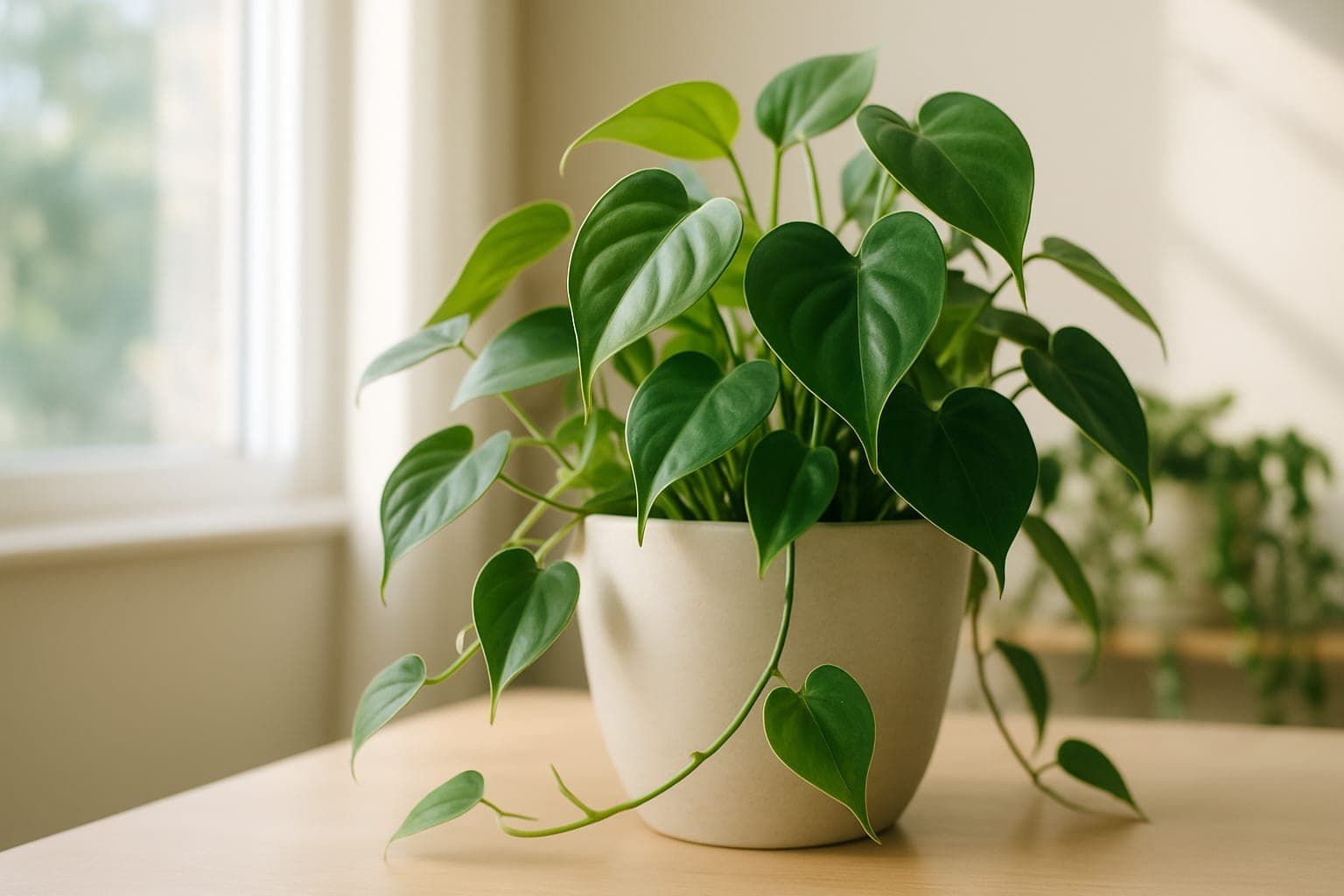
Philodendrons have earned their reputation as nearly foolproof houseplants. With glossy foliage, a tolerant nature and an enormous range of leaf shapes, they suit beginners and collectors alike. Whether you have a humble heartleaf trailing from a shelf or a statuesque climbing variety scaling a moss pole, the basics of care are remarkably similar across the genus.
Trailing vs climbing types
Philodendrons fall broadly into two growth habits, and knowing which you have helps you give it the right support.
Trailing (vining) philodendrons
These produce long, flexible stems that cascade beautifully from hanging baskets or shelves. The classic example is the heartleaf philodendron (Philodendron hederaceum), along with cultivars like 'Brasil', 'Micans' with its velvety bronze leaves, and 'Lemon Lime' in vivid chartreuse. They can also be trained upward on a small trellis or moss pole, where leaves will gradually grow larger.
Climbing philodendrons
Climbers naturally want to ascend, sending out aerial roots that grip onto bark or moss poles in the wild. Popular climbers include Philodendron erubescens hybrids such as 'Pink Princess', 'Painted Lady' and 'White Knight', as well as larger species like Philodendron gloriosum (a creeper that grows along the soil surface) and Philodendron melanochrysum. Given proper support, these plants produce dramatically larger, more mature leaves over time.
Light requirements
Most philodendrons thrive in bright, indirect light. An east-facing window or a spot a metre or so back from a south or west-facing window is ideal. They will tolerate medium light, though growth slows and variegated cultivars may lose their patterning. Direct midday sun, particularly through glass, scorches the leaves, leaving pale or crispy patches.
If your plant is reaching with long gaps between leaves (etiolation) or new leaves are noticeably smaller, it's asking for more light. Variegated types such as 'Pink Princess' need especially bright indirect light to maintain their colour without burning.
Watering
Philodendrons prefer the top 2–3 cm of soil to dry between waterings. Push a finger into the compost; if it feels dry at that depth, water thoroughly until it runs from the drainage holes, then empty the saucer. Overwatering is the most common cause of trouble, leading to yellowing leaves and root rot.
- Underwatered: drooping leaves, dry crisp edges, light pot when lifted.
- Overwatered: yellow lower leaves, mushy stems, a sour smell from the compost.
Water less often in winter, when growth slows and the compost stays wet for longer. Always use tepid water and a pot with drainage.
Humidity, temperature and soil
Average household humidity suits most heartleaf-type philodendrons, though velvet-leaved species like 'Micans' and melanochrysum appreciate a more humid spot — a bathroom, kitchen or a pebble tray will help. Keep them between roughly 18–27°C and away from cold draughts and radiators.
Use a chunky, well-draining mix. A blend of peat-free houseplant compost with added perlite, orchid bark and a little coco coir works well. This mimics the loose, airy debris philodendrons root into on the forest floor and around tree trunks.
Feeding and potting on
Feed monthly during spring and summer with a balanced liquid houseplant fertiliser at half strength. Pause feeding in autumn and winter.
Repot every 1–2 years, or when roots circle the pot or push through the drainage holes. Go up just one pot size — too large a pot holds excess moisture and invites rot. Spring is the best time to repot, refresh the compost and inspect the root system.
Propagation
Philodendrons are wonderfully easy to propagate from stem cuttings.
- Identify a healthy stem and locate a node — the small bump where a leaf meets the stem, often with a tiny aerial root.
- Cut just below the node with clean, sharp scissors. Each cutting should have at least one leaf and one node.
- Place the cutting in a jar of water, keeping leaves above the surface, or pot directly into damp compost.
- Set somewhere warm with bright, indirect light. Refresh water weekly.
- Roots typically appear within 2–4 weeks. Pot up water-rooted cuttings once roots are a few centimetres long.
Pests and common problems
Philodendrons are not especially pest-prone, but watch for spider mites (fine webbing, stippled leaves), mealybugs (white cottony tufts in leaf joints) and the occasional thrips. Wipe leaves regularly with a damp cloth, both to deter pests and to keep the foliage glossy.
- Yellow leaves: usually overwatering; occasionally a much older leaf simply ageing off.
- Brown crispy tips: dry air, underwatering or a build-up of mineral salts — flush the compost occasionally.
- Leggy growth: insufficient light; move closer to a window.
Telling philodendron apart from pothos
Heartleaf philodendron and golden pothos (Epipremnum aureum) are constantly confused, since both have heart-shaped green leaves and trail happily. A few reliable clues:
- Leaf texture: philodendron leaves are thinner, softer and matt, with a more elongated heart shape and a pronounced point. Pothos leaves are thicker, waxier and slightly more asymmetrical.
- New growth: philodendrons produce new leaves from a papery sheath called a cataphyll, which dries and falls off. Pothos new leaves simply unfurl from the previous one with no sheath.
- Aerial roots: philodendrons typically have one slender aerial root per node, while pothos produce stubbier, often multiple nubs.
- Petiole: the philodendron leaf stem is round and smooth; pothos petioles have a small groove or indentation along the top.
Final thoughts
Give a philodendron decent light, water it when the top of the compost dries and a chunky mix to root into, and it will reward you for years. They're generous with cuttings, quick to bounce back from neglect, and offer a variety in leaf shape and colour that can fuel a lifelong collection from a single, easy-going genus.
Tools and supplies for this
Products we'd actually buy for this job. Linking to Amazon — if you buy through these links we earn a small commission at no extra cost to you.
- Weston Mill Pottery Terracotta plant pots, 175mm (pack of 10)
Mid-size workhorse terracotta — perfect step-up for plants outgrowing their nursery pots.
- Weston Mill Pottery Terracotta plant pots, 20cm (pack of 5)
Heavyweight 20cm clay for established plants — the porous walls help prevent the soggy roots aroids hate.
- Whitefurze G04012 7.5cm Garden Pot - Terracotta (Set of 10)
Cheap, cheerful plastic propagation pots — what we actually use for cuttings and small offsets.
- Whitefurze G04013 10cm Garden Pot - Terracotta (Set of 7)
Reliable mid-size nursery pots with proper drainage holes — the boring essential every plant parent runs out of.
BotanicBuddy Editorial Team
Plant Care Team
Passionate about helping plant parents succeed with expert tips and proven techniques.
Related Articles
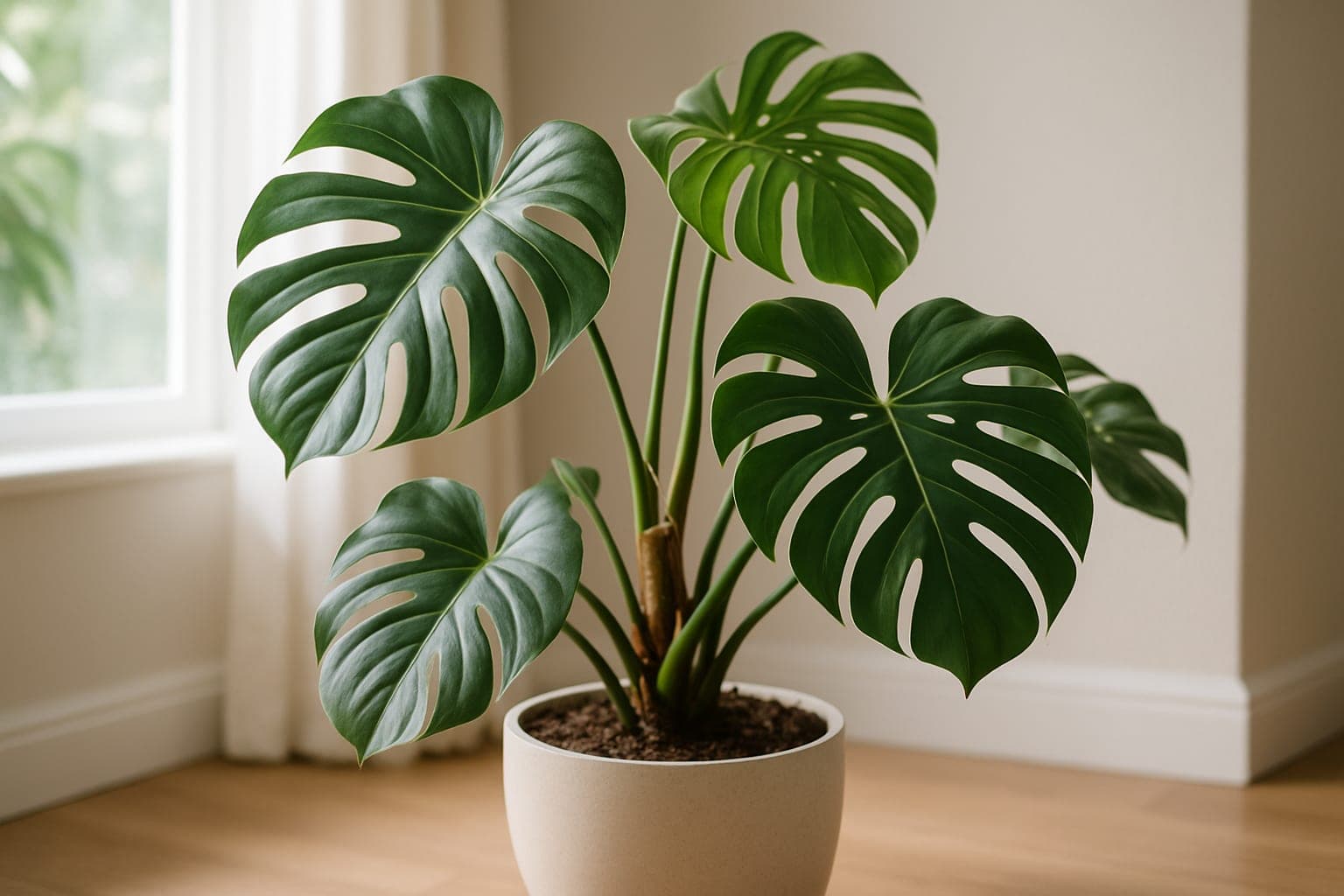
Monstera Deliciosa Care Guide
The Monstera deliciosa, or Swiss cheese plant, is a rewarding tropical climber prized for its dramatic split leaves. This guide covers everything from light and watering to moss poles and the secrets behind those iconic fenestrations.
Seasonal Plant Care: Adjusting for the Changing Year
Adapt your plant care routine throughout the year to keep your houseplants healthy and thriving.

Comments(523)
I've definitely put my philodendrons through their paces over the years—they really do bounce back from neglect better than almost anything else I've grown. My one hard-won tip: I used to underwater mine thinking they were more drought-tolerant than they actually are, but they actually prefer consistently moist (not wet) soil, especially the larger-leaved varieties. Makes a huge difference in leaf size and vigor, at least in my Mediterranean climate where everything dries out so quickly.
I appreciate this guide—I've definitely killed my share of pothos trying to grow them like orchids, so the distinction is helpful! My one tip after years of houseplant fumbling: philodendrons seem way more forgiving about inconsistent watering than I ever gave them credit for, especially in an arid climate like mine where everything dries out faster. I actually had better luck letting mine dry out a bit between waterings instead of keeping it evenly moist, which feels counterintuitive coming from someone whose orchid collection basically lives on a schedule.
I'd push back gently on "forgiving" — they're resilient, sure, but I've seen plenty killed by overwatering because people assume that translates to lax care. The real win with philos is they tolerate lower light, which matters in my place with mostly north-facing windows. Propagation is straightforward though, I'll give you that. Did you cover aerial root development in the climbing varieties, or focus mainly on water propagation?
I've got a couple of philodendrons myself and they really are hard to kill, though I do think the watering advice matters more than people realize—I learned the hard way that "forgiving" doesn't mean you should just dump water on them! One thing I'd love to know: did you cover the differences between the varieties in terms of growth speed? I've noticed my heartleaf grows way faster than my pink princess, and I'm curious if that's just normal variation or if I'm doing something different with them.
I've got five philodendrons scattered around my place, and they're honestly lifesavers for someone like me in a cold climate—they don't mind the lower humidity from heated winter air like some tropicals do. My biggest lesson was overwatering them when I first started out; I learned the hard way that their roots hate sitting wet, even though they seem so easygoing. Do you find that the trailing varieties propagate faster than the climbing ones, or is that just been my experience?
I've found propagation speed varies more by species than by habit—Philodendron hederaceum (the heartleaf trailing type) roots incredibly fast in water, while climbers like P. micans can be slower, but that's partly because they're woodier. Your point about winter humidity is spot on though; I've noticed they handle dry indoor air far better than something like Anthurium, which makes them genuinely practical for heated homes rather than just forgiving.
I'm curious about your winter humidity observation—mine seem fine indoors, but I'm in a mediterranean climate so I don't have that dry heat to contend with. On propagation speed, I've noticed the opposite with my trailing varieties; they root readily but seem slower to push new growth compared to my climbing Philodendron domesticum, though that could just be because climbers naturally want to shoot upward faster anyway. Have you noticed a difference in how long it takes from rooting to visible new leaves?
I've been wanting to get a philodendron for ages, but I kept confusing them with my pothos! Do you have a recommendation for which variety would be best if I'm still pretty new to houseplants? I have a pretty bright window, but my place gets pretty warm and dry, so I'm wondering if that might be an issue.
I appreciate the distinction between philodendrons and pothos since people mix them up constantly, but I'd push back gently on "most forgiving"—I've found they're actually pickier about watering than their reputation suggests, especially the larger-leafed varieties. They tolerate neglect better than, say, a fussy fern, but inconsistent moisture tanks them faster than people expect. That said, propagation is genuinely bulletproof with these, so if someone's new to plants, starting with cuttings in water is a great confidence builder.
You make a good point about the watering—I killed a Philodendron hederaceum cutting by overwatering it, thinking "forgiving" meant I could be careless with moisture. The propagation thing though, you're right, that's where I finally had success; I stuck a couple nodes in water and they rooted in like two weeks, which actually made me feel like I knew what I was doing for once!
I've got three philodendrons in my collection and honestly they've been lifesavers for a beginner like me—way more forgiving than I expected! I'm curious about the pothos comparison since I always mix those two up at the nursery. Do you have a quick way to tell them apart, or is it one of those things you just learn by looking at a bunch of them side by side?
I've got two philodendrons right now and honestly they've been the easiest plants in my collection so far, which is saying something since I'm still figuring most things out! I do have a question though—I keep seeing people say they're different from pothos but mine honestly look pretty similar to me. I took a photo of my climbing one next to a description I found, but I'm still not 100% sure which is which. Does the care change much between the two, or is it basically the same approach?
I've got a couple of Philodendrons in my collection and I'm still figuring out the differences between them and pothos—I have a photo of one that I think might actually be mislabeled, but I can't quite tell if it's a Philodendron hederaceum or something else. Would the guide go into how to spot the differences in the petioles or leaf shape? I'm in a tropical climate so watering has been pretty intuitive, but I'm curious about the propagation tips since I'd love to expand my nine plants without spending more money!
I appreciate the distinction you're making between philodendrons and pothos—that's something a lot of people gloss over. That said, I'd gently push back on "forgiving" as a blanket statement. While something like Philodendron hederaceum is pretty tough, I've found that varieties like P. melanochrysum and P. gloriosum are actually quite particular about humidity and can sulk if conditions aren't right. They're forgiving compared to, say, a finicky aroid, but they're not quite on the level of a true beginner plant in my experience.
You're making a really good point—I've got a P. hederaceum that basically thrives on neglect, but I just picked up what I think is a P. melanochrysum and it's already looking a bit droopy even though I thought I was doing everything right. I'm in a tropical climate so humidity shouldn't be an issue, but maybe I'm underestimating how much it actually needs? Do you find that misting helps, or is it more about overall ambient moisture?
I keep a Philodendron hederaceum alongside my succulents mostly out of curiosity, and honestly it's taught me that my usual "neglect until established" approach works there too—though obviously the watering schedule is totally different. The propagation tip is solid; I'd add that those nodes root stupid fast in water, which is actually useful for testing whether a cutting will take before committing it to soil. The philodendron vs. pothos distinction matters more than people think, especially once you've got a few established plants and start noticing growth patterns.
I love that you're using water propagation as a test run—I do the same thing, especially since I'm in a cold climate and success rates in soil can be iffy until I nail the humidity. Those nodes really do root ridiculously fast in water. Have you found that the ones that root quickest in water also establish best once you pot them up, or does it vary for you?
I've been meaning to try a philodendron since my succulents are doing well, but I'm a bit nervous about the watering—I'm so used to letting things dry out completely. This guide sounds really helpful for figuring out the differences from pothos since I keep mixing them up at the nursery. Do you find one variety is easier for beginners than others, or are they all pretty forgiving once you get the watering right?
Honestly, they're pretty forgiving once you nail the watering—I'd say that's the main hurdle for succulent people like you! I killed my first heartleaf philo by watering it like a cactus, but I've learned they like consistent moisture (not soggy, just... present). The heartleaf and Brasil varieties are the most chill starters though. Since your Mediterranean climate probably means drier air, you might find them a bit thirsty in summer—do you run into humidity issues with your other plants?
I've been eyeing philodendrons for months but kept confusing them with pothos at the garden center—so grateful for that distinction! I'm thinking of starting with a trailing variety since my apartment gets decent indirect light. Quick question: do they have the same water needs as my herbs, or are they thirstier?
I've got a phalaenopsis orchid that's been my main focus, but I've been thinking about adding a philodendron since people say they're pretty hard to kill. Quick question though—I'm in a temperate climate and my apartment doesn't get a ton of bright indirect light. Would a philodendron still work, or should I stick with what I know? I'd love to see how your propagation tips compare to what I've figured out with my orchid so far.
I appreciate the focus on distinguishing philodendrons from pothos—that's such a common mix-up. Though I'd gently push back on "forgiving" being universal across the genus. Varieties like Philodendron billietiae have pretty specific humidity needs that caught me off guard when I first grew them, especially in my arid climate where most of my collection thrives on benign neglect. The care really does vary quite a bit depending on which species you're working with.
I'd push back slightly on the "forgiving" label—they're forgiving *if* you nail the watering, which honestly trips up a lot of people because the advice varies wildly depending on your climate. In my tropical setup, my Philodendron Pastazanum stays consistently moist and thrives, but I've seen the same plant rot in temperate homes where people follow generic "let it dry out" rules. Would've loved to see you address how humidity and temperature shift the care completely rather than treating it as one-size-fits-all.
I've got five philodendrons now (and somehow still kill more plants than I save), so I'm really glad you covered the philodendron vs. pothos thing—I genuinely couldn't tell mine apart for the longest time! My one question: I keep mine in a pretty cold apartment and the growth has been painfully slow. Is that just the tradeoff with tropical plants in chilly conditions, or is there something I'm missing with my setup?
Yeah, cold is definitely the main culprit—philodendrons really do sulk below 60°F or so. I keep mine in a tropical setup, so I can't speak from experience with chilly apartments, but I'd try bumping the warmth even slightly if you can manage it; they're much more responsive to watering and nutrients once they're comfortable. Even moving them away from drafty windows or near a heat source might make a noticeable difference without needing anything fancy.
I've been trying to figure out why my Philodendron hederaceum keeps getting leggy, and I think it might be the light situation in my apartment—would you say that's usually the main culprit, or could inconsistent watering do that too? I'm still learning to tell my climbing varieties apart, so it's really helpful that you're covering that distinction from pothos, since I honestly mix them up sometimes when I'm at the plant shop!
The watering advice is crucial—I killed my first philodendron by overwatering, thinking the droopy leaves meant thirst when they actually meant root rot. Now I just let the top inch dry out and check before watering, and my three philodendrons are thriving. I'd definitely push back on the idea that they're completely forgiving though; they're forgiving *if* you get the drainage right, which honestly trips up a lot of beginners.
I've had great success with both *Philodendron hederaceum* and *Scindapsus aureus* in my collection, and the distinction you're drawing here is one I wish more beginners understood—the leaf arrangement and petiole structure are genuinely different even when the growth habits seem similar. My *P. micans* has been especially rewarding in bright indirect light; it's developed those distinctive velvet leaves and a much deeper color than when I first propagated it from a cutting two years ago.
I appreciate the breakdown here, especially the pothos comparison—they really do get mixed up constantly. My collection is small, just two plants, but I've found philodendrons thrive with that middle-ground approach to light and water that beginners find so reassuring. Though I'm admittedly more of an orchid person myself (the humidity requirements suit my arid climate better than you'd think), I do wonder if you've noticed much difference in care between the trailing varieties and the climbers, or does the basic routine stay pretty consistent across types?
I've got three philodendrons now and I'm still figuring out the differences between varieties—I keep second-guessing whether my vining one is *Philodendron hederaceum* or something else. The trailing vs. climbing distinction is helpful, though I'm curious: do you find that climbing varieties actually need more support than people think, or can they manage without a moss pole if you're patient?
I'm so glad you're distinguishing between Philodendron and Epipremnum in a care guide—I can't tell you how many times I've seen people conflate the two. They really do have different needs, especially when it comes to light intensity and aerial root development. My Philodendron 'Micans' absolutely thrives in the dappled light of my Mediterranean garden setup, while I've had to give my pothos a bit more protection from direct afternoon sun. Are you finding that one genus tends to be more forgiving than the other in your experience?
I've been curious about the difference between my philodendron and pothos since I grabbed both at the same time—they honestly look almost identical to me still. My arid climate means I'm always worried about overwatering, so it's helpful to know these are forgiving. Quick question though: do the trailing varieties need less light than the climbing ones, or is it pretty much the same care across the board?
I've been eyeing a climbing philodendron for months but kept second-guessing myself—glad to hear they're forgiving because I've definitely killed my share of fussier plants! My herbs do so much better in bright, indirect light, so I'm curious whether philodendrons prefer that same setup, or if they're happy with less since they seem to tolerate low light too. Would love to know more about telling them apart from pothos since I'm still a bit fuzzy on the actual differences!
I'm right there with you on the fussier plant casualties! I got a trailing Philodendron hederaceum a few months ago, and bright indirect light definitely seems to be its sweet spot—it's put out way more leaves than I expected. From what I've gathered, the main difference from pothos is that philodendrons have those signature ridged stems and tend to develop fenestrations on mature leaves, whereas pothos stays smoother and more uniform. Honestly I'm still learning to spot them quickly myself, but the leaf shape difference is usually the giveaway!
I've got three philodendrons in my collection and honestly they've been the easiest to keep alive through our brutal winters up here! My one tip from experience: I used to underwater mine thinking they were so forgiving, but they actually do way better when the soil stays consistently moist (not soggy). Are you covering the propagation methods in detail? I'd love to know if you have a preferred way since I'm thinking about propping some cuttings from my heartleaf philo.
I totally get that—I used to make the same mistake with mine! The consistent moisture thing really does make a difference, especially with *Philodendron hederaceum*. For propagation, I've had the best luck with water props, honestly. I just stick cuttings in a jar and they root within a couple weeks, then transition to soil. Have you tried that method before, or are you thinking of going straight into substrate?
I've had great success with *Philodendron hederaceum* and *Philodendron micans* in my tropical setup, and the distinction from pothos really matters—the latter's waxy leaves and different petiole structure make them easy to tell apart once you know what to look for. My *P. micans* especially rewards consistent warmth and humidity, which is why it's been the most vigorous climber in my collection of eleven plants.
Those petiole details are such a game-changer once you spot them—I wish I'd known that before confidently misidentifying half my early collection! I've had less success with *P. micans* than you (my arid climate is apparently its nemesis), but I've found *P. hederaceum* surprisingly forgiving even when I inevitably underwater it, which has been my saving grace with my modest three plants.
Oh, the *P. micans* sounds dreamy—I've been eyeing one for months! I'm in a pretty cold climate though, so I'm nervous about keeping that consistent warmth and humidity it loves. Do you find you need to do anything special like a humidifier or pebble tray, or does it just thrive with regular misting? I've killed enough plants by guessing at humidity levels that I'm trying to be more intentional about it now.
I'd push back slightly on the "forgiving" label—they are *easier* than many tropical plants, but I've killed a few by overwatering in low light, which seems to be where people actually struggle. The trailing varieties handle neglect better than the climbers in my experience. I've got five plants total and my Philo Selloum is honestly pickier about moisture than my cold-hardy orchid, which might sound odd but it's true. Good that you're clarifying the Pothos difference since that confusion seems to come up constantly.
I appreciate how you've tackled the philodendron-pothos confusion—that's something I see come up constantly. I've found the petiole differences really helpful to point out when folks ask me, though I'm curious whether you've noticed certain varieties like Philodendron hederaceum being easier to distinguish than others in lower light conditions.
I've got five philodendrons scattered around my place and honestly, they're my go-to recommendation when friends ask what to start with! I learned the hard way that mine were getting leggy in my north-facing apartment though—moved a couple to a brighter spot and the difference was night and day. Are you finding that trailing varieties need noticeably different care than the climbing types, or is it mostly just about giving them something to climb?
I appreciate you distinguishing philodendrons from pothos—that confusion drives me up the wall. That said, I'd push back slightly on "forgiving" when it comes to watering. I've found *Philodendron* ssp. are way more prone to root rot than people expect, especially the thicker-stemmed varieties like P. melanochrysum. The trick isn't just avoiding overwatering; it's matching frequency to your actual humidity and air movement, which varies wildly by climate. What's your take on watering schedules in drier Mediterranean conditions versus tropical setups?
I'm so glad you're highlighting the distinction between Philodendron and Epipremnum aureum—so many people assume they're interchangeable, but the leaf structure and growth patterns are quite different once you know what to look for. I've had great success with my Philodendron micans and Philodendron gloriosum in bright, indirect light here in the Mediterranean, though they're definitely more forgiving than my pickier aroids. Do you find certain varieties respond better to specific watering schedules, or does the "let it dry between waterings" approach work pretty universally across the genus?
I've learned the hard way that "forgiving" doesn't mean ignoring light entirely—my Philodendron micans stayed alive in low conditions but never developed that gorgeous coppery sheen until I moved it closer to a window. The real trick is matching variety to your actual setup since a Philodendron hederaceum trailing in bright indirect light behaves totally differently than a climbing Philodendron pinnatifidum in the same spot.
I've killed exactly two Phalaenopsis orchids through sheer neglect, so I really appreciate how philodendrons just... exist happily in the corner and ask for basically nothing. My trio of plants includes a Monstera deliciosa that I keep trying to convince is a philodendron (it isn't, I know), but I'd love to finally add an actual climbing variety—the distinction from pothos you mention is probably the push I need. Do you have a preference between the hemiepiphytes for someone who gardens in a pretty arid climate?
I totally get the appeal of plants that just let you exist peacefully—life's too short for high-maintenance species. If you're in an arid climate, I'd honestly lean toward a Philodendron Brasil or Heartleaf over the climbing varieties, since those seem to tolerate lower humidity way better than my Micans does. My Brasil actually thrives in a corner of my living room with minimal fussing, and I only water it when the soil is genuinely dry, which works perfectly for someone like me who tends to underwater anyway.
I'd push back slightly on the "forgiving" label—they're definitely easier than many plants, but I've seen plenty of people kill them with inconsistent watering or low light that's just low *enough* to cause slow decline. The trailing varieties handle neglect better than the climbing ones in my experience. One thing I'd add: distinguishing them from pothos matters more than most guides admit, because the care is subtly different (pothos wants drier soil between waterings). Did you go into detail on that distinction, or keep it brief?
I've killed fewer philodendrons than pothos, honestly—the watering tolerance is real. The one thing I'd add is that they genuinely prefer staying slightly drier than people think, especially in winter. I learned that the hard way with a climbing variety that got root rot before I figured it out. Have you found that certain varieties are noticeably pickier than others, or do they all pretty much follow the same rules?
I've killed exactly zero philodendrons in my (admittedly small) collection, which feels like a personal victory after my pothos phase—I somehow managed to overwater those despite their reputation for being bulletproof! Your point about telling them apart is so helpful because I was convinced I had a rare variety until I realized it was just a pothos all along. Do you have a favorite trailing variety, or do you find the climbers tend to perform better indoors in colder climates like mine?
I totally get the overwatering thing—I've got 14 plants now, but my early days were rough with pothos too! For what it's worth, I've had much better luck with philodendrons in my dry climate; my heart-leaf seems genuinely happier with less frequent watering than any pothos I've owned. I'd be curious which trailing variety you've settled on, since I'm always hunting for ones that don't mind arid conditions!
I'd gently push back on "forgiving"—it depends which species you're growing. The vining types like *Philodendron hederaceum* are bulletproof, but some of the larger-leaved aroids like *P. gloriosum* or *P. melanochrysum* are surprisingly finicky about humidity and actually hate being wet, which trips up a lot of beginners who expect them to tolerate the same treatment as their pothos. Worth calling that out in a care guide.
I appreciate you covering the philodendron vs. pothos distinction—I've definitely killed a plant or two trying to care for them identically! Though I'm mostly an orchid person (my collection of three would probably revolt if I gave them this much fussiness), I've found that philodendrons actually do really well in the drier air of my arid climate as long as you let the soil dry out between waterings, which your guide seems to emphasize nicely.
I appreciate the honesty about philodendrons being forgiving—they're nothing like the succulents I mostly keep. I've got a *Philodendron hederaceum* that's been languishing in my collection for two years because I kept underwatering it out of habit; once I accepted it actually wanted moisture, it took off. The distinction from pothos is worth emphasizing since people mix them up constantly, even though the leaf shape and petiole structure are completely different if you actually look.
I'd push back slightly on the "most forgiving" claim—they're forgiving *if* you get the watering right, but I've killed more philodendrons from overwatering than anything else. Mine do best in my coldest room where they dry out slower, and I only water when the top inch is genuinely dry. The propagation section sounds useful though, since that's where a lot of people get careless and rot the nodes. Curious if you covered how long it takes them to root in water versus soil.
I appreciate you distinguishing philodendrons from pothos—I learned that lesson the hard way after confidently misidentifying a Philodendron hederaceum for years. Since most of my collection leans toward herbs, I don't have many aroids, but I've found philodendrons are genuinely as forgiving as you say, especially compared to something like basil that gets temperamental with watering. Do you have a preference between the trailing varieties and the climbers for indoor growing?
I'd push back slightly on the "forgiving" label—philodendrons are pretty tolerant of neglect, sure, but they really show their best growth with consistent watering and bright indirect light. I've got a few in my collection and the difference between one thriving on a shelf versus one actually climbing is noticeable. The pothos comparison is helpful though; the leaf texture difference is the easiest tell if you're looking at them side by side. Worth mentioning that variegated types like pink princess need more light than the solid green ones if anyone's considering moving beyond the standards.
I've killed my fair share of houseplants, but I've yet to struggle with any of my Philodendrons—I'm currently growing a *Philodendron pastazanum* and a couple of the climbing types. The one thing I'd emphasize is that they genuinely do prefer to dry out between waterings more than most tropical plants; I learned this the hard way by overwatering a *P. brasil* my first year. Now I just wait until the top inch of soil feels completely dry before watering, and they've thrived ever since.
I've got five different philodendrons in my tropical setup and they've genuinely been my gateway into plant parenting—I killed a pothos once by overwatering it to death, so learning the difference between the two was a game-changer for me. I'd love to see you touch on humidity preferences since the climbing varieties seem so much happier when I mist around them, especially during dry spells.
I'd gently push back on lumping philodendrons and pothos together too neatly—while *Philodendron* and *Epipremnum* share similar care needs, the leaf anatomy is genuinely distinct once you know what to look for (cataphylls on philos, for instance). That said, the forgiving nature is spot on; I've found *Philodendron hederaceum* especially bulletproof in my setup, though I've had better luck with brighter indirect light than most guides suggest, particularly for the variegated cultivars.
I've been wanting to try a trailing plant for my apartment, so this is really helpful. I've got one succulent right now and it's doing okay in my dry setup, but I'm curious whether philodendrons would need way more water than I'm used to giving—I'm still learning how to not underwater everything. Your point about them being forgiving makes me feel braver about trying one.
I appreciate how you clarified the philodendron vs. pothos distinction—I've seen so much confusion about that! My Scindapsus aureus trailing over the bookshelf definitely gets mistaken for a philodendron constantly. Since my growing space is pretty mediterranean-focused, I've mostly stuck with herbs, but I'm curious whether you'd recommend any trailing philodendrons that tolerate the drier air we get here, or if they'd prefer more consistent humidity than I can give them?
I appreciate this guide, though I have to admit philodendrons weren't my first choice when I moved to Arizona—I was worried about the dry air! Turns out my Heartleaf has been one of my easiest keepers once I found the right spot away from direct afternoon sun. Do you have tips for keeping them happy in really arid climates, or does the watering schedule stay pretty similar? I'd love to see how others are managing theirs in drier regions.
I've got a few philos myself and honestly they're so reliable I sometimes forget to check on them! The one thing I'd add though—I've noticed my climbing varieties do *so* much better with something to climb on, even just a moss pole. It makes a real difference in how they grow compared to when I had them trailing. Have you found that the growth habit changes depending on how you support them, or is that just been my experience?
Oh wow, the moss pole tip is so helpful! I've got a couple of climbing types that I've just been letting trail, and now I'm wondering if they'd be happier with some support. Do you find they need more watering or care once they're on a moss pole, or is it mainly just about the growth pattern? I'm still getting the hang of giving my plants what they actually want versus what I think they need!
You're absolutely right about the moss pole making a difference—I've found my climbing philos put on noticeably bigger leaves and stronger internodes when they have something to grip onto, compared to trailing. It's like they shift into a different growth mode entirely. I kill enough plants through neglect to appreciate how forgiving they are, but giving them the right structure really does unlock their potential!
I appreciate the distinction you're drawing with pothos—that's something people genuinely mix up. That said, I'd gently push back on the "most forgiving" framing; in my experience, many *Philodendron* species are actually pickier about consistent moisture than *Epipremnum aureum*, especially the vining types like *P. hederaceum*. I've had better luck treating them less like the set-and-forget houseplant and more like something that wants steady (not wet) soil. Curious if your approach differs depending on variety.
I've been struggling a bit with the "forgiving" label—mine seemed to decline pretty quickly when I overwatered, so I'm curious if that's just me being impatient or if they're more fussy than the reputation suggests? Also, I'd love to see more on telling them apart from *Epipremnum*, since I'm still not 100% confident I know which is which. The leaf shape difference seems obvious in theory but less so when they're young.
The overwatering thing isn't just you—I've killed more philodendrons that way than I'd like to admit. They're forgiving about neglect and low light, but they hate sitting wet, so maybe that's where the "easy" reputation breaks down. On the *Epipremnum* thing, I find the easiest tell is actually the leaf nodes: philodendrons have a thicker, more pronounced ridge between nodes, while pothos is smoother. I'd love to see a photo comparison of that detail here since it's what finally made it click for me.
I'd push back slightly on the "forgiving" label—they're definitely easier than orchids, but I've seen plenty of people kill them with inconsistent watering. The light point is solid though; I've got a Philo Micans that actually thrives in a corner my cold apartment, which surprised me. That said, the Pothos comparison is helpful because the leaf shape difference is real once you know what to look for. My main thing: don't let the reputation make you complacent. They're tolerant, not invincible.
I've got a Philodendron hederaceum that's been my gateway plant—it's definitely forgiving! But I'm still a bit fuzzy on the difference between it and pothos since they look so similar to me. Is it mainly the leaf shape or are there other tells I should know? I'd love to try propagating mine soon if you have tips on the best time of year to do it.
I appreciate you breaking down the philodendron vs. pothos distinction—I see so many people mix those up! That said, I'm curious whether you touched on humidity preferences in the full guide? I've got *Philodendron hederaceum* trailing alongside my oregano and basil collection, and while it's pretty low-maintenance, I've noticed it perks up noticeably when I mist. I'd love to hear if you found that made a real difference with your own varieties, or if you think it's more of a bonus than necessity.
I've got a trailing one that's been doing okay, but I'm honestly still confused about when to water—I've been checking the soil and watering when it feels dry about an inch down, which seems to be working so far. My main question is whether I should be fertilizing during winter here in the Mediterranean, or just wait until spring when growth picks up? I'd love to see a photo comparison of philodendron vs pothos because I'm pretty sure I might have mislabeled one in my collection!
I'd gently push back on the "most forgiving" claim—while many Philodendron species are indeed easygoing, I've found the more finicky aroids (especially some of the rarer cultivars) can be surprisingly particular about humidity and drainage, particularly in my drier Mediterranean climate. That said, the distinction from Pothos is helpful; people often conflate them, but the leaf morphology and growth habit are quite different once you know what to look for.
I've found that the distinction between Philodendron and Epipremnum aureum really matters once you start propagating—I learned this the hard way when my Philodendron micans kept losing leaves in the same bright indirect light where my pothos thrived. The aerial roots on my Thaphyllum pinnatifidum are far more pronounced than on any Scindapsus I've grown, which makes me wonder if light intensity plays a bigger role in root development than we typically acknowledge. Great to see this guide lay out the differences clearly.
That's really helpful to know—I didn't realize the light preferences could be that different between the two! I have a micans that's been a bit droopy lately, so I'm wondering if I've had it in a spot that's too bright. How much indirect light are you giving yours now, and did moving it help with the leaf loss? I'd love to see a photo of those aerial roots on your pinnatifidum too, since mine are still pretty small.
I've got a Philodendron hederaceum that's been growing like crazy on my shelf, but I'm still a bit fuzzy on the difference between it and pothos—they look so similar to me! I'm glad you're covering that because I think I've been treating them identically anyway. Looking forward to seeing the propagation tips; I've been meaning to try multiplying mine but wasn't sure if there's anything different about it compared to my other plants.
I've got a few philodendrons myself, though I'll admit I lean more toward herbs these days—they're just more useful to me in the kitchen! That said, I do appreciate how low-maintenance they are as filler plants. One thing I'd push back on slightly is the "forgiving" angle: mine really do sulk if I let them dry out completely, and I've seen way too many rotted stems from overwatering. Have you found that the trailing varieties are actually more forgiving than the climbers, or does it mostly come down to individual care?
I'd gently push back on the "forgiving" angle—in arid climates especially, Philodendron spp. can be surprisingly fussy about humidity, and the trailing types like P. hederaceum really suffer if the air dries out between waterings. I've found success keeping mine in grouped clusters to raise local humidity rather than treating them as solo low-maintenance plants. Curious whether your guide addresses climate-specific adjustments?
I've been growing philodendrons for years and honestly they're my gateway drug—I have way more than I probably need at this point! I'd love to see how you distinguish them from pothos in practice though, since I've definitely confused some of the newer varieties. My Pink Princess has been a bit finicky compared to my other philodendrons, so I'm curious if you touch on those pickier cultivars or if this is more focused on the forgiving ones?
I've had a pothos and a philodendron side by side for years and honestly still mix them up sometimes—though I've learned the leaf texture is usually my tell. That said, I'm curious what you'd recommend for someone who wants to try propagating philodendrons for the first time? I've had better luck with my herbs, so I'm wondering if there's a trick I'm missing or if I'm just being impatient!
Philodendron cuttings are pretty forgiving—I'd just make sure you're taking them from active growth and letting the cut callus over for a day before putting them in water. The thing that changed everything for me was patience with rooting; they can take 3-4 weeks sometimes, whereas herbs root in days. I keep mine in bright indirect light during that phase and change the water every few days to prevent rot.
I'd say you're probably not being impatient—Philodendron cuttings root reliably in water or moist soil within 2-3 weeks, so if yours are taking longer, it might be a light or temperature thing. They're actually more forgiving than many herbs once you get the basics right, so I'd check that your cuttings have at least one node and are in bright, indirect light; they stall in dimmer conditions more easily than people expect.
I appreciate the practical focus here, though I'd gently push back on "forgiving" as the default frame—in my experience, *most* houseplants are pretty forgiving if you match their actual needs rather than guessing. That said, Philodendron really does have some genuinely tough species like P. micans that bounce back from neglect. My one thing: the Philodendron vs. pothos distinction matters more than it sometimes gets credit for, since their water and light preferences can diverge pretty noticeably depending on the specific variety you're growing.
I've killed exactly zero philodendrons in my five years of collecting (knock on wood), which is honestly my greatest houseplant achievement given my track record with everything else. The trailing varieties are lifesavers for my cold apartment—they're happy in lower light and don't guilt me for forgetting to water them for a week. I'm curious though: do you have a preference between the climbers and trailers for beginners, or does it really just come down to space and patience?
I totally get that relief—I've got a couple trailers myself and they've genuinely saved me from plant-killing guilt more times than I can count! My Heartleaf Phil has survived some pretty neglectful weeks during our hot, dry Mediterranean summers when I've been traveling. That said, I've found the climbers like the Monstera Deliciosa are actually just as forgiving if you give them a moss pole to climb; they seem to reward you with bigger leaves, which feels like a win. Are you leaning toward adding a climber eventually, or are you pretty happy sticking with the trailers for now?
I'm genuinely impressed by that zero-kill streak! I've got 14 plants now and my philodendrons are definitely the ones keeping my confidence afloat while my orchids (tropical humidity in an arid climate—what was I thinking?) teach me humility regularly. I'd say trailers are the move for beginners if space allows, since they're more forgiving about light fluctuations, but if you've already mastered the low-light setup, a climbing variety like a Heartleaf on a moss pole is such a satisfying glow-up project.
I've got a philodendron and a pothos side by side, and honestly the differences are subtle enough that I still second-guess myself sometimes—especially with the heartleaf varieties. My main struggle has been keeping the climbing types from getting leggy in my cold Minnesota home; even with supplemental grow lights, they just don't seem as vigorous as they would be further south. Are you finding that cold-climate growers need to adjust watering schedules more drastically than the standard advice suggests, or is it mainly a light issue?
I've killed fewer philodendrons than anything else I've owned, which honestly says more about my watering habits than the plant's toughness. The distinction from pothos is crucial though—I wasted months wondering why my "philodendron" wasn't trailing the way I expected. Are you covering the aerial root thing in your guide? That's been the biggest difference I've noticed when caring for the climbing types.
I've found the distinction between Philodendron and Epipremnum pinnatum really matters once you start collecting—I have a couple of each, and the philodendrons in my collection consistently handle lower light better, while the pothos seems to sulk without bright indirect conditions. The propagation point is especially useful since both root so readily in water, but I've noticed my Philodendron hederaceum cuttings develop nodes faster, which makes sense given their growth habits.
I've killed exactly zero philodendrons in my collection of eight, which honestly feels like a miracle given my track record with everything else! The trailing varieties have been my gateway drug into actually keeping plants alive—I think it's because they're so vocal about what they need (droopy leaves = water me, pale growth = more light). I'm curious whether you've found one variety that's particularly forgiving, or do you think they're all pretty equally hard to mess up?
I'd agree they're forgiving, but I've found the watering advice people give is often too vague—philodendrons really do vary depending on whether you're growing a vining type or an upright like a Pink Princess. In my mediterranean climate I water way less than I would've when I lived elsewhere, and pot size makes a huge difference too. Did you find one variety noticeably easier or harder to keep than the others?
I love that you're distinguishing them from pothos—that one comes up constantly! Though I'd gently push back on "most forgiving" across the board. I've had way more success with my *Philodendron micans* than my *P. melanochrysum*, which absolutely demands higher humidity than I can reliably give it in my Mediterranean climate. Have you found certain varieties are genuinely easier than others, or does it mostly come down to matching conditions to what you have available?
I appreciate the philodendron focus, though I'd gently push back on "most forgiving"—mine actually struggled until I stopped watering on a schedule and started checking soil moisture first. They're more forgiving than finicky plants like calatheas, sure, but overwatering kills them faster than people expect. The trailing vs. climbing distinction is helpful though; that's where a lot of confusion starts.
You're absolutely right about the overwatering trap—I've seen that take down more Philodendendron hederaceum than anything else. They do seem forgiving until they're not, which I think comes down to people conflating "tolerates low light" with "tolerates wet soil." The trailing varieties especially benefit from that moisture-check approach you mention. Glad you worked through it.
I've killed exactly zero philodendrons in my 14-plant collection, which honestly says more about their forgiving nature than my skills! I appreciate you breaking down the philodendron vs. pothos thing because I spent an embarrassing amount of time convinced my heartleaf was a pothos (spoiler: it wasn't). My trailing one actually thrives in my dry Arizona climate better than most of my other plants, though I do have to be more careful about humidity for some of the fancier varieties—still figuring that balance out!
I appreciate you spelling out the philodendron vs. pothos difference—so many people conflate them! I've got a couple of philodendrons mixed in with my herb collection, and honestly they're great for filling vertical space without demanding much attention. My one tip: I've had way better luck with them in indirect bright light rather than low light, even though they *tolerate* it. Are you finding the same thing, or do you see them do fine in dimmer spots?
I've found the distinction between Philodendron and Epipremnum aureum genuinely matters once you're propagating at scale—I started with what I thought were identical plants three years ago and noticed my *Philodendron hederaceum* rooted in water within two weeks while the pothos took nearly four. The aerial root development is where it really shows, especially in my tropical setup. Great that you're covering this comparison since so many people conflate them online.
I've been wanting to try a philodendron for a while since they seem pretty low-maintenance, but I'm always worried about overwatering—that's been my downfall with other plants. Do you have a preference between the trailing and climbing types, or does it really just come down to space? Also, I'm in Arizona so I'm curious if they do okay in drier air or if I need to mist them more often than I would in a humid climate.
I'm so glad someone's writing about the differences between philodendrons and pothos—I spent way too long thinking my heartleaf philo was a pothos before I finally figured it out! Since I'm in a cold climate, I've learned the hard way that they're a bit pickier about watering in winter than people say, so I'm curious if your guide touches on adjusting that seasonally? I've got several trailing varieties now and they're honestly my favorite part of my collection once you dial in the humidity.
I appreciate the emphasis on distinguishing philodendrons from pothos—that's something I see mixed up constantly. While I'm more of an orchid person myself (my collection is small but mighty), I've had good success with a couple of philodendrons in my arid climate by being deliberate about humidity and watering frequency. The trailing varieties seem especially forgiving in that regard. Did you find certain varieties adapted better than others to drier environments?
I've had my Philodendron hederaceum doing great for years, though I did learn the hard way that "forgiving" doesn't mean neglect—mine got leggy when I kept it too far from the window. I'm curious whether you cover humidity preferences in the full guide, since that's where I've noticed the biggest differences between my climbing varieties and the trailing ones?
I'm definitely guilty of mixing up my Philodendrons and Pothos—the petiole thing still catches me off guard sometimes! That said, I've had the best luck with my climbing varieties in bright indirect light near an east-facing window, though I'd love to know if you have tips for the trailing ones since they seem to need slightly different conditions. I actually just propagated a stem from mine in water and it's doing great, so the timing of this guide is perfect. Do you have a preference between water and soil propagation?
I appreciate how you've tackled the philodendron versus pothos confusion—that's something I field questions about constantly. Though I have to admit my collection leans heavily toward edibles in my tropical setup, I do keep a couple philodendrons around for the sheer resilience they offer. The propagation section will be helpful for anyone looking to expand without spending much, since they root so readily. What's your take on whether beginners should start with a trailing variety or go straight for a climber like Philodendron hederaceum?
I'd lean toward starting with a trailing variety for pure confidence-building—something like Philodendron hederaceum 'Micans' gives you quick wins with minimal fuss. That said, if someone has decent vertical space and isn't afraid of staking, the climbers are equally forgiving and rewarding to train up. Since you mention edibles, I'm curious whether you find the philodendrons serve more of a decorative role in your tropical setup, or do you propagate them pretty actively?
I've killed exactly zero philodendrons in my collection of eight, which is honestly my biggest win as a plant parent—I can't say the same for my pothos! I've always watered mine when the top inch feels dry and let them trail happily from a bright shelf, but I'm curious whether you have a preference between the climbers and trailers, or does it just come down to space?
I've got three Philodendrons now and honestly they've been lifesavers while I'm learning—way more forgiving than I expected! I'm still a bit fuzzy on telling them apart from Pothos (Epipremnum aureum) though; the leaf shape seems similar to me. Do you have a quick way to distinguish them that doesn't require looking up the scientific names every time?
I appreciate how you're distinguishing philodendrons from pothos—that confusion trips up so many people, especially when comparing something like Philodendron hederaceum to Epipremnum aureum. My collection leans heavily toward orchids, but I've always found philodendrons invaluable as low-maintenance companions in the same spaces. Do you have a favorite variety among the climbers, or do you find the trailing types easier to manage indoors?
I really appreciate you bringing up hederaceum versus pothos—that's exactly the distinction that confused me for years! I've found the trailing types way more manageable in my cold climate apartment, honestly. I've got a couple of Micans that just thrive in indirect light without needing much fussing, whereas the climbers I've tried seem to want more consistent warmth than I can reliably give them. Do you find your orchids and philodendrons compete much for the same space, or are they in pretty different microclimates?
I've had great success with both *Philodendron hederaceum* and *Philodendron pinnatum* in my collection, and the distinction from pothos really matters—the latter's aerial roots are far more pronounced and the leaf shape diverges considerably once they mature. My *P. pinnatum* climbed a moss pole beautifully once I got the humidity right, which honestly made all the difference in leaf fenestration.
I've got eleven tropicals in my apartment and honestly, philodendrons have been my gateway drug into plant parenthood—they really do tolerate neglect like champs! I'm curious about your take on the philodendron vs. pothos distinction since I see people mix them up constantly; my Philodendron Brasil actually has some leaves that look deceptively similar to my pothos, so I'd love to know what the dead giveaway is for you. Also, are there any of the climbing varieties you'd especially recommend for lower light setups? I have one that's doing okay but I keep wondering if I'm pushing it.
I've got five philodendrons now and the biggest lesson was realizing they actually do want more light than people think—mine stayed scraggly until I moved them closer to a window. The trailing varieties especially seem to reward brighter conditions with tighter nodes. Curious whether you've found the same thing, or if you've had success with lower light setups?
I've killed exactly zero philodendrons in my collection of 14, which honestly tells you everything you need to know about how bulletproof they are—I've definitely murdered plants that are supposed to be easier! My one hard-won lesson was learning not to overwater mine in my arid climate; I finally stopped treating the soil like it needed constant moisture and they've been thriving ever since. The distinction between philodendron and pothos is still a bit fuzzy to me visually, so I'm glad this guide covers that.
I've got a Philodendron hederaceum that's been my gateway plant—finally something I haven't killed! I'm still figuring out the difference between it and pothos though, since they look so similar to me. Does the post mention specific leaf shape differences, or is there another way to tell them apart? I'm curious because I want to make sure I'm not accidentally mixing them up when I eventually try propagating.
I'd push back slightly on the "forgiving" label—*Philodendron* spp. are definitely more resilient than many tropical aroids, but the trailing types (*P. hederaceum*, *P. micans*) are far more tolerant of lower light than the climbers, which get leggy fast without bright, indirect conditions. The pothos distinction is worth stressing though; I see people mix them constantly, and *Epipremnum* behaves quite differently in terms of growth rate and aerial root production. For what it's worth, my biggest losses have been from overwatering, not neglect.
I'd gently push back on the "forgiving" label—they're definitely easier than some plants, but I've seen plenty of people struggle with overwatering since the "water when soil is dry" advice doesn't account for how slowly they actually use water in low light. The pothos distinction is helpful though; I find the real difference shows up in growth rate and leaf texture once you've had both for a while.
I've killed exactly one philodendron in my life (overwatering, classic mistake), and it honestly made me respect them even more—they really do bounce back from almost anything. I'm particularly curious about your take on the philodendron vs. pothos distinction since I still mix them up sometimes, even after a few years of growing both. Do you find one is genuinely easier for beginners, or does it mostly come down to personal preference?
I've got five philodendrons now and I'm still somehow confused about which ones are which—I swear half of mine might actually be pothos and I'd never know! But honestly, they've forgiven every watering mistake I've made so far, which is saying something given my track record with tropical plants in a cold climate. Really hoping this guide clears up the pothos question for me because I'm tired of just... guessing.
I'd push back a bit on the "forgiving" label—I find *Philodendron* spp. can be surprisingly fussy about humidity and drainage compared to *Epipremnum aureum*, especially the more delicate varieties like *P. melanochrysum*. Have you noticed that split-leaf types are more prone to root rot than the vining ones, or is that just my heavy hand with watering?
I'd push back gently on the "forgiving" reputation—it really depends on the species. My *Philodendron micans* practically thrives on neglect, but *P. melanochrysum* has tanked twice on me before I stopped overwatering. The distinction from pothos is crucial since people mix them up constantly, though I find the petiole structure (philodendrons have that characteristic sheath) is more reliable than leaf shape. What's your take on soil composition—are you recommending the standard aroid mix or something lighter for the hemiepiphytes?
I've been growing philodendrons for years and I still think they're the most rewarding plants for someone just starting out—or for someone like me who wants low-maintenance vibes. The trailing varieties especially do so well in my dry climate when I just let the soil dry out between waterings, though I'm curious whether your experience with propagation differs if you're in a more humid region. Do you have a preferred method for encouraging aerial roots on the climbers?
I'd push back a bit on "forgiving" — mine got leggy fast in low light, and I've seen plenty of people overwater them thinking they're bulletproof. That said, once you nail the basics they're solid. I'm curious whether you've found a reliable way to tell the climbing varieties apart before they actually start climbing, since that's always been my sticking point when picking one out.
I appreciate you spelling out the philodendron vs. pothos distinction—I've definitely mixed them up when propagating cuttings in water! My trailing variety has been a workhorse in a bright corner, though I found it actually prefers slightly drier spells than I initially gave it, especially in my Mediterranean climate where it doesn't need the constant moisture tropical guides often suggest. The forgiving nature is real, but I think that's actually why people sometimes underwater them—they're so resilient that a missed watering feels consequence-free until suddenly it isn't.
I've been meaning to get a philodendron for ages since everyone says they're impossible to kill, but I somehow managed to confuse mine with a pothos for two months before realizing—so I'm really glad you broke down the differences here! I think the trailing varieties might be my next attempt once I stop overwatering my current herb collection. Do you find one of the two is genuinely easier to propagate, or is that more about what you already have growing?
I totally get that confusion—I mixed mine up too when I first started! I've got nine plants now and I'm still figuring out the propagation thing, but from what I've read, philodendrons seem to root pretty easily in water compared to pothos, though I haven't done a direct comparison myself. The trailing varieties are forgiving, so they might be good once you dial in your watering routine—I'd love to see a photo of your setup if you ever want tips, and maybe we can figure out the overwatering issue together since that's something I'm working through as well.
I've had pretty good luck with philodendrons over the years—they're definitely more forgiving than people think! I'm curious about your take on the philodendron vs. pothos distinction though, since I feel like I see so much conflicting info online. I have a couple of the climbing varieties that honestly look pretty similar to my pothos, so I'd love to hear what the main visual differences are that you mention in the guide. Do you find one is actually easier to care for than the other in practice?
I totally agree that the confusion is real—they're genuinely similar. The easiest tell for me is the petioles: philodendrons have grooved leaf stems, while pothos (Epipremnum aureum) have smooth, round ones. Beyond that, philodendron leaves tend to be thinner and more delicate. In my experience growing both, I haven't found much practical difference in care—they're equally forgiving in my dry climate. What varieties are you working with?
I've got a couple of philodendrons mixed in with my smaller collection, and honestly they're such reliable plants—I actually killed a pothos before I figured out the watering differences, so I'm glad you're spelling that out! The trailing varieties are perfect for those of us in Mediterranean climates since they seem to handle the drier air better than some fussier houseplants. Are you growing any of the more colorful varieties like Pink Princess or Brasil, or do you stick mostly with the classic green ones?
I've kept a couple of philodendrons for years now, and I'd push back slightly on "forgiving"—they're more forgiving than, say, a finicky fern, but I've seen plenty killed by overwatering. The real trick is letting the soil dry between waterings, which people often skip. One thing I'd add: in my Mediterranean climate, they handle lower humidity fine indoors, though misting does help the aerial roots on climbers develop faster. Did you find one variety notably easier than the others when you were testing for the guide?
You're right about the overwatering trap—I've lost a couple myself before I figured out that Philodendron hederaceum especially wants to dry out more than people think. The misting tip is solid; I've noticed my climbing varieties (Philodendron Pinnatifidum is the standout) really do produce better aerial roots with occasional humidity. That said, in my Mediterranean setup, they're honestly thriving on benign neglect once established. Do you find certain species genuinely easier than others, or is it mostly just getting the watering rhythm right regardless of variety?
I've got five philodendrons scattered around my place and they're honestly lifesavers when I'm traveling—way more forgiving than my herbs if I miss a watering! That said, I've noticed the climbing varieties really do need more consistent light than the trailers, or they get leggy fast. Are you finding people commonly mix them up with pothos, or is that more of a beginner thing in your experience?
I'd gently push back on the "forgiving" label—it really depends on which *Philodendron* species you're keeping. The xeric types like *P. melanochrysum* or *P. micans* are far less tolerant of overwatering than, say, *P. hederaceum*, and I've seen plenty struggle in humid climates from fungal issues. The distinction from *Epipremnum* is spot on though; the cataphyll (that sheath on new growth) is the giveaway most people miss.
I've killed exactly zero philodendrons in my years of plant care, which tells you everything about how forgiving they are—I've definitely *tried* though! I'm curious whether you lean toward the climbers or trailers, since I've found they almost have different personalities depending on the form. My monstera deliciosa has become the diva of my collection while my trailing philo is practically thriving on neglect, so I'm wondering if that's been your experience too?
I'm really with you on the personality difference—my single philodendron is a trailing variety and honestly thrives on my somewhat haphazard watering schedule, which wouldn't fly with my herbs. The climbers I've observed in friends' collections do seem to demand a bit more attention and consistency, though I suspect that's partly because people expect them to grow upward rather than just cascade. Your monstera comparison is spot on; I think climbing forms just have higher expectations built into them.
I love that you've got such a wide range! My trailing philo is definitely the low-maintenance hero of my collection too—I've neglected it plenty and it just keeps going. The climbers feel a bit more particular to me, or maybe I'm just in my head about them. I killed a Philodendron Brasil last year by overthinking the watering, so now I try to remember that they really *do* want to dry out between drinks, and I keep telling myself I can always propagate a piece if I mess up again!
I appreciate the philodendron focus, though I'd push back slightly on "forgiving" — they're reliable compared to fussier plants, but they definitely punish inconsistent watering more than people expect. I've killed more philodendrons from overwatering than anything else. That said, the propagation angle is solid; they root ridiculously fast in water. My only concern is making sure readers understand the light differences between varieties, since a micans needs more than a heartleaf and people often treat them the same. Would've been helpful to see that breakdown more clearly.
I appreciate the pothos distinction—I've seen too many people get burned treating them identically when their water needs are actually pretty different. My trailing varieties are fine with lower light than climbing types, but honestly the biggest thing I've learned is that overwatering tanks them faster than anything else. I've got a few larger specimens that prove out the propagation advice; if I had photo upload I'd show my rooting setup since the timing really matters depending on your climate.
I'd push back slightly on the forgiving reputation—they're hardy, sure, but I've seen plenty of people overwater them thinking that tolerance means they can handle wet feet. The distinction from *Epipremnum aureum* is crucial since so many shops mislabel them. Have you found one variety in particular that actually stays compact indoors, or do they all eventually want to climb?
You're spot on about the overwatering trap—that "forgiving" label really does get misinterpreted. On the compact variety question, I've had better luck with *Philodendron micans* and the Brasil cultivar staying more manageable than the larger-leafed climbers, but honestly, they all eventually signal they want vertical space. I've resigned myself to giving them a moss pole rather than fighting it.
I'd push back gently on "forgiving"—I've found they're more forgiving than, say, a Syngonium podophyllum, but they're still picky about overwatering in arid climates. The real game-changer for me was realizing my trailing Philodendron hederaceum needed way less frequent watering than my pothos in the same pot, which seems counterintuitive. Curious if you addressed drainage in the guide, since that's where most of my early failures happened.
I love that you're distinguishing Philodendron from Epipremnum pinnatum and other look-alikes—it's such a common point of confusion. The trailing varieties have been workhorses in my collection, especially in my mediterranean climate where I can give them bright indirect light year-round. Are you finding that your readers tend to gravitate more toward the climbing types like P. hederaceum, or do the creeping forms tend to be more popular for apartment spaces?
I appreciate how you've tackled the philodendron-vs-pothos question because I spent *years* confidently mislabeling mine before finally looking at the leaf scars! My climbing variety actually thrives in the bright indirect light I have near my Mediterranean-style patio, though it took me a couple seasons to realize it was getting a bit leggy in lower light. I've had better luck with propagation than I expected too—way more forgiving than my orchids, which seem to have opinions about everything.
I appreciate the focus on differentiating philodendrons from pothos—that's something people genuinely struggle with. Though I'd gently push back on "most forgiving" since many Philodendron species are actually quite sensitive to overwatering, especially in humid indoor conditions where soil stays moist longer than expected. I've had better luck treating mine more like the arid-adapted plants I'm used to, letting them dry out more between waterings than the typical tropical houseplant guidance suggests. Curious if your experience has been different.
I've got a Philodendron hederaceum that's been doing surprisingly well on a shelf with indirect light, but I'm still confused about when to water—I've read so many conflicting things about letting soil dry out completely versus keeping it consistently moist. Does this guide clarify that? I'm also curious about the pothos comparison since I honestly can't tell mine apart sometimes, and I'd hate to be giving them different care if they actually need the same thing.
I've got a couple of philodendrons mixed in with my herb collection, and honestly they're the ultimate low-maintenance companion plants—I barely think about them! That said, I've found the watering sweet spot is really different depending on which variety you have; my Pink Princess holds moisture way longer than my micans ever did. Have you noticed that with your own plants, or do you tend to water them all on the same schedule?
I've got a couple of philodendrons myself, though I'll admit I'm more of a herbs person—they're just so reliable that I keep them around! One thing I'd add from my experience is that people often underwater them thinking they're totally carefree, but mine actually prefer staying consistently moist (not soggy) rather than drying out completely between waterings. Have you found that varies much depending on which variety someone's growing?
I appreciate the distinction you're making between philodendrons and pothos—that's something I see conflated constantly. I'd add that while philodendrons are forgiving overall, the climbing varieties like *Philodendron hederaceum* actually prefer slightly drier conditions than most people assume, especially in winter. I've found they're prone to root rot if watered on the typical houseplant schedule, so I let mine dry out more between waterings than I do with my basil or parsley.
I've killed exactly zero philodendrons so far (knock on wood!), which is saying something considering my track record with other tropicals in my cold apartment. I think the forgiving nature you mention is what's kept my collection at 11 plants instead of, well, fewer—do you have a preference between the trailing varieties and the climbers for beginners, or is it really just about space?
I've got five philos in my collection and they're honestly bulletproof—the main thing I've learned is they're way more forgiving about underwatering than overwatering, which seems backwards from what beginners expect. The trailing varieties do great in my med climate with bright indirect light, but I'm curious whether you lean more toward pothos or philos for beginners, since they really do blur together for most people.
I've had great luck with my philodendrons once I figured out they actually prefer to dry out a bit between waterings—I was definitely overwatering at first. The trailing varieties are so rewarding because they're nearly impossible to kill, which gave me the confidence to branch out and try some of the more finicky plants in my small collection.
I appreciate the Philodendron focus, though I'd gently push back on "forgiving" being the main takeaway—I've found *Philodendron hederaceum* and its relatives are pretty forgiving, but something like *P. verrucosum* (which I'm still learning!) can be finicky about humidity and drainage if you're not careful. Are you mostly covering the common trailing types, or getting into the more demanding aroids too?
I've got five philodendrons scattered around my Mediterranean apartment, and I have to say they're the plant equivalent of a good friend—they show up and do their thing without demanding much. My one pushback is on the pothos confusion; I spent *way* too long thinking my heartleaf philo was a pothos before I finally saw the difference in the leaf nodes, so I'm glad you're tackling that! The propagation part especially speaks to me since I've turned one unruly climber into a little gift army.
I've got a philodendron in my collection (though honestly most of my plants are succulents!) and I'm still figuring out the whole watering thing—I keep second-guessing myself since I'm so used to letting my succulents dry out completely. Do you find that philodendrons really prefer that consistently moist soil you mentioned, or can they bounce back if you forget to water them for a week or two like my plants can?
I love how accessible philodendrons are—they really are the gateway plant for so many people. I've found that understanding the difference between species like *Philodendron hederaceum* and *Philodendron bipinnatifidum* makes such a difference in care, especially with watering frequency in my mediterranean climate. Are you covering any of the more unusual varieties in the full guide, or focusing mainly on the common trailing types?
I've killed plenty of plants before figuring this out, but philodendrons taught me that "forgiving" really means you can let the soil dry out between waterings without guilt—especially important in my dry climate where they'd rot otherwise. The trailing varieties are genuinely hard to mess up once you stop overwatering them, which is what gets most people.
I've got 13 plants in my collection and honestly, philodendrons are the real MVPs—they've never given me a moment of grief even in my arid climate where everything else seems to struggle. The distinction from pothos is so helpful because I used to mix them up constantly, and I'm curious whether you find that one genus tends to be more forgiving than the other in inconsistent watering situations, or if it really just comes down to individual care?
I'd actually say *Hemianthus* species tend to handle drought better than most philodendrons, though that might just be my mediterranean climate talking—they're practically xerophytic compared to, say, *Philodendron micans*. That said, pothos (*Epipremnum* rather than *Philodendron*) does seem slightly more forgiving of inconsistent watering in my experience, maybe because it's evolved in more variable rainforest microclimates? Have you noticed one being more resilient in your arid conditions specifically?
I've definitely put my philodendrons through their paces—I have a climbing variety that I nearly drowned before realizing it actually *prefers* to dry out a bit between waterings, which sounds obvious in hindsight but caught me off guard! They're so forgiving that it's easy to get complacent, so I appreciate the reminder about the differences from pothos since I used to mix them up constantly. Great timing on this one, especially the propagation section.
I've got a climbing philodendron that's been doing okay on my shelf, but I'm still confused about when to water—mine's in a terracotta pot and the soil dries out pretty fast in my Mediterranean climate. Is that normal, or should I be potting it in something that retains more moisture? Also, I'd love to see a photo comparison of philodendron vs pothos because I'm genuinely not sure which one I have—I could snap a photo of mine if that helps clarify things.
I'd gently push back on "most forgiving"—it depends which species you're growing. Varieties like *Philodendron pastazanum* or *P. plowmanii* are far pickier about humidity and drainage than the ubiquitous *P. hederaceum*, so new growers might hit a wall if they assume all philodendrons have the same tolerance. The distinction from pothos is really helpful though, since people mix them up constantly!
You're absolutely right—I learned that the hard way when I confidently brought home a *P. pastazanum* thinking my track record with *P. hederaceum* meant smooth sailing, and boy was I humbled. The humidity thing got me; even in my arid climate, I've had to basically babysit it near a pebble tray. Good catch on the distinction from pothos too, since it really does matter for care expectations.
I love this because philodendrons have honestly saved my sanity in the desert—I kept killing tropical stuff until I realized how tough they actually are. I have a heartleaf that's been thriving in a bright, indirect spot for years now, and I'd swear it actually prefers the lower humidity out here. The propagation tip is gold; I've got a few rooted cuttings going right now that I might gift to friends. Quick question though—do you find the pothos comparison confuses people a lot in practice, or is it pretty easy to spot the difference once you know what to look for?
I appreciate the pothos distinction—that's something a lot of people genuinely get wrong. I'd push back slightly on "forgiving" though. They're *resilient*, sure, but I've seen plenty killed by overwatering because folks think "tropical plant = constant moisture." Mine do best when I let the top inch dry out completely, especially in my humid climate where they don't need as much help retaining moisture. Light's the real game-changer I've noticed—they'll survive in low light, but they get leggy and pale fast. Worth mentioning that difference between surviving and actually thriving.
I've killed plenty of plants before I figured out that philodendrons just want you to leave them alone mostly—mine sits in medium indirect light and I water when the soil is actually dry, not on a schedule. The hardest part for me was realizing overwatering does way more damage than underwatering with these, but once that clicked everything got easier. Would love to see how you distinguish the leaf shapes in person since the climbing vs trailing thing confused me for ages.
Yeah, that "leave them alone" approach is honestly the secret—I spent my first year fussing with mine way too much before I accepted they're genuinely low-maintenance. The overwatering thing is real; I've had better luck letting mine dry out pretty thoroughly between waterings, especially in winter when growth slows down. Did you find that the leaf shape difference became more obvious as your plants matured, or did you need to compare a few side by side before it clicked?
I've got a heartleaf philodendron that's been with me for years, and honestly it's been the gateway plant for getting me into tropicals—super low-pressure once you figure out they like things on the drier side. I'm curious though, do you find there's a real noticeable difference in care between the trailing varieties and something like a Rhaphidophora or Syngonium, or are they pretty similar enough that someone could just apply the same approach? I have eleven plants now and I swear they all want slightly different watering schedules, which keeps things interesting.
I'd push back slightly on the "forgiving" label—they're forgiving *if* you get watering right, but I've seen plenty of root rot from overwatering because people assume they're bulletproof. Light is honestly the bigger variable in my experience; mine do fine in medium indirect, but they're noticeably slower. The pothos distinction is helpful though, especially since I've got a couple of each in my small collection and the growth patterns are legitimately different once you're paying attention.
I've got a couple philodendrons myself and honestly they've been a lifesaver for my plant anxiety—way more forgiving than the herbs I keep trying to perfect! That said, I'm curious whether you go into the watering differences between the climbing types and the trailing ones, since I've found my heartleaf gets sulky with overwatering but my Brasil seems to want more frequent drinks. Do you find that's just down to pot size and soil mix, or are there actual variety differences?
I've noticed the same thing with mine—my Brasil definitely seems thirstier than my heartleaf. I think it's partly the leaf size and growth rate (Brasil just pushes out more foliage), but honestly, I've had better luck letting the top inch of soil dry out before watering either variety, then just watching how quickly they drink it up. The pot size and soil mix matter a ton, but I'd say there's a real difference in how much water they actually use too.
I totally get that—my philodendrons have definitely been my confidence boosters compared to the succulents I keep accidentally drowning! I've noticed similar differences with mine, though I suspect it's partly the pot and soil like you mentioned; my Brasil in a smaller terracotta pot actually dries out faster than my heartleaf in a plastic one, which threw me at first. Would love to know if the guide breaks down variety specifics or if it's one of those things we all have to dial in ourselves!
I've got three philodendrons in my collection and they're honestly my low-maintenance heroes—especially compared to the herbs I'm always fussing over! The one thing I learned the hard way is that they're way more forgiving of underwatering than I expected. I used to worry constantly, but mine actually got happier when I let the soil dry out more between waterings. Are you covering the differences between the varieties in terms of light needs? I'm curious if the climbers need anything different from the trailing ones.
I'm glad you're clarifying the philodendron versus pothos distinction—so many people conflate them. I've found that once you understand the differences in petiole structure and growth habit, it becomes intuitive, and suddenly you're spotting Philodendron hederaceum versus Epipremnum aureum everywhere. My collection leans heavily toward the tropical varieties, and they've been wonderfully low-maintenance in my mediterranean climate as long as I don't overwater. Do you have a favorite variety to propagate, or does one seem more forgiving than the others when you're building a collection?
I'd add that inconsistent watering is where most people struggle with philodendrons, not the actual difficulty—mine took off once I stopped checking the soil every other day and just let it dry out between waterings. The trailing varieties are genuinely bulletproof if you get that right. I have a photo of my brasil that's finally perking up after I stopped overwatering, would share if I could, but the difference is pretty dramatic after a month or two.
I've killed plenty of plants before philodendrons finally stuck around—they're genuinely hard to mess up once you stop overwatering. My climbing variety has been climbing up a moss pole for two years now with barely any attention, but I'd love to see your take on the trailing vs. climbing thing since I've always just guessed which is which. The pothos comparison is probably clutch for people starting out since they look so similar at first glance.
I've found philodendrons way more forgiving than pothos once you get the watering right—they actually tell you when they're thirsty instead of just slowly declining. The trailing varieties have been solid for me in lower light, though they definitely grow faster with bright indirect light. Are you recommending a specific method for distinguishing them, or is it more about the leaf texture and petiole differences?
I love that observation about the wilting signal—*Philodendron* really does give you that honest feedback, whereas *Epipremnum aureum* can be deceptively sneaky about decline. I've noticed the petiole difference is honestly the most reliable tell for me (the ridged, enclosed sheath on philos vs. the smooth petiole on pothos), though in lower light they can both get pretty leggy and blur together visually. Have you found one variety in particular that's most forgiving with your watering style, or do they seem pretty consistent across your collection?
I totally agree on the watering thing—philodendrons are so much more communicative! I've got a couple of trailing varieties too, and honestly they've thrived in my shadier corner, though you're right that they get leggy if I'm not careful. One tip I've found helpful: if you're ever stuck telling them apart from pothos, the petioles on philodendrons have that distinctive groove running down the center, which pothos just don't have. Makes it way easier than trying to examine leaves in dim lighting!
I've got a Philodendron Brasil that's been thriving on my shelf, though I'm still trying to figure out the whole climbing vs. trailing thing—mine keeps sprawling horizontally even though I keep hoping it'll go up! Quick question: does the watering schedule really change much between varieties, or is the "let soil dry between waterings" rule pretty universal for them?
I'd push back slightly on the "most forgiving" claim—they're forgiving *if* you don't overwater, but that's where most people mess up. Mine do best with a drying period between waterings, especially in my tropical humidity. The pothos distinction is solid though; I've got a Philodendron Micans and a Pothos in the same spot, and the difference in how they handle inconsistent moisture is real. Would love to see your take on climbing varieties since they're honestly different beasts from the trailers.
I'd gently push back on lumping these together too casually—while *Philodendron* and *Epipremnum aureum* share similar growth habits, they're quite different botanically, and their care does diverge in subtle but real ways, especially around humidity and fertilizer tolerance. That said, your point about forgiving nature stands; I've found the *Philodendron* genus genuinely adaptable, though the vining types like *P. hederaceum* do appreciate more consistent moisture than people expect.
I've kept a couple philodendrons for years and they really are bulletproof, though I do find watering them is where people trip up most—mine always seemed happier when I let the soil dry out more than my herbs need. Since you mentioned pothos in there, did you end up covering the leaf texture difference, or mostly the growth habits? I'm curious how detailed you got on that since they're so often mixed up at nurseries!
I appreciate the distinction from pothos—so many people lump them together. That said, in my experience the watering advice matters way more than most people think. I've killed more philodendrons by being too generous than by neglect, especially in my mediterranean climate where the air's already dry. Are you finding that your readers tend to overwater, or is that more of a regional thing?
I've got three philodendrons in my cold apartment and they've honestly saved my sanity—they're so forgiving compared to the tropical plants I keep killing! I'd love to know more about that pothos comparison since I keep second-guessing which one I actually have in my bathroom. Do you have a favorite variety that thrives with lower light? Mine seem happiest away from direct sun, which works perfectly for my north-facing windowsills.
I just got my first philodendron last month and I'm realizing now I might have been overthinking the watering – this is really helpful. I'm in a colder climate so I've been nervous about giving it too much water, but it sounds like they're pretty forgiving. Quick question though: when you mention the difference between philodendrons and pothos, are there any telltale signs I should look for on my plant to figure out which one I actually have?
I appreciate how you're drawing the distinction between *Philodendron* and *Epipremnum* – so many people lump them together. I've found that my philodendrons tend to be a bit more particular about drying out between waterings than pothos, especially in my dry climate where I'm battling low humidity for my orchids. The propagation section sounds helpful; do you have a preference between water and soil propagation for the vining types?
I totally agree about the watering difference—my heart philodendrons definitely sulk faster than pothos when they dry out completely, which I learned the hard way! For vining types, I've had better luck with soil propagation since they seem to root faster and transition easier, but honestly I still water-prop mine sometimes just because it's fun to watch the roots develop. Have you noticed a preference between the two methods, or does your dry climate make one work better than the other?
I've got a climbing variety (Philodendron hederaceum, I think?) that's been doing okay, but I'm still a bit fuzzy on the pothos distinction—they look so similar to me! I'd love to see the specifics on that. Also, I have a photo of mine showing some pale new growth that I'd share if I could upload, and I'm wondering if that's normal or a sign it needs more light, since my tropical setup doesn't get the brightest indirect light.
The pale new growth could be normal—new leaves on *Philodendron hederaceum* often emerge lighter before darkening—but in a cold climate like mine, I've noticed it can also signal insufficient light intensity, even with indirect exposure. Since you mentioned your setup isn't particularly bright, it might be worth experimenting with a spot closer to a window for a few weeks and seeing if the next flush comes in darker? That said, I'm still figuring out the hederaceum vs. pothos thing myself—they're genuinely tricky to distinguish!
I've got a climbing variety that's doing okay, but I'm honestly still confused about when to water—mine's in a pot without drainage holes (I know, I know) and the soil stays wet forever. I'd love to see a photo of what overwatered leaves actually look like since mine might already be there! Also, are all the trailing types basically the same in terms of care, or do they need different amounts of light? I have six plants total and this one's definitely the pickiest so far.
I've killed far fewer philodendrons than I'd like to admit, which is saying something given my track record! The distinction from pothos is really helpful—I spent an embarrassing amount of time convinced my *Philodendron hederaceum* was just a particularly sulky *Epipremnum aureum*. One thing I'd add from my arid climate struggles: they actually appreciate occasional misting more than my orchids do, since my air gets so dry they start dropping lower leaves like it's their job.
I've killed exactly one philodendron in my decade of plant parenting, and it was entirely because I refused to let the soil dry out—kept thinking it would appreciate the moisture. Turns out they're far more forgiving of neglect than overattention! I'm curious whether you mention the leaf texture difference from pothos, since that's been my easiest way to tell them apart without squinting at aerial roots.
I love that insight about overwatering being the real killer—I've definitely learned that lesson with my orchids, where drought tolerance is basically non-negotiable in my arid climate. The leaf texture is such a smart tell, and honestly more reliable than chasing aerial roots. Philodendrons tend to have that slightly softer, more velvety feel compared to pothos' waxy surface. Have you noticed that difference carries through all the varieties you've grown, or are there particular philodendron species where it's more pronounced?
I've got three philodendrons in my collection now, though I'll admit I killed my first one by overwatering—lesson learned! I'm really glad you included the pothos comparison because I was genuinely confused about mine for the longest time. My climbing variety is thriving in a bright corner of my Mediterranean balcony, but I'm curious about the trailing types you mention—do they need the same light levels, or can I tuck one somewhere a bit shadier?
I appreciate the practical approach here, though I'd gently push back on the "forgiving" label—at least for some of the rarer cultivars like Philodendron micans, which can get finicky about humidity and light consistency. That said, the distinction from Epipremnum is really helpful since people conflate them constantly. Most of my collection leans toward succulents, but I've kept a few trailing Philodendrons in shadier corners and they're definitely more adaptable than a lot of what I grow.
You make a great point about the cultivars—I've found my P. micans needs that consistent bright indirect light or it gets leggy fast, so I totally agree that "forgiving" doesn't apply across the board. The Epipremnum distinction is crucial too since so many people end up with one thinking they have the other. I'm curious whether your trailing Philodendrons prefer the shadier spots, or if that's just where they've ended up working out well with your collection.
Good guide, though I'd gently push back on the "forgiving" reputation—mine got leggy fast under low light because I assumed they'd tolerate anything. They're actually pretty clear about wanting bright, indirect conditions if you want compact growth. The pothos distinction is helpful though; the leaf texture difference is way more reliable than people think once you've handled both.
You're totally right about that—I've got a couple philodendrons myself and mine went pretty wild and sparse before I moved them closer to a window. I was definitely guilty of the "forgiving = neglect-proof" assumption! Do you find that the legginess ever bounces back if you prop it up to better light, or is it more of a prevention thing?
I've got three philodendrons in my collection and they've honestly been the most reliable plants I own. I learned the hard way that they're pickier about overwatering than people think though—my first one got root rot because I was treating it like my pothos, which apparently needs less frequent watering. Really appreciate guides like this that explain the difference, since they look so similar at first glance.
I'd agree they're forgiving, but I've found light makes a real difference—my Micans looked dull until I moved it closer to a window, and now it's got that metallic sheen back. The trailing vs climbing distinction is useful, though in practice I treat them pretty similarly since most do fine either way in my setup. Did you find one variety significantly harder than the others, or do they really all tolerate the same neglect?
I totally agree that light transforms them—my Philodendron micans also came alive once I got it closer to a bright indirect spot, and that iridescence really is something. I've found most of mine are genuinely forgiving, though I do think the more delicate ones like P. melanochrysum benefit from slightly more consistent conditions than, say, a heartleaf variety. Since you mention treating them similarly regardless of growth habit, do you find your climbers ever get leggy indoors, or does your setup keep them pretty full?
I've got eleven plants now and honestly, philodendrons are still my favorites—they're so hard to kill! I do have to gently push back though on lumping them with pothos as "basically the same." I've noticed my Pink Princess actually needs consistently moister soil than my pothos does, and the growth patterns are totally different once they're established. Would love to hear if you've found differences in how they respond to propagation, since that's where I think they really diverge. I've got a photo of mine on my phone I'd share if I could upload it!
I appreciate the philodendron love, though I have to admit my one succulent has made me paranoid about watering anything else! I've been curious about trying a trailing variety since they seem way more forgiving than what I'm used to—would you say they're genuinely hard to kill, or is that just the reputation?
I've got five philodendrons scattered around my place and honestly they're workhorses—though I do think the watering advice gets tricky depending on your humidity levels. I live in a drier climate, so I've had to dial back frequency compared to what most guides suggest, otherwise the roots get mush faster than you'd expect. Are you covering soil preferences in the full post? I'm curious if you mention aeration because that's made a bigger difference for me than watering schedule alone.
I've got three philodendrons in my tropical setup and they've honestly been the easiest wins in my collection. My biggest lesson was learning not to overthink the watering—I killed my first one by being too generous, but once I switched to letting the soil dry out between waterings, they thrived. The trailing varieties have been especially forgiving about light levels in my space, which has made them perfect for filling in corners.
I've killed more philodendrons than I'd like to admit by overwatering—they're forgiving until they're suddenly not! My game-changer was switching to a moisture meter since I was going by feel alone in my cold apartment where they dry out slower. I'm actually curious though: do you have a favorite variety for propagation? I've got a Brasil and a Pink Princess in my collection, but I haven't tried rooting cuttings from either yet.
I've got a couple philodendrons in my tropical setup and they're definitely the easiest plants I own so far, but I'm still a bit fuzzy on the pothos distinction—they look so similar to me! Does leaf shape matter more than I think, or is there a really obvious difference I'm missing? I did notice my Philodendron hederaceum stays bushier than my pothos without much pruning, so maybe that's part of it. Would love to know if that's typical or just my experience.
I'd gently push back on "most forgiving"—I've found they're actually pretty fussy about overwatering, which catches a lot of people out. The trailing varieties especially seem to rot faster than pothos in my experience, so I'd emphasize that drainage matters more than the guide might suggest. Still glad to see the philodendron/pothos comparison included, since that confusion is real.
I'd skip the pothos comparison honestly—they're really different once you're actually growing them. Philodendrons tend to be pickier about water consistency in my experience, especially the climbers. I've got a Philodendron Brasil that honestly demands more attention than my pothos ever did, so the "forgiving" label only goes so far depending on the variety. Would love to see your take on which ones actually live up to the low-maintenance reputation.
I've definitely learned the hard way that "forgiving" doesn't mean "ignore it forever"—I nearly killed my first Philodendron by watering it like a tropical rainforest! Now I just let the top inch of soil dry out and it's thriving. I'm curious whether you have a preference between the trailing and climbing varieties, or does it really just come down to space and what you're trying to achieve?
Ha, I totally get that! I was the same way when I first started—thought more water meant happier plants. Now I'm much stricter about letting that top inch dry out, especially since my Mediterranean climate dries things faster than most people expect. Honestly, I lean toward the trailing varieties because they're easier to tuck into tight corners on my shelves, but I do have a climbing one up a moss pole and it's satisfying to watch it fill in vertical space. Have you settled on one or the other, or are you still experimenting?
I've had a Philodendron Brasil trailing over my kitchen shelf for years now, and honestly it's been one of my least fussy plants—though I do wonder if that's partly because I'm in a Mediterranean climate and my home stays naturally warm. The propagation part is great to see covered since that's where people usually get nervous, but I've found they root so readily in water that I sometimes just stick cuttings in my herb tea jars out of laziness. Have you found any varieties that are actually pickier than others, or do they pretty much all have that forgiving nature?
I appreciate you drawing that philodendron/pothos distinction—so many people conflate them! Though I'd gently push back on "most forgiving" when it comes to the more delicate species like *Philodendron pastazanum* or *P. plowmanii*; those are honestly finicky about humidity and drainage in my experience. That said, the climbing forms like *P. hederaceum* are indeed bulletproof. Are you focusing mainly on the common trailing varieties in your guide, or did you include tips for the more demanding spp?
I've killed exactly zero philodendrons in my six years of plant parenting, which honestly makes them feel like cheating compared to my temperamental herbs—though I suppose that's the whole appeal! My trailing variety has been happily neglected in a corner for months, which is more than I can say for my basil. The distinction from pothos is something I wish I'd understood earlier; I definitely confused the two when I started out.
I appreciate you covering the philodendron vs. pothos distinction—so many people conflate them! Though I have to admit my heart really belongs to herbs like *Ocimum basilicum* and *Petroselinum crispum*, so I tend to gravitate toward plants I can actually use in the kitchen. That said, I've been curious about trailing philodendrons for a while since they seem nearly impossible to kill. Do you have recommendations for one that would handle lower light well? I'm wondering if I could tuck one into a shadier corner of my apartment without watching it slowly fade away.
I've got to say, philodendrons have been absolute lifesavers in my collection—I'd probably have lost a few more plants by now without them! The distinction between them and pothos is something I wish I'd understood earlier, especially since *Philodendron hederaceum* and *Epipremnum aureum* can look so similar when they're young. Have you found that people struggle most with watering or light when they're starting out with these? I'd love to know if your experience matches mine, since I've noticed my specimens seem way happier with less frequent watering than most guides suggest.
I appreciate the distinction between Philodendron and Epipremnum—so many people use them interchangeably, but the leaf anatomy really is different once you know what to look for. I've had my *Philodendron hastatum* for about four years now in my arid climate, and the biggest surprise was how much it actually prefers *less* water than I initially gave it; I had to shift my watering schedule considerably once I moved it away from my bathroom. Great practical guide, especially for people just starting out with the genus.
I'd push back slightly on the "forgiving" label—they're forgiving *if* you nail the watering, which honestly trips up a lot of people. I've got five philodendrons across my collection and the difference between thriving and barely-hanging-on is drainage and not overwatering during cooler months. That said, I'd love to see what you say about telling them apart from pothos since that confusion is real, and propagation is genuinely foolproof with these.
I've had mixed success with philodendrons honestly—they're forgiving in some ways, but I found the watering sweet spot trickier than expected, especially in my cold climate where the soil just stays damp longer. I'm curious whether you recommend adjusting watering frequency seasonally, or if the "wait until the top inch dries" rule holds up year-round? Also, I've only got a couple varieties right now, so I'd love to know which trailing types you'd say are most cold-hardy if someone wanted to eventually move one outdoors.
I've got three philodendrons in my collection now and I'm still figuring out the differences between varieties—I'd love to know more about what separates them from pothos since I honestly mix them up sometimes. One thing I've noticed is that my Philodendron hederaceum seems way happier with more consistent moisture than I expected for something "forgiving," so I'm curious if that varies by species or if I'm just overthinking the watering schedule.
I totally get the confusion—I spent an embarrassing amount of time convinced my heartleaf philodendron *was* a pothos! The petioles (leaf stems) are usually thicker and more grooved on philos, which is the real giveaway once you know to look. And you're definitely not overthinking the watering—I've found hederaceum really does prefer staying slightly moister than, say, my P. micans, so it probably does vary by species rather than just being finicky. Have you noticed if your other two have different moisture preferences, or do they seem more similar to each other?
I'd gently push back on lumping philodendrons and pothos together as near-interchangeable—the distinction matters more than most guides admit. *Philodendron* spp. tend to be more tolerant of lower light than *Epipremnum aureum*, and their petioles are structurally different enough that care nuances shift. I've found my *Philodendron micans* actually prefers slightly drier conditions between waterings compared to a pothos in the same spot, which seems counterintuitive given the "forgiving" reputation. Worth breaking that comparison down further if you're covering it!
I've learned the hard way that philodendrons really do appreciate that indirect bright light, especially the variegated ones—mine was getting leggy until I moved it closer to my east-facing window. The propagation section will be helpful for others since these do root so readily in water, which is honestly one of my favorite things about them.
I've had great success with both Philodendron hederaceum and Rhaphidophora pinnata in my collection, and the distinction you're making between them and pothos is really important—I see people conflate them constantly. The hederaceum trails beautifully once established, but I found it needs slightly less frequent watering than I initially thought, especially in my tropical humidity. Your propagation section should help folks avoid the common mistake of keeping cuttings too wet while they're rooting.
I've killed way fewer philodendrons than pothos, honestly—the watering tolerance is real. My heartleaf does fine in medium indirect light, but I'm curious whether you found the climbing varieties (like the Brasil) actually need brighter conditions than the trailers, or if that's overstated?
I'd actually agree with you there—I've had better luck with philodendrons too! My Brasil has been pretty flexible with light, though I've noticed it develops better variegation when it gets brighter indirect light (I keep mine near an east-facing window). That said, it's not *demanding* about it the way some people make it sound. Have you noticed any difference in growth speed between your heartleaf and any climbing varieties you've tried?
I'm always grateful for posts that sort through the philodendron–pothos confusion, since I've definitely mixed them up before! Though I have to admit, my three orchids take up most of my plant energy these days, so I appreciate a guide on something genuinely low-maintenance. One thing I've found helpful: when I do propagate philodendrons in water, I let the roots get a bit longer than I used to, since that seems to give them better odds when transitioning to soil—saves a lot of that initial sulking phase.
I'd push back slightly on "forgiving"—they're resilient, sure, but I've seen plenty killed by overwatering in low light. The real trick is matching the variety to your space; my Micans needs way more humidity than my Hastatum ever did. Did you cover how to actually tell when the soil is ready for water, or just the typical "stick your finger in" advice? That's where most people go wrong in my experience.
I've had good luck with philodendrons, though I'll admit I'm more of an herbs person myself—I only keep a couple around. One thing I'd add to the light section: mine actually started getting leggy in what I thought was bright indirect light, so I moved it closer to the window and it filled out so much better. Have you found that most people underestimate how much light they can handle?
I've killed exactly one philodendron in my fifteen years of plant collecting—turns out I was watering it like a tropical rainforest when it just wanted to dry out between drinks. Now I'm curious whether you've found one variety more forgiving than the others, since even within the genus the Hederaceum seems way more tolerant of my neglect than the Brasil. Great that you're distinguishing them from pothos; I think people mix those up constantly!
Oh wow, one kill in fifteen years is impressive! I'm still in the phase of second-guessing myself constantly—I have a Brasil and a Hederaceum too, and you're totally right that they feel different. My Hederaceum honestly thrives on my forgetfulness, while the Brasil made me paranoid that I was doing something wrong (turns out I was just hovering over it too much). I've started checking the soil before watering now instead of just going by a schedule, which has saved me from a lot of anxiety!
I completely relate to that overwatering trap—I nearly lost a *Philodendron micans* the same way before I learned to let the soil dry out meaningfully. The *Hederaceum* versus *Brasil* difference you mention is spot on; I've found the heart-leaf varieties generally bounce back from neglect far better than the more delicate cultivars, probably because they're closer to the species form. The *Brasil* is gorgeous but definitely more finicky about moisture consistency in my collection.
I'm so glad someone's clarifying the philodendron vs. pothos mix-up—I see it all the time in plant groups. The petiolar sheath on Philodendrum is such a useful identifying feature once you know to look for it. I'd love to know which varieties you'd recommend for someone just starting out with trailing types in a mediterranean climate like mine, since I find some of the more delicate species can be fussy with our drier air.
The petiolar sheath is such a good diagnostic tool once you've spotted it a few times. For trailing types in an arid climate, I'd honestly lean toward Philodendron hederaceum—it's genuinely tough and handles dry air better than a lot of the fussier varieties. I grow mine in Arizona and it's thrived without constant babying. Have you considered misting strategically during your driest months, or do you prefer to avoid that altogether?
I've got three philodendrons now and honestly the biggest thing that's changed my game is understanding they genuinely don't need as much water as I thought—letting the soil dry out more between waterings stopped the root rot issues I kept running into. The trailing varieties are also way more forgiving about lower light than the climbers, which I learned the hard way when my Micans started getting leggy. Would love to see how you're distinguishing them from pothos since I still mix those up sometimes.
I'd push back gently on "forgiving" – I've found the climbing varieties like *Philodendron hederaceum* need surprisingly consistent humidity to really thrive, especially in my drier mediterranean climate. The trailing ones are definitely more flexible, but I'm curious whether you're grouping those separately in your guide? I've got a few in my collection and they show very different preferences depending on which species we're talking about.
I really appreciate you bringing that up—humidity is huge, and I think "forgiving" can be misleading if someone's in a dry climate like yours. I've noticed the same thing with my *hederaceum*; it just gets sulky without enough moisture in the air. The trailing varieties I have definitely seem more adaptable, though I'm curious whether you've found certain trailing types hold up better than others, or is it more about the environment evening everything out?
I've got five philodendrons in my collection and I really appreciate you breaking down the differences from pothos—so many people mix them up. The trailing varieties have been my gateway to keeping tropical plants happy in my dry climate, though I did learn the hard way that they still want more humidity than I initially gave them. Are you finding that any particular variety struggles more than others with indoor conditions?
I'd push back slightly on "most forgiving"—I've found they're pretty forgiving *if* you nail the watering, but overwatering will kill them faster than most people expect. The trailing varieties especially seem to sulk in my place without consistent airflow. That said, the propagation section sounds useful; I've had better luck with philos than with pothos in water, so I'm curious what your take is on that difference.
I've got three philodendrons now and the biggest lesson was realizing they actually prefer to dry out a bit between waterings—I killed my first one by overthinking the moisture. The trailing variety I have would honestly do fine in a corner with no direct light, but it grows so much faster with bright indirect sun. If you're deciding between philodendron and pothos, I'd say just go with what appeals to you since both are practically indestructible once you stop fussing with them.
I've got a couple philodendrons mixed in with my herb collection, and honestly they're such low-maintenance fillers while I obsess over keeping my basil alive in this cold climate! I'm curious though—do you have tips on when to actually repot them? I've had mine go way too long in the same soil and didn't realize it was a problem until the leaves got kinda sluggish.
I appreciate how you've tackled the philodendron vs. pothos distinction—that's where so many of us get tripped up! My own collection leans heavily toward native desert plants, so Philodendron species aren't really my jam, but I've always been curious whether the watering approach changes much for tropical varieties in drier climates. Do you find that humidity needs shift dramatically depending on where someone's gardening, or do they adapt surprisingly well to arid conditions?
I find they adapt better than you'd expect, honestly—I'm in a cold climate and my Philodendron hederaceum does fine without a humidifier, though it's slower-growing than it would be in the tropics. The real trick is letting the soil dry out a bit more between waterings in dry air, since evaporation works against you. That said, I've killed plenty by overcompensating and watering more, so the native-plant discipline you've got would probably serve you well with these!
I'd gently push back on "most forgiving"—they're pretty hardy, sure, but I've killed more philodendrons than pothos because people underwater them thinking they're indestructible. The soil should dry out between waterings, not stay damp, which trips up a lot of beginners who conflate "forgiving" with "thrives on neglect." That said, the climbing varieties are genuinely worth the small learning curve.
I've been wanting to get into philodendrons since I mostly stick with succulents, and this guide makes them seem way less intimidating! I'm curious though—you mentioned they're forgiving, but how often do you actually need to water them compared to something like a pothos? I've heard people say the two plants are basically the same, so I'm wondering what the main differences are that make them worth growing separately.
I appreciate the emphasis on variety here—though I'd gently push back on the "forgiving" label. In my experience with my collection, philodendrons (especially something like *Philodendron selloum*) can be pretty finicky about humidity and drainage in arid climates like mine. They're definitely more adaptable than, say, some of my temperamental succulents, but I've found they need more attention than, say, a pothos would in similar conditions. The distinction between the two genera is spot-on though.
You raise a really fair point about humidity—I've definitely struggled with that in my temperate climate too, especially with *Philodendron selloum*. I find mine does so much better when I group it with other plants or mist occasionally, but I'm curious what's worked for you in an arid environment? Have you had better luck with the smaller varieties, or do you just accept they'll need more fussing than, say, a trailing *Pothos*?
I'd push back slightly on the "most forgiving" claim—mine got leggy fast in low light and developed root rot when I overwatered thinking they were tougher than they actually are. That said, once I dialed in bright indirect light and let the soil dry between waterings, they took off. The propagation section should be solid though since that's genuinely hard to mess up. Did you cover what to do with those aerial roots on climbing varieties, or just leave them be?
I totally agree with you—I think "forgiving" gets misinterpreted as "neglect-proof," which isn't fair to the plants. My Philodendron hederaceum got the same leggy treatment in my arid climate when I underestimated how much bright light it needed indoors. On the aerial roots, I just let mine do their thing since they're not hurting anything, but I've read that training them into moss poles can actually encourage fuller growth if you want a bushier plant rather than just trailing vines.
I've had my philodendron for a couple years now and honestly the best lesson I learned was about watering—I was doing it way too often at first because I thought frequent watering meant a happy plant. Turns out mine actually thrived when I let the soil dry out a bit between waterings, especially in my tropical climate where humidity is already high. Your guide sounds like it covers all the essentials, so I'm sure it'll save others from making the same mistake I did.
I've learned the hard way that my cold apartment isn't ideal for tropical plants, but my philodendrons have been surprisingly patient with me—I've got a heartleaf that's somehow thrived despite my sporadic watering habits. I'm curious though: do you find that the climbing varieties really need significantly more light than the trailers, or was that just my imagination when my monstera was outpacing my philodendron on the same shelf?
I really appreciate you touching on the Philodendron vs. pothos thing—people conflate them constantly! Though I'd gently push back on "forgiving" being universal; I've found *Philodendron micans* and some of the rarer varieties actually prefer more consistent moisture than the classic heartleaf, especially in drier mediterranean climates like mine. Have you noticed that distinction in your own collection, or do most of the ones you grow have pretty similar water needs?
You're absolutely right—I've learned that the hard way with my *micans* and *Florida Ghost*. Both sit in my cold climate setup and seem to sulk if I let them dry out between waterings, whereas my heartleaf philodendrons are genuinely bulletproof. I think a lot of the "forgiving" reputation really just applies to those common varieties, and the fancier cultivars demand a bit more attention to soil moisture consistency. Do you find your drier climate actually works in your favor for preventing root rot, or does it make the humidity aspect trickier?
I'd push back slightly on philodendrons being universally forgiving—the climbing types like *Philodendron melanochrysum* can be finicky about humidity and air movement, while trailing varieties are indeed bulletproof. The pothos distinction is crucial since so many people conflate them; the real giveaway is the cataphyll on philodendrons, which pothos completely lacks. My *P. micans* took off once I stopped overwatering and accepted that it prefers to dry out between waterings, unlike what a lot of guides suggest.
I'd gently push back on the "forgiving" framing—it really depends on which Philodendron you're talking about. Something like *Philodendron hederaceum* is genuinely bulletproof, but *Philodendron gloriosum* or the more finicky aroid hybrids demand serious humidity and specific light to thrive in arid climates like mine. The pothos distinction is helpful though; the petiole anatomy is the clearest giveaway once you know what to look for.
I've got a couple of philodendrons mixed in with my veggie setup, and honestly they're great for filling awkward corners that don't get enough sun for tomatoes! My one complaint is that I kept confusing mine with pothos for way too long—learned that lesson the hard way when I was watering both the same. Are you finding that the trailing varieties do better in hanging pots or do you have success keeping them contained on shelves?
I've killed exactly one philodendron in my life (overwatered it into oblivion), and somehow that one failure taught me more than all my successes combined! I'm really curious about your take on the philodendron vs. pothos distinction—I still occasionally second-guess myself on which one I'm actually propagating, especially when they're both still tiny cuttings in water.
I appreciate how you've tackled the philodendron vs. pothos question—that's such a common source of confusion. Though I have to admit my own collection leans heavily toward orchids these days, I've always found philodendrons reliable when I need something that thrives on neglect in my dry climate. The propagation section sounds really useful. Do you have a preference between water propagation and soil rooting for the varieties you've worked with?
I've been eyeing philodendrons for a while since everyone says they're basically impossible to kill, but I got confused about whether mine was actually a pothos—turns out I'd been calling both the same thing! This guide is so helpful for telling them apart. I'm planning to add one to my little herb corner soon, though I know it'll be a companion rather than something I can use for cooking. Do you have thoughts on whether the trailing varieties do okay in mediterranean light, or should I stick with the climbers?
I totally get the philodendron/pothos mix-up—I did the same thing when I first started! For mediterranean light, honestly, either type should work fine since both tolerate bright indirect pretty well, but I've found the trailing varieties actually thrive with that kind of consistent brightness. My *Philodendron hederaceum* has been happier in a south-facing spot than my climbing heartleaf ever was. Are you planning to let a trailing one spill from a shelf, or more of a tabletop situation?
I've got a couple of philodendrons mixed in with my herb collection, and honestly they're such low-maintenance companions while I'm focused on keeping my basil and oregano happy. My one tip: I found that they actually appreciate a bit more water consistency than pothos does—I used to underwater mine thinking they were equally forgiving, but they bounced back noticeably once I adjusted. Are you finding the trailing varieties easier to manage than the climbing ones, or does it mostly come down to space?
I'd push back slightly on "forgiving"—they're forgiving *if* you don't overwater, which most people do. Mine took off once I switched to letting the soil dry more than I initially thought necessary. The distinction from pothos is helpful though; I see people confuse them constantly. Are you finding that readers tend to struggle more with any particular variety, or is the care pretty consistent across the climbing and trailing types?
I've killed a lot of plants learning what works for me, but philodendrons are honestly the ones that keep coming back! I have a couple trailing varieties around my place, and they're super forgiving even when I forget to water them. My main question though—I'm in a Mediterranean climate and things dry out pretty fast here, so do you find that affects watering frequency much compared to other climates, or is the "wait for soil to dry out" rule pretty universal?
I've got three philodendrons now and they've honestly saved me from plant-killing guilt—they really do tolerate neglect. The one thing I'd add is that watering frequency depends a lot on your actual setup: my climbing variety in a bright corner needs water every 5-6 days, but the trailing one in my bedroom goes nearly two weeks. I kill them faster by overwatering than underwatering, so I always check the soil first. Would love to see how you tell yours apart from pothos in practice—I have a photo of mine side by side but the differences still confuse me sometimes.
I appreciate you tackling the philodendron vs. pothos distinction—so many people conflate *Philodendron* with *Epipremnum aureum* and it causes endless confusion. That said, I have to admit my own collection is pretty small (just two plants at the moment), so I'm always looking to expand with different growth habits. Are you leaning more toward the trailing varieties for beginners, or do you think the climbing types like *Philodendron hederaceum* offer something worth the extra care?
I've killed exactly one philodendron in eight years, and it was purely through overwatering—I convinced myself the soil looked thirsty when it absolutely wasn't. They really are forgiving though; I've since learned to just let mine dry out between waterings, and my Heartleaf especially has become basically indestructible. I'm curious whether you have a favorite variety to recommend for someone in a cold climate like mine, since I've stuck mostly to the common trailing types out of nervousness with the climbing ones?
I've got fourteen plants now and somehow my philodendrons are the ones I've actually kept alive longest—which says something! I totally agree they're forgiving, though I did manage to overwater a Brasil once before realizing it actually wanted to dry out between waterings (rookie mistake). The trailing varieties are perfect for someone like me who kills things in bright direct sun, so I've been sticking mine in a corner of my desert-dry apartment where they seem genuinely happy. Would love to see how you tell them apart from pothos since I'm still second-guessing one of mine!
I've got three philodendrons in my collection and they've been such a learning curve for me. I killed my first one by overwatering—thought I was being helpful—but once I switched to letting the soil dry out between waterings, they really took off. The trailing varieties especially seem to love a bit of neglect, which honestly makes them perfect for someone like me who tends to fuss over plants.
I love that you're drawing the distinction between Philodendron and Epipremnum—so many people conflate them. My Philodendron 'Pink Princess' and Philo. micans have been absolute stars in my mediterranean setup, though I've found they appreciate a bit more humidity than pothos does, especially the velvety-leaved varieties. Have you noticed differences in how the trailing types respond to propagation compared to the climbers?
I've got three philodendrons now and honestly they've been such reliable plants—I learned the hard way though that they really do prefer staying on the drier side, especially in winter when my place gets chilly. Have you found that the trailing varieties are more forgiving with watering schedules than the climbers, or does it depend more on individual growing conditions?
I've killed exactly zero philodendrons in my thirteen-plant collection, which tells you everything about how bulletproof they are—though I did once forget a climbing variety in a corner for three months and it just... kept going. The propagation tip is gold though; I finally understand why my pothos cuttings root so differently!
That three-month corner survival is classic Philodendron resilience—they're genuinely tough. Though I'd gently push back on the pothos comparison: despite their superficial similarity, *Epipremnum aureum* and *Philodendron* really do have different rooting behaviors and growth patterns, so it makes sense your propagation results varied. Both are forgiving, but they're not interchangeable once you get into the specifics.
I've got three philodendrons in my collection and honestly they've been my gateway drug to keeping tropical plants alive in my cold climate—way more forgiving than I expected! The propagation tip is clutch because I've had terrible luck with water propagation in the past until I realized I was changing the water too often and stressing out the roots. Now I just let them sit and barely touch them until roots show up. Are you finding that certain varieties root faster than others, or is it more about conditions?
I'd actually push back slightly on the "forgiving" label—they're forgiving *if* you nail the watering, which most people don't. Mine took a real turn when I stopped overthinking it and just let the top inch dry out between waterings. The trailing varieties are honestly more reliable than the climbers in my experience; I've got a Micans that thrives on neglect while my Gloriosum needs more attention. The pothos distinction is helpful since they look similar at first glance, but the leaf texture and growth pattern are pretty different once you've seen a few side by side.
You're spot on about the watering—that top inch rule is exactly what I've found works with my Ocimum basilicum too, where consistency matters far more than fussing. And I really appreciate you noting the difference between trailing and climbing varieties; that's such a useful distinction that often gets glossed over. Your point about seeing them side by side is key—texture and growth habit tell you so much more than trying to compare photos.
I love that you're clearing up the philodendron vs. pothos thing—I can't tell you how many times someone's handed me a plant swearing it's a particular variety when it's definitely the other! I've got a Pink Princess and a Brasil myself, and honestly they're pretty bulletproof, though I've found they're pickier about water than people assume. Are you leaning more into the trailing varieties or the climbers in your own collection?
I've got five philodendrons in my collection and they've honestly been the easiest plants to keep me from killing everything else. My biggest lesson came when I overwatered a Pink Princess early on—once I realized they prefer to dry out a bit between waterings, it completely turned around. The trailing varieties are perfect for my tropical setup since they don't mind the humidity, and I love how easy they are to propagate from cuttings. Thanks for clarifying the difference from pothos, since I still mix them up sometimes when they're young.
I've been meaning to figure out the difference between my philodendron and pothos for ages—they honestly look so similar to me! I just got a climbing variety a few months ago and it's been surprisingly chill about my inconsistent watering schedule, which is definitely a relief after I nearly drowned my basil collection. Does the propagation process work the same way for both the trailing and climbing types, or should I expect different results?
I've killed exactly zero philodendrons in my plant years, which tells you everything about their forgiving nature! I do find the trailing varieties a bit thirstier than people expect—I learned the hard way that my mediterranean apartment's dry air means I need to check mine more often than the "water when top inch is dry" rule suggests. Curious what you recommend for humidity; mine seem to put out bigger leaves when I'm a bit more generous with misting.
I'd push back slightly on them being the most forgiving—that crown goes to pothos in my experience. That said, philodendrons are solid, and the distinction between the two matters more than people think. I've got a heartleaf and a micans in my small collection, and they definitely prefer staying slightly drier than pothos will tolerate. The propagation section should help folks avoid the common mistake of keeping cuttings too wet while they root.
I've found the distinction between Philodendron and Epipremnum particularly useful since I picked up a Philodendron micans last year—the velvety leaves and slower growth habit are noticeably different from my pothos, even though I was skeptical at first. Your point about forgiving care is spot on; mine's thriving in medium indirect light without the fussiness I initially expected from the "micans" hype.
I've got a couple of philodendrons in my collection and they're honestly lifesavers when I forget to water for a week—especially helpful during our long cold winters up here when I'm less motivated to check on plants regularly. I'm curious about your take on the philodendron vs. pothos distinction since I always see people mixing them up at garden centers. Have you found one is significantly easier to propagate than the other, or is it pretty much the same process?
I appreciate the pothos distinction—I've seen so many people confidently misidentify them. The watering advice matters most here though; I've killed more philodendrons by overwatering than underwatering, and the mediterranean heat means I actually err toward drier soil than most guides suggest. Did you find one variety significantly more forgiving than the others, or do they all bounce back pretty equally with neglect?
I've got seven philodendrons in my collection now, and the biggest lesson I learned was understanding that "forgiving" doesn't mean they're all identical—my Philodendron hederaceum tolerates way more neglect than my P. splendidus does, which wants consistent moisture. The propagation tip I'd add is that they root fastest in water, but I always pot them up once I see aerial rootlets forming rather than waiting for a full root system, since that transition seems to prevent the shock that stunts growth later on.
I've been meaning to get better at telling pothos and philodendrons apart—I'm pretty sure I mislabeled at least two of my nine plants! The trailing varieties seem so similar to me, so I'm excited to dig into this guide. One thing that's saved my herbs (and a few other plants) is realizing I was watering on a schedule instead of checking the soil first, so I'm curious if philodendrons are forgiving about that too, or if they have stricter preferences?
I appreciate you tackling the philodendron vs. pothos question—that confusion comes up constantly. My two plants are both orchids, so I'm mostly working with Phalaenopsis in my dry climate, but I've always admired how adaptable philodendrons are compared to the more finicky aroids I grow. The trailing varieties especially seem to reward neglect in the best way. Have you found that any particular variety is more drought-tolerant than the others, or does that trait mostly depend on individual care rather than species?
I'd push back slightly on the forgiving reputation—I've seen plenty of Philodendron varieties get leggy or lose leaves when light is actually insufficient, especially the darker cultivars like 'Micans'. They're definitely easier than fussier plants, but I find they reward good conditions rather than tolerate bad ones. The pothos distinction is helpful though; I've noticed P. hederaceum has that thicker petiole that catches people out. Are you covering any of the climbing varieties like P. pinnatum, or focusing mainly on the common trailing types?
You're spot on about the light—I've had the same experience with my Micans getting thin and pale when I underestimated how much it actually needed. "Forgiving" can be misleading because they'll survive neglect, but they don't thrive in it. That said, I think they're still more flexible than a lot of houseplants if you're willing to adjust rather than get it perfect from day one, which maybe is what people mean by forgiving? Curious what you've found works best for the climbing types in a regular home setup.
I'd push back slightly on the "forgiving" label—they're tolerant of neglect, sure, but that's different from thriving. I've found mine do noticeably better with consistent moisture and bright indirect light rather than the "water when you remember" approach. Also curious how you're distinguishing them from pothos in the guide, since the practical differences mostly come down to leaf shape and growth habit rather than care needs. That said, the variety in philodendrons is genuinely one of their best features.
I've been growing philodendrons alongside my orchid collection for years, and I'd add that their forgiving nature is genuinely a lifesaver when I inevitably neglect something while fussing over finicky blooms! The trailing varieties especially have saved me more than once from feeling like a complete plant failure. I'm curious whether your guide touches on those subtle leaf shape differences between varieties—I still mix up a few of mine, and the pothos comparison is so helpful since I've definitely been guilty of that confusion myself. Do you have a favorite variety to propagate?
I'd push back slightly on the "forgiving" label—I've found Philodendron hederaceum and P. micans can develop pretty stubborn root rot if you're not deliberate about drainage, especially in winter when they slow down. That said, the distinction from Pothos is worth highlighting since people genuinely mix them up, and I've had better luck propagating my Philodendrons in water than soil, which isn't always intuitive for folks starting out.
I'd push back slightly on the "forgiving" label—they're forgiving *within reason*, but I've seen too many people let them sit in low light and expect them to thrive. Mine do fine in my cold apartment, but they need consistent bright indirect light to actually grow, not just survive. The propagation section sounds useful though; I've had good luck with water propagation but always curious about other approaches. Would've been helpful to see the pothos comparison too, since people really do mix those up constantly.
I've been wanting to try a philodendron since I keep hearing they're beginner-friendly, and this guide is really helpful. I'm in a pretty cold climate and my apartment doesn't get tons of light, so I'm wondering if that's going to be a problem for them, or if they're forgiving about that too? Also, I'm still confused about telling them apart from pothos—is it really that easy once you know what to look for?
I've got a couple of philodendrons in my collection (I think—I'm still learning to tell them apart from pothos honestly), and they've definitely been low-maintenance compared to my other nine plants. I'd love to see the comparison section since I have a photo of one that looks suspiciously similar to a pothos cutting I propagated, and I'm genuinely unsure which is which. Are there any leaf texture differences I should be looking for, or is it mainly the growth pattern?
The leaf texture is actually a great clue—philodendrons tend to have slightly more corrugated, textured leaves, while pothos leaves feel smoother and more waxy. Growth pattern matters too, but I've found that checking the petiole (the little stem connecting leaf to vine) is most reliable: philodendrons have a distinct sheath around the base that pothos lacks. Since you're propagating, are you noticing any differences in how the two root, or do they seem to take off at the same speed for you?
I've killed exactly one philodendron in six years, and that was pure neglect while traveling—they really are bulletproof. The watering advice matters though; I learned the hard way that "when soil is dry" means actually checking, not guessing. My Heartleaf started dropping leaves until I realized I was watering on a schedule instead of waiting. Now I just stick my finger in and go from there. Would love to see how you distinguish the varieties in practice since I still mix up some of the climbing ones.
I appreciate the philodendron breakdown! Though I have to admit, my three plants are all herbs—basil, oregano (*Origanum vulgare*), and rosemary—so I'm definitely more mediterranean herb person than tropical plants. That said, I've been curious about the philodendron vs. pothos distinction since they look so similar to beginners. Do you find one propagates way faster than the other, or is that pretty much a toss-up? I'd love to hear your take since I'm thinking about branching out beyond herbs eventually!
I'd push back slightly on "forgiving" – I've found *Philodendron hederaceum* and the vining types are pretty easygoing, but some of the rarer aroids like *P. verrucosum* are finicky about humidity and can sulk badly if you're not deliberate about it. That said, your point about distinguishing them from pothos is spot on; most people don't realise the petioles tell you so much. Are you planning to cover the differences in node structure too, or mostly focusing on the visual stuff?
You make a great point about the fussier varieties. I learned that lesson with a *P. verrucosum* myself—it sat there looking miserable for months before I figured out it needed way more humidity than my other philodendrons. The petiole tip is such a game-changer for ID though, and I'd love to see node structure covered too since that's where so much of the growth habit becomes clear.
I've killed exactly one philodendron in my six years of plant parenting—overwatering it like it was a thirsty herb—so I'm glad to see the watering section here. The trailing varieties really do seem more forgiving than the climbers in my experience; my Pink Princess took a while to settle in, whereas the basic green trailing one just... thrived on neglect. I'd love to hear more about that philodendron vs. pothos distinction since I'm still not entirely confident telling them apart in person!
I've got three plants total and just picked up a philodendron last month, so this timing is perfect. I'm still figuring out the difference between mine and pothos since they look so similar—I'd love to see the comparison section in full. Right now I'm keeping it in medium indirect light and watering when the top inch feels dry, which seems to be working, but I'm curious if that's actually enough or if I'm just getting lucky so far.
I've got five philodendrons now and they've honestly saved me from plant-killing guilt. The one thing I'd add to the light section: mine actually thrive on less light than I expected, but they get leggy faster than pothos does in low conditions—so there's a real visual difference worth noting if someone's comparing the two. Watering-wise, I learned the hard way that they're forgiving about underwatering but not overwatering, especially if drainage isn't perfect. Did you find one variety significantly more finicky than the others, or do they really all perform the same way?
I've got to admit, I killed my first philodendron through sheer overwatering—turns out my cold apartment wasn't helping it dry out between waterings like I thought it would! Glad to finally have a guide that breaks down the light and watering specifics, since I'd love to give one another shot when the time is right. The propagation section sounds especially helpful since I'm curious about trying it without accidentally making things worse.
I've killed exactly one philodendron in my thirteen-plant collection, and it was purely because I kept moving it around chasing the "perfect" light—turns out they're way more chill than I gave them credit for. My trailing variety actually thrives in a corner that gets maybe two hours of indirect sun, which has been a game-changer for my shadier spots. Really helpful that you broke down the philodendron vs. pothos thing, since I spent way too long convinced mine was mislabeled!
I appreciate the focus on variety here, though I'd gently push back on "forgiving"—they're tolerant of neglect, sure, but they're actually pretty particular about one thing: moisture. I've killed more philodendrons from overwatering than underwatering, and I see that mistake recommended constantly. They want consistent moisture, not wet soil, which is a real distinction that trips people up. Curious if your guide hits that nuance or leans into the "just water it" angle most guides do.
You're spot on about the moisture thing—I've definitely learned that the hard way! I killed a *Philodendron hederaceum* a couple years back by thinking "tropical = keep it soggy," and it was frustrating because the plant looked fine until suddenly it wasn't. I've had better luck since switching to letting the top inch dry out between waterings rather than treating it like a swamp. Do you find the soil composition makes a big difference for you, or is it mostly about watering frequency? I'm always tweaking my mix to find that sweet spot.
I've got three philodendrons in my little cold apartment and they're honestly lifesavers—so much more forgiving than I expected when I first started collecting tropicals! I'm curious though: do you have any tips for getting them to trail fuller? Mine seem to want to get long and spindly rather than bushy, and I'm wondering if it's just the low light situation in winter here or if there's something I'm missing with propagation back into the same pot.
I appreciate the pothos comparison—I've definitely mixed up my Philo varieties before! For what it's worth, I've found that the climbing types really appreciate a moss pole in my arid climate, since the aerial roots seem to develop better with that tactile stimulus, even if humidity isn't ideal. Great to see these forgiving plants getting some attention since they're honestly perfect for people still building their confidence with houseplants.
I'd second the moss pole tip—I've got a Philodendron climbing up one in my Mediterranean kitchen, and those aerial roots really do cling better with something tactile to grab onto. Mine actually recovered faster from some early neglect once it had that structure to latch onto, which surprised me. They really are the confidence-builders of the plant world!
I've got a philodendron I'm pretty sure is a pothos (or maybe vice versa?), so I'm really looking forward to reading through this! I keep both of them in a bright corner of my kitchen, and they seem happy enough, but I'd love to finally figure out which is which. Also, I've been nervously eyeing my trailing one wondering if I can actually pull off propagation without killing it—does the guide cover how many nodes you need to snip or anything like that?
I've got a soft spot for philodendrons even though my collection leans heavily toward orchids—there's something satisfying about how adaptable they are compared to the fussier species I usually work with. The distinction you're making between philodendrons and pothos is really valuable since so many people mix them up, especially when they're young. Are you finding that one variety tends to propagate more reliably than the others in your experience?
I've got five philodendrons in rotation, and I've learned the hard way that "forgiving" doesn't mean they won't sulk if you overwater them—mine took forever to recover from that mistake. I'm curious whether you cover the difference between Philodendron hederaceum and the climbing varieties in your propagation section, since I've had much better luck with water propagation on the creeping types compared to the heartleaf. Do you find one method consistently outperforms the other?
I totally get the overwatering struggle—I've definitely killed the forgiving reputation of a few philodendrons myself! For propagation, I've found that my creeping varieties root in water almost embarrassingly fast, while the heartleaf types seem to prefer soil propagation once they've got a node or two going. It might be the difference in how aggressively their roots develop, but honestly, starting heartleaf in moist sphagnum or perlite has been my saving grace when water propagation stalled out.
I totally get that—I've definitely overwatered my share of them too! The heartleaf is such a drama queen about soggy soil compared to my Micans and Standleyana, which seem way more forgiving. I've had better luck with water propagation on the vining types as well, though I've found it depends a lot on whether I change the water frequently enough (I'm admittedly lazy about that sometimes). Do you stick with water the whole way or eventually pot them up, or does it vary by variety?
I've had a climbing philodendron for years now and honestly it's become my go-to recommendation for people who swear they kill everything—mine basically thrives on neglect. That said, I'm curious whether you touched on the watering difference between the vining types and the more compact varieties? I found my micans needs way less water than my heartleaf, probably because of the thicker leaves, and it took me embarrassingly long to figure that out!
Yeah, that's a solid observation about the micans—thicker leaves do hold more water, so they're more forgiving of drier conditions. I've only got the one succulent in my collection these days, but I've definitely seen that pattern play out with other growers' philodendrons too. The heartleaf's thinner foliage really does seem to prefer more consistent moisture, whereas micans can genuinely sit longer between waterings without drama.
I appreciate you breaking down the philodendron vs. pothos distinction—that's something I see people confused about all the time. While I tend to lean toward orchids myself (I'm currently nursing a Phalaenopsis through a stubborn rest period), I've always found philodendrons reliable for filling space and testing out propagation techniques before I try them with more finicky plants. Do you have a preference between the trailing and climbing varieties, or does it just depend on the space you're working with?
I'm solidly in the climbing camp—give me a Philodendron pinnatum or hemiiticum over a trailing variety any day. Trailers work fine for shelves, but climbers actually reward you with bigger, more interesting leaf fenestration as they mature, which feels more like real growth. That said, space does matter; what's your setup like for the Phalaenopsis—are you planning to add another plant while it's resting, or keeping that area dedicated?
I really appreciate you breaking down the difference between philodendrons and pothos—I spent way too long thinking mine were the same plant before I finally figured it out. My trailing philodendron has become one of my easiest keepers, though I did learn the hard way that they're pickier about overwatering than their reputation suggests. A tip that changed things for me: letting the top inch of soil dry out between waterings rather than keeping it consistently moist made all the difference in preventing root issues.
I'm curious about the pothos distinction you mention—I've read conflicting things online about how closely related they are. From what I understand, both *Philodendron* and *Epipremnum* are in Araceae, but I'm still fuzzy on the practical differences when it comes to care. Do the watering or light needs actually diverge much, or is it mostly just the leaf shape and growth pattern that set them apart?
I've killed exactly zero philodendrons in my thirteen-plant collection, which honestly feels like a personal achievement—though I definitely made plenty of mistakes before landing on what works! The point about them being forgiving is so true; I learned this the hard way after overwatering a Philodendron Micans for months and it *still* bounced back. Would've loved to see this guide when I was still confidently mixing them up with my pothos.
I'd push back slightly on the "most forgiving" claim—I've seen plenty of people kill philodendrons by overwatering in low light, which is where they differ from pothos. The trailing varieties do handle neglect better than the climbers, in my experience. I've got a single large specimen in my tropical setup and it thrives on inconsistency, but that's partly because my humidity and warmth stay stable year-round. Worth noting that the propagation advice matters a lot depending on which variety you're working with.
I'd push back a bit on "most forgiving"—I've killed plenty of philodendrons by overwatering, especially in winter when people don't adjust their routine. That said, they're definitely more resilient than pothos once established, which I think is the real distinction you're getting at. My question: how are you handling the light recommendations for the lower-light varieties like brasil versus something like a pink princess that actually needs brighter conditions?
You're absolutely right about winter watering—that's where I've lost a couple too, especially with my Philodendron micans. I've found it helps to let the soil dry out noticeably between waterings once temps drop, since the plant's barely growing anyway. On the light question, the brasil (P. hederaceum var. brasil) genuinely tolerates lower light better than most, though it'll lose variegation without moderate indirect light, whereas pink princess really does need that brighter spot to maintain the pink coloring and stay compact—they're almost different plants depending on conditions.
I've got a couple philodendrons now and they're honestly the easiest plants I own compared to my orchid, which demands way more attention. My question though—I keep seeing people say pothos and philodendron are basically the same, but you mention telling them apart. What's the actual practical difference when you're caring for them day-to-day, or is it mostly just identification stuff?
I appreciate the distinction you're making with pothos—so many people conflate *Philodendron* with *Epipremnum aureum*, and the care nuances really do matter. That said, I'd gently suggest the watering section could emphasize how differently climbing species like *P. hederaceum* respond compared to larger-leafed varieties; the former stays happy drier than most assume. I've got five plants in my collection that taught me this lesson the hard way, and it's made a real difference in my Mediterranean setup where humidity skews low.
I'd say the forgiving part is true, but I've found light makes a bigger difference than most guides admit—mine stay compact and actually leaf out faster with bright indirect light, whereas in lower conditions they just stretch endlessly looking for it. The pothos comparison is useful though; I think people mix them up because they're genuinely similar to propagate and care for, but I can always tell by the petioles once I'm paying attention. Did you find one variety significantly more tolerant of neglect than the others, or do they all pretty much behave the same once established?
I completely agree on the light—I've learned that lesson the hard way with my Philodendron hederaceum getting leggy in my north-facing window. Once I moved it closer to my south-facing glass, the new growth came in so much tighter. On neglect tolerance, I'd say the vining types (like P. hederaceum) seem more forgiving than the split-leaf varieties; my Philodendron Selloum gets grumpy faster without consistent moisture, whereas the trailing ones bounce back from drying out. Have you noticed different water needs between your varieties, or does bright light mostly solve that for you?
I appreciate the practical angle here, though I'd gently push back on "forgiving"—it really depends on the species. I've found *Philodendron hederaceum* genuinely tolerant of neglect, but some of the larger-leafed varieties like *P. gloriosum* are surprisingly finicky about humidity and can sulk quickly if conditions drift. The pothos distinction is helpful since they're so often conflated, but worth noting that *Epipremnum aureum* also gets lumped in with true *Philodendron* at garden centers. Would've been curious to see if you addressed that confusion too.
I appreciate the pothos distinction since people mix them up constantly, but I'd push back slightly on "forgiving"—mine actually sulks faster than expected if light drops below moderate. They're forgiving about watering and neglect, sure, but I've found they're pickier about brightness than most people assume. That said, they're still solid for beginners as long as you don't stick them in a corner and forget about them. Did you find certain varieties were notably more tolerant of low light than others?
I totally agree—that "forgiving" label can be misleading! I've had the same experience with mine getting leggy and sad in lower light, even though they'll technically survive. I've found the heartleaf varieties seem a bit more tolerant of less-than-ideal conditions than the larger-leafed types, but honestly, they all seem to reward you pretty quickly once you move them somewhere brighter. Do you find yours bounces back fast once you give it better light, or does it take a while to recover from the sulking stage?
I'd push back slightly on how forgiving they are—mine definitely sulked when I underwatered during a dry spell, even though everyone says they're low-maintenance. That said, the propagation section should be helpful; I've got a Micans cutting that's practically thriving in water right now if I could upload a photo. The philodendron vs. pothos distinction is worth spelling out since I still see people mix them up at garden centers, though honestly both handle similar conditions anyway.
Fair point—I'd say "forgiving" really depends on consistency rather than neglect. Philodendron hederaceum especially will recover from occasional underwatering, but *sustained* dryness is a different story. Your Micans cutting sounds like it's doing well; I find that species and P. melanochrysum are far more flexible with water than, say, P. gloriosum or the more finicky anthuriums people sometimes confuse them with. The pothos comparison is useful though—Epipremnum pinnatum actually splits its leaves like Philodendron, which trips people up at nurseries.
I appreciate the emphasis on forgiving nature—though I'd gently push back on the trailing vs. climbing distinction being that clear-cut. Many Philodendron species are hemiepiphytes in their natural habitat, so they're honestly somewhere in between, and that flexibility is part of why they adapt so well indoors. That said, I'm curious if you touched on humidity preferences, since even the most forgiving species like P. hederaceum really do appreciate some moisture in the air, especially in arid climates like mine.
You make a great point about the hemiepiphytic thing—I honestly didn't realize they naturally grow that way, which does explain why mine seem happy climbing up a moss pole *and* trailing over the pot at the same time. I've noticed my Philodendron hederaceum looks noticeably droopier in winter when the heat kicks in, so I've started misting it more often, though I'm still figuring out if that's actually helping or just making me feel better about the lower humidity!
I'd push back slightly on the "forgiving" label—they're forgiving *if* you nail the watering, but I've killed more philodendrons than pothos from overwatering in cool climates. The distinction from pothos is helpful though; I've got five plants total and both types, and the philodendrons definitely want drier spells between watering. That said, the trailing varieties are solid once you dial in your specific conditions. Would've liked to see more on humidity preferences since that changes everything depending on where you live.
I appreciate you breaking down the philodendron vs. pothos distinction—I've definitely confused the two myself! Though I have to admit my collection skews heavily toward orchids these days, I do keep a *Philodendron hederaceum* in my driest corner and it's honestly embarrassingly thriving despite my neglect. If anyone else gardens in an arid climate like I do, I'd say the biggest win is letting the soil dry out more aggressively than most guides suggest; I water mine maybe once every two weeks and it's happier for it.
I've got a Philodendron hederaceum and a Philodendron Splendid in my collection, and I'm still figuring out the differences between them and my pothos—the leaf texture seems different but I'm not always confident telling them apart in photos. Would love to know what the most reliable way to distinguish them is, since I've seen conflicting info online!
I've killed far fewer philodendrons than pothos, which honestly surprised me at first—turns out I was overwatering the pothos thinking they were the same thing. The one thing I'd add is that trailing varieties seem genuinely happier in my Mediterranean spot when I let them dry out a bit more than the climbing ones, probably because of the reflected heat and air movement. Great guide!
I appreciate you clarifying the philodendron vs. pothos distinction—that's something I see confused constantly! I've got a *Philodendron hederaceum* that's been thriving in my temperate apartment, though I have to say my real passion is herbs rather than foliage plants. Do you have a preference between the trailing varieties and the climbing ones? I'm curious whether you'd recommend one for someone with limited vertical space.
I'm with you on *P. hederaceum*—such a reliable plant! Honestly, for tight spaces I'd lean trailing over climbing; they're less demanding about support and look great cascading from a shelf. That said, if you ever get the itch to go vertical, even a simple moss pole takes minimal floor space. Since you're more into herbs though, are you finding the foliage plants fill a different gap for you, or more of a "nice to have" kind of thing?
The hederaceum is such a reliable grower—I've had mine (Philodendron hederaceum var. hederaceum) put out new growth constantly in my humid tropical setup. For limited space, I'd honestly lean toward a trailing variety like that one; I made the mistake of starting with a Philodendron pinnatum expecting it to stay compact, and it wanted to climb everything within months. The trailers give you way more flexibility with shelves or hanging planters without needing to commit to a full moss pole setup.
I'd push back slightly on "most forgiving"—I've killed more philodendrons than pothos because people overwater them thinking they're bulletproof. Mine do best in bright indirect light with soil that dries out noticeably between waterings, especially in my tropical humidity. The distinction from pothos is useful though; I've got about 15 plants total and that confusion catches a lot of beginners. Curious if your propagation method favors water or soil rooting—I've had better success with soil straight away in humid conditions rather than the water-rooting everyone recommends.
I'd push back gently on "forgiving" — they're resilient, sure, but I've seen plenty of people overwater them into root rot because of that reputation. The trailing varieties especially need to dry out between waterings, and I've found that matters more than most guides admit. That said, the distinction from pothos is helpful since they really do behave differently in practice.
I appreciate how you're drawing that distinction between philodendrons and pothos—so many people conflate them. I've found that once you recognize the differences in leaf structure and growth habit, it becomes second nature. Since my collection is pretty small and I'm mostly focused on orchids in my dry climate, I haven't spent much time with philodendrons, but I'm curious whether you'd recommend any particular varieties for someone who'd want to balance them with high-humidity-loving plants like my Phalaenopsis.
I've got fourteen plants in my collection and somehow my philodendrons are the ones I *least* manage to kill, which says a lot! I did confuse a pothos with a Philodendron Brasil for way too long before realizing the leaf shape difference—I'd have a photo to share if I could, but the embarrassment alone is enough. The trailing varieties are perfect for my dry climate since they seem to shrug off the low humidity that sends my orchids into a moping spiral. Really appreciate guides like this that break down the actual differences!
I've got a couple of philodendrons myself and appreciate you distinguishing them from pothos—I see people mix those up constantly! My one tip: they're forgiving about watering, sure, but I found mine actually prefer drying out a bit between waterings, especially in winter. Have you noticed a preference in your experience, or does it depend a lot on the variety? I'm always curious if the trailing ones need different care than the climbers.
I've got a Philodendron Brasil and a heartleaf (Philodendron hederaceum) that I've been experimenting with, and I'm realizing I might have been overwatering them—they seem happier when I let the soil dry out a bit more than I initially thought. One thing I'm still confused about though: you mentioned telling them apart from pothos, but I've heard both called "heartleaf" sometimes, so I'd love to know what the actual differences are when you're just starting out!
I've killed exactly one philodendron in my life—*Philodendron hederaceum*, the heartleaf variety—by overwatering it into oblivion, which feels like a personal failure given their reputation for forgiving nature. Since then I've learned they genuinely do thrive on neglect, though I'd add that in my arid climate, I actually *need* to water more frequently than most guides suggest, not less. Great that you're covering the philodendron/pothos distinction—I still see them confused constantly!
I'd gently push back on lumping all Philodendron varieties into "most forgiving"—the difference between, say, a P. hederaceum and a finicky P. melanochrysum is pretty stark, especially in arid climates where humidity becomes the real sticking point. That said, the distinction from Epipremnum aureum is crucial and often glossed over, so I'm glad you're drawing that line. I'd be curious whether you cover the petiole sheath trait, since that's the dead giveaway most people miss.
You're absolutely right about the humidity variable—I've killed my share of melanochrysum in drier conditions, so I feel that one! The petiole sheath distinction is such a useful ID trick, and I'm curious whether the post goes into that level of detail or sticks more to the surface-level differences. Have you found there's a particular variety that trips up beginners most often, or does it really just depend on their climate?
I appreciate the emphasis on how forgiving philodendrons are—they really do adapt well to different conditions. That said, I'd gently push back on lumping all varieties together for care. My Philodendron micans and my Rhaphidophora pinnata (often sold as Philodendron) have pretty different humidity needs, and I've found the aroids can be finicky about water quality in ways folks don't always mention. Looking forward to seeing how you break down the light requirements across the different growth habits.
I appreciate the clarity here, especially on philodendrons vs. pothos—that distinction matters more than people realize. That said, I'd push back slightly on "forgiving" in cold climates. I keep five plants total (mostly orchids, which are my thing), but I have a philodendron that's honestly finicky below 60°F. It just stalls. For anyone in colder regions, that watering advice only works if you're accounting for slower metabolism in winter. Otherwise solid breakdown though.
That's a really helpful callout about the cold sensitivity—I hadn't thought about how much that changes the watering schedule. I'm in a tropical climate, so my nine plants have never dealt with that, and I'm realizing I might not have the full picture. Do you find that just moving it to a warmer spot in your home helps, or does the whole room need to stay above that threshold? I'd hate to accidentally stress a Philodendron hederaceum or similar if I ever moved somewhere cooler.
I've got three philodendrons now and honestly the biggest thing that changed for me was stopping the overwatering—they want their soil to dry out between waterings, not stay soggy. The light part matters too; mine do fine in medium indirect light but they'll stretch like crazy if it's too dim. I'd upload a photo of my climbing one but it's currently midway up my bookshelf looking ridiculous and I'm kind of proud of that.
I've got five philodendrons scattered around my place, and honestly they've taught me more about reading plant signals than anything else I grow. I killed my first one by overwatering—thought I was being helpful—but once I learned to let the soil dry out between waterings, they basically thrived on neglect. The variety in leaf shapes is what hooked me, and I appreciate you breaking down how they differ from pothos since I mixed those up for way too long.
Great that you're separating Philodendron from Pothos—they really do behave differently in my experience. I've found Philodendron hederaceum actually prefers slightly drier spells between waterings than most people assume, whereas my Epipremnum pinnatum (often sold as pothos) handles neglect better. The "forgiving" angle is fair, but I'd push back a bit on them all having the same needs; a Rhaphidophora tetrasperma wants completely different conditions than a P. gloriosum, so maybe worth emphasizing that variety matters more than the blanket "just water when dry" approach?
I've got a couple philodendrons mixed in with my herb collection, and honestly they're lifesavers when I forget to water during our brutal winters here! The one thing I learned the hard way is that they'll tolerate low light but get *way* bushier with bright indirect light—I moved mine off the shelf and onto a north-facing window table and it completely transformed. Are you finding that the trailing varieties are more forgiving than the climbing ones, or does it really just come down to light and watering consistency?
I've been growing philodendrons alongside my orchid collection for years, and I really appreciate guides that distinguish them from pothos—so many people conflate the two. The trailing varieties are wonderfully adaptable, though I find they still benefit from brighter indirect light than most people assume, especially in arid climates like mine where the air moves quickly. Have you found certain varieties perform better in low-light conditions, or do you generally recommend the same baseline for most of the genus?
I'd push back gently on the low-light assumption—even the most tolerant philodendrons will get leggy and slow without decent indirect light, and I've seen that happen consistently across my collection in the tropics where I'd expect them to be more forgiving. The trailing varieties especially seem to want that brightness to stay compact. Micans and Brasil are the only ones I'd say genuinely tolerate dimmer corners without complaint, but even then they're not thriving, just surviving.
I really appreciate the pothos comparison—I mixed them up for way too long and kept wondering why my "philodendron" wasn't trailing the way I expected! The watering section would've saved me from at least two overwatered incidents with my Pink Princess before I learned to actually check the soil. Definitely bookmarking this for the propagation tips since I'm always looking to expand my tiny succulent collection (well, and apparently my philodendrons too now).
I appreciate this guide, though I have to admit philodendrons aren't really in my wheelhouse—I'm pretty much a one-plant person and I've committed to herbs! That said, I've always been curious about the philodendron vs. pothos thing since they look so similar to me, so this is actually helpful. Do you find that people mix them up a lot in practice, or is it usually just beginners who struggle with telling them apart?
I've got a couple philodendrons myself and honestly they're bulletproof—though I do think the watering section is crucial since people tend to overdo it more than anything else. My trailing heartleaf one sits in medium indirect light and I only water when the soil is actually dry an inch down, which has been way better than my initial "water on a schedule" phase. Have you found that the climbing varieties need significantly different care than the trailers, or is it mostly just the support structure that changes things?
I've been wanting to get better at telling my philodendrons apart from pothos since I keep second-guessing myself at the plant shop. This guide sounds really helpful—I'm especially curious about the propagation section since I've had mixed results with cuttings so far. One thing I've noticed though is that "forgiving" might mean different things depending on where you live; mine seem to sulk in my mediterranean heat without consistent humidity, so I'm wondering if the guide touches on that at all?
The humidity thing is real—I'm in a mediterranean climate too, and my *Philodendron hederaceum* practically refuses to grow without regular misting or a pebble tray, whereas the *P. micans* handles it better. For propagation, I've found the cuttings root faster in higher humidity as well; if you're getting mixed results, try keeping them in a humidity dome or sealed bag for the first few weeks rather than open air. The forgiving label definitely glosses over regional differences—they're forgiving *given the right conditions*, not universally bulletproof.
I just picked up my first philodendron last month and I'm already obsessed—it's growing like crazy on my sunny windowsill! I've been wondering though, since I'm in the desert, should I be worried about it getting too dry, or are they pretty forgiving with that like they seem to be with everything else? Also, I keep seeing people say pothos and philodendron look super similar, so I'm curious what the main differences are—I might accidentally have both and not even know it!
I appreciate the distinction between philodendrons and pothos—I mixed them up for years before realizing the difference in leaf shape and petiole structure. That said, I've found they're equally forgiving, which is why I keep a few trailing varieties (Philodendron hederaceum mostly) in my cold climate setup. My main struggle has been preventing leggy growth indoors during our long winters despite good indirect light. Do you have recommendations for encouraging bushier growth without relying on heavy pruning?
I've got a couple philodendrons myself and honestly they're great for anyone starting out, though I do think the watering advice matters more than people realize—I learned the hard way that "forgiving" doesn't mean they love being soggy! Are you planning to grow any of the rarer varieties, or sticking with the classics?
I appreciate how you've tackled the philodendron vs. pothos distinction—that's something I see confused all the time. While my collection skews heavily toward orchids, I've found philodendrons surprisingly rewarding in my arid climate once you dial in the watering. They're nothing like the thirsty tropical setups most people assume. Have you noticed certain varieties holding up better in drier conditions than others?
I've got three philodendrons now and I'm still figuring out the watering—mine seem to like it when I let the soil dry out a bit more than I initially thought, especially my Philodendron hederaceum since it's in a slightly shadier spot. I'm curious though: do the climbing varieties like my Philodendron pinnatum really need more light than the trailing ones to encourage that upward growth, or is that just a matter of providing support?
I appreciate you distinguishing philodendrons from pothos—that's something I wish more guides did upfront. That said, I'd gently push back on "most forgiving" since many of the climbers like Philodendron bipinnatifidum can be finicky about humidity and drainage compared to, say, a pothos or even my hardy succulents. The trailing varieties are definitely more easygoing though, so maybe that distinction would help newer growers set realistic expectations.
You make a fair point—*P. bipinnatifidum* really does demand consistent humidity and well-draining medium in ways the trailing types like *P. hederaceum* simply don't. I've found the distinction matters hugely in arid climates like mine, where even the "forgiving" climbers can struggle if you're not careful with air moisture and pot drainage. Breaking varieties into categories by actual care needs would definitely set people up better than a blanket "very easy" label.
I've got a couple philodendrons in my collection and they've honestly saved me when I've killed other stuff! My climbing one has sprawled across a whole shelf because I barely pay attention to it—just occasional waterings when the soil dries out. The one thing I learned the hard way though is not overwatering; I drowned a pothos once before I realized how different they actually are, so I'm curious how you distinguish them in the propagation section. Do you find one propagates faster than the other?
I've got two philodendrons now and they're definitely the easiest plants I own, but I'm still confused about watering—mine seem to dry out faster in summer even though I thought they'd want more water then? Also, I'd love to see how you tell them apart from pothos because I'm pretty sure I mislabeled one of mine. I have a photo on my phone I'd share if I could upload it, but the leaves look so similar to me!
I appreciate how you're distinguishing philodendrons from pothos—that's something I see mixed up constantly. I've found that the differences really become obvious once you're handling both regularly, especially with the leaf shape and petiole structure. Since you mention the huge variety available, I'm curious which trailing varieties you'd recommend for someone just starting out in a tropical climate? I've only got two plants at the moment, so I'm being quite selective about what comes next.
I've killed exactly one philodendron in seven years, and it was from overwatering—turns out my mediterranean climate dries things out fast enough that I was treating it like a tropical plant. The trailing varieties are genuinely bulletproof once you accept they want to dry out between waterings, but I'm curious whether you cover the leaf-splitting varieties in the full guide, since those seem to have pickier light requirements than the standard heartleaf types?
I've learned that lesson too—I killed a Philodendron hederaceum by smothering it with care my first year. The leaf-splitting varieties like Philodendron pinnatum do seem touchier about bright, indirect light, though I've had better luck with them than I expected once I stopped moving them around constantly. Did you end up finding a sweet spot for yours, or are you still experimenting?
I've got only orchids in my collection right now, so I'm always curious when people rave about low-maintenance plants like this. The section on distinguishing philodendrons from pothos sounds really helpful—I imagine that's a common point of confusion for beginners. Do you find that one genus tends to adapt better to arid conditions than the other, or is that mostly about individual care rather than which plant you choose?
I've got a couple of philodendrons in my collection, and they're honestly lifesavers when I'm traveling—they're so patient with neglect! I learned the hard way that overwatering is way more of a threat than underwatering, especially in my Mediterranean climate where the air's already pretty dry. Are you planning to cover aerial roots in a follow-up post? I'm curious how other people handle those on their climbing varieties.
I've got a pothos and a heartleaf philodendron sitting next to each other, and honestly they look so similar I'm still not 100% sure which is which—would've loved more detail on how to actually tell them apart visually. That said, I did notice my philodendron bounced back faster after I underwatered it compared to the pothos, which made me think they might have slightly different thresholds, so that's helpful to know going in.
I'm definitely guilty of letting my one succulent go thirsty while I've been over-watering a philodendron—those things are so forgiving it's almost dangerous! The trailing varieties seem especially hard to mess up, which I appreciate since I live somewhere pretty cold and my apartment's not exactly a humidity dream. Would love to see a photo of your climbing variety setup if you ever get around to sharing one!
I totally relate to that watering imbalance—I've definitely been there too. Though I'm curious whether the cold and lower humidity you mentioned actually works in your favour with philodendrons, or if you've had to adjust your care at all? I'm in a mediterranean climate and sometimes wonder if mine prefer it when things are a bit drier, compared to what everyone says they need.
I'd push back gently on "forgiving" — it depends entirely on your conditions. In my arid climate, most Philodendron varieties struggle with humidity, especially the vining species like *P. hederaceum*. The distinction from Pothos (*Epipremnum aureum*) is helpful though; the petiole structure really is the most reliable way to separate them in person, even if it's less obvious in photos.
You're absolutely right—I've definitely learned that lesson the hard way in my dry climate too. I started misting my *P. hederaceum* religiously and it helped, but honestly, grouping plants together seemed to do more for humidity than anything else. And yes, the petiole difference is such a reliable tell once you've seen it in person; wish more care guides emphasized that over the leaf shape alone!
I'd gently push back on lumping philodendrons and pothos together as interchangeable—while they're both Araceae, *Philodendron* species tend to be far more tolerant of lower light than *Epipremnum aureum*, and their petioles are actually quite different structurally if you look closely. I've only got room for three plants at the moment, so accurate ID matters for my watering schedule!
I've had my Philodendron Brasil for a couple of years now and honestly it's been such a low-maintenance workhorse—I actually have a photo of mine cascading from a shelf that I'd love to share if there was an upload option! My main question though: do you have thoughts on when to repot them? I find myself overthinking it since they seem happy in smaller pots, but I'm curious if that changes with the climbing varieties since I'm considering adding a Philodendron Selloum to my collection soon.
I'd push back slightly on the "forgiving" label—they're tolerant of neglect, sure, but mine have always done better with consistent conditions than I initially expected. The trailing varieties are genuinely bulletproof, though I've found the climbers need more attention to training and support than most people realize. One thing I'd add to propagation: water propagation works fine, but I've had faster, sturdier root development by going straight to moist soil. Good breakdown on distinguishing from pothos, since that confusion is real.
I appreciate you distinguishing philodendrons from pothos—that's a distinction a lot of people gloss over. Though I'd gently push back on "most forgiving." In my experience, they're forgiving *if* you nail the watering, but they're actually pretty sensitive to overwatering compared to, say, a Hoya or succulent. I grow a few Philodendron species in my collection and find they thrive on the drier side, especially the vining ones like P. hederaceum. Curious what your watering approach recommends in the guide.
I've been trying to figure out the difference between my Philodendron hederaceum and pothos forever—they look so similar to me! Would you say the leaf texture is the most reliable way to tell them apart, or is there something else I'm missing? I'm still learning, and I have about nine plants now, mostly tropical varieties, so getting IDs right feels important. I actually have a photo of mine that I'd upload if I could, since I'm still not 100% sure what I have in that pot.
I've got three philodendrons now and I'm still figuring out the difference between them and my pothos—I think I may have mislabeled at least one! I'd love to know the clearest way to tell them apart since the leaves look so similar to me. One thing I've noticed is that my *Philodendron hederaceum* seems to handle my tropical humidity better than I expected, so I'm curious if some varieties are actually pickier about conditions than the "forgiving" reputation suggests?
I've definitely learned the hard way that "forgiving" doesn't mean "ignore it forever"—my Philodendron Brasil spent a whole winter in a corner looking absolutely miserable before I realized it was begging for actual light! I'm curious though: do you have a favorite way to distinguish between the varieties when they're young, or does that come down to just... experience and occasional mistakes?
Oh man, the corner situation—I feel that in my soul! I've found that checking the petiole (that little stem bit connecting leaf to vine) helps when plants are young; philodendrons tend to have thicker, almost waxy ones compared to pothos, but honestly, I still mix them up sometimes and just let them grow it out. Have you had better luck with your Brasil since moving it, or is it still recovering?
I'd push back a bit on "forgiving" – I've found the climbing varieties like *Philodendron hederaceum* actually sulk pretty badly if you get the humidity wrong, especially in my drier Mediterranean climate. They're more forgiving about water than pothos, sure, but that's partly because they seem to want it consistently moist rather than the "let it dry out" approach pothos prefers. Did you find the humidity aspect made much difference when you were testing these, or are you in a more humid region?
I've killed exactly one philodendron in seven years, and it was from overwatering—they genuinely need less water than most people think, especially in winter. The trailing varieties are bulletproof once established, but I'm curious whether you've found one variety that performs noticeably better than others in a med climate, or do they all adapt pretty equally?
I've killed far fewer philodendrons than I have pothos, which honestly surprises me—I always assumed they'd be trickier given how showy some of the varieties are. The one thing I'd add is that if you're in a drier climate like mine, they really do appreciate a little humidity boost, especially the velvety-leafed types; I've had the best luck misting mine on the drier afternoons rather than adding moisture to the soil itself.
I'd push back gently on the "forgiving" label—while many Philodendron species are indeed adaptable, I've found that cultivars like Philodendron micans and P. melanochrysum can get finicky about humidity and inconsistent watering in truly dry climates. That said, your point about the range of growth habits is spot on, and I'm curious whether your guide touches on the light preferences varying between species—the differences between, say, a vining P. hederaceum versus an aroid like P. bipinnatifidum can be pretty significant.
I totally agree with you on the humidity thing—my micans has been a bit of a diva about that, and I'm in a temperate climate so I've had to get creative with placement and misting. I've actually got a photo of mine right now that shows the difference in new leaf color when humidity dips, which is pretty telling! Do you find that supplemental humidity (like a pebble tray or grouping plants together) helps more than frequent misting, or are you doing something different?
I've got a philodendron (I think it's *Philodendron hederaceum*?) that's doing okay, but I'm still fuzzy on the whole pothos distinction—they look so similar to me! I'd love to see more details on what to look for, since I'm trying to ID everything in my collection properly. Also, any tips for someone in a cold climate? Most of my nine plants are struggling a bit with the temperature swings here, and I'm wondering if philodendrons are fussier about that than people say.
I've got to say, I spent way too long convinced my trailing philodendron was a pothos before finally looking closer at the leaf shape—your guide would've saved me some embarrassment! I appreciate how you laid out the differences, especially since they really do thrive on similar care. My mediterranean climate has been surprisingly good to mine once I stopped fussing with watering schedules and just let the soil dry out a bit between waterings.
I've killed exactly zero philodendrons in my three-plant collection, which honestly says more about their resilience than my skills! My main tip: resist the urge to water them constantly. I learned this the hard way with a Philodendron hederaceum—they genuinely prefer to dry out a bit between waterings, especially in my arid climate where I'm already fighting low humidity. Looking forward to the pothos comparison since I mix those up visually more often than I'd like to admit.
I'm relieved to hear someone else admits to confusing philodendrons and pothos! I have a Philodendron hederaceum too, and I've definitely overwatered mine in the past—thanks for the reminder about letting it dry out. My question is, do you find the leaves look noticeably different up close, or is it mainly the growth habit that helps you tell them apart now?
I've been eyeing some philodendrons for my collection (mostly succulents so far, but I'm branching out!), and I'm honestly confused about the whole philodendron vs. pothos thing—they look so similar to me! Does this guide show clear photos of how to tell them apart, or do you have a favorite way to spot the difference?
I've killed exactly zero philodendrons in my cold apartment, which is basically a miracle given my track record with other tropicals—I think they just genuinely don't mind being neglected a little! The part about distinguishing them from pothos is so helpful because I was confidently calling my Philodendron Brasil a pothos for way too long before someone gently corrected me. Do you have a favorite variety among all the trailing ones, or do you find one tends to be more forgiving than the others?
I'd actually argue that P. hederaceum (heartleaf philodendron) is the most forgiving of the bunch—I've got one in a corner of my living room that gets maybe two hours of indirect light and still puts out growth, which feels almost unfair. The Brasil varieties are lovely, but they do seem to want a bit more consistency with watering in my arid climate; mine sulks faster when I let the soil dry completely. If you're after a trailing variety that genuinely thrives on neglect though, you've basically already found it!
I'd gently push back on the "forgiving" label—it really depends on the species. I've found *Philodendron hederaceum* far more tolerant of neglect than, say, *P. melanochrysum*, which absolutely demands consistent humidity and can develop blistering if it dries out even briefly. In my arid climate, that distinction matters hugely. Would've been helpful to see the guide distinguish between the genuinely low-maintenance varieties and the ones that need more attention.
I've had great luck with my *Philodendron micans* in an east-facing window—the velvety leaves really show their color in that indirect morning light. One thing I'd add is that they're incredibly forgiving with watering once you get the soil right; I switched mine to a chunky mix with extra perlite and noticed way less susceptibility to root rot. The distinction from pothos is crucial since they do have slightly different care needs, especially regarding humidity in a tropical setup like mine.
I've got three philodendrons in my collection now and I'm still trying to nail the watering schedule—I know they like their soil to dry out between waterings, but I keep second-guessing myself with my *Philodendron hederaceum*. I'd love to see how you recommend telling the difference from pothos, because honestly I'm convinced I mislabeled one of mine! Would you say the leaf texture is the main giveaway, or are there other details I should be looking for?
I've been wanting to try a climbing philodendron but I'm worried about getting the watering right—I tend to either overwater or forget completely. Do you find that one watering schedule works for most varieties, or do the trailing types need something different than the climbers?
I'd say the split hairs aren't really about climbing versus trailing so much as substrate and pot size—I've found that *Philodendron hederaceum* and *P. micans* behave pretty similarly in terms of drying between waterings, but a heavy potting mix holds moisture way longer than an airy one. My honest take: if you tend toward both extremes, adding perlite or bark to your mix might be the real game-changer, since it gives you more forgiveness either way.
I've killed my share of Philodendrons through overwatering, so I feel that! The good news is most varieties (whether *Philodendron hederaceum* or the climbers) prefer to dry out between waterings—I let my soil get noticeably dry before watering again, which has actually made me *forget* less because I'm checking. The trailing types might be slightly more forgiving of inconsistency, but honestly the biggest variable seems to be pot drainage rather than the growth habit. Have you found one particular variety that's been more forgiving with your watering style?
I appreciate the distinction you're making between philodendrons and pothos—that's something I see mixed up constantly. I'd gently push back on "forgiving" being the whole story though; in my experience, Philodendron hederaceum can develop root rot pretty quickly if you're not careful with watering consistency, even though it tolerates low light better than most climbers. The real win with these plants is that they're propagation-friendly, which makes experimenting with different conditions pretty low-stakes.
I'd gently push back on the "forgiving" framing—it really depends on which Philodendron you're growing. I've had *Philodendron erubescens* thrive on neglect, but *P. melanochrysum* demands consistent humidity and won't forgive dry air, even with perfect watering. The distinction from Pothos is helpful, though I'd add that it goes beyond just appearance: Pothos (Epipremnum aureum) is genuinely more adaptable to arid conditions, whereas most tropical Philodendrons prefer moisture in the air, which matters a lot if you're in a dry climate like mine.
I'm curious about the philodendron vs. pothos distinction you mention—I've read they're pretty similar morphologically, and I'm still not 100% confident telling Philodendron hederaceum from Epipremnum aureum in person. Are there specific leaf or growth pattern differences you'd highlight, or is it mostly down to petiole structure? Also, I've found my philodendrons do appreciate a bit more consistent moisture than true pothos, which might be worth flagging if someone's grouping them together for care.
I'd push back gently on "most forgiving"—I've found they're way pickier about humidity than pothos, especially the vining species like *Philodendron hederaceum*. My mediterranean climate means I'm constantly misting or grouping them together to keep the air from drying them out completely. Are you factoring regional humidity into your recommendations, or assuming more temperate indoor conditions? Also curious whether you're covering the aroid sap thing—people don't always realise it can irritate skin, which matters if you've got kids or pets around.
I appreciate you clarifying the philodendron/pothos distinction—that's where a lot of people get tripped up. I've found philodendrons genuinely easier to keep alive than the hype suggests, though I will say the climbing varieties do better with actual moss poles in my cold climate rather than just hoping they'll cling to a wall. Watering advice usually gets oversimplified in these guides, so I'm curious whether you went into the seasonal shifts, or did you keep it more general?
I've killed exactly zero philodendrons in my fourteen-plant collection, which tells you everything about how forgiving they are—my orchids, on the other hand, seem personally offended by my arid climate and keep me humble! The trailing varieties are such workhorses that I ended up propagating mine just to have something to do with all the growth, and honestly it's hard to mess that up even when you try.
I appreciate that perspective—though I'd gently push back on the "forgiving" label being universal. Philodendrons are definitely more resilient than orchids (mine included!), but I've found the climbing varieties can develop serious root issues in consistently wet soil, whereas the trailing types are indeed nearly bulletproof. The propagation success you're describing makes sense though; I've had similar luck with my few philodendrons, which is the opposite of my experience with Phalaenopsis in a Mediterranean climate. Different plants, different demands entirely.
Ha, I totally get that orchid frustration—they're basically the opposite of philodendrons in terms of forgiveness! I'm curious though, when you propagate yours, do you stick with water or go straight to soil? I've had the best luck with my *Philodendron hederaceum* in water props, but I've heard some people swear by sphagnum moss, especially for the slower-rooting varieties.
I've got a climbing philodendron that's doing okay but the leaves keep getting smaller as it grows up the moss pole—is that normal or am I missing something with the light? I'm in a mediterranean climate so it gets pretty bright, but maybe not quite what it needs indoors. I'd love to see how you tell them apart from pothos because I'm still honestly not 100% sure which one I actually have!
I'm curious about the pothos comparison—I've read they're basically interchangeable, but aren't Philodendron leaves typically more heart-shaped while pothos (Epipremnum aureum) tend toward more elongated? I've got a couple of each and they do seem to want slightly different watering schedules, though I'm still figuring out if that's just my inconsistency or actual differences in their needs. Would love to know if there are care distinctions beyond just ID-ing them apart.
You're spot on with the leaf shape observation—Philodendron species really do tend toward that classic cordate form, whereas Epipremnum aureum gets more oblong as it matures. The watering difference you're noticing isn't inconsistency; pothos genuinely tolerates drier conditions better, which makes sense given its Southeast Asian origins in more seasonal climates. I've found my philodendrons prefer slightly more consistent moisture, though with my arid setup I'm always fighting that tendency anyway.
I appreciate you covering the philodendron vs. pothos distinction—that one trips up a lot of people. My collection skews succulent-heavy, so I don't have much hands-on experience with these, but I've recommended them to friends in humid climates where my *Echeveria* would rot within a week. The propagation part seems like it'd be useful for someone looking to fill out a space without dropping cash on new plants.
I appreciate the distinction between philodendrons and pothos—I mixed them up for years before realizing *Philodendron* species tend to have more pronounced leaf fenestration and thicker petioles. That said, I've found they're forgiving right up until the watering gets inconsistent; I killed a lovely Philodendron hederaceum last winter by letting it dry out too much in my cold, dry climate. Did you have any trouble with leggy growth on your trailing varieties, or do you find they stay relatively compact with decent light?
I'd actually push back a bit on "forgiving"—mine get leggy fast in anything less than bright indirect light, and they're pickier about overwatering than people think. That said, the propagation is genuinely easy, and I appreciate you covering the philodendron vs. pothos distinction since I see that confusion constantly. My one climbing variety has outgrown two trellis setups in my cold apartment (which honestly slows most tropical plants), so they're definitely vigorous once established.
I've got a Philodendron hederaceum that I thought was struggling, but after reading about light requirements I realized I had it way too far from the window—it's already looking perkier! I'm still trying to figure out the difference between mine and my pothos though; they look so similar to me. Does the leaf shape difference really show up clearly once they're established, or am I overthinking this?
I've got a couple of philodendrons mixed in with my herbs on the sunny windowsill, and honestly they're bulletproof—way more forgiving than my finicky basil in summer heat. That said, I'd love to know if you have thoughts on the micans variety specifically, since mine seems to want more humidity than my other trailing ones. Does your propagation method work equally well for all the varieties, or do some root faster than others?
I've killed my share of "easy" plants through sheer neglect, so I really appreciate guides like this that break down the actual differences—especially the philodendron vs. pothos thing, which I mixed up for embarrassingly long. My climbing variety has thrived in my mediterranean sunroom with way less fussing than my orchids demand, which is honestly a relief when I'm juggling 15 plants and inevitably forgetting to check something.
I'd gently push back on grouping *Philodendron* and *Epipremnum* (pothos) quite so neatly—they really do have different humidity preferences in practice. I've found my *Philodendron hederaceum* stays happier with consistently moist soil, while *Epipremnum pinnatum* tolerates drying out between waterings much better. The trailing types especially seem fussier about moisture than people expect, so it might be worth stressing that "forgiving" depends a lot on your local humidity and how hands-off you want to be.
I appreciate the emphasis on forgiving nature—though I'd gently push back on grouping all philodendrons together too broadly. The Araceae family spans some genuinely finicky species (thinking of *Philodendron splendidifolium* or the variegated forms) that demand more precision than the common *Philodendron hederaceum* newcomers might expect. The philodendron vs. pothos distinction is crucial though, and I'm glad you're addressing it since that confusion trips up so many people.
I've only got three plants and somehow two of them are philodendrons—clearly I've found my comfort zone! The trailing varieties especially have been forgiving of my inconsistent watering habits, though I did learn the hard way that *Philodendron micans* gets sulky in direct sun. I'd love to see you expand on the pothos distinction since I still catch myself second-guessing which is which when they're young.
I've been trying to figure out why my Philodendron hederaceum has been growing so slowly compared to what I see online, and I think I've been overwatering it—I'm excited to see what your guide says about that part. I'm still a bit fuzzy on the differences between philodendrons and pothos since they look so similar to me, so I'm hoping that section clears things up!
Overwatering is such an easy trap with those trailing types, especially in arid climates like mine where I'm always second-guessing myself. The good news is P. hederaceum bounces back quickly once you dial in the watering—I've found letting the top inch dry out really makes a difference. The pothos distinction can be tricky visually, but checking the petioles (leaf stems) usually gives it away: philodendrons have a little sheath around them that pothos lacks. Have you noticed any other differences between the two when you've had them side by side?
I'd push back a bit on "forgiving" — they're tolerant of neglect, sure, but I've seen way too many get leggy or develop root rot from inconsistent watering. The real win with philodendrons is that once you dial in the watering rhythm for your space, they just work. My climbing variety has been solid for three years with minimal fussing, but that took me figuring out it needed more water in summer than I initially gave it. Curious if you find certain varieties actually need more hands-on care than others, or do you treat them all the same?
I've got a heartleaf philodendron that's been thriving in a corner with indirect light for years, so I'm curious about your take on the philodendron vs. pothos thing—I feel like people mix them up constantly at garden centers, and I'm never totally confident I'm getting what I think I'm buying. Do you find that the care differences between them are actually significant enough to matter for a casual grower, or is it kind of splitting hairs?
I totally get that confusion—I mixed them up when I first started! Honestly, for casual growing they're pretty forgiving either way, but I've noticed pothos actually tolerates lower light better, whereas my philodendrons do better with a bit more brightness, even indirect. The watering needs feel nearly identical to me though. The easiest tell I've found is just rubbing the stems: pothos feel waxier and smoother, while philodendrons are a bit more velvety. Have you noticed any differences in how fast yours grows compared to any pothos you might have?
I've been eyeing a philodendron for my apartment but got nervous about telling it apart from pothos since I see them mixed up at the nursery all the time. This guide is exactly what I needed. I'm still building up my collection (currently at four plants), so I love that these are supposed to be forgiving while I learn the basics. Do you have a favorite variety that does well in colder climates?
I've got three philodendrons in my collection and honestly they've been my gateway to feeling less anxious about plant care—they're pretty hard to kill! My one learning moment was overwatering my first one; I thought it needed more moisture since it looked droopy, but it turned out to be root rot. Now I just stick my finger in the soil and only water when the top inch is dry. Are you finding that the trailing varieties need different watering schedules than the climbing ones, or does that pretty much stay consistent across the species?
I'm glad to see philodendrons getting the attention they deserve—they're genuinely forgiving plants that let you experiment without much risk. The distinction between them and pothos is something I wish more guides emphasized early on, since so many people mix them up at the store. Do you find that one variety tends to be easier for beginners than the others, or does that depend more on growing conditions like light and humidity?
I'd say the distinction matters less than people think—most *Philodendron* species are genuinely forgiving across conditions, though I've found *P. hederaceum* (the heartleaf) slightly more tolerant of lower light than some climbers. That said, success really does hinge on matching the variety to your space; a *P. bipinnatifidum* will struggle in dim corners regardless of care, whereas *P. micans* seems to shrug off whatever I throw at it. The bigger trap is treating them identically when they actually have different water needs.
I've had my Philodendron hederaceum for about six months now and it's been so much more forgiving than I expected—honestly way less finicky than my Pothos (Epipremnum aureum), which keeps me guessing on watering. I'm curious though, do you have tips on when to prune for bushier growth? Mine is getting a bit leggy and I'm hesitant to cut it back since I'm still learning what the plant can handle.
I'd push back slightly on the "forgiving" label—it really depends on which species you're working with. I've found *Philodendron erubescens* and *P. hederaceum* genuinely bulletproof in dry indoor air, but some of the rarer aroids like *P. verrucosum* can be fussy about humidity and drainage in ways that catch people off guard. The pothos distinction is helpful though, since that gets muddled constantly.
You're spot on—I've had the same experience with my *P. verrucosum*; it taught me that "forgiving" really needs more nuance depending on what you're bringing home. The *P. hederaceum* I've had for years practically thrives on neglect, but those humidity-sensitive species demand respect. Good catch on the pothos confusion too; it saves people so much frustration once they understand the difference.
You make a really fair point—I've definitely had *P. verrucosum* punish me for underestimating its humidity needs, while my *P. hederaceum* basically thrives on neglect. The distinction between the forgiving and finicky aroids seems to come down a lot to whether they're naturally adapted to drier microclimates, which I think gets glossed over. Have you found any tricks for the pickier species, or do you just accept the extra fussing as part of their appeal?
I've found that philodendrons really do live up to that "forgiving" reputation – I killed a pothos before I realized they actually need *less* water than I was giving it, but my philodendron survived the same neglect just fine. The trailing varieties are perfect for someone like me with limited space, and I love that you're clearing up the philodendron vs. pothos confusion because I see people mix them up constantly.
I've been wanting to try a philodendron for ages since I mostly grow succulents, and this guide really helps demystify which varieties to start with. My question is whether they'd be okay in a spot that gets bright indirect light for most of the day—I'm worried about overwatering them since I'm used to the drier care routine with my collection of 9, but I'm ready to adjust my habits. Do you find that the trailing varieties are more forgiving than the climbing ones when it comes to watering schedules?
Bright indirect light sounds perfect for philodendrons—honestly they're much more forgiving than succulents about moisture, which might feel scary at first but gets easier once you trust the "soggy soil bad, but dry-ish okay" rhythm. I've found the trailing varieties are indeed more tolerant of occasional neglect, though I'll admit I've killed more climbing varieties than I care to admit just by forgetting they actually *want* water more often than my orchids do. Have you thought about which variety you'd start with, or are you still on the fence between trailing and climbing?
I've killed exactly zero philodendrons in my five years of plant parenting, which honestly says more about their patience with my inconsistent watering schedule than my skill! The trailing varieties have been absolute lifesavers in my cold apartment—they don't seem to mind the lower humidity like my other tropicals do. I'm curious whether you have a preference between the climbers and trailers, or do you find they're equally easygoing?
I'm so glad you're covering the philodendron/pothos distinction—that confusion comes up all the time. I've found that once people realize Philodendron hederaceum and Epipremnum aureum have different leaf shapes and growth patterns, they stop treating them identically, and both plants thrive better for it. The trailing varieties are especially rewarding in a mediterranean climate since they don't mind our drier air as much as some tropicals do. Are you leaning toward featuring any of the more unusual cultivars in a follow-up, or sticking with the classics?
I really appreciate you flagging that distinction—you're absolutely right about the leaf morphology making all the difference in care! I've killed my share of *Epipremnum aureum* by fussing over it like a *Philodendron hederaceum*, so that's a hard-won lesson. The drier air tolerance is huge; I actually find my trailing philos do better in my arid climate than they did when I lived somewhere humid, which always surprises people.
I've got a couple philodendrons in my collection and honestly they've been lifesavers—way more forgiving than my tomatoes and peppers, ha! I killed one early on by overwatering, thinking I was being helpful, but once I backed off the watering schedule they bounced back beautifully. Are you finding that the trailing varieties are easier to propagate than the climbing ones, or does it pretty much depend on the specific cultivar?
I've found the opposite actually—my climbing varieties like *Philodendron hederaceum* propagate just as readily from stem cuttings as the trailers, though I do notice the climbers root slightly faster in water. The real difference I've noticed is that trailers seem more forgiving of inconsistent conditions once rooted, which might make them feel "easier" overall. Your overwatering recovery story resonates—I did the same with a *Philodendron micans* early on, and it's now one of my most vigorous plants in the collection.
I've been trying to wrap my head around the philodendron vs. pothos thing—they really do look similar at first glance! My question is whether the care differences are actually significant enough to matter, or if the "forgiving" reputation holds up for both? I'm in a Mediterranean climate and still figuring out whether my trailing variety needs less water than what I'd give a pothos in the same conditions.
I've killed exactly zero philodendrons in my decade-plus of plant wrangling, which tells you everything about their forgiving nature—though I *have* managed to confuse mine with pothos more times than I'd like to admit! My one concrete tip: if you're in a mediterranean climate like mine, these things thrive in bright indirect light, but I've found they actually prefer slightly drier conditions than most guides suggest, so I let mine dry out a bit more between waterings than I do with other tropicals. The trailing varieties especially seem happier that way.
I've got a small collection, so I tend to gravitate toward reliable performers like philodendrons—they've never let me down. I'm curious though: since you touched on distinguishing them from pothos, did you cover the petiole differences in your guide? That's always the clearest tell for me, though I know many people go by leaf shape instead.
Philodendrons are solid, but I'd push back slightly on "forgiving" — they're forgiving *if* you nail the watering, which most people don't. I've got five plants total and two of them are philo variants, and they really dislike sitting wet. Cold climate here means mine need way less water than the guide probably suggests for average conditions. The pothos distinction is helpful though; I see that mix-up constantly. Propagation from cuttings is genuinely bulletproof if nothing else works out.
I've got a couple of philodendrons myself and honestly they've been the easiest plants in my little collection to keep happy—though I will say the watering part took me a minute to figure out. I used to overwater mine thinking I was being helpful, but once I switched to letting the soil dry out a bit more between waterings, they really took off. Are you planning to cover the differences between the vining types and the split-leaf varieties, or do those need pretty different care approaches?
Overwatering is definitely the killer—I learned that the hard way too. I've found that the vining types and split-leafs actually want pretty similar conditions overall, though the big-leaf varieties like Deliciosa definitely appreciate more space and support to really fill out. The main difference I've noticed is that the climbers are more forgiving if you miss a watering, while the vining ones seem to prefer slightly more consistent moisture. Have you found one type easier to propagate than the other?
I appreciate the emphasis on philodendrons being forgiving—they really are—but I'd gently push back on lumping them all together for watering advice. I've found that my Philodendron hederaceum tolerates drought pretty well, whereas Philodendron bipinnatifidum wants consistently moist (not wet) soil or it gets cranky fast. The trailing varieties I grow are far more flexible than the larger terrestrial types, so the watering rhythm really depends on which species someone's actually working with.
You're absolutely right about that distinction. I've noticed the same thing with my two orchids in this arid climate—species-level differences matter way more than people often assume. The hederaceum really does shrug off neglect, while something like bipinnatifidum needs you to actually pay attention to its preferences. Have you found that pot size or substrate composition changes how often you need to water those terrestrial types, or is it mainly just the frequency that shifts?
I appreciate this—philodendrons get lumped in with pothos so often that I'm glad you're addressing it! I keep a *Philodendron hederaceum* and honestly it's been bulletproof for me, though I'm curious about your take on watering frequency in temperate climates like mine. Does the trailing variety you focus on need less frequent watering than the climbing types, or does it really just come down to pot size and soil drainage?
I've found that pot size and drainage make way more difference than whether it's trailing or climbing—my hederaceum actually prefers to dry out a bit between waterings, which surprised me at first. In my tropical setup, that means watering less often than I'd expect, so I imagine in a temperate climate you're probably watering even less frequently. I'd say the real trick is checking the soil with your finger rather than sticking to a schedule, since that'll vary so much depending on your specific conditions.
I've got a couple trailing philodendrons mixed in with my succulents, and they're honestly the most forgiving plants I own—which is saying something after I've murdered a string of pearls or two! The propagation tip is gold because I've accidentally created baby plants just by leaving cuttings in water too long, so at least my mistakes turned into freebies for friends.
I'd gently push back on the "most forgiving" label—it really depends on the species. I've found *Philodendron hederaceum* genuinely bulletproof, but some of the rarer aroids like *P. splendid* or *P. melanochrysum* are surprisingly fussy about humidity and can drop leaves if you're not careful. That said, the distinction from *Epipremnum aureum* is spot-on and worth emphasizing, since so many people conflate them at the garden center despite their different growth habits.
I've been wanting to try a philodendron for a while since I keep hearing they're beginner-friendly, and this guide really helps. I'm in a pretty cold climate so I'm curious—do you have any recommendations for varieties that handle cooler indoor temps better than others? I only have 4 plants right now and I'm still figuring out which ones actually thrive in my setup.
I'd gently push back on "forgiving" as a blanket statement—in my experience, many *Philodendron* species are quite picky about humidity and drainage, especially the more decorative cultivars. That said, the common vining types (*P. hederaceum*, *P. micans*) are genuinely bulletproof, so I suspect that's where the reputation comes from. Curious whether your guide addresses the dramatic difference in care between, say, a *Rhaphidophora tetrasperma* and a classic heartleaf philodendron, since they're often lumped together.
I've killed exactly zero philodendrons in my collection of 14, which honestly says more about their forgiving nature than my plant skills—I definitely can't say the same for my orchids in this arid climate! The part about telling them apart from pothos is super helpful since I mix those up constantly. I'd love to see your photos of the different varieties if you have any; I'm thinking about adding a climbing type to my setup.
I've had great success with both Philodendron hederaceum and P. micans in my collection, and you're absolutely right that they're remarkably forgiving. The one thing I'd emphasize is that most people underwater rather than overwater theirs—I kept mine consistently moist (not soggy) during the growing season and saw noticeably faster growth than when I let them dry out completely. The distinction from Pothos is crucial since so many nurseries mislabel them; the Philodendron's cataphylls are the giveaway for me.
I've got a couple philodendrons in my collection and honestly they're workhorses—I've gotten pretty lazy with watering and they just keep going. The distinction from pothos is really helpful though, since I mix them up all the time. Are you covering any of the more finicky varieties, like the darker-leaved ones that seem pickier about light in colder climates?
I feel you on the hardiness—mine have survived my neglect more than once. The darker varieties like Philodendron melanochrysum definitely do need more consistent bright indirect light, which can be tricky in a cold climate like mine where winter days are short. I've had better luck giving them a spot near a south-facing window and accepting that they'll grow slower in winter rather than trying to push them under grow lights. Have you found a particular placement that works for your darker-leaved ones, or do you lean more toward the forgiving green varieties?
I've killed plenty of succulents through overwatering, so I really appreciate that philodendrons are more forgiving—I swear I'm learning! I actually have one trailing variety that's thriving in a corner I thought was too dim, which makes me wonder if I've been underestimating low-light plants this whole time. Excited to read the part about telling them apart from pothos, since I'm pretty sure I've been confidently mislabeling something in my collection of 13.
I'd push back slightly on the "forgiving" label—they're tolerant of neglect, sure, but I've seen too many people overwater them and lose plants to root rot. The trailing varieties genuinely thrive on drier soil than most realize. My collection's only five plants, but I've had better luck treating them more like orchids in terms of watering frequency than like the easygoing reputation suggests. The pothos distinction is helpful though; I'd love to see that spelled out more since the leaves can look deceptively similar.
I've grown a few philodendrons alongside my herbs, and I'd gently push back on the "most forgiving" claim—they're forgiving *about* neglect, but they're actually picky about humidity and air movement in ways that aren't always obvious. My *Philodendron hederaceum* thrived only after I stopped treating it like a set-it-and-forget-it plant. The pothos distinction is helpful though; the leaf arrangement alone usually tells them apart if you look closely at the petiole structure.
I've got a couple philodendrons mixed in with my veggie collection, and honestly they're lifesavers when I'm focused on watering my tomatoes and peppers—they're so hard to kill! I learned the hard way that they're way more forgiving with underwatering than overwatering though, after I nearly drowned one my first year. Are you covering the differences between the heartleaf and the Brasil varieties in the guide? I'm always curious if one adapts better to Mediterranean heat than the other.