Pothos Care and Popular Varieties
Pothos is one of the most forgiving and rewarding houseplants you can grow. Learn how to care for golden, marble queen, neon and satin varieties, and how to propagate them with ease.
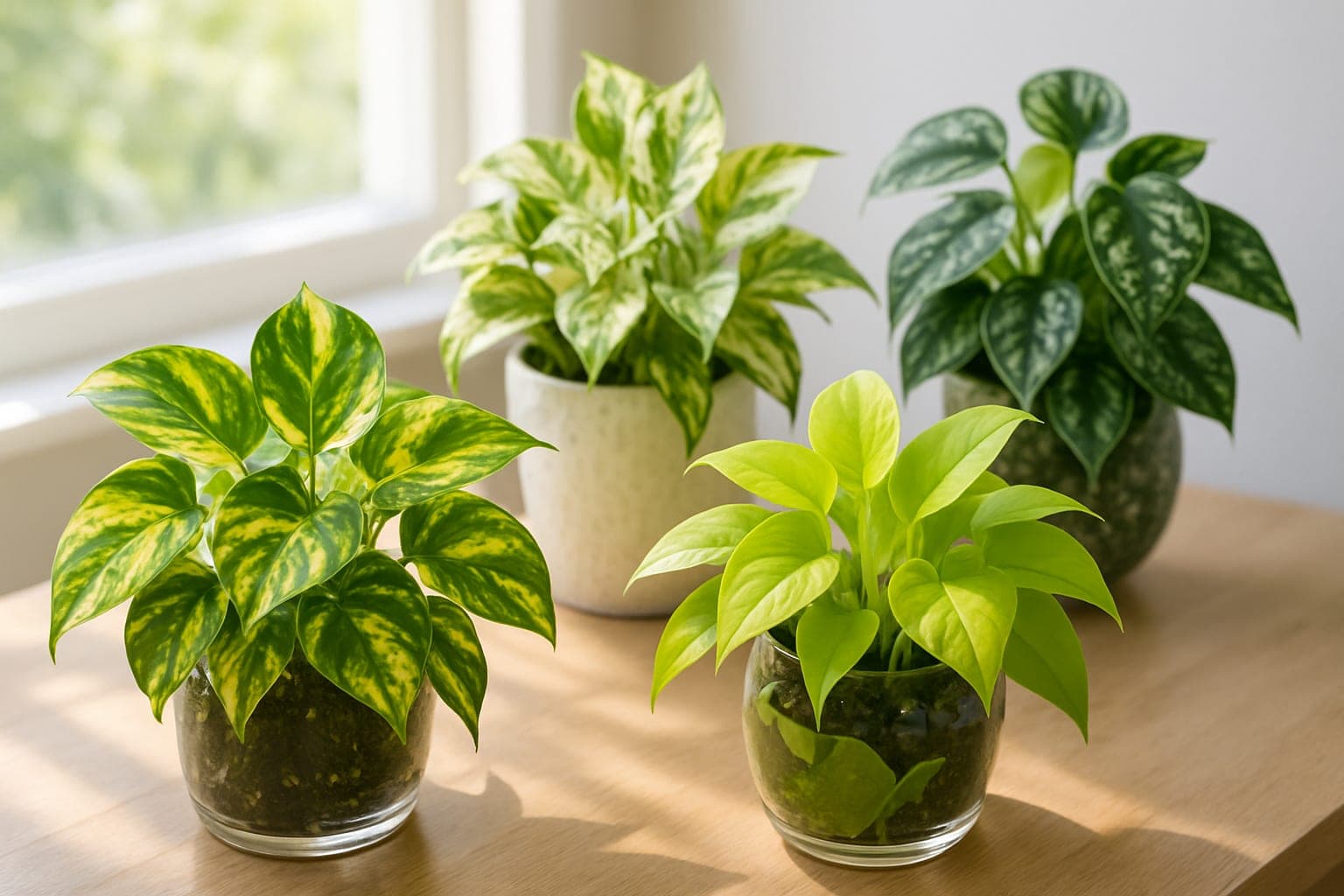
Pothos (Epipremnum aureum) is often the first plant recommended to new houseplant owners, and for good reason. It tolerates a wide range of conditions, grows quickly, propagates effortlessly in a glass of water, and rewards even the most distracted carer with long, trailing vines of glossy heart-shaped leaves. Here is everything you need to know to keep yours thriving.
Light requirements
Pothos is famously adaptable to light, but it does have preferences. Bright, indirect light produces the fullest growth and the most vivid variegation. A spot a metre or two back from an east or north-facing window is usually ideal, or further back from a south or west-facing one where direct sun is filtered by a sheer curtain.
In low light, pothos will keep growing, but you can expect smaller leaves, longer gaps between them on the vine, and a tendency for variegated varieties to revert to plain green. Direct, harsh sun, on the other hand, will scorch the foliage and bleach colour from the leaves.
Signs of light problems
- Too little light: sparse, leggy growth and fading variegation.
- Too much light: pale, washed-out leaves or crispy brown patches.
Watering and humidity
Pothos prefers a cycle of thorough watering followed by partial drying. Allow the top 3-5 cm of compost to dry out before watering again. When you do water, do so generously, letting excess drain freely from the bottom of the pot. Sitting in soggy compost is the quickest route to root rot.
The leaves will tell you when the plant is thirsty: they begin to droop slightly and lose their usual firmness. Water at this point and they should perk up within hours. Average household humidity is fine, although a slightly more humid spot — a kitchen or bathroom with good light — will encourage lusher growth.
Soil and potting
A well-draining, airy potting mix is essential. A standard houseplant compost amended with a handful of perlite and a little orchid bark works beautifully. Always use a pot with drainage holes; decorative cover pots are fine, but tip out any water that collects after watering.
Repot every two to three years, or whenever roots begin circling the pot or pushing out of the drainage holes. Go up just one pot size at a time — pothos actually flowers and grows more vigorously when its roots are a little snug.
Trailing or climbing?
In its native habitat, pothos is a climber, scrambling up tree trunks using small aerial roots. In the home, you can grow it either way, and the choice affects how the plant looks over time.
Trailing
Grown in a hanging pot or on a high shelf, pothos will produce long, cascading vines. Leaves tend to stay relatively small in this form. Pinch back the tips occasionally to encourage branching and keep the plant looking full rather than stringy.
Climbing
Given a moss pole, coir totem or similar support, pothos will climb and the leaves will gradually become larger, sometimes developing the fenestrations (splits) seen in mature plants. Mist the pole to keep it slightly damp and tie new growth loosely to it until the aerial roots take hold.
Popular varieties
All pothos share the same easy-going nature, but the foliage varies considerably between cultivars.
- Golden Pothos: the classic, with mid-green leaves splashed in buttery yellow. Vigorous and very forgiving of low light.
- Marble Queen: heavily variegated in cream and white. Slower-growing than golden because of the reduced chlorophyll, and happiest in bright indirect light to keep its marbling crisp.
- Neon Pothos: uniform, electric chartreuse leaves with no variegation. New growth is especially bright. Holds its colour best in good light.
- Satin Pothos: strictly speaking Scindapsus pictus rather than a true pothos, but cared for identically. Matte, almost velvety dark leaves dusted with silver spots.
- Marble Queen, Pearls and Jade, and N'Joy: all worth seeking out for collectors who want smaller, more patterned leaves on more compact plants.
Propagation in water
Few plants are easier to propagate. To make new pothos plants:
- Choose a healthy vine and cut just below a node — the small bump on the stem where a leaf and aerial root emerge.
- Take cuttings with two or three leaves and at least one node each.
- Place the cuttings in a glass of room-temperature water with the node submerged but the leaves above the waterline.
- Set the glass in bright, indirect light and refresh the water every four or five days.
- Roots should appear within one to two weeks. Once they are 4-5 cm long, pot the cuttings up into moist compost.
Keep the newly potted cuttings a little more consistently moist than an established plant for the first few weeks while the water roots adjust to soil.
Common problems
- Yellowing leaves: usually overwatering. Check that the pot drains freely and let the compost dry out more between waterings.
- Brown, crispy leaf tips: often dry air or inconsistent watering.
- Loss of variegation: the plant is asking for more light. Move it closer to a bright window.
- Pests: mealybugs and spider mites occasionally appear. Wipe leaves with a damp cloth and treat with insecticidal soap or diluted neem oil if needed.
Final thoughts
Pothos is the perfect entry point into houseplants but also a long-term favourite for experienced growers. With minimal effort it will reward you with metres of lush vine, and a single plant can quickly become a whole collection through water propagation. Give it bright indirect light, water thoughtfully, and it will look after itself for years.
Tools and supplies for this
Products we'd actually buy for this job. Linking to Amazon — if you buy through these links we earn a small commission at no extra cost to you.
- Weston Mill Pottery Terracotta plant pots, 175mm (pack of 10)
Mid-size workhorse terracotta — perfect step-up for plants outgrowing their nursery pots.
- Weston Mill Pottery Terracotta plant pots, 20cm (pack of 5)
Heavyweight 20cm clay for established plants — the porous walls help prevent the soggy roots aroids hate.
- Whitefurze G04012 7.5cm Garden Pot - Terracotta (Set of 10)
Cheap, cheerful plastic propagation pots — what we actually use for cuttings and small offsets.
- Whitefurze G04013 10cm Garden Pot - Terracotta (Set of 7)
Reliable mid-size nursery pots with proper drainage holes — the boring essential every plant parent runs out of.
BotanicBuddy Editorial Team
Plant Care Team
Passionate about helping plant parents succeed with expert tips and proven techniques.
Related Articles
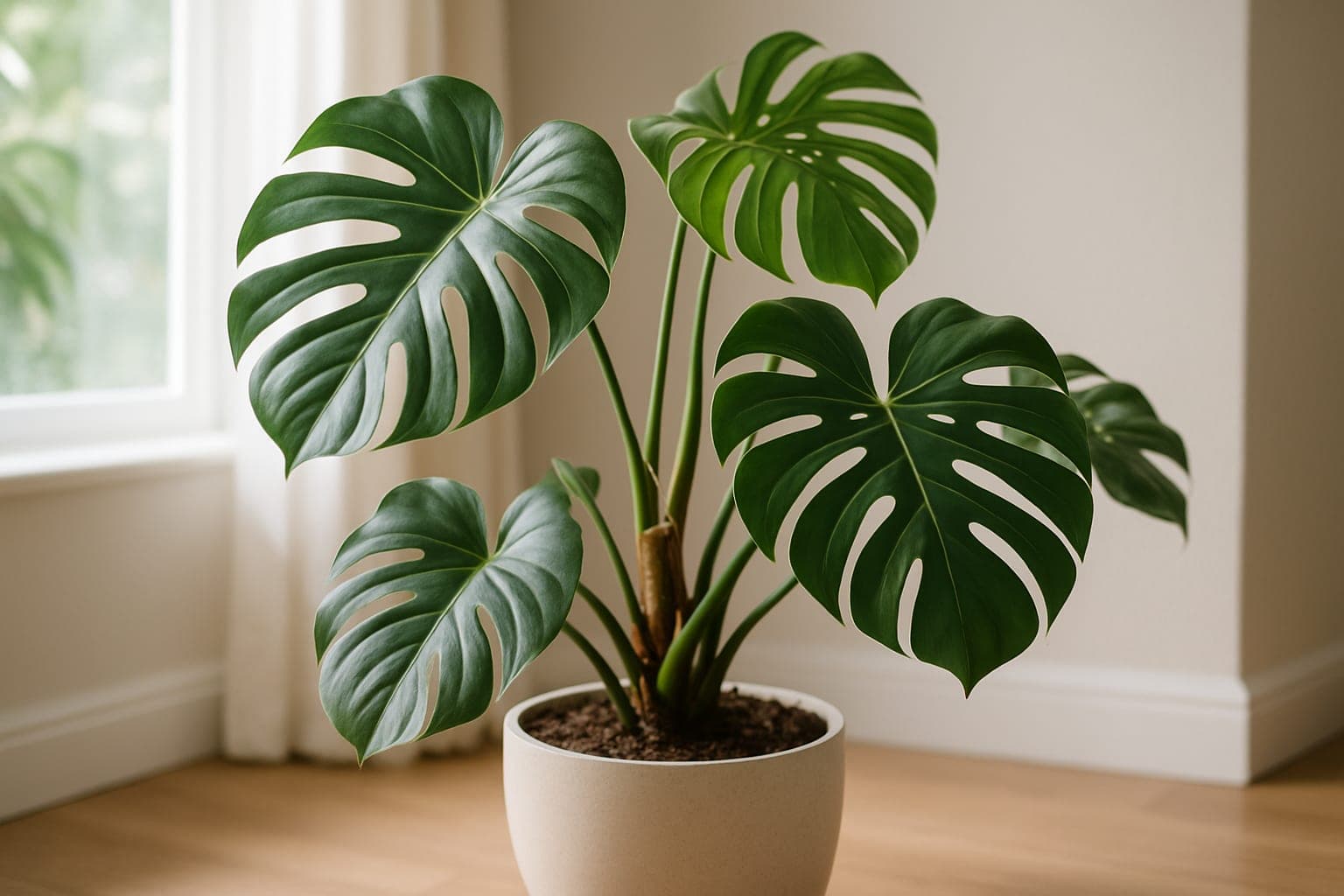
Monstera Deliciosa Care Guide
The Monstera deliciosa, or Swiss cheese plant, is a rewarding tropical climber prized for its dramatic split leaves. This guide covers everything from light and watering to moss poles and the secrets behind those iconic fenestrations.
Seasonal Plant Care: Adjusting for the Changing Year
Adapt your plant care routine throughout the year to keep your houseplants healthy and thriving.

Comments(527)
I've had great success with Epipremnum aureum in my collection, particularly the satin variety which seems to appreciate the humidity in my tropical setup more than the others. The propagation tip is spot-on—I've found that even a single node will root reliably in water within 2–3 weeks, making it ideal for sharing with friends who want to start their own plants.
That's really helpful to hear! I've got a satin pothos (Epipremnum pictum) too and noticed the same thing—it definitely seems happier with more humidity than my golden pothos. I'm still figuring out the best humidity sweet spot though; do you do anything specific besides the tropical climate, or does it just naturally thrive in that environment? The propagation tip is great; I tried water propagation recently and was amazed how quickly the roots appeared.
I've got to say, pothos has been a gateway plant for so many people! Though I'll admit, I'm more of an herb person myself—currently growing *Origanum majorana* and a few other Mediterranean varieties. That said, I've always wondered: do you find that the lighter varieties like neon need more bright indirect light than the deeper-colored ones, or is that more of a myth? I'd love to know your take on propagating them too, since everyone seems to have a different method!
I appreciate the focus on varieties here—they do have slightly different light preferences in my experience. The neon and satin cultivars need brighter indirect light to maintain their coloring, whereas golden pothos tolerates lower conditions better. I'd add that while propagation is indeed easy in water, I've had better success transitioning cuttings to soil earlier rather than letting roots get too long—they seem to establish faster that way.
I've been wanting to try growing pothos forever since everyone says it's impossible to kill, but I'm in an arid climate and I'm worried about overwatering—does that plant actually prefer drier conditions, or do I need to keep the soil consistently moist? Also, I only have nine plants right now and I'm trying to stick to native species for the desert, so I'm not sure if pothos makes sense for my collection, but the propagation part sounds fun!
I'd gently push back on lumping all these under "pothos" — the satin variety is actually *Scindapsus pictus*, which has notably different watering needs than true *Epipremnum aureum*. In my arid climate, the satin especially tends toward root rot if you follow standard pothos care, so I've had to dial back frequency considerably. The others handle neglect well, but that one's the exception worth calling out.
You're absolutely right about that distinction—I've learned that lesson the hard way with my own *Scindapsus pictus*. The thinner leaves seem to demand drier conditions than my true *Epipremnum*, and in my arid climate especially, I've found letting the soil dry out almost completely between waterings keeps it happy, whereas that would stress my other two plants. Good catch pointing that out!
I've had good luck with my golden pothos, but I'm curious whether the different varieties really need different care or if that's overstated. Mine seems pretty happy with whatever I throw at it, so I'm wondering if the marble queen and neon are equally unbothered or if they're actually pickier than the golden. Also, I keep hearing people say pothos is "impossible to kill" but I worry that might set newer gardeners up for disappointment when they inevitably get one—mine nearly died from overwatering before I figured out the actual watering rhythm it prefers.
I've been thinking about branching out from my herb collection—literally, since I'm propagating Origanum majorana right now—and pothos keeps coming up as the gateway plant! My mediterranean climate means I'm pretty spoiled with herbs, but I'm curious whether you'd recommend pothos as an indoor complement or if it needs such different conditions it'd feel like starting from scratch? I've heard the marble queen variety is particularly forgiving if I mess up watering, which sounds like my speed honestly.
I've got a golden pothos that's been my easiest plant so far—barely needs anything and just keeps growing. I'm curious though, I recently picked up what I think is a marble queen but the variegation looks pretty subtle compared to photos I've seen online. Should I be worried it's not getting enough light, or is that normal? I'd love to share a photo if I could, but at least my other five plants are thriving so I must be doing something right!
I totally get the variegation concern—I had the same worry with a marble queen I grabbed last winter! Turned out mine just needed a few more weeks under brighter light before the white really popped, so you might just need to be patient. That said, pothos are pretty forgiving so even subtle variegation usually means it's doing fine. Have you noticed any new growth coming in with better contrast, or does it all look pretty muted?
I've been wanting to try propagating my pothos after seeing how easy everyone says it is, but I'm still figuring out the basics with my three plants. I've got a golden pothos that's doing okay in my temperate apartment, though I'm honestly not sure if I'm watering it right—how often do you actually water them, or is it more about the soil drying out? Also, I'd love to see those varieties you mentioned side by side because I can't quite tell the difference between marble queen and satin yet. If I could upload a photo of mine I would, just to check if it looks healthy!
I've been eyeing a pothos for months because I kept hearing they're basically impossible to kill, which honestly felt like a challenge I could finally win! I mostly grow herbs so I'm still getting the hang of tropical plants, but this post is making me feel like I might actually be ready to try one—I'd love to know if the different varieties have different water needs or if they're all equally forgiving since I have a tendency to either underwater or drown everything equally.
I totally get that feeling—pothos really are the gateway drug to tropical plants! From my experience with a few varieties, they're pretty forgiving about watering differences, though I've found the satin variety slightly thirstier than my golden. Honestly though, the best part is they'll literally tell you when they're unhappy (droopy leaves = too dry, yellowing = too wet), so you get instant feedback to adjust. Have you had better luck underwatering or overwatering with your herbs?
I've had great success with *Epipremnum aureum* 'Neon' in my tropical setup—the chartreuse coloring really pops under bright indirect light, though I've noticed it can fade if you push it too far into shade. The satin variety tends to be more finicky about humidity in my experience; I keep mine on a moss pole where it benefits from the ambient moisture. All of them propagate almost absurdly easily in water, which is why I probably have far too many pothos now, but they make wonderful gifts for friends just getting started with houseplants.
I've only got a couple of plants in my collection right now, and they're both orchids, so pothos has never really called to me—but I'm genuinely impressed by how adaptable it seems to be, especially in an arid climate where I struggle. Do you find that any of the varieties you mentioned handle dry air better than the others, or are they all pretty similar in their tolerance?
Honestly, they're all pretty tolerant of dry air once established—pothos in general doesn't fret about humidity the way orchids do. That said, I've noticed the satin variety seems slightly less prone to crispy leaf edges in my mediterranean setup, though it might just be my microclimate. Have you considered starting with a plain golden pothos first, or are you leaning toward one of the fancier varieties?
I've got a golden pothos that's been climbing my kitchen wall for years, but I have to say—I've always found them a bit boring compared to my herbs! That said, they're genuinely impossible to kill, which I appreciate when I'm busy with my rosemary and oregano. The neon variety does catch my eye though; have you found one variety significantly slower or faster to propagate than the others? I'm curious if it's worth hunting down or if they're all pretty much the same once you get a cutting in water.
I totally get that—I'm still pretty new to plants and started with succulents, so pothos felt almost *too* easy at first! But honestly, I've added a couple to my collection (up to 11 plants now!) and they're great for filling space while I learn. I haven't tried the neon variety yet, but now you've got me curious! Does anyone know if the neon ones really do grow faster, or is that just how they look with the brighter leaves?
I've been meaning to try pothos for ages since everyone says it's impossible to kill—though I still managed to overwater mine at first! I'm curious whether the different varieties have different light preferences, or if they're all pretty forgiving about lower light like I've read? I'm hoping to add one to my herb corner eventually, though I know it's not technically an herb. Would love to know if any variety is particularly good for beginners like me.
I've got to say, pothos plants are fantastic, though I'm more of an herb person myself! That said, I've kept a golden pothos alive in my kitchen for ages because it's honestly impossible to kill—I basically ignore it and it just keeps growing. I'm curious about the satin variety though; does it have different light requirements than the golden, or is it equally forgiving in lower-light corners? I'd love to hear if you've had any trouble with any of these varieties.
I've killed plenty of plants over the years, but pothos has always been my safety net—literally impossible to mess up! I'm curious whether you have experience with the satin variety though, because I picked one up last month and it seems way pickier about watering than my golden pothos. Is that just me, or does the satin genuinely need different treatment?
I totally get what you mean about pothos being forgiving—I've got a golden one that's practically thriving on neglect. I haven't tried the satin variety yet, but now I'm curious too since I'm thinking about expanding my collection. It makes sense that different varieties might have slightly different needs, so your observation about the watering is probably spot on. Have you noticed if it's the soil drying out faster, or is it more about how the plant responds when you do water?
I'd actually agree with you on that—satin pothos (Scindapsus pictus) genuinely does prefer more consistent moisture than golden pothos, though "picky" might be generous since it's still fairly forgiving. The thinner leaves don't tolerate drought quite as well, and in my mediterranean climate I've found it needs slightly more frequent watering than my golden varieties, especially during the warmer months. Not a huge difference, but definitely worth adjusting for if you're used to letting golden pothos dry out between waterings.
I've had a golden pothos for about six months now and it's been thriving on neglect, which is honestly perfect for me! I just got a marble queen cutting from a friend though, and I'm curious—do the variegated varieties need more light than the solid green ones to keep their patterns vibrant? Mine's in the same moderate indirect light as the golden, but I'm wondering if that's holding back the variegation.
I've had a golden pothos for years and it's practically unkillable, but I've found the marble queen variety actually needs more consistent light to keep those variegation patterns sharp—mine got leggy and dull when I wasn't careful about placement. Are you finding the same thing with your marble queens, or have you had better luck keeping them compact in lower light?
I appreciate the focus on propagation here—pothos is such a reliable starter plant for building confidence with cuttings. That said, I'm curious whether you've experimented much with the tropical varieties beyond the standard cultivars? I've been trying to work with some of the less common forms in my small collection, and they seem to have pretty different water and humidity preferences than the typical marble queen or neon. Have you noticed much variation in care needs across the different varieties you've grown?
I've had good luck with pothos over the years, though I'll admit my marble queen took an embarrassing amount of time to fill out—turns out she was thirsty more often than my other varieties! The neon is such a cheerful addition to a space, but I've found it needs noticeably brighter light than the golden to really glow. Propagating them is genuinely foolproof though; I've got cuttings going in water right now that'll be ready to pot up in a few weeks.
That's such a good catch about the marble queen being thirstier—I had the same experience with mine and felt silly once I realized it. The neon really does demand that brighter spot; I keep mine near an east-facing window and it's made all the difference in how vibrant it gets. Your propagation setup sounds great, and you're right that it's basically impossible to mess up once you get cuttings in water.
Pothos really is the gateway plant—though I'd gently push back on calling them all equally forgiving. I've found satin pothos especially needs better drainage and more consistent conditions than golden pothos, which honestly thrives on neglect. Great that you're covering varieties, since most beginners assume one care routine fits all and then wonder why their satin looks sad. Propagation is dead simple though, so that part's spot-on.
I have to admit, pothos isn't my usual go-to since I'm pretty herb-focused—mostly growing Ocimum basilicum and Origanum vulgare—but I've been curious about the neon variety lately. Does it actually stay that vibrant green indoors, or does it fade if you can't give it super bright light? I'd love to see if it'd work as a companion plant situation on the same shelf as my basil setup.
I've had great success with Pothos, though I'm curious whether you're addressing the Epipremnum aureum varieties specifically or lumping in Scindapsus pictus (satin) under the same care umbrella? I find satin needs slightly different humidity and is a bit pickier about water consistency than the true Pothos cultivars, especially in my mediterranean climate where everything dries out fast. Have you noticed that distinction with your collection?
I appreciate posts like this that focus on the truly low-maintenance plants—they're great gateway species for beginners. That said, I'm curious whether you've found any of these varieties perform better or worse in arid climates. I grow mostly orchids in my dry space, so pothos has never made it onto my shelf, but I've always wondered if the satin variety might handle lower humidity better than the others.
I've had good luck with Epipremnum aureum, though I'll admit the neon variety took me longer to figure out than expected—it seems to need consistently brighter light than the golden type, at least in my cold climate setup. Since I mostly grow herbs, pothos aren't my primary focus, but they're reliable gap-fillers in my collection of 15 plants. Did you find any of the varieties notably more demanding than the others when it comes to watering schedules?
Oh, I totally get that with the neon—mine sulked noticeably until I moved it closer to a window, and I'm in a similarly chilly zone so I think you're onto something there. The marble queen has been my easiest for watering (I've definitely neglected it more than once), while the satin seems pickier about staying consistently moist without getting soggy. Do you find your neon's brighter light needs make it dry out faster, or is it more about the light itself?
I've had great luck with pothos, though I'll admit I'm more of an herb person myself—I only keep a couple around for trailing on shelves. That said, one thing I'd add to care tips is that they're actually pretty adaptable to neglect, which can work against you if you're not careful about overwatering. I learned this the hard way with a marble queen that got leggy and sad until I let the soil dry out more between waterings. Are you finding that different varieties have noticeably different water needs, or is that mostly just individual plant variation?
I appreciate this guide, though I have to admit pothos isn't really my focus since I'm all in on tropical vegetables right now. That said, I've got a marble queen trailing around my kitchen window and it's practically indestructible—perfect for when I'm absorbed in tending my small collection. The propagation tips are especially useful since I've been meaning to multiply mine. Do you find that certain varieties are more vigorous propagators than others, or is it pretty consistent across the board?
I've had good luck with pothos in my med climate—they're genuinely hard to kill if you let the soil dry between waterings. My neon variety did way better once I stopped fussing with it and just let it vine naturally rather than constantly pruning for bushiness. Propagation is straightforward too, though I find water propagation works faster than soil if you're in a hurry. Did you find any of these varieties more finicky than the others, or do they all pretty much behave the same once established?
I love hearing that you've had success with neon pothos—that's encouraging since I just picked one up for my collection. I've been doing the same thing with my golden pothos, backing off the pruning and letting it do its thing, and it's already looking happier. I'm curious about your water propagation tip though—do you move the cuttings to soil eventually, or can they live in water indefinitely?
I appreciate the focus on varieties—they do have different light needs despite what general "pothos is bulletproof" advice suggests. Neon especially needs brighter indirect light to stay vibrant, while marble queen tolerates lower light better. Worth mentioning since people sometimes assume one care routine works for all of them, then get frustrated when their neon looks dull.
I've had great success with Epipremnum aureum in my collection, though I found the Satin variety develops those gorgeous silvery undertones much faster under bright indirect light—mine really surprised me with how quickly it filled in compared to the Marble Queen. Propagation is indeed straightforward; I usually just pop cuttings in water and they're ready to pot up within two weeks. One thing worth mentioning is that these plants can get quite vigorous in tropical conditions, so I've had to give mine more vertical space than I initially expected!
I've killed a lot of plants learning what works in my dry climate, but pothos is honestly one of the few that's thrived for me—I have a golden and a marble queen now, and they're honestly way more forgiving than my other 9 plants combined! My main struggle has been not overwatering since I'm used to drier conditions, but once I figured that out they just kept growing. Are you finding that any of the varieties struggle more in arid climates, or do they all adapt pretty equally? I'd love to try neon next if it's as hardy as the ones I have.
Your experience mirrors mine perfectly—pothos really is bulletproof in dry climates once you dial back the watering. I've got a golden and marble queen myself, and they honestly prefer the arid air here. The neon is just as hardy, though I've noticed it needs slightly brighter indirect light to keep that vibrant color (the saturation can fade a bit in lower light). All three varieties seem equally forgiving in terms of drought tolerance, so I think you'll have great success. Have you had any experience with propagation yet, or would that be your first time trying it with the neon.
I've been growing a golden pothos for about six months now and it's honestly made me more confident with my other plants—it's pretty hard to kill! I'm curious though, what's the actual difference between the varieties beyond appearance? I have the golden one, but I'm wondering if something like neon pothos needs different light conditions since it's so bright, or if they all basically want the same care.
I've had my Neon Pothos for a couple years now and it's honestly been the easiest plant in my collection to keep thriving. Mine sits in bright indirect light and I water when the top inch of soil dries out, but I've learned the hard way that these really do forgive the occasional neglect—I once forgot about it for three weeks and it bounced right back. The variety makes such a difference in how vibrant that chartreuse color stays, so I'm curious to see what you say about keeping the different cultivars looking their best.
I've had such good luck with *Epipremnum aureum* cuttings in water—they root so reliably that I've basically stopped buying new plants and just propagate from my existing collection. The satin variety is particularly stunning in lower light, which has been a game-changer for my shadier corners here in the Mediterranean. Do you find one variety significantly easier to propagate than the others, or are they all pretty much equally cooperative?
I love how reliable *Epipremnum aureum* is for propagation—you've basically cracked the code. I've found the neon variety roots slightly faster in my setups here in Arizona, though honestly the difference is marginal enough that it might just be my particular conditions. The satin's low-light tolerance is something I'm definitely envious of, since my two plants get pretty intense direct sun most of the year. Have you noticed any difference in how quickly the varieties establish once they transition to soil, or do they all adjust pretty smoothly?
I appreciate the focus on variety-specific care since they do have slightly different light requirements—neon pothos in particular seems to need more consistent bright indirect light to maintain that chartreuse coloration, whereas marble queen can tolerate lower conditions. I've found that what works best really depends on your home's humidity and whether you're growing Epipremnum aureum or the occasionally mislabeled cultivars. Did you find one variety significantly easier to propagate than the others, or have they all been equally straightforward for you?
I'd gently push back on the propagation ease claim—while *Epipremnum aureum* does root readily in water, the transition to soil can be trickier than people expect if the roots aren't acclimated properly. I've had better success letting water-rooted cuttings develop a stronger root system before potting them up. That said, the Satin variety does seem genuinely more forgiving about humidity than the others in my experience, so I'm curious if you found the same in practice.
I've actually been curious about pothos since everyone says they're so easy—I grabbed a golden one a few months back and it's doing pretty well on my shelf. My question is, do the different varieties have different water needs, or is the care basically the same across golden, marble queen, and neon? I'm in the desert so I'm always worried about overwatering, and I'd hate to mess up if I ever get one of the fancier varieties!
I've been growing Epipremnum aureum in my tropical setup for years, and I find the satin variety (E. a. 'Satin') develops the most interesting leaf texture when it gets bright, indirect light—the leaves almost have a matte quality that's different from the glossier golden pothos. The propagation tip is spot-on; I've had cuttings root in water within two weeks. My only addition would be that these vining plants really benefit from some kind of support or moss pole if you want them to develop the larger, more deeply lobed leaves they'd show in nature rather than staying in juvenile form.
I've got to say, pothos saved me when I was first learning—I killed everything else for a solid year before my golden pothos convinced me I wasn't completely hopeless! I'm curious about the satin variety though; mine's been slower to establish than the others in my collection, and I wonder if that's just temperament or if I'm missing something about its specific needs. The Mediterranean light I have works beautifully for my neons and marbles, but the satin seems more temperamental about direct rays.
I've killed exactly zero pothos in my fourteen-plant collection, which tells you everything about how bulletproof these are—though I did somehow manage to nearly drown a marble queen before realizing my arid climate meant I was way overwatering! The propagation part is a game-changer though; I'd love to see your method if you have photos. (I've got a neon cutting doing surprisingly well in a corner right now that I'd share if I could upload—it's been my small redemption arc.)
I've had a golden pothos for years now and it honestly taught me that less is more when it comes to watering – I killed my first one by being too enthusiastic. Now I let mine dry out between waterings and it's thriving in a bright corner. I'm curious about trying the neon variety since I've heard it needs a bit more light, so this post is perfect timing for me.
I have to admit pothos isn't really my thing since I'm more of an herb person, but I've been curious about the propagation ease you mention—do you find that cuttings root faster in water or soil? I've had a marble queen sitting on a shelf at my place for ages and it's honestly thriving despite my neglect, which is kind of humbling when I compare it to how fussy some of my basil varieties can be!
I'm curious whether you touched on light requirements for the different cultivars—I've found that *Epipremnum aureum* 'Neon' really needs brighter indirect light to maintain that chartreuse intensity, whereas the marbled varieties seem happy in lower conditions. Do you recommend adjusting care based on variegation, or treat them all the same?
I've actually learned this the hard way with my neon pothos! It stayed pretty dull until I moved it closer to a bright window, and now the color is so much more vibrant. You're spot on about the variegated ones being more forgiving—my marble queen honestly thrives in a corner that barely gets indirect light. I think adjusting for variegation makes sense since those lighter sections probably need more light to photosynthesize efficiently. Have you noticed any other cultivars being pickier about their conditions?
I've had great success with pothos in my arid climate—they're surprisingly adaptable once you dial in watering. I'm curious whether you found certain varieties more drought-tolerant than others, since the satin and marble queen seem to prefer slightly more humidity in my experience compared to the golden. Have you noticed much difference in their water needs?
I haven't grown pothos yet myself—they're on my wish list since I'm in a cold climate and keep mostly cold-hardy natives—but your observation about the varieties is really helpful to know. I'm curious whether you've had to adjust your watering differently for satin and marble queen in your arid space, or if it's more about humidity misting rather than soil moisture?
I've got a golden pothos (Epipremnum aureum) that's been doing great in my tropical climate, but I'm curious about the satin variety—does it need different watering or humidity compared to the golden? I've been thinking about adding one to my collection, but I want to make sure I'm not overcomplicating things since I'm still getting the hang of the basics. I'd love to see if there are any care differences I should know about!
I've kept pothos for years and they've honestly saved my reputation as a plant parent—they bounce back from my neglect like nothing else! That said, I did manage to somehow kill a Marble Queen by overwatering in my Mediterranean climate (of all things), so even the forgiving ones deserve a little respect. Would love to see your take on which varieties propagate fastest, since I'm always pushing cuttings onto unsuspecting friends.
I've had great success with pothos in my arid climate—they're surprisingly adaptable once you dial in the watering. My marble queen has thrived on a more sparse schedule than I'd initially expected, which seems to be the key for preventing root rot in drier air. Are you finding that any of these varieties have notably different water needs, or do they all perform pretty similarly with the same care routine?
I've got a golden pothos that's doing fine, but I'm curious whether the care really is identical across all those varieties you mentioned—especially neon versus the darker ones. I'm wondering if the neon's brighter foliage means it needs more light to maintain that colour, or if that's just marketing? Also, I'm in a mediterranean climate and mine's indoors, so I'm always second-guessing the watering schedule in summer.
You've hit on something real—neon does genuinely need more consistent light to keep that glow, whereas marble queen actually tolerates lower light better. I've found the difference matters more in Mediterranean summers when everything dries out faster indoors; I water my neon more frequently than my marble queen, even though it's technically the same plant. For both, I just check the soil an inch down before watering rather than following a fixed schedule, which saves me a lot of second-guessing in the heat.
I'd gently push back on the "most forgiving" claim—that's true for pothos compared to finicky plants, but I've seen people kill them by overwatering more often than with any other houseplant. They're forgiving of neglect, not excess care. That said, the propagation part is spot on; I've never had a cutting fail, which honestly makes pothos a great gateway plant for building confidence before moving to something pickier like my orchids.
I've been curious about pothos since I picked up a golden one a few months back—it's honestly been the easiest thing in my small collection of 11 plants. My question is whether the different varieties actually need different care, or if they're all pretty much the same once they're established? I'm in a cold climate so I'm always worried about watering and light needs changing between varieties.
I've been wanting to try pothos forever since I heard they're basically impossible to kill, but I'm honestly a little intimidated by all the different varieties you mentioned—are they all equally easy to care for, or do some of them need more light than others? I'm in the desert and my place gets pretty bright, so I'm wondering if neon or satin would do better than golden in my setup. Also, I only have 9 plants total right now and I'm trying to be selective, so which variety would you say is the most rewarding for a beginner like me?
I've had pothos for years and honestly think they're underrated—everyone assumes they're boring because they're so easy, but I've found the varieties have such different personalities! My neon pothos grows aggressively in bright indirect light while my marble queen actually prefers a bit more shade in my mediterranean setup. One thing I'd add: I've had way better propagation success when I let cuttings callus for a day or two before water propagating, especially in warmer months. Did you find one variety easier to propagate than the others?
The callusing tip is great—I've learned that the hard way in my dry climate, where water propagations can get finicky fast. I'm curious whether you've noticed differences in how quickly the varieties root; my neon (Epipremnum pinnatum) consistently outpaces my satin in water, though I'm not sure if that's just my setup or something inherent to each cultivar. Have you found the same pattern, or does it vary more with your conditions?
I appreciate the focus on propagation here—that's where pothos really shines, honestly. I've found the satin variety (Scindapsus pictus) is noticeably pickier about water than golden pothos though, so grouping them together on care might trip up some readers. Do you find one variety significantly more forgiving than the others in your experience?
I've found that neon pothos (Epipremnum aureum 'Neon') is genuinely the most rewarding for beginners in my collection—it practically glows under indirect light and actually *tells* you when it's thirsty by drooping slightly. The marble queen variety can be finicky about watering in comparison, so I keep mine in a brighter spot to avoid overwatering mistakes I made early on.
I agree about the neon—it's been one of my easiest growers in the tropical climate here, honestly thrives on neglect. But I'd push back slightly on marble queen being finicky; mine does fine with consistent moisture as long as drainage is solid. The real difference I've noticed is that marble queen actually *needs* that bright indirect light to keep variegation crisp, whereas neon stays vibrant even in lower light, so it's more about matching the variety to your space than the plant being difficult.
I've got to say, Pothos is such a reliable workhorse—I have a couple of varieties in my collection and they honestly thrive on neglect. My neon one gets the brightest indirect light in my apartment and the color is just insane, but I'm curious how you'd compare light requirements across the varieties mentioned? I've been thinking about adding a marble queen to round out my setup of 11 plants, and I'm wondering if it's pickier than the golden I already have going.
I find the marble queen (Epipremnum aureum 'Marble Queen') actually needs slightly more consistent light than the golden to maintain those variegation patterns—mine got leggy when I kept it in medium indirect light, but bounced back once I moved it closer to a window. The neon is definitely the light hog of the group, so if yours is thriving in your brightest spot, the marble queen should be fine in something a step down from that. Have you noticed whether your golden's variegation is crisp, or does it lean more solid green?
I've killed tougher plants than pothos, so I appreciate the straightforward approach here. The one thing I'd add from experience: these vines grow so aggressively in decent light that people sometimes neglect to actually use them—mine are finally hanging somewhere useful instead of just taking up shelf space. Which variety do you find trails the fullest without getting leggy?
I've had more success with pothos than any other houseplant, though I'll admit I nearly killed my neon variety by overwatering—turns out those vibrant leaves were deceiving me into thinking it needed more water than my other herbs! One thing I'd add is that if you're propagating, popping the cuttings straight into soil rather than water worked better for me; they seemed to establish faster and I avoided that awkward transition phase.
I'd love to see more focus on light requirements across those varieties—neon especially demands bright indirect light to maintain its glow, whereas marble queen tolerates lower conditions better. Since I mostly work with orchids in my arid climate, I find pothos makes a great companion plant for humidity-loving species like Phalaenopsis. Are you planning to cover propagation in water versus soil, or does the post dig into that?
I've been curious about pothos since I keep hearing it's so beginner-friendly, and this sounds like exactly what I needed. I'm in a cold climate so I'm still figuring out which plants actually thrive indoors here, but it's good to know pothos is forgiving. Do you find that the different varieties have noticeably different care needs, or are they all pretty similar once you get the basics down?
I'm so glad you asked this because I've been wondering the same thing! From what I've gathered so far, the varieties seem pretty similar in their basic needs, though I've read that neon pothos might be slightly pickier about light since it's so bright. I'm still experimenting with mine indoors during our cold months, so I'd love to know if anyone else has noticed big differences between varieties in their own experience.
I've been eyeing a neon pothos for ages but kept chickening out—turns out I was overthinking it! I've had better luck with my herbs, honestly, so it's nice to know pothos is supposed to be even more forgiving. Quick question though: do the different varieties actually have different watering needs, or is it pretty much the same care across golden, marble queen, and the rest? I'm always paranoid I'm either drowning or neglecting my plants, so any reassurance helps!
I've got to admit, pothos isn't really on my radar since I'm pretty focused on Mediterranean herbs like oregano and thyme—way more my speed! But I'm curious because my partner keeps asking me to help save their struggling marble queen, and I'm realizing I might be underestimating how useful a hardy trailing plant could be in my setup. Do you find the neon variety needs significantly more light than the golden, or are they pretty similar in that regard?
I've had great success with pothos in my tropical home, and I'd say the biggest game-changer for me was realizing they actually prefer to dry out between waterings more than I initially thought. I killed my first marble queen by fussing over it too much, but once I backed off and let the soil dry for a few days, it took off. They're really forgiving once you get that rhythm down.
I appreciate you covering the different varieties—satin pothos especially can be so rewarding once you dial in the watering. Since I mostly grow orchids in my arid climate, I've kept pothos as a nice low-maintenance complement to my collection, and they've done surprisingly well with the same bright, indirect light my phalaenopsis prefer. Have you found that any of these varieties are more drought-tolerant than the others, or do they all handle underwatering about the same.
I'd love to see you dive deeper into the light requirements for each variety—the neon really does seem to need brighter conditions than the marble queen in my experience, though I'm curious if that's been your observation too. Pothos are so forgiving that people often don't realize how much the variegation can fade in low light. Great post covering the propagation side, since that's where most folks struggle with consistency.
I've got a golden pothos that's been trailing across my bookshelf for two years now, and it's honestly spoiled me—I keep expecting all my other plants to be as easygoing. The marble queen variety is on my wishlist too since I love how the variegation really pops in bright indirect light. Thanks for breaking down the different types; I had no idea satin pothos had such a velvety texture until reading this.
I totally get that spoiled feeling—my golden pothos has basically become my confidence plant, the one I turn to when I've accidentally neglected everything else! The marble queen is stunning, though I found mine needed a bit more light than the golden to really show off that variegation, so just keep that in mind if you end up getting one. The satin's velvety leaves are lovely, but heads up: it does appreciate slightly more consistent moisture than the other varieties, at least in my experience.
I appreciate your coverage of pothos—they're genuinely hard to kill, which is why I recommend them to everyone starting out. Though I'll admit my tropical setup has me gravitating more toward vegetable crops these days, I still keep a golden pothos around since it thrives in humidity and doesn't demand much attention. Have you found one variety more vigorous than the others when it comes to propagation, or do they all root at pretty similar rates?
I've had great luck with pothos, though I'll admit the neon variety took me a minute to figure out—it seemed thirstier than my golden pothos, which honestly just vibes in a corner and does its thing. Do you find that the lighter varieties need more consistent watering, or was that just my setup? I've got four plants total and they're all cuttings, so I'm always curious how other people manage the different types!
I've got a marble queen and neon pothos side by side, and honestly the neon grows so much faster in my setup—I think it just loves bright indirect light more than the marble queen does. That said, I'd love to know if you found any differences in watering needs between the varieties, since mine seem pretty similar on that front. Have you noticed one being thirstier than the others?
I've got to admit, pothos saved me when I first started—I killed basically everything else! I'm more of a veggie grower these days (tomatoes and peppers are my thing), but I still keep a couple pothos around because they're practically indestructible even when I neglect them. My marble queen has been trailing across a shelf for years with minimal fussing. Are you finding that certain varieties are trickier than others, or do they all pretty much tolerate the same conditions?
I've had my golden pothos (Epipremnum aureum) for about a year now and it's honestly thriving with minimal effort—I mostly just water when the soil feels dry. I'm curious though, do the different varieties have noticeably different care requirements, or is it mostly the same routine? I've been thinking about adding a marble queen to my small collection, but I want to make sure I'm not missing something about the variegated types.
I appreciate the focus on *Epipremnum aureum* varieties, though I'll admit pothos isn't really my lane—I've got just a couple succulents that tolerate my cold, dry climate, and they're finicky enough without adding vining plants to the mix. That said, I'm curious whether the propagation methods differ much between varieties, since I've heard marble queen can be slower to root than golden. If I ever have the space and warmth for a trailing plant, this would be a solid reference guide.
I appreciate this breakdown of the different varieties. Pothos really is the gateway plant for so many people, though I'll admit my two orchids get most of my attention here in the Arizona heat. That said, I've found neon pothos surprisingly rewarding even in arid climates if you're willing to mist occasionally—the bright foliage really pops. Do you find one variety tends to trail faster than the others, or has that been pretty consistent across your experience with them?
I appreciate you covering these varieties, though I have to say pothos has never quite captured my heart the way herbs do. That said, I've found the propagation tips for pothos translate beautifully to rooting cuttings from Origanum vulgare and other Mediterranean herbs—the same water-propagation method works just as well for basil and oregano if you ever want to expand beyond foliage plants.
That's such a good point about the propagation overlap! I've had better success water-rooting my oregano cuttings than soil-propagating them, actually—there's something about keeping those nodes submerged that just works. Have you found one method consistently faster than the other, or does it depend on the specific herb? I'm always looking to dial in my Mediterranean herb propagation since I've got a decent chunk of my collection there.
Pothos is such a reliable grower! I've actually been curious about the satin variety—I'm mostly focused on herbs in my tiny mediterranean setup (just three plants going right now), so I don't have much experience outside that realm. Does satin propagate just as easily as the golden, or does it need anything different? I'd love to add one if it's as low-maintenance as the post suggests!
I've had good luck with pothos (Epipremnum aureum) in my cold climate setup, though I've learned the hard way that they're far more sensitive to cold drafts than people assume—mine sulked badly near a window until I moved it. The neon variety especially seems to need warmer nights to maintain that vibrant color. Since you mentioned propagation, have you found that water propagation works better for certain varieties, or does it come down more to individual plant vigor?
Thanks for that tip about cold drafts—I had no idea neon pothos was that finicky about temperature! I've got a marble queen that's been pretty happy on a shelf, but now I'm wondering if I should move it away from my drafty bedroom window. I've only tried water propagation so far and it's worked fine, but I'm curious whether soil propagation might be faster or if it even matters?
I've been wanting to try pothos for ages since my succulents are pretty low-maintenance and I'm craving something a bit different. Your post makes it sound so approachable—I had no idea there were that many varieties to choose from. Do you have a favorite between golden and marble queen, or do they need pretty much the same care? I'm wondering if they'd do okay in my mediterranean climate since it's pretty dry, but maybe I could keep one indoors where it stays more humid.
I'd gently push back on the "most forgiving" claim—Epipremnum aureum does forgive neglect, but it's not truly low-maintenance in arid climates like mine. Mine actually struggles with the low humidity and needs more frequent misting than people expect, especially the satin and marble queen cultivars. The neon variety seems more resilient to dry air, so if anyone reading is in a desert zone, I'd lean that way first.
I've had such good luck with pothos in my tropical climate—they practically thrive on neglect. My neon variety took off once I stopped fussing with it and just let it climb up a moss pole, and now it's my favorite of the bunch. The propagation tip is huge because I've turned cuttings into gifts for friends who swear they kill everything, and somehow even they haven't managed to fail with these.
I've been wanting to try pothos since I keep reading how hard it is to kill, but I'm worried about whether it'll actually thrive in my cold climate or just survive. Do you think the different varieties have different temperature tolerances, or are they all pretty similar in what they can handle?
I've killed exactly zero pothos plants, and I think that's the appeal—they're basically impossible to mess up once you stop fussing with them. My neon has actually thrived on neglect in a corner with indirect light, which is the opposite of what I expected. The propagation part is where they shine though; I've got cuttings rooting in water right now that'll be ready to pot in two weeks. Are you finding one variety significantly hardier than the others, or do they all pretty much handle the same conditions?
I appreciate the focus on varieties here—I'd add that satin pothos (Scindapsus pictus) behaves quite differently from true Epipremnum aureum cultivars, at least in my experience. It's pickier about water and humidity, so lumping it with golden or marble queen can set people up for disappointment. That said, propagation is genuinely foolproof across all of them; I've had cuttings root in water within two weeks even under mediocre conditions.
You're spot on about satin pothos being finicky—I learned that the hard way when I first grouped mine with the others! Mine actually did better once I moved it to a shadier corner with more consistent humidity, almost like treating it as a mini Mediterranean greenhouse rather than a true pothos. Have you found a particular watering schedule that works well for yours, or do you just go by feel?
I appreciate the focus on Pothos varieties, though I'll admit they're outside my usual range—I'm deep in succulents and mostly work with what thrives in mediterranean conditions. That said, I've found Epipremnum aureum surprisingly resilient even in my drier climate when kept out of direct sun. The propagation angle is solid; water props are genuinely foolproof if you're willing to pot them up properly afterward. Do you find one of those varieties noticeably more vigorous than the others, or does it mainly come down to light preference?
I've got to say, pothos saved me when I first started growing plants indoors—though I have to admit I'm more of a native plant person these days! That said, my single pothos (a golden variety) still thrives on the same neglect-friendly routine you're describing, which is honestly perfect for someone like me who forgets to water things. Quick question though: do you find the marble queen and satin varieties need any different light conditions than the neon? I'm wondering if that would work in my lower-light corner, or if I should stick with what I know works.
I've been wanting to branch out from my succulent collection, and this post makes pothos sound so manageable. I'm curious about the neon variety especially—does it really stay that bright, or does the color fade over time indoors? I've heard they're forgiving, which is definitely appealing since I'm still learning the basics with plants.
Pothos really is bulletproof, though I'd gently push back on "ease" when it comes to propagation—water props root fine, but actually transitioning cuttings to soil without losing them is where I've seen most people struggle. The varieties you mentioned all tolerate neglect differently too; my marble queen gets leggy faster than the others if I'm not deliberate about light, whereas the neon practically begs for bright indirect to show its true color. Worth mentioning since someone might assume all pothos behave identically.
I've been wanting to try a pothos for ages since everyone says they're basically impossible to kill, and this post makes me feel way more confident about actually doing it! I currently have a small collection of succulents that seem to thrive on neglect, so I'm curious—are pothos as low-maintenance as succulents, or do they need more regular watering? I'm wondering if I should start with golden or if one of the other varieties you mentioned might be better for a beginner like me?
Pothos definitely need more water than succulents—I learned that the hard way with my first golden pothos, which got pretty sad before I realized it actually wanted consistently moist (not soggy!) soil. The good news is they'll literally tell you when they're thirsty by drooping a bit, so it's hard to mess up once you get the rhythm. I'd say golden is perfect for a beginner since it's the most forgiving of the bunch, though honestly I've killed zero pothos so far and I kill *plenty* of other things!
I've got a soft spot for pothos even though they're not really my thing—I'm more of a veggie person! But I kept a golden pothos on my kitchen shelf for years and it honestly saved me during my busiest seasons. Mine got pretty leggy once because I wasn't paying attention to pruning, but the propagation part was so easy I basically started a whole new plant from the clippings. Are you finding the different varieties have pretty different light needs, or do they all tolerate low light the same way?
I'm honestly more of an herb person, so I've never gotten into pothos myself, but I'm curious—do any of these varieties have noticeably different watering needs? I ask because I keep hearing people say pothos is forgiving, but I've watched friends underwater theirs thinking that means they need less water. What's your take on how often you actually water them?
I've killed exactly zero pothos plants in my years of collecting, which says everything about their reliability! That said, I've found the satin variety needs a bit more humidity than the others—mine sulks noticeably if the air gets too dry, even though it's technically just as forgiving. Propagation is indeed effortless; I usually stick cuttings straight into soil rather than water-rooting first, and they seem to appreciate it.
I've noticed the same thing with my satin pothos (Scindapsus pictus)—it definitely seems pickier about humidity than my golden one! I've been misting mine more often, but I'm curious if you've found a better long-term solution, or does the direct-to-soil propagation method you mentioned help with establishment? I've always water-rooted my cuttings first out of habit, so I'm tempted to try your approach next.
I've got three pothos varieties right now and honestly they've been my gateway into feeling like I actually know what I'm doing with plants! The neon one especially has been amazing because it's so visibly happy when it gets what it needs—the color just glows. My one hard-won lesson: I used to water mine on a schedule and they hated it, but once I switched to checking the soil first, propagation became so much easier because the mother plants were actually thriving. Are you finding certain varieties are pickier about light than others?
I have to admit, pothos plants have humbled me more than once—I've somehow managed to overwater the *easiest* houseplant alive, which is saying something. That said, they're absolute workhorses, and I love how differently each variety shows off in the right light. I'm curious whether you've found one variety tends to be more vigorous than the others in your experience, or does it really just come down to individual plant personality?
I appreciate the coverage of different cultivars—the Neon variety in particular is striking with its chartreuse coloring, though I've found it needs slightly brighter conditions than the standard golden form to maintain that vibrant hue. Since Epipremnum aureum is so adaptable, I'm curious whether you've noticed meaningful differences in growth rate or leaf size among the varieties you've tried, or if those differences are mainly aesthetic?
I've always wanted to try pothos but honestly never considered it since I'm such an herb person—Ocimum basilicum and Petroselinum crispum are basically my whole collection! But seeing how low-maintenance these are makes me wonder if I should finally branch out. Are the different varieties actually noticeably different in terms of care, or is it mainly just the aesthetics that change between golden and marble queen?
I appreciate the enthusiasm for pothos, though I'd gently push back on the idea that all varieties are equally forgiving. The neon cultivar in particular needs more consistent bright light than the others to keep that vibrant chartreuse coloring, or it can fade to a dull green pretty quickly. That said, they're wonderful gateway plants, and I love how easy propagation is—I've got a few pothos specimens in my collection that have given me cuttings for friends and family.
I appreciate the focus on different varieties—though I'm curious whether care really stays consistent across all of them? I've been struggling with my Satin Pothos (Scindapsus pictus) compared to my Golden, and it seems pickier about moisture and light, which makes me wonder if a one-size-fits-all approach might trip up beginners. Are there subtle differences worth mentioning, or am I overthinking it?
You're not overthinking it—Satin really is pickier than Golden. I've got both, and my Satin dries out way faster in my dry climate, so I water more often and give it brighter indirect light. Golden is honestly bulletproof by comparison. For beginners, that distinction matters because one-size-fits-all watering will kill Satin faster than it would Golden.
I've been meaning to get a pothos for ages because everyone says they're impossible to kill, and honestly after losing two herbs last year I could use the confidence boost! Quick question though—do the different varieties actually have different watering needs, or is the basic care pretty much the same across golden, marble queen, and the rest? I'm guessing the neon one might want more light to stay bright, but I'm probably overthinking it.
The watering needs are pretty consistent across *Epipremnum aureum* varieties—soil moisture is what matters most, not which cultivar you've got. Where you'd notice real differences is light: neon genuinely does benefit from brighter conditions to maintain that chartreuse glow, whereas marble queen actually tolerates lower light better than golden. My golden pothos in particular gets leggy if I'm not intentional about light placement, so you're onto something there, just maybe not where you expected it.
I've got four pothos varieties right now and honestly, the marble queen and neon are what sold me on the genus—they actually show you when they're thirsty without being dramatic about it. Golden pothos is nearly impossible to kill (I've confirmed this), but I found the satins need consistently warmer conditions or they get leggy fast. Propagation is genuinely foolproof though; I've got a photo of my current water propagations if you were curious how fast they root.
I've got three pothos going right now—a marble queen that's absolutely thriving on my bookshelf and a neon that took forever to adjust when I first got it. I'm curious whether you found one variety significantly easier to propagate than the others? I've had mixed results depending on whether I use water or soil, and I'm wondering if it's technique or if some varieties just root faster. Also, I'd love to see more about the satin variety since I haven't tried that one yet!
I find propagation success with pothos is pretty consistent across varieties, but you've hit on something real—the medium makes a bigger difference than the cultivar. Water propagation tends to be faster initially, though I've noticed cuttings sometimes struggle when transitioning to soil afterward. With soil propagation, rooting takes longer but the new plants seem to adjust better once established. The satin variety is lovely and honestly just as easy as the others; it just appreciates slightly less direct light than the neon does in my arid setup.
I've kept pothos for years and they're genuinely hard to kill, but I'd push back slightly on the "forgiving" angle—mine actually sulked badly when I overwatered, even though everyone says they tolerate that. The real win with pothos is that they tell you what they want if you pay attention. Curious whether you found any meaningful differences in care between the varieties you mentioned, or do they all respond pretty much the same way in your experience?
I'd love to read more about satin pothos since that's the one variety giving me trouble! Mine keeps getting leggy even with decent indirect light, and I'm wondering if it's pickier than the golden pothos I've had thriving for years. Do you have any tips for keeping those satin leaves fuller, or is it just naturally more sparse-growing?
I don't have satin pothos myself—I'm still learning with my golden and marble queen—but I've read that satin actually needs *more* light than regular pothos to stay full, which seems counterintuitive. Have you tried moving yours closer to a bright window? I'd love to see a photo of yours to compare growth patterns, since I'm curious if mine would do the same thing in a dimmer spot.
I've got a golden pothos that's thriving on my kitchen shelf, but I'm curious about the neon variety — does it actually need more light than the golden to keep that bright color, or is that just marketing? I'm in a Mediterranean climate so I have decent light most of the year, but I want to make sure before I add another one to my collection. Also, I'd love to see if propagation is as simple as people say since I've got a photo of mine getting pretty leggy that I'd share if I could upload it.
I've killed hardier plants than pothos, so I appreciate the reality check here. The one thing I'd add from my own experience: they're so forgiving that people underwater them thinking they're helping—I didn't realize mine was thirsty until the stems got papery. Now I just water when the top inch feels dry and it's been smooth sailing. Are you finding one variety holds up better than the others in lower light, or is that a non-issue with pothos?
I've killed exactly zero pothos so far, which feels like a major win considering my track record with other tropicals! I've got a neon one that's absolutely thriving on my kitchen shelf—I think it's because I basically ignore it except for a drink every couple weeks. I'm curious about the marble queen though, since I've heard they're pickier about light than the golden ones. Are they really that much more finicky, or is that just a myth?
I'd gently push back on grouping these under "Pothos" — *Epipremnum aureum* is what most people grow, but satin pothos is actually *Scindapsus pictus*, which has quite different humidity and light needs. The marble queen and neon are cultivars of *Epipremnum*, so they're closer cousins, but it's worth noting the distinction since *Scindapsus* really does sulk without more consistent moisture. Great that you're covering propagation though — that's where people often stumble.
I've got five pothos varieties going right now, and honestly the neon is my favorite even though it's supposedly the pickiest—I think mine just likes a spot by the north window where it gets bright indirect light without the intense afternoon sun. Have you found that the different varieties have noticeably different water needs, or is that mostly just the usual "let the soil dry out a bit" rule? I burned out a marble queen once by overwatering before I learned to just trust the soil moisture test.
I'd agree that neon pothos can thrive with the right light—yours sounds perfectly placed. The varieties do have subtle differences in water needs, but honestly I think it comes down more to individual plant vigor than species. Your marble queen lesson is exactly right; I've found that if you're ever unsure, waiting an extra day or two is almost always safer than watering again. Do you propagate your cuttings in water or soil?
I've been wanting to try a pothos for ages since everyone says they're nearly impossible to kill, and this is super helpful. I'm in a cold climate so I've been nervous about keeping tropical plants indoors, but it sounds like they do fine with regular houseplant care. Do you find that any of these varieties are harder to keep happy than the others, or are they all pretty equally forgiving?
I've been meaning to get a pothos for my collection since everyone says they're so easy, and this post makes me feel a lot more confident about trying one. I'm curious though—I mostly grow succulents and they like to dry out between waterings, so I'm wondering if pothos needs more consistent moisture since it sounds like the opposite plant? The marble queen variety sounds gorgeous and I'd love to try propagating it if I manage not to kill the mother plant first.
I've had my golden pothos for three years now and it's honestly my most reliable plant—though I definitely killed a neon variety early on by overthinking the watering! I kept it too wet in my cold apartment, which I learned the hard way leads to root rot. Now I let mine dry out almost completely between waterings and they're so much happier. Are you finding that the different varieties have different water needs, or is that just me being paranoid?
I've been wanting to try pothos for a while since I keep hearing how hard they are to kill! I'm in Arizona and my apartment gets pretty bright, so I'm wondering if any of those varieties you mentioned do better in intense light than others? I currently have nine plants going and most are struggling with the heat, so I'm hoping pothos might be more forgiving than what I've got now.
I've got five plants total and honestly, pothos would make six if I had the space—they're nearly impossible to kill. That said, I'd push back slightly on the "ease" angle for satin varieties specifically; mine took longer to establish and needed more consistent moisture than the golden. The propagation part is spot-on though, water or soil both work fine. I've had better luck with cold-hardy orchids in my setup, but pothos fills that low-maintenance gap nicely when I'm experimenting with new conditions.
I've killed plenty of plants before getting pothos right, so I'm glad this exists. The thing that actually changed my success rate was ditching the "water on a schedule" habit—I just wait until the soil is genuinely dry an inch or two down. Mine are in a north-facing window and still thrive, which saved me from overthinking light. I have a marble queen that's gotten leggy, and I've been meaning to prop some cuttings to fill it back in; your propagation section is exactly what I needed to actually do it.
I love this post. Pothos was actually my gateway plant—I killed a few fancier things before realizing how tough these guys are. I've got a neon pothos now that's practically unstoppable in my humidity, and watching it grow has made me way more confident about trying other vining plants. The propagation part is so satisfying too, especially since new plants make great gifts for friends who are just starting out.
I have to admit, I've killed exactly zero pothos in my six-plant collection, which says more about their resilience than my skills! I do find the satin variety a touch more particular about light than the others—mine sulks dramatically without bright indirect rays, whereas my golden pothos practically thrives on neglect. Great reminder that even the easiest plants have their own quirks depending on the cultivar.
I've had my golden and neon pothos for a couple years now, and honestly they're the reason I got brave enough to try more tropical plants in my cold apartment! The one thing I wish I'd known earlier is that neon really does need brighter light than golden to keep that glow—I had mine in a medium spot at first and it got pretty dull. Are you finding that all four varieties have pretty similar watering schedules, or does the satin one need anything different?
I love that pothos gave you the confidence boost to branch out. You're spot on about the neon—Epipremnum pinnatum 'Neon' really does crave that extra light to justify its name. As for watering, I'd say they're all pretty similar since they're the same species, though I've noticed my satin stays slightly damper longer than the others, probably just due to its leaf texture. The good news is that pothos are forgiving enough that you likely won't run into trouble either way.
I've had good success with Pothos (Epipremnum aureum) over the years, though I'll say the satin variety does demand slightly more consistent moisture than the others—it's worth knowing going in. One thing I'd add to propagation: I've found that keeping cuttings in water for just two to three weeks before potting into soil, rather than rooting them directly in soil, gives me a much higher success rate, especially during winter when everything moves slower.
I just realized my golden pothos (Epipremnum aureum) has been thriving in way less light than I thought it needed—it's tucked in a corner of my apartment and honestly looks better than when I tried giving it more direct sun. I've been wanting to try a marble queen variety since I keep seeing them everywhere, so this is perfect timing! Quick question though: are the care requirements basically the same across all the varieties, or do the lighter-colored ones like neon need something different?
I'd push back slightly on pothos being universally "forgiving"—mine sulked for months in anything brighter than indirect light, and I've seen plenty of people overwater them into root rot. That said, once you dial in the light and water cycle for your specific space, they're genuinely low-maintenance. I'm curious whether you cover the differences between varieties in terms of actual growth rate and resilience, or if that's mostly cosmetic?
I've killed a lot of plants, but pothos has never been one of them—mostly because I neglect it and it still thrives. My real trick in the desert is watering less frequently than the guides suggest and making sure the pot drains well, since our low humidity means soil dries faster than you'd think. The neon variety I grabbed last year is the most forgiving when I forget about it for weeks.
Your point about desert conditions is spot-on—I've found the same thing with my neon pothos here in a temperate climate, though for opposite reasons. Mine actually prefers drying out between waterings more than the care guides suggest, and I think a lot of people overwater out of worry. Do you find the neon stays as vibrant with less frequent watering, or does it ever get a bit pale? I have a marble queen and a golden that look almost identical in growth, but I'd love to add a neon to my collection if it's truly that forgiving.
I've been curious about pothos for a while since they supposedly do okay in cooler conditions, but I'm wondering—do the different varieties actually have different cold tolerances? I'm only growing one plant right now (a golden pothos), and it seems fine on my chilly windowsill, but I'd hate to bring home a marble queen or neon only to have it suffer. Do you find some varieties are pickier about temperature than others?
I've killed plenty of plants through overwatering, but pothos is the one that keeps forgiving me! I have a marble queen that's somehow thrived despite my best efforts to drown it, and I finally picked up a neon variety last month that's already putting out new growth. Your piece makes me want to try satin next—I'm curious how it'll compare to the others in my collection.
I've got to say, pothos are genuinely hard to kill, but I've noticed the different varieties do have their quirks! My neon pothos absolutely demands more light than my marble queen to keep that glow, whereas the satin one seems happiest in the shadier corner of my kitchen. I'm curious if you mentioned anything about watering differences between them—I find myself adjusting based on how thick the leaves are. Have you noticed the varieties respond differently to underwatering, or is that just me?
You're totally onto something—I've definitely noticed the leaf thickness thing too! My neon is a total light hog compared to the others, and I learned the hard way that it actually needs more frequent watering to support all that growth. The satin's thicker leaves seem to hold moisture way longer, so I water mine less often even though they're in similar pots. Have you found one variety that's more forgiving if you accidentally let it dry out a bit longer than planned?
I'm noticing the same thing with my neon! It's definitely duller without good light, while my satin stays fine in lower conditions. I haven't figured out if the watering differences are real or just my imagination though—I water when the soil feels dry, and it seems to work for all of them so far, but I'd love to know if there's actually something different about how thirsty they get. Have you found a pattern with the leaf thickness thing, or is it more trial and error?
I've been meaning to try pothos for ages—I keep hearing it's basically impossible to kill, which honestly appeals to me after what happened to my basil last month! Quick question though: do the different varieties have different watering needs, or is it pretty much the same across golden, marble queen, and neon? I'm curious because my mediterranean spot gets pretty bright, and I'm wondering if the neon would actually stay vibrant or fade out on me.
I've killed plenty of plants over the years, but pothos are basically impossible to mess up—I'm on my third neon variety now and it's thriving in my cold apartment window despite my neglect. The marble queen I picked up last spring is slowly creeping up the bookshelf, which is exactly the kind of slow, steady progress that keeps me from obsessing. Do you find one variety tends to grow faster than the others, or is it mostly dependent on lighting?
I've had great success with pothos over the years, though I'll admit I once let a marble queen get so leggy I basically had to start over—but that's half the fun of propagation, right? I'm curious whether you found any of these varieties noticeably pickier than the others when it comes to light, since my neon seems to demand brighter conditions than my golden to keep that color popping.
I totally get the leggy situation—honestly, it's often the push we need to propagate and refresh. The neon is definitely the diva of the bunch when it comes to light; I've found Epipremnum pinnatum 'Neon' really does need brighter indirect light to maintain that vibrant yellow-green, whereas the golden is more forgiving with lower conditions. My neon sits closer to the window than any of my other Epipremnum, and it's made all the difference. Have you noticed if moving your neon closer to a light source helped intensify the color?
I've had great luck with pothos, though I'll admit the marble queen can be a bit pickier about light than the golden variety—mine took forever to show decent variegation until I moved it closer to a window. Have you found that true with your collection, or does it depend more on the individual plant? I'm curious if you mention propagation in water versus soil, since I've always had faster root development with water propagation, but I know some people swear by the soil method.
I appreciate the focus on actual care—pothos really is bulletproof, though I'll admit it's not my main thing since I'm mostly working with succulents in my dry climate. That said, I've kept a single pothos cutting in water for years just to have something foolproof on a shelf, and it's taught me that the propagation angle here matters more than people think. The ease of water propagation is what makes pothos so forgiving; you can't really mess up rooting, which builds confidence for harder plants.
I completely agree about propagation being the gateway—I've found the same thing with my collection. What surprised me is how well those water propagations eventually transition to soil if you're patient; I was rushing mine into potting mix too early and getting rot. Now I wait until the roots are really established (at least an inch or two), and the shift is seamless. It's such a confidence builder before tackling something pickier like a Anthurium clarinervium.
I've had great luck with golden and neon pothos in my dry climate—the neon especially seems to thrive on slightly less frequent watering than people might expect. Marble queen is beautiful but I found it needed a touch more consistency to keep those variegated leaves vibrant. Are you finding that any of these varieties outperform the others for propagation, or does it come down more to personal preference?
I love this observation about the neon thriving on less water—I've definitely killed a few plants by overthinking the watering schedule, so it's reassuring to know some varieties are actually more forgiving than I assumed! I haven't had luck with pothos yet (my cold place seems to be their enemy), but I'm curious whether those propagation differences you mentioned might also tie back to how much water each variety prefers, or if it's truly just a matter of which stems happen to root fastest for you?
I've got to say, Pothos is basically the gateway drug for plant parents! I have a couple varieties myself—the neon one really pops on my sunny shelf. Though I'm curious: do you find that the different cultivars have noticeably different care needs, or is it mostly the same routine regardless of whether it's a marble queen or satin? I've been thinking about adding a Satin Pothos (Scindapsus pictus, technically a different genus but people lump them together) to round out my collection of eleven, and I'm wondering if the watering schedule shifts much between them.
I appreciate this breakdown since pothos has been my gateway drug into not killing things! I've got a marble queen that's somehow thriving despite my arid apartment, though I did learn the hard way that "forgiving" doesn't mean it loves drying out completely between waterings. Would love to see your propagation setup—I've had mixed results with mine, and I'm curious if there's something I'm missing with the humidity side of things.
I've had my golden pothos for years and it's honestly my most reliable plant, but I've been curious about the satin variety—how does it compare in terms of watering needs? I just picked up a neon pothos last month and I'm already seeing faster growth than my golden, which surprised me! I'd love to know if you've noticed differences in propagation speed between the varieties, since that's usually been pretty consistent for me with pothos in general.
I'd gently push back on pothos being universally "forgiving"—I've found Epipremnum aureum actually sulks badly in low humidity and cold drafts, especially the more delicate variegated cultivars like marble queen. Have you found certain varieties more temperamental than others in your growing conditions? I'm curious because I'm in a mediterranean climate and the satin variety seems to demand way more consistent moisture than the golden, which honestly thrives on neglect. Are you covering propagation from cuttings in this post, or mostly the rooted plantlets method?
I've killed a lot of plants in my time, but pothos? Never. I'm currently nursing four different varieties (golden, marble queen, neon, and satin—so I basically have a pothos rainbow situation going on), and honestly they're the reason I haven't given up on houseplants entirely. My neon's been trailing across a shelf for three years with minimal fussing, though I did learn the hard way that they *really* don't like sitting in water-logged soil. Are you finding that any of these varieties tend to be pickier than the others, or do they all pretty much follow the same rulebook?
I'd push back slightly on pothos being universally "forgiving"—they're definitely low-maintenance, but I've seen plenty of people kill them with overwatering because that reputation makes folks complacent. Mine actually prefer to dry out more than most guides suggest, especially in cooler months. That said, the propagation part is spot-on; I've got cuttings rooting in water as we speak and they're almost impossible to mess up once they get going.
You're spot on about the overwatering trap—I learned that the hard way with my first pothos. I now wait until the soil is genuinely dry an inch or two down before watering, and mine are honestly thriving more than when I was babying them. The propagation comment really resonates; I've got a marble queen cutting that's been in water for weeks and it's basically unstoppable at this point.
You're absolutely right about the overwatering trap—I've definitely fallen into that myself! I have a marble queen that sulked for months before I finally let it dry out properly between waterings. I'm curious though, how drastically do you change your watering in winter? I've been experimenting with less frequent watering on my neon pothos during the colder months, and it seems happier, but I wonder if I'm being too conservative.
You make a really good point about overwatering—I learned that lesson the hard way with my marble queen a couple years back. I was so confident it couldn't fail that I basically drowned it, and it took months to recover once I finally let the soil dry out properly. You're right that the propagation is where pothos really shines though; I've got several rooted cuttings in my collection now and they're basically bulletproof.
I've had good luck with pothos in my med climate setup—they handle the dry air better than most trailing plants. The one thing I'd add is that they genuinely prefer to dry out between waterings, so I only water mine when the soil is actually dry an inch down. I killed my first one by fussing too much. Which variety are you finding grows fastest for you?
I have to admit, pothos isn't really my thing since I'm more focused on growing vegetables here in my Mediterranean climate, but I picked up a neon pothos a couple years ago just to have *something* low-maintenance around. It's been thriving in a corner I honestly forgot about for weeks! Are you finding that the different varieties have pretty different light preferences, or do they all tolerate the same conditions? I'm curious if the neon would actually stay that vibrant with less light compared to a golden.
I've had my golden pothos in the same spot for three years with minimal fussing, so I completely agree these are bulletproof plants. The one thing that actually changed my game was letting the soil dry out more between waterings than I initially thought—mine was getting leggy until I backed off. Would love to see what you say about the neon variety since that's the one on my shelf that's been slowest to establish, though I suspect it's just pickier about light than the others.
I totally relate to the watering revelation—I made the same mistake with mine and it made such a difference. The neon really is the diva of the bunch in my experience; mine stayed pretty stunted until I moved it closer to a window, even though I thought the light was fine before. Once it got brighter indirect light, it finally took off, so your instinct about light sounds spot on.
The drying out tip is so important—I had the same leggy issue with mine before I realized I was basically keeping it in a swamp! With the neon variety, yeah, they definitely want brighter indirect light than the golden or marble queen to really show off that color. Mine took forever to pop until I moved it closer to an east-facing window. Have you noticed any color difference since you've had it, or is it still pretty muted?
I'm curious whether you touched on light preferences between the varieties—I've found that Epipremnum aureum 'Neon' really struggles to hold that yellow-green colour in anything less than bright indirect light, whereas the marbled types seem more forgiving in shadier corners. Have you noticed much variation in their actual care requirements beyond aesthetics, or do they genuinely thrive under the same conditions?
I've killed plenty of herbs over the years, so I appreciate how bulletproof Pothos is—it's basically the plant equivalent of a safety net. I'm curious whether you found any real differences in light requirements between the varieties you mentioned, or if they're all pretty forgiving in that department? Mine stays in a moderate-light corner and seems content, but I've wondered if the neon variety would actually pop more with brighter conditions.
Yeah, the neon definitely benefits from brighter light—I noticed mine got way more vibrant once I moved it closer to my south-facing window, whereas my marble queen is honestly happy anywhere. That said, I've learned the hard way that even the neon won't complain in moderate light, it just won't be as punchy, which I think defeats the purpose a bit! Have you considered giving it a trial run in a brighter spot for a few weeks to see if you like the difference?
I've got three pothos scattered around my apartment and they're honestly lifesavers—especially during our brutal winters up here when I neglect watering. My marble queen nearly died from root rot before I learned to let the soil dry out more between waterings, which was a hard lesson! Are you finding the different varieties have noticeably different water needs, or is it mostly just about watching the soil? I've been curious if my neon actually needs more frequent watering since it seems thirstier than the others.
I have to admit, pothos isn't in my little collection—I'm a bit of an orchid obsessive—but I really appreciate how you're breaking down the varieties since they're so easy to confuse at the garden center. The propagation angle is especially smart; I've heard from friends that even the satin variety, which can be pickier than golden pothos, roots almost instantly in water. Might have to finally grab one just to see what all the fuss is about!
I've found pothos incredibly rewarding too, though I'd gently push back on the "forgiving" label—they're forgiving *in the right conditions*, but I see folks struggle when they overwater or ignore drainage. That said, the variety differences you mention are worth highlighting more; Satin pothos (Scindapsus pictus) actually prefers drier conditions than golden pothos, which is crucial for those of us in arid climates. I've got a few in my collection and they've taught me that one care routine doesn't fit all cultivars.
I've definitely relied on pothos as my confidence builder! I killed a string of pearls spectacularly last year, but my golden pothos just keeps trucking along in whatever neglectful corner I stick it in—it's honestly humbling. Never tried the satin variety though, so I'm excited to finally understand the difference between all these cultivars instead of just grabbing whatever's available at the nursery.
I've had the same golden pothos for years and honestly it thrives on neglect—my main issue has always been overwatering, not underwatering. The marble queen variety does seem pickier about light in my experience; it loses that variegation fast if you don't give it bright indirect light, whereas the golden stays decent even in medium conditions. Are you finding the neon variety as vigorous as the others, or does it need more coaxing to put out new growth?
I've had great success with pothos, though I'll admit neon is my favorite even though it's supposedly the pickiest of the bunch—mine just thrives in bright indirect light by my kitchen window. I'm curious whether you found one variety significantly easier to propagate than the others? I've noticed my marble queen takes forever to root in water compared to the golden, and I'm wondering if that's just me or if there's something about their biology that makes a difference.
I've been eyeing a pothos for ages but kept worrying I'd kill it—sounds like I've been overthinking! I mostly grow herbs right now, so the idea of something that actually *wants* to be neglected a bit is appealing. My question: do the different varieties have different light needs, or can I stick any of them in the same moderately bright corner? I'd love to try propagating one too since that seems like the easiest way to multiply my collection without spending more money.
Most of the varieties handle moderate light fine, though the neon and satin do better with a bit more brightness to keep their colors punchy—they'll survive lower light but look duller. I've got four plants total and keep my pothos in the same spot, honestly works great. Propagation is genuinely easy; I've got a photo of my marble queen rooting in water that's thriving after two weeks, and you can just stick the cuttings straight into soil too. You won't kill it, they're pretty hard to mess up once you understand they prefer drying out between waterings rather than staying wet.
I've killed plenty of plants before getting my first pothos, and honestly it's the one that finally taught me I wasn't totally hopeless. Mine's a marble queen that's been climbing up a moss pole for two years now, and I've had to do basically nothing except water when the soil dries out. The propagation tip is spot-on too—I've got cuttings rooting in water on my kitchen windowsill right now that I could share a photo of if uploads were possible. It's such a confidence booster for anyone starting out.
I've got to say, pothos is such a reliable gateway plant—though I'll admit it's not really my usual jam since I'm mostly obsessed with Mediterranean herbs like *Origanum* and *Thymus*. That said, I picked up a marble queen a while back because a friend swore by how hard it is to kill, and honestly? She was right. How do you find the neon variety compares to the others in terms of light requirements? I'm curious whether it needs brighter conditions than the darker cultivars, since my apartment gets pretty inconsistent sun.
I've got a Golden Pothos that's been thriving on my shelf for about a year now, but I'm still a bit fuzzy on watering—I've read "let it dry out between waterings" so many times, but how dry is actually dry? I'm thinking about trying a Marble Queen next since I love the variegation, though I'm worried the lighter leaves mean it might need more light than my Golden does. Thanks for covering the propagation part; I've been curious whether cuttings root faster in water or soil!
I've got a golden pothos that's doing really well in my tropical setup, but I'm curious about the neon variety—does it need brighter light than the others to maintain that yellow-green color, or is that more about genetics? I've been thinking about adding one to my collection since I'm at nine plants now, and I'd love to know if it's as forgiving as my current one before I commit!
I appreciate the straightforward approach here, though I'd push back slightly on pothos being universally "forgiving"—I've killed more than a few by overwatering, which seems to be the real killer indoors. In my cold climate, the bigger challenge is keeping them happy through winter when humidity tanks. Do you find certain varieties actually perform differently in terms of water needs, or is that more myth than reality?
I've been wanting to try pothos since everyone says they're hard to kill, but I'm in an arid climate and worried about overwatering—does that change how often you'd water them indoors, or is the drier air actually helpful? I currently have nine plants and most are native desert types, so pothos would be my first tropical houseplant!
I'm so glad you covered the different varieties—I have a golden pothos and a marble queen, and I honestly couldn't tell why the marble queen seemed to need less frequent watering until I realized it might be the lighter variegation affecting light absorption. Do you find that the satin pothos (Scindapsus pictus) is actually easier or harder than the regular Epipremnum aureum varieties? I've been nervous about trying one since I've only got 8 plants total and don't want to waste space on something finicky!
I've had great success with pothos in my dry climate—they're surprisingly adaptable once you realize they actually prefer to dry out between waterings. I'm curious whether you found certain varieties more tolerant of lower humidity than others, since the satin variety can be finicky about that in my experience. The neon ones have been the most vigorous propagators for me by far.
I completely agree about the neon varieties—they're such vigorous growers, I've had cuttings root in water in less than a week. The satin ones have definitely been my trickiest too, though I've found they bounce back better once they adjust to your home's conditions. I learned that lesson the hard way when I first got mine, but now it's thriving with the others in my collection.
I'd agree on the neon vigour—they're genuinely the easiest to propagate from my experience too. Satin is definitely the fussier one, though I've found it's less about humidity and more about inconsistent watering; mine improved once I stopped trying to keep it consistently moist. Golden and marble queen are basically bulletproof in comparison, so if someone's in a dry climate, I'd honestly skip the satin unless they're willing to baby it a bit.
I've had great success with Pothos in my dry climate by keeping them in bright indirect light and letting the soil dry between waterings. That said, I'm curious whether you found any of these varieties more drought-tolerant than the others, or if they all behave similarly once established? I mostly stick with orchids, but my single Pothos has been one of my lowest-maintenance plants alongside them.
I've found Epipremnum aureum 'Neon' tends to be slightly more tolerant of drier conditions than the others in my collection, though the difference is marginal—all pothos varieties are fairly similar once they're acclimated. What's really made the difference for me in my tropical setting is that I actually err toward slightly wetter soil than you do, but the trade-off is excellent air circulation, which prevents issues. Your orchid-adjacent approach sounds spot-on for a drier climate though!
I appreciate the focus on Pothos as a beginner-friendly plant, though I'd gently push back on the idea that all varieties are equally forgiving. Satin Pothos (Scindapsus pictus) in particular needs more consistent moisture and humidity than golden or marble queen, especially in drier climates like mine. That said, propagation is indeed straightforward with any of them—I've had great success with cuttings in water or directly into soil.
I've got to say, pothos basically saved me when I first started—I killed so many other plants before realizing I could just stick a pothos cutting in water and forget about it for a week! My neon pothos is probably my most low-maintenance plant out of my 15, though I did learn the hard way that even "forgiving" plants get leggy if you don't give them enough light (mine stretched like crazy in my cold northern window). Are you finding that the different varieties have noticeably different growth rates, or is that just me?
I've got to be honest—I'm still figuring out pothos since I mostly grow vegetables, but I grabbed a golden one last year thinking it'd be impossible to kill. Turns out I was overwatering it in my dry climate until the leaves started yellowing, so now I let the soil dry out almost completely between waterings and it's finally thriving. Are the marble queen and neon varieties pickier about watering, or do they handle the same neglect I've been subjecting mine to?
I love this because pothos really is the gateway drug to plant parenthood! I've got a couple of varieties myself, and honestly the neon one surprised me—it stays so much brighter if you give it decent indirect light, which I didn't expect. Have you found one variety tends to propagate faster than the others? I'm curious if marble queen is slower for you too, since mine always seems to take longer to root than the golden.
I totally agree about the neon—mine really pops in bright indirect light! I haven't compared propagation speeds across varieties myself since I'm kind of a one-plant person (my basil collection takes up most of my energy, honestly), but I'm curious about your marble queen experience. Do you think it's just slower rooting in general, or have you noticed it depends on the season or water temperature? I've read that *Epipremnum aureum* propagates best in warmer conditions, so maybe that's a factor?
I've killed exactly zero pothos in my eight-plant collection, which says everything about how bulletproof they are—I somehow managed to neglect my marble queen for three weeks while away and it came back like nothing happened. My neon is the real showstopper though; those bright leaves practically glow in my cold apartment. Are you finding that any of these varieties propagate noticeably faster than the others, or is that more about individual plant vigor?
I appreciate this guide—pothos really is the plant that keeps on giving. I'm curious though: since you cover several varieties, have you noticed much difference in their light requirements in practice? I grow mostly orchids in my arid setup, so lower-humidity plants aren't really my forte, but I've always wondered if the variegated types like marble queen need brighter conditions to maintain their patterns compared to golden pothos.
I've had good luck with Epipremnum aureum in my Mediterranean spot, though I'm curious whether you found the satin variety (E. pinnatum) needs noticeably different watering than the others? Mine seems to prefer staying a touch drier than my marble queen, but I'm wondering if that's just my setup or a real species difference. Also, how do you handle propagation in warmer months—I've noticed my cuttings root almost *too* fast in summer and I'm never sure if that's ideal or if I should wait for cooler weather.
I've kept a golden pothos for years with minimal effort, but honestly the satin variety surprised me—it's pickier about light than the others and mine sulked until I moved it closer to a window. The propagation part is spot-on though; I've never had a cutting fail in water. Are you finding one variety noticeably easier than the rest in your experience, or do they all perform similarly if conditions are right?
I'd push back slightly on lumping all the varieties together for care—I've found *Epipremnum pinnatum* (the satin) genuinely prefers slightly drier conditions than the golden or marble queen, especially in my mediterranean climate. The neon (*E. aureum* 'Neon') also seems to sulk faster under low light compared to the others. They're all forgiving, sure, but those differences matter if you want them actually thriving rather than just surviving.
I really appreciate you calling that out—you're spot on about the satin. I've noticed the same thing in my arid climate; it genuinely seems to appreciate drier air between waterings compared to my golden pothos. The neon's light sensitivity is interesting too, though I've had mine adapt reasonably well to medium indirect light over time. Do you find the satin also needs less humidity overall, or is it mainly the soil moisture that makes the difference for you?
I've got three pothos in my collection and honestly, the neon variety has been such a game-changer for my space—those bright yellow-green leaves just pop against darker walls! I do find it needs slightly more consistent light than my golden or marble queen though, which I keep more towards the shadier corners. Have you found that the neon is pickier than the other varieties, or is it just mine being dramatic? I'd love to see your propagation setup if you ever share photos, since I'm always curious how other people manage multiple cuttings at once.
I'd love to grow pothos, but I've always stuck with herbs—they feel more practical to me! That said, I've had a marble queen cutting in water for months now, and it's honestly thriving with basically no effort, which is tempting me to branch out. Are you finding that the different varieties have noticeably different light needs, or do they all pretty much tolerate the same conditions? I'm curious whether neon would do okay in my north-facing window since it seems brighter than the others.
The neon is definitely brighter and more light-hungry than marble queen—I've found it needs consistent indirect light to keep that color punchy, so a north-facing window would likely make it duller over time. That said, pothos overall is forgiving enough that it'll survive almost anywhere, just with trade-offs. Since you've got the marble queen thriving, you already know the baseline; neon just rewards better light with better performance. If north-facing is your only option, stick with what you have—no point fighting your space.
I keep trying to convince myself that pothos isn't "cheating" at plant parenting, but honestly, mine have survived my complete neglect while I've somehow killed three basil plants this year—so clearly I needed this reminder that they're actually tough! I've been curious about the neon variety since it looks so bright; does it need more light than the regular golden one, or am I overthinking it?
Pothos really is the gateway plant—I've watched so many people gain confidence with these before moving on to finickier species like my Phalaenopsis. The marble queen variety seems to get overlooked too, even though it's just as easy as golden but so much more striking. Have you found one variety propagates faster than the others, or do they all root about the same speed in your experience?
I've been wanting to try a pothos for ages since I keep hearing how hard they are to kill, and your post makes me feel like I might actually be ready. I currently have mostly succulents in my collection, so the watering requirements feel a bit different to me—do you find that the marble queen variety needs more frequent watering than the golden, or is that just a myth I've picked up somewhere? Either way, I'm excited to give one a shot.
I totally get the concern coming from succulents—I made that same leap a couple years ago. Honestly, the watering difference between varieties is pretty minimal; it's more about the soil and light they're in. I kept my marble queen in a bright spot and it dried out faster than my golden in lower light, so I'd say pay more attention to those factors than the variety itself. You'll do great with pothos—they're genuinely forgiving once you settle into a routine.
I appreciate the focus on varieties—I've found that satin pothos (*Epipremnum pinnatum*) really does have different watering needs than golden, almost preferring to dry out more between waterings in my cold climate. The propagation part is genuinely easy, though I've noticed my cuttings root fastest in water rather than soil, which might be worth mentioning. Do you find certain varieties propagate faster than others in your experience?
I've got a golden pothos that's finally thriving after I stopped overwatering it—turns out it really does prefer to dry out between waterings, which makes sense in my mediterranean climate. I'm curious though: I've seen neon pothos at the nursery and it looks so bright, but is it actually harder to keep that color vibrant, or does it just need more light like most variegated plants? I'd love to try propagating one since you mentioned it's easy, and I could honestly fit another trailing plant in my collection of six.
I've got a golden and a marble queen myself, and honestly the marble queen is so much pickier about light than people say—mine took forever to show those variegated patterns until I moved it closer to a window. Have you found that to be true with yours, or do you think it depends on the individual plant? Also curious if you have tips for the neon variety since I've been eyeing one but heard the color fades if you don't get the brightness just right.
I've honestly killed more orchids than I'd like to admit, so I really respect how bulletproof pothos is—it's what I reach for when I need a win. I do find that in my arid climate, Epipremnum aureum tends to get a bit crispy if I forget about humidity, so I've started misting my marble queen every few days and it's made a real difference. Curious whether your propagation method works as smoothly with the satin variety since it seems a bit more fussy than the golden!
I've had great luck with pothos over the years—they're honestly my gateway plant for anyone nervous about keeping things alive! I'm curious though, do you find that the different varieties need adjusted watering schedules? My neon one seems to drink way faster than my marble queen, but I'm not sure if that's just because it's in a brighter spot or if the foliage itself is actually thirstier. I'd love to see photos comparing growth rates if you've tracked them side by side!
I'd lean toward the light being the main factor here—higher photosynthesis in bright conditions does increase water uptake, but *Epipremnum aureum* varieties themselves don't differ drastically in their actual moisture needs. That said, neon pothos does tend to have thinner, more delicate foliage than marble queen, so it might genuinely transpire slightly faster even at equal light levels. The surest way to tell is checking soil moisture rather than relying on growth rate, since growth can vary based on pot size, humidity, and nutrient availability too.
I appreciate the focus on Pothos care, though I'd gently push back on the idea that all varieties tolerate neglect equally. The neon cultivar, for instance, really does benefit from brighter indirect light to maintain that vibrant color—mine took a noticeable turn once I stopped treating it like the more adaptable marble queen. Still, they're all excellent gateway plants, and the propagation angle is spot on.
I've had great success with pothos in my dry climate—they're surprisingly adaptable as long as you nail the watering schedule. The neon variety is especially stunning when it gets bright, indirect light; the color really pops. I'm curious whether you've found one variety more forgiving than the others, or do they all seem equally easygoing in your experience?
I'd actually push back a bit on "forgiving" – pothos is definitely easy, but it masks poor conditions rather than thriving in them. Mine stayed alive in a dim corner for years, but it wasn't until I gave it bright indirect light that I understood what the plant actually wanted. That said, propagation is indeed trivial, and if you're comparing it to orchids like I grow, the care gap is enormous. Worth mentioning that the variegated varieties (marble queen, satin) do need more light than the solid green ones to keep their patterns sharp.
I've got a golden pothos and a neon variety, and honestly they've taught me so much about what plants can tolerate. My biggest lesson came when I nearly killed the neon by overwatering—it bounced back once I let the soil dry out more between waterings, and now it's my most vigorous grower. I'm definitely going to try propagating some cuttings since you mention how easy it is, because I'd love to fill out my little collection with a marble queen.
I've had great luck with pothos over the years, though I have to say the neon variety can be surprisingly temperamental compared to the golden—mine sits right next to my oregano and basil, and it sulks if the light drops even slightly. One thing I'd add to propagation: I've found that rooting cuttings in water works fast, but transferring to soil sometimes causes that initial shock where they'll drop leaves. Have you found one method works better than others, or does it really depend on the individual plant?
Pothos really is the gift that keeps giving, especially once you get a few varieties going. I've found that Epipremnum aureum does so well in my mediterranean setup that I've ended up with three different cultivars now, and the neon variety absolutely glows in indirect light. The propagation ease is unmatched too—I'm curious whether you've noticed any differences in rooting speed between the varieties, or do they all pretty much take similar timeframes?
I've got a soft spot for pothos since they were basically my gateway plant—I killed so many herbs before I realized I needed something that'd actually tolerate my neglect! I'm curious though, do you find any of the varieties are pickier about light than the others? I've got a Marble Queen and a Neon in my collection (up to 15 plants now, mostly herbs), and the Neon seems way more dramatic about wanting bright indirect light, while the Marble Queen seems happier in lower light corners.
I've only got a couple plants in my collection, but I've found pothos almost impossible to kill—though I'll admit it's not really my focus since I'm more into succulents. That said, the one thing I'd emphasize is don't overwater them. I see so many people struggling and it's almost always that. They like to dry out between waterings, and in temperate climates like mine, that usually means once a week or less depending on season. The propagation tip is spot-on too—stick cuttings in water and they root in days.
I appreciate the focus on Pothos varieties—though I'll admit I haven't had much success with them in my cold climate setup. They seem to sulk whenever temps dip below 60°F, which is pretty much half the year here. I've had better luck with hardier herbs like oregano (Origanum vulgare), but I'm curious whether anyone's found a trick for keeping Pothos happier in colder homes without relying on heat mats?
I've found pothos almost too easy—they've thrived on neglect in my collection, which honestly made me complacent about watering until I got root rot on my marble queen. The neon variety is the only one that actually demanded better light from me, so if someone thinks they can keep pothos in a dark corner, that one will call them out. Have you noticed differences in how quickly the varieties propagate, or have they all been equally reliable for you?
I've found that Epipremnum aureum responds really well to bright, indirect light if you want the variegation to pop—my Marble Queen was looking pretty dull until I moved it closer to an east-facing window. The neon variety especially seems to need that extra brightness to maintain its color. Propagation is genuinely foolproof though; I've got cuttings going in water and soil simultaneously just to see if there's any real difference, and honestly they're neck and neck so far.
I've killed more orchids than I'd like to admit, so pothos has been my reliability anchor—I've got one trailing from a shelf that's basically indestructible at this point. That said, I've noticed the marble queen and satin varieties do seem pickier about water than the golden, especially in my dry climate where I'm constantly second-guessing whether I'm under or overwatering. Your propagation tips sound like exactly what I need to try filling in some bare spots in my collection without stress.
I've got a marble queen and a neon pothos, and honestly the neon has been my hardest grower—turns out mine was getting too little light even in what I thought was a bright spot. Moving it closer to the window completely changed the game, and now it's putting out those gorgeous lime-colored leaves like crazy. Have you found that the neon varieties are pickier about light than the others, or was that just my setup?
I'd actually push back a bit here—pothos is forgiving *until* it's not, usually from overwatering. I've killed more pothos with kindness than neglect. That said, the varieties do behave differently; my neon needs significantly more light than my satin to maintain color, and I've found satin way slower to propagate than the others. Golden and marble queen are genuinely bulletproof though. If I had a photo to share, you'd see my neon's crispy edges from being too shaded—good reminder that "forgiving" doesn't mean it'll thrive anywhere.
You're totally right about the overwatering trap—I've definitely been there! I'm curious though, have you found that the neon bounces back once you move it to brighter light, or does it stay crispy? I've been thinking about adding a trailing herb like Plectranthus amboinicus to my collection (currently just my beloved basil setup), but I'm worried about similar light sensitivity in my temperate spot by the window. Does the neon regrow new growth nicely, or do you end up pruning back the damaged stuff?
Pothos is genuinely hard to kill, which I appreciate since my collection is small and I'd rather focus energy on finicky plants like my cold-tolerant orchids. That said, I've found the varieties do have real differences in how they perform—my marble queen actually struggles in lower light while neon bounces back fine, which isn't always mentioned. Propagation is exactly as easy as you say, though, and I've got a photo on my phone of a cutting I rooted in water last month that's already pushing new growth.
That's such a useful observation about the light differences between varieties—I've definitely noticed my neon pothos is more forgiving than I expected, but I'll be more cautious with marble queen now! I mostly grow herbs in my Mediterranean spot, so pothos has been a nice low-stakes experiment while I learn. Those water propagations sound amazing; I've had decent luck rooting pothos cuttings in water too, though I always seem to procrastinate actually potting them up.
I've grown golden and satin pothos for years, and I'd say the satin is genuinely pickier about water consistency—it's more forgiving on light but less so on soggy soil in my mediterranean apartment. The neon variety seems to sulk indoors unless it gets really bright, indirect light, which catches a lot of people off guard since people assume all pothos are equally low-light tolerant. Propagation is dead simple though, just water or soil cuttings. Did you find any of these varieties notably harder to keep going than the others?
I really appreciate you breaking down those differences—the satin being fussy about moisture while tolerant of lower light is such useful nuance, especially for folks in drier climates like mine. You're spot on about the neon too; I've found it needs that brightness to maintain its color intensity, otherwise it fades to a dull greenish-yellow. Propagation really is nearly foolproof with pothos, which is part of why I keep cycling cuttings through my collection. Have you experimented much with soil versus water propagation, or do you have a strong preference?
I appreciate the focus on varieties—though I'd gently push back on "forgiving" being the whole story. Pothos (Epipremnum aureum) tolerates neglect, sure, but I've found they really thrive with consistent watering and bright indirect light rather than the "ignore it" approach some guides suggest. The satin variety in particular seems pickier about drying out completely between waterings. That said, propagation is genuinely foolproof—I've had cuttings root in water in about two weeks with no fuss.
I've killed my share of "easy" plants, but pothos has genuinely never let me down—even when I've forgotten about it for weeks in my cold apartment! I'm curious whether you find any real differences in care between the varieties, or if they're all pretty much the same once you nail the basics? I have a golden and a neon, and the neon always seems thirstier, but I can't tell if that's just in my head.
I'd push back slightly on lumping all pothos varieties under the same care umbrella—Epipremnum aureum 'Neon' really does want more consistent moisture and brighter indirect light than 'Marble Queen' in my experience, or it loses that neon pop fast. The marble variety's practically bulletproof, but the solid-coloured cultivars are pickier about light intensity. All propagate trivially from cuttings though, so if you're just starting out, that part's genuinely foolproof.
I'd push back slightly on pothos being universally "forgiving"—mine actually hates inconsistency more than most plants I've kept. The neon variety especially will bleach out or sulk if light drops, and all of them get leggy faster than people expect if you're not pinching them back regularly. That said, propagation is genuinely foolproof, and they're great for teaching yourself plant habits. Worth being honest about the gaps between "easy" and "no effort required."
I've got to say, pothos seems almost too easy—I'm definitely more of a finicky herbs person myself, especially with my little mediterranean setup! That said, I picked up a golden pothos last year just to have *something* low-maintenance, and I was shocked how quickly it took off. Are you finding that the satin variety needs any different watering than the others, or do they all pretty much want the same treatment? I'd love to see a photo of your marble queen if you ever share one—I'm curious how vibrant the variegation stays under typical indoor light.
I've had my golden pothos for a couple years now and it's honestly the plant that taught me the most about watering—I killed my first one by overwatering until I learned to let the soil dry out between waterings. The marble queen I picked up later was much more forgiving with that knowledge under my belt, so I'd definitely recommend starting with pothos if you're building confidence as a plant parent.
I have to admit, pothos isn't my go-to—I'm more of an orchid person, probably to my own detriment in the arid climate I'm stuck with—but I've killed fewer pothos than I care to count, which speaks volumes about their forgiving nature. I'm curious whether you touch on watering frequency differences between the varieties, since I've noticed my marble queen seems thirstier than the satin I picked up last year. Great topic for people like me who need plants that can survive occasional neglect!
I've been wanting to try a pothos for ages since everyone says they're hard to kill (famous last words in my house!), but I wasn't sure which variety would work best in my mediterranean apartment where it gets quite bright. Would the neon variety handle that better than the others, or should I stick with something like the golden? Also, I'm curious about propagation since I'd love to multiply them—is it really as simple as people say, or am I about to drown some cuttings in a jar like I did with my basil last year?
Neon will actually bleach out in too much direct sun, so golden or marble queen are your safer bets for bright spaces—I learned that the hard way when mine lost all its glow. Propagation really is straightforward though: cuttings in water root reliably in 1–2 weeks, way easier than basil was for me. Just change the water every few days and you'll have rooted babies ready to pot up before you know it.
I'd skip the pothos myself—kept one years ago and it just took up space without much visual payoff. That said, I respect why people love them for easy propagation and low maintenance. If I had the space and climate for trailing plants (my cold apartment isn't ideal), I'd probably go neon over the others since the color actually holds up without intense light. My five plants are mostly orchids that actually demand attention, which I find more satisfying than something that survives on neglect.
I've had such great success with Epipremnum aureum in my mediterranean climate—the neon variety especially seems to thrive with bright indirect light and infrequent watering. It's such a reliable grower that I sometimes forget how easy it is compared to some of my other tropicals. Do you find that the different varieties have noticeably different care needs, or are they pretty similar overall?
I'm honestly still figuring out the differences myself—I have a marble queen and a golden pothos (both *Epipremnum aureum*, right?) and they seem pretty similar in terms of what they want, though my neon does seem to need slightly brighter light to keep its color vibrant. Your mediterranean climate sounds ideal for them! Mine are in a temperate zone and I worry sometimes that my indirect light isn't quite bright enough, so I'm curious whether you've noticed the neon actually grows faster with all that brightness, or if it's just the coloring that improves?
I'm honestly a bit jealous of your Mediterranean climate—mine's pretty temperate and my neon pothos grows, but nowhere near as enthusiastically as I'd hoped! I'd love to see a photo of yours for comparison. From what I've gathered so far, the varieties seem pretty similar in their basic needs, though I swear my marble queen is pickier about watering than my golden pothos, which forgives me whenever I neglect it.
I've got a marble queen and a satin pothos that are doing really well in my collection, though I have to say the marble queen is way more forgiving in lower light—my satin actually started losing its variegation when I kept it too dim! Have you found that to be the case with yours, or do you think it just depends on the individual plant? I'd love to hear if the neon variety has similar light demands to the satin since I've been thinking about adding one.
I appreciate the focus on variety differences here—Epipremnum aureum really does shift its care needs depending on the cultivar. The neon variety, in particular, seems to demand more consistent lighting than the marble queen to maintain that chartreuse coloration in my experience. Did you find that propagation timing made a significant difference with any of these, or do they all root equally well regardless of season?
I've noticed the same thing with the neon—it really does sulk without bright indirect light, whereas my marble queen is happily trailing in a corner that gets maybe two hours of sun. As for propagation timing, I haven't seen huge differences myself, but I've had the best success propagating in spring when everything's actively growing. Have you found a particular season works better for you, or do you propagate year-round?
I've had my golden pothos (Epipremnum aureum) for about six months now and it's thriving on neglect, which is honestly perfect for my learning curve! I'm curious though—I recently picked up a neon variety and noticed the leaves are noticeably smaller than my golden. Is that just the natural growth habit, or does it need different conditions to fill out? I've been giving it the same bright indirect light as the others.
I've got a soft spot for pothos even though they're not really my thing—I'm more of a veggie gardener in my Mediterranean climate! But I kept a golden pothos in my kitchen for years before giving it to a friend, and honestly it was the easiest plant I've ever owned. My question is, do you find the different varieties need much different care, or is it mostly just the lighting that changes things? I'm curious because the neon variety seems so vibrant compared to the others.
I've got to say, pothos gets a bit of a bad rap for being "boring," but I genuinely love how reliable they are—I've got three different varieties sprawled across my apartment and they barely complain even when I neglect them for weeks. My one thing though: I've found they actually thrive better with less frequent watering than most guides suggest, especially in my mediterranean climate where things dry out fast. Did you find any particular variety was pickier about water than the others, or are they all pretty forgiving in that regard?
I've been meaning to try pothos for ages since everyone says it's practically impossible to kill—though I did somehow manage to neglect a golden one into crispy submission last year! Really helpful to see the different varieties laid out like this, since I wasn't sure if they all needed the same care. I'm curious whether the neon variety needs brighter light than the others, since mine seems a bit less vibrant than I'd hoped?
The neon variety (Epipremnum aureum 'Neon') does appreciate more consistent bright indirect light to really glow—mine's noticeably more vibrant on a shelf closer to the window than tucked further back. That said, they're pretty adaptable, so it might just need a gradual shift rather than a dramatic move. Did you find your golden bounced back at all, or did you end up starting fresh with a new plant?
I appreciate this overview, though I have to admit pothos isn't really my thing—I'm much more into herbs like Origanum vulgare and Thymus vulgaris, which thrive in my sunny mediterranean setup. That said, I've got one neon pothos that came with a plant swap, and it's surprisingly low-maintenance alongside my three herb babies. Do you find that the satin variety needs noticeably different light than the others, or are they pretty much all equally adaptable?
I've got a golden pothos (Epipremnum aureum) and a marble queen that I'm still figuring out—I keep second-guessing my watering schedule since they seem pretty drought-tolerant but I want to make sure I'm not underwatering them. One thing I've noticed in my tropical climate is that they actually grow faster than I expected once they're established, so I'm curious whether the neon and satin varieties have different growth rates or if they're all pretty similar in that regard?
I've killed plenty of succulents through overwatering, but my pothos has somehow survived my worst neglect—I genuinely forgot about a trailing golden variety for three weeks and it bounced back like nothing happened. The marble queen I picked up last year has been my confidence builder, so I'm excited to try one of the neon ones next. Great timing on this post!
I appreciate the focus on pothos varieties, though I have to admit they're outside my usual rotation since I'm drawn more to edibles in my tropical setup. That said, I've always found *Epipremnum aureum* fascinating for its adaptability—it seems like the perfect gateway plant for anyone intimidated by houseplant care. Are you finding that the different varieties have noticeably different water or light preferences, or do they all tolerate the same neglect pretty equally?
I've got to be honest—pothos saved me when I first started growing plants! I killed so many things before I realized how little these guys actually need. My neon pothos is honestly thriving with just occasional water and indirect light, which is perfect since I mostly stick to vegetables in my Mediterranean garden and don't have much indoor space. Have you found that the different varieties have noticeably different watering needs, or do they all pretty much follow the same routine?
I'm totally with you on pothos being a game-changer! I've had way better luck with them than my herbs, honestly. I've noticed the satin variety seems to like staying a bit drier than my marble queen, but it could just be the spots they're in my place—I live somewhere pretty cold and dry, so everything dries out faster anyway. Do you find the neon needs any different humidity or is it just as chill as the others?
Pothos are bulletproof, but I'd push back on the "forgiving" angle a bit—they're forgiving *if* you don't overwater, which most people do. I've killed more pothos with kindness than neglect. That said, they're solid for beginners who can resist the urge to fuss. I only keep one in my small collection since they take up space fast, but the propagation piece is spot-on; I've got a photo of mine rooting in water that took off in days. Would've been useful to see coverage of how cold temperatures tank their growth though—something worth knowing if you're in a chilly climate like mine.
I've kept my collection small and focused on orchids, but I have to say pothos is such a solid gateway plant—the kind that builds real confidence before tackling something finicky like Epipremnum pinnatum. The forgiving nature you're describing is exactly why I recommended it to a friend in my dry climate who was intimidated by houseplants. Since you cover propagation, are you finding any of those varieties prop more readily than others, or do they all root at basically the same speed?
I've had a golden pothos trailing from a shelf for years now, and it's honestly the plant that taught me propagation isn't scary. I stuck a few cuttings in water one day just to see what would happen, and within weeks I had rooted stems ready to pot up. It's such a forgiving plant that it's perfect for experimenting with those different varieties you mentioned—I'm curious about trying the satin next since I haven't grown that one yet.
I appreciate the focus on different varieties—I've found that golden pothos (Epipremnum aureum) is honestly bulletproof even in my cold climate, but the neon and satin cultivars seem to sulk more if I let the soil dry out between waterings. Have you noticed any meaningful differences in care requirements between the varieties, or do you find they're pretty much interchangeable once you nail the basics?
I've got to say, pothos is where I learned that "forgiving" really means something—I nearly killed mine with neglect years ago and it bounced back like nothing happened! I'm curious though, do you find certain varieties are actually pickier about watering than others? I've noticed my neon pothos seems to wilt faster than the marble queen, and I'm wondering if it's just me or if the lighter varieties genuinely need more consistent moisture.
I've got a golden pothos (Epipremnum aureum) that's been my gateway plant—honestly can't kill it even when I try! I'm curious though: I see people mention "satin pothos" but I thought that was actually a Scindapsus pictus? Is that just a naming thing, or are they genuinely different to care for? I'd love to try the marble queen variety next since I'm getting more confident, and I have room for a couple more in my tropical setup.
I've got to say, pothos saved me when I first started out—I killed so many "easy" plants before realizing I was just overwatering everything! Now I have a neon variety that's absolutely thriving in my kitchen window, and honestly it's one of my favorites in the collection. Have you found that the different varieties actually need different care, or is it mostly just the same routine for all of them? I'm curious whether the satin variety is as low-maintenance as the others since the leaf texture looks so different.
Oh, the overwatering trap—I've definitely been there! I'm still figuring out the different varieties myself, but I've noticed my satin pothos seems to sulk a bit faster if I let the soil dry out completely compared to my golden one, so I water it slightly more often. That said, it's still incredibly forgiving, just maybe not *quite* as bulletproof as the others. Your neon in the kitchen window sounds dreamy—I'm working up the courage to try propagating mine!
I'd push back slightly on pothos being universally forgiving—they're *tolerant*, sure, but inconsistent watering still causes root rot in my experience, and the satin variety especially seems pickier about humidity than the others. That said, propagation is genuinely foolproof, which makes them great for beginners despite the care nuance.
I have to admit, pothos isn't in my current lineup—I'm a bit too deep in the orchid rabbit hole—but I keep hearing from friends how hard they're bungling the care, and I suspect it's overwatering more than anything. The forgiving part is true until it isn't, I've found. My one tip from watching others struggle: let the soil dry out genuinely between waterings, especially if you're in an arid climate like mine where humidity is already working against you. Curious whether your guide covers that!
Oh wow, you're totally right about the overwatering thing! I killed my first pothos that way before I realized—I was treating it like it needed constant moisture, which was such a rookie mistake on my part. I'm in a temperate zone so it's not quite as arid as yours, but I've definitely had to dial back watering since then. Do you find that orchids have you on a completely different watering schedule, or does the "let it dry out" rule help with both?
I've had the same golden pothos for three years with minimal effort—just water when the soil dries out and it trails beautifully from a shelf. Recently picked up a neon variety and the color difference is striking; I'd share a photo of them side by side if I could upload one. The propagation tip is solid too—I've had nearly 100% success just sticking cuttings in water for a few weeks before potting them up.
I love hearing about your propagation success—that's impressive! I've only got one succulent myself (a jade that somehow survived my early neglect phase), so pothos isn't in my collection, but I'm always amazed at how forgiving they are compared to the finicky plants I seem drawn to. The neon variety sounds gorgeous; I'd definitely want to see that color contrast you mentioned if you could share a photo sometime!
I appreciate posts like this that break down pothos varieties. While they're not my focus—I'm pretty deep into orchids myself—I've found that the propagation ease you mention makes pothos a great companion plant for folks building confidence before tackling something like Phalaenopsis. Given that you're in an arid climate, do you find that the satin variety holds moisture any differently than the others, or does the watering routine stay pretty consistent across the types?
I've had a golden pothos for years and it's honestly bulletproof, but I've been curious about trying the satin variety since I read it prefers lower light—my apartment gets pretty dim in winter. Have you grown the satin yourself, or do you mostly see it thriving in certain conditions?
I've had a golden pothos for years and it's honestly bulletproof—thrives on neglect in my Mediterranean heat. The one thing I'd push back on though is that all varieties behave identically. My marble queen and neon are noticeably pickier about light than the golden, especially the neon which gets leggy fast in anything less than bright indirect. Have you found that to be true with the varieties you've tested, or does that track with your experience?
I appreciate the focus on Pothos varieties here, though I'd gently push back on "forgiving" being the whole story. These Epipremnum aureum cultivars thrive on neglect in many climates, sure, but in arid conditions like mine they actually demand more attention to humidity and consistent watering than people expect. I've found the satin variety especially prone to spider mites when the air gets too dry. That said, they're still rewarding to propagate and watch grow, and the marble queen's variegation is hard to beat.
I've kept pothos for years and they really do live up to the hype—mine practically thrive on neglect. The one thing I'd push back on slightly is the watering advice if you're in a dry climate like mine; I've found that letting them dry out completely between waterings actually works better than the typical "wait until soil is dry" guidance, especially in summer. Satin and marble queen do get leggy faster than golden in my experience, so they need more aggressive pruning to stay compact. Are you finding certain varieties noticeably harder to propagate than others?
Pothos is solid for beginners, though I've found they're honestly too easy for me at this point—I've got five plants total and they're more filler than anything else. Where they shine is propagation; I've passed cuttings to friends constantly. My only pushback: most care guides undersell how much brighter light pushes better growth. Mine stay in high indirect light and the difference in node spacing versus my earlier low-light setup was noticeable. The varieties you mentioned are all pretty interchangeable in care requirements, so pick based on aesthetics.
I've killed exactly zero pothos in my collection of 14, which honestly says more about pothos than about my plant skills! I have a marble queen that's absolutely thriving in my arid climate (which surprised me), and I'd love to compare notes on the neon variety—mine seems to want more humidity than the others, so I'm curious if that's been your experience too.
The neon definitely seems thirstier for humidity than its cousins—I've noticed the same thing in my setup. I suspect *Epipremnum pinnatum* neon just has thinner leaves that desiccate faster, especially in dry heat. Your marble queen thriving in arid conditions is interesting though; have you found it needs less frequent watering overall, or does it just handle the low humidity without the leaf browning issues?
I appreciate the focus on varieties here—I've got a golden pothos that's been bulletproof for years, but I've been hesitant to try marble queen in my cold climate since it seems finickier about light. Have you found one variety holds up better than others in lower-light conditions, or do they all pretty much need the same brightness regardless?
I love that you're covering pothos—they really are bulletproof! Though I'd gently push back on lumping all the varieties together for care. My Satin pothos (Epipremnum pinnatum, technically) actually wants more humidity than my Marble Queen and seems fussier about water consistency. Are you finding the same, or does your environment just work equally well for all of them? I'm curious whether you're recommending the same watering schedule across the board!
I've had golden and satin pothos for a couple of years now, and honestly they're my lowest-maintenance plants—I'd say they're almost impossible to kill if you let them dry out between waterings. The satin variety took me a while to figure out though; it's pickier about light than the golden, and mine looked washed out until I moved it closer to a window. Propagation is genuinely easy if you're thinking about expanding your collection, which I wish I'd started doing sooner.
I appreciate the accessibility angle here, though I'd gently push back on the idea that all pothos varieties are equally forgiving—satin pothos (Scindapsus pictus) in particular can be temperamental about watering and tends to sulk more than its Epipremnum cousins. That said, for someone starting their collection, the classic golden pothos remains nearly bulletproof and is what got me hooked on houseplants years ago.
You make a great point about Scindapsus pictus—I've definitely noticed it's pickier than the standard Epipremnum varieties in my collection. Mine sulks pretty dramatically if the soil stays wet too long, whereas my golden pothos basically thrives on neglect. Have you found a particular watering rhythm that works better for your satin pothos, or do you mostly just let it tell you when it needs water?
I've got to say, pothos has been my gateway drug to actually keeping plants alive—I killed three orchids before I figured out I live in an arid climate and needed to rethink everything! Now I have fourteen plants total and still lean on my pothos varieties when I need a confidence boost. The marble queen is somehow impossibly forgiving even when I forget about it for weeks, which honestly feels like a superpower. Would love to see those propagation tips in action since I've been meaning to expand my collection without spending another paycheck!
I killed my first pothos by overwatering it—turned out that "forgiving" doesn't mean it wants wet feet constantly. Now I've got a marble queen trailing across my shelf, and honestly it's been the easiest thing I own. I just let the soil dry out between waterings and give it indirect light, and it rewards me with new growth constantly. The propagation part is spot on; I've got cuttings in water right now that'll be ready to pot up in a few weeks.
I had the exact same overwatering disaster with my first one—lesson learned the hard way. The marble queen is such a reliable grower; I've found it actually prefers slightly drier conditions than the golden pothos (Epipremnum aureum), which seems more forgiving of inconsistent watering in my experience. How long do you usually wait before potting up your water propagations, and do you notice any difference in rooting speed between varieties?
I'd gently push back on lumping these varieties together for care—satin pothos (Scindapsus pictus) really is a different beast from true Epipremnum aureum cultivars. The satin's more finicky about humidity and drying out between waterings, whereas my neon and marble queen practically thrive on neglect in my arid setup. Worth a separate care section if you're covering all four, since someone might grab a satin expecting golden pothos resilience and get frustrated.
I've kept pothos around for years mostly because they're genuinely hard to kill, though I'll admit I've still managed to neglect mine into some pretty sad corners! The neon variety is such a cheerful pop of color—mine seems to actually *prefer* being ignored, which is probably my love language as a plant parent. Would love to hear your thoughts on whether the satin variety needs different humidity than the others, since that's the one I'm eyeing next.
I appreciate the focus on varieties, but I'd gently push back on the "most forgiving" claim—pothos is forgiving *in low light*, which is different. Mine sulked until I moved it to a bright indirect spot, and that's when it actually thrived rather than just survived. The propagation part is spot-on though; I've had better success with pothos cuttings than anything else in my collection, so that's definitely the beginner win here.
I've got three plants total and just picked up a pothos last month—figured I'd start with something forgiving since I killed my first orchid by overwatering. Mine's doing okay in medium indirect light, but I'm still not 100% sure how often to water it, especially since it seems to like drying out between waterings? Would love to see a photo comparison of the varieties you mentioned because honestly they all look pretty similar to me right now, and I'm curious if neon is actually as bright as it sounds.
I've got a golden pothos that's been my easiest plant so far, but I'm curious—does the care really differ much between the varieties you mentioned? I've been thinking about adding a marble queen or neon to my collection, but I want to make sure I'm not overcomplicating things. Also, I'd love to know if propagation is truly as simple as everyone says, or if there are tricks I'm missing!
The care is pretty much identical across all the pothos varieties, so you won't need to overthink it. I'd say propagation really is that simple—I just snip below a node, pop it in water, and wait a few weeks. The one thing I learned the hard way is that neon varieties can look less vibrant in low light, so if you're thinking about adding one, just make sure it gets bright indirect light to show off those gorgeous colors.
I've killed plenty of plants before pothos saved me—honestly the forgiving nature is what kept me going. I've got three varieties now (golden, marble queen, and neon) and the biggest thing that actually made the difference for me was backing off the watering. I was drowning them out of guilt until I realized they genuinely prefer drying out between waterings. The propagation is ridiculously easy too; I've got cuttings from my neon pothos rooting in water right now that I'd love to share a photo of.
I'd gently push back on "forgiving" when it comes to watering—I've found Epipremnum aureum actually struggles more than people expect in arid climates, where the humidity drop can stress them despite good drainage. The satin variety (Satin Pothos is *Scindapsus pictus*, not *Epipremnum*) is particularly finicky about moisture in my home. That said, propagation is genuinely foolproof, and I've had great success with all of them in bright, indirect light.
I've got a golden pothos and a marble queen, and honestly they're the only plants I haven't managed to kill yet! My question is about watering though—I know they like it dry between waterings, but how do I actually tell when the soil is dry enough? I've been checking with my finger but I'm second-guessing myself. Also curious if the different varieties need different watering schedules, or is it pretty much the same across them?
The finger test is actually reliable—I'd say push it about an inch down, and if it feels dry at that depth, you're good to water. With my collection, I've found Epipremnum aureum varieties (that's your golden and marble queen) are pretty consistent in their preferences, though the satin pothos does seem slightly more tolerant of staying a bit wetter. The key is that they're more likely to suffer from overwatering than underwatering, so erring on the drier side is your safest bet!
I've got a golden pothos that's been thriving on my shelf for about a year now, but I've been curious about trying one of the other varieties—especially the neon one, since I've seen photos online and the color looks almost unreal. My question is whether they all need the same basic care (bright indirect light, water when soil dries out), or do variegated types like marble queen need anything different to keep their patterns vibrant? I'm still pretty new to this, so I want to make sure I'm not missing something before I add another to my collection!
I love that you're spotlighting the different cultivars—they really do have such distinct personalities. I've had 'Neon' thrive in my Mediterranean light, though I find it wants slightly more brightness than the golden form to keep that glow going. Have you noticed any differences in propagation speed between the varieties, or do they all seem equally eager to root?
The neon definitely pushes harder for light than the golden—good catch. In my experience, propagation speed is pretty consistent across the cultivars, but I've found that neon cuttings seem pickier about water quality during rooting, whereas golden and marble queen are bulletproof. Do you propagate in water or soil?
I've had a golden pothos for years now and it's honestly bulletproof, but I actually struggled way more with my marble queen than I expected—turned out mine needed slightly less water than the golden variety or the leaves would get droopy. Have you found that the different varieties have noticeably different watering needs, or was that just me being overthinking it?
I've been wanting to try pothos since I only have 3 plants right now and need something actually hard to kill—my orchid is finicky enough! Quick question though: does the watering schedule change much between the varieties you mentioned, or is it pretty much the same approach across golden, marble queen, and the others? I'd take a photo of my setup to show what I'm working with, but I'm still figuring out the basics before adding more to my collection.
I've had great success with pothos in my drier climate, though I'll admit they're not my usual orchid focus. The propagation ease is what really gets me—I've shared cuttings with so many friends over the years. That said, I'm curious whether you've found any of the varieties (Epipremnum aureum cultivars) to be more or less tolerant of low humidity than the others, since that's been my main challenge in adapting my care routine for them?
I've got to say, I'm obsessed with how resilient Epipremnum aureum is—I actually started with a single pothos cutting years ago and it's still my only houseplant (I know, I should branch out more!). The neon variety especially catches my eye because of how those chartreuse leaves just glow in indirect light, even in my temperate climate where things can get pretty dim in winter. Have you found that the marble queen needs noticeably different watering than the golden, or does the care stay pretty consistent across varieties?
I've got a golden pothos that's been trailing happily for years now, and I recently picked up a neon variety that's honestly a game-changer for brightening up darker corners. The propagation tip is gold too – I stuck some cuttings in water last month and they're already rooting like crazy. These plants really do live up to the "forgiving" reputation, though I learned the hard way that they can get leggy without enough light. Great roundup of the varieties.
I've grown pothos for years and they're honestly bulletproof, but I'd push back slightly on neon being as forgiving as the others—mine needed brighter indirect light than my golden or marble queen to actually stay vibrant. The satin variety I have is slower growing but the leaf texture makes it worth the patience. Propagation is genuinely foolproof though; I've got cuttings rooting in water right now that'll be ready to pot in a few weeks.
I've had my marble queen pothos for two years now and it's somehow survived both my overwatering phase *and* the time I forgot about it for a month—though I have to say, the neon variety is testing my patience in my cold apartment since it seems to sulk without enough light. The propagation part is a lifesaver though; I've already got three babies going in water. Have you noticed one variety is sturdier than the others in lower light conditions?
I've been growing pothos for years and they've honestly saved me from plant-killing guilt—I had a neon pothos in my cold apartment that somehow thrived despite the drafty window! The one thing I learned the hard way is that they're so forgiving people tend to overwater them, especially in winter when growth slows way down. Have you found that any of the varieties are pickier about water than the others, or do they all pretty much follow the same "let it dry between waterings" rule?
I love that you're highlighting the different varieties—I've got a marble queen and a neon pothos, and honestly the neon is so much thirstier than anything else in my collection. It took me a few months to realize it actually *needs* more water, even though everyone says pothos are low-maintenance. Have you found that the lighter varieties generally need more frequent watering, or is that just my experience in a cooler climate?
I have to admit, pothos isn't in my current rotation—I've been too busy drowning my three orchids in attention and probably overwatering them anyway! But I'm curious about the marble queen variety; does it need any extra light to keep those variegations crisp, or is it as easygoing as the golden? I've heard mixed things, and since I'm used to coaxing finicky Phalaenopsis to rebloom in my dry Arizona air, I'm wondering if pothos might actually be the low-maintenance break I need.
I've been growing a golden pothos for about six months now and it's honestly been my gateway plant—I actually feel like I'm getting the hang of houseplant care because of how hard it is to kill! I'm curious though, do the different varieties (like the marble queen you mention) have different light requirements, or is it mostly the same approach across the board? I've been meaning to try propagating mine, so this post is perfect timing.
I've kept pothos for years and honestly, the differences between varieties are mostly aesthetic—they all want the same thing: bright indirect light and water when the soil dries out. The real win with pothos is that it tolerates neglect, which makes it perfect for beginners, but I've found they actually thrive with a bit more attention. Did you find that any of the varieties you mentioned struggled more in lower light, or do they all perform equally in that regard?
I've had great luck with pothos, though I have to say the neon variety can be surprisingly picky compared to the others—mine sulked until I realized it actually wanted *more* light than I'd assumed. Have you found that to be true, or does yours tolerate lower conditions just fine? I'm mostly an herb person, so houseplants outside that realm are still a bit of a learning curve for me, but pothos propagation is genuinely foolproof—I've got four of them now because I just kept sticking cuttings in water and couldn't bring myself to toss them!
I'll admit pothos isn't in my usual rotation—I'm more drawn to succulents—but I've found the neon variety surprisingly useful as a low-maintenance filler in mixed containers where I'm testing water stress on other plants. The propagation speed is honestly unmatched if you're looking to fill space fast. Have you experimented with any of the lesser-known cultivars, or do you find the four main types cover what most people actually want?
I appreciate the focus on pothos varieties here. While I'm more of an orchid person myself—I grow some Phalaenopsis in my arid climate—I've found that understanding propagation principles with forgiving plants like pothos actually helped me approach my two orchids with more confidence. Do you find that growers who start with pothos tend to eventually move toward more challenging plants, or do some stay happily in that low-maintenance sweet spot?
I've grown pothos for years and honestly, the variety differences are way overstated—they all want the same thing: bright indirect light and soil that dries between waterings. The real game-changer for me was stopping the overwatering everyone recommends. I keep mine on the drier side and they propagate faster and stay healthier. Neon does prefer slightly more light to keep its color, so that's the one exception worth mentioning.
I've killed plenty of plants, but pothos genuinely saved my confidence as a plant parent. The marble queen in my collection took months of neglect and still bounced back—honestly my low bar for watering has never been a problem with it. The neon variety I grabbed last year actually seems to like the shadier corner of my apartment better than I expected, which wasn't how I thought it would go. Propagation is ridiculously easy too; I'd have photos of my water prop setup if I could upload them here, but basically I just stick cuttings in a jar and forget about them until roots show up.
I've had a golden pothos (Epipremnum aureum) for about six months now and it's honestly been the easiest plant in my collection—barely needs anything! I'm curious though: I keep seeing satin pothos mentioned separately, but isn't that actually a different genus (Scindapsus pictus)? I'm wondering if there's a reason you grouped it with the other varieties, since my satin seems to need more consistent moisture than my regular pothos does.
You're absolutely right to call that out—satin pothos really is a different beast! I've got a satin tucked in a shadier corner that does seem pickier about drying out between waterings than my actual pothos varieties, so I think grouping them by care needs rather than genus would've been clearer. That said, I've found satins appreciate a bit more humidity too, which my golden pothos couldn't care less about. Both rewarding once you dial in what they want, though!
I'd agree pothos is forgiving, but I think "rewarding" depends on what you're after—they're basically indestructible, which is great for beginners but honestly kind of boring once you've got the basics down. That said, I've found the variegated types do need more consistent light than people assume, especially marble queen; they'll revert fast in low conditions. Neon's actually been the most forgiving of mine with irregular watering, which surprised me since it looks delicate.
I hear you on the boredom factor—that's actually why pothos ended up being just one of my five plants rather than a collection staple. You're spot on about variegation and light though; I had a marble queen that started reverting within weeks of moving it back from my south window. The neon thing is interesting because I've had the opposite experience: mine's been finicky with watering, almost like it wants to stay on the drier side compared to the standard golden. Could be a microclimate thing, but worth testing if someone gets one.
I've got four plants in my collection and honestly, Pothos is the one I recommend to literally everyone! I started with a Golden and it's been bulletproof, but I'm curious—have you had much success with the Satin variety? I picked one up recently and it seems to want slightly more consistent moisture than my Marble Queen, which made me wonder if there are any care differences I should know about beyond the obvious lighting preferences.
I've got to admit, pothos isn't really my go-to since I'm more into growing veggies, but I grabbed a golden pothos last year just to fill a corner and it's honestly been bulletproof—barely needs water and just keeps trailing everywhere. Are you finding that the different varieties have pretty different watering needs, or is it mostly the same care across all of them? I'm curious if the neon would be worth it just for the color pop, or if it's one of those plants that looks way brighter in photos!
I've had a golden pothos (Epipremnum aureum) thriving in a corner of my living room for years with minimal fuss, but I recently picked up a satin variety and noticed it actually prefers slightly more consistent moisture than the golden—worth mentioning since people often assume all pothos have identical needs. The neon variety's vivid coloration really does pop under bright indirect light, though it'll fade noticeably if you keep it too dim. Nice to see propagation covered, since the ease of water propagating these makes them perfect for sharing with friends.
I've noticed the same moisture differences between varieties! My satin has definitely been thirstier than the golden, and I learned that lesson by nearly killing it before adjusting my watering schedule. The neon's light sensitivity is real too—mine faded considerably before I moved it closer to a window. Have you found that the satin's preference for more consistent moisture affects how often you need to water during winter, or does it stay relatively stable year-round in your climate?
I've killed plenty of plants before settling on low-maintenance ones, so pothos was a lifesaver for me. The neon variety is the only one I'd call genuinely fussy though—mine sulked for weeks until I realized it needed brighter indirect light than the golden pothos sitting next to it. Have you found one variety significantly easier than the others, or do they all perform about the same under standard care?
I totally get that—I've got just one succulent I'm nursing back to life after some rough winters, so I'm learning patience the hard way! That's really helpful to know about the neon pothos being pickier though. I'd love to see a photo of yours thriving under that brighter light, because I've been curious whether pothos might work as a low-light companion in my cold space or if I should stick to what I know works.
I've got three pothos going right now and they're honestly bulletproof—though I do think Epipremnum aureum gets a bad rap for being "easy" when there's actually so much fun variation between the cultivars. The Satin variety especially seems to prefer slightly more humidity than my other two, which took me a minute to figure out. Are you finding one particular variety tends to grow faster in your setup, or do they pretty much keep pace with each other?
I've got a Golden Pothos that's been thriving on my shelf, but I'm still figuring out the watering schedule—I keep second-guessing myself about whether the soil should dry out completely between waterings. This post sounds like it'll help me understand the different varieties better, since I'm curious whether the Marble Queen or Neon varieties have different water needs than what I'm doing with my Golden. Do you find that the lighter-colored varieties like Neon require more light to maintain their coloring?
I've killed my share of pothos by overthinking the watering, so I feel you! I've found that the soil-drying-between-waterings rule is pretty reliable across all the varieties I've grown—the lighter ones like Neon and Marble Queen aren't actually thirstier, just more dramatic when they're unhappy. That said, you're onto something about light: my Neon definitely loses its glow without bright, indirect light, while my Golden Pothos seems content in shadier spots. Have you noticed whether your Golden's color changes depending on where you keep it?
I appreciate how accessible pothos is for beginners, though I have to say my orchids keep me plenty busy in the arid Southwest. That said, I've got a couple of Epipremnum aureum vining around my grow space because they're perfect for filling in gaps without demanding the precision I need for my Cattleyas and Phalaenopsis. The marble queen variety is particularly forgiving about my low humidity. Do you find that one variety tends to be more drought-tolerant than the others, or is that more about individual plant vigor?
I've got fourteen plants now and somehow my pothos collection has quietly become the largest group—they're genuinely hard to kill, which is saying something given my track record with more finicky species! The marble queen in my living room has actually thrived in my arid climate better than I expected, though I did learn the hard way that "forgiving" doesn't mean it won't sulk if you neglect watering entirely. Would love to see a photo comparison of all the varieties side by side if I ever get mine to show off equally!
I appreciate this post! Honestly, I've had way better luck with pothos than I ever did with vegetables back when I first started gardening in my Mediterranean climate—those finicky tomatoes taught me patience, but pothos just... thrives. I've got a couple of golden and a marble queen in my rotation, and they're basically impossible to kill, which is exactly what I needed after some early plant casualties. Have you found one variety significantly more forgiving than the others, or do they all pretty much bounce back from neglect the same way?
I've got to admit, pothos isn't really in my main rotation since I tend to focus more on vegetables, but I picked up a marble queen a couple years back and it's honestly been the perfect low-maintenance companion on my kitchen shelf. It's interesting how much the care differs between varieties—my neon actually needs slightly more light than the golden to keep those vibrant colors. Have you found one variety tends to propagate faster than the others, or does it pretty much depend on conditions?
I've had my golden pothos for years now and it's honestly hard to kill, but I learned the hard way that they really do prefer to dry out between waterings—I was overwatering mine at first and the stems got mushy. Once I backed off and let the soil get properly dry, it took off. I'd love to see more about the neon variety since that's the one I'm still figuring out.
I'd gently push back on the "forgiving" label—while Epipremnum aureum certainly tolerates neglect, I've found the variegated types like Marble Queen can be surprisingly fussy about light if you want vibrant colors rather than reverting to plain green. In my Mediterranean climate, I've had better success with the satin variety, which seems more adaptable to lower humidity. The propagation part is spot-on though; they root almost anywhere.
You make a great point about the variegated types—I learned that lesson the hard way with my Marble Queen, which basically went pale green in my shadier corner. Moving it closer to a window brought the variegation back, so light really does matter if you want those stunning patterns. The satin variety has been my easiest grower too, and I appreciate you mentioning the humidity thing since that's not talked about enough.
I appreciate the focus on different cultivars here—they really do have slightly different light preferences despite being the same species. I've found that my neon pothos (Epipremnum aureum 'Neon') needs noticeably brighter indirect light than my marble queen to maintain that chartreuse color, whereas the marble queen actually looked washed out on my brightest shelf. Since I'm in a cold climate with shorter days, I've had to be intentional about placement. Have you noticed significant differences in growth rate between varieties in your conditions?
I've kept pothos around for years mainly as a reliable backup, but I've never warmed to them much—they're tough, sure, but they don't challenge me. That said, if you're covering propagation, I'd be curious whether you found one variety propagates faster or more reliably than the others? I've noticed my marble queen seems slower to root in water than the golden, but that might just be my cold apartment.
I have to admit, pothos was my gateway drug into plants—I killed so many fussier things before realizing I could just let one trail across a shelf and actually succeed! I've found the neon variety does need a bit more light than the others to keep that glow, but it's still remarkably forgiving compared to, say, my perpetually sulky herbs. Great topic for anyone starting out.
I've had a golden pothos (Epipremnum aureum) for about two years now and it's honestly the plant that convinced me I could actually keep things alive—it just bounces back from neglect so well. I'm curious though: I recently picked up a satin variety and the leaves seem a bit less vibrant than my golden, even though they're in similar light conditions. Is that just how satin pothos naturally looks, or am I missing something about their care?
I've noticed the same thing with my satin pothos (Scindapsus pictus)—the leaves do seem naturally more muted than golden pothos, almost velvety. That said, I read that satins can be slightly pickier about light, so I bumped mine closer to a bright window and the variegation got a bit more pronounced, though still softer-looking than the neon variety I have. Have you tried adjusting the light intensity, or does it seem healthy otherwise?
I killed my first pothos through sheer neglect (turns out they *can* forgive a lot, but not three months of zero water), so I'm thrilled there's a guide like this! The marble queen variety finally came back from the brink in my cold apartment, which feels like a small victory since tropical plants usually mock my heating situation. Did you find any of these varieties significantly harder to propagate than the others, or do they all take off pretty equally from cuttings?
I'm so glad to see pothos getting the spotlight here—they're genuinely one of my gateway plants that helped me understand how forgiving tropical vines can be. I've been growing Epipremnum aureum in my mediterranean setup for years now, and while I don't have all four varieties you mentioned, I'm curious whether you've noticed differences in light requirements between the varieties, especially with the neon? Mine seems to demand brighter conditions than my marble queen to keep its color, but I'm wondering if that's just my climate or a consistent trait.
The neon definitely needs more light to stay vibrant—that's consistent across the board, not just your setup. I've found the variegated types (marble queen, satin) are actually more forgiving in lower light, whereas neon will fade to a dull green if it doesn't get enough brightness. Your mediterranean climate probably helps the neon perform better than it would for someone in a darker temperate space, so you're kind of in an ideal spot for it.
I've killed more plants than I've kept alive, but my pothos collection has somehow thrived despite my best efforts to neglect them! I'm in an arid climate, so I've learned the hard way that less water is definitely more—I used to think yellowing leaves meant "thirsty," when really they were drowning. If you're in a dry area like mine, these are honestly lifesavers because they're happy to dry out between waterings, unlike some of my finickier orchids that have given me grief over the years.
I've had a golden pothos for years now and it's honestly my most reliable plant, but I got curious about the marble queen variety last spring and wow—the variegation is so much more dramatic than I expected. My question though is about the satin variety: have you found it's actually slower-growing than the others, or is that just my experience? I've noticed mine seems more finicky about light, which was surprising given how easygoing pothos are supposed to be.
I've always appreciated how forgiving pothos are, though I have to admit they're not my usual go-to since I'm more of a succulent person. That said, I picked up a golden pothos a while back and was surprised how little it needed—I basically forgot about it for weeks and it thrived, which was humbling. Your point about propagation really resonates with me; I've found that giving rooted cuttings as gifts is one of the easiest ways to share plants without worrying about whether someone can keep something alive. Sounds like this guide covers all the varieties folks typically ask about.
I'd skip the marble queen if you're in the tropics—mine got leggy fast with the humidity and heat, even with less water. Golden and neon do much better for me, though I've found neon actually wants more light than people say to keep its color sharp. Propagation is dead simple though, that part's all true.
I totally relate to the leggy marble queen situation—I've killed my share of tropical-sensitive varieties by underestimating what humidity does to them. Your point about neon needing more light is spot-on; I've noticed mine gets that washed-out yellow-green if it's not practically in a window, which is rough in my dry climate where I'm usually fighting the opposite problem. Propagation really is the silver lining though—at least the mistakes are cheap to replace!
I've killed plenty of plants over the years, but pothos is honestly foolproof—I've got three varieties going right now and they're thriving even in my chilly apartment! My one thing: I learned the hard way that neon pothos especially needs brighter light than the other types, or it'll lose that gorgeous color and just turn green. Are you finding that in your climate too, or does it hold the neon even in lower light?
I appreciate the enthusiasm for pothos, though I'd gently push back on "most forgiving"—I've found they're actually quite sensitive to overwatering, especially compared to true succulents like my Echeveria or Sedum collection. That said, they're wonderfully adaptable to different light levels, which does make them beginner-friendly in that specific way. The propagation bit is spot-on though; I've had great success with water propagation, and it's such a satisfying way to expand a collection.
I've got to say, pothos has been a lifesaver in my collection—I started with a golden one years ago when I basically killed everything else, and it actually thrived despite my neglect! My mediterranean climate means I have to be careful not to overwater though, which is probably the opposite problem most people have. Do you find that the different varieties need different watering schedules, or is it pretty much the same care across the board?
I've had great success with Epipremnum aureum in my collection, and I think you've picked the most rewarding varieties to highlight. The satin variety especially seems to reward consistent humidity without being fussy about it – I keep mine near a humidifier in my mediterranean climate and it's thriving. What's your experience been with propagation speed differences between the varieties, or do they all root at pretty similar rates for you?
I've got a golden pothos that's been with me for years, and it's honestly saved me from plant burnout more times than I can count. The forgiving nature you mention is so real—I once forgot to water mine for three weeks during a trip and it bounced right back. I'm curious to try the satin variety since you mention it here; my collection is mostly native tropical plants, so adding another tropical creeper would be nice.
I've got to say, pothos gets a bit of a reputation as a "beginner plant," but I think people underestimate how much personality different varieties actually have! I'm curious whether you found one variety noticeably more vigorous than the others in your experience—I've heard the neon can be a slower grower compared to the golden, but I'd love to know if that matches what you've seen. Also, have you had success with water propagation, or do you prefer soil for rooting cuttings?
I'd love to know if you've tried any of the less common cultivars—I've been obsessed with *Epipremnum pinnatum* lately, which technically isn't pothos but scratches the same itch for me in a Mediterranean climate where it actually thrives outdoors. The neon and marble queen are gorgeous indoors, but they do tend to get leggy without enough indirect light. Have you found propagation success is much different between the variegated types and the solid green ones?
I've got a golden pothos (Epipremnum aureum) that's been thriving on my shelf, and I'm curious about the satin variety since you mentioned it—is it noticeably slower growing than the others, or does it just prefer different light conditions? I've been hesitant to add another pothos to my small collection, but the variety seems worth it if the care is similar!
I'd actually push back a bit here—pothos works great for beginners, but "forgiving" can mean people get lazy with watering and end up with root rot. I keep mine on the drier side since I'm used to succulents, and they honestly thrive that way. Do you find the satin variety needs different watering than the others, or is it pretty consistent across the cultivars?
I've grown a few of the varieties you mention, and I'd add that neon especially thrives on neglect in tropical conditions—I barely water mine and it's my fastest grower. The one thing I'd push back on slightly is the propagation ease claim; yes, pothos roots quickly in water, but I've had better success rooting directly in soil because water propagation sometimes leads to weak transition when you pot them up. Worth testing both methods to see what works in your climate.
I'd love to see you dive deeper into the light differences between these varieties! I've found my neon pothos gets pretty dull without bright indirect light, whereas my marble queen actually prefers staying a bit shadier. They're all forgiving, sure, but I think people sometimes miss that these color variations really do need different brightness levels to stay vibrant. Have you noticed much variation in how they perform depending on your setup?
Good point—I've definitely noticed this the hard way. My neon was looking pale until I moved it closer to a south-facing window, and now it's actually neon again. The marble queen and satin do fine in less light, but you're right that people don't always realize the lighter varieties need more brightness to show their colors properly. Have you found a sweet spot where your neon stays vibrant without getting sun stress, or do you just push it as close as it'll tolerate?
You're spot on about the neon—mine looked absolutely washed out until I moved it closer to my brightest window, and now the color's back. I've had less success with the marble queen in that same bright spot though; it seemed happier when I tucked it a few feet back. In my arid climate, I've noticed the variegated varieties also seem more prone to crispy edges if they're in intense light without extra humidity, so there's definitely a balance to strike beyond just "bright indirect."
I've had my golden pothos for about a year now and it's honestly thriving with minimal effort, which makes me feel like I'm actually succeeding at this plant thing! I'm curious though—I recently picked up a neon variety and noticed the leaves seem to need brighter light than my golden one to keep that vibrant color. Is that typical across the different varieties, or am I just not giving mine enough light? I'd love to try propagating one of them soon since they seem so easy.
I'd skip the marble queen if you're in the tropics—mine got leggy and pale no matter what I did, while golden pothos absolutely thrived. The neon variety is where it's at for consistent color in high humidity, though it does grow slower. Propagation is dead simple as you mentioned, but I've found water props root faster in warm climates than soil propagation ever did.
I appreciate the focus on varieties—I've found that satin pothos (Epipremnum pinnatum) is noticeably pickier about watering than golden pothos in my cold climate setup, staying wetter longer and prone to root rot if I'm not careful. The propagation part is spot-on though; I've had nearly 100% success with water propagation of my neon cuttings. Have you noticed much difference in how quickly the various cultivars root compared to each other?
I've noticed the same thing with Epipremnum pinnatum—it really does prefer drier conditions than the golden variety, especially in cooler climates where evaporation slows down. Your point about water propagation success is great; I've had similar results, though I've found that neon cuttings tend to root slightly faster than the satin cultivar, probably due to their faster overall growth rate. Do you stick with water propagation, or have you experimented with rooting media like sphagnum to see if that changes the timeline at all?
I've got three pothos in my collection and they're honestly lifesavers when I'm busy—though I have to admit the satin variety gave me a harder time than the others when I first got it. Mine seemed to prefer slightly less frequent watering than my golden pothos, which was surprising since they're supposed to be so similar. Have you found that the satin needs different watering habits, or was that just my particular plant being finicky? I'd love to compare notes because I've been thinking about adding a marble queen to round out my tropical crew!
I have to admit, I'm more of an orchid person myself—three finicky Phalaenopsis and I call it a collection—but I keep a pothos around as my "plant palate cleanser" after inevitably overwatering something rare. The propagation tip I'd add: if you're in a dry climate like mine, water your cuttings in a vial rather than soil while they're rooting, since the air seems to desiccate them faster than you'd expect. Works like a charm.
I appreciate the practicality here, though I have to admit pothos isn't really my jam—as someone obsessed with native arid plants, I tend to gravitate toward things that actively *want* my neglect! That said, I respect what you're doing for the broader houseplant community, and I've definitely recommended pothos to friends who kill everything else. Since these are tropical vines, I'm curious whether you find success with them in drier climates, or if they really do demand that consistent moisture most of us arid-climate folks find exhausting?
I'm actually in a tropical climate so I can't speak to drier conditions, but I've noticed my pothos does tolerate some drying out between waterings—way more than I expected for a tropical vine! I'm curious too whether the satin variety (Scindapsus pictus) might be slightly more forgiving in arid climates since it seems less vigorous than the standard golden pothos, though I'm still figuring that out with my own collection.
I've got three pothos in my collection and I'm still figuring out the differences between them—I have a golden and what I think is a marble queen, but I can never tell if the variegation is just inconsistent or if I'm confusing them! The neon variety sounds like it might be more challenging though, since brighter leaves usually mean higher light needs, right? I've been propagating cuttings in water and they root incredibly fast, which definitely lives up to the "forgiving" reputation, so I'm excited to read more about the care differences between varieties.
I'd gently push back on the "forgiving" framing—pothos are definitely hardy, but I've seen them languish in low light or stay stunted in soggy soil for months before anyone notices. They're more *tolerant* than truly forgiving, if that makes sense. That said, the varieties angle is useful; I've found neon and satin are noticeably pickier about watering consistency than golden, so grouping them by care needs rather than just aesthetics would've been really helpful here.
I've got a golden pothos and a neon variety that are doing okay, but I'm still figuring out the watering schedule—mine seem to dry out faster than I'd expect for such a "forgiving" plant. I'd love to know if the different varieties (like that satin one mentioned) have different water needs, or if I'm probably just overthinking it. Also curious whether propagation difficulty varies between them, since I've been meaning to try it with my neon but wasn't sure if there's a best variety to start with.
I've had my golden pothos for three years with minimal fuss—the biggest thing I learned the hard way is that in my dry climate, less water is way better than more. I killed my first one by overwatering thinking it needed constant moisture. Now I let the soil dry out completely between waterings and it thrives. Curious if the marble queen and satin varieties need the same approach or if their thinner leaves are more sensitive to underwatering.
I appreciate the focus on varieties—they really do have different light needs, don't they? I've been curious whether golden pothos (Epipremnum aureum) actually stays as vibrant indoors as people claim, or if that's mostly marketing. Mine seems to lose color in medium light, which makes me wonder if "forgiving" sometimes gets overstated when people assume one care routine works for all of them.
I've killed plenty of plants, but pothos has been my reliable friend through it all—I have a golden one that's somehow survived my neglect and inconsistent watering habits better than my succulents (which, let's be honest, should be easier). I'm curious about the neon variety since I've only grown the marble queen so far; does it need any different light conditions, or is it as forgiving as the rest of the family?
Ha, I totally get that—pothos really is the ultimate forgiving friend! The neon variety (Epipremnum aureum 'Neon') is just as easygoing as your golden, though I've found it actually *thrives* with brighter indirect light to keep that amazing chartreuse color popping. In lower light it can fade toward plain green, which feels like a waste of what makes it special. Have you got a spot near a window that gets decent light, or are you thinking of moving your marble queen somewhere brighter too?
I've had great success with pothos in my tropical climate—they practically thrive on neglect, which is honestly why I love them. My marble queen got leggy once because I was watering too often, and that taught me they really do prefer to dry out between waterings. I'm curious to read more about the neon variety since I haven't tried that one yet, but if it's anything like my golden and satin pothos, I'm sure it'll be an easy addition to my collection.
I've had great success with pothos in my collection, though I learned the hard way that "forgiving" doesn't mean they thrive on neglect—mine actually started losing vigor when I watered on a rigid schedule instead of checking soil moisture first. The Satin variety (Scindapsus pictus) took me longest to dial in since it's pickier about humidity than the others, but a pebble tray near my golden pothos made a real difference. Curious whether you've found propagation success rates differ much between the varieties, since neon seems to root fastest for me.
I've got three pothos in my apartment right now, and they're honestly my gateway drug to plant parenting—I killed so many plants before I figured these out! My neon pothos especially has been a lifesaver during the dark winters here; it's way more forgiving than my tropical wishlist would suggest. I'm curious though—have you found that the different varieties actually need different watering schedules, or is that just marketing? The marble queen seems thirstier than my golden, but I could just be imagining it.
I'd push back gently on "forgiving" – Epipremnum aureum does tolerate neglect, but it definitely has preferences, especially in arid climates where the air is dry. I've found mine actually struggles without regular misting or humidity support, and the leaf fenestration you get depends heavily on light quality and maturity, not just genetics. The satin variety (Scindapsus pictus) is particularly fussy about watering compared to the golden pothos, so grouping them all as equally low-maintenance might set readers up for disappointment.
I appreciate this guide! I have to admit, pothos isn't part of my collection since I'm really drawn to succulents—especially ones that can handle my chilly growing space—but I've always been impressed by how bulletproof pothos seems to be for other plant parents. My one attempt at a neon variety years ago taught me that even the "easiest" plants will suffer if you're not paying attention, though in my defense, I was still learning that cold windows aren't ideal for tropical plants. Might be time to give pothos another shot now that I know better!
I totally get that—I've definitely killed easier plants than pothos by ignoring their needs, so no judgment on the neon situation! It's funny how "bulletproof" really just means "forgiving of neglect," not "survives anything." Since you've had better luck learning tropical plant preferences, you might find pothos thrives in a warmer spot now, and it could be a nice low-pressure way to fill in some gaps in your collection without the fussiness of your succulents. Have you found a warmer window or shelf in your space where a pothos might actually enjoy living?
Oh, I totally get that! I killed my first houseplant by putting it in a cold spot, so I feel you there. The cool thing about pothos is that it's honestly pretty forgiving even if you mess up once—mine bounced back after I forgot to water it for like two weeks. Since you've learned about the cold window thing, a neon pothos might actually do really well in a warmer spot in your place now. Do you think you'll give it another try, or are you sticking with succulents for your collection?
I love pothos—they're pretty much impossible to kill! Though I have to say, I've had the best luck with *Epipremnum aureum* in bright indirect light rather than the low-light conditions people often recommend. Do you find certain varieties are pickier about watering than others? I've got a marble queen that seems to sulk if the soil dries out completely, whereas my neon is way more forgiving. I'd love to hear if that matches your experience!
I appreciate this post so much! I've got a golden pothos that's been trailing beautifully for years, but I recently tried a marble queen and nearly killed it by overwatering—turns out I assumed all my succulents needed the same drying-out period, which was silly of me. It's nice to have this reminder that even forgiving plants have their preferences, and I'm definitely bookmarking the propagation section since I'd love to expand my little collection without spending a fortune.
I appreciate the focus on varieties here—they really do behave differently in practice. Neon pothos genuinely needs more light than golden pothos to keep that color, which I've seen a lot of people miss. That said, I'm curious whether you've noticed the variegated types (like marble queen) being pickier about watering in colder climates, or if that's just been my experience? They seem to retain moisture longer in my space than the solid green, and I've had better luck letting them dry out more between waterings.
I've got four pothos varieties scattered around my apartment, and honestly they've been lifesavers during my learning curve—I killed so many other plants before these guys! My one tip from experience: if you're in a cold climate like me, don't let them sit in a drafty window in winter because they get really sulky about the temperature drops. Have you found one variety that's noticeably harder to keep happy than the others, or do they all pretty much behave the same for you?
I'd push back slightly on pothos being universally "forgiving"—I've found they're actually quite sensitive to overwatering, and the satin variety in particular seems to sulk dramatically if the soil stays wet. That said, propagation is genuinely foolproof; I've had cuttings root in plain water in under two weeks. If you're planning to compare the varieties, I'd be curious whether you touch on the light preferences, since my neon stays noticeably more compact under bright indirect light while the marble queen seems fine in moderate conditions.
I'd gently push back on the "forgiving" narrative—Epipremnum aureum does tolerate neglect, but it thrives on consistency, especially with watering frequency and light. I've found the satin variety (Scindapsus pictus) actually demands more finesse than standard pothos, so lumping them together can set newer growers up for disappointment. Worth noting the propagation advantage though; all root readily in water, which is genuinely valuable for building a collection.
I really appreciate you pointing that out—I've been thinking of pothos as basically bulletproof, but you're right that consistency probably matters more than I realized. I'm curious though: when you say the satin variety needs more finesse, what specifically trips people up? Is it more about light, watering, or something else entirely?
I've had my golden pothos for about three years now and it's basically unstoppable, but I actually killed a marble queen pretty quickly when I first got it—turned out I was overwatering because I thought all pothos wanted the same thing! The tip that saved me was letting the soil dry out between waterings, which seems obvious now but made a huge difference. Do you find one variety tends to grow faster than the others in your experience?
I'd skip the neon if you're in a cold climate like mine—it sulks below 65°F and mine never took off until I moved it. Golden and marble queen are genuinely bulletproof though, and I've had better luck propagating them in water than soil. If you want something tougher than pothos that actually thrives in cooler temps, my orchids are honestly more forgiving at this point, though I know that's not what most people want to hear.
I have to admit, pothos isn't my usual go-to since I'm more of a succulent person (and a very cautious one in my cold climate!), but I killed a golden pothos so thoroughly a few years back that I'm almost impressed in retrospect. I think I watered it like it was a thirsty traveler in the desert. The good news is I've learned my lesson, and this post makes me think I might actually give pothos another shot—it seems like the kind of forgiving plant that could handle someone like me who's still learning the ropes.
I've had mixed success with pothos over the years—my marble queen decided to turn brown on me for reasons I'm still investigating—but they've honestly saved my plant-collecting confidence more times than I can count. They're such a forgiving bunch that even my worst mistakes seem survivable, which is saying something in an arid climate where I'm basically fighting humidity every step of the way. I'd love to see how you recommend adjusting watering for drier climates since that's where most of my plant struggles start!
I've got three pothos going right now and honestly they're lifesavers when I'm lazy about watering! My only pushback is that neon varieties seem way pickier about light than the others—mine got super pale until I moved it closer to the window. Have you found that certain varieties are genuinely harder to keep bright, or is it just my setup? Would love to know your experience with them.
I'd agree pothos is nearly bulletproof, though I've found the variegated types like marble queen actually need more light than people assume to keep their patterns crisp—mine got muddy in low conditions. Neon's been the opposite for me, staying vibrant even in a corner. Are you finding the different varieties have meaningfully different watering needs, or is it mostly just light that shifts between them?
I'd echo your observation on light—the variegation really does depend on it. With watering though, I haven't noticed much variation between the varieties themselves; the differences I see are more about leaf thickness and growth rate affecting how quickly the soil dries. Marble queen and satin tend to have slightly thicker leaves, so they'll go a touch longer between waterings, but it's subtle enough that I just stick to the same "wait until the top inch is dry" rule across my pothos collection.
I appreciate the focus on Pothos, though I'd gently push back on one thing—while they're definitely forgiving, they're actually quite different plants depending on variety. The neon and satin cultivars, for instance, seem to want slightly different light conditions than the more common golden pothos in my experience. I've found the satin (Scindapsus pictus, technically) can get leggy faster in lower light, so it's worth treating them as individuals rather than lumping all varieties into one care routine.
I've had my Epipremnum aureum for about six months now and it's been such a confidence booster—mine's thriving on a shelf with indirect light and I water when the soil feels dry. I'm curious though, I've seen people mention the satin variety (Scindapsus pictus) but I thought that was technically a different genus? Either way, I'm tempted to try a neon pothos next since I've heard they need brighter conditions. Do you find that the different varieties actually have noticeably different light requirements, or was I overthinking it?
You're absolutely right about Scindapsus pictus being a different genus—great catch. I've only got two plants in my collection and they're both orchids, so pothos isn't my specialty, but from what I understand the Epipremnum varieties do have subtle differences in light needs, with neon really preferring those brighter spots to maintain that vibrant color. Your instinct to give it more light than your aureum sounds spot on. Have you considered where you'd place a neon where it'd get consistently bright indirect light?
I've got three pothos in my collection and honestly they're lifesavers for someone in a cold climate like mine—they actually prefer staying on the cooler side! My neon one is the real showoff though, way brighter than I expected. Do you have a favorite between the varieties? I'm curious if the marble queen is as slow-growing as mine seems to be compared to the golden.
I'd skip marble queen if growth rate matters to you—golden and neon are genuinely faster. That said, marble queen's slower pace is partly about variegation; the plant's putting energy into those white sections. In my tropical setup, all three take off pretty much equally once it's warm enough, so your cold climate might be the real bottleneck there. Neon does pop more when it gets brighter indirect light, so that could be worth tweaking if you haven't already.
I've had a golden pothos for about six months now and it's honestly been a lifesaver for my confidence—I can actually keep it alive! I'm curious though: I've noticed the leaves on mine are smaller than they were when I first got it, even though it seems healthy overall. Is that normal, or am I missing something about light or nutrients? I've been thinking about trying one of the other varieties you mentioned, especially the neon, since I've heard they're a bit more demanding and I want to challenge myself a little.
I've had my golden pothos for years and it's honestly bulletproof, but I recently got a neon variety and I'm obsessed with how much brighter it stays indoors compared to my other vining plants. Mine's finally putting out some really vibrant new growth after I moved it closer to an east-facing window—have you found that light makes a big difference in the color intensity with the neon especially? I'd love to see how yours look!
Oh, the neon really does pop with better light, doesn't it? I've noticed the same thing with mine—when I had it further back in my apartment, the new leaves came in almost pale yellow, but closer to that east-facing window they're practically glowing. I think the neon is pickier about light than the golden variety, which honestly will thrive in a closet if you let it. Have you noticed whether the color intensity stays consistent, or does it fade a bit between waterings?
I've killed exactly zero pothos in my collection of eight plants, which honestly feels like a miracle given my track record with everything else! The marble queen has been my gateway drug into tropical plants—I kept it in a dim corner for months thinking it would sulk, but it's somehow thriving. I'm curious whether you've found one variety more forgiving than the others, or do they all basically shrug at whatever conditions we throw at them?
I love that you're covering the different varieties—they really do have distinct personalities! I've got a Neon that's practically glowing on my kitchen shelf, but honestly, it took me a while to realize it actually needs *more* light than the others to keep that color popping. Have you found that variety makes a big difference in watering needs, or is that mostly just a light thing? I'm curious whether you'd recommend one over the others for someone just starting out.
I appreciate you covering the propagation side of things, since that's where a lot of people get stuck. I've found that Epipremnum aureum does best for me when I let the water propagations sit a good three to four weeks before potting up—rushing it always leads to rot in my tropical setup. Have you noticed any difference in propagation success between the varieties, or do they all behave pretty similarly for you?
I'm still figuring this out myself, but I've noticed my Marble Queen (also *Epipremnum aureum*, right?) seems to take longer to root than the plain golden pothos—though that could just be my cold apartment working against me. Three to four weeks sounds reasonable; I've been impatient and definitely paid for it. Do you find the satin variety (*Satin pothos* is actually *Scindapsus pictus*, isn't it?) propagates differently, or does it behave like the other *Epipremnum* types?
I'm glad to see Epipremnum aureum getting this attention—it's such a reliable grower and genuinely hard to mess up. The satin variety is particularly stunning in bright indirect light; I've found it develops such rich coloring in my Mediterranean setup. I'd love to know which variety you find propagates most readily, since I've noticed my neon seems to root faster than the marble queen, though I'm curious if that's just my experience or something others have noticed too.
I've noticed the same thing with neon—those cuttings seem to root almost aggressively for me, while marble queen takes a bit longer. I wonder if it's partly because the neon has thinner stems that callus over faster, or if there's something about the cultivar's vigor itself. My satin has been the slowest of my three varieties, though it's been worth the wait given how striking it looks once established. Have you tried propagating in water versus soil, or does your method stay consistent across all three?
I wish I'd read something like this when I first got my pothos—I somehow managed to overwater it despite their reputation for being indestructible! These days I've got a couple thriving in my collection of 14, and they've honestly been my gateway to feeling confident with other plants. My one orchid (which is infinitely pickier in my arid climate) actually taught me the value of restraint, so that's ironic. The variety breakdown sounds super helpful, especially for anyone trying to pick their first one!
I totally get that—overwatering was my first pothos mistake too. The good news is they're so forgiving that it taught me to really observe what my plants need rather than just sticking to a watering schedule. Your orchid sounds like it's been doing you a favor by keeping you honest about restraint, which honestly helps with almost everything else you grow.
I love pothos, though I'll admit my neon variety took me way longer to establish than expected—turns out my arid climate meant I was underwatering it even more than my other plants! Once I realized it actually needs a bit more moisture than the golden pothos, things clicked. The propagation tip is gold though; I've got a little propagation station going with cuttings from my marble queen, and it's honestly foolproof if you're patient enough to wait for roots.
Oh, that's such a helpful observation about the neon variety! I've noticed the same thing—Epipremnum pinnatum 'Neon' seems to have slightly higher moisture needs than the golden form, probably because of those vibrant leaves demanding more energy. Your propagation station sounds amazing; I've been thinking about setting one up myself with my marble queen cuttings. How long do you typically wait before you pot yours up from water, or do you keep some in water indefinitely?
I totally relate to that arid climate struggle—neon pothos (Epipremnum pinnatum 'Neon') definitely has higher humidity preferences than its golden cousin, so you've nailed the root cause there. The propagation patience pays off, though I'd gently push back on "foolproof": I've found water propagation works fastest for most varieties, but the transition to soil can still trip people up if you don't let the roots acclimate first. Your marble queen cuttings should root reliably though—that one's practically bulletproof.
I've got to say, I'm a bit outside my usual wheelhouse here since I'm really more of an herb person—currently just keeping a thriving *Ocimum basilicum* going—but I've been curious about pothos because I keep hearing it's nearly impossible to kill! Are you finding that the different varieties have noticeably different growth rates, or is that mostly just aesthetics? I'd love to know if marble queen is actually slower like people claim, because that might be the gateway plant to get me experimenting with non-culinary houseplants.
I've got to admit, pothos is basically carrying my plant parenting reputation right now—it's the one thing I haven't managed to kill despite my best efforts! I'm curious about the neon variety since I've only ever grown a golden pothos, and from what I can tell, the brighter varieties might need more light than my chilly corner can offer. Would love to see how the care differs, especially in cooler climates where I'm not exactly swimming in natural light.
I've murdered exactly zero pothos plants, which is honestly my greatest achievement as a plant parent—though I'll admit I keep my three orchids on a much shorter leash! That said, I've found that even the most forgiving pothos really shines when you let the soil dry out completely between waterings, especially if you're in an arid climate like mine where the air does half the work for you.
I've had my golden pothos (Epipremnum aureum) for about a year now and it's honestly made me confident enough to try other houseplants—I'm at eight now! I'm curious though: I've noticed my neon variety seems to need more light than the regular golden one to keep that bright color, but I'm not sure if that's just my setup or if it's actually a trait of the neon cultivar. Does anyone else find certain varieties noticeably pickier about light?
I appreciate the focus on varieties here, though I'd gently push back on the "forgiving" framing—Epipremnum aureum does have a real preference for bright indirect light and dislikes inconsistent watering, even if it tolerates neglect better than, say, a Syngonium. I've found the satin variety (likely *Scindapsus pictus*, if that's what you're covering) to be noticeably pickier than the golden pothos, especially about humidity, so grouping them all as equally low-maintenance might set readers up for frustration. That said, propagation is genuinely straightforward across the genus.
I've found that Epipremnum aureum responds beautifully to bright indirect light, though the variegated cultivars like 'Marble Queen' genuinely seem to need more lumens to maintain their patterning compared to the golden form. My single pothos has been trailing happily for years with minimal fuss, but I'm curious whether you've noticed significant differences in growth rate between the varieties you've tried, or if it's mainly just the visual intensity of variegation that shifts with light levels?
I have to admit, pothos would probably thrive in my care if I didn't already have my hands full with a finicky little jade plant that I'm convinced is judging me! But seriously, I've heard nothing but good things about how forgiving they are, and the marble queen variety especially seems to be the gateway plant everyone recommends. I'd love to give propagation a try once I'm not actively keeping my one succulent from turning into a sad, overwatered pebble.
I've had good luck with pothos for years, but I'd push back slightly on the "forgiving" label—they forgive neglect, sure, but they really show their best when you don't just water and forget. My neon variety grows visibly faster with consistent watering and brighter indirect light, while my marble queen does fine on less attention. The propagation part is spot on though; I've never had a cutting fail to root in water. Do you find the variegated varieties need more light to hold their patterns, or is that just my experience in a Mediterranean climate?
I'm excited to try some of the varieties you mentioned since I've only ever grown the basic golden pothos. Quick question though—do all these varieties have the same watering needs, or does the satin pothos need something different? I'm in a mediterranean climate so things dry out pretty fast, and I'm wondering if that actually works in my favor for any of them.
I'd add a note about light preferences varying more than most guides suggest—my Neon pothos (Epipremnum aureum 'Neon') really does need brighter indirect light to maintain that vivid colour, whereas the marbled varieties can tolerate lower conditions. The propagation part is spot on though; these are wonderfully easy to root in water.
I've got a golden pothos (Epipremnum aureum) that's doing pretty well, but I'm curious whether the different varieties actually have different light preferences? I noticed my neon one seems to want brighter spots than the others in my collection, but I'm not sure if that's just me being paranoid or if there's something to it—would love to know if you've seen that pattern!
You're definitely onto something—the neon varieties do tend to show their colors best in brighter conditions, though they'll technically survive in lower light like the golden types. I've noticed my neon gets noticeably paler if it drifts too far from a window, whereas the marble queen seems more forgiving about it. That said, I wouldn't call it a hard requirement so much as the neon just benefits from more light to maintain that vibrant chartreuse color you're probably after.
I've had my golden pothos for years now and it's honestly the plant that taught me the most about watering less. I used to think more water meant happier plants, but once I backed off and let the soil dry out between waterings, it took off. Such a rewarding plant to work with, especially when you start propagating cuttings in water.
I love this—pothos are honestly lifesavers for people like me who don't have a ton of space! I've got a golden pothos that's been trailing beautifully for about two years now, and I keep meaning to propagate it but somehow never get around to it. Do you find one variety tends to grow faster than the others? I'm curious if the neon would be as vigorous as my golden since the color is so striking.
I'd agree pothos are forgiving, though I think they're actually more rewarding when you stop watering them so much—most people overdo it. That said, I've had better luck with satin varieties in my cold growing environment than the others mentioned, and they seem to propagate just as easily if you're patient with rooting. I've got five plants total and honestly could see pothos being four of them, but I keep reaching for my orchids instead since they actually challenge me.
I've got four pothos varieties in my collection and honestly, the satin (Epipremnum pinnatum) taught me the most—it actually *needs* brighter light than the golden pothos to show its characteristic silvery sheen, which I learned by keeping mine too shaded for a year. The marble queen and neon are much more forgiving about light conditions, which is why they're perfect starter plants, but if you want that satin's velvety leaves to really pop, don't skimp on the brightness.
I totally relate to the satin discovery—mine spent a solid year looking dull and droopy in medium light before I moved it closer to my east-facing window, and the difference was honestly shocking. Your point about marble queen and neon being more forgiving is spot on; they're what I recommend to anyone just starting out with vining plants. The satin definitely has opinions!
I've kept a golden pothos for years and it really does tolerate neglect better than almost anything else, but I found the neon variety needs noticeably more light to hold its color—mine faded to an dull yellow-green until I moved it closer to a window. The satin's slower growth is worth it though if you prefer something less aggressive. Have you noticed the different varieties respond differently to water schedules, or does that seem pretty consistent across the board?
I'm obsessed with my pothos collection—I've got three varieties right now and honestly they've been my gateway to not killing everything I touch! I'd love to see your take on the satin variety since mine seems to grow so much slower than my golden pothos, almost like it needs more patience. Do you find that to be the case, or is it just my inconsistent watering schedule catching up with me? I have a photo of my marble queen trailing down my bookshelf that I'd share if I could upload—the variegation this year has been absolutely stunning.
I'd gently push back on the "forgiving" framing—Epipremnum aureum does need consistent moisture and can get quite leggy if light is poor, which I've seen happen even with experienced growers. That said, the propagation point is spot on; I've found success with all four varieties you mentioned, though the satin tends to root slightly slower in my arid climate than the others. Worth noting that marble queen stays more compact than golden in my experience.
I'd add that "forgiving" can actually work against you with pothos—I've seen plenty of people overwater theirs into root rot because the plant tolerates neglect so well they assume it tolerates wet soil too. In my arid climate, I've had the best results treating them more like I would a hoya, letting the soil dry between waterings. The satin variety (Scindapsus pictus) especially seems pickier about moisture than golden pothos, at least in my experience.
I appreciate how accessible pothos is for beginners, though I have to admit my two orchids keep me pretty occupied in my dry climate. That said, I've been curious about neon pothos specifically—does it maintain that vibrant color indoors without high humidity, or does it tend to fade a bit in arid conditions like mine?
I've had way better luck with pothos than with my herbs, honestly! I killed three basil plants before I finally figured out the watering thing, but my pothos just... thrives no matter what I do. Do you have a favorite variety among those four, or do they all need basically the same care setup? I'm thinking about adding a neon to my collection since I've got room for one more, but I want to make sure it's not pickier than the golden one I already have.
Pothos is bulletproof, though I'll say the propagation angle is where people often stumble—they root fine in water but don't transition well to soil if you're not patient with the acclimation. I've got one marble queen that's been trailing nicely for years, but honestly it's not my focus since I'm deep into orchids and the cold temps here aren't ideal for most tropicals. Still solid recommendation for anyone starting out though.
I totally agree about that water-to-soil transition—I've definitely lost a few rooted cuttings by being impatient! What I've found helpful is letting them sit in water a bit longer than feels necessary, then easing them into a really light, airy soil mix. Have you had better luck with any particular substrate, or do you mostly stick with water propagation since your focus is on the orchids?
I've had great luck with Epipremnum aureum in my collection, though I'll admit it's not where my orchids get most of my attention. The neon variety especially seems to thrive on neglect in my arid climate—I actually have to hold back on watering since the air here is so dry. Propagation is dead simple, which makes it perfect for sharing with friends. Do you have a favorite among the varieties you mentioned, or does it depend more on the specific growing conditions someone has?
I've only got three plants and somehow none of them are pothos—total oversight on my part! Though I have to say, after years of fussing over finicky orchids in my dry climate, the idea of something actually *forgiving* is appealing. Your post makes the propagation sound wonderfully straightforward; I'm curious whether the satin variety needs any different light conditions than the others, since I'm imagining adding one to my collection soon.
I've been curious about pothos since I picked up a golden one last month—it's honestly one of the easiest plants I own so far! My main question is about the neon variety you mentioned. Does it need more light than the golden to keep that bright color, or will it do okay in my medium-light setup? I'm still figuring out what works in my dry Arizona apartment, so I'm hesitant to grab another one until I'm sure.
I'd love to see someone tackle the cold-hardiness question more—I'm in zone 4 and pothos never makes it through winter outdoors for me, so I'm stuck with indoor-only cultivation. That said, I've had great luck with the marble queen variety staying compact indoors compared to golden pothos, which just wants to sprawl everywhere in my place. Have you noticed any real differences in growth rate between the varieties you mentioned, or is that more about individual plant genetics?
I've kept pothos around for years alongside my orchids—they're practically opposite plants, which is why I appreciate both. The forgiving part is dead accurate, though I'd push back slightly on "ease" with propagation in cold climates like mine. Water props work fine, but they take forever to root when temperatures dip, and I've had better luck with soil propagation and a heating mat. If you're in a warmer zone, ignore me entirely. Would be curious to know which variety you find holds its variegation best, since my neon tends to revert if I'm not deliberate about light.
I appreciate the focus on Pothos—it's genuinely one of the easiest vines to propagate. That said, I'd gently push back on "forgiving" being the whole story. While Epipremnum aureum tolerates neglect better than most houseplants, it's actually quite particular about overwatering in my experience, especially the variegated cultivars like marble queen. I've found the satin variety particularly sensitive to soggy soil in cooler months. Great post for beginners, though—just worth noting the nuance for folks looking to really succeed with these.
You make such a good point about the watering nuance. I killed my first marble queen by being too generous with water in winter, thinking it was truly bulletproof. Now I let the soil dry out more between waterings during the cooler months, and that's made all the difference with mine. The satin variety especially seems to sulk if it stays wet too long.
I love that you're highlighting pothos—though I'd gently push back on "most forgiving." In my experience, *Epipremnum aureum* thrives on neglect in some climates but gets leggy and sad if you're not paying attention to light quality. The marble queen especially seems to sulk in my mediterranean setup without bright, indirect light. Have you noticed variety differences in your climate, or do they all behave similarly for you? I'm curious if the neon performs differently than the satin in terms of growth rate.
I love that you're covering the different varieties—honestly, most people don't realize how much the leaf texture and color intensity can vary between them! I've been meaning to try a satin pothos (Epipremnum pinnatum) since I've heard it gets those gorgeous fenestrations as it matures, though I'm still working with my current plant for now. Have you found that the watering needs differ much between the varieties, or is it pretty consistent across the board? Would be curious to hear what you've observed in your own care routine!
The watering's pretty consistent across the board—they're all aroids with similar root structures, so I'd focus more on your growing medium and pot drainage than the variety itself. That said, I'd gently push back on the fenestrations with *Epipremnum pinnatum*: they do develop them, but it's more about mature growth and climbing support than the plant type alone. I've got a satin doing nicely in my mediterranean setup on a moss pole, and the fenestrations came through once it had something to climb and enough indirect light. Worth the patience if you get there.
I appreciate this guide—pothos really is the plant equivalent of a safety net! Though I'll admit my three orchids have made me a bit spoiled for finicky care, so I occasionally forget pothos can handle what would kill my Phalaenopsis. My one tip from hard-won experience: if you're propagating in water like the post suggests, switch to soil earlier rather than later—I've had cuttings develop water roots that struggle to adapt, whereas getting them into a chunky orchid bark mix sooner seems to help them transition faster.
I've killed exactly zero pothos in my 14-plant collection, which says more about pothos than my skills! The satin variety took me by surprise though—it seemed to sulk in my arid climate until I realized it actually needed more humidity than I initially thought. Would love to see a photo comparison of how differently the neon and marble queen grow in drier conditions, since that's been my biggest learning curve.
I grow mostly tropical vegetables, but I've got a couple of pothos varieties tucked in as filler—they're genuinely useful for filling gaps in my plant space. The marble queen does genuinely stay more compact than golden in my experience, which matters when you're working with limited room. My main takeaway after years of these: they're forgiving until you overwater them, then they're not. I'd have a photo of my neon cutting to show, but the propagation part is straightforward enough that I don't think I need one.
I'd skip the neon variety if you're in a tropical climate—it tends to get leggy faster in high humidity without enough light intensity to compensate. My golden pothos thrives on neglect, but I've found the marble queen needs more consistent watering or it drops leaves on me. The propagation part is spot-on; honestly it's hard to mess up. I've got a cutting that's been sitting in water for three months with barely any roots and it's still hanging in there.
I've been thinking about getting a pothos because I keep hearing how easy they are, but I'm honestly a little confused about whether they'd do okay in my setup since I mostly grow succulents right now. My place gets pretty bright indirect light, which I know is supposed to be ideal, but would a pothos actually thrive with that kind of light, or does it need something different? I'm curious if anyone else here started with succulents and then branched out to other plants!
I'd agree pothos is forgiving, though I've found it doesn't tell you much about what actually works for other plants. I keep five plants total and only one is pothos—mostly because once you dial it in, there's nowhere interesting to go with it. That said, if someone's moving from pothos to something finicky like orchids in a cold climate, the watering instincts they build are actually backwards, which trips people up. Glad to see a post breaking down the varieties though; the satin especially seems underrated.
I'd push back slightly on lumping all Epipremnum pinnatum varieties under one care protocol—satin pothos especially prefers consistently higher humidity than golden or marble queen, which honestly thrive on neglect in my arid climate. The propagation bit is spot on, though; they root so readily that I've honestly had better success with water propagation than soil for the more delicate cultivars.
This is so helpful to know, especially about the humidity difference with satin pothos. I have a golden pothos that's doing great with minimal care, but I've been nervous about trying satin since my apartment is pretty dry. Do you find that misting helps, or do you use a different method to keep the humidity up for your satin variety?
I've killed plenty of plants before landing on pothos—it's genuinely hard to mess up. Mine lives in a corner with indirect light and I water when the soil is actually dry, which for me is every week or so depending on the season. The neon variety I picked up last year is noticeably brighter when it gets more light, so if someone's isn't popping, moving it a bit closer to a window usually helps. I'd love to see what propagation method you recommend since I've had mixed results with water vs. soil.
I've killed exactly zero pothos in my 14-plant collection, which tells you everything about how bulletproof they are—I managed to neglect one for two months in my arid Arizona home and it still came back swinging! I'd love to see your take on the marble queen since mine has been stubbornly refusing to develop variegation the way I see in photos, though honestly I'm probably just impatient.
I've had my neon pothos for a couple of years now and it's honestly the plant that taught me less is more—I was overwatering it until the leaves started yellowing, and once I backed off and let the soil dry out between waterings, it took off. The trailing vines are so vibrant in bright indirect light. Thanks for covering the different varieties, since I've been eyeing a marble queen to add to my collection.
I've got a golden pothos that's doing well on a bright shelf, but I'm still figuring out the watering schedule—mine's in a terracotta pot and seems to dry out faster than I expected. I'd love to know if the different varieties (especially neon, which I'm thinking of getting) have different water needs, or if it's mostly just the pot type that matters. Great that they're so forgiving because I definitely need that right now!
I'd say pothos is forgiving almost to a fault, which is great for beginners but can mask some real opportunities for better growth. I've found that while they tolerate neglect, they absolutely thrive with consistent moisture and bright indirect light—mine grow noticeably faster when I'm intentional about it rather than just watering when I remember. The propagation tip is solid though; those water roots convert to soil roots pretty seamlessly.
I've had great success with Epipremnum aureum in my tropical setup, though I find the satin variety develops those characteristic silky leaves most reliably in higher humidity—I keep mine around 70% and it outpaces my marble queen cuttings significantly. The propagation ease is what got me hooked years ago; I now have eleven varieties and still can't resist rooting another petiole when I see one. Definitely one of the most versatile vines for beginners and experienced growers alike.
I'd push back slightly on pothos being the most rewarding—they're bulletproof, sure, but I find vegetables way more satisfying to actually *use*. That said, I've got a couple pothos in my collection of 15 that work great as living trellises in my tropical setup, and propagation is genuinely foolproof; I just stick cuttings in water and forget about them for weeks. The satin variety actually tolerates lower light better than the others in my experience, which matters if you're trying to squeeze plants into trickier corners.
I love that you're covering the different varieties—I've got marble queen and neon taking up a good chunk of my 15-plant collection, and they honestly make the golden variety look pale in comparison! My one hard-won tip: these guys can handle neglect, but if you're in a cold climate like me, they'll sulk hard in winter if the soil stays too wet. I learned that the hard way with my first pothos. Do you find the satin variety grows noticeably slower than the others, or is that just my experience?
I'm always happy to see Pothos get attention—they're such reliable plants for building confidence. I'd add that the variegated varieties like Marble Queen can be a bit pickier about light than the golden form, so I keep mine closer to a window to prevent the lovely patterns from fading. Have you found one variety easier to propagate than the others, or do they all seem equally cooperative for you?
I've found the neon actually propagates fastest for me—those bright leaves seem to root in water within a week or two, whereas golden can take longer. You're spot on about light and variegation though; my Marble Queen lost a ton of pattern when I moved it back from the window, and it never fully recovered even after I brought it forward again. Do you stick with water propagation or have you tried soil?
I've got three plants total and honestly pothos seems way easier than the orchid I'm struggling with—mine's just sitting there looking confused. I'm curious though, do all the varieties have the same watering needs or does something like neon need different treatment? I've been thinking about trying propagation since you make it sound straightforward, but I'd hate to mess up my one healthy trailing plant trying to experiment on it.
I totally get that worry—I've been there! From what I've read, the varieties seem to have pretty similar watering needs since they're all pothos, but I'm still figuring out the nuances myself. What I'd suggest is maybe propagating from just one or two stems rather than going all-in on your whole plant? I started a propagation experiment on my neon pothos a few weeks ago and honestly it's been pretty forgiving so far. Have you tried water propagation, or were you thinking of going straight to soil?
I'm so glad I found this because I just inherited a marble queen pothos from a friend and honestly wasn't sure what I was doing! I've had better luck with my herbs (currently nursing nine of them along), but something about vining plants always makes me second-guess myself—I keep worrying I'm either drowning it or neglecting it. Do you find that the different varieties really need different watering schedules, or is that overthinking it? Either way, I'm feeling braver about propagating it now.
The watering anxiety is real, but Epipremnum aureum is honestly pretty forgiving—I'd say the varieties are more similar than different in their needs. The main thing I've found is letting the top inch or two dry out between waterings; marble queen's lighter variegation doesn't actually change that. If you're already comfortable with herbs, you've got the hardest part down: recognizing when soil feels dry. Propagation is genuinely foolproof with pothos, so that'll give you confidence back quickly!
I'd gently push back on the "most forgiving" framing—Epipremnum aureum does tolerate neglect well, but it's actually quite responsive to better conditions, which is why it rewards attention rather than just surviving it. I've found the variegated cultivars like Marble Queen genuinely need brighter indirect light to hold their patterns, whereas Golden pothos does fine in lower light. Worth mentioning since people often assume all pothos have identical care needs!
I've had great luck with pothos in my arid climate, though I will say the satin variety needs a bit more consistency with humidity than the others in my collection. The neon is such a showstopper when it gets enough indirect light—mine took a few months to really glow. Are you finding that any of these varieties propagate faster than the golden, or has that been your most reliable one for cuttings?
I've had pothos for years and honestly the hardest part is stopping yourself from overwatering—they genuinely prefer neglect. My neon variety took off once I moved it away from the window and accepted it didn't need babying like my other plants. Would love to see how your propagation method compares to mine since I just stick cuttings in water indefinitely and they're thriving.
I've had a golden pothos (Epipremnum aureum) for years, but I only recently tried the satin variety and was surprised by how much slower it grows in my cold climate—it definitely prefers warmer conditions than the golden. I'm curious whether you found the neon variety needs significantly brighter light to maintain its color, or if it stayed vibrant even in moderate indirect light for you?