Winter Houseplant Care Essentials
Winter changes everything for your houseplants: weaker light, dry indoor air and chilly windowsills all demand a new approach. Here's how to keep your collection healthy through the darkest months.
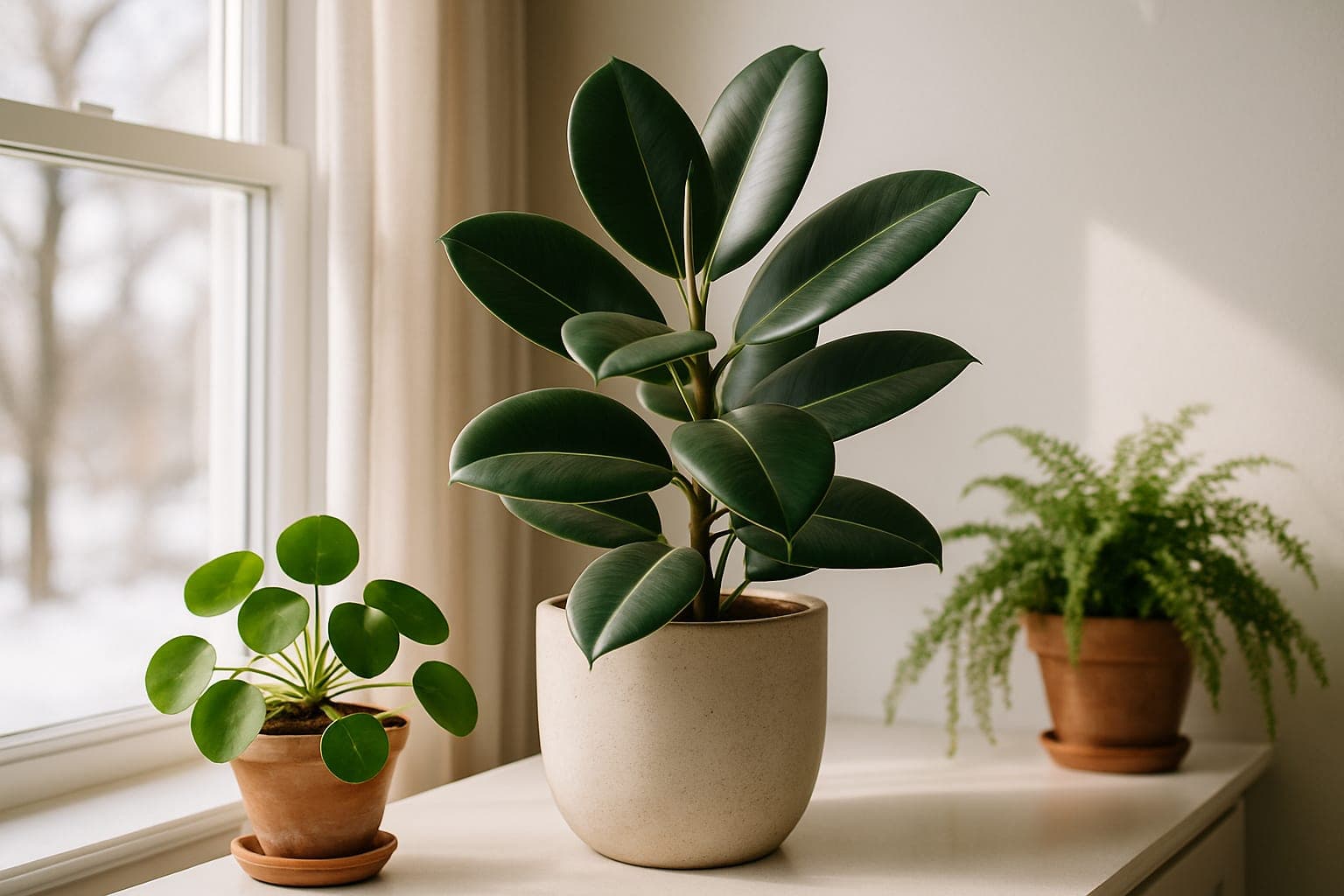
When the days shorten and the heating clicks on, your houseplants enter a very different world from the lush, humid summer they enjoyed. Most slow right down, some stop growing entirely, and the indoor environment becomes drier and draughtier than at any other time of year. Adjusting your care routine to match these changes is the single biggest thing you can do to keep your plants thriving until spring.
Understanding the winter slowdown
Reduced daylight is the main driver of winter plant behaviour. With fewer hours of weaker sunlight, photosynthesis drops, and so does a plant's demand for water, nutrients and energy. Many tropical houseplants enter a semi-dormant state: roots are still alive and functioning, but top growth slows or pauses. New leaves that do appear may be smaller, paler, or sit on longer, stretched stems as the plant reaches for light.
This is normal. The goal in winter is not to push growth but to maintain your plants in good health until conditions improve. Trying to force growth with extra feed or water tends to do more harm than good.
Maximising winter light
Light is the resource in shortest supply, so make the most of every photon. A few practical steps make a real difference:
- Move plants closer to windows, especially south- and west-facing ones in the northern hemisphere.
- Clean dusty leaves with a damp cloth so they can absorb more light.
- Wipe the inside of window panes — grime cuts transmission noticeably.
- Rotate pots a quarter turn each week to prevent lopsided growth.
- Consider a simple LED grow light for darker corners or for light-hungry species such as Ficus, citrus, or flowering plants.
Watch out for cold glass
While windowsills offer the best light, the glass itself can become very cold overnight. Leaves touching the pane may develop brown, mushy patches from cold damage. Pull foliage back from the glass, especially when frost is forecast, and consider sliding a piece of card between the plant and the window on the coldest nights.
Watering: less, and less often
Overwatering kills more houseplants in winter than any other single issue. With lower light and cooler temperatures, soil dries out far more slowly, and waterlogged roots quickly rot.
Forget any fixed weekly schedule. Instead, check each plant individually:
- Push a finger 2-3 cm into the compost. If it feels damp, wait.
- Lift the pot — a light pot generally needs water, a heavy one does not.
- For succulents and cacti, let the compost dry out almost completely between waterings; some can go weeks without a drink in winter.
- When you do water, use tepid water rather than cold straight from the tap, which can shock roots.
Always tip away any water that collects in the saucer after about thirty minutes. Pots sitting in water are a fast route to root rot.
Pause the feeding
Because plants are barely growing, they cannot use the nutrients in fertiliser, and unused salts simply build up in the compost and can burn roots. For most foliage houseplants, stop feeding from late autumn until you see fresh growth resuming in late winter or early spring. The exceptions are winter-flowering plants such as Phalaenopsis orchids or Christmas cacti, which can take a weak, occasional feed while in bud or bloom.
Humidity and central heating
Radiators and forced-air heating dry indoor air dramatically. You will often see the symptoms before you notice the cause: crispy leaf tips on calatheas and prayer plants, brown edges on ferns, bud drop on gardenias, and a sudden appearance of spider mites, which thrive in dry air.
Practical ways to raise humidity
- Group plants together so they share the moisture they transpire.
- Stand pots on a tray of damp pebbles, keeping the pot base above the waterline.
- Run a small room humidifier near sensitive plants — by far the most effective option.
- Move humidity-loving species into a bathroom or kitchen if light allows.
Misting is often suggested, but its effect is short-lived and it can encourage fungal spots on some leaves. A humidifier is a much better investment if you grow tropicals.
Draughts, radiators and temperature swings
Most houseplants prefer steady temperatures between roughly 15-22°C. What they really dislike is sudden change. Keep an eye on these trouble spots:
- Cold draughts from front doors, letterboxes and poorly sealed windows.
- Hot, dry air directly above radiators or near wood burners.
- Unheated rooms that drop below 10°C overnight — fine for hardy types like ivy, risky for tropicals.
If a leaf yellows and drops suddenly on one side of a plant only, draught is a likely culprit. Move the plant a metre or two away from the source.
Pests, problems and gentle pruning
Dry winter air encourages spider mites, mealybugs and scale, while damp, cold compost invites fungus gnats. Inspect the undersides of leaves and the leaf joints once a week. Catching an infestation early — a quick wipe with diluted insecticidal soap or a shower of tepid water — is far easier than tackling a full outbreak.
Hold off on major pruning and repotting until late winter or early spring, when the plant has the energy to recover. You can, however, snip off any yellowed, damaged or diseased leaves at any time to keep plants tidy and reduce disease risk.
Looking ahead to spring
Winter care is mostly about restraint: less water, no fertiliser, no repotting, and a watchful eye on light, humidity and temperature. Get those basics right and your plants will sail through the dark months in good shape, ready to reward you with a flush of fresh growth as soon as the days begin to lengthen again.
Tools and supplies for this
Products we'd actually buy for this job. Linking to Amazon — if you buy through these links we earn a small commission at no extra cost to you.
- Weston Mill Pottery Terracotta plant pots, 175mm (pack of 10)
Mid-size workhorse terracotta — perfect step-up for plants outgrowing their nursery pots.
- Weston Mill Pottery Terracotta plant pots, 20cm (pack of 5)
Heavyweight 20cm clay for established plants — the porous walls help prevent the soggy roots aroids hate.
- Whitefurze G04012 7.5cm Garden Pot - Terracotta (Set of 10)
Cheap, cheerful plastic propagation pots — what we actually use for cuttings and small offsets.
- Whitefurze G04013 10cm Garden Pot - Terracotta (Set of 7)
Reliable mid-size nursery pots with proper drainage holes — the boring essential every plant parent runs out of.
BotanicBuddy Editorial Team
Plant Care Team
Passionate about helping plant parents succeed with expert tips and proven techniques.
Related Articles
Monstera Deliciosa Care Guide
The Monstera deliciosa, or Swiss cheese plant, is a rewarding tropical climber prized for its dramatic split leaves. This guide covers everything from light and watering to moss poles and the secrets behind those iconic fenestrations.
Seasonal Plant Care: Adjusting for the Changing Year
Adapt your plant care routine throughout the year to keep your houseplants healthy and thriving.

Comments(527)
I'd push back a bit on the "new approach" framing—I've found that winter mostly just amplifies what you're already doing wrong, rather than requiring a complete shift. The dry air thing is real though, and honestly that's where I see the most damage in my collection. I stopped moving plants away from windows and instead focused on humidity; do you find misting actually helps, or is it just a bandaid?
I'm with you on the dry air being the real culprit—misting is definitely a bandaid for me. I've had better results just grouping plants closer together and running a humidifier near my succulent collection during winter, especially since I'm in a mediterranean climate where indoor heating strips moisture fast. The misting never lasted long enough to matter. What humidity level are you aiming for, or are you just playing it by feel?
I've found that the light issue hits harder than most people expect—I've had to move several plants closer to windows or shift them entirely during winter, and it makes a real difference. The dry air is what I battle most though; running a humidifier near my vegetable seedlings (I'm growing some peppers indoors currently) has been essential, since they're finicky about moisture swings. Watering less frequently is obvious advice, but timing it right so the soil doesn't stay cold and soggy is where people usually slip up.
I've learned the hard way that winter dormancy is real—my Ocimum basilicum nearly died last year because I kept watering on the same summer schedule instead of letting the soil dry out more. The low light and cold windowsills are brutal in my climate, so I've moved most of my herbs (sage, thyme, oregano) away from the glass and cut back watering drastically. Have you found that humidity becomes the bigger challenge than temperature in most homes, or does it depend on how aggressive your heating is?
I really needed this reminder—winter always catches me off guard, even after years of keeping plants. The dry air thing is huge; I've found that grouping my three plants closer together actually helps them share humidity, way better than trying to mist constantly. Have you found any tricks for dealing with the weak light situation that don't require grow lights? I'm curious whether holding off on fertilizing makes as much difference as people say it does.
I've definitely learned this the hard way—my first winter with orchids was a disaster of dropped buds and crispy leaf tips! The dry air thing especially caught me off guard; I didn't realize how much my tropical plants were struggling until I finally invested in a humidifier. Are you finding that adjusting watering frequency is the trickiest part for people, or do folks tend to get tripped up more by the light situation?
I've learned the hard way that my tropical plants don't appreciate the combo of weak winter light and that bone-dry air from the heater—my monstera got leggy faster than I expected! Moving everything a few inches closer to the window and grouping them together to boost humidity has made a real difference, though I admit I still sometimes forget to dial back the watering. Are you finding that people struggle more with the light issue or the dryness when winter hits?
I'd say the dryness gets overlooked more often, honestly—at least people remember to worry about light! My orchids (I'm down to three after some winter casualties of my own) absolutely suffered when I cranked the heat without addressing humidity. Grouping them together helped, but I found that running a pebble tray under them made the biggest difference; even in my arid climate, that micro-humidity pocket keeps them from totally drying out between waterings.
I really appreciate this reminder about the seasonal shift—it's so easy to keep watering on autopilot and wonder why plants struggle. The low humidity indoors is what gets me most; my two orchids especially need more attention to their aerial roots in winter, even though I'm in an arid climate where you'd think moisture wouldn't be an issue. Do you find that grouping plants together helps with humidity, or do you prefer another approach?
This is so helpful because I'm honestly still figuring out how to adjust my care routine as the seasons change. I have four plants right now and I'm worried about my native shrub on the windowsill—it's getting less light than it did in fall, and I'm not sure if I should water it differently. Do you have specific tips for cold climates, or does the advice in the post work across different growing zones?
I love this reminder because winter really is a completely different game—though I've found the dry air piece is honestly the trickiest for me. I'm in a mediterranean climate, so my winters are mild, but the indoor heating absolutely wrecks my native species collection. Do you recommend grouping plants together to raise humidity, or are you more of a mister? I've been experimenting with both and can't quite decide what actually moves the needle for something like *Ruscus aculeatus*.
I really needed this reminder—my ten plants and I are definitely bracing for winter! My orchid in particular seems to sulk when the light gets weak, though I'm still figuring out if I'm underwatering or just not giving it enough brightness. Does anyone else find the dry air thing harder to manage than the cold itself? I've been nervous about moving things away from windowsills, but I think I've been overcautious about the chill.
I'd bet it's the light—orchids are pretty honest about what they need, and weak winter sun usually reads as "time to rest" rather than "grow." I kept mine sulking for years until I moved it a few feet back from the sill but kept it in the brightest spot I had. As for dry air, I find a pebble tray under my herbs does way more for me than worrying about temperature, since my mediterranean plants honestly don't mind a cool windowsill at all—it's the furnace-heated air that gets them.
I needed this reminder so badly—my herbs have been looking pretty sad since the heating kicked in! I've started misting my basil and oregano more often, which seems to help with the dry air, though I'm still figuring out the right watering schedule when everything's growing so slowly. Do you have thoughts on whether grow lights are worth it for someone with just a handful of plants, or should I just accept that winter is dormancy season?
I've had to dial back watering significantly this season—my Monstera deliciosa is sitting much drier than summer, and I'm watching soil moisture religiously rather than sticking to a schedule. The bigger issue for me in a tropical climate is actually the indoor humidity drop when I run AC; I've moved my smaller plants closer together to help, but I'm curious whether others are misting or using humidity trays, or if that's just chasing the problem?
I really needed this right now—my place gets pretty dark in winter and I've already noticed my plants are struggling. The dry air thing is what's getting me though; I've got six plants and honestly wasn't sure if I should be watering more or less when everything feels dryer. I'd love to know if moving them away from cold windows completely is necessary, or if some distance is enough? I'll have a photo of my setup to compare notes if I figure out what works here in the Mediterranean climate.
I've been dreading this—my little Monstera deliciosa has been looking pretty sad since the heating kicked in, and I wasn't sure if it was the lower light or something else. The dry air thing makes so much sense now that you mention it; I noticed the leaf tips browning and just assumed I was overwatering. Do you have a preference between misting and using a humidifier, or does it depend on the plant? I only have four plants so far, so I'm still figuring out what works.
I really needed this right now—I've got eleven plants staring at me accusingly and I'm pretty sure my basil is giving up on life! The dry air thing especially got me; I didn't realize that was such a big deal until my herbs started looking crispy. Would you say reduce watering across the board, or does it depend on the plant? I have a photo of my sad oregano I could compare to if I knew what healthy winter oregano actually looks like.
I think watering really does depend on the plant—my Rosmarinus officinalis barely needs anything in winter, but I made the mistake of treating my succulents the same way and they actually suffered. For herbs like oregano and basil, the tricky part is they slow down so much in low light that even though the air is dry, the soil stays wet longer, which causes more problems than the crispy leaves. I'm still figuring out the right rhythm myself, but checking the soil an inch down before watering helps me more than any fixed schedule.
I've learned the hard way that the biggest mistake I made with my tropical plants during winter was sticking to my regular watering schedule—I killed a Philodendron micans that way before I realized growth essentially stops in low light, so they need far less water. Now I check soil moisture more carefully and let things dry out longer between waterings, which has made a huge difference with my collection.
I'd push back slightly on the "new approach" framing—I find that winter care really depends on your plant's origin. Most of my collection thrives on reduced watering, sure, but my *Aloe* and *Euphorbia* actually prefer cooler dormancy, whereas tropical species like *Monstera deliciosa* genuinely suffer from the combination of low light and chilling. The dry air issue is real though, and I've had better luck grouping plants closer together than fussing with humidifiers.
I learned the hard way that my tropical plants don't actually *want* the cozy spot near my drafty window in winter—even though it seems logical! I've had to shuffle mine around to catch whatever afternoon light comes through, and honestly, the humidity struggle is real in my cold climate. Do you find that a pebble tray or occasional misting makes a noticeable difference, or is that more of a myth?
Pebble trays genuinely help—I swear by them for my basil and mint, especially since my place gets pretty dry in winter. The key is consistency though; I fill mine every couple of days rather than just once, or the effect fizzles out fast. That said, I've found misting alone doesn't cut it for me—it's more of a quick boost than a real solution, which sounds like what you discovered the hard way with the window situation!
I'd push back slightly on the "everything changes" framing—at least in a mediterranean climate, winter light is actually manageable if you position plants right, and temperatures rarely dip enough to stress anything hardy. That said, the dry air part is real and often overlooked; I've found a simple pebble tray does more for my plants than any other winter adjustment. Are you finding your readers tend to overwater during winter, or is that less of an issue where you are?
I've definitely felt this shift with my collection—I'm down to watering maybe once every two weeks now instead of the usual schedule, and my tropical plants are definitely sulking under the weak winter light. The dry air thing gets me every time; I've had to move a few of my more finicky ones (like my Syngonium) away from the heating vent, and honestly it's made such a difference. What's your take on supplemental grow lights—are they worth it, or should people just accept the slower growth and dormancy?
I've learned this the hard way—my pothos nearly died two winters ago because I kept watering it on the same schedule. The reduced light means plants genuinely need less water, not more, and that's the trap most people fall into. I'd have a photo of my current setup with grow lights if I could upload it, but honestly the biggest shift for me was accepting that some plants just slow down and that's fine. Keeping them cooler and drier got better results than fussing over them.
You're spot on about the watering trap—I see that constantly, especially with people trying to "help" their plants through winter. The cooling part is what often gets overlooked though. I kept my vegetables on a warmer shelf for years before realizing they actually thrived when I moved them closer to a cooler window. That combination of less water + lower temps really does make the difference.
I've learned the hard way that the dry air is really the culprit in my space. My pothos and monstera started dropping leaves last winter until I started misting them more frequently and moved them a bit back from the cold windowsill. It made such a difference, so I'm glad to see this topic covered since it's easy to overlook when you're used to summer watering schedules.
I'd push back a little on the "chilly windowsills" bit—at least from my mediterranean climate perspective, mine actually thrive with cooler nights in winter, especially species like *Ruscus aculeatus* that genuinely need that dormancy period. The dry air part hits different though; that's been my biggest adjustment since I moved indoors with my collection. Are you recommending humidifiers, or more along the lines of grouping plants together and misting? I've found the latter only goes so far once the heating kicks in.
I learned this lesson the hard way when I nearly killed a pothos by keeping up my usual watering schedule during winter—it sat in soggy soil for weeks because I wasn't adjusting for the slower growth. Now I'm much more mindful about cutting back on water and moving plants away from cold windows, and my collection stays happier for it. Thanks for putting together a solid reminder about this seasonal shift.
I've learned this the hard way with my herb collection—I lost a promising *Ocimum basilicum* my first winter because I kept watering on the same schedule as summer. The reduced light really does change everything, especially for herbs that are already struggling with short days in a cold climate. Do you address adjusting watering frequency in the full post, or focus more on the light and humidity issues?
I had the same problem with my basil last year—kept it soaking wet out of habit and it just rotted. I'm still figuring out the watering thing since I'm in a mediterranean climate and my place gets pretty dry indoors once heating kicks in. Did you end up moving your herbs somewhere specific for winter, or do you just adjust the watering and hope? I have six plants total and the basil's always the trickiest one for me.
Winter's been the real test for my collection—especially my orchid, which honestly sulks if the windowsill dips below 60°F at night. I've found that backing off watering matters more than people think; I water maybe half as often since evaporation slows way down. The dry air part is real too, though I'm skeptical of misting doing much—I just accept some leaf tips will crisp and move on rather than fuss with humidifiers. Would love to see specifics on light supplementation since that's where most people struggle in my experience.
I've found that most of the winter damage in my plants comes down to overwatering, not the cold itself—people panic and water on schedule when their plants barely need anything. The light drop is real though, so I've had to rotate my four plants away from the south-facing window and accept slower growth rather than fight it. Did you end up recommending reduced feeding as well, or do you think that's overdone?
Oh, this hits home—I've definitely had to adjust my routine since it got colder! My *Phalaenopsis* are particularly fussy about the drafts from my windows, so I've been moving them back a few inches at night. The humidity drop is the real killer though; I'm running a small humidifier near my four plants now and it's made such a difference. Do you have any tips for watering frequency adjustments, or do you mostly stick with the "wait until it's dry" rule year-round?
I'm definitely feeling this right now—my tropical plants seem so sluggish compared to summer, and I've been second-guessing whether I'm underwatering or overwatering since they're using less water anyway. The dry air thing is something I hadn't fully connected to winter until recently; I noticed my Monstera's leaf edges are getting crispy despite my usual watering routine. I'd love to know if there's a reliable way to measure humidity or if folks just rely on observation, since I have nine plants at different spots around my apartment and I'm still learning which ones are pickier about it.
I've definitely been there with the crispy edges—that's usually the humidity culprit, not watering. A cheap hygrometer is worth it if you're serious about tracking; I keep one near my most sensitive plants (like my *Anthurium* and *Alocasia*) since they're so finicky about dryness. The real game-changer for me in winter was grouping plants closer together and running a humidifier nearby a few hours a day rather than trying to adjust watering for each one individually—it took the guesswork out of it.
The crispy edges are your humidity talking—I'd skip the gadgets and just mist problem plants every few days or move them closer together to create a pocket of shared moisture. For watering, I stopped guessing and started checking soil depth with my finger; if the top inch is dry, I water, and in winter that's usually every 10–14 days for my collection rather than weekly. Since you've got nine plants spread around, have you noticed which spots tend to be drier or colder?
I'd push back gently on the "weaker light" framing—it's really about *duration* dropping, not necessarily intensity. In my arid climate, winter sun is actually harsher and more direct through south-facing glass, which can stress succulents I keep indoors. The dry air part is spot-on though; that's where I notice the biggest winter shift across my collection, especially with anything semi-tropical that I've acclimated to lower humidity.
Oh, this is so timely—I just moved my succulents away from the window yesterday because I realized I was watering them on my old summer schedule like an amateur. My jade plant nearly got root rot before I figured out that "less frequent watering in winter" actually means *way* less frequent. The dry air thing gets me every time too; I've started grouping a few of my thirteen plants together to help them stay happy, which feels like a small win after some pretty crispy leaves last January.
I really needed this reminder—my succulents are looking a bit sad this month and I've been wondering if it's just the season or something I'm doing wrong. The dry indoor air part especially resonates since I've got my heating cranked up. Do you have specific tips for succulents during winter, or should I just reduce watering even more than usual? I have about 9 plants total and they usually do great in my Mediterranean-style setup, but winter always throws me off.
I learned the hard way that winter light is no joke—I lost a croton last year because I didn't move it closer to the window when the days got short. Now I shuffle my collection around in November and it makes such a difference. The dry air thing is huge too; I just started grouping my tropical plants together and it's helped way more than I expected.
Oh, the croton lesson—I feel that! I had a similar wake-up call a few years back with a finicky monstera. Grouping tropicals together is genius though; I do the same thing now and it's basically a mini humid zone in my living room. Have you found that certain plants in your collection need to be shuffled more aggressively than others, or does moving everything at once seem to work for you?
I've learned the hard way that letting watering schedules ride through winter is the quickest way to root rot. My monstera nearly died before I realized I needed to cut back dramatically—I check soil moisture now instead of just following a calendar. The dry air thing is real too; I moved my small collection away from the heating vents and that alone made a difference with browning leaf tips.
I've learned this lesson the hard way with my orchids—that first winter I owned one, I kept watering on my normal schedule and nearly lost it to root rot in the low light. Now I'm much more careful about scaling back, and I've honestly become obsessed with humidity since living in an arid climate makes winter even trickier. I'd love to see your thoughts on humidifiers vs. pebble trays, since I'm always tinkering with my setup across my collection to find what actually works!
I've found that backing plants away from cold windows makes more difference than people expect—even a foot or two can mean 5-10 degrees warmer. The dry air issue is real though; I've stopped fighting it and instead shifted my collection toward plants that actually tolerate it rather than drowning them with misting. Are you finding watering frequency is the biggest adjustment for readers, or is light the real struggle where you are?
I'd add that the timing really depends on where you are—I'm in an arid climate, so winter actually brings me relief since my succulents are prone to rot in humid summers. The low light is definitely the bigger challenge here, and I've found that moving everything closer to south-facing windows and cutting back water even more aggressively makes the real difference for my collection. Might be worth a follow-up on regional variations, since one-size-fits-all winter advice can backfire.
I've been struggling with this exact issue—my orchids especially seem to suffer in winter, and I'm still figuring out the best approach. I have nine plants total, mostly tolerant types, but those Phalaenopsis specimens really don't like the cold windowsill temps here. Would you recommend moving them away from the window entirely during the coldest months, or is there a way to protect them in place? I'd love to see specifics on humidity management too, since my indoor air gets pretty harsh when the heating kicks in.
I totally get the windowsill struggle—I have eleven plants now and my succulents are honestly my main concern in winter since they hate the cold drafts! I've been wondering the same thing about moving plants versus protecting them in place. Have you tried using a humidity tray with pebbles under your orchids, or would that not help enough with your heating situation?
I've found winter to be the trickiest season for my orchids especially—the combination of low humidity and reduced daylight really tests patience. My Phalaenopsis collection gets through it okay since they tolerate lower light, but I'm always adjusting watering schedules and sometimes adding a humidifier near the staging area. What's your take on supplemental lighting versus just accepting the dormancy period?
I've learned the hard way that watering less is the single biggest shift—my pothos and snake plant almost didn't make it last year because I kept them on the same summer schedule. The dry air part is real too; I got a cheap humidity tray under my ficus and it's made a noticeable difference. Would love to see what you recommend for supplemental light, since my north-facing windows barely cut it in January.
I've definitely felt this shift with my small collection—watering has been my biggest adjustment since everything slows down so much indoors. The dry air is killing me though; I live somewhere cold and my heater just sucks moisture out of everything. Do you find that grouping plants together helps with humidity, or do you usually reach for a humidifier instead?
I'd gently push back on the "new approach" framing—I find my vegetables (mainly *Capsicum* and *Solanum lycopersicum*) actually just need the same fundamentals, applied more consistently. Weaker light is real, but instead of overhauling care, I dial back watering to match slower growth and maybe rotate pots closer to windows. The dry air is the trickier part for me in my temperate zone; a humidity tray works better than the usual "mist more" advice people toss around.
I'm realizing I need to rethink my whole winter setup—my tropical plants are scattered across different spots and I'm honestly not sure if I'm underwatering or if the low light is the real culprit right now. Do you have thoughts on whether a grow light is essential, or can I get away with just moving everything closer to my south-facing window? I've got about nine plants and a few of them look pretty stressed already.
The dry air part is *real* – I learned that one the hard way when my basil basically turned to crispy nothing last January! Now I group my herbs together on a humidity tray and it makes such a difference. Do you have any specific tips for watering less frequently without letting things completely dry out? I always struggle with that balance in winter, especially since my place gets pretty cold by the windows.
Oh man, this is so timely—I just moved my tropical plants away from the window last week after learning the hard way that cold glass can actually chill them faster than you'd think. My monstera got pretty stressed when I left it right against the pane during a cold snap. Now I'm obsessing over humidity too, since my apartment gets desert-dry in winter and my 10 plants are all competing for moisture. What's your go-to trick for bumping up humidity without creating mold issues?
Cold glass is brutal—I've lost leaves the same way. For humidity without mold, I just group my plants closer together and water less frequently (they need it less in winter anyway), which lets them share moisture naturally. A pebble tray under each pot helps too and takes up almost no space. Do you find your monstera recovers quickly once you move it back, or does it stay sulky through the season?
I feel you on the humidity struggle—I've had the same issue in my cold climate apartment! What's helped me most is grouping my tropicals closer together on a pebble tray with water underneath; it creates a little microclimate without making the whole room damp. The key is making sure the pots sit *on* the pebbles, not directly in the water, so you get the evaporation benefit without root rot. Have you tried that approach, or does your space not allow for clustering plants?
I've found the biggest difference for my succulents in winter is honestly just backing off the water—I cut my watering schedule to nearly nothing for things like Echeveria and Sempervivum, since they're barely growing anyway. The dry indoor air from heating doesn't bother them much, but that weak light is the real killer if you're not positioned near a south-facing window. Are you recommending grow lights for readers without good natural light, or sticking with repositioning plants?
I'm definitely curious about your approach with the succulents—I have a few *Echeveria* myself and have been struggling to figure out the right watering rhythm. You mentioned the weak light being the bigger issue; do you find that just moving them closer to a south-facing window is enough, or have you experimented with grow lights? I'm in a tropical climate so winter isn't as harsh, but my apartment still gets pretty gloomy, and I'd love to know what actually works before investing in lights for my nine plants.
This is so timely—I've already had to shuffle half my tropical plants away from the windows because the afternoon sun just isn't cutting it anymore. The dry air thing gets me every year; I feel like I'm constantly misting my monsteras and ferns, though honestly I'm never sure if it actually helps or if I'm just making myself feel better! Do you have thoughts on humidifiers versus misting? I've been thinking about finally investing in one since my collection's grown to eleven plants and the bathroom trick only goes so far.
I'd lean toward a humidifier if you're serious about it—misting is mostly theater, honestly. It raises humidity for minutes at best, and wet foliage invites fungal issues, especially indoors where air doesn't move like it does outside. A small tabletop unit near your collection gives you sustained humidity without the fuss, though even 30–40% relative humidity (easily achievable with one) covers most tropicals fine. For my arid-climate setup I barely use one, but I'd be lost without it for the Monstera deliciosa and ferns I keep.
Misting is honestly theater—it raises humidity for maybe minutes. I switched to a humidifier two winters ago when my Aloe vera and Echeveria started looking papery, and it made a real difference. Since I only keep four succulents, I just run one small unit near that corner and they've stayed plump through the cold months. For your tropical plants it's probably even more worthwhile, and you'll stop the constant spray bottle routine.
Winter's been tough on my collection – I've got six plants and honestly the dry air is killing me more than the cold. My fiddle leaf fig started dropping leaves and I realized I wasn't misting enough, so now I'm doing it every few days. The weaker light thing is confusing though – do you reduce watering across the board, or does it depend on the plant? I'd love to know if there's a simple rule I'm missing here.
I'd push back slightly on the "everything changes" framing—I've found that *how much* things change really depends on what you're growing. My tomatoes and peppers barely notice winter indoors because I don't rely on natural light anyway, but I definitely see the difference with leafy greens that actually need good brightness. The dry air point is real though, and that's been my biggest winter adjustment across the board. A humidity tray under each pot has made more difference than I expected.
I learned this the hard way after losing a pothos to the radiator heat last January—now I move everything a few inches back from the window and stop fertilizing entirely until spring. The dry air thing is real too; I just mist my plants every few days instead of buying a humidifier, and it's made a noticeable difference. Definitely needed this reminder to check my watering routine since the soil stays wet so much longer when light drops off.
I really appreciate you addressing the dry air piece—that's where a lot of people struggle, especially those of us in arid climates. I've found that clustering my plants closer together actually helps more than I expected, even with just seven plants in my space. The watering adjustment is obviously crucial too, but I think the light situation gets overlooked sometimes. Have you found that supplemental grow lights make a meaningful difference for tropical plants, or do you find most people can manage without them through winter?
Winter's where orchids really show their worth—or die trying. The cold windowsill thing is genuine though; I've lost more to temperature swings than anything else. My setup is small (just five plants), so I can manage humidity with a pebble tray and strategic watering, but honestly the light is the real killer in cold climates. I'd need to upload a photo of my phalaenopsis to show what consistent underwatering during dormancy actually looks like versus summer growth, but the point is people usually overcompensate with fussing instead of just backing off.
I've definitely felt this shift with my collection—my Monstera deliciosa especially seems to slow down as soon as the days get shorter. The dry air part is what catches me off guard every year; I didn't realize how much indoor heating drains humidity until I started misting more frequently. Do you have a preferred method for increasing humidity without creating mold problems on the leaves?
I've definitely learned this the hard way—my rosemary nearly gave up the ghost last January when I didn't adjust the watering schedule. Since Mediterranean herbs are used to dormancy in winter, I found that backing off water *before* cranking up the heating made a huge difference. The dry air is brutal, so I started grouping my smaller pots closer together to create a tiny humid microclimate. It's such a simple shift in mindset, treating winter like a season of rest rather than trying to force summer conditions.
I'd add that watering discipline matters more than anything else in winter—I cut back to roughly half my usual frequency and check soil moisture before touching the can, since plants genuinely aren't growing much. The light issue is real though; my south-facing window helps, but even that's marginal in December. Are you recommending grow lights for anyone, or sticking with natural light management?
I really needed this reminder—I've already lost count of how many plants I've overwatered this season thinking they were thirsty when they just wanted to sleep! My biggest struggle is the dry air situation; I've been experimenting with grouping my tropical plants closer together and it seems to help, though I'm still not sure if I'm doing it right. Do you have any thoughts on whether a humidifier actually makes a difference, or is the grouping trick enough for most houseplants?
I've learned this the hard way with my herbs—my basil basically gave up last January when I kept it in its usual spot by the window. Now I rotate mine closer to grow lights through winter, which has made a huge difference. The dry air thing gets me every time too; do you have a favorite method for bumping up humidity without turning your whole place into a greenhouse?
I totally get it—basil (*Ocimum basilicum*) is so sensitive to the combo of low light and cold drafts. For humidity, I've had the best luck grouping my tropical plants closer together on a tray with pebbles and water underneath; it creates a microclimate without the fussiness of misters, which I found just dried everything out faster. The grouping also helps trap a bit of warmth, which matters more than people realize.
I've learned the hard way that the light drop is the real killer—my succulents got leggy and sad last winter before I moved them closer to the brightest window I had. The dry air thing is huge too, especially in my arid climate where the furnace just murders humidity. I stopped watering on any kind of schedule and switched to checking soil moisture every week or so instead; caught myself about to overwater several times, which would've been disastrous with cold roots.
I'd gently push back on the "new approach" framing—at least in my experience with an arid climate. The dry indoor air is actually less of a shock here since humidity is already low year-round, so my *Haworthia* and *Aloe* don't really shift their needs much seasonally. Light is definitely the bigger adjustment though, and that's where I've had to be more intentional about placement rather than changing watering habits wholesale. Worth noting that dormancy looks different depending on your plant's origin.
I've found that the dry air is honestly the trickiest part for me—my basil and oregano especially start looking crispy by January. This year I started grouping my herbs on a tray with pebbles and water underneath, and it's made such a difference without needing a humidifier. Do you have recommendations for plants that actually *thrive* in low light, or is it mostly just about accepting slower growth through winter?
I love the pebble tray approach—that's exactly what I do with my Mediterranean herbs too! Though I'd gently push back on the assumption that most plants just accept slower growth: *Aspidistra elatior* and *Zamioculcas zamiifolia* genuinely thrive in low light, and so do shade-tolerant ferns if you can manage their humidity needs. For herbs specifically though, basil and oregano are sun-worshippers, so winter slowdown is pretty unavoidable—have you considered swapping them out seasonally for something like mint that handles dim corners better?
The pebble tray trick is clutch—I do the same thing with my rosemary and thyme! I've learned the hard way that most herbs really just slow down rather than thrive in low light, so I've actually shifted my winter mindset to just accepting less frequent harvests instead of fighting it. That said, mint is surprisingly forgiving in dimmer spots compared to basil, and chives honestly don't seem to care much. Have you thought about rotating your herbs closer to a south-facing window if you have one, or are your options pretty limited where you are?
I learned this the hard way last January when I moved my succulents away from the window thinking they'd be safer from the cold—ended up with the leggiest, saddest echeveria I've ever seen! Now I keep them right in the brightest spot I can find, even if it's just a few hours of weak winter sun, and I've cut watering down to almost nothing. My 13-plant crew is definitely happier for it.
I'd add that winter's the ideal time to reassess watering habits—I've found most people actually *overwater* when growth naturally slows. With lower light, my vegetables (I keep a few *Solanum lycopersicum* indoors) need far less frequent watering than summer, even though the air feels drier. A moisture meter takes the guesswork out rather than sticking to a fixed schedule.
I've learned the hard way that reducing water is just as crucial as managing light—my basil (Ocimum basilicum) nearly rotted last winter because I kept to my summer watering schedule despite the lower humidity and slower growth. The dry air is brutal in my climate, so I've started grouping my herbs closer together and running a small humidifier nearby, which has made a real difference for mints and oregano. What's your take on supplemental lighting, or do you find most people have better luck just shifting their plants to brighter windows and accepting slower winter growth?
I've definitely learned this the hard way—my first winter with tropical plants was a disaster of underwatering because I assumed they'd need less while dormant, only to watch them crisp up from the heating system anyway! The dry air thing really caught me off guard, especially since I'm in a cold climate and can't just crack a window. Would you recommend grouping plants together as a humidity strategy, or is that more of a band-aid solution?
I've been worried about my aloe since the heating kicked in, so this timing is perfect. The dry air part really resonates with me—I didn't realize that was even a factor until my succulent started looking a bit wrinkled. Do you have a go-to method for increasing humidity without overdoing watering, since that seems like it could get tricky with succulents?
I'd skip the humidity boost for aloe—they're desert plants and actually prefer the dry air. What helped mine was moving it away from the heater and cutting back water to maybe once a month, since growth basically stops in winter anyway. The wrinkles usually mean underwatering rather than dry air, so I'd focus on that first before adding moisture to the room. Have you checked if yours is sitting near a heat vent?
I really appreciate the reminder about winter's impact on indoor humidity—that's where so many of us slip up. I've found that even my more drought-tolerant orchids (I'm partial to Cattleyas) actually suffer in winter if I'm not mindful about misting or grouping plants together. The combination of low light and dry air seems to stress them more than either factor alone. Have you found any particular humidity-boosting methods that work better than others in arid climates?
The light issue is huge—I've found that moving my succulents to the brightest window available, even if it's not their usual spot, makes a real difference. And for the dry air, I resist the urge to water more frequently; that's actually when I cut back the most since growth basically stops. The soil stays moist longer in winter, so I just check it before watering and usually go twice as long between sessions.
I've definitely learned this the hard way—my basil nearly gave up the ghost last January when I kept it in its usual sunny spot without realizing how much weaker the winter light actually was. Moving it closer to the window and backing off on watering made all the difference. The dry air thing is sneaky too; I didn't think it would matter much in the tropics, but indoor humidity can still tank with heating on. Thanks for the timely reminder!
I really needed this post right now—my cold climate means my apartment gets so dry in winter, and I've been worried about my small collection. I'm still figuring out the balance between watering less and keeping the soil from drying out completely; do you have a specific watering schedule you follow, or does it depend more on what each plant needs?
I really needed this — my place gets so dry in winter and I noticed two of my plants started dropping leaves last year. I'm still figuring out the watering schedule since everything slows down, but I'm guessing I should be doing less? Also, my windowsills do get chilly at night. Would supplementing with a grow light help, or is that overkill for someone just starting out with six plants?
I'd push back gently on the "everything changes" framing—honestly, the biggest shift I notice is just light, and honestly it depends where you live. I'm in a temperate zone and my vegetables actually thrive under grow lights in winter since I can control conditions better than chasing natural light around. The watering cutback matters more than people think, but dry air is only an issue if you're right next to a heater. Curious how much of this applies if you're not in a climate with actual dark winters.
You've hit on something I struggle with too—I'm in an arid climate where winter light is actually pretty decent, so my bigger headache is that dry air just *exists* year-round near my heating vents. For my orchids (I've got three, and they're drama queens), the real winter shift is just dialing back water since evaporation slows down even in my dry air. The grow light approach sounds ideal if you've got the setup; I've never quite committed to one, so I'm at the mercy of my south-facing window instead.
I learned this lesson the hard way with my native tropical plants—I kept watering on the same summer schedule and watched them sulk through January. Now I've cut back to watering maybe once every two weeks and moved my collection a few feet closer to the south-facing window, and they're so much happier. The dry air part is real too; I started misting a few of my more sensitive plants and that made a noticeable difference. Thanks for putting together a post on this, it's such an easy thing to overlook when the seasons shift.
I've been paranoid about my basil this winter—it's really the only herb I'm keeping indoors right now, and I swear it sulks the moment the days get shorter. I've moved it away from the cold window and bumped up the humidity since the heating just dries everything out, but I'm curious whether you'd recommend supplementing with a grow light or if that's overkill for herbs? Mine sits on a table with indirect light currently.
I've been dreading winter since my Monstera deliciosa started dropping leaves last year—I think it was the combo of less light and my heating cranking up. This post is timely because I'm already noticing my eight plants responding to the shorter days, and I'm not sure if I should be adjusting watering now or waiting until things get worse. One thing that's helped me is moving a few plants closer to my south-facing window, though I'm worried about cold drafts. Do you have thoughts on whether a plant humidifier is worth the investment, or are there simpler tricks for dealing with dry air?
I've found that winter really does flip the script on care routines—especially since I'm in a mediterranean climate where my tropical plants suddenly face those cold nights. The dry air piece really resonates with me; even my Monstera deliciosa starts showing crispy leaf tips if I'm not mindful about humidity. Are you finding that people tend to overwater during winter when they should actually be cutting back, or is that more of a myth?
I really appreciate this reminder—winter always catches me off guard, even though I should know better. The humidity drop is what gets me most; I've had to get creative with my tropical veggie setup, clustering my plants closer together and using a pebble tray to keep moisture around the foliage. I'm curious whether you adjust fertilizer frequency in winter, or do you cut it out entirely?
This hits home for me—I learned the hard way last winter that my tropical plants absolutely hate the dry air more than the cold itself. I started grouping mine together on a tray with pebbles and water underneath, and it made such a difference that I'm already prepping for it this year. Do you have any tips for folks who don't have a humidifier? I'm still working with just ten plants, so I'm curious what works at different collection sizes.
I'm so glad someone's writing about this—winter always catches me off guard, even after years of keeping plants. The dry air inside is honestly my biggest struggle; I've had to move a few of my tropicals away from heating vents, and I'm still tinkering with humidity solutions for my collection. Do you have a go-to method for bumping up moisture without creating mold issues? I'd love to hear what's worked best for others besides the whole pebble-tray thing, which feels like a band-aid on mine.
I totally relate—my tropicals suffered their first winter here before I figured out what was happening. I've had the best luck grouping plants closer together (they create their own little humid microclimate) and moving them back from the heating vents like you did. I also mist mine every few days rather than relying on trays alone, though I'm careful to do it in the morning so leaves dry quickly and don't invite mold. It's been a game-changer for my collection.
I've been dreading winter with my nine plants—I keep second-guessing myself on watering since everything slows down so much. My Monstera deliciosa seems to barely drink anything right now, but I'm worried I'm being too cautious. Do you have specific thoughts on how much to dial back watering for different plant types, or is it mostly just watching the soil and adjusting as you go? I'd love to see if there's a photo of your setup to compare my tropical collection against.
I'm definitely feeling this right now—my tropical plants have been sulking since the days got shorter, and I'm still figuring out the balance between watering less and keeping the humidity up in my apartment. I have about nine plants scattered around, and I'm noticing my *Monstera deliciosa* especially seems to slow down in growth this time of year. Do you have any tips for grouping plants to help with humidity without overdoing it, or is that more of a myth?
I've been struggling with this exact problem—my pothos has been growing so slowly since December, and I think the weak light is the culprit. I'm also realizing my apartment gets pretty dry in winter, which probably isn't helping. Do you have tips for deciding which plants actually need to move away from the window versus just adjusting watering, or does it depend on the species?
Species makes all the difference here—your pothos (Epipremnum aureum) will tolerate lower light better than most, so I'd hold off moving it unless your window gets almost no direct sun. The slow growth is mostly about temperature and reduced photoperiod rather than distance from the glass. What actually helps me more in winter is cutting back watering (not eliminating it) and keeping plants away from cold drafts at the sill itself, which can shock roots even if light levels stay decent. Worth checking if your apartment gets below 15°C at night—that's usually the real brake on growth.
I'd push back gently on the "dry indoor air" point—it's often overstated for temperate climates. In winter, outdoor humidity does drop, but indoor heating doesn't necessarily create crisis conditions for most houseplants, especially vegetables like *Solanum lycopersicum* (tomatoes) grown indoors, which actually prefer slightly drier conditions to prevent fungal issues. The bigger challenge I've noticed is the *light* deficit combined with slower drainage rates when soil stays wet longer—that combination catches people out more reliably than humidity alone.
You're right that I've stopped obsessing over humidity—the light + wet soil combo is what actually kills things in my setup. I learned that the hard way with a succulent that looked fine until it suddenly wasn't. Now I just dial back watering significantly and move anything that needs it closer to whatever light I have, and that covers most of it.
This hits so hard—I learned the hard way that my herbs basically go dormant in my cold climate winters, and I was way overwatering them thinking something was wrong! Now I just back off on watering and move everything away from the windowsill at night. The dry air part is brutal too; I've had better luck grouping my plants together than misting. Are you finding a humidifier works better than grouping, or do you do both?
I really appreciate posts like this because winter care is where so many people stumble, especially with tropical plants that aren't used to the temperature swings indoors. The dry air part hits hardest for me—I've had to get creative with humidity for my collection, and grouping plants together actually helps more than people realize. Are you finding that supplemental lighting makes a real difference for your readers, or do most manage fine with just adjusting watering schedules?
I learned the hard way that my succulents don't actually need less water in winter—they need *way* less, and I nearly lost a beloved echeveria by watering it on my old schedule. Now I check the soil religiously and only water when it's genuinely dry, which honestly might be once a month if that. The dry indoor air from heating has been the real sneaky killer in my 13-plant setup, so I'm really glad you're flagging that—moving a few of them away from vents made a huge difference!
I appreciate you mentioning the soil-checking habit—that's honestly the safest approach, especially in winter. Though I'd gently push back on succulents uniformly needing "way less" water; it really depends on the species and dormancy patterns. My *Echeveria* actually stay fairly active indoors during winter if light levels are decent, whereas something like *Lithops* genuinely enters dormancy and can go months. The heating vent issue you spotted is dead-on though—that's probably doing more damage through desiccation than the reduced watering ever could.
I learned this the hard way last January when I let my tomatoes get too cold on the windowsill—they just stopped growing entirely! Now I'm obsessive about moving my veggie plants away from chilly glass at night, even though it's a pain with my collection of ten. The dry air thing is real too; I've started grouping plants closer together to create a little humid microclimate. Did you find a particular watering schedule works best, or does it really depend on each plant?
I totally feel this—my herb collection nearly didn't make it through last winter before I figured out the dry air thing. I started grouping my basil and mint on a pebble tray with water underneath, and it made such a difference! What I found tricky was resisting the urge to water as much; I kept killing herbs by overwatering when they weren't actually thirsty in the cold. Do you have any tips for spacing out watering when you can't really rely on the usual drying-out schedule?
I've been dreading winter with my nine plants—especially the ones clustered near my windows—so this timing is perfect. I'm still figuring out the balance between reduced watering and the drying effect of heating systems; do you find that humidity needs differ much between, say, Monstera deliciosa and more delicate species like Fittonia? I have a photo of my setup I'd share if I could upload, but basically I'm worried I'm overcompensating with a humidifier right now.
I've definitely learned this the hard way—my rosemary nearly gave up the ghost last January when I kept watering it like summer. The shift to less frequent watering has saved mine, especially since my mediterranean herbs are basically dormant in winter and need way less than I naturally want to give them. The dry air thing is real too; I've had better luck grouping my smaller pots together rather than misting, which just feels like I'm creating problems.
I'd push back slightly on the "weaker light = slower everything" assumption—at least for the Mediterranean natives I grow. My *Cistus* and *Helianthemum* actually seem to struggle more with *excess* indoor warmth in winter than reduced light. That said, the dry air thing is real and brutal; I've had to get serious about humidity trays this season. Are you finding certain plant groups are more finicky about the temperature swings than others, or is it mostly about dialing back the watering?
I've learned the hard way that watering is where people trip up most—my instinct was to keep going on the same schedule, but winter dormancy is real, and I was rotting roots left and right. Now I wait longer between waterings and check soil moisture before touching the can, which has made the biggest difference for my collection. The low light is honestly tougher to manage in my climate since we do get decent winter sun, but I'm curious how you handle it if you're in a cloudier region—do you find grow lights worth the hassle, or just accept slower growth?
I'm in a tropical climate so winter light isn't really my bottleneck—humidity and consistent warmth are the real challenges here. That said, I've kept my four plants alive through plenty of low-light periods, and honestly I skip grow lights. I just accept that growth slows or stalls, move things closer to windows, and dial back fertilizer accordingly. Letting plants rest rather than forcing them makes more sense to me than fighting the season. Your soil-check approach is spot-on though—that's the difference between dormancy and disaster.
I'd push back slightly on "new approach"—for me it's really just less water and watching the light. My four plants barely move from November through February; I check soil moisture way more often than I water. The dry air thing gets overstated though, at least in my climate. Where are you located? I find humidity drops less severely in a mediterranean winter than people assume, so I'm curious if your readers are dealing with something more extreme.
I've definitely learned this the hard way—my basil and parsley got absolutely decimated last winter when I didn't adjust my watering schedule! The dry air from heating was pulling moisture out so fast, but I kept watering on the same summer routine. Now I group my herbs together on one south-facing sill and mist them every few days, which has been a total game-changer in my cold climate. Do you have specific tips for light supplementation, or are you more focused on the watering and humidity side?
I really appreciate this reminder—winter is when I see the biggest difference in my two orchids, especially since I'm in an arid climate where indoor heating just dries everything out. The weak light is the hardest part for me to work around, so I'm curious what specific strategies you'd recommend for plants like Phalaenopsis that need consistent conditions. Do you find that moving plants closer to windows helps offset the reduced intensity, or is supplemental lighting more reliable?
I've learned the hard way that humidity is the real killer for tropical plants in winter—my Anthurium clarinervium nearly dropped all its leaves before I started grouping plants together and setting them on pebble trays with water. Reducing watering frequency is obvious, but I think people underestimate how much less light actually matters compared to that bone-dry indoor air from heating systems.
I'm with you on humidity—it's honestly the bigger lever than people think. I've found grouping plants together does work, though I'll admit pebble trays have been hit or miss for me in a mediterranean winter since our air isn't *constantly* parched like yours might be. The heating still matters though, so I just accept lower growth and water less frequently rather than fighting it. How close are you grouping them, and do you find the tray water actually evaporates quickly enough to make a real difference, or is it more about the collective effect?
The pebble tray trick really is a game-changer—I've done the same with my Origanum majorana and a few other Mediterranean herbs, and they're noticeably happier. Though I have to say, for herbs especially, I've found the light issue hits harder than people expect; even my rosemary gets leggy if the windowsill doesn't get those crucial winter hours. Do you find your tropical plants bounce back faster in spring if you prioritize humidity over light, or does it depend on the species?
I've learned this the hard way—my monstera nearly gave up on me last January when I didn't realize how much the weak light was slowing its growth. I've started grouping my tropical plants closer together near the south-facing window and cutting back on watering, which seems to help them coast through until spring. Do you find that a humidifier makes a real difference with the dry indoor air, or is misting enough to get by?
I'd push back gently on the "everything changes" framing—honestly, the biggest shift I've noticed is just watering less, since my plants aren't actively growing anyway. The light thing is real, but I've found moving things a few feet closer to the window does more than people expect. Dry air matters mainly if you're running heat 24/7; I've never had to mist or use a humidifier for my veggie seedlings indoors, just watch the soil moisture more carefully.
I've learned this the hard way—my orchids nearly staged a rebellion last January when I didn't adjust my watering routine! The dry air part really gets me; I've found that grouping plants closer together helps them create their own little humidity bubble, which my phalaenopsis especially appreciate. Do you have any thoughts on supplemental lighting, or do you prefer letting plants go dormant-ish through winter?
I've learned the hard way that humidity is the real game-changer in winter. My plants sit near a radiator and were struggling until I started grouping them closer together—the moisture they release helps each other way more than I expected. Simple shift, but it made a noticeable difference in how my collection bounced back when spring arrived.
That's a smart observation about grouping—I've found the same thing works especially well with tropical species like Philodendron and Anthurium, which really suffer when winter heating drops humidity below 40%. I'd add that moving plants *away* from direct radiator heat (even a foot or two) makes a huge difference alongside the grouping trick. I learned that the hard way when a Monstera deliciosa started crispy leaf edges before I realized the heating vent was basically baking it.
I learned this the hard way when I lost a couple of tropical plants my first winter—didn't realize how much the dry air from heating would stress them. Now I group mine together on a tray with pebbles and water underneath, which really helps, and I've moved anything sensitive away from the cold windows. This time of year definitely requires a shift in thinking about watering too, since they're using so much less water when growth slows down.
I'd add that the shift in watering really can't be overstated—I've had far more trouble with root rot on my pothos and tomato seedlings in winter than summer, since people tend to water on the same schedule even as evaporation plummets. The dry air point is spot-on, though I've found a humidity tray works better for me than misting, which only helps briefly and invites fungal issues if you're not careful about leaf wetness overnight.
I really needed this reminder—I've been second-guessing myself about watering less frequently, but you've helped clarify why it actually matters. My biggest challenge so far has been the dry air; I didn't realise how much heating affects my plants until a few of mine started dropping leaves last winter. Do you find a pebble tray makes a real difference, or is that more of a gentle help alongside other humidity measures?
Pebble trays really do help—I've got a few scattered around my collection and they genuinely make a difference, especially for my more humidity-loving natives. Last winter I lost a beautiful Monstera deliciosa to dry air before I figured it out, so now I group my plants closer together too, which creates a little microclimate. The combination of trays plus misting on drier days has been the real game-changer for me.
I'd push back gently on the "everything changes" framing—honestly, the biggest shift I notice is just watering less, since plants genuinely slow down indoors. The light and air stuff matters, but it's less dramatic than it sounds if your place doesn't get below 50°F. I moved my tomato seedlings away from a cold window last year and they were fine; I think people sometimes overcompensate and fuss more than needed.
I've really noticed the light issue this season—my Monstera deliciosa has basically stopped growing since late November. I started rotating all my plants every few days to make sure they get as much of the weak winter light as possible, which seems to help. Are there any low-light tolerant plants you'd recommend adding to a collection? I'm wondering if I should just accept slower growth for winter or if there's something else I'm missing.
I've learned this the hard way with my orchids—I once killed a beautiful Phalaenopsis by stubbornly sticking to my summer watering schedule, completely ignoring the fact that my arid climate plus heating made the soil *less* thirsty, not more. Now I check the medium twice before watering in winter, and honestly, it's made all the difference. The dry air thing is real though; even my hardy collection suffers if I don't get humidity right, so I'm curious what strategies you'd recommend for that without creating mold issues.
I'd honestly cut back watering more aggressively than most people recommend—that's where I see the most problems. With my tropical veggie setup here, the soil just stays wet longer in winter, and root rot shows up fast. I've also stopped fertilizing entirely until spring, which feels counterintuitive but works. If you've got a photo of your setup, I'd be curious whether you're rotating plants closer to windows or using any supplemental light.
The reduced watering bit is spot-on, but I'd push back gently on the "move everything away from windows" advice—at least for tropicals. My *Anthurium clarinervium* and *Monstera deliciosa* actually sit closer to south-facing glass in winter because they need whatever PAR they can get. The real killer in my Mediterranean climate isn't the chill; it's the dryness indoors, so I've found humidity management matters more than temperature tweaks. Most of my seven thrive once I stop fussing with them and just let watering frequency drop naturally.
I've found that watering cuts are the biggest adjustment for me in winter—I basically cut mine in half once the daylight drops, and that alone prevents most of the rot issues people blame on cold. That said, I'm curious whether you're recommending humidity over heat in your piece, since I've had way better results keeping my herbs (basil especially) at 50% humidity in a cooler spot than cranking up the thermostat.
I totally agree about the watering adjustment—it's such a simple shift that makes a huge difference. Your point about humidity over heat really resonates with me too, especially since I've had the same experience with basil; mine actually gets leggy and sad when it's warm and dry, but thrives in that cooler, humid sweet spot. Do you find you need to mist regularly to keep that 50% humidity, or have you found a setup that maintains it more passively?
I learned this the hard way with my pothos last winter—it started dropping leaves and I couldn't figure out why until I realized I was watering it on the same schedule as summer. The reduced light means they need way less water, and moving plants even a few feet closer to a window made a huge difference for me. This is such an important shift in mindset because winter care really is a completely different game.
This is exactly what I needed right now — I've got 6 plants and honestly wasn't sure if I should be watering less or adjusting their spots by the window. The dry air part especially resonates because my place gets pretty heated in winter. I'm wondering though: do you find that moving plants away from cold windowsills actually makes a big difference, or is it more about the light loss being the main issue? I'd probably snap a photo of my struggling fiddle leaf fig to show what I'm dealing with, but I'd love to know where most people go wrong first.
I always forget how dramatically my orchids shift their needs come November—I had one drop every single bud last winter because I kept watering on my old summer schedule, completely ignoring that it needed way less moisture in the cool months. The dry air thing really gets me too; I've learned to group my plants closer together and occasionally mist, which helps more than I'd expected. Thanks for the timely reminder to actually adjust my care routine instead of just hoping they'll tough it out!
I've learned this the hard way—my rosemary nearly sulked itself to death last January when I kept watering on the same schedule as summer. Now I treat winter like a gentle hibernation: less water, way more attention to that dry air (I've had better luck grouping my herbs closer together than running a humidifier), and I finally stopped moving plants around chasing light that basically doesn't exist. The hardest part is just accepting they'll look a bit scraggly until spring.
Your rosemary approach really resonates with me—I've had the same experience with mine. The grouping trick is brilliant; I started doing that with my collection this year and it's made such a difference for humidity without the fuss. That acceptance piece you mention is key, honestly. It takes patience to let them rest rather than fussing constantly.
I've found the biggest mistake people make is watering on their old schedule—succulents especially go nearly dormant in winter and rot faster than they dry out. I back off to maybe once a month for my collection and watch the soil moisture instead of the calendar. Do you find your readers' plants are more often killed by overwatering in winter, or are light and humidity the bigger culprits where you are?
I've been struggling with my herb collection through winter—my basil and parsley always seem to get leggy and weak by January. The dry air part makes sense, but I'm not sure if I should move everything away from the cold windowsills or just insulate the pots somehow? What's the best way to deal with that without taking up too much space indoors?
I've learned the hard way that winter is when most of my herb collection—especially the basil and oregano—starts struggling. The drier air inside from heating is probably the biggest culprit for me; I've had better luck grouping plants closer together and misting the area around them rather than the leaves themselves. Do you find that reduced watering is the trickier adjustment, or is light the main issue you see people grapple with?
I've definitely learned this the hard way—my *Heuchera* nearly didn't survive its first winter indoors because I kept it in its usual spot by an uninsulated north window. Now I rotate my collection toward whatever south-facing real estate I can find, and I've had the best luck grouping plants together to bump up humidity naturally rather than fighting with a humidifier. The dry air is honestly the sneakiest culprit; I didn't realize how much damage it was doing until I adjusted.
I've been dreading winter with my little collection—I have a photo of my fiddle leaf fig looking pretty stressed right now that I'd share if I could upload. The dry air thing is real, I didn't expect how much difference it would make. I'm still figuring out the watering schedule since everything needs less, but I keep second-guessing myself. Are you finding that moving plants away from cold windows makes a huge difference, or is it more about the light they're losing that matters?
I'd push back slightly on the "new approach" framing—I've found that the core needs stay the same, just dialed back. For me, it's less about doing different things and more about doing *less*: less water (my tomato seedlings especially go weeks between drinks), less fertilizer, and accepting slower growth. The light thing is real though, especially in temperate zones where winter days are genuinely short. Moving plants closer to windows helps, but I've stopped fighting it; I just let dormancy happen rather than trying to compensate artificially.
I've found winter to be where a lot of plant parents realize their setup needs adjusting—especially those of us with orchids, which can really suffer in that combination of low humidity and cold drafts. My biggest shift has been moving several of my Phalaenopsis away from the window at night and running a humidifier nearby, since the arid climate where I live gets even drier indoors once the heat kicks in. Have you found any strategies that work particularly well for orchids in winter, or do you approach care differently depending on the plant type?
Winter's been rough on my two orchids so far—the reduced light is real, and my arid climate makes that dry air situation even worse. I've been holding back on watering and moved them away from the cold window, which seems to be helping. Do you have specific recommendations for orchids in winter, or does the general approach you're covering work just as well for Phalaenopsis and other tropical species?
I totally get that—I'm in an arid climate too, and winter humidity is brutal. Honestly, the general approach works, but orchids appreciate one thing I'd prioritize: I keep mine on pebble trays with a bit of water underneath (not touching the pot). It helps without overwatering, which they really hate when light's low. Have you noticed if your orchids are actually struggling with the reduced watering, or is that just a precaution you're taking?
I'd push back slightly on the "new approach" framing—for me, it's less about switching strategies and more about dialing back what worked in summer. Reducing water and skipping fertilizer matter far more than anything else, especially if your plants aren't actively growing. The light issue is real though; I've found moving plants closer to south-facing windows makes a bigger difference than people expect, even in winter. Do you find your readers actually adjust watering, or do they tend to keep the same schedule year-round?
I've been dreading winter with my small collection—I have four plants scattered around my apartment, and I always worry I'm watering them too much when growth slows down. The dry air comment really hits home; I noticed my Monstera's leaves looking dull last winter and had no idea it was humidity-related until I read about it. Do you have specific recommendations for which plants struggle most with low light, or does it really vary that much by species? I'm curious whether I should be moving things around or just accepting some dormancy for the season.
Dormancy is actually your friend here—I'd resist the urge to move everything around chasing light. Low light is inevitable in winter, and most plants handle it fine if you just dial back watering and feeding, which it sounds like you're already thinking about. The humidity issue with your Monstera is real though; I found a humidity tray under my larger plants made a noticeable difference without fussing with misters. Since you've got four plants, are they all in similar conditions, or do you have some in brighter spots that you're keeping separate from the dimmer ones?
I've definitely felt this shift with my herb collection—my basil and parsley get so leggy by February if I'm not careful. The dry air thing is huge for me; I started grouping my potted herbs closer together to create their own little humidity bubble, and honestly it's made a difference. Do you have any thoughts on whether moving plants back from the window during the coldest nights actually helps, or am I just being paranoid? My south-facing sill gets chilly but still gets decent light, so I'm torn on whether the cold stress is worth keeping them closer to the glass.
I think you're onto something real, not paranoid at all! I've had better luck pulling my more tender things (like my struggling ficus) a few inches back on the coldest nights—the temperature swing between the cold glass and heated room can stress them. That said, with your south-facing sill and herbs that actually *need* light, I'd lean toward keeping them there unless you're getting below freezing on the glass itself. Your humidity-grouping trick is honestly the bigger win here; that'll do more for them than the few degrees difference from moving back and forth.
That humidity clustering trick is smart—I do something similar with my tropical plants during winter. On the cold stress question, I'd say it depends on your nighttime temps; if your sill drops below 50°F regularly, moving plants back a few inches is worth it, especially for tender herbs like basil. The light loss is real but usually manageable on a south-facing window even a foot back. Have you noticed whether your basil actually recovers better when you've pulled it away, or does the legginess still creep in by late winter?
I've definitely learned this the hard way—my orchid collection (all four of them in my arid climate) went through a rough winter when I first started because I kept watering on my old schedule and didn't account for how slow everything slows down. Now I actually move my orchids away from the windowsill on cold nights and let the soil dry out way more than I would in summer, which has made a huge difference. If I could share a photo of my phalaenopsis right now, you'd see it's actually thriving, which feels like a small miracle given how I've killed plants before!
I've definitely learned this the hard way—my Penstemon pseudospeciosus nearly didn't make it through last winter before I stopped fiddling with watering schedules and actually paid attention to how much light it was getting. The dry air part gets me every time since I'm in an arid climate already; I feel like I'm fighting myself indoors. Are you finding that folks tend to overwater during winter, or is it more the sudden light drop that catches people off guard?
I really needed this right now—my small collection has been looking pretty stressed since it got cold, and I wasn't sure if I was underwatering or just not giving them enough light through my windows. Do you have any tips for dealing with the dry air issue specifically? I'm in a cold climate and my apartment gets pretty heated in winter, which I'm guessing makes things even harder for my plants.
I've definitely learned this the hard way—my *Phalaenopsis* nearly didn't survive its first winter because I kept watering on the same schedule as summer. The real game-changer for me in the arid climate where I am has been pulling plants back from the windowsill at night, even just a foot or two, since the temperature swing can be brutal. And honestly, I've made peace with the fact that my three orchids are basically dormant right now, which actually suits them fine.
I've learned the hard way that letting watering schedules stay the same through winter is the fastest way to rot roots—my pothos nearly didn't make it last January before I finally backed off. The dry air thing is real too; I keep mine away from heating vents and mist occasionally, though honestly I'd take a photo of my setup if I could upload one to show how much difference even moving them a few feet from the radiator made. Light is trickier since I can't do much about it in my place, but rotating them weekly helps prevent the weird one-sided growth.
I'd add that dormancy is your friend here—a lot of folks panic when their succulents stop growing, but that's exactly what should happen. I've found that dialing back water dramatically (I'm talking once a month or less for most of mine) and resisting the urge to fertilize makes all the difference. The weaker light actually works in your favor if you let the plants rest rather than pushing them to stay active.
I've found winter's the real test—my oregano and thyme practically go dormant in my place, so I've learned to ease up on watering way more than people think. The dry air thing is huge though; I mist my herbs every few days and it makes such a difference. Are you covering the humidity angle in the full post, or mostly focusing on light and watering?
I've definitely felt the winter struggle with my tropical plants—my monstera and philodendrons get so sad when the days get short. The dry air thing is killing me too; I've been misting more and moving a few plants away from the heater. Do you have specific tips for adjusting watering schedules, or is it mostly about reading the soil like usual? I'm curious how much people actually need to dial back fertilizer in winter, since I keep hearing conflicting advice!
I've definitely felt the shift with my tropical plants this season—my Anthurium clarinervium has been particularly fussy about the reduced light. The dry air point really resonates with me since I'm in a mediterranean climate where winter humidity plummets indoors. I'm curious what strategies you found most effective for tackling that dryness without creating other problems like fungal issues?
I've found that the dry air part is really the culprit with my herbs—I lost a lovely rosemary to crispy leaves before I realized my heating was basically sucking the moisture right out of the room. Now I group my plants closer together and mist them a few times a week, which seems to help way more than moving them around chasing light. Great reminder that winter isn't just about less water, it's a whole different ecosystem!
I'm so glad you're addressing this—I learned the hard way that my tropical plants basically go into shock when I move them away from the cold windows in my apartment! Now I cluster mine together on one shelf to boost humidity (mimics that jungle feel), and honestly it's made a huge difference with my Monsteras especially. How do you typically handle the light situation in winter if you don't have a grow light handy?
I really needed this reminder—I just killed a humidity-loving orchid last winter by completely ignoring how bone-dry my apartment gets, so now I'm obsessing over a small humidifier for my collection. Do you have a favorite low-cost way to boost humidity without one, or is that basically the gold standard for tropical plants in cold climates?
I've had better luck with a simple pebble tray filled with water under my pots—it's basically free if you have stones lying around, and it creates a little humid microclimate without the electricity cost. That said, I'm still figuring out the sweet spot myself; my Monstera deliciosa seems happier than before, but I'm honestly not sure if I'm doing it optimally or just getting lucky with my tropical climate. A humidifier would probably be more reliable if you're serious about keeping humidity-loving plants!
I've learned the hard way that my single Anthurium clarinervium gets dramatically sulky when I don't adjust watering in winter—the soil stays damp so much longer with reduced evaporation, and root rot nearly got me last year. Now I wait longer between waterings and moved it away from the cold glass, which made a real difference. Really helpful timing on this post!
I really needed this reminder—I've already killed one basil plant this season by watering it like it was still summer! I'm finding that my herbs especially seem to sulk by the window in winter, so I've started moving them closer to my brightest (admittedly not very bright) spot during the day. The dry air thing is getting to me too; I've been misting my oregano and thyme more often, though I'm never quite sure if I'm doing it right. Looking forward to reading the full post!
The watering lesson is such a hard one to learn, but you've got the right instinct about moving your herbs to maximum light. I'd gently suggest misting might not be the most reliable approach though—those Mediterranean herbs like oregano and thyme actually prefer drier air and can get finicky with excess moisture on their leaves. A humidity tray (just pebbles and water beneath the pot) gives them the ambient moisture without wetting the foliage. Have you noticed if your herbs respond better to one method over the other?
I feel this in my bones—my monstera practically stopped growing altogether last winter, and I kept wondering if I'd somehow killed it until spring rolled around. The dry air part got me worst of all; I didn't realize how much my tropical babies were suffering until I started misting more frequently and moving a couple away from that lovely but treacherous cold window. Did you find that adjusting watering schedules made as big a difference as the light and humidity changes, or does that depend pretty heavily on the individual plants?
I think watering honestly matters *less* in winter than people fear—my basil and mint actually prefer drying out a bit between waterings once temps drop, which feels counterintuitive but saves them from root rot. The humidity and light changes are the real MVPs though; I've had better luck with a small humidifier in the corner of my herb shelf than with all the misting I used to do (my arms thank me). Your monstera was just taking a winter nap, which is totally normal!
I've learned the hard way that cutting back on water is non-negotiable in winter—my pothos nearly rotted before I realized they weren't drinking as much with less light and cooler temps. Moving my plants away from cold windows and grouping them together actually helped with humidity too, which made a real difference. The weakest part of the year is when bad habits show up, so this is solid timing for a reminder.
I really appreciate this reminder about seasonal shifts – I've definitely noticed my plants are less thirsty in winter, but I'm still getting my head around the light side of things. My south-facing window gets decent sun even in winter here in the Mediterranean, so I'm wondering if the reduced watering applies equally to all climates, or if I should adjust differently since I'm not dealing with quite as dramatic a light drop as someone further north? Either way, this is exactly what I needed to think through before I overwater something out of habit.
I've definitely learned the hard way that winter is when most of my tropical plants start looking miserable! My monstera and pothos used to drop leaves like crazy until I realized how much the dry air was affecting them. Now I group mine on a pebble tray with water and it makes such a difference — have you found any specific humidity tricks that work better than others in colder climates?
The dry air part is what gets most people. I've got five plants—including an orchid that's finicky in cold—and cutting back watering is obvious, but bumping up humidity is what actually stops the leaf damage. Running a humidifier near my orchid through winter made the difference I couldn't achieve with misting alone. Light is trickier in my climate since winters are genuinely dim, so I just accept slower growth rather than fight it with grow lights.
I'm realizing winter is probably why my Anthurium clarinervium has been so sluggish lately—I hadn't thought much about how drastically the light changes here in the tropics, even though we still get decent sun. Do you have tips for adjusting watering schedules, or does it really depend on each plant's individual needs? I've got about eight plants total and I'm worried I might be overwatering now that growth has slowed down.
Great timing on this—I find winter is actually when my succulent collection really shows me what I've gotten right or wrong with placement. The dry air indoors is almost a gift for my echeveria and aloe, but I've learned the hard way that those chilly windowsills you mention can be brutal; I lost a beautiful Pachyphytum once to cold stress just from touching a frosted pane. I'm curious whether you touched on adjusting watering schedules, since that's where I see most people struggle when their plants are essentially dormant.
I've already noticed my plants getting droopy this month—the dry air is brutal here in the Mediterranean, even though winters are mild. I'm guessing I should be watering less since growth slows down, but I'm not sure how to tell when the soil actually needs it in winter. Do you have a quick way to check, or is it just the usual finger-in-soil test? I'm worried about overwatering my six plants right now since they're not doing much.
I've definitely felt the winter struggle with my little herb collection! My Origanum vulgare and basil get so leggy when the daylight hours drop—I've been rotating them closer to the south-facing window, but I'm curious whether you'd recommend supplementing with a grow light, or if that's overkill for just three plants? The dry air is killing me too, especially since I live in a Mediterranean-type climate where winter still means low humidity indoors once the heating kicks in. Would love to see your take on whether a pebble tray actually makes a noticeable difference!
Great timing on this—I've been scrambling to adjust my setup since the days got shorter! My vegetable seedlings especially are struggling with the reduced light, so I'm thinking about picking up a grow light before things get worse. The dry air is killing me too; do you have specific humidity targets you'd recommend, or is it more about watching your plants' responses? I've got about eleven plants going right now and honestly the windowsill cold has caught me off guard more than once. Would love to see a follow-up on supplemental lighting if you have experience with that.
I'd push back on one thing—watering less is important, but I see people overdo the drying out, especially with orchids. I keep mine on a cold east-facing sill and they actually need consistent (not soggy) moisture through winter because low light means slower growth, not dormancy. The real killer in my setup is humidity; my five plants all suffer more from the furnace drying things out than from cold. A tray with pebbles and water under the pot does more for me than adjusting the watering schedule.
I've learned the hard way that my three orchids—especially *Phalaenopsis*—absolutely despise the combination of low light and the bone-dry air from heating systems. This winter I'm grouping them closer together on a south-facing shelf and misting more frequently, which has already made a noticeable difference in their root health. The real game-changer for me was realizing I needed to back off watering, not increase it, since my arid climate means moisture evaporates slower in winter anyway.
I've been wrestling with this exact issue since November—my *Origanum vulgare* was really struggling until I moved it away from the cold windowsill and bumped up the humidity around it. The dry air thing is so real, especially with heating running constantly. Are you finding that people tend to underwater during winter, or is that more of a regional thing depending on how aggressive their heating is?
I really needed this right now! I've got 9 plants and honestly winter has me a bit worried—my apartment gets pretty cold by the windows, and I live in the desert so the air is already dry. Are you recommending we move plants away from the windows during winter, or just be careful about the cold drafts? I'm especially concerned about my native desert plants since they're used to my climate, but I'm not sure if indoor winter conditions mess with them differently than my tropical ones.
I'm definitely feeling this right now—my basil and oregano are looking pretty sad since the heating kicked in! I didn't realize how much the dry air was affecting them until I started misting more regularly, and it's made such a difference. Thanks for the reminder to rethink my whole routine instead of just hoping they'll tough it out like they do in summer.
I've learned the hard way that watering is really the make-or-break issue in winter—I killed a *Monstera deliciosa* by keeping its soil as moist as I did in summer. Now I let mine dry out more between waterings and check the soil first, since slower growth means slower water uptake. The humidity drop is real too; I've had better success grouping my tropical plants together rather than misting individual leaves, which just wastes water.
I've definitely learned this the hard way—my orchids always sulk in winter, and I spent years thinking I was overwatering before realizing it was actually the combo of low light and my habit of moving them away from cold windows. Now I keep them closer to the light source even if it means wrapping the pot, and I back off watering significantly. The dry air thing is real too; I've noticed my whole collection perks up once I group plants closer together and add a humidifier nearby, especially since I'm in a Mediterranean climate where winters still get pretty dry indoors.
I've found that the dry air part is what really trips people up—watering less is the obvious move, but then they wonder why leaves keep browning. In my experience, grouping plants closer together helps way more than misting ever did, since they're literally creating a humid microclimate. Though I'll admit my 4 plants are small enough that I can just rotate them away from the radiator and call it a day. Did you find one particular winter challenge hits most people harder than the others?
I've learned this the hard way with my herb collection! Last winter I kept watering on my normal schedule and ended up losing a basil plant because the soil stayed too wet in the cold. Now I check the soil way more often before watering and have moved my most cold-sensitive herbs away from the windowsill at night—makes such a difference. Do you have tips for dealing with the low light? That's honestly what gets me the most in my climate, and I'm always looking for ways to help my 15 or so plants keep their vigor through January and February.
I'd add that reducing water frequency is just as critical as the light and humidity adjustments—I learned this the hard way with my *Ocimum basilicum* a few winters back. The soil stays wet longer when temperatures drop and growth slows, so I check moisture before watering rather than sticking to a schedule. Moving herbs back from cold windowsills has made the biggest practical difference for me, even just a foot or two inward.
That's a really helpful point about watering—I've definitely been guilty of sticking to a schedule instead of checking first. I'm in a mediterranean climate so winters are milder here, but my apartment still gets chilly at night and I notice my soil stays damp way longer than summer. I have about 6 plants and a couple are looking a bit waterlogged right now, so I'm going to start checking moisture before watering like you mentioned. Did you end up keeping your basil further from the window permanently, or just during winter?
I've been struggling with this exact issue—my six plants are scattered around the house and I'm never quite sure if I'm watering too much or too little when they're barely growing. The dry air part especially caught me since my place gets pretty heated in winter. Do you have specific tips for adjusting watering schedules, or is it mostly just checking the soil more often? I'd love to see exactly how you're positioning plants near windows versus farther back, since I think that might be where I'm going wrong.
I've learned this the hard way with my herbs—my basil (*Ocimum basilicum*) got leggy and weak last winter because I didn't adjust watering soon enough. The dry air from heating is especially brutal, and I found that grouping plants closer together and occasional misting made a real difference, at least for my more tender species. Do you find that reducing fertilizer helps too, or do you keep feeding through winter?
I've learned the hard way that the dry air is often the real killer here, especially in an arid climate where my indoor humidity sits around 20% in winter. Grouping my plants closer together actually helps way more than I expected—they create a little microclimate for each other. I also cut way back on watering since evaporation slows down, which took me a couple of seasons to get right.
That microclimate trick is gold—I do the same thing with my herbs in winter, and it genuinely makes a difference. The 20% humidity sounds rough though, do you find a pebble tray under your plants helps at all, or is it just not worth the effort in such dry conditions? I've noticed my basil especially gets crispy if I don't boost the moisture somehow, even with reduced watering.
I've been struggling with this exact issue—my Monstera deliciosa has been looking pretty sad since December started, and I think the weak light is the culprit. I'm curious whether you'd recommend moving plants further into the room away from cold windowsills, or if the light loss from doing that would be worse? Right now I'm trying to find that balance but I'm still learning what works best in my tropical climate, even though winters here aren't as harsh as other places.
I learned the hard way that my tropical plants really suffer when I ignore that dry air part—I had a rough winter with my Monstera until I started grouping my three plants closer together on the same shelf. It actually helped them hold onto humidity and made watering easier to track. Definitely adjusting my light situation too since those weak winter rays are no joke.
I really needed this reminder as we head into the darker months. My orchids especially struggle with the reduced light and humidity indoors, so I've been adjusting watering schedules and keeping them further from cold windows—even though that means less direct sun. The dry air is honestly my biggest challenge in an arid climate where the heater just sucks out every bit of moisture. Do you have a go-to method for boosting humidity without creating rot issues, or does that depend on the specific plants you're growing?
I've definitely noticed this shift with my 11 plants now that we're deeper into winter—the reduced light has been the toughest adjustment for me. I'm curious how you're handling watering frequency in your climate, since that's where I tend to make mistakes? I've been pulling back significantly on my vegetable plants (mostly *Solanum lycopersicum* and peppers indoors), but I'm still second-guessing whether I'm doing it right. The dry air is brutal too, especially near the radiator. Would love to see a photo of your setup if you've got one!
I really needed this reminder—I just moved my *Polystichum acrostichoides* (Christmas fern) away from the cold window where it was getting stressed, and it's already looking perkier. The dry air thing is killing me though; I've been grouping it closer to other plants to create a little humidity pocket, which seems to help more than the misting ever did. Do you have a preferred method for dealing with that indoor dryness, or is it really just trial and error depending on your space?
I've definitely learned this the hard way—my first winter with tropicals was basically a masterclass in what *not* to do, and I lost a perfectly happy Monstera to a cold windowsill before I figured it out. The dry air thing especially gets me every year; I'm still experimenting with humidifier placement since my eight plants seem to have wildly different opinions about what counts as "adequate moisture." Are you finding that moving plants away from the window helps more than adding supplemental light, or does it really depend on the species?
I hear you on the Monstera lesson—those cold drafts are deceptive because the plant looks fine until suddenly it isn't. For me, it's been less about moving away from the window versus adding light, and more about accepting that my succulents actually *want* that chilly windowsill dormancy in winter, while anything tropical needs to stay further back. The dry air is trickier though; rather than a humidifier, I've found grouping plants together works better for my collection, especially since my echeveria and aloe would honestly resent extra moisture in the air.
I'd add that dormancy is often the real game-changer here—many of my plants actually *want* less water in winter, not more humidity obsessing. I've found that backing off fertilizer and accepting slower growth prevents way more problems than chasing perfect conditions. The dry air is real, but for arid-climate species like my *Haworthiopsis* and sedums, it's almost ideal.
I completely agree about backing off the water—that's been my biggest learning curve too. I killed a pothos by overwatering it last January thinking it needed extra care, when really it just wanted to slow down. The dry air thing is interesting though; my *Peperomia* definitely suffers in winter without a humidity boost, but you're right that it depends on the plant. I'd have a photo of mine to show the difference between November and February if I could upload, but the wrinkled leaves tell the story. Respecting dormancy rather than fighting it has honestly saved my whole collection.
I'd add that the watering adjustment is easier to get right if you actually measure soil moisture rather than sticking to a fixed schedule—I check mine with a simple probe since overwatering during dormancy is really where things go wrong. Also worth noting that even "low light" houseplants need *some* adjustment if they're used to summer conditions; I've found moving plants a foot or two closer to windows makes a real difference without needing grow lights.
I really needed this reminder—my tropical plants always struggle more in winter than I expect! The dry air thing hits hardest in my place; I've had to move most of my 11 plants away from the heating vents and group them closer together to create a little humidity bubble. Do you find that supplemental lighting actually makes a difference, or is it mostly about adjusting watering schedules? I'm curious because I've been hesitant to invest in grow lights.
I'd add that watering is where most people overcorrect in winter—less light means slower growth, so your plants genuinely need less water, not the same amount with "better drainage." I've found the biggest shift is just checking soil moisture before watering rather than sticking to a schedule. The dry air point is real though, especially for anything tropical, but honestly a pebble tray works better than misting if you can't be consistent about it.
Completely agree on the watering—I've killed more plants overwatering in winter than any other way. The soil moisture check is non-negotiable. One thing I'd add for cold climates: I move my herbs away from the actual windowsill at night since even double-pane glass gets brutal, and that sudden temp swing tanks them faster than low light does. Pebble trays are solid, though I've noticed they only help if you actually refill them—do you find yourself staying consistent with that, or does it become a hassle?
The light piece is crucial—I've found that even moving plants a meter closer to the window makes a measurable difference in winter, especially with tropicals like *Anthurium* that'll sulk badly under poor conditions. What often gets overlooked though is that reduced watering matters far more than humidity alone; my *Rhaphidophora tetrasperma* nearly rotted out last February because I kept the soil consistently moist thinking the dry air was the real problem.
I've learned this the hard way with my herb collection—I lost a whole basil plant my first winter because I didn't realize how much the dry air from the heater would stress it. Now I group my 15 plants together on one shelf to create a little humid microclimate, which honestly feels way easier than trying to water everything individually. What's been your biggest winter houseplant challenge?
I learned this the hard way last year when I nearly killed my monstera by watering it on my usual summer schedule. The reduced light really does slow everything down, so I've started checking soil moisture more carefully before watering anything in winter. It's made such a difference in keeping my plants from getting root rot during those dark months.
You've hit on the crucial point—dormancy is real, and *Monstera deliciosa* especially slows its metabolic rate dramatically when light drops below a certain threshold. I made the same mistake years ago and now I just let my soil dry out a bit more between waterings in winter; it's counterintuitive because we're indoors with heating, but the plants genuinely need less. Checking before watering is honestly the best habit to build.
I've been struggling with this exactly—my pothos and ficus both looked pretty sad last winter before I figured out the light issue was the main culprit. I moved them closer to the window and stopped watering as much, which helped, but I'm still unsure about the humidity thing. Do you have tips for raising humidity without a humidifier? I have a small collection of 6 plants and live in the Mediterranean, so our winters are mild but the indoor heating dries everything out. Would love to see if there's a simple method that actually works.
Winter is *rough* on my tropical plants, especially the ones clustered by my south-facing window—the light drop is real even with the best intentions. I've had to shuffle things around this year and honestly, the humidity part is what trips me up most; I keep a humidifier running near my Monstera and Philodendrons but I'm still seeing some brown leaf tips. Do you have any tricks for keeping humidity up without constantly misting, or is that just part of the deal in a temperate climate like mine?
I've learned this the hard way with my orchids—the first winter I had mine, I kept watering on the same summer schedule and nearly killed it! Moving my collection of 14 plants away from the cold windows and cutting back on water made such a difference. That dry air thing is real too; I've had better luck misting my orchid more often rather than watering the roots as much. Would love to see your setup for managing the light situation, because that's still my biggest winter struggle in my arid climate.
Absolutely true about the light—that's where most people slip up. I've got five plants total, and honestly my orchid suffers the most in winter if I don't move it closer to the window. The drier air is real too, but I've found that grouping plants together actually helps more than misting ever did for me. Cold windowsills are avoidable if you just pull them back a few inches at night, which I do without fail. Would love to see your take on humidity solutions beyond the standard humidifier advice.
I've been wrestling with winter care for my orchid collection, and this timing couldn't be better. The dry air is honestly my biggest challenge in an arid climate—I've found that even my Phalaenopsis do so much better when I group plants together to create a little humidity pocket. Are you finding that reduced watering makes a real difference for people, or is the light adjustment the bigger hurdle in most homes?
I really needed this reminder—my eight plants have been giving me the side-eye ever since the heating kicked in, and I finally realized it's not just the cold windowsills but the air getting so dry that my pothos is practically crunching. The weak winter light here is brutal too, so I'm curious: do you find that backing plants away from the window slightly and rotating them more frequently actually helps, or is that just something I've convinced myself works?
Oh man, this hits home—I learned the hard way that my herbs absolutely hate the dry air we get from the heating system in winter. I started grouping mine together on a pebble tray with water underneath, and honestly it's made such a difference. Do you have a favorite trick for humidifying without turning everything into a swamp?
I really needed to read this! I've already killed one tropical plant this winter by being too stubborn about my watering schedule, and I'm paranoid about the other ten now. The dry air thing especially—I had no idea that was such a big deal until my new orchid started dropping buds like crazy. I've started grouping my plants closer together on one bright windowsill and misting them more often, which seems to be helping, but I'm curious if there are specific humidity tricks that work better than just spraying them constantly?
I've been struggling with this exact issue in my tropical setup—the dry air from heating has been rough on my Monstera deliciosa and Philodendron lately. I started grouping my plants closer together on one shelf and misting more frequently, which seems to help create a bit more humidity. Does anyone else find that moving plants away from cold windowsills actually helps more than the extra light you'd get from staying near the glass, or is that just my experience?
I've found that reducing water is the hardest habit to break in winter—my instinct is still to water on schedule even though evaporation drops dramatically. The real game-changer for me has been moving everything away from cold windowsills and clustering plants together to raise humidity naturally, rather than fussing with a humidifier. Are you finding most people neglect the watering adjustment, or is dry air the bigger culprit in their winter struggles?
I've been dreading winter with my succulents honestly—I have about eleven plants scattered around my apartment and I'm always worried the windowsills get too cold. Do you have any tips for protecting them without moving them away from the light completely? I feel like I'm constantly balancing the need for light against the colder temps, and I'm still learning what that sweet spot is!
I definitely needed this reminder—my Monstera deliciosa has been looking pretty sad since the heating kicked in, and I'm realizing I probably haven't adjusted my watering at all. The dry air thing is making sense now; I thought maybe I was overwatering, but it sounds like it's more about the whole environment shifting. I'm curious whether reducing fertilizer completely during winter is necessary, or if I should just cut back?
I learned this the hard way with my native tropical plants last winter—I kept watering on my old summer schedule and nearly lost a couple before realizing how much slower everything grows when the light drops. Now I move my collection away from cold windows and cut back on watering way more than feels right, but it's made such a difference. Thanks for putting together a practical guide on this, since winter care is really the make-or-break season.
This is SO timely for me—I've already lost a basil plant to cold drafts this season, which was frustrating since herbs are usually my thing. I've learned the hard way that moving plants away from the windowsill at night makes a huge difference, especially in my cold climate. What specific adjustments do you recommend for watering during winter? I feel like that's where I always second-guess myself.
I totally get the second-guessing on watering—I've been there with my succulents during winter. The big thing I've learned is to check the soil first and water way less often than I do in summer, since they're basically dormant. My echeveria especially seems to need almost nothing from November through February. That tip about moving plants away from windowsills at night is gold though, I'm definitely stealing that since my mediterranean-style setup is near a chilly window.
I've been dreading winter with my little herb trio, honestly—my *Ocimum basilicum* especially gets so leggy when the days get short. The dry air thing is hitting me hard this year since I've got the heating cranked up. Do you have specific recommendations for humidity without overdoing the watering? I'm thinking about moving my collection away from the south-facing window since it gets chilly there at night, but I'm worried about losing what little light they're getting.
The leggy basil struggle is so real—I've been there! Have you tried grouping your herbs closer together? I find that creates a little microclimate that helps with humidity, and it honestly looks nicer too. For my tropical plants, I've had good luck with a pebble tray under the pots rather than misting, which keeps the moisture localized without wetting the foliage constantly. That said, if your south window gets cold at night, it might actually be worse for basil than a less-chilly spot with a bit less light—would moving it to an east or west-facing window be an option for you?
I'd add that it really depends on your climate—I'm in the Mediterranean, so my winters are mild enough that I barely adjust watering, but I do move my orchids away from cold drafts. The dry air point is spot-on though; that's universal and often overlooked. A humidity tray makes a real difference without needing a humidifier.
You're so right about the humidity tray—I've got twelve herbs scattered around, and honestly, that's been more helpful than I expected, especially for my basil and oregano which hate that desert-dry air. I'm also in a mediterranean zone, so I totally get skipping the dramatic watering cuts! Do you find your orchids need any extra attention for light during winter, or are they pretty forgiving once they're away from the drafts?
I've learned the hard way that the light drop is what really gets most people—my pothos basically stopped growing for two months before I moved it closer to the south-facing window. The dry air thing is real too; I started grouping my plants closer together and that made a noticeable difference in leaf quality. I'd love to see your tips on watering frequency since that's where I still mess up most winters.
I've definitely felt this shift with my collection—my Monstera deliciosa and Anthurium seemed to stall completely in December until I moved them away from the cold window. I'm still figuring out the watering schedule since everything needs less, but I'm curious whether you'd recommend misting more often in winter to combat the dry air, or if that's actually counterproductive indoors?
I'd push back slightly on the "new approach" framing—I find the basics stay the same, just dialed back. Less water, yes, because growth slows and evaporation drops, but I've killed more plants by overcompensating with heat lamps than by letting them rest. The dry air thing is real though; I've noticed my succulents actually struggle more with humidity fluctuations than cold itself here in the Mediterranean. Did you end up covering humidity management, or is that in a follow-up?
I've been dreading winter with my nine plants—especially since I moved my Monstera deliciosa away from the window like you suggest, but now I'm second-guessing whether it's getting enough light even with a grow lamp nearby. How do you know when a plant is actually struggling from low light versus just going dormant? I'm also noticing my humidity dropped significantly indoors, so I'm curious if grouping plants together really makes that much difference or if I should invest in a humidifier instead.
I'd push back gently on the "dry indoor air" piece—at least in my arid climate, winter humidity is actually one of the few things that *improves* indoors when heating kicks in, though it does create other challenges. The weaker light is definitely the real culprit here; I've noticed my *Lithops* and other xerophytes slow dramatically even though they're adapted to low water. More useful than fighting humidity might be focusing on reducing watering frequency and watching for root rot, which seems to be the actual winter killer in my experience.
I've got three plants right now—a couple succulents and an orchid—and I'm honestly struggling with the orchid through winter. The light situation is killing me; my south-facing window just doesn't cut it anymore. I'd love to see your specific tips on whether a grow light is really necessary or if I'm overthinking it, because I have a photo of mine looking pretty sad that I'd share if I could upload here. The dry air part makes sense though—my apartment's heating is brutal.
I totally feel you on the dry air—that's been my biggest winter headache too! For my herbs, I've had decent luck grouping them closer together on a tray with pebbles and water underneath, which bumps up humidity without needing anything fancy. As for the orchid and light, I'm honestly still figuring that out myself, but I've read that a modest grow light doesn't have to be expensive and might save you some stress if your south-facing window really isn't enough anymore. Winter is rough!
I'd agree that winter requires adjustment, though I've found the "weaker light" problem is easier to manage than people think—at least in my Mediterranean climate, winter sun through a south-facing window is still surprisingly intense. The dry indoor air is the real culprit for me, especially near heating. I've had better luck focusing there than fussing with watering schedules, which most guides oversimplify. Curious whether your post addresses humidity specifically or lumps it into general winter dormancy advice?
You're spot on about humidity being the actual problem—I've seen way more damage from dry air than light deficiency in my tropical setup. I group my four plants closer together in winter and mist the leaves every few days, which makes a noticeable difference. Your point about regional climate mattering is crucial though; light intensity varies wildly depending on where you are, so blanket advice falls short fast.
I've learned the hard way that winter light is the real culprit—more than the cold itself. Moving my plants closer to windows and away from heating vents made a noticeable difference last year. The dry air thing gets me every time though, so I've started grouping my three plants together to create a more humid microclimate, which seems to help them get through winter without dropping leaves.
Great reminder that winter care isn't just about watering less—I've found the humidity drop is often the bigger culprit for me, especially with my succulents' more temperamental cousins. That said, I'd gently push back on treating all plants the same during dormancy; my *Aloe* and *Echeveria* actually need almost no water once temps drop, but some tropical houseplants still expect consistent moisture even in low light. The windowsill position is spot-on though—that's made the biggest difference in my collection this season.
I've found that humidity is often the overlooked culprit for me—my Anthurium clarinervium really suffered last winter until I started grouping my plants closer together and misting more frequently. The reduced photoperiod is real too; I've learned to resist fertilizing during winter dormancy, even though it's tempting when growth slows down.
I really needed this right now! My succulents have been looking so sad lately, and I think the dry air in my apartment is part of the problem—I didn't even realize that was a winter thing. I have about 11 plants total and honestly I'm still figuring out which ones need less water when it gets cold. Do you have any tips specifically for succulents, or are they pretty low-maintenance through winter since they like drier conditions anyway?
I'm in a similar boat—my string of pearls (Senecio rowleyanus) got pretty mushy last winter before I realized I was overwatering! The tricky thing is that succulents *do* prefer drier soil, but the indoor heating can actually pull moisture out of the air and the soil faster than you'd expect, which sounds backwards. I've been cutting back watering way more aggressively in winter and moving my plants slightly away from direct heat vents, and it seems to help. Are yours near any radiators or heating sources? That might be drying them out even more than the general apartment air.
I've learned the hard way that watering is where most people slip up in winter—I was overwatering my ficus until I realized the soil stays wet way longer in low light. The bigger shift for me in my mediterranean climate has been watching humidity drop the moment heating kicks in; I moved my collection away from the vents and started misting more frequently, which actually made a difference. What's your take on supplemental grow lights, or do you find most houseplants do fine with just the natural winter light?
I've definitely felt this shift with my 11 plants—winter always catches me off guard even after years of doing this. The dry air thing is what gets me most; I ended up running a humidifier near my tropical plants last January because I noticed spider mites creeping in. Are you finding that watering frequency is the bigger adjustment than people expect, or is it more about the light? I'd love to know what you recommend for those plants that really struggle with the low-light months.
I've learned the hard way that winter humidity is the real killer for tropical plants in my arid climate—the combination of low outdoor humidity plus heated indoor air is brutal. I've had to get serious about grouping my plants closer together and running a humidifier near my collection, especially for the more finicky species like *Anthurium* and *Monstera deliciosa*. Do you find that your readers struggle more with adjusting watering frequency or with managing humidity levels?
I learned this the hard way last winter when I nearly killed a beloved echeveria by watering it on my usual schedule—turns out dormancy is real, and succulents especially need way less water when it's dark and cold! Your point about dry indoor air really resonates with me too; I've started grouping my plants closer together and it's made such a difference, though I admit I still get nervous about my windowsill temps dropping at night.
I've learned the hard way that watering is the biggest trap in winter—I killed two succulents before I figured out they actually need *less* water when growth slows down, even though the air feels drier. Now I just check soil moisture before touching the can, and it's made all the difference in keeping my collection from rotting out during the dormant season.
I've got three plants right now and my orchid is definitely struggling with the lower light—I can tell from how sparse the new growth is. I'm wondering if moving it away from the windowsill at night actually makes a difference, or if I should just accept that it'll slow down through winter? Also, how much should I actually back off watering when it's this cold and dry inside?
I've definitely noticed the difference this season—my Monstera deliciosa slowed way down, which I didn't expect at first. The dry air part is hitting me hard; I'm wondering if misting alone is enough or if I should invest in a humidifier? I've been spacing out waterings more since the soil stays wet longer, but I'm still second-guessing myself on whether I'm underwatering some of my tropical plants.
The Monstera slowdown is totally normal—mine pretty much goes dormant this time of year! Misting helps but honestly, it's more of a morale boost than a real solution; a humidifier would make a bigger difference if dry air is a real problem in your space. For watering, I'd say trust the soil over a schedule—maybe stick your finger an inch down before watering anything tropical, since you're already spacing things out. Are your plants near a heat vent or radiator, or is the whole house just naturally drier in winter?
Misting helps, but honestly I found it's more of a morale boost for me than truly effective humidity—my basil got crispy anyway! A humidifier genuinely changed things for my tropical herbs, especially since I'm in a dry climate. The watering instinct is the hardest part; I'd say stick with your spacing strategy and let the soil tell you when it needs water rather than the calendar, since plants really do slow down in winter.
I've learned this the hard way—my rosemary nearly didn't survive last January because I kept watering it like summer. The shift to lower light really does change everything, and I found that backing off on watering and moving plants slightly closer to windows made the biggest difference. I'm curious whether you touch on humidity, because my Mediterranean herbs seem to suffer more from dry indoor air than the cold itself.
I totally relate to the watering mistake—I've definitely overwatered during winter too. Your point about humidity is really helpful because I hadn't realized that might matter more than temperature for some plants. Since you mentioned your Mediterranean herbs struggle with dry air, do you use a humidifier, or have you found other tricks to bump up the moisture without overdoing the watering?
I've been dreading winter for exactly these reasons—my tropical plants have already started looking a bit pale since the days got shorter. I'm curious about humidity since my apartment gets pretty dry once the heat kicks in; I've seen people mention pebble trays and humidifiers, but I'm not sure which would actually make a real difference for something like Monstera deliciosa. Would appreciate any specific tips in the post!
I learned this the hard way last winter when I killed three of my herbs by watering them on the same schedule as summer – they were sitting in cold, soggy soil and just rotted. Now I barely water anything and I've noticed even my basil and oregano do way better if I move them away from the windowsill at night where it gets chilly. Do you have tips on managing humidity without it turning into a mold situation? I'm in a cold climate so my apartment gets pretty dry with the heat on.
I totally get the soggy soil problem – I made the exact same mistake with my *Ocimum basilicum* last year and watched it decline over weeks before I realized what was happening. Your point about moving plants away from cold windowsills is so helpful; I've started doing that too with my small collection. For humidity, I've been experimenting with grouping my pots closer together and occasionally misting, though I'm still figuring out the balance to avoid mold. Do you find that just reducing watering helps enough, or did you end up doing something else to bump up moisture in the air?
I'd add that reduced watering is non-negotiable in winter—I see people kill more plants by overwatering in cold months than anything else. My orchids especially need that dry-out period, and honestly, the cold windowsill thing has been my secret weapon in zone 5; the temperature dip actually triggers better blooming. The tricky part is getting the humidity right without creating mold, but a pebble tray under each plant does the job without fussing. I've got five plants total and this shift in routine is what keeps them alive rather than just surviving.
I learned this lesson the hard way when I nearly killed a couple of my tropical plants my first winter—I kept watering them on the same schedule and couldn't figure out why they looked so sad. Now I treat winter like a completely different season for my collection, and honestly, dialing back the water and moving things away from cold windows has made such a difference. Thanks for putting together a practical guide on this.
I learned this the hard way last January when I killed two tomato seedlings by forgetting they weren't getting enough light on my kitchen windowsill—total rookie mistake! Now I rotate my vegetable starts away from the cold glass and keep a humidity tray under them since my Mediterranean climate gets pretty dry indoors too. Do you have specific tips for keeping seedlings going through winter, or is it more about adjusting watering schedules?
I've learned this the hard way with my herb collection—I lost a young *Ocimum basilicum* to windowsill chill my first winter before realizing how much cold stress matters. The dry air piece really resonates too; I've found my oregano and thyme actually do better if I group them together rather than spreading them across different spots, since they create a tiny humidity buffer for each other. Do you have thoughts on whether supplemental grow lights are worth it for herbs specifically, or is natural winter light usually enough if you're not expecting much harvest anyway?
I've learned this the hard way with my tropical plants—I lost a Monstera deliciosa to root rot one January because I kept watering on my normal schedule despite the weak light and cooler temps. Now I check soil moisture more carefully and dial back feeding almost entirely. The dry air is real too; I mist my Anthurium and other aroids more frequently, though I've found a small humidifier tucked near them works better than misting alone. Winter definitely requires a mindset shift from growth season.
I needed this reminder! My rosemary has been looking a bit sad since the heating kicked in, and I'm realizing I probably haven't adjusted my watering schedule at all—whoops. I've started misting my herbs more often, which seems to help with the dry air, though I'm still figuring out the light situation (my mediterranean herbs are definitely not getting their usual sunshine here). Looking forward to reading the full post for tips I haven't tried yet!
I've found the light drop is really the crux of it—everything else is manageable if you accept your plants will slow down anyway. I moved my tomato and peppers away from the south-facing window this year since the angle's all wrong in winter, and they're honestly happier in a spot with steadier (if dimmer) light than fighting glare and cold glass. The humidity thing gets overstated; I just group my four plants closer together and that's enough. Biggest mistake I see is people watering like it's summer.
You're spot on about the watering—I made that exact mistake my first winter and nearly killed my basil! I've started letting the soil dry out more between waterings, and honestly, my herbs are thriving. I'm curious though: when you grouped your plants closer together, did you notice any issues with air circulation, or has it been pretty straightforward? I've got a small basil and mint setup and I'm wondering if clustering them would actually help my humidity situation without creating other problems.
I've found winter is honestly when my herb collection needs the most attention—especially my basil, which gets sulky under lower light. My biggest game-changer has been moving everything a few feet closer to the window, even if it means shuffling things around. Have you found certain plants are way more dramatic about the light drop than others, or does it depend more on your specific setup?
I'm curious how you're handling the humidity angle—I've found that the dry air thing is honestly the bigger stressor for mine than the cold. My *Rhaphidophora tetrasperma* was looking pretty rough last January until I started grouping my plants tighter together, which helped trap some moisture. Are you recommending humidifiers, or more of a cultural approach like that? Also wondering if you touched on reduced watering, since I think people sometimes forget that dormancy actually means *less* thirst, not just less light.
I really needed this reminder—my eight plants and I just survived our first cold winter together, and I learned the hard way that my tropical babies don't appreciate being right against the icy window at night! Moving them back a few feet made such a difference, though I still struggle with that dry air issue (I think I've killed more pothos to brown leaf tips than I care to admit). Do you have a go-to humidity trick that doesn't involve constant misting?
Oh, the brown leaf tips struggle is so real—I've definitely been there with my pothos too! What's worked best for me is grouping my plants closer together and setting them on pebble trays with water; it creates a little microclimate without the constant misting routine. Since you mentioned moving yours back from the window, are you finding the light is still decent where they are now, or are you noticing slower growth through winter? I'm always trying to balance the warmth factor with getting enough light, especially with my veggie seedlings.
I've got one orchid that's been sitting on a south-facing windowsill and I'm wondering if I need to move it further in during winter or if the weaker light is actually okay for a rest period? My other two plants seem fine, but the orchid's always been finicky with me. Would love to see a photo of how you're positioning yours if you have one!
I've been obsessing over this lately—my Ocimum basilicum has been struggling since the heating kicked in, and I realized I wasn't adjusting watering frequency at all. The dry air is brutal. Do you have specific recommendations for humidity without creating mold issues? I'm thinking about moving it away from the radiator, but I'm worried about the reduced light by the interior windowsill.
I've found the humidity drop to be the biggest challenge in my tropical collection during winter—my Anthurium clarinervium especially suffers from the dry air our heating creates. Reducing watering frequency and moving plants back from cold windows has made a real difference, though I'll admit I added a simple humidifier near my shelf this year, which has helped more than I expected.
I've definitely felt this shift with my little Mediterranean herb collection—my Origanum majorana especially gets grumpy when the days get shorter. The dry air thing really gets me; I've been experimenting with grouping my three plants closer together to create a bit of humidity, though I'm curious whether you'd recommend misting or if that's more of a myth? The windowsill temperature drop is sneaky too since I didn't realize how much colder it actually gets until I started paying attention to where I was placing things.
I've learned this the hard way with my Anthurium clarinervium—it dropped leaves consistently my first winter until I realized I was watering on the same schedule as summer. The reduced light means slower metabolism, so I cut back to half my usual frequency and moved plants away from cold drafts near windows. That shift alone made a huge difference across my collection.
I learned this the hard way last winter—killed my tomato seedlings by watering them like it was summer! Now I keep mine away from cold drafts and dial back the watering significantly since everything just sits there slower in the cold months. Do you have specific tips for supplementing light, or is that something you'd tackle in a follow-up post? I'm curious how other folks handle it with limited space.
Oh man, this hits home—I learned the hard way that my herbs basically go dormant in my cold climate winters, and I was overwatering them like crazy before I figured that out. The dry air part is real too; I started grouping my 15 plants closer together on one shelf to create a little humid zone, and it's made such a difference. Are you recommending any specific humidity tricks, or is it more about adjusting the watering schedule?
I've learned the hard way that wintertime is when I stop fussing and start *listening* to my plants instead—my poor basil was practically begging for less water before I realized the soil wasn't drying out like it does in summer. The dry air thing gets me too, especially with my Mediterranean herbs; a pebble tray under the pot made a real difference without requiring me to mist constantly (which I was doing badly anyway).
I've been struggling with this exact problem—my Monstera deliciosa started dropping leaves last winter and I realized I was watering it the same as always without accounting for slower growth in low light. This post is really helpful because I'm still figuring out the specifics: should I be adjusting fertilizer frequency too, or is that less critical when the plant isn't actively growing? I'm in a temperate zone and definitely notice the difference indoors with the heating on.
I'd skip fertilizer entirely in winter—plants barely use it when growth slows, and I've found it just builds up salt in the soil. I made that mistake with a Pothos a few years back and ended up with brown leaf tips. The watering adjustment you caught is the real game-changer though. I cut back to maybe half my usual frequency and let the soil dry out more between waterings, which has made the biggest difference for my six plants through the colder months.
I really appreciate you addressing the winter shift—so many people don't realize how dramatically plant metabolism slows when light drops, and they end up overwatering out of habit. I've had to dial back feeding and water frequency for most of my tropicals since moving to a Mediterranean climate, and it's made a huge difference in preventing root rot. Do you find that humidity management is the trickiest part for your readers, or is it more about adjusting the watering schedule?
I learned this the hard way last winter when I nearly killed my Monstera deliciosa by watering it on my usual schedule—tropical plants especially struggle when growth slows down in low light. Now I check the soil much more carefully and let it dry out between waterings, which has made such a difference for my 15 or so plants during these colder months. Your point about dry indoor air is spot on too; I've noticed my native tropical species doing better since I started grouping them together to create a more humid microclimate.
You've nailed the watering adjustment—that's where most people slip up. I cut back hard on my five plants in winter, especially my orchid, which basically goes dormant in my cold climate anyway. The humidity trick works well too, though I found grouping plants only gets you so far if your heating is aggressive. I mist my orchid occasionally and that's been more effective than fighting the air itself.
I really needed this right now. My succulents have been looking a bit off since the heating kicked in, and I'm realizing I probably haven't adjusted their watering at all—I've just been sticking to my usual schedule like an amateur. The part about dry indoor air is especially helpful since I live in a Mediterranean climate but my apartment gets surprisingly stuffy in winter. I'm curious whether I should move my collection away from the windowsills entirely or if there's a sweet spot where they still get enough light without the cold stress.
I've learned the hard way that the biggest culprit for me during winter is actually overwatering—I used to stick to my summer schedule and killed a lovely basil plant that way. Since my herbs are my pride and joy, I've started checking the soil much more carefully before watering, and it's made such a difference. Do you find that people tend to underwater or overwater when they first adjust their routine?
I'm definitely guilty of the overwatering trap! With my tropical plants, I've started using the old finger-in-soil test more religiously—it's surprising how much slower things dry out when there's less light. I killed a *Monstera deliciosa* last winter before I realized it was sitting in constantly damp soil. Now I'm trying to space waterings further apart, though I'm still figuring out the sweet spot for each plant, especially since I'm not always sure if I'm being cautious enough or just letting things get too dry.
I've been dreading winter with my orchid since I only have three plants and I'm still figuring things out—honestly wasn't sure if I should change my watering schedule or just keep doing what works in summer. This is really helpful because I had no idea about the light issue being that significant. I'd take a photo of my orchid right now to show you how it's looking, but I'm still working on whether I'm giving it enough indirect light by the window or if I need to do something different for these next few months. Any tips on whether orchids specifically need less water when it's cold?
I've been struggling with this exact problem—my Monstera deliciosa started dropping leaves last January, and I realized I was still watering it on the same schedule as summer. I'm curious though: does lowering watering frequency apply equally to all houseplants, or do succulents need different adjustments than, say, tropical plants? The dry air part especially has me stumped since I'm in a temperate climate with heating on constantly.
This is such an important reminder, especially for those of us in arid climates where winter humidity plummets even more dramatically. I've found that my orchids suffer far less if I cluster them together rather than spreading them across different windowsills—it creates a microclimate that helps preserve moisture around the foliage. The reduced watering frequency is crucial too, since my plants are barely transpiring in the cold. Are you recommending any particular humidity solutions, or do you find that passive grouping alone makes a real difference in your space?
I've definitely learned this the hard way—my Phalaenopsis nearly didn't survive last winter because I kept watering on the same schedule despite the lower light. Now I let the potting medium dry out a bit more between waterings and moved my three orchids away from the cold windowsill to a spot with more stable temps, which has made all the difference. The humidity drop is real too, so I just group my plants closer together to create a microclimate. Thanks for the timely reminder!
I learned this the hard way last winter when I nearly killed my jade plant by watering it on my old summer schedule—turned out the poor thing was basically sitting in a cold, dark corner doing almost nothing! Now I've got my 13 plants spread across my brightest windows and I'm way more stingy with water once the days get short. The dry air thing is real too; I started grouping my succulents together and they seem genuinely happier. Thanks for the reminder to actually *change* my approach instead of just hoping they'll tough it out!
I'm so glad someone spelled this out—I nearly killed my monstera last winter by stubbornly sticking to my summer watering schedule, not realizing how much slower everything grows when the light gets dim. The dry air part really got me too; I've learned the hard way that a pebble tray under my tropicals makes a huge difference in those cold months, even if my apartment looks like a plant spa by January. Did you have a particular winter struggle that made you write this, or was it more of a general "let's save everyone's plants" mission?
The watering thing is huge—I've found people often underestimate *how much* slower growth actually slows down indoors. With my orchids especially, I cut back dramatically in winter, sometimes going two weeks between waterings, because that weak light means the plant just isn't transpiring. The pebble tray is solid advice, though I'll add that in tropical climates like mine, humidity's less of a battle, so I'm curious how aggressively you're managing it in yours—whether the tray alone does the job or if you're doing anything else.
I've learned this the hard way with my herb collection—I lost a whole basil setup my first winter because I didn't realize how much my cold drafty windowsill was stressing them out. Now I move my 15 plants away from the glass on really cold nights, and honestly it's made such a difference. What's your take on supplemental grow lights for herbs specifically? I've been curious if they're worth the investment where I am in a pretty chilly climate.
I'd push back gently on the "everything changes" framing—in my experience, the degree really depends on your climate and what you're growing. I'm in an arid zone, so my winter humidity actually stays low year-round anyway, which means some of my plants (like *Haworthia* and *Lithops*) barely notice the seasonal shift. The light drop is real and unavoidable, though, and that's where I focus my attention: moving things closer to south-facing windows and cutting back fertilizer rather than fussing with artificial lights or misting routines that don't address the core issue.
I really needed this right now—my apartment gets so dry in winter and I've been worried about my small collection. The bit about chilly windowsills especially caught my eye since I live somewhere cold. Do you have specific tips for plants native to colder climates, or do they need the same adjustments as tropical houseplants?
I totally get that worry—I'm in a cold climate too and learned the hard way that even tropicals hate sitting directly on a chilly sill! My best move was moving everything back a few inches and using a thin wooden plant stand as a buffer. The dry air is brutal though; I've found that grouping my plants closer together really helps them humidity-wise, plus I mist my more sensitive ones like my pothos a couple times a week. Have you tried clustering yours, or do you have space constraints?
I've been dreading winter with my succulents since the light in my apartment gets so dim! I'm worried about overwatering since I know they need less in winter, but how do you know when they actually need water if they're barely growing? I usually have them on my windowsill but I'm thinking about moving them further inside — would that be better for them?
I've found winter to be the trickiest season for my herbs especially—my rosemary always gets leggy and sad if I don't move it away from the cold windowsill. Since I switched to rotating my collection toward the brightest spots (even if they're not ideal otherwise) and holding back on watering, things improved dramatically. Do you have specific recommendations for humidity? That's been my biggest struggle indoors since my mediterranean-loving plants really miss the moisture they'd get from cooler nights outdoors.
I'd add that winter is actually when I dial *back* watering more aggressively than most people expect, especially with succulents—the combination of low light and cold temperatures means they're genuinely dormant, not just resting. My Aloe vera and Echeveria need maybe a third of their growing season water, otherwise root rot sneaks in fast. The dry air point is spot on though, since that affects how soil dries out unpredictably.
That's super helpful—I've definitely been guilty of overwatering in winter and wondering why things got mushy. So when you say a third of the water, are you checking the soil dryness the same way as summer, or do you wait even longer between waterings? I have a few succulents in my collection and I'm still figuring out that balance, especially since my place gets pretty dry from the heater running.
I've been dreading winter with my little collection—I have about nine plants spread around my tropical apartment, and I'm already noticing my Monstera deliciosa looking a bit sluggish. The dry air part really resonates because my humidifier can only do so much. I'm curious whether you'd recommend adjusting fertilizer frequency in winter, or if that's something I should skip entirely until spring? I have a photo of my setup on my phone that really shows how dim things get by afternoon now.
Oh man, I feel this! I've only got one plant right now but I noticed the same sluggish vibe when winter hit—I think it's the combo of low light and dry air that really gets to them. From what I've learned, most plants basically slow down their growth in winter, so I've been cutting way back on fertilizer since mine doesn't need as much anyway. Have you tried misting your Monstera between humidifier sessions? That's what's been helping mine, though I'm still figuring out if I'm overdoing it!
I really appreciate you flagging the dry air issue—that's something people underestimate! I've found that my *Pittosporum tobira* actually struggles less with cold than with the humidity drop, especially if it's near a radiator. Are you recommending a general humidity boost for most species, or do you find some plants (natives especially) actually prefer the drier winter conditions? I'm curious whether you'd adjust watering differently for, say, a Mediterranean shrub versus something tropical.
I've definitely learned this the hard way with my one succulent—it's been a humbling winter! The dry air part really got me; I didn't realize how much my plant was struggling until the leaves started shriveling despite regular watering. I'd love to see your tips on managing humidity without overdoing it, since that's my biggest winter challenge in the cold months. If I could snap a photo of how it's recovered after adjusting my routine, I'd share it in a heartbeat.
I learned this the hard way last winter when I nearly killed half my collection by watering on the same schedule as summer. The dry air thing is real—I've had better luck grouping my plants closer together and running a humidifier nearby than misting, which never actually helped. Light's the tough one in temperate climates; I moved a few of my shade-tolerant species back from the window just to reduce the temperature shock at night, and honestly they've been fine with less direct sun.
I've found winter's the real test—I'd honestly struggle keeping my orchid alive without adjusting watering way down and moving it away from the cold window, even though that's where I want it. The dry air hits hardest in my climate, so I run a humidifier nearby rather than misting, which just invites problems. With only five plants, I can be picky about placement, but that flexibility's saved me from losing anything to the cold snaps we get here.
I've definitely felt this shift with my herb collection—my basil especially gets leggy and pale by January. What's saved me is moving everything a few feet closer to the brightest window, even if it means reshuffling the whole setup. The dry air part is real too; I've stopped relying on misting and just grouped my pots together so they create their own little humid pocket. Do you find there's a particular plant in your collection that struggles most in winter, or does it depend more on your home setup?
This is exactly what I needed right now—I've been worried about my small collection through the cold months and wasn't sure if I was overthinking it or missing something important. The dry air thing especially caught my attention since I live somewhere pretty cold. Do you have a favorite way to add humidity without making everything soggy?
I've found the light issue matters way more than people think—I actually move my four plants closer to south-facing windows in winter rather than waiting for them to get leggy. The dry air is real too, but honestly, I skip the humidifier and just water less frequently instead; seems counterintuitive until you realize most indoor plants actually rot from overwatering in winter, not dry out. What's your take on watering frequency—do you have a specific schedule you follow or more of a feel-it-out approach?
I've got three plants total and my orchid has been my biggest winter headache—the windowsill gets cold at night and I wasn't sure if that was actually hurting it. This post makes sense because I realized I haven't adjusted watering at all since fall, which is probably overkill given how slow everything's growing. Do you have a specific recommendation for orchids in low light, or is it mostly just backing off on water and hoping for spring?
I'd say the dry air is the real killer in winter—I've learned this the hard way with my orchids especially. Watering less is obvious, but keeping humidity up without creating rot issues takes actual attention; I've found that clustering my five plants together and misting selectively works better than the often-repeated "pebble tray" advice. Cold windowsills are less of a concern for me in a colder climate anyway, though I'd love to see you address whether dormancy is actually necessary or just marketing.
I'd push back slightly on the "everything changes" framing—at least for my vegetable crops indoors. My winter lettuce and spinach actually thrive under the reduced light since they're not bolting, and I've found they prefer the cooler temps by the window. The dry air is real though, especially for tropical stuff, but most of my temperate-climate vegetables don't mind it. Curious how you're handling the watering adjustment, since that's where I see the biggest shift with slower growth.
You're spot on about the bolting thing—I've had the same experience with winter greens. The slower growth actually makes them easier to manage, and honestly, I water less frequently because of it, which feels more forgiving than summer. The dry air complaint seems overblown for most vegetables too; I only really noticed it as an issue when I tried growing basil indoors last winter.
I've been struggling with this exact problem—my Monstera deliciosa seemed to just stall out last January, and I realized I wasn't adjusting my watering schedule at all. The dry air indoors is really the killer for me; I've started grouping my plants closer together and occasionally misting them, which seems to help. Would you recommend a humidifier for tropical plants, or is clustering them enough?
I feel you on the watering shock—I definitely overwatered my Philodendron last winter before I clued in! Grouping plants together is such a smart move, and honestly, misting helps more than I expected, though it's not a *total* solution. I picked up a cheap humidifier last year and it made a real difference, especially since my apartment gets pretty dry, but I think the combo of clustering plus occasional misting might get you most of the way there first. Have you noticed whether your Monstera's perking up now that you've adjusted?
Clustering helps, but it's honestly a band-aid—misting barely raises humidity long enough to matter. I'd skip the humidifier expense and instead move tropicals away from heat vents and cold windows, which dry them out faster than the air itself does. For *Monstera deliciosa* specifically, the real issue in winter is usually overwatering while it's dormant; dial that back hard, and the plant handles lower humidity better than you'd think.
Winter has been my biggest learning curve with houseplants, especially here in the Mediterranean where our homes get so dry. I've found that my tropicals like Anthurium clarinervium really struggle with the combination of reduced light and heating systems running constantly. Do you find that adjusting watering frequency is the trickiest part, or is it more about managing the humidity dip?
I learned this the hard way last January when I nearly killed three of my succulents by watering them like it was still summer—turns out they were basically dormant and didn't need nearly as much! Now I dial way back on watering and move my collection away from the cold window edges, which has made such a difference. This post is exactly what I wish I'd read before that plant disaster.
I'd push back slightly on the "everything changes" framing—honestly, the biggest shift I've noticed is just watering less, since evaporation tanks in winter. Light does get weak, sure, but most of my tropicals (Anthurium clarinervium, Syngonium podophyllum) tolerate lower lux better than people assume. The dry air thing is real though, and I've found that grouping plants together creates a microclimate that helps more than misting ever did for me.
I've found the biggest game-changer for me has been moving my succulents away from the windowsill entirely in winter—even a few feet back into the room keeps them from the cold drafts that cause rot faster than overwatering does. The reduced light is actually fine for dormant species like *Echeveria* if you just stop fertilizing and cut watering to almost nothing, but that temperature swing from heated air to cold glass is the real killer.
That's really helpful—I hadn't considered the temperature swing being worse than the light drop itself. I've been stressing about my *Monstera* not getting enough light on the windowsill, but now I'm wondering if I should move it back a few feet too. Do you find that dormant succulents still need any light at all in winter, or can they basically sit in a darker corner as long as it's warmer?
I've learned this the hard way—I lost a ficus to underwatering once because I assumed winter meant less frequent watering, but the real issue was that my heating system was drying out the soil faster than the plant could use it. The light drop is what gets me most though; I've had to shuffle things around so my most light-hungry plants are right against the south-facing windows. Are you covering humidity strategies in the post, or should I be looking elsewhere for tips on that?
That heating system thing is so real—I made the same mistake with a jade that got crispy despite my best intentions! The humidity angle is huge too; I've had better luck grouping my succulents together on a tray with pebbles and a little water underneath (not touching the pots, of course) rather than misting, which just invites fungal issues in the cold months. It's such a balancing act between the dry air and not overwatering.
Your ficus lesson is so real—I made that exact mistake with my rosemary a couple winters ago, and now I just stick my finger in the soil before watering instead of going by a schedule. For humidity, I've found that grouping plants together actually helps more than people think, especially if you mist occasionally; I keep my basil and oregano close to each other on a shelf and they seem genuinely happier that way. Did you end up finding a sweet spot with your south-facing setup, or are some plants still competing for that prime real estate?
I've been dreading winter with my small collection, so this is exactly what I needed! My pothos and snake plant (Sansevieria trifasciata) seem fine, but I'm worried about the fiddle leaf fig I got in autumn—it's already looking a bit droopy even though I haven't changed anything. I'm guessing the reduced light and dry air from heating are the culprits? Looking forward to reading your approach.
I've found this especially critical in my tropical collection—my Anthurium clarinervium nearly dropped all its leaves last winter before I realized how much the heating was drying out the air. Now I run a humidifier near my plants and back off watering significantly, since that combination of weak light and reduced evaporation can quickly lead to root rot. The shift really does demand rethinking your entire routine rather than just tweaking it.
This is so timely—I've already had to shuffle my four plants around to catch what little light we get right now, especially my Phalaenopsis which is pretty picky about its winter conditions. The dry air part really gets me; I've been running a humidifier near my orchids since November. Do you have specific recommendations for watering frequency during winter, or does it vary a lot depending on the plant species? I'd love to see if I'm overdoing it.
I learned this the hard way last winter when I let my basil get too cozy on a cold north-facing shelf—it basically gave up on me! Now I'm religious about moving my herbs away from drafty windows and honestly, bumping up humidity has made the biggest difference for my small collection. The drier air in winter really does sneak up on you if you're not paying attention.
I'd add that the reduced photoperiod is actually what matters most—many houseplants respond to day length before they notice temperature drops, so even if your home stays warm, they'll naturally slow growth anyway. Worth adjusting watering well before the air gets dry; I find soil stays wet far longer in winter regardless of humidity, and that's often where I see problems in my collection rather than from low moisture alone.
I'd push back gently on the "weaker light" piece—it really depends on your latitude and orientation. I'm in a Mediterranean climate, so our winters are actually mild and surprisingly bright; I've found some of my trickier natives like *Cistus* appreciate the cool spell without the intensity stress. The dry air part though? Absolutely spot on, that's been my biggest winter headache. Are you finding humidifying mats or grouping plants together works better than spraying, or is your approach different?
I'd push back slightly on the "new approach" angle—the fundamentals stay the same, just dialed back. For me in the tropics, winter means less watering since growth slows, not because of cold (I don't really get that) but because evaporation drops. The dry air thing though, that's real; I've had to cluster my four plants closer together just to maintain humidity. Humidity trays work better than people think if you actually stick with them. Low light is the trickiest part—I've had to be ruthless about moving things closer to windows rather than buying a grow light.
Light's honestly the killer for me in winter—I've had to shuffle plants around to the sunniest south-facing spots, and even then some just slow way down. The dry air bit resonates too; I've noticed my ficus dropping leaves by February if I'm not misting regularly or running a humidifier nearby. My main frustration is resisting the urge to fertilize when they're dormant, since that usually just causes problems. Did you find any particular houseplants that actually thrive or stay relatively unbothered through your winters, or does everything just go into survival mode?
I've learned the hard way that watering less is just the start—I had to move my plants away from cold windowsills entirely after losing a pothos to the chill. The dry air part really gets me; a simple pebble tray with water under each pot made such a difference for my tropical plants. Great reminder that winter requires thinking differently about our collections.
Oh, the pebble tray trick is a game-changer—I swear by it for my tropical collection too! I'm curious what your indoor temps drop to during winter? I've found my monsteras and anthuriums are pretty forgiving down to the mid-60s, but anything colder and they just sulk. Did moving your plants away from the sill help them bounce back, or do you still baby them extra through spring?
I totally get the windowsill thing—I lost a ficus to cold drafts years ago and now I'm paranoid about it. The pebble tray trick is solid, though I've found it helps most with my tropical stuff too. Since you mentioned moving plants away from the cold, do you end up rotating them to different spots throughout winter, or did you find one spot that worked for all of them?
Oh man, this hits home for me in the cold climate where I live! I learned the hard way that my herb collection absolutely suffers once the heat kicks in—the air gets SO dry that my basil and oregano just start dropping leaves. Now I keep a small humidifier near my growing spot and it's made a huge difference. Do you have any tips for watering during winter? I always second-guess myself on whether plants actually need less water or if it's just about adjusting *how* often I water them.
I learned this the hard way when I killed a beautiful aloe last winter by watering it on my usual schedule—turns out succulents basically go dormant and need way less water when it's cold and gloomy. Now I've got my 13 plants on a winter rotation where I check the soil before touching anything, and it's made such a difference. Thanks for the reminder about dry indoor air too; I've been meaning to group mine closer together!
I learned this the hard way last winter with my *Anthurium* clarinervium—I kept watering on the same schedule and watched it sulk for weeks before I realized the soil wasn't drying out nearly as fast. Now I just stick my finger an inch down before watering, and it's made all the difference. The dry air part gets me though; even a pebble tray under the pot helps when you can't mist constantly.
The finger test is honestly the most underrated move—I do the exact same thing with my tropicals in winter, and it's saved me from so much rot. That pebble tray trick works well, though I've found even just grouping my plants closer together helps trap a bit of humidity around them, especially since my climate is already pretty dry. Do you find the Anthurium bounces back quickly once you dial in the watering, or does it take a while to recover from that kind of stress?
I've been really struggling with my Ocimum basilicum this winter—the lower light is brutal, and even though I moved it away from the cold window, it's looking pretty leggy. Does anyone else find that herbs are the hardest to keep happy indoors during these months? I'd love to hear what adjustments other people are making, especially if there's a trick I'm missing to keep the basil from getting so stretched out.
I'd push back slightly on the "everything changes" framing—at least for my arid-climate plants like *Aloe* and *Echinocereus*, winter is actually when growth slows naturally, so I find I need *less* intervention, not more. The dry indoor air is genuinely the main culprit for me; reduced watering matters far more than chasing light levels. Curious if the post addresses dormancy differently for succulents versus tropicals, since that distinction usually determines the actual care shift needed.
I'd add that the watering adjustment is often steeper than people expect—I've found my *Solanum lycopersicum* cuttings and pepper seedlings need half or even a third of their growing-season water once temperatures drop and daylight shortens, since evaporation and uptake both slow dramatically. The dry air point is crucial though; I run a humidifier near my small collection not just for the plants but because the heating systems we use in winter are brutal. Maybe worth mentioning that grouping plants closer together creates a slightly more stable microclimate, at least in my experience.
I've been dreading winter for exactly this reason—my nine plants are in an arid climate to begin with, so the dry air indoors is already tough to manage. I'm especially nervous about watering less frequently since I'm still getting used to reading when my plants actually need it. Do you have any tips for figuring out the right watering schedule when everything slows down, or is it mostly just checking the soil more carefully?
I've been dreading the winter shift with my basil (*Ocimum basilicum*)—the drop in light always hits it hard, and I'm never sure if I'm overwatering or if the dry air is just stressing it out. Do you have tips for herbs specifically? I've been thinking about moving it away from the window and maybe grabbing a small grow light, but I'm hesitant about changing its whole setup mid-season.
I've learned the hard way that the drying indoor air is the real killer for me—more than the cold actually. I mist my plants more often in winter, but honestly, grouping them closer together does more work than I expected. The humidity they create for each other actually makes a difference. I'd love to share a photo of my setup, but the reduced light is still the trickiest part to manage without grow lights, especially for anything that doesn't tolerate low conditions.
The humidity trick is gold—I've noticed my tropical orchids especially perk up when I cluster them together during winter. Have you experimented with pebble trays under your plants yet? I find that's been a game-changer alongside grouping, though I'll admit the low light thing gets to me too. I've got four plants and only one spot that doesn't turn into basically a cave this time of year—how are you managing without grow lights?
I really needed this right now—my place gets so dry in winter and I've already noticed my plants getting droopy. I'm still figuring out the watering schedule change, so I'm curious: do you adjust differently for each plant, or is there a general rule? I have about 6 plants and the light situation by my windows is pretty weak this time of year, so I'm worried I'm either overwatering or not giving them enough somehow.
I've learned the hard way that reduced watering is crucial—my basil (Ocimum basilicum) and other herbs nearly rotted out my first winter because I kept the same summer schedule. The dry air is real too; I now group my 15 plants together to create a more humid microclimate, which has made a noticeable difference. Do you find that supplemental lighting helps more than adjusting watering habits, or are they equally important in your experience?
I totally get that basil struggle—I killed mine the same way my first winter! Now I'm more cautious with watering, especially since my mediterranean climate means I'm used to drier conditions anyway. Grouping plants is genius; I've found that works better than supplemental lighting for me, honestly. The light helps, but keeping that moisture in the air seems to matter more for preventing the crispy leaf situation. Do you find your herbs bounce back okay in spring, or does the rot damage them permanently?
I'd gently push back on the "everything changes" framing—in my experience growing succulents and other xerophytes indoors, winter's reduced watering demand is actually the bigger shift than light alone. Most of my plants in the arid zone adapt fine to lower light if I dial back frequency and let soil dry between waterings; the real problem comes when people keep their winter watering schedule the same and invite root rot. Dormancy is a feature, not a bug.
I've been struggling with this exact issue—my Monstera deliciosa started dropping leaves last January and I didn't realize how much the reduced light was affecting it until spring came. Moving it closer to the window helped, but I'm still figuring out the humidity part since my apartment gets pretty dry with the heating on. Do you have thoughts on whether a pebble tray really makes a noticeable difference, or should I just mist more often?
I've definitely learned this lesson the hard way—my first winter, I killed more plants than I care to admit by watering on my old summer schedule while they were basically dormant. The dry air part gets me every time though; even with a humidifier running near my orchids, I still find myself misting more than I'd like to admit. Are you finding that reduced watering makes the biggest difference for most people, or does the light situation tend to trip folks up more?
I learned this lesson the hard way last winter when I nearly lost two of my native tropical plants to neglect. I'd kept them on the same watering schedule as summer and didn't realize how much the reduced light was slowing everything down. Now I check soil moisture more carefully and moved my collection away from cold drafts by the windows, which made such a difference. Thanks for putting this together—it's easy to forget that houseplants need us to adjust our care right along with the season.
I've had to learn this lesson the hard way—my Anthurium clarinervium nearly didn't survive its first winter with me because I kept watering on the same summer schedule despite the drastically reduced light. Now I'm religious about adjusting both frequency and humidity during these months, and I've noticed my tropical species genuinely seem to appreciate the cooler rest period, even indoors. The shift in approach really does make the difference between plants that merely survive and ones that actually thrive come spring.
The dry air part really gets me—I've found that grouping plants closer together actually helps more than misting ever did. With my herb collection, I notice basil and mint especially suffer on isolated shelves come winter, but cluster them and the humidity bounces back enough to make a difference. Light's the real killer though; I've stopped fighting it and just accepted that some plants barely grow for three months, which honestly saves me from overwatering them anyway.
I love that observation about grouping plants—I've learned that lesson with my succulents the hard way! I had a little aloe and echeveria scattered across different shelves last winter, and they got so shriveled I thought I'd killed them. Once I huddled them together in one spot, they perked up so much better. And you're absolutely right about the light thing making you a better waterer; I definitely overwatered out of guilt during those gloomy months until I stopped expecting them to thrive and just let them coast.
I'd push back slightly on the "everything changes" framing—at least for tropicals. My Anthurium clarinervium and Philodendron varieties honestly barely notice winter indoors because I'm in a mediterranean climate with decent ambient light. The real killer for me is the dry air, which Araceae actually resent. I've found grouping plants and running a humidifier in the evening matters far more than overthinking watering schedules. Curious if your experience shifts depending on what you're actually growing.
You're spot on about the Mediterranean advantage—I'm in the same climate and my *Sempervivum* and *Echeveria* species genuinely thrive with minimal intervention come winter. That said, I think we might be talking past each other a bit: tropicals like your Araceae need something totally different from what works for succulents, which actually prefer cooler, drier dormancy. The dry air problem you're describing is real though, and grouping is underrated. Does your humidifier setup work year-round, or do you dial it back once spring hits?
I've been struggling with this exact issue—my plants always look sad around December, and I wasn't sure if it was the light or the heating or both. Do you have thoughts on how much to dial back watering in winter? I've got six plants (mostly on south-facing windowsills here in the Mediterranean, so at least I get decent winter sun), but I always second-guess myself on whether they actually need less water or if I'm just being paranoid about root rot.
I really needed this right now—I've noticed my plants looking pretty sad since the heating kicked in, and I didn't realize how much the dry air was affecting them. The weak light part especially resonates with me since my apartment doesn't get great windows in winter. Do you have any tips for plants that are already showing signs of stress, or is it mostly about preventing problems going forward?
I'd say recovery depends on what you're dealing with—most stress is reversible if you catch it early. My orchids always sulk in winter, but I've found that holding back on watering (even though the air is dry) and moving them closer to whatever light you have actually helps more than fussing with them. If your plants are already showing damage, I'd focus on not making things worse rather than expecting a quick turnaround. Have you checked whether the heating is blowing directly on any of them?
I really needed this reminder—my monstera spent last winter basically glued to my brightest window like it was auditioning for a sunbathing competition, and it still looked pretty sad by February. The dry air point hits especially hard in my cold climate; I've learned the hard way that my tropical plants don't appreciate our heated indoor air quite as much as I'd hoped. Are you finding that group watering schedules need as much adjustment as light does, or is that more plant-dependent?
I feel this so much—winter is honestly when my tropical plants get the most dramatic about everything! I've learned the hard way that even moving a few feet away from the window makes a huge difference in my cold climate, so I end up rotating my 10 plants constantly to catch whatever light I can get. Do you have a favorite trick for combating the dry air? I've been misting, but I'm wondering if a humidifier might be worth the investment.
Oh, I needed this! I've been watching my herbs get a bit droopy these past few weeks and couldn't figure out why—I think I've been watering them on the same summer schedule when I should've backed off. The dry indoor air bit especially hits home since my basil and oregano seem so unhappy right now. Do you have tips for humidity without creating a soggy mess? I'm worried about mold since my apartment doesn't have great airflow.
I really appreciate you addressing winter specifically—it's such a critical shift that catches a lot of people off guard. I've found that humidity becomes my biggest challenge in winter, especially since my Mediterranean climate means heating systems really suck the moisture out of the air around my tropical plants like Anthurium clarinervium and Rhaphidophora tetrasperma. Have you found any particular humidity tricks that work better than others, or does it depend on the species you're keeping?
I'm dreading this every year because my orchids always seem to sulk come January—I've got one Phalaenopsis that basically goes on strike when the heating kicks in and humidity plummets (living in an arid climate doesn't help!). I'd love to share a photo of how crispy the leaf edges get if I'm not careful, but the real game-changer for me was finally accepting that less watering + a pebble tray actually work instead of just *talking* about them. Looking forward to seeing what you recommend here!
I've been dreading winter with my orchids, especially since I'm in a colder climate and my collection is already small (only 9 plants total). Does anyone else struggle with keeping *Phalaenopsis* happy when the windowsill temps drop? I've noticed my blooms seem to fade faster, but I'm not sure if it's the cold, the lower light, or both—I'd love to hear what adjustments have actually worked for others in similar conditions.
I really needed this right now. My succulents have been looking a bit off since the heating kicked in, and I'm realizing I might be watering them out of habit rather than checking if they actually need it. The dry air part makes so much sense—I hadn't connected that to why my aloe seems a little wrinkled lately. Do you have tips for positioning plants on windowsills in winter, or is that more about individual plant needs?
Winter's been rough on my tropical peppers—they really suffer when I forget that watering needs drop off so much once growth slows. I've found moving them away from cold windows matters more than I expected, even just a foot or two inward. Would love to see your specific tips on humidity, since that's where most people slip up in my experience.
I've been struggling with this exact issue—my Monstera deliciosa got pretty leggy last winter because I didn't realize how much the light situation changes. I'm curious whether you recommend moving plants away from cold windows entirely, or if it's mainly about avoiding drafts? I've got a small north-facing shelf where most of my collection sits, and I'm worried it might not be enough light come December.
Winter has definitely humbled me a few times—I once left a tomato plant right against a cold window and watched it sulk for weeks! These days I've learned that moving my small veggie collection even a foot away from the glass makes a real difference in our arid climate, where the temperature swings are brutal. Really appreciate the reminder to adjust watering habits too; that's been my biggest winter mistake.
Oh man, I totally get that! I learned the same lesson with my peppers a couple winters ago—they were practically pressed against the window and just stopped growing. Moving them back really does help, especially since I'm in a mediterranean climate too where those cold nights can catch you off guard. Have you found a sweet spot distance-wise, or does it depend on which veggies you're growing?
I've learned this the hard way with my herb collection—I lost a basil plant two winters ago because I didn't adjust watering frequency when the light dropped off. The dry air from heating is brutal; I've started grouping my 15 plants closer together and misting the humidity-lovers like oregano (Origanum vulgare) more often. Do you find that moving plants away from cold windowsills helps more than using grow lights, or is it really a combination of both?
I've definitely learned this the hard way—my basil got so droopy last winter that I thought I'd killed it! Moving my herbs away from the cold window and closer to a grow light made such a difference. I'm curious though: do you have tips for dealing with the dry air without a humidifier? Mine are still looking a bit crispy despite misting.
This is such an important reminder, especially for those of us in temperate zones where the shift is dramatic. I've found that reduced watering matters even more than people realize—I actually cut back feeding almost entirely on most of my succulents, since dormancy is real and overwatering in winter is far more dangerous than underwatering. The dry air point resonates too, though I've noticed it affects some species more than others depending on their native habitat. Would love to hear what strategies you're recommending for humidity without encouraging fungal issues.
I learned the hard way that underwatering in winter beats overwatering every time—my plants barely drink when growth slows, and sitting soil is a root rot invitation. The dry air thing is real too; I stopped moving my six plants away from heating vents and it made a noticeable difference. Would share a photo of my pothos from last January compared to now, but the main thing is just accepting they'll slow down and not forcing them to perform.
I learned the hard way that my watering schedule needed a complete overhaul once winter hit—I was basically drowning my plants because I wasn't accounting for slower growth and lower evaporation rates. The dry air thing is real too; I've had good success just grouping my three plants closer together, which seems to help them share humidity naturally. Thanks for the reminder to reassess everything this time of year rather than just coasting with the same routine.
I've noticed this the hard way with my smaller collection—my Monstera deliciosa barely grew last winter, and I think it was partly the weak light combined with me still watering on my regular schedule. I've started moving plants closer to windows and cutting back water, but I'm still figuring out the humidity part since my apartment gets pretty dry. Do you have a preferred method for raising humidity without constantly misting?
Oh man, I totally get that—I made the same mistake with my tomatoes last winter, just kept watering like it was summer and they basically sulked in the corner. For humidity, I've had the best luck grouping my plants together on a tray with pebbles and a little water underneath; it creates a micro-environment without the hassle of constant misting. Have you thought about trying that, or does your apartment layout make clustering trickier?
I've learned this the hard way—lost a *Ficus lyrata* my first winter by assuming it needed the same watering schedule as summer. Now I group my plants by light zones and move the needier ones (like *Acer palmatum*) away from cold drafts, then dial back watering dramatically. The dry air gets me every time too, so I've started clustering pots on pebble trays with water, which honestly saves more of my collection than anything else I do.
Oh, this is so timely for me! I've got about 15 plants and winter is honestly when I struggle the most—I learned the hard way that my herbs especially hate the combo of low light and dry heat from the radiator. This year I moved my basil and oregano away from the window and closer to a grow light, and it made such a difference. Do you have any specific tips for watering less frequently without letting soil dry out completely? That's the balance I'm still figuring out.
I really hear you on the dry heat issue—that radiator combo is tough on herbs especially. Since I'm working with just a couple of plants here, I've found that moving them slightly back from direct heat and checking soil moisture by touch every few days (rather than sticking to a schedule) helps me dial in that sweet spot. With winter's slower growth, the soil stays moist longer than you'd expect, so patience is key. Are your basil and oregano bouncing back now that they're under the grow light?
I've learned the hard way that reducing water is the biggest shift for me—my Mediterranean natives actually sulk if I keep them on a summer schedule through winter. The dry air is real too, but I've stopped misting and started grouping plants closer instead, which works way better than endless spraying. What's your take on supplemental lighting, or do you prefer letting plants naturally slow down?
I've definitely felt the winter shift with my small collection—the biggest surprise for me was how much the dry air actually stressed my plants more than the cold itself. I'm in a pretty cold climate, so I've learned to pull everything a few feet back from the windows on the harshest nights, but the humidity issue was trickier to solve. Are you recommending a humidifier, or do you have other tricks up your sleeve for dealing with that dryness?
I totally relate to that—I was shocked how much my ferns struggled this past winter before I realized it was the dry air, not just the cold. I've been experimenting with grouping my plants closer together, which seems to help a bit with humidity, though I'm honestly not sure if it's actually making a meaningful difference or just making me feel better about it. Have you found the humidifier route worth it, or are you sticking with the plant clustering approach?
I'd add that the seasonal shift hits differently depending on your climate zone—in arid regions like where I grow, winter often means *more* stable humidity indoors (even as heating runs), which can actually reduce the typical winter rot risks you see elsewhere. The real culprit for me is that sudden drop in light intensity, so I've found it's worth being more aggressive about rotating plants closer to south-facing windows rather than backing off watering entirely. Dormancy is real for many species, but *Aloe* and *Aglaonema* don't really slow down much here even when it's cold at night.
I'd add that dormancy itself is worth leaning into rather than fighting. My tomatoes and peppers (grown indoors through temperate winters) actually benefit from the reduced light and cooler temps—they slow down, demand less water, and come spring they're primed to fruit heavily. The tricky part isn't keeping them alive, it's resisting the urge to fertilize or fuss with them when they're clearly in rest mode. Letting them sit dry and cool for a few months beats coddling them under grow lights.
You've hit on something I wish I'd learned sooner—I used to treat my succulents the same year-round and wondered why they'd get leggy and sad. Now I actually *reduce* watering in winter and skip fertilizing entirely, and they're so much happier come spring. That restraint thing is real; it's weirdly harder than adding more care!
I really appreciate you laying out the winter reality—it's such a different ballgame than people expect. My two orchids have taught me that the dry air is often the real culprit, more than the cold itself. Since I'm in an arid climate already, winter just compounds the problem, so I've been misting mine more frequently and watching the humidity levels closely. Do you find that supplemental grow lights make a meaningful difference for folks without south-facing windows, or is it more about adjusting expectations during these months?
I've definitely learned this the hard way—I nearly lost two orchids my first winter by watering on the same schedule as summer, which was a rookie mistake I'm still living down! The dry air part really resonates with me too; I've found that even just misting around my collection (not directly on the leaves) helps more than I expected. Do you have a preference between humidity trays and grouping plants together, or does it depend on your setup?
I've learned this the hard way with my orchids—I killed my first one by watering on the same summer schedule come December! Now I'm much more careful about backing off, especially here in my arid climate where the heating system makes everything even drier. My current phalaenopsis is actually looking happier than it did last winter, partly because I finally invested in a humidity tray. With fourteen plants to manage, winter is definitely when I notice who's struggling most.
I'd push back gently on the "dry indoor air" part—it's really heating systems that are the culprit, and it hits differently depending on your setup. I've found that clustering my plants together helps way more than a humidifier, since they basically create their own microclimate. The bigger shift for me in winter is honestly the watering reduction; I watch *Alocasia* and even *Schlumbergera* for the first sign of dropping a leaf before I cut back. Are you finding certain plants in your collection bounce back faster from winter neglect than others?
You're spot on about the clustering trick—I've done the same with my herbs and it genuinely works. My rosemary and bay laurel actually seem happier grouped together than they were spread out. The watering thing is where I've had to learn the hard way though; I once nearly lost a sage to overwatering in January because I wasn't paying attention to how slowly the soil was drying. Now I just stick my finger in and wait for the dryness cue rather than sticking to a schedule.
I've definitely felt this shift with my collection—winter always catches me off guard even after years of growing tropicals indoors. The dry air is honestly my biggest struggle; I've got a few plants that just sulk no matter what I do, though misting helps more than I expected. Are you finding that a humidifier makes a real difference, or do you mostly rely on grouping plants together? I'd love to know if there's a trick I'm missing, since I'm always torn on whether to move things away from the cold windows or if that kills them with too little light.
I've found that cutting back water is the hardest habit to break—people panic and keep watering on the old schedule even when growth basically stops. With my echeveria, I let the soil dry out completely between waterings in winter and it's honestly thrived better since I stopped fussing. The light thing is real though; even a south-facing window doesn't cut it some years, so I'd be curious what you recommend if someone's stuck with north-facing rooms.
I've been struggling with this exact issue—my Philodendron looks so pale right now compared to summer, and I wasn't sure if I was just being paranoid about the lower light. Do you have a sense of how much you need to adjust watering during winter, or does it depend entirely on where your plants are positioned? I'm trying to figure out whether to cut back across the board or just for plants sitting on cold windowsills.
I feel you on the pale Philodendron—mine always looks a bit ghostly this time of year, and it's totally real, not paranoia! I've learned the hard way that watering really does depend on placement; my tropical plants near the cold window dry out slower than the ones in the warmer center of my apartment, so I'd honestly check the soil before watering rather than cutting back across the board. Have you noticed whether your windowsill plants are staying damper longer than usual?
I'd add that watering is where people tend to overcorrect in winter—less light means slower growth and less water uptake, so I've found it's worth checking soil moisture before assuming plants need a drink. The dry air point is spot on though, and honestly I've had better luck with a pebble tray than a humidifier, especially since you can cluster plants closer together.
I've learned this the hard way with my Anthurium clarinervium—it dropped leaves like crazy my first winter until I realized it wasn't just the cold windowsill but the combination of low humidity and inconsistent watering. Now I move my tropical species a few feet back from the glass and mist more frequently, which has made a huge difference. The dry air inside really is the sneaky culprit that light alone doesn't explain.
Oh, I needed this! My 11 plants are scattered around my cold apartment, and I always panic when the days get shorter—I end up watering on my usual schedule and then wonder why my tropical guys look so droopy. I'm still figuring out the balance between the dry indoor air and not overwatering, so I'm really curious to see what you recommend. The windowsill temperatures are probably my biggest mystery right now, so thanks for tackling all three at once.
I really appreciate this post. I've been struggling with my setup here in the Mediterranean — I assumed winter would be easier since we still get decent light, but I'm realizing the dry air from heating is just as tough as the lack of light elsewhere. Do you have thoughts on whether misting actually helps, or is it just a temporary fix? I've got about 11 plants and I'm never quite sure how much to adjust watering when growth slows down.
I'd gently push back on the "weaker light" framing—it's really about *duration* rather than intensity in most temperate zones. What gets me through winter is ruthlessly cutting back watering rather than fussing with grow lights; my *Solanum lycopersicum* and leafy greens actually stall their growth anyway, so they need far less moisture. The dry air point is spot-on though, and that's where I notice the real difference with my small collection.
I've learned this the hard way—my Anthurium clarinervium nearly died its first winter because I kept watering on my normal schedule while the light dropped. The dry air from heating is brutal in my climate too; I've started grouping plants closer together and misting periodically, though I'm still figuring out the sweet spot before mildew becomes an issue. Are you finding that moving plants to brighter windows actually makes a meaningful difference, or is supplemental lighting more practical for most people?
I learned this the hard way with my ficus last winter—I kept watering it on my old summer schedule and nearly lost it before realizing how much less it needed in the cold months. Your point about light really resonates with me too; I've started rotating my plants away from the cold windows at night, which made a noticeable difference. Thanks for putting together such practical advice.
Winter's definitely my nemesis with orchids—I once nearly lost a Phalaenopsis to cold drafts before I realized my windowsill was dipping below 60°F at night. Now I move my three plants away from the glass on cold evenings, which has made a huge difference. The dry air part is what really gets me though; I've found that clustering them together creates a little microclimate that helps way more than I expected.
The windowsill temperature thing is real—I learned that lesson with a finicky Citrus the hard way. Your clustering approach makes sense; I do the same with my four plants on the shelf away from the radiator, and it definitely helps with humidity. Have you noticed whether moving them back to the window during the day (when it's warmer) actually makes a difference for light, or does the grouping setup give you enough even in winter?
Oh, this is timely—I just realized my 11 plants are collectively giving me the side-eye because I haven't adjusted anything for winter yet! The dry air part really hits home; I've been watching my tropical plants get crispy edges even though I thought I was watering enough. Does moving them away from cold windowsills really make that much difference, or is it mainly about the draft itself?
The humidity drop is what gets most people—I've found my *Echeveria* actually does better with less water in winter, but the air dryness can still stress them if they're near heating vents. I moved mine away from direct heat sources and that simple shift made a noticeable difference in how they look come spring.
That heating vent point really hits home for me—I have my small collection clustered on a shelf that's maybe two feet from our radiator, and I'm wondering if that's actually causing problems I'm not recognizing yet. My succulents look okay, but I haven't tried moving them away to compare. Did you find moving yours helped with anything beyond the visual stress, like rot or leaf drop? I'm in a Mediterranean climate so winters aren't brutal, but the indoor heating is definitely drying everything out.
I'm with you on this—my Echeveria and other rosette succulents actually prefer the cooler, drier winter conditions, so moving them away from heat vents is spot-on advice. The real risk for me has been the sudden temperature swings near windows rather than the dry air itself. Do you find the heating vents cause any visible damage like the leaves getting papery, or is it more of a subtle stress that shows up later?
I really appreciate this reminder – winter is when my tropical collection needs the most attention, even though it feels counterintuitive to fuss over them less. The dry air indoors has been my biggest challenge, especially with specimens like Anthurium clarinervium that sulk without humidity. Do you find one method works better than others for boosting moisture, or does it depend on the plant species?
I've definitely noticed the difference in my eight plants over the past few weeks—my Monstera deliciosa especially seems to slow down. I've been grouping my plants closer together to create a more humid microclimate since my apartment gets pretty dry, and I'm trying not to overwater even though I'm tempted to fuss with them more. My question is whether I should move anything away from the windowsill at night, or if that's overthinking it? The temperature swings around my windows are pretty dramatic here in the tropics when the AC kicks in.
I've found this shift is especially hard on herbs—my rosemary and bay get so leggy indoors that I've basically given up trying to keep them through winter. This year I'm experimenting with moving them closer to a south-facing window and cutting back watering way more aggressively than I instinctively want to. Do you have specific tips for herbs, or does the general winter approach work about the same across the board?
Winter's been the real test for my collection of five—honestly, it's where most people lose their orchids. The cold windowsills are actually fine if you acclimate them gradually, but the dry air is the killer; I've found a humidity tray works better than misting since it's consistent. Reduced watering is obvious, but people overthink the light issue—most houseplants just go dormant and need far less than they think, not fancy grow lights.
I'm totally with you on the humidity tray approach—I learned that lesson after losing a *Anthurium* to persistent brown leaf tips from inconsistent misting. What I've noticed with my tropical plants is that the dormancy point varies more than people expect: my *Monstera deliciosa* genuinely slows down in winter, but my *Philodendron* varieties seem to keep growing if the humidity stays above 50%, which a tray under the shelf handles perfectly without fussing daily.
The dry air bit is what catches most people off guard—I've watched plants tank in winter when owners don't adjust watering frequency. Grouping plants closer together helps trap humidity, and I've had better luck with that than most humidifiers. Light is the real killer though; I've had to move half my collection away from north-facing windows since I'm in a tropical climate where winter still means stronger sun, but everyone's situation is different.
I'd push back gently on the "new approach" framing—at least for my Mediterranean natives like *Ruscus aculeatus* and *Arbutus unedo*, winter's actually when they thrive, so I barely adjust anything. That said, for the tropical stuff in my collection, yes, absolutely, the dry air is brutal. I've found a pebble tray under my figs makes more difference than anything else. Are you finding certain houseplants in your area handle the winter shift better than others, or is everyone struggling equally?
I'd add that winter's actually a gift for succulents like my *Echeveria* and *Aloe* species—the cooler temps and reduced watering they naturally get indoors mimic their dormant season perfectly. Where I see folks struggle most is overcompensating with heat and humidity, which succulents really don't appreciate. The dry indoor air you mention is honestly ideal for them, so it's more about resisting the urge to fuss than fighting the season.
I'd push back gently on the "everything changes" framing—in my experience, the shift is real but context matters hugely. I'm in a tropical climate, so my orchids barely notice winter; they're more bothered by the dry air from cooling than anything else. For folks in temperate zones, absolutely, you're looking at major adjustments. But I've found that obsessing over every winter tweak can actually do more harm than good—most plants are tougher than we think, and overcompensating with heat or watering often causes problems faster than underwatering does.
I've been struggling with this exact issue—my Monstera deliciosa started dropping leaves last January and I couldn't figure out why until I realized I hadn't adjusted my watering schedule at all. The shorter days definitely caught me off guard, and I'm still not entirely sure how much less frequently I should be watering in winter versus spring. This post sounds really helpful, especially the part about dry indoor air, since my apartment gets brutal with the heating turned on!
I've been dreading winter with my herb collection—I went a bit overboard with watering last year and nearly lost my basil to root rot during the cold months. This is really helpful because I'm still figuring out how much less water plants actually need when they're growing so slowly. Do you have specific advice on humidity? I live in a mediterranean climate so my air's usually dry anyway, and I'm worried adding a humidifier might be overkill for just nine plants.
I've definitely felt the winter struggle with my herb collection—my basil gets so leggy by February! The dry air part really resonates; I started grouping my plants closer together this year and it's made a noticeable difference, especially for my mint. Do you have tips for dealing with the reduced light specifically? I'm considering moving a few things, but I'm worried about disrupting their rhythm if I shift them too late in the season.
I learned this the hard way last year when I lost two of my tropical plants to sudden cold drafts I hadn't even noticed. Now I'm much more intentional about moving my collection away from windows on the coldest nights and grouping plants together to keep humidity up. Your post is a great reminder that winter isn't just about watering less—it's really about rethinking the whole environment.
I feel that—I nearly killed an orchid last winter by leaving it too close to a cold window, and now it's my most fussy plant in the collection! Grouping plants together is such a game changer; I've noticed my 14 plants huddle way better in humidity when they're close, especially in my arid climate where winter air gets brutal. Your point about rethinking the whole environment really resonates—it's less about following rules and more about actually paying attention to what's happening around your plants.
This is such a timely post—I'm literally in the thick of winter dormancy struggles here in the cold climate where I live, and it's honestly my least favorite season for plant parents. My tropical plants absolutely hate the dry air from heating, so I've started grouping mine together on one shelf to create a humid microclimate, which has been a game-changer. Are you finding that reducing watering frequency is helping more than anything else for your collection, or is it really the light situation that trips people up the most?
I'd say it depends on the plant—for my orchids in the Mediterranean climate, light's actually less of a fight since we get decent winter sun, but the dry air is brutal. Your grouping trick is solid; I've done something similar, though I've found that a pebble tray with water underneath the orchids does most of the heavy lifting for humidity without overdoing it. The watering part tends to sort itself out once you nail the light and humidity balance, so I wouldn't sweat that as much if those two are dialed in.
I've learned the hard way that winter is when my watering schedule becomes more of a suggestion than a rule—I always manage to overwater something out of sheer habit! The dry indoor air gets me too; I've started grouping my smaller native succulents closer together just to create a bit of humidity buffer, though I'm curious whether you recommend misting as part of your winter routine or if that's more myth than help?
I'm right there with you on the overwatering trap—winter always catches me out at least once! For misting, I've found it helps *slightly* with herbs like basil if you do it in the morning, but honestly, grouping plants together (like you're doing) creates way more sustained humidity than a quick mist ever could. My rosemary and oregano seem happiest clustered near the kitchen window in winter, where they catch each other's moisture without me fussing with a spray bottle constantly.
Winter is definitely the trickiest season in my arid climate—I've learned the hard way that my orchids need even less water than usual, and the low humidity from heating systems can stress them fast. I've had the best results pulling plants back from windows at night and grouping them together to create a more humid microclimate, which helps even my drier-tolerant species like some of the Cattleya hybrids. Do you have specific recommendations for adjusting watering frequency, or does it depend mostly on individual plant needs?
I've found that reducing water frequency is critical—my *Sempervivum* and *Echeveria* practically go dormant in winter, so I water maybe once a month if that. The dry air comment resonates too; I've noticed my succulents actually appreciate the lower humidity since it keeps them from getting soft, though I do watch for spider mites on the rest of my collection. Are you finding that supplemental grow lights make a real difference for people in truly northern climates, or is dormancy just the way to go?
The light issue is real—I've had to shuffle my small collection around just to keep everything in decent shape. My orchid especially suffers in winter unless it's practically glued to the window, and even then it's not the same as summer. Humidity matters too, but honestly, I find people overthink it; I just mist occasionally and that's covered most situations for me.
I've definitely felt this shift with my small collection—the drop in light is brutal where I live. I've started moving my plants a few feet closer to the south-facing window, and honestly it's made a noticeable difference already. The dry air thing is my bigger struggle though; I'm hesitant to mist since that can encourage fungal issues in low light. Do you have a preferred method for bumping up humidity without creating problems?
I've learned this the hard way with my herbs—I lost a basil (*Ocimum basilicum*) and a rosemary to the combination of low light and overwatering one brutal January. Now I keep mine further from cold windows and cut back watering significantly, especially since transpiration drops so much in winter. The dry air issue is real too; I've had better luck with my mint collection since I started misting them a few times a week. Did you find a particular herb struggles more than others during winter, or does it mainly depend on how close they are to the heat source?
I've been through enough winters with my collection to know that the drying effect of heating is honestly worse than the weak light for me—my tropical plants absolutely hate it. I've started grouping mine more closely together to boost humidity, and it's made a noticeable difference, though I'm curious if you have thoughts on humidity trays versus grouping? I actually have a photo of my monstera this year that bounced back so much better than last winter, would love to share if I could upload it!
I've found that the dry air issue gets underestimated—my succulents actually struggle more with humidity in winter than cold itself, especially when heating kicks in. I moved most of my collection away from radiators and it made a real difference. Are you recommending reducing watering frequency, or does it depend more on individual species and light conditions where people are?
I've learned the hard way that cutting back on water is more critical than people realize—I lost two plants my first winter by sticking to my usual schedule. The light issue hits especially hard in a mediterranean climate where we're used to intense sun; my collection basically goes dormant, which means they genuinely don't need as much water as you'd think. Are you finding your readers tend to overwater more than underwater during winter, or is it pretty split?
I'd push back gently on the "everything changes" framing—dormancy is really the key variable. My tomatoes and peppers practically stop growing when day length drops, so I reduce watering accordingly, but I've found that supplemental lighting makes a bigger difference than obsessing over humidity for most species. The dry air thing is real though; I run a humidifier near my vegetables since they're still producing through winter, unlike many ornamentals that genuinely prefer drier conditions during their rest phase.
You're making a really solid point about dormancy being the main driver—it's what I've noticed too with my succulents. Most of mine essentially pause through winter, so I cut watering back drastically and actually avoid raising humidity, since wet + cold + low light is a recipe for rot with Echeveria and Aloe. That said, your observation about supplemental lighting changing the equation is spot-on; if you're actively keeping something like a Solanum in production mode, it's a totally different calculus than managing something that's meant to rest.
I really appreciate this seasonal reminder—winter is when my orchid collection needs the most attention, especially in my arid climate where heating just tanks the humidity. Cutting back on watering and moving plants away from cold drafts made such a difference for me last year. What's your take on supplemental lighting—do you find it necessary for most houseplants, or just the real light hogs?
Humidity's been my biggest winter headache with orchids—they really suffer when the heat kicks in. I've found that grouping my five plants closer together and misting more frequently actually works better than a humidifier for me, though obviously your setup matters. The weak light is real too, but honestly my cold windowsill orchid seems fine with less, long as I dial back watering accordingly.
I've learned the hard way that winter really does flip the script—I almost lost a pothos to overwatering before I realized how much less water plants need in those darker months. The dry air thing is huge too, especially where I live. I started grouping my three plants closer together and misting them more often, and it's made a noticeable difference. Thanks for putting together a reminder like this.
Grouping plants together is such a smart move—I do the same thing with my small collection during winter. Pothos are tough but yeah, that overwatering trap gets everyone at least once! I've found that checking soil moisture before watering (even when I *think* they need it) has saved me more than misting alone, though I still do both. Do you find the misting helps more with your specific humidity situation, or is it mostly working alongside the grouped setup?
I really needed this right now—my apartment gets so cold by the windows in winter and I've been worried about my small collection. I'm still figuring out the balance between watering less and not letting things dry out completely, so I'm curious: do you adjust your watering schedule differently for each plant, or is there a general rule that works across the board?
I really needed this reminder—I've already had to move three of my herbs away from the window because I wasn't thinking about how weak the light gets this time of year. The dry air part especially resonates since my rosemary has been looking pretty crispy lately, so I'm definitely going to try misting more often (or maybe I should just accept that it wants to be drier?). Thanks for the practical approach!
I'd push back slightly on the "everything changes" framing—in my experience, the adjustment really depends on your plant's origin and your climate. I'm in an arid region where winter humidity is brutal but light stays fairly strong, so my *Haworthia* and *Aloe* species actually prefer the cooler temps and need *less* water, not a total care overhaul. The bigger issue I've found is that most indoor heating tanks the humidity even lower, which matters far more than the cold itself. Curious whether the post addresses regional variation or assumes a temperate seasonal climate.
I've learned this the hard way—last winter I nearly killed half my herb collection by watering on my usual schedule! The drier indoor air from heating is sneaky; I now check soil moisture way more carefully and actually cut back watering by a lot. What's been a game-changer for me is grouping my plants closer together to create a little humidity bubble, plus I moved my basil and parsley away from the cold window ledge. Are you recommending a humidifier, or do you find the grouping method works just as well?
I've found this really tricky in my tropical climate—I assumed winter wouldn't matter much here, but the reduced daylight still affects my plants, especially the lower-light ones like *Aglaonema*. My main struggle right now is figuring out when to actually reduce watering since it's still fairly warm and humid where I am. Do most people just water less frequently during winter, or is it more about waiting longer between waterings to let soil dry out more? I'm worried I'm overcompensating.
I learned this the hard way last winter when I nearly lost my monstera to neglect—I kept watering it on the same schedule as summer and the soil stayed soggy in the cold. Now I water way less frequently and watch for that dryness before I reach for the watering can. The dry air part is real too; I noticed my plants got crispy edges until I started grouping them closer together, which really does help trap a bit of humidity around them.
Oh, this is so timely—I just moved my orchids away from the window last week because I kept second-guessing whether they were getting cold! I've found that grouping my plants closer together actually helps with humidity (and makes watering less chaotic for me), though I'm still figuring out the light situation since my apartment stays pretty dim in winter. Do you have any thoughts on grow lights for someone who's still learning, or would that be overkill for a collection of 11?
I really needed this right now—my plants have been looking a bit sad since the heating kicked in, and I wasn't sure if I was doing something wrong or if it was just the season. The dry air thing especially makes sense; I hadn't connected that to my plants struggling. Do you have a favorite trick for managing the watering schedule in winter, since I'm always second-guessing myself on whether to cut back?
I totally get the second-guessing thing—I've killed more plants than I'd like to admit by watering on autopilot in winter! What's helped me most is just sticking my finger an inch into the soil before watering; if it still feels damp, I wait another few days. The dry air from heating is brutal (my tropical plants especially hate it), so I've started grouping mine together on a tray with pebbles and water underneath, which really seems to help. Are you misting yours, or have you tried the pebble tray trick?
I learned this the hard way last winter—killed two tomato seedlings because I kept watering them like it was summer! The dry air from heating is brutal, especially in my Mediterranean climate where I'm used to natural humidity. Now I group my plants closer together and keep a humidifier running nearby, which has made such a difference. Do you have specific tips for adjusting watering schedules, or is it mostly about watching for soil dryness?
I've definitely noticed this with my small collection—my Monstera deliciosa growth basically stopped once December hit, and I wasn't sure if that was normal or if I was doing something wrong. The dry air part resonates too; I've been misting some of my tropicals more often, though I'm still figuring out if that's actually helping or just making me feel productive! Does anyone else move their plants closer to windows in winter, or is that unnecessary?
I'd add that cold-growing orchids actually thrive with winter's lower temps—mine sits on an unheated north-facing sill and blooms reliably each January. The real killer for me was overwatering during dormancy; I learned to let the medium dry more between waterings when growth slows. Light's the bigger challenge in my zone, so I moved my 5 plants closer to south-facing windows even though it meant rearranging everything.
That's such a good point about dormancy—I've definitely been guilty of the overwatering trap myself, especially with my Solanum lycopersicum seedlings that I winter over indoors. The reduced watering really does make all the difference when growth stalls. Did you find that moving closer to south-facing windows affected your heating costs at all, or was the light gain worth any temperature fluctuations near the glass? I'm wrestling with similar space constraints in my collection of 11.
I've learned the hard way that the windowsill is often the worst place for tropicals in winter—I lost a Monstera deliciosa to cold drafts before I realized my "bright spot" was also a thermal nightmare. Now I move anything tender away from glass and group my cold-tolerant natives like Aquilegia closer to the window instead, which honestly looks better anyway and lets them handle the temperature swings. The dry air part gets me every time, though—a pebble tray under my collection has been a game-changer without the fussiness of a humidifier.
I've found that the biggest shift for me in winter is actually pulling my succulents back from the window—sounds backwards, but the cold glass at night can damage even hardy *Sempervivum*. I keep mine on a shelf a few feet back and they do far better than when I leave them pressed against the pane. Watering less is obvious, but I also stopped misting entirely and just let the indoor dry air work in my favor since my two plants need it anyway.
That's such a smart observation about the cold glass—I learned that lesson the hard way with a native *Anthurium* I kept right on the sill. Moving it back made all the difference, and like you said, it seems counterintuitive when you're craving that light. Your point about embracing the dry air really resonates with me too; I've stopped fighting it and instead grouped my more humidity-loving plants together, which actually keeps them happier than constant misting ever did.
I've been dreading winter with my 9 plants—especially since I moved a few Alocasia and my Monstera deliciosa away from the south-facing window. I'm still figuring out the watering schedule since everything seems to need less, but I worry I'm being too cautious. Do you have specific recommendations for humidity in tropical plants during winter, or is grouping them together really enough? I'd love to compare notes with a photo of my setup if that helps.
I feel you—winter watering is honestly the hardest part for me too, and I've killed more plants by overthinking it than by being cautious! Grouping definitely helps trap moisture, but if your air is really dry (which mine is in the cold months), I've had better luck misting every few days or setting a small humidifier nearby, especially for the Alocasias. Since you've got nine plants, have you noticed if any of them are reacting differently to the lower light, or are they all adjusting pretty evenly?
I learned this the hard way when I nearly killed my jade plant last January by watering it on my usual schedule—turns out succulents are basically hibernating in winter and need way less water than I thought! The dry air thing is real too; I've started grouping my 13 plants closer together so they can share humidity, and it's made a noticeable difference. Thanks for the reminder that winter isn't just about keeping them alive, it's about actually changing how we care for them.
I've definitely learned this the hard way—my basil nearly sulked itself to death last January when I underestimated how much the weak light would slow its growth. These days I'm ruthless about moving everything a few feet closer to south-facing windows during winter, even if it means rearranging half my apartment. The dry air piece is real too; I've had better luck misting my herbs in the mornings rather than relying on humidity trays alone, though I'm sure that's partly because I'm forgetful about refilling them!
This is so timely—I've already had to shuffle half my herb collection away from the north-facing window! My basil and oregano were getting leggy, so I moved them closer to the south side and cut back on watering. The dry air thing is real too; I've noticed my rosemary gets crispy leaves if I'm not misting it a couple times a week. Do you have any specific tips for dealing with that low light, or is moving plants really the main strategy?
I've learned this the hard way with my two succulents in the high desert—even though it's cold here, the real killer is that combination of low light and overwatering that people default to in winter. I actually had to move my Echeveria to a south-facing window and cut back watering drastically, almost to dormancy. The dry air here helps, but I imagine folks in humid climates struggle even more with rot risk. Would've loved to see you address watering frequency specifically, since that's where most winter damage happens.
I've found that most winter plant problems boil down to overwatering—people panic about the cold and dry air, then water on their old summer schedule. My herbs especially get finicky; I've had to cut back to watering every 10-14 days instead of weekly, even though they're under grow lights. The dry indoor air is real though, and I've had better results grouping plants together than fussing with humidifiers. Are you recommending any specific adjustments for herb growers, or does the general winter approach work the same way whether you're keeping basil alive or a pothos?
I'd push back slightly on the "everything changes" framing—it really depends on what you're growing. My vegetables like leafy greens actually thrive under reduced watering in winter, so the dry air issue is almost a non-issue for me. The light is the real killer though; I've found supplemental grow lights are honestly worth it if you're serious about keeping productivity up, rather than just accepting dormancy.